Since 1856
A short history of Bath
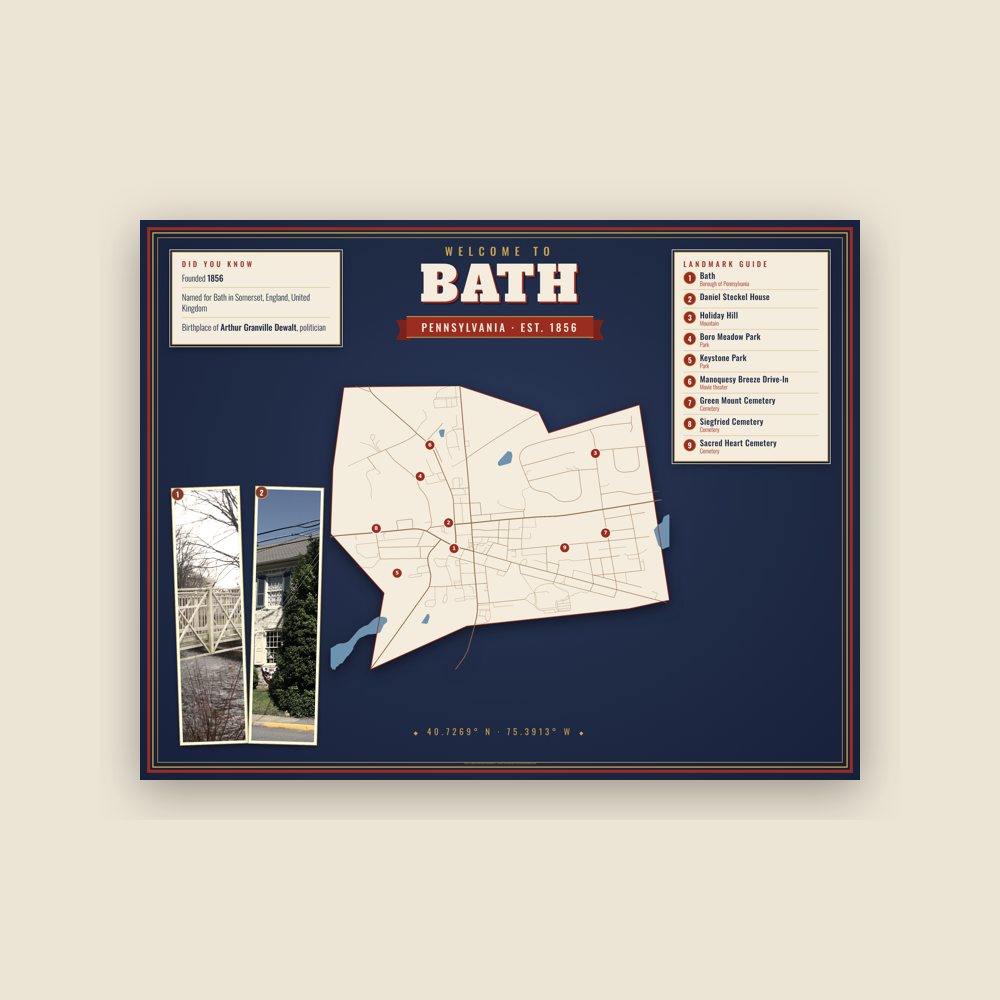
Bath is located at the head of the Monocacy Creek in an area of the Lehigh Valley that was once rich in agriculture. The greater area of the town, however, lies east of the Monocacy Valley. Prior to European settlement, Bath was inhabited by the Lenape Indigenous tribe.
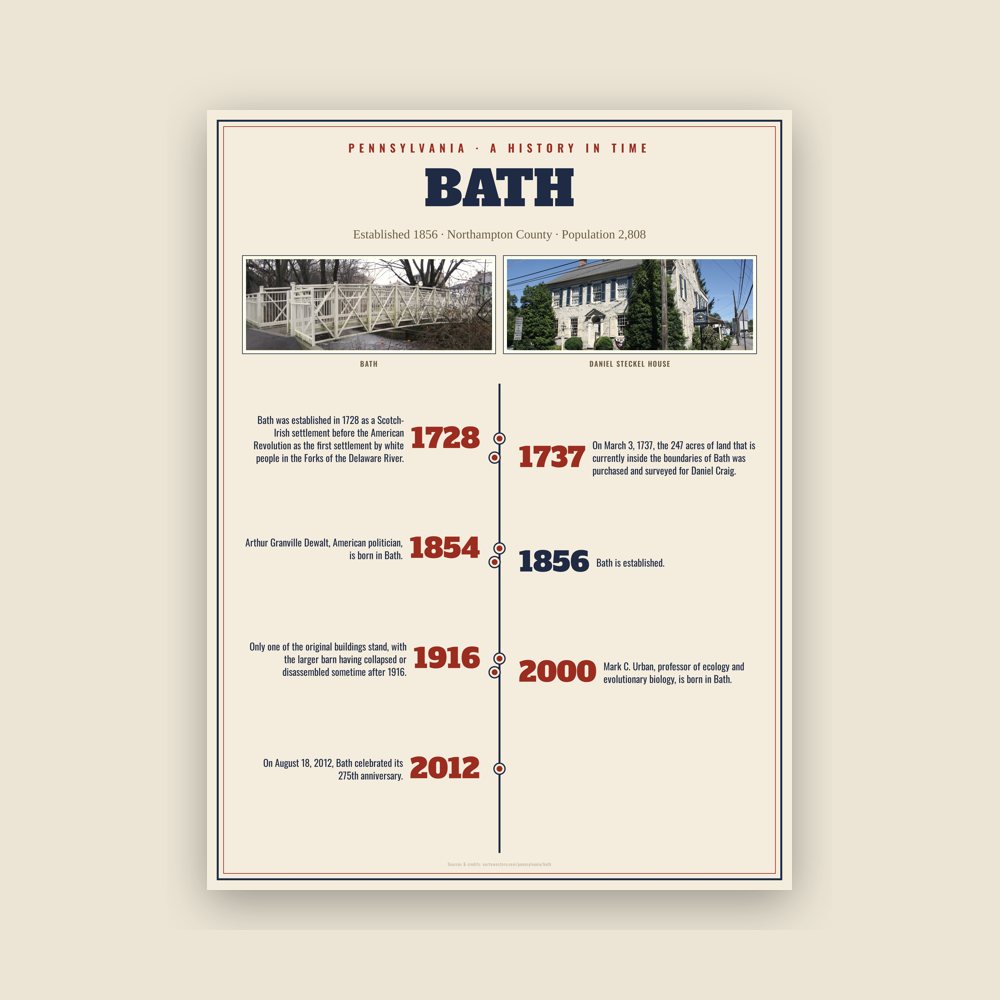
Bath was established in 1728 as a Scotch-Irish settlement before the American Revolution as the first settlement by white people in the Forks of the Delaware River. It is named for Bath, Somerset, England by Margaret DeLancey, who sold land under her father, lieutenant colonel of the Continental Army, William Allen, in the 1700s.
On March 3, 1737, the 247 acres of land that is currently inside the boundaries of Bath was purchased and surveyed for Daniel Craig. According to borough historians, this land spans from Chestnut Street to the north of Northampton Street. William Allen conveyed the greater part of Bath's land to his son, Andrew, in 1776, the same year that the Second Continental Congress in Philadelphia signed the Declaration of Independence, declaring its freedom from British colonial governance. That same year, Andrew Allen sold 150 acres of the land to John Lattimore. Andrew Allen also owned land west of the Monocacy, which was eventually confiscated and sold to local families in the area. Today, Bath's current acreage is 576 acres and is less than 1 sq. mi. in area.
Southeast of the town, a French and Indian War blockhouse was constructed to fortify the area from potential attacks. It was named Fort Ralston after the name of the farmer whose land it was built on. It is alternatively known as Brown's Fort, after the adjacent landowner. It was established as a fort in 1755, but likely abandoned by the end of the 1760s. Its ruins still remain in a small field south of a warehouse at the intersection of Airport Road and Nor-Bath Blvd known as Franks Corner, Pennsylvania. The ruins include a series of small underground chambers. Only one of the original buildings stand, with the larger barn having collapsed or disassembled sometime after 1916. There is evidence of fire damage to the fort and surrounding trees.
In the early 1900s Bath became the site of a growing cement industry. The Bath Portland Cement Company was the first plant to open, and its kiln can still be seen from Nor-Bath Blvd. The company was later replaced by the Keystone Cement Company, which still operates to this day and is a major employer and pillar of the Bath community. The Penn-Dixie Cement Company also quarried in east Bath, but no longer exists. The property around the quarry and ruins of the former plant are owned by Lehigh Hanson.
On August 18, 2012, Bath celebrated its 275th anniversary. In 1999, the Bath Business and Community Partnership (BBCP) was established for managing urban revitalization initiatives, including creating a greener town, organizing volunteers, and developing economic restructuring/asset enhancement.
Adapted (trimmed) from the Wikipedia article Bath, Pennsylvania, revision 1377940473 by its contributors, licensed CC BY-SA 4.0.
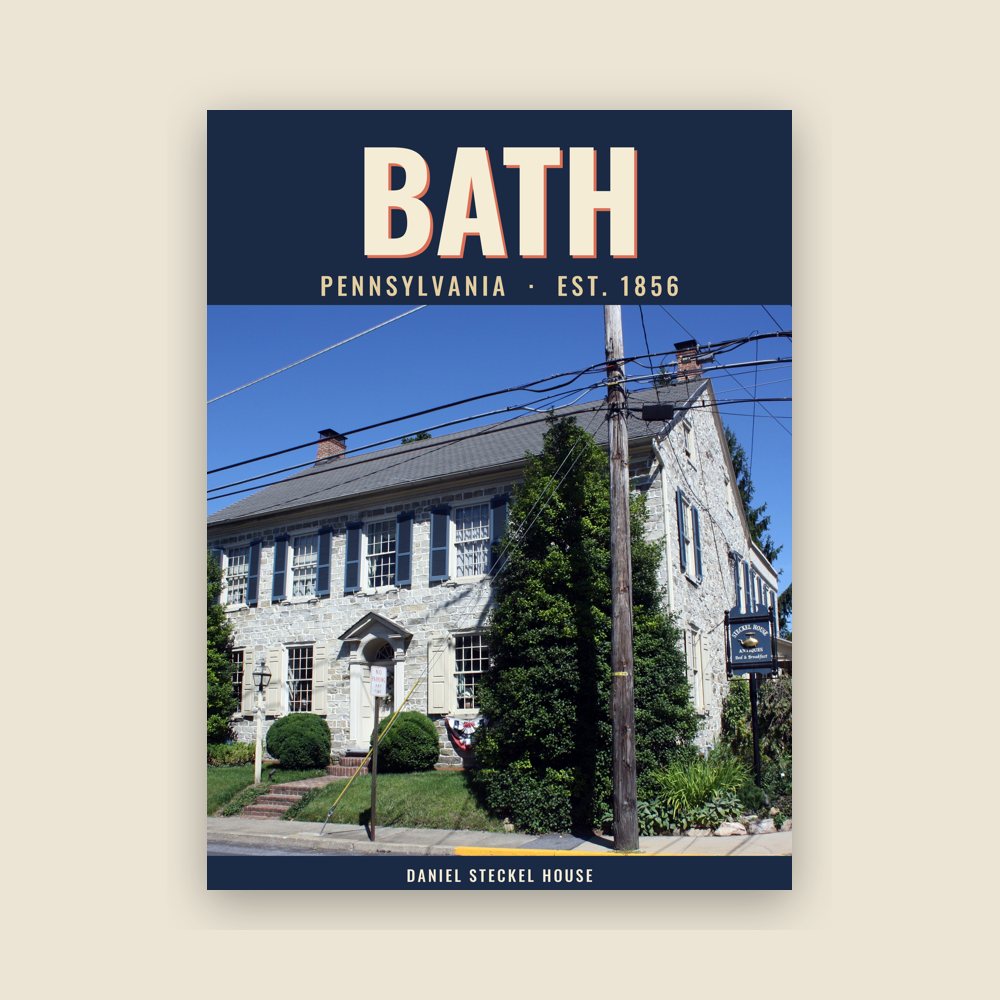
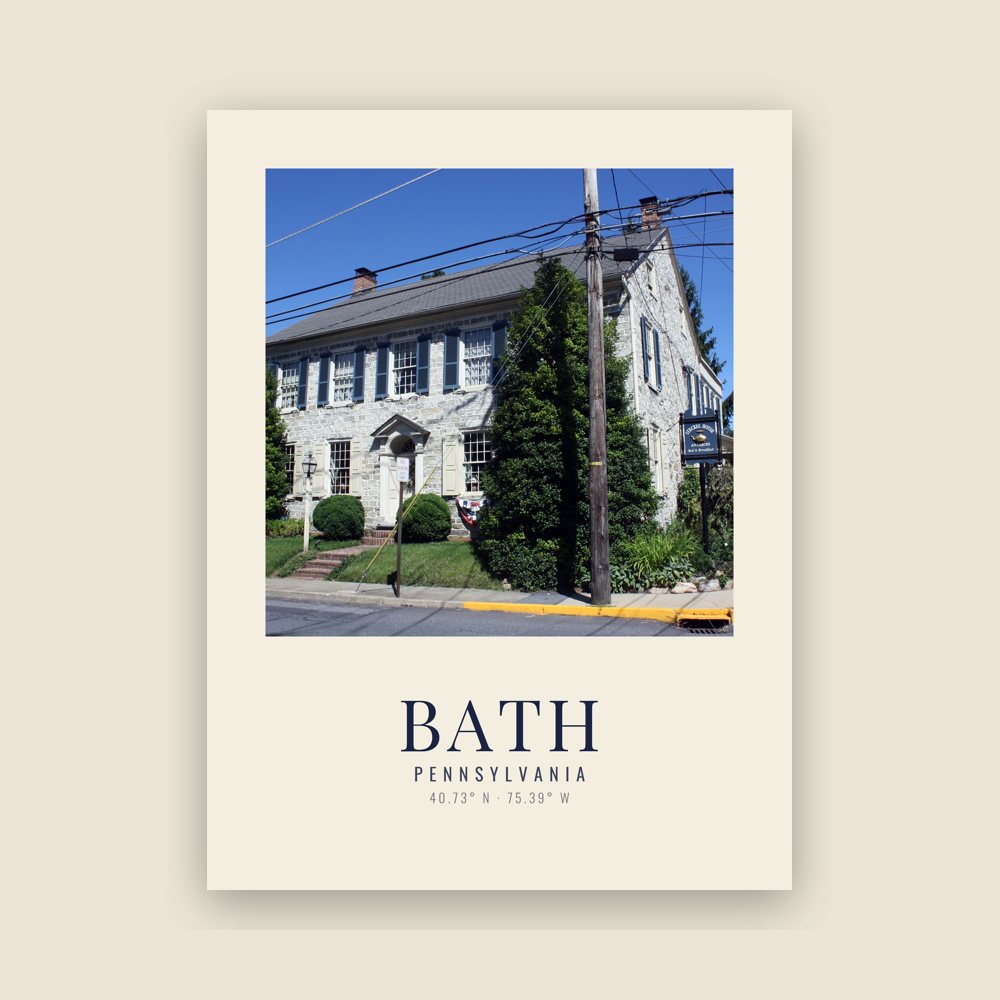
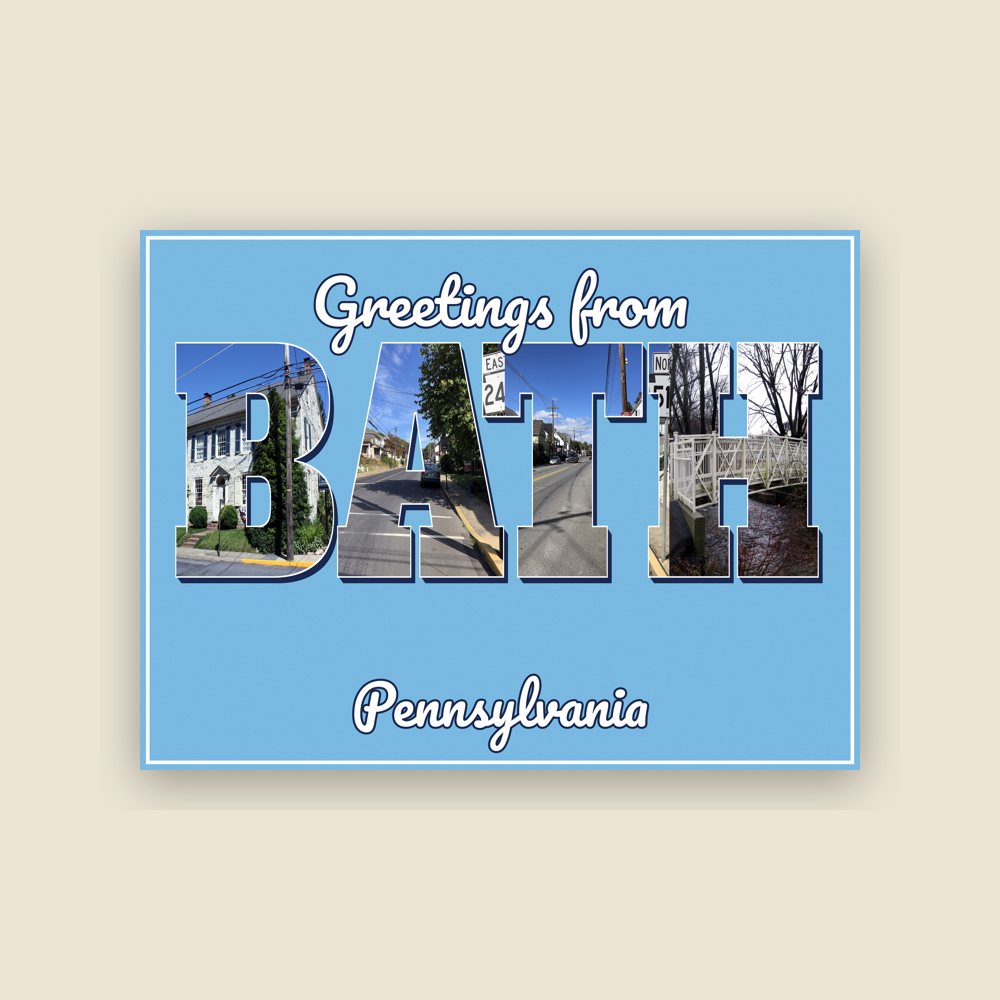
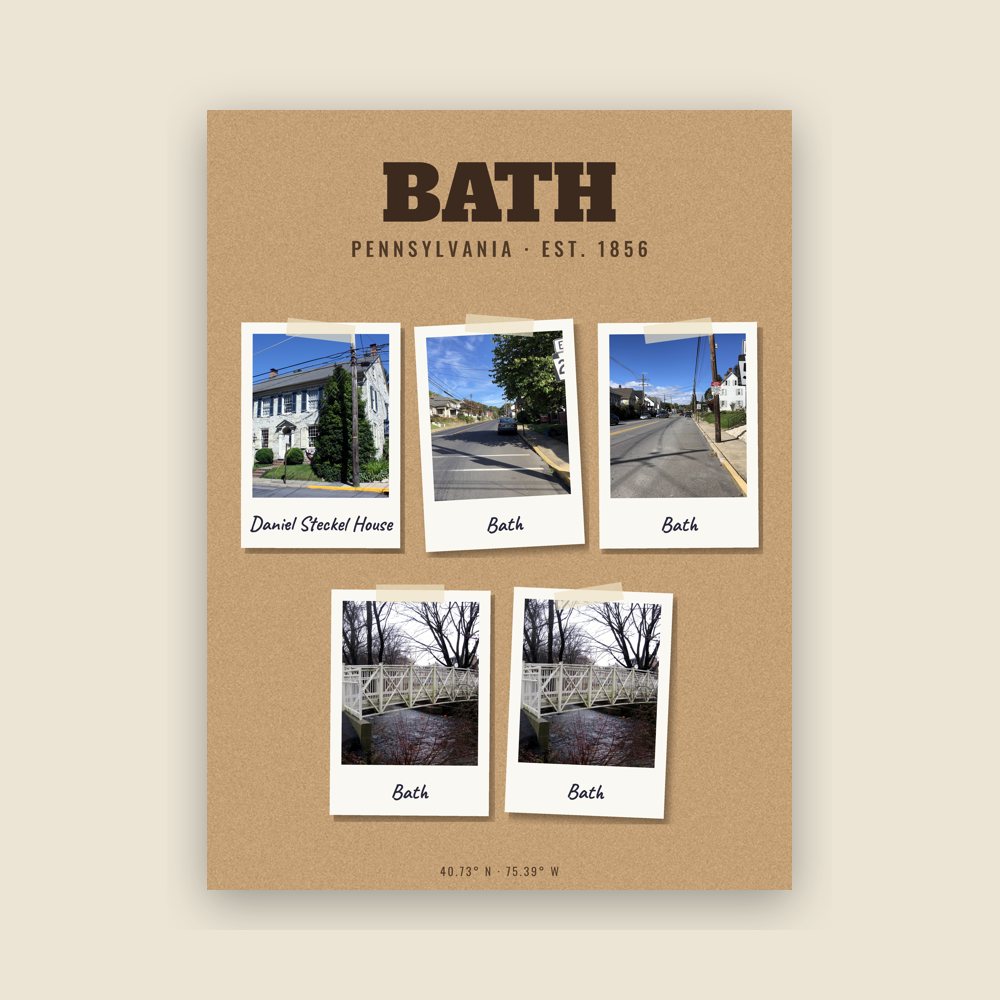
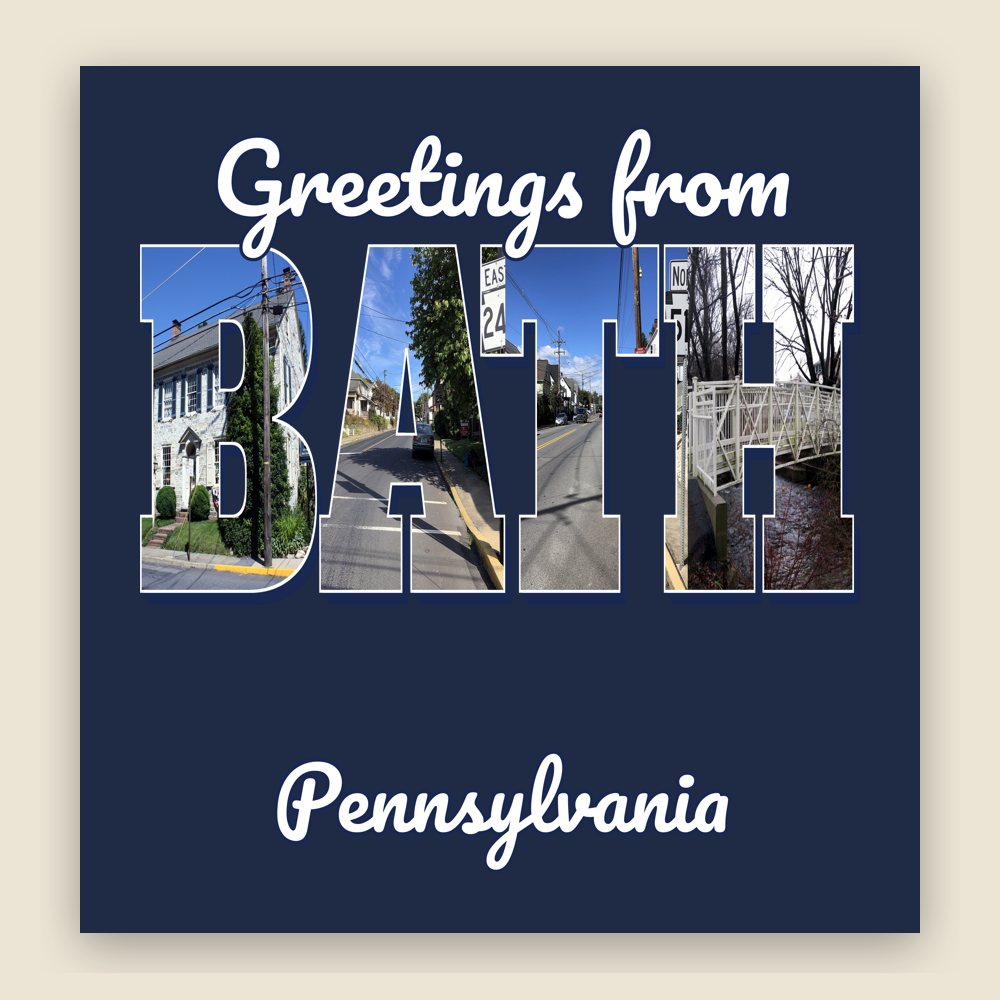
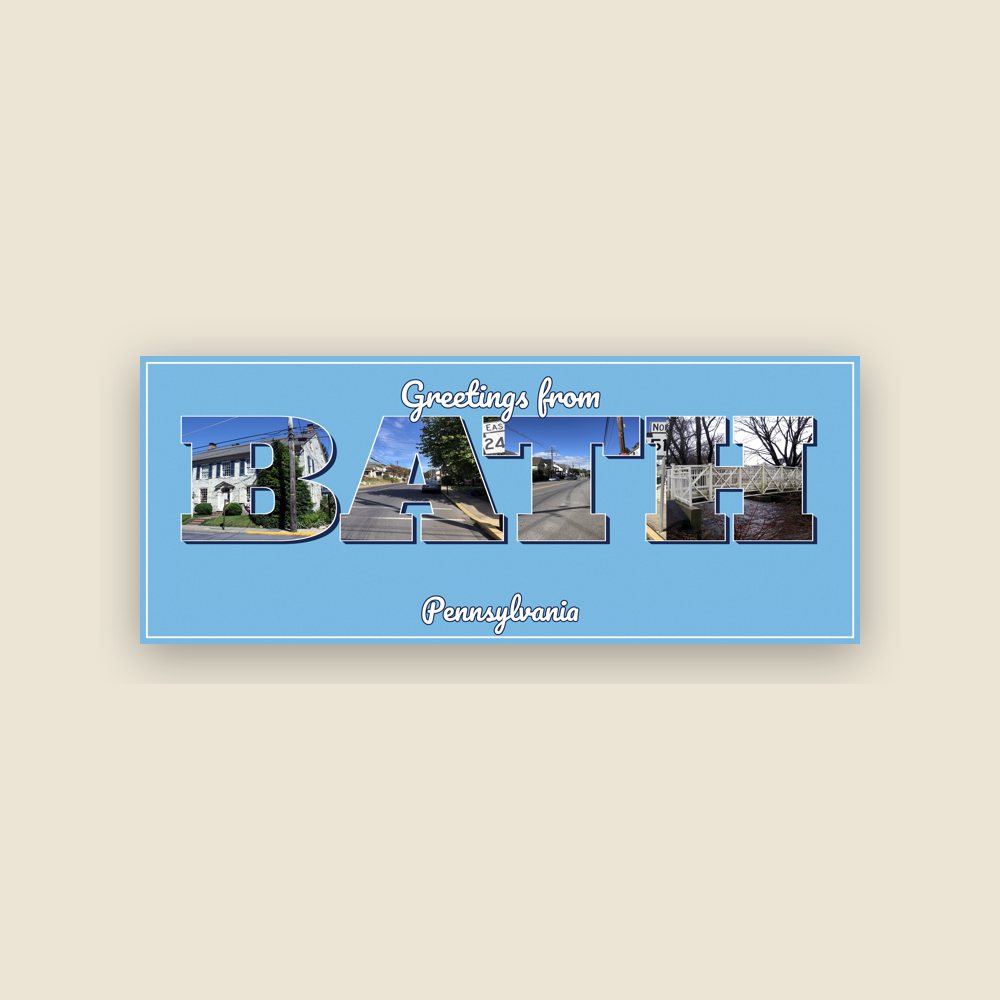
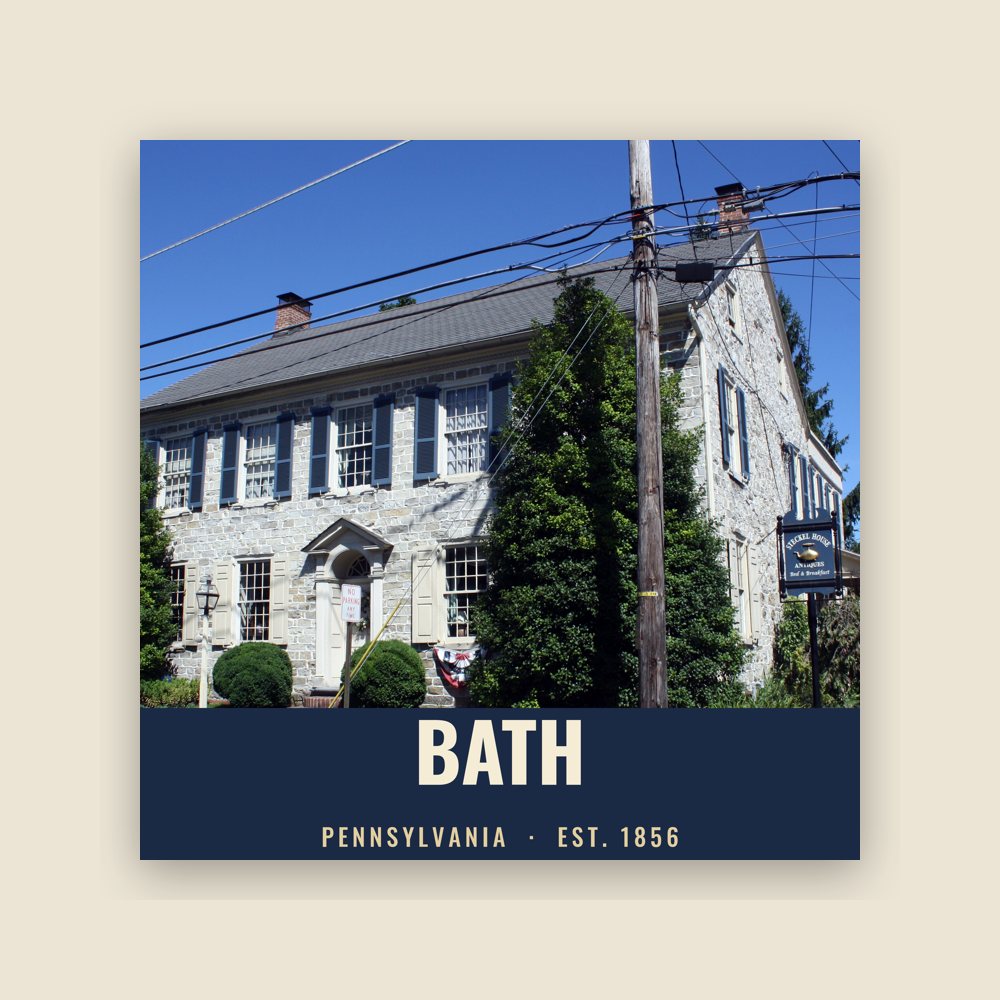
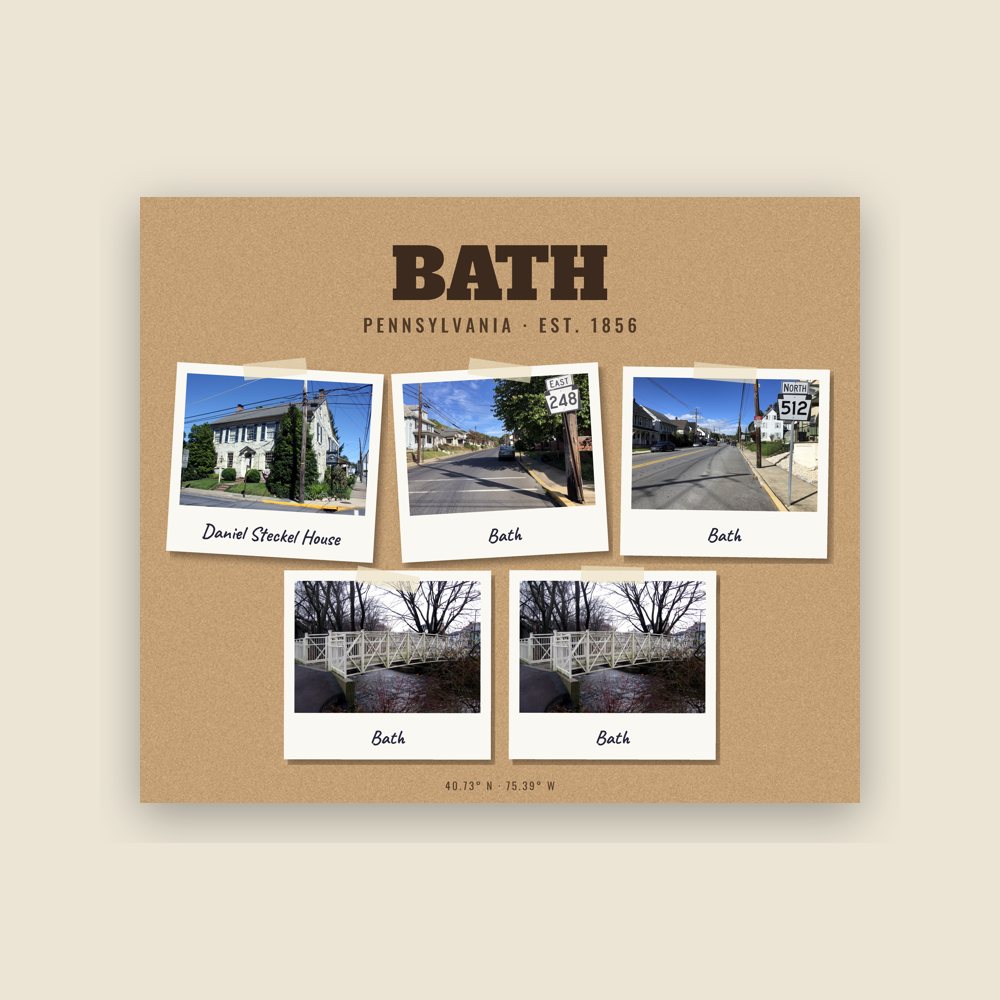
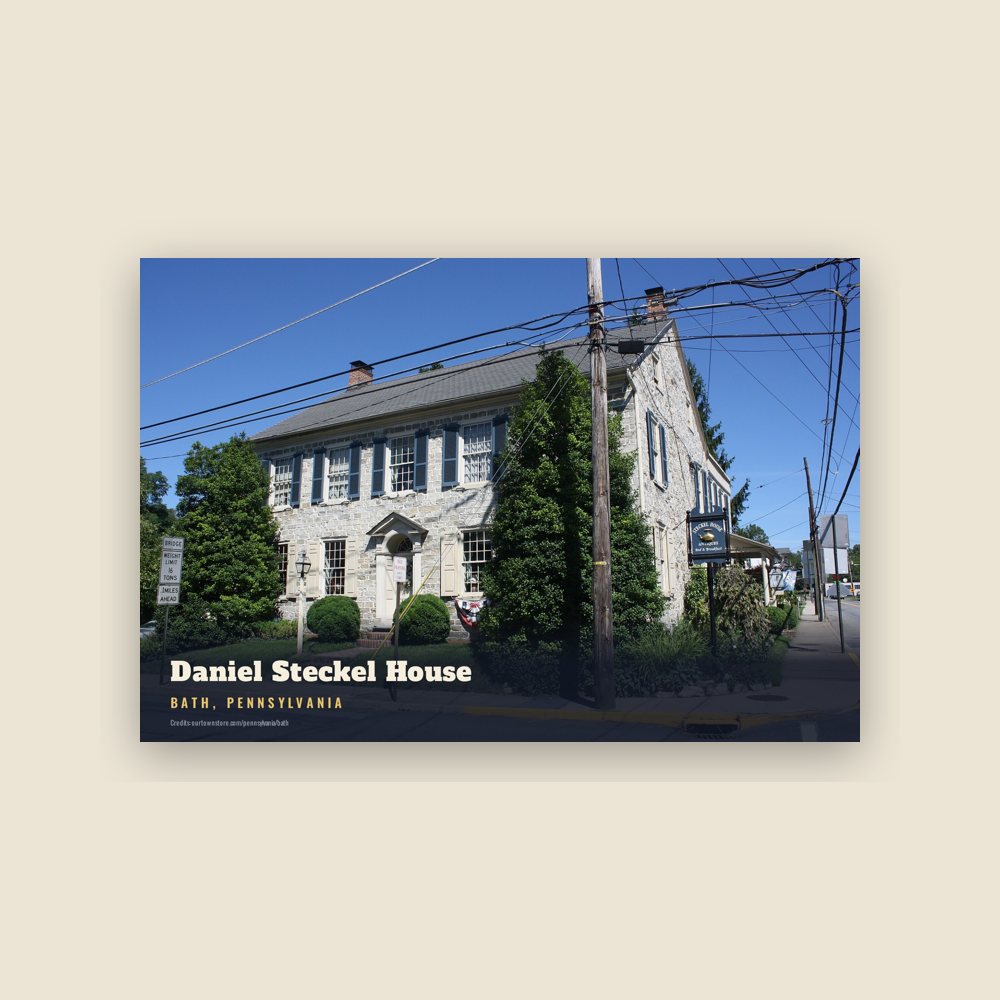
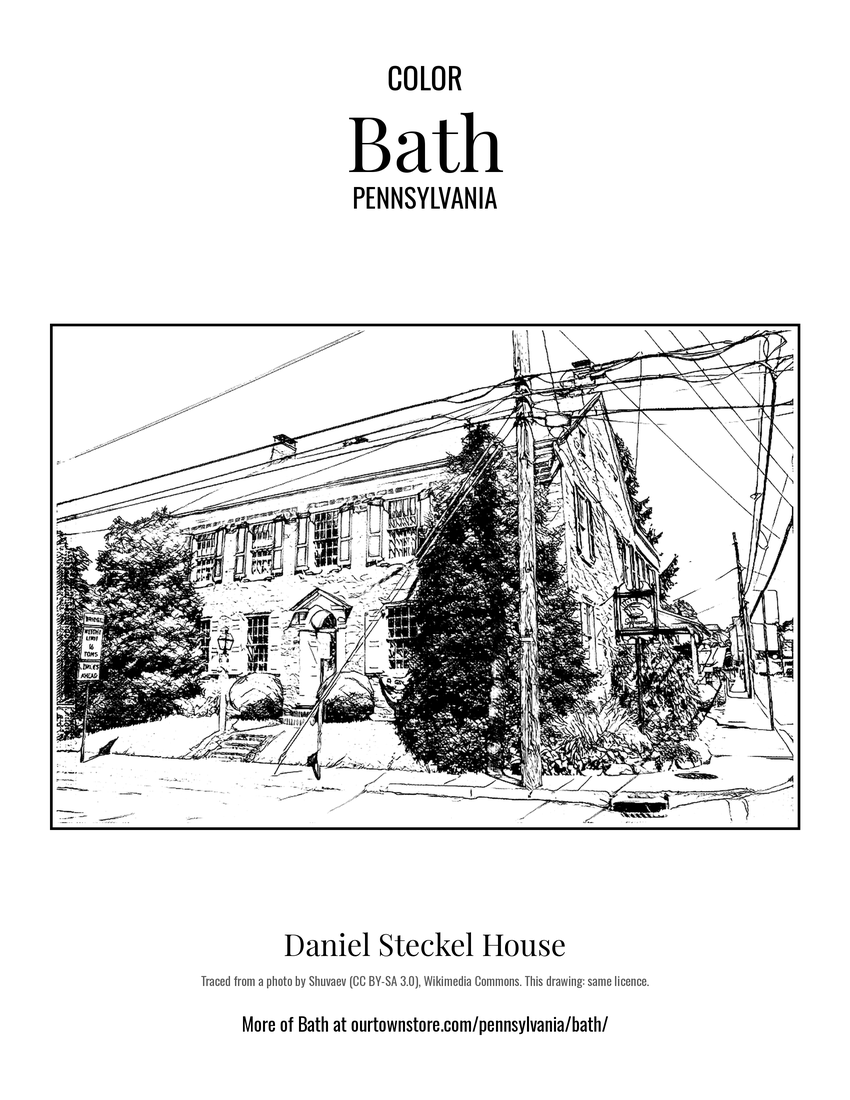 Daniel Steckel House
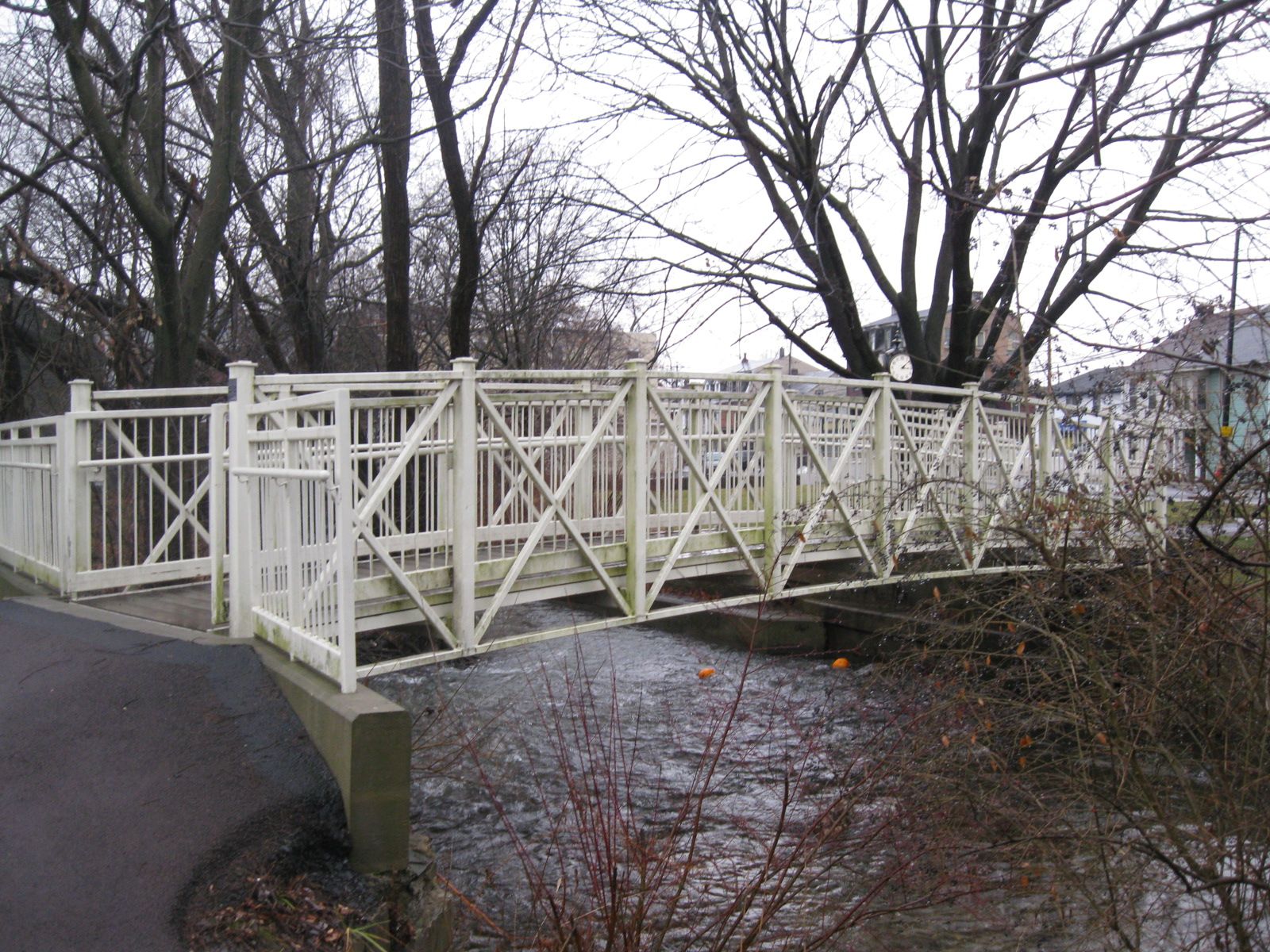
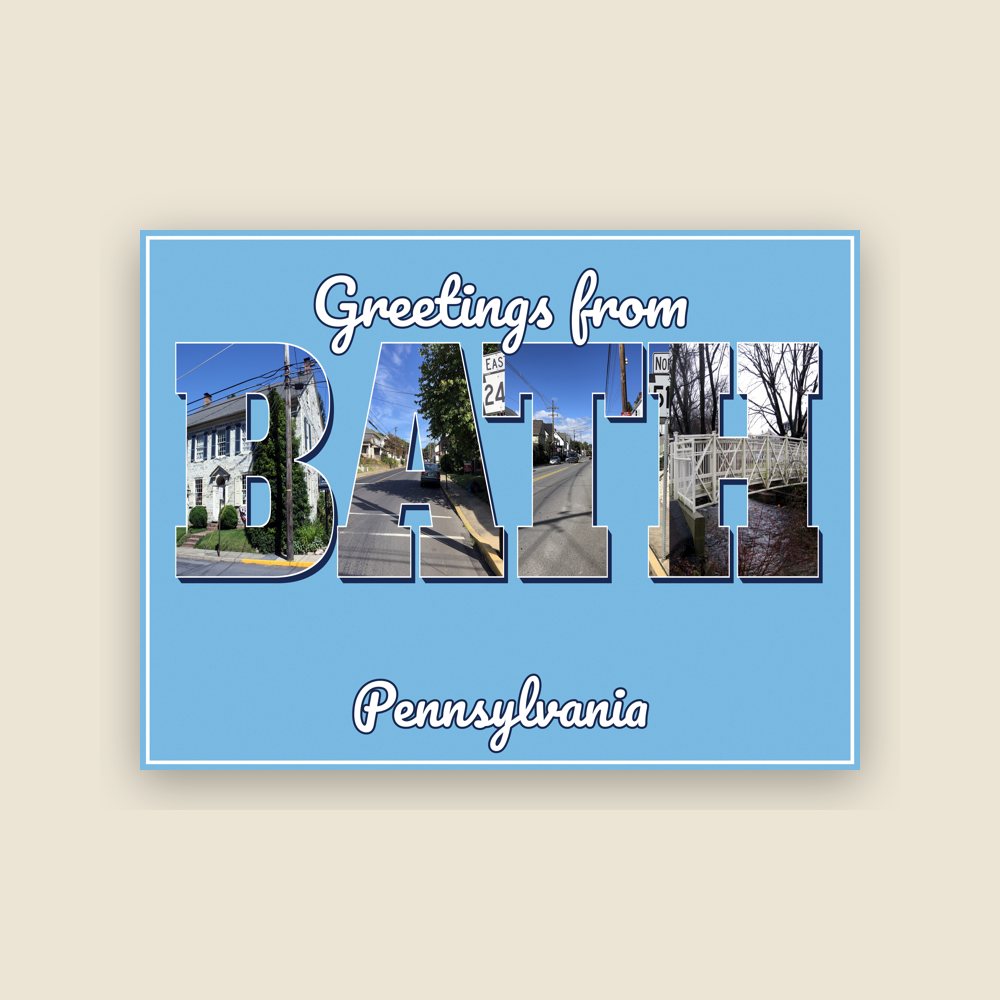
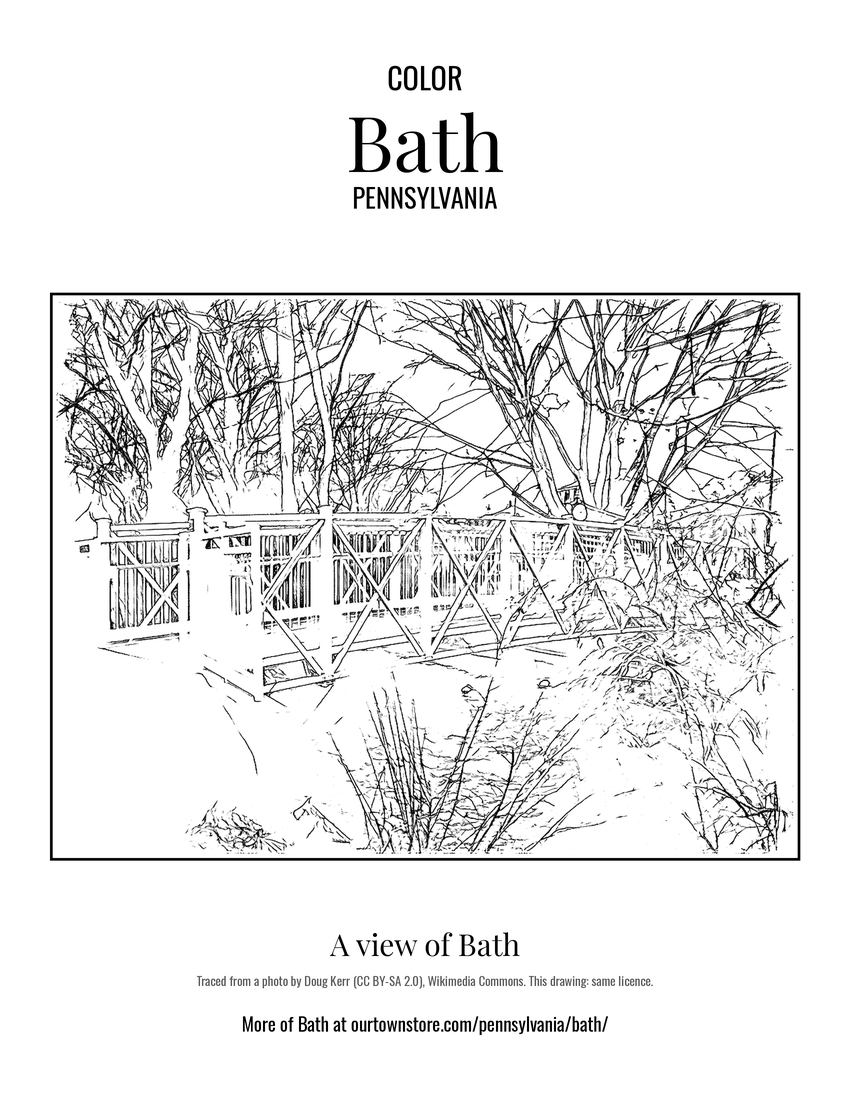 A view of Bath
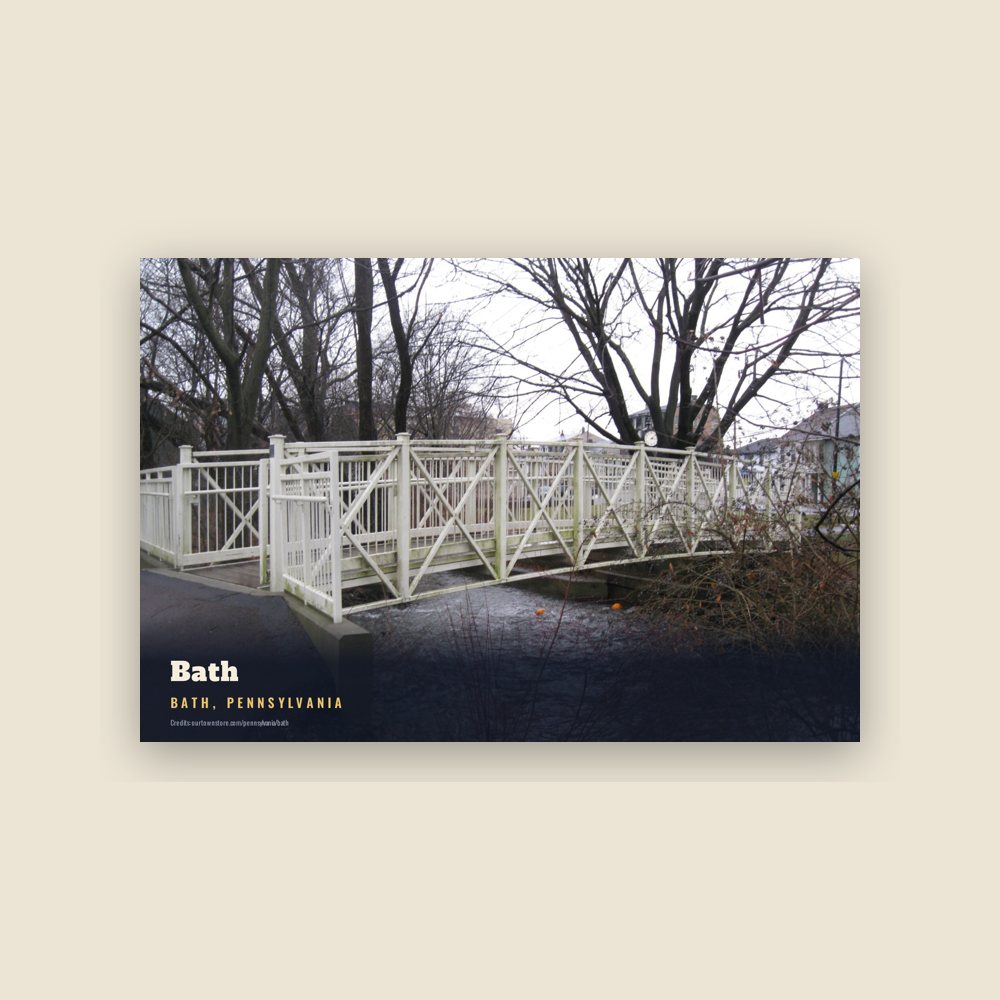
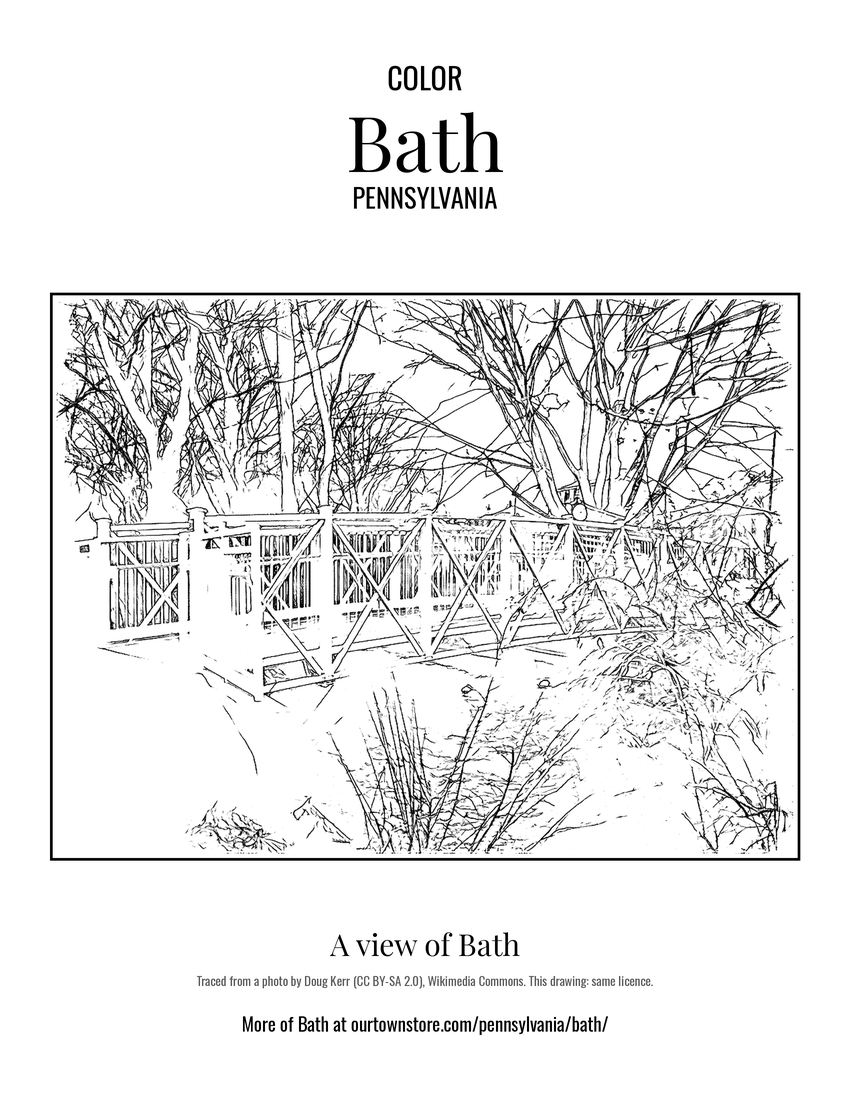 A view of Bath
 A view of Bath