It is considered the anchor community of the Greater Westbury area. Landmarks include Westbury, Carle Place and Westbury Interchange. Westbury is the birthplace of Joe Satriani, guitarist.
- CountyHempstead
- Population15,864 (2020 U.S. Census)
Westbury, New York gifts and souvenirs: 30 designs made from Westbury's own map, landmarks and history, from $10 to $99. Printed to order and shipped free in the USA.
| Popular | Price |
|---|---|
| Westbury Hometown Ornament | $23 |
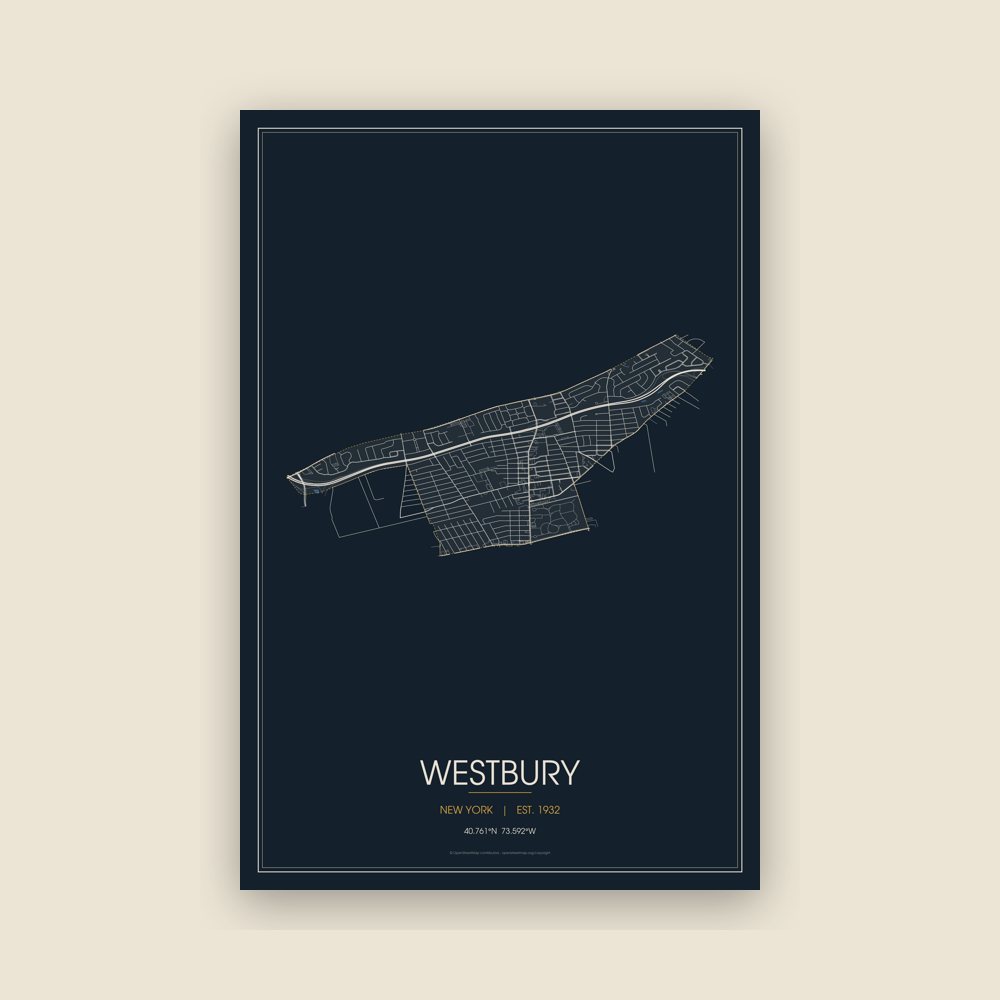
| Westbury Vintage Travel Poster | from $40 |
| Westbury Varsity Crewneck | from $57 |
| Westbury Est. Tee | from $33 |
| Westbury Town Line Mug | from $26 |
| Westbury Market Tote | $37 |
Ceramic keepsake, gold ribbon
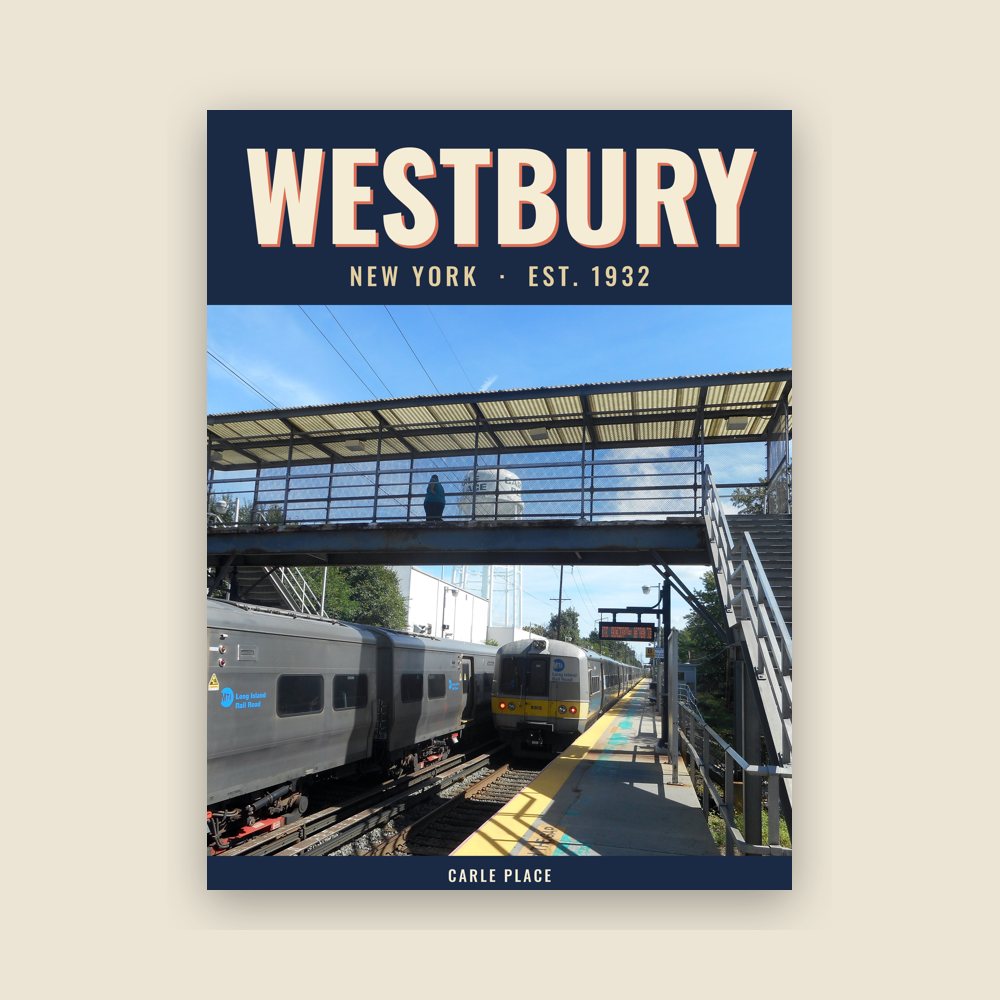
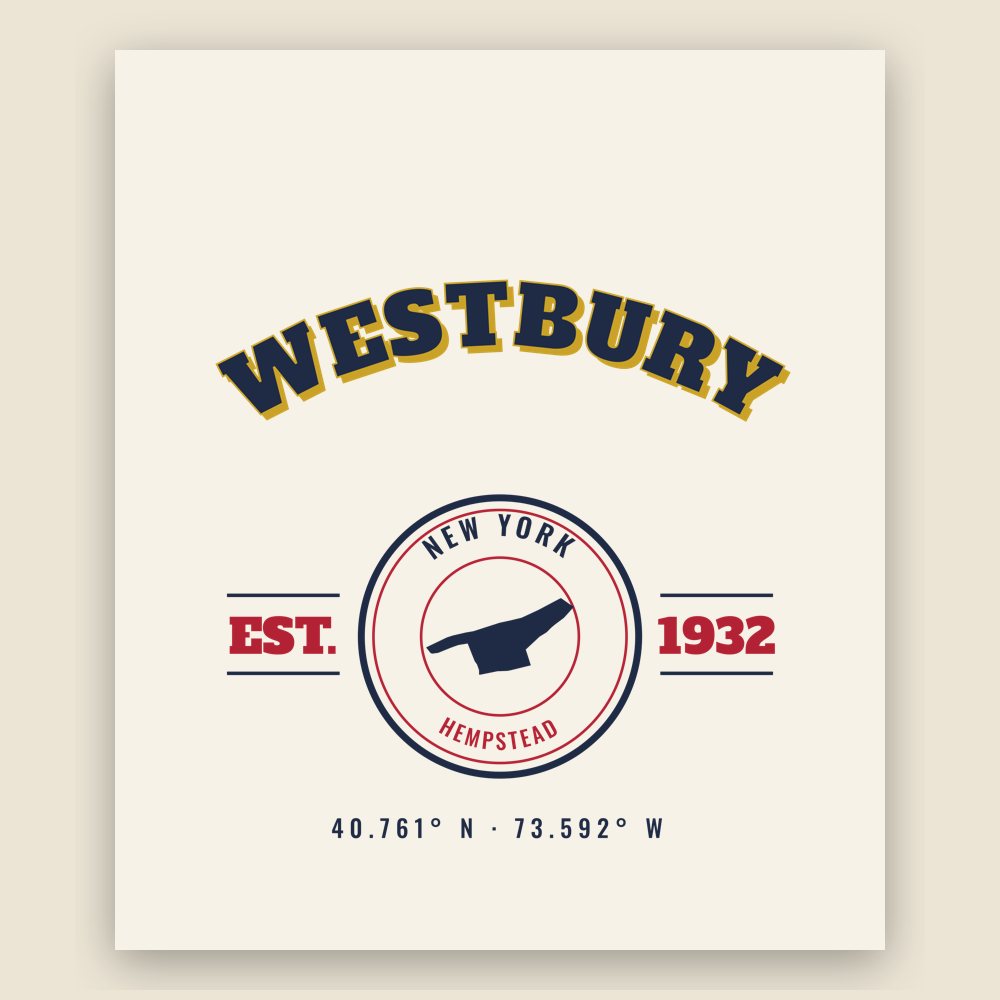
Its landmark photo in a classic travel-poster layout
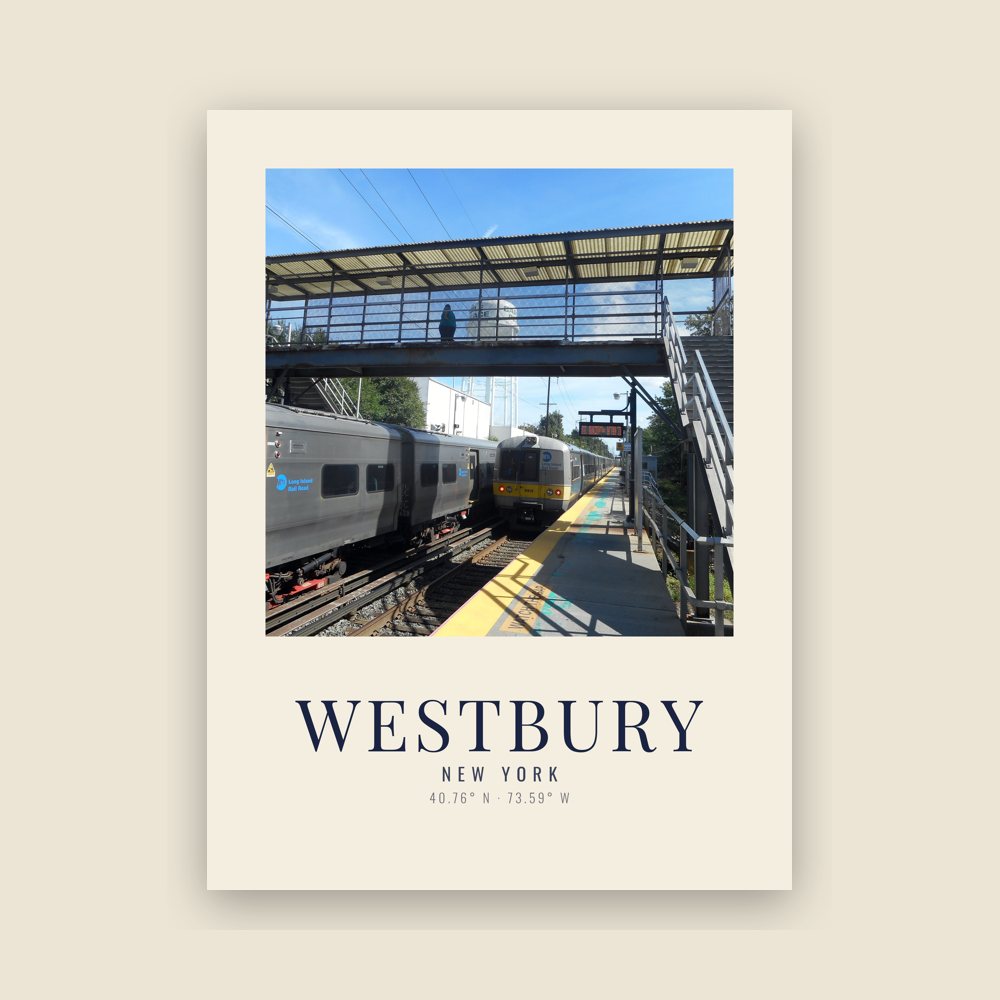
A local landmark photo as a gallery print
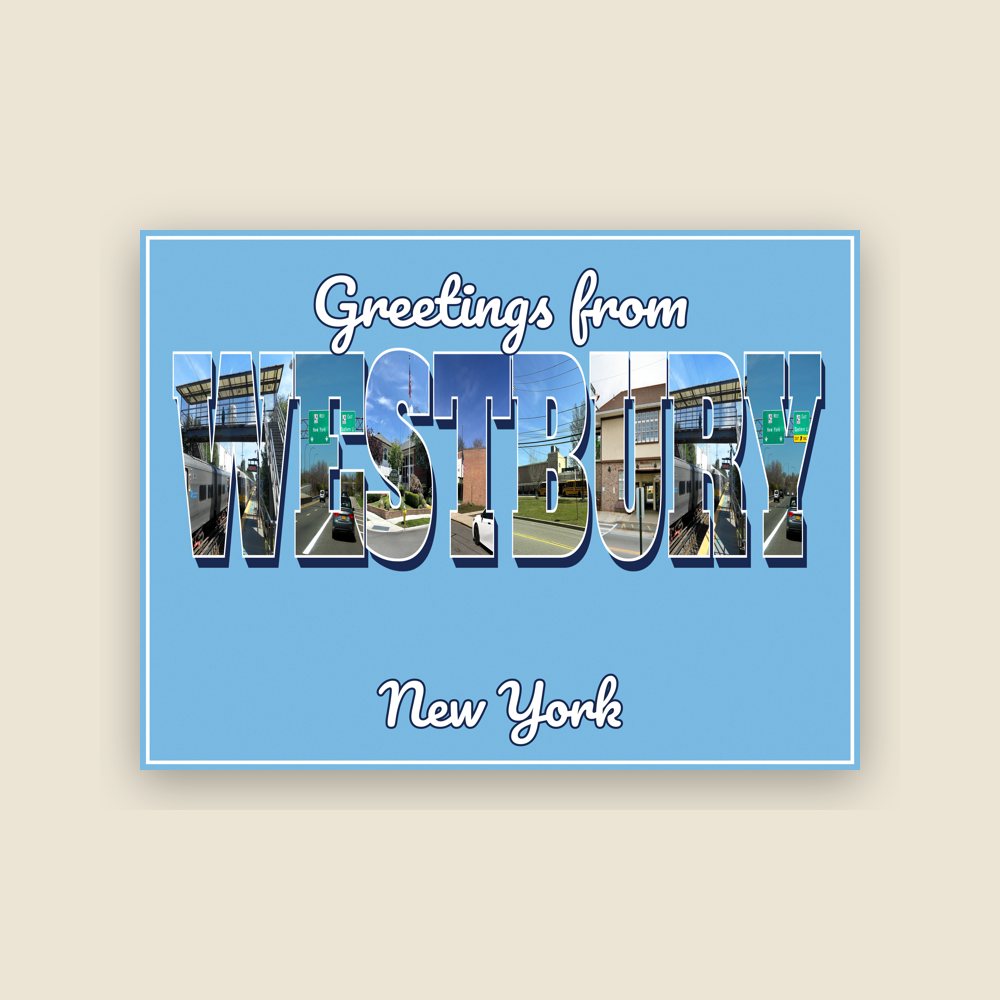
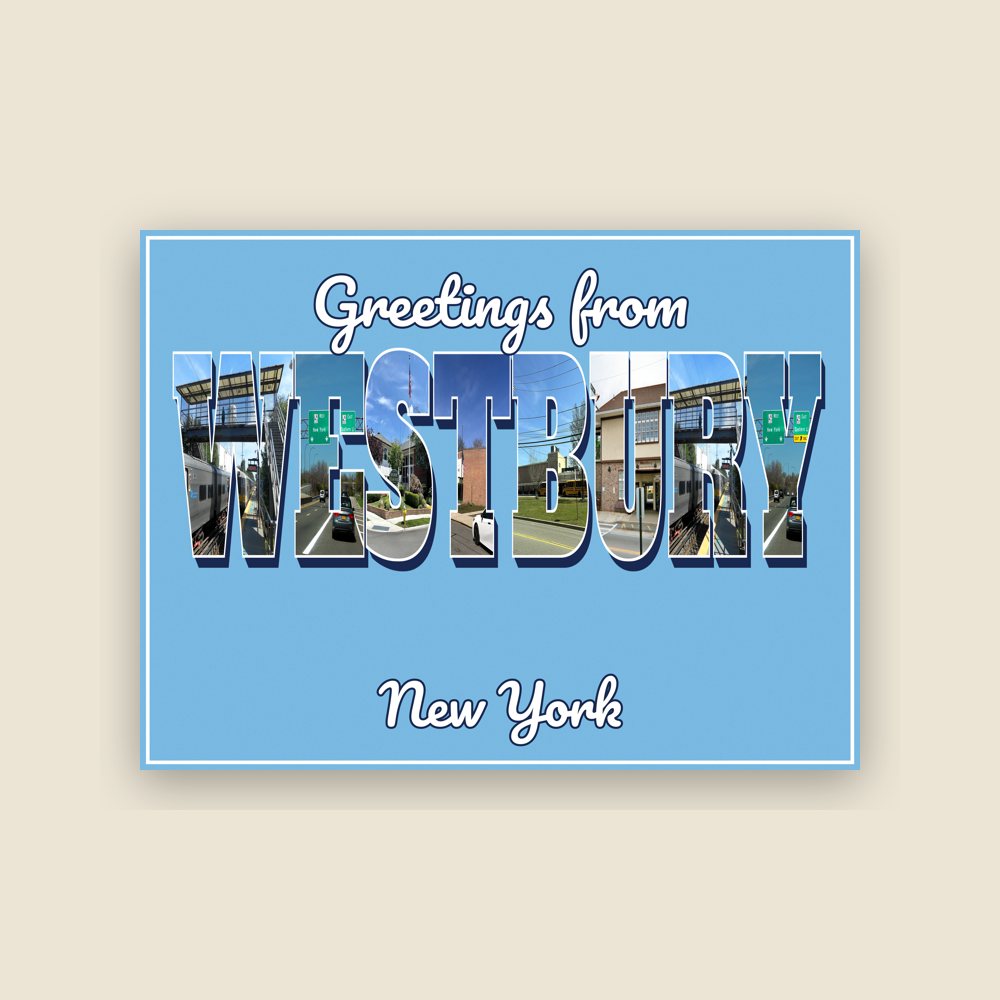
Classic large-letter postcard art, filled with local photos
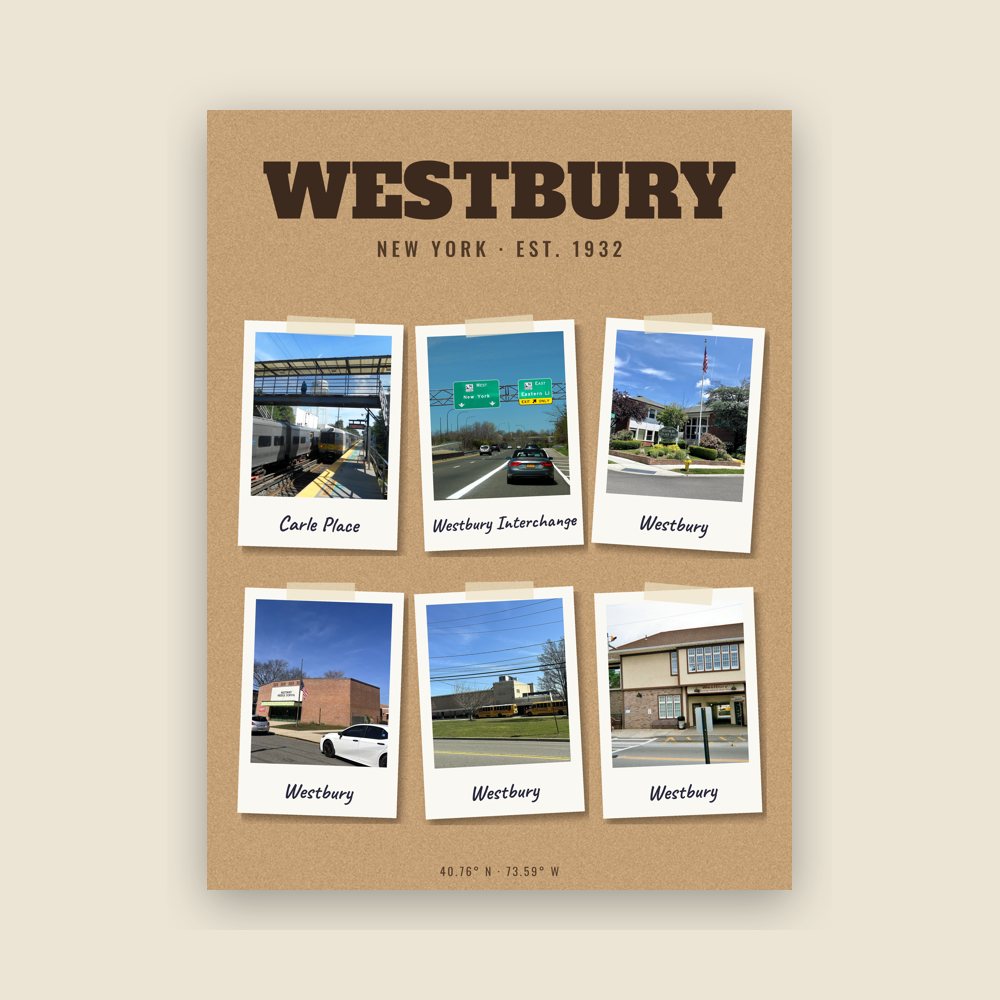
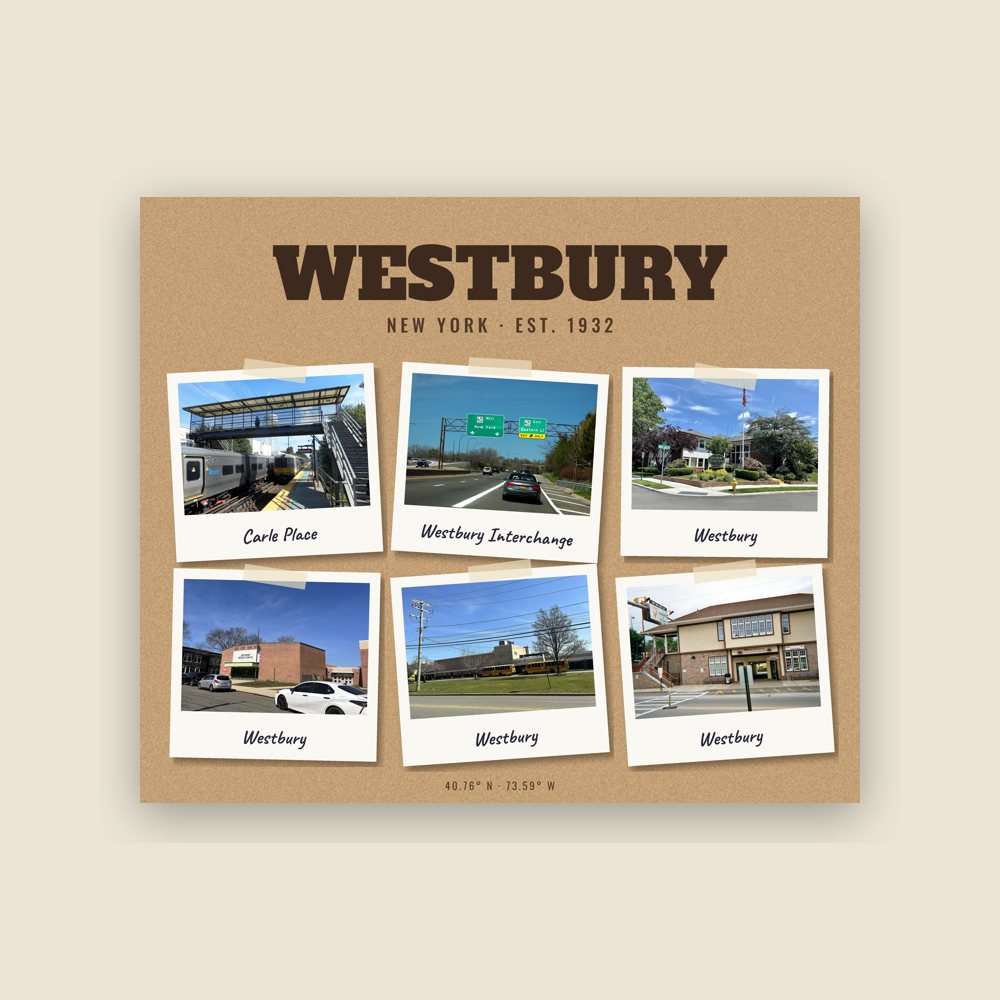
Six local landmarks as instant photos on kraft paper
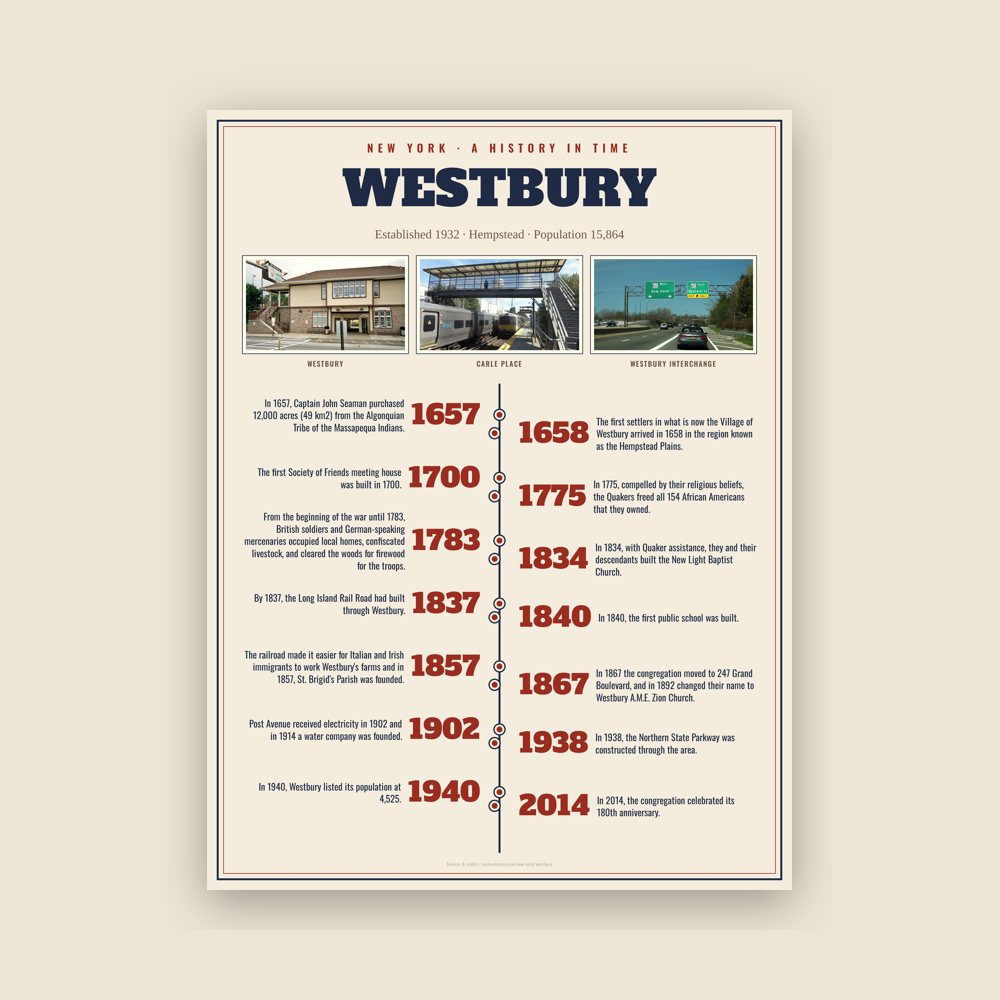
The town's story in dates, from its own records, for home or classroom
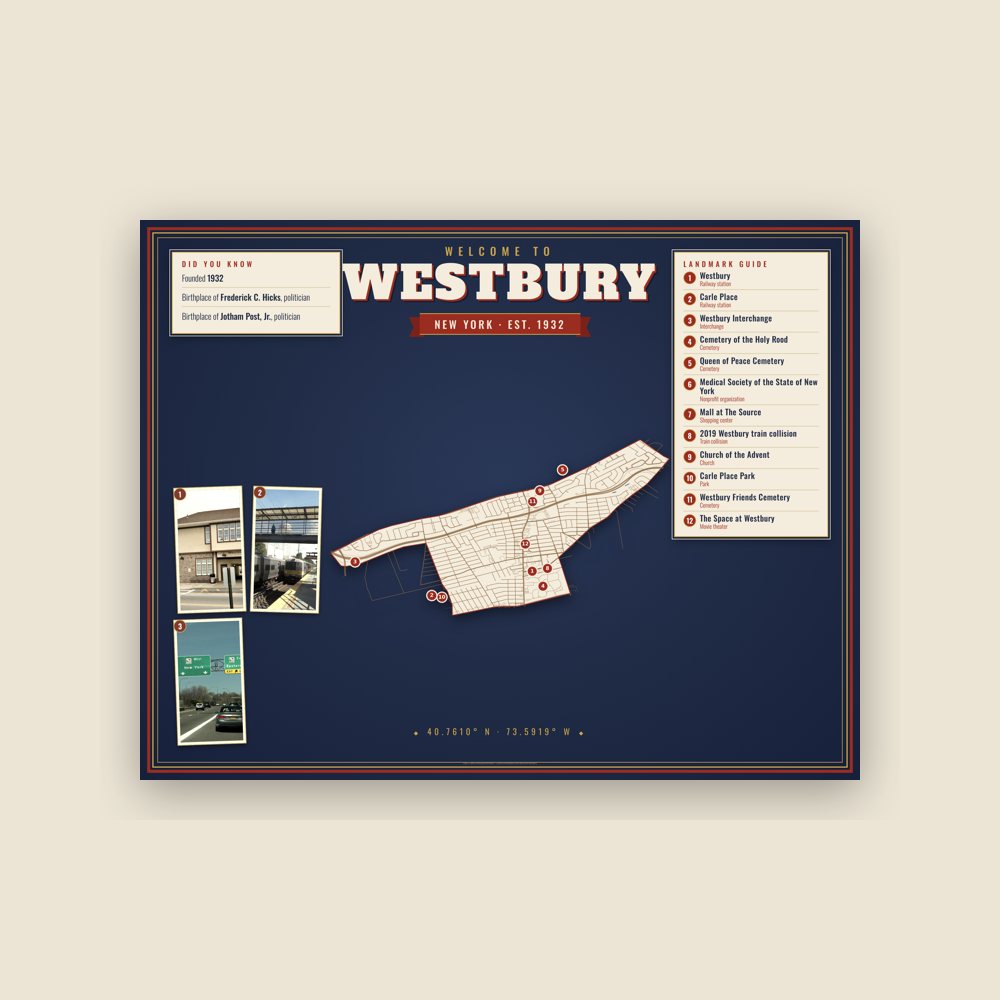
Map of local landmarks, washable fabric
Heavy-blend fleece, street map printed on the back
Soft Bella+Canvas jersey
Kids' Bella+Canvas jersey, youth sizes
Bella+Canvas toddler jersey
Bella+Canvas baby bodysuit
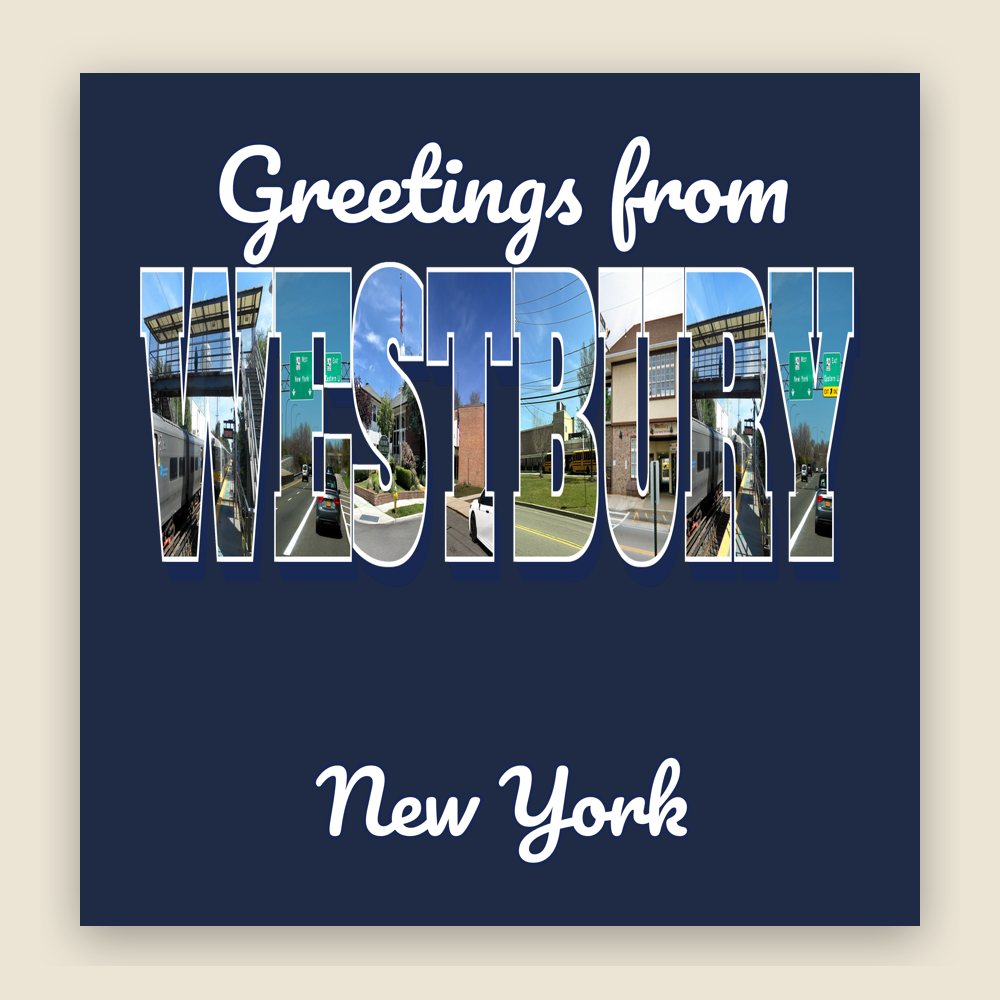
Large-letter postcard art filled with local photos
Glossy ceramic, dishwasher safe
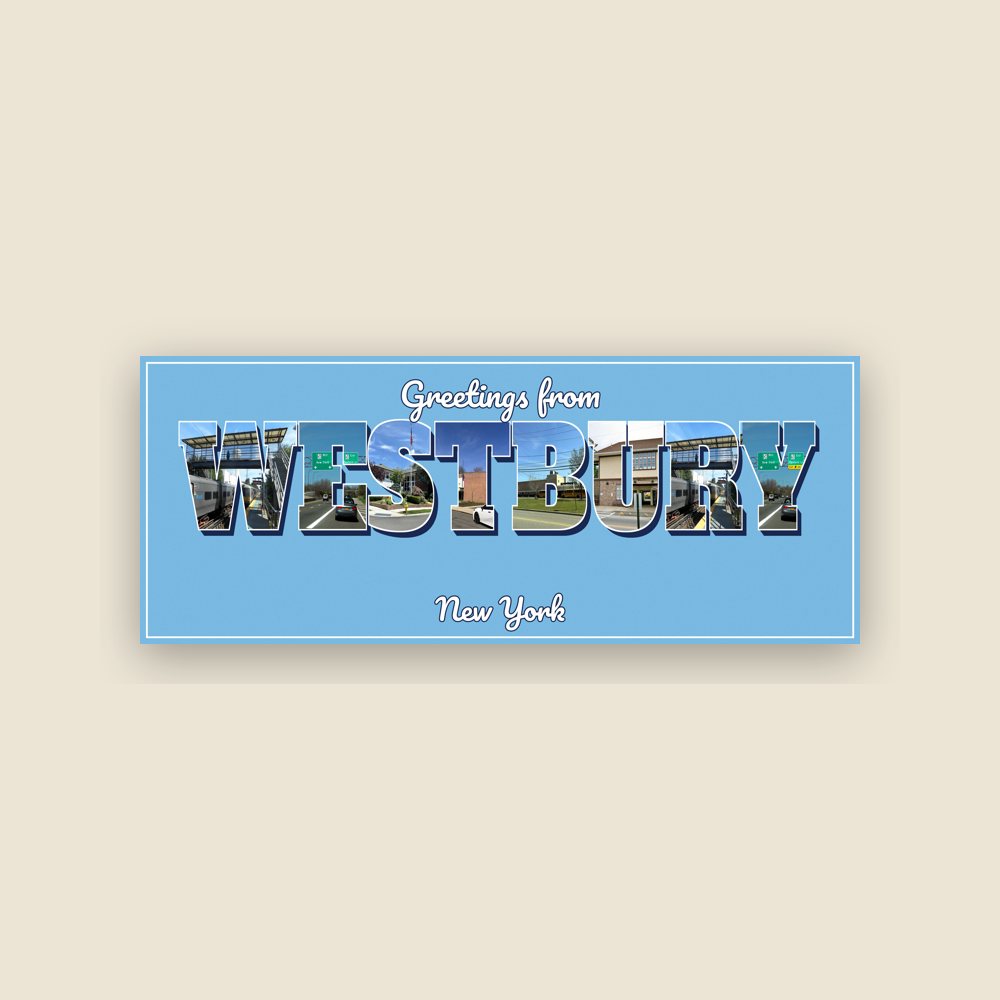
Large-letter postcard art filled with local photos, 11 oz ceramic
Weatherproof, for the front walk
24″×16″, printed coir-look fibers, rubber back
12″×12″ printed wood, ready to hang
Soft-touch, zip cover
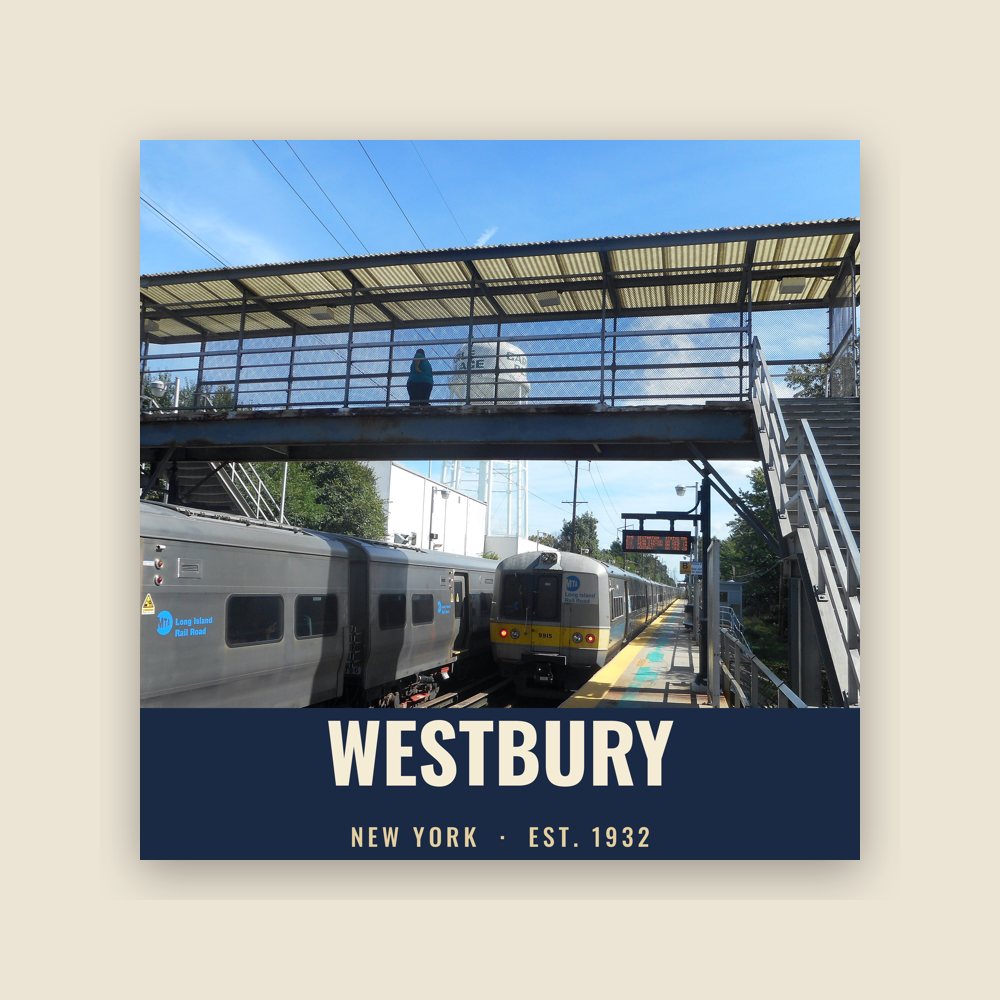
A local landmark photo with the town name, 18″×18″
Sturdy all-over-print tote
Large-letter postcard art on a sturdy tote
Foam-front trucker, printed (not embroidered) with local photos
Glossy top, cork back
Soft fleece, 50″×60″
Six local landmarks as instant photos, soft fleece 50″×60″
20 oz, double-wall stainless
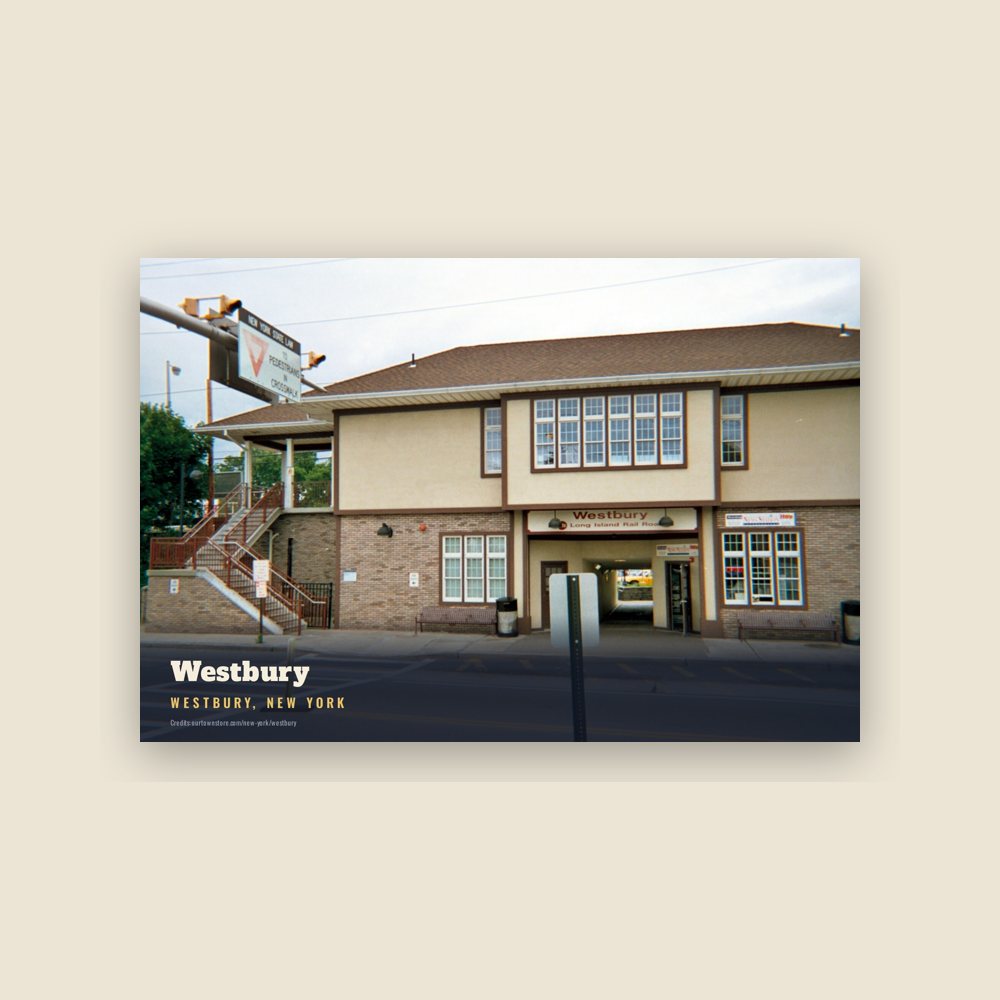
6″×4″ postcard, glossy front
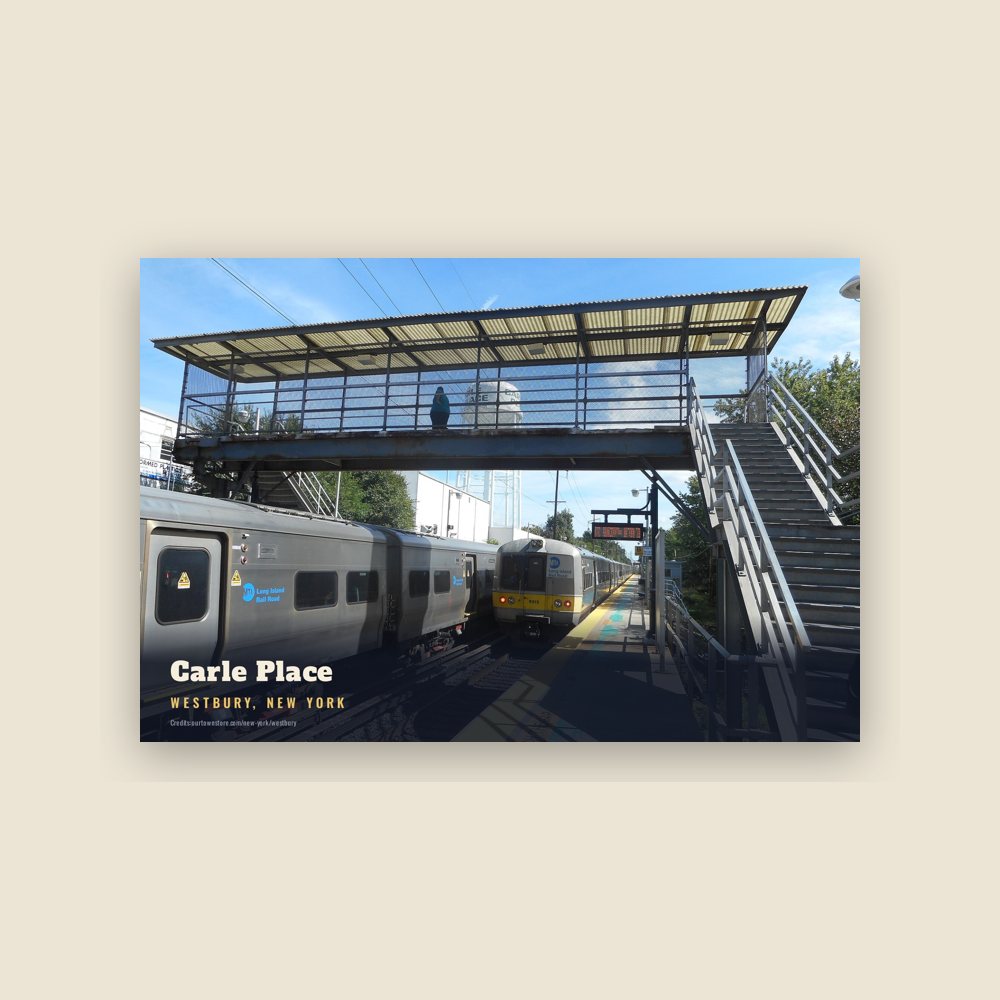
6″×4″ postcard, glossy front
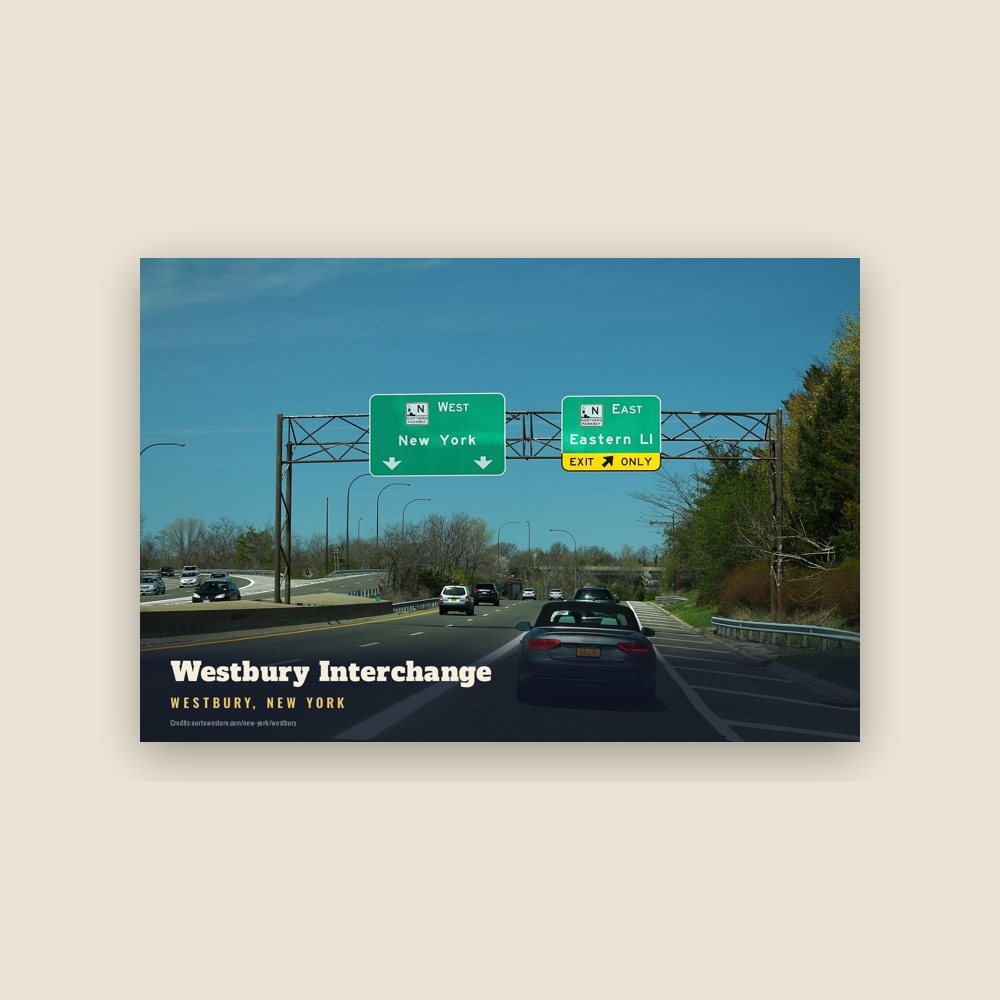
6″×4″ postcard, glossy front
It is considered the anchor community of the Greater Westbury area. Landmarks include Westbury, Carle Place and Westbury Interchange. Westbury is the birthplace of Joe Satriani, guitarist.
Population 2010: 15,146 → 2020: 15,864
From Wikidata (CC0).
The first settlers in what is now the Village of Westbury arrived in 1658 in the region known as the Hempstead Plains. Many of the early settlers were Quakers.
Westbury's Jericho Turnpike, which provides connection to Mineola and Syosset as well as to the Long Island Expressway (or LIE), was once a trail used by the Massapequa Indians. As far back as the 17th century, it served as a divider between the early homesteads north of the Turnpike and the Hempstead Plains to its south. Today, it serves as a state highway complex.
In 1657, Captain John Seaman purchased 12,000 acres (49 km2) from the Algonquian Tribe of the Massapequa Indians. In 1658, Richard Stites and his family built their homestead in this area. Theirs was the only family farm until an English Quaker, Edmond Titus, and his son Samuel joined them and settled in an area of Hempstead Plains, known today as the Village of Westbury. In 1675 Henry Willis, also an English Quaker, named the area "Westbury", after Westbury, Wiltshire, his hometown in England. Other Quaker families who were also seeking a place to freely express their religious beliefs joined the Tituses and Willises. The first Society of Friends meeting house was built in 1700. The early history of Westbury and that of the Friends are so interconnected that they are essentially the same.
These settlers, like many other landowners throughout the colonies, owned slaves. In 1775, compelled by their religious beliefs, the Quakers freed all 154 African Americans that they owned. Many of these freed men and women built their own homesteads on the open land near the sheep grazing pastures. Their new community consisted of farms and dairies. In 1834, with Quaker assistance, they and their descendants built the New Light Baptist Church. In 1867 the congregation moved to 247 Grand Boulevard, and in 1892 changed their name to Westbury A.M.E. Zion Church. In 2014, the congregation celebrated its 180th anniversary. The building still stands on the corner of Union Ave. and Grand Blvd.
The outbreak of the American Revolution disrupted Westbury's tranquility. From the beginning of the war until 1783, British soldiers and German-speaking mercenaries occupied local homes, confiscated livestock, and cleared the woods for firewood for the troops. With the close of the war, Westbury received its third group of settlers, the Hessians, mostly from Hesse-Cassel in the Holy Roman Empire, who chose not to return to their home country. Instead, they remained in an area now known as New Cassel, a name chosen in honor of the part of Hesse from which most had come.
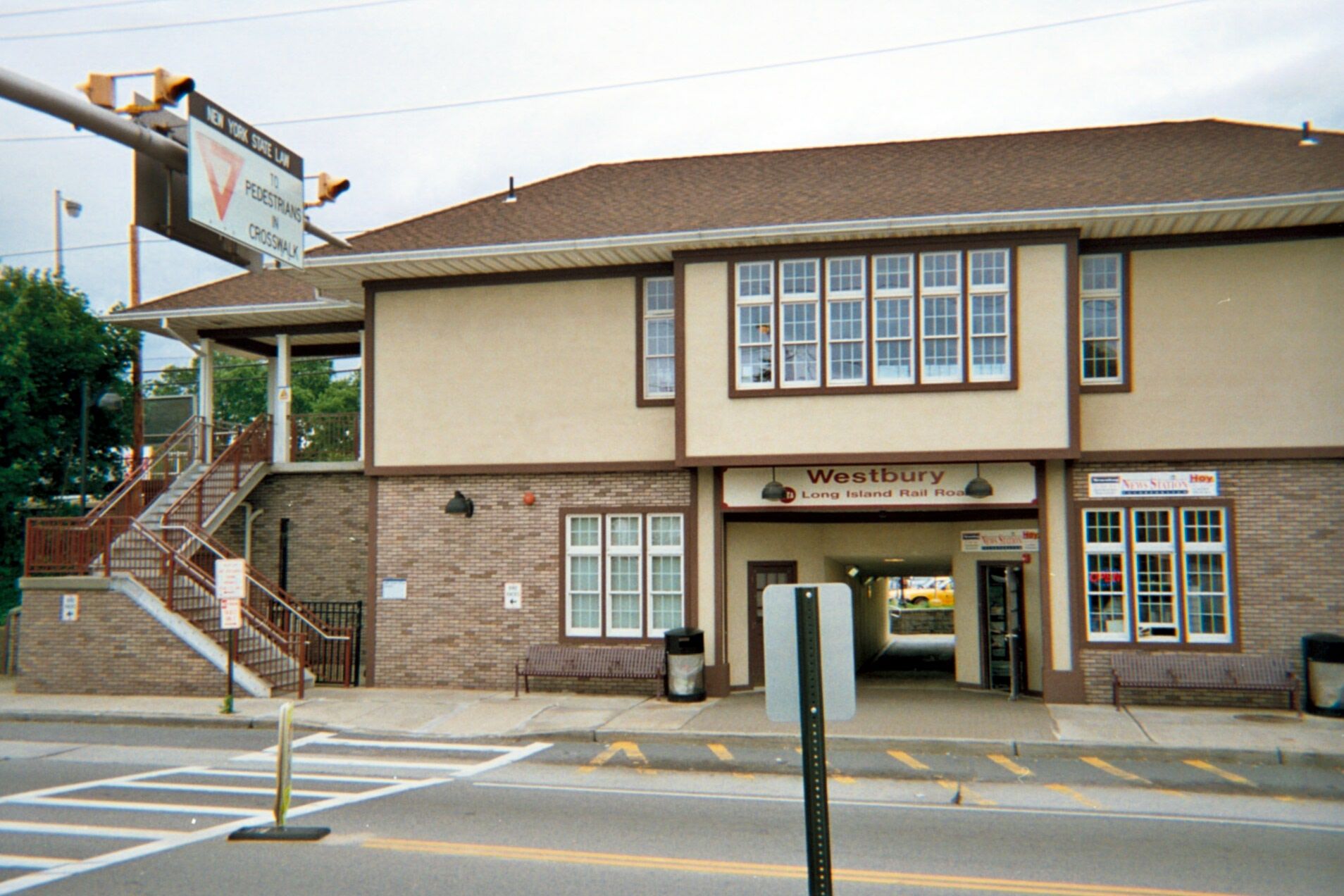
By 1837, the Long Island Rail Road had built through Westbury. Schedules from March 1837 mention a stop at Westbury, but by June list Carle Place instead, with schedules from 1842 listing both.
In 1840, the first public school was built. The railroad made it easier for Italian and Irish immigrants to work Westbury's farms and in 1857, St. Brigid's Parish was founded.
At the same time more African-American families came to the area via the Underground Railroad. For some, Westbury was only one stop on the way to Canada, but several stayed in this area after being harbored in secret rooms in the homes of the Quakers. In the years after the Civil War, until near the turn of the century, the few stores that comprised the small village around the railroad depot, were mainly black owned.
The Village moved from its agricultural setting in the late 19th century when the very wealthy began to settle and build mansions. This area is now known as Old Westbury. Post Avenue soon became a commerce center to serve the surrounding estates. Various estate workers began to move in as well. Streets were mapped out and constructed. Post Avenue received electricity in 1902 and in 1914 a water company was founded.
From the 1850s to the 1900s, Westbury's population and ethnic diversity began to rise as many people of Irish and Italian origins continued to settle. New Cassel began to be developed in the first quarter of the 20th century.
In 1927, Charles Lindbergh took off from Roosevelt Field, a couple of hundred yards south of downtown, for the history-making flight to Paris, marking probably the most famous event tied to the Greater Westbury area.
In 1932, in response newa that northern Westbury planned to incorporate as its own village – and thereby leaving the southern part of Westbury without a name, local residents proposed incorporating the greater area as the Village of Westbury. Held on March 28, 1932 – a few weeks after North Westbury unsuccessfully voted on its incorporation, the referendum vote on whether to incorporate the Village of Westbury was held, in which Westbury residents approved the village's creation, voting 200-24 in favor of incorporation. The village's boundaries included Grantsville (the section south of Union Avenue around A.M.E. Zion church) – but it did not take in New Cassel to the east, as the few families that lived there feared that being included in the new village would only unnecessarily increase their taxes.
In 1938, the Northern State Parkway was constructed through the area. In 1941, the World War II began. Westbury sent 1,400 persons to serve the country. This was 20% of the community's population, making it the highest percentage of any comparable community in the United States.
In the mid-1950s, Westbury virtually ran out of undeveloped land and with it came the end of the building boom. In 1940, Westbury listed its population at 4,525. By 1960, Westbury's population had grown to 14,757, according to the census data for that year. Many Caribbean and Latin American families began to settle during this time and in the decades that followed.
As the birth rate declined, people married at a later age and the high cost of buying a home prevented many people from assuming a mortgage in the 1970s, Westbury again underwent change, becoming more urban and city-like over time.
Adapted (trimmed) from the Wikipedia article Westbury, New York, revision 1378271398 by its contributors, licensed CC BY-SA 4.0.
We share a part of every Westbury sale with local partners, and we'd love to print from your collection. Old photographs, maps and postcards make the best keepsakes.
Partner with usA favorite landmark, your street, a school or team, an anniversary gift, a different product. Tell us and we'll get back to you by email.
Westbury's population was 15,864 in the 2020 U.S. Census, up from 15,146 in 2010.