A short history of Ridgewood
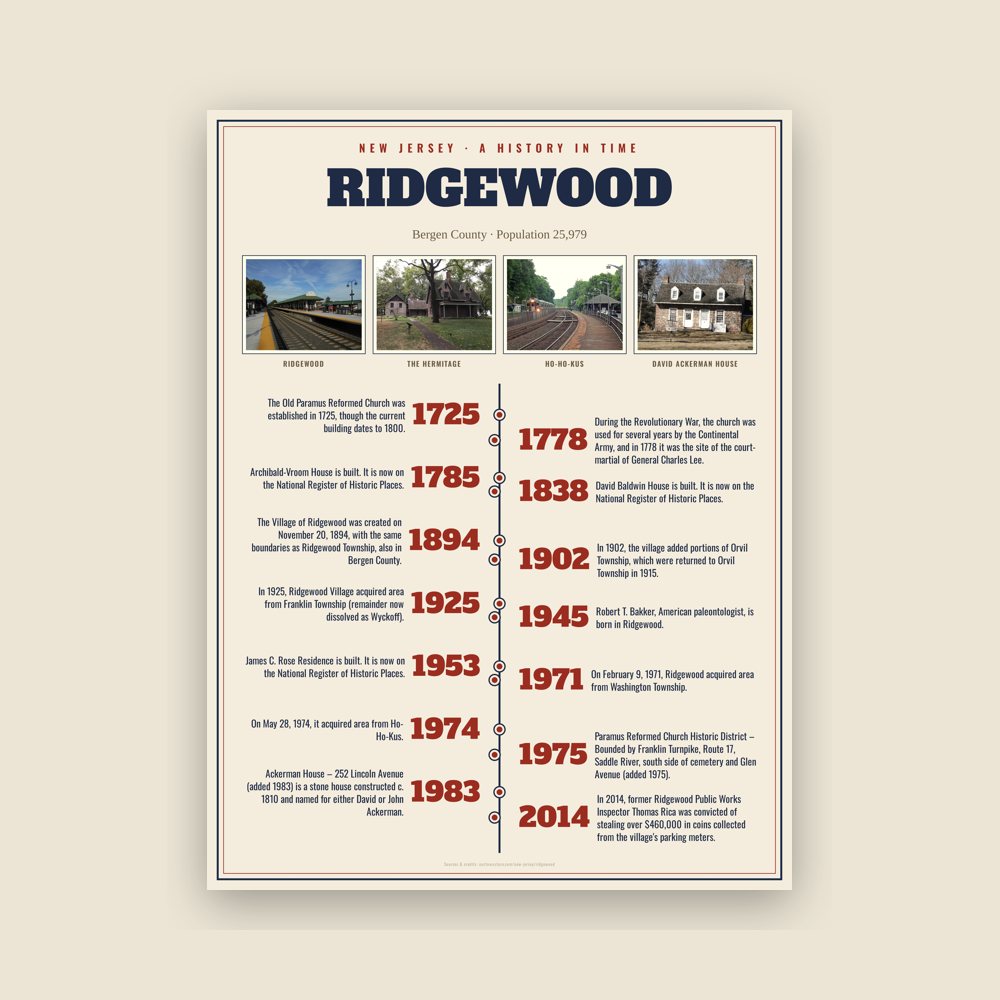
The Village of Ridgewood was created on November 20, 1894, with the same boundaries as Ridgewood Township, also in Bergen County. The Village became the municipal government while the Township remained a school district. In 1902, the village added portions of Orvil Township, which were returned to Orvil Township in 1915. In 1925, Ridgewood Village acquired area from Franklin Township (remainder now dissolved as Wyckoff). On February 9, 1971, Ridgewood acquired area from Washington Township. On May 28, 1974, it acquired area from Ho-Ho-Kus. The name of the village derives from the characteristics of its terrain.
In 2014, former Ridgewood Public Works Inspector Thomas Rica was convicted of stealing over $460,000 in coins collected from the village's parking meters. Rica was ordered to pay the entire amount back to the village and was permanently barred from seeking public employment in the state of New Jersey.
Read the full history
Historic sites
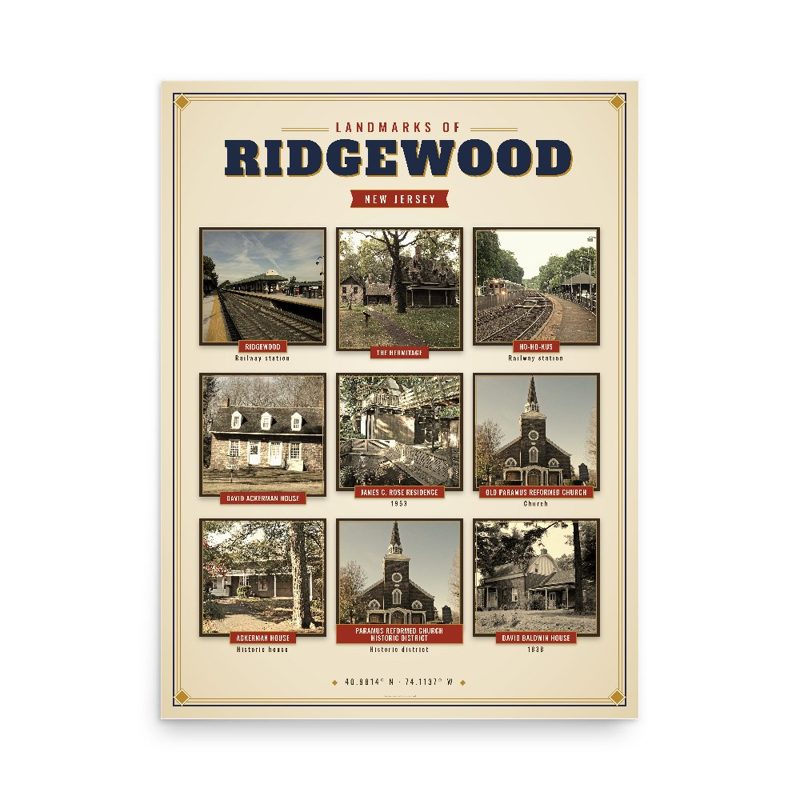
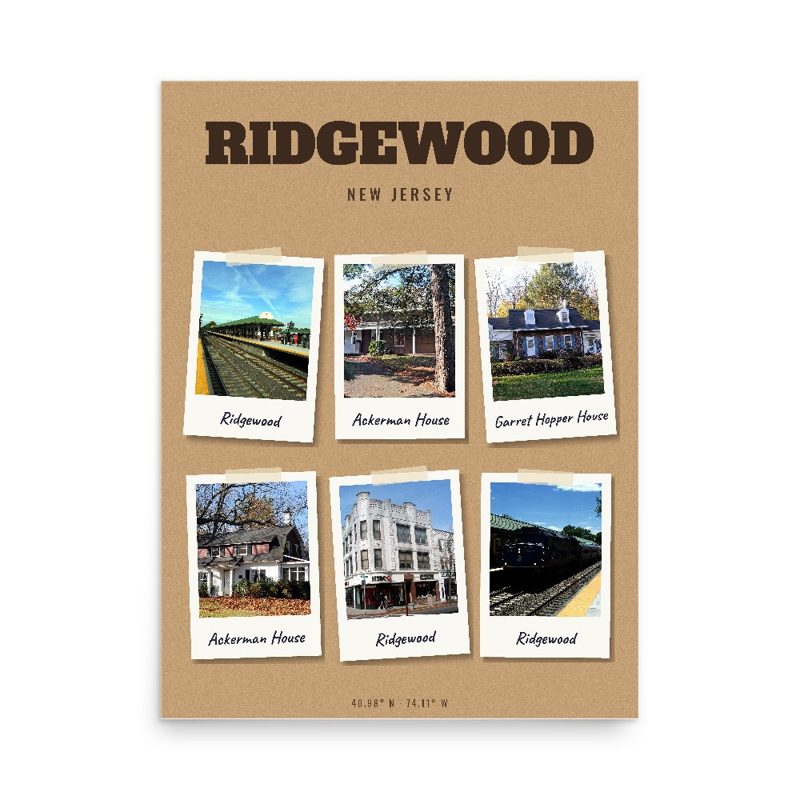
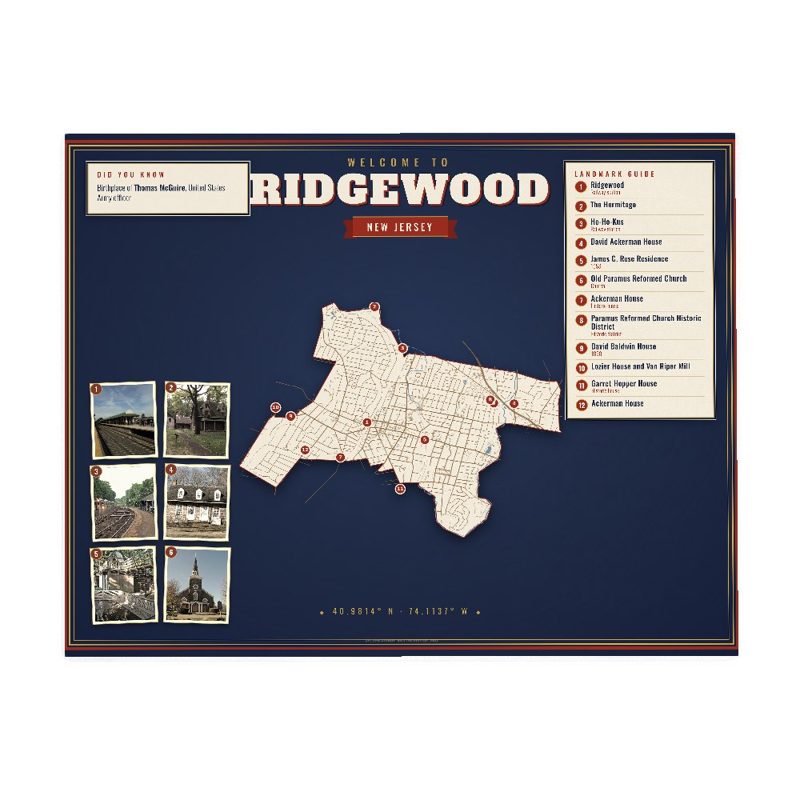
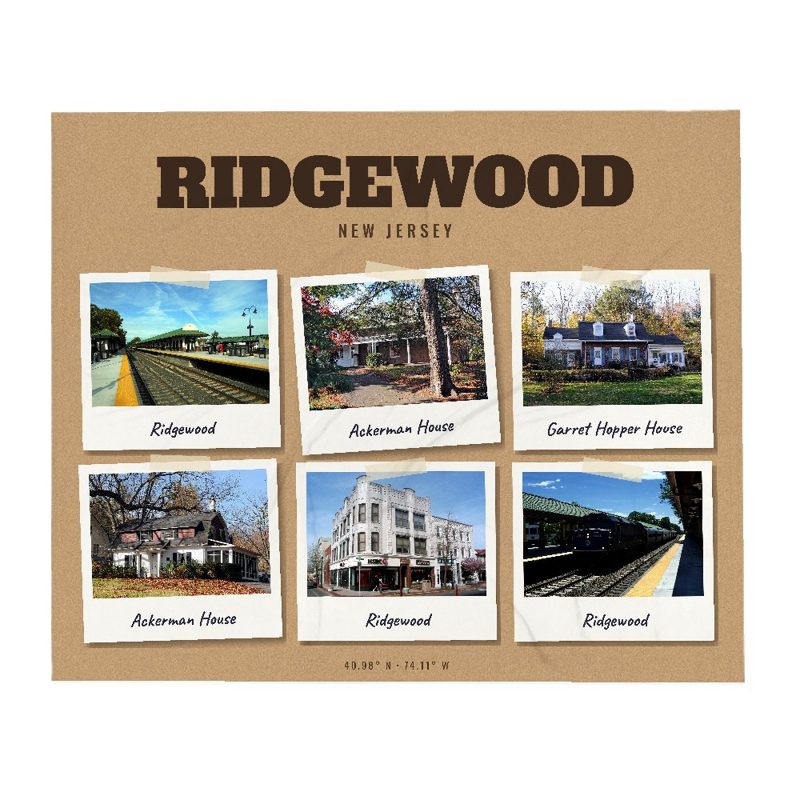
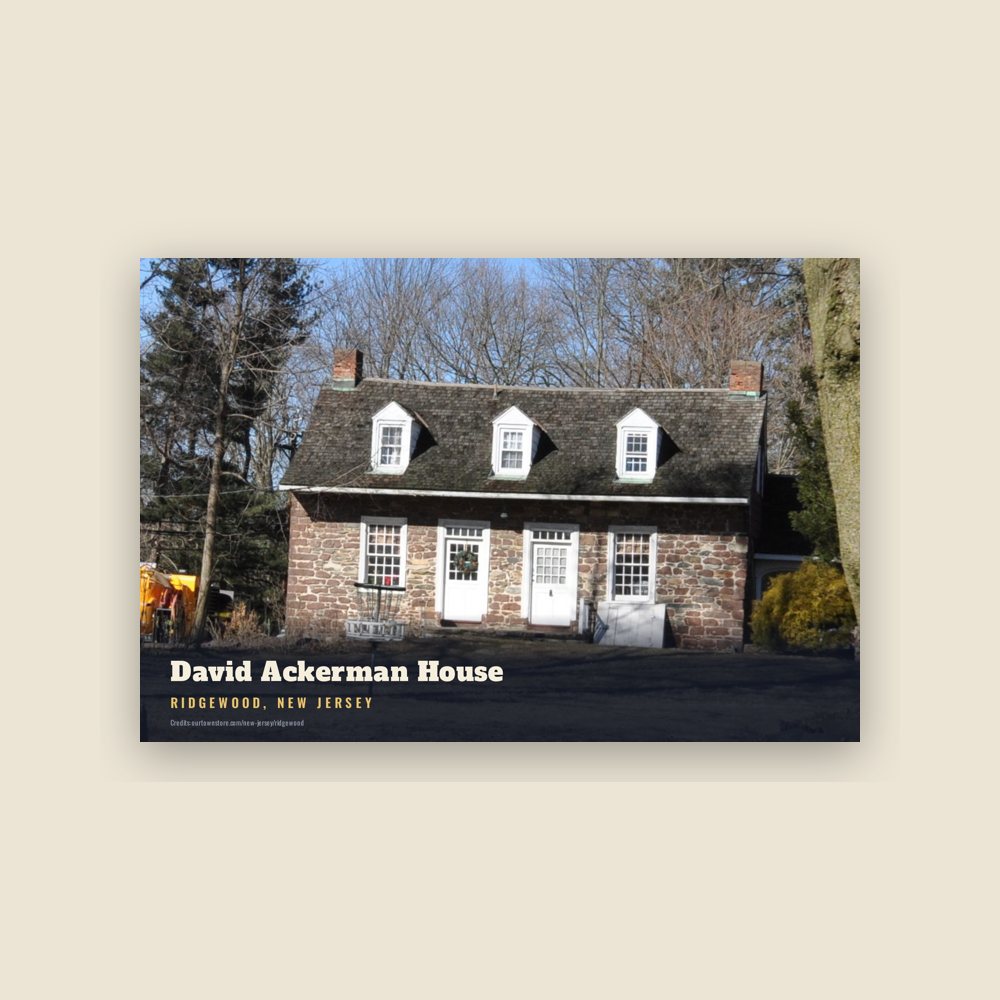
Ackerman House – 222 Doremus Avenue (added 1983) was constructed by Johannes and Jemima Ackerman c. 1787 on their 72-acre (29 ha) property and remained in the Ackerman family until the 1920s.
Ackerman House – 252 Lincoln Avenue (added 1983) is a stone house constructed c. 1810 and named for either David or John Ackerman.
Ackerman–Van Emburgh House – 789 East Glen Avenue (added 1983) was built c. 1785 by John Ackerman and purchased by the Van Embergh family in 1816.
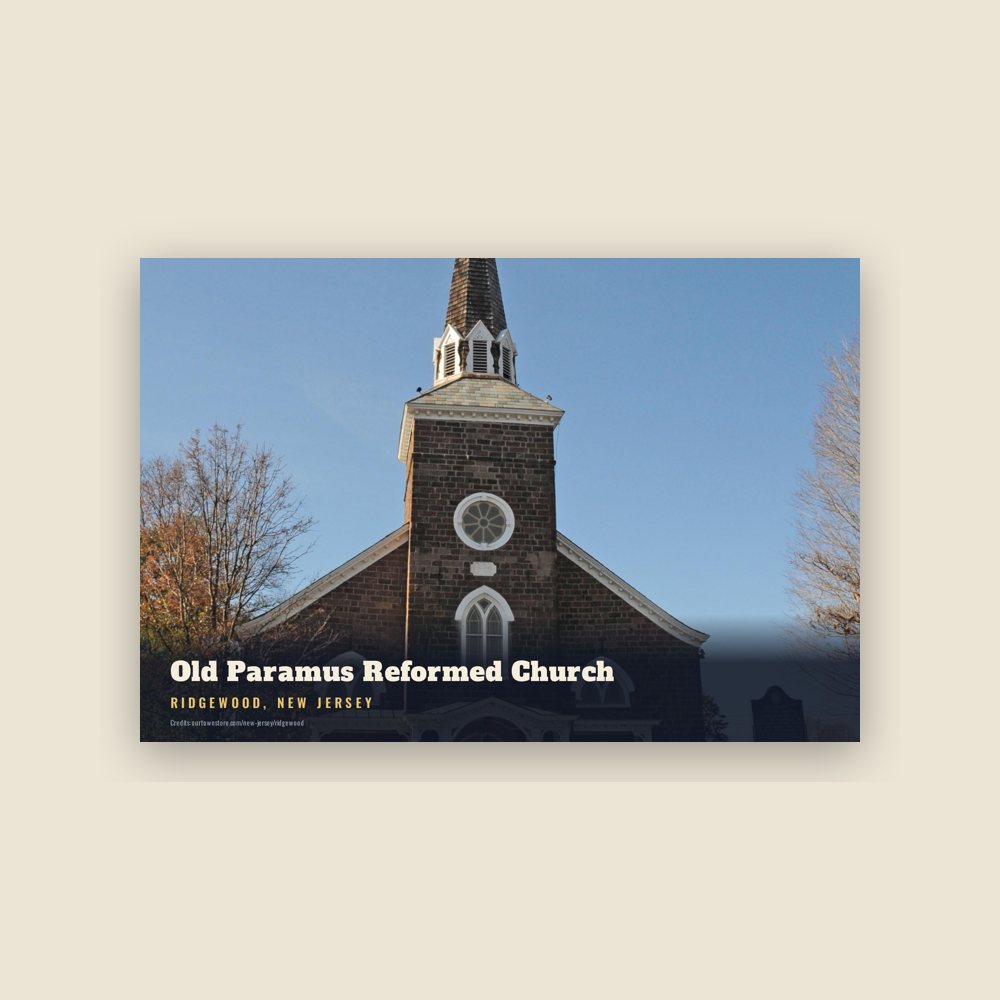
Paramus Reformed Church Historic District – Bounded by Franklin Turnpike, Route 17, Saddle River, south side of cemetery and Glen Avenue (added 1975). The Old Paramus Reformed Church was established in 1725, though the current building dates to 1800. During the Revolutionary War, the church was used for several years by the Continental Army, and in 1778 it was the site of the court-martial of General Charles Lee.
Adapted (trimmed) from the Wikipedia article Ridgewood, New Jersey, revision 1383930416 by its contributors, licensed CC BY-SA 4.0.