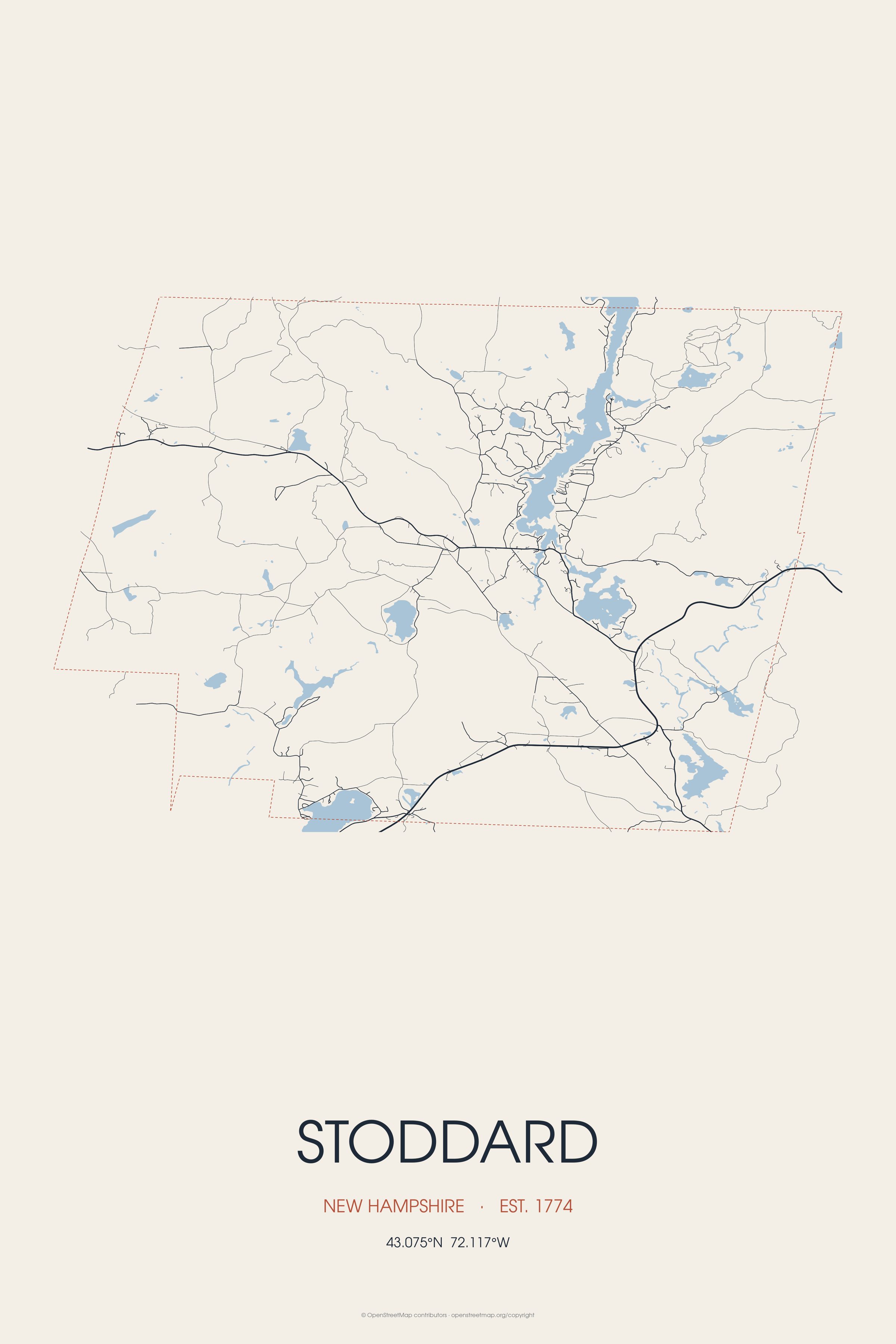
This territory was first granted in 1752 to Colonel Sampson Stoddard of Chelmsford, Massachusetts, and others as "Monadnock Number 7". Stoddard is the birthplace of Almon Harris Thompson, geologist.
Every piece is drawn from Stoddard's own map data and historic archives, then printed and shipped from the USA when you order. No two towns look alike.
Every road in town, on archival matte paper
The same map, in navy and silver
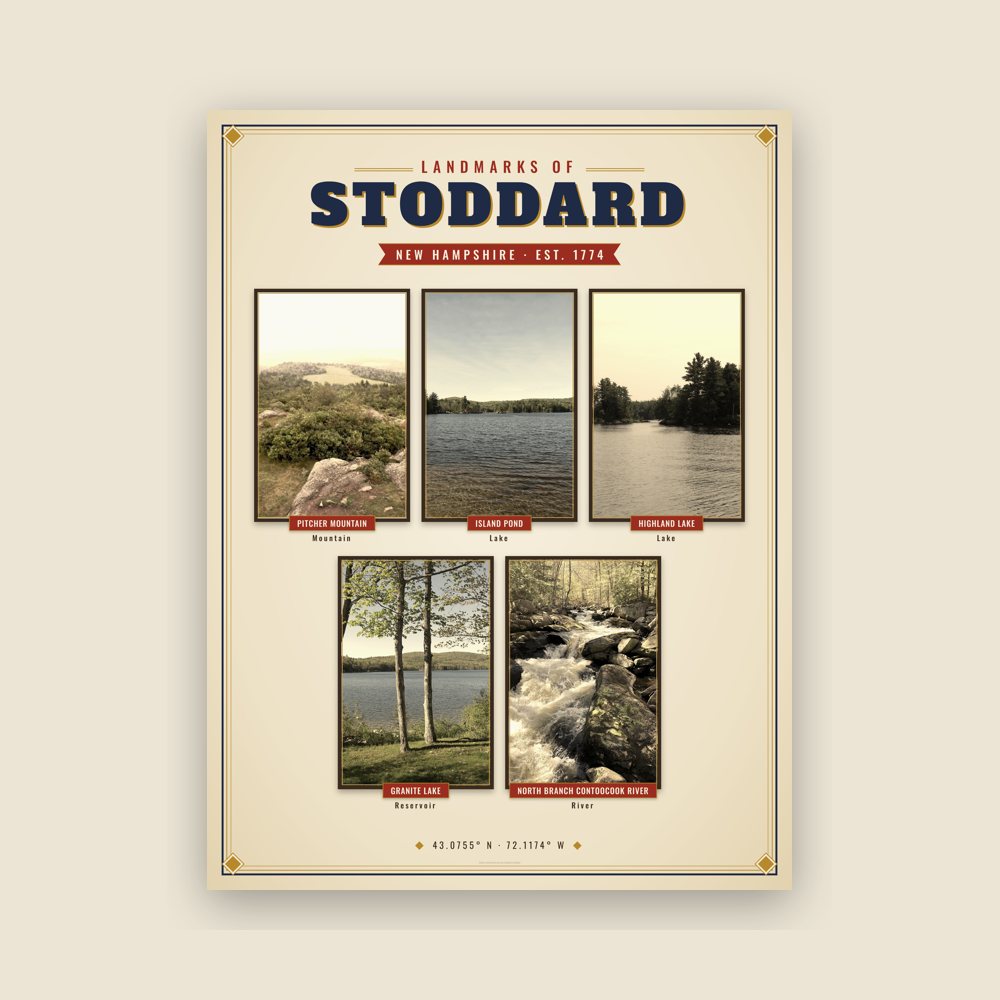
Nine local landmarks, archival matte
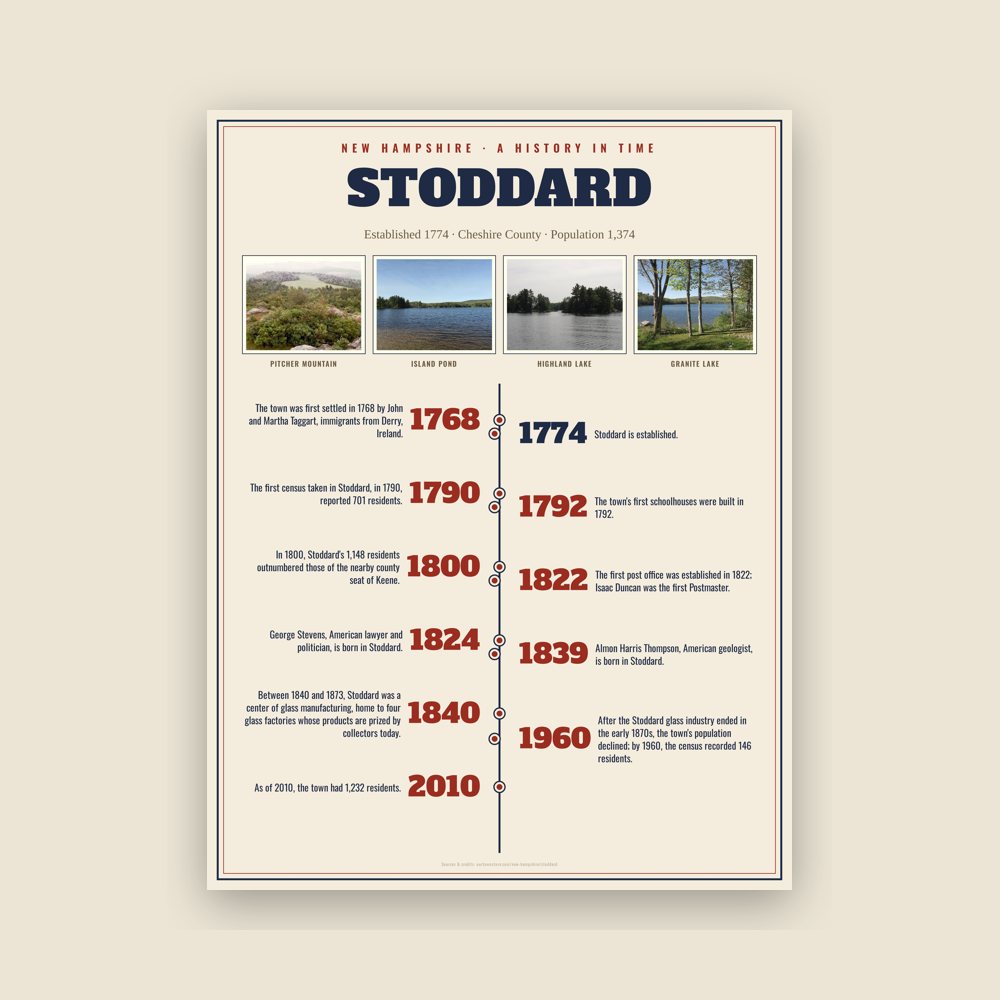
The town's story in dates, from its own records, for home or classroom
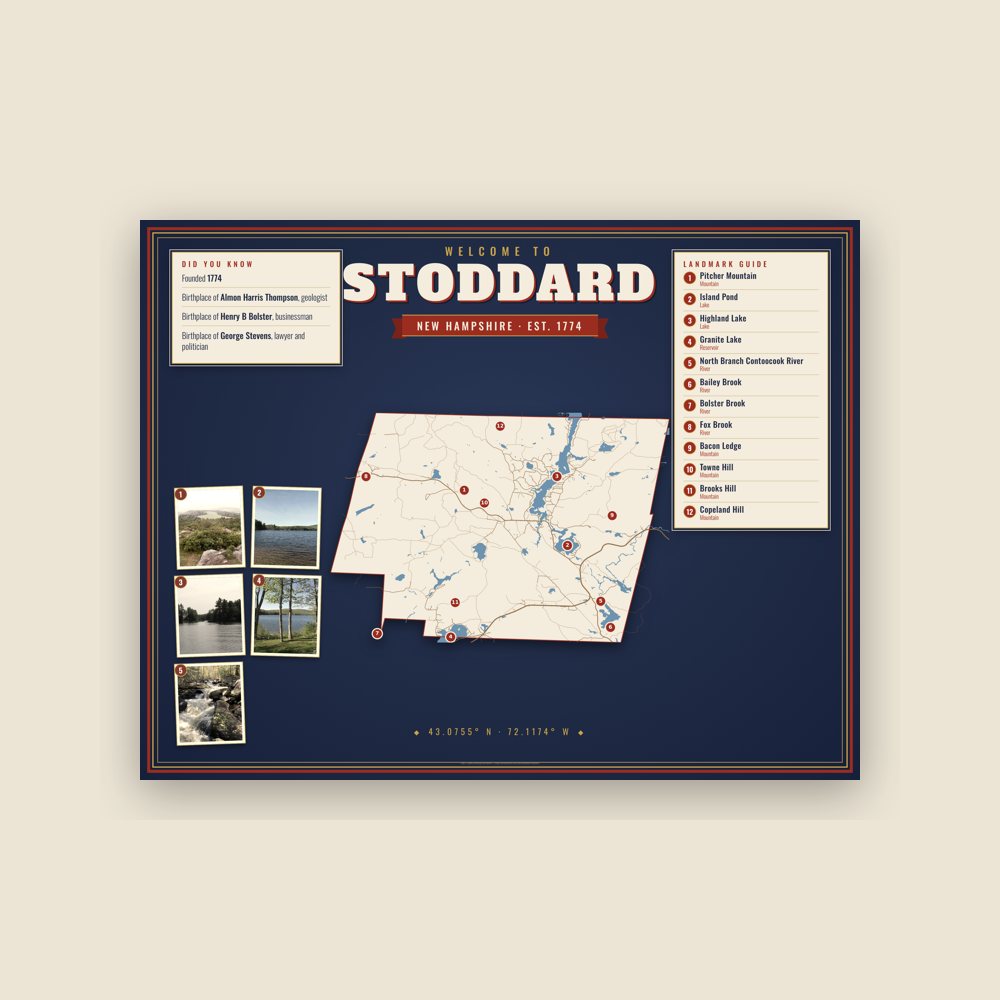
Map of local landmarks, washable fabric
Heavy-blend fleece, street map printed on the back
Soft Bella+Canvas jersey
Glossy ceramic, dishwasher safe
Ceramic keepsake, gold ribbon
Weatherproof, for the front walk
24″×16″, printed coir-look fibers, rubber back
12″×12″ printed wood, ready to hang
Soft-touch, zip cover
Sturdy all-over-print tote
Glossy top, cork back
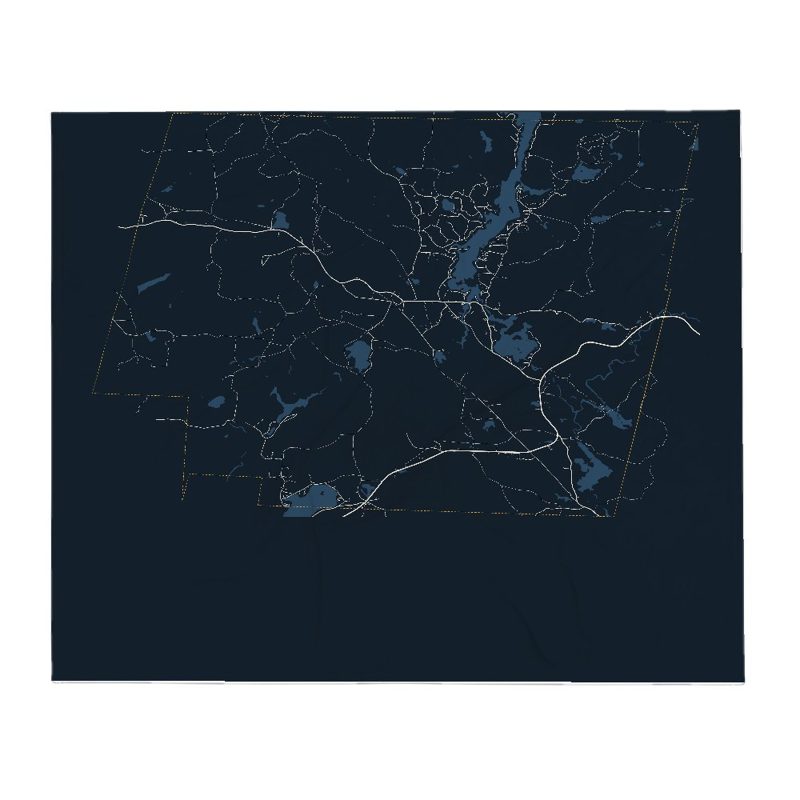
Soft fleece, 50″×60″
20 oz, double-wall stainless
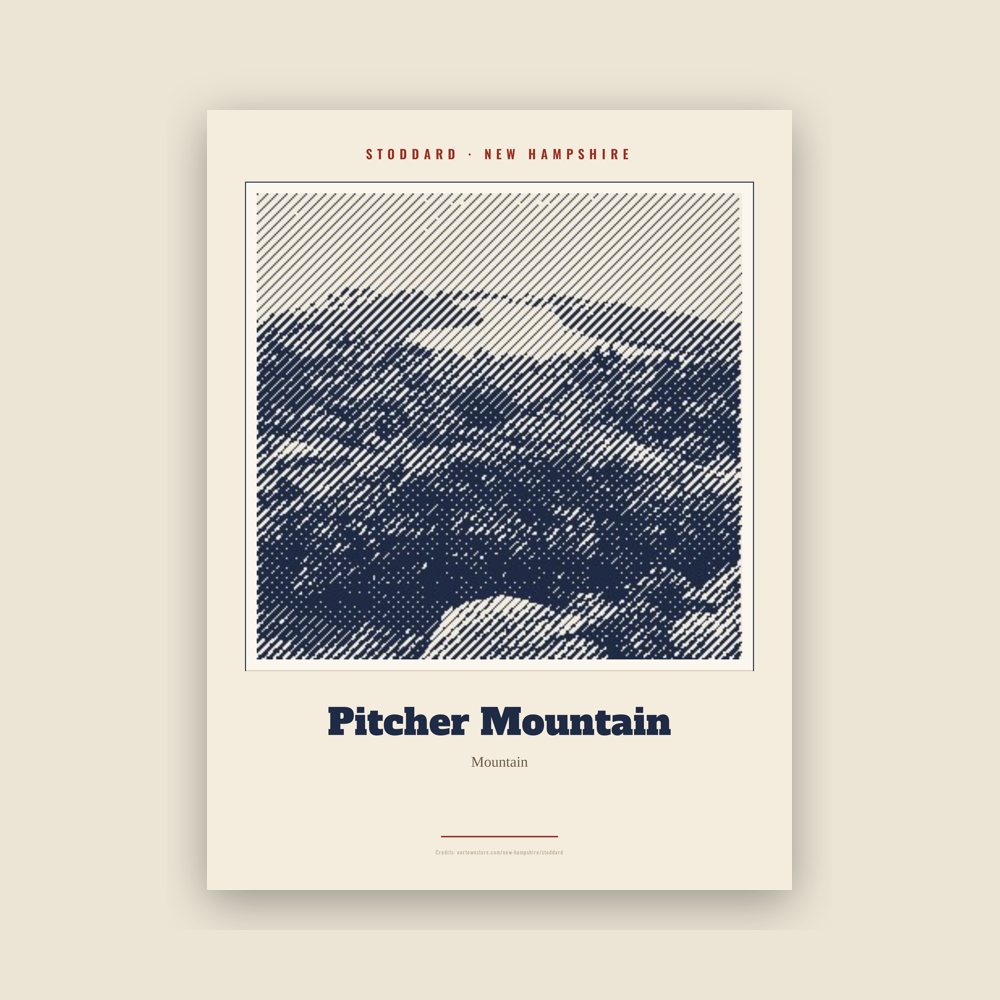
Archival matte print of a local landmark, credited to its photographer
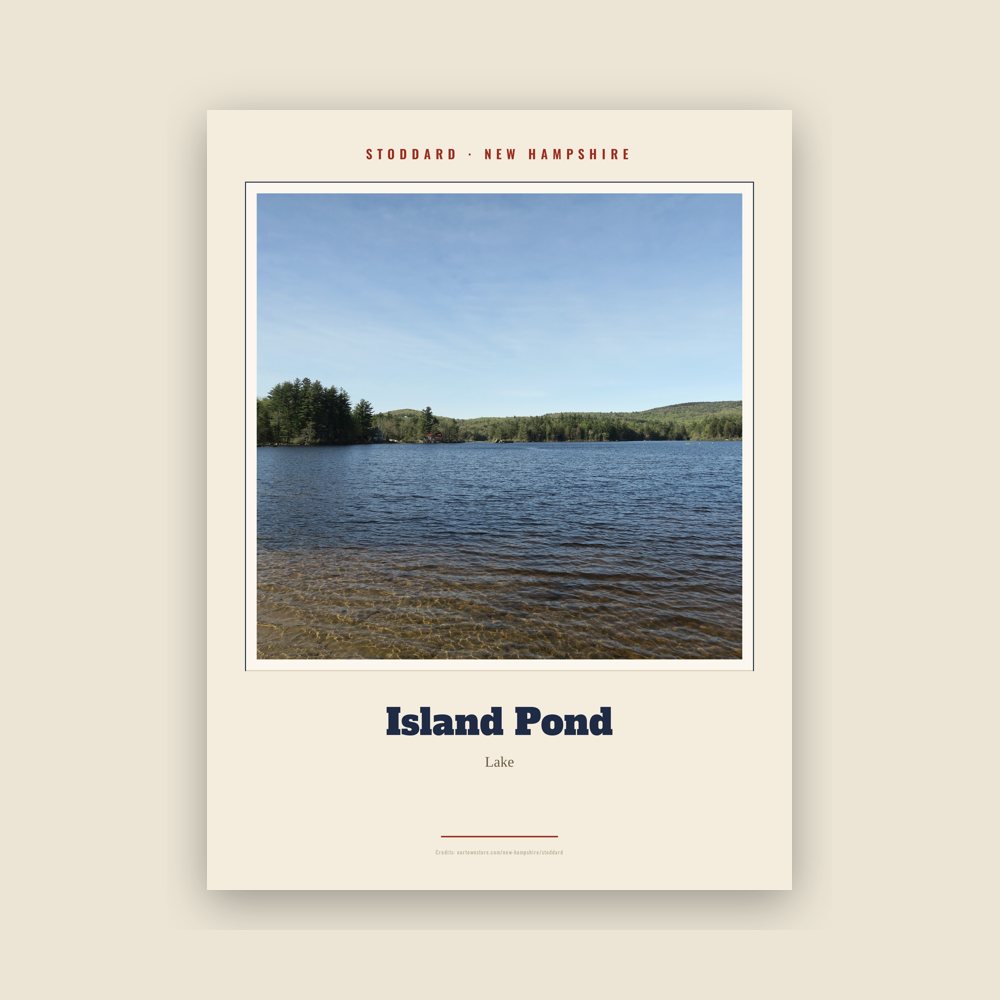
Archival matte print of a local landmark, credited to its photographer
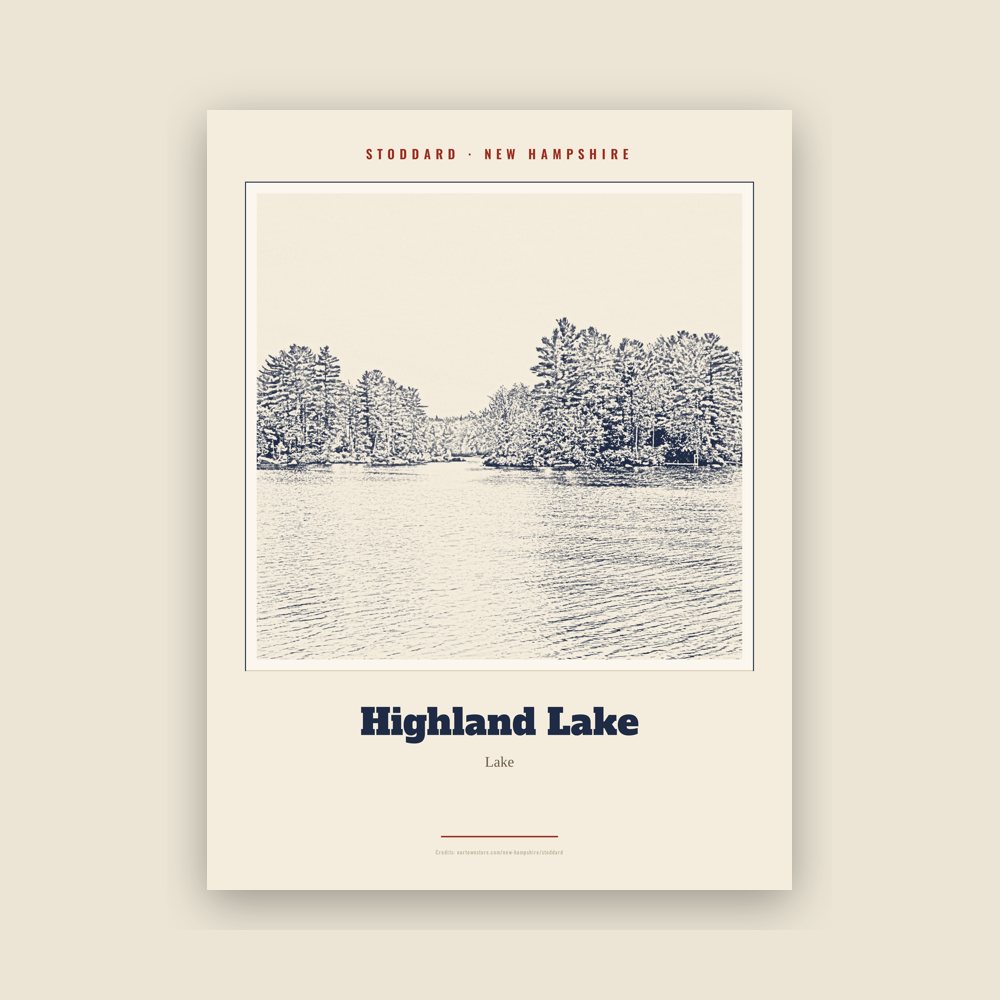
Archival matte print of a local landmark, credited to its photographer
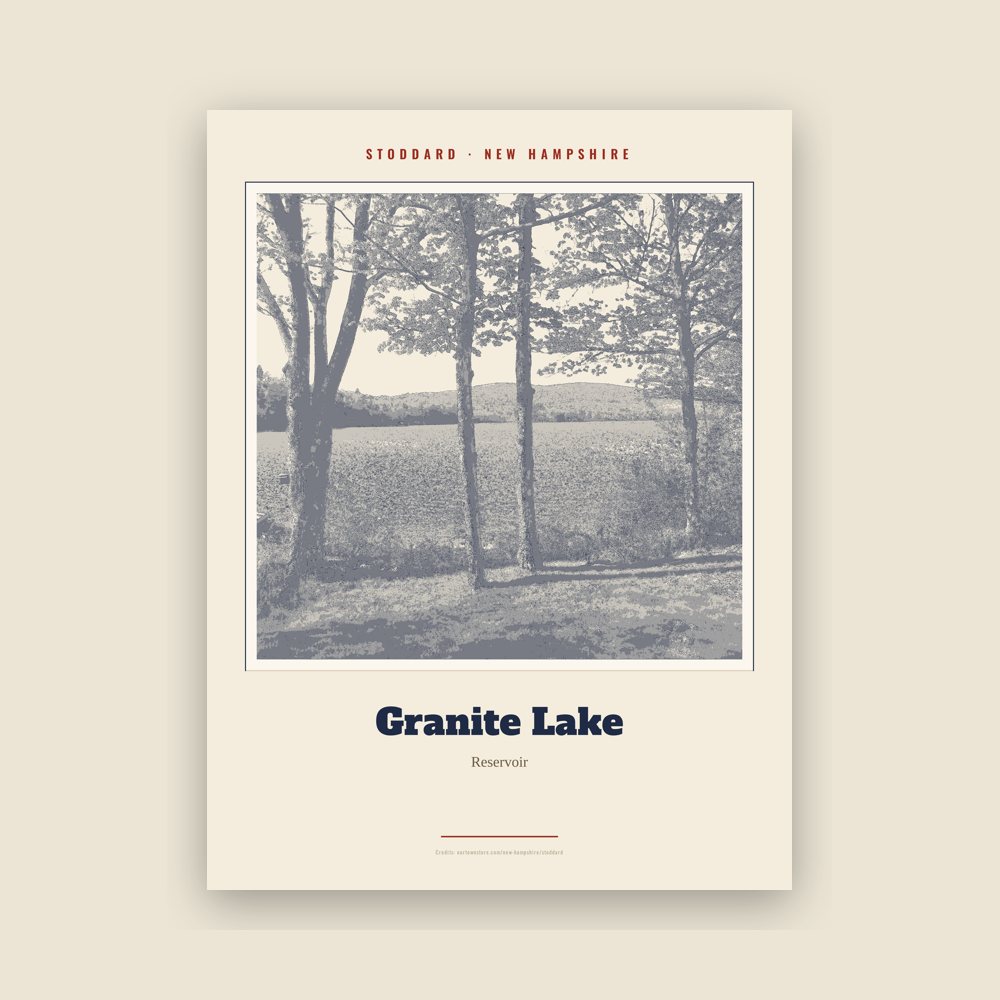
Archival matte print of a local landmark, credited to its photographer
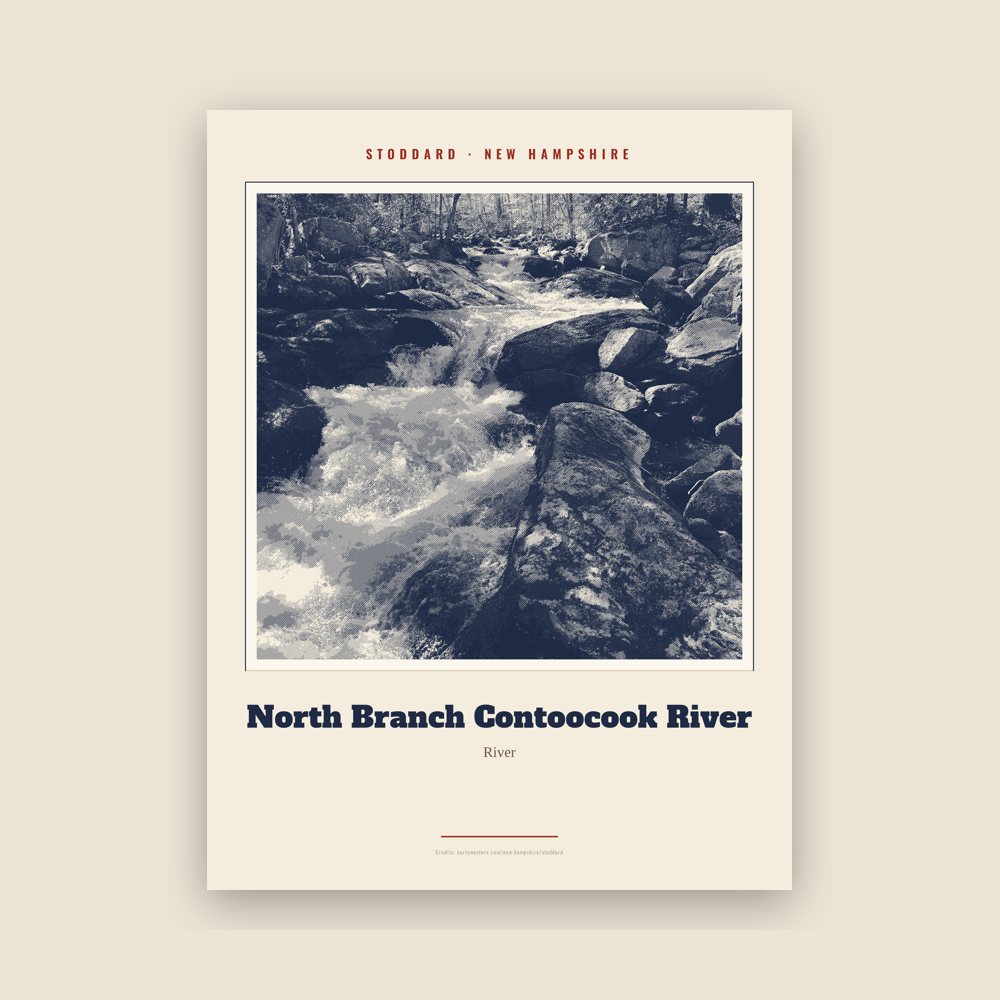
Archival matte print of a local landmark, credited to its photographer
6″×4″ postcard, glossy front
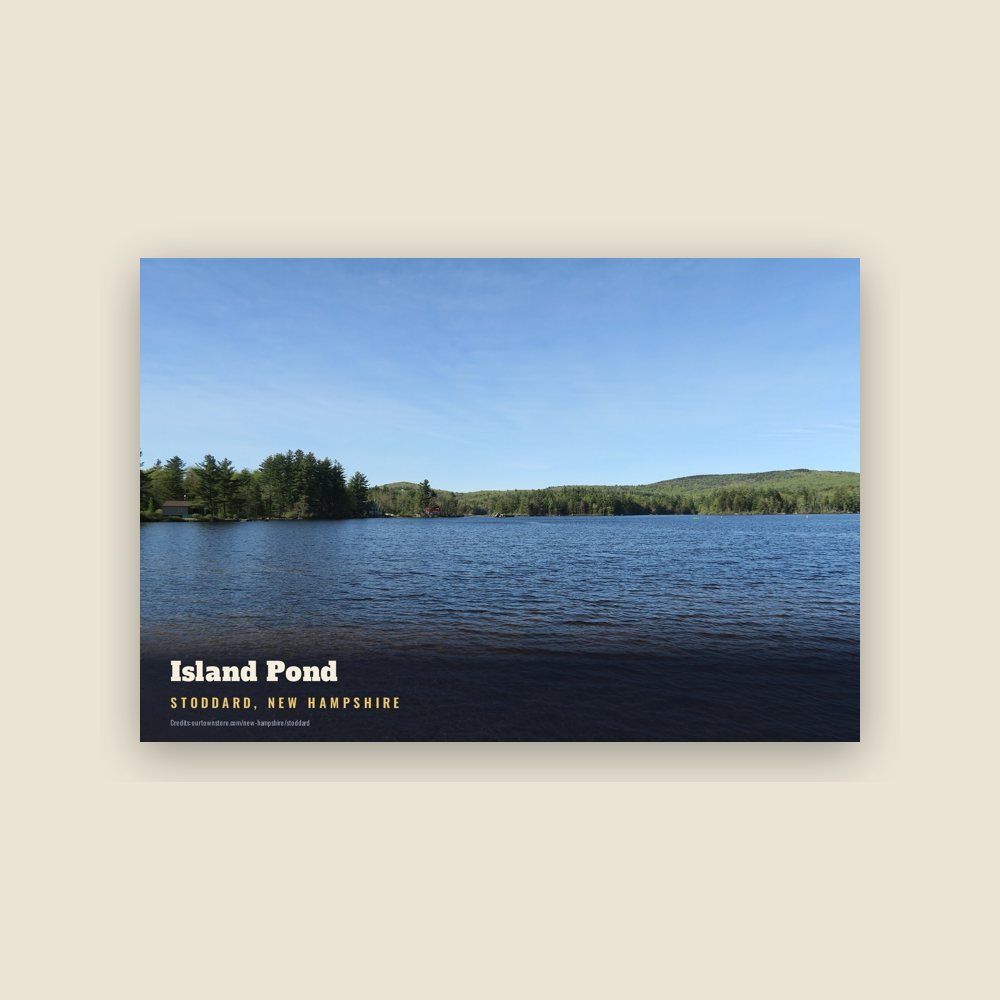
6″×4″ postcard, glossy front
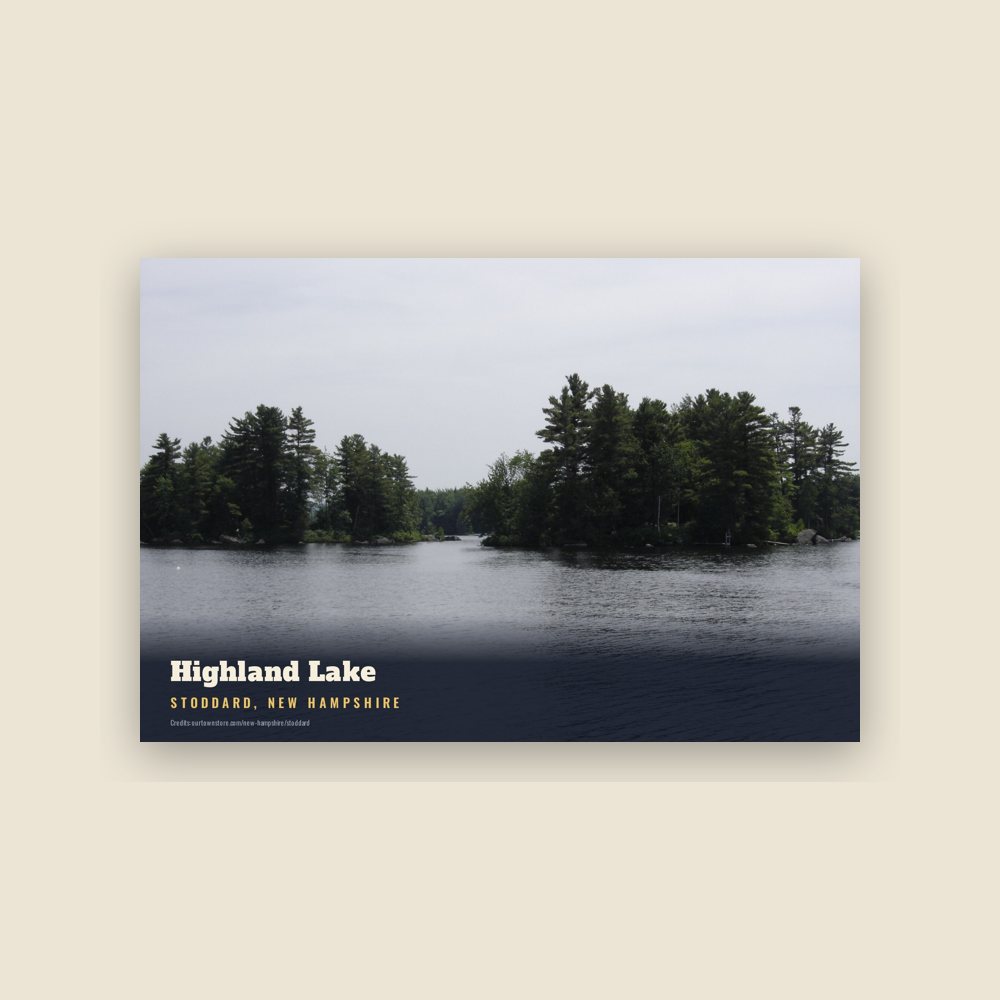
6″×4″ postcard, glossy front
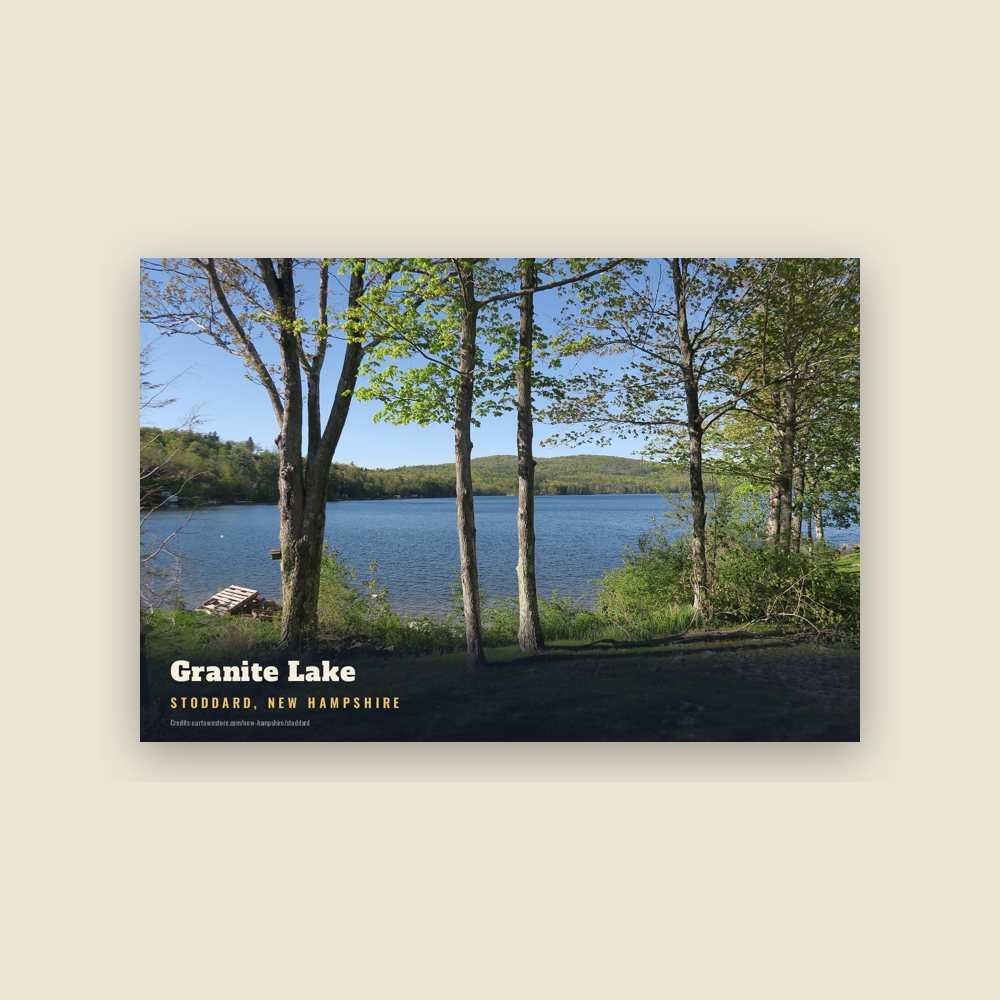
6″×4″ postcard, glossy front
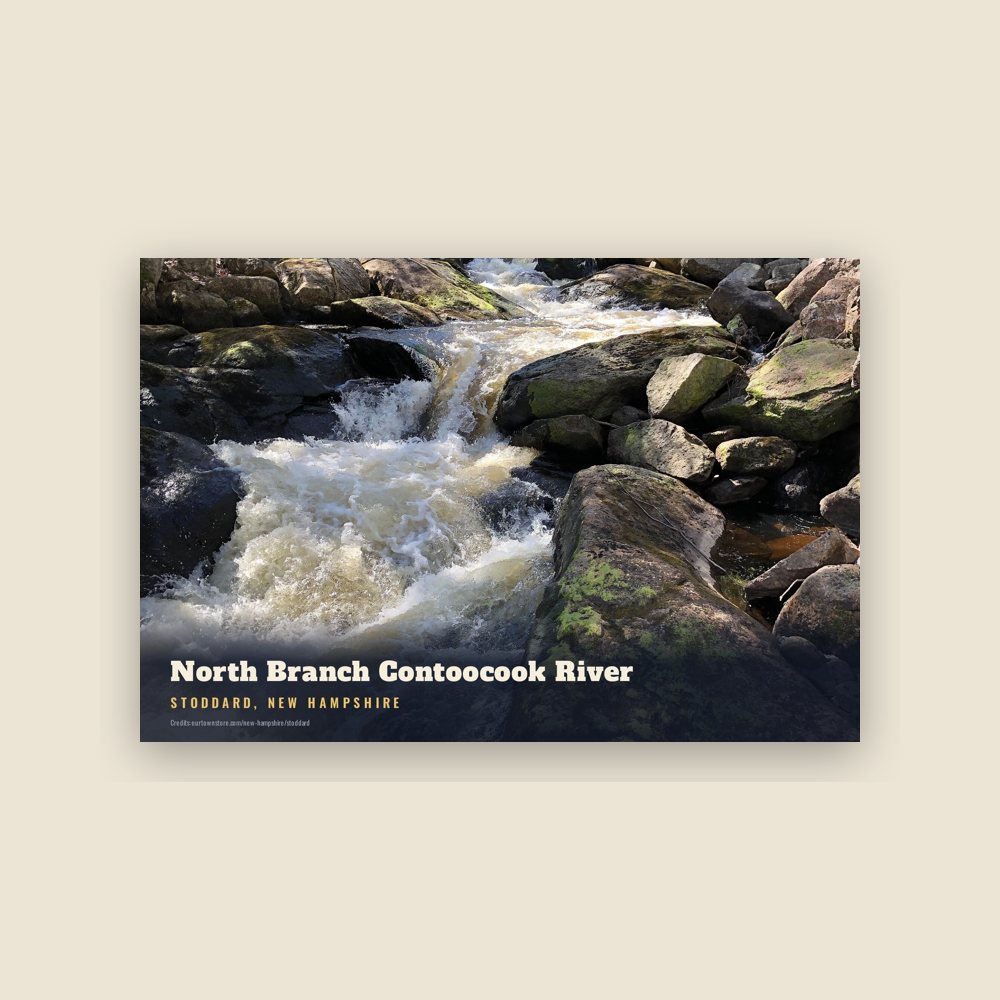
6″×4″ postcard, glossy front
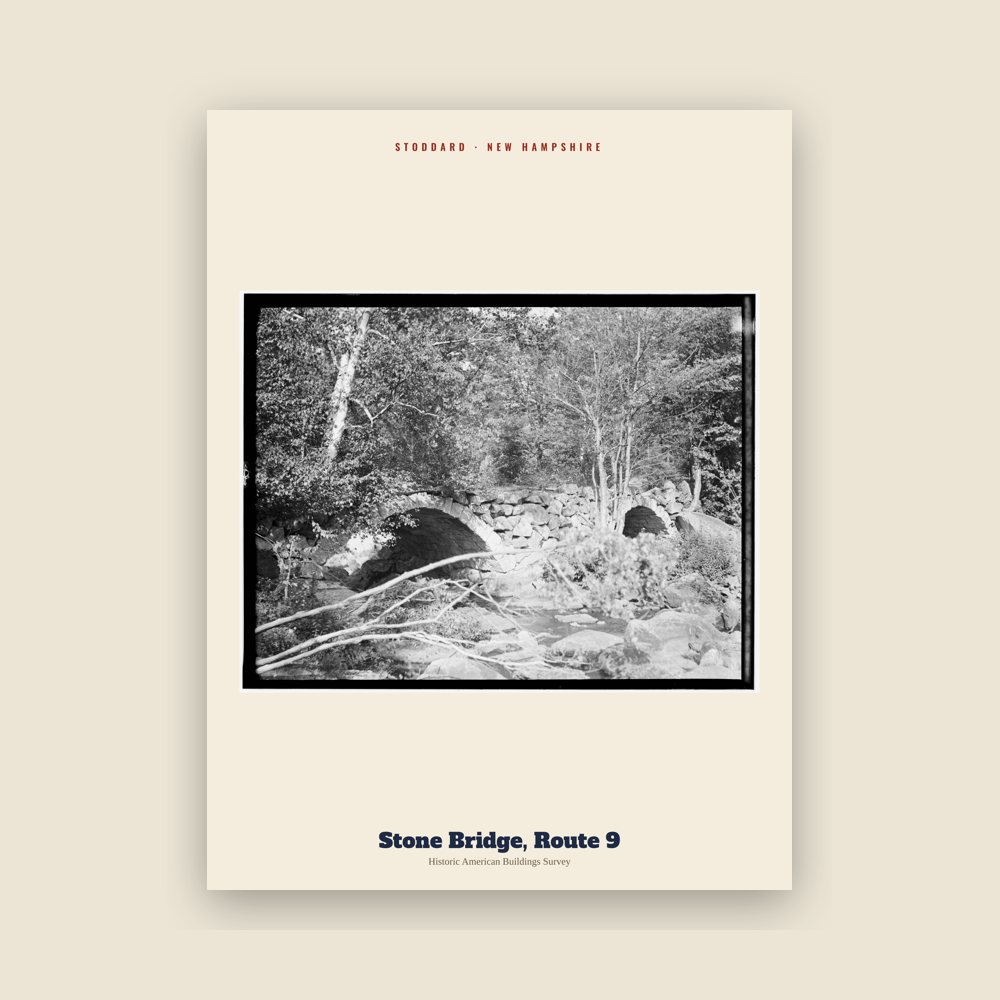
From the Library of Congress collections: a historic survey drawing or photograph of the town
Population 2010: 1,232 → 2020: 1,374
From Wikidata (CC0).
This territory was first granted in 1752 to Colonel Sampson Stoddard of Chelmsford, Massachusetts, and others as "Monadnock Number 7". It was known locally as "Limerick" before being incorporated as Stoddard in 1774, in honor of Colonel Stoddard.
Colonel Stoddard was appointed to survey southwestern New Hampshire by the colonial government, receiving several land grants for the service. One of his surveying assistants was Benjamin Pierce, father of U.S. President Franklin Pierce. Colonel Stoddard never lived in the town of Stoddard.
The town was first settled in 1768 by John and Martha Taggart, immigrants from Derry, Ireland. Three years later, the Richardson family joined the Taggarts in Stoddard. By 1774, the town had 24 residents.
The first census taken in Stoddard, in 1790, reported 701 residents. The town's first schoolhouses were built in 1792. The first post office was established in 1822; Isaac Duncan was the first Postmaster.
In 1800, Stoddard's 1,148 residents outnumbered those of the nearby county seat of Keene. During Stoddard's glass-manufacturing years, 800 people were employed by the industry. After the Stoddard glass industry ended in the early 1870s, the town's population declined; by 1960, the census recorded 146 residents. As of 2010, the town had 1,232 residents.
Between 1840 and 1873, Stoddard was a center of glass manufacturing, home to four glass factories whose products are prized by collectors today. The town's abundant forests fed the industry's need for the 1,200 °F (650 °C) temperatures necessary to melt sand into glass. Stoddard also had plenty of clear, fine sand. The sand's trace minerals gave Stoddard glass its unique hues: manganese produced the olive green and amber colors most closely associated with Stoddard glass, and oxide of gold created a red-amber glass.
The glass houses were located in two settlements within Stoddard: Joseph Foster's and the South Stoddard Glass Company were located in South Stoddard, which was located near the present-day intersection of state Routes 9 and 123. The Granite Glass Company and the New Granite Glass Works were located in Mill Village, near the present town center.
Among the wide variety of glass pieces turned out by the glass houses were Masonic flasks, containers for liquor and patent medicines, and bottles for mineral water bottled in Saratoga Springs, New York. However, the fame of Stoddard glass does not come primarily from these commercial items, but from the "off-blown" pieces made by glassblowers at the end of the workday using leftover glass. These items, sometimes called "whimseys", could be anything desired by the glassblower, and were the property of the glassblower.
Several factors led to the demise of Stoddard's glass industry in the early 1870s. Other manufacturers had mastered the chemistry needed to create clear glass in quantity; gas and coal were now viable fuels for glassworks, eliminating the need for nearby forests; and improvements in mechanical manufacturing techniques made hand-blown glass economically unviable. The silica in Stoddard's sand prevented its use in making clear glass, which was in high demand after it became viable for bottles and glassware following the Civil War.
Adapted (trimmed) from the Wikipedia article Stoddard, New Hampshire, revision 1379963289 by its contributors, licensed CC BY-SA 4.0.
We share a part of every Stoddard sale with local partners, and we'd love to print from your collection. Old photographs, maps and postcards make the best keepsakes.
Partner with us