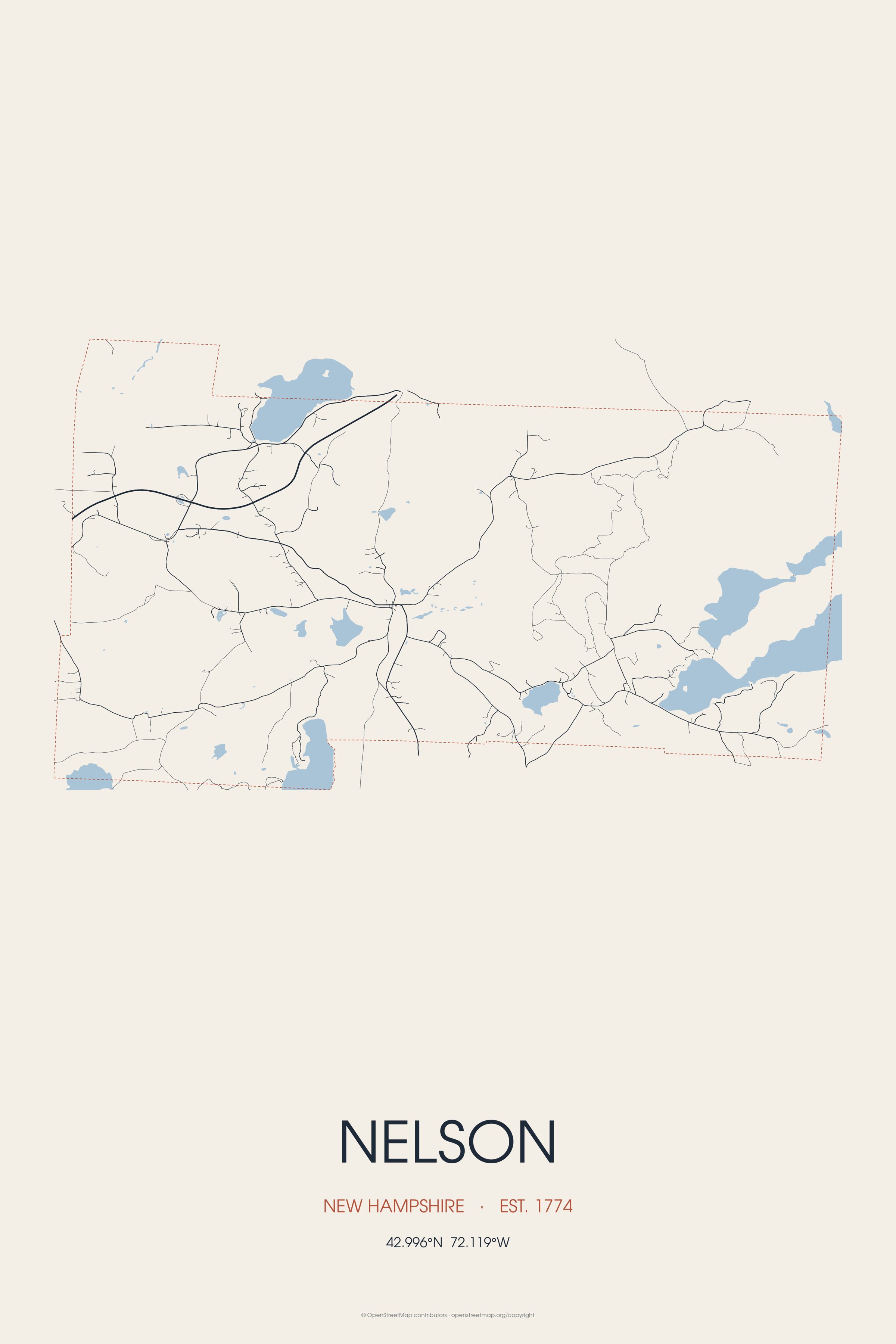
Nelson includes the village of Munsonville. Landmarks include Nelson Schoolhouse. Nelson is the birthplace of Alfred B. Kittredge, politician.
Every piece is drawn from Nelson's own map data and historic archives, then printed and shipped from the USA when you order. No two towns look alike.
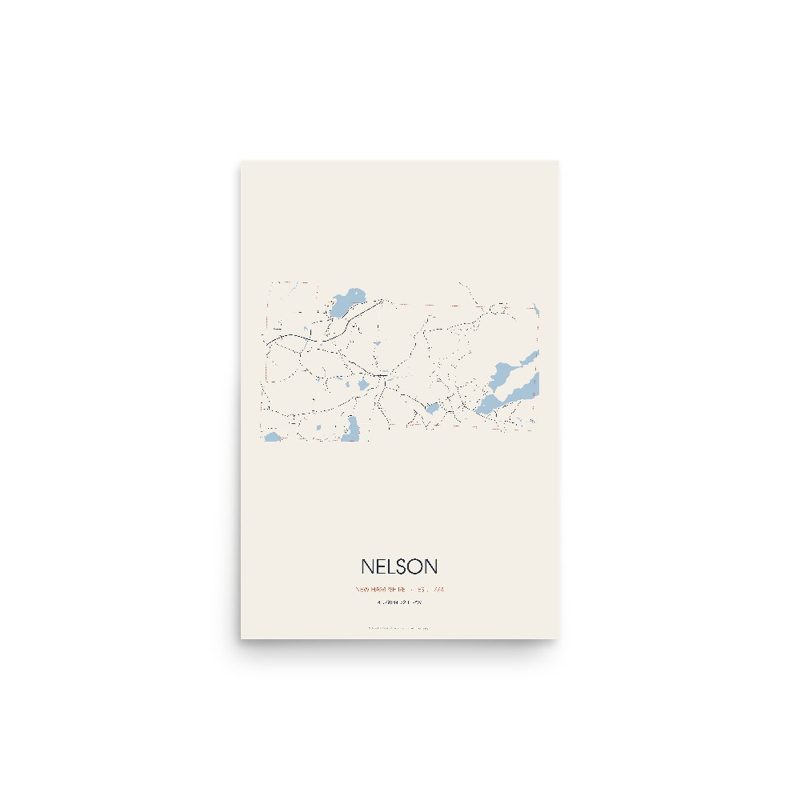
Every road in town, on archival matte paper
The same map, in navy and silver
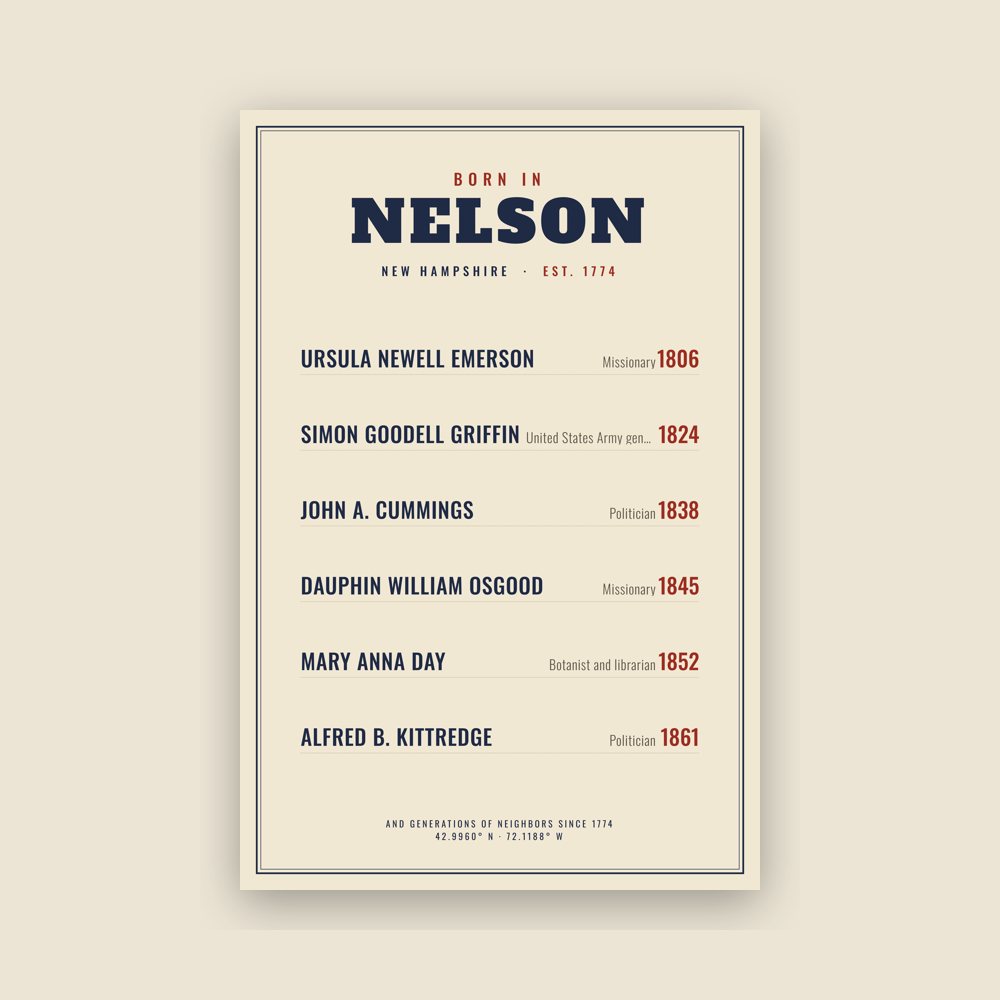
Famous natives, by birth year
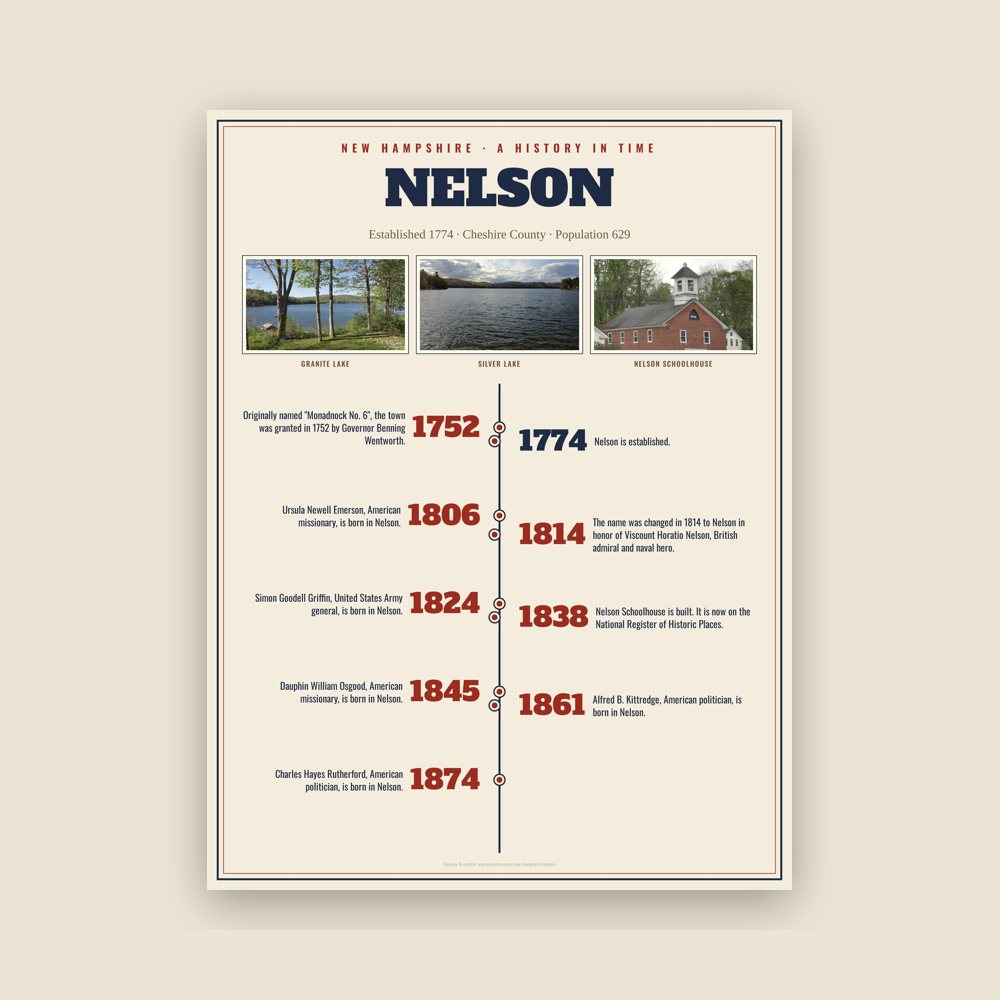
The town's story in dates, from its own records, for home or classroom
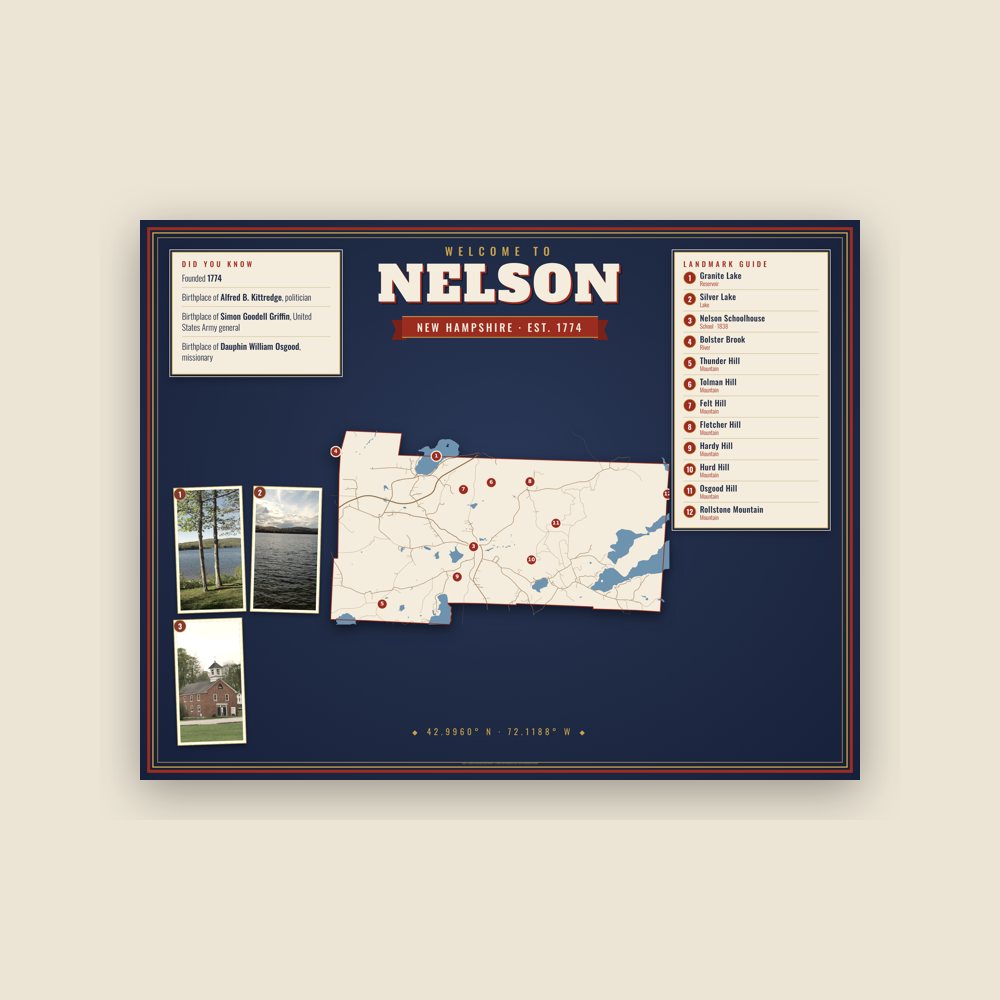
Map of local landmarks, washable fabric
Heavy-blend fleece, street map printed on the back
Soft Bella+Canvas jersey
Glossy ceramic, dishwasher safe
Ceramic keepsake, gold ribbon
Weatherproof, for the front walk
24″×16″, printed coir-look fibers, rubber back
12″×12″ printed wood, ready to hang
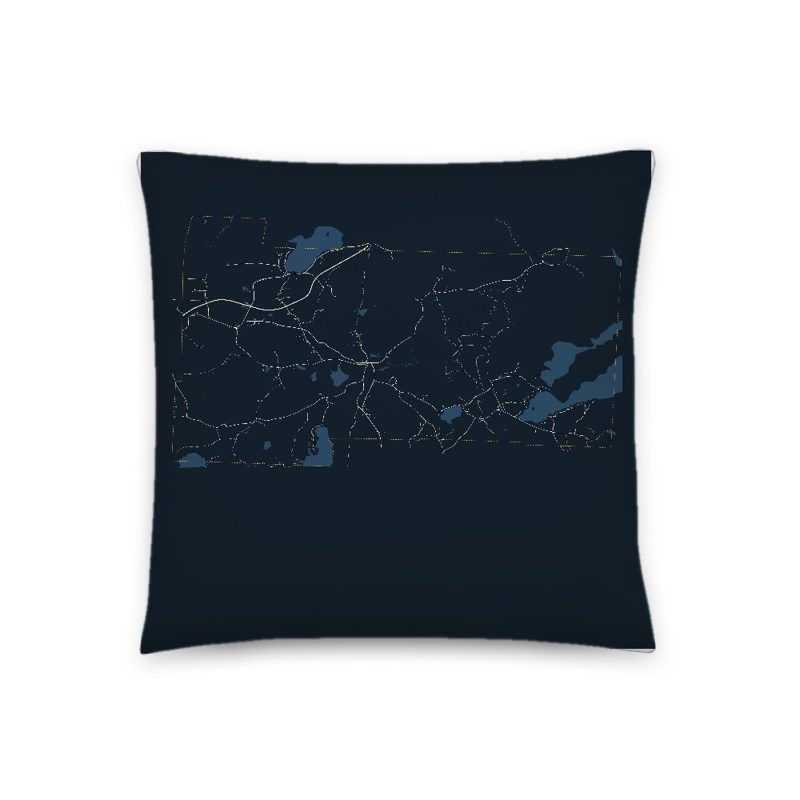
Soft-touch, zip cover
Sturdy all-over-print tote
Glossy top, cork back
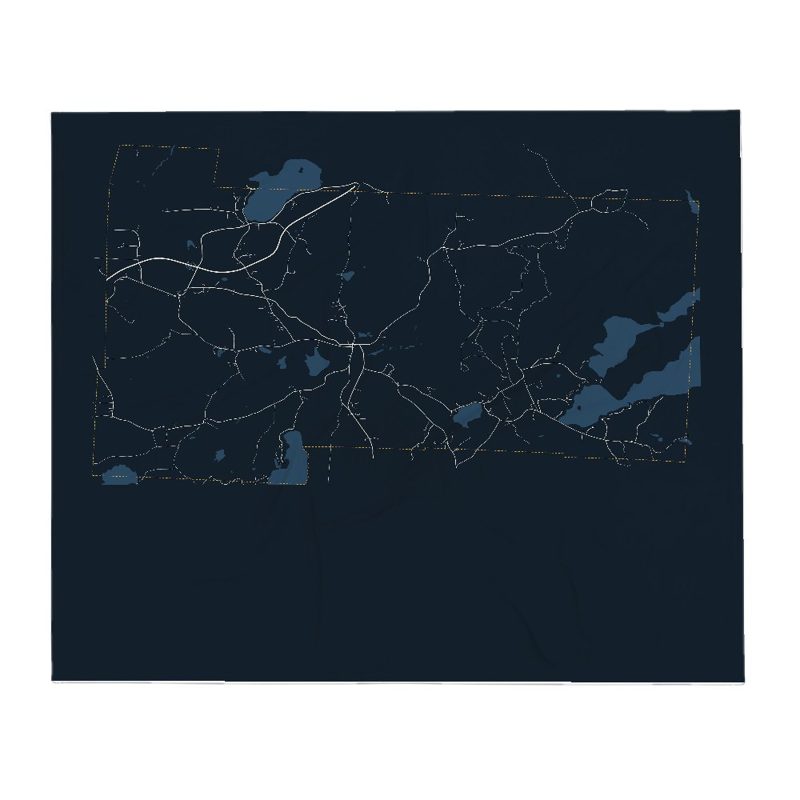
Soft fleece, 50″×60″
20 oz, double-wall stainless
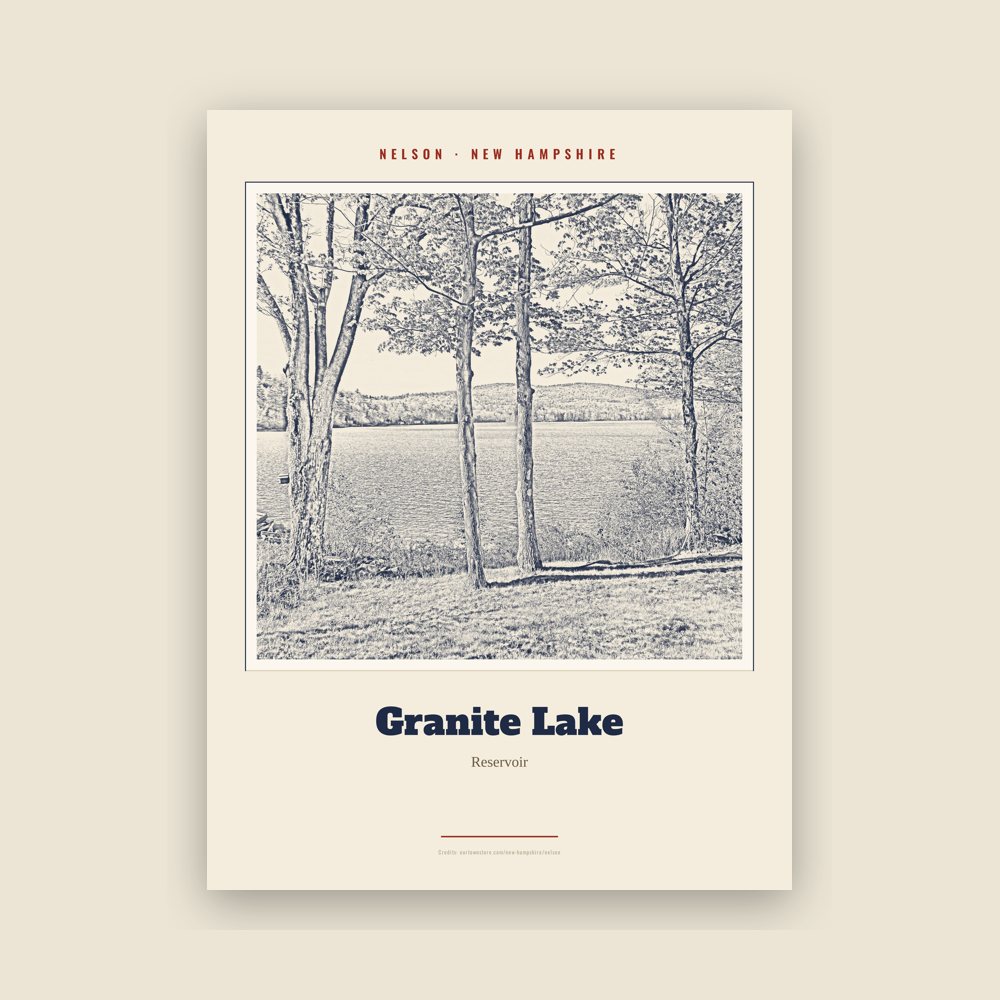
Archival matte print of a local landmark, credited to its photographer
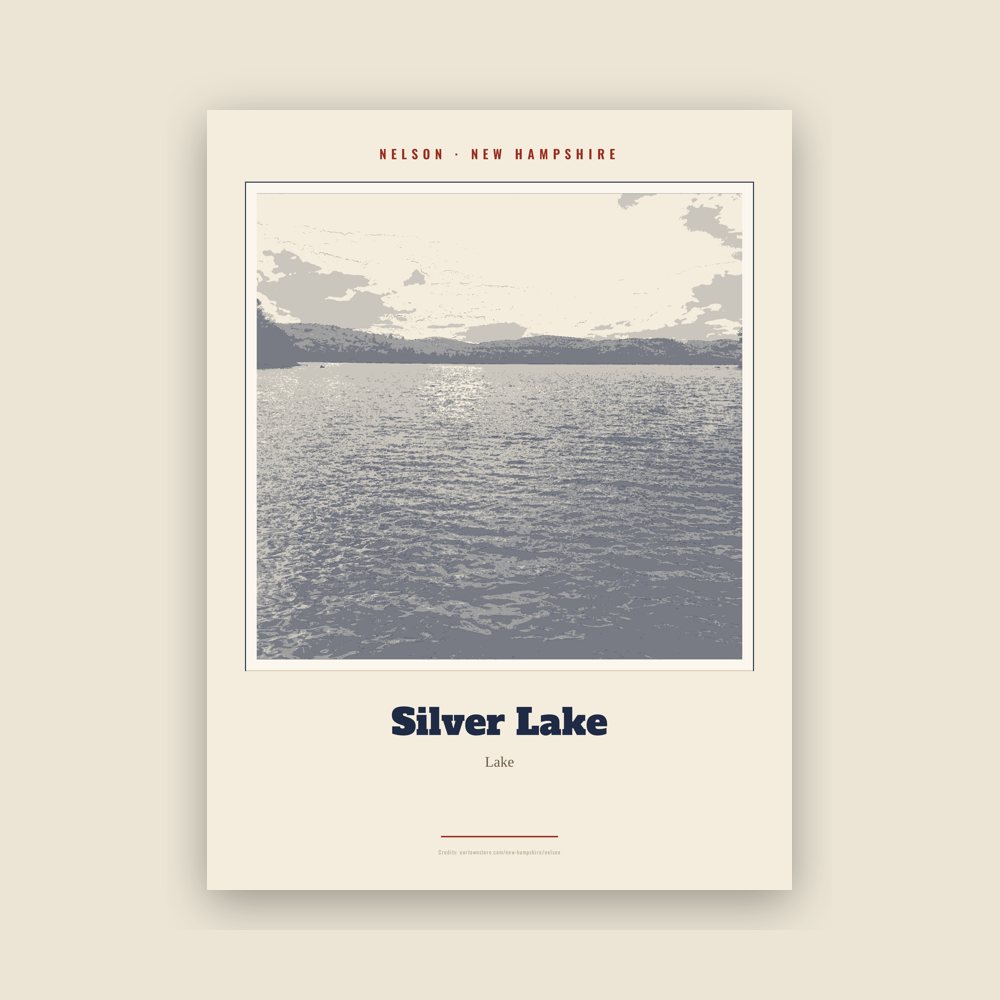
Archival matte print of a local landmark, credited to its photographer
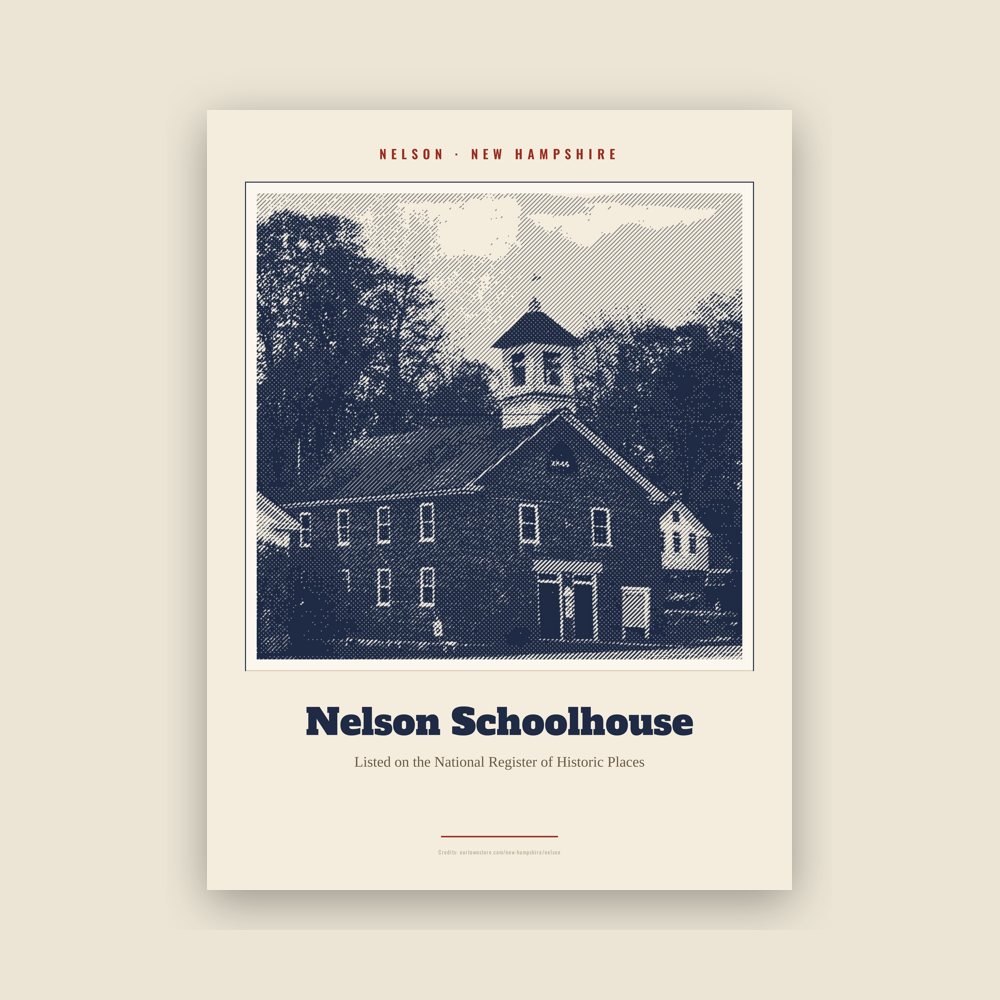
Archival matte print of a local landmark, credited to its photographer
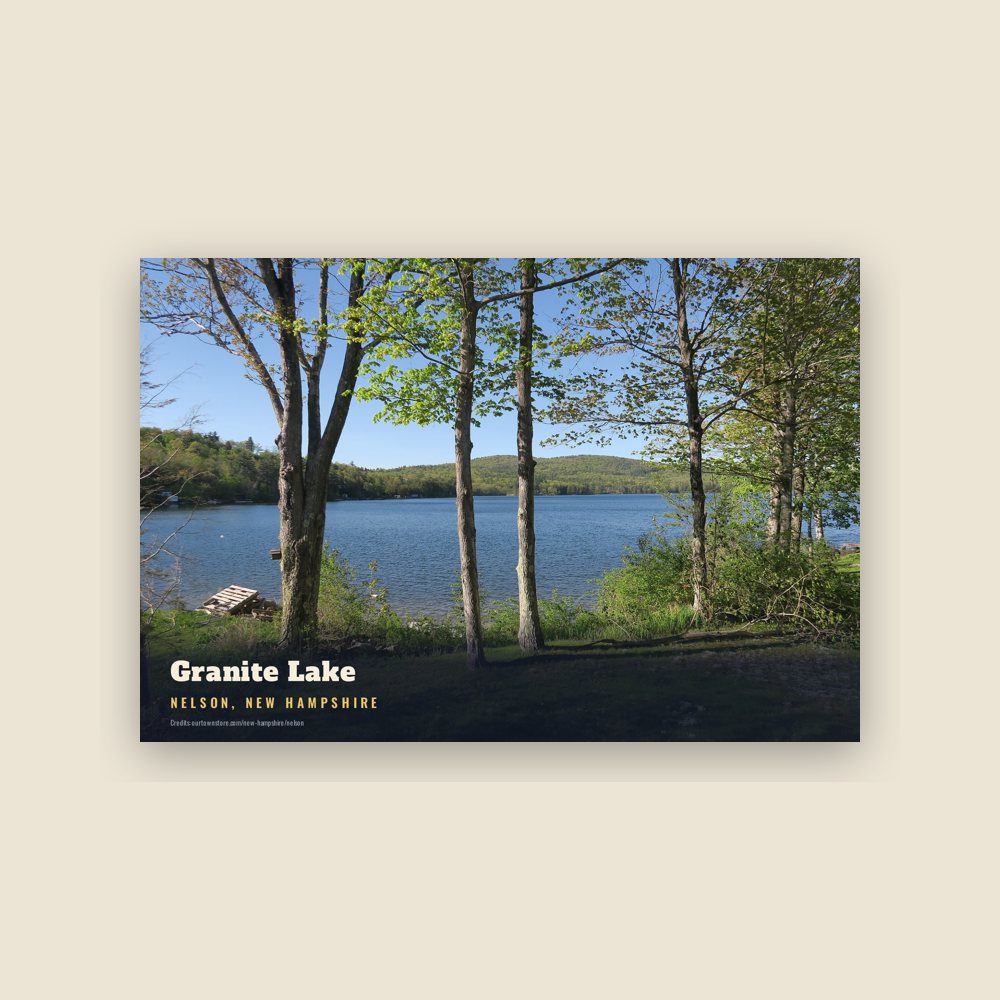
6″×4″ postcard, glossy front
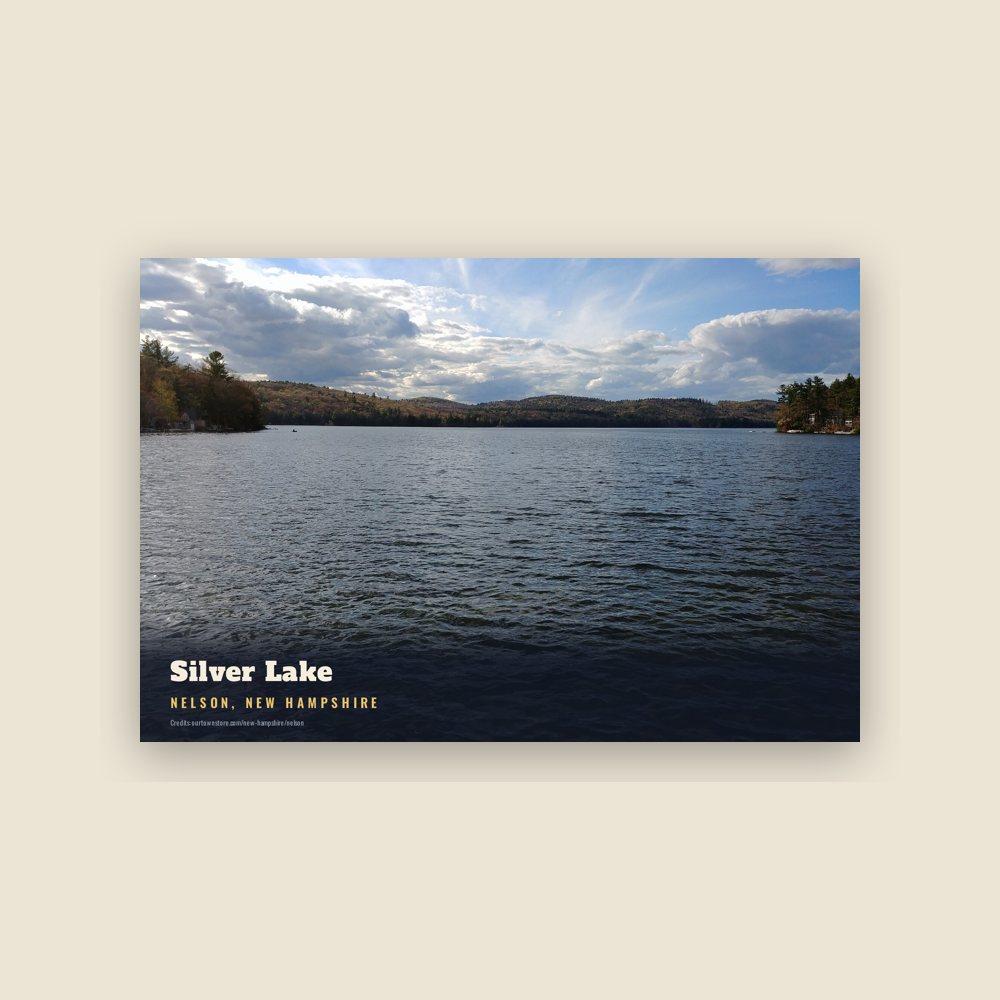
6″×4″ postcard, glossy front
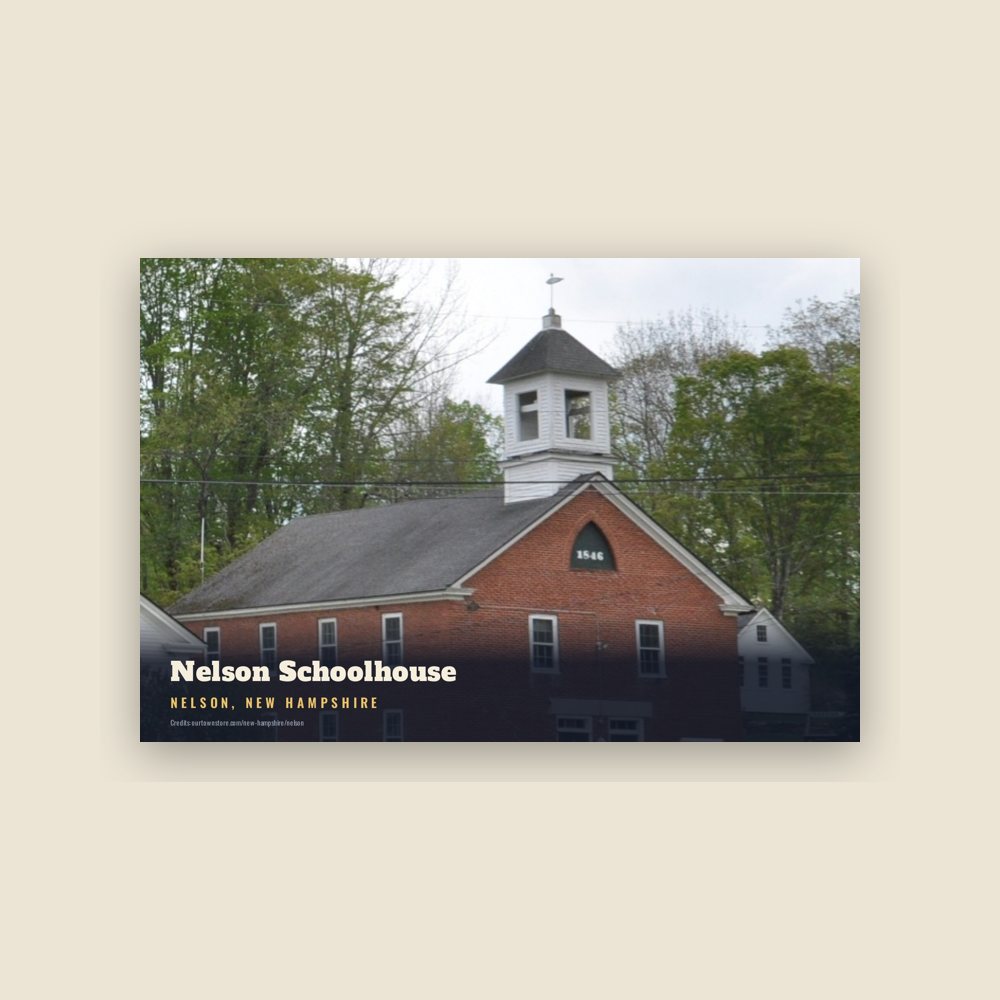
6″×4″ postcard, glossy front
Population 2010: 729 → 2020: 629
From Wikidata (CC0).
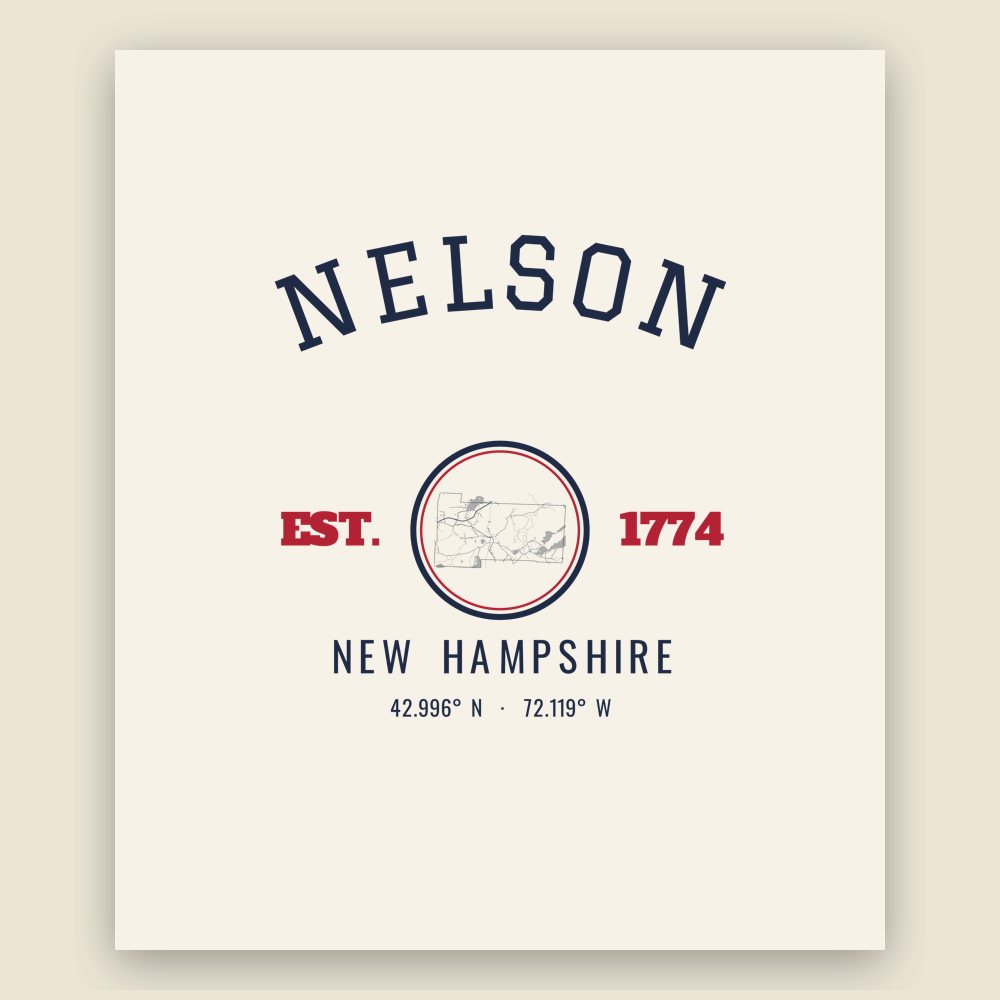
Originally named "Monadnock No. 6", the town was granted in 1752 by Governor Benning Wentworth. It was first settled in 1767 by Breed Batchelder. On February 22, 1774, the town was incorporated by Governor John Wentworth as "Packersfield", after a major proprietor, Thomas Packer, the sheriff at Portsmouth, New Hampshire. The name was changed in 1814 to Nelson in honor of Viscount Horatio Nelson, British admiral and naval hero.
Located on the height of land separating the watersheds of the Connecticut and Merrimack rivers, Nelson became primarily an agricultural community. The uneven surface proved good for grazing. But with streams rising from four ponds to provide water power, it also developed industry. The village of Munsonville, situated on the stage line at the outlet of Granite Lake, manufactured cotton cloth and chairs. The L. J. Colony Chair Co. produced between 25,000 and 30,000 chairs annually, hiring women and children from local farms to weave the rattan seats and backs. At one time, Munsonville had 1,000 homesteads and 10 school districts. The mills have since closed, and Munsonville is today a resort of summer homes.
Nelson is the home of a popular Monday night contradance. Similar dances have been held for over 200 years in Nelson's town hall. Many claim this is the world's longest-running public contradance, though there have been no attempts to document this as an "official" record. The Apple Hill Center for Chamber Music, a classical chamber music group that attempts to bring members of cultures in conflict closer together through music, is also in Nelson.
Adapted (trimmed) from the Wikipedia article Nelson, New Hampshire, revision 1379963298 by its contributors, licensed CC BY-SA 4.0.
We share a part of every Nelson sale with local partners, and we'd love to print from your collection. Old photographs, maps and postcards make the best keepsakes.
Partner with us