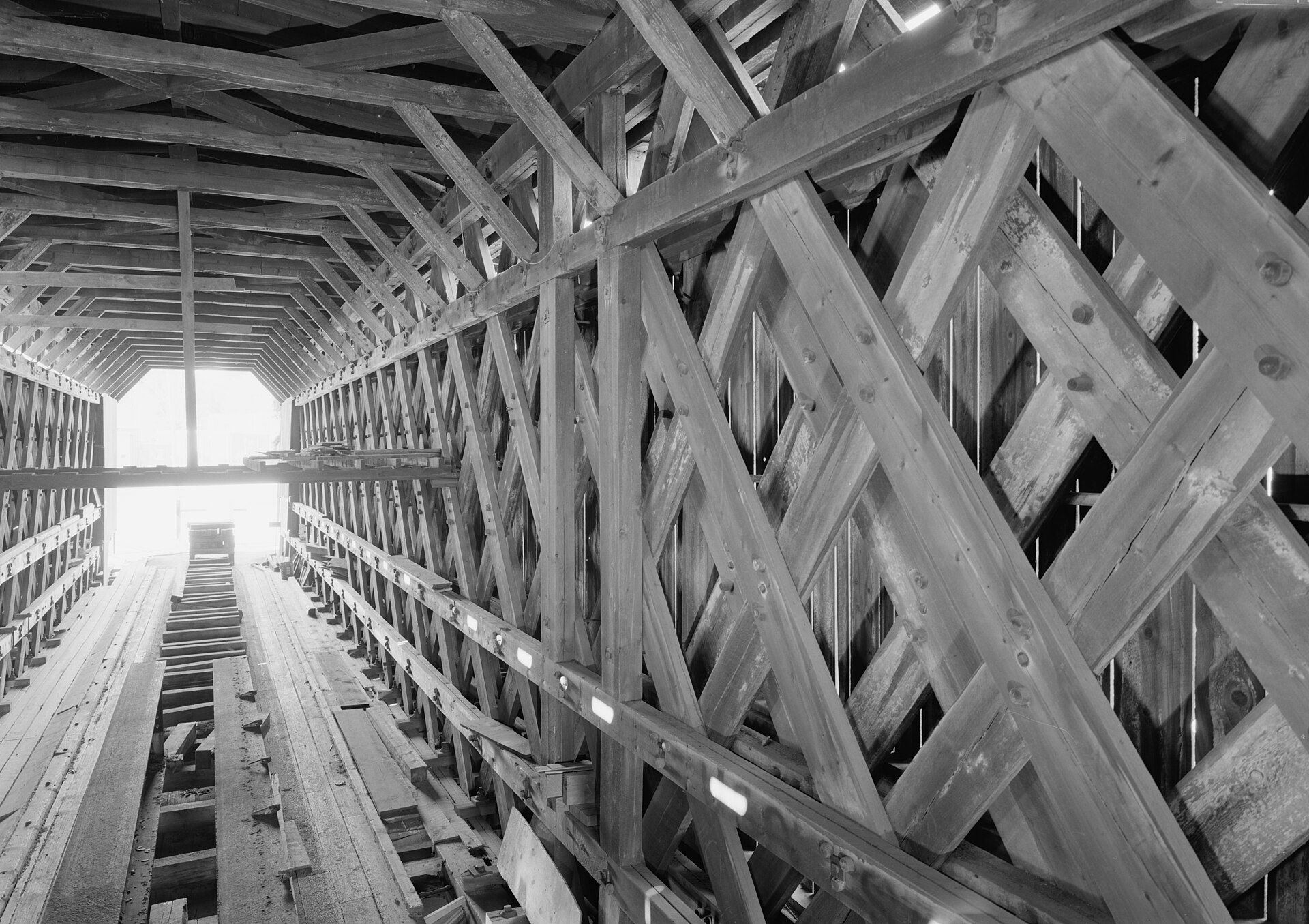
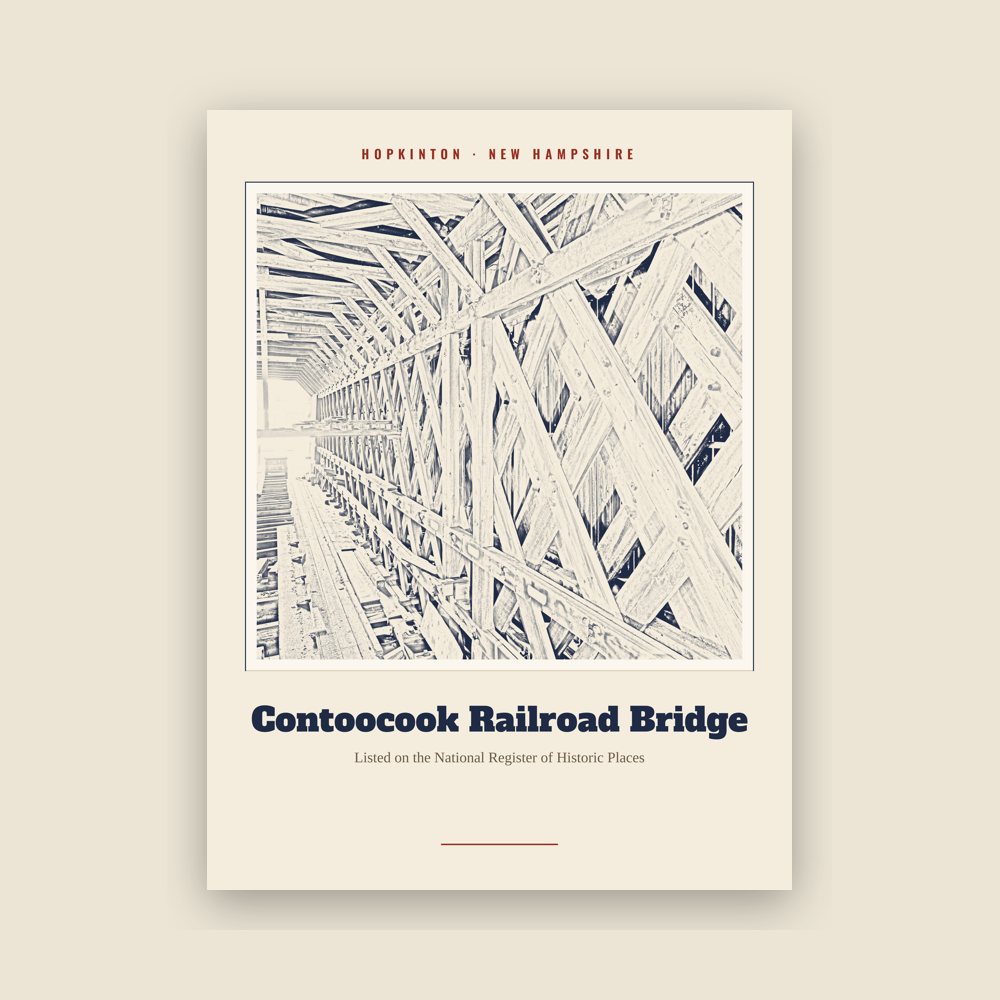
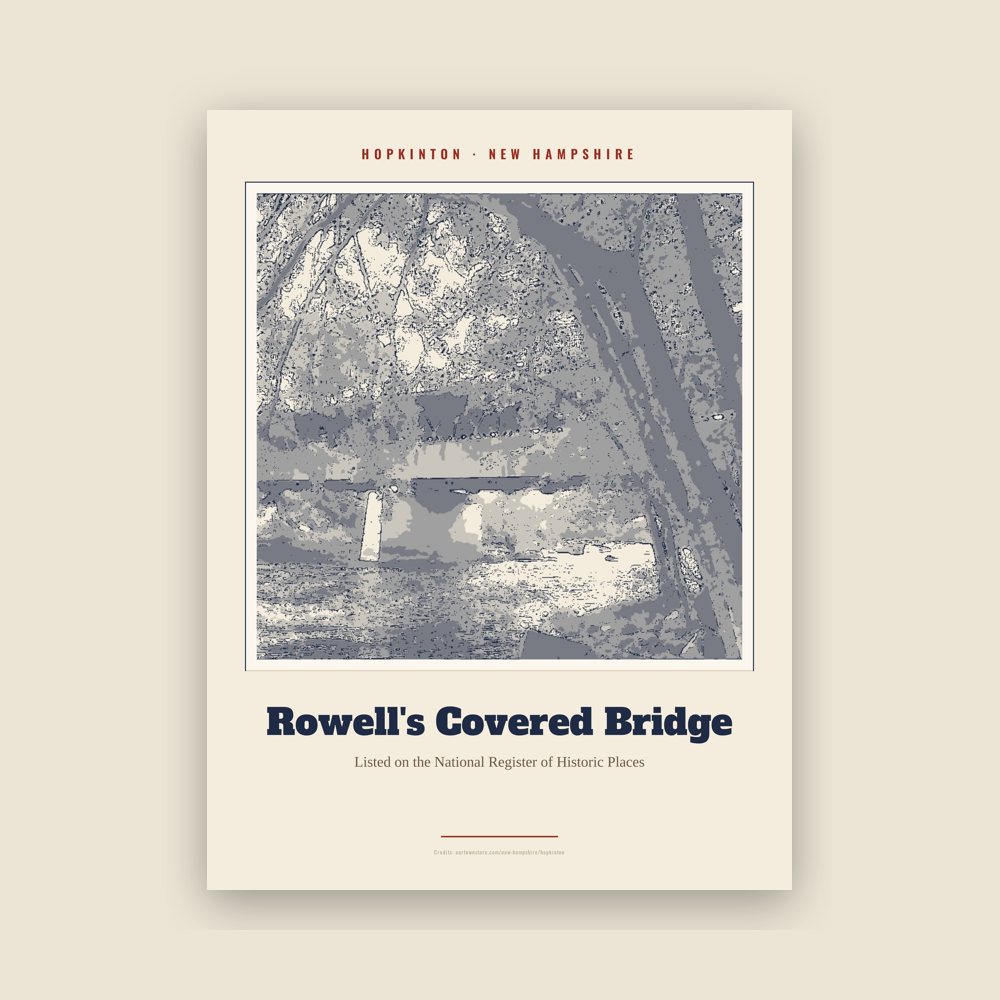
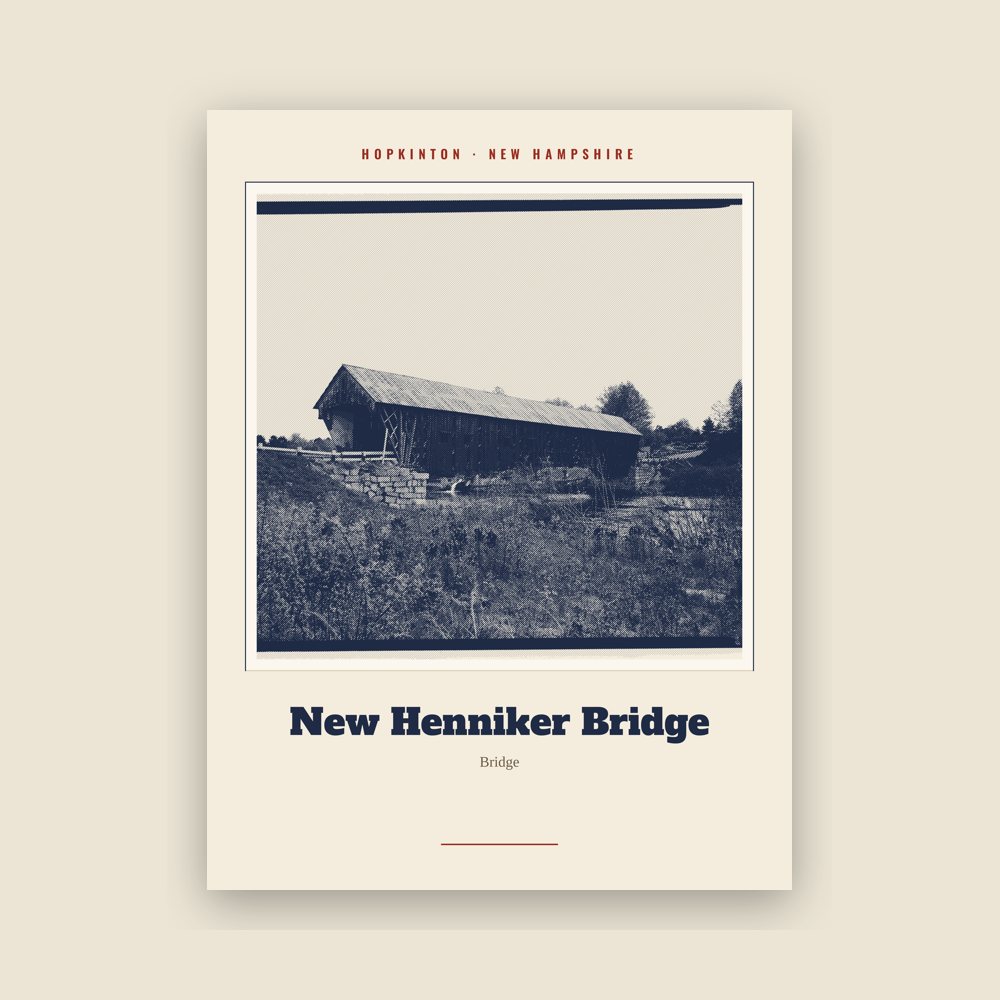
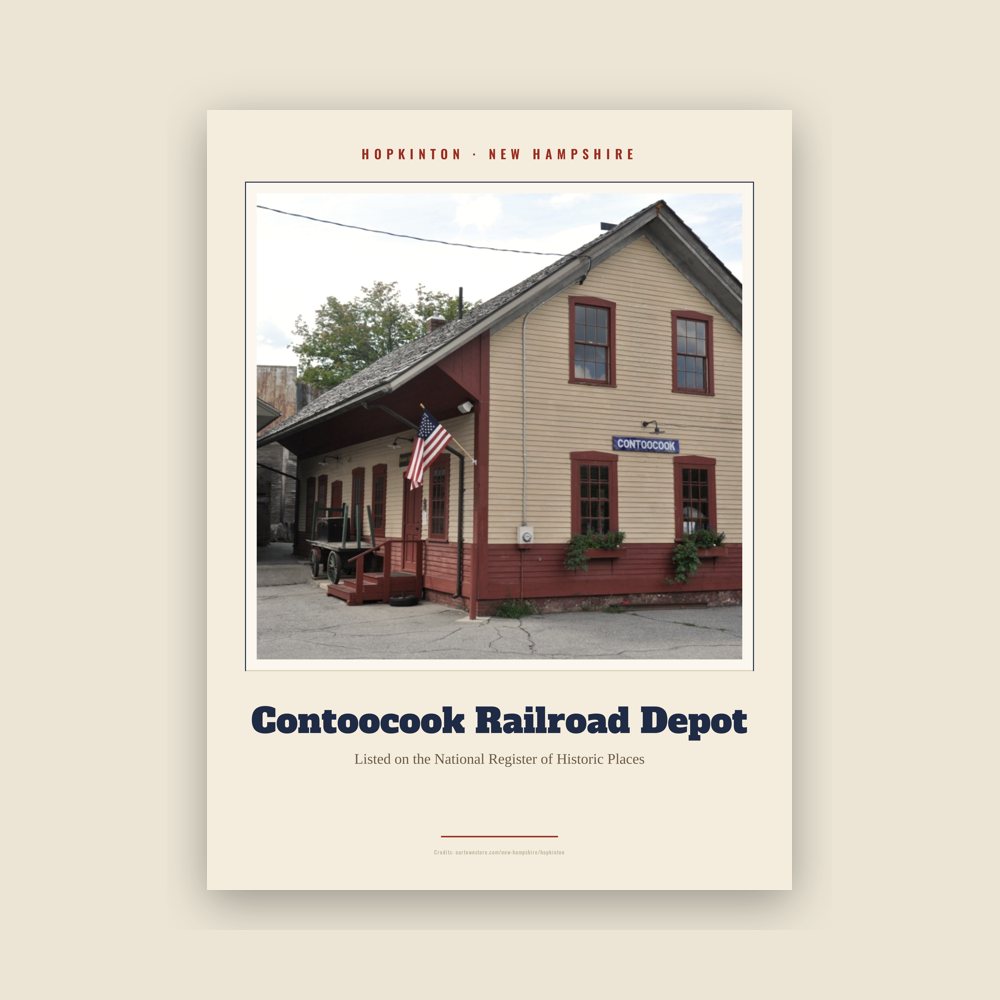
The town is home to the Hopkinton State Fair, adjacent to Contoocook village, and to the historic Contoocook Railroad Depot and the Contoocook Railroad Bridge, the oldest covered railroad bridge in the United States. Landmarks include Contoocook Railroad Bridge, Rowell's Covered Bridge and New Henniker Bridge. Hopkinton is the birthplace of Stephen Harriman Long, explorer.
Every piece is drawn from Hopkinton's own map data and historic archives, then printed and shipped from the USA when you order. No two towns look alike.
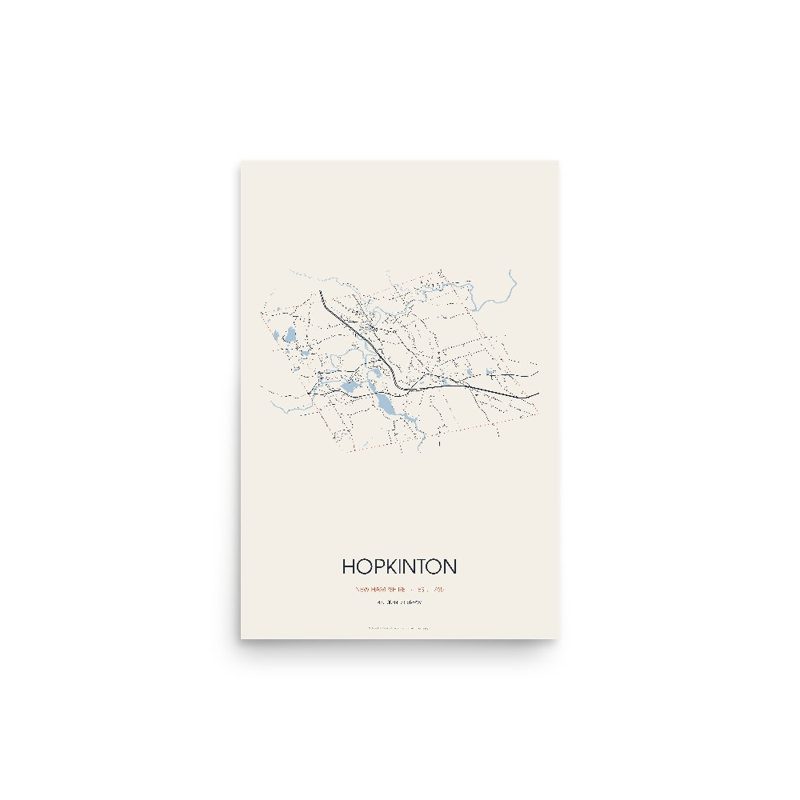
Every road in town, on archival matte paper
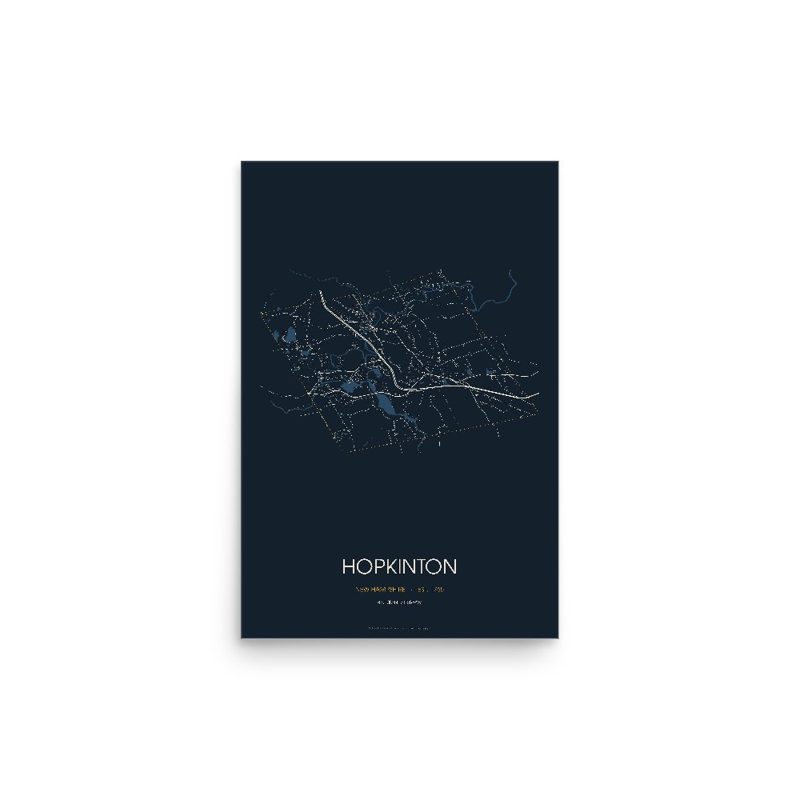
The same map, in navy and silver
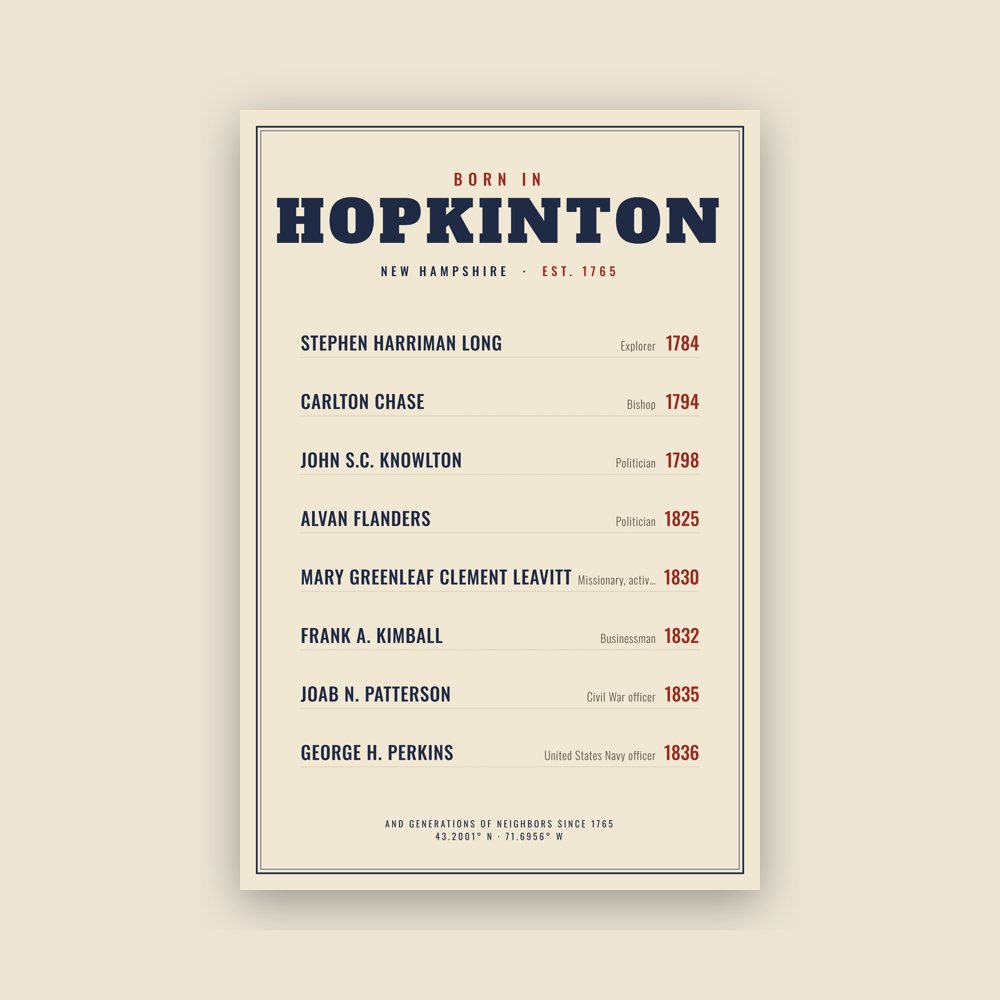
Famous natives, by birth year
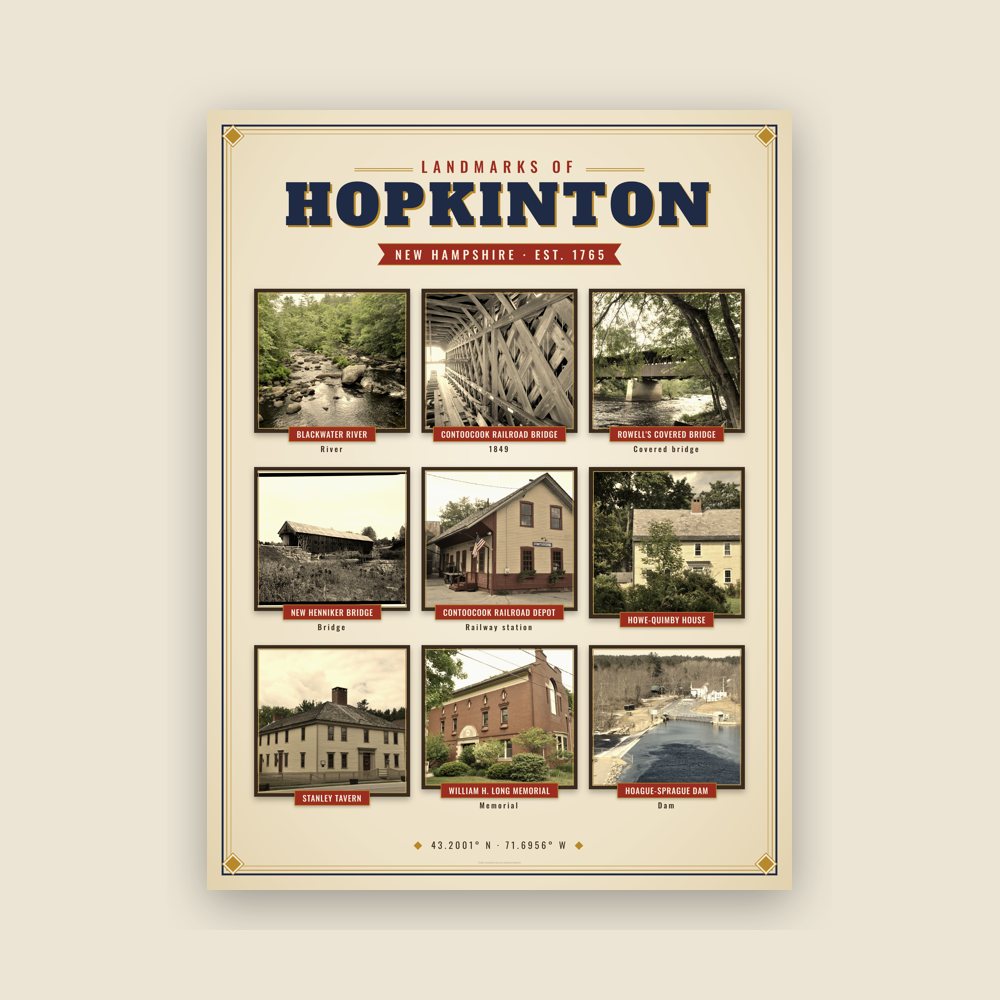
Nine local landmarks, archival matte
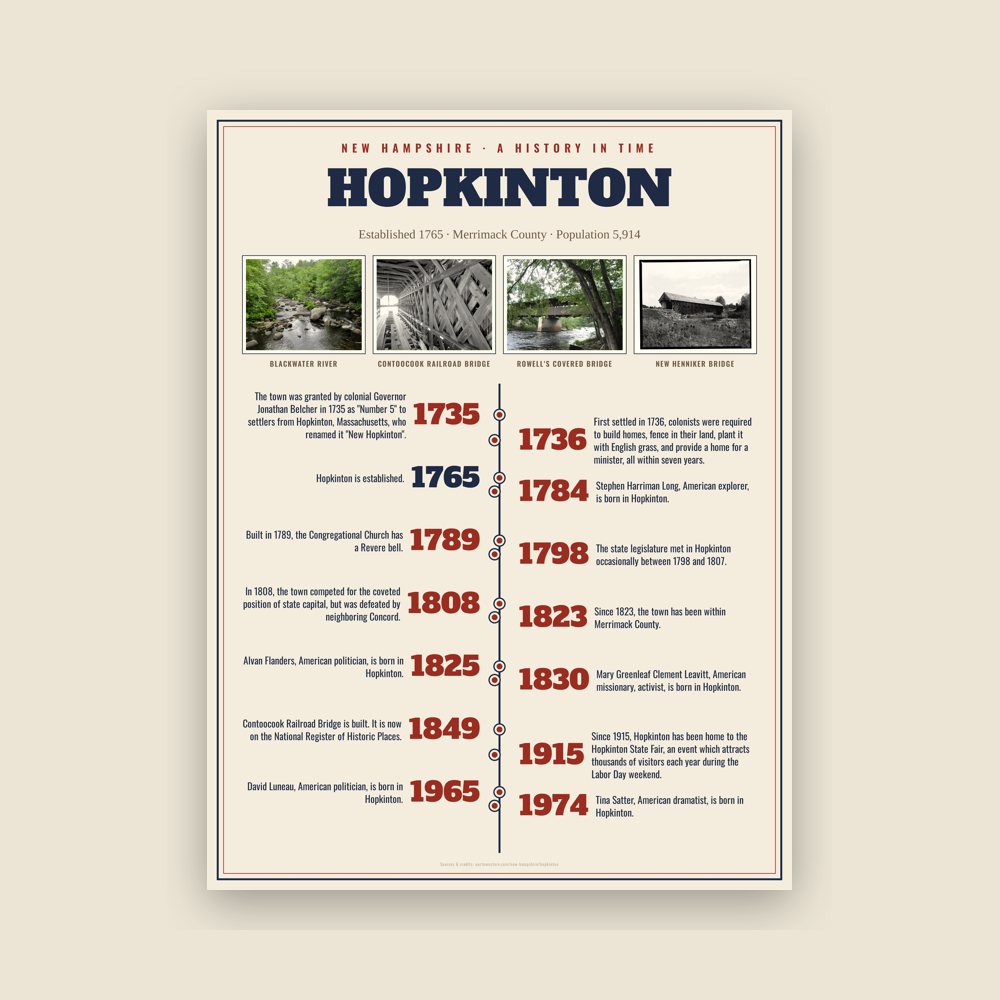
The town's story in dates, from its own records, for home or classroom
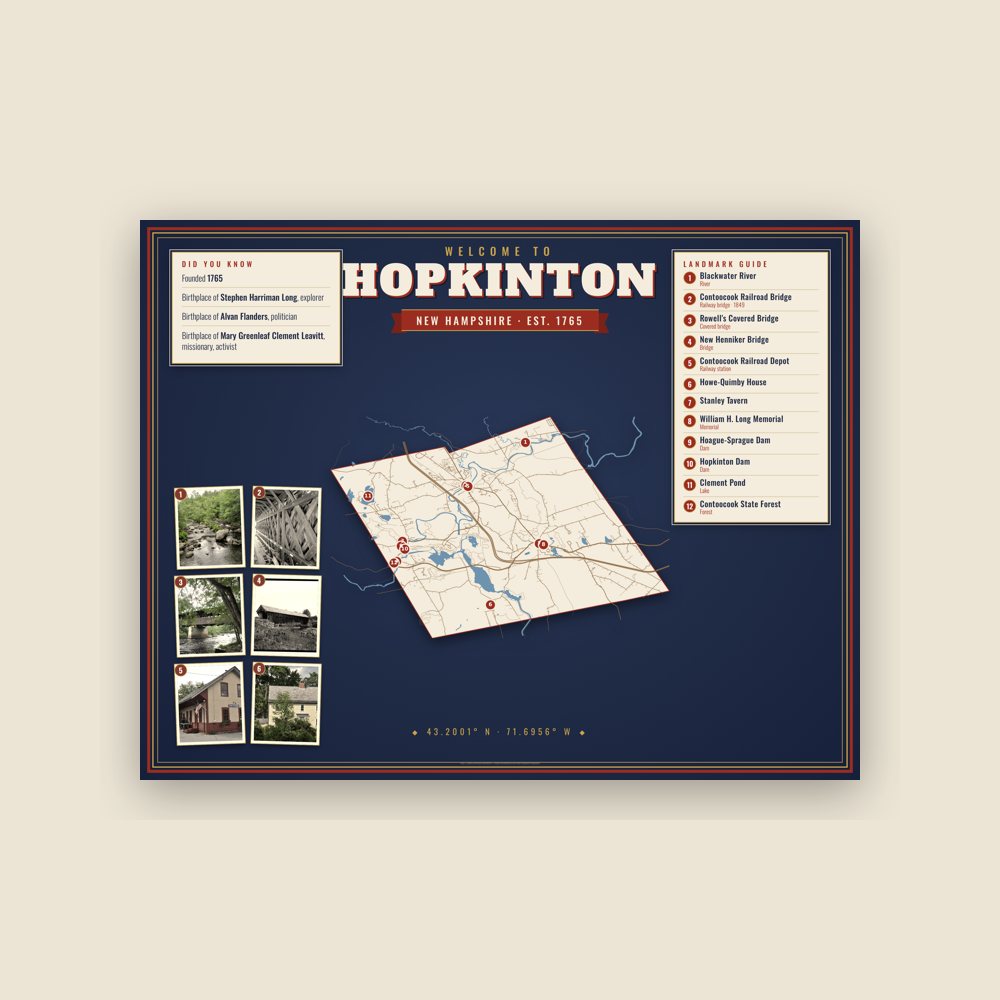
Map of local landmarks, washable fabric
Heavy-blend fleece, street map printed on the back
Soft Bella+Canvas jersey
Glossy ceramic, dishwasher safe
Ceramic keepsake, gold ribbon
Weatherproof, for the front walk
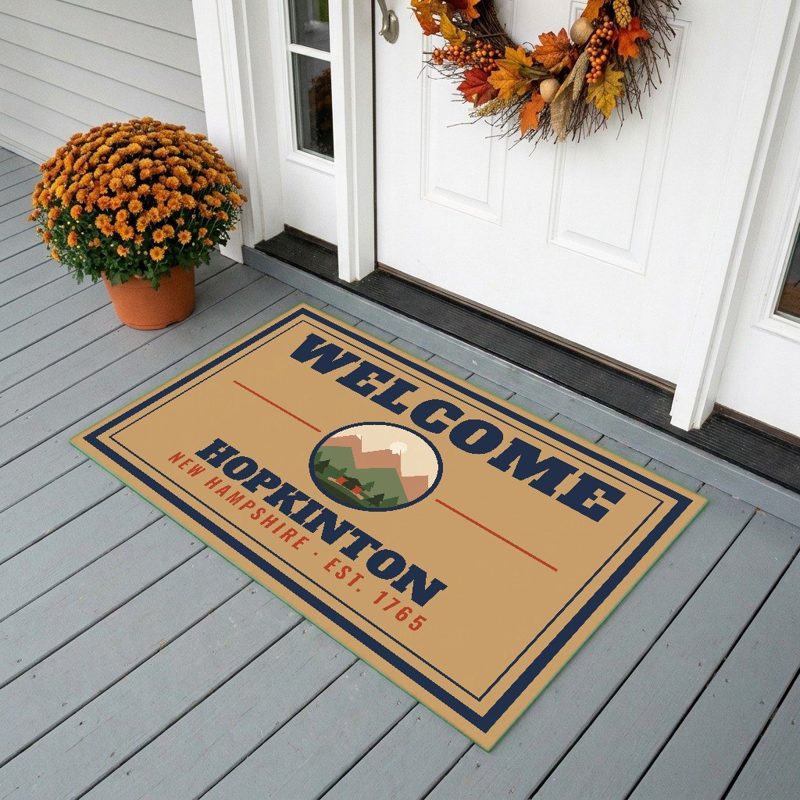
24″×16″, printed coir-look fibers, rubber back
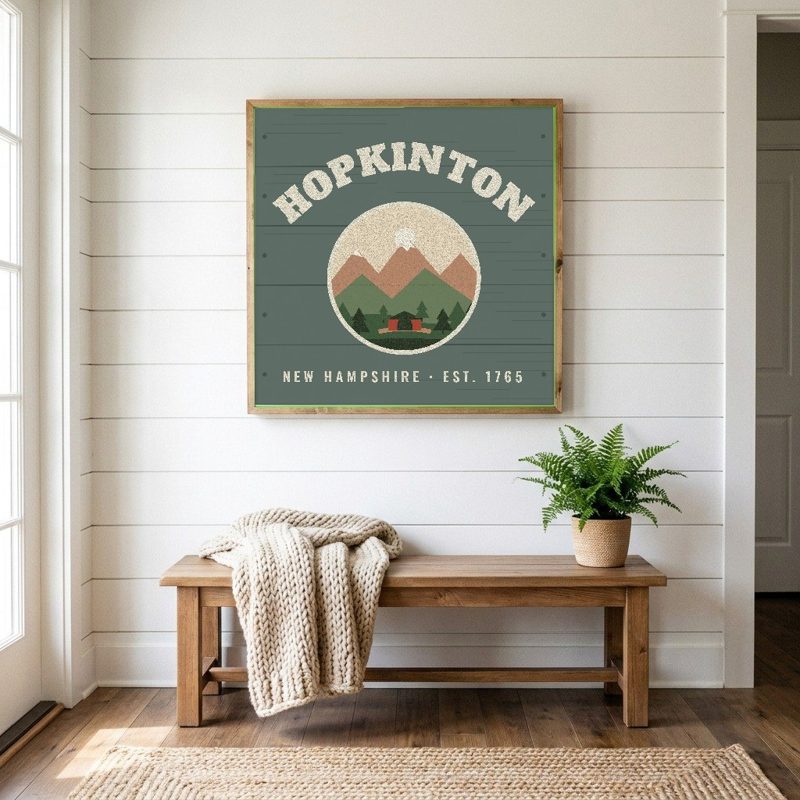
12″×12″ printed wood, ready to hang
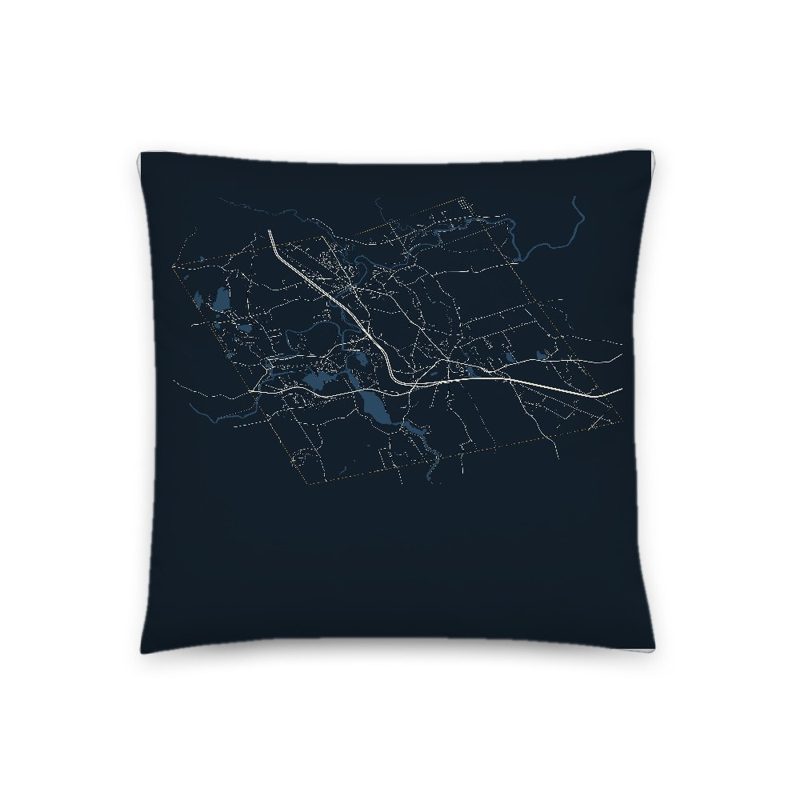
Soft-touch, zip cover
Sturdy all-over-print tote
Glossy top, cork back
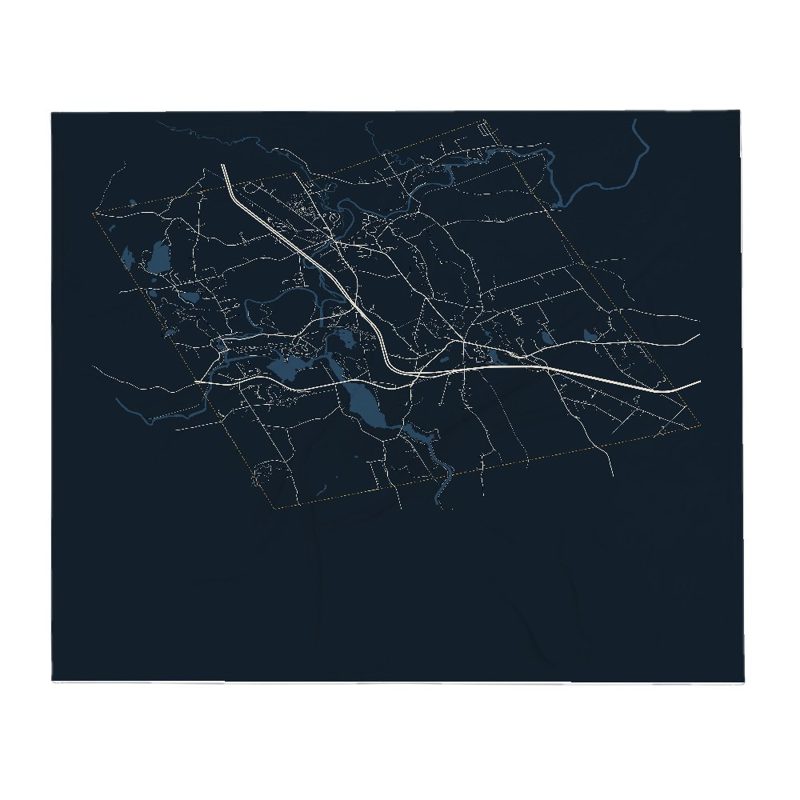
Soft fleece, 50″×60″
20 oz, double-wall stainless
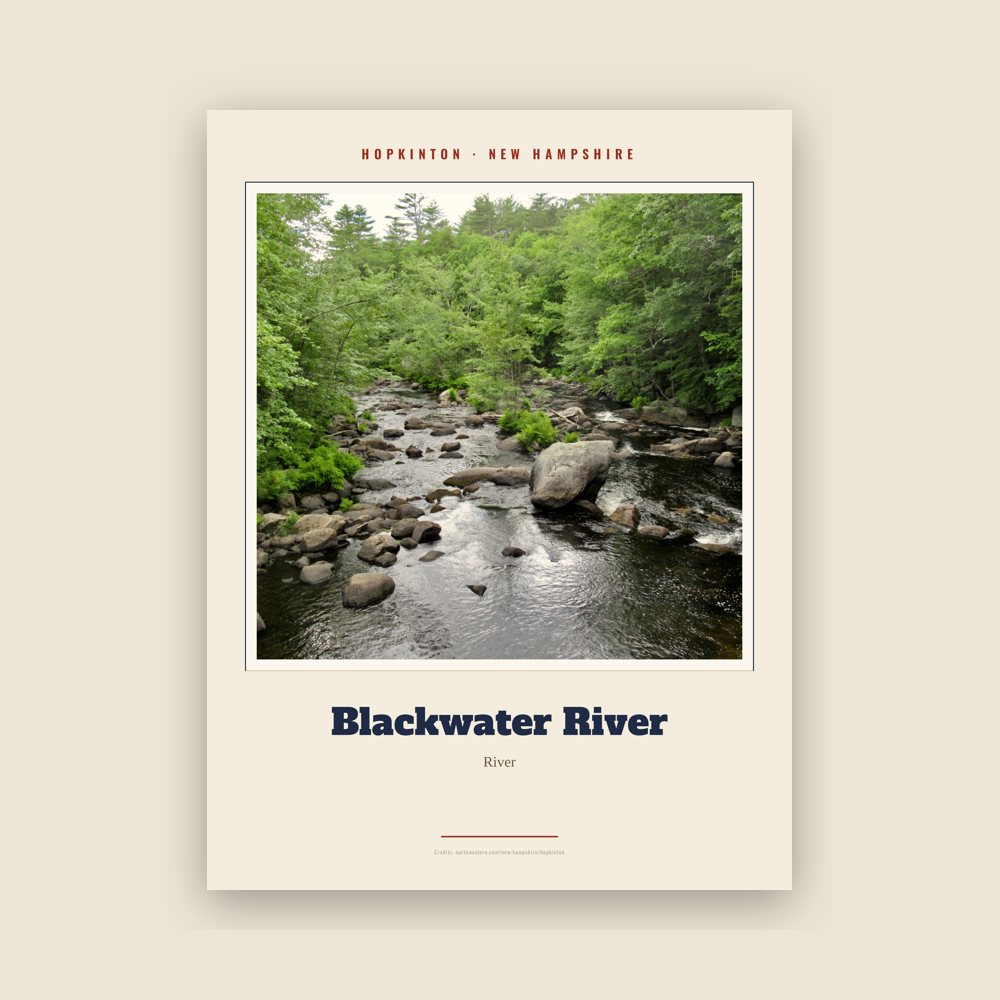
Archival matte print of a local landmark, credited to its photographer
Archival matte print of a local landmark, credited to its photographer
Archival matte print of a local landmark, credited to its photographer
Archival matte print of a local landmark, credited to its photographer
Archival matte print of a local landmark, credited to its photographer
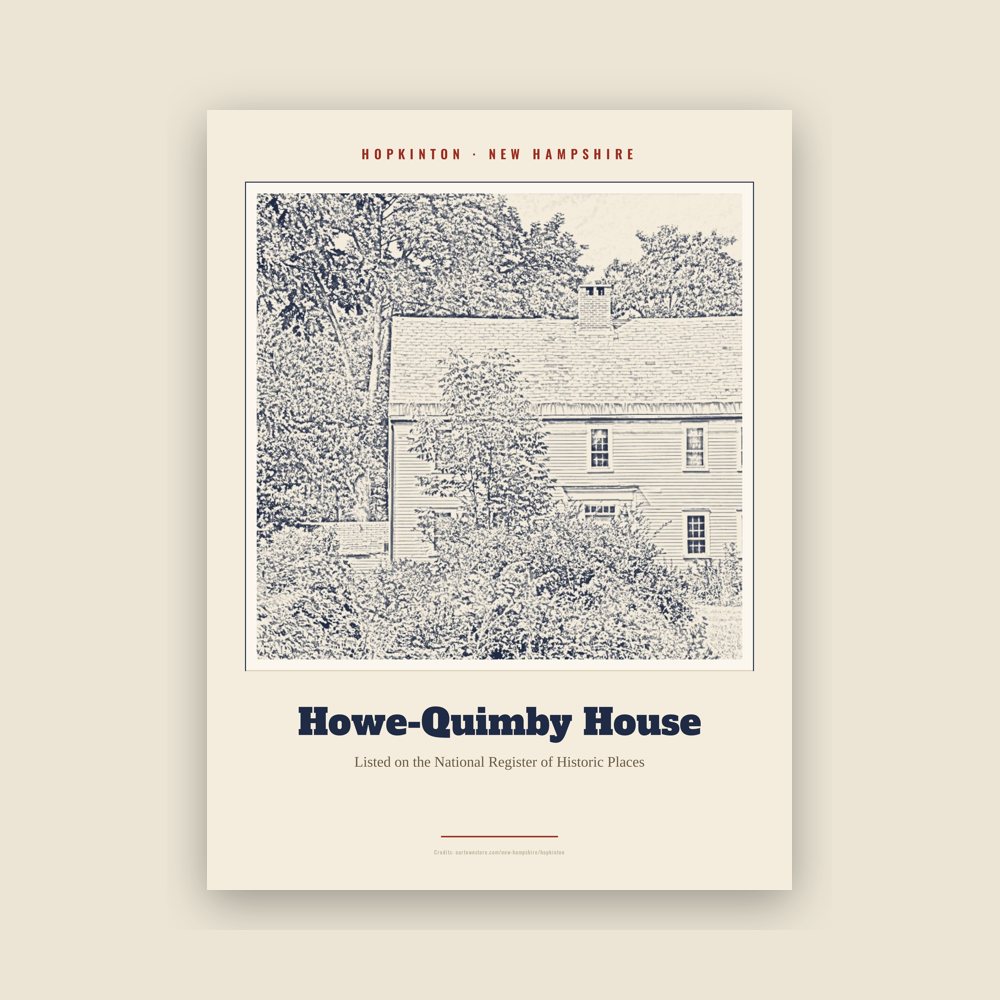
Archival matte print of a local landmark, credited to its photographer
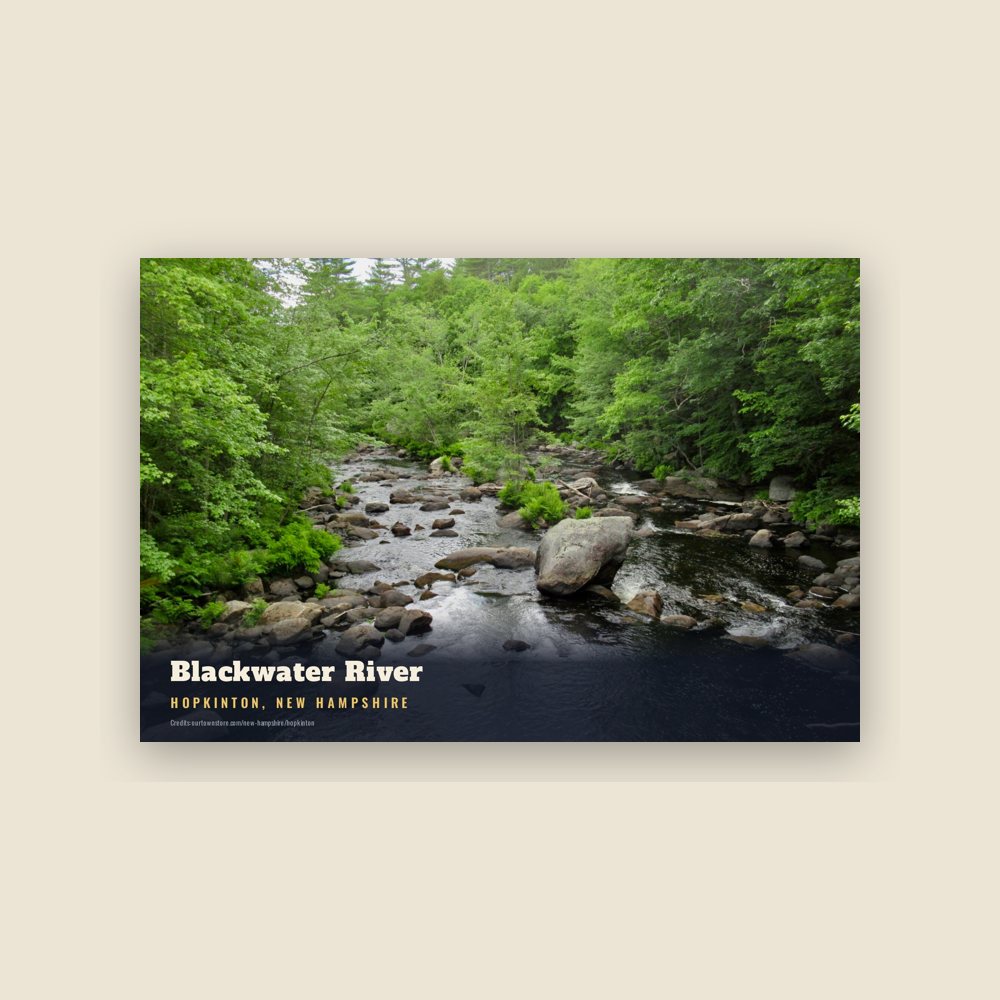
6″×4″ postcard, glossy front
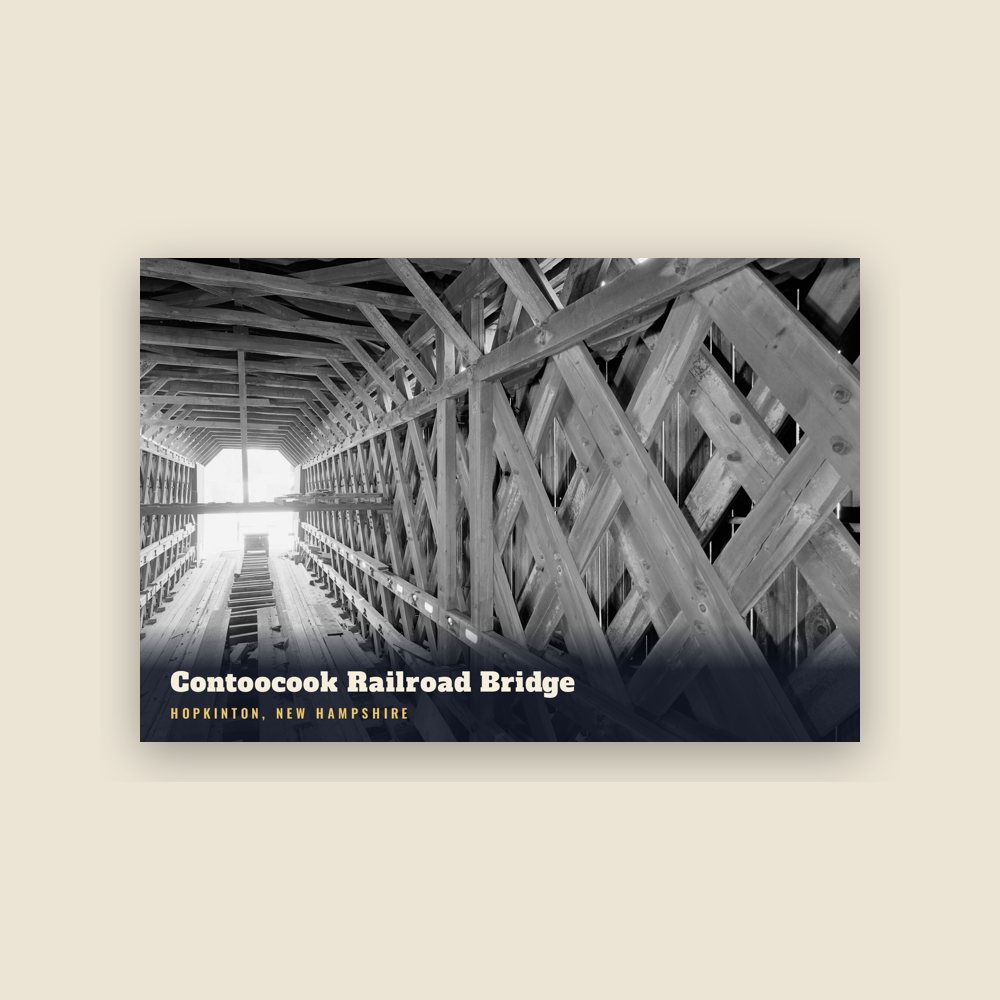
6″×4″ postcard, glossy front
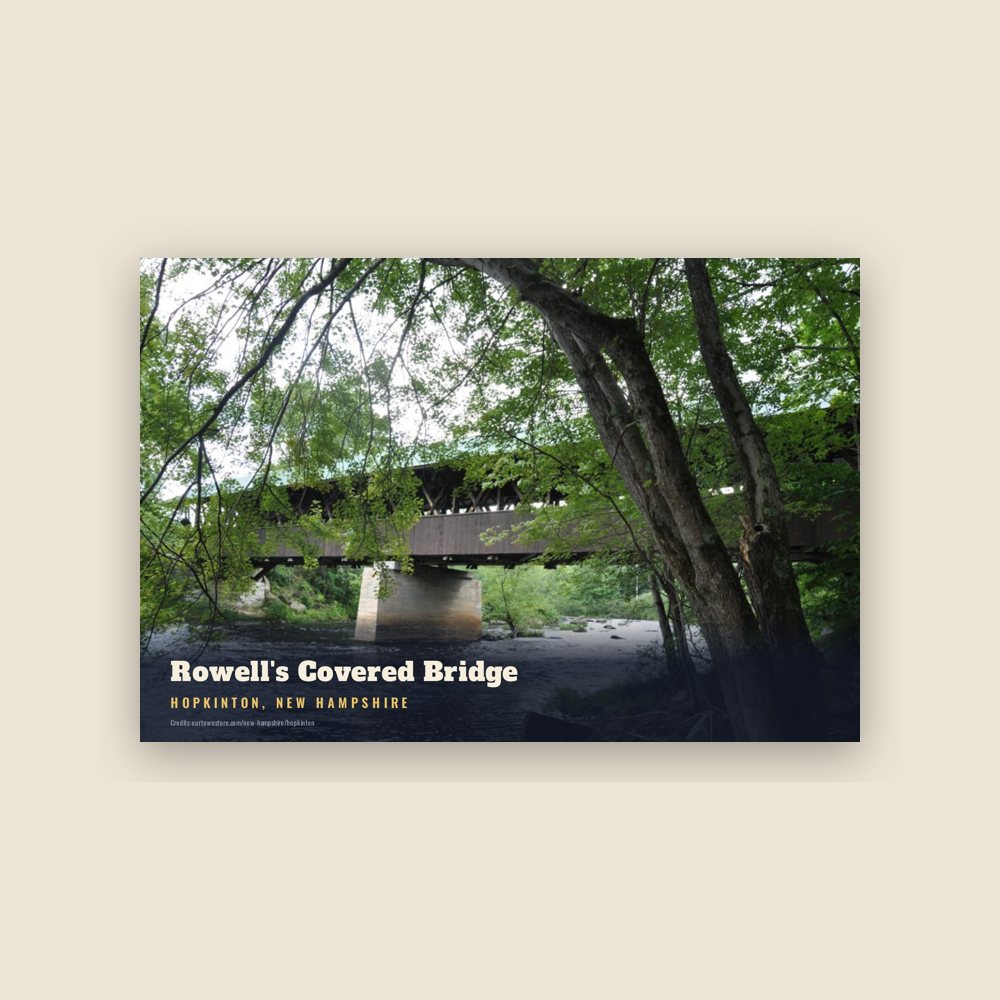
6″×4″ postcard, glossy front
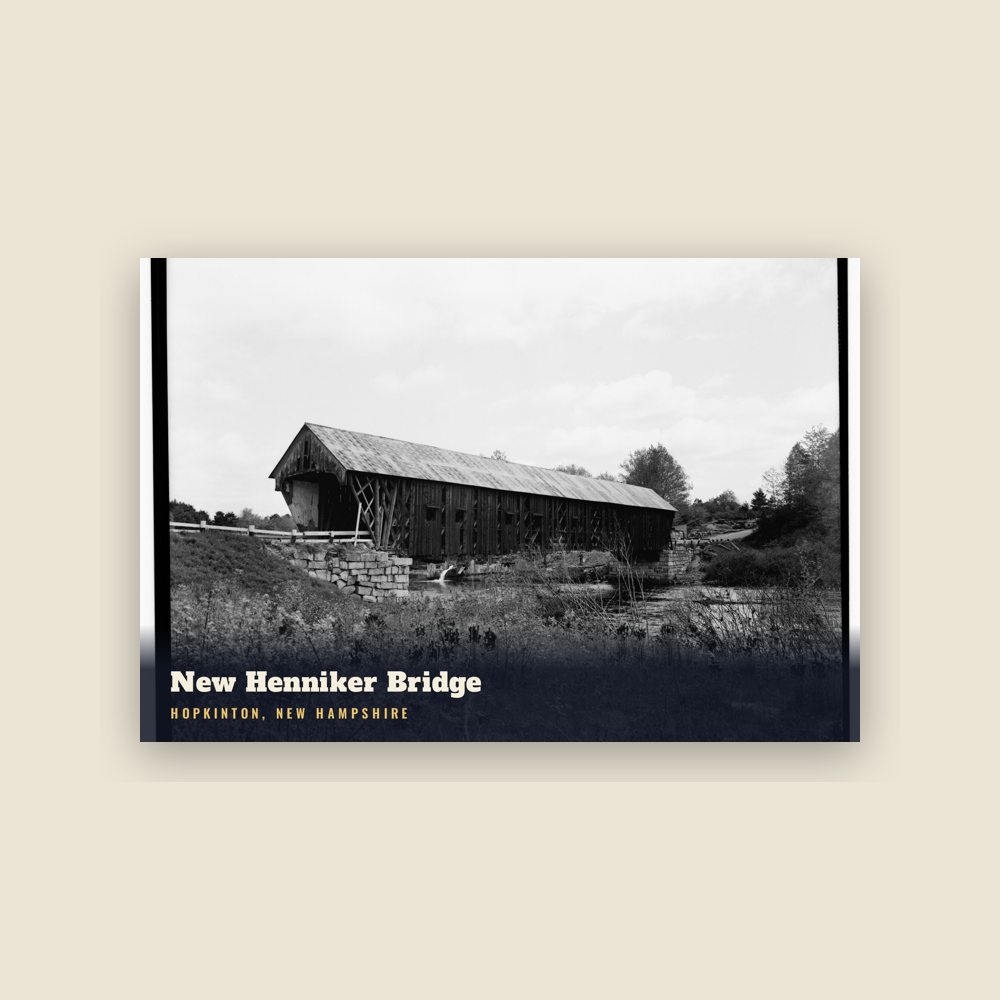
6″×4″ postcard, glossy front
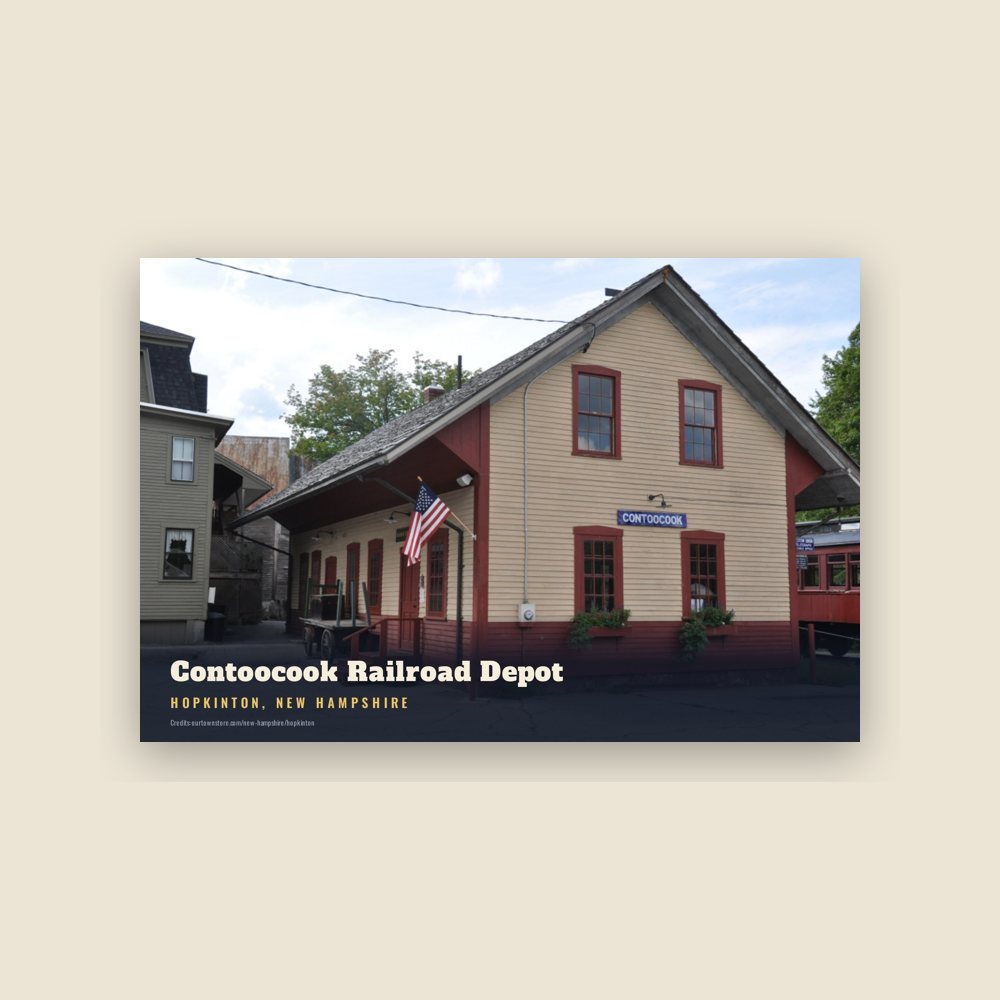
6″×4″ postcard, glossy front
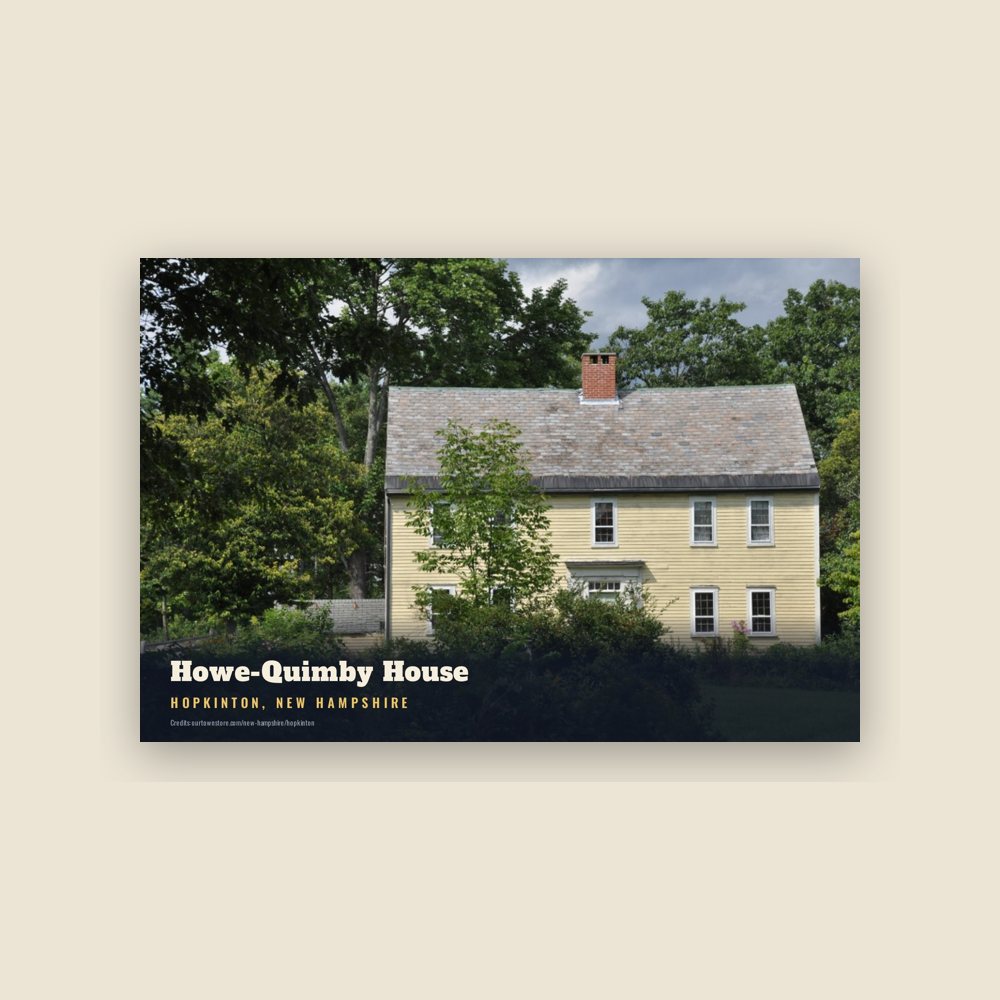
6″×4″ postcard, glossy front
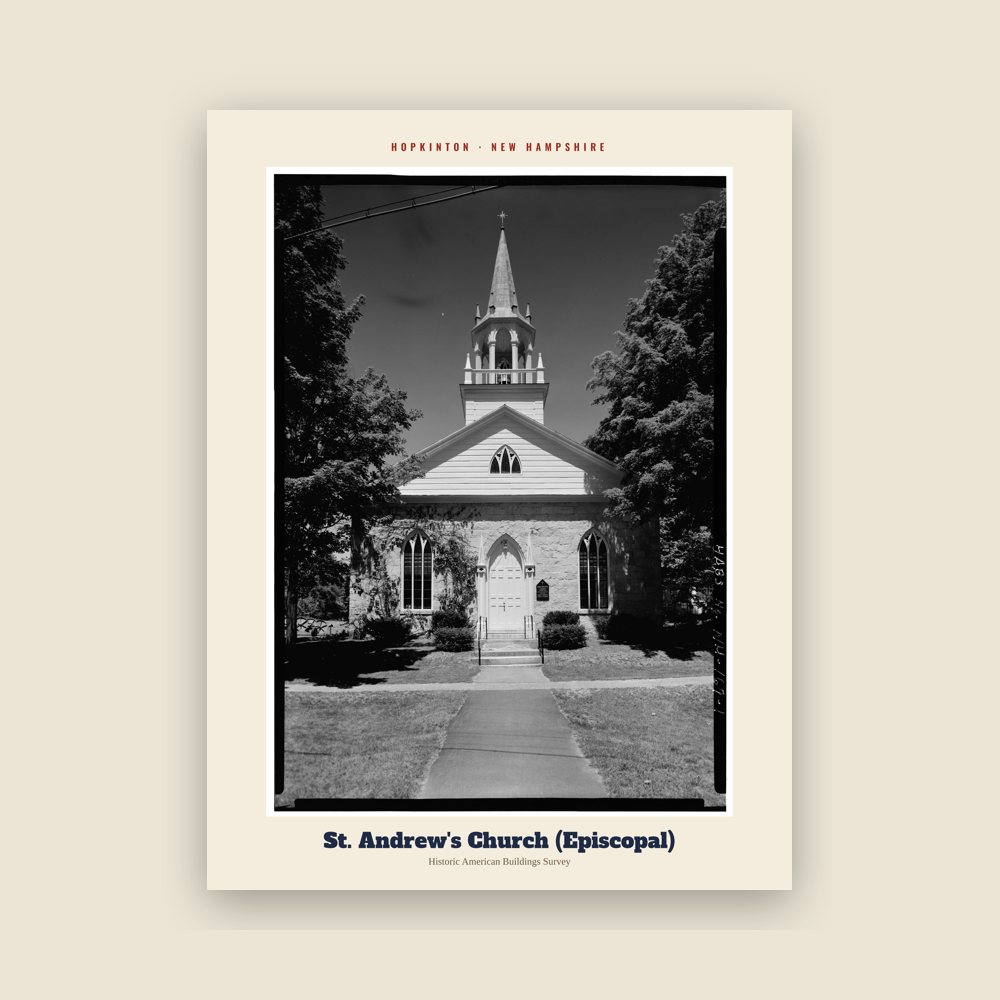
From the Library of Congress collections: a historic survey drawing or photograph of the town
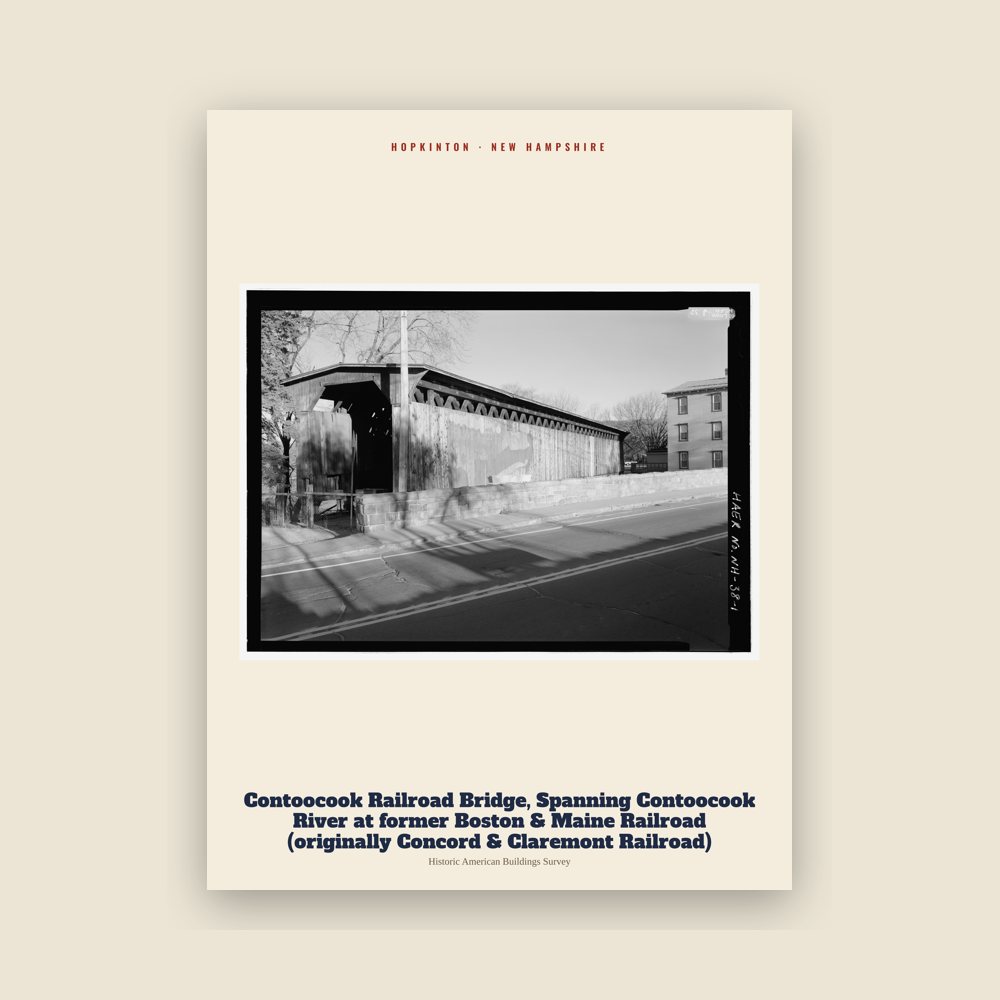
From the Library of Congress collections: a historic survey drawing or photograph of the town
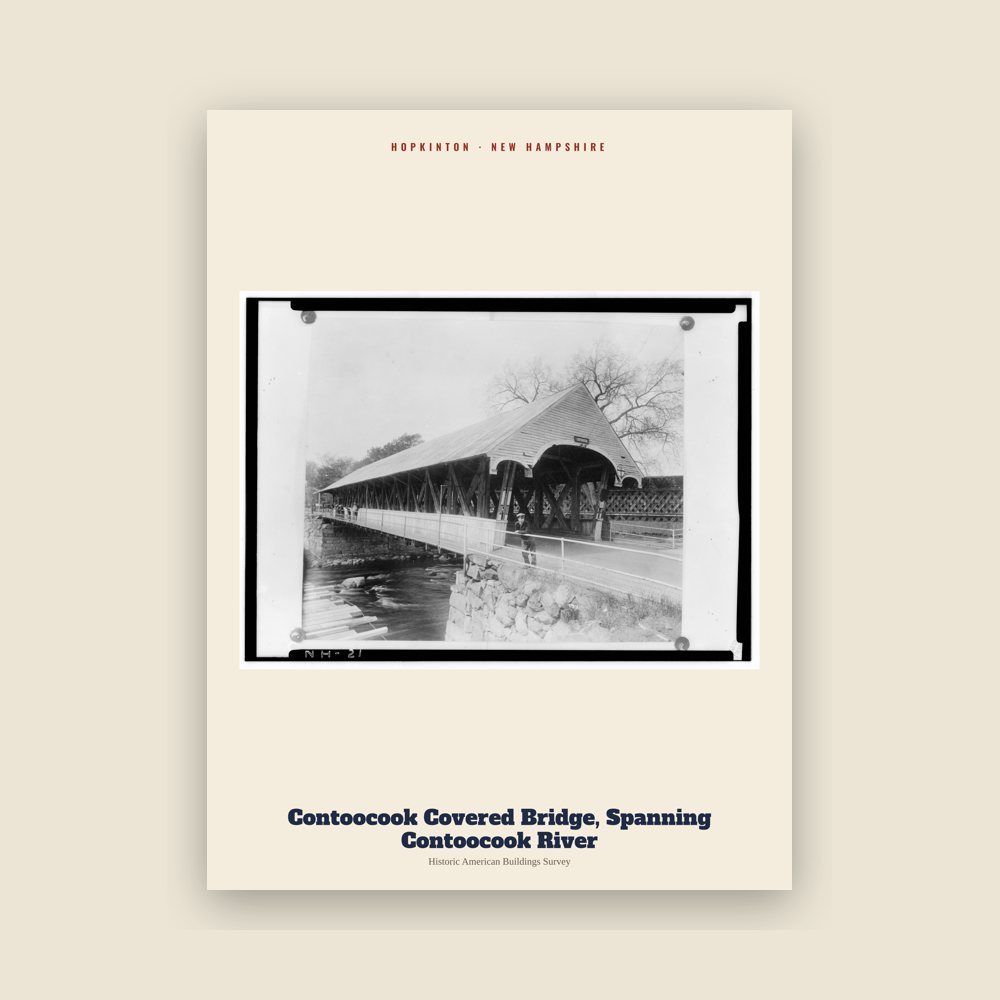
From the Library of Congress collections: a historic survey drawing or photograph of the town
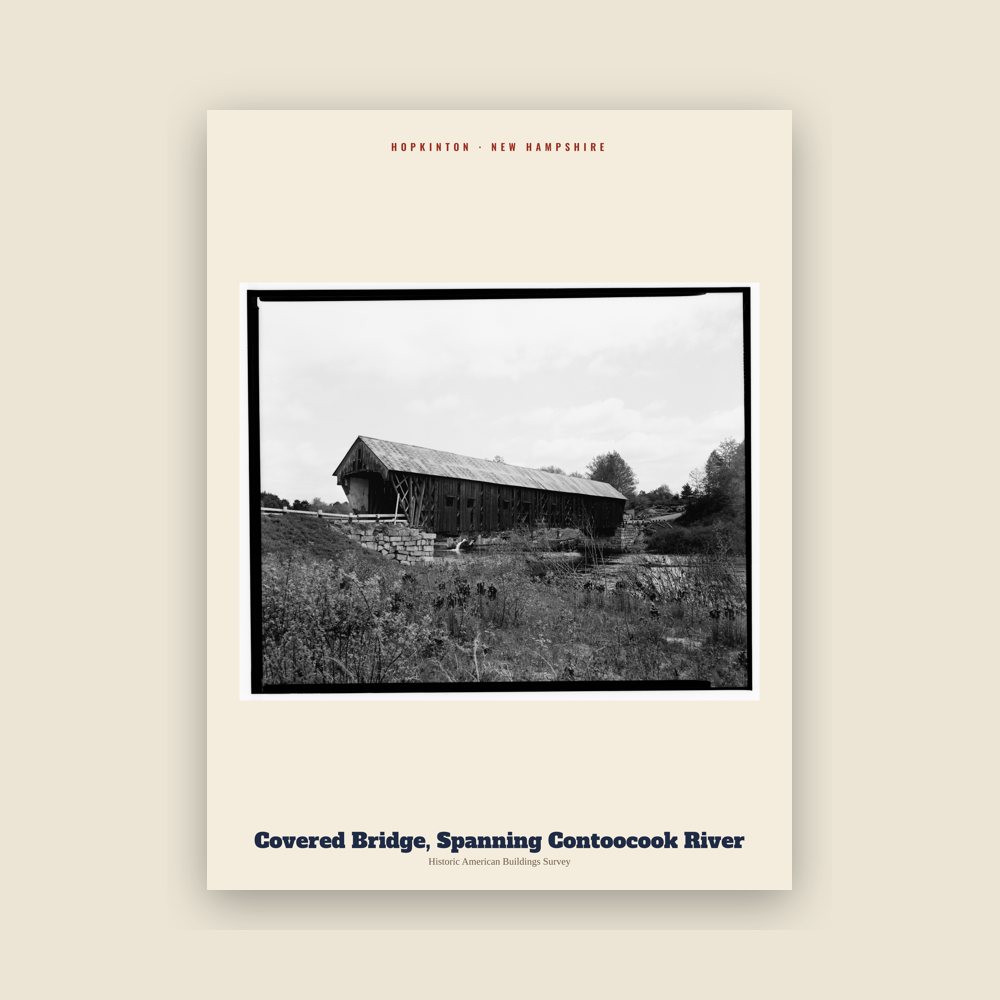
From the Library of Congress collections: a historic survey drawing or photograph of the town
Population 2010: 5,589 → 2020: 5,914
From Wikidata (CC0).
The town was granted by colonial Governor Jonathan Belcher in 1735 as "Number 5" to settlers from Hopkinton, Massachusetts, who renamed it "New Hopkinton". First settled in 1736, colonists were required to build homes, fence in their land, plant it with English grass, and provide a home for a minister, all within seven years. The community was incorporated in 1765 by Governor Benning Wentworth, predating the establishment of counties in the colonial province. Built in 1789, the Congregational Church has a Revere bell. The state legislature met in Hopkinton occasionally between 1798 and 1807. In 1808, the town competed for the coveted position of state capital, but was defeated by neighboring Concord. Since 1823, the town has been within Merrimack County.
A substantial portion of the town in the north was named "Contoocook Village", for a tribe of the Pennacook people who once lived there. Due to its position along the Contoocook River, it became a center for water-powered industry, particularly lumber and textiles. The Contoocook covered railroad bridge in the village is a remnant of the Boston & Maine Railroad and is the oldest covered bridge of its kind still standing in the United States. Next to the bridge is the Contoocook Railroad Depot, one of the original railroad depots for the Concord and Claremont Railroad.
Since 1915, Hopkinton has been home to the Hopkinton State Fair, an event which attracts thousands of visitors each year during the Labor Day weekend.
Adapted (trimmed) from the Wikipedia article Hopkinton, New Hampshire, revision 1378980558 by its contributors, licensed CC BY-SA 4.0.
We share a part of every Hopkinton sale with local partners, and we'd love to print from your collection. Old photographs, maps and postcards make the best keepsakes.
Partner with us