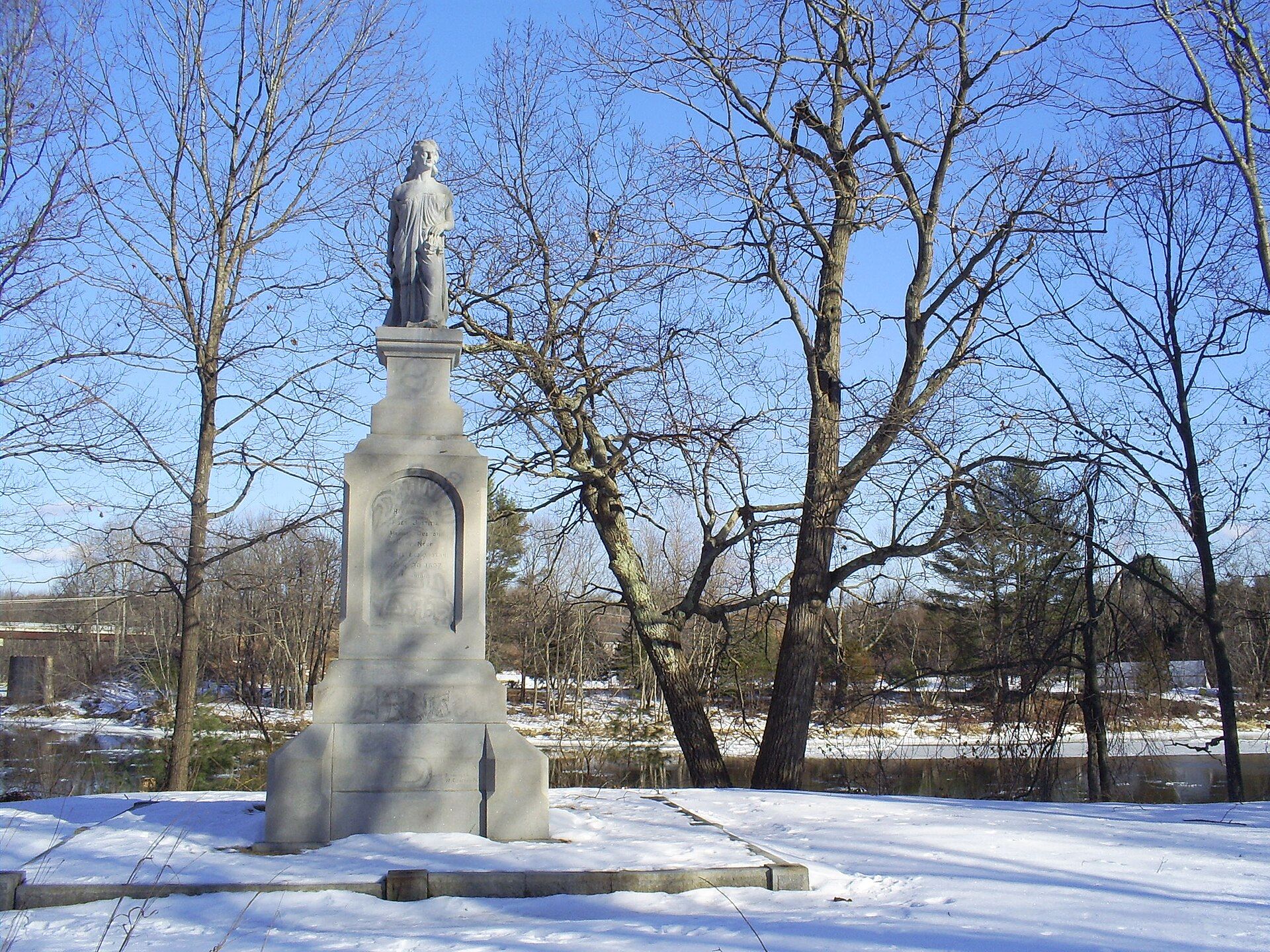
In March 1697, Hannah Duston and her nurse, Mary Neff, were captured by Abenaki Indians and taken to a temporary village on an island at the confluence of the Contoocook and Merrimack rivers, at the site of what is now Boscawen. Landmarks include Merrimack County, Hannah Duston Memorial State Historic Site and Boscawen Public Library. Boscawen is the birthplace of John Adams Dix, Union Army General.
Every piece is drawn from Boscawen's own map data and historic archives, then printed and shipped from the USA when you order. No two towns look alike.
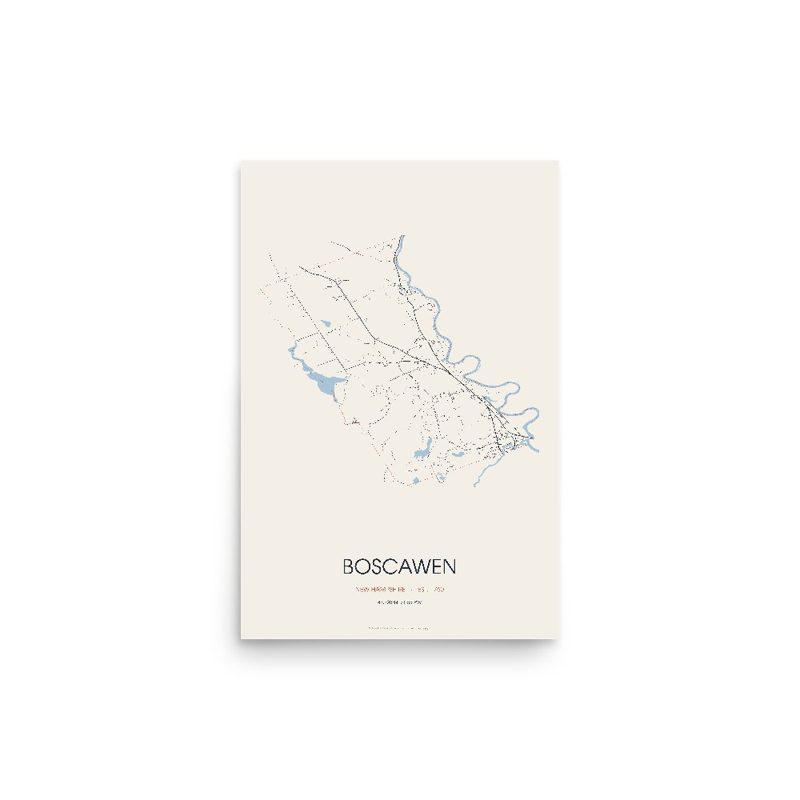
Every road in town, on archival matte paper
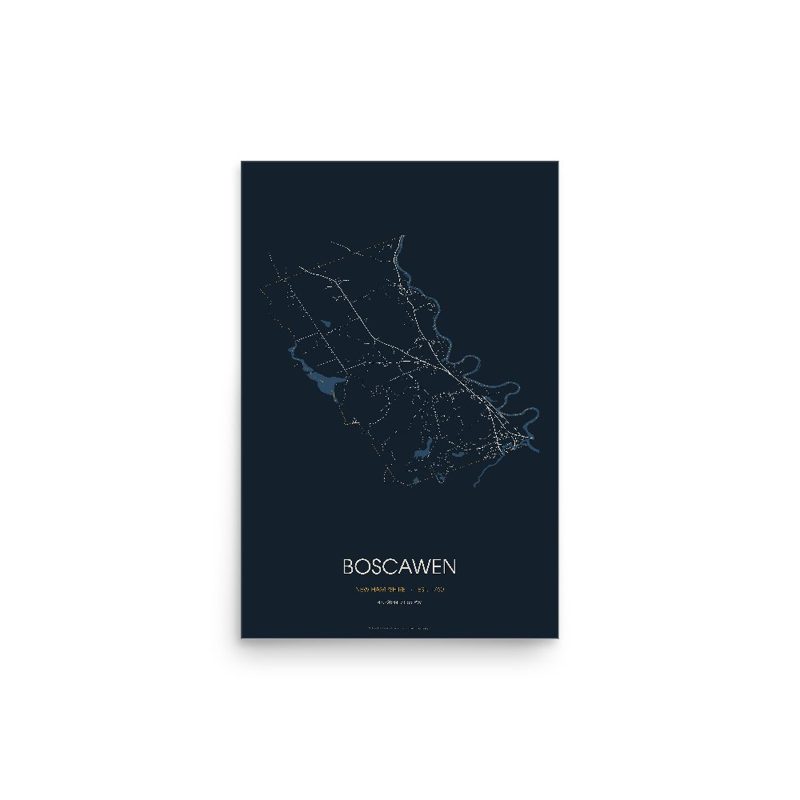
The same map, in navy and silver
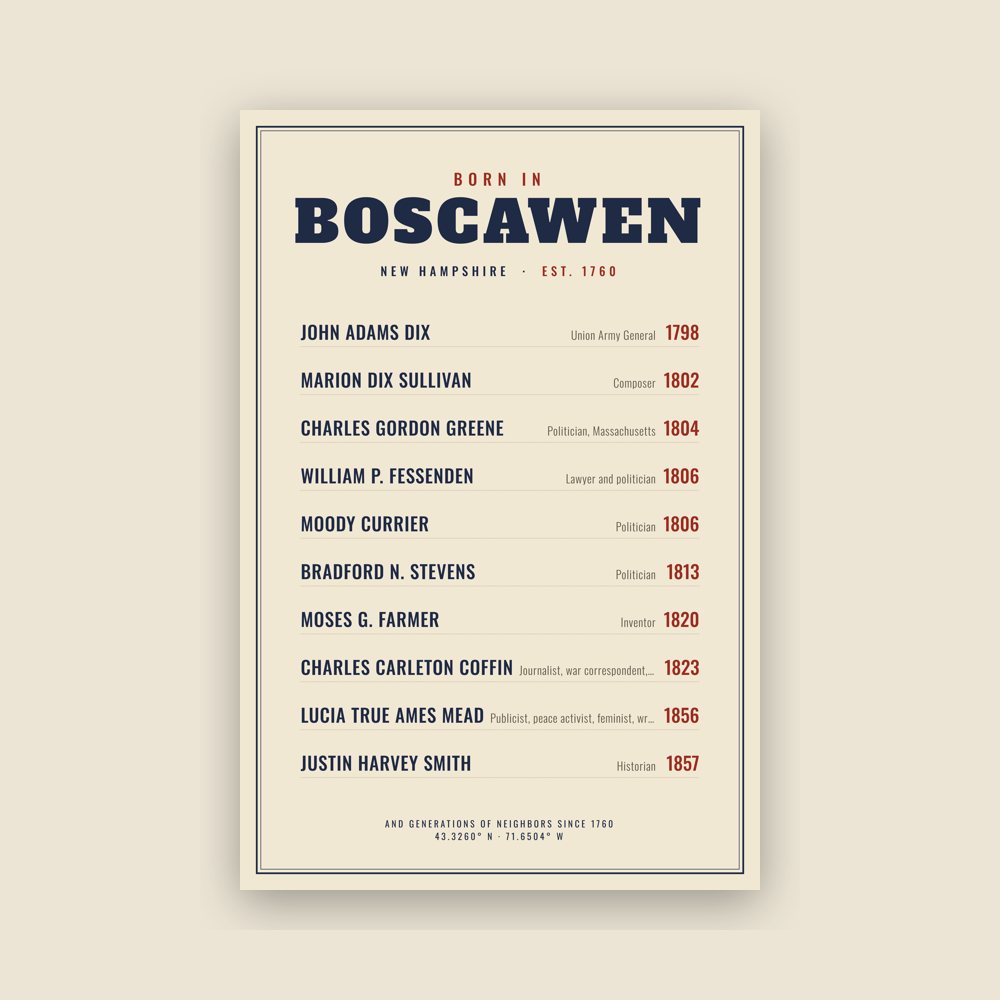
Famous natives, by birth year
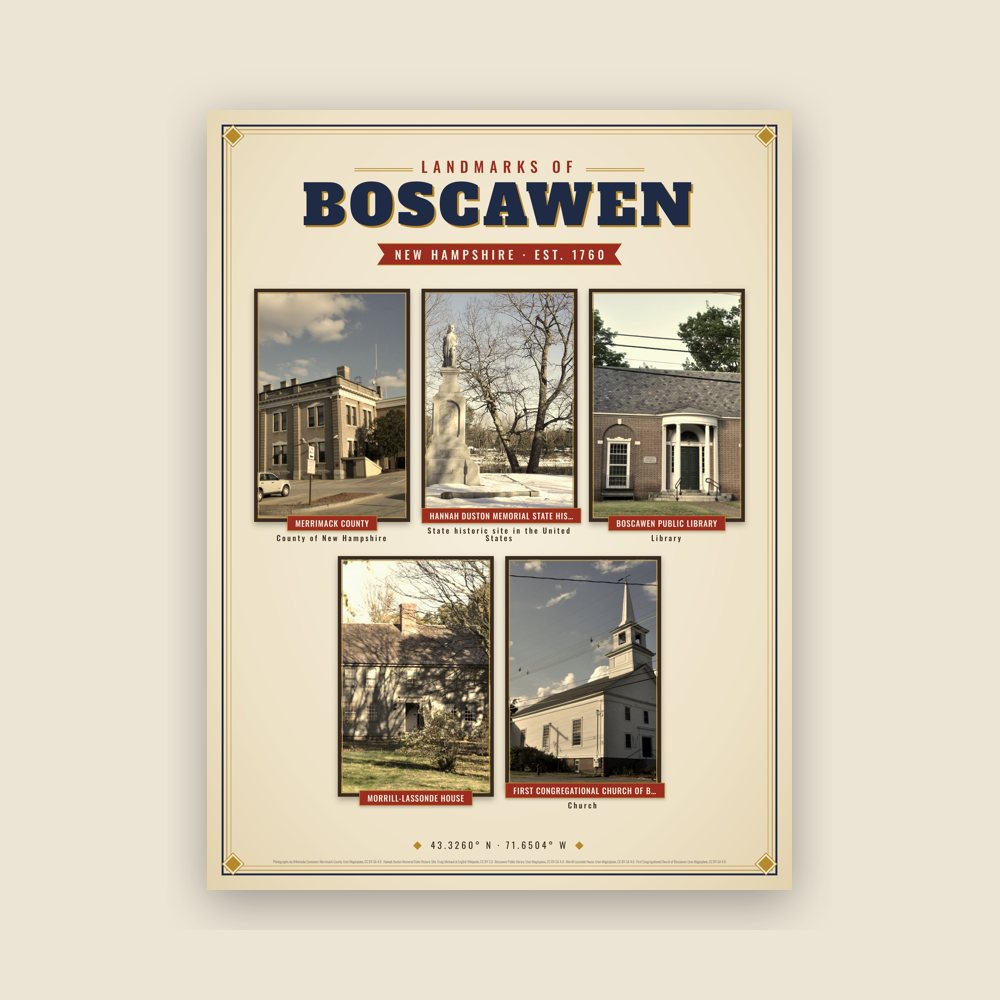
Nine local landmarks, archival matte
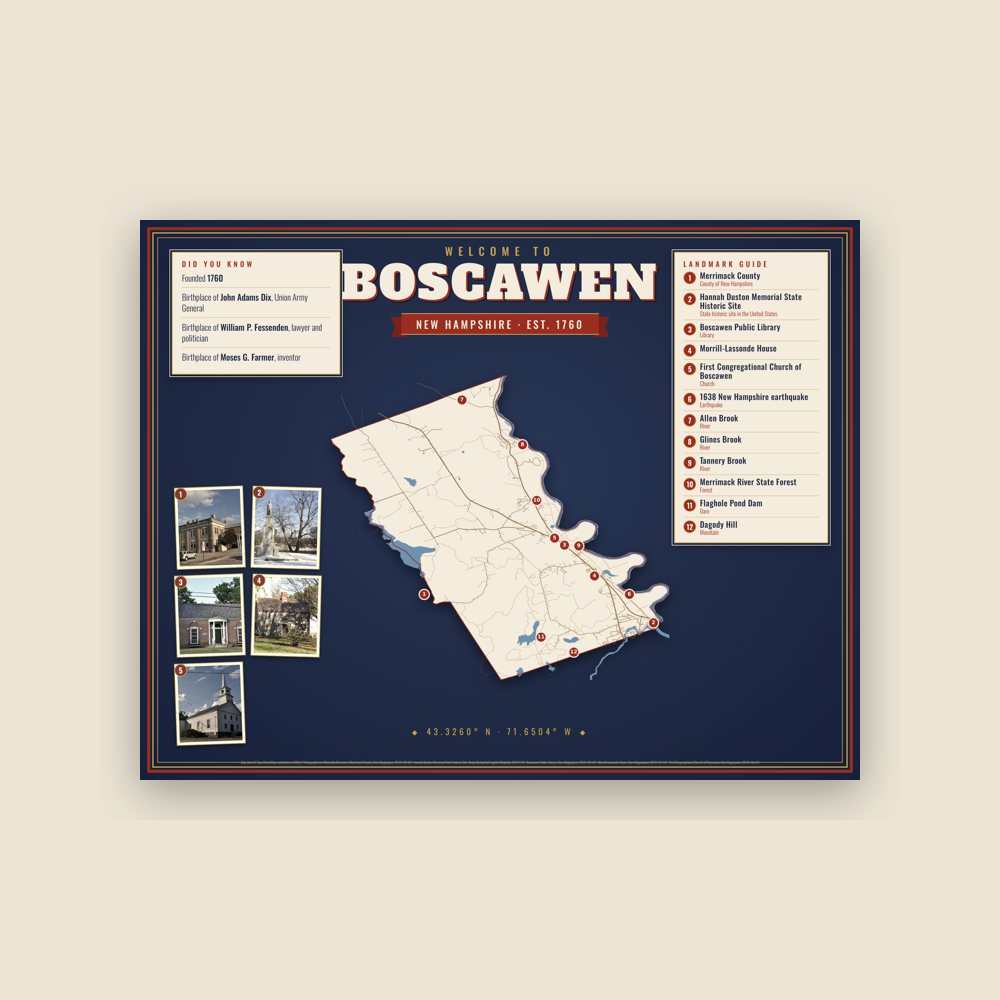
Map of local landmarks, washable fabric
Heavy-blend fleece, street map printed on the back
Soft Bella+Canvas jersey
Glossy ceramic, dishwasher safe
Ceramic keepsake, gold ribbon
Weatherproof, for the front walk
24″×16″, printed coir-look fibers, rubber back
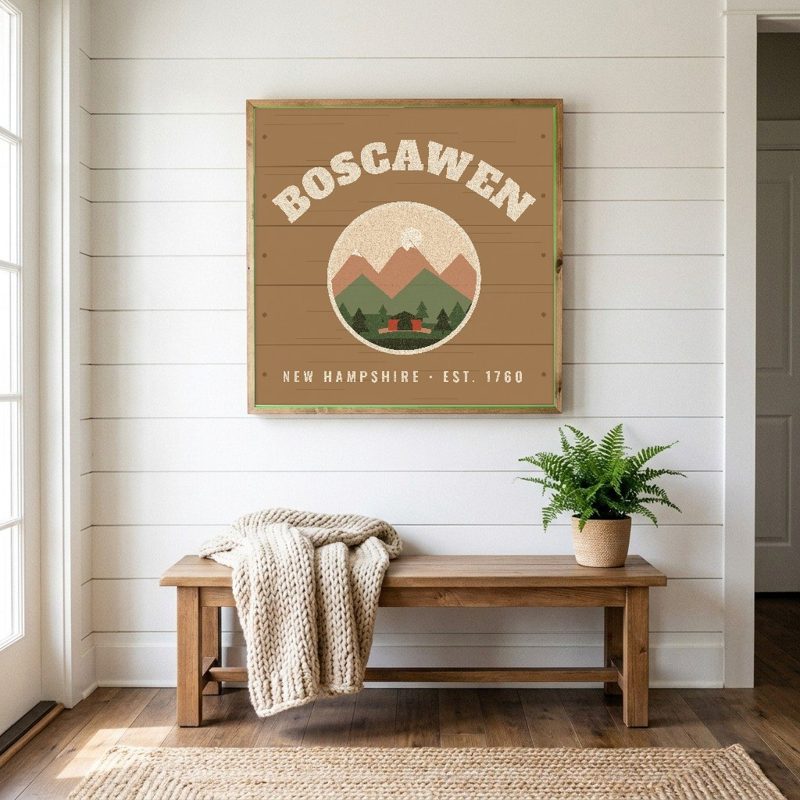
12″×12″ printed wood, ready to hang
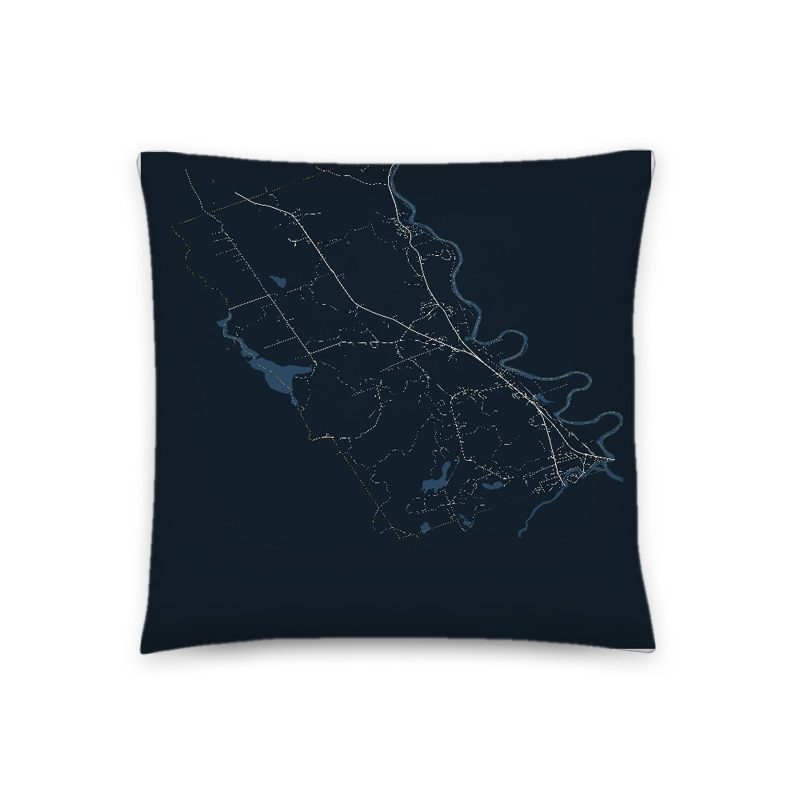
Soft-touch, zip cover
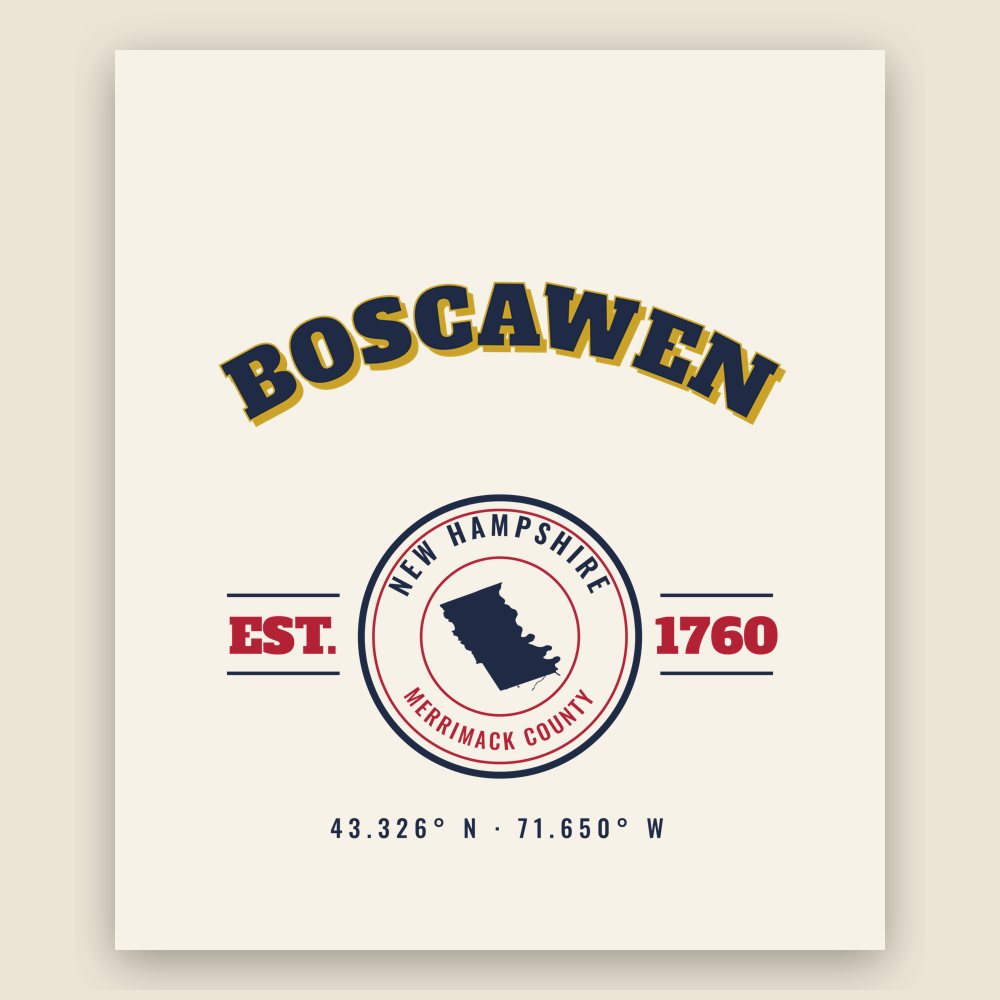
Sturdy all-over-print tote
Glossy top, cork back
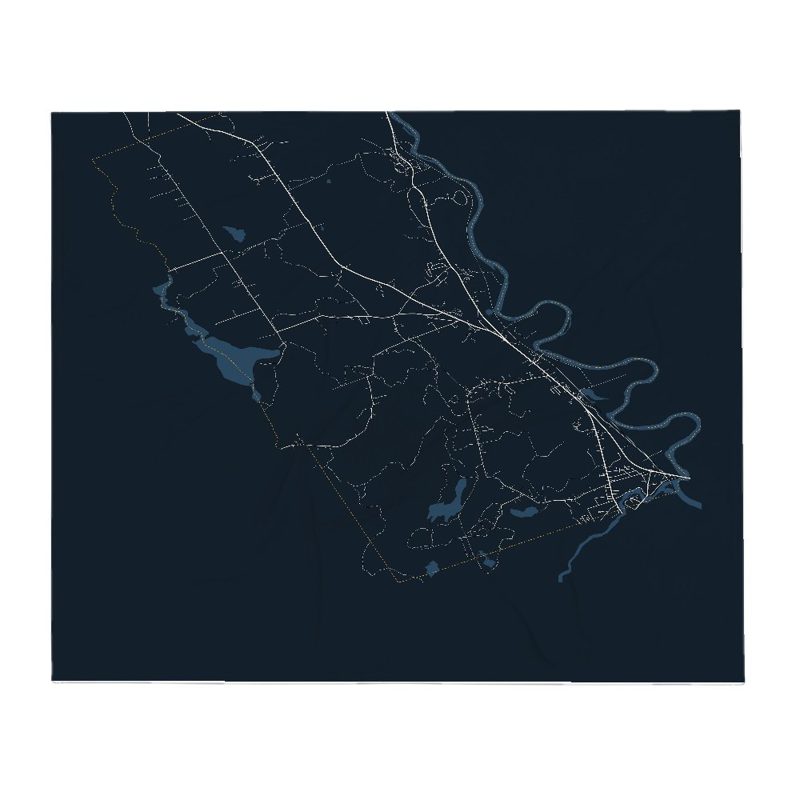
Soft fleece, 50″×60″
20 oz, double-wall stainless
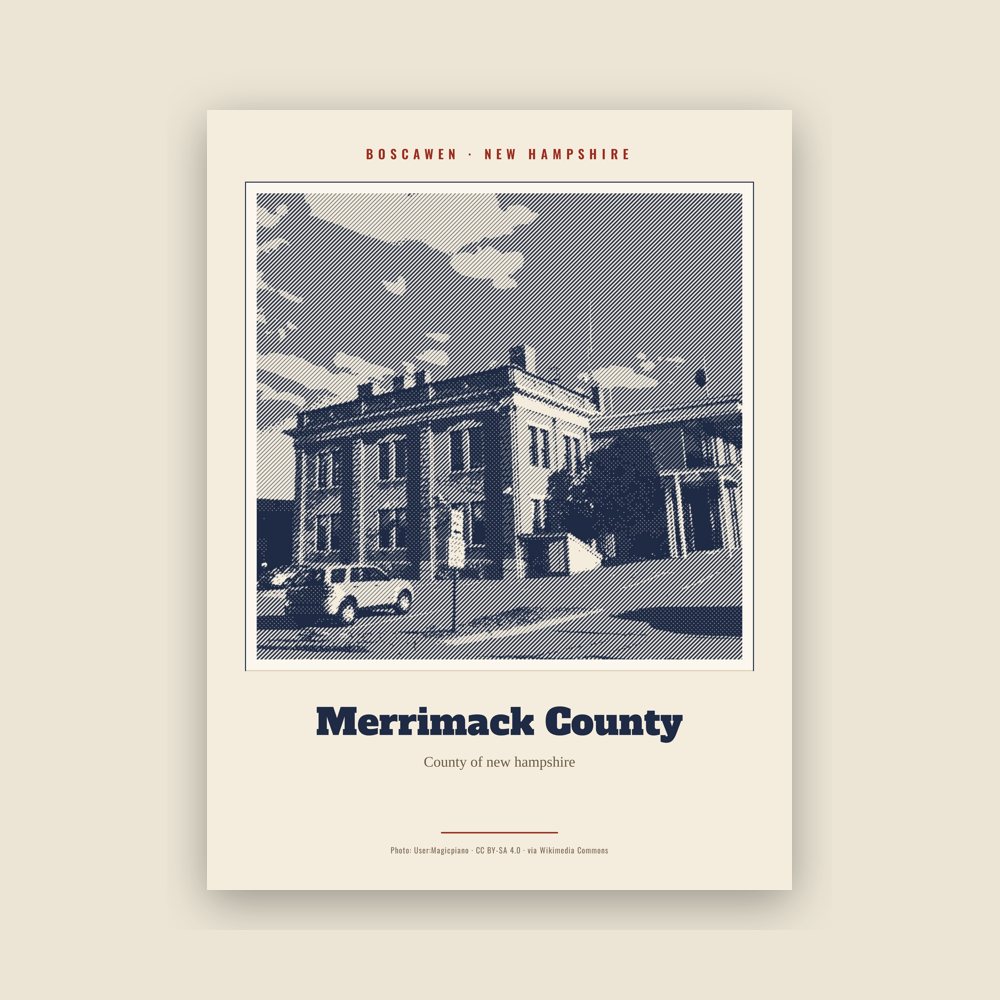
Archival matte print of a local landmark, credited to its photographer
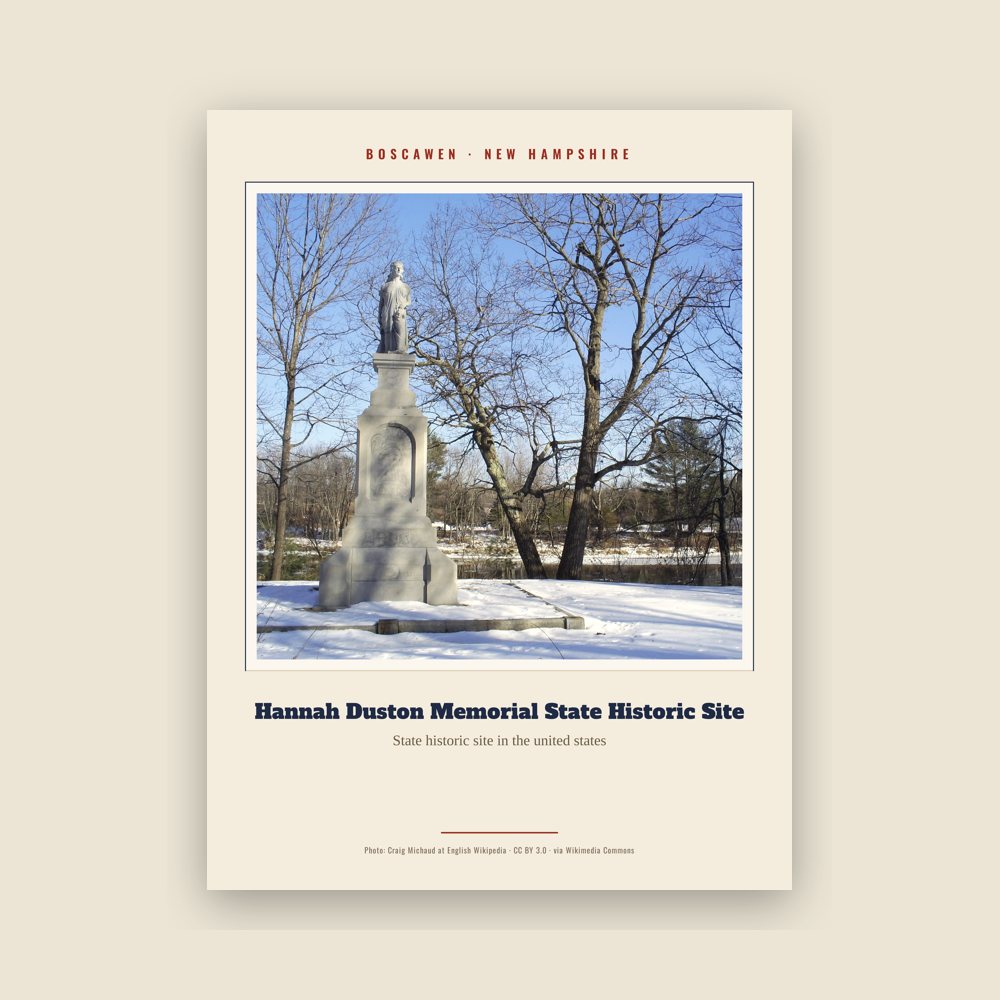
Archival matte print of a local landmark, credited to its photographer
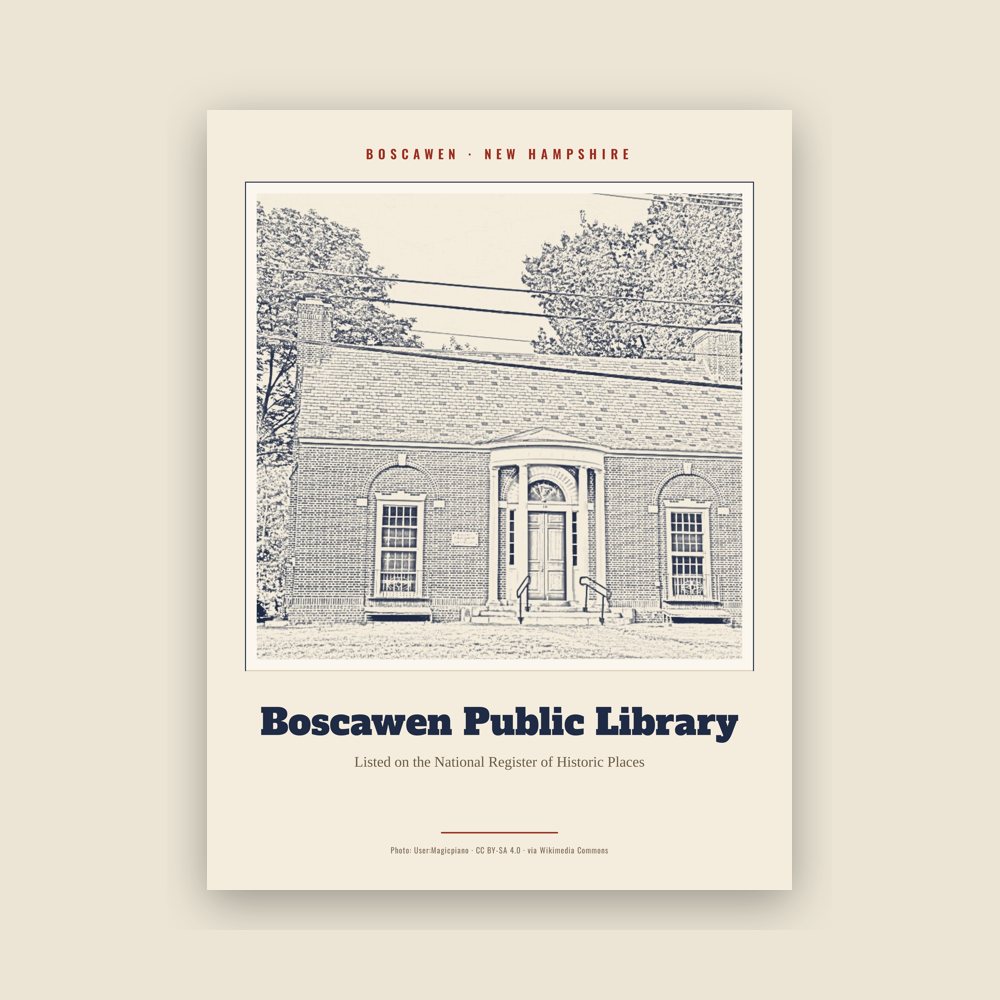
Archival matte print of a local landmark, credited to its photographer
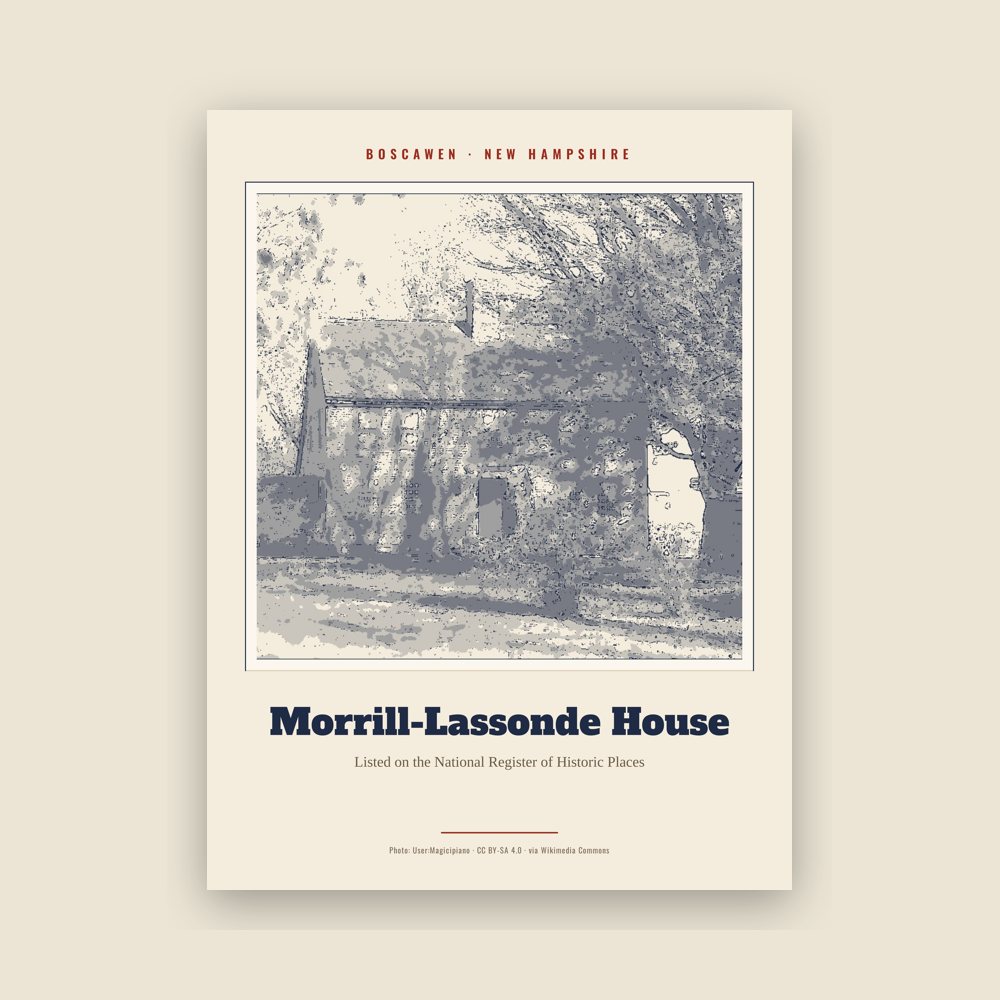
Archival matte print of a local landmark, credited to its photographer
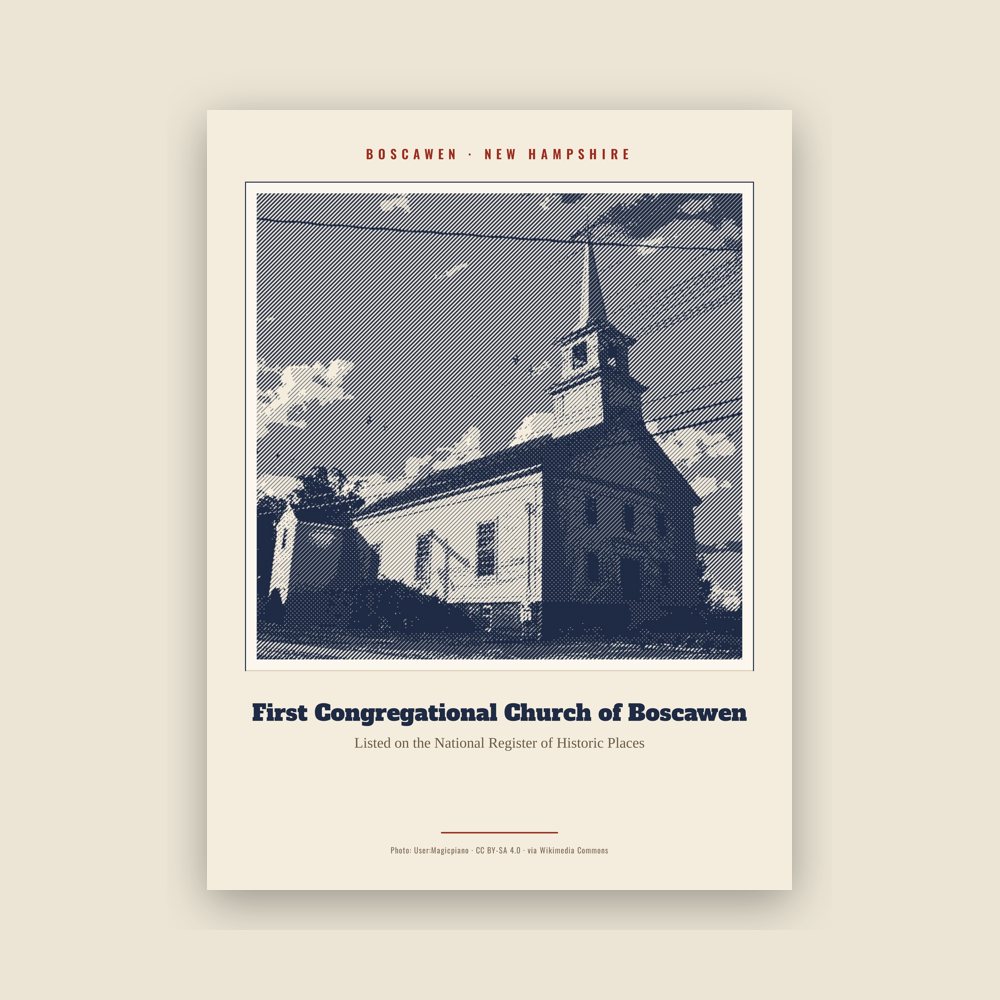
Archival matte print of a local landmark, credited to its photographer
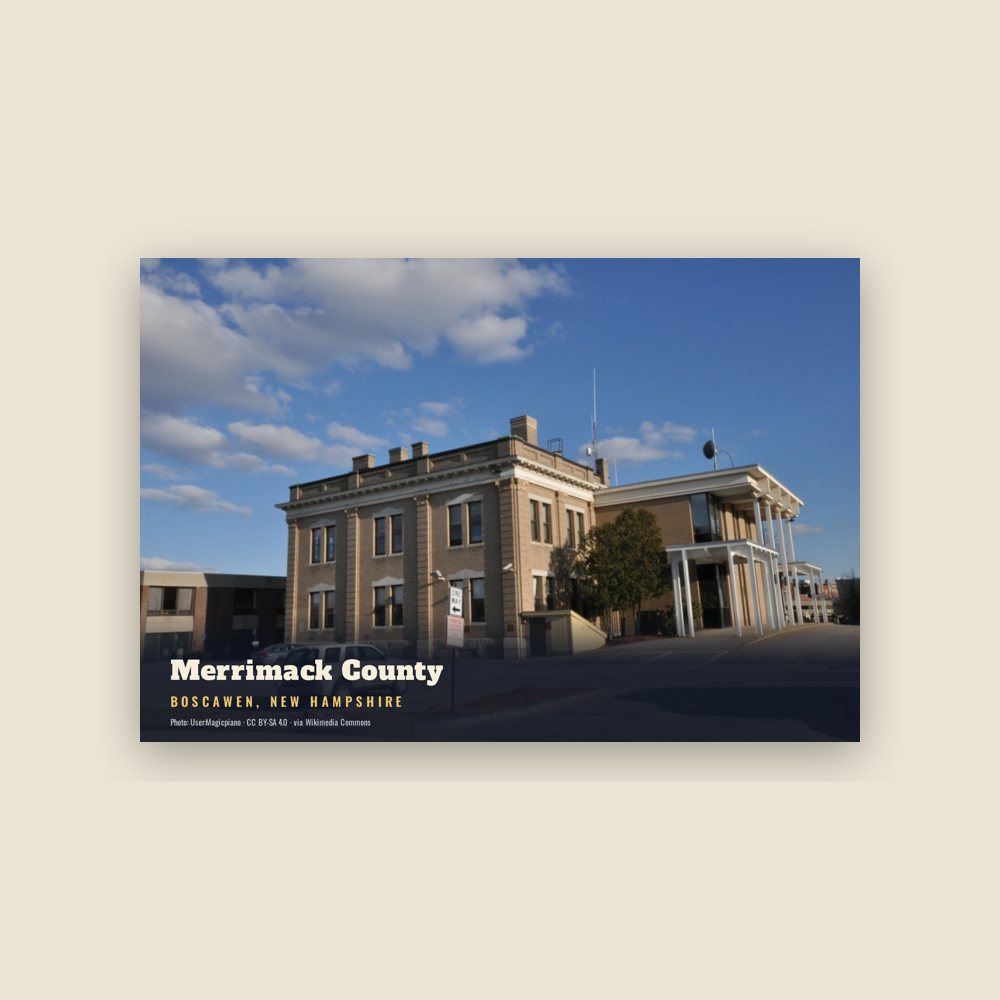
6″×4″ postcard, glossy front
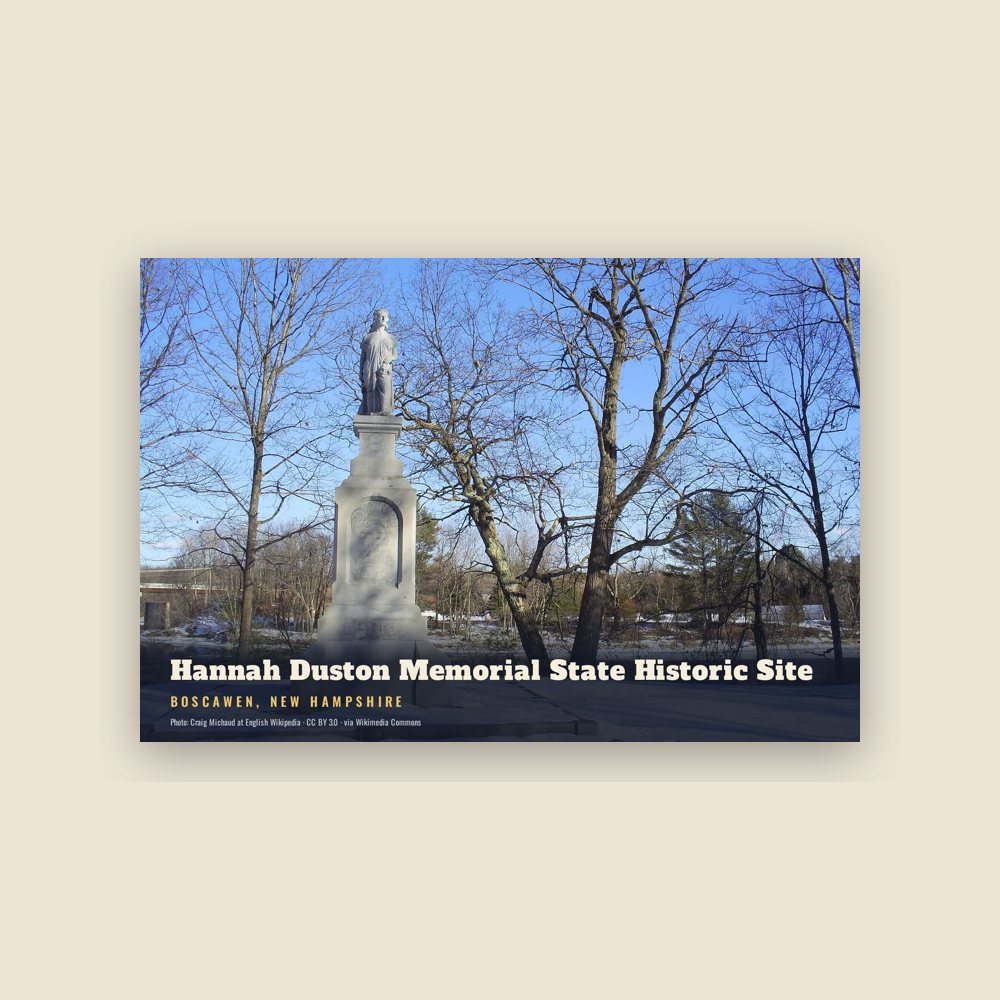
6″×4″ postcard, glossy front
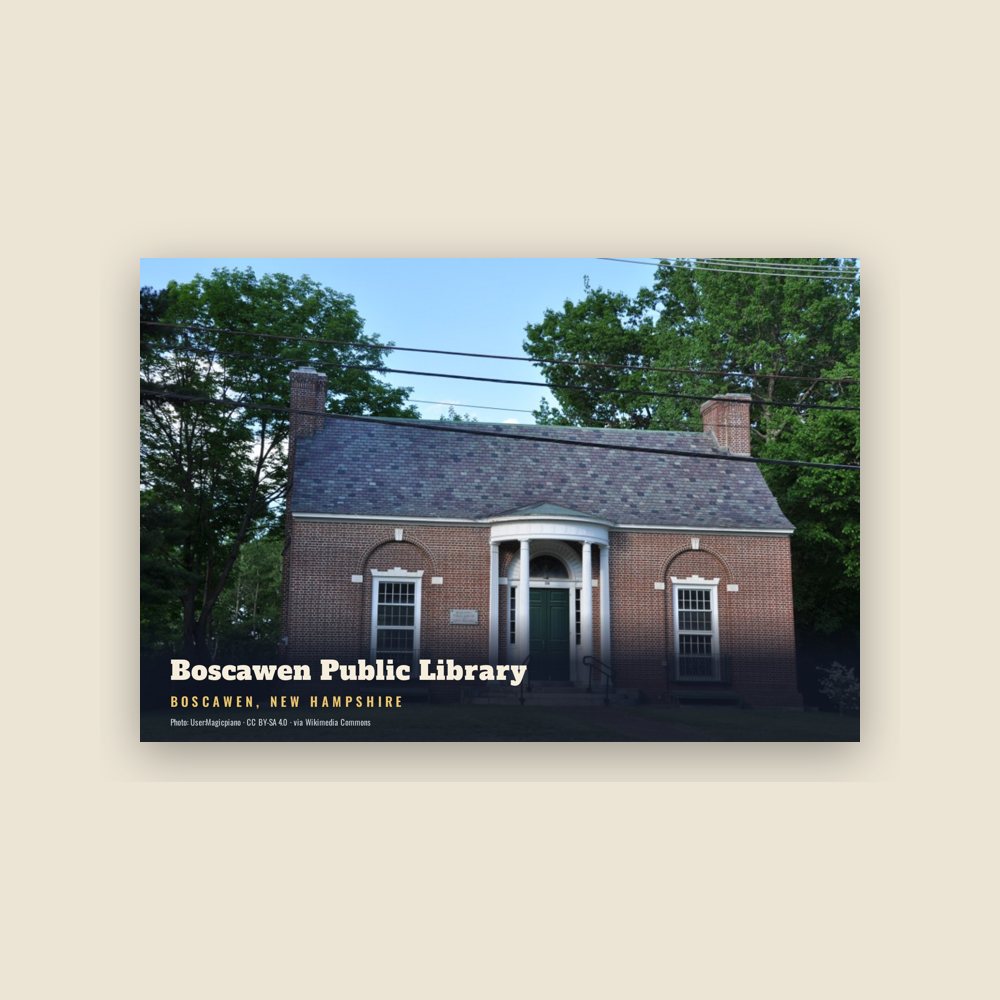
6″×4″ postcard, glossy front
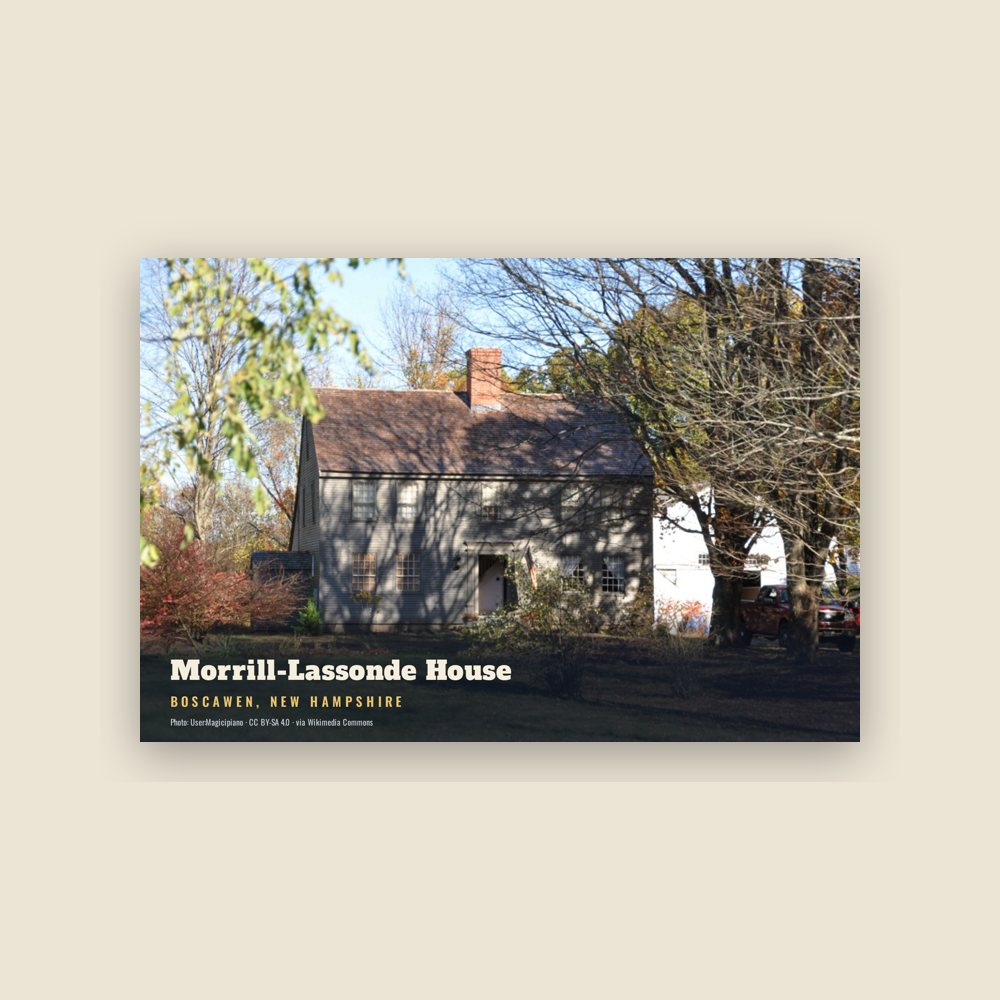
6″×4″ postcard, glossy front
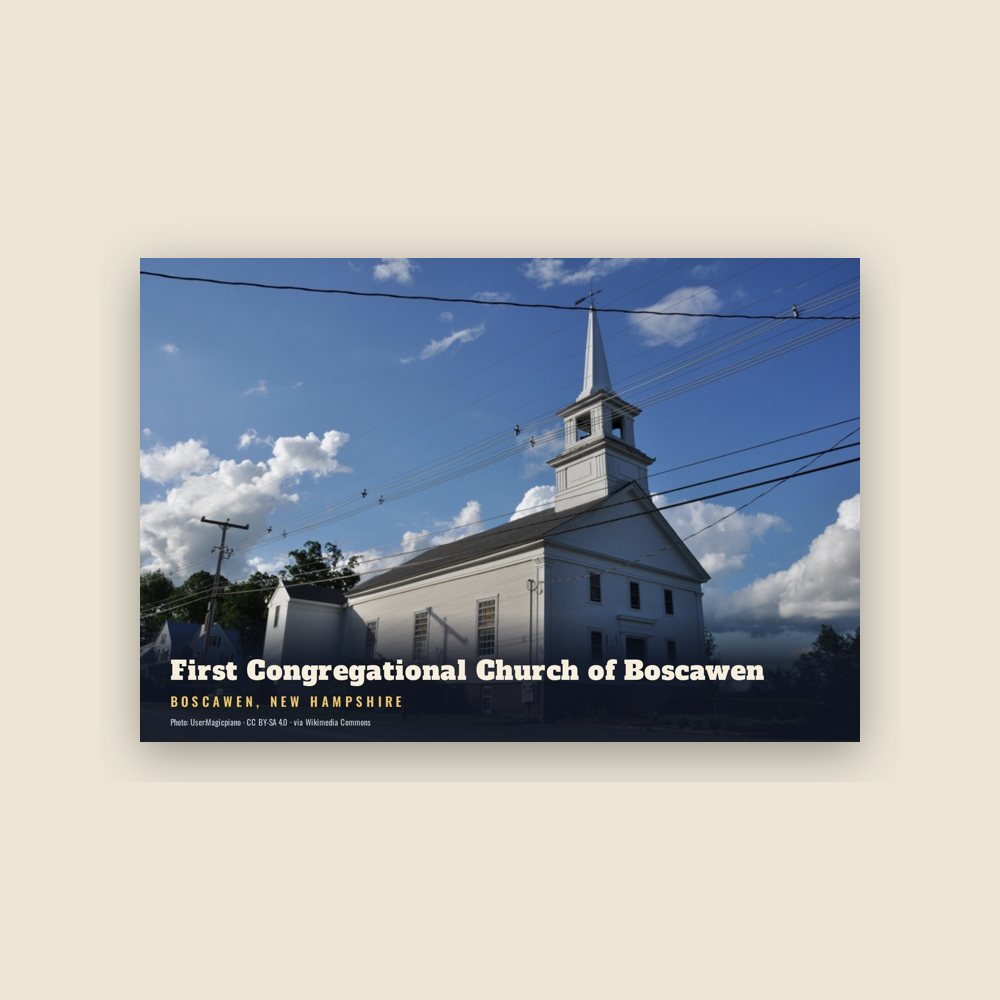
6″×4″ postcard, glossy front
Population 2010: 3,965 → 2020: 3,998
From Wikidata (CC0).
The native Pennacook people called the area Contoocook, meaning "place of the river near pines". In March 1697, Hannah Duston and her nurse, Mary Neff, were captured by Abenaki Indians and taken to a temporary village on an island at the confluence of the Contoocook and Merrimack rivers, at the site of what is now Boscawen. In late April, Duston and two other captives killed ten of the Abenaki family members holding them hostage, including six children, and escaped by canoe to Haverhill, Massachusetts.
On June 6, 1733, Governor Jonathan Belcher granted the land to John Coffin and 90 others, most from Newbury, Massachusetts. Settled in 1734, the community soon had a meetinghouse, sawmill, gristmill and ferry across the Merrimack River. A garrison offered protection, but raiding parties during the French and Indian Wars left some dead or carried into captivity.
On April 22, 1760, Contoocook Plantation was incorporated as a town by Governor Benning Wentworth, who named it for Edward Boscawen, the British admiral who distinguished himself at the 1758 Siege of Louisbourg. With a generally level surface, the town provided good farmland, and became noted for its apple, pear and cherry orchards. Bounded by the Merrimack and Contoocook rivers, it had abundant sources of water power for mills.
Industries soon included a cotton mill, a woolen factory, nine sawmills, a gristmill, a saw manufacturer and machine shop, and a chair and match factory. A mill town village developed at Fisherville (now Penacook), which straddled the river border with Concord. In 1846, the Northern Railroad was built through Boscawen, opening the following winter.
Sometime around 1846, the town's postmaster became one of about a dozen in the country to issue provisional postage stamps before the official issue came out in 1847. The stamps were an adaptation of a postmark, simply reading PAID / 5 / CENTS, typeset in blue on a yellowish paper. These are extremely rare; in 2003, the estimated price at auction was US$225,000.
Adapted (trimmed) from the Wikipedia article Boscawen, New Hampshire, revision 1377124068 by its contributors, licensed CC BY-SA 4.0.
We share a part of every Boscawen sale with local partners, and we'd love to print from your collection. Old photographs, maps and postcards make the best keepsakes.
Partner with us