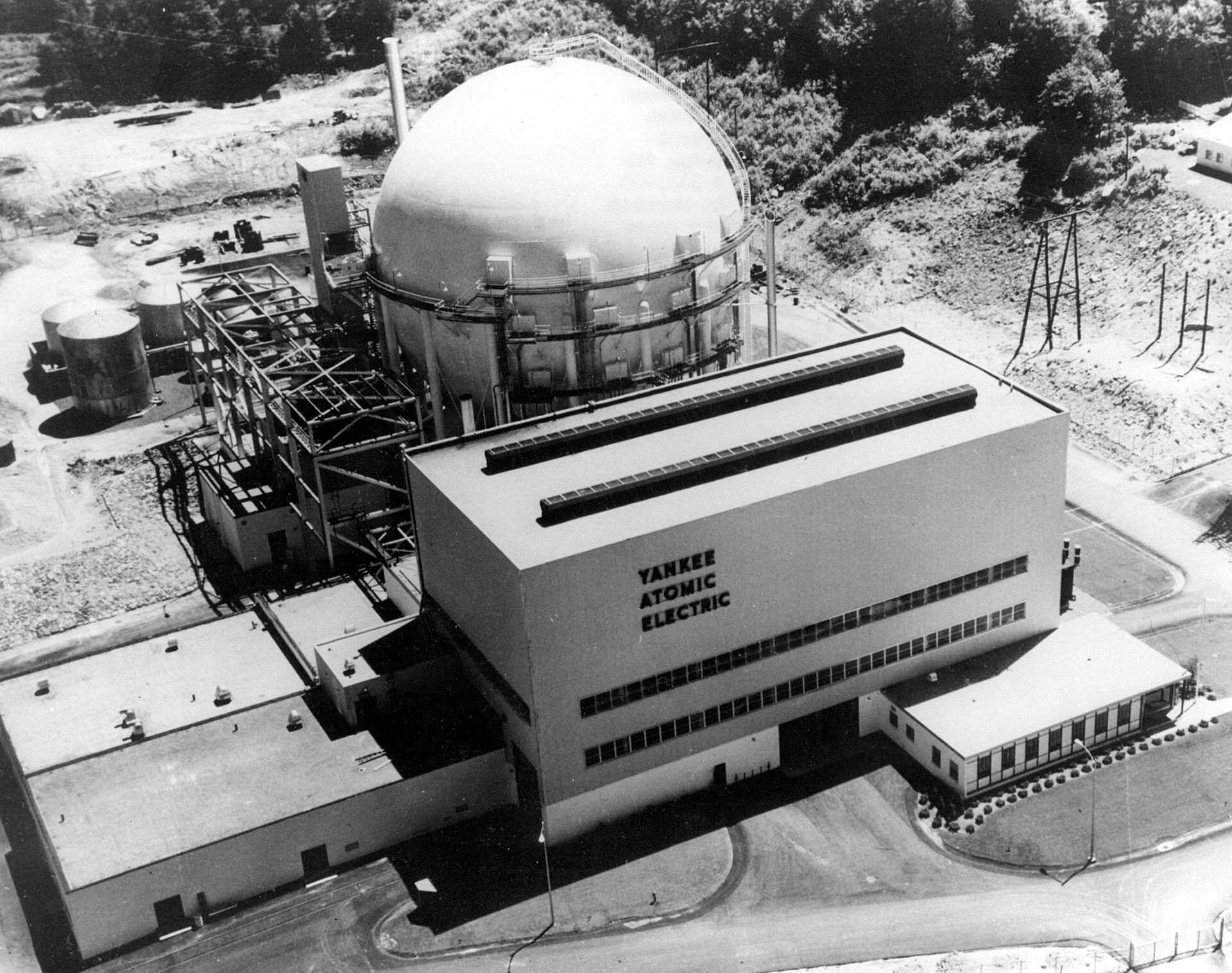
Rowe was the site of fishing and foraging for local Native American tribes. Landmarks include Yankee Rowe Nuclear Power Station. Rowe is the birthplace of John Henry Haynes, archaeologist and photographer.
Every piece is drawn from Rowe's own map data and historic archives, then printed and shipped from the USA when you order. No two towns look alike.
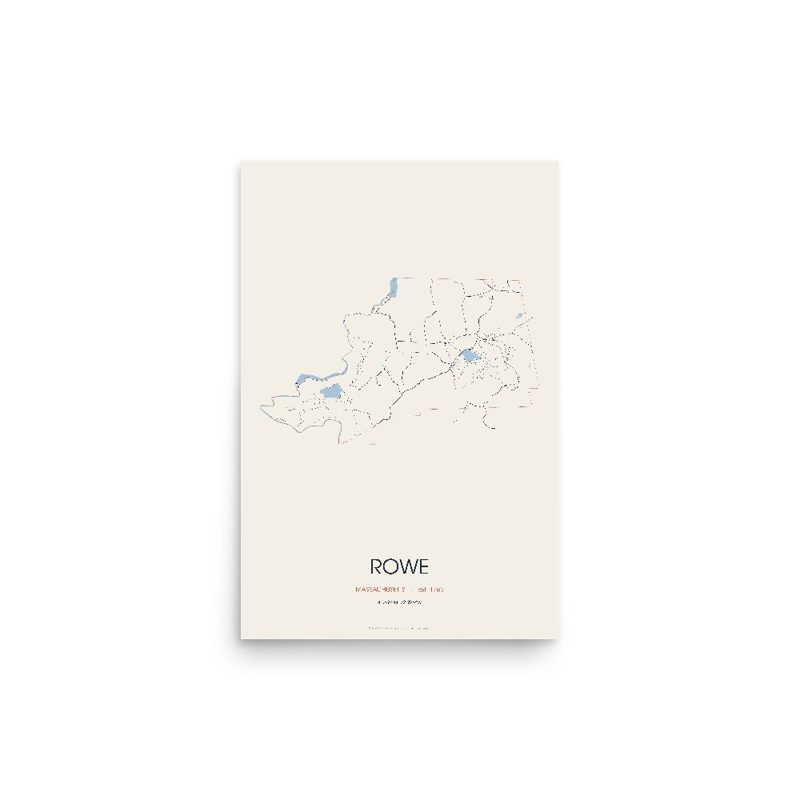
Every road in town, on archival matte paper
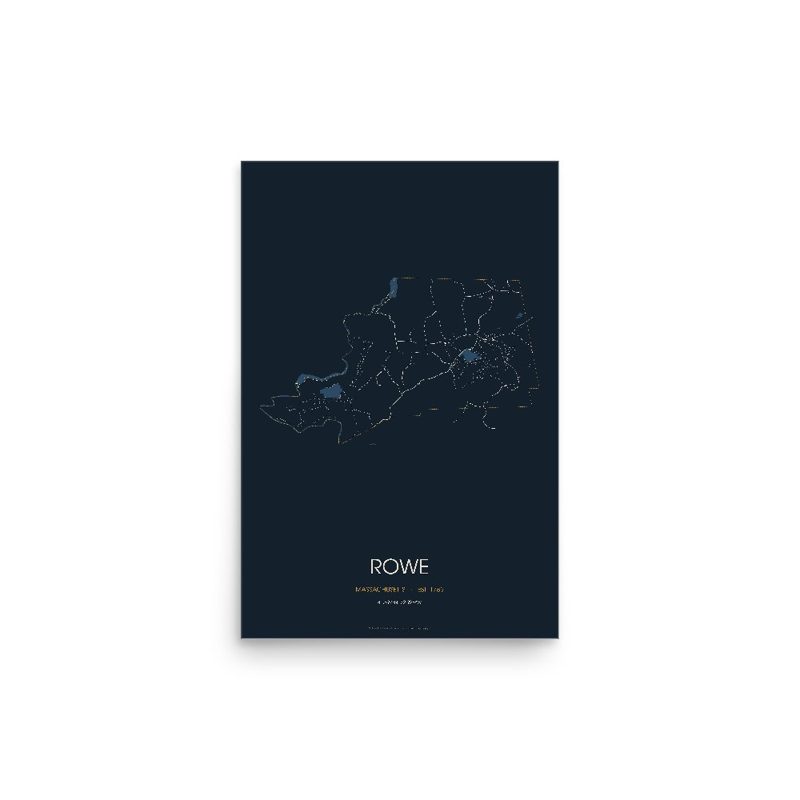
The same map, in navy and silver
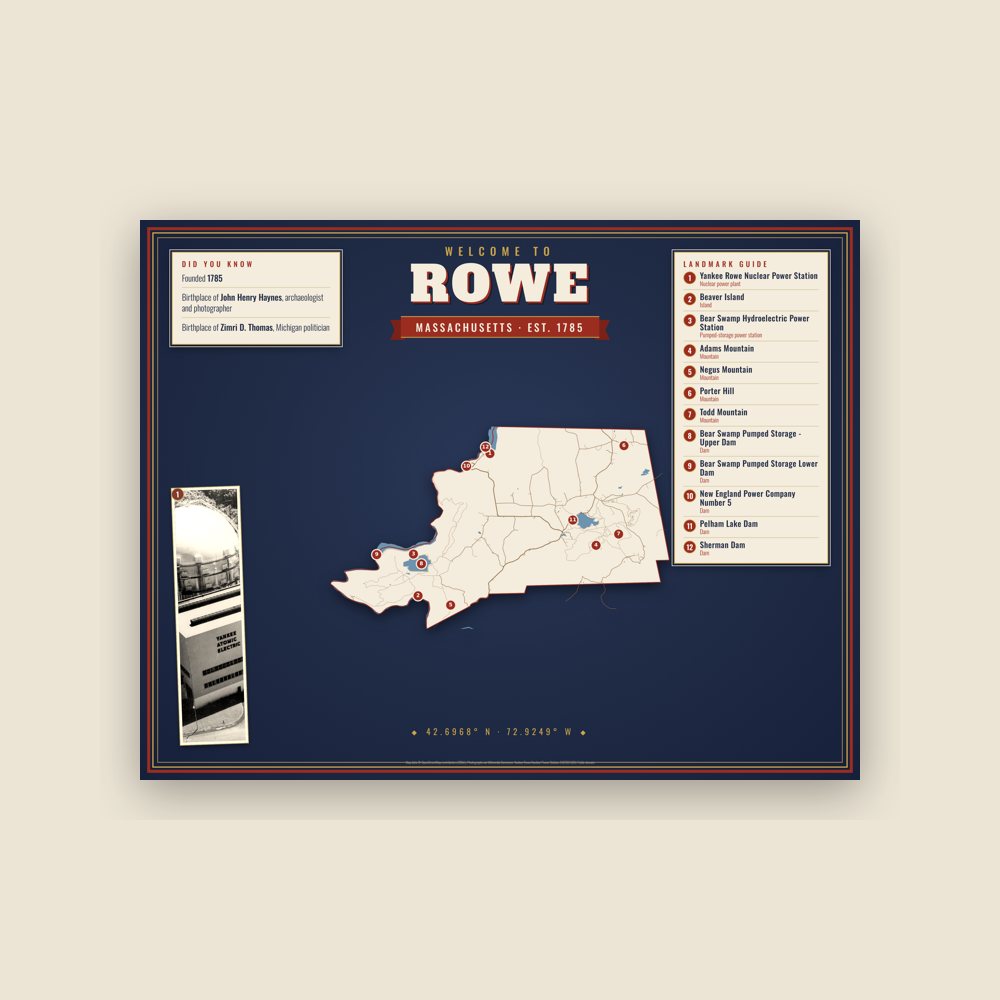
Map of local landmarks, washable fabric
Heavy-blend fleece, street map printed on the back
Soft Bella+Canvas jersey
Glossy ceramic, dishwasher safe
Ceramic keepsake, gold ribbon
Weatherproof, for the front walk
Soft-touch, zip cover
Sturdy all-over-print tote
Glossy top, cork back
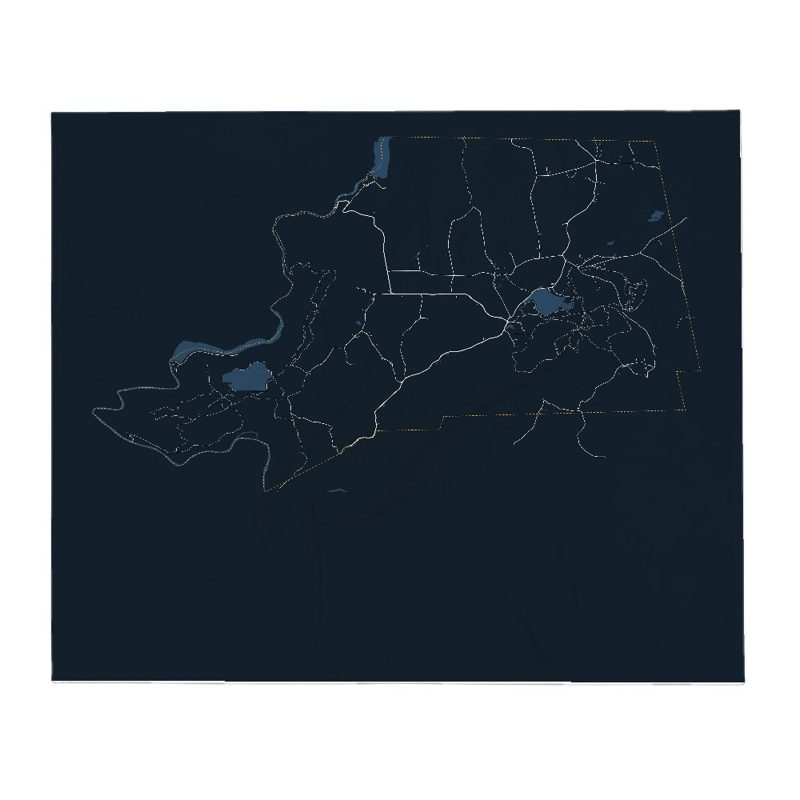
Soft fleece, 50″×60″
20 oz, double-wall stainless
Population 2010: 393 → 2020: 424
From Wikidata (CC0).
Rowe was the site of fishing and foraging for local Native American tribes. The area was first visited by white settlers in 1744, and was the site of a fort to guard against raids. In 1762, the town lands were purchased by the Rev. Cornelius Jones, who named it "Myrifield" after the Greek word for "thousand". The town had enough settlers by 1785 to have it incorporated as a town, renamed by the Massachusetts General Court after John Rowe, a prominent Boston merchant.
The town of Rowe grew around mills on the river, but also had other industries, including sulfur, talc and soapstone mining. This was nowhere more evident than in the now abandoned settlement at the Davis Mine. In the late 1880s, with the addition of the railroad along the river, the area had become somewhat of a small resort town. But, by the advent of the 1900s, most industry had begun to dry up, leaving the town fairly rural until the 1950s. At that point, with the "baby boom" underway, Rowe became the site of Yankee Rowe Nuclear Power Station, the first nuclear power plant in New England, near the Sherman Dam along the Vermont border. The plant was in operation from 1960 to 1992, and the plant is now completely decommissioned, with the nuclear waste planned to be transported to Yucca Mountain's containment facilities, or another facility in the event that Yucca Mountain remains closed as a result of Harry Reid's lobbying to keep the planned nuclear waste repository closed permanently.
Adapted (trimmed) from the Wikipedia article Rowe, Massachusetts, revision 1377043052 by its contributors, licensed CC BY-SA 4.0.
We share a part of every Rowe sale with local partners, and we'd love to print from your collection. Old photographs, maps and postcards make the best keepsakes.
Partner with us