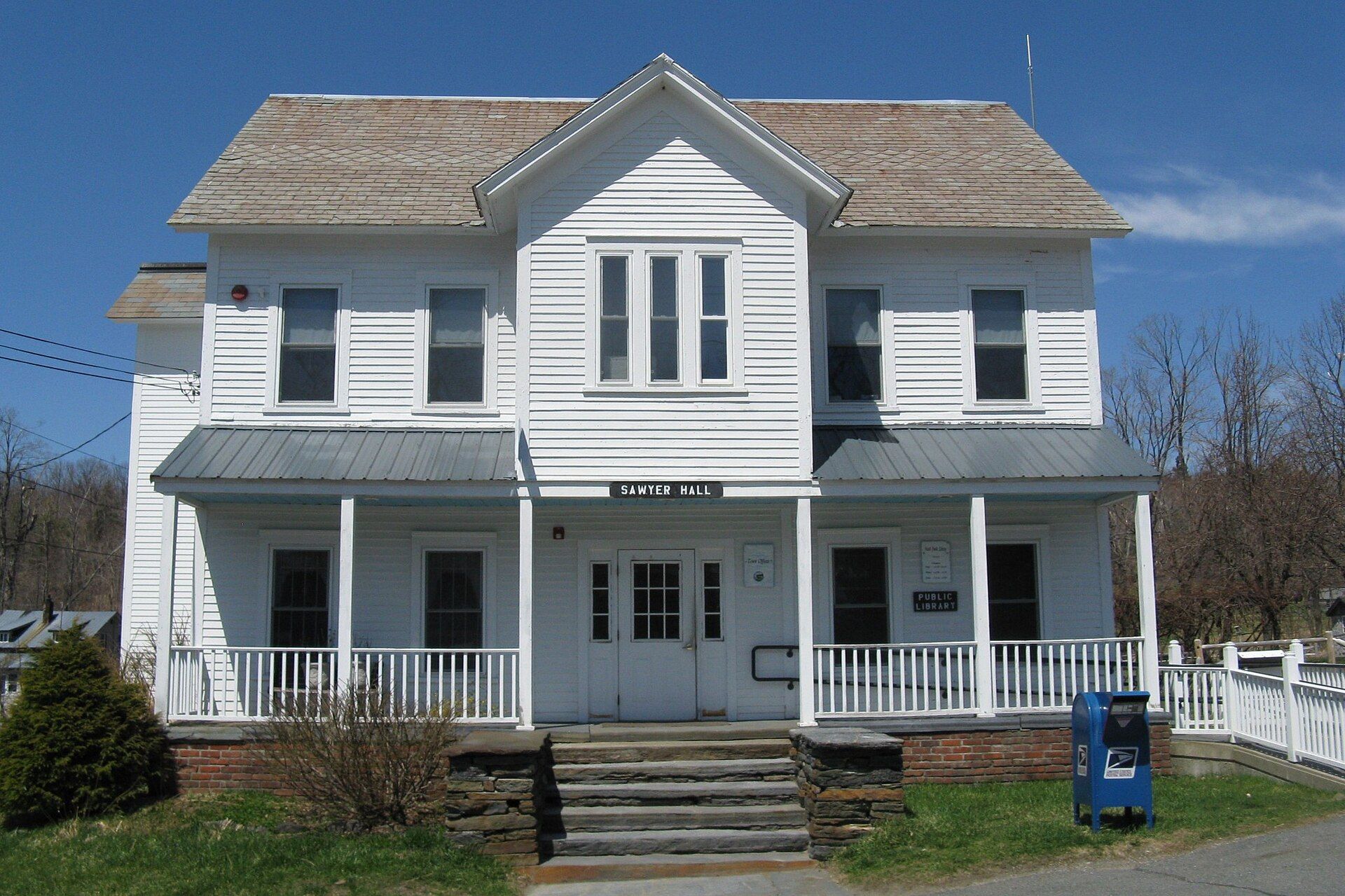
Heath was first settled in 1765 as a part of Charlemont. Landmarks include Heath Center Historic District and Heath Free Public Library. Heath is the birthplace of William W. Snow, politician.
Every piece is drawn from Heath's own map data and historic archives, then printed and shipped from the USA when you order. No two towns look alike.
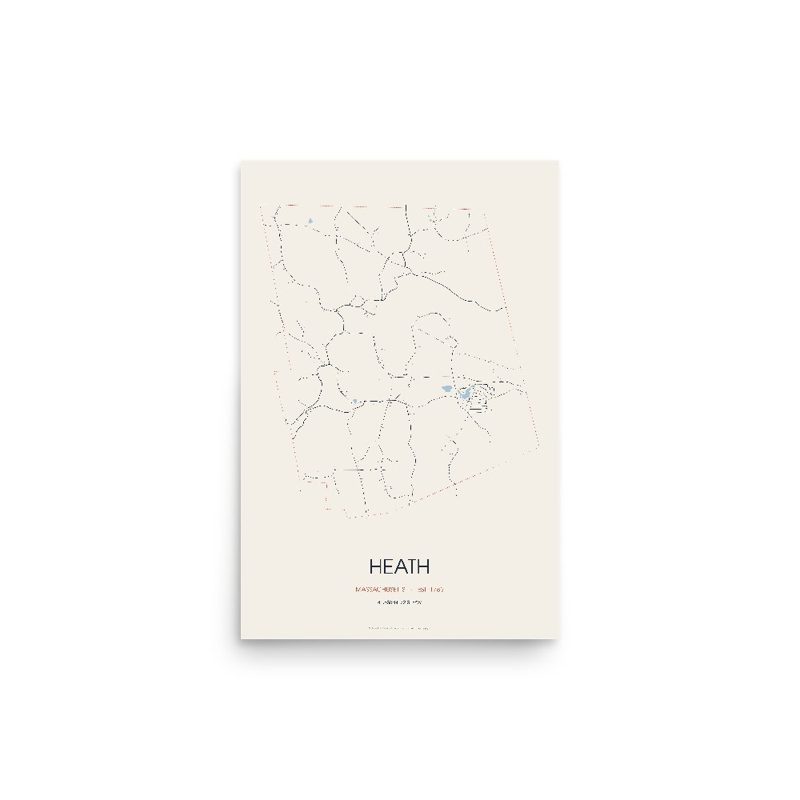
Every road in town, on archival matte paper
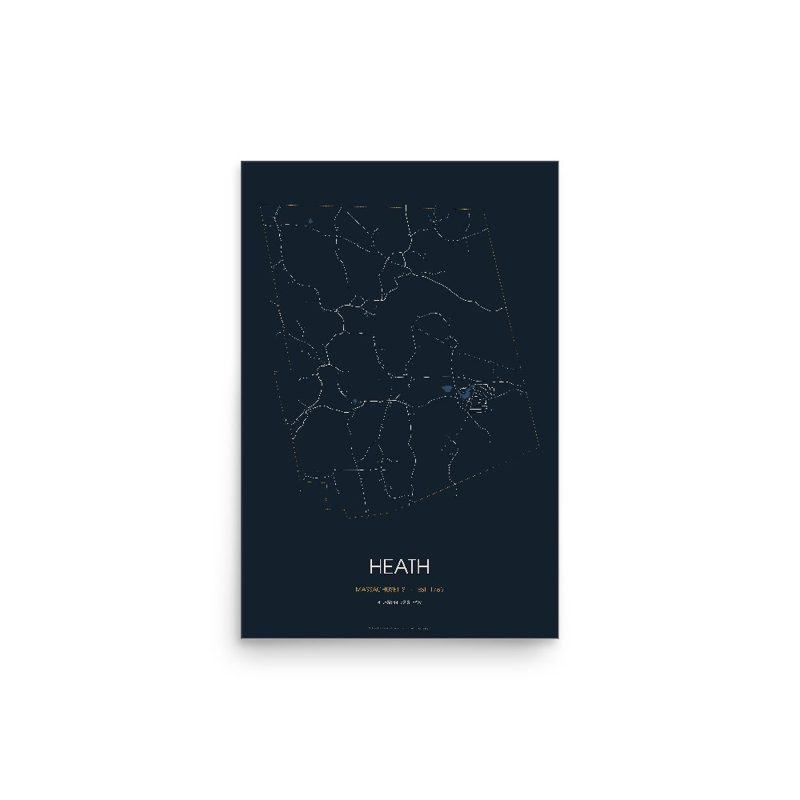
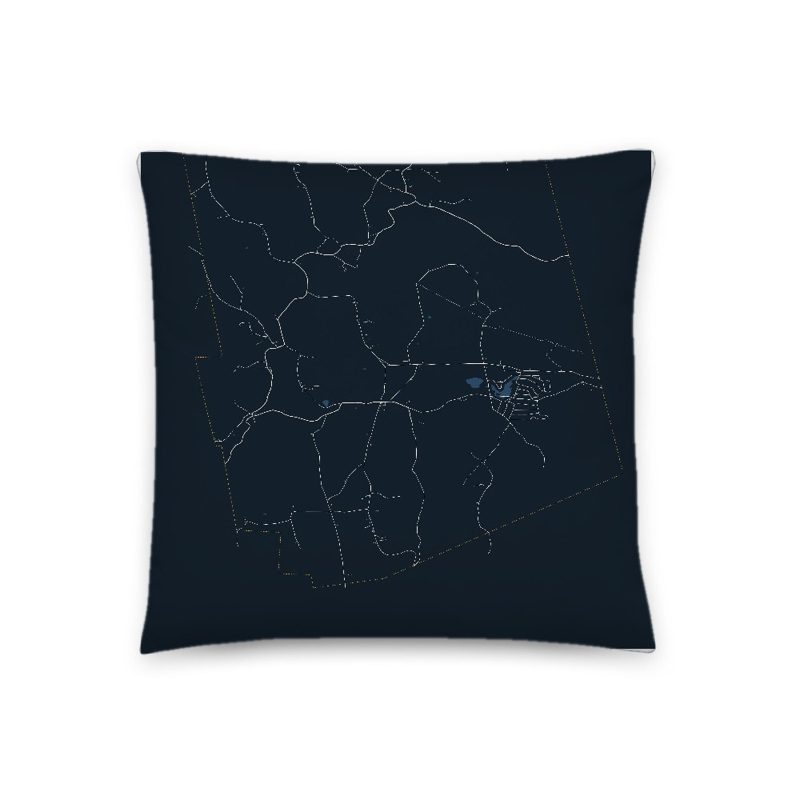
The same map, in navy and silver
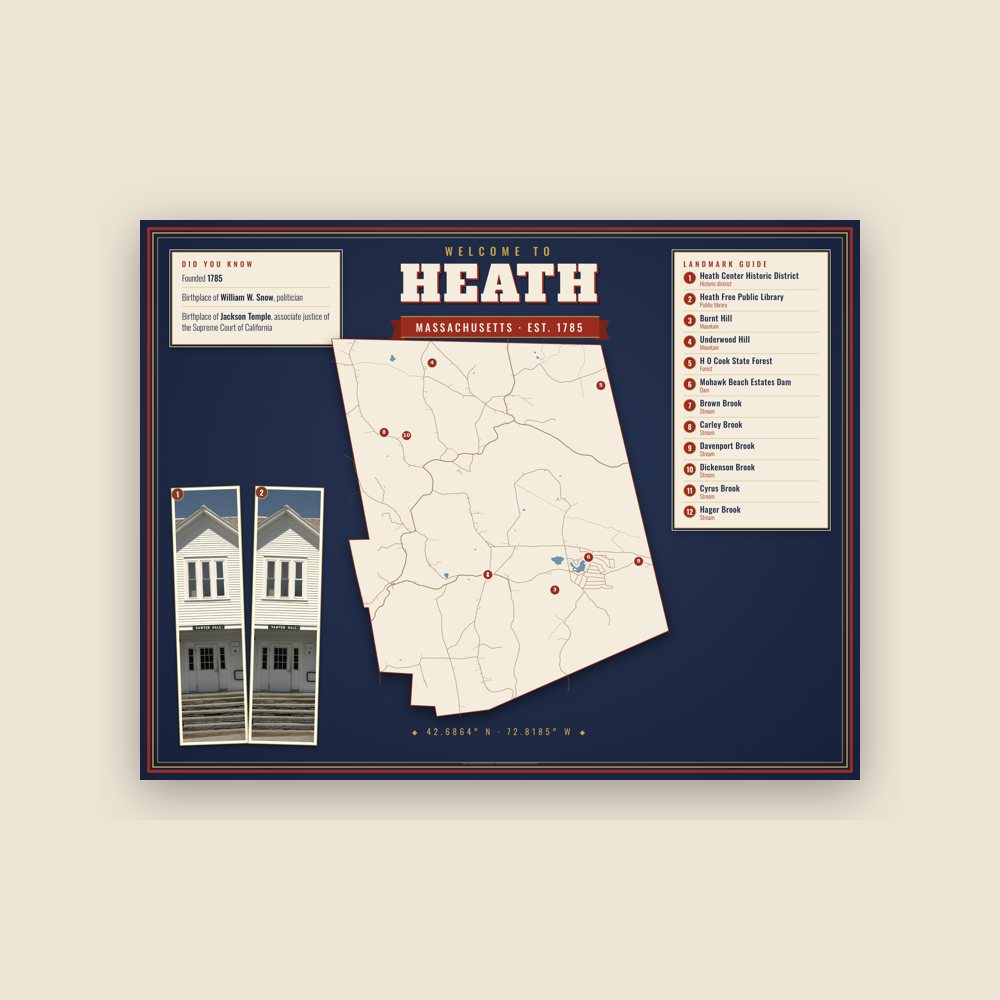
Map of local landmarks, washable fabric
Heavy-blend fleece, street map printed on the back
Soft Bella+Canvas jersey
Glossy ceramic, dishwasher safe
Ceramic keepsake, gold ribbon
Weatherproof, for the front walk
Soft-touch, zip cover
Sturdy all-over-print tote
Glossy top, cork back
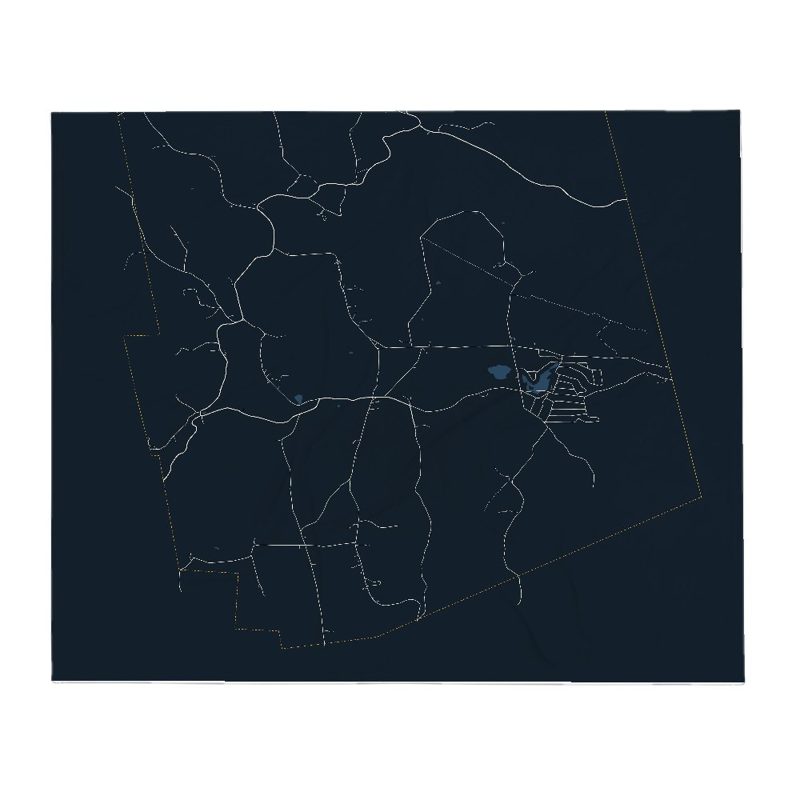
Soft fleece, 50″×60″
20 oz, double-wall stainless
Population 2010: 706 → 2020: 723
From Wikidata (CC0).
Heath was first settled in 1765 as a part of Charlemont. The town, as well as neighboring Rowe, separated, and Heath was officially incorporated in 1785, just a few days after its new neighbor. The town is named after William Heath, Major General of Massachusetts and Brigadier General in the national army during the American Revolution.
General Heath had been the commanding officer and friend of Col. Hugh Maxwell, a local citizen who suggested the town be named in his honor. In 1784 Maxwell, who was severely wounded at the Battle of Bunker Hill by a bullet through his shoulder, was chosen to represent Heath at the General Court in Boston and obtain a division of the town from Charlemont. Accordingly, the new town was incorporated on February 14, 1785.
Chloe Maxwell, daughter of Col. Maxwell, was married to prominent local landowner and state legislator abolitionist Roger Leavitt. Their son was the Congregational minister, lawyer, social reformer, editor and fervent abolitionist Rev. Joshua Leavitt, who after his graduation from Yale College was the first lawyer to practice in Heath. (Rev. Leavitt soon gave up law for the ministry, training at Yale Theological Seminary and settling in Stratford, Connecticut, before decamping for New York City and a career that included the editorship of The Emancipator.) Members of the Leavitt family of Heath and Charlemont provided stops on the Underground Railroad, and in some cases sheltered slaves like Basil Dorsey who were fleeing the South.
The town had some farming and other small industry in the nineteenth century, but much of it is gone now, leaving the town as a rural area. One of its more distinctive industries was a straw hat business, where palm fronds were imported from the Carolinas to be woven by women and children during their free time. Each year, the Heath Agricultural Society hosts the Heath Fair, a small agriculturally-focused fair held two weekends before Labor Day.
Adapted (trimmed) from the Wikipedia article Heath, Massachusetts, revision 1377378138 by its contributors, licensed CC BY-SA 4.0.
We share a part of every Heath sale with local partners, and we'd love to print from your collection. Old photographs, maps and postcards make the best keepsakes.
Partner with us