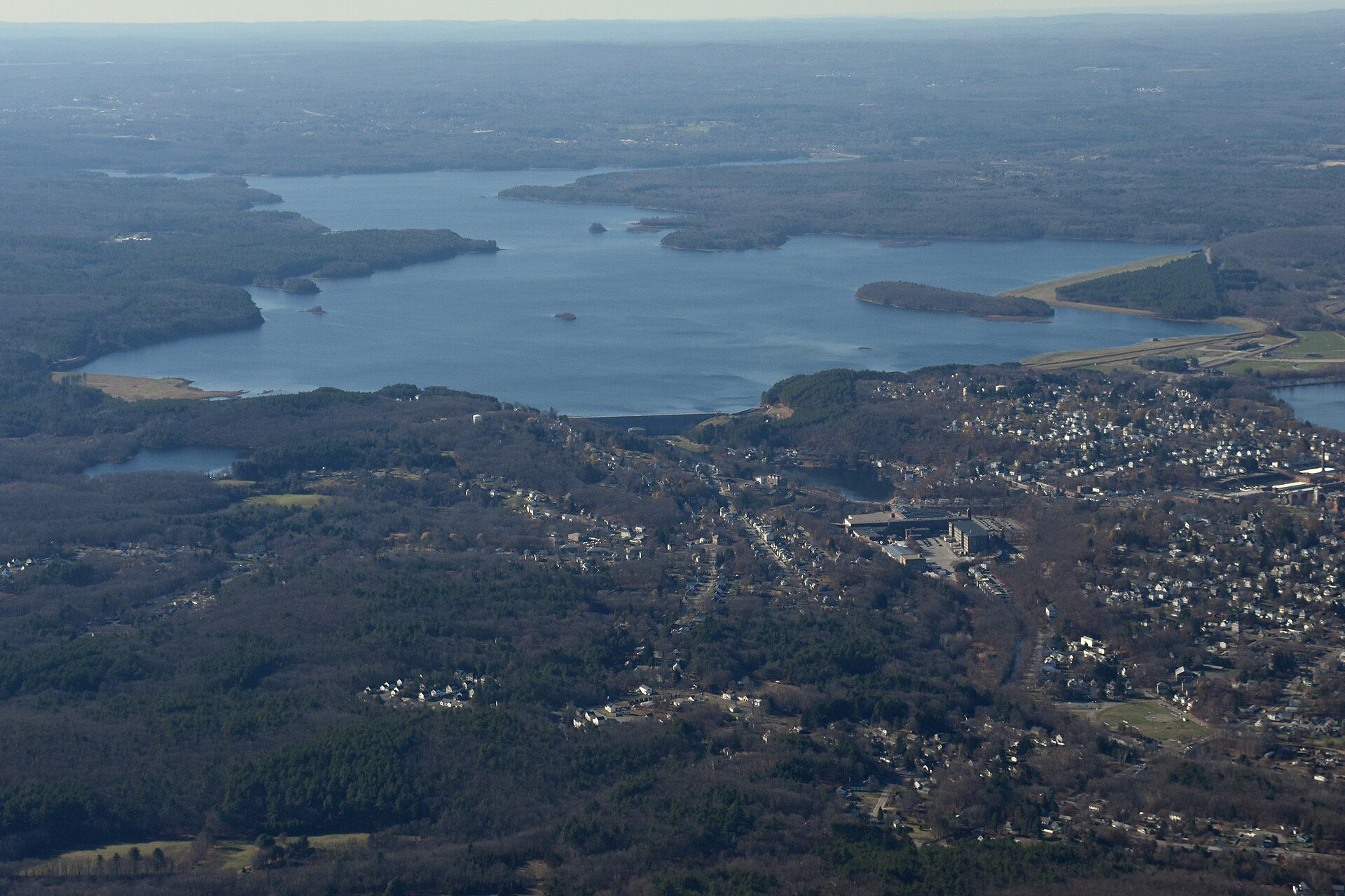
The town was made up of a large part of land from Shrewsbury and the remainder from Lancaster and was known as the North Parish of Shrewsbury from 1742 until 1786, when it was incorporated as Boylston. Landmarks include Wachusett Reservoir, Barlin Acres and John B. Gough House. Boylston is the birthplace of Charles Noyes Forbes, botanist.
Every piece is drawn from Boylston's own map data and historic archives, then printed and shipped from the USA when you order. No two towns look alike.
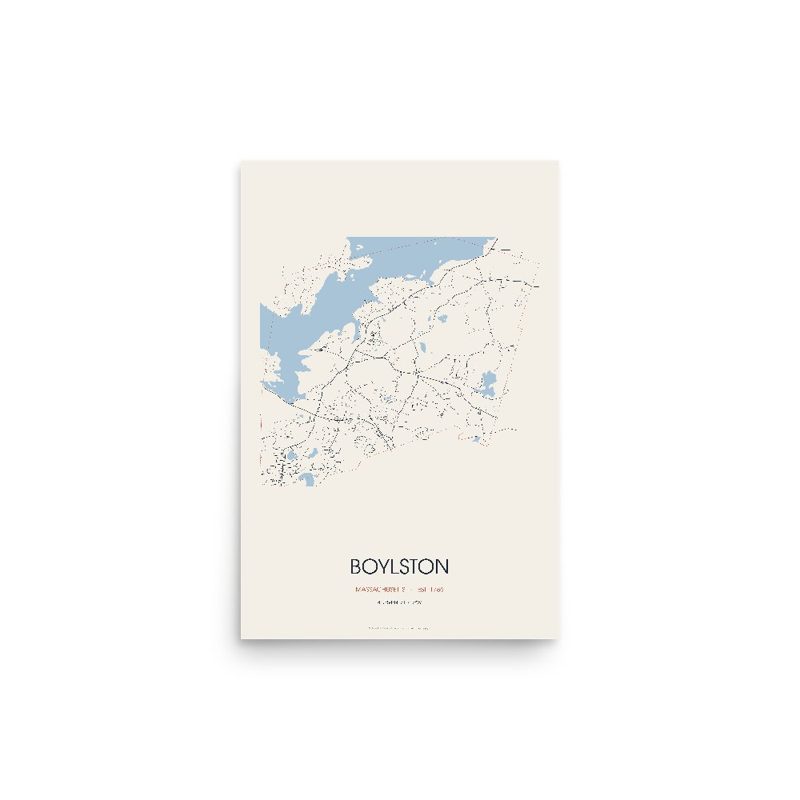
Every road in town, on archival matte paper
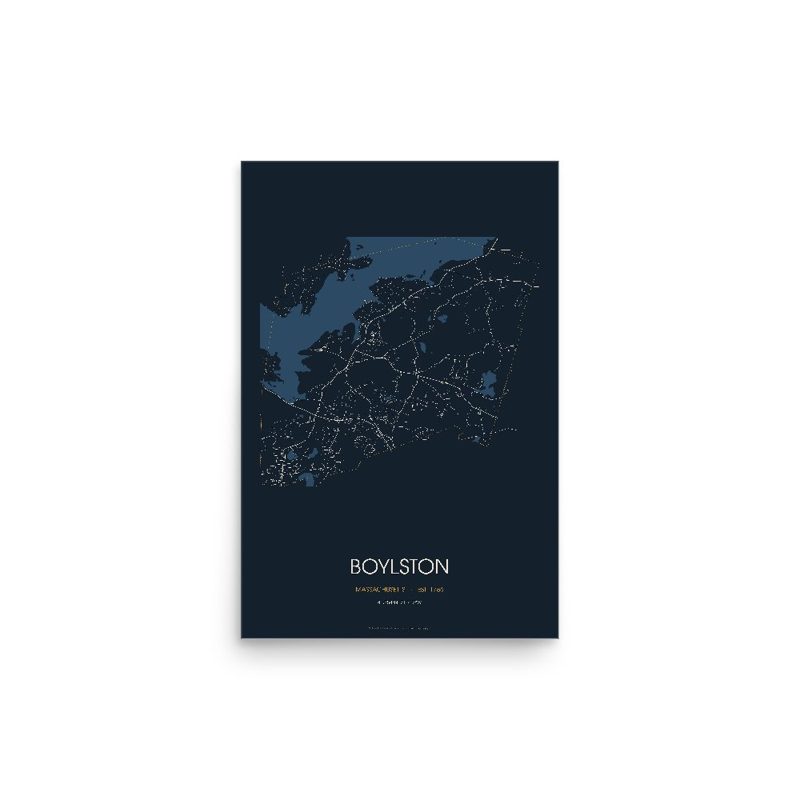
The same map, in navy and silver
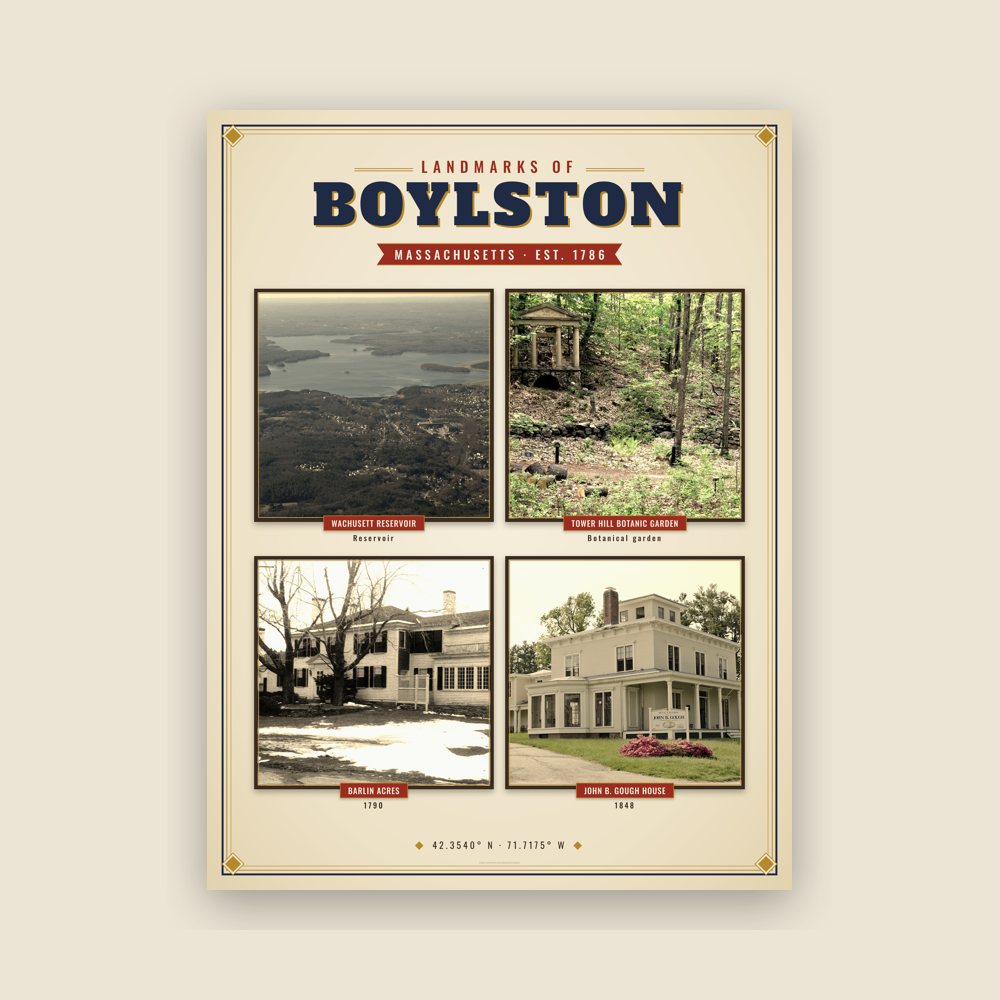
Nine local landmarks, archival matte
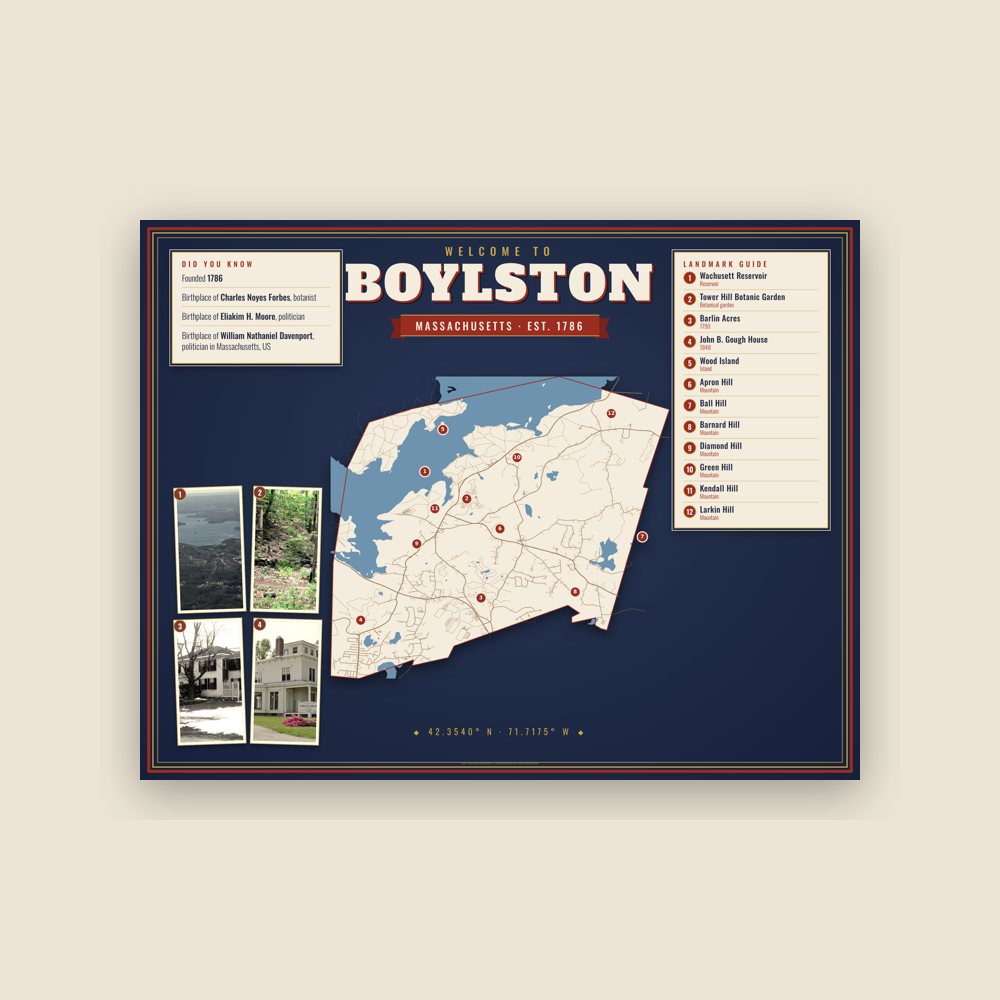
Map of local landmarks, washable fabric
Heavy-blend fleece, street map printed on the back
Soft Bella+Canvas jersey
Glossy ceramic, dishwasher safe
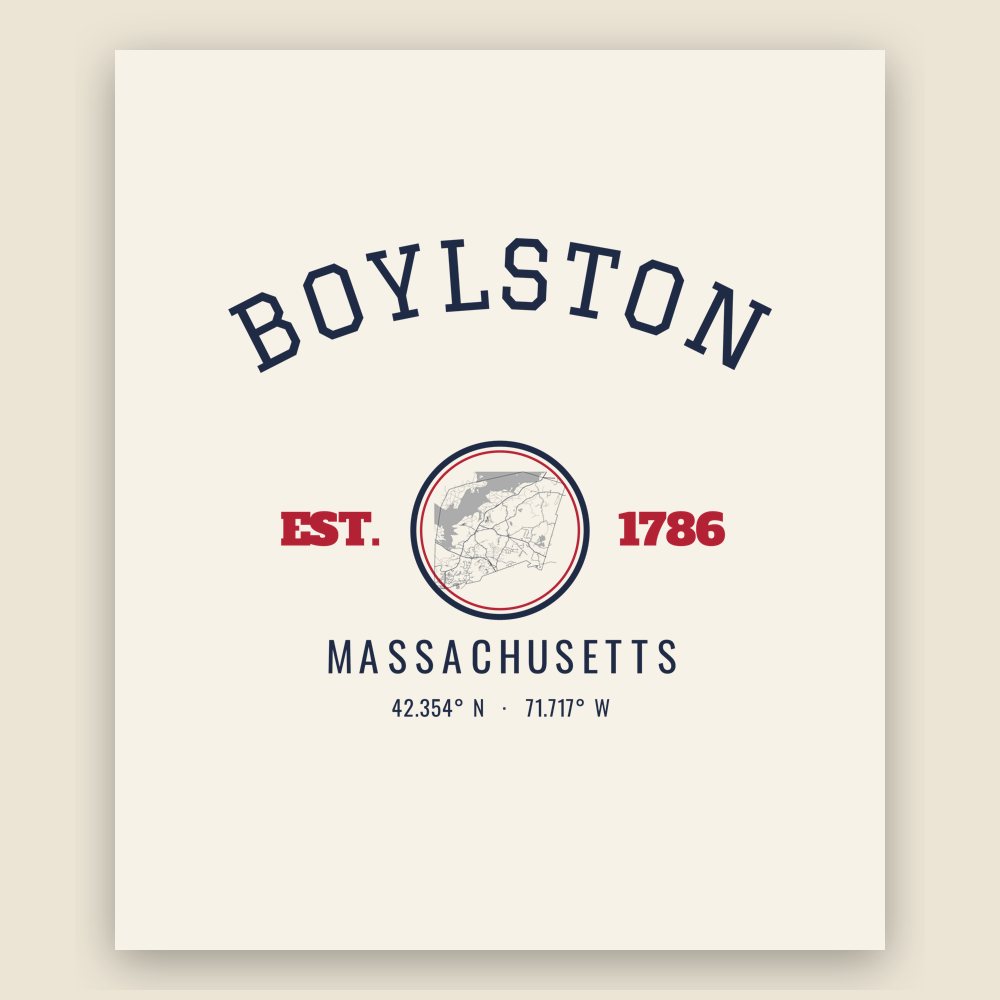
Ceramic keepsake, gold ribbon
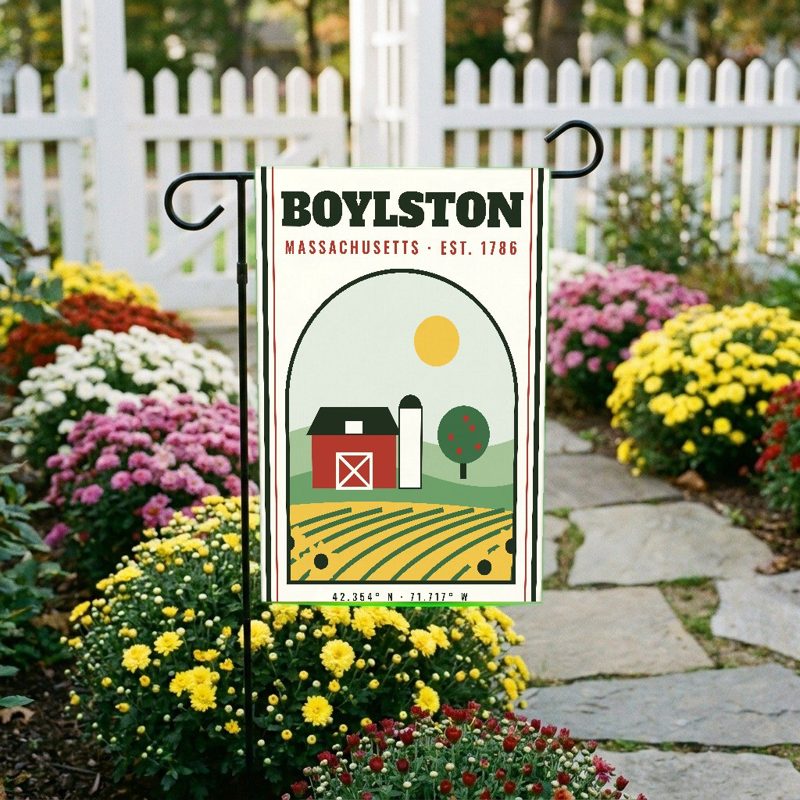
Weatherproof, for the front walk
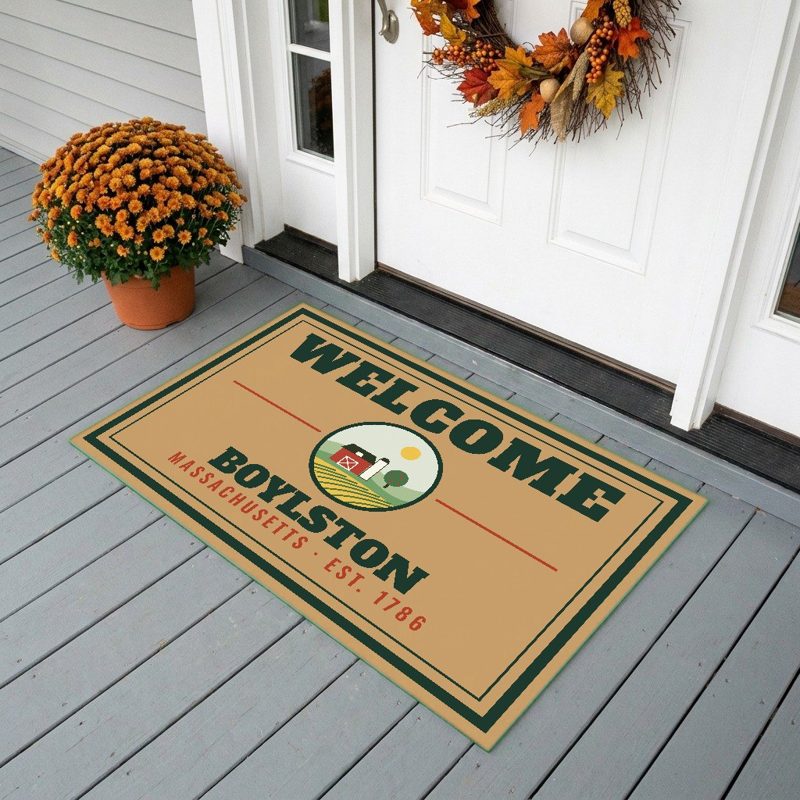
24″×16″, printed coir-look fibers, rubber back
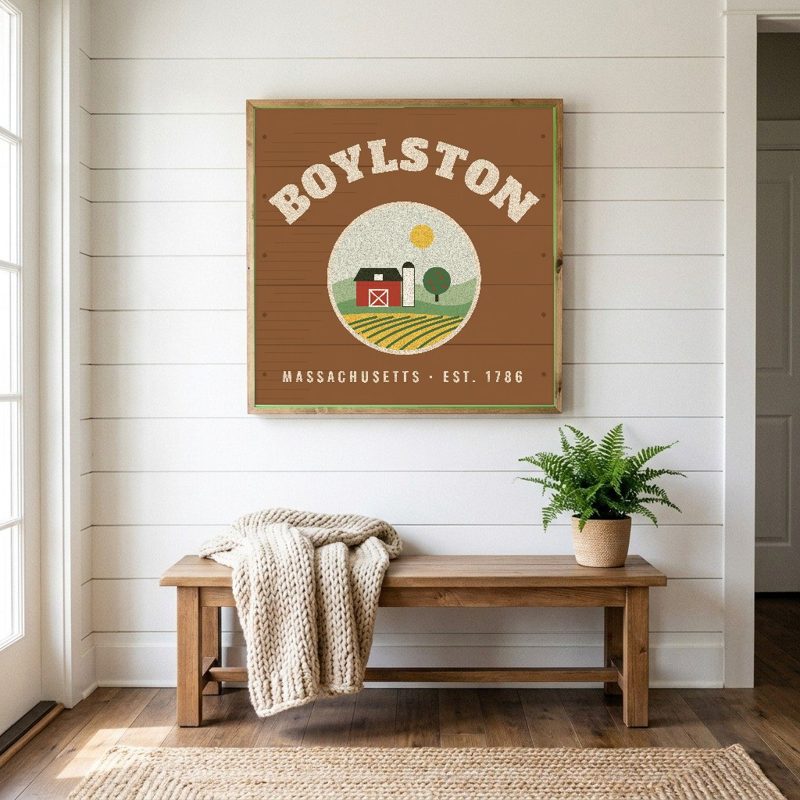
12″×12″ printed wood, ready to hang
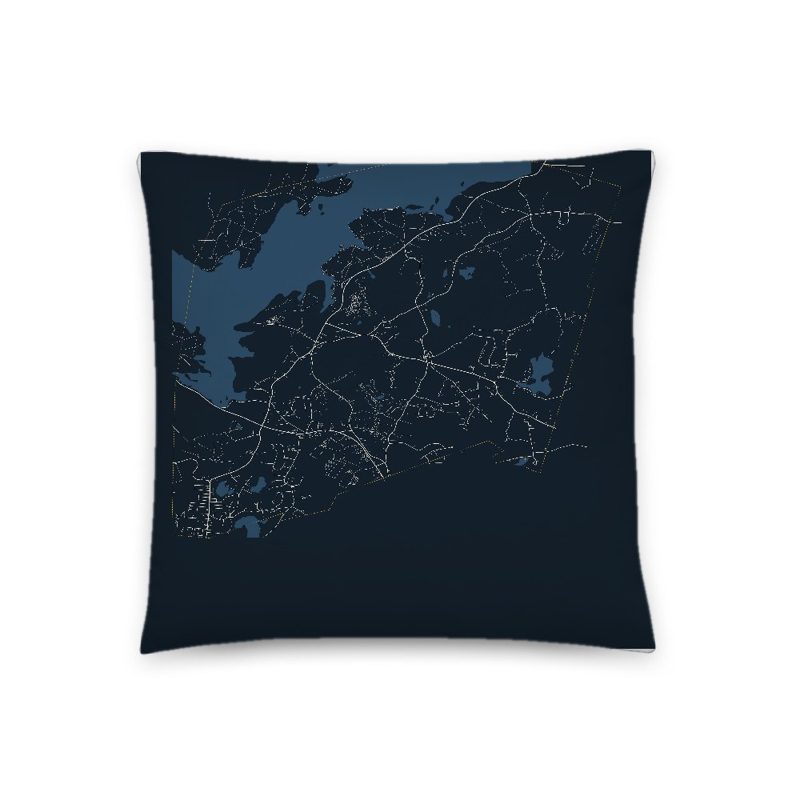
Soft-touch, zip cover
Sturdy all-over-print tote
Glossy top, cork back
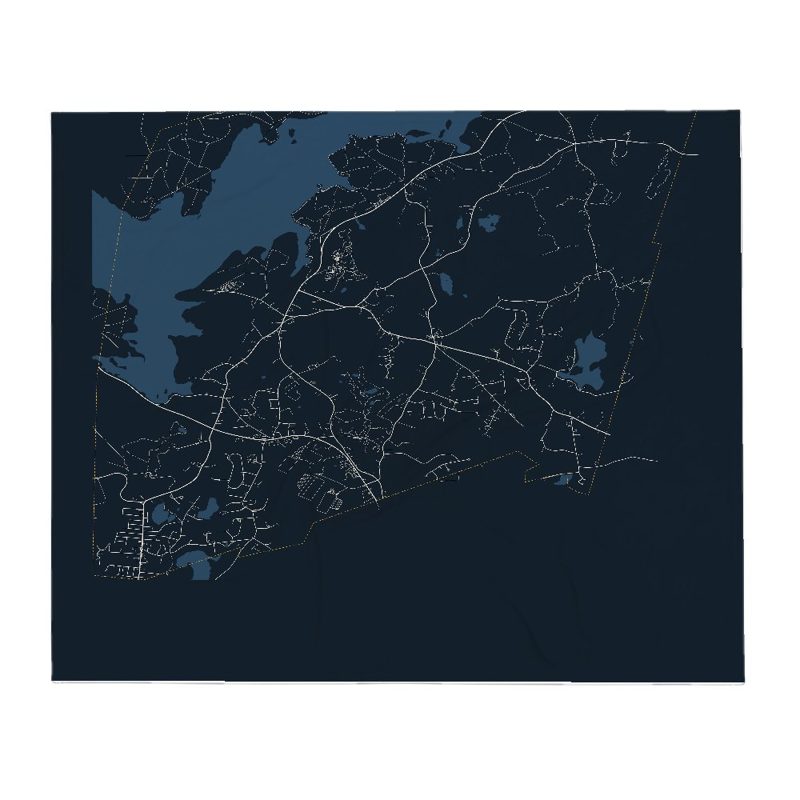
Soft fleece, 50″×60″
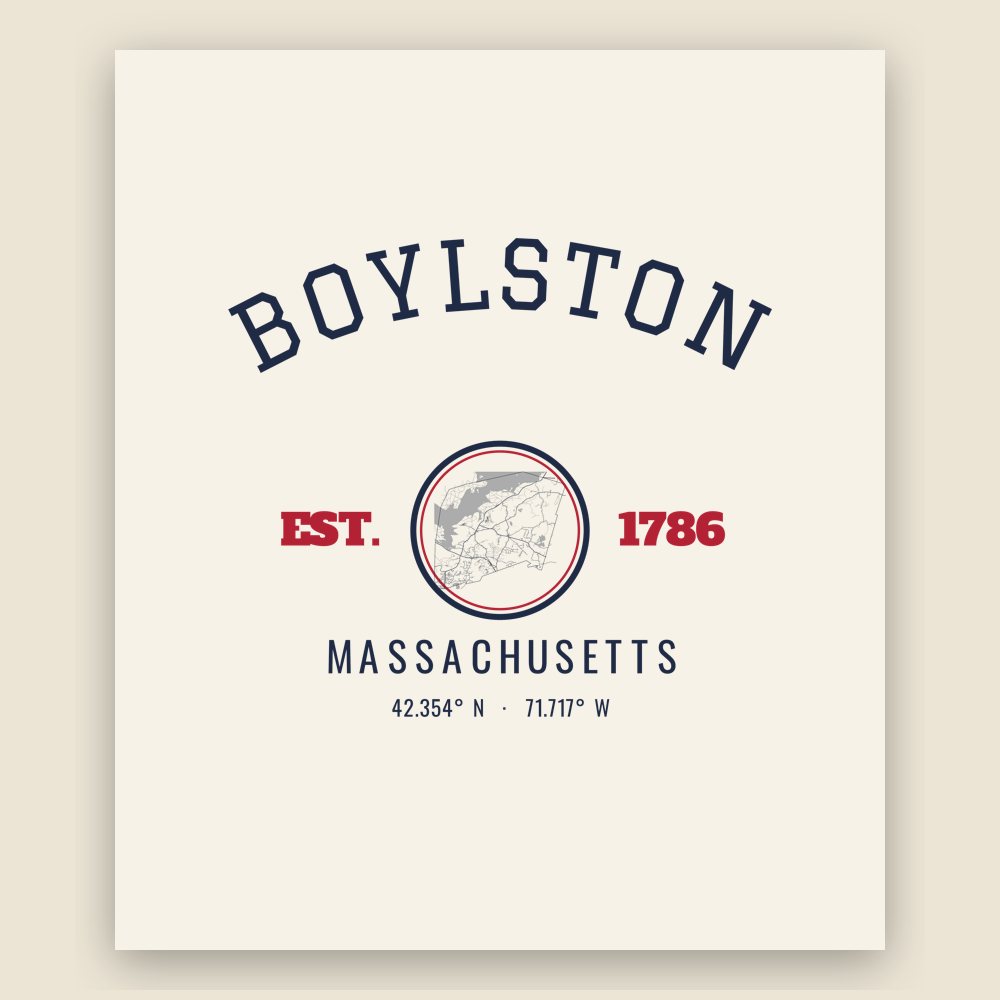
20 oz, double-wall stainless
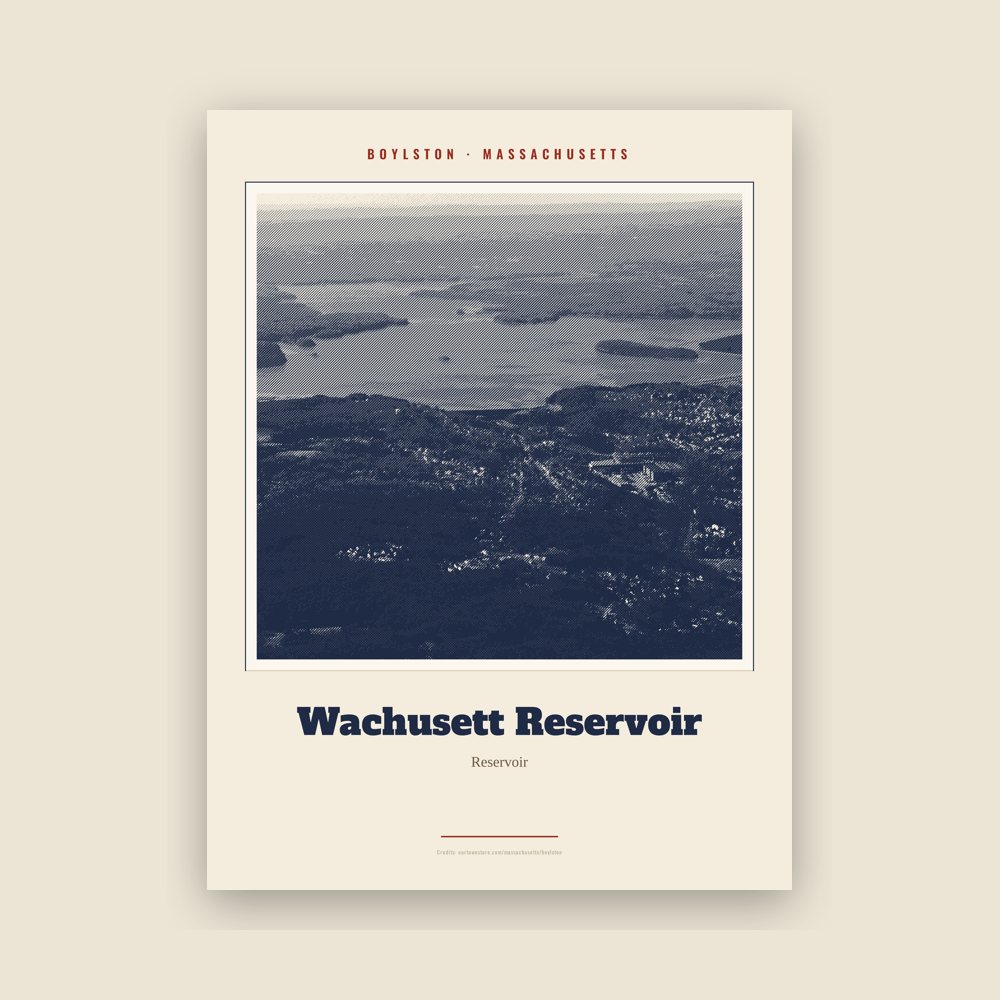
Archival matte print of a local landmark, credited to its photographer
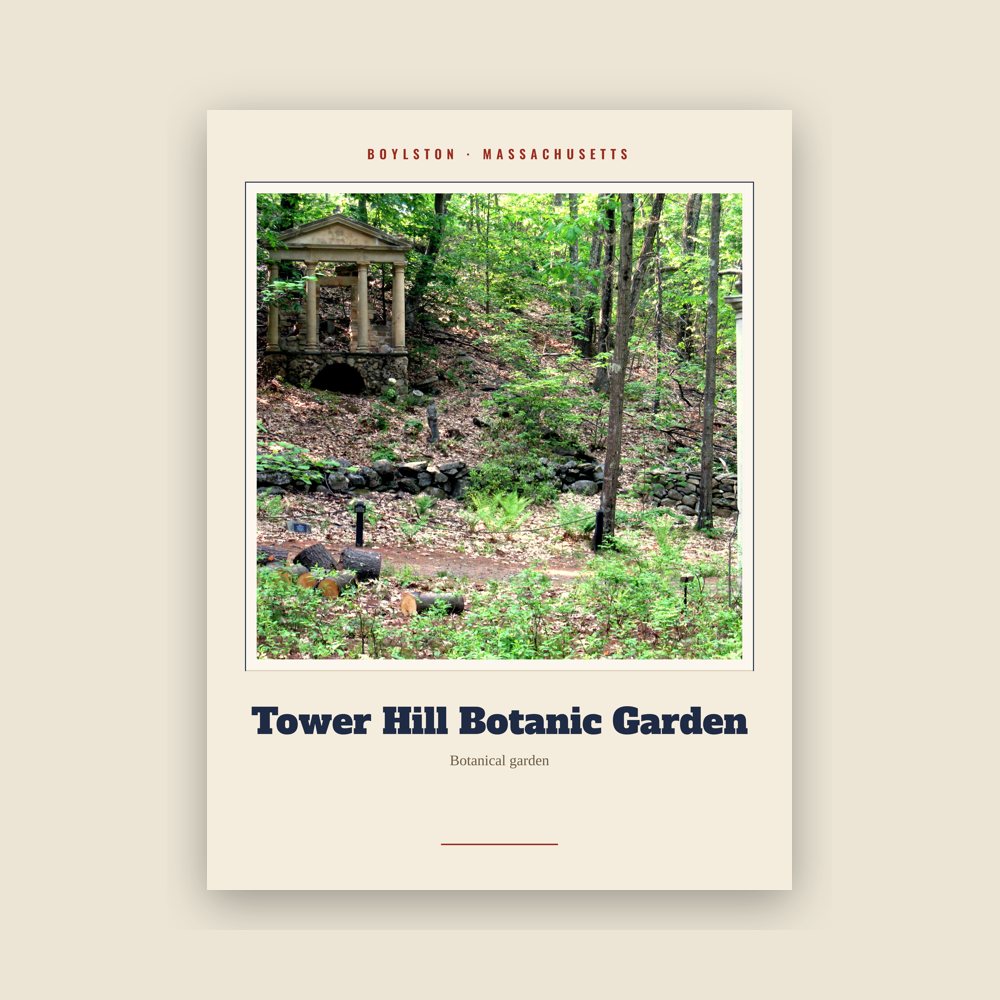
Archival matte print of a local landmark, credited to its photographer
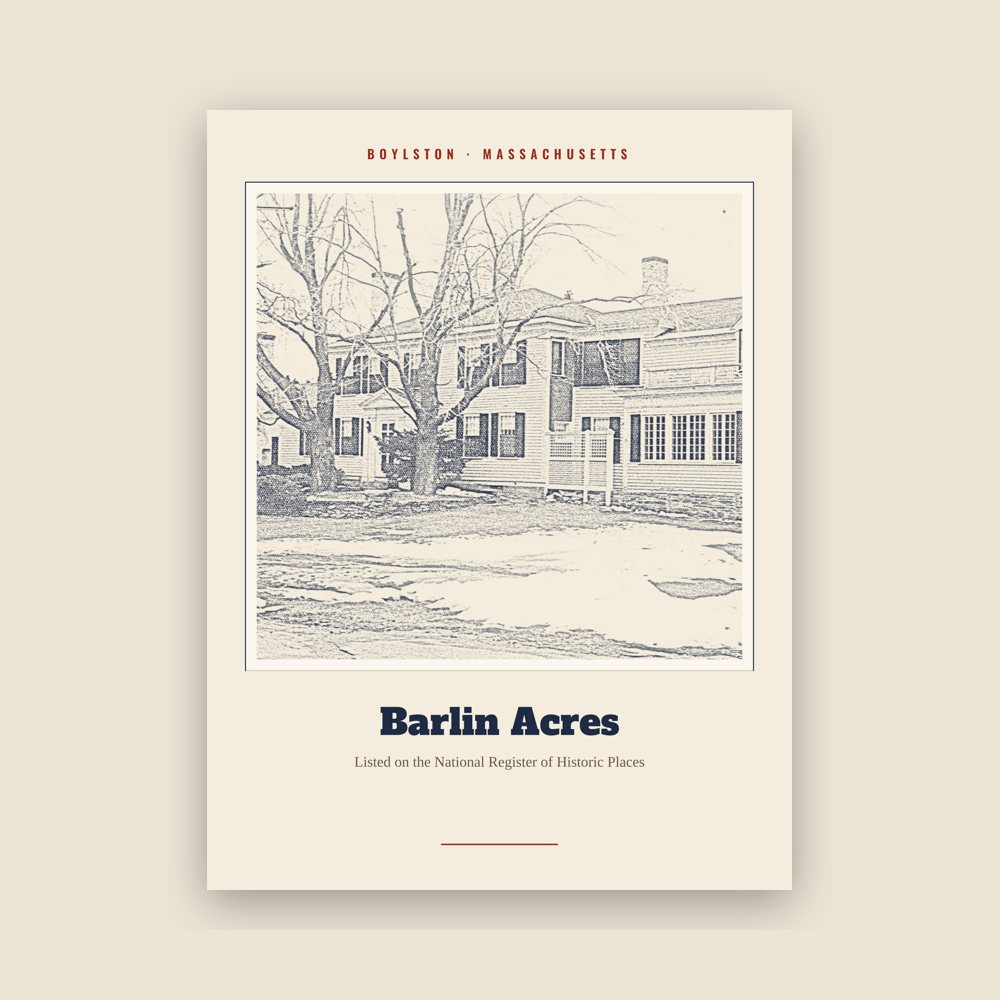
Archival matte print of a local landmark, credited to its photographer
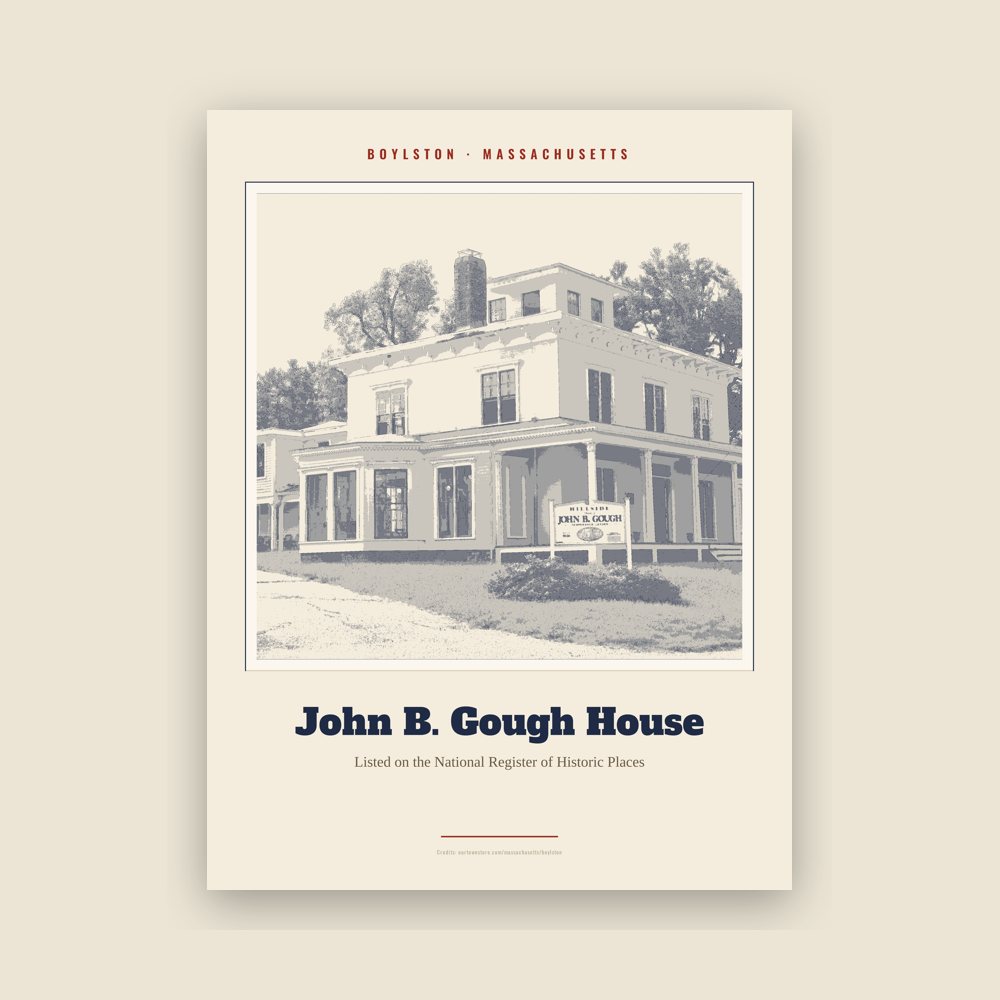
Archival matte print of a local landmark, credited to its photographer
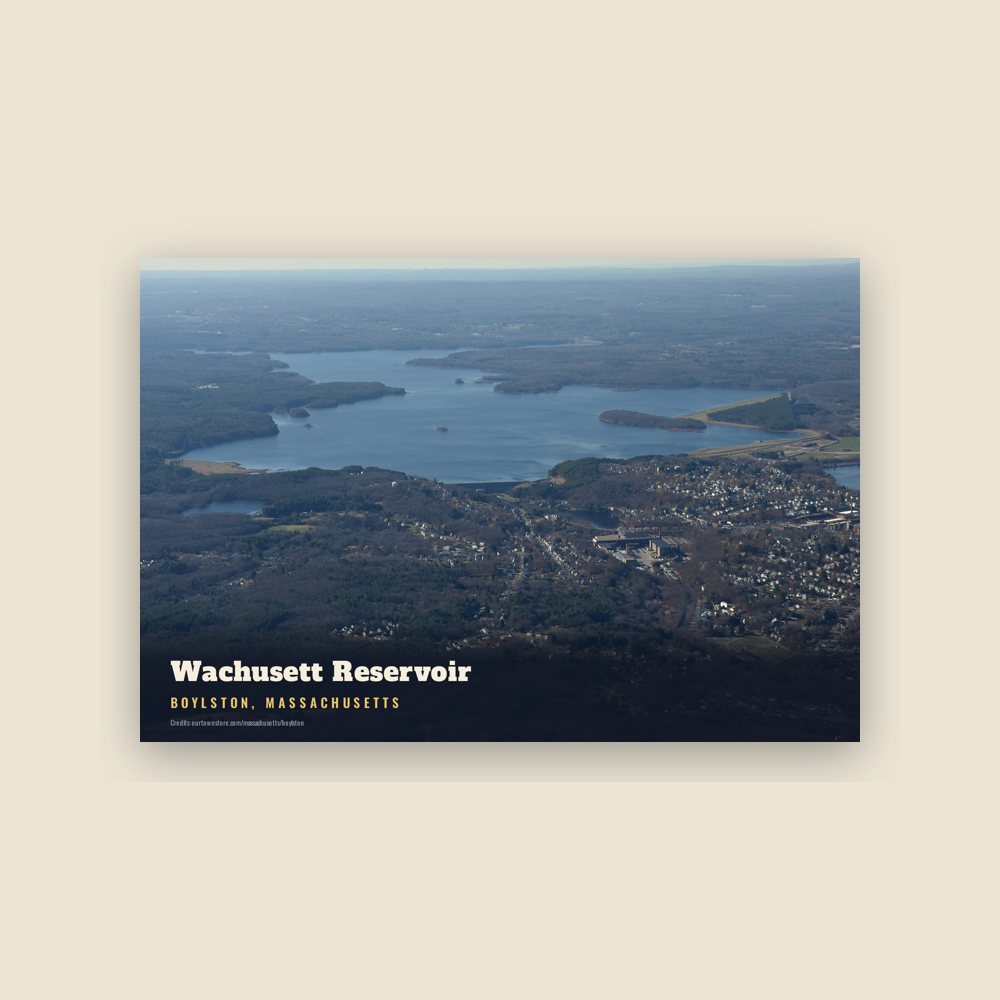
6″×4″ postcard, glossy front
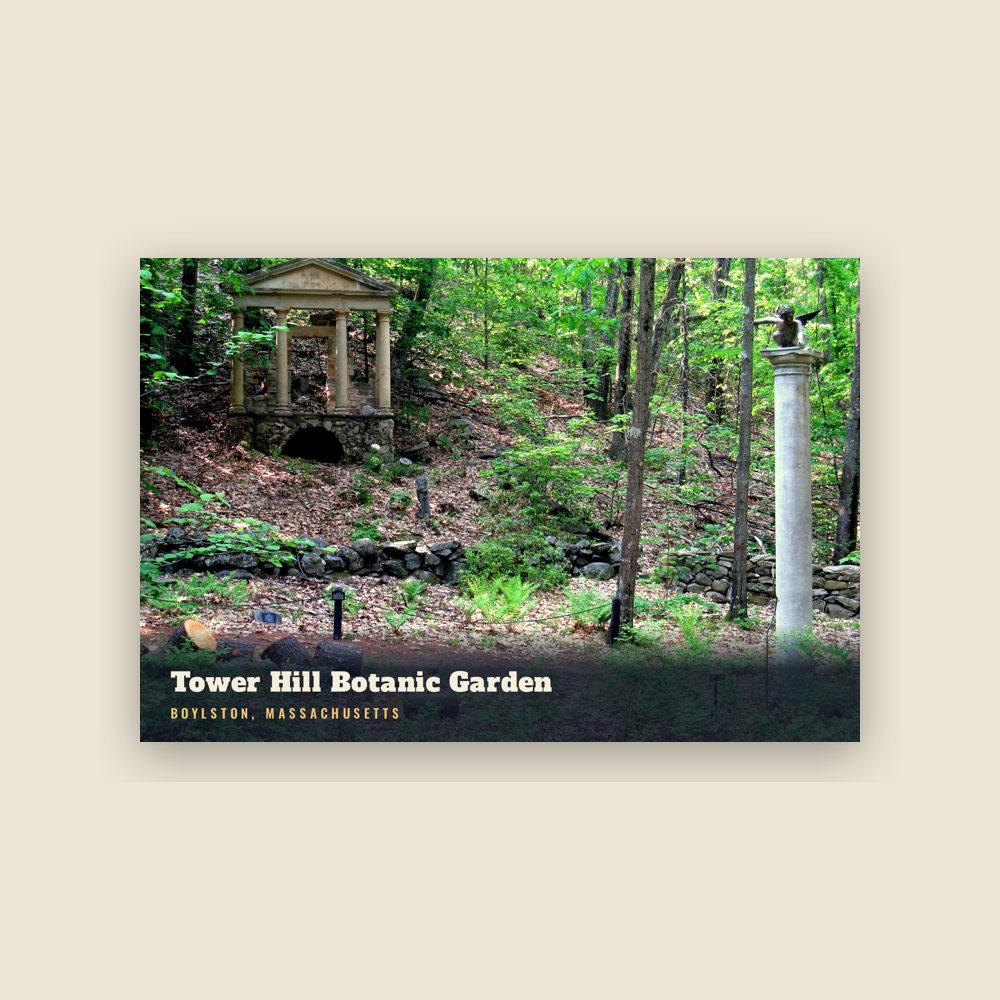
6″×4″ postcard, glossy front
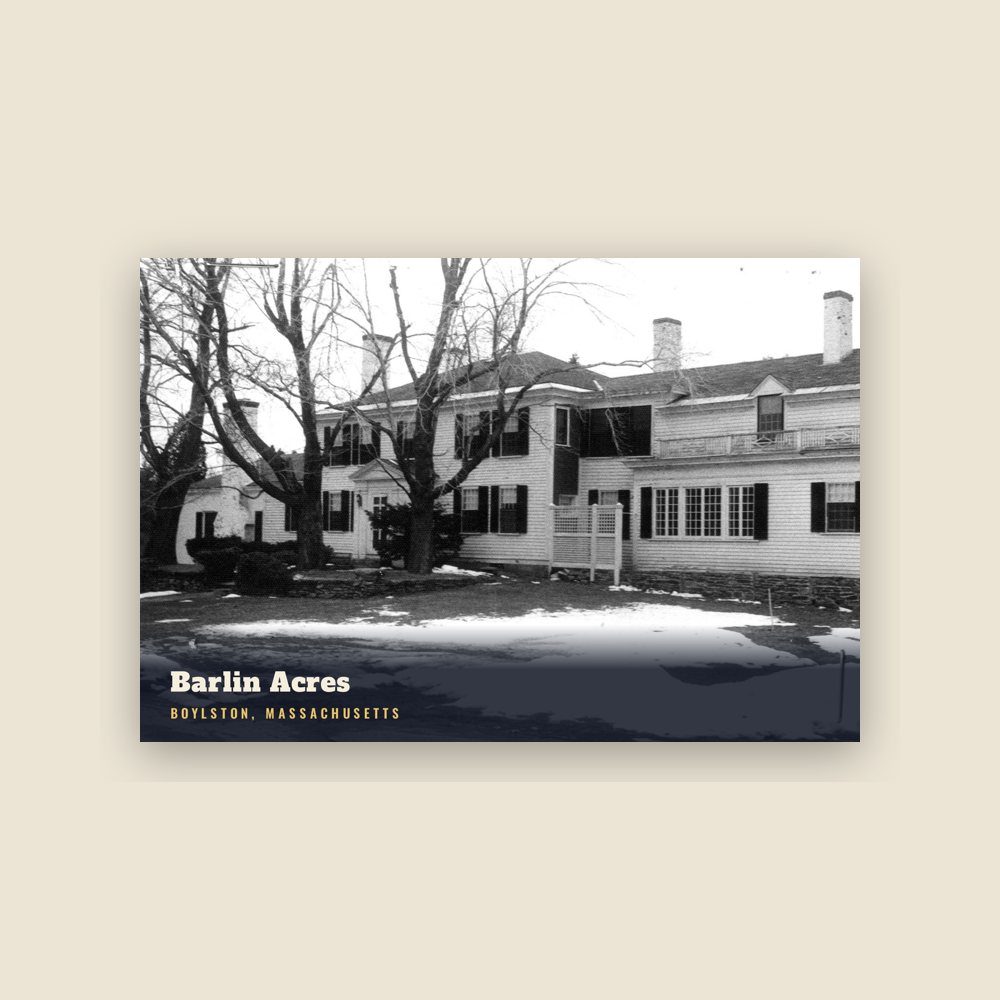
6″×4″ postcard, glossy front
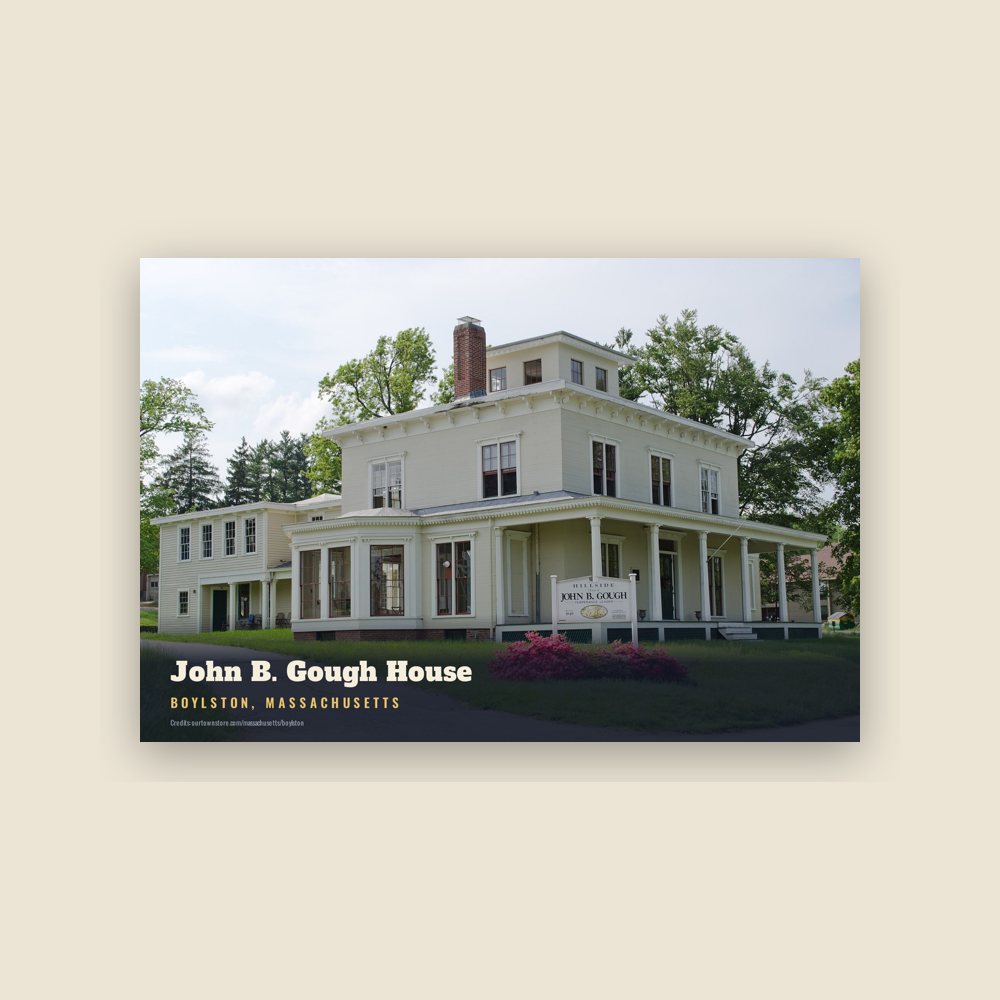
6″×4″ postcard, glossy front
Population 2010: 4,355 → 2020: 4,849
From Wikidata (CC0).
Boylston was first settled by Europeans around 1706 in the northern part of the present-day town, most notably by the Sawyer family after Nashaway sachems Sholan and George Tahanto deeded the land. In 1697, the residents petitioned to form a local town and government, but the British colonial Governor of Massachusetts denied their request since he wanted to keep the number of towns to a minimum and to restrict popular representation.
A meeting house was built in 1743, and the Reverend Ebenezer Morse, ordained in October 1743, was the first minister in charge of the church.
The town was made up of a large part of land from Shrewsbury and the remainder from Lancaster and was known as the North Parish of Shrewsbury from 1742 until 1786, when it was incorporated as Boylston.
Boylston was named after Ward Nicholas Boylston (1747–1828), a benefactor of the town. The fund he set up in 1797 finally accumulated $1,450, which was used to build the town hall and school building.
The residents formerly made a living from agriculture, and erected mills on the Nashua River, until the construction of Wachusett Reservoir terminated their operation.
Adapted (trimmed) from the Wikipedia article Boylston, Massachusetts, revision 1374145395 by its contributors, licensed CC BY-SA 4.0.
We share a part of every Boylston sale with local partners, and we'd love to print from your collection. Old photographs, maps and postcards make the best keepsakes.
Partner with us