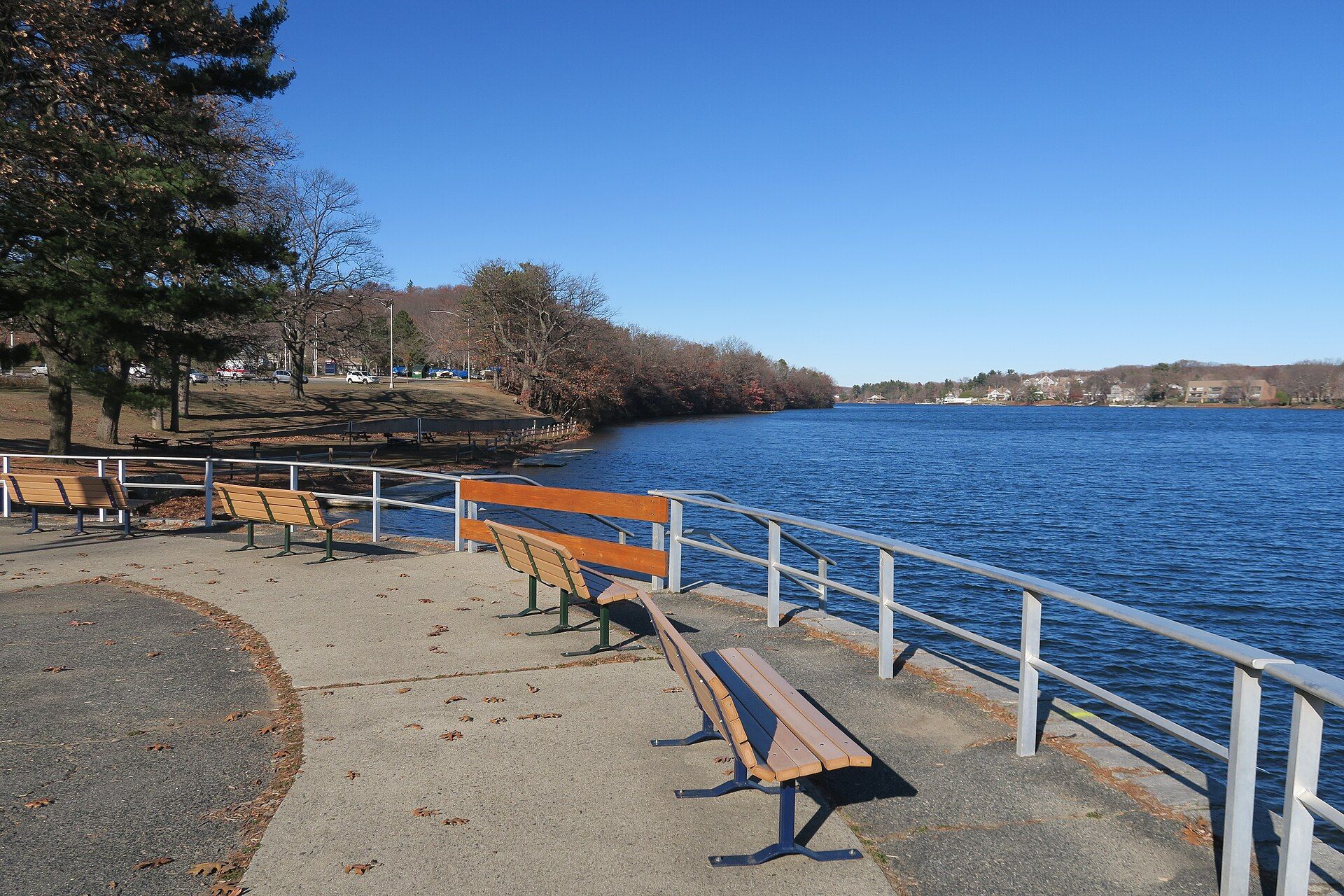
The Town of Shrewsbury, named for Shrewsbury, England, is a community with an uneven and hilly terrain cut by a number of minor streams providing several small water power sites. Landmarks include Quinsigamond State Park, White City and District No. 5 School. Shrewsbury is the birthplace of Mike Birbiglia, comedian, actor, writer.
Every piece is drawn from Shrewsbury's own map data and historic archives, then printed and shipped from the USA when you order. No two towns look alike.
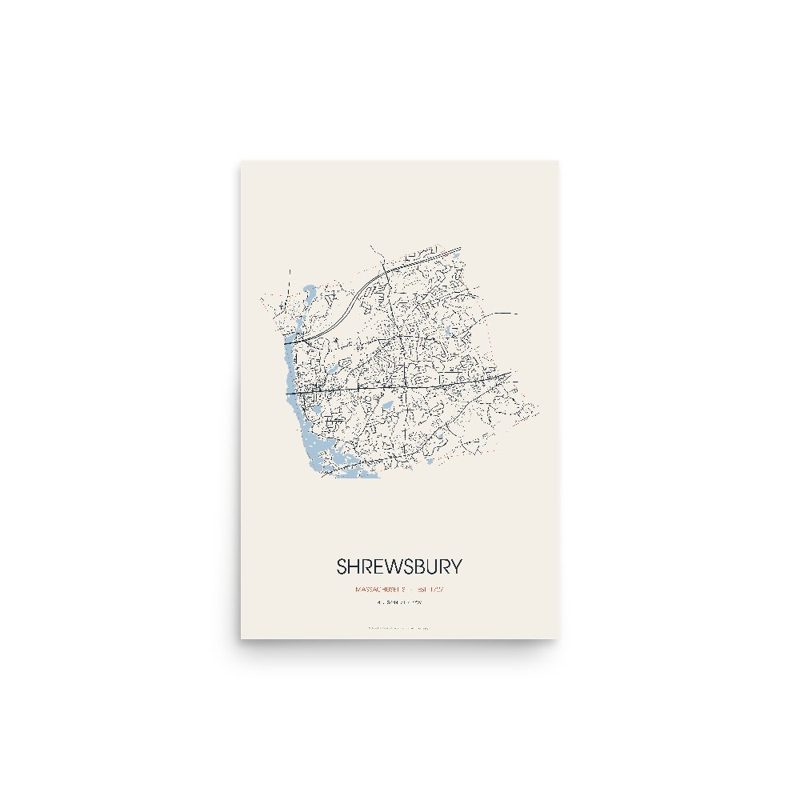
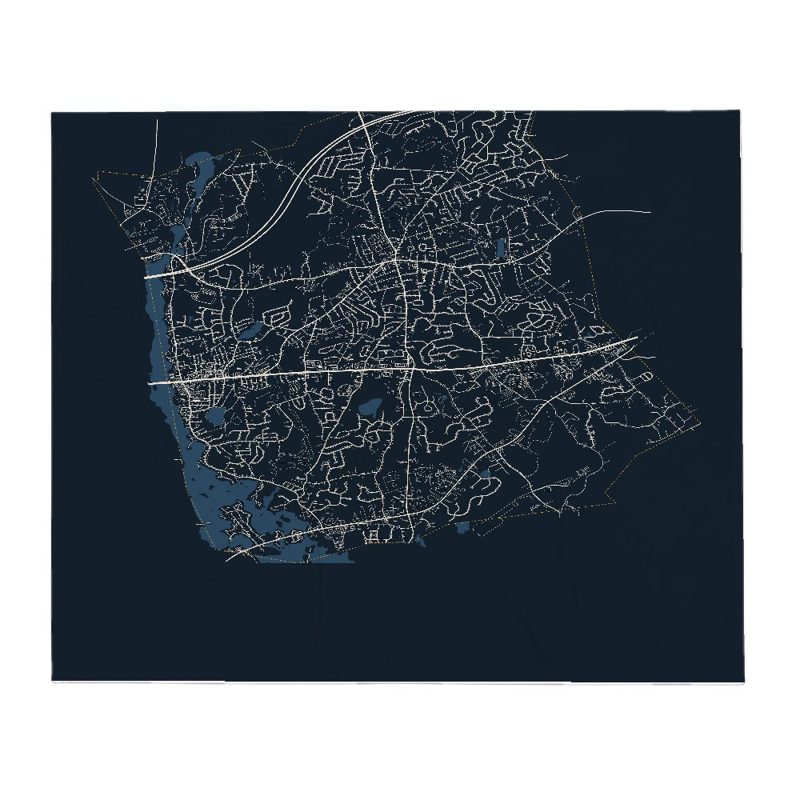
Every road in town, on archival matte paper
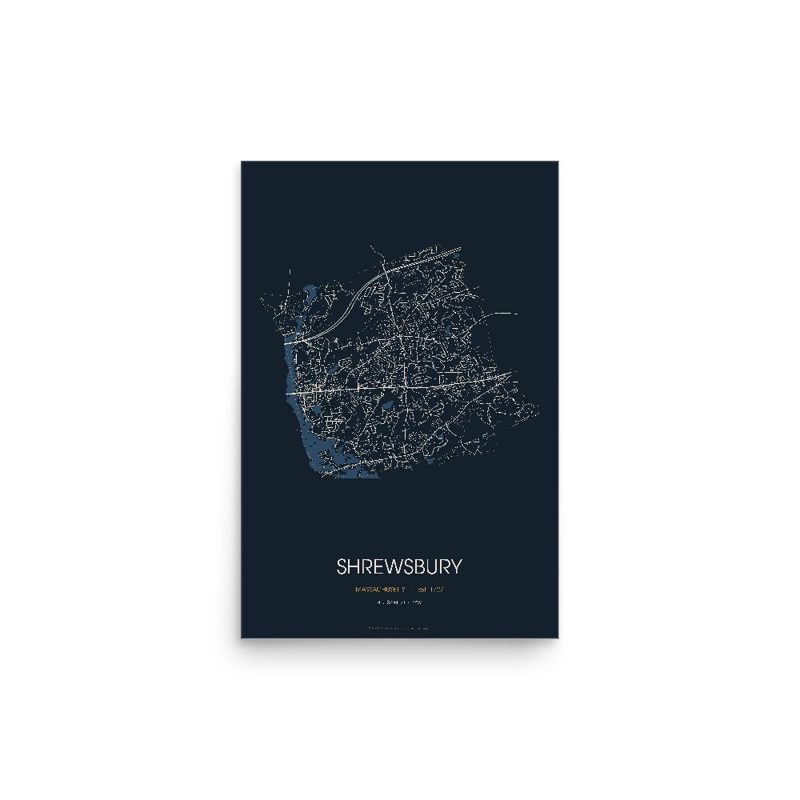
The same map, in navy and silver
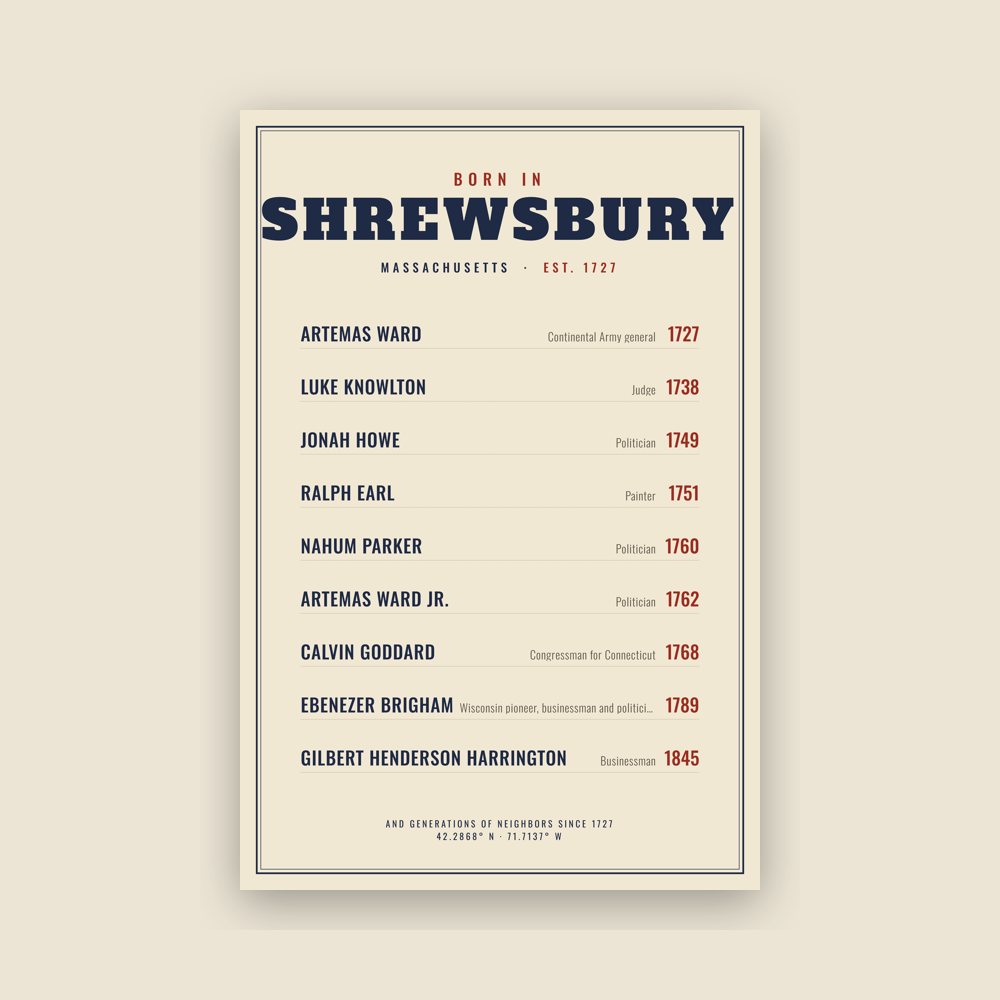
Famous natives, by birth year
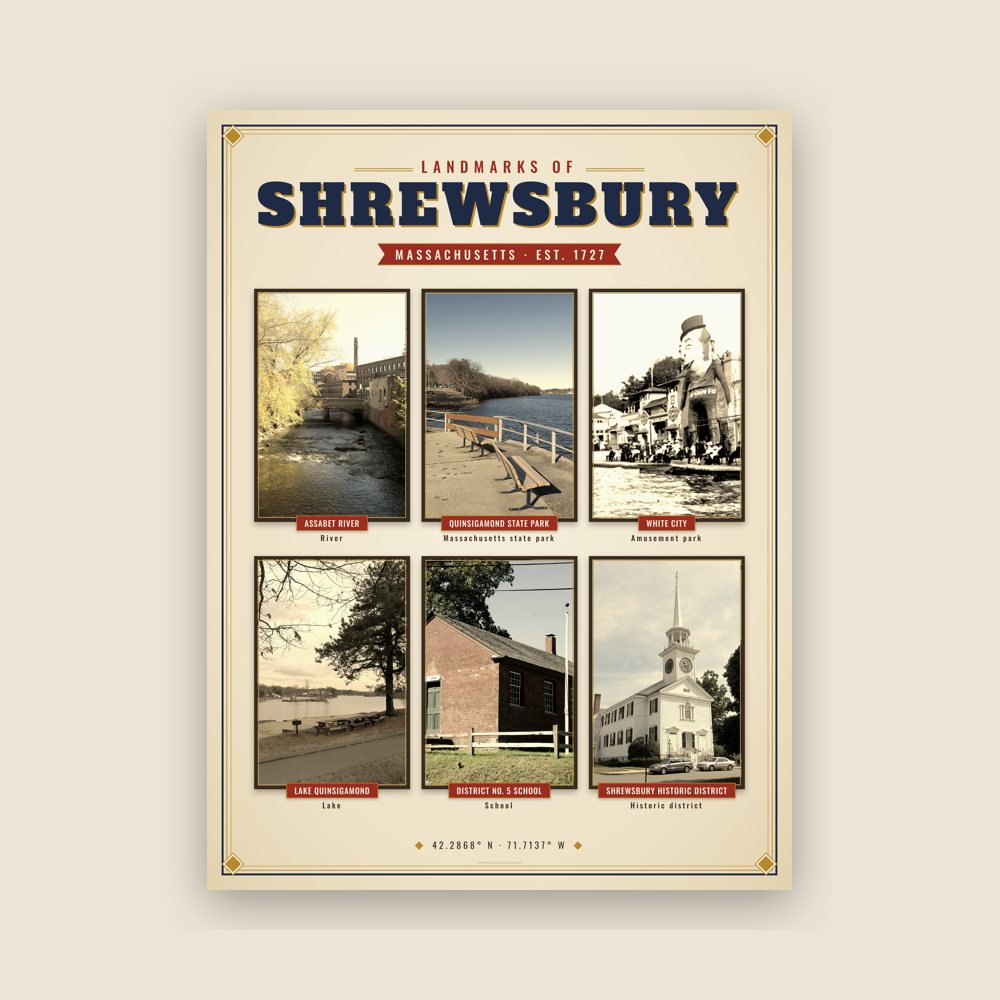
Nine local landmarks, archival matte
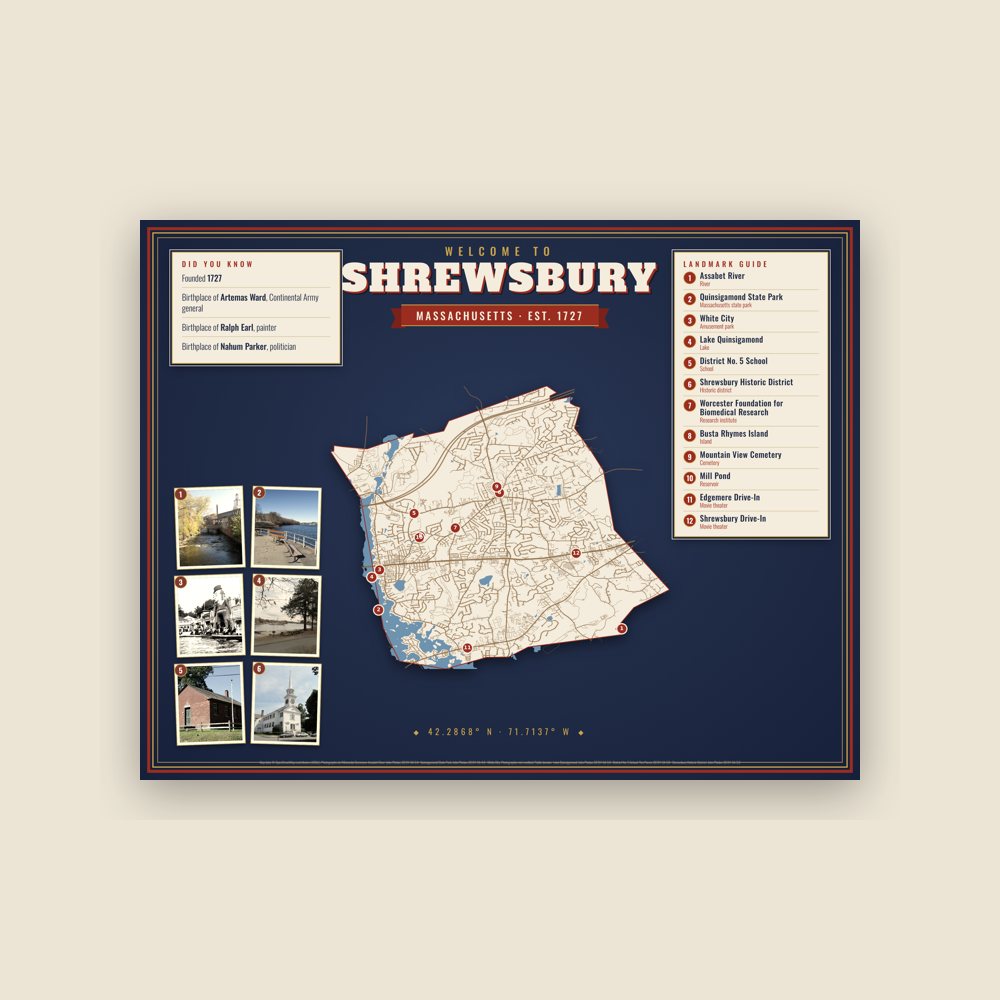
Map of local landmarks, washable fabric
Heavy-blend fleece, street map printed on the back
Soft Bella+Canvas jersey
Glossy ceramic, dishwasher safe
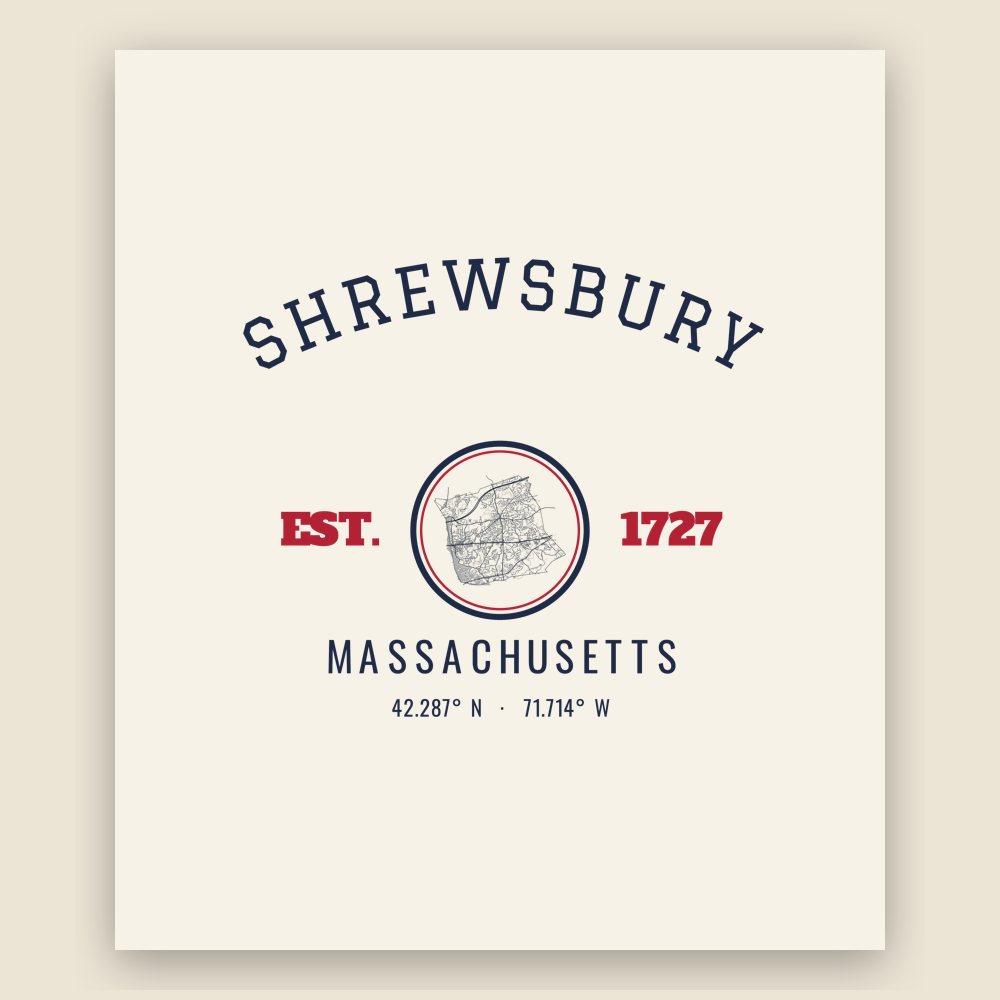
Ceramic keepsake, gold ribbon
Weatherproof, for the front walk
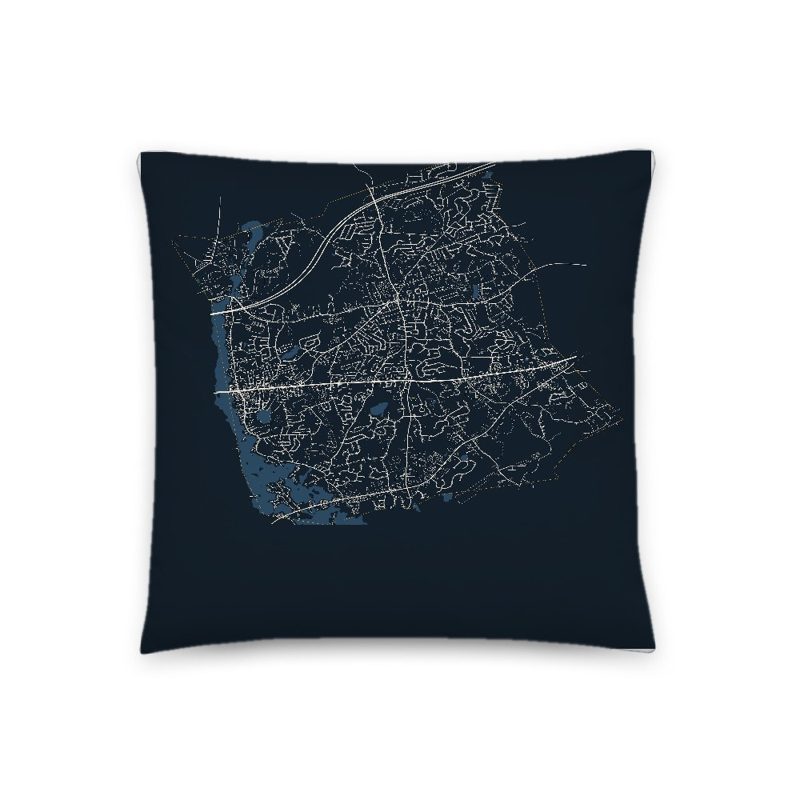
Soft-touch, zip cover
Sturdy all-over-print tote
Glossy top, cork back
Soft fleece, 50″×60″
20 oz, double-wall stainless
Population 2010: 35,608 → 2020: 38,325
From Wikidata (CC0).
The Town of Shrewsbury, named for Shrewsbury, England, is a community with an uneven and hilly terrain cut by a number of minor streams providing several small water power sites. Grants of land were made in what would eventually be the town beginning in 1664, with the 3,200-acre (13 km2) grant called Haynes Farm as the largest. In 1664 Native American leader, Peter Jethro, and other Nipmuc Indians deeded land around Lake Quinsigamond to settlers in the area. Settlers came primarily from Sudbury and Marlborough, and the first permanent settler was Gersham Wheelock in 1720. As a town, Shrewsbury was first settled in 1722 and officially incorporated in 1727.
Townspeople created an agricultural economy with apple orchards, and by 1750, there were two stores and four taverns as well as several small industries in operation. The rapid fall of prices for agricultural goods, the shortage of hard currency, and the general economic depression following the Revolutionary War produced disastrous conditions for colonists. Shays' Rebellion in 1786 sought to close the courts to prevent debt collections and the foreclosure of mortgages. Shrewsbury became a staging area for the rebellion and the encampment of the more than 400 insurgents, before the march on the Worcester Court House.
A leather industry began in 1786 in Shrewsbury, and town farmers developed large cattle herds to support the manufacture of boots and shoes. This was followed by the establishment of gunsmithing operations in 1797, which produced rifles, shotguns and pistols and eventually cutlery. Luther Goddard began in 1809 by making brass clocks and then established a small watch factory employing a few skilled Swiss and English watchmakers. Lumbering created sawmills, and they in turn drew chair and cabinet makers, plow and wagon builders.
The development of streetcar routes in the 19th century propelled the growth of single-family housing in town. A summer resort population on Lake Quinsigamond became consumers of the market garden produce grown by town farmers. As Shrewsbury's industry was killed by the lack of large waterpower sites and the tardy arrival of the railroad, its role as a suburb of Worcester grew more important. The town's population doubled from 1915 to 1940 as continued streetcar suburb growth brought more modern settlers into the community. Other modern developments included an increased number of lakeside cottages, ethnic clubs and recreational areas on the lake.
Since the late 20th century, Shrewsbury and neighboring Westborough have seen a large influx of immigration from South Asia, particularly India.
Adapted (trimmed) from the Wikipedia article Shrewsbury, Massachusetts, revision 1380080895 by its contributors, licensed CC BY-SA 4.0.
We share a part of every Shrewsbury sale with local partners, and we'd love to print from your collection. Old photographs, maps and postcards make the best keepsakes.
Partner with us