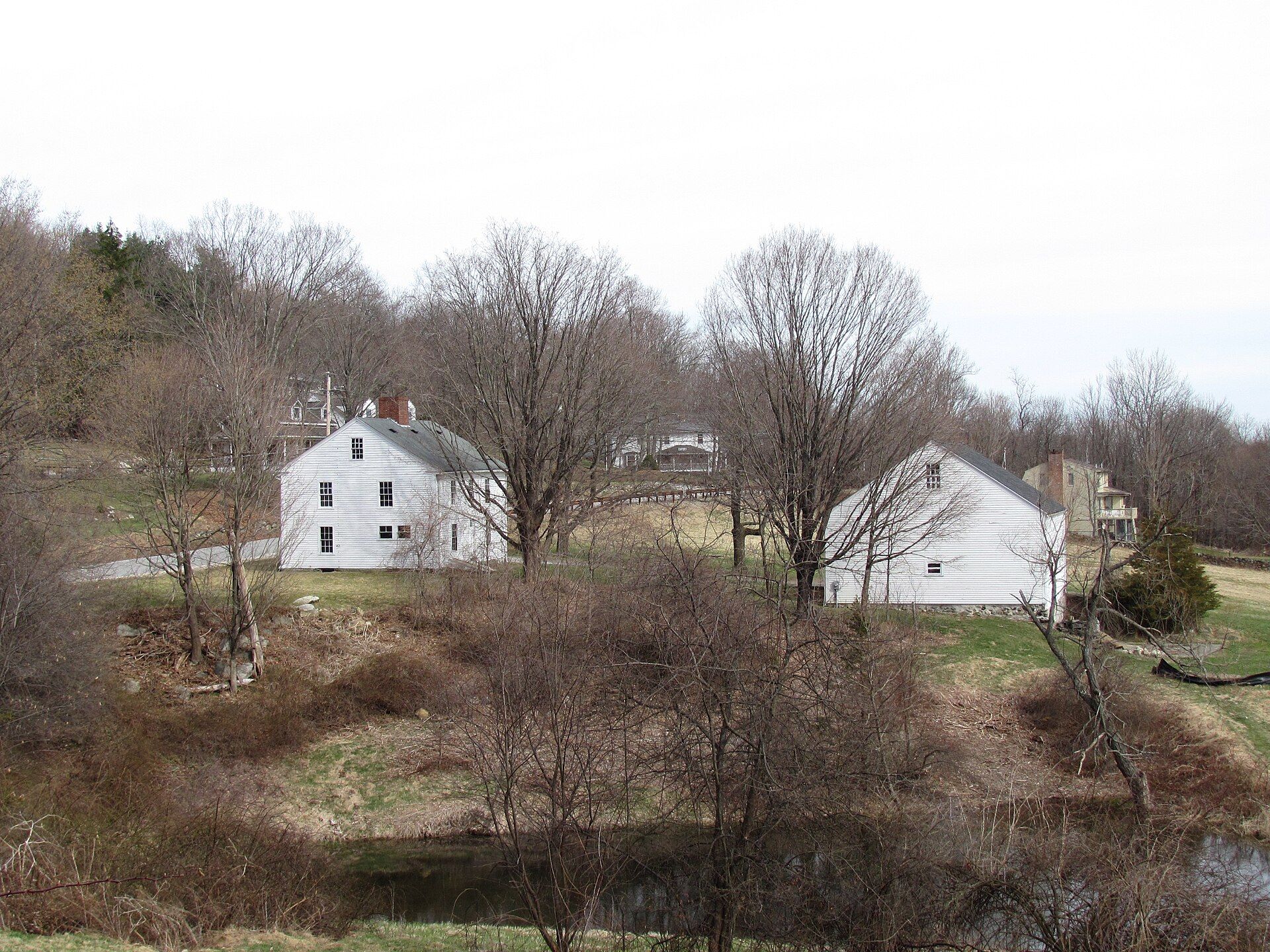
The area which became the town of Boxborough was first inhabited by the Native Americans of the Nipmuc and Pennacook tribes. Landmarks include Levi Wetherbee Farm, Boxborough Old Town Center and United Church of Christ Congregational. Boxborough is the birthplace of Bob Sweeney, ice hockey player.
Every piece is drawn from Boxborough's own map data and historic archives, then printed and shipped from the USA when you order. No two towns look alike.
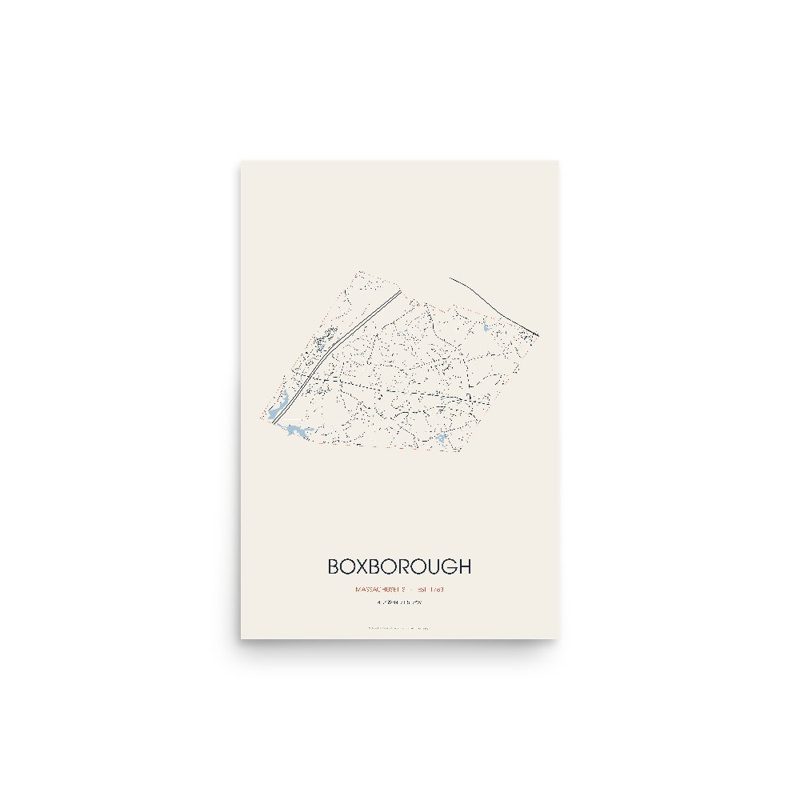
Every road in town, on archival matte paper
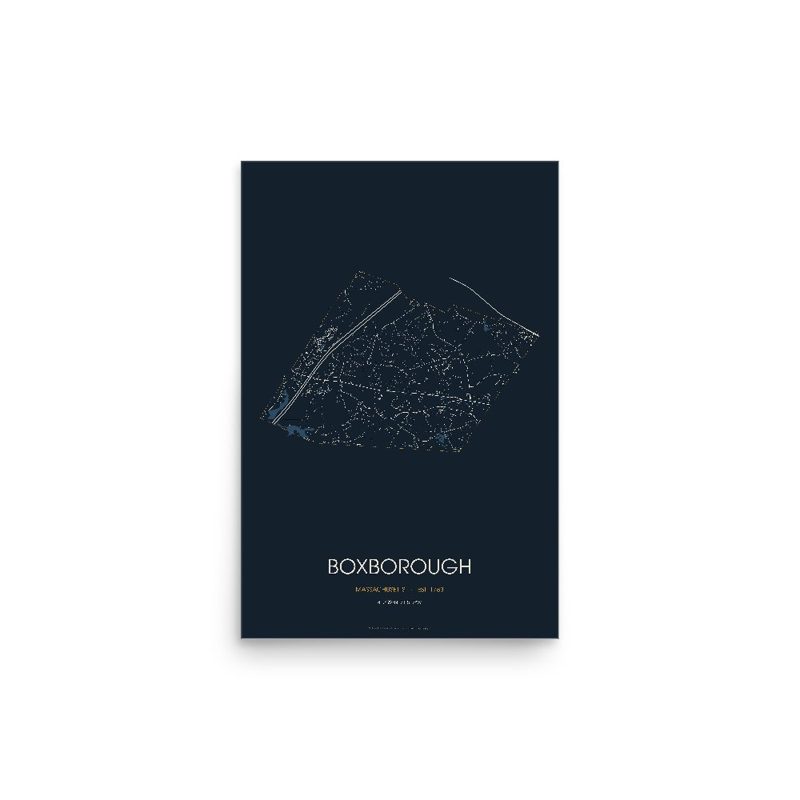
The same map, in navy and silver
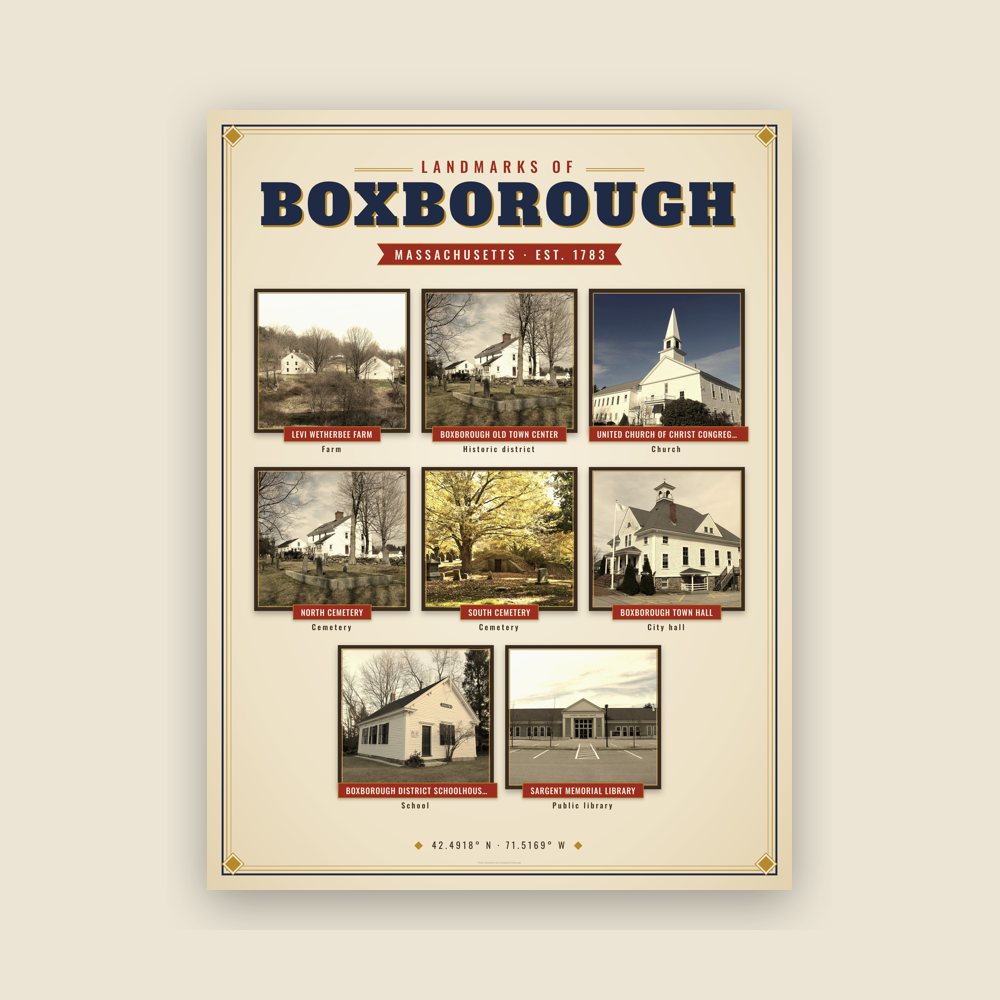
Nine local landmarks, archival matte
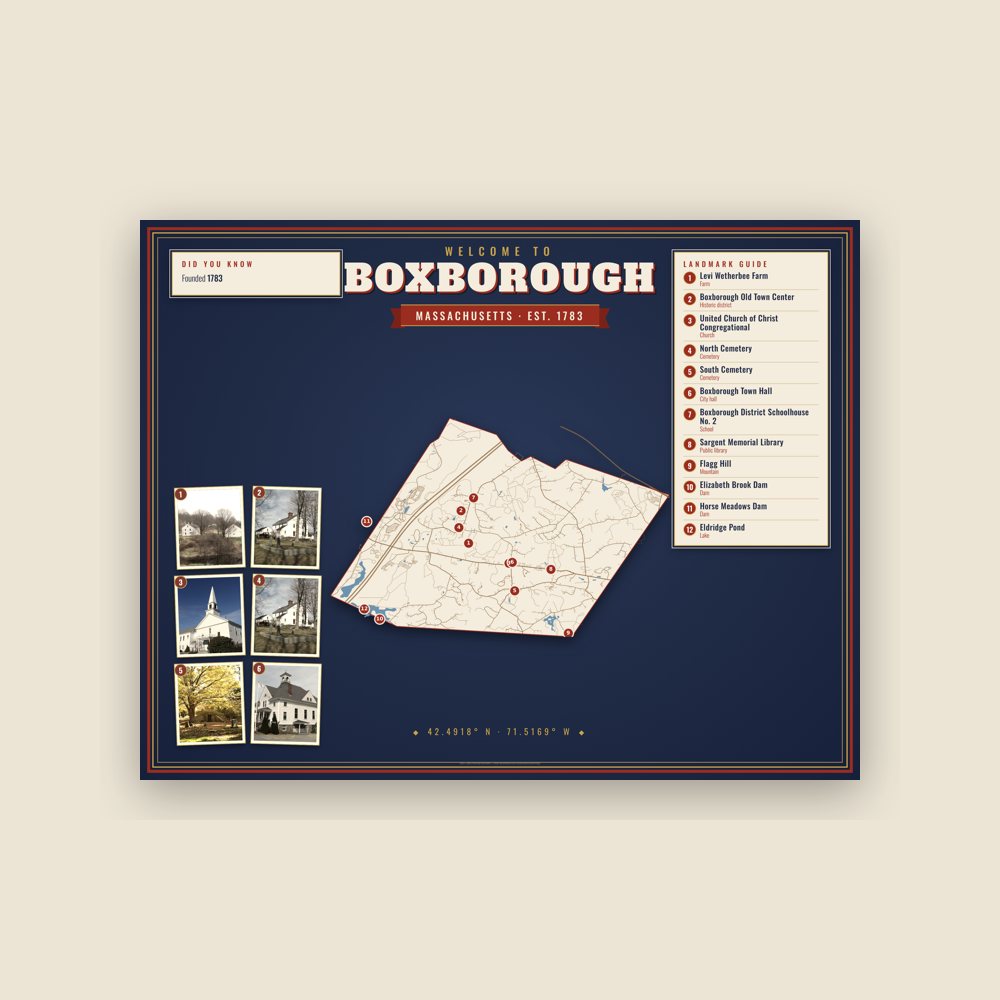
Map of local landmarks, washable fabric
Heavy-blend fleece, street map printed on the back
Soft Bella+Canvas jersey
Glossy ceramic, dishwasher safe
Ceramic keepsake, gold ribbon
Weatherproof, for the front walk
24″×16″, printed coir-look fibers, rubber back
12″×12″ printed wood, ready to hang
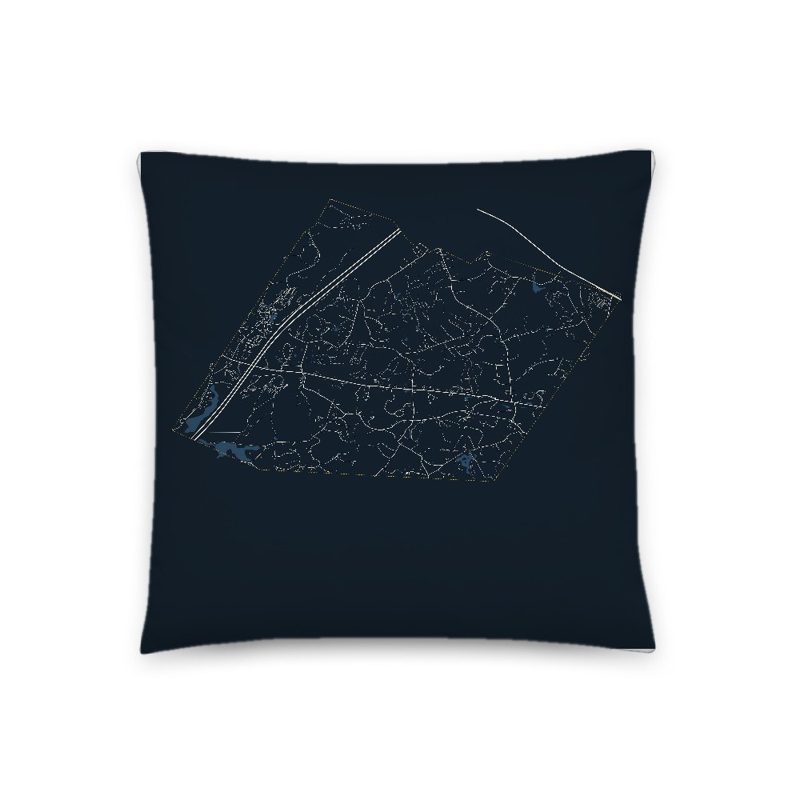
Soft-touch, zip cover
Sturdy all-over-print tote
Glossy top, cork back
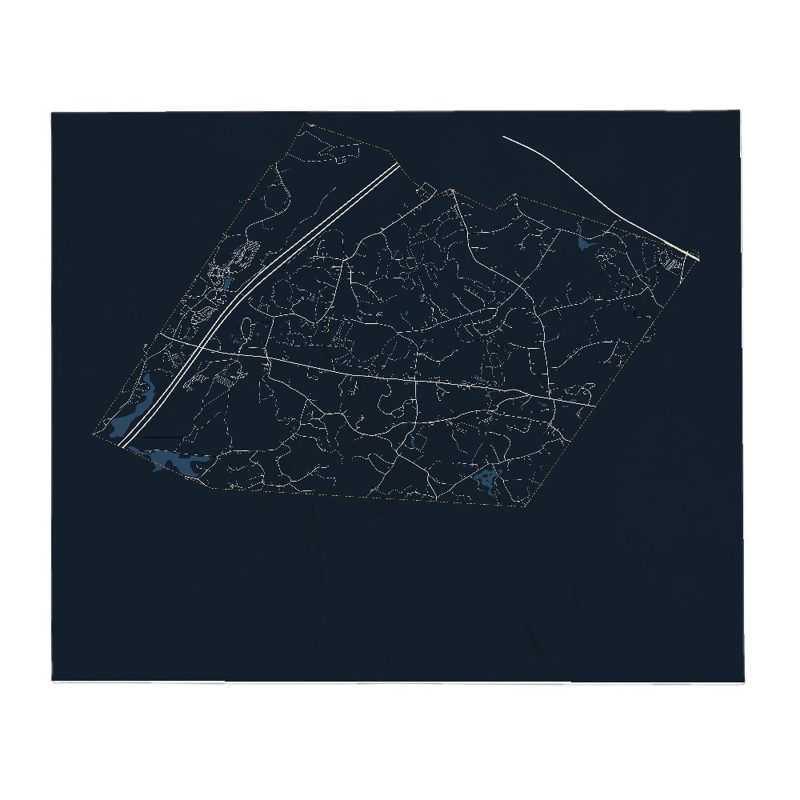
Soft fleece, 50″×60″
20 oz, double-wall stainless
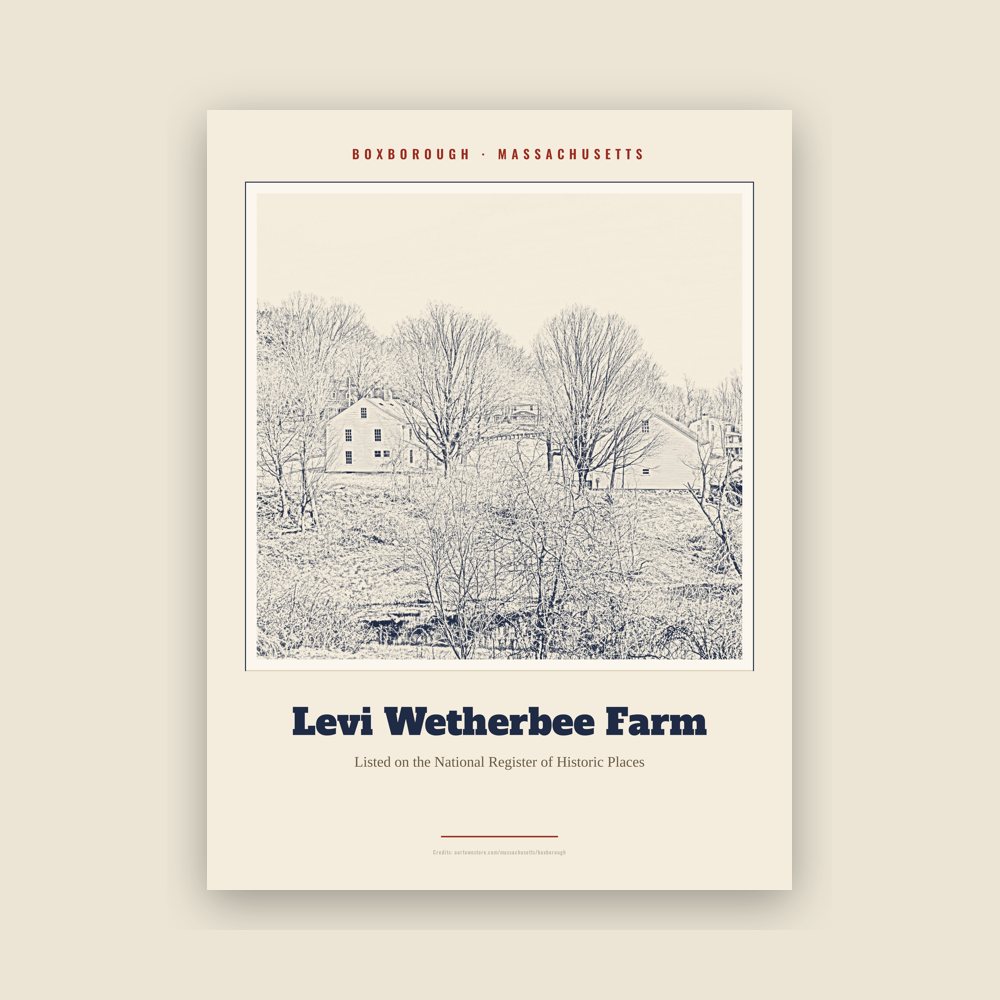
Archival matte print of a local landmark, credited to its photographer
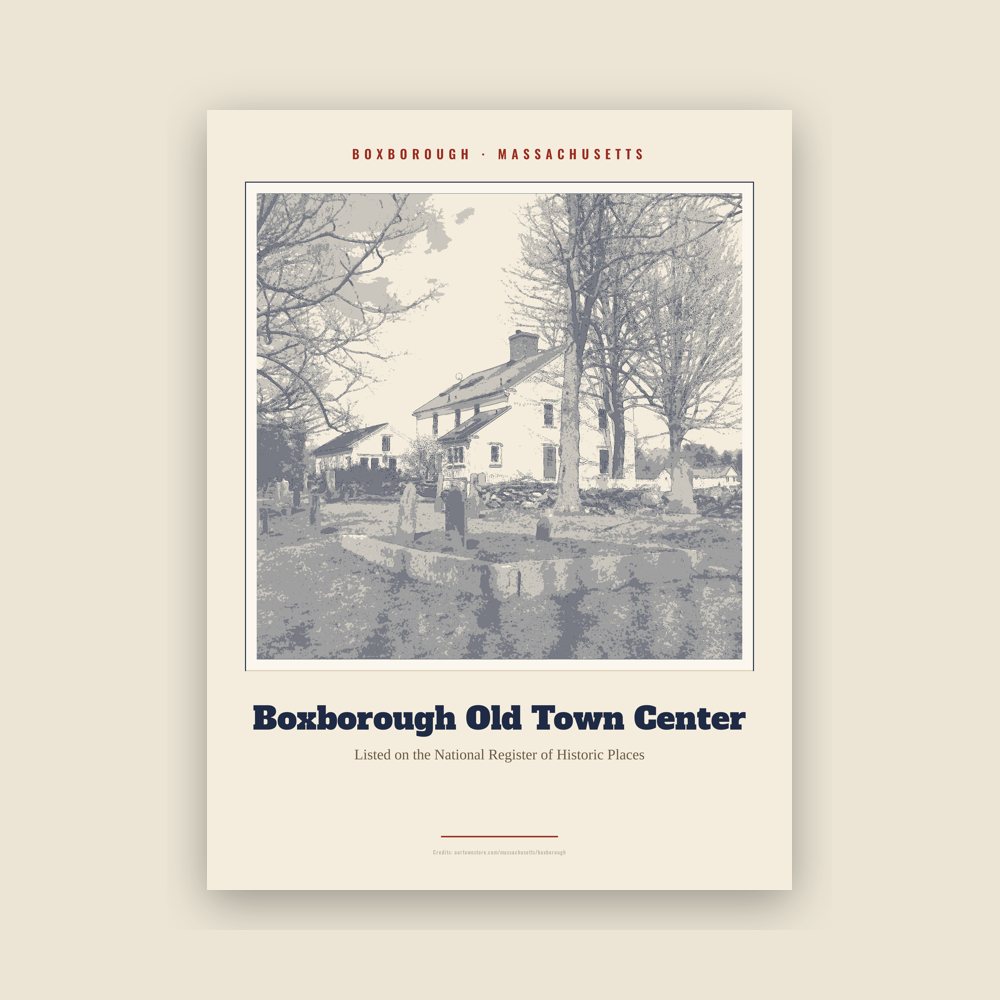
Archival matte print of a local landmark, credited to its photographer
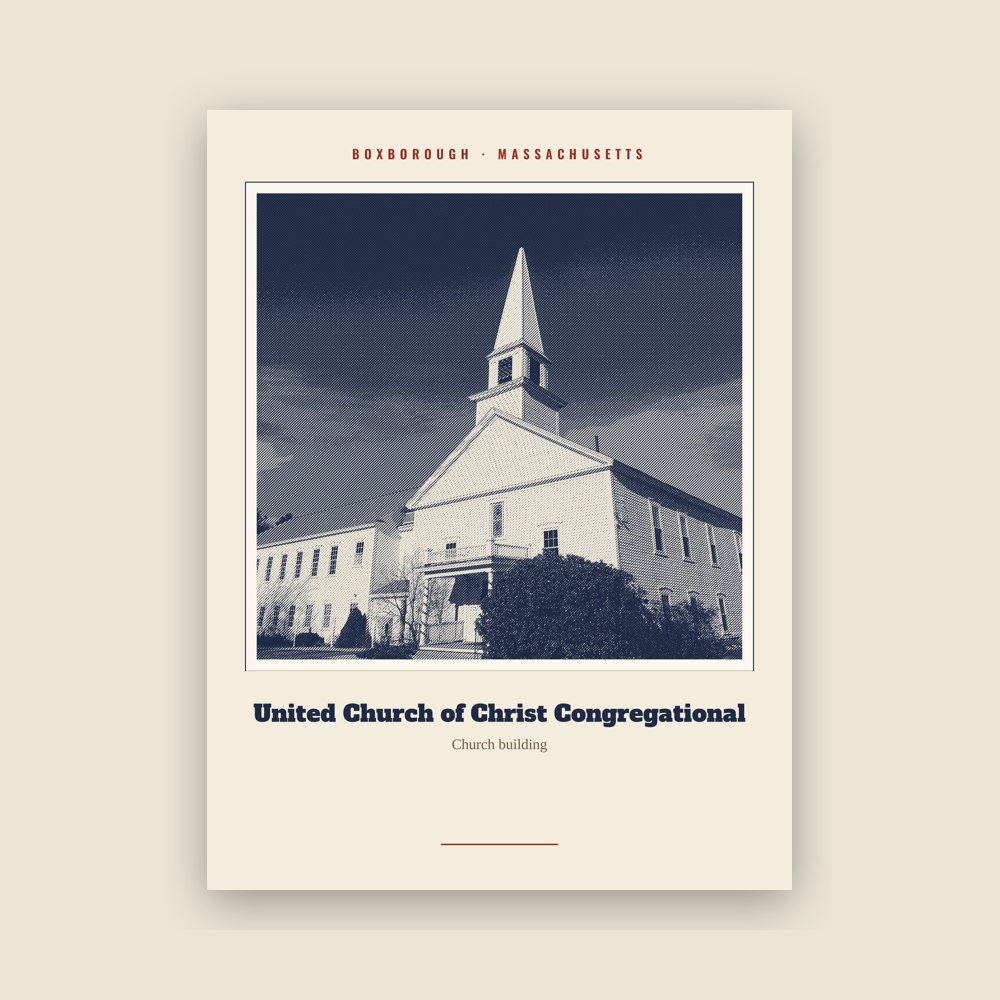
Archival matte print of a local landmark, credited to its photographer
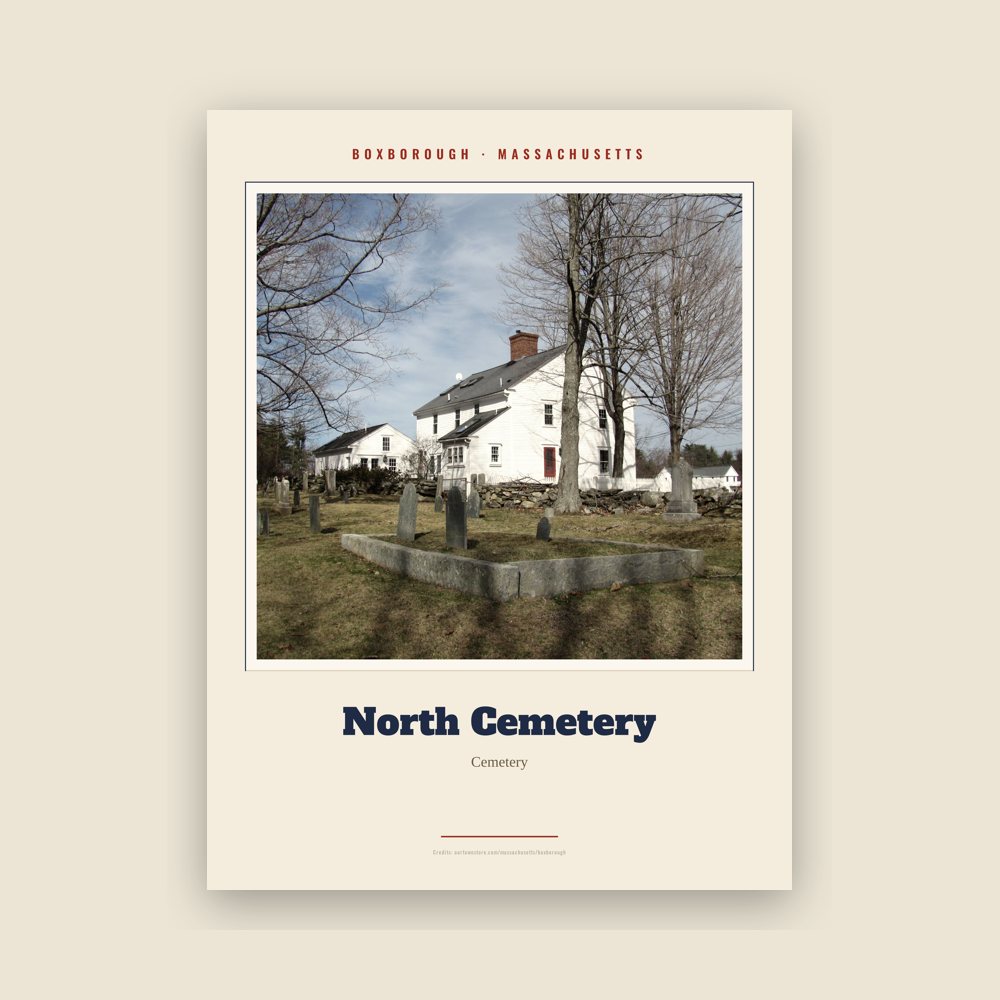
Archival matte print of a local landmark, credited to its photographer
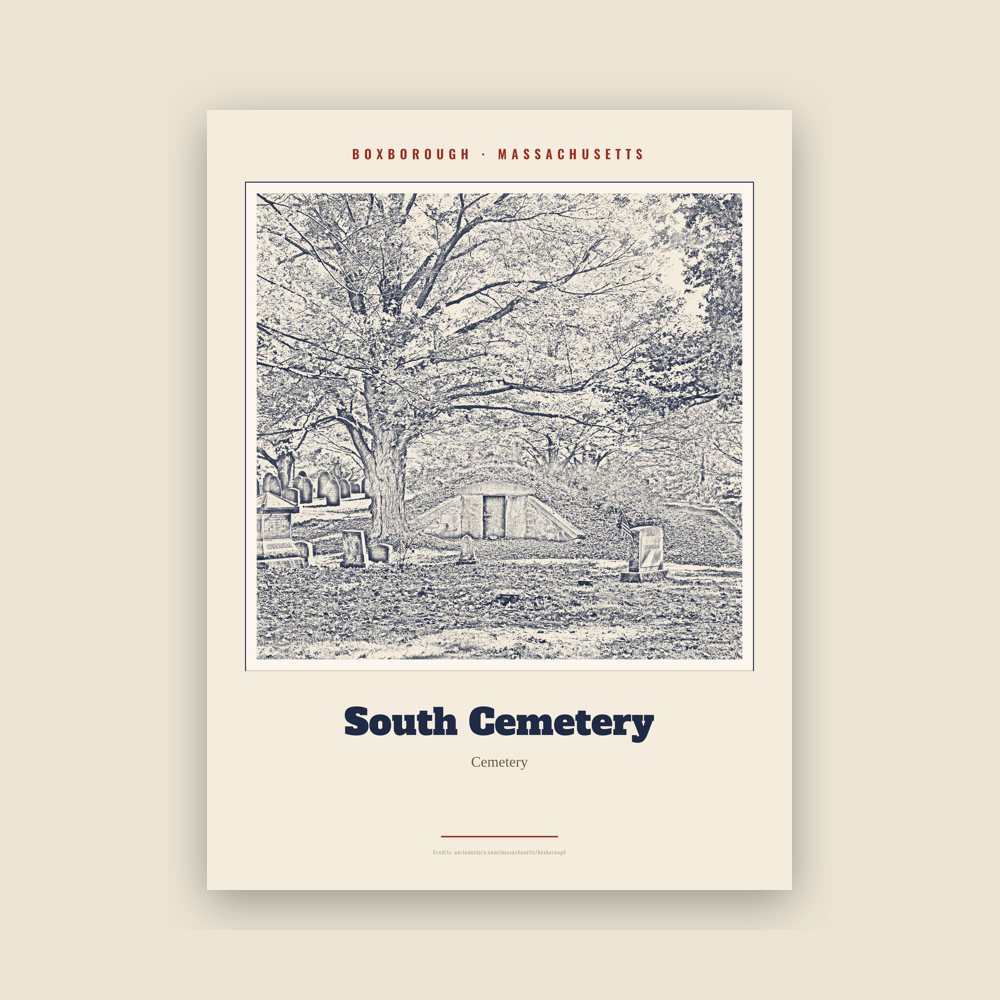
Archival matte print of a local landmark, credited to its photographer
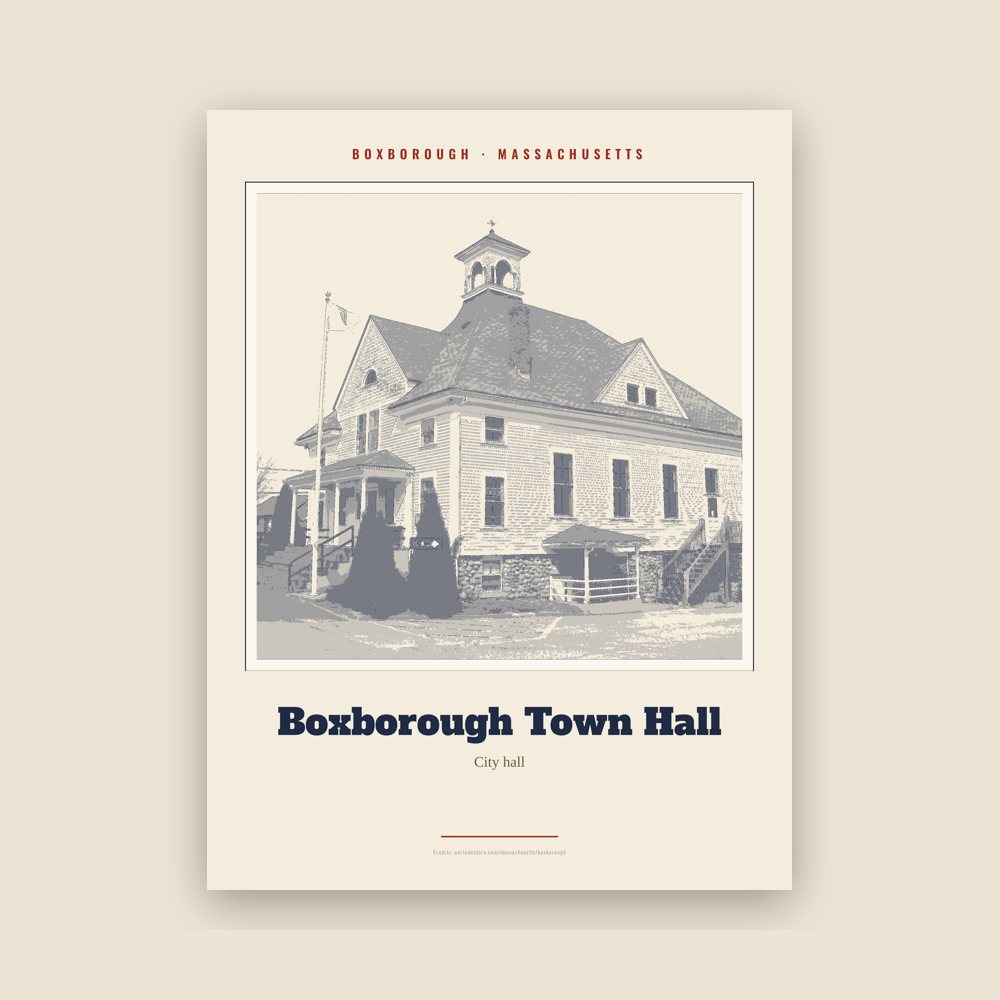
Archival matte print of a local landmark, credited to its photographer
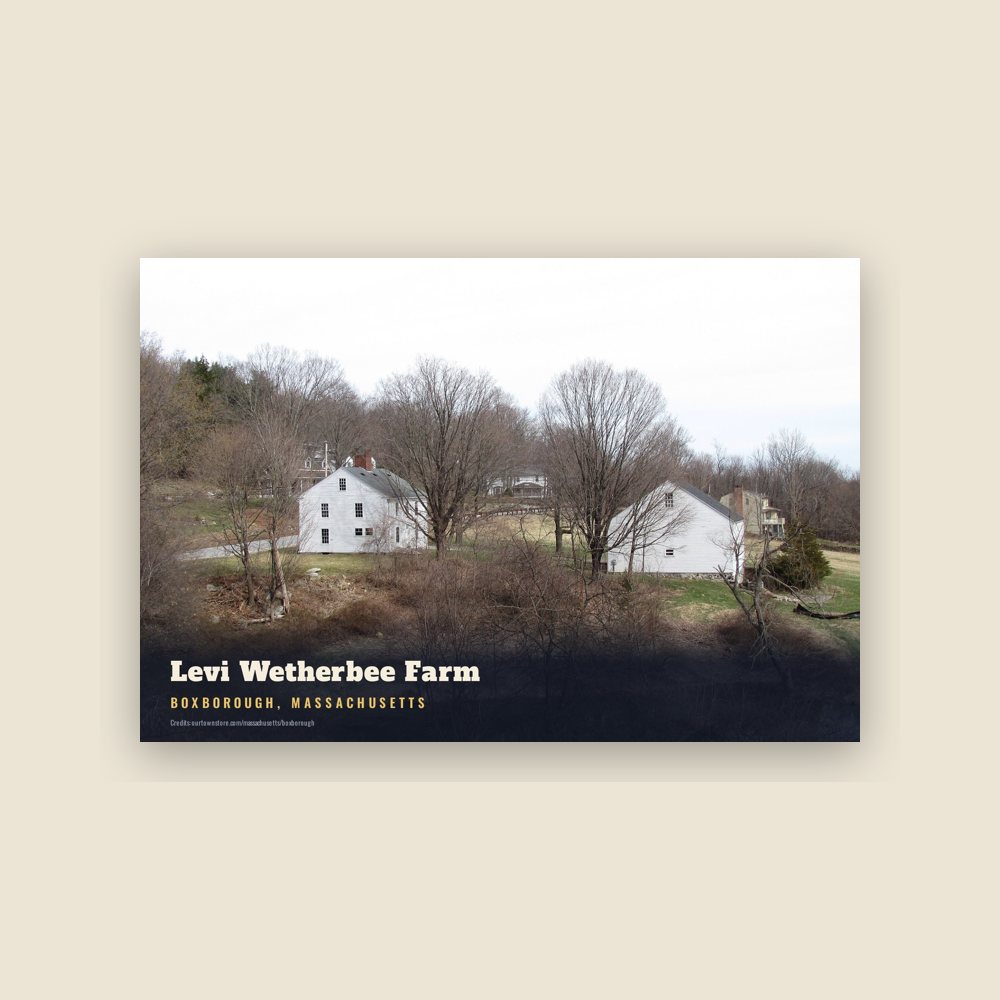
6″×4″ postcard, glossy front
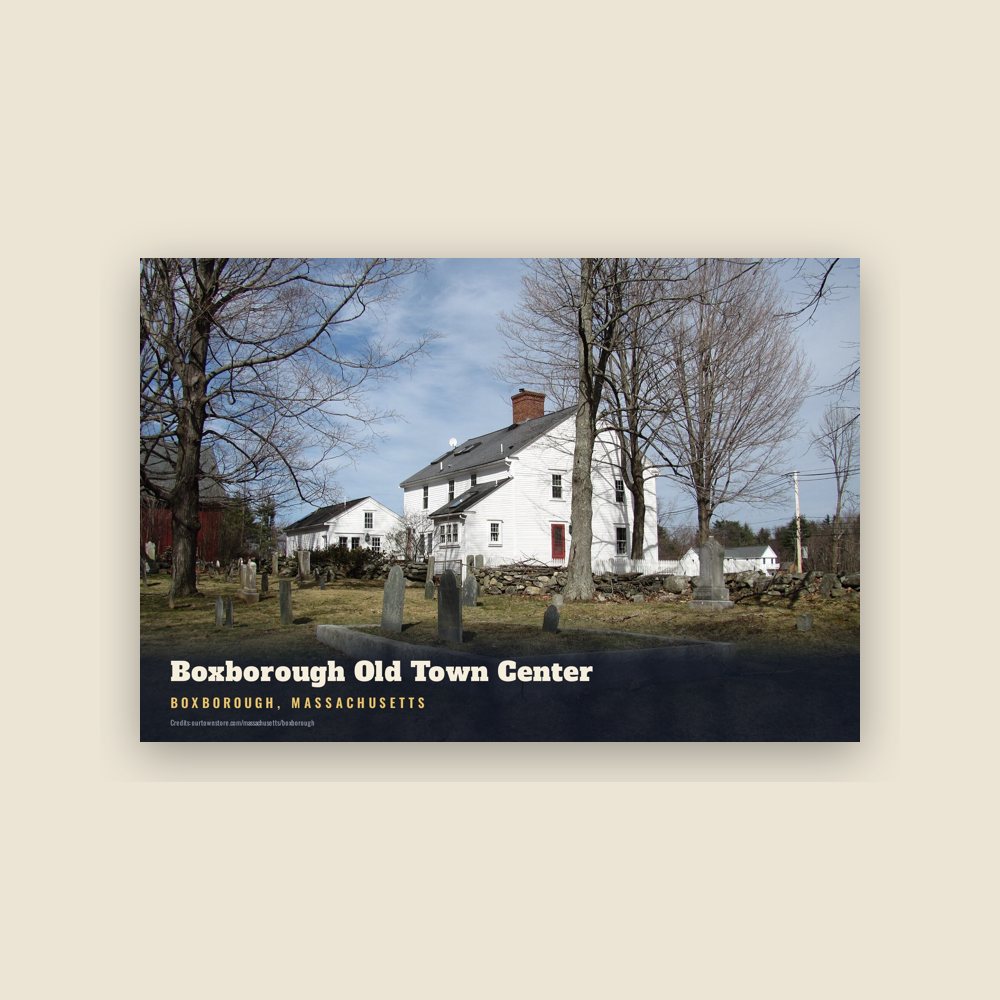
6″×4″ postcard, glossy front
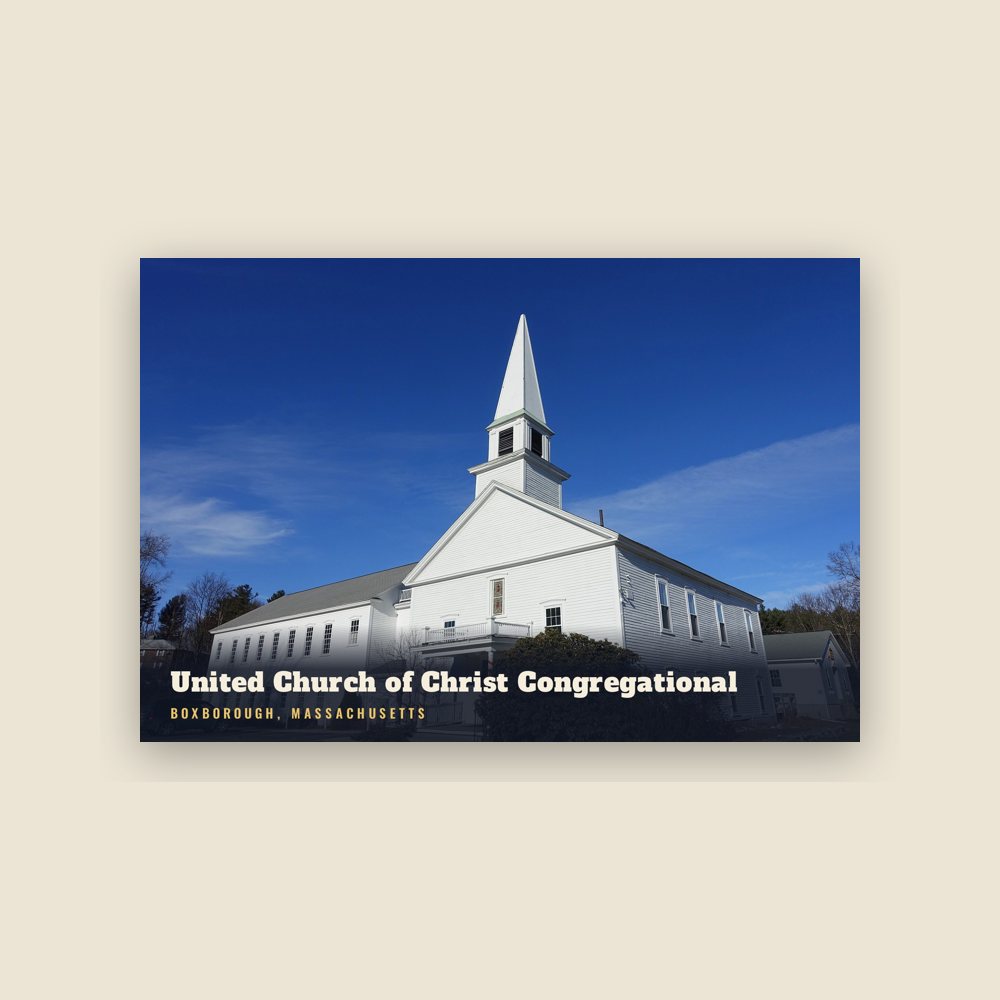
6″×4″ postcard, glossy front
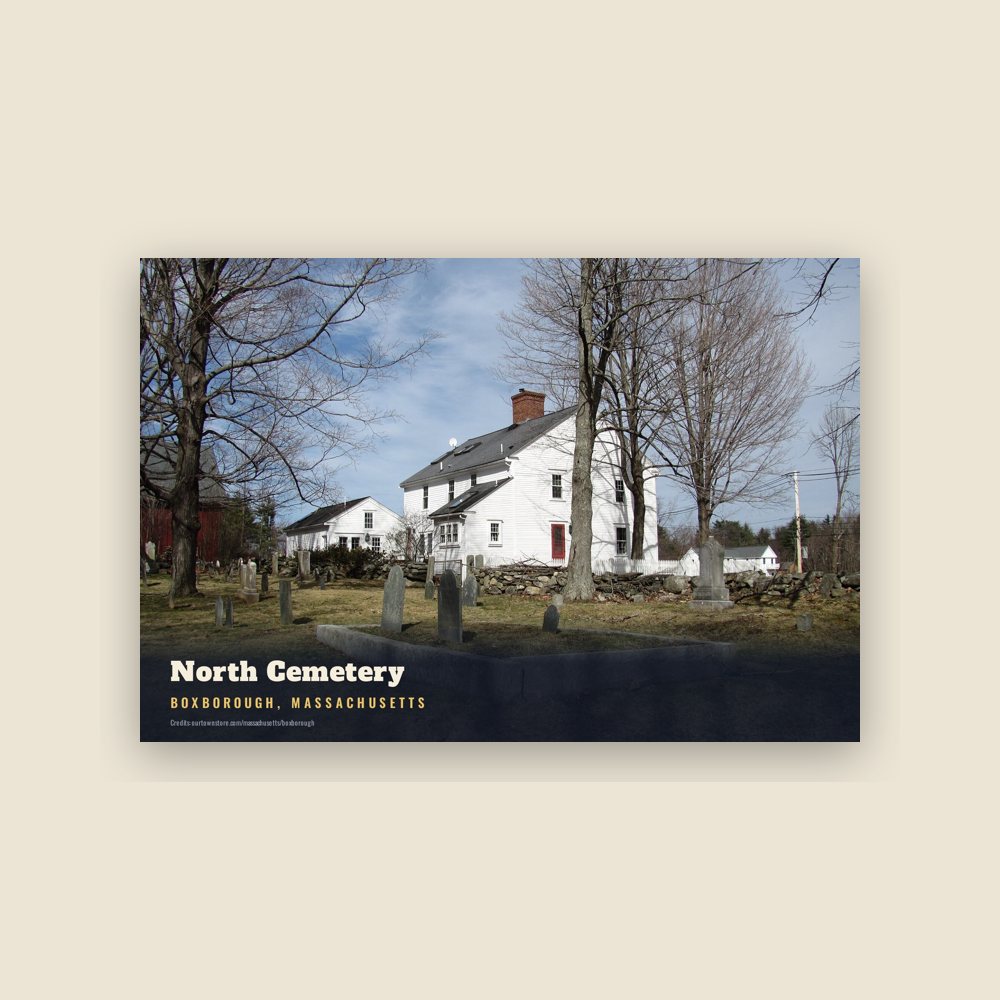
6″×4″ postcard, glossy front
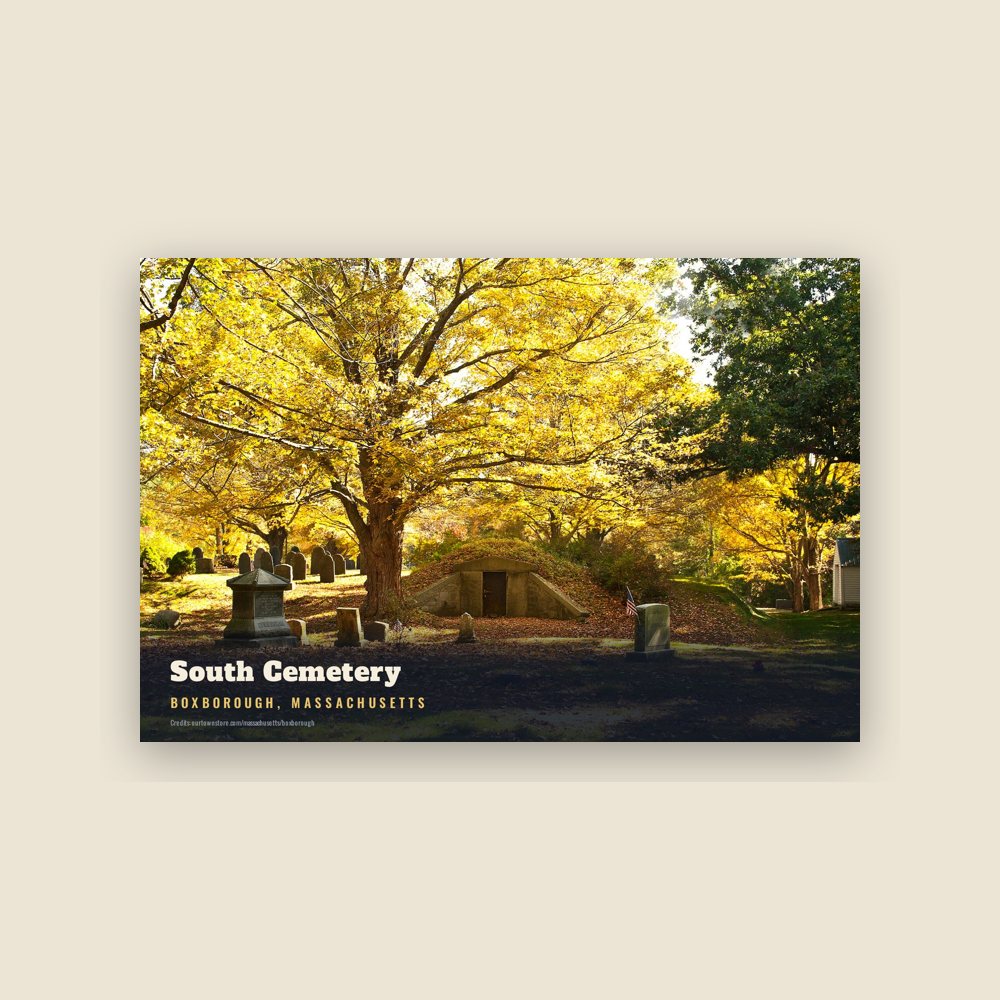
6″×4″ postcard, glossy front
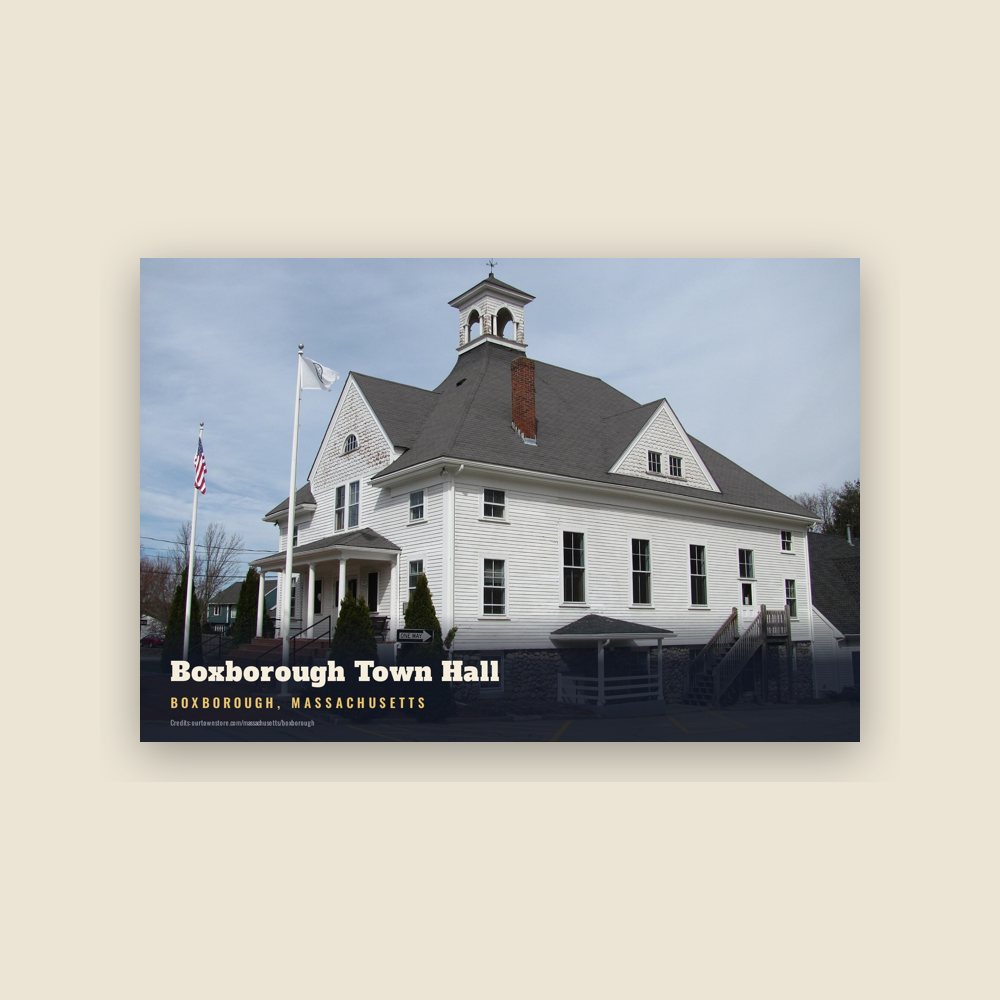
6″×4″ postcard, glossy front
Population 1850: 395 → 2010: 4,996 → 2020: 5,506
From Wikidata (CC0).
The area which became the town of Boxborough was first inhabited by the Native Americans of the Nipmuc and Pennacook tribes. It was probably visited by colonists as early as the mid seventeenth century, before the neighboring towns of Stow (1683) and Acton (1735) were founded. However, the land in Boxborough was not settled until the beginning of the eighteenth century by farmers looking for fertile land to establish farms. Over the next decades, this area would become one of the most productive agricultural farming areas in the county. Several men from the area served in the Seven Years' War.
On April 19, 1775, 21 men from Boxborough met at the Boaz Brown house on Hill road before marching with the companies of Littleton and Acton to the Battles of Lexington and Concord. Most of these men, previously farmers, would go on to serve the colonial militia for the remainder of the war.
Luther died three days later, ostensibly of the wounds he received in these battles. He is buried at the Old Burial Ground in Littleton, Massachusetts. A picture of Luther is featured on the Boxborough seal. Calvin survived the war and went on to be involved in early Boxborough politics. It is after descendants of this same Blanchard family that Blanchard Memorial School was named.
A closer church served as the motivation for establishing a new district; those who lived in the extreme parts of this area found it difficult to travel all the way to church every week (the community had been built on Puritan ideals, attending church was required at this time). Perhaps the key players in this movement, fresh from fighting in the Revolutionary War, were pursuing further independence.
Boxborough was formed from Harvard, Littleton, and Stow. A member of Middlesex County, Boxborough established a new county line between Middlesex and Worcester. On January 31, 1775, men of this area formed a "Sartain Society" which agreed to purchase the Harvard Old meeting-house to act as a town hall and a church.
The people of Boxborough were denied registration to be an independent district three times before being accepted in 1782, then incorporated on February 25, 1783. At first, Boxborough didn't send a representative to the General Court, instead continuing to help elect a representative from Stow.
Besides the Blanchard family, several other early settlers of Boxborough were instrumental in its establishment as an independent district. John Wetherbee and his family built houses in what would become Boxborough as early as 1717, and some historians consider John the first settler of the area. Silas Wetherbee, born a generation later, fought for a Stow company during the Revolution, and gave the land on which the new meeting-house and church was built after the war. Silas was not just a veteran and financial backer, but was also elected as an original selectman. The Wetherbee Family continues to influence Boxborough politics for a century to come.
The Taylor brothers were also some of the first settlers in the area. Silas Taylor served as a captain in the Revolutionary War before serving as the first clerk of the district of Boxborough, as well as an original selectman and assessor. Phinehas Taylor Jr. also served as a captain in the War, going on to serve as the original treasurer and deer-reeve of the district.
Other old Boxborough families include the Hager Family, the Wood Family, and the Stone family, each of which settled in the area before its incorporation and had men serve during the Revolutionary War. Bennet Wood and Joseph Stone served as the first official Boxborough government, serving as the committee for the Sartain Society, along with moderator Henry Cooledge. Joseph Stone, originally from Harvard, was deeply involved in the area, serving as justice of the peace and a deacon of the congregational church until his death. The Wood Family was also influential in the early politics of Littleton; Bennet's father, Jeremiah, served as collector, selectman, and eventually treasurer.
Most of these influential Boxborians were buried in the Old North Cemetery, which has graves dating back to the eighteenth century.
Adapted (trimmed) from the Wikipedia article Boxborough, Massachusetts, revision 1377124799 by its contributors, licensed CC BY-SA 4.0.
We share a part of every Boxborough sale with local partners, and we'd love to print from your collection. Old photographs, maps and postcards make the best keepsakes.
Partner with us