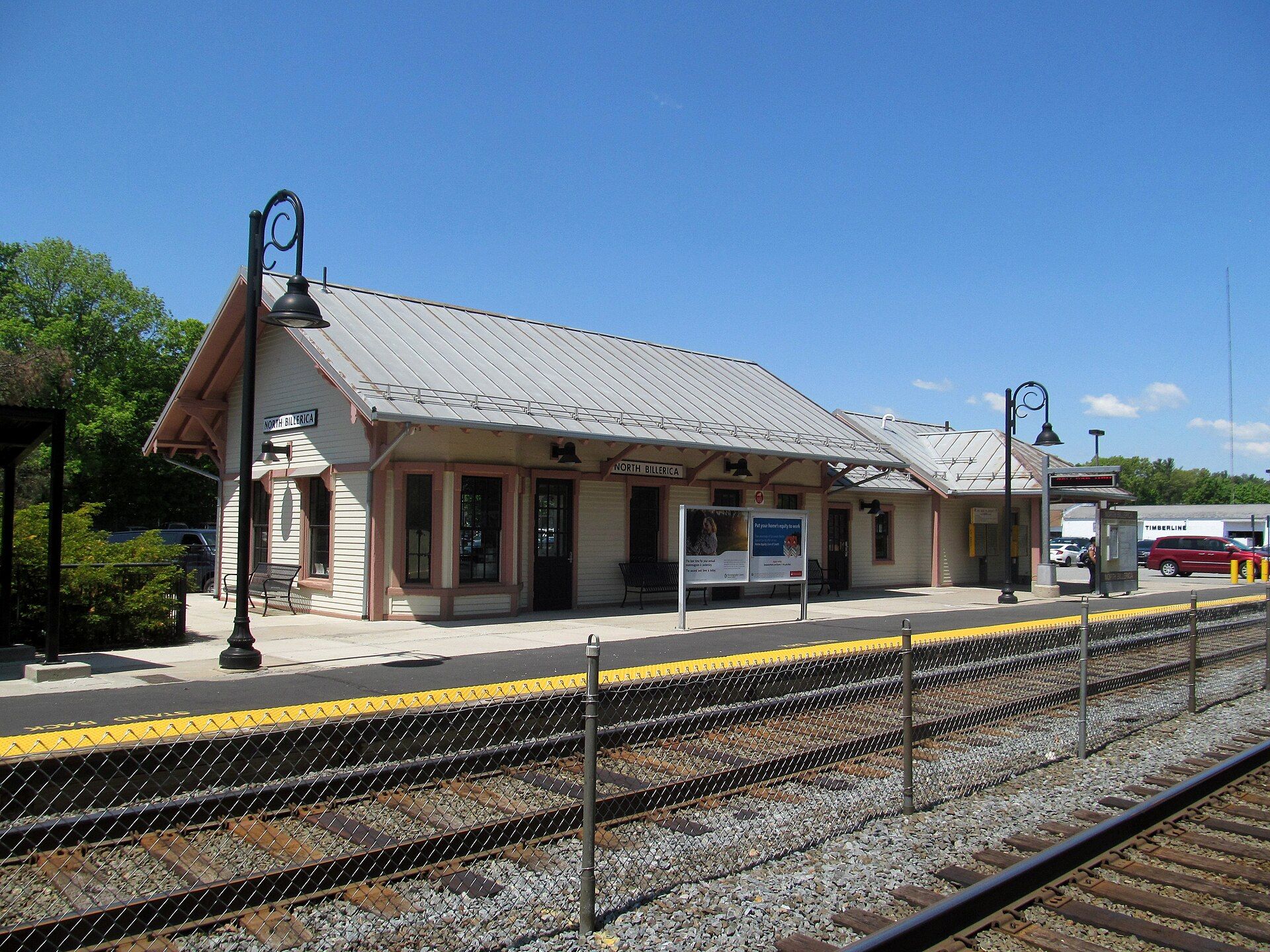
It takes its name from the town of Billericay in Essex, England. Landmarks include Middlesex Canal, North Billerica station and Manning Manse. Billerica is the birthplace of Elizabeth Peabody, educator 1804-1894.
Every piece is drawn from Billerica's own map data and historic archives, then printed and shipped from the USA when you order. No two towns look alike.
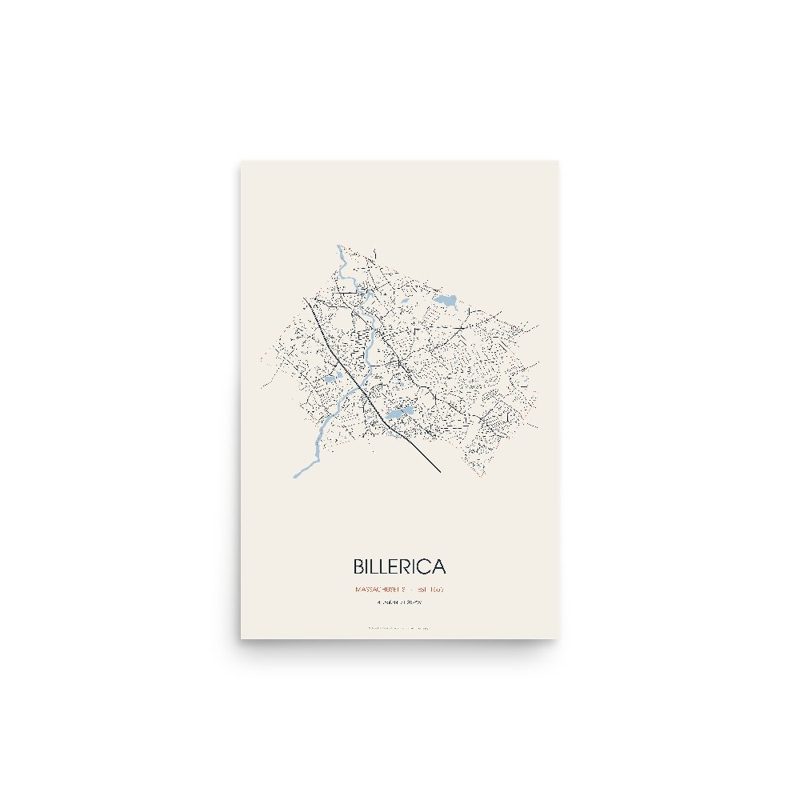
Every road in town, on archival matte paper
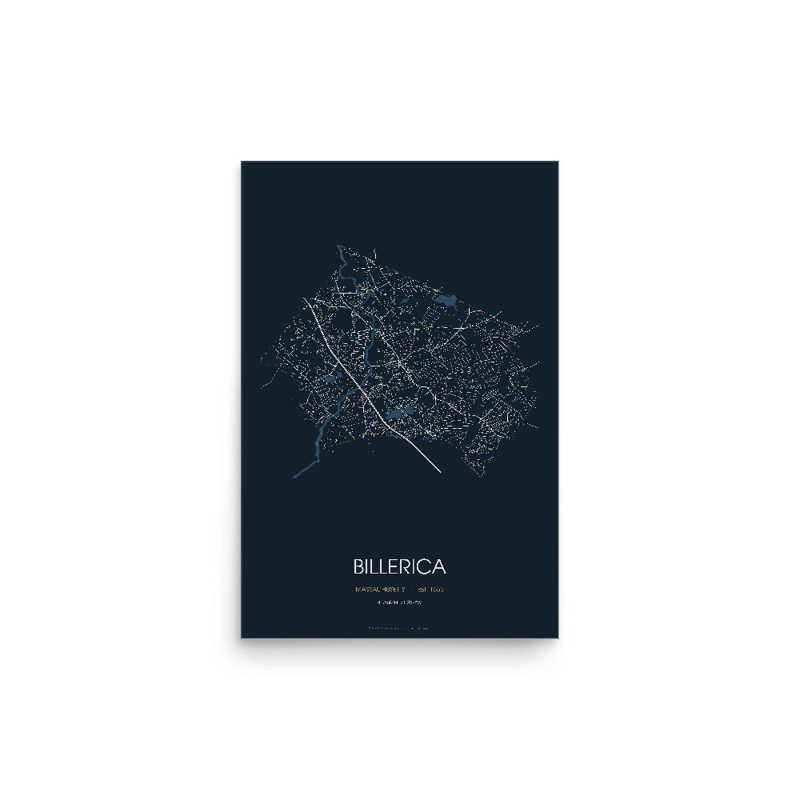
The same map, in navy and silver
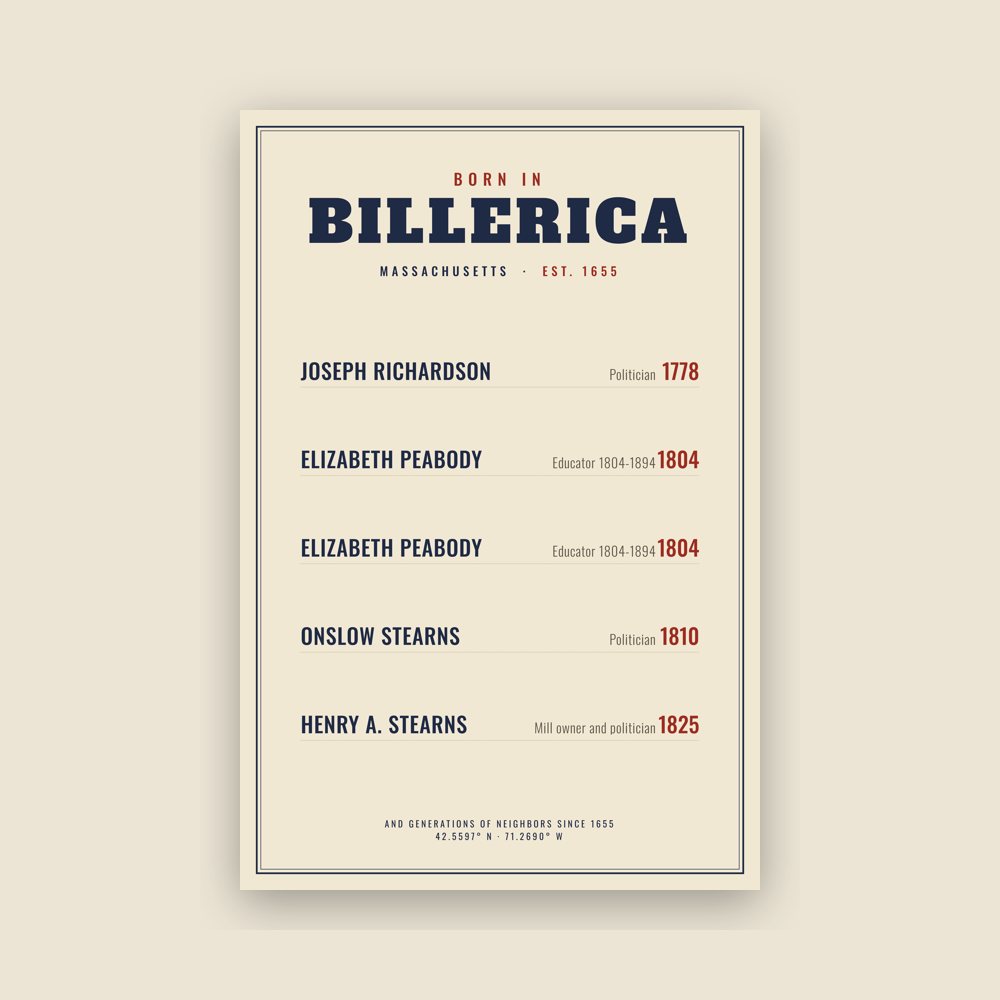
Famous natives, by birth year
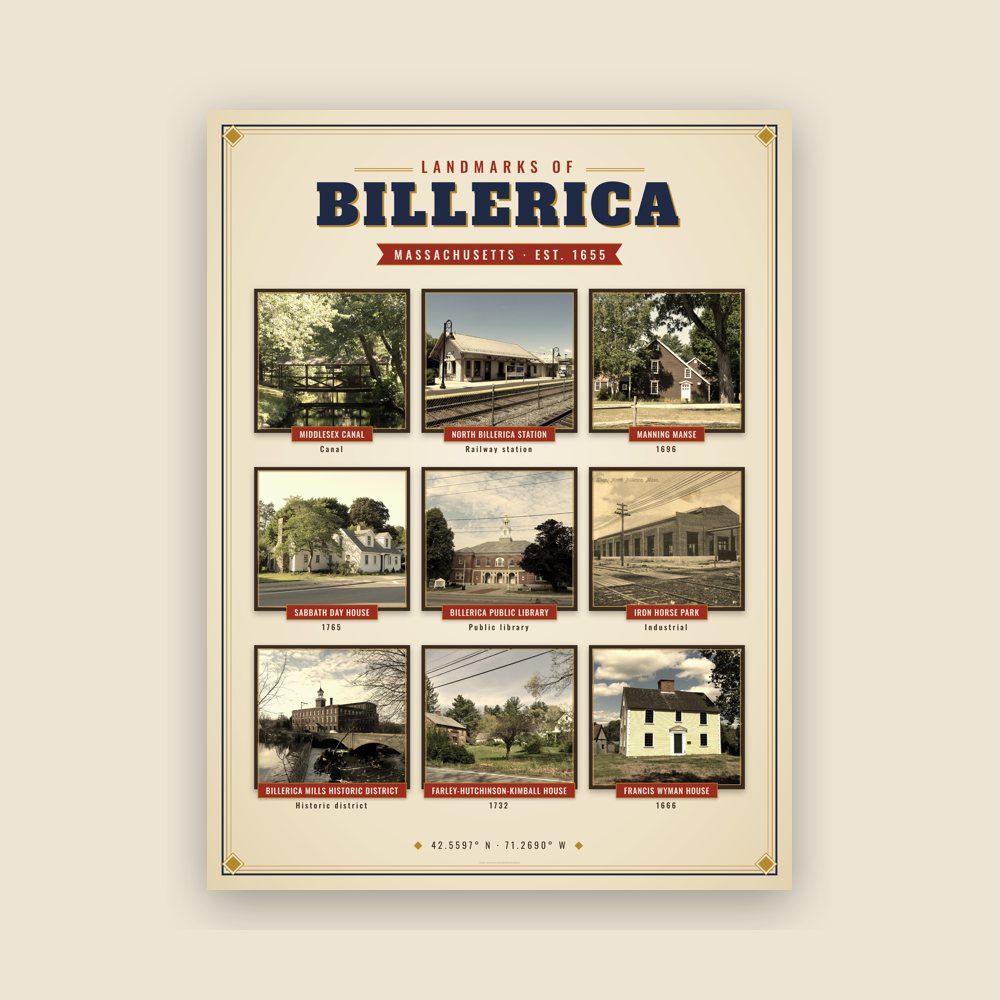
Nine local landmarks, archival matte
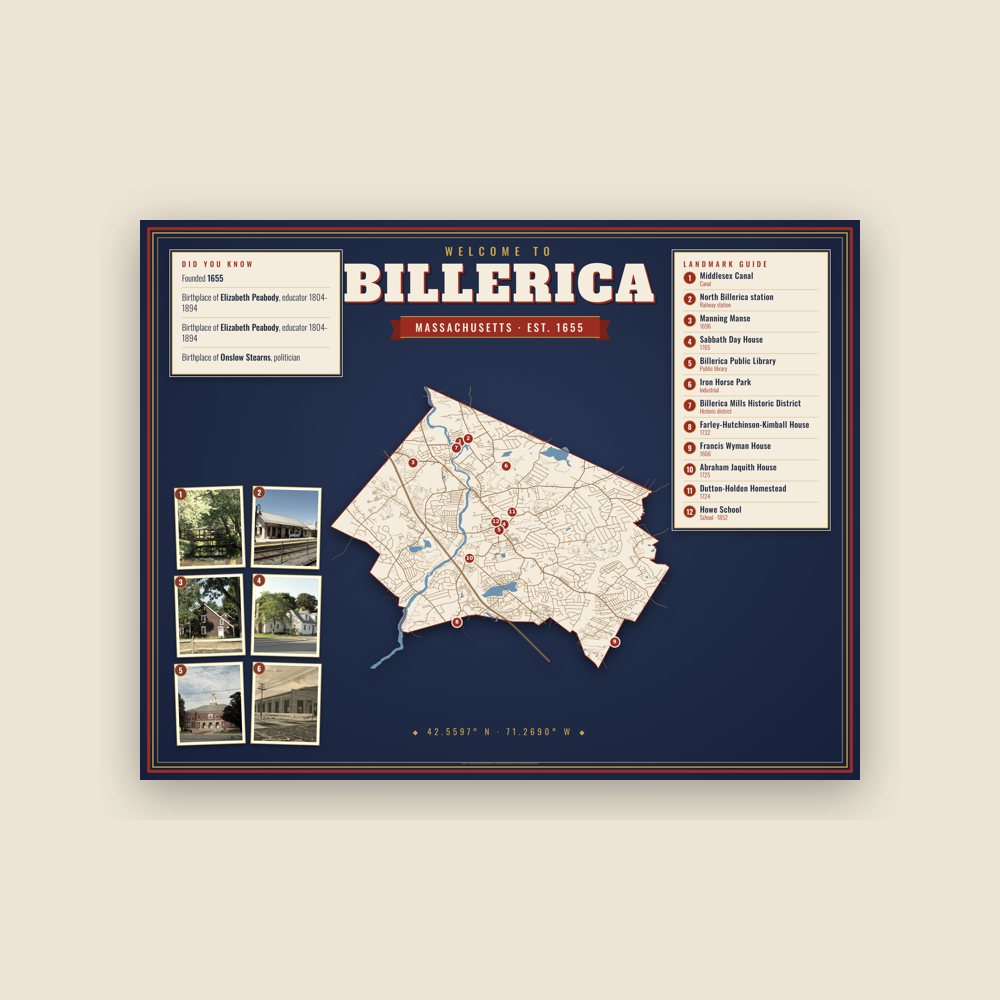
Map of local landmarks, washable fabric
Heavy-blend fleece, street map printed on the back
Soft Bella+Canvas jersey
Glossy ceramic, dishwasher safe
Ceramic keepsake, gold ribbon
Weatherproof, for the front walk
24″×16″, printed coir-look fibers, rubber back
12″×12″ printed wood, ready to hang
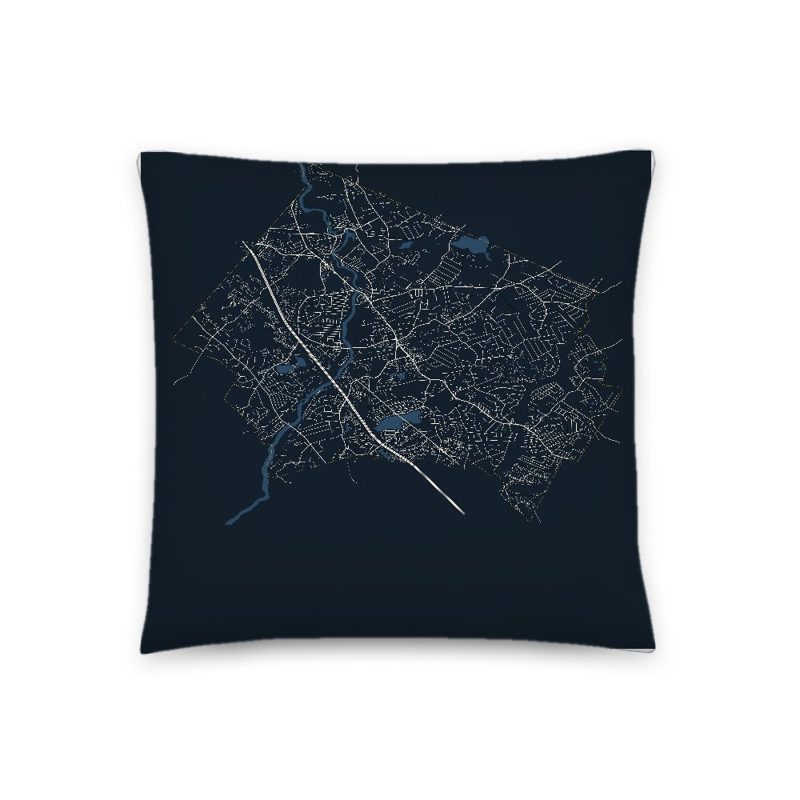
Soft-touch, zip cover
Sturdy all-over-print tote
Glossy top, cork back
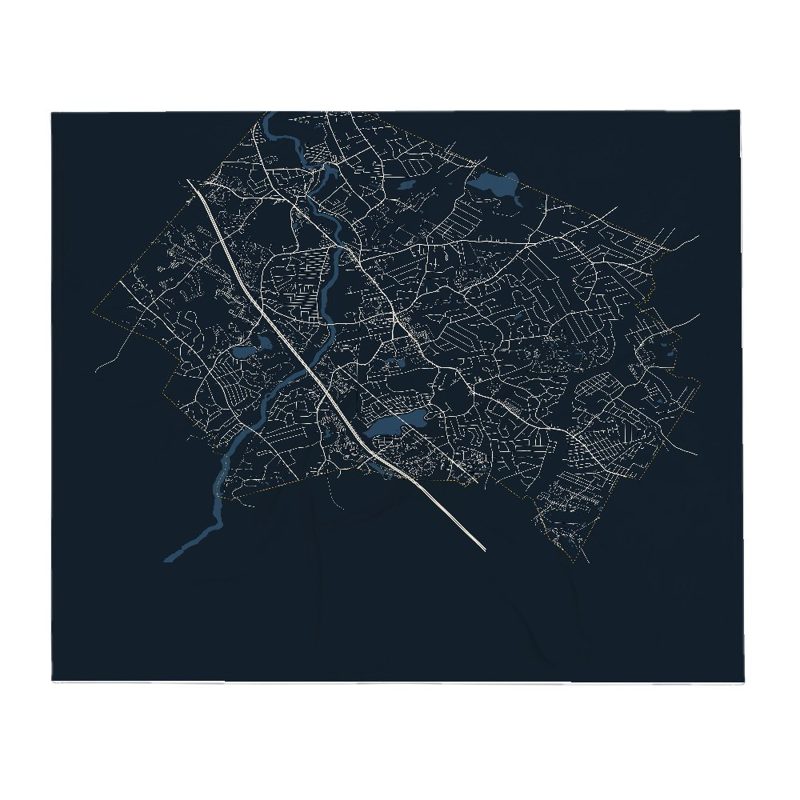
Soft fleece, 50″×60″
20 oz, double-wall stainless
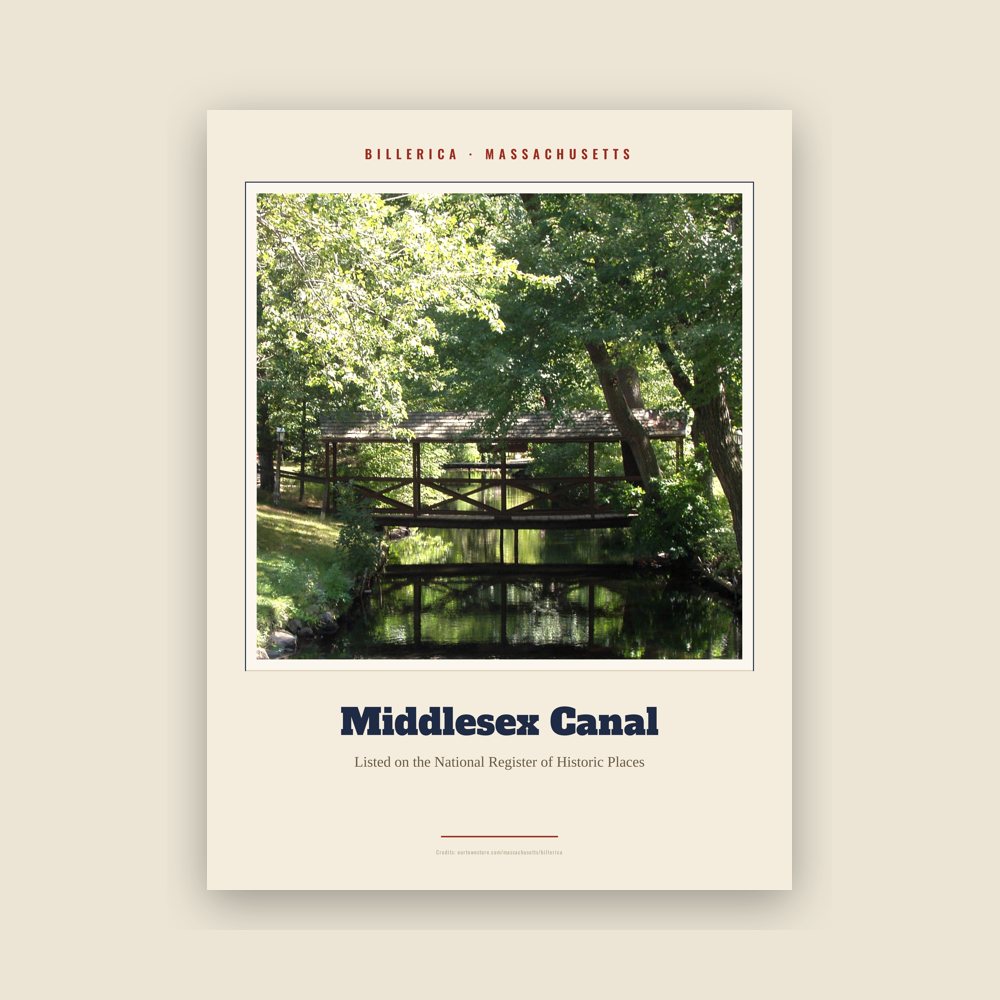
Archival matte print of a local landmark, credited to its photographer
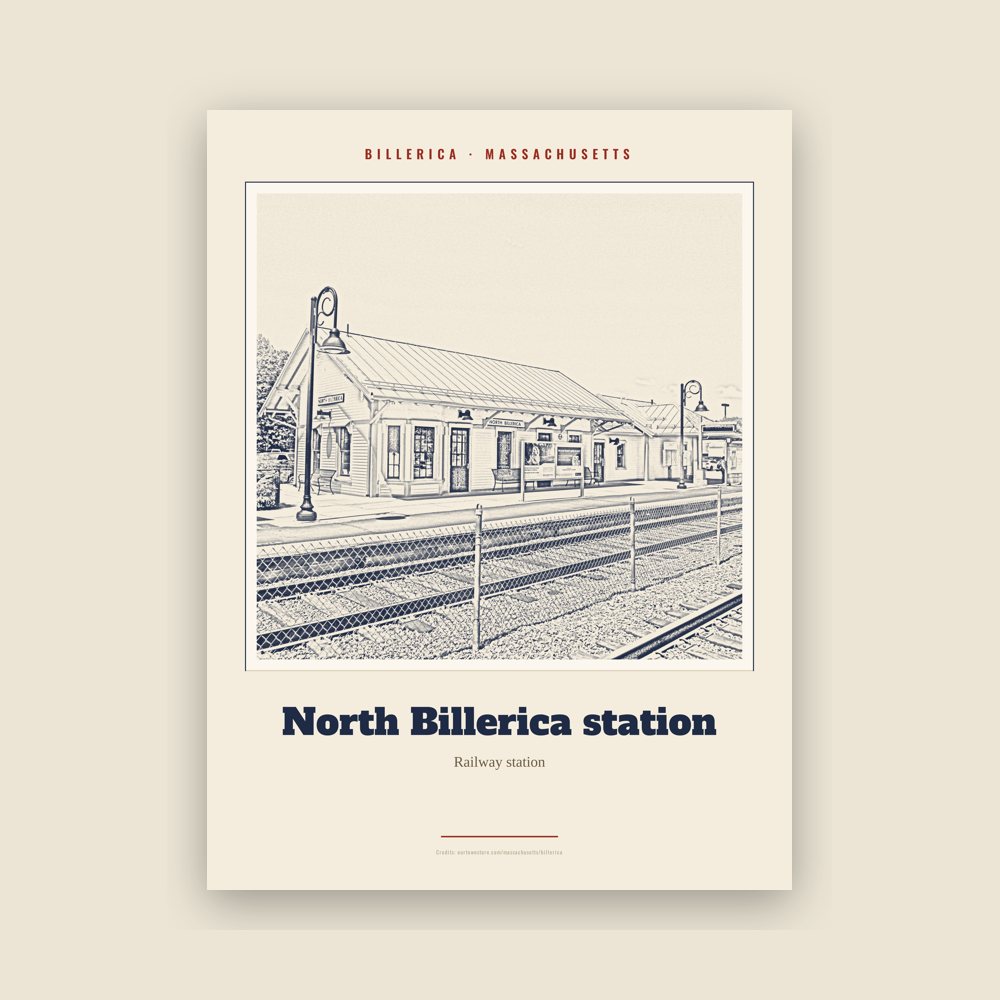
Archival matte print of a local landmark, credited to its photographer
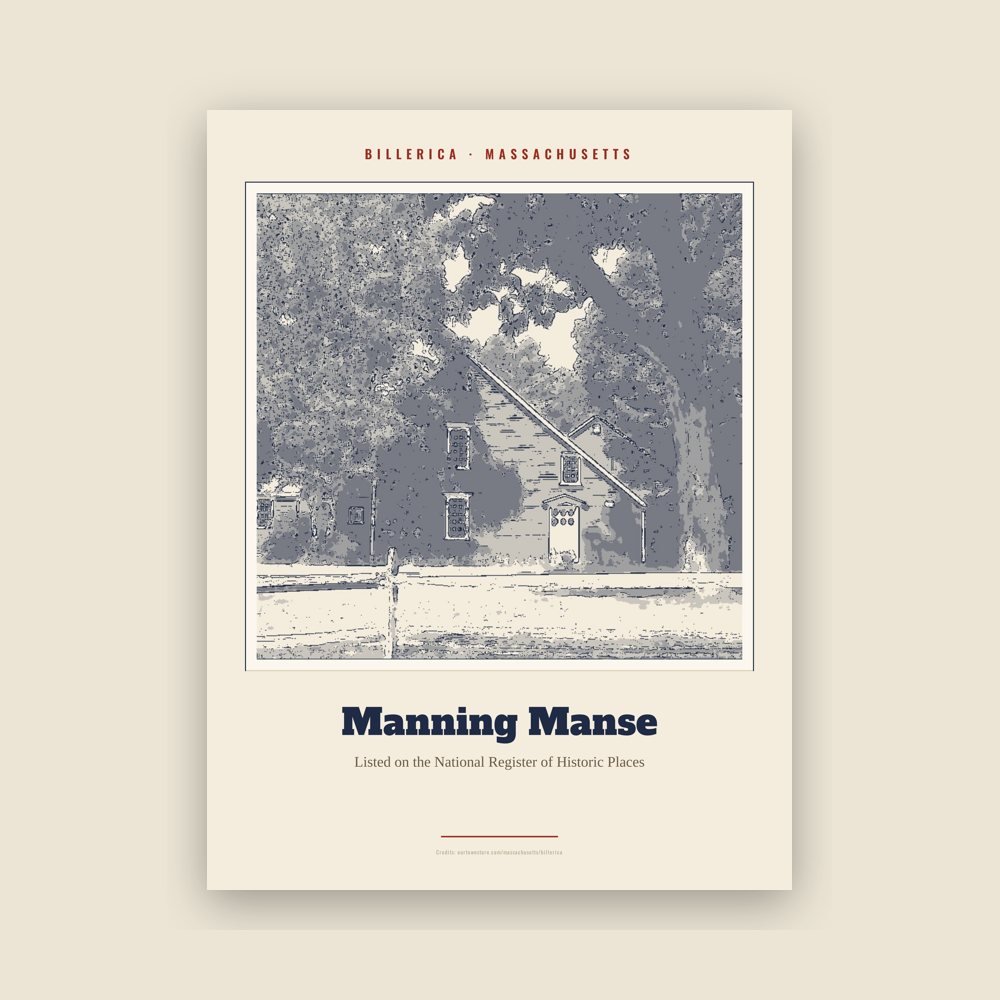
Archival matte print of a local landmark, credited to its photographer
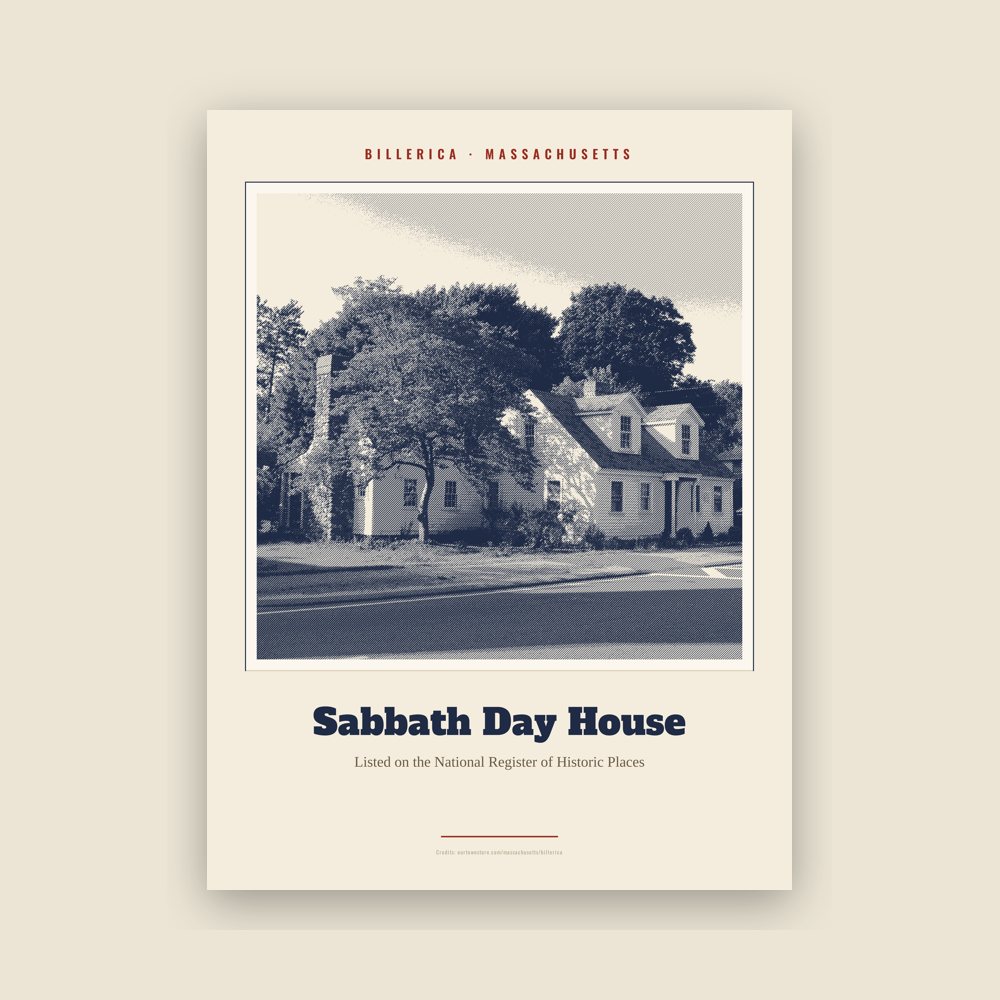
Archival matte print of a local landmark, credited to its photographer
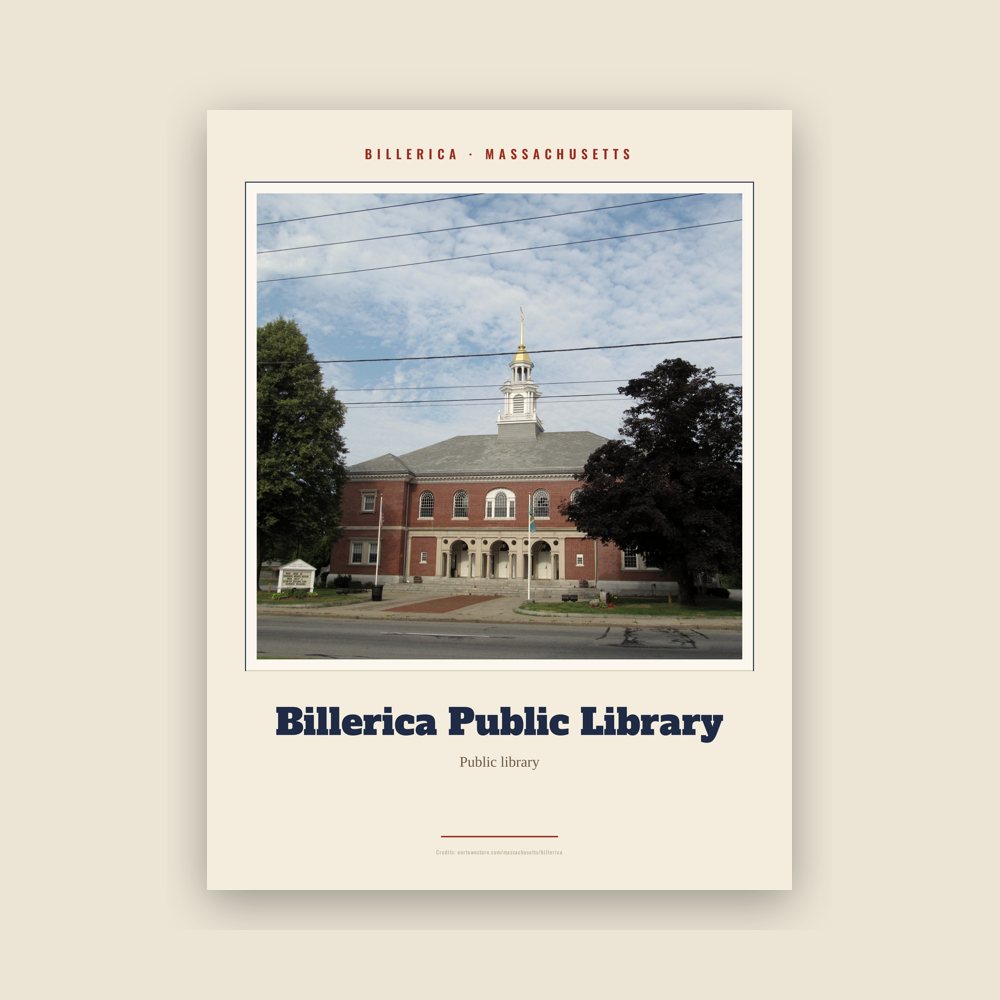
Archival matte print of a local landmark, credited to its photographer
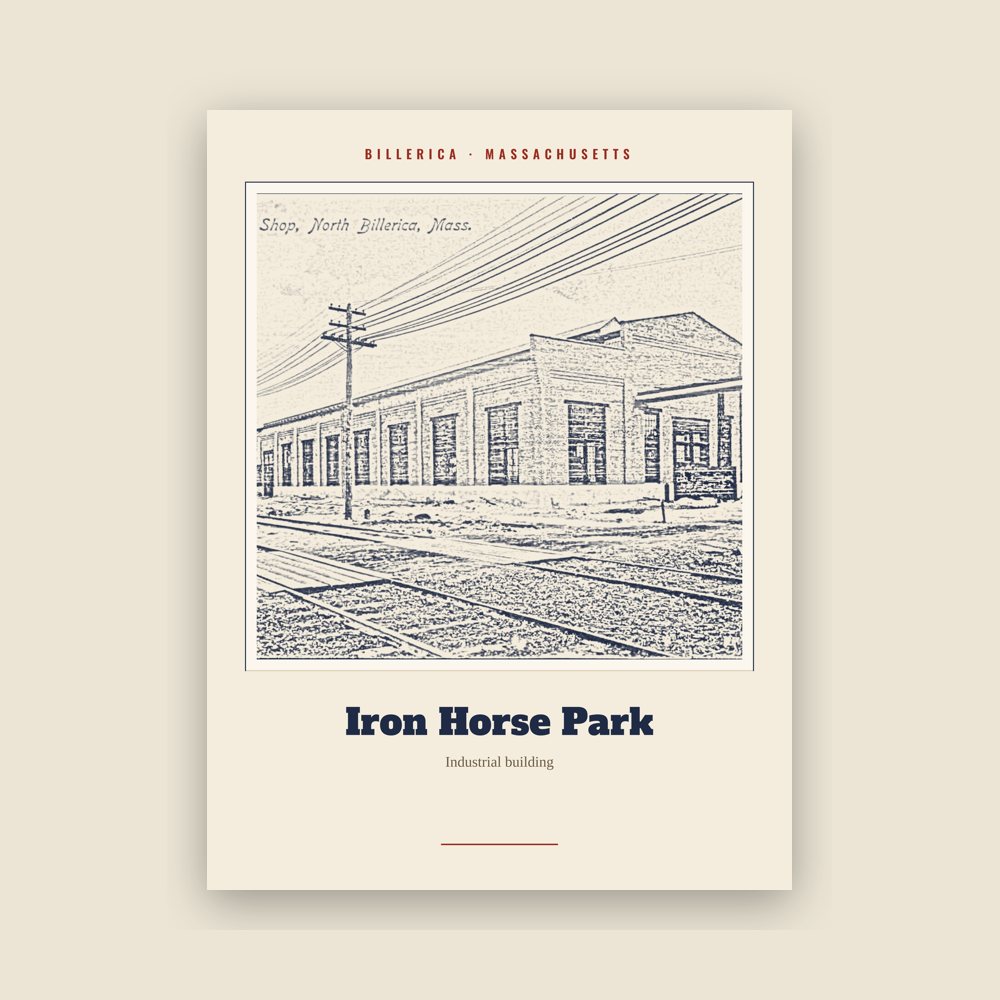
Archival matte print of a local landmark, credited to its photographer
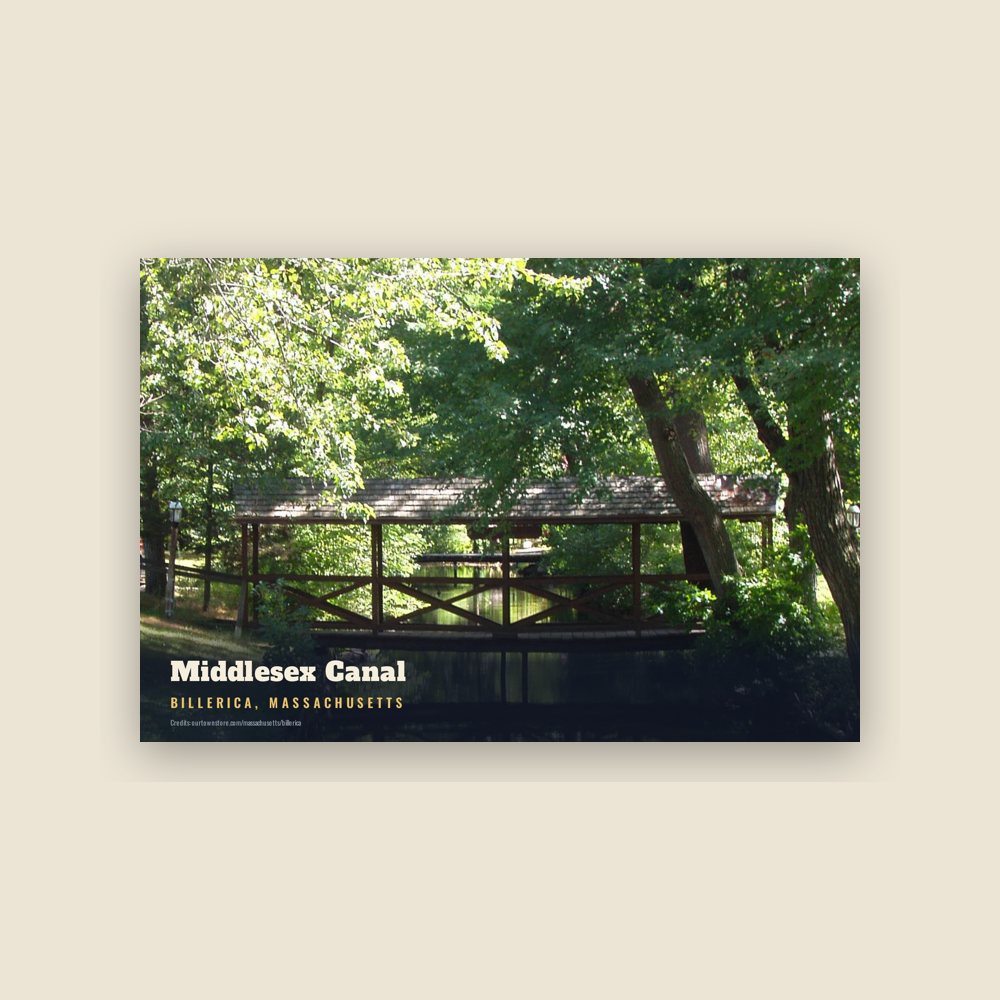
6″×4″ postcard, glossy front
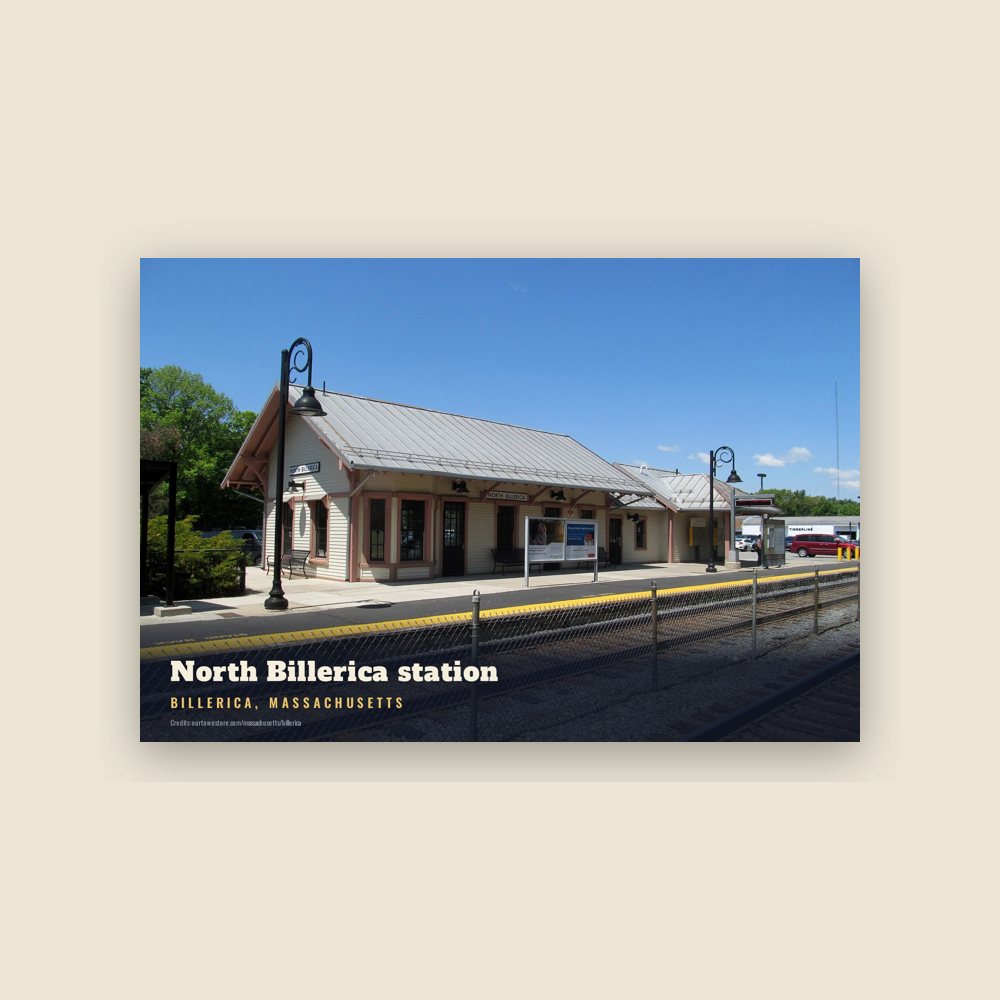
6″×4″ postcard, glossy front
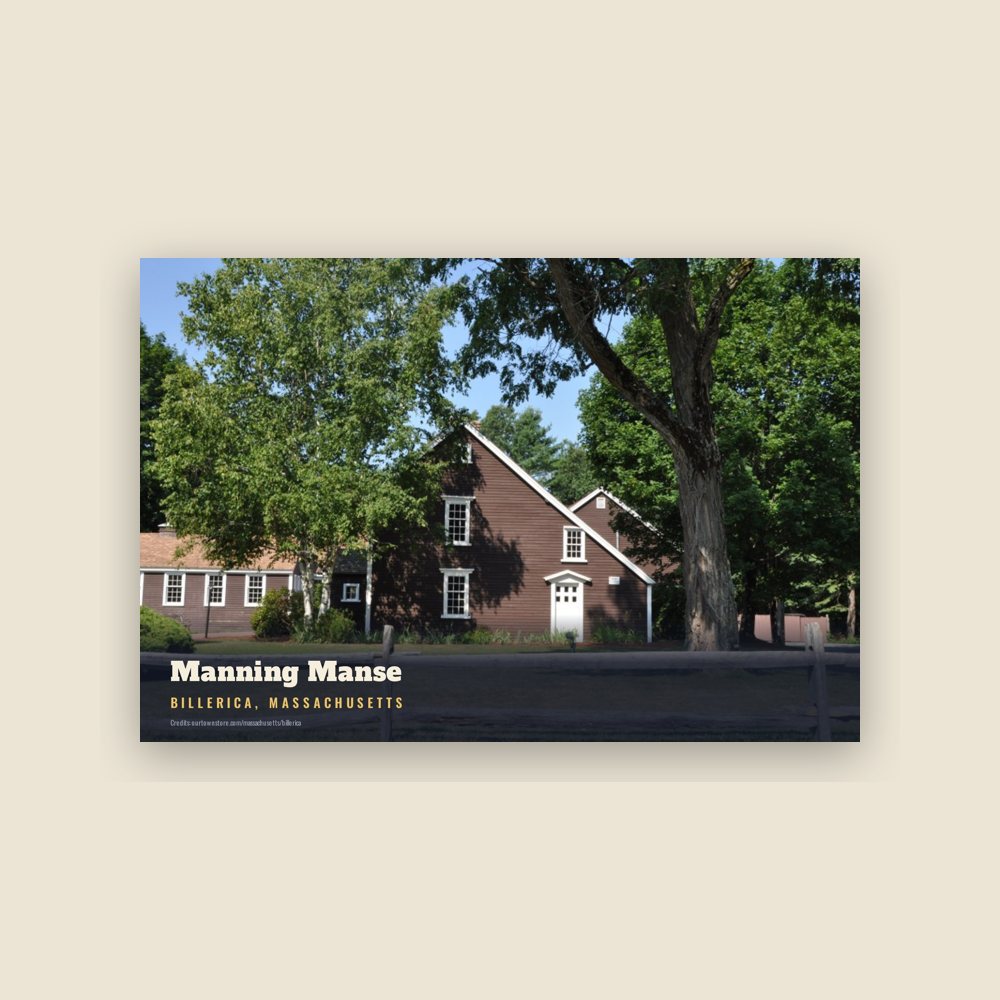
6″×4″ postcard, glossy front
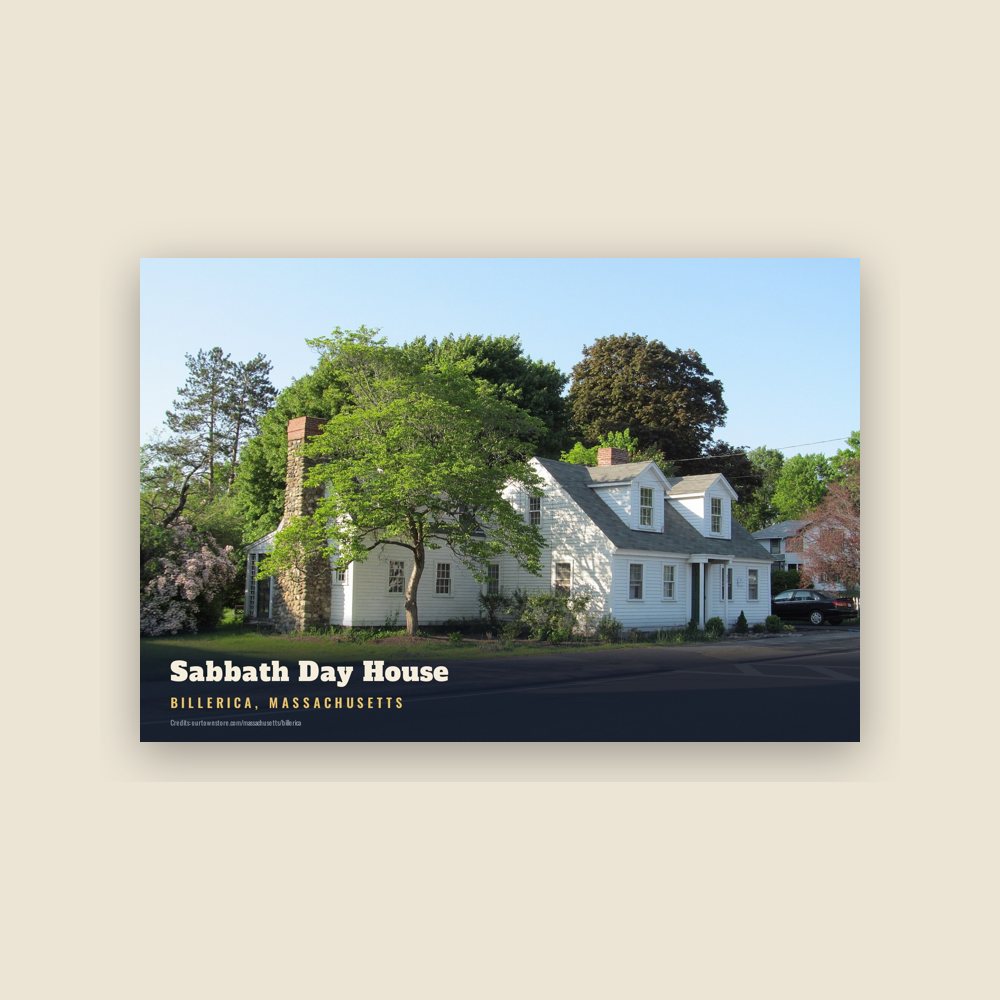
6″×4″ postcard, glossy front
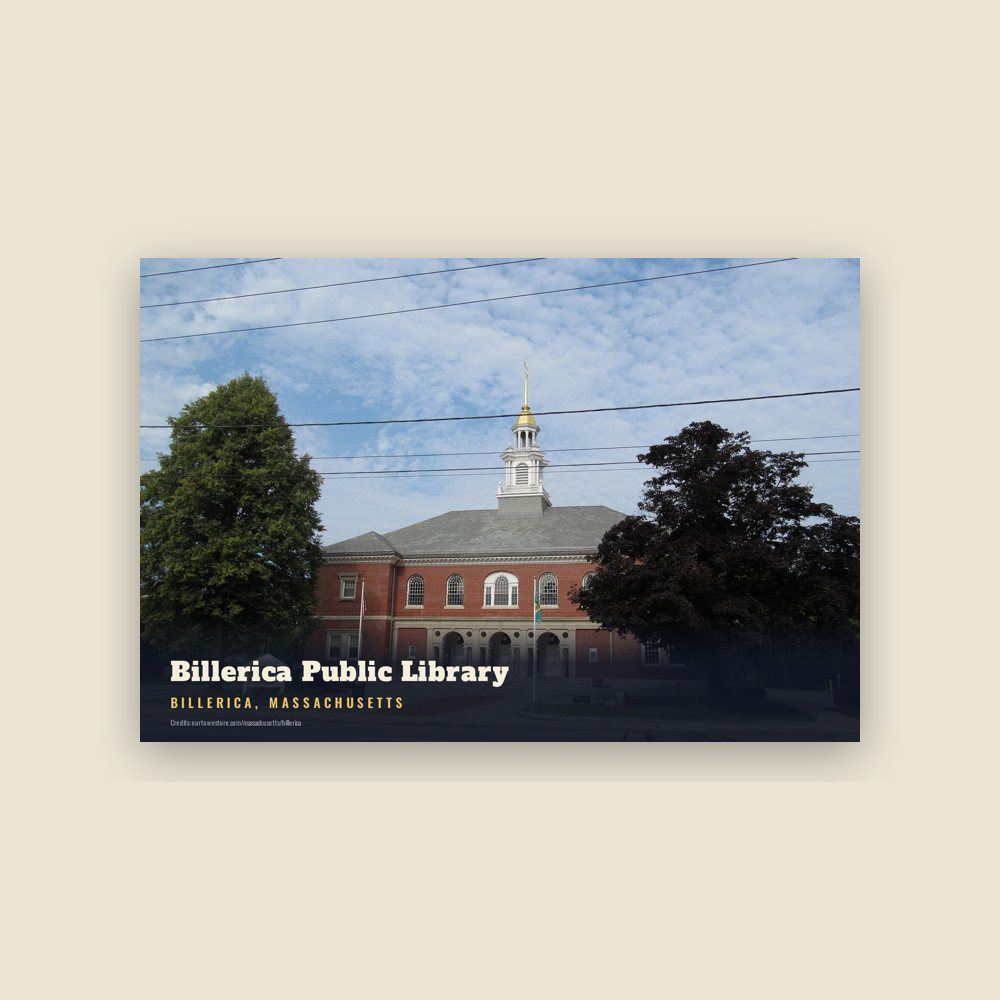
6″×4″ postcard, glossy front
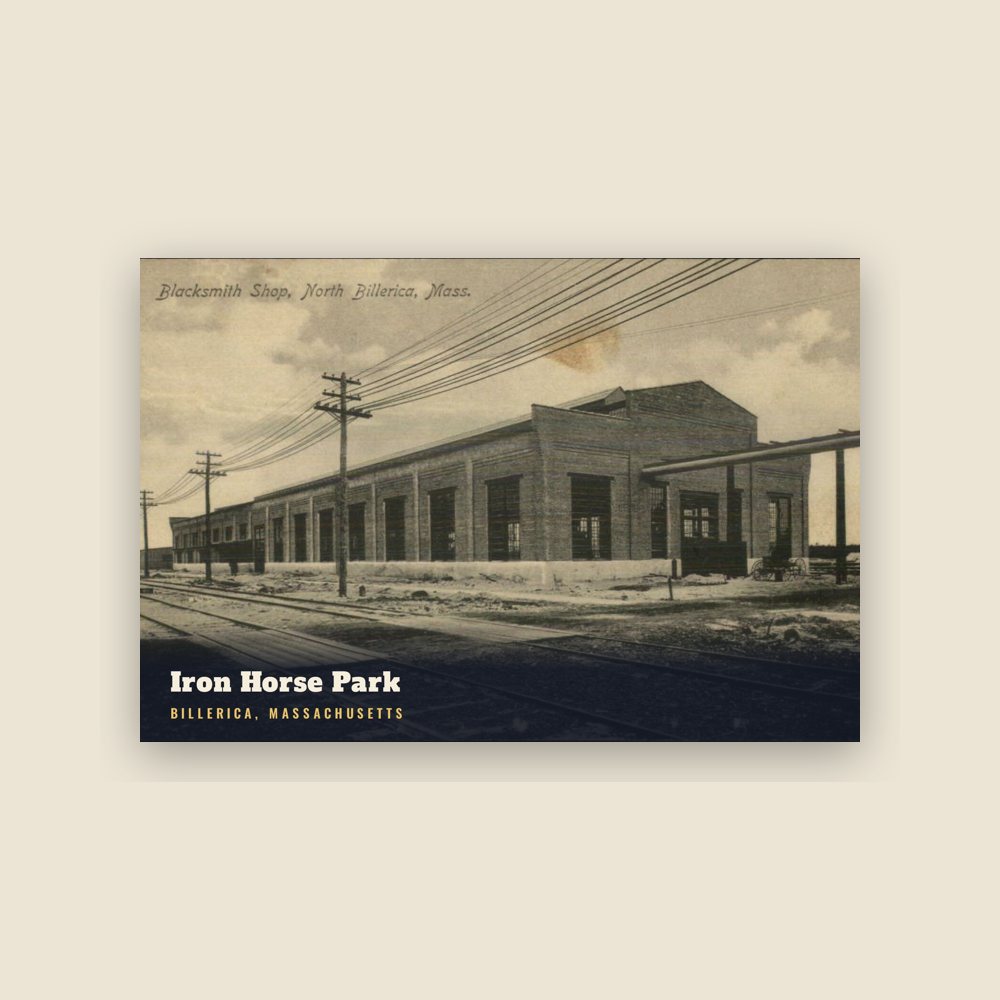
6″×4″ postcard, glossy front
Population 1850: 1,646 → 2010: 40,243 → 2020: 42,119
From Wikidata (CC0).
In the early 1630s, a Praying Indian village named Shawshin was at the current site of Billerica, commonly spelled Shawsheen today, as in the Shawsheen River. In 1638, Massachusetts Bay Governor John Winthrop and Lt. Governor Thomas Dudley were granted land along the Concord River in the area, and roughly a dozen families from Cambridge and Charlestown Village had begun to occupy Shawshin by 1652. The settlers chose the name Billerica because some of the families originally came from the town of Billericay in Essex, England. The town was incorporated as Billerica in 1655, on the same day as neighboring Chelmsford and nearby Groton. The original plantation of Billerica was divided during the colonial period into the towns of Billerica, Bedford, Wilmington, and Tewksbury. Though Billerica made it through King Philip's War (1675–1678) without any by Native American attacks, it would suffer several devastating raids during the 1690s.
The oldest remaining homestead in the town is the Manning Manse built in 1696, which was also the residence of William Manning (1747–1814), the author of The Key of Liberty, a critique of Federalist policies. Other notable Revolutionary War–era residents included Asa Pollard, the first soldier killed at the Battle of Bunker Hill, and Thomas Ditson, who was tarred and feathered in March 1775 while on a visit to Boston after attempting to illegally purchase the musket of a soldier of the 47th Regiment of Foot. The song "Yankee Doodle" supposedly became a term of national pride instead of an insult because of this event. The town now celebrates "Yankee Doodle Weekend" every September.
Adapted (trimmed) from the Wikipedia article Billerica, Massachusetts, revision 1378496922 by its contributors, licensed CC BY-SA 4.0.
We share a part of every Billerica sale with local partners, and we'd love to print from your collection. Old photographs, maps and postcards make the best keepsakes.
Partner with us