A short history of Overland Park
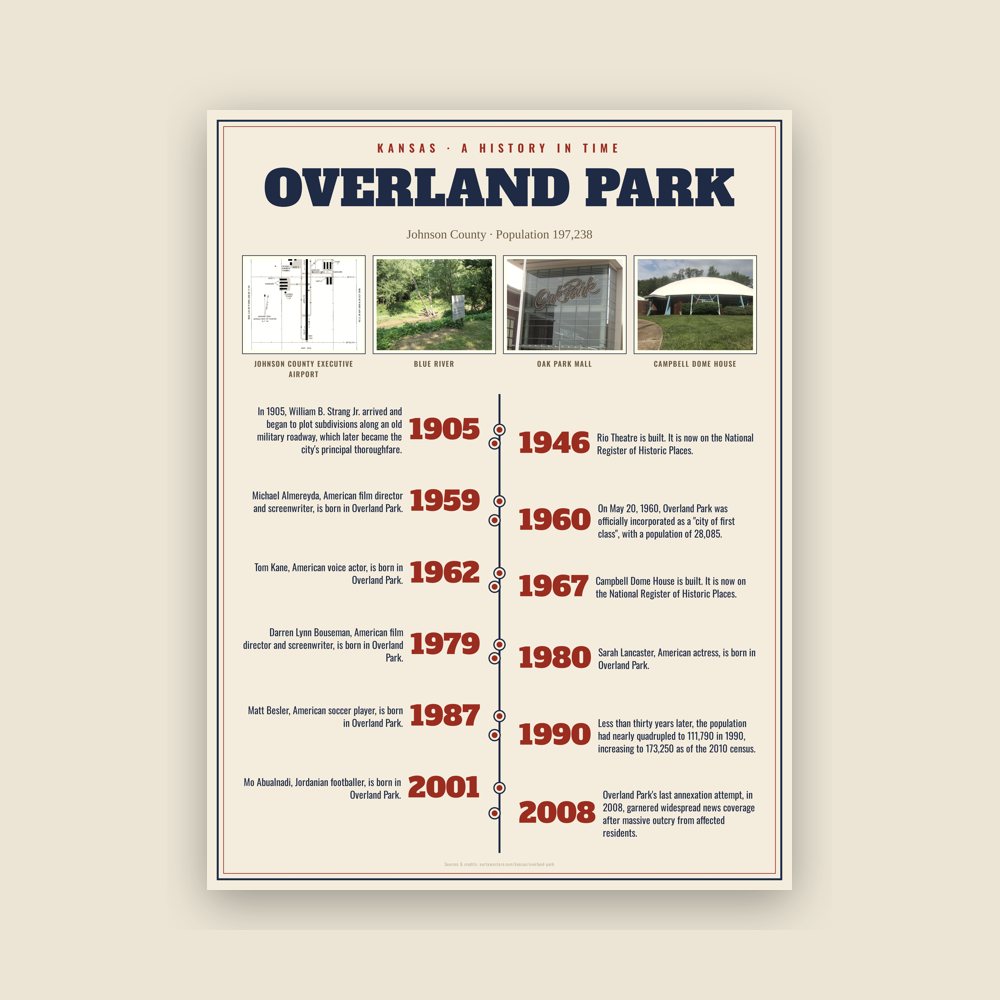
In 1905, William B. Strang Jr. arrived and began to plot subdivisions along an old military roadway, which later became the city's principal thoroughfare. He developed large portions of what would later become downtown Overland Park.
On May 20, 1960, Overland Park was officially incorporated as a "city of first class", with a population of 28,085. Less than thirty years later, the population had nearly quadrupled to 111,790 in 1990, increasing to 173,250 as of the 2010 census. Overland Park officially became the second largest city in the state, following Wichita, Kansas, after passing Kansas City, Kansas in the early 2000s.
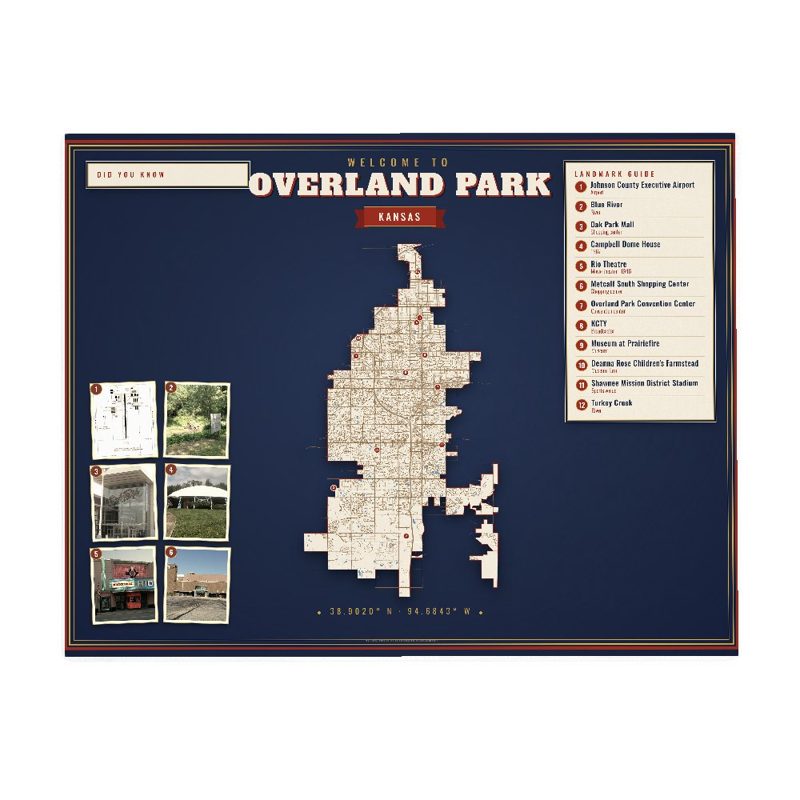
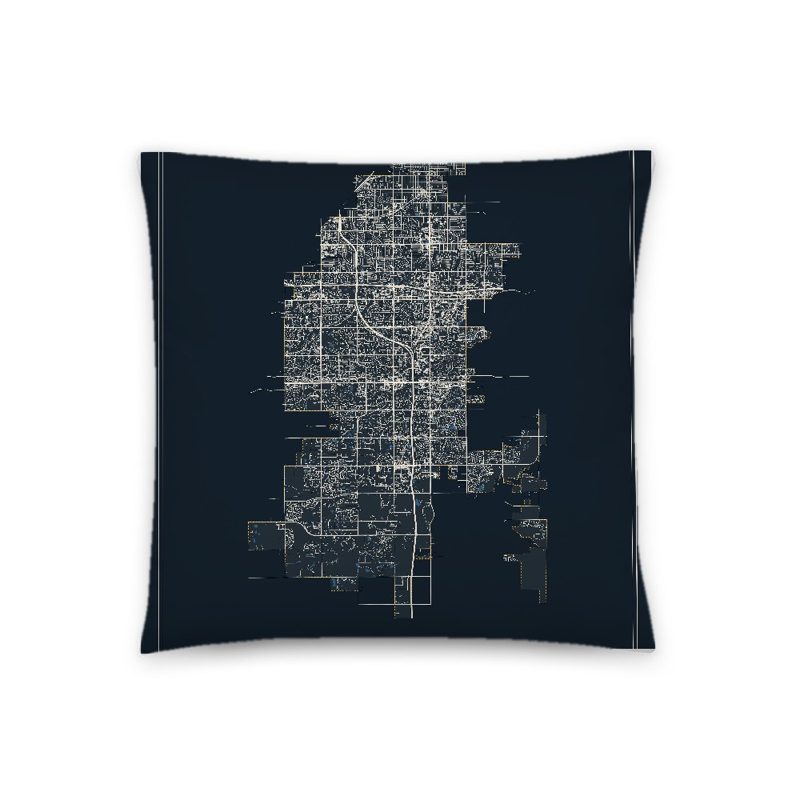
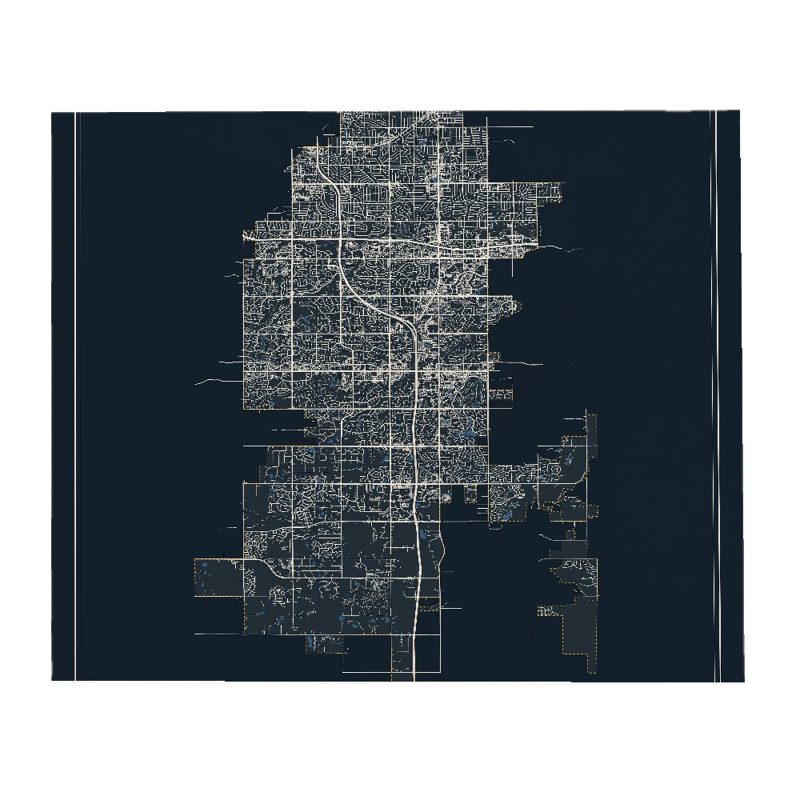
Population growth in the city can mainly be attributed to the traditional greenfield suburban development, appreciated on the city's annexation map. Overland Park's last annexation attempt, in 2008, garnered widespread news coverage after massive outcry from affected residents. Overland Park now has a combined land area of 75.37 square miles (195.21 km2) and spans nearly the full north–south length of Johnson County. Since the expansion of Overland Park, state legislators have amended laws governing annexations to require a majority vote of affected residents in all future annexations over 40 acres (0.16 km2).
On April 13, 2014, a pair of shootings committed by a lone gunman occurred at the local Jewish Community Center of Greater Kansas City and Village Shalom, a local Jewish retirement community. A total of three people were killed in both shootings. The suspected gunman was described as a man in his seventies. He was later identified as Neo-Nazi agitator and perennial candidate Frazier Glenn Miller, Jr. He was convicted of the attack and sentenced to death, dying in prison of natural causes on May 3, 2021.
Adapted (trimmed) from the Wikipedia article Overland Park, Kansas, revision 1383931640 by its contributors, licensed CC BY-SA 4.0.