Since 1827
A short history of Leavenworth
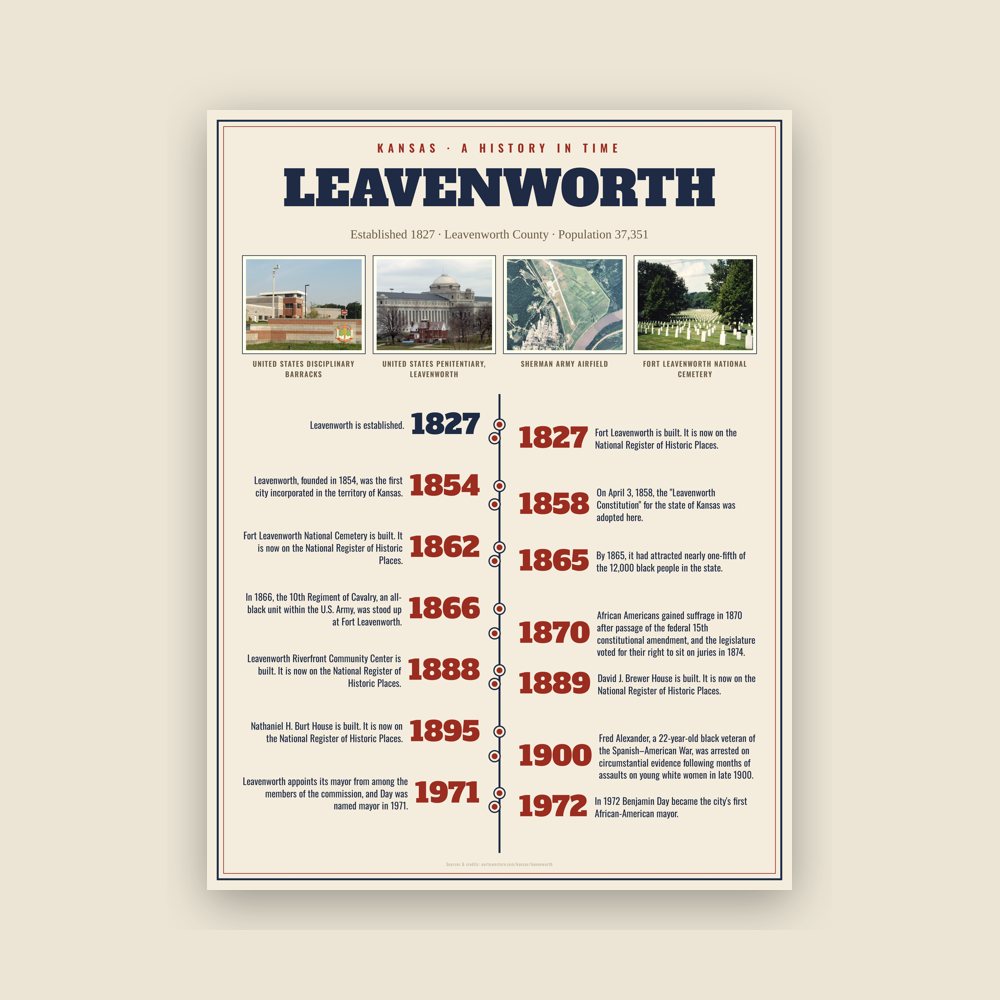
Leavenworth, founded in 1854, was the first city incorporated in the territory of Kansas. The city developed south of Fort Leavenworth, which was established as Cantonment Leavenworth in 1827 by Colonel Henry Leavenworth. Its location on the Missouri River attracted refugee African-American slaves in the antebellum years, who were seeking freedom from the slave state of Missouri across the river. Abolition supporters helped them find refuge. In the years before the Civil War, Leavenworth was a hotbed of anti-slavery and pro-slavery agitation, often leading to open physical confrontations on the street and in public meetings.
On April 3, 1858, the "Leavenworth Constitution" for the state of Kansas was adopted here. Although the federal government never approved this early version of the state constitution, it was considered one of the most radical of the four constitutions drafted for the new territory because it recognized freed black people as citizens.
Refugee African Americans continued to settle in the city during the war. By 1865, it had attracted nearly one-fifth of the 12,000 black people in the state. In 1866, the 10th Regiment of Cavalry, an all-black unit within the U.S. Army, was stood up at Fort Leavenworth. Charles Henry Langston was an African-American leader from Ohio who worked and lived in Leavenworth and northeastern Kansas in the Reconstruction era and afterward. In Kansas, Langston worked for black suffrage and the right of African Americans to sit on juries, testify in court, and have their children educated in common schools. African Americans gained suffrage in 1870 after passage of the federal 15th constitutional amendment, and the legislature voted for their right to sit on juries in 1874.
African Americans continued to migrate to the state of Kansas after the war. There were a total of 17,108 African Americans in Kansas in 1870, with 43,107 in 1880, and 52,003 by 1900, most of whom lived in urban areas.
Read the full history
20th century to present
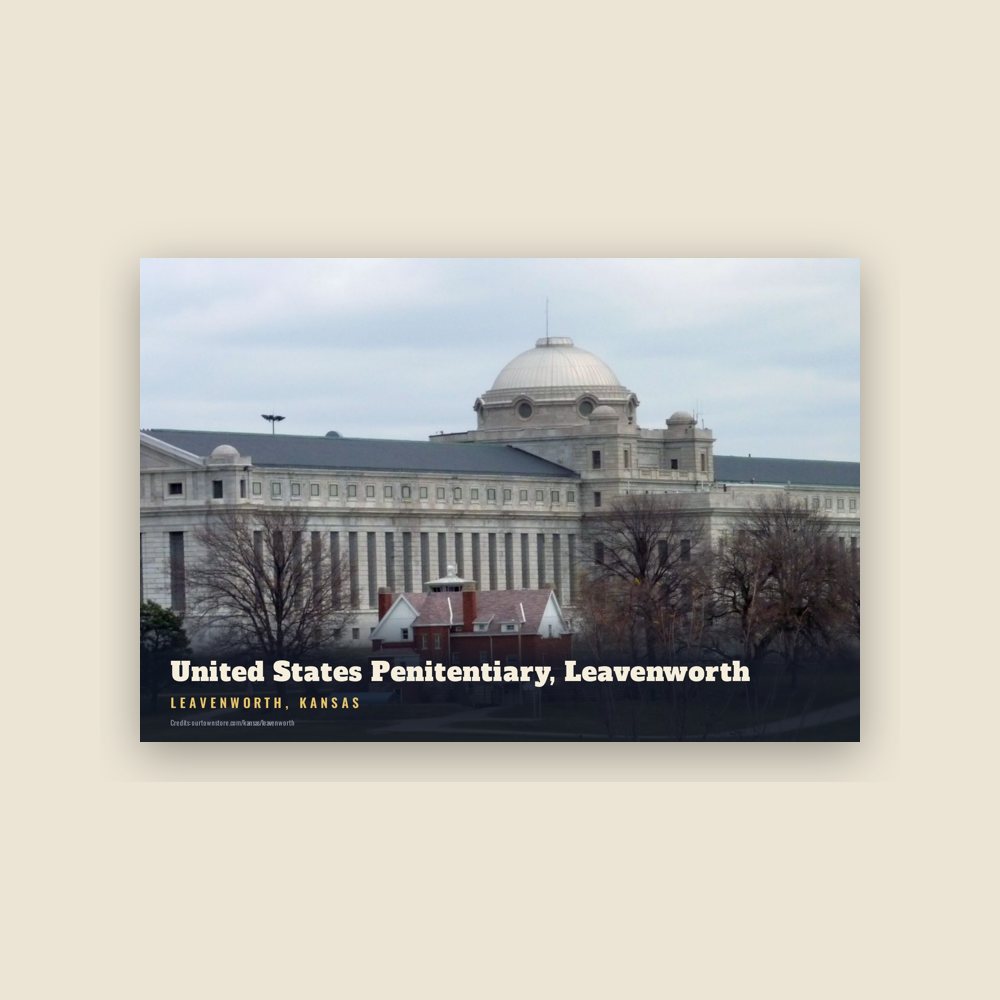
Fred Alexander, a 22-year-old black veteran of the Spanish–American War, was arrested on circumstantial evidence following months of assaults on young white women in late 1900. Witnesses had identified a "large white man" and a "slight black man" as having been seen in the vicinity of the attacks, Police moved him to the penitentiary during questioning, but a lynch mob was forming in Leavenworth. The sheriff needed to bring him to Leavenworth for arraignment at the county court. He refused the governor's offer of state militia, and was unable to protect the prisoner. On January 15, 1901, Alexander was taken from jail by a mob of 5,000 people and to the site of the murder of Pearl Forbes, where he was brutally lynched: burned alive. He protested his innocence to the end. An inquest concluded he had been killed by "persons unknown".
His family refused to claim his body for burial. His father Alfred Alexander, an exoduster, said "The people have mutilated him, now let them bury him." The city arranged burial. African Americans in the region were horrified at Alexander's murder by the mob and created the first state chapter of the Afro-American Council, then the only national organization working for civil rights. (The National Association for the Advancement of Colored People (NAACP) was founded a few years later, and absorbed most members of the AAC.)
In 1972 Benjamin Day became the city's first African-American mayor. Day had been elected to the City Commission one year earlier. Leavenworth appoints its mayor from among the members of the commission, and Day was named mayor in 1971. Day was a former educator and principal in Leavenworth.
Adapted (trimmed) from the Wikipedia article Leavenworth, Kansas, revision 1376601711 by its contributors, licensed CC BY-SA 4.0.