John Coppock and Thomas Tucker built a grist mill and saw mill on the Skunk River in 1859.
- CountyWashington County
- Population36 (2020 U.S. Census)
Coppock, Iowa gifts and souvenirs: 19 designs made from Coppock's own map, landmarks and history, from $16 to $95. Printed to order and shipped free in the USA.
| Popular | Price |
|---|---|
| Coppock Hometown Ornament | $23 |
| Coppock Vintage Travel Poster | from $40 |
| Coppock Varsity Crewneck | from $57 |
| Coppock Est. Tee | from $33 |
| Coppock Town Line Mug | from $26 |
| Coppock Market Tote | $37 |
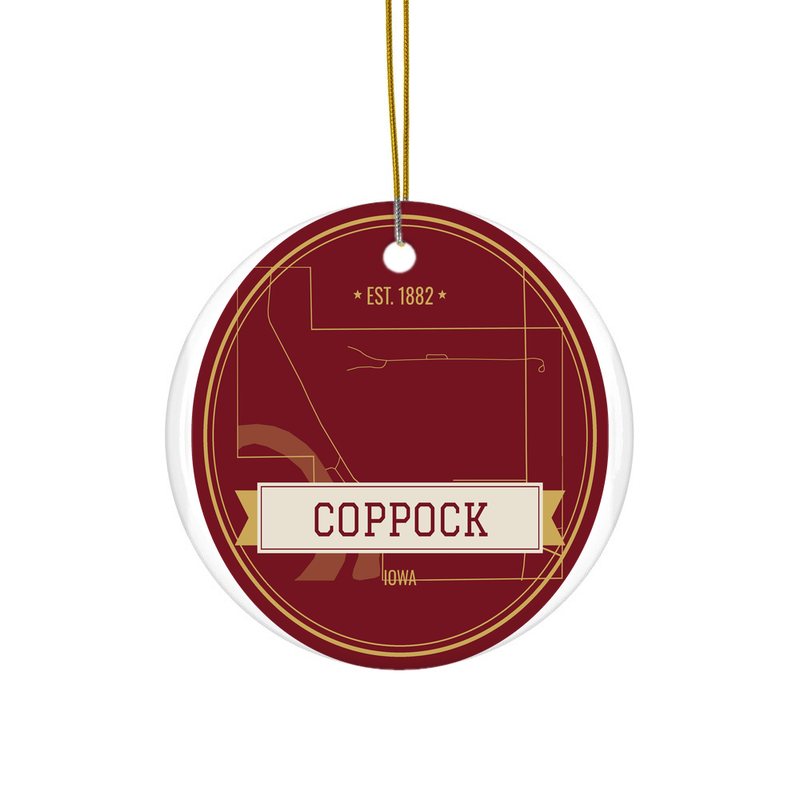
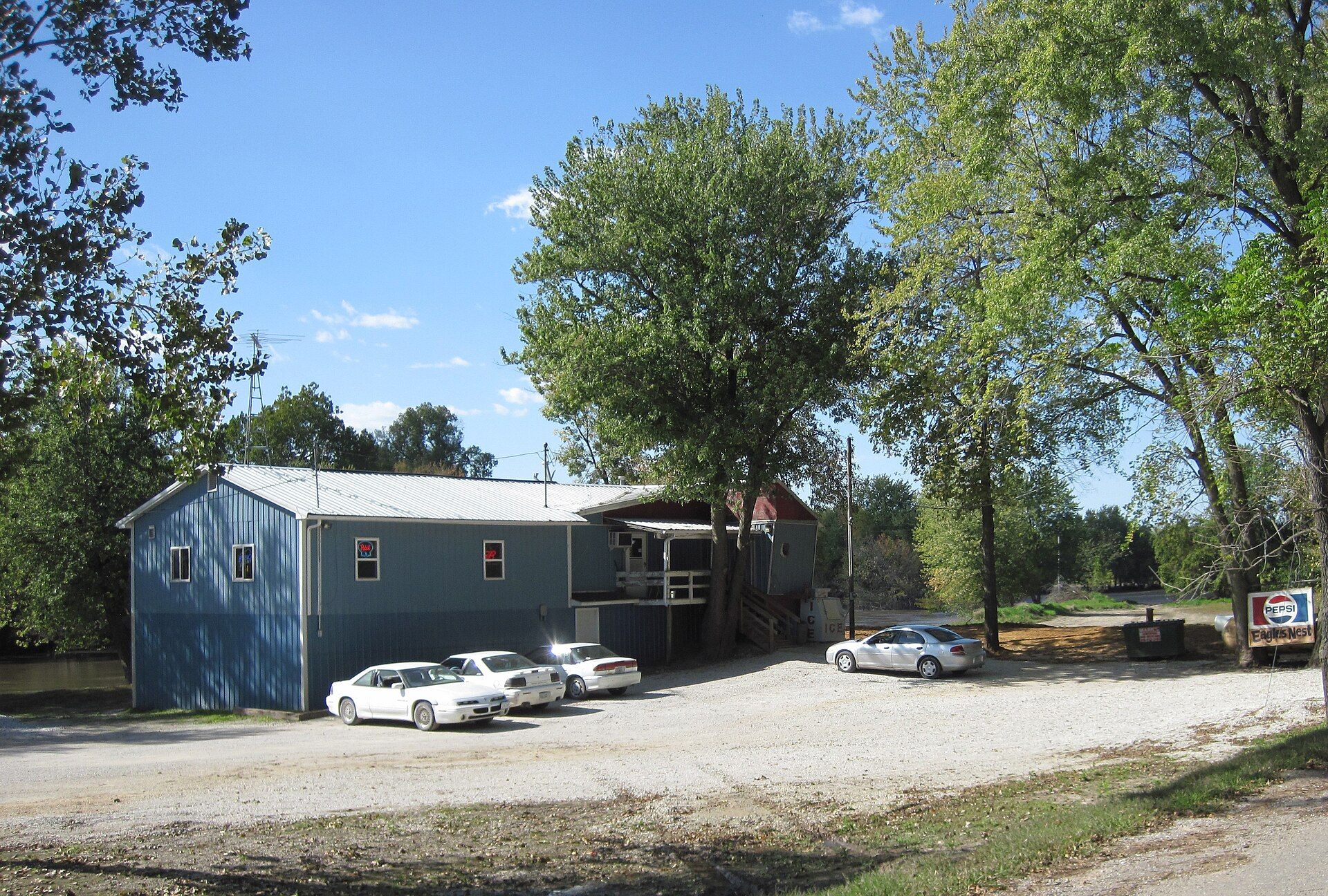
Ceramic keepsake, gold ribbon
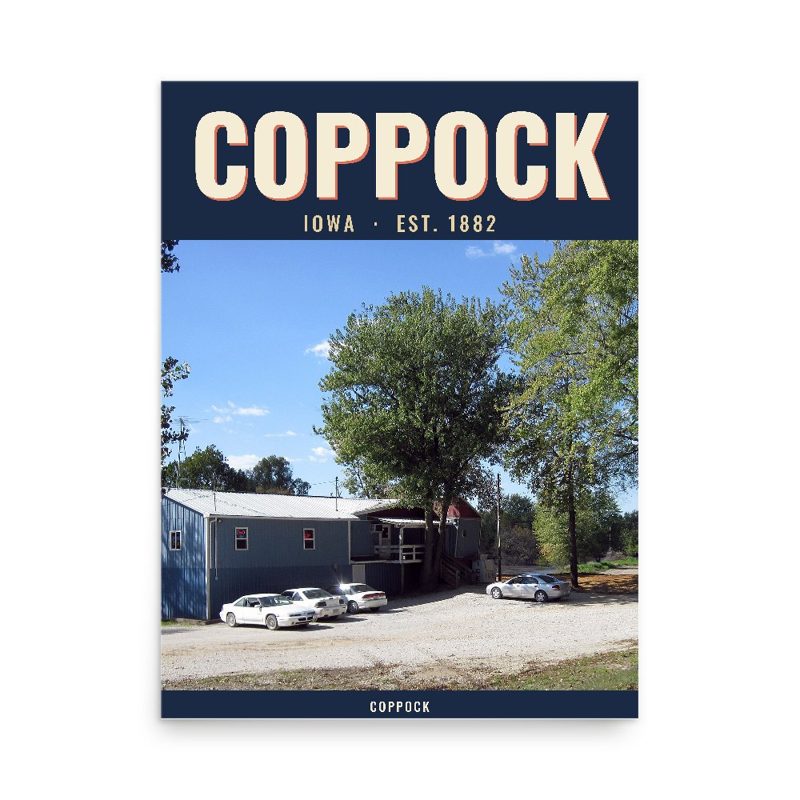
Its landmark photo in a classic travel-poster layout
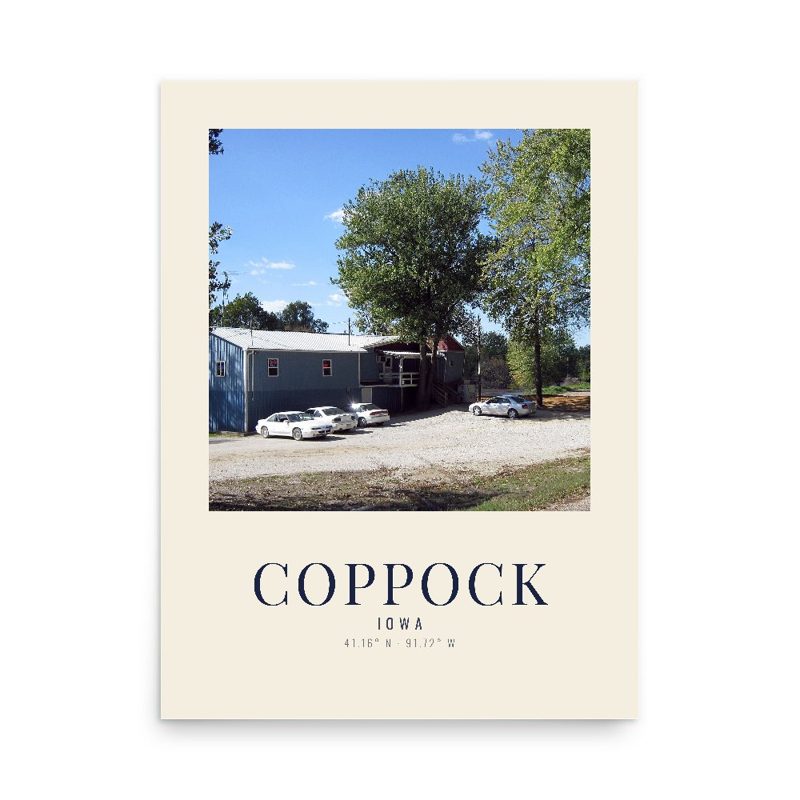
A local landmark photo as a gallery print
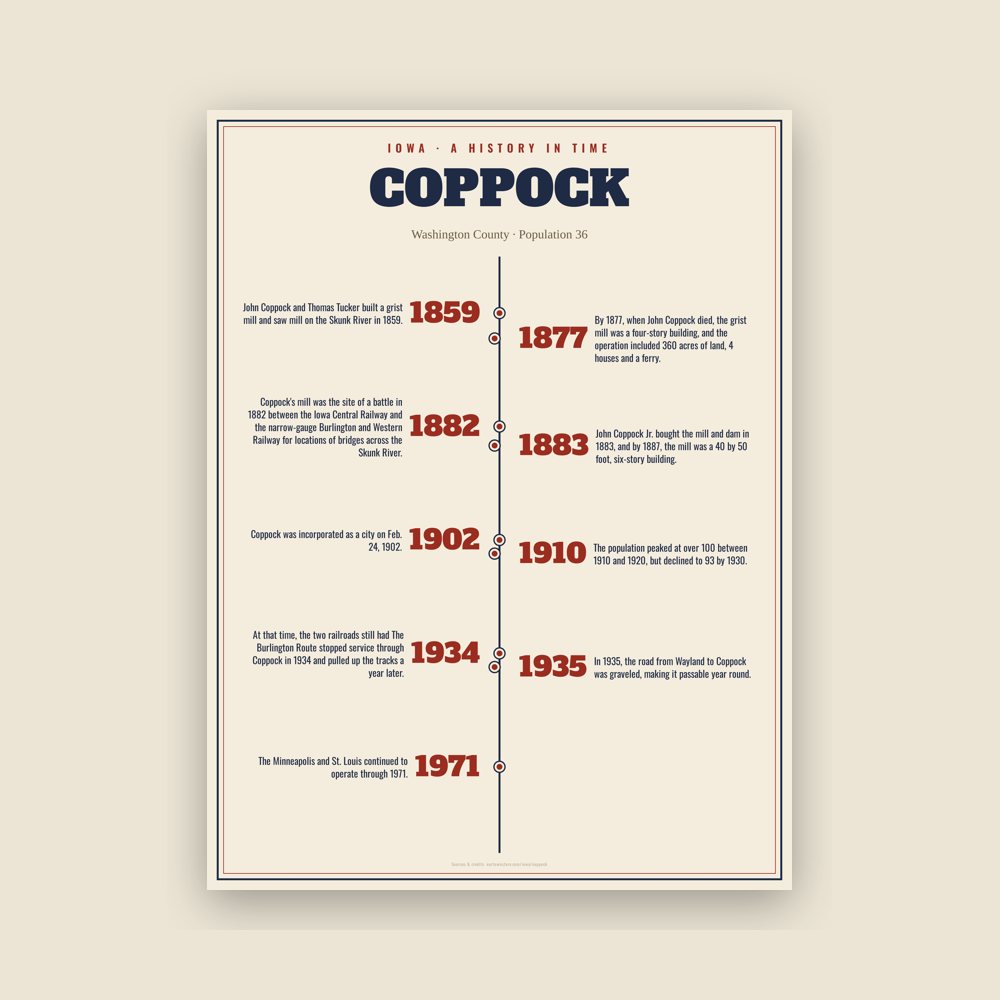
The town's story in dates, from its own records, for home or classroom
Heavy-blend fleece, street map printed on the back
Soft Bella+Canvas jersey
Kids' Bella+Canvas jersey, youth sizes

Bella+Canvas toddler jersey
Bella+Canvas baby bodysuit
Glossy ceramic, dishwasher safe
Weatherproof, for the front walk
24″×16″, printed coir-look fibers, rubber back
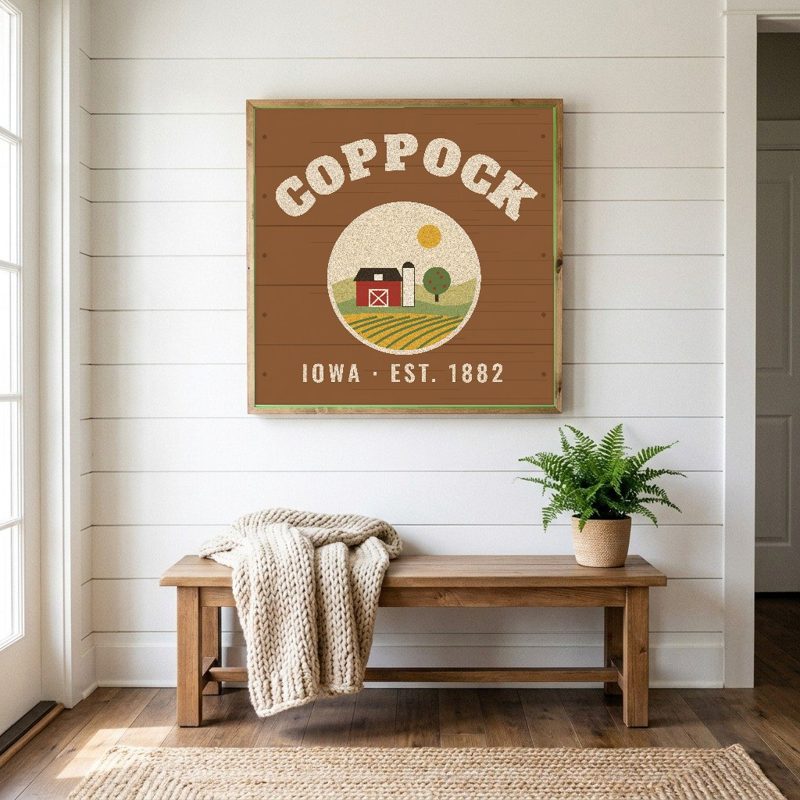
12″×12″ printed wood, ready to hang
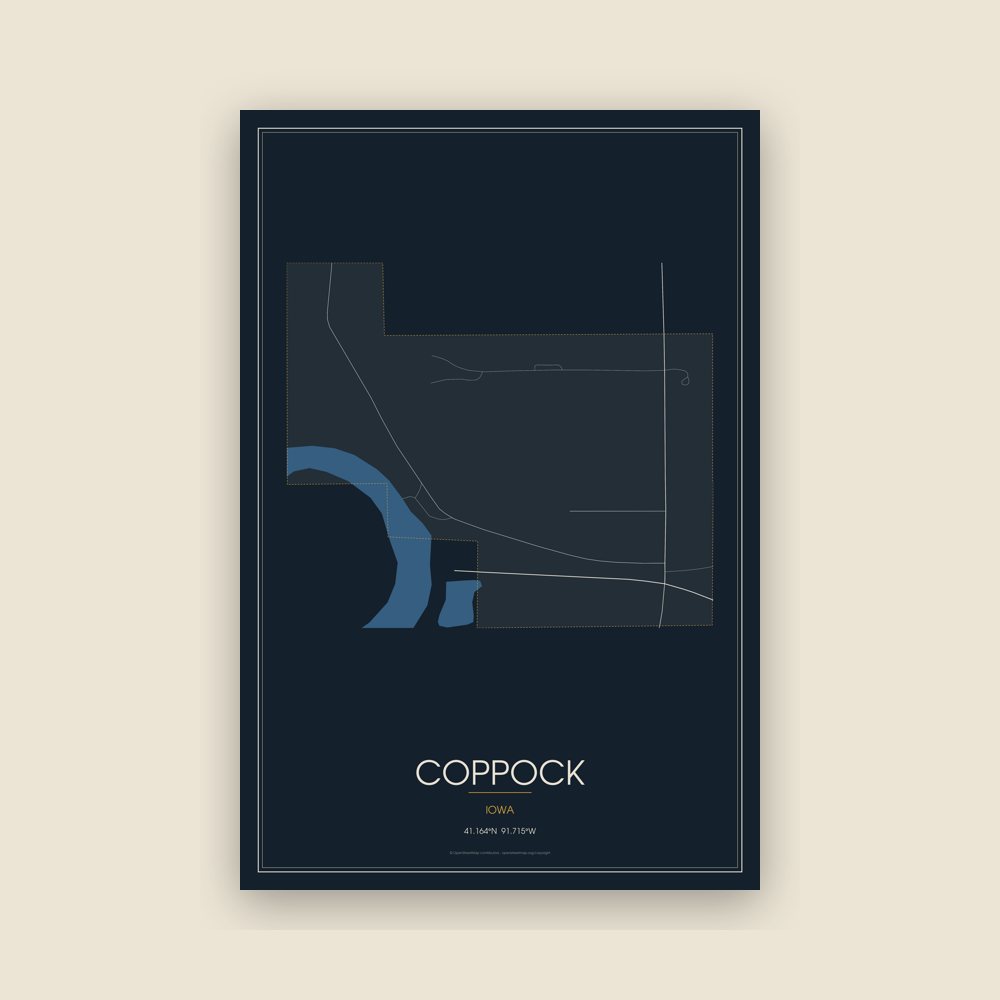
Soft-touch, zip cover
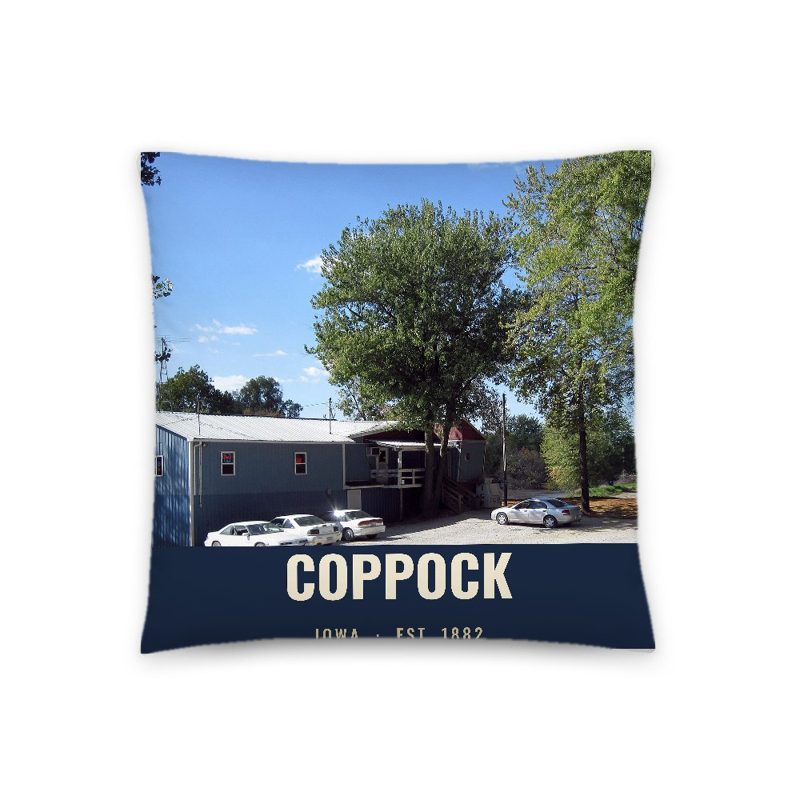
A local landmark photo with the town name, 18″×18″
Sturdy all-over-print tote
Glossy top, cork back
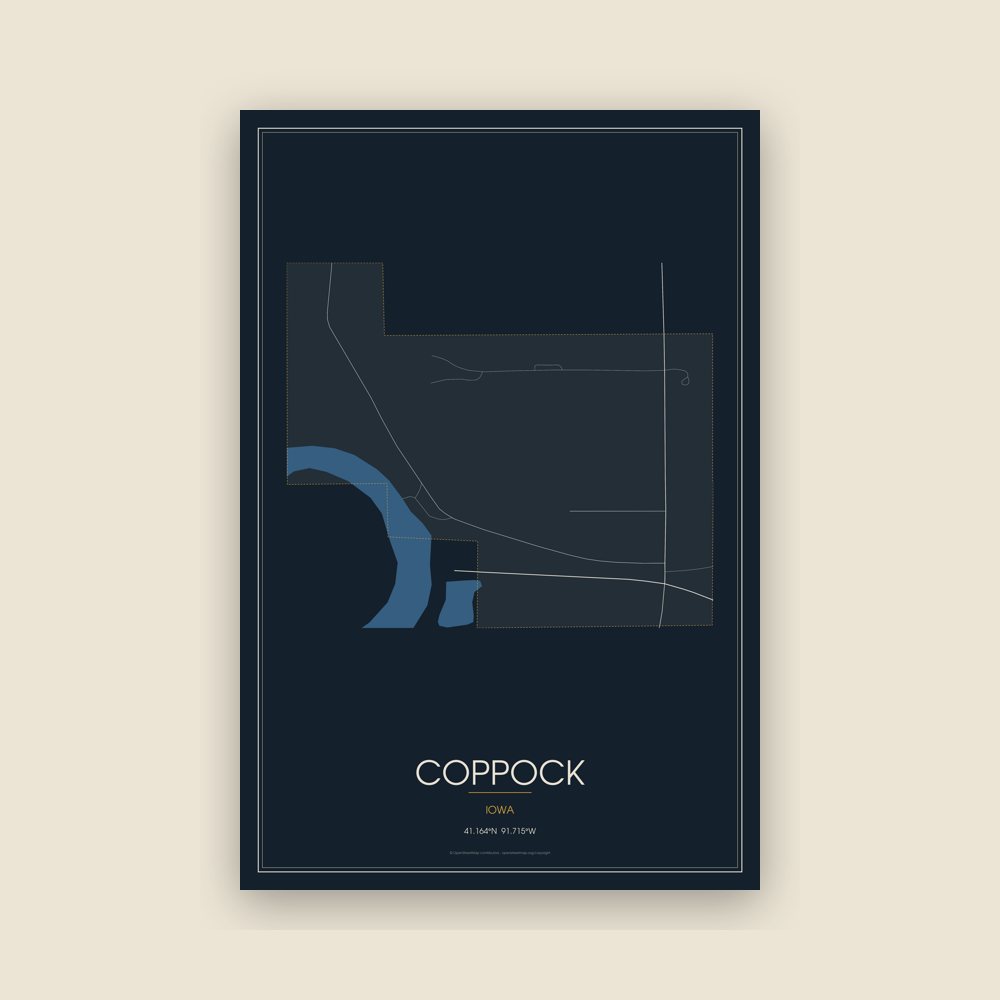
Soft fleece, 50″×60″
20 oz, double-wall stainless
John Coppock and Thomas Tucker built a grist mill and saw mill on the Skunk River in 1859.
John Coppock and Thomas Tucker built a grist mill and saw mill on the Skunk River in 1859. The grist mill was on the north bank of the river about 1/8 mile (1/4 km) east of what is now Locust St. John's son Thomas Coppock built a general store nearby, and the Coppock businesses became a social center for the surrounding area. By 1877, when John Coppock died, the grist mill was a four-story building, and the operation included 360 acres of land, 4 houses and a ferry.
Coppock's mill was the site of a battle in 1882 between the Iowa Central Railway and the narrow-gauge Burlington and Western Railway for locations of bridges across the Skunk River. The Burlington and Western was later widened and taken over by the Chicago, Burlington and Quincy and the Iowa Central was taken over by the Minneapolis and St. Louis.
With the coming of the railroads there was major development around the mill. The town of Coppock was platted in 1882, with 4 city blocks. The two railroads paralleled each other in a broad curve south of the town, each with its own depot, passing siding, stock yard and, water tank. The Burlington and Western also had a coaling station. John Coppock Jr. bought the mill and dam in 1883, and by 1887, the mill was a 40 by 50 foot, six-story building. Ice harvesting became an important winter business in this era, the Burlington and Western built a siding for loading ice. The Burlington and Western also advertised the availability of gravel and unlimited quantities of crushed-stone from Coppock.
By the end of the century, Trite's Park and Brown's Park competed for the tourist business, offering swimming, boating, picnic grounds and facilities for group activities. There was even a small steamboat available for charter trips on the river and a "tobbogan slide" into the water, all within walking distance of the railroad stations. Excursions were coordinated with the Burlington and Western Railway, which allowed a passenger car to be chartered from Burlington, set out on a siding at Coppock for the day, and then picked up by the evening train for the return trip to Burlington. These parks were destroyed by a major flood in 1903.
Coppock was incorporated as a city on Feb. 24, 1902. By that time, the town had a hotel, multiple general stores and a blacksmith shop in addition to the mill. The population peaked at over 100 between 1910 and 1920, but declined to 93 by 1930. The former Coppock mill was moved to Wayland in 1917. At that time, the two railroads still had The Burlington Route stopped service through Coppock in 1934 and pulled up the tracks a year later. In 1935, the road from Wayland to Coppock was graveled, making it passable year round. The Minneapolis and St. Louis continued to operate through 1971.
Adapted (trimmed) from the Wikipedia article Coppock, Iowa, revision 1374273753 by its contributors, licensed CC BY-SA 4.0.
We share a part of every Coppock sale with local partners, and we'd love to print from your collection. Old photographs, maps and postcards make the best keepsakes.
Partner with usA favorite landmark, your street, a school or team, an anniversary gift, a different product. Tell us and we'll get back to you by email.
Coppock's population was 36 in the 2020 U.S. Census, down from 47 in 2010.