Since 1874
A short history of St. Charles
Early history
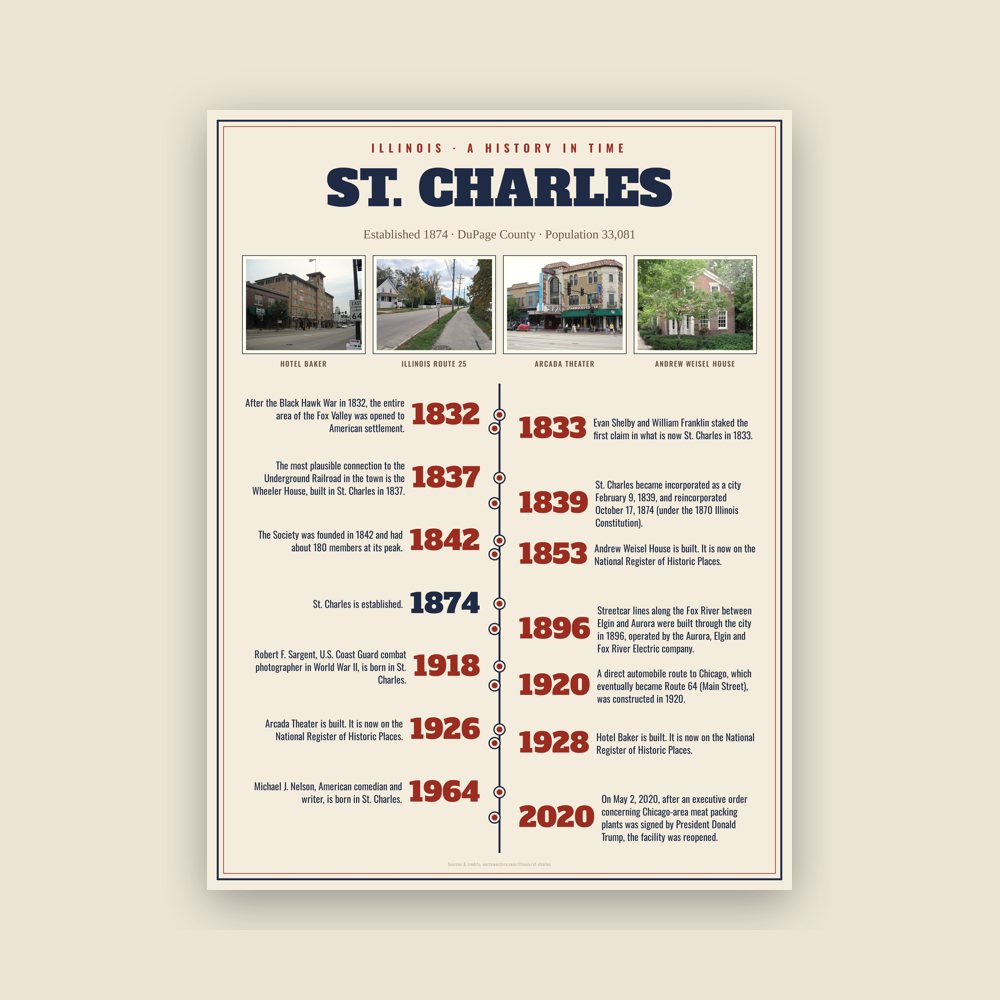
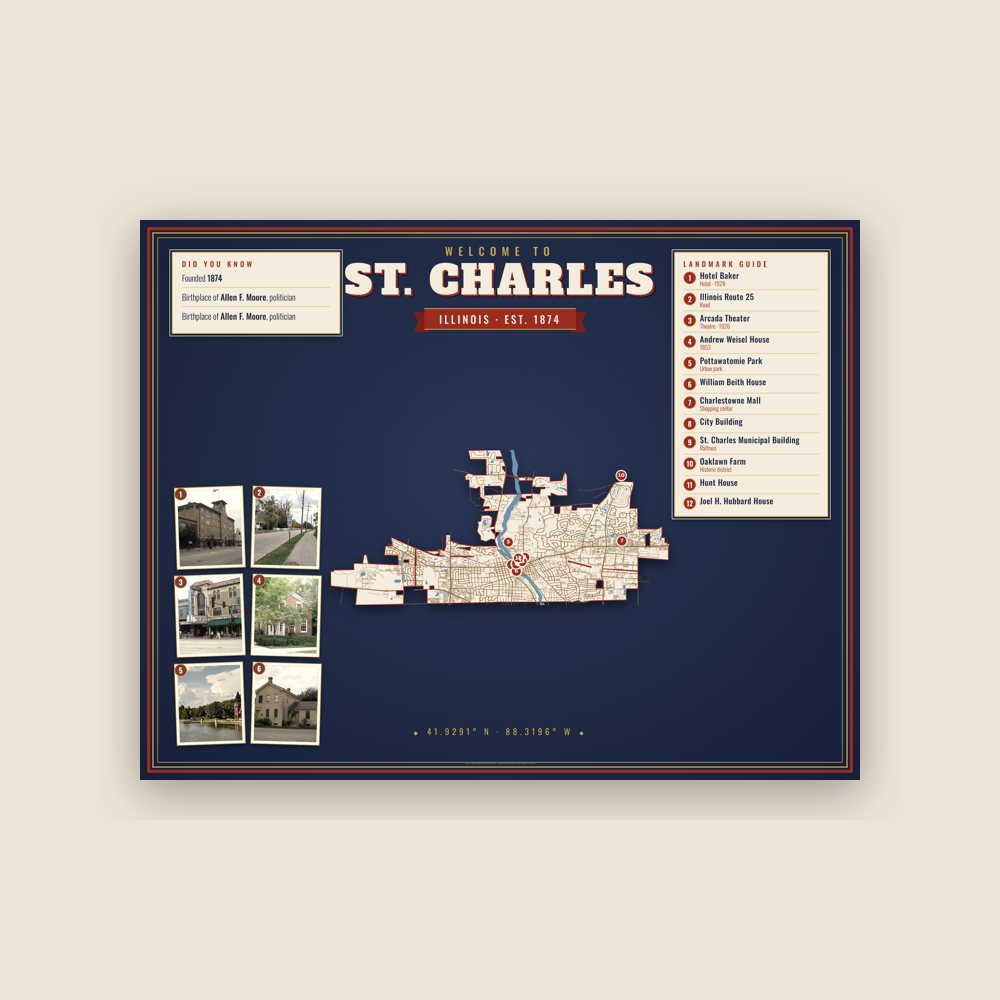
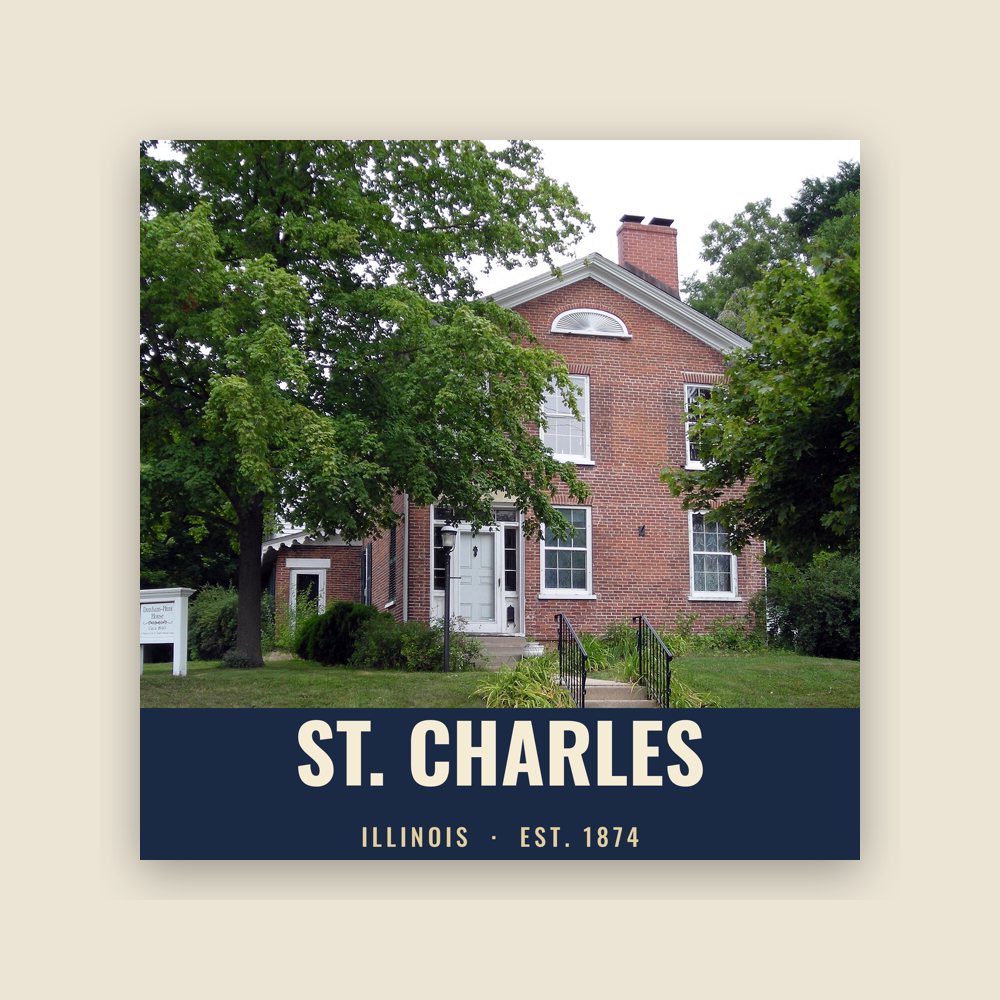
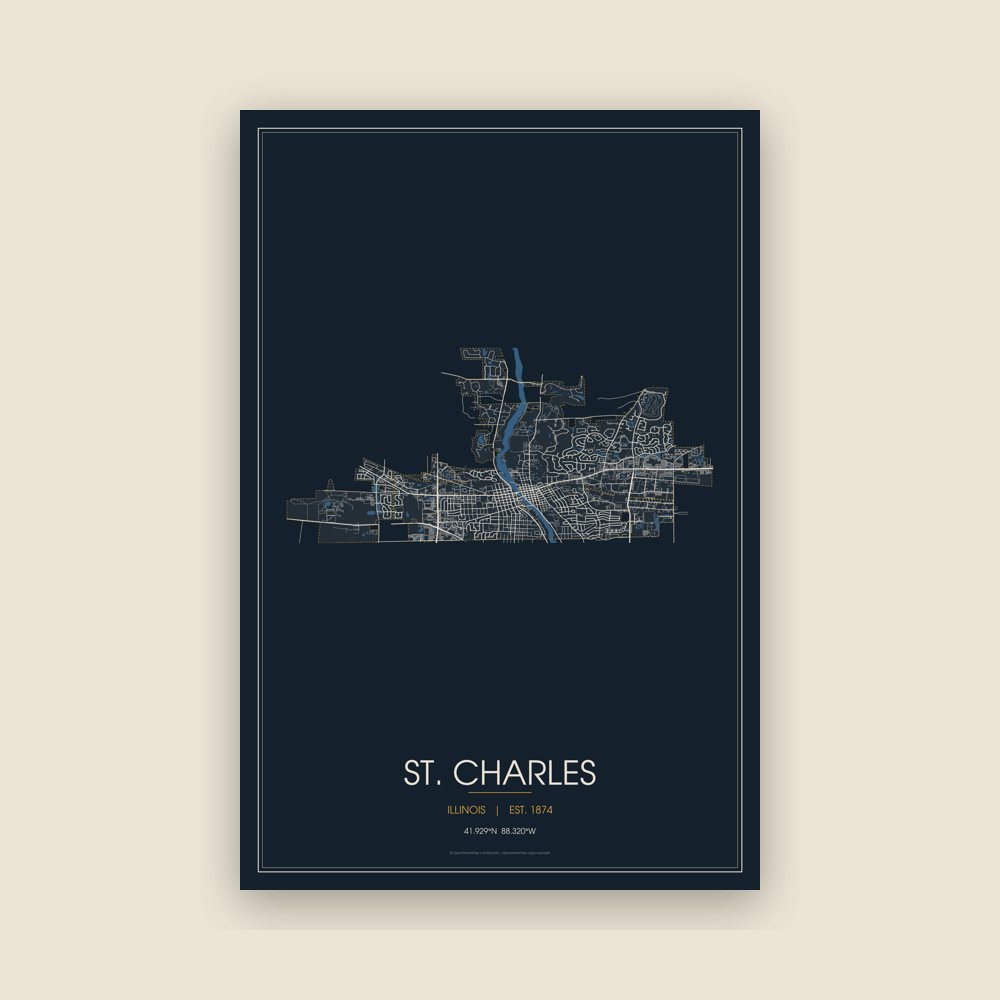
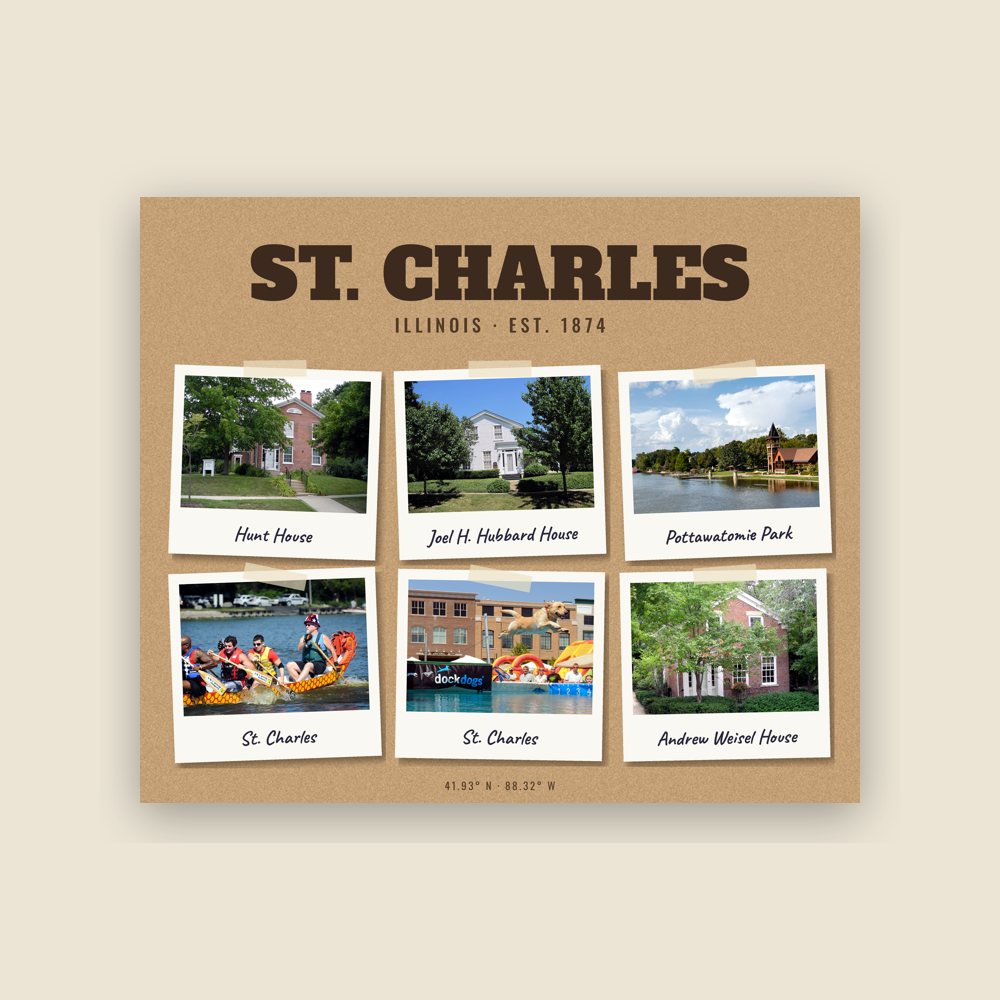
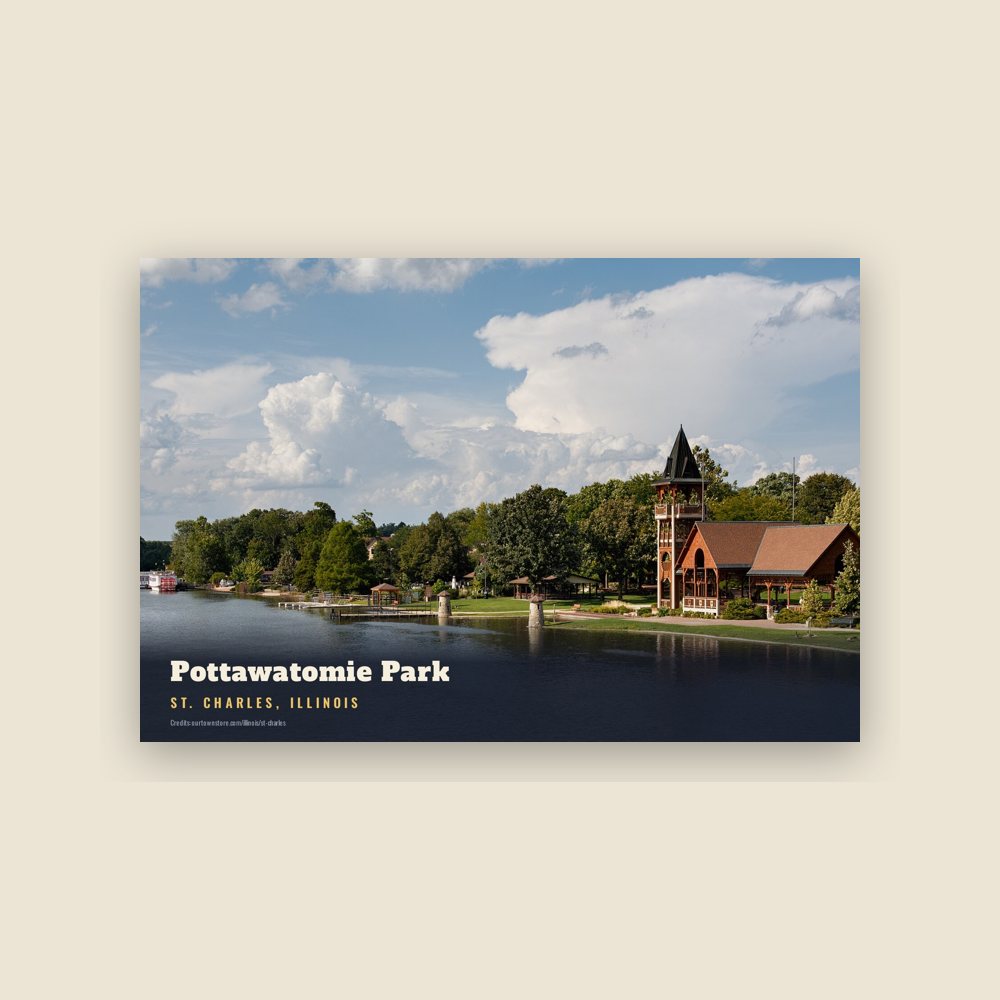
St. Charles was the location of the Native American community for the chief of the Pottawatomie that inhabited the area. A city park overlooking the river was dedicated to the Native Americans. After the Black Hawk War in 1832, the entire area of the Fox Valley was opened to American settlement. Evan Shelby and William Franklin staked the first claim in what is now St. Charles in 1833. They came back in 1834 with their families from Indiana and were joined by over a dozen other families later that year. The township was initially known as Charleston, but this name was already taken by the downstate city of Charleston, Illinois, so the name of St. Charles (suggested by S. S. Jones, a lawyer) was adopted in 1839. St. Charles became incorporated as a city February 9, 1839, and reincorporated October 17, 1874 (under the 1870 Illinois Constitution).
Read the full history
Underground Railroad
Widespread claims of slavery-era Underground Railroad stations operating in St. Charles homes, complete with tunnels and false doorways, have not been historically substantiated. Even so, an active abolitionist group was operating in St. Charles around this time, called the Kane County Anti-Slavery Society. The Society was founded in 1842 and had about 180 members at its peak. The most plausible connection to the Underground Railroad in the town is the Wheeler House, built in St. Charles in 1837.
Transportation history
St. Charles was very isolated early in its existence. The village was located three days away from Chicago, and the Fox River was not navigable for large boats. By the 1850s, St. Charles had begun construction of a plank road to Sycamore but turned down an offer by the Galena and Chicago Union Railroad to construct a line through the town, which was eventually built in nearby Elgin. Lack of regional connections in the early years kept the town relatively small. St. Charles was without a railroad until 1871 when a branch line from Geneva was constructed, and was without a direct connection to Chicago until the 1880s with the coming of the Chicago Great Western Railway.
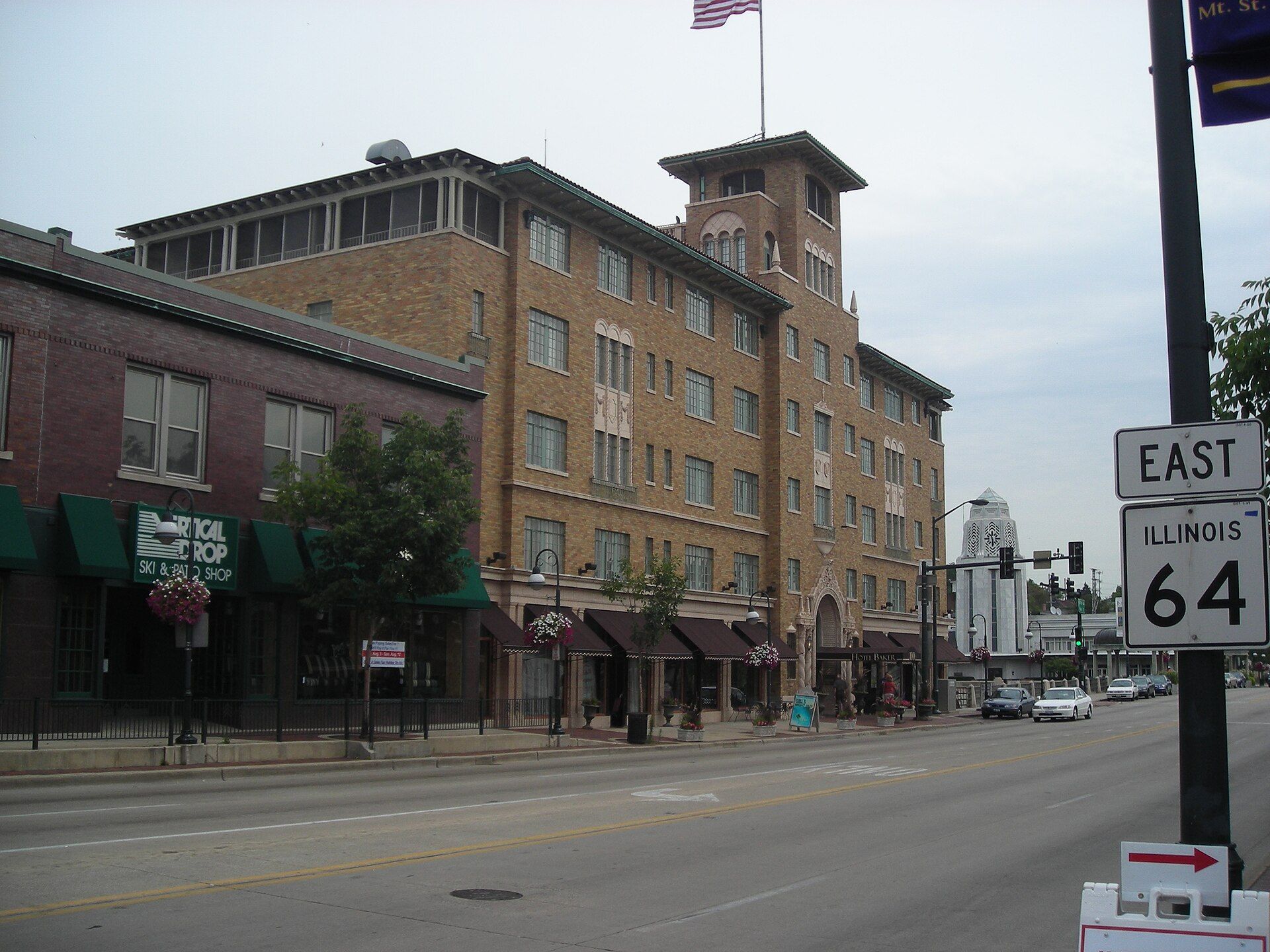
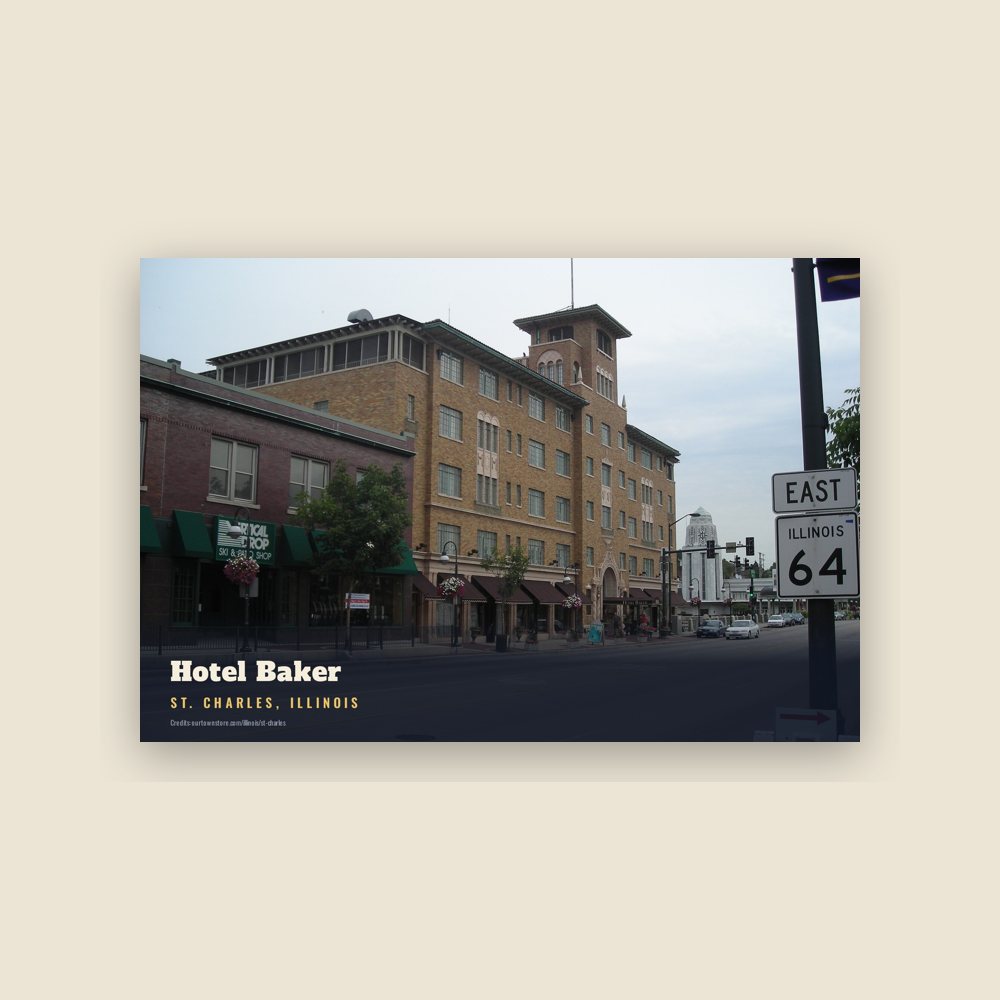
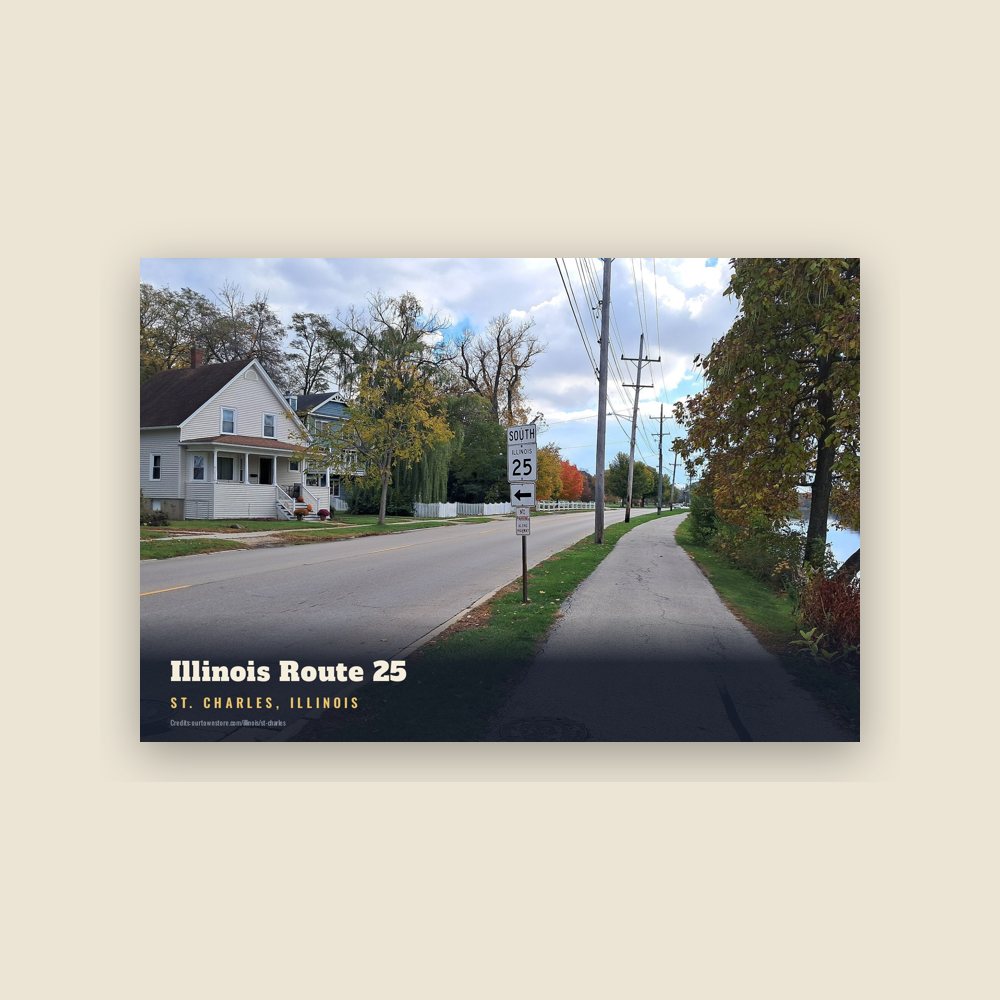
Streetcar lines along the Fox River between Elgin and Aurora were built through the city in 1896, operated by the Aurora, Elgin and Fox River Electric company. A direct automobile route to Chicago, which eventually became Route 64 (Main Street), was constructed in 1920. Four Illinois state routes including Routes 64, 38 (Lincoln Highway), 25 (5th Avenue), and 31 (2nd Street) now run through the city. Two major Kane County roads also cut through the city; Randall Road on the west side and Kirk Road on the east side.
COVID-19 pandemic
On April 25, 2020 (2020-04-25), the Kane County Health Department ordered Smithfield Foods to close its meat processing plant because of the COVID-19 pandemic, a local instance of the pandemic's effects on the meat industry in the United States. On May 2, 2020, after an executive order concerning Chicago-area meat packing plants was signed by President Donald Trump, the facility was reopened.
Adapted (trimmed) from the Wikipedia article St. Charles, Illinois, revision 1379135149 by its contributors, licensed CC BY-SA 4.0.