Since 1946
A short history of New Lenox
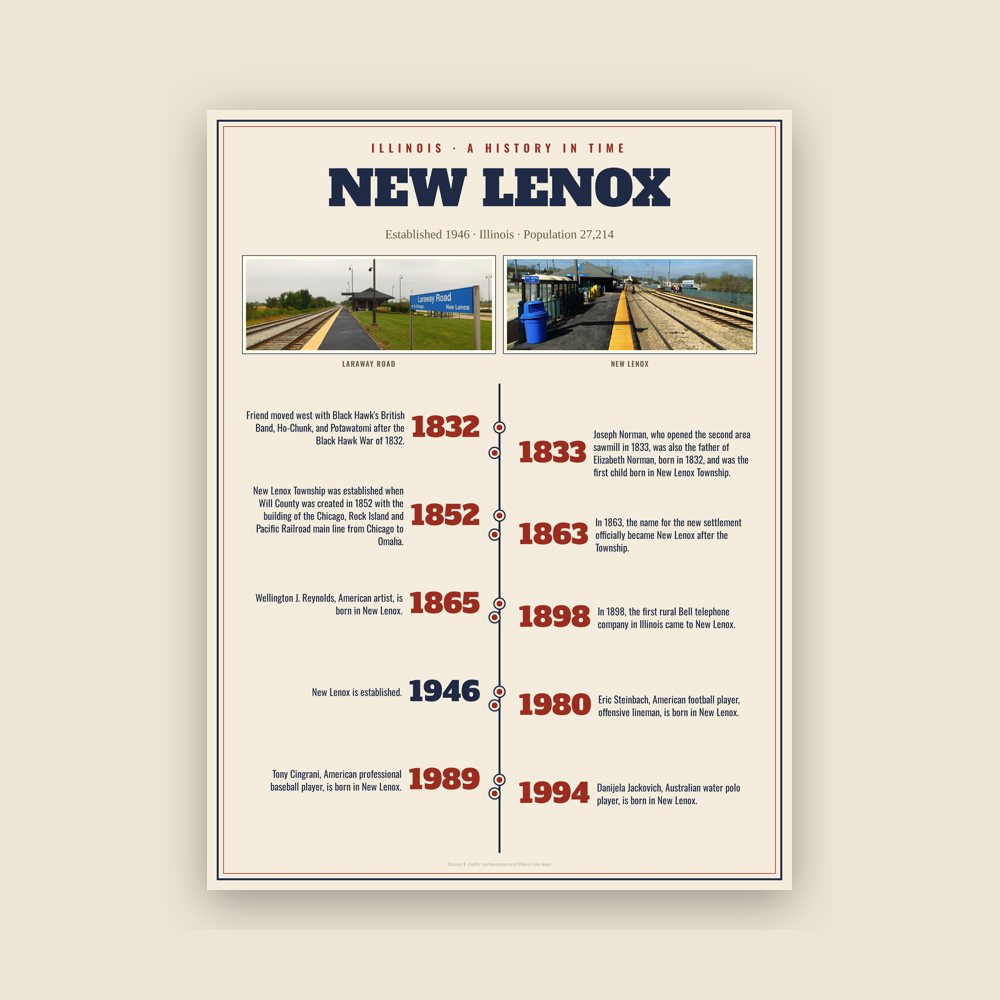
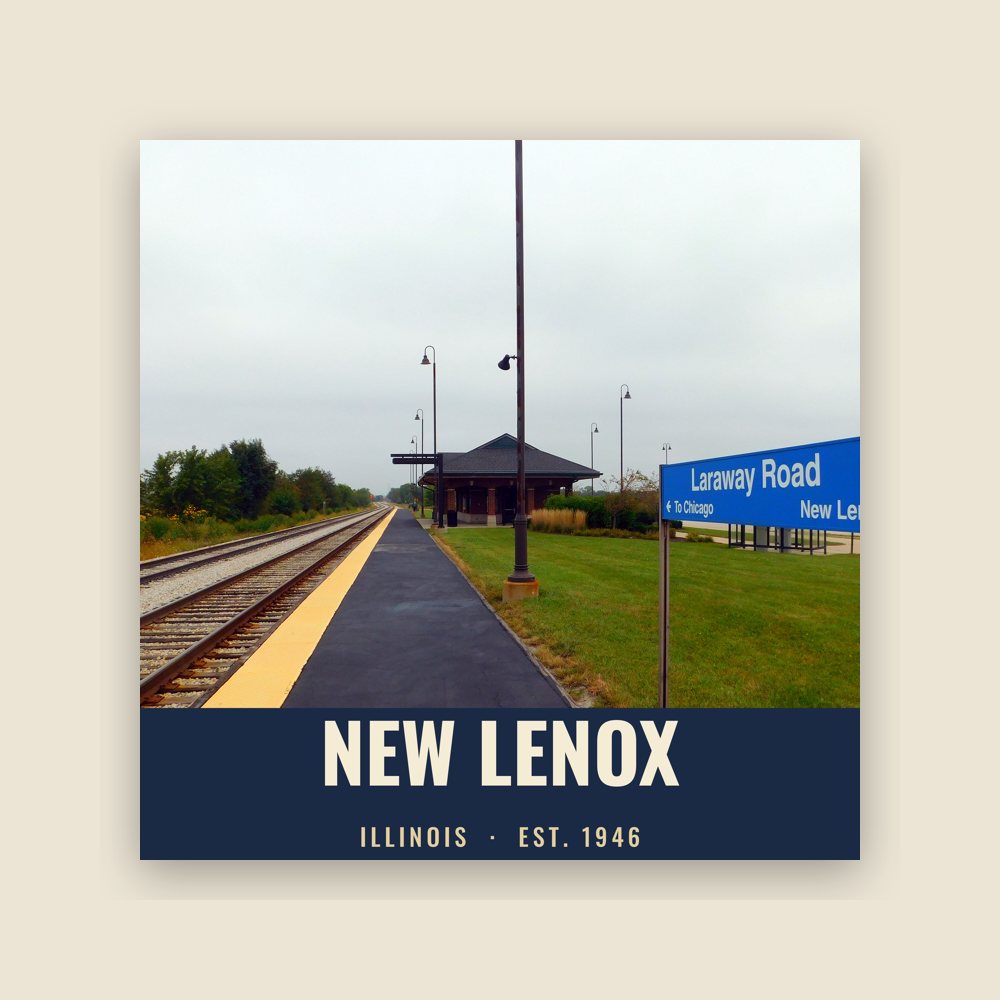
The first European settlement in the modern-day village of New Lenox was settled near the intersection of US-30 and Gougar Road as Van Horne Point. New Lenox Township was established when Will County was created in 1852 with the building of the Chicago, Rock Island and Pacific Railroad main line from Chicago to Omaha. Originally named Tracey in honor of the general superintendent of the Rock Island Railroad, the town was later renamed by New Lenox Township's first Rock Island Line supervisor, John van Duser, in honor of Lenox, New York, Van Duser's hometown, at the request of Tracey. The Village of New Lenox was incorporated on October 4, 1946 under the guidance of F. Carlton Cole, Walter Baers, and 44 other community leaders.
In 1829, fur traders Aaron Friend and Joseph Brown established an outpost along the north side of Hickory Creek (near today’s Gougar Road), which was one of the earliest settlements in Will County. Friend moved west with Black Hawk's British Band, Ho-Chunk, and Potawatomi after the Black Hawk War of 1832. In 1830, William Rice Sr. and William Rice Jr. arrived and began farming and building a log cabin, which they sold along with their land to John Gougar on behalf of his father William Gougar. In 1832, “Uncle Billy” Gougar established a post office at his farm where area residents would pick up their mail. The Gougar farm became the center of activity in the area.
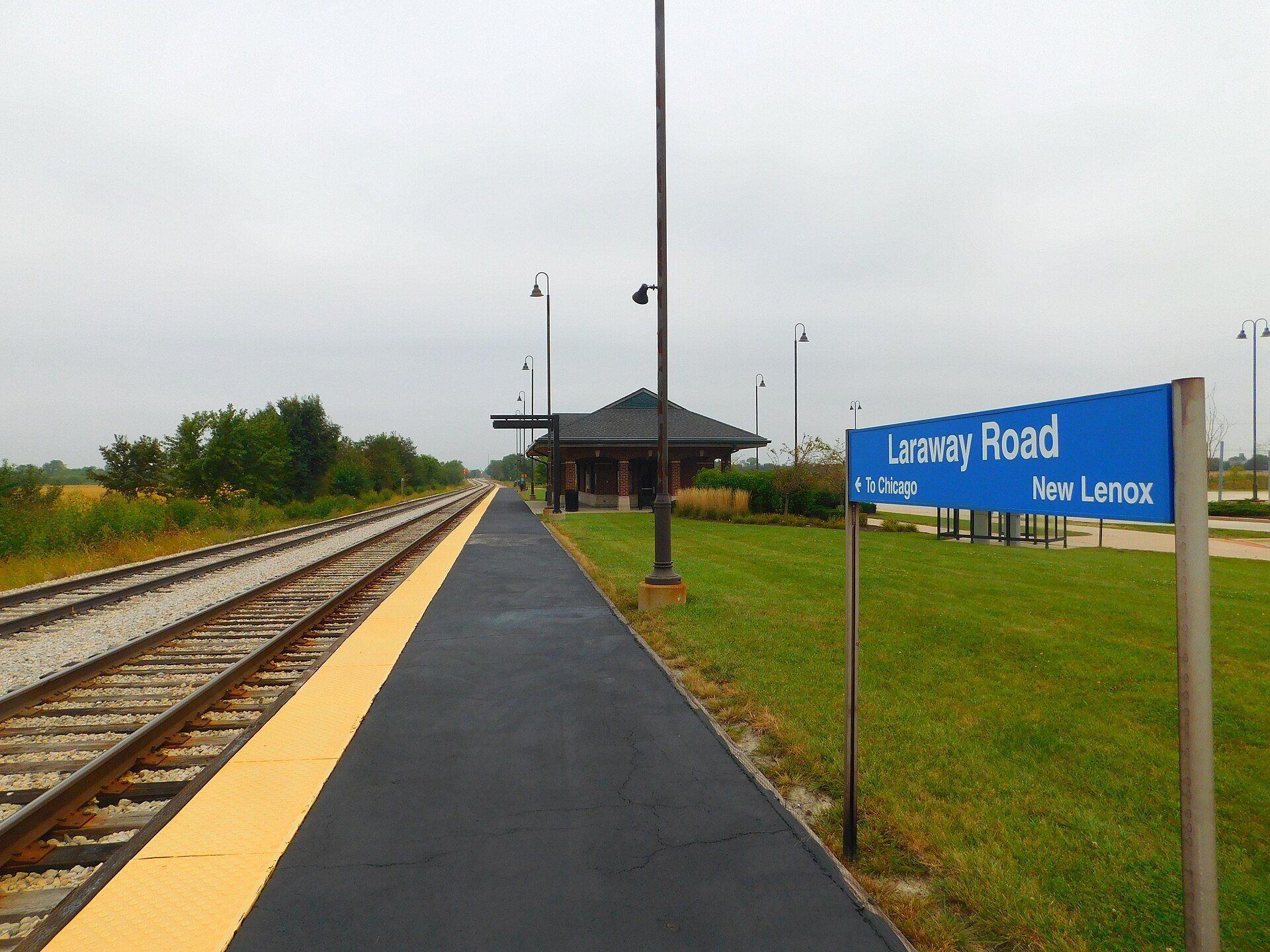
Joseph Norman, who opened the second area sawmill in 1833, was also the father of Elizabeth Norman, born in 1832, and was the first child born in New Lenox Township. In 1852, the coming of the Rock Island Railroad changed the settlement of the Township. Before the railroad, farmers hauled their goods to the I & M Canal or by wagon all the way to larger cities like Chicago. The railroad brought distant markets to the farmer, along with more visitors and the mail. Later three additional railroads: the Wabash, the Michigan Central, and the Elgin, Joliet and Eastern all crossed New Lenox Township. Gradually the area east of Gougar Crossing along the railroad tracks became the new center of town and so the Village of New Lenox began.
The village was platted in 1858. The name Tracy was the name shown on the original plat to honor the general superintendent of the Rock Island Railroad. Tracy requested that another name be found. The first supervisor for New Lenox Township J. Van Duser had named the Township New Lenox from the town of Lenox, New York, which was Van Duser's home town. In 1863, the name for the new settlement officially became New Lenox after the Township. The coming of the Rock Island Railroad in 1852 changed the settlement of the Township considerably. Previously farmers could do "cash crop" farming by hauling the products to the I & M Canal or by wagon all the way to larger cities like Chicago. The presence of the railroad brought distant markets to the farmer. Eventually New Lenox Township was served by three additional railroads: the Wabash, the Michigan Central, and the Elgin, Joliet and Eastern.
The most prominent citizen of New Lenox at the turn of the century was H. N. Higinbotham. Although Mr. Higinbotham's home was located in New Lenox, he became famous in Chicago where he was a partner in Marshall Field's, a banker, and the organizing and supervising force behind the World's Columbian Exposition of 1893. He was a colleague and friend of most of Chicago's leaders, including George Pullman, Marshall Field, and the Palmers. Mr. Higinbotham once owned the farms that later became Pilcher Park. He owned and operated one of the largest carnation and rose greenhouse businesses in this area. In 1898, the first rural Bell telephone company in Illinois came to New Lenox. By 1905, there were 132 subscribers. The switchboard operators worked in homes so that 24 hour service could be given to customers to handle emergencies. The Deadmore home at 221 Haven Avenue was the first location for the switchboard.
Adapted (trimmed) from the Wikipedia article New Lenox, Illinois, revision 1385598790 by its contributors, licensed CC BY-SA 4.0.