Spring Valley was founded in 1884 in the heart of the coal fields of Northern Illinois for the express purpose of mining of coal. Spring Valley is the birthplace of Billy Papke, boxer.
- CountyBureau County
- Population5,582 (2020 U.S. Census)
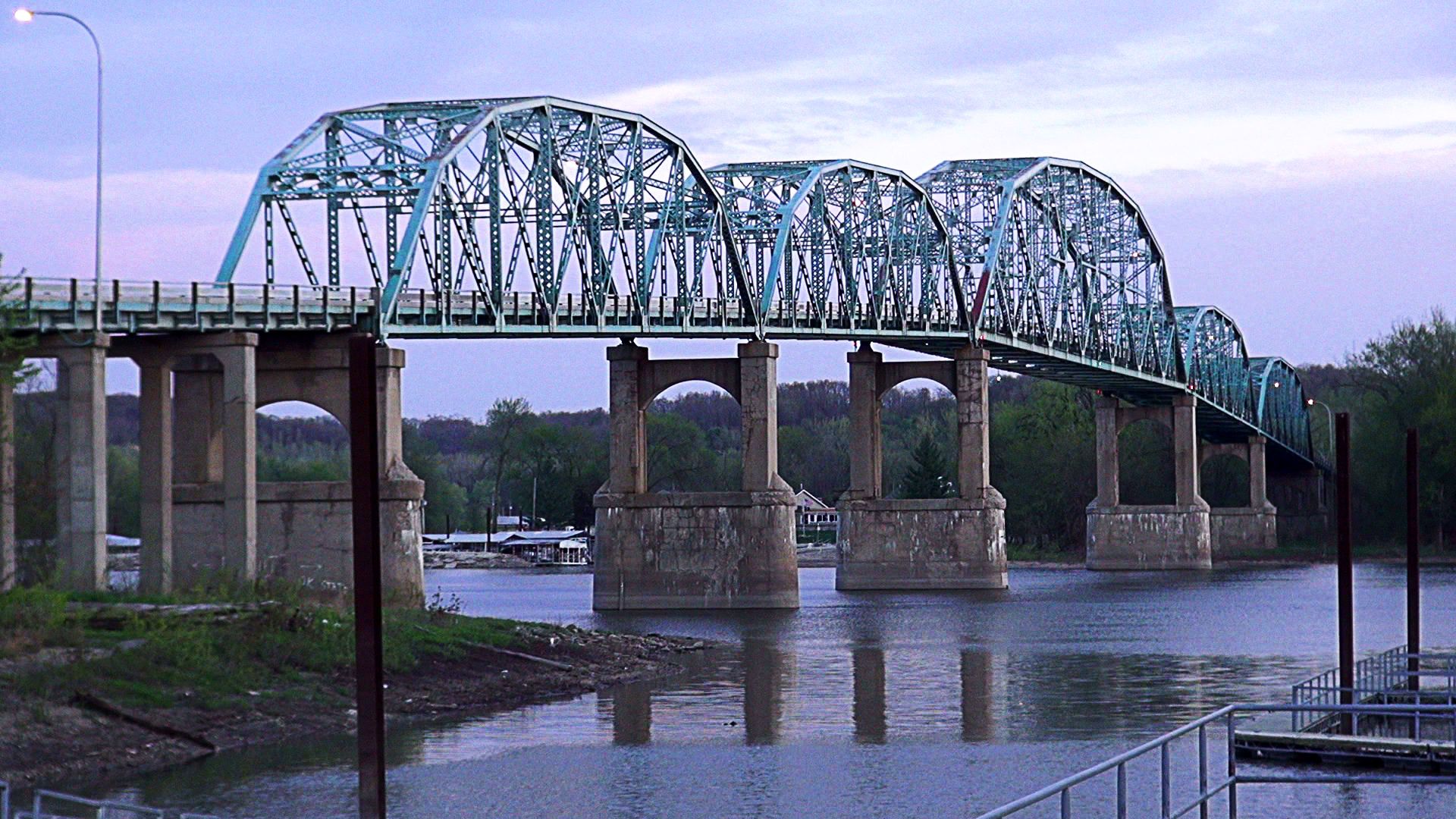
Spring Valley, Illinois gifts and souvenirs: 21 designs made from Spring Valley's own map, landmarks and history, from $16 to $95. Printed to order and shipped free in the USA.
| Popular | Price |
|---|---|
| Spring Valley Hometown Ornament | $23 |
| Spring Valley Vintage Travel Poster | from $40 |
| Spring Valley Varsity Crewneck | from $57 |
| Spring Valley Est. Tee | from $33 |
| Spring Valley Town Line Mug | from $26 |
| Spring Valley Market Tote | $37 |
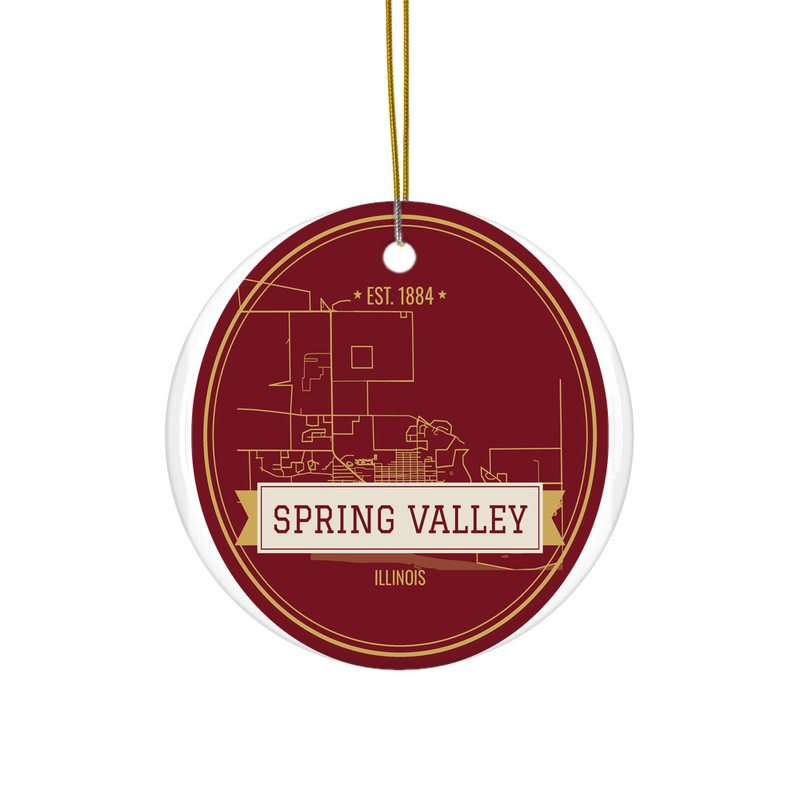
Ceramic keepsake, gold ribbon
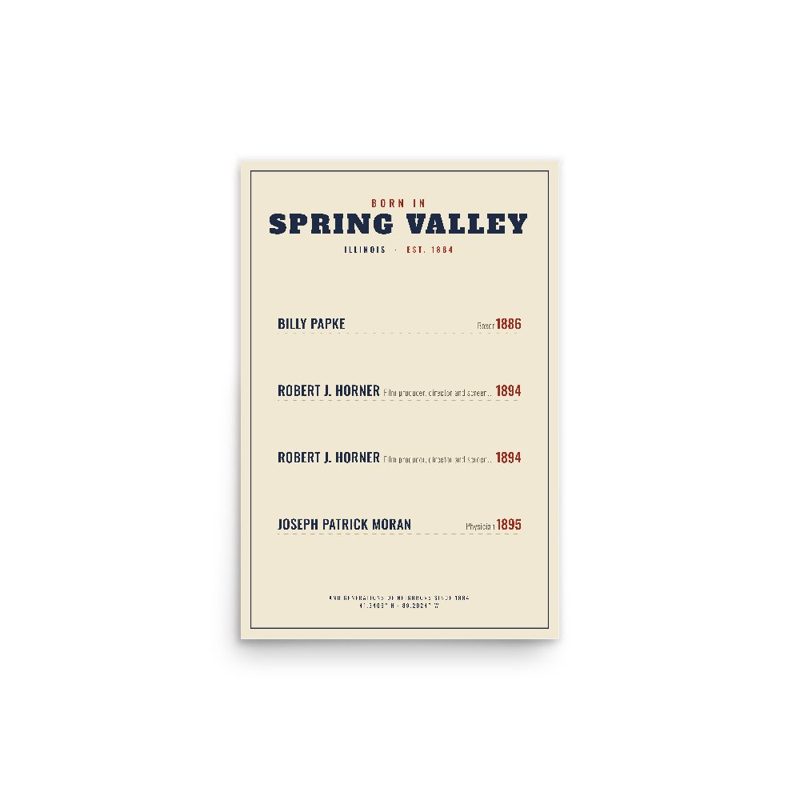
Famous natives, by birth year
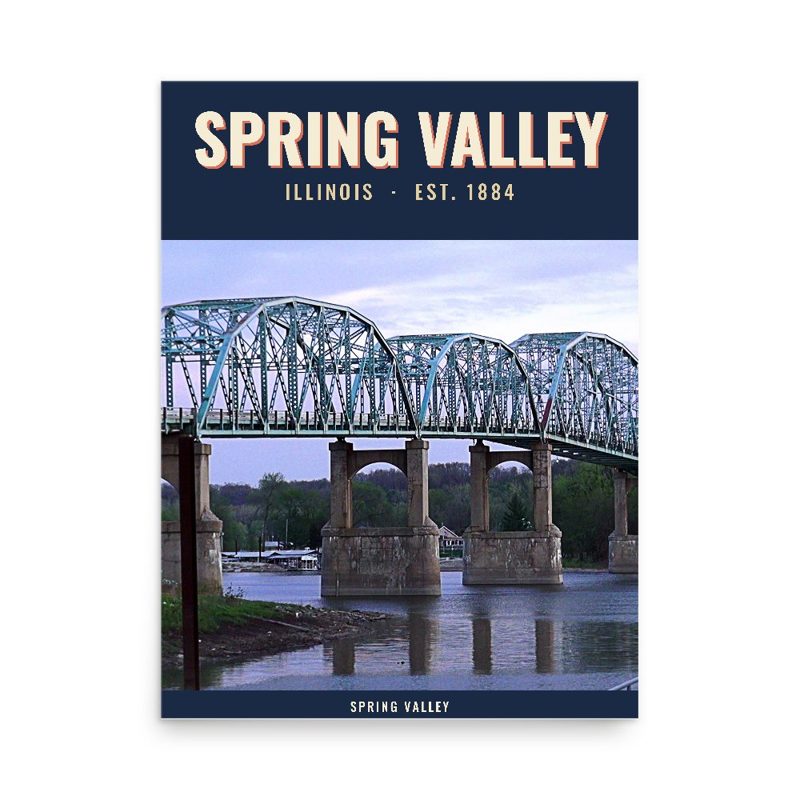
Its landmark photo in a classic travel-poster layout
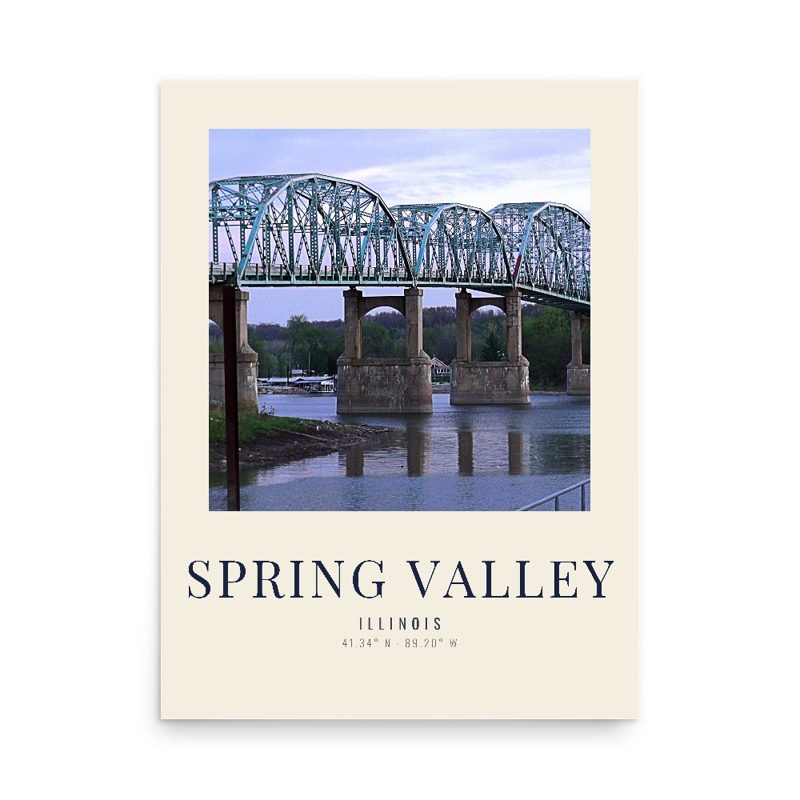
A local landmark photo as a gallery print
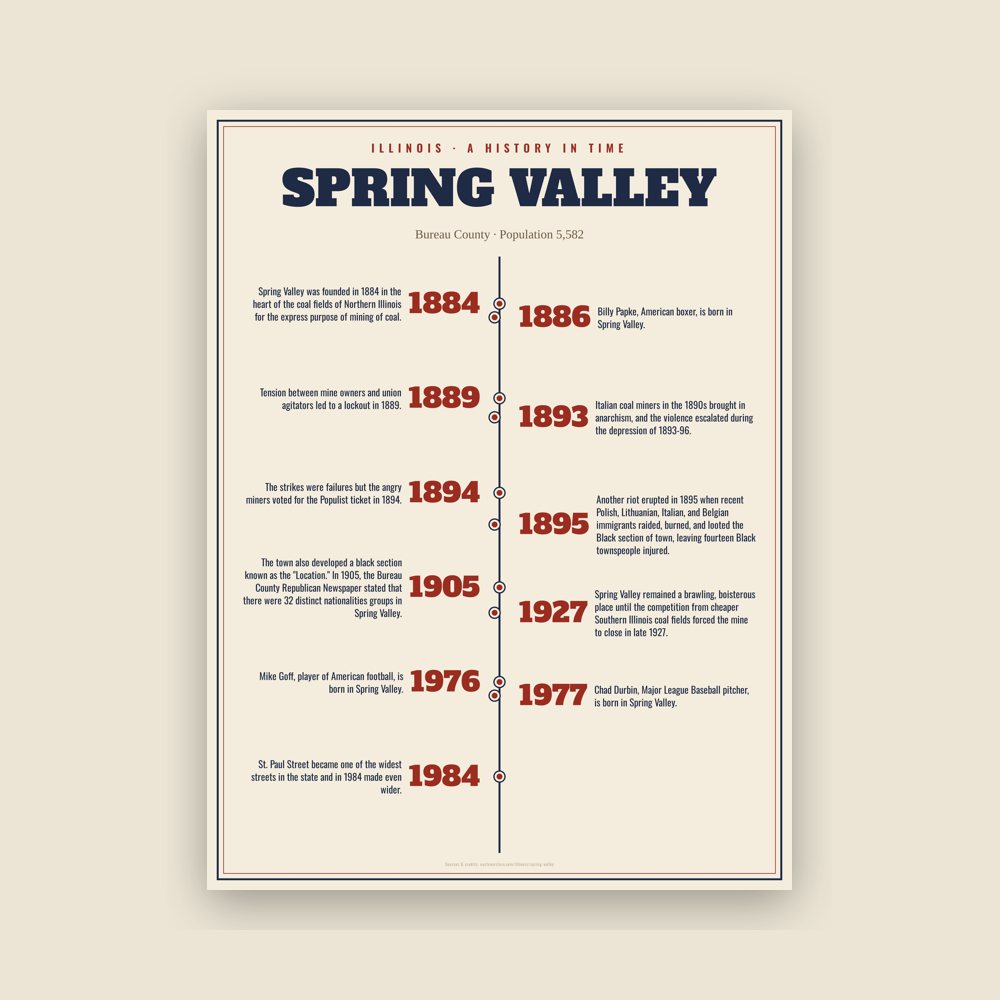
The town's story in dates, from its own records, for home or classroom
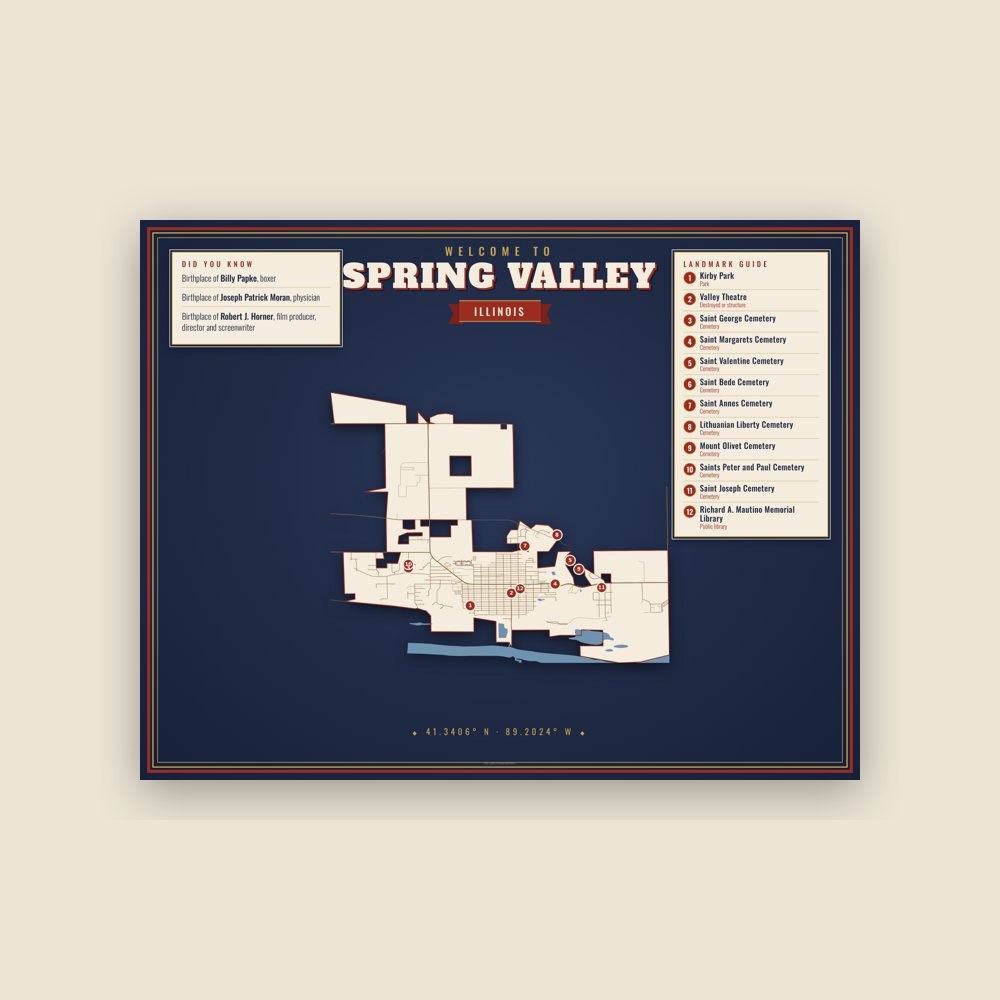
Map of local landmarks, washable fabric
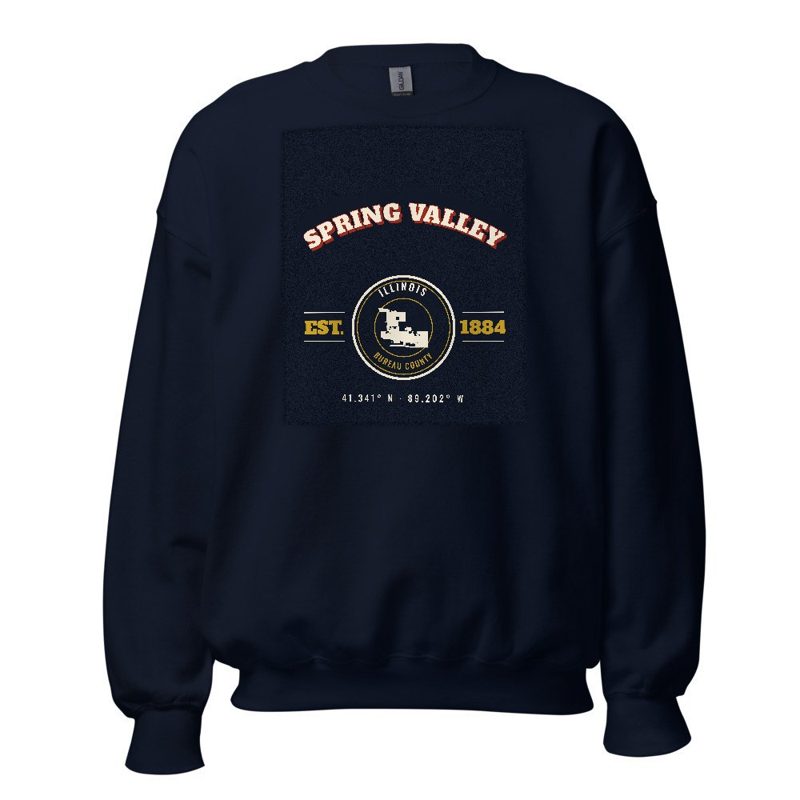
Heavy-blend fleece, street map printed on the back
Soft Bella+Canvas jersey
Kids' Bella+Canvas jersey, youth sizes

Bella+Canvas toddler jersey
Bella+Canvas baby bodysuit
Glossy ceramic, dishwasher safe
Weatherproof, for the front walk
24″×16″, printed coir-look fibers, rubber back
12″×12″ printed wood, ready to hang
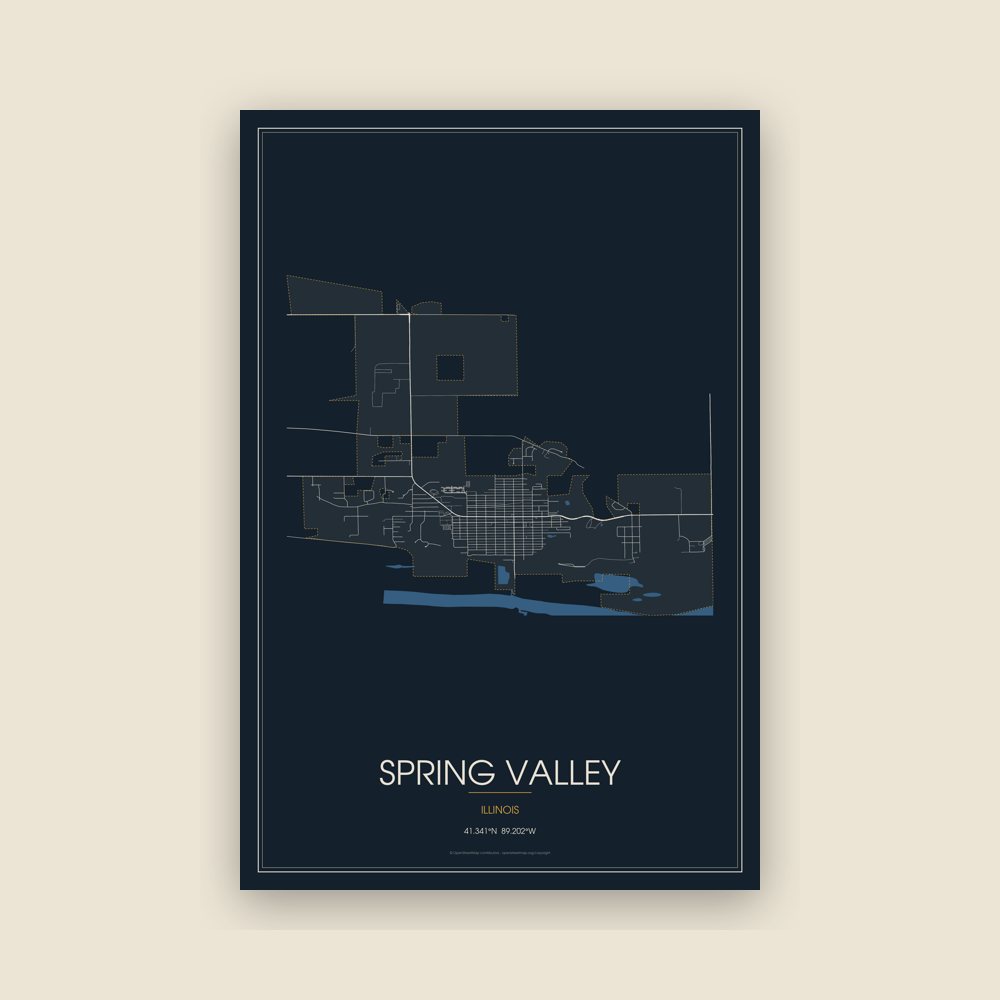
Soft-touch, zip cover
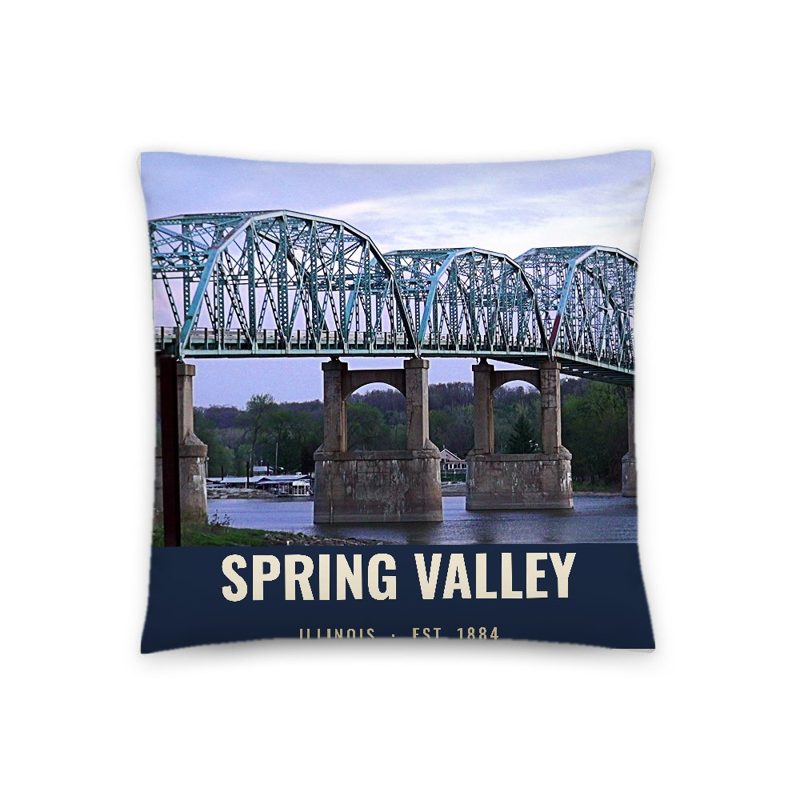
A local landmark photo with the town name, 18″×18″
Sturdy all-over-print tote
Glossy top, cork back
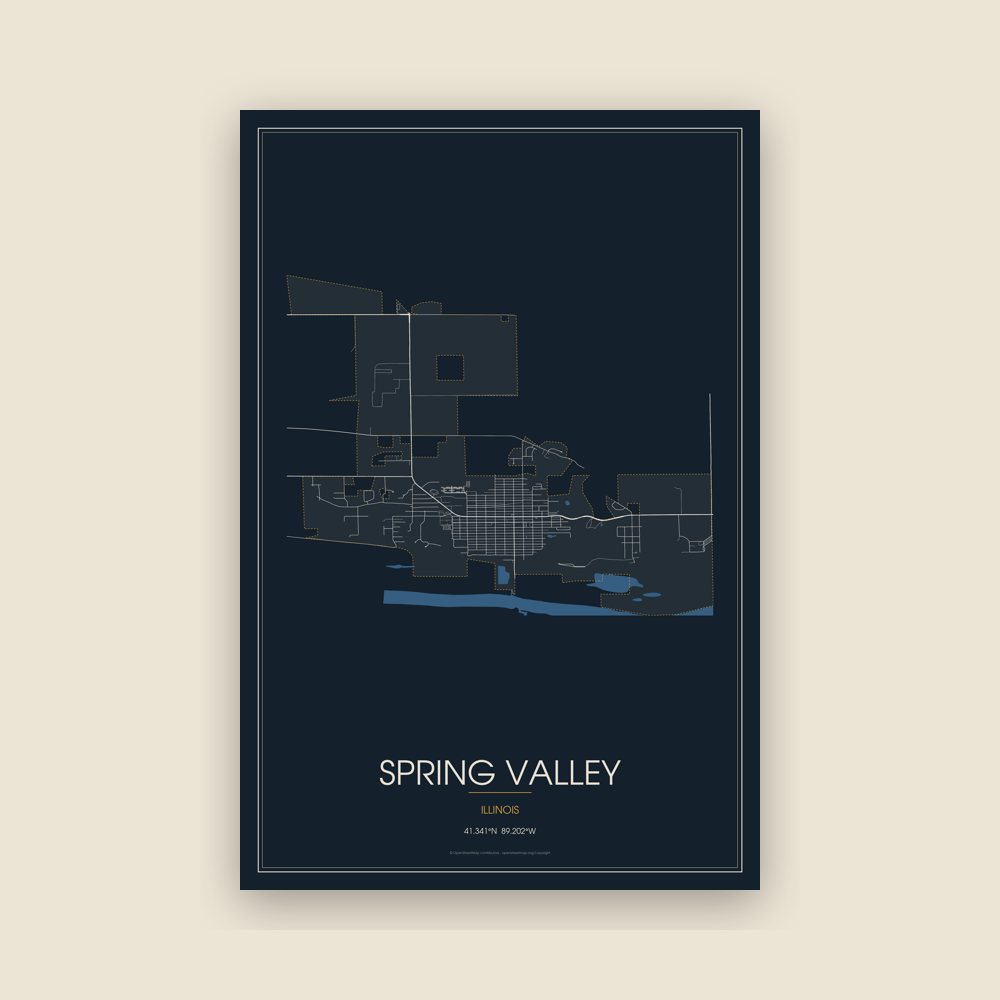
Soft fleece, 50″×60″
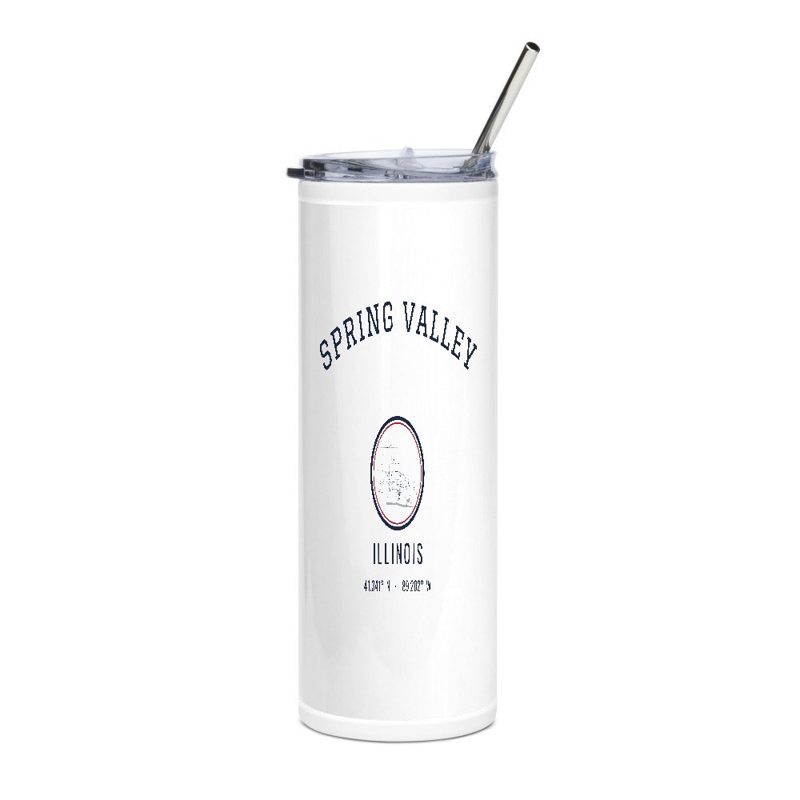
20 oz, double-wall stainless
Spring Valley was founded in 1884 in the heart of the coal fields of Northern Illinois for the express purpose of mining of coal. Spring Valley is the birthplace of Billy Papke, boxer.
Population 2010: 5,558 → 2020: 5,582
From Wikidata (CC0).
Spring Valley lies in the valley of Spring Creek. The hills on either side of this valley were, and are to some extent today, laced with springs that still feed Spring Creek.
There were numerous springs in the town itself. One in the vicinity of the once Hunter-Doherty Lumber yard was so large and fast-flowing that the indigenous people from that area had an encampment there. Remains of this encampment were visible in the early days of the town. There was a large spring that flowed from the side of the hill between East St. Paul Street and East Devlin Street, down a gully into Spring Creek. Springs still feed the pond of water at the foot of Number One slag dump on East St. Paul Street. This area is now the "Coal Mine Park" owned by Spring Valley PRIDE. The first drinking water supply was piped from large springs on North Sixth Street.
So, with the springs and valleys, it was easy to conceive the name Spring Valley. There is a record that the Indians called this territory, "The Valley of the Springs."
The fact that Spring Valley is located at the point in the river valley where the high bluffs, which contains the famous stream, are closer together than anywhere else in the grain belt and that there is a minimum flood plain has made this point most attractive for the location of grain elevators. It has become the fulcrum of the grain handling industry of the upper section of the Illinois River.
Spring Valley was founded in 1884 in the heart of the coal fields of Northern Illinois for the express purpose of mining of coal. The building of Spring Valley was the enterprise of Henry J. Miller, one of the first settlers of this area, and his son-in-law, Charles J. Devlin. Charles Devlin had lived in Peru, Illinois as the manager of the Union Coal Company in LaSalle. They conceived the idea of establishing a coal metropolis, in the Valley and on the slopes of the bluffs bordering Spring Creek, in the southeastern corner of Bureau County. They acquired the mineral rights of 5,000 acres (20 km2) and purchased 500 acres (2.0 km2) on which to build the town. They secured the financial aid and cooperation of coal and railroad capitalists, E.N. Saunders of St. Paul, Minnesota, a director of the Chicago and North Western railroad, Mr. Taylor of What Cheer, Iowa, and William L. Scott of Erie, Pennsylvania. Scott was a United States Senator from Pennsylvania during the administration of President Grover Cleveland. Most of these men are remembered in the name of the streets of the town.
Two companies were formed, the Spring Valley Coal Company in partnership with Alexander Campbell, and the Spring Valley Town Site Co. Backed by the almost unlimited resources of the coal barons, these two companies spent over $21⁄2 million in less than four years in the building of the town.
The boring of the mine commenced in 1884 and the town surveyed and platted. Spring Valley did not grow from a crossroads country store or framehouse, it was planned with the hope it would grow to be a large city. Space was set aside for churches, schools and public buildings and broad streets were laid out. St. Paul Street became one of the widest streets in the state and in 1984 made even wider. In the residential section of the city property line, lies 25 feet (7.6 m) from curb and ample room for expansion.
Spring Valley was a boom town, its growth was so rapid that it was called the "Magic City." In less than four years, by 1888, the Chicago North Western railroad had laid a line from DeKalb, Illinois, four mines had been sunk and the town had 3,000 people.
There were large-scale violent strikes in the late 1880s. Italian coal miners in the 1890s brought in anarchism, and the violence escalated during the depression of 1893-96. The strikes were failures but the angry miners voted for the Populist ticket in 1894.
In August 1895, Spring Valley experienced the state's most destructive race riot to date, out of which came major legislation prohibiting companies from bringing in squads of men to replace existing workers. Tension between mine owners and union agitators led to a lockout in 1889. Many Italian immigrants arrived to cross the picket lines but eventually staged their own strike in 1894, encouraging the industry to bring in African Americans to break the strike. Relations between the races rapidly deteriorated, leading to the riot that ended the use of Black strike breakers. Governor John Peter Altgeld's response to the August 4 attack on the black community by displaced Italian miners ultimately revealed his support of fellow immigrants over African Americans. Another riot erupted in 1895 when recent Polish, Lithuanian, Italian, and Belgian immigrants raided, burned, and looted the Black section of town, leaving fourteen Black townspeople injured. Black victims of the riot took their attackers to court and used their status as citizens to win the case against the new immigrants.
Spring Valley remained a brawling, boisterous place until the competition from cheaper Southern Illinois coal fields forced the mine to close in late 1927.
Spring Valley like every other coal town came to know almost every nationality in Europe. These people came from LaSalle, Peru, Braidwood, Braceville and all mining camps of Northern Illinois. The English, Scottish, Irish, Welsh, and Cornish from the Coal fields of Great Britain, from Northern France and Belgium. Polish, and Germans, Swedes and Lithuanians from opposite shores of the Baltic Sea, Slavish peasants from Central Europe and immigrants from sunny Italy. Many arriving here attired in their native dress tagged and ticketed from their port of entry. The town also developed a black section known as the "Location." In 1905, the Bureau County Republican Newspaper stated that there were 32 distinct nationalities groups in Spring Valley.
By 1888, two years after the incorporation of the town, February 8, 1886, two churches, the Congregational and the Immaculate Conception, had been built, two schools erected, the Immaculate Conception Parochial and the Lincoln Public School, which includes a two-year high school course, a newspaper (the Spring Valley Gazette), and a public library.
This library, an institution for which all towns wait many years, was established by the "Knights of Labor", the Coal Miner's Union in 1885 before the town was a year old, before even a city government was formed. This early interest in education culminated in the establishment of two schools believed to be the first of their kind in the state.
The Hall Township High and Vocational School training in shop, carpentry, printing, drafting, cooking, sewing, typing, shorthand, bookkeeping and banking. This school was constructed in 1914.
Adapted (trimmed) from the Wikipedia article Spring Valley, Illinois, revision 1373646305 by its contributors, licensed CC BY-SA 4.0.
We share a part of every Spring Valley sale with local partners, and we'd love to print from your collection. Old photographs, maps and postcards make the best keepsakes.
Partner with usA favorite landmark, your street, a school or team, an anniversary gift, a different product. Tell us and we'll get back to you by email.
Spring Valley's population was 5,582 in the 2020 U.S. Census, up from 5,558 in 2010.