Since 1853
A short history of Ottawa
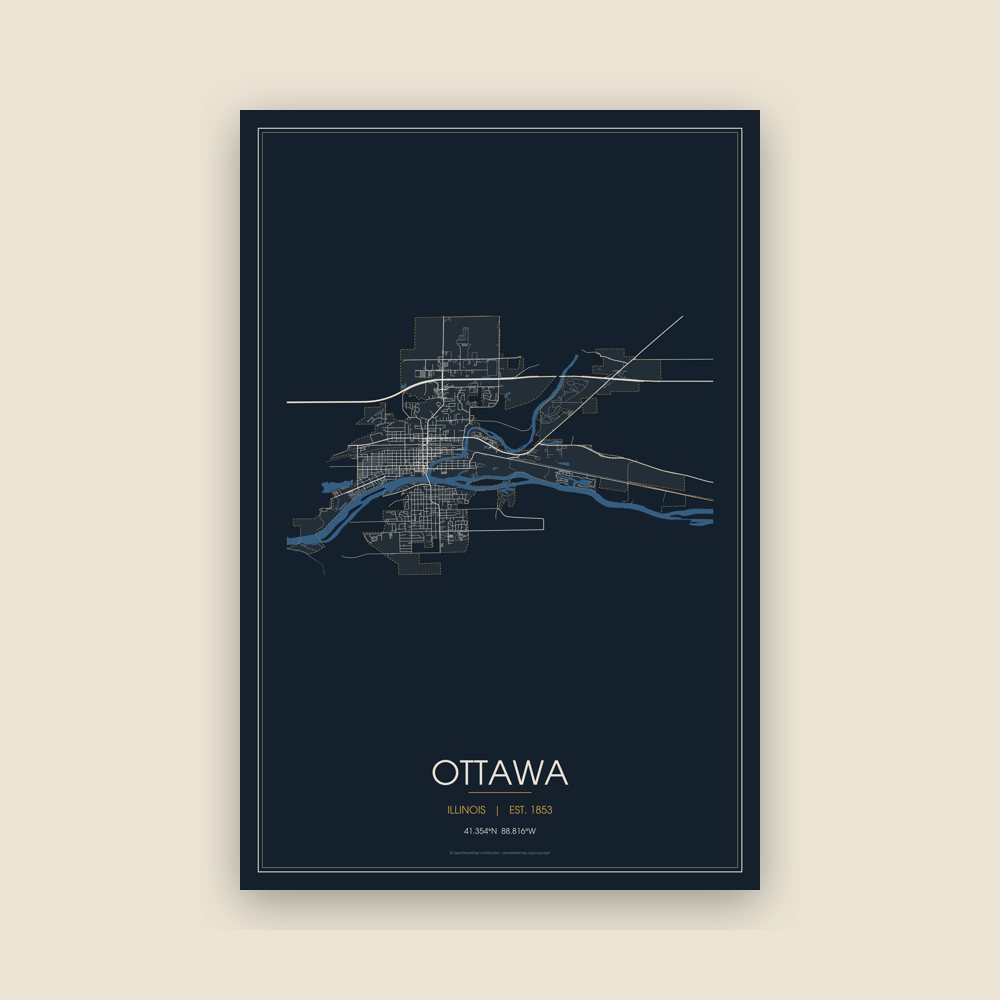
Ottawa occupies a place on the Illinois River that has long been one end of a portage trail between the Mississippi River and Lake Michigan. Here the river was reliably deep enough for canoes. The North Portage Trail connected the site over land and water to the Chicago River.
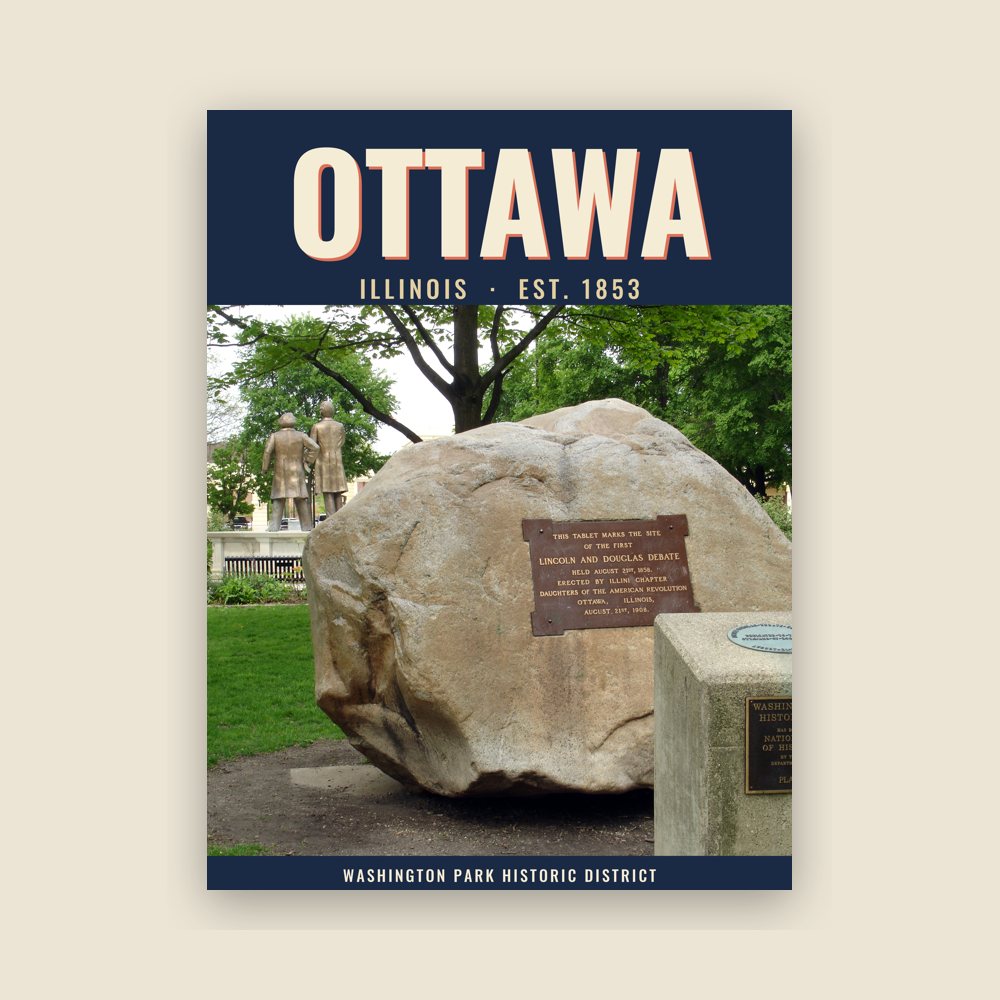
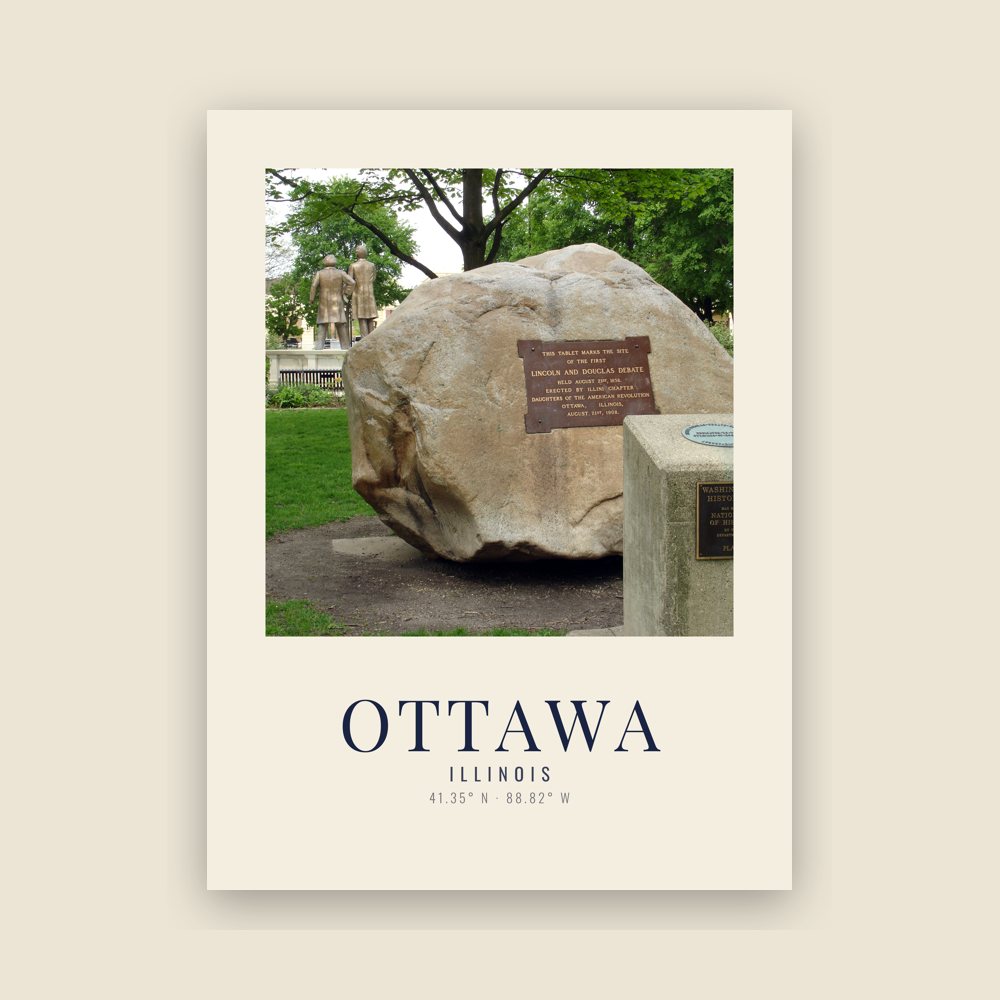
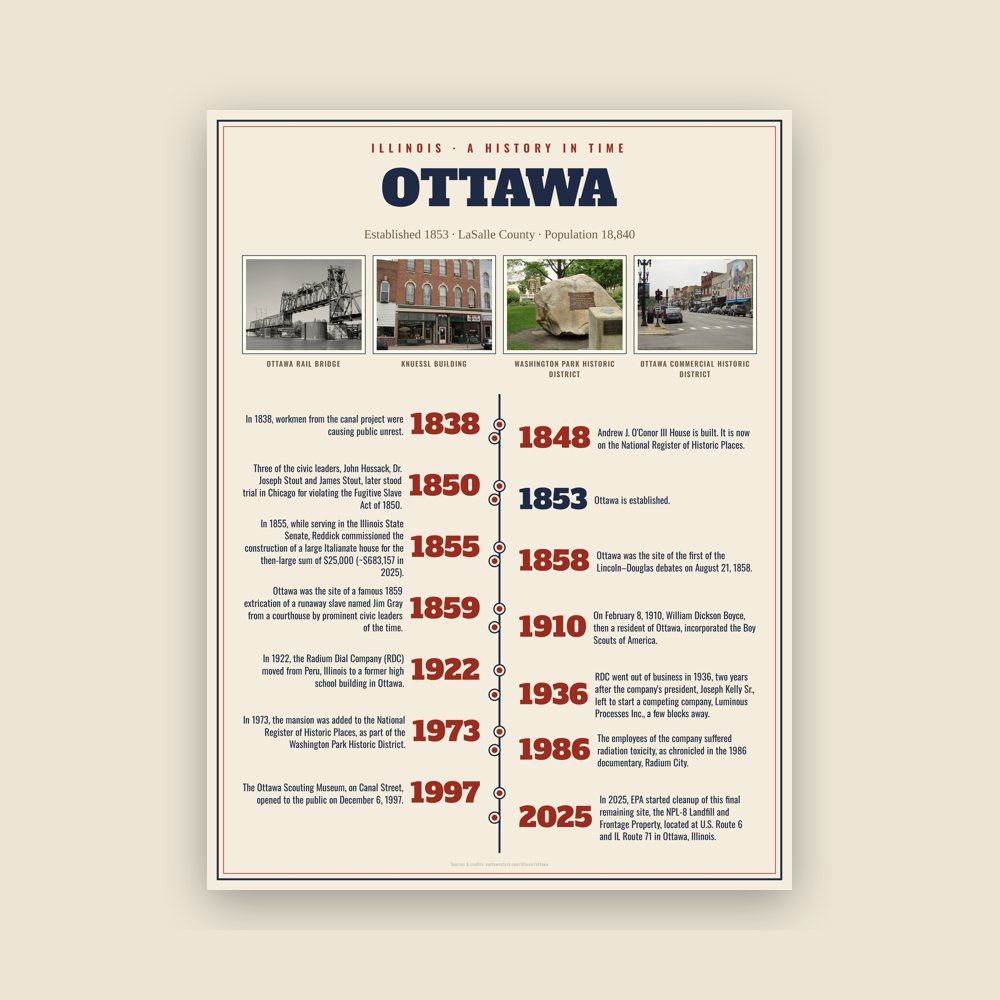
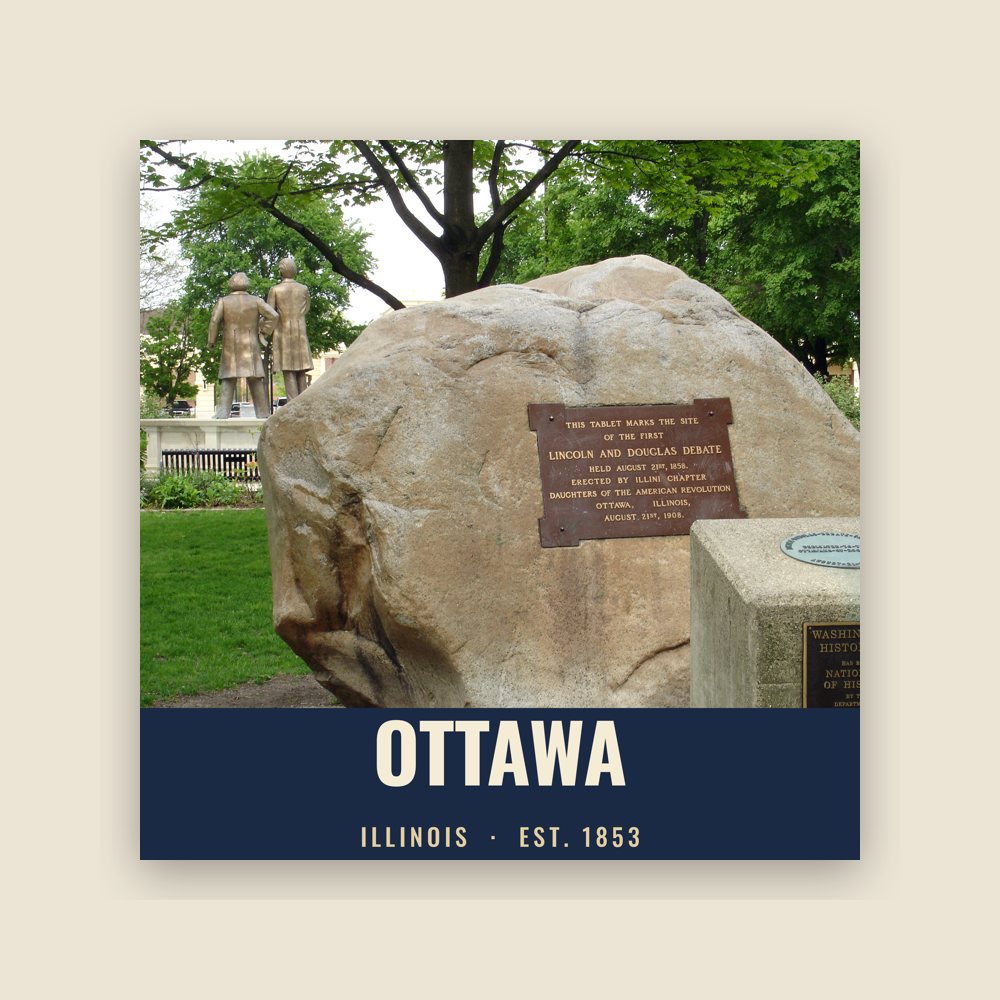
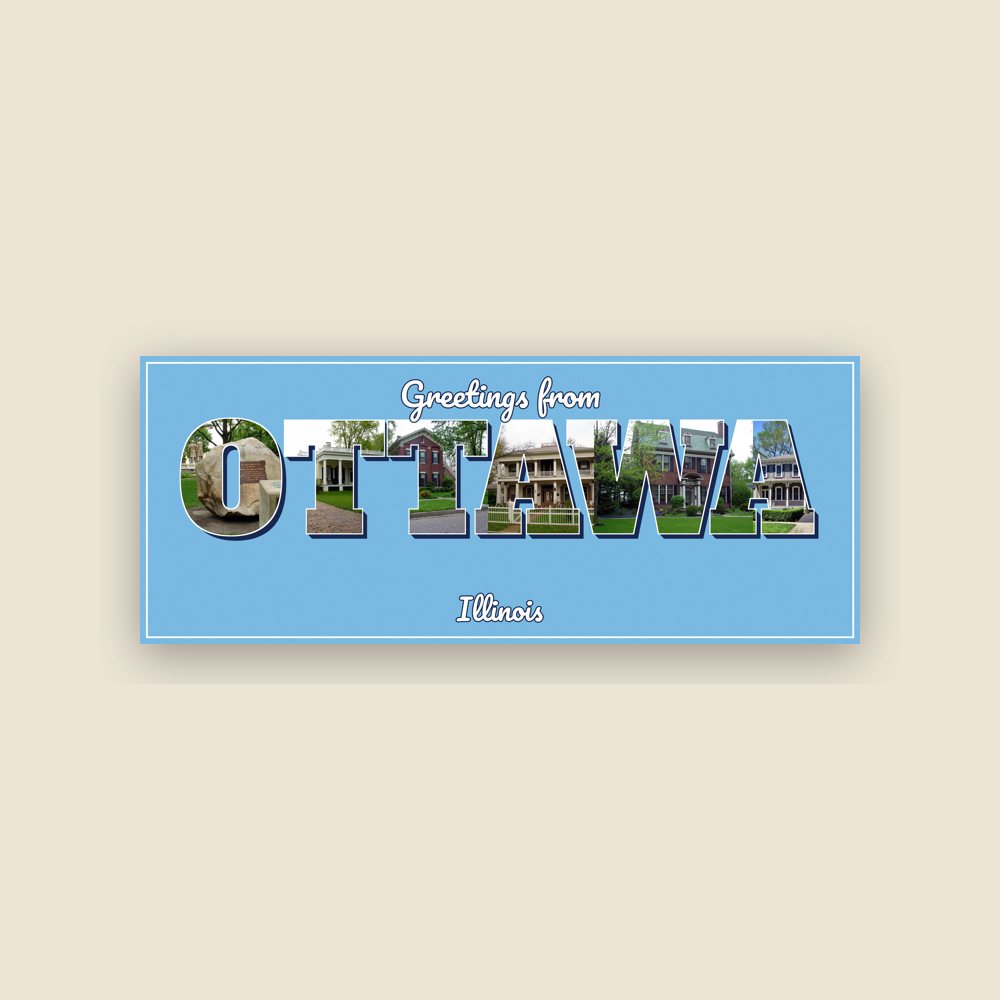
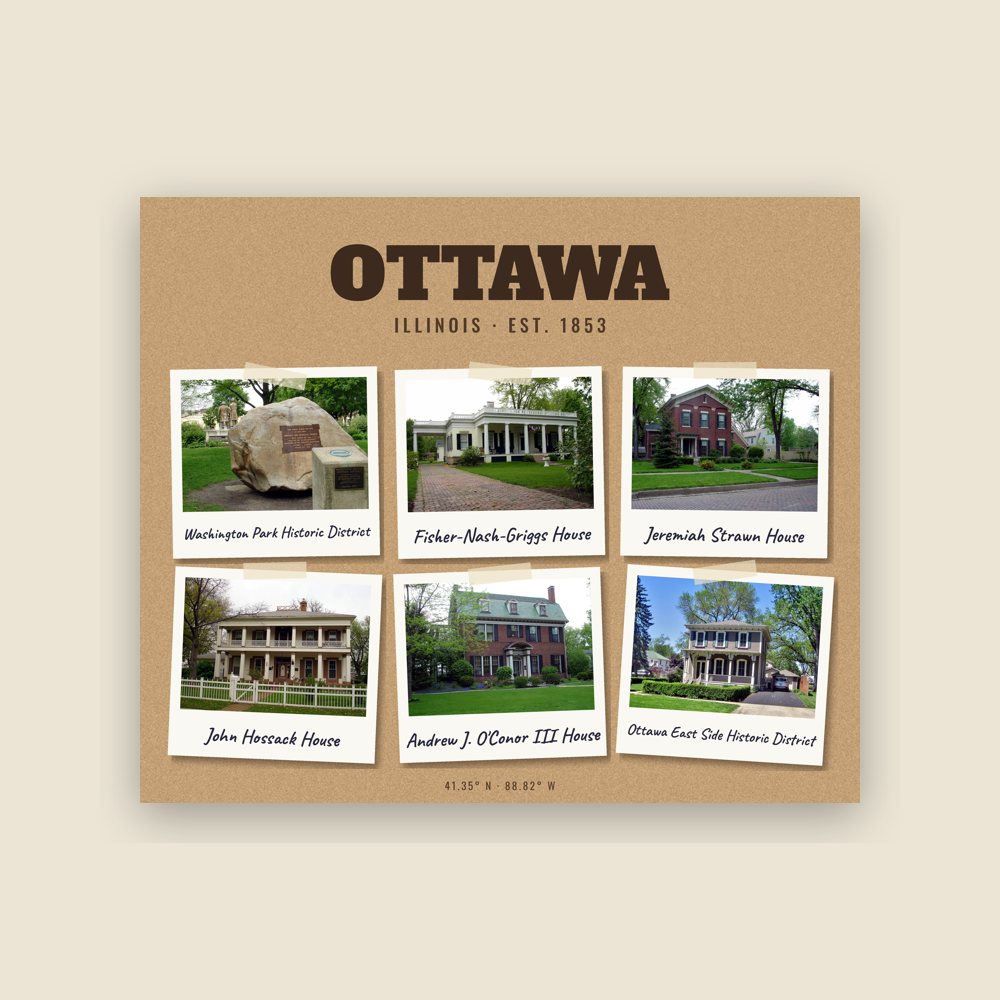
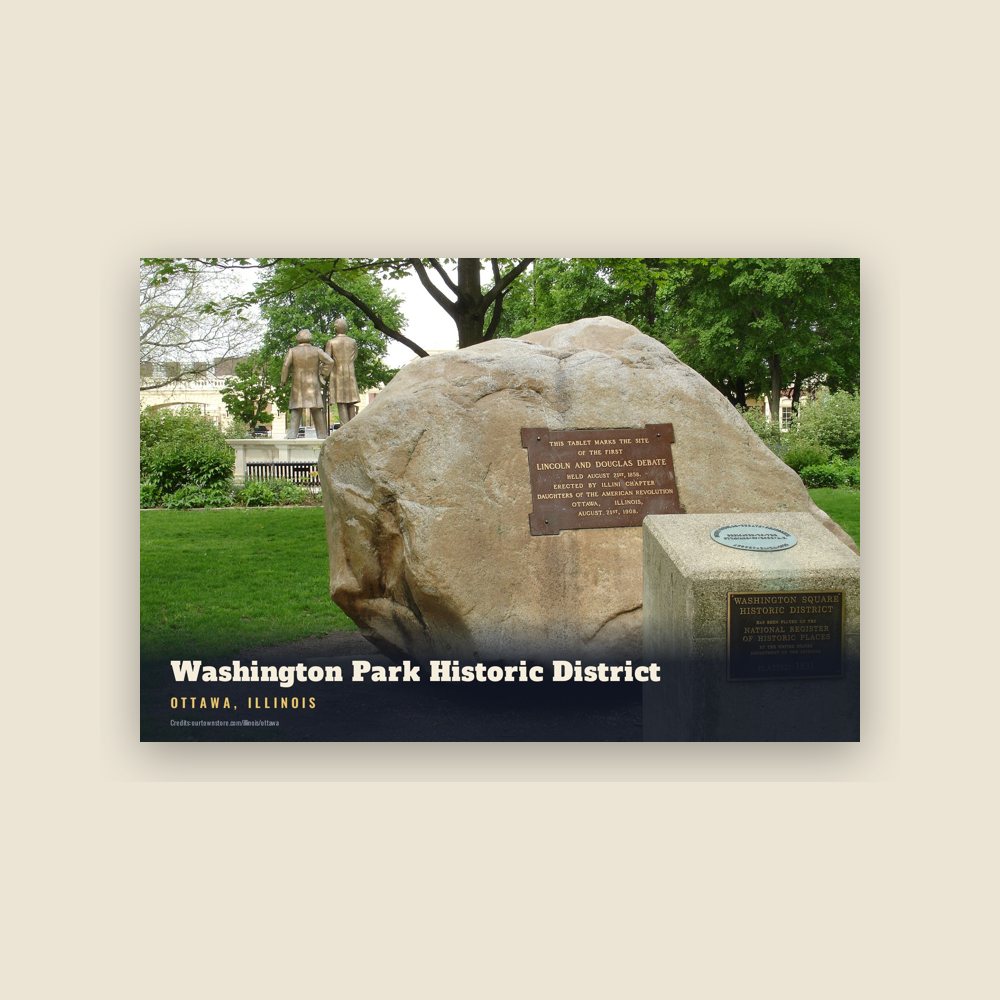
Ottawa was the site of the first of the Lincoln–Douglas debates on August 21, 1858. During the Ottawa debate, Stephen A. Douglas, leader of the Democratic Party, openly accused Abraham Lincoln of forming a secret bipartisan group of Congressmen to bring about the abolition of slavery.
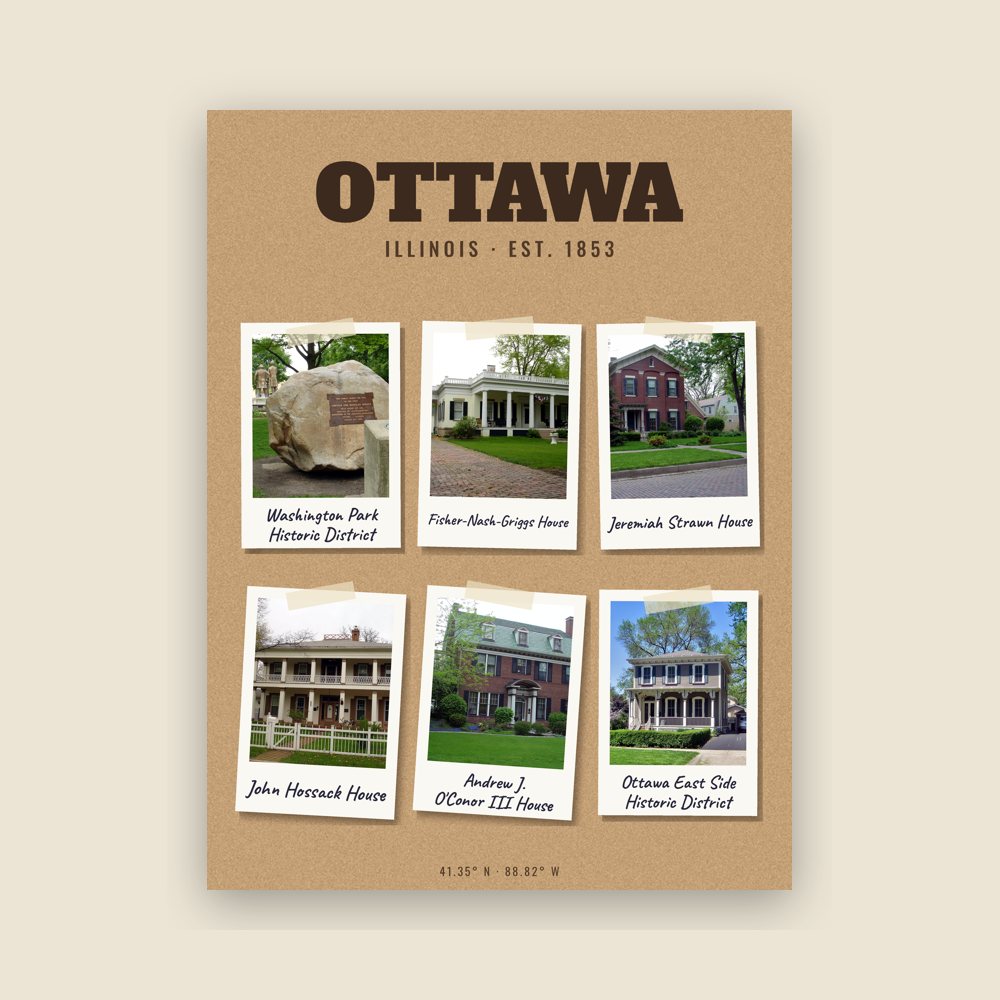
The John Hossack House was a "station" on the Underground Railroad, and Ottawa was a major stop because of its rail, road, and river transportation. Citizens in the city were active within the abolitionist movement. Ottawa was the site of a famous 1859 extrication of a runaway slave named Jim Gray from a courthouse by prominent civic leaders of the time. Three of the civic leaders, John Hossack, Dr. Joseph Stout and James Stout, later stood trial in Chicago for violating the Fugitive Slave Act of 1850.
Ottawa was also important in the development of the Illinois and Michigan Canal, which terminates in LaSalle, Illinois, 12 miles to the west. In 1838, workmen from the canal project were causing public unrest. During a citizens' meeting, a local political leader, Washington Armstrong, suggested that farmer William Reddick be elected sheriff. Reddick was a popular choice due to his large stature and courageous manner. Reddick was elected by a large majority and held the office of sheriff for four consecutive two-year terms. In 1855, while serving in the Illinois State Senate, Reddick commissioned the construction of a large Italianate house for the then-large sum of $25,000 (~$683,157 in 2025). Reddick Mansion is now one of the largest surviving homes in Illinois to predate the Civil War. In 1973, the mansion was added to the National Register of Historic Places, as part of the Washington Park Historic District.
On February 8, 1910, William Dickson Boyce, then a resident of Ottawa, incorporated the Boy Scouts of America. Five years later, also in Ottawa, Boyce incorporated the Lone Scouts of America. Boyce is buried in Ottawa Avenue Cemetery. The Ottawa Scouting Museum, on Canal Street, opened to the public on December 6, 1997. The museum features the history of Boy Scouting, Girl Scouting and Camp Fire.
In 1922, the Radium Dial Company (RDC) moved from Peru, Illinois to a former high school building in Ottawa. The company employed hundreds of women called Radium girls. These women painted watch dials using a paint called "LUMA", which contained a compound of ZnS(Ag) (Silver activated Zinc Sulfide) and powdered radium, for watch maker Westclox. RDC went out of business in 1936, two years after the company's president, Joseph Kelly Sr., left to start a competing company, Luminous Processes Inc., a few blocks away. The employees of the company suffered radiation toxicity, as chronicled in the 1986 documentary, Radium City. After the plant closed and before it was dismantled, many residents took items from the factory for their homes. This spread the contamination even further. The building materials from the Luminuous Processes building were eventually turned into landfill. The U.S. Environmental Protection Agency began removing contaminated material in 1986.
Read the full history
Radium Cleanup
The Ottawa Radiation Areas site, located in LaSalle County, Illinois, consisted of 16 areas contaminated by radioactive materials. The 16 areas are scattered throughout the city of Ottawa as well as locations outside the city. EPA added the areas to the Superfund program's National Priorities List (NPL) because they are contaminated by the same wastes, involve the same potentially responsible parties (PRPs) and require similar cleanups. The contamination likely originated from the processing of wastes and demolition debris from the Radium Dial Company between 1918 and 1936 and from Luminous Processes, Inc. between 1937 and 1978. These businesses produced luminous dials for clocks and watches, using radium-based paint. Following actions to protect human health and the environment in the short term, EPA developed long-term remedies for the site. To date, EPA completed cleanup at 15 of the 16 contaminated areas.
Only one remains, known as NPL-08, and it is outside Ottawa City limits. In 2025, EPA started cleanup of this final remaining site, the NPL-8 Landfill and Frontage Property, located at U.S. Route 6 and IL Route 71 in Ottawa, Illinois.
Radium contamination from radium paint sticks to the soil in which it is situated. If protected from erosion, it does not move or leach into the groundwater or into the air. It does not create moving plumes of contamination underground. The remaining NPL-08 site is fenced off, protected from erosion and not adjacent to any currently developing property.
Adapted (trimmed) from the Wikipedia article Ottawa, Illinois, revision 1376252173 by its contributors, licensed CC BY-SA 4.0.