A short history of Plainfield
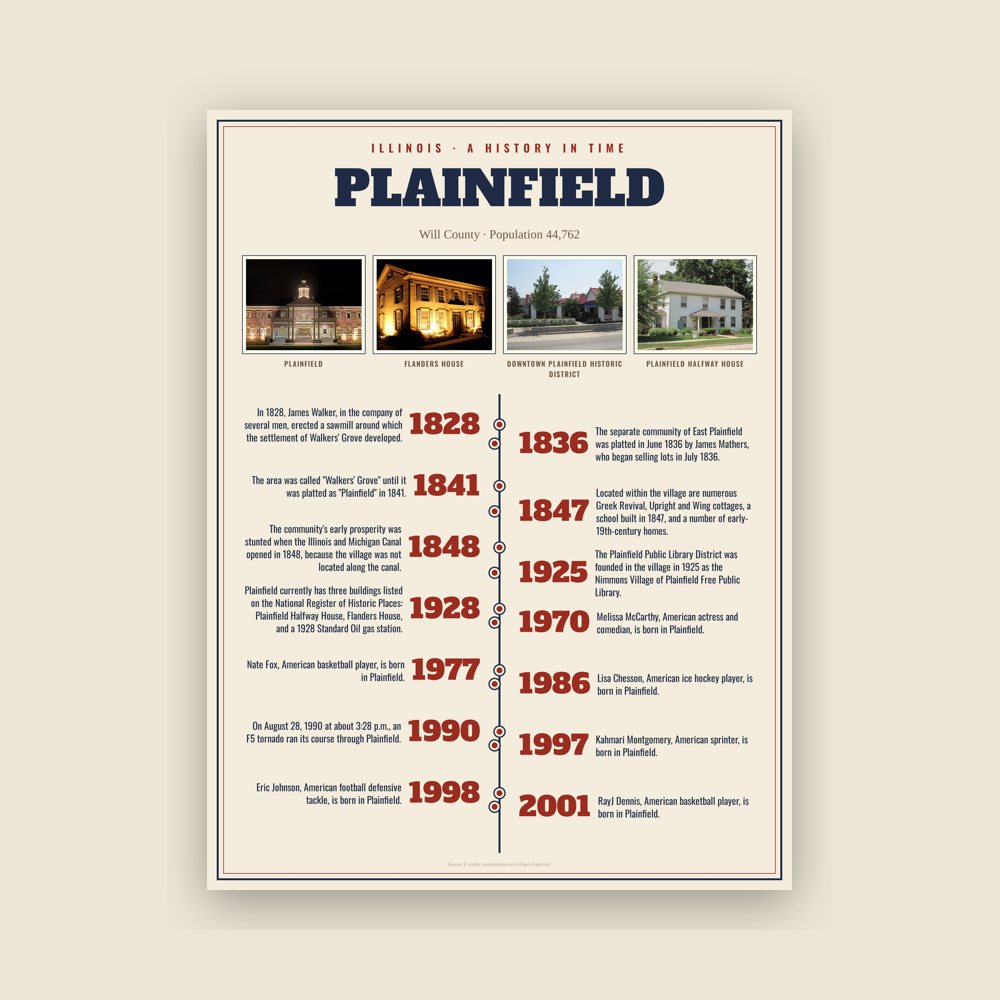
The area was called "Walkers' Grove" until it was platted as "Plainfield" in 1841. It was originally settled by a large community of Potawatomi people, and the land was later bequeathed to the United States as part of the Treaty of St. Louis (1816) with the Council of the Three Fires. Indian Boundary Road aligns with the western border of the tract of land originally ceded.
The earliest Europeans in the area were French fur traders. The first European-American settler in the area was James Walker, who with his father-in-law, Methodist minister Jessie Walker, traveled here in 1826 where he established a small mission for the Potawatomi people. James Walker, Jesse Walker's son-in-law, traveled with him and became the first European-American to claim land in the area in 1828.
In 1828, James Walker, in the company of several men, erected a sawmill around which the settlement of Walkers' Grove developed.
Plainfield is identified as the oldest community in Will County because the earliest settlement of Walkers' Grove was established on the banks of the DuPage River by 1828. However, the actual village of Plainfield was platted immediately north of Walkers' Grove in 1834 by Chester Ingersoll. The separate community of East Plainfield was platted in June 1836 by James Mathers, who began selling lots in July 1836. He also constructed a gristmill and a mill race west of Water Street, which would later become Plainfield-Naperville Road. Ingersoll's "Planefield" which comprised lots in Section 16, along with Mather's East Plainfield lots in Section 10 and Levi Arnold's plat of Section 9, all became joined to create the present-day village after the death of Levi Arnolds in 1845.
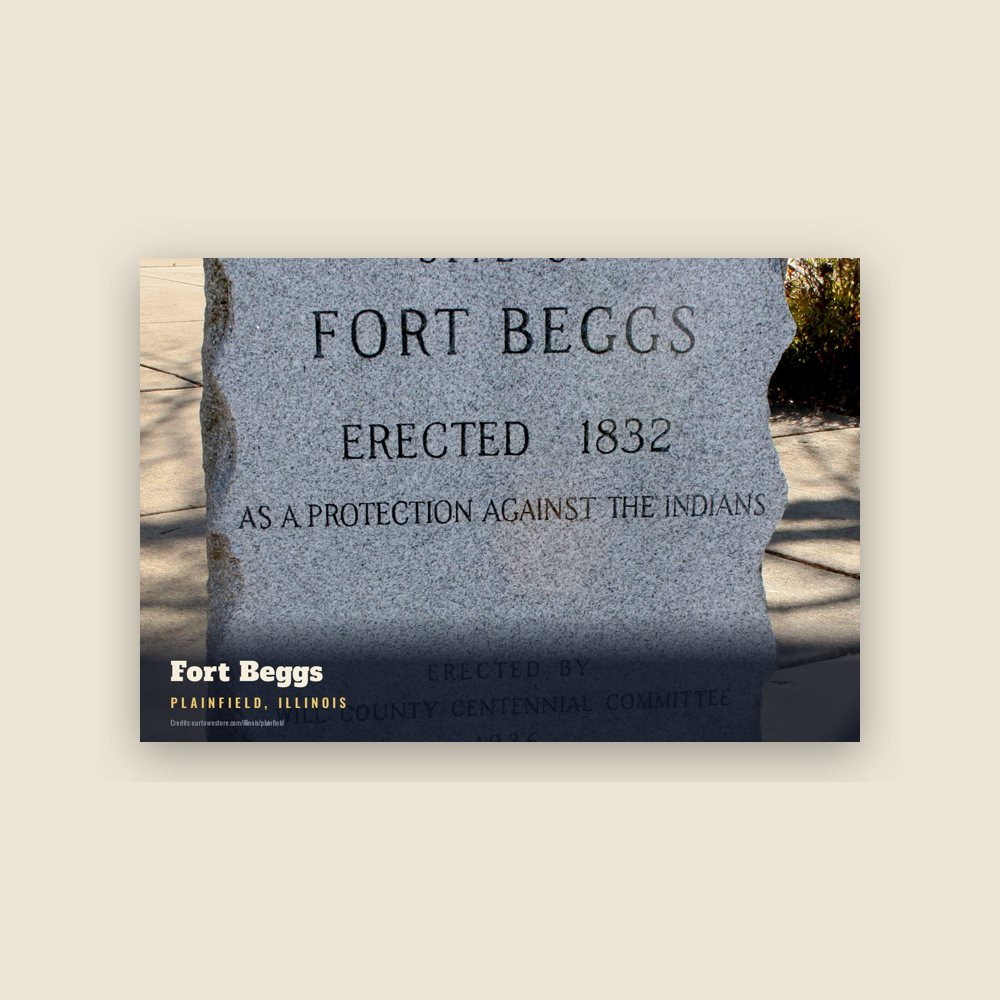
Walkers' Grove flourished because of the DuPage River and established routes to Fort Dearborn in Chicago, as well as to Ottawa to the west. Reuben Flagg hauled lumber from Walker's mill to Chicago in order to erect the first two frame structures in the city (the P.F.W. Peck House and the George Dole Forwarding House). Chicago also depended upon the settlement for mail and supplies.
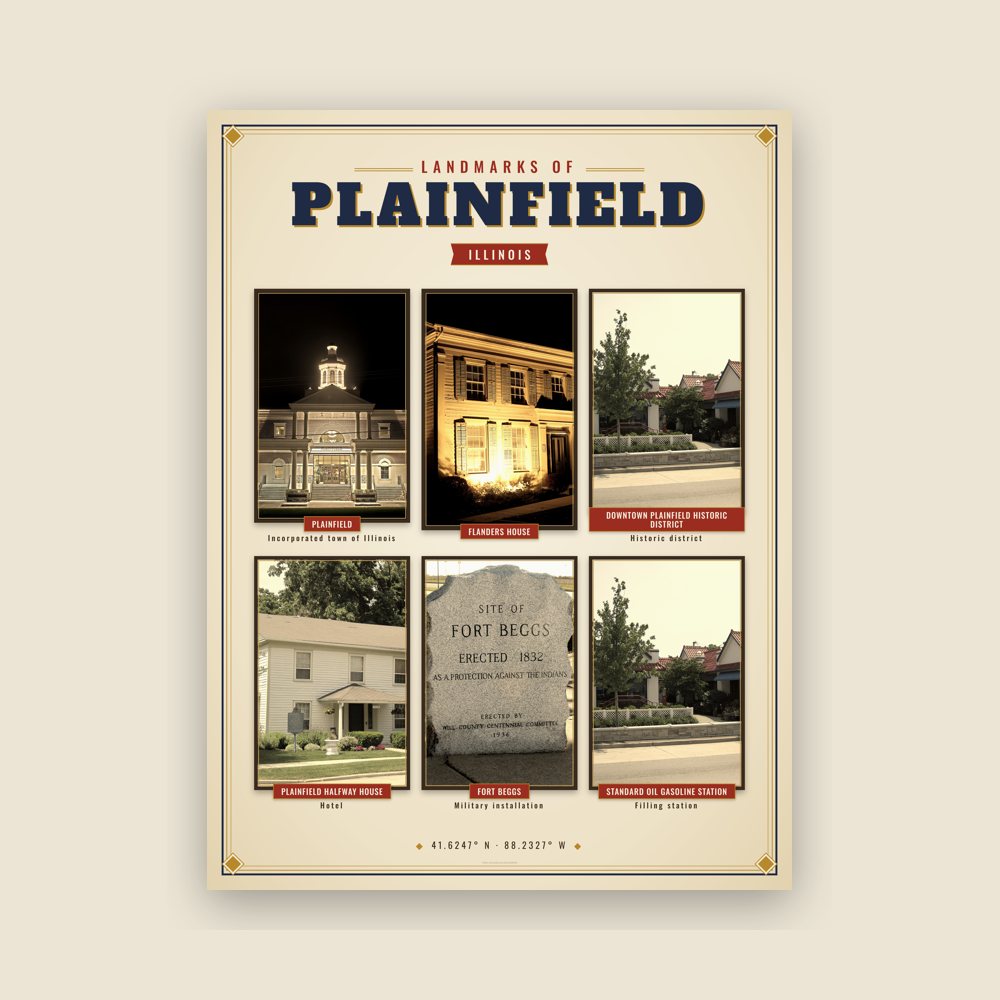
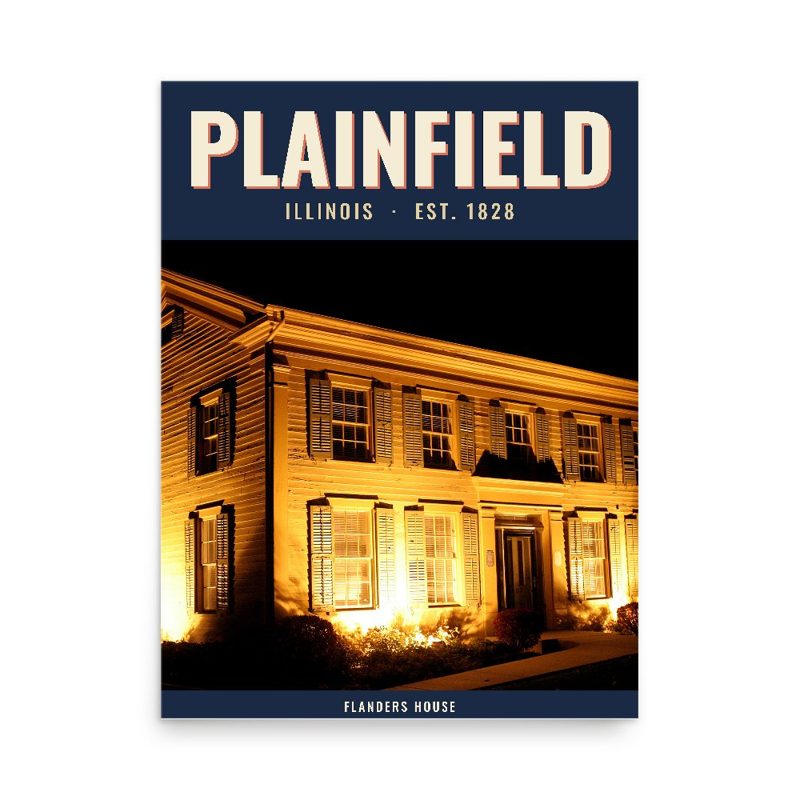
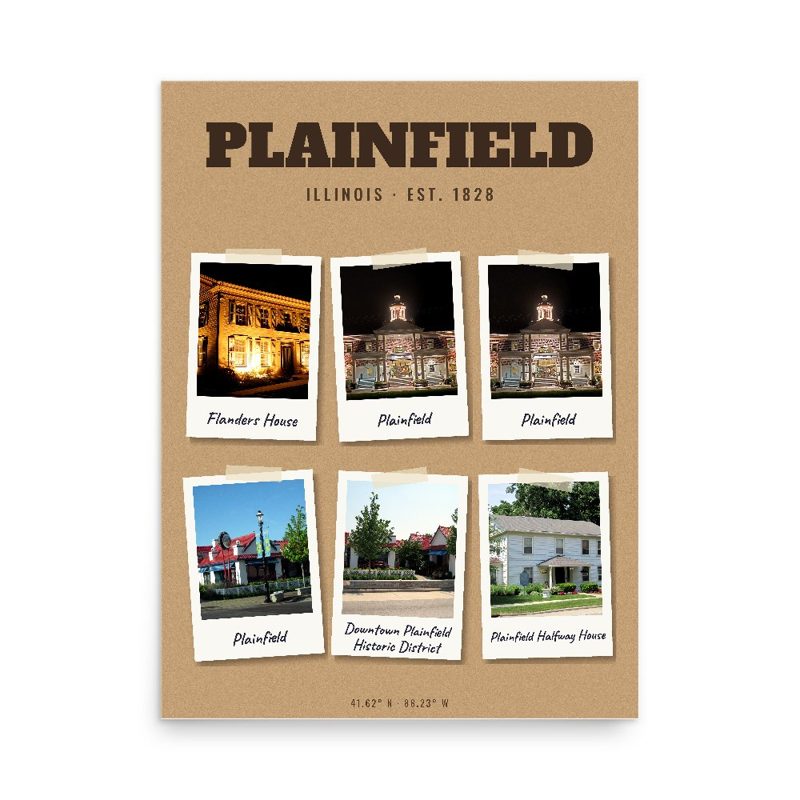
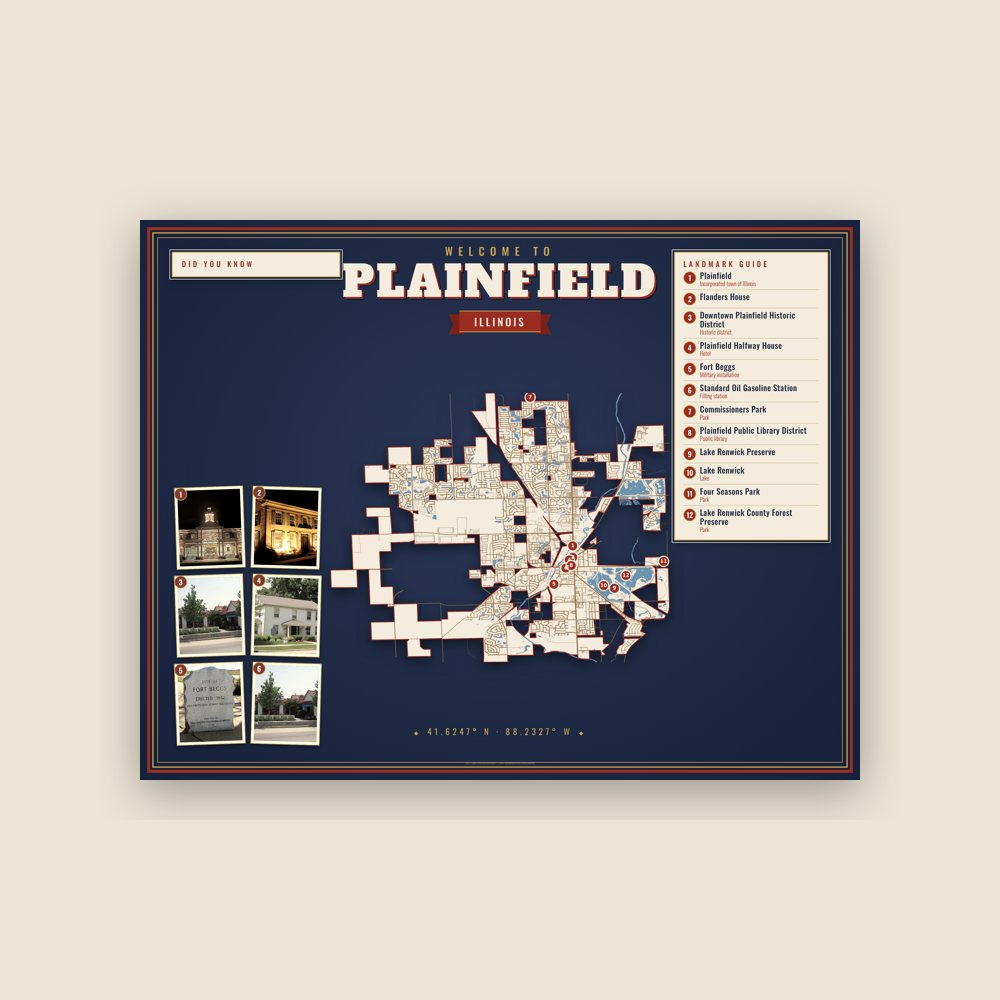
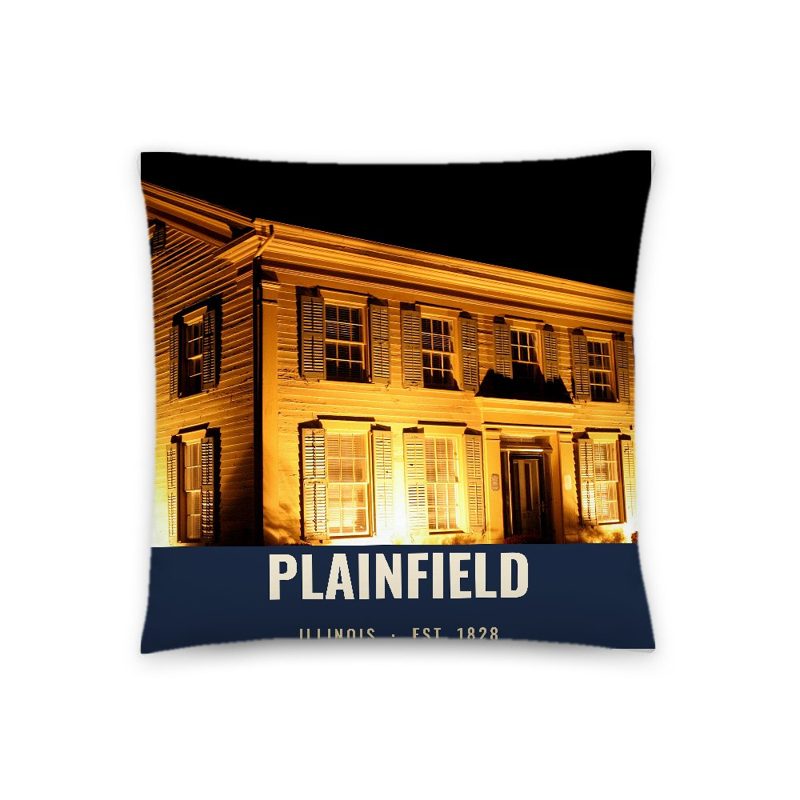
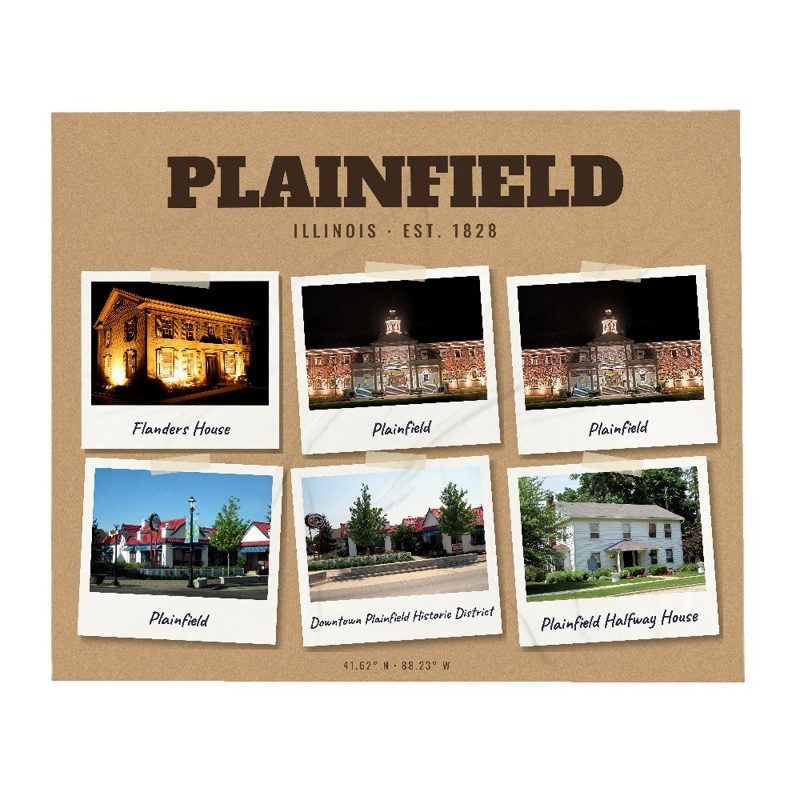
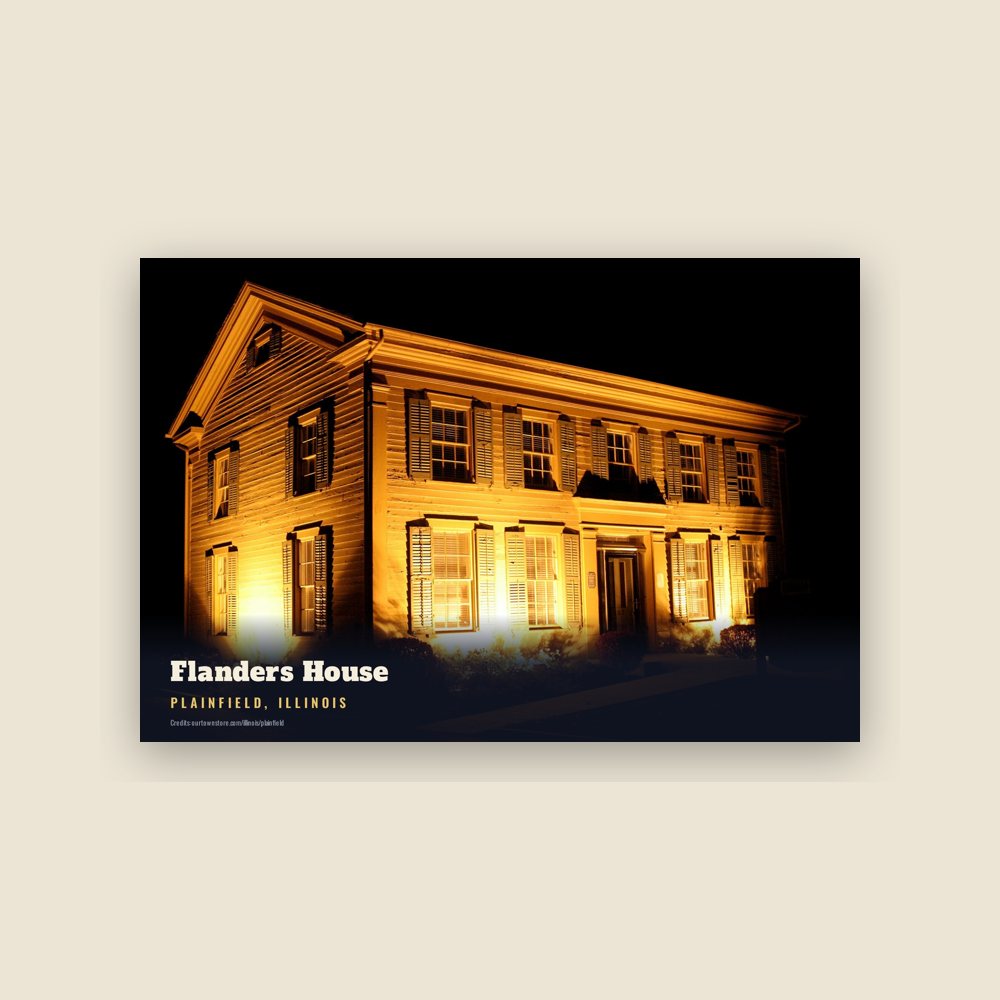
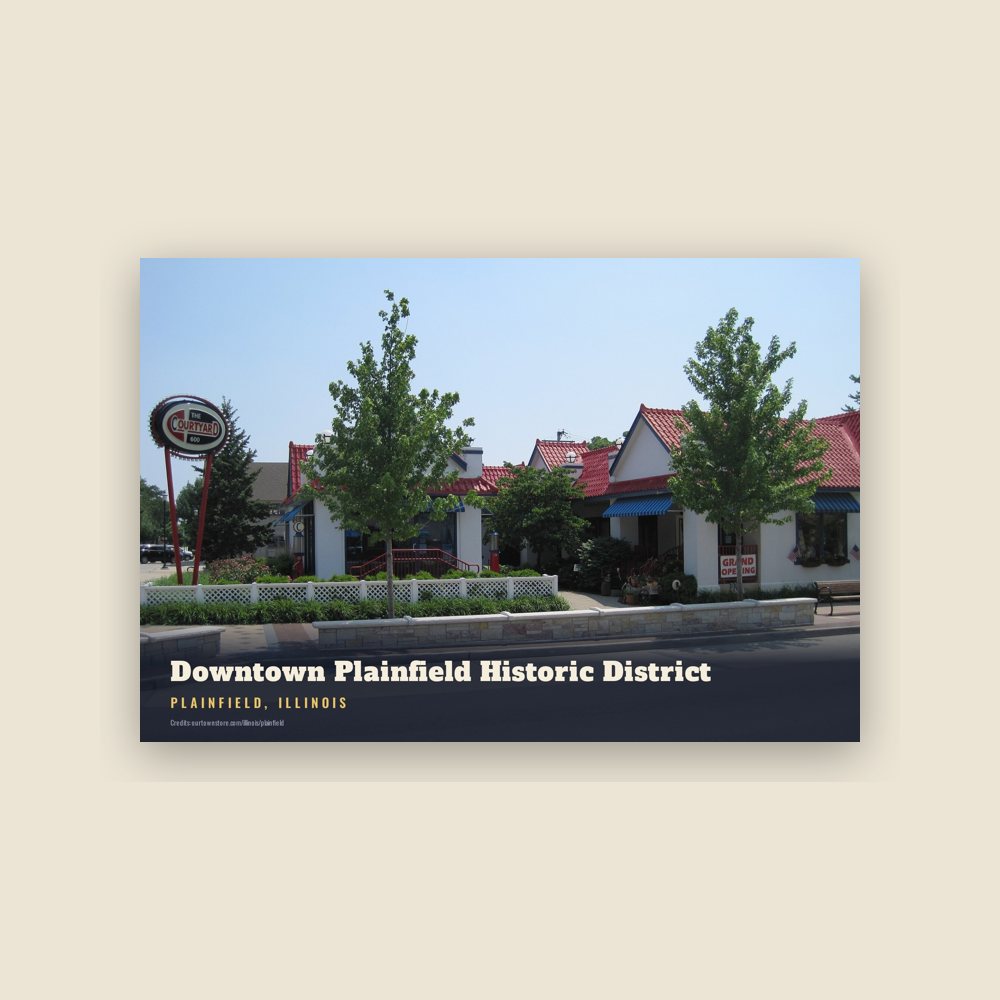
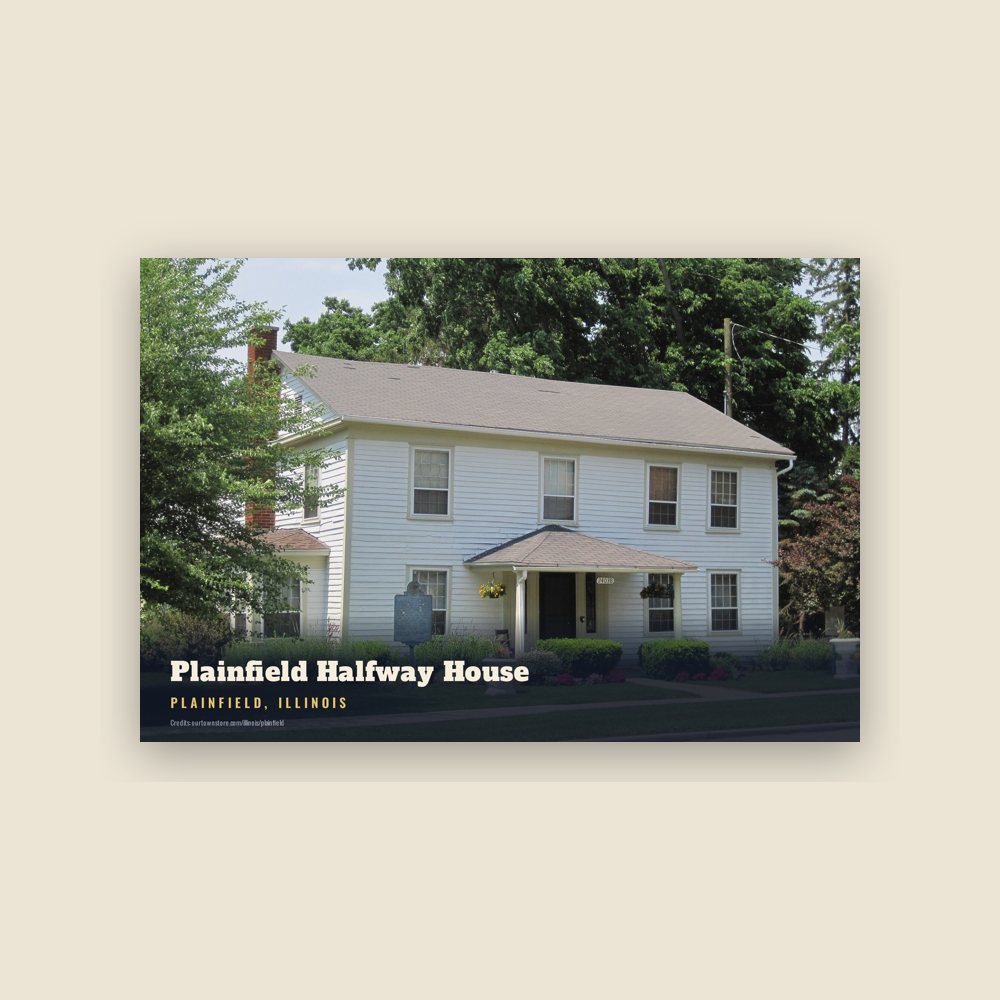
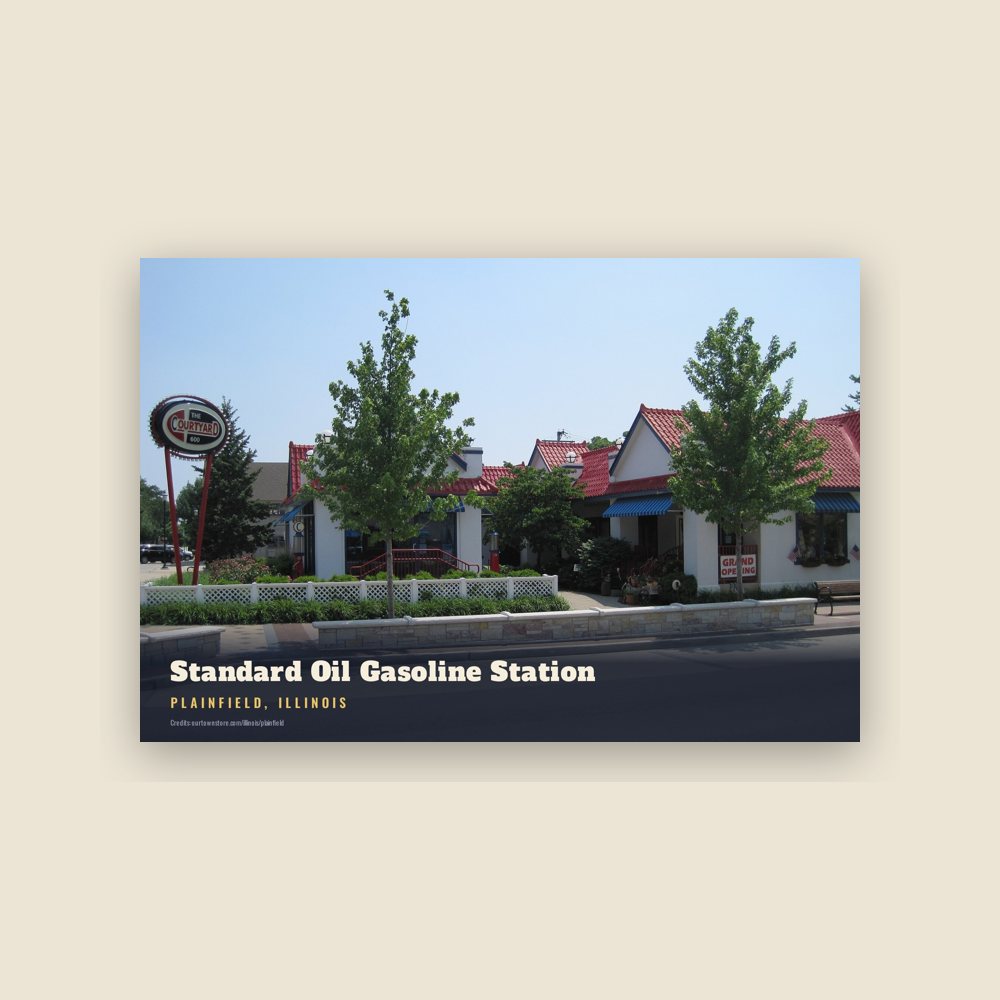
The community's early prosperity was stunted when the Illinois and Michigan Canal opened in 1848, because the village was not located along the canal. Located within the village are numerous Greek Revival, Upright and Wing cottages, a school built in 1847, and a number of early-19th-century homes. Plainfield currently has three buildings listed on the National Register of Historic Places: Plainfield Halfway House, Flanders House, and a 1928 Standard Oil gas station.
As Illinois was dominated by abolitionists and was a free state, Plainfield abolitionists offered food and shelter to runaway slaves following the Underground Railroad.
The Plainfield Public Library District was founded in the village in 1925 as the Nimmons Village of Plainfield Free Public Library.
Plainfield is the birthplace of Eddie Gardner, one of the pilots credited with establishing the transcontinental air mail routes for the United States Postal Service. The earliest architects associated with buildings in Plainfield are J.E. Minott of Aurora; G. Julian Barnes & John H. Barnes of Joliet; and Herbert Cowell of Joliet and Plainfield.
Certain older parts of Plainfield once suffered from extreme traffic congestion. Before Interstate 55 was built just east of the village in the late 1950s, U.S. Route 30 (the Lincoln Highway) and U.S. Route 66 (sometimes referred to as "The Mother Road") merged into one street for three blocks in the center of town on what is now Illinois Route 59. The merge was between Plainfield/Joliet Road on the south to Lockport Street on the north but continues to be an area of heavy traffic congestion even outside heavy commuting periods. At one time, the two longest paved highways in the world (Lincoln Highway and U.S. Route 66) crossed within Plainfield. The highways only crossed each other twice and both locations are in Will County. The other location is in neighboring Joliet.
Adapted (trimmed) from the Wikipedia article Plainfield, Illinois, revision 1380139262 by its contributors, licensed CC BY-SA 4.0.