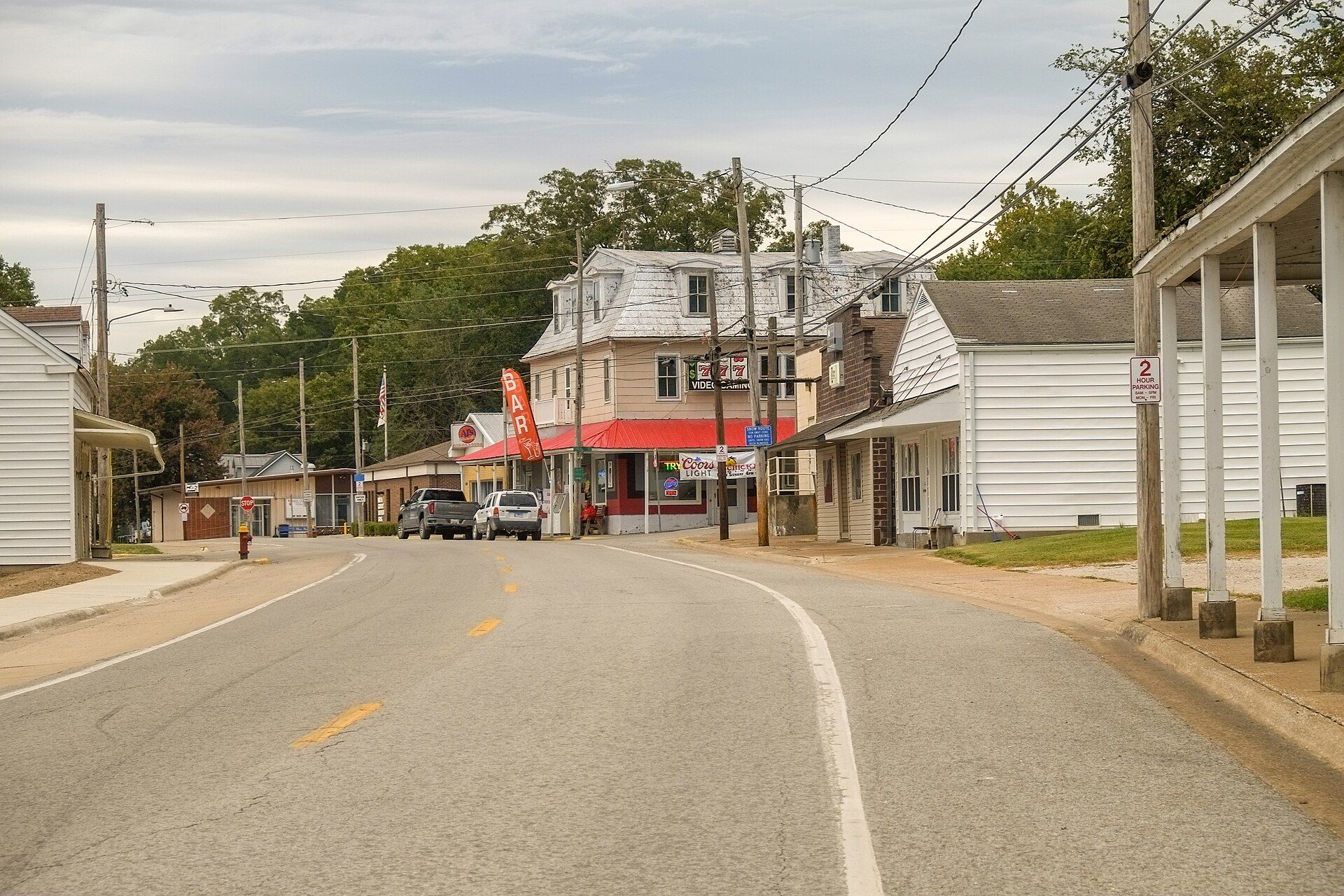
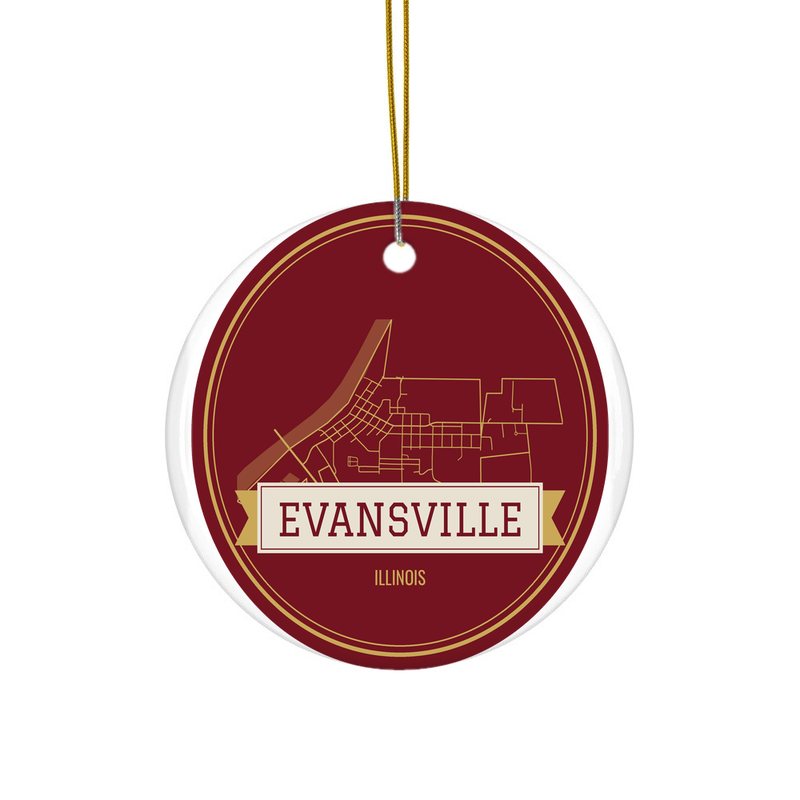
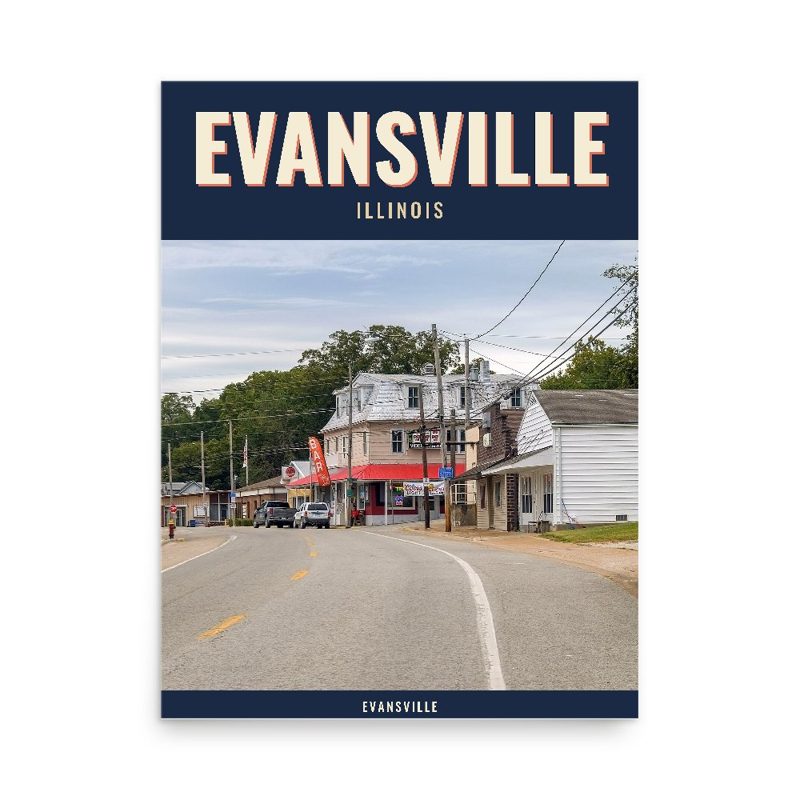
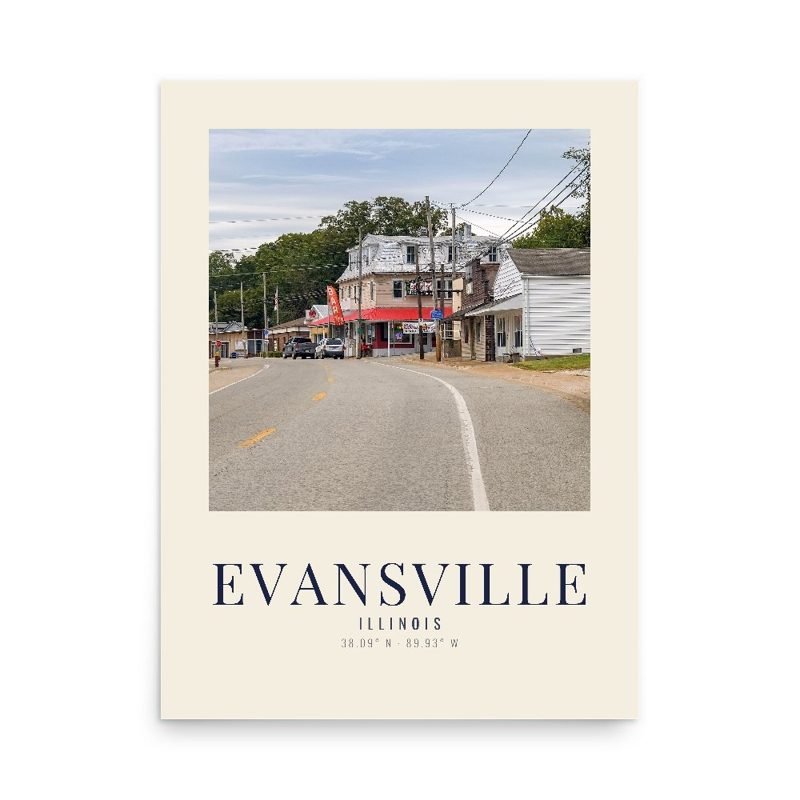
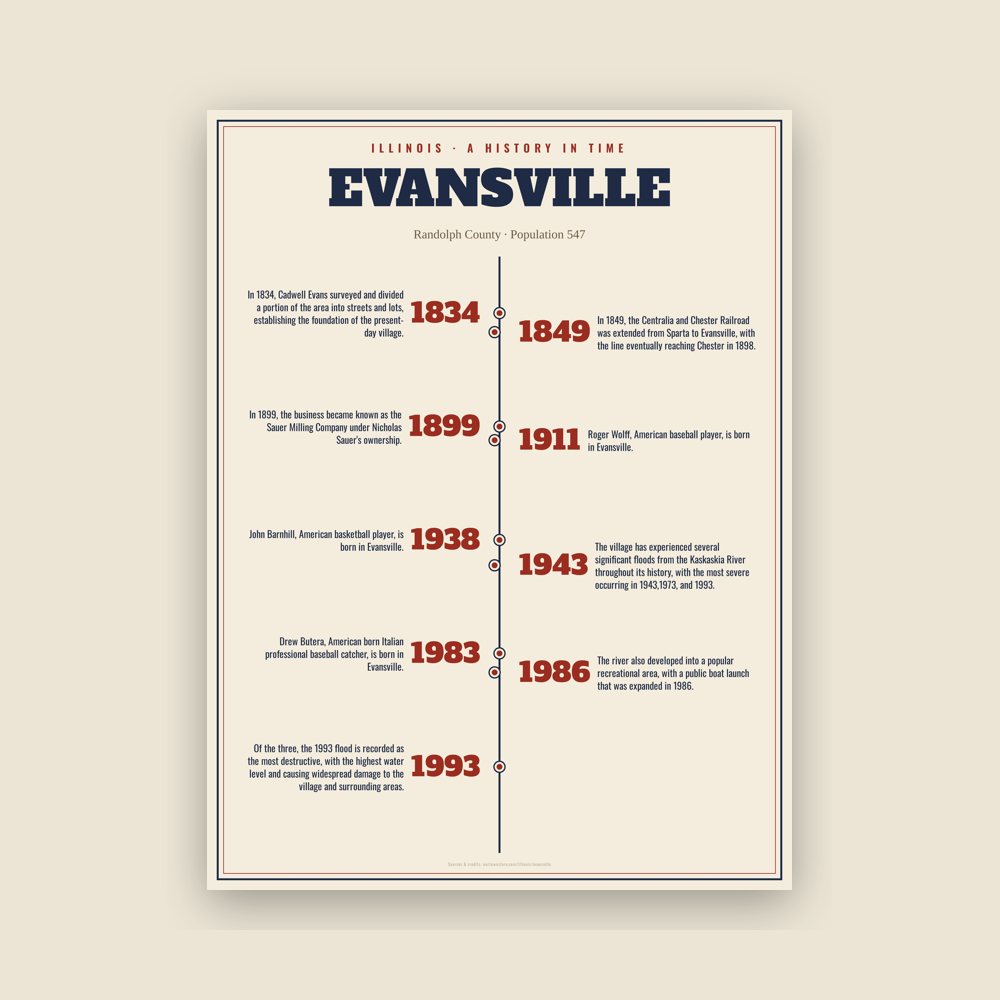
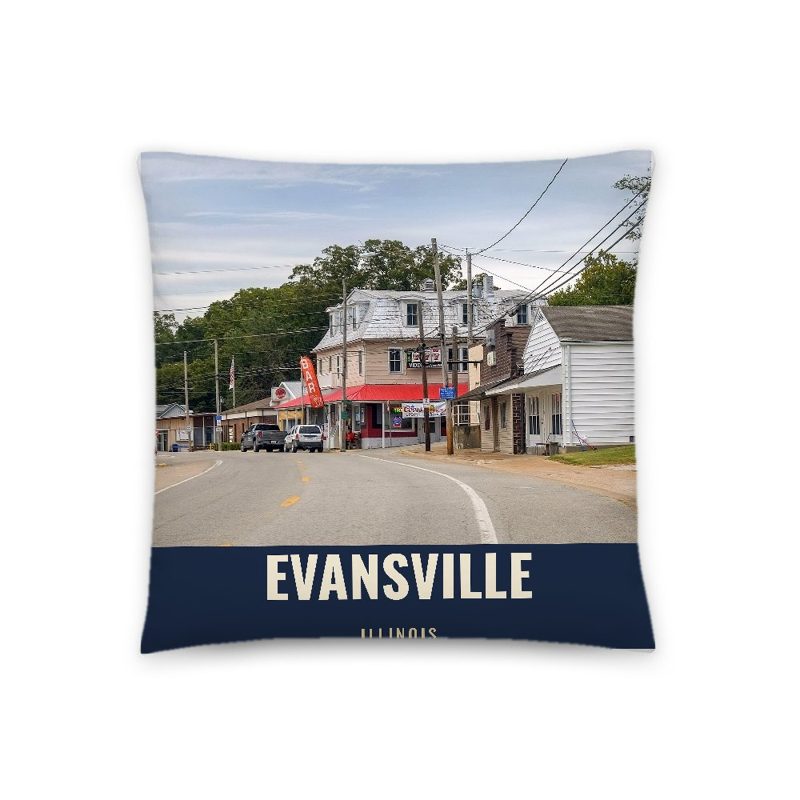
The early history of Evansville, Illinois, dates back to 1811, when Andrew White identified the area along the eastern side of the Kaskaskia River as a suitable location for establishing a town. The development of the settlement during the following two decades is largely undocumented. In 1834, Cadwell Evans surveyed and divided a portion of the area into streets and lots, establishing the foundation of the present-day village.
Read the full history
The Kaskaskia River
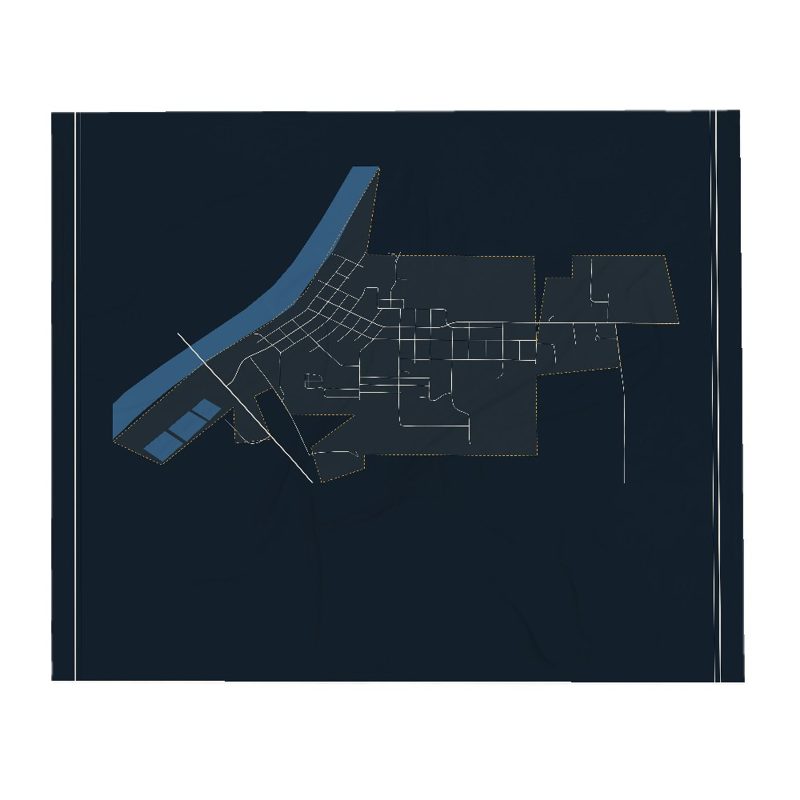
The Kaskaskia River has been an important part of Evansville's economic development and history. Over the years, it served as a transportation route for local businesses, including the Sauer Milling Company, which shipped flour and grain to markets along the Mississippi River. The former milling operation eventually sold to Farm Service, now known as Gateway FS. Following improvements to the lower river channel in the early 1970s, barge transportation became more common, allowing agricultural products to reach larger markets. The river also developed into a popular recreational area, with a public boat launch that was expanded in 1986. Today, visitors use the river for boating, fishing, swimming, water skiing, and camping, bringing additional activity to the village and surrounding businesses.
Flooding
The village has experienced several significant floods from the Kaskaskia River throughout its history, with the most severe occurring in 1943,1973, and 1993. These events resulted in extensive flooding throughout the area, affecting numerous homes and businesses and causing considerable property damage. Of the three, the 1993 flood is recorded as the most destructive, with the highest water level and causing widespread damage to the village and surrounding areas.
The Railroad
The development of the railroad service brought new economic opportunities to Evansville during the late 19th century. In 1849, the Centralia and Chester Railroad was extended from Sparta to Evansville, with the line eventually reaching Chester in 1898. The railroad provided local business with improved access to outside markets and made it easier to transport agricultural products, particularly grain and flour. This helped support the growth of local milling companies and strengthened Evansville's role in the region's agricultural economy.
The Sauer Family and Milling Industry
The Sauer family played an important role in Evansville's development, particularly through its involvement in the local milling industry. In 1866, Phillip Sauer and his son Nicholas purchased the flour mill previously operated by John Wehrheim and established the N. & P. Milling Company. The mill became one of the first in Southern Illinois to adopt the roller milling process, allowing it to expand production. For many years, the business was a major employer in the area and contributed significantly to Evansville's economy. Flour produced at the mill was transported by river and railroad to markets throughout the region and beyond. In 1899, the business became known as the Sauer Milling Company under Nicholas Sauer's ownership. The company eventually ceased operations, and the property was sold to Farm Service, which is present day Gateway FS, continuing the site's connection to the agricultural industry. The Sauer family also left a lasting mark on the community through its contributions to local institutions and the establishment of a private family cemetery in the village.