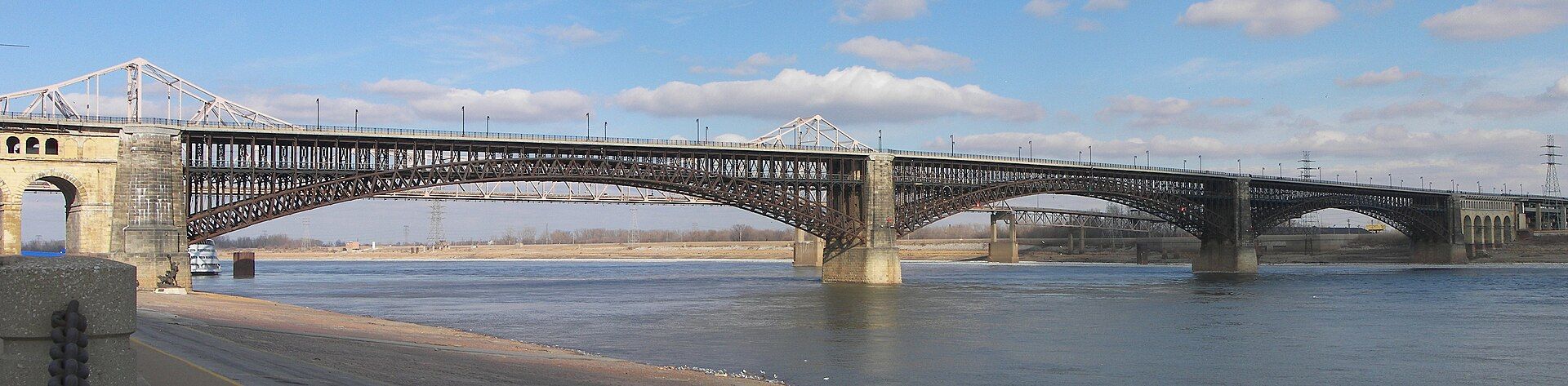
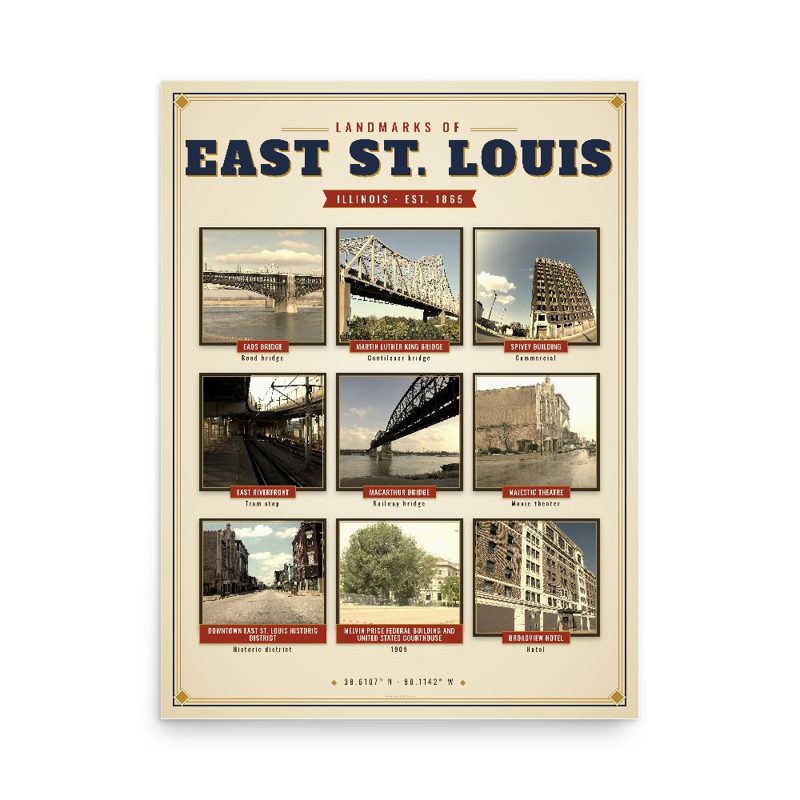
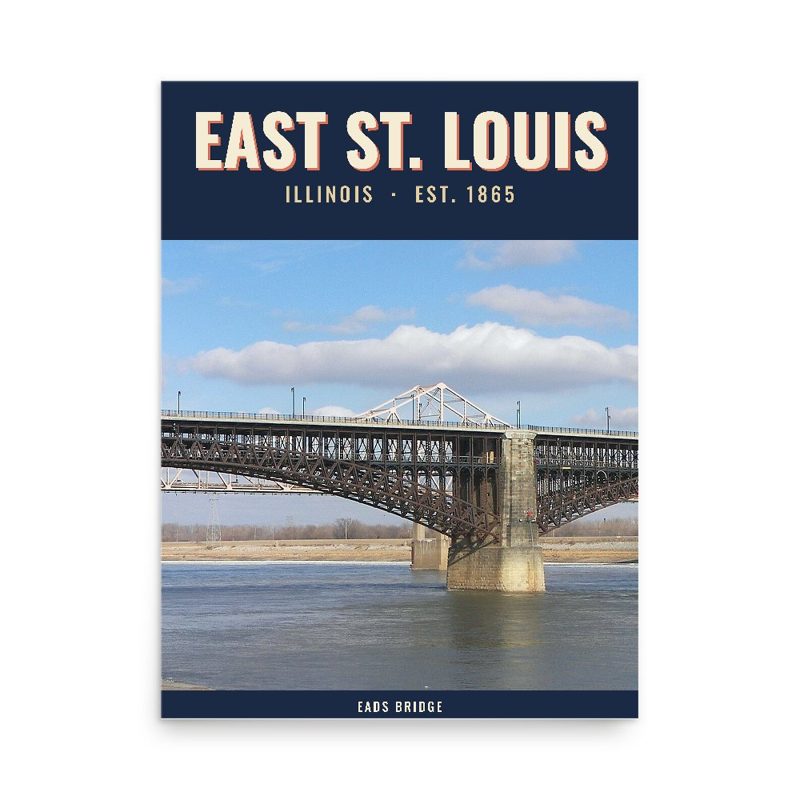
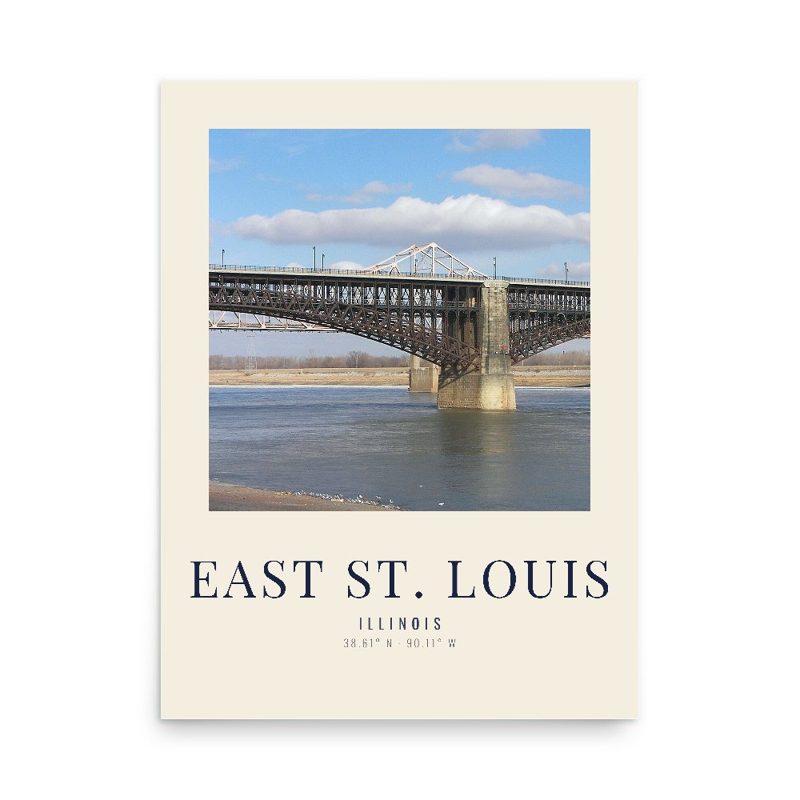
Native Americans had long inhabited both sides of the Mississippi River. The Mississippian culture rulers organized thousands of workers to construct complex earthwork mounds at what later became St. Louis and East St. Louis. The center of this culture was the urban complex of Cahokia, located to the northeast of present-day East St. Louis within Collinsville, Illinois. Before the Civil War, settlers reported up to 50 mounds in the area that became East St. Louis, but most were lost to 19th-century development and later roadbuilding.
East St. Louis lies within the fertile American Bottom area of the present day Metro East area of St. Louis, Missouri. This name was given after the United States acquired the Louisiana Purchase in 1803, and more European Americans began to settle in the area. The village was first named "Illinoistown".
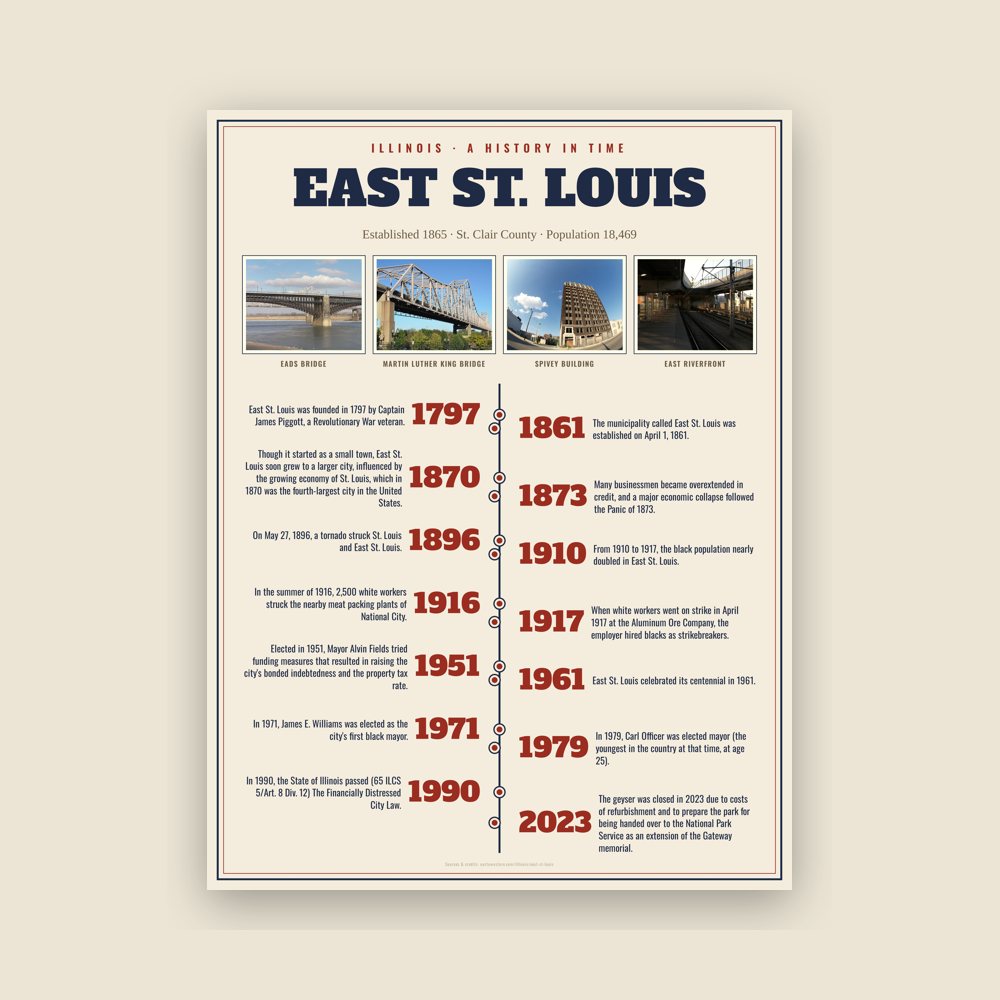
East St. Louis was founded in 1797 by Captain James Piggott, a Revolutionary War veteran. In that year Piggott began operating a ferry service across the Mississippi River, connecting Illinoistown with St. Louis, which had been founded by ethnic French families. When Piggott died in 1799, his widow sold the ferry business, moved to St. Louis County and remarried. One of the Piggotts' great-great-granddaughters became known as actress Virginia Mayo (Virginia Clara Jones).
The municipality called East St. Louis was established on April 1, 1861. Illinoistown residents voted on a new name that day, and 183 voted to rename the town East St. Louis. Though it started as a small town, East St. Louis soon grew to a larger city, influenced by the growing economy of St. Louis, which in 1870 was the fourth-largest city in the United States.
Read the full history
Great Railroad Strike of 1877
Extensive industrial growth followed the American Civil War, helped by the city's proximity to coal mines in Illinois. Early industry included meatpacking and stockyards, concentrated in one area to limit their nuisance to other jurisdictions.
Many businessmen became overextended in credit, and a major economic collapse followed the Panic of 1873. This was due to railroad and other manufacturing expansion, land speculation, and general business optimism caused by large profits from inflation. The economic recession began in the East and steadily moved West, crippling the railroads, the main system of transportation. In response, railroad companies began dramatically lowering workers' wages, forcing employees to work without pay, and cutting jobs and paid work hours. These wage cuts and additional money-saving tactics prompted strikes and massive unrest.
While most of the strikes in the eastern cities during 1877 were accompanied by violence, the late July 1877 St. Louis strike was marked by a bloodless and quick takeover by dissatisfied workers. By July 22, the St. Louis Commune began to take shape, as representatives from almost all the railroad lines met in East St. Louis. They soon elected an executive committee to command the strike and issued General Order No. 1, halting all railroad traffic other than passenger and mail trains. John Bowman, the mayor of East St. Louis, was appointed arbitrator of the committee. He helped the committee select special police to guard the property of the railroads from damage. The strike and the new de facto workers' government, while given encouragement by the largely German-American Workingmen's Party and the Knights of Labor (two key players in the organization of the Missouri general strike), were run by no organized labor group.
Go home to your different wards and organize your different unions, but don't keep coming up here in great bodies and stirring up excitement. Ask the Mayor, as we did, to close up all the saloons ... keep sober and orderly, and when you are organized, apply to the United Workingmen for orders. Don't plunder ... don't interfere with the railroads here ... let us attend to that.
The strikers held the railroads and city for about a week, without the violence that took place in Chicago and other cities. The federal government intervened, and on July 28 US troops took over the Relay Depot, the Commune's command center, and the strike ended peacefully.
Great Cyclone of 1896
On May 27, 1896, a tornado struck St. Louis and East St. Louis. The deadliest tornado ever to hit the cities, the 20-minute storm killed 137 people in St. Louis and 118 in East St. Louis. Its destruction spanned 10 miles (16 km), including the railyards and commercial districts of East St. Louis, destroying 311 buildings and severely damaging 7,200 more. The cost was estimated between $10 million and $12 million, at a time when a two-story brick house could be purchased for $1,500.
20th century
East St. Louis continued to have an industry-based economy. During and after World War II, many workers made decent livings. It was named an All-America City in 1959 by the National Civic League. East St. Louis celebrated its centennial in 1961. It was known as the "Pittsburgh of the West". Its population reached a peak of 82,366 residents in the 1950 census, the fourth-largest city in Illinois at the time.
Through the 1950s and later, the city's musicians were an integral creative force in blues, rock and roll, and jazz. Some left and achieved national recognition, such as Ike & Tina Turner. The jazz trumpeter Miles Davis, who became internationally known, was born in nearby Alton and grew up in East St. Louis. The 1999 PBS series River of Song featured these musicians in its coverage of music from cities along the Mississippi River.
The city suffered from the mid-century restructuring of heavy industry and railroads, which led to widespread job losses. As many local factories began to close due to the changes within the industry, the railroad and meatpacking industries also cut back and moved jobs out of the region. This led to a precipitous loss of working- and middle-class jobs. The city's financial conditions deteriorated. Elected in 1951, Mayor Alvin Fields tried funding measures that resulted in raising the city's bonded indebtedness and the property tax rate. More businesses closed as workers left the area to seek jobs in other regions. The more established white workers had an easier time gaining jobs in other localities, and the city population became increasingly Black. Contaminated brownfield sites were expensive and difficult to redevelop.
Street gangs appeared in city neighborhoods. Like other cities with endemic problems by the 1960s, violence added to residential mistrust and adversely affected the downtown retail base and the city's income.
The construction of freeways also contributed to East St. Louis's decline. They were constructed through and broke up functioning neighborhoods and community networks, adding to the social disruption of the period. The freeways made it easier for residents to commute back and forth from suburban homes, so wealthier people moved out to newer housing. East St. Louis adopted a number of programs to try to reverse decline—the Model Cities program, the Concentrated Employment Program, and Operation Breakthrough—but they did not offset the loss of industrial jobs due to national restructuring.
In 1971, James E. Williams was elected as the city's first black mayor. He was unable to do much about the overwhelming economic problems. In 1975, William E. Mason was elected mayor; his term marked a return to patronage politics, and the city sank deeper into debt and reliance on federal funding. In 1979, Carl Officer was elected mayor (the youngest in the country at that time, at age 25). Despite hopes for improvement, conditions continued to decline. Middle-class citizens continued to leave the city. People who could get jobs moved to places with work and a decent quality of life. Lacking sufficient tax revenue, the city cut back on maintenance, sewers failed, and garbage pickup ceased. Police cars and radios stopped working. The East St. Louis Fire Department went on strike in the 1970s.
Structure fires destroyed so many consecutive blocks that much of the post-Armageddon film Escape from New York was filmed in East St. Louis.
In 1990, the State of Illinois passed (65 ILCS 5/Art. 8 Div. 12) The Financially Distressed City Law. Under this law, Governor James R. Thompson provided $34 million in loans to East St. Louis, with the stipulation that an appointed five-member board, the East St. Louis Financial Advisory Authority, manage the city's finances. In 1990 the state legislature approved riverboat gambling in an effort to increase state revenue. The opening of the Casino Queen riverboat casino generated the city's first new source of income in nearly 30 years.
In 1991, Gordon Bush was elected mayor. Several major industries operating in the area had gained separate incorporation as jurisdictions for the land where their plants are sited. These "communities" have virtually no residents, and the shell jurisdictions are outside East St. Louis's tax base (see Sauget, Illinois), but residents of the city suffer from contaminated air and other adverse environmental effects of these sites. At the same time, the city's tax base is too poor for it to maintain its infrastructure, including the sanitary sewers, many of which have broken and overflowed in residential neighborhoods and schools.
In 1994, the Gateway Geyser was added to the city's waterfront, facing the St. Louis Arch. On the grounds of Malcolm W. Martin Memorial Park, it was the world's second-tallest fountain. Designed to complement the Gateway Arch in St. Louis, it shot water to a height of 630 feet (190 m), the same height as the Arch. The geyser was closed in 2023 due to costs of refurbishment and to prepare the park for being handed over to the National Park Service as an extension of the Gateway memorial.
21st century
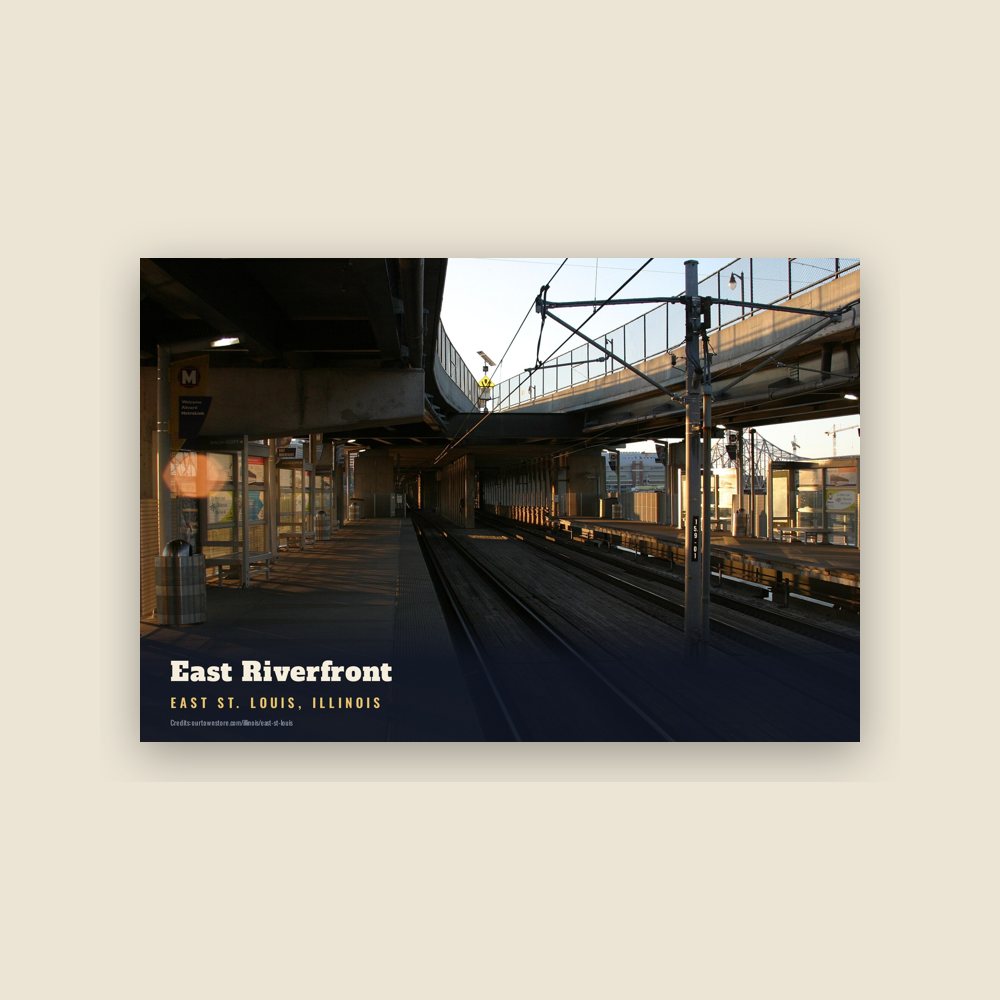
Since 2000, the city has completed several redevelopment projects: in 2001, it opened a new library and built a new city hall. Public-private partnerships have resulted in a variety of new retail developments and housing initiatives. The St. Louis MetroLink light rail connects the city by transit to St. Louis, which has a stronger economy, and such efforts have sparked renewal.
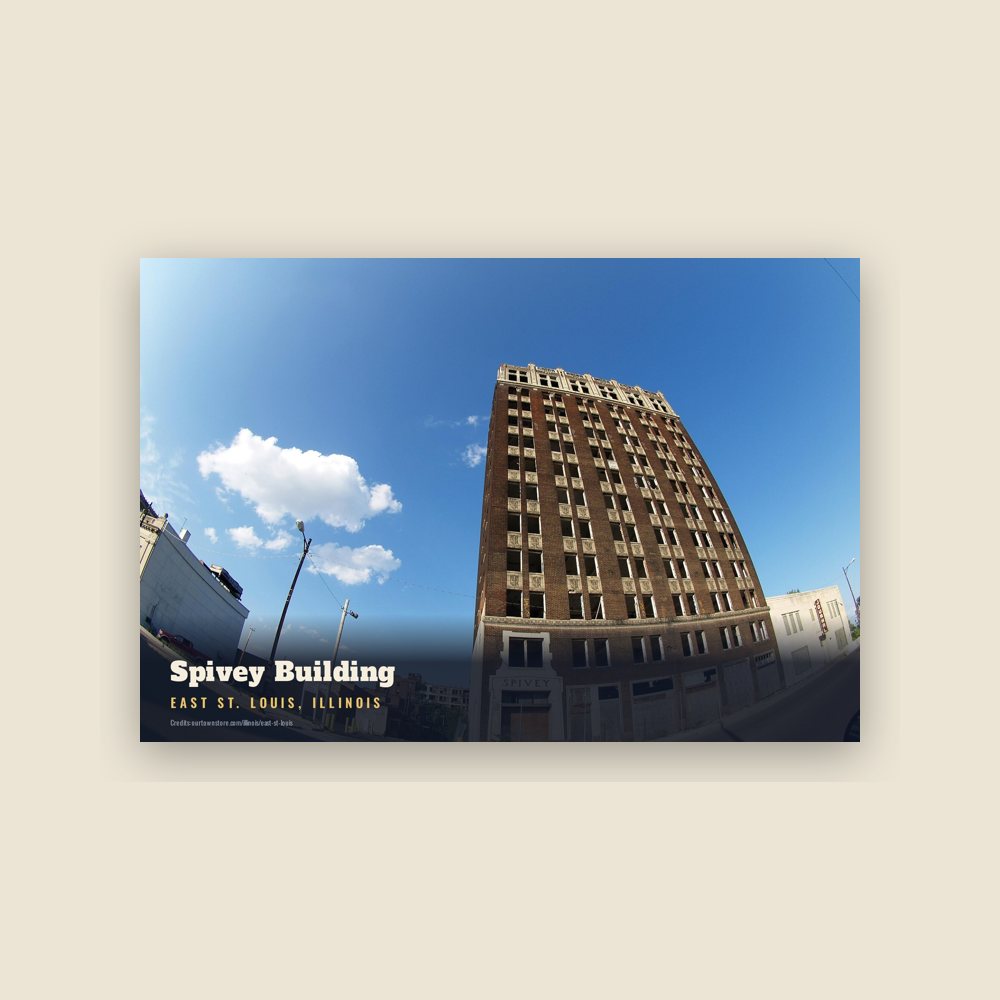
Because of depopulation, the city has many abandoned properties and extensive urban blight. Sections of "urban prairie" can be found where vacant buildings were demolished, and whole blocks have become overgrown with vegetation. Much of the territory surrounding the city remains undeveloped, bypassed by developers who chose more affluent suburban areas. Many old "inner city" neighborhoods abut large swaths of corn and soybean fields or otherwise vacant land. In addition to agricultural uses, several truck stops, strip clubs, and semi-rural businesses surround blighted areas in the city.
In 2010, the East St. Louis community gardening movement began to develop plots for "urban farming", as was done in North St. Louis. Inspired by Detroit's planned use of vacant land for green development, community associations, nonprofits and universities have collaborated to spark green development in East St. Louis.
As of 2023, about 2,200 people, or 12% of the population live in public housing owned by the East St. Louis Housing Authority. All these residents make less than $9,000 per year, meaning the Authority is highly dependent upon state and federal funding to continue operating its aging housing stock.
Archeological remains
In the early 1990s, archeological surveys and excavations prior to the construction of Interstate 55/70 revealed evidence of important prehistoric structures in the East St. Louis area. Both sides of the river had earlier been reported as having numerous earthwork mounds when Europeans and Americans first settled in the area. Unfortunately, most of these cultural treasures in St. Louis and on the east side were lost to development.
Illinois researchers discovered the remains of several earthwork mounds. In the East St. Louis area, 50 mounds had been mapped before the Civil War, and seven remain visible today. The largest is estimated to have been originally 40 feet (12 m) high and would have nearly covered a football field. Around the remains of this mound, researchers have discovered evidence of burial mounds, a large plaza, a wooden defensive palisade, and several other Mississippian culture structures. These indicate that it was a ritual center. The 500-acre (200 ha) prehistoric site is now called the East St. Louis Mound Center. The state and University of Illinois are trying to develop coordinated projects with East St. Louis and businesses to use the mounds and artifacts as attractions for heritage tourism.
It was built by the Mississippian culture, which extended throughout the Ohio and Mississippi valleys. It reached its peak in this region about AD 1100–1200 at the nearby major center of Cahokia, a designated UNESCO World Heritage Site within the present-day boundaries of Collinsville. A complex urban center estimated to have had a population of perhaps 20,000, this site is about 5 miles (8 km) from East St. Louis.
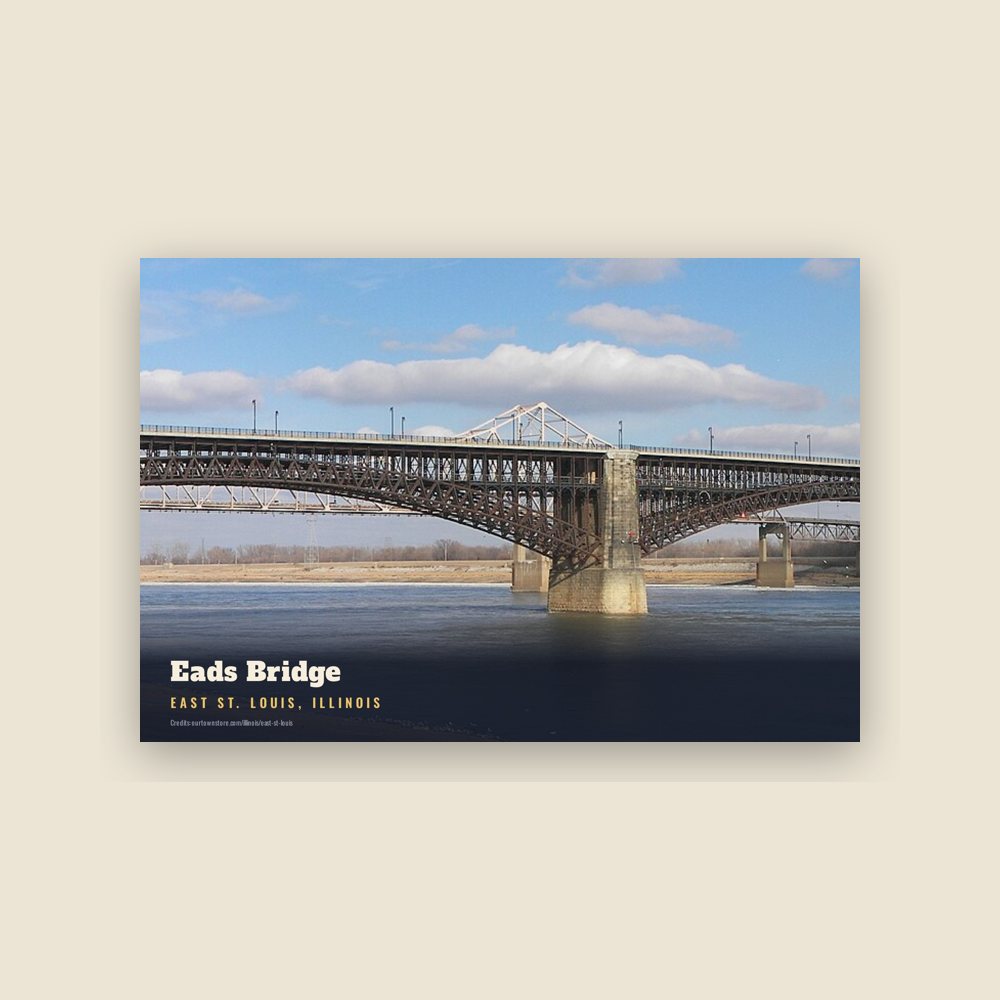
In 2012, archeological work prior to construction of the Stan Musial Bridge across the Mississippi discovered artifacts and evidence of a formerly unidentified 900-year-old suburb of Cahokia in present-day East St. Louis. This site had not been mapped in the 19th century, and was unknown. The Mississippian culture site is in a present industrial wasteland. Researchers found evidence of more than 1,000 dwellings and the base of an earthen pyramidal mound. It would have been one of dozens of mounds when the community was active, based on the size of the residential population of this site. The discovery of the site led scholars to increase their estimates of the total population of the Mississippians at Cahokia and in the area, now thought to have been about 20,000. They did not have the time to excavate the entire area. It is on private land and subject to risk of destruction by development.