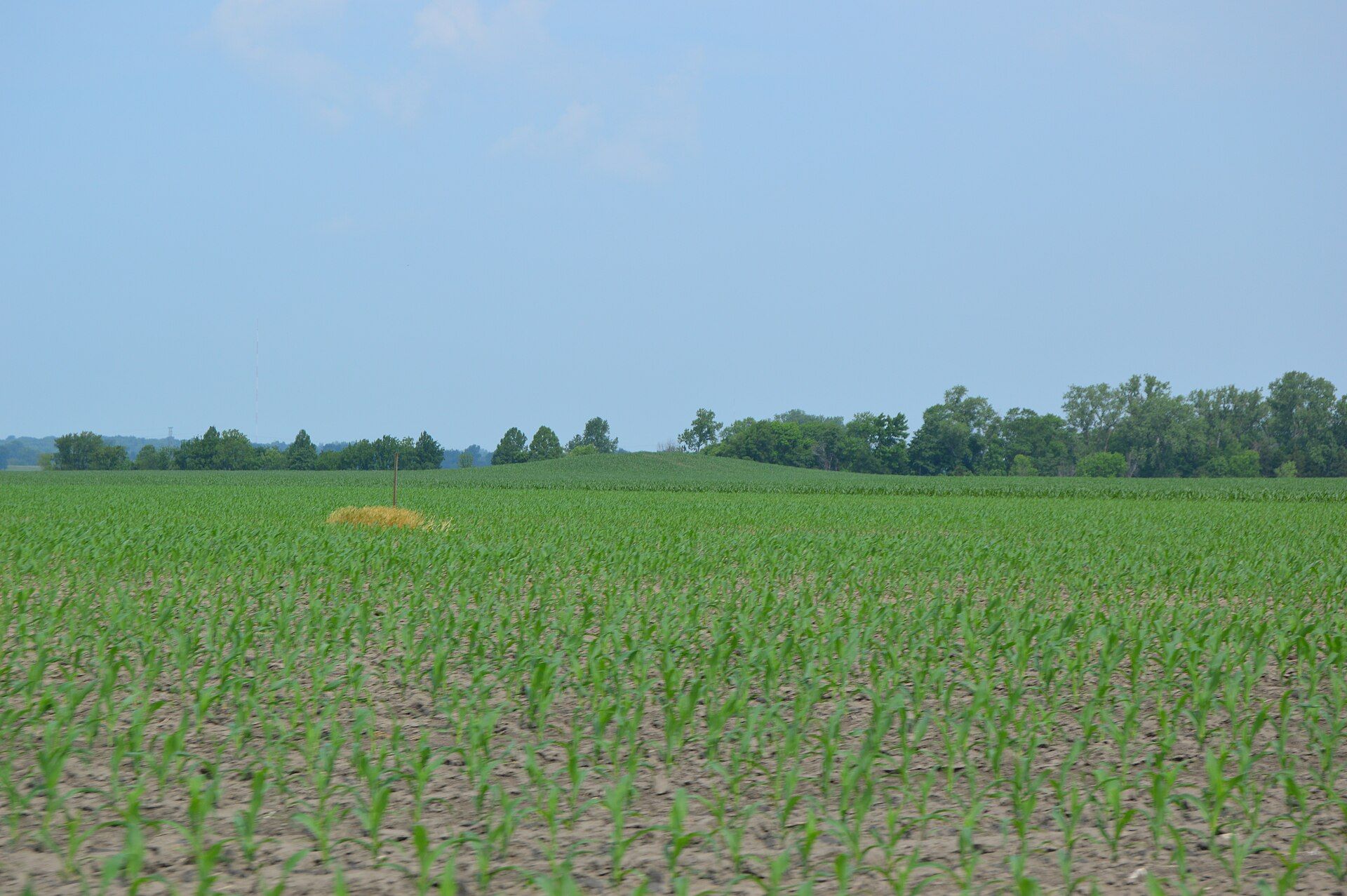
Dupo is a village in St. Clair County, Illinois, United States. Landmarks include Lunsford-Pulcher Archeological Site and KZQZ.
- CountyMonroe County
- Population3,996 (2020 U.S. Census)
- Historic places1 on the National Register
Dupo, Illinois gifts and souvenirs: 21 designs made from Dupo's own map, landmarks and history, from $10 to $95. Printed to order and shipped free in the USA.
| Popular | Price |
|---|---|
| Dupo Hometown Ornament | $23 |
| Dupo Vintage Travel Poster | from $40 |
| Dupo Varsity Crewneck | from $57 |
| Dupo Est. Tee | from $33 |
| Dupo Town Line Mug | from $26 |
| Dupo Market Tote | $37 |

Ceramic keepsake, gold ribbon
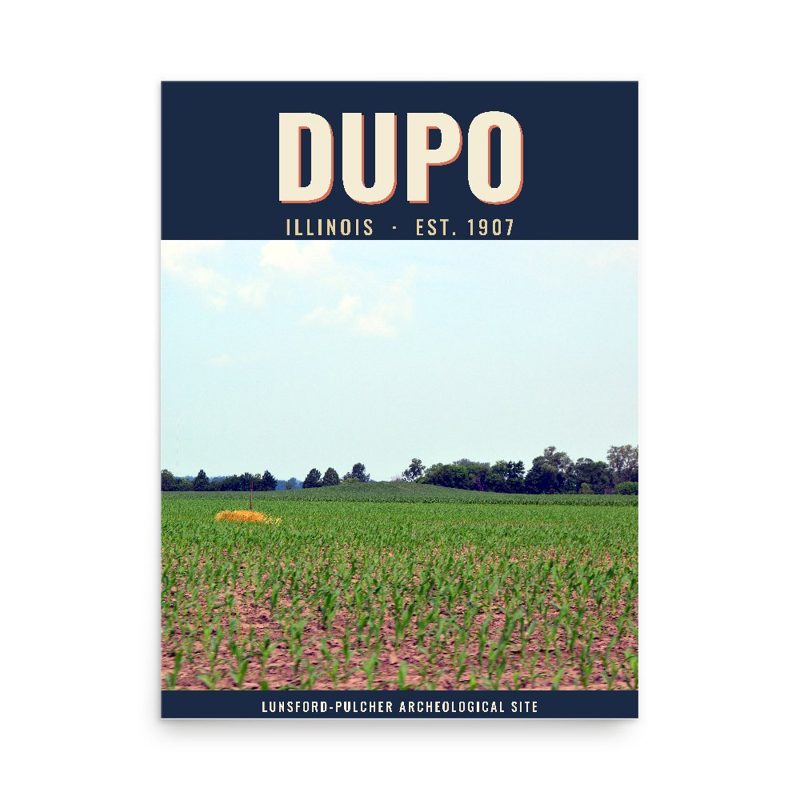
Its landmark photo in a classic travel-poster layout

A local landmark photo as a gallery print
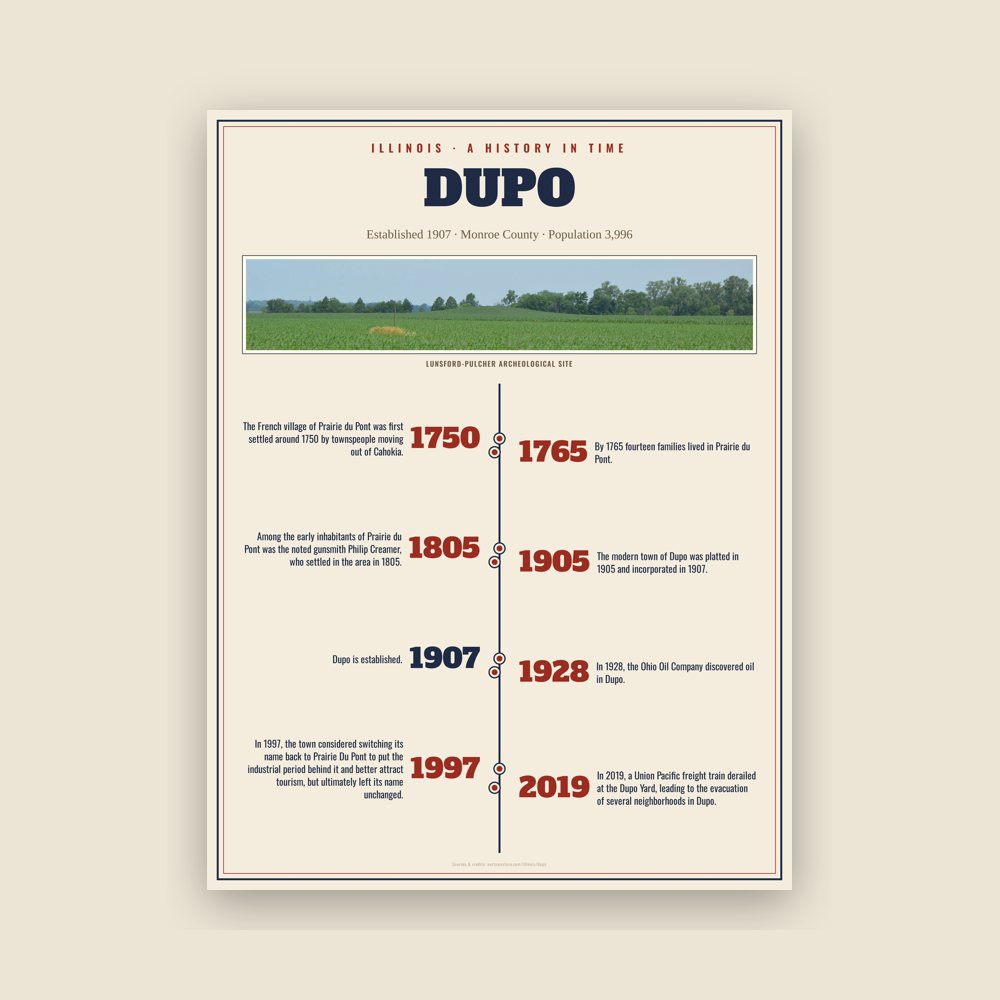
The town's story in dates, from its own records, for home or classroom
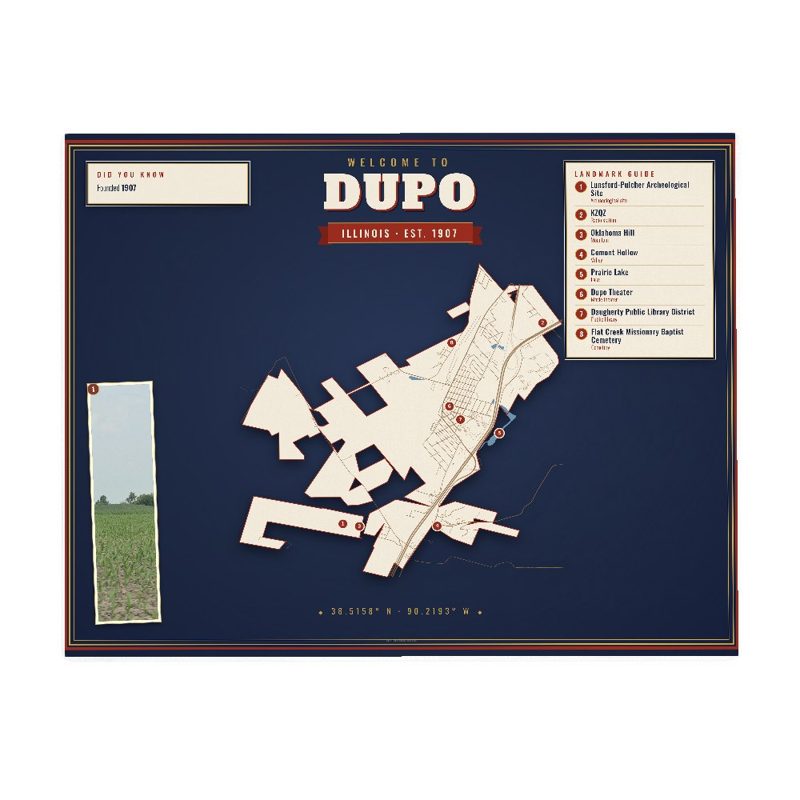
Map of local landmarks, washable fabric

Heavy-blend fleece, street map printed on the back

Soft Bella+Canvas jersey

Kids' Bella+Canvas jersey, youth sizes

Bella+Canvas toddler jersey
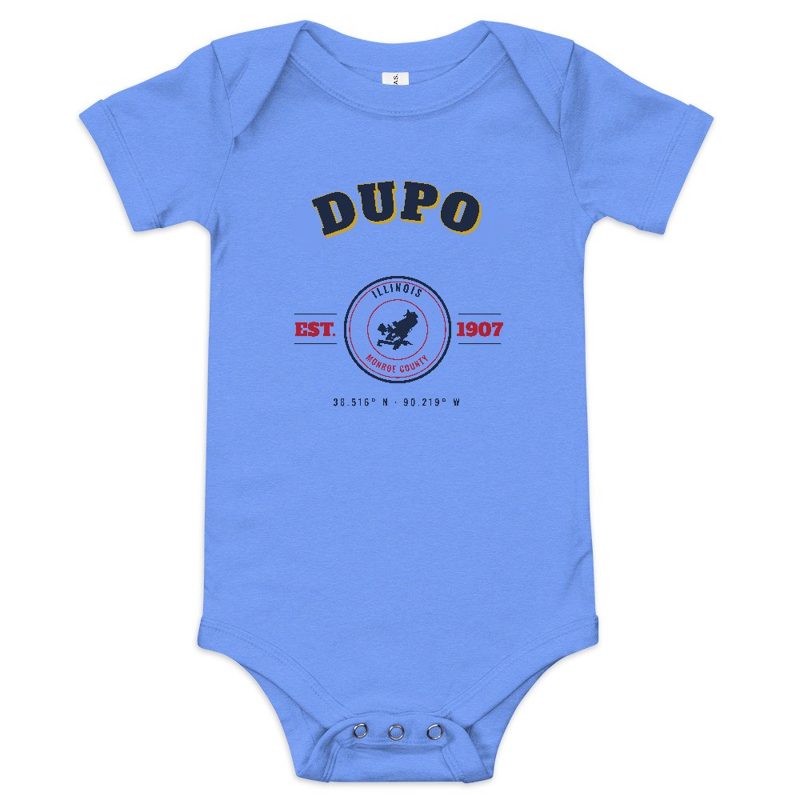
Bella+Canvas baby bodysuit

Glossy ceramic, dishwasher safe
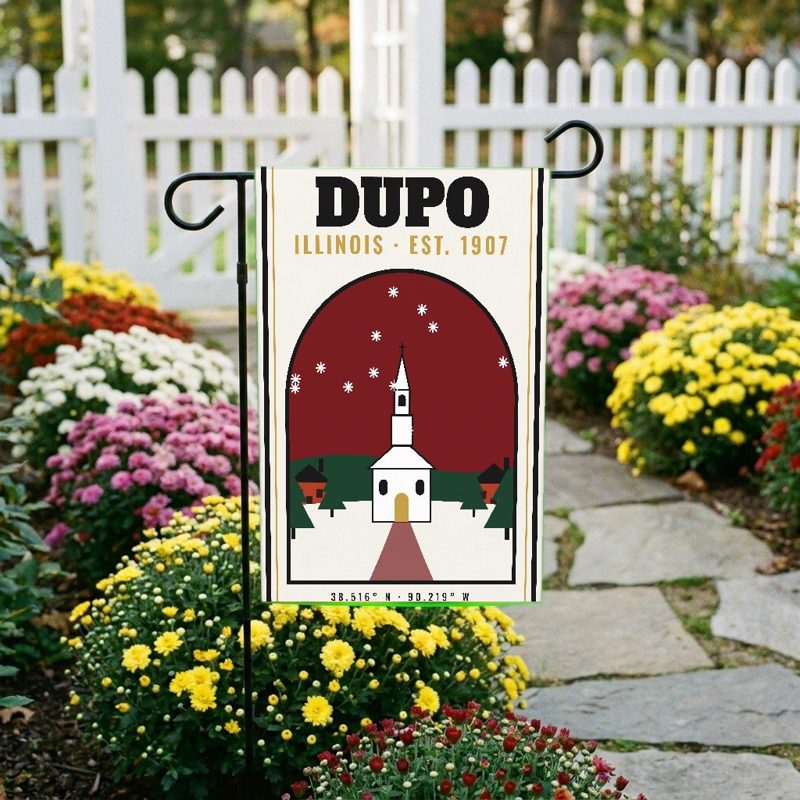
Weatherproof, for the front walk

24″×16″, printed coir-look fibers, rubber back
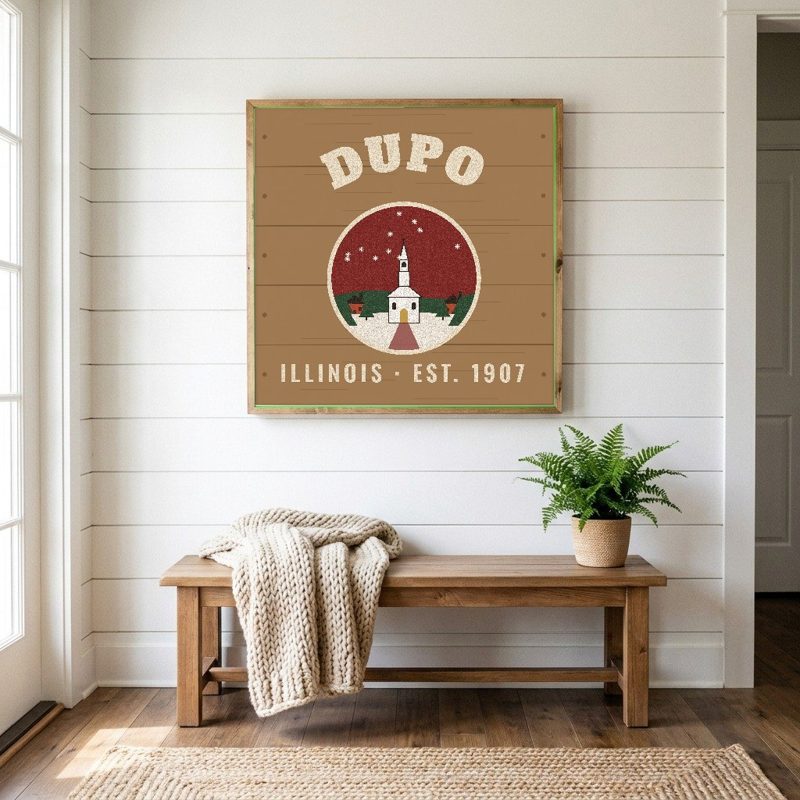
12″×12″ printed wood, ready to hang
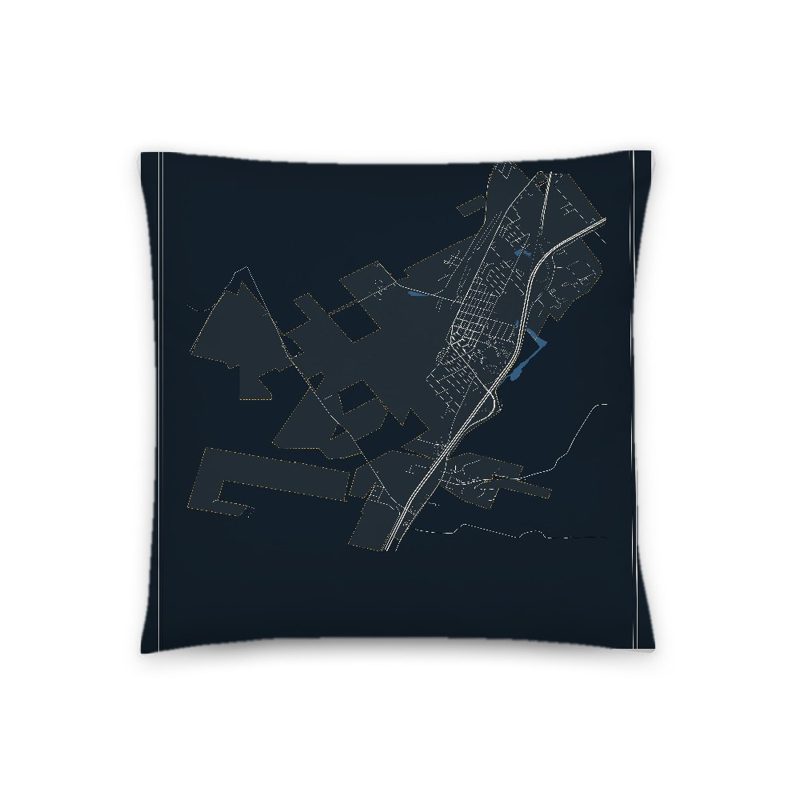
Soft-touch, zip cover

A local landmark photo with the town name, 18″×18″

Sturdy all-over-print tote

Glossy top, cork back

Soft fleece, 50″×60″
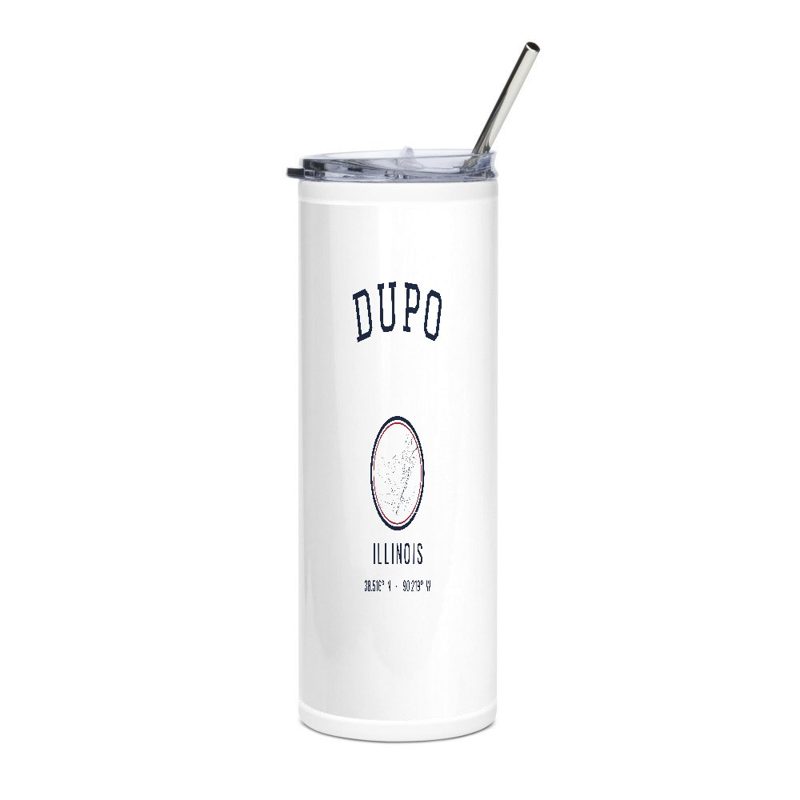
20 oz, double-wall stainless

6″×4″ postcard, glossy front
Dupo is a village in St. Clair County, Illinois, United States. Landmarks include Lunsford-Pulcher Archeological Site and KZQZ.
Population 2010: 4,138 → 2020: 3,996
From Wikidata (CC0).
In the Mississippian period, Dupo was the site of one of several multi-mound communities in the floodplain near Cahokia. These mounds remained standing at least as recently as 1915.
The French village of Prairie du Pont was first settled around 1750 by townspeople moving out of Cahokia. It was located at a bridge over what is now known as Prairie du Pont Creek, on the trail from Cahokia to Kaskaskia, which was the first wagon road in Illinois. The settlement may have been motivated by Dupo being located 10–12 feet higher than Cahokia and thus being more protected from floods on the Mississippi River. The Sulpician mission established a mill near the bridge, which became the core of the town's development. By 1765 fourteen families lived in Prairie du Pont. The village's growth was further spurred by the prominent local citizen Antoine Girardin, who parceled off parts of the Cahokia commons to residents of Prairie du Pont.
The early French village at Prairie du Pont followed a tripartite system of land ownership that was common in the Illinois country: private houses in a row, "common fields" enclosed by a shared fence but divided into narrow strips owned and farmed by a particular family, and the actual commons used jointly by the inhabitants for grazing their livestock. The village elected a village council, or syndic, to maintain the fence around the common fields.
Among the early inhabitants of Prairie du Pont was the noted gunsmith Philip Creamer, who settled in the area in 1805. Some parts of the historic Prairie du Pont community, such as the Pierre Martin House, are now located in unincorporated North Dupo, Illinois.
A Prairie du Pont school district was established by legislative enactment in 1847, to be funded by leases of the village commons, but no school was actually held in the village until 1861, due to inadequate funds.
The modern town of Dupo was platted in 1905 and incorporated in 1907. It grew around the Missouri Pacific Railroad switching yards. At the instigation of the railroad, the name was shortened from Prairie du Pont to Dupo.
In 1928, the Ohio Oil Company discovered oil in Dupo. This led to an oil boom in the town, in which oil wells were sunk in people's front yards. However, the oil boom was short-lived and the economy of the town returned to depending primarily on the rail yard.
In 1997, the town considered switching its name back to Prairie Du Pont to put the industrial period behind it and better attract tourism, but ultimately left its name unchanged.
In 2019, a Union Pacific freight train derailed at the Dupo Yard, leading to the evacuation of several neighborhoods in Dupo. The crash was caused by a 1.5 miles (2.4 km)-long freight train breaking in half and the two halves then colliding. A tank car full of methyl isobutyl ketone caught fire.
Adapted (trimmed) from the Wikipedia article Dupo, Illinois, revision 1378772609 by its contributors, licensed CC BY-SA 4.0.
We share a part of every Dupo sale with local partners, and we'd love to print from your collection. Old photographs, maps and postcards make the best keepsakes.
Partner with usA favorite landmark, your street, a school or team, an anniversary gift, a different product. Tell us and we'll get back to you by email.
Dupo's population was 3,996 in the 2020 U.S. Census, down from 4,138 in 2010.