A short history of Pagosa Springs
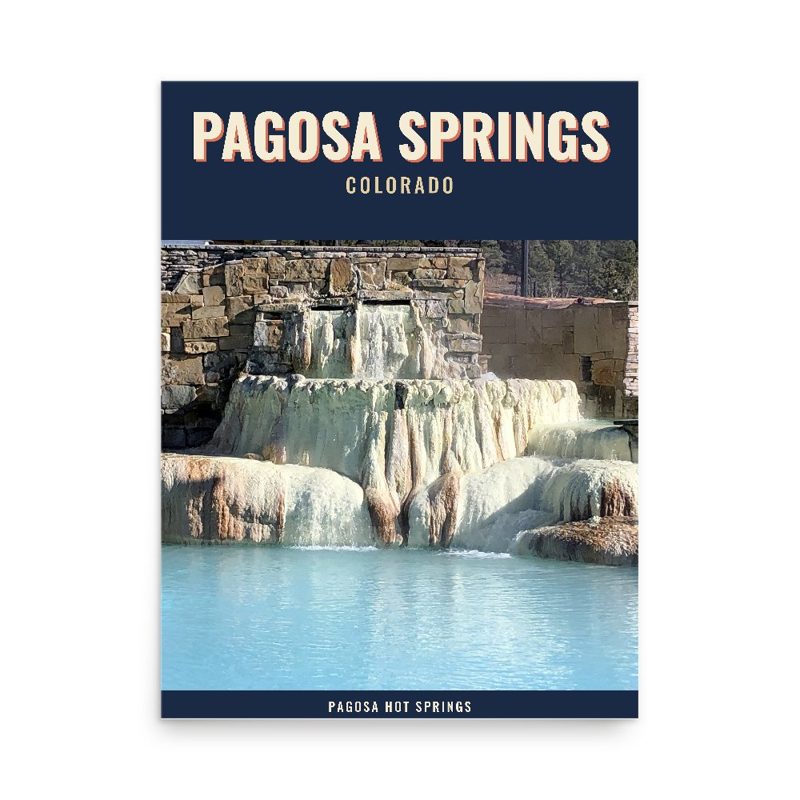
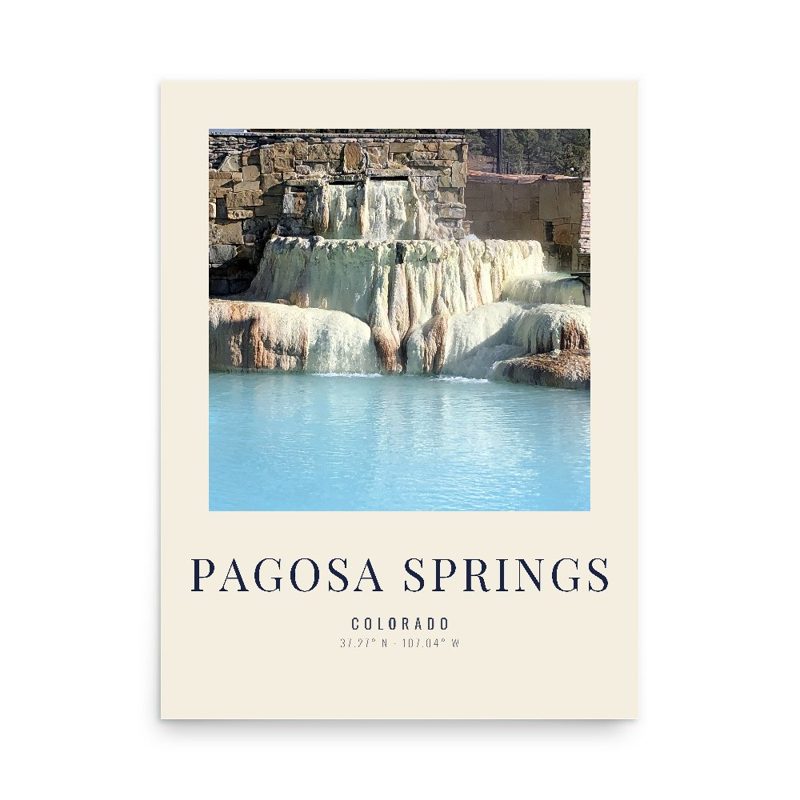
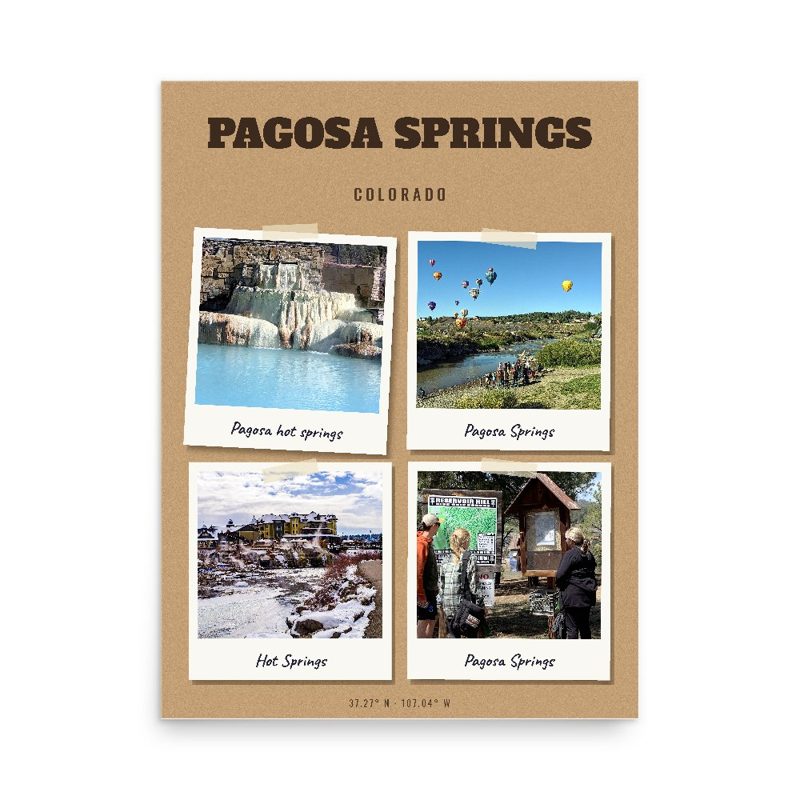
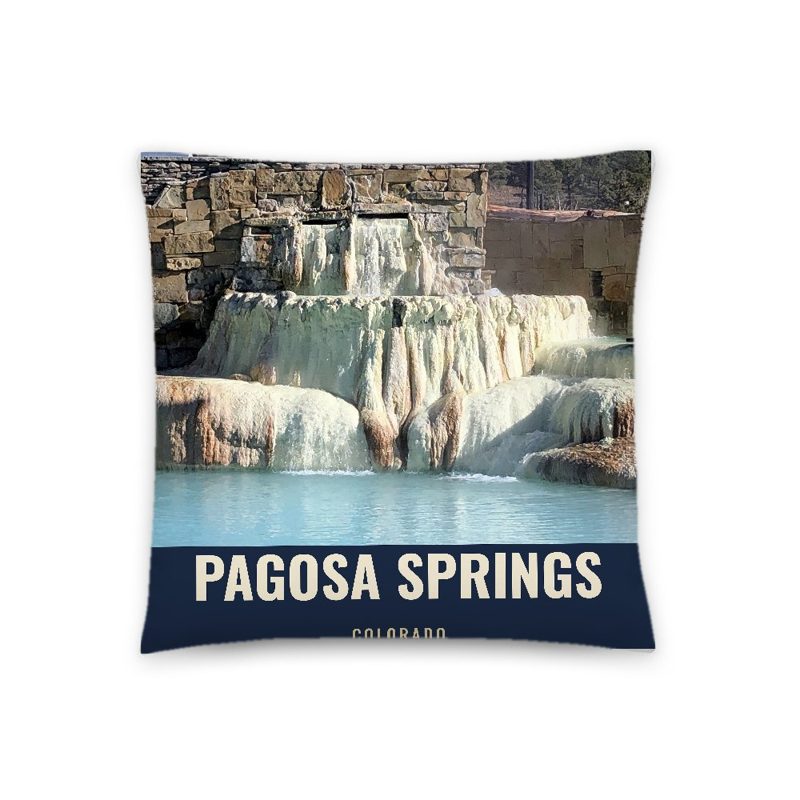
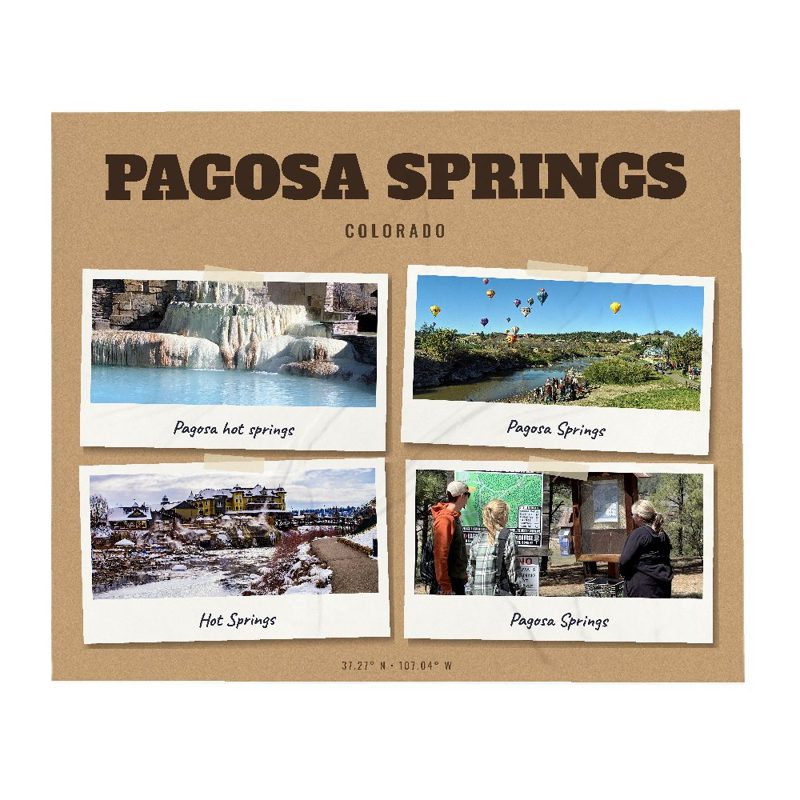
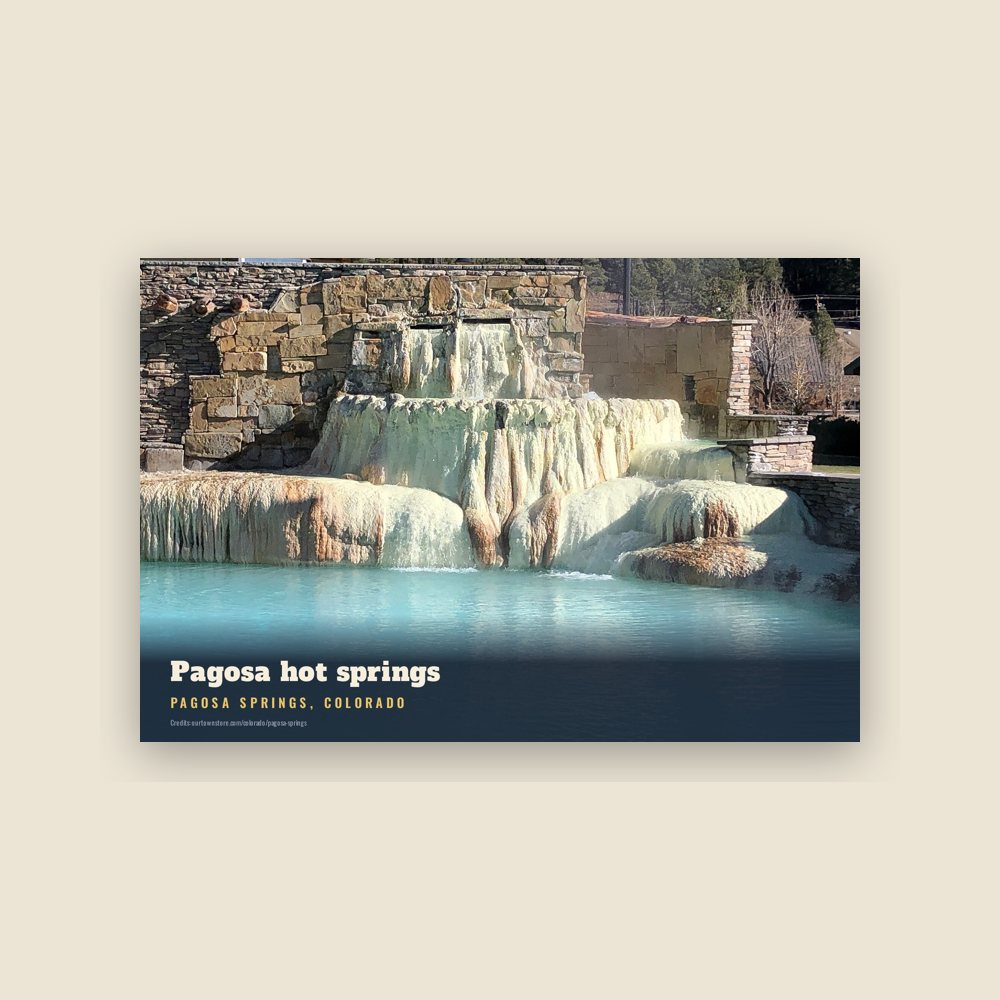
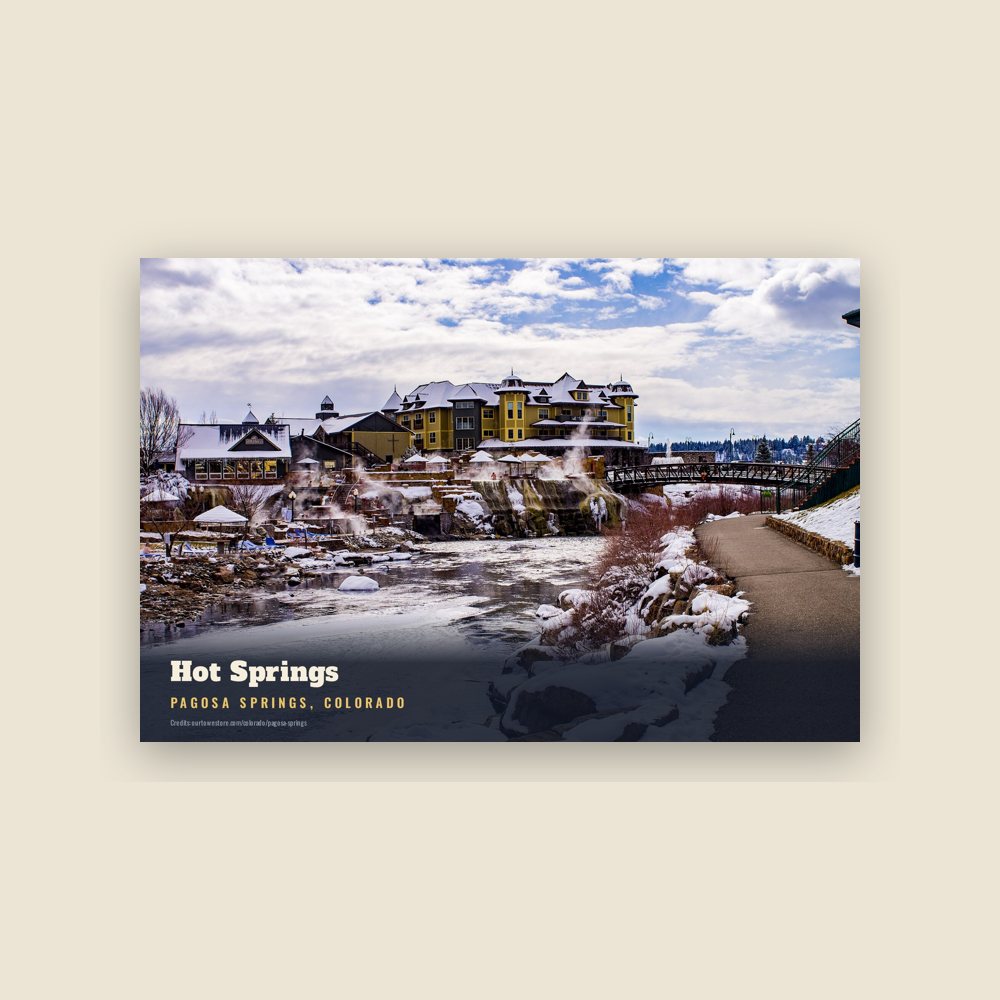
The town is named for a system of sulfur springs, Pagosa hot springs, located there, which includes the world's deepest geothermal hot spring. The "Mother" spring feeds primitive and developed hot springs located on the upper banks of the San Juan River, which flows through town. The primitive springs are freely accessible to the public, but are generally not for entering or interacting with because of the extreme water temperature. Developed springs feed soaking pools that are hosted by three privately owned soaking locations within town. The water from the "Mother" spring is approximately 144 °F (62 °C).
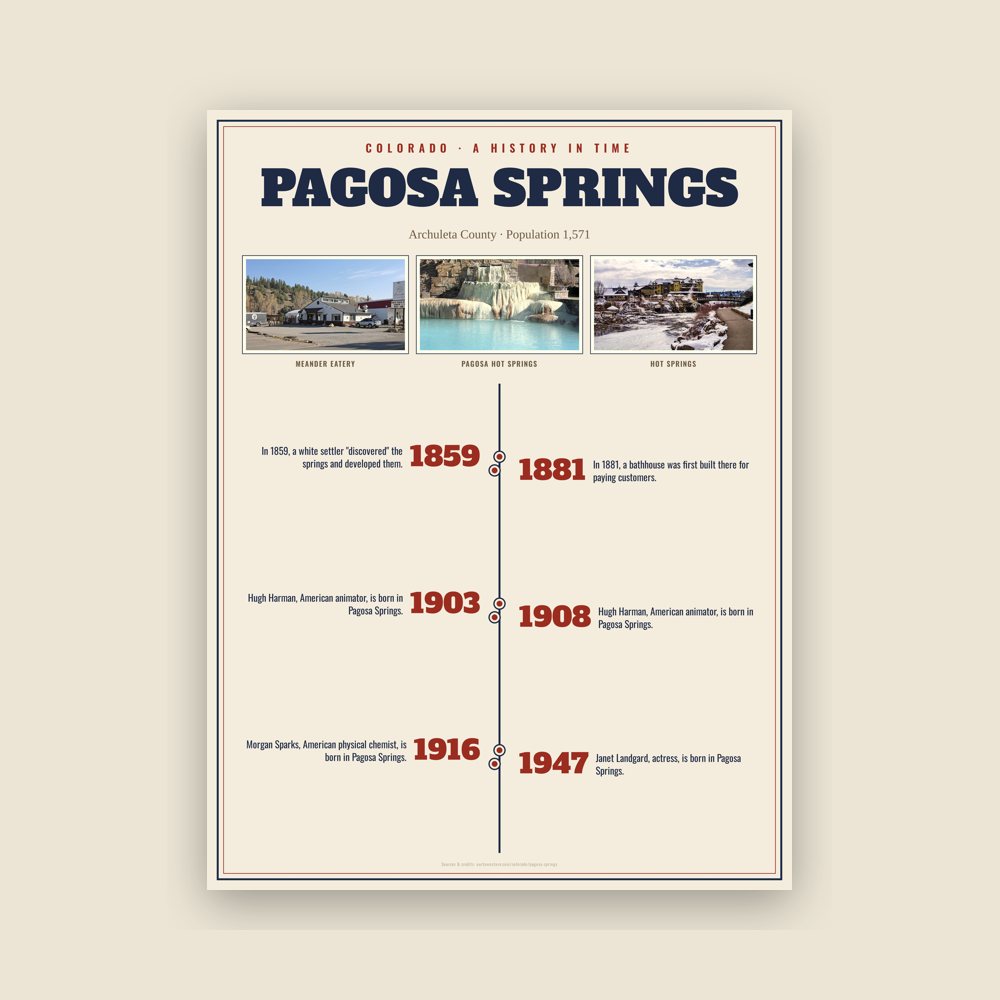
Local indigenous people used the hot springs for centuries; the area was considered "sacred ground". In Navajo cosmology, Pagosa Springs is the place where the People (Diné) emerged from their Fourth World underground to the Fifth World, this one, as Aileen O'Bryan records in The Dîné: Origin Myths of the Navaho Indians. In 1859, a white settler "discovered" the springs and developed them. In 1881, a bathhouse was first built there for paying customers.
The Ute people called the sulfur-rich mineral springs Pah gosah, which is commonly translated in modern documents as "healing waters"; however according to Bill Hudson writing for the Pagosa Daily Post, a Ute elder once translated the phrase as "water (pah) that has a bad smell (gosah)" whereas the Archuleta County government states that "pagosa" is a Ute word meaning "healing or "boiling water."
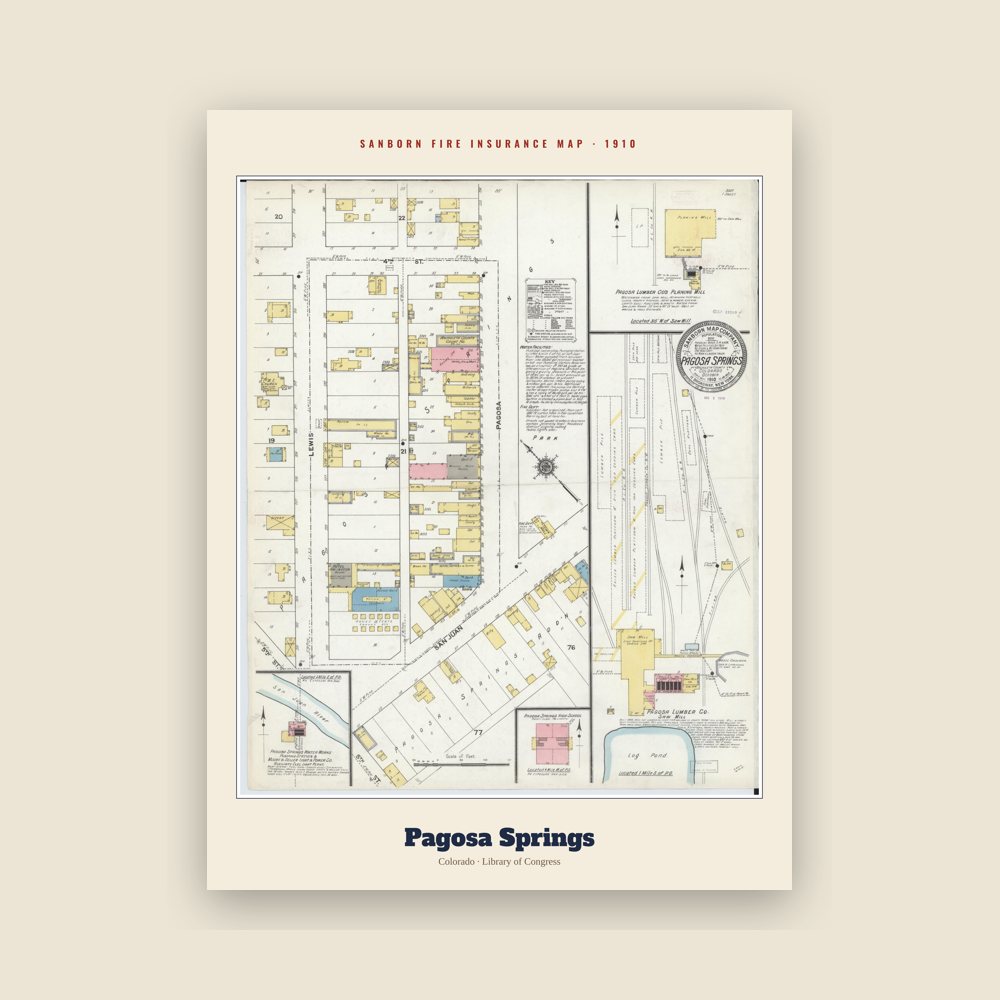
After the Civil War, the United States government considered building a convalescent hospital in Pagosa Springs. However, the hospital project was cancelled, and the lands platted by the U.S. Army were sold to private parties who capitalized on the thermal mineral springs. Along the banks of the San Juan river, simple wooden bathhouses were constructed.
In the late 1880s, Dr. Mary Winter Fisher ventured west from Chicago to found a medical and healing practice in Pagosa Springs. The medical center in the town is named after her.
In the 1930s, Cora Woods built a geothermal swimming pool fed with water from the hot springs, along with several small cabins on the Northeast corner of land she purchased from Bill Lynn, a local entrepreneur. There were a total of 23 cabins with no electricity, dirt floors, wood stoves, and oak iceboxes. In the 1950s, the Giordano family purchased the property from Cora Woods. The Giordanos were European coal miners who had settled in the Walsenburg, Colorado area. They dug additional geothermal wells, and built an enclosed bathhouse next to the thermal water swimming pool.
In the 1980s, Pagosa Springs received federal funding from the Department of Energy to drill two geothermal wells to heat buildings in the small downtown area of town. In the 1990s, the town built a new pipeline and municipal bridge to deliver mineral springs water to a new resort.
Adapted (trimmed) from the Wikipedia article Pagosa Springs, Colorado, revision 1378701545 by its contributors, licensed CC BY-SA 4.0.