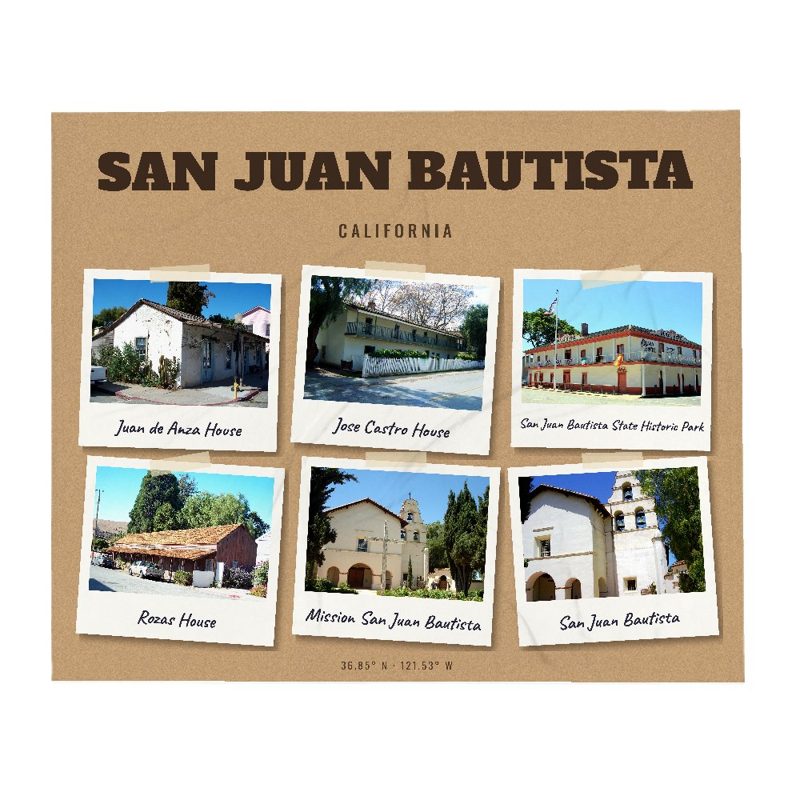
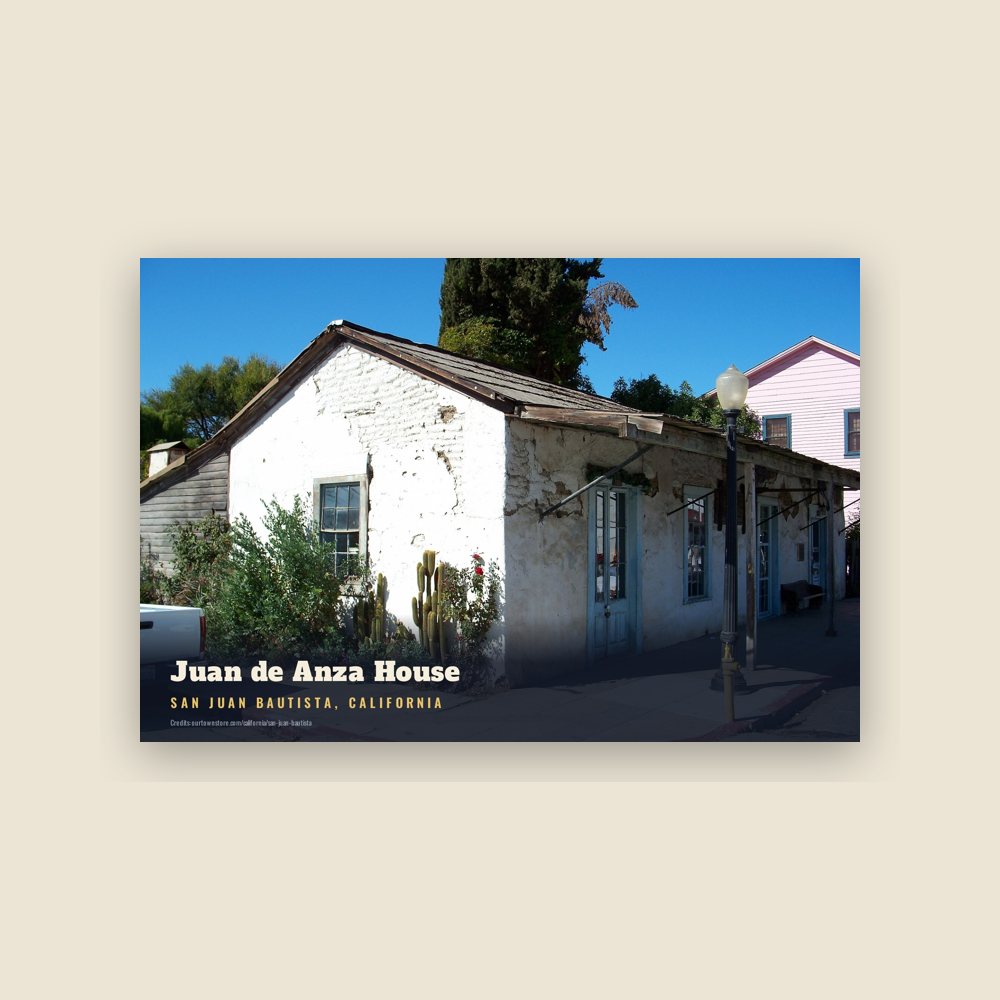
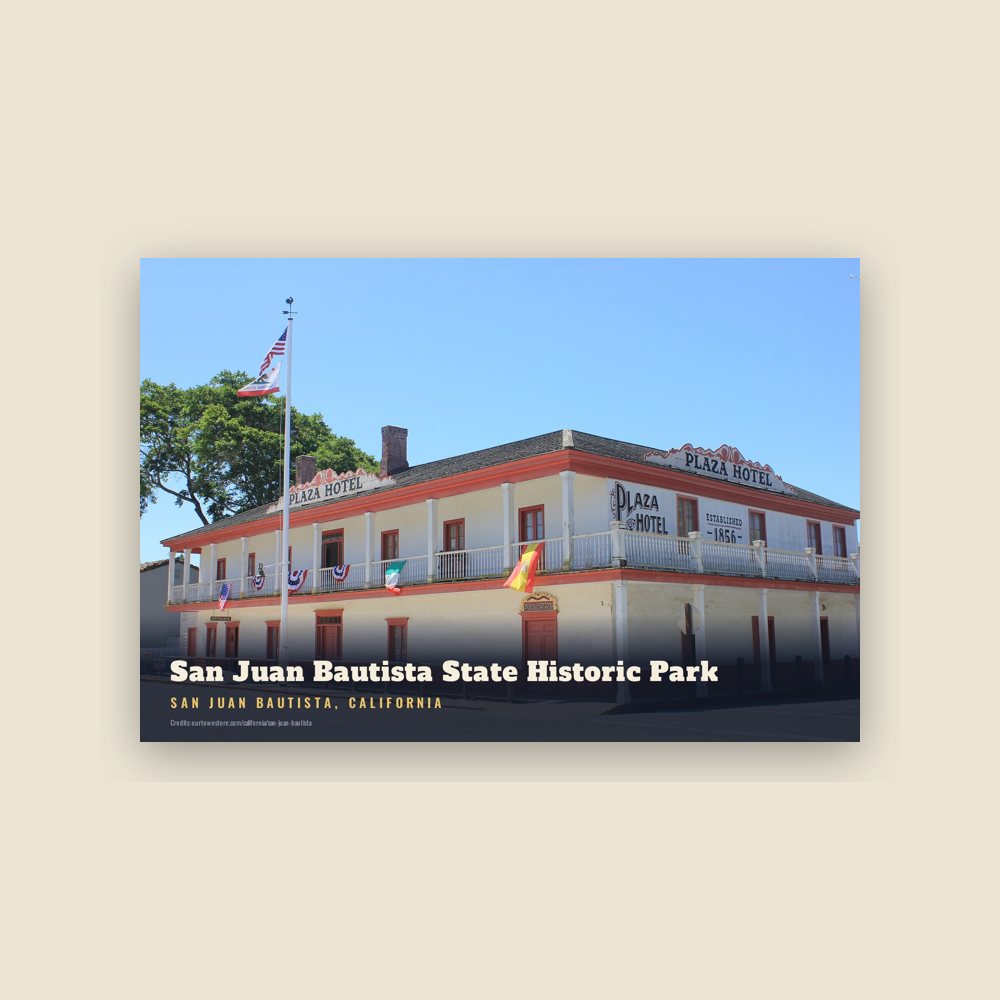
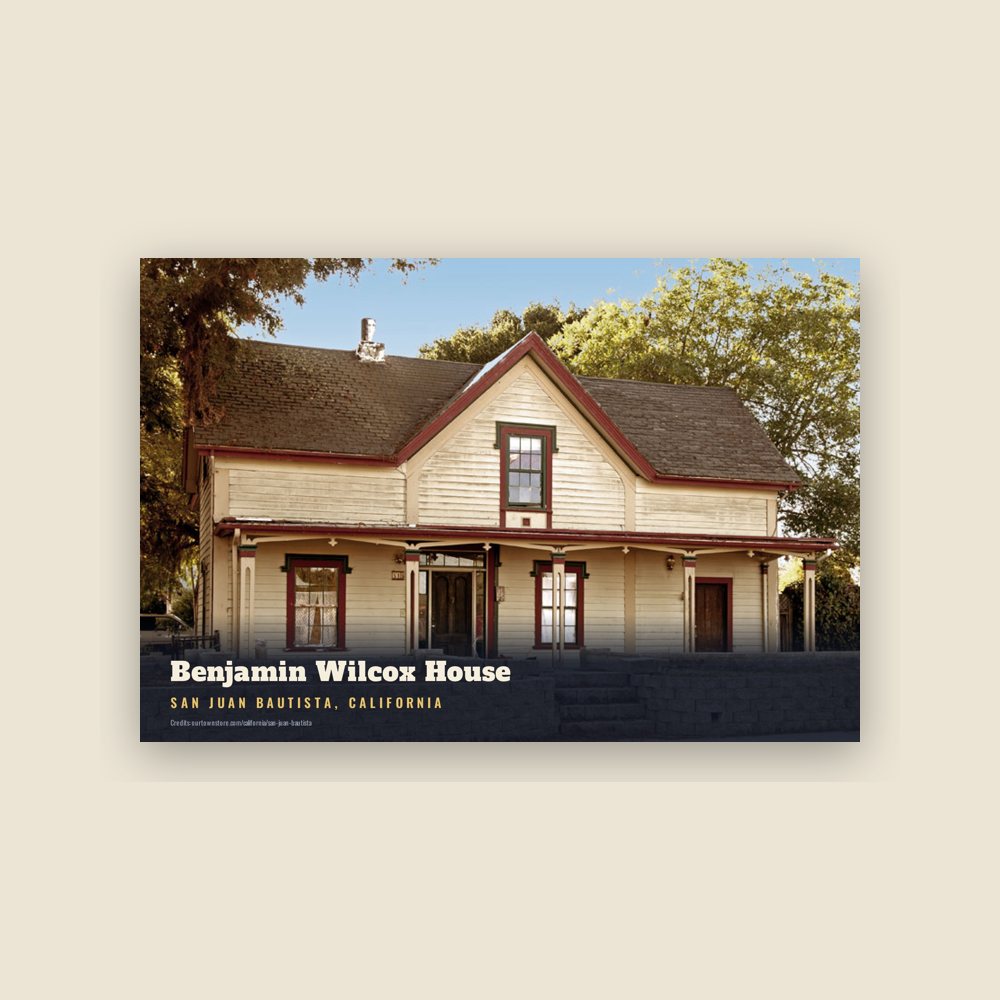
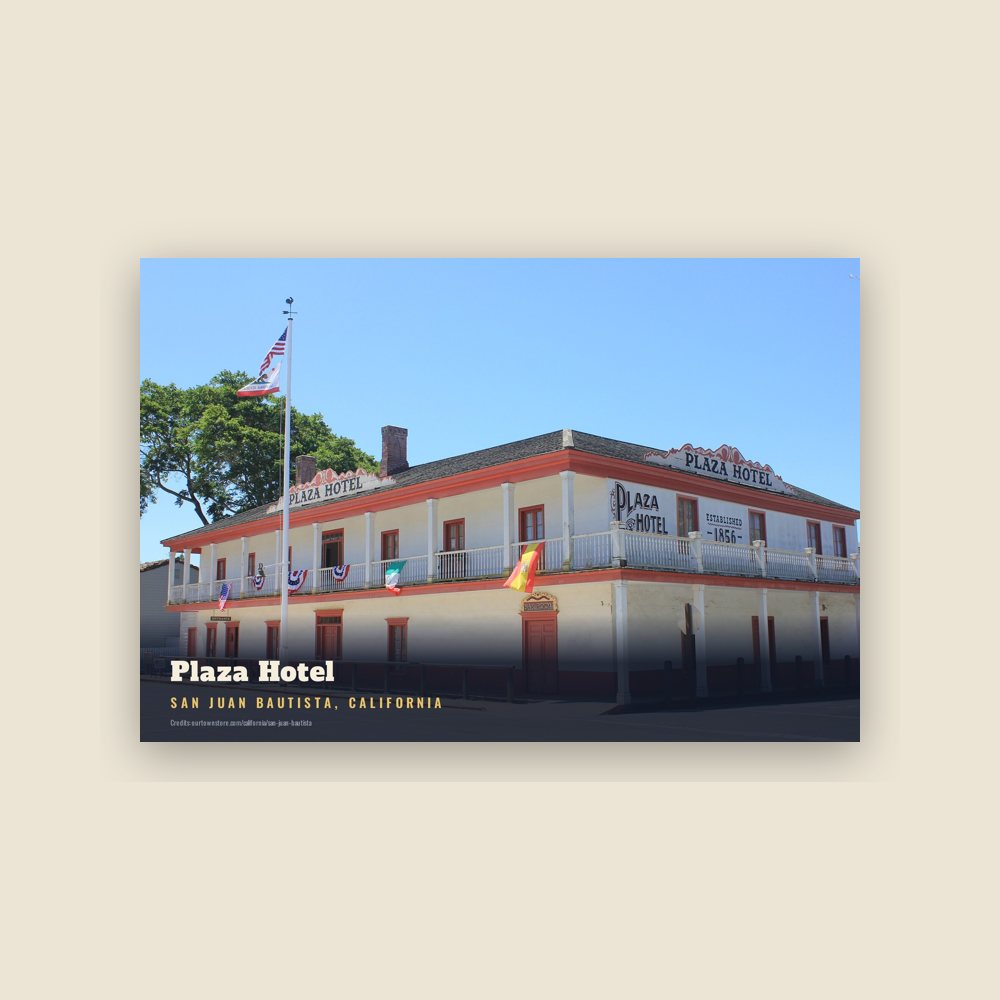
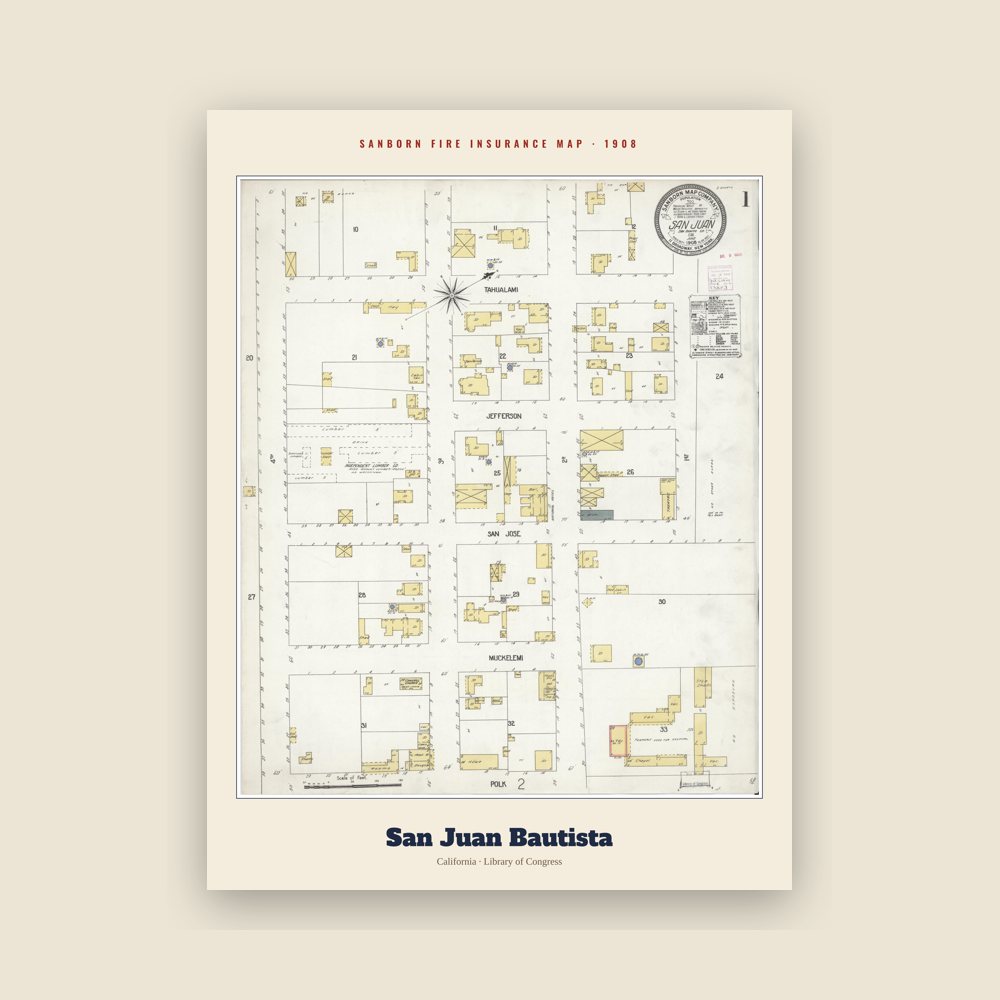
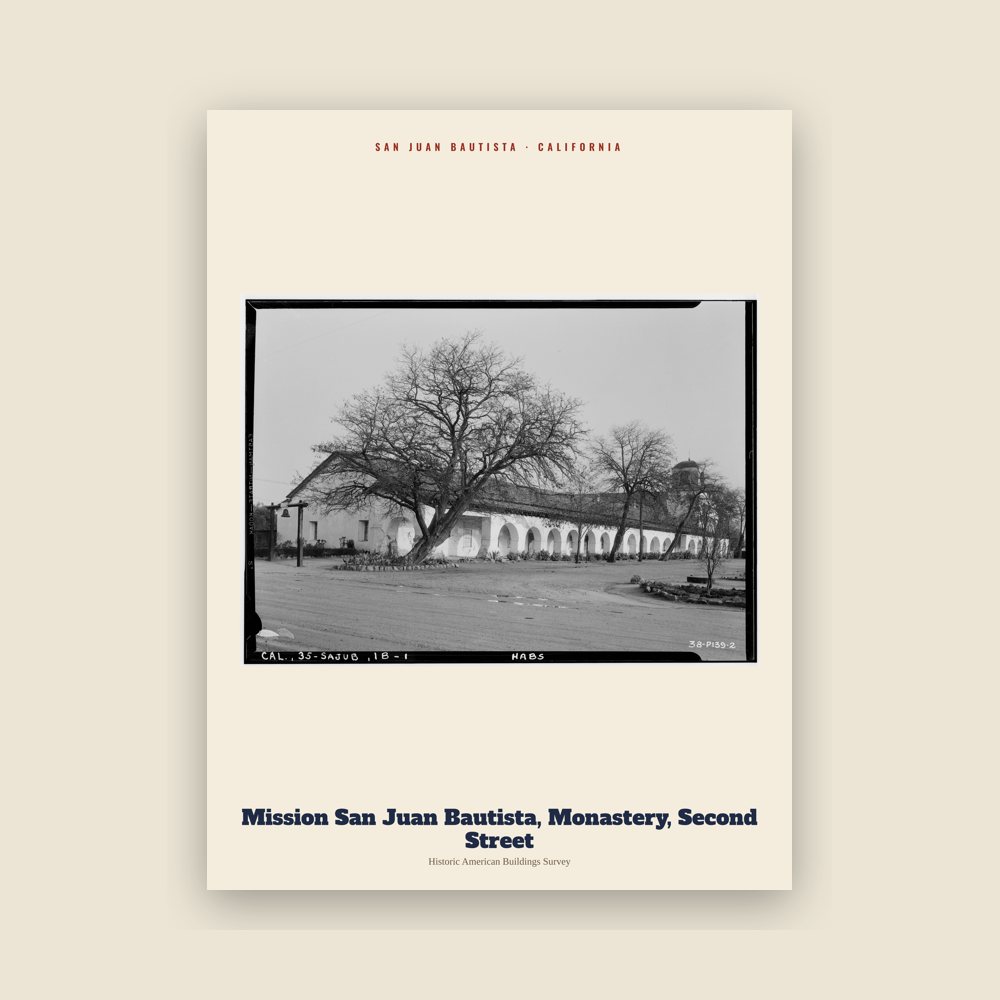
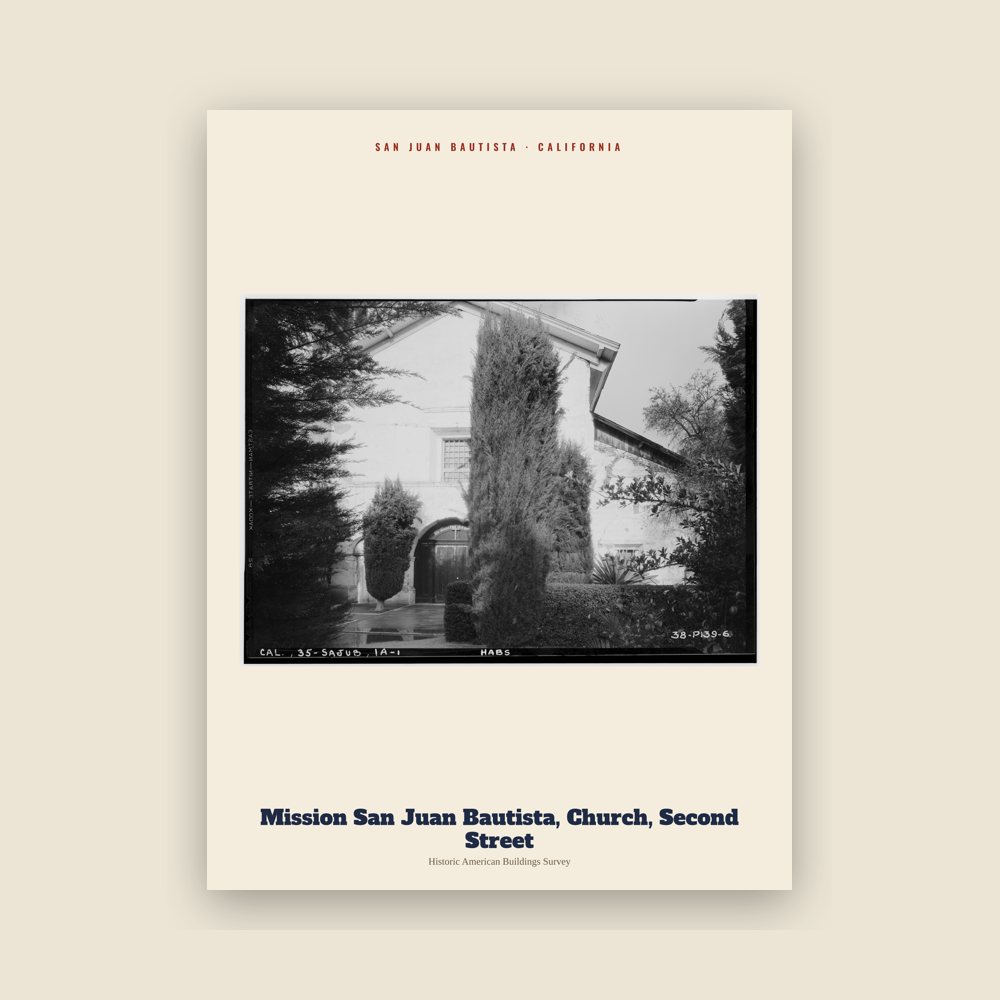
Prior to the arrival of Europeans, the area around San Juan Bautista was populated by the Mutsun, a tribe of the Ohlone Nation of Indigenous Californians. The Mutsuns lived in villages in the area around San Juan Bautista, in settlements composed of thatched huts made of willow and native grasses.
Read the full history
Spanish period
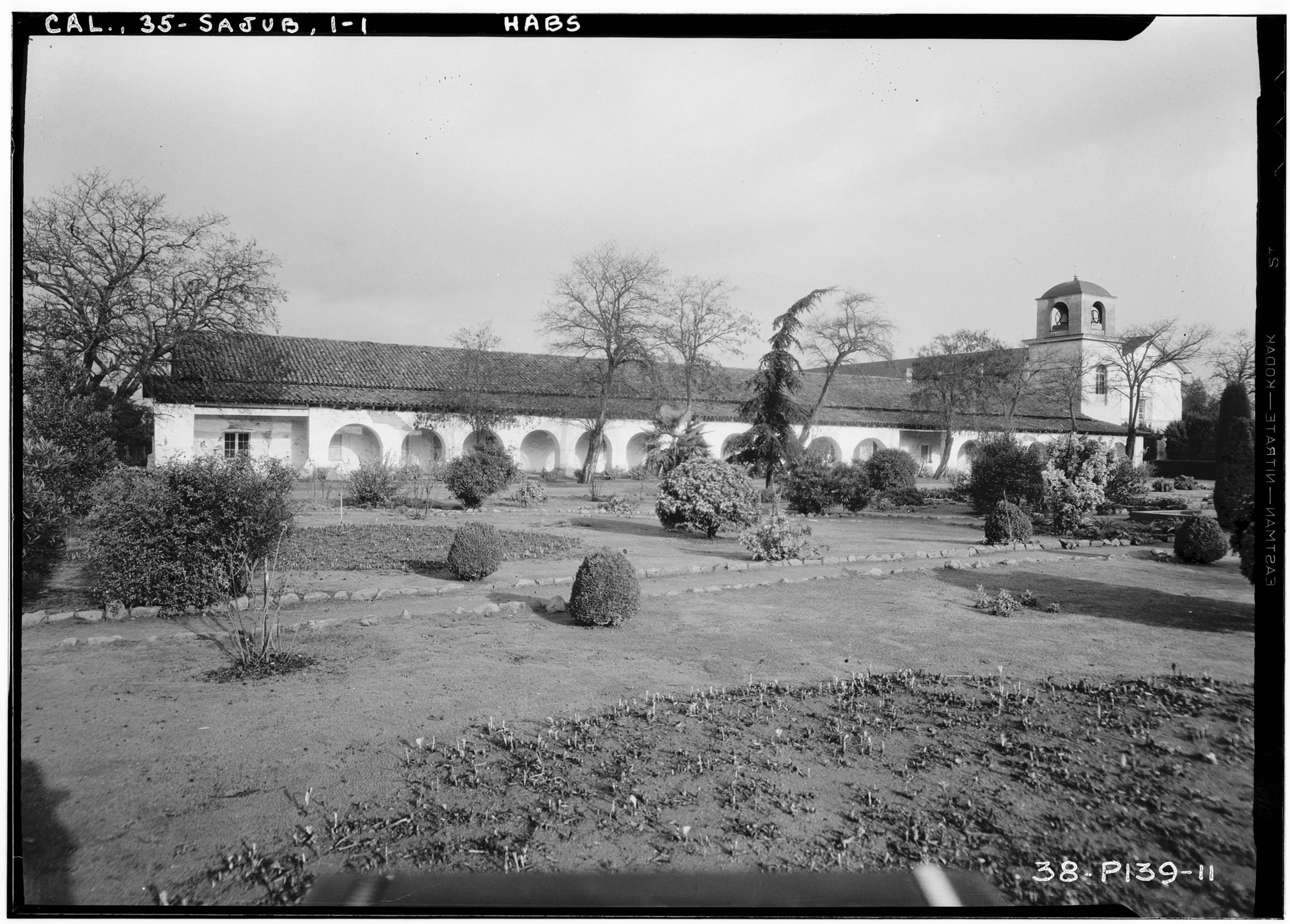
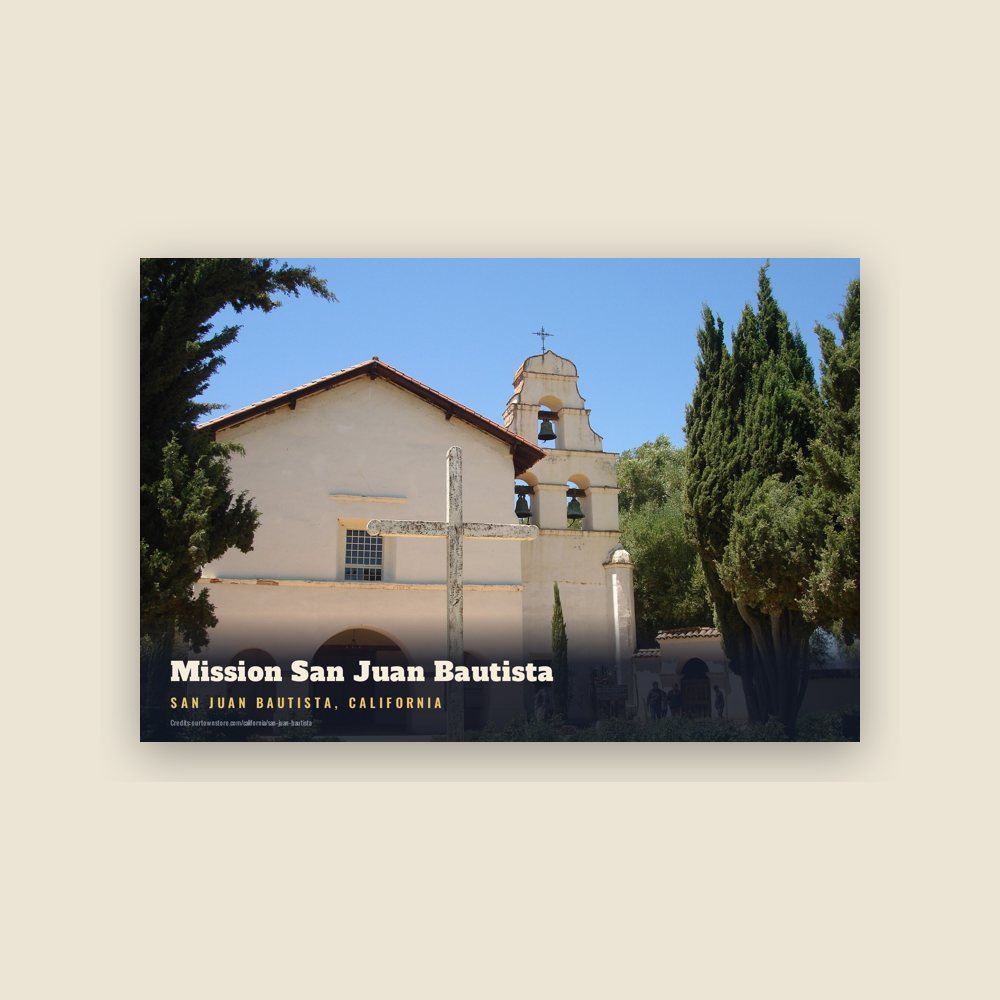
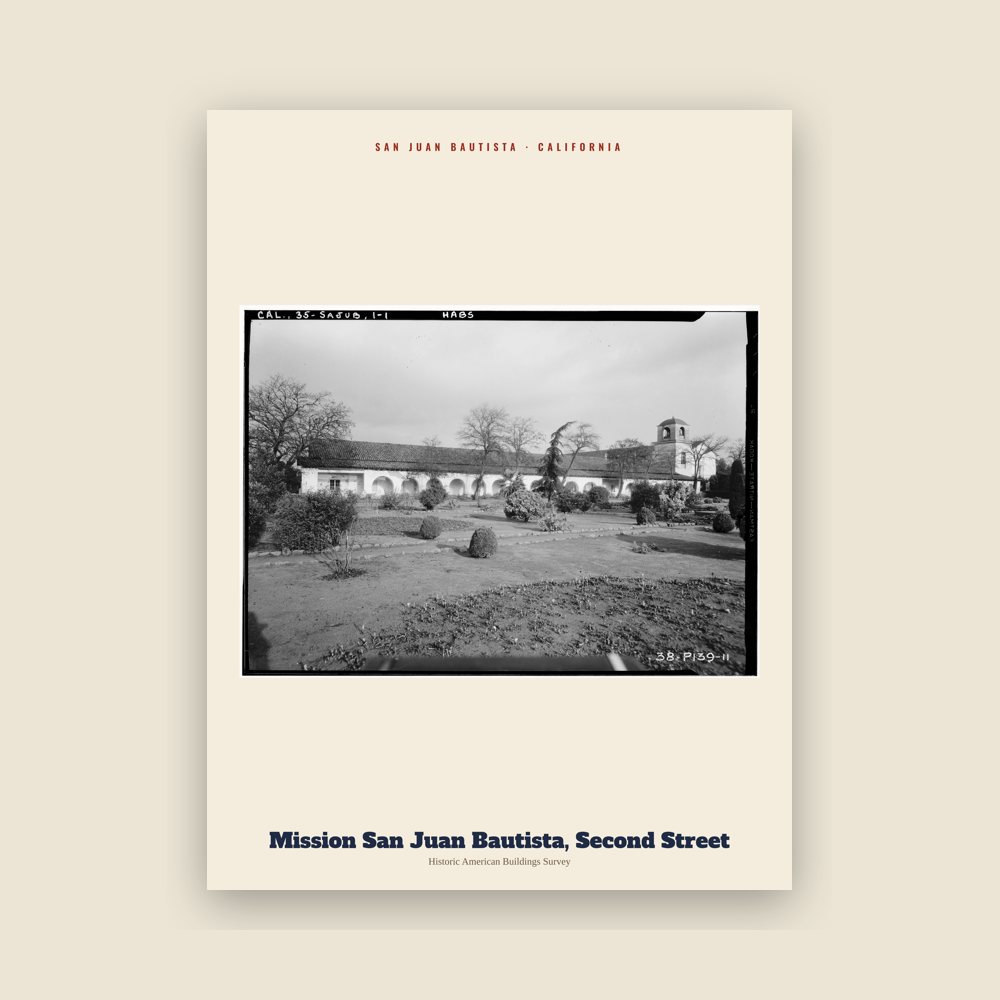
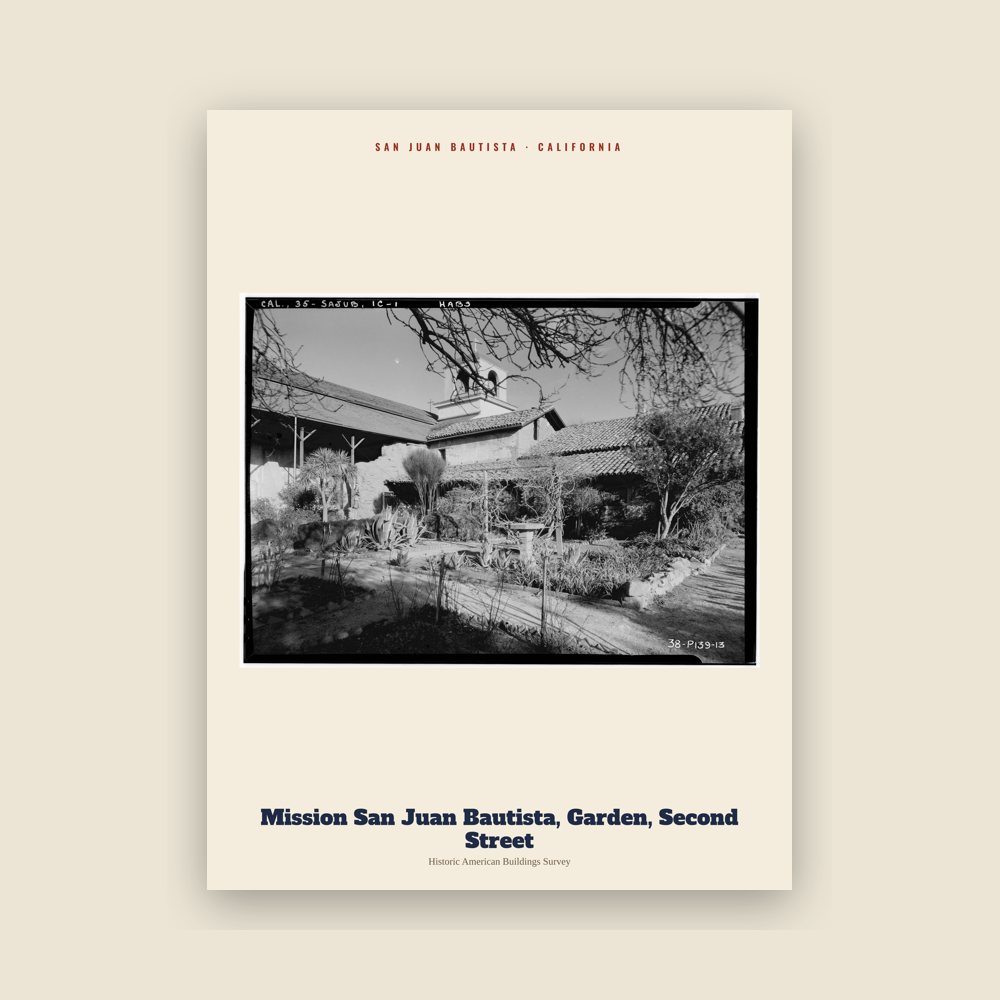
In 1797, the Spanish Franciscan priest fray Fermín de Lasuén founded Mission San Juan Bautista to facilitate the conversion of the native people to Catholicism; in the process, he claimed the land for the Spanish Empire. Lasuén chose the site because of the area's fertile cropland, steady water supply, and sizable Indian population.
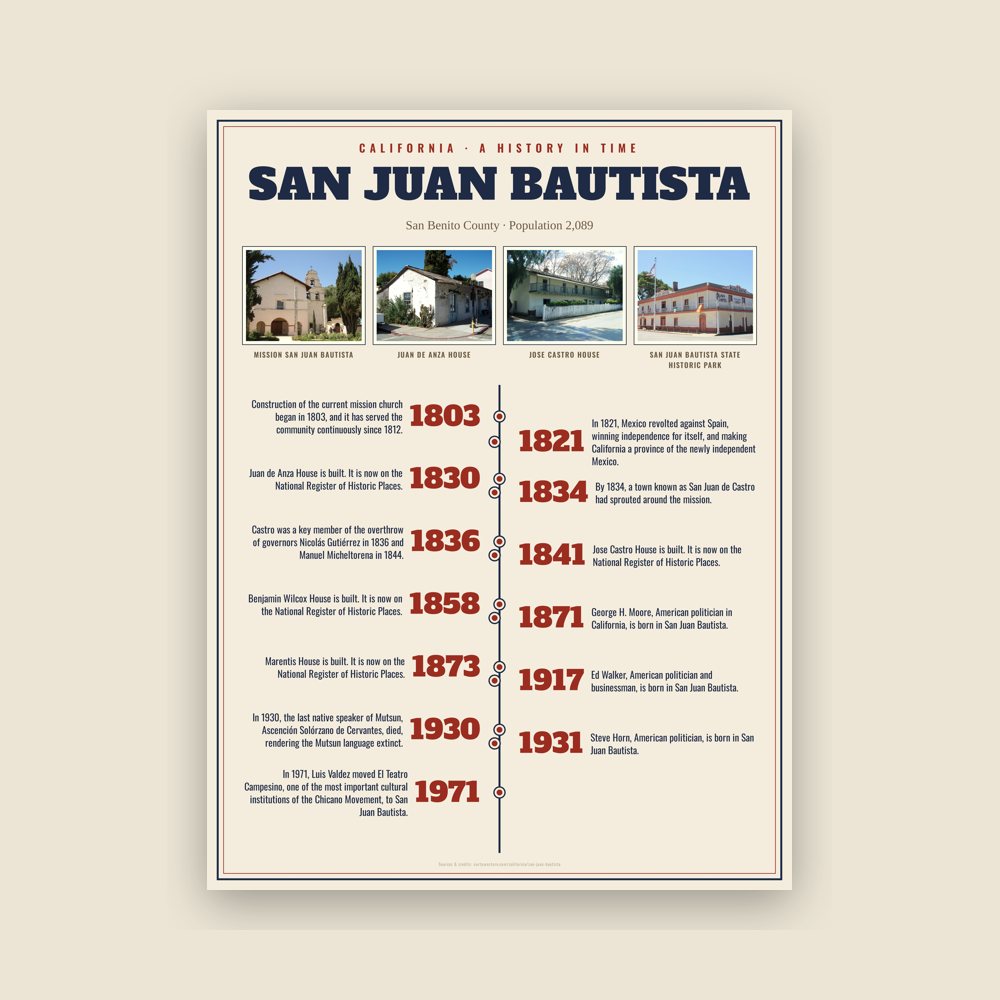
Construction of the current mission church began in 1803, and it has served the community continuously since 1812. The mission was located on the Camino Real, a "royal highway" which connected the California missions and which remained well-used until the 19th century.
Mexican period
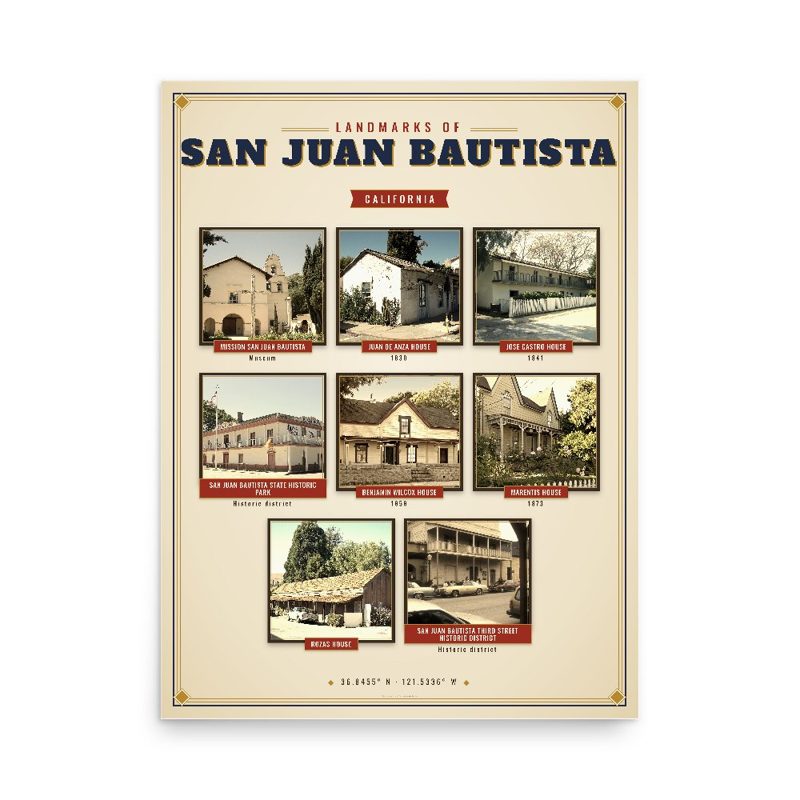
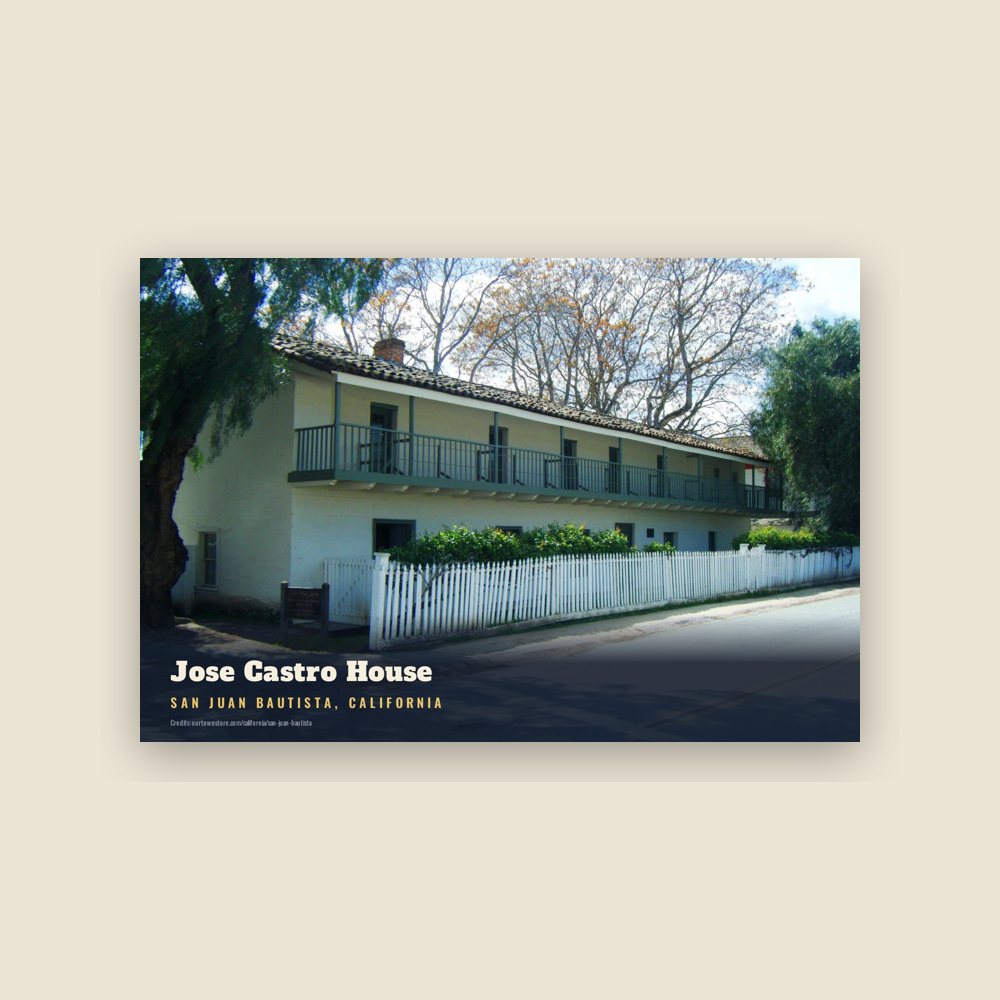
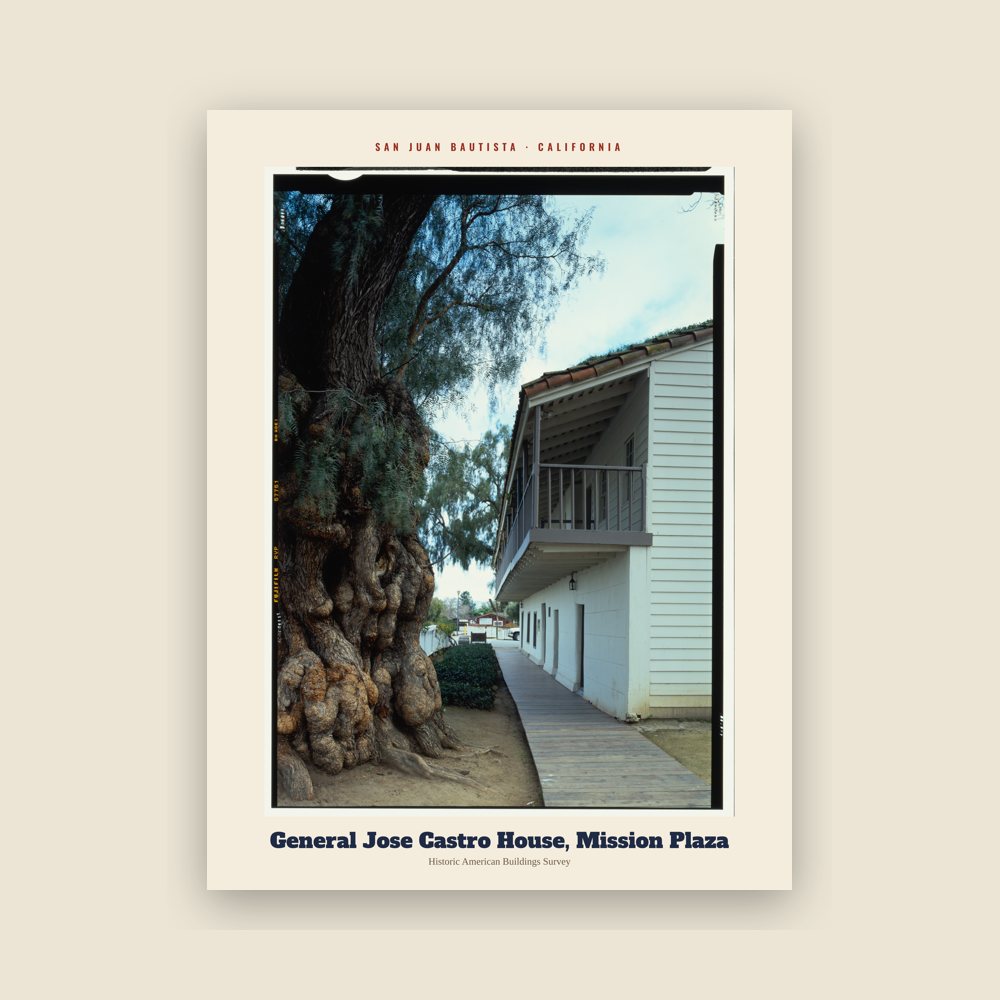
In 1821, Mexico revolted against Spain, winning independence for itself, and making California a province of the newly independent Mexico. By 1834, a town known as San Juan de Castro had sprouted around the mission. It drew its name from the town's prominent alcalde José Tiburcio Castro. In 1834 the mission was secularized, and Castro appointed executor of the property. Accordingly, he divided and auctioned off the former mission properties. His son, José Castro, built the Castro Adobe on the south side of the Plaza de San Juan in 1840; however, Castro's frequent involvement in government kept him from spending much time there. Castro was a key member of the overthrow of governors Nicolás Gutiérrez in 1836 and Manuel Micheltorena in 1844.
After defeating Micheltorena and his ill-equipped army, José Antonio Castro was appointed Comandante General of California, in charge of the Mexican Army's operations in California. From San Juan Bautista, Castro ordered the army against potential foreign incursions. He kept especially close watch over the movements of John C. Frémont, an American military officer who had been let into California to conduct a survey of the interior. Though given explicit instructions to stay away from coastal settlements, Frémont soon broke the agreement by taking his team to Monterey, a potential military target. When Castro told Frémont he would have to leave the country, the situation came close to war when he obstinately refused to leave and instead set up a base on Gavilán Peak, overlooking the town of San Juan. However, fighting was avoided and Frémont, grudgingly, withdrew.
American period
In June 1904, early aviation pioneer John J. Montgomery made a series of successful test flights using his tandem-wing glider in San Juan. This was a prototype to his 1905 gliders that were the first in the world to make successful high-altitude flights in heavier-than-air flying machines.
In 1930, the last native speaker of Mutsun, Ascención Solórzano de Cervantes, died, rendering the Mutsun language extinct.
In 1971, Luis Valdez moved El Teatro Campesino, one of the most important cultural institutions of the Chicano Movement, to San Juan Bautista. Initially, they only had use of La Calavera Theatre, but eventually also built out a larger theatre, simply known as El Teatro Campesino.
Recently, using old photographs and eyewitness accounts, researchers were able to estimate the location of the hypocenter of the 1906 San Francisco earthquake as offshore from San Francisco, or near the city of San Juan Bautista, confirming previous estimates.