A short history of Indio
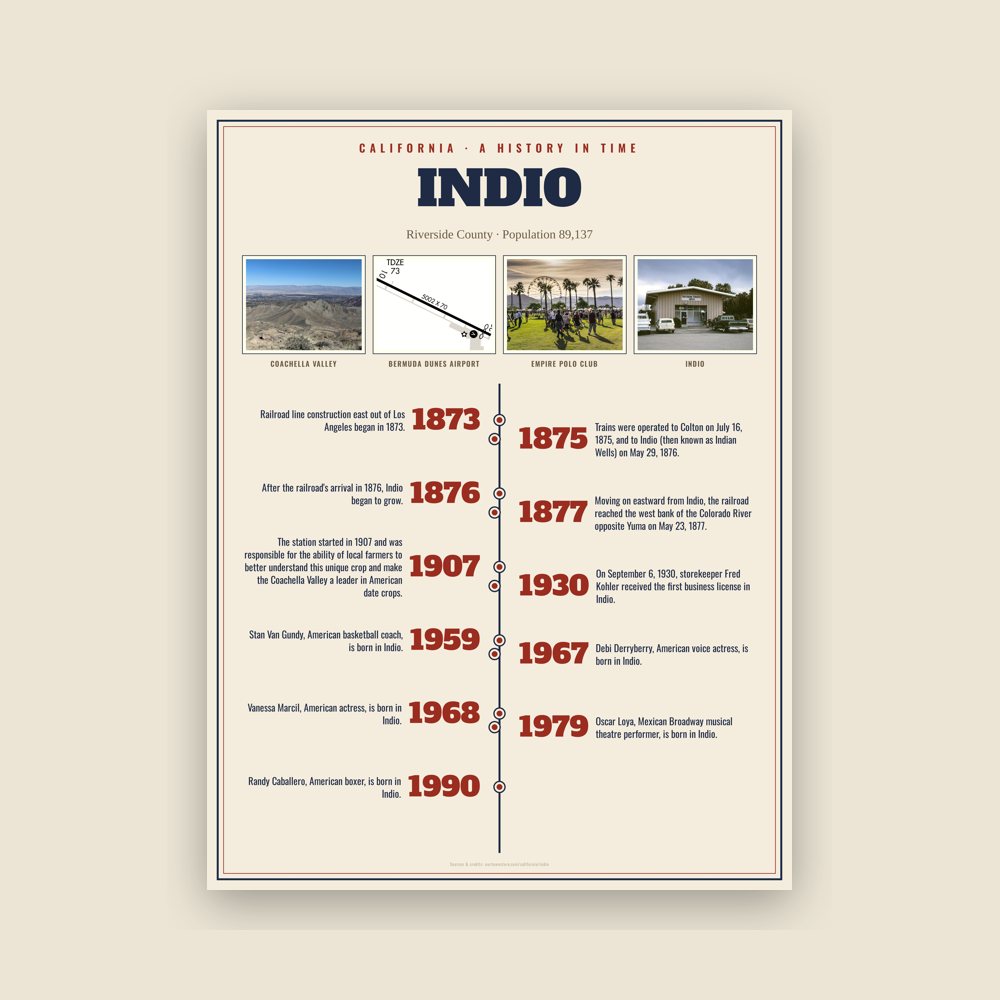
Railroad line construction east out of Los Angeles began in 1873. Trains were operated to Colton on July 16, 1875, and to Indio (then known as Indian Wells) on May 29, 1876. Moving on eastward from Indio, the railroad reached the west bank of the Colorado River opposite Yuma on May 23, 1877. Back then, Yuma was a village known as Arizona City prior to 1873. There was a delay in getting military authority to lay tracks across the Yuma Indian reservation, and it was September that year before the bridge was completed so trains could operate into Yuma. The Southern Pacific Railroad was to have joined those of the Texas & Pacific, one of several railroads then holding, or seeking, federal authority to build lines from various sections of the country west to the Pacific Coast. But the rail-head of the T & P was at a standstill far off in Texas, so Southern Pacific continued building eastward.
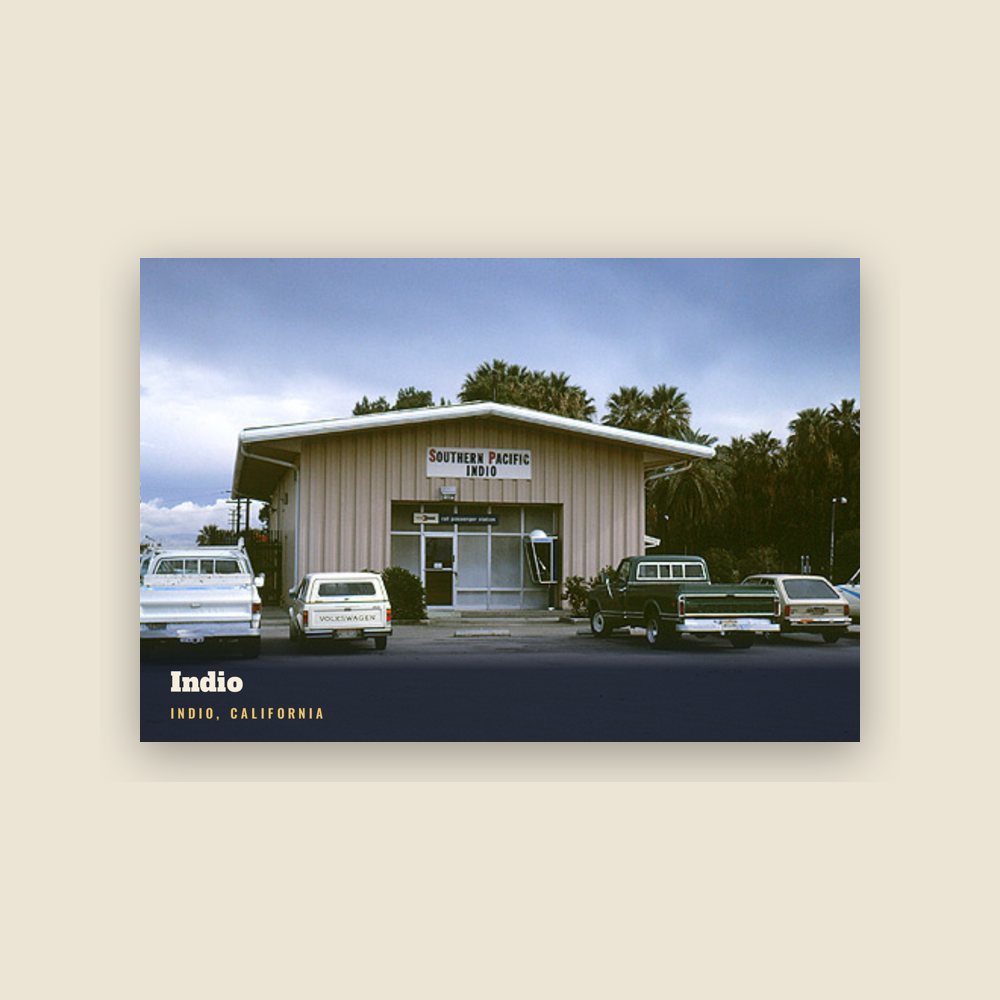
The City of Indio came about because of the need for a halfway point for the Southern Pacific Railroad between Yuma, Arizona and Los Angeles, since the engines needed to be refilled with water. Since other areas had the name Indian Wells, Indio (after a Spanish variation of the word "Indian") was chosen instead. After the railroad's arrival in 1876, Indio began to grow. The first permanent building was the craftsman-style Southern Pacific Depot station and hotel. Southern Pacific tried to make life as comfortable as it could for their workers to keep them from leaving such a difficult area to live in at the time. The depot was at the center of all social life in the desert with a fancy dining room and hosting dances on Friday nights.
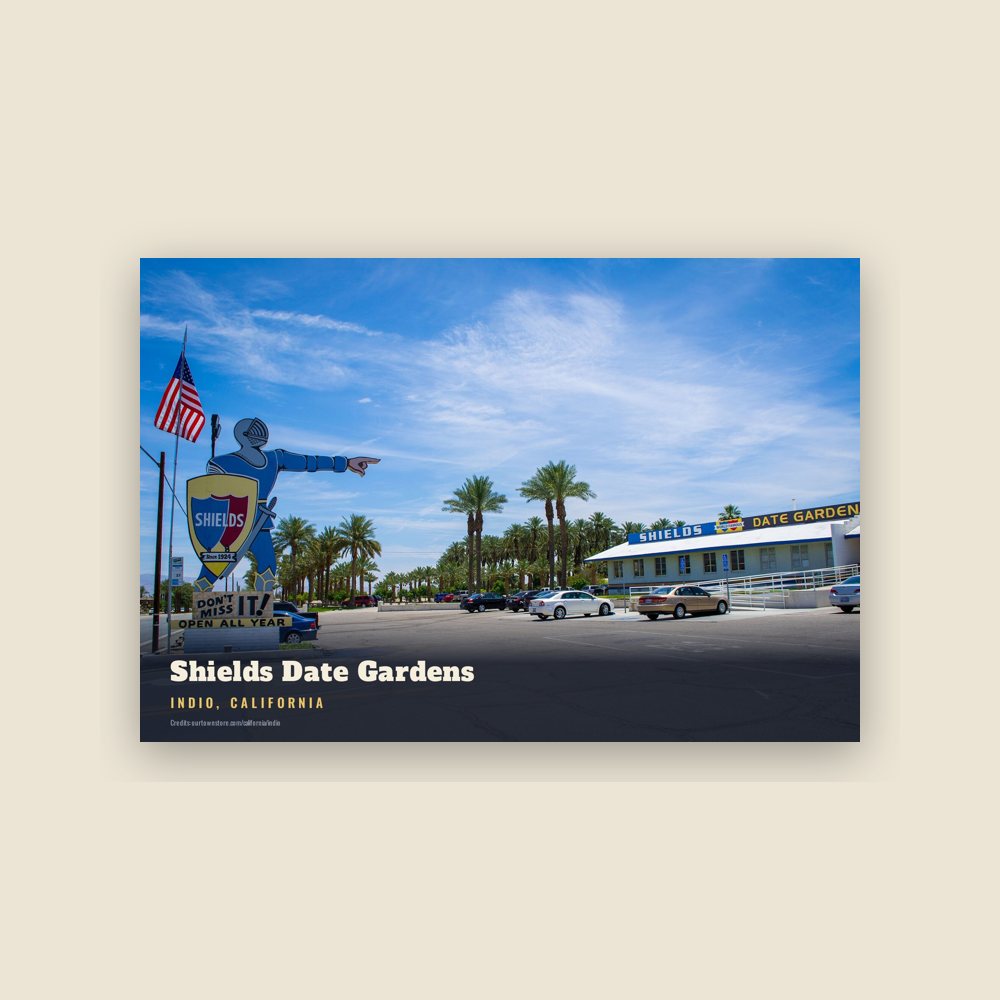
While Indio started as a railroad town, it soon became an agricultural center. Onions, cotton, grapes, citrus and dates thrived in the arid climate due to the ingenuity of farmers finding various means of attaining water, first through artesian wells and later through the valley's branch of the All-American Canal. However, water also was a major problem for Indio and the city was flooded several times until the storm water canals were created throughout the Coachella Valley.
Businessmen and women found this last frontier land of the continental United States as an ideal place to start fresh. Dr. Harry Smiley and his wife Nell were early residents and stayed in Indio after their car broke down on the way to Los Angeles and became people of influence and helped shape the area. A. G. Tingman was an early store owner and first Postmaster of Indio, but also well known for taking advantage of miners as they headed to the mountains, selling at rather high prices. Later Dr. June Robertson McCarroll became a leading philanthropist and successful doctor in Indio. She was responsible along with the Indio Woman's Club for pressuring California into adopting the placing of white lines down the streets after she was nearly hit one too many times by passing vehicles. Even though these early founders of the city are considered pioneers, they still partook in the lifestyles of their friends living in such areas as Los Angeles.
By the turn of the 20th century, Indio continued to grow. Schools were built, the La Casita hospital provided medical services, and families established roots. By 1920, about one to two thousand year-round residents lived in Indio, while it ballooned from 2,500 to 5,000 during the winter months and was advertised as a health resort for senior citizens and those with respiratory diseases and ailments in the rest of the 20th century.
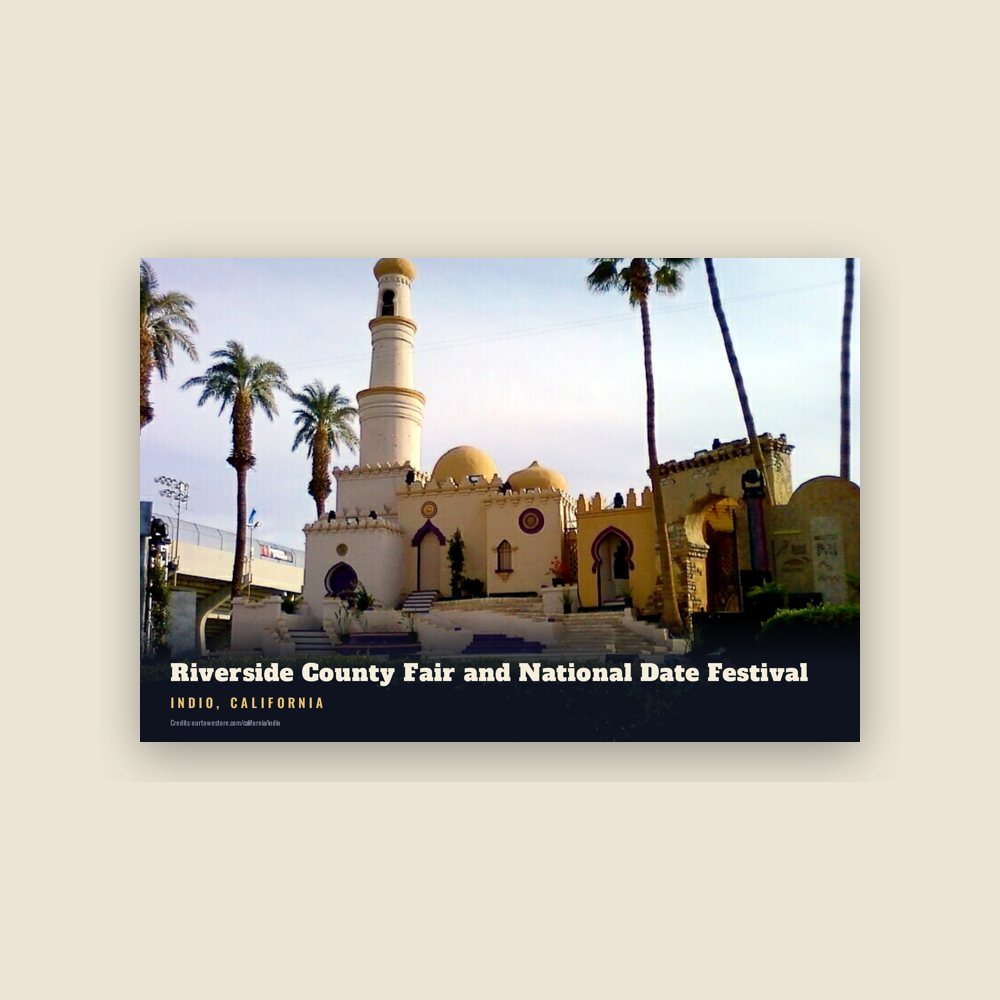
Indio also served as the home of the USDA's Date Station, a place where leading scientific research was taking place on the fruit that would become a major part of the culture of Indio. The station started in 1907 and was responsible for the ability of local farmers to better understand this unique crop and make the Coachella Valley a leader in American date crops. This also created a tie to the Middle East that led to the theme for the County Fair with the Middle Eastern flair known as the Riverside County Fair and National Date Festival .
By the 1920s nearby towns Coachella and Thermal remained larger than Indio, though Indio became known as the "Hub of the Valley" as a center of commerce. After a large fire burned much of Thermal and with a period of relative decline in Coachella, Indio once again grew. In 1930, Indio incorporated as a city. On September 6, 1930, storekeeper Fred Kohler received the first business license in Indio.
During the Second World War, Indio was also aided by the visiting soldiers from General George S. Patton's desert training grounds across southeastern California and headquartered in the remote station of Chiriaco Summit located 30 miles to the east.
From the middle to second half of the 20th century, Indio's development was fairly idle as populations began to move into the newer cities of Palm Desert and La Quinta. There is now a reversal in this trend where Indio experienced a population boom beginning in the 1980s, with the population doubling twice over and currently has over 100,000 residents in the year 2025.
Adapted (trimmed) from the Wikipedia article Indio, California, revision 1379123658 by its contributors, licensed CC BY-SA 4.0.
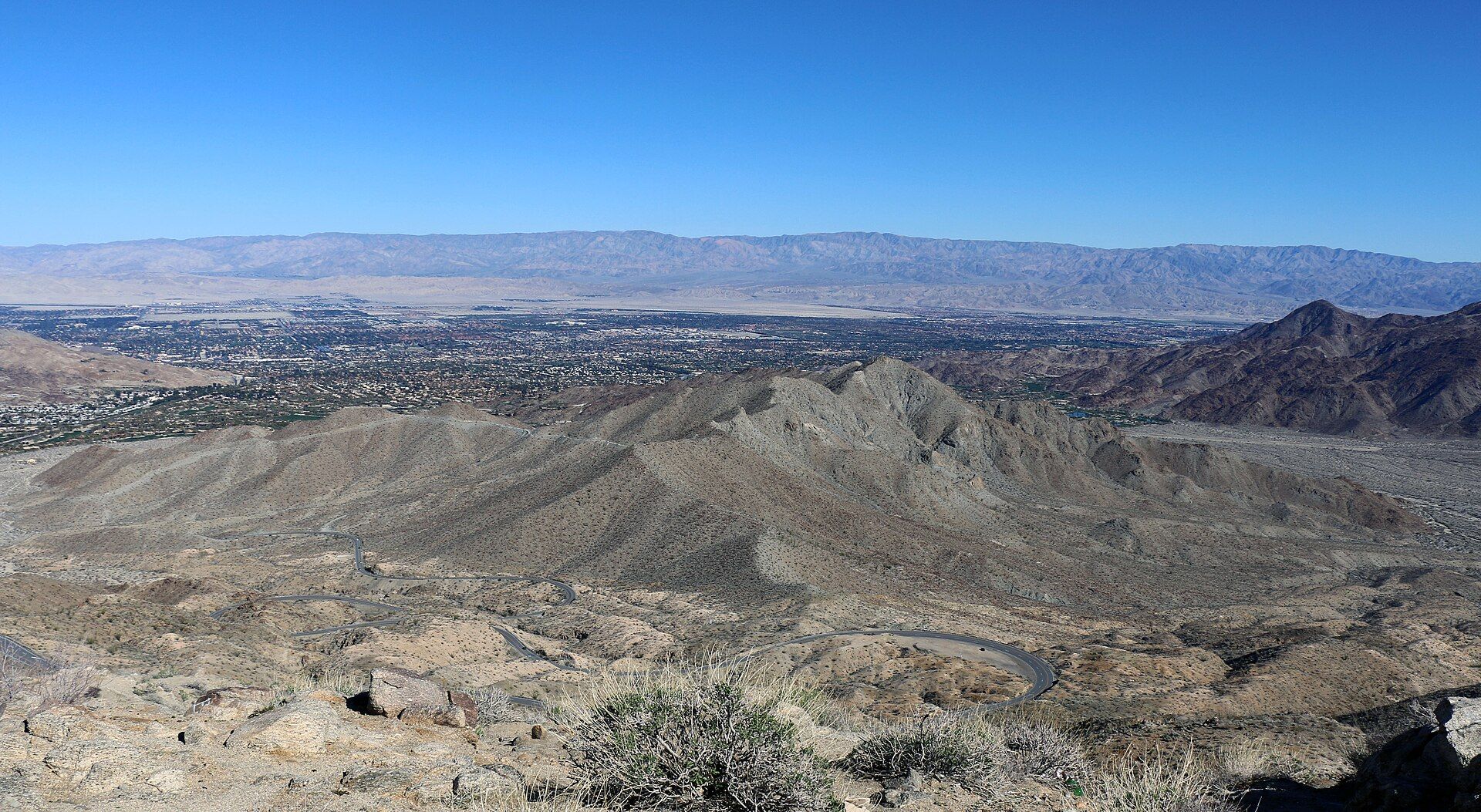
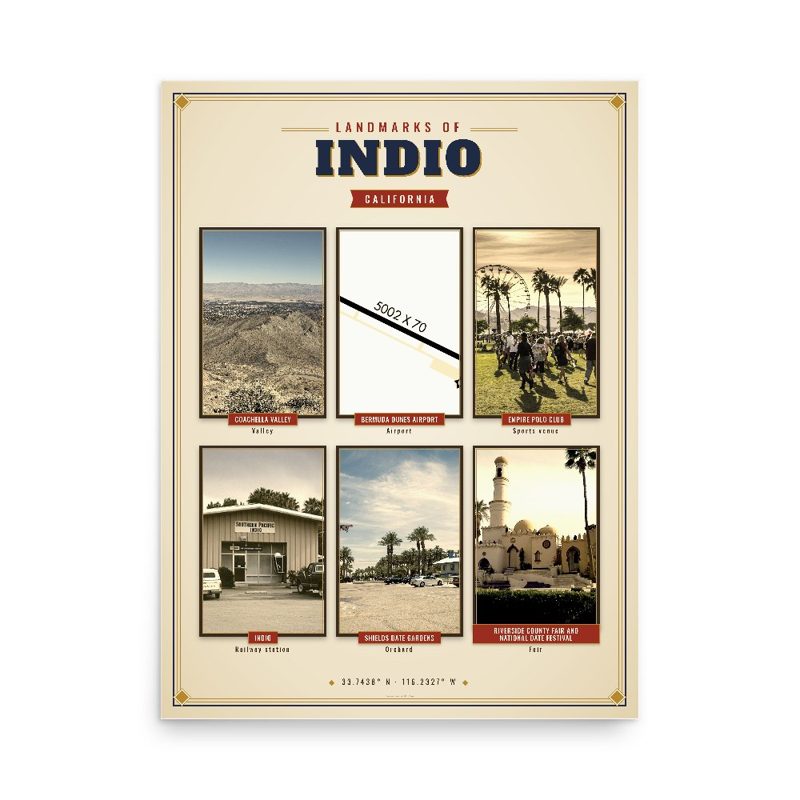
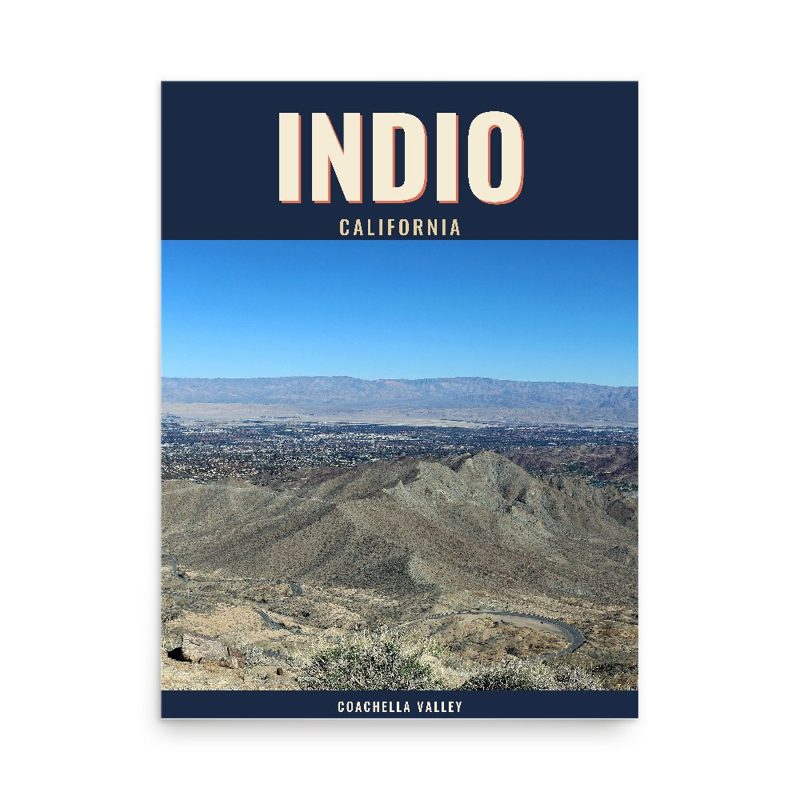
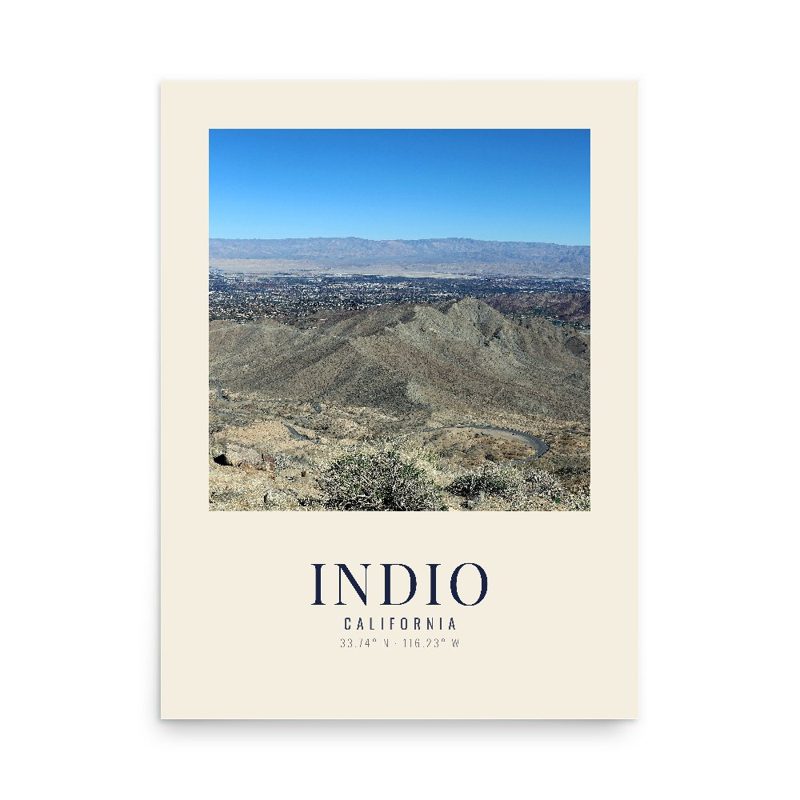
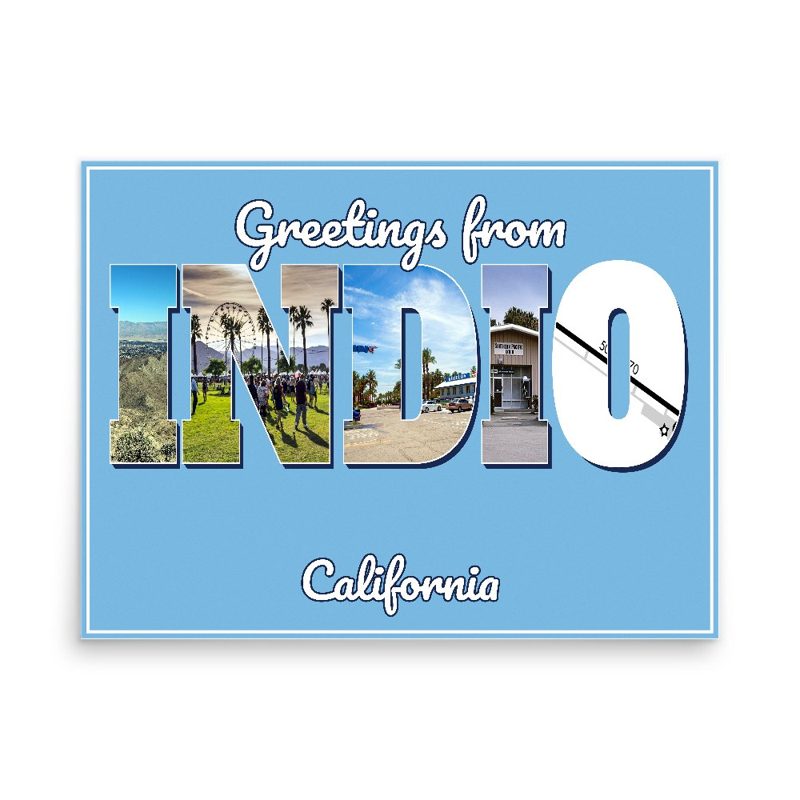
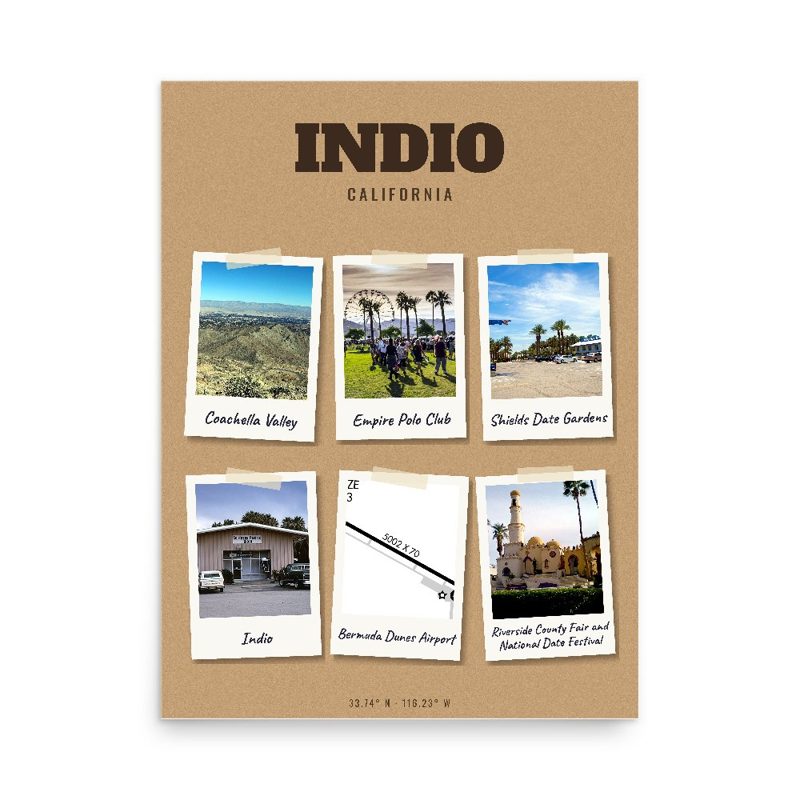
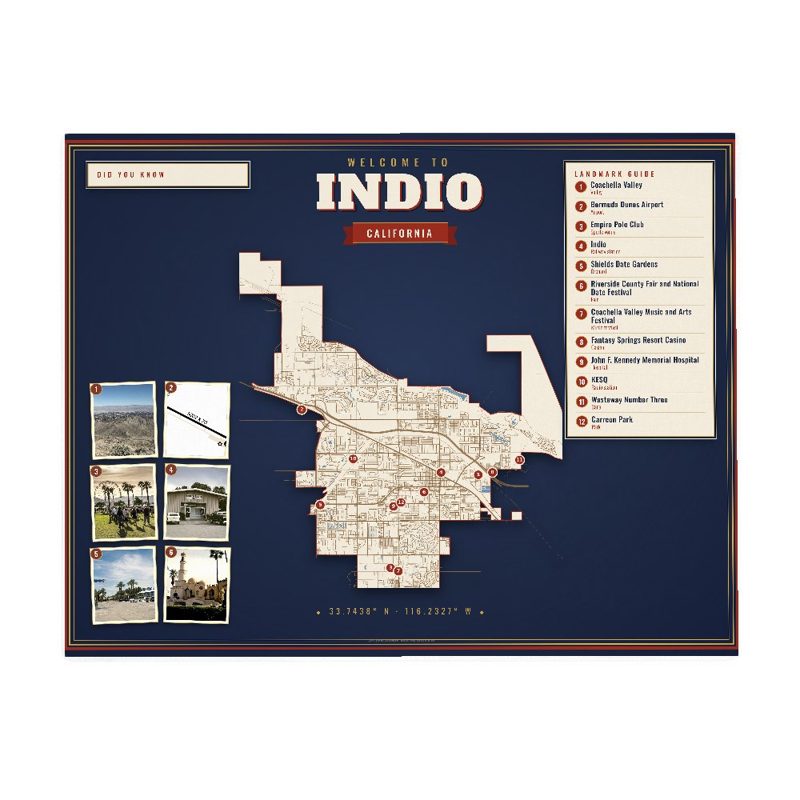

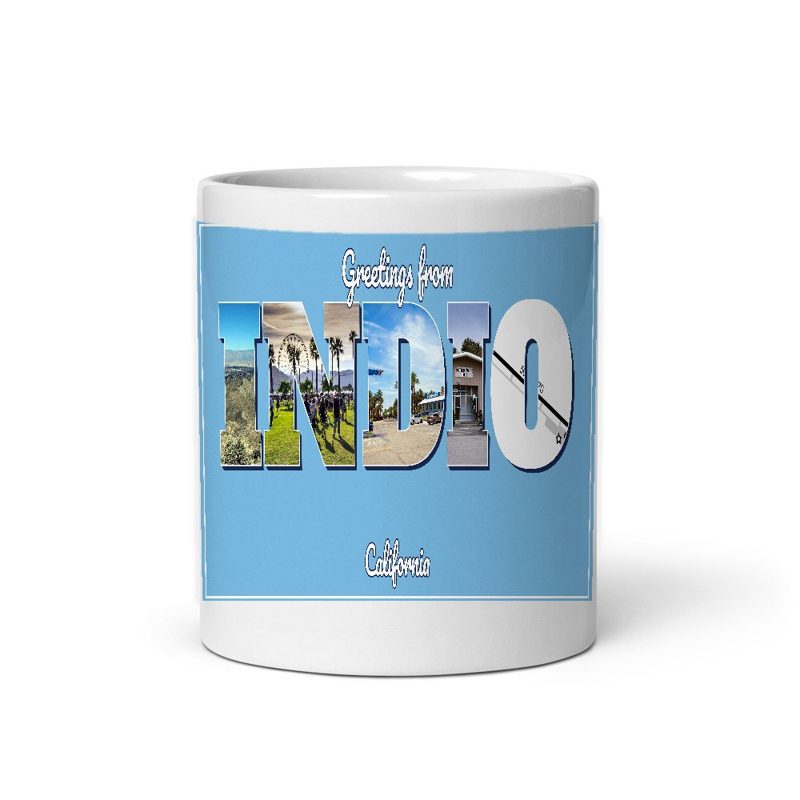
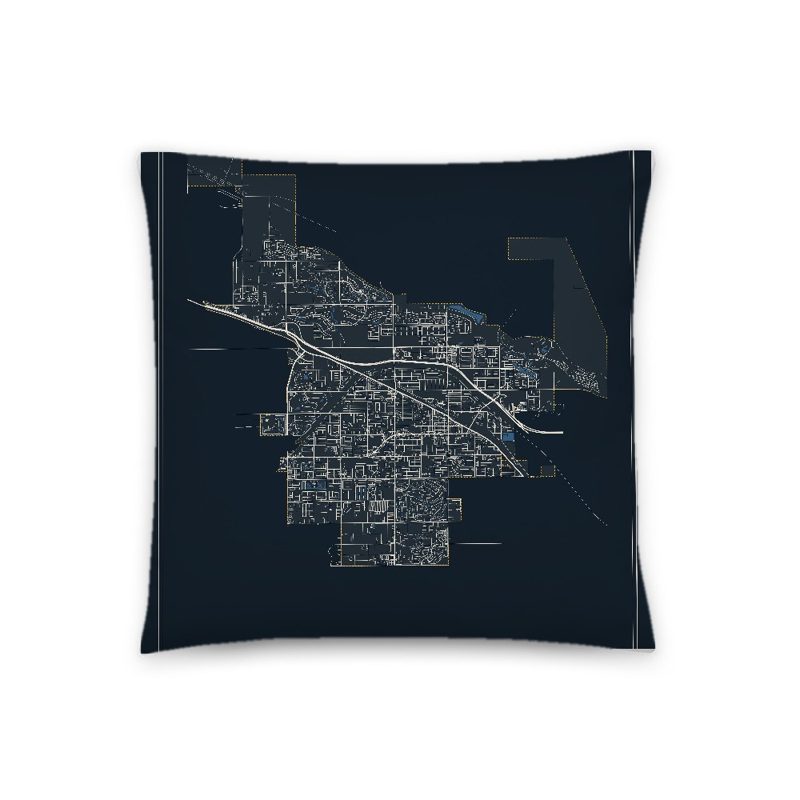
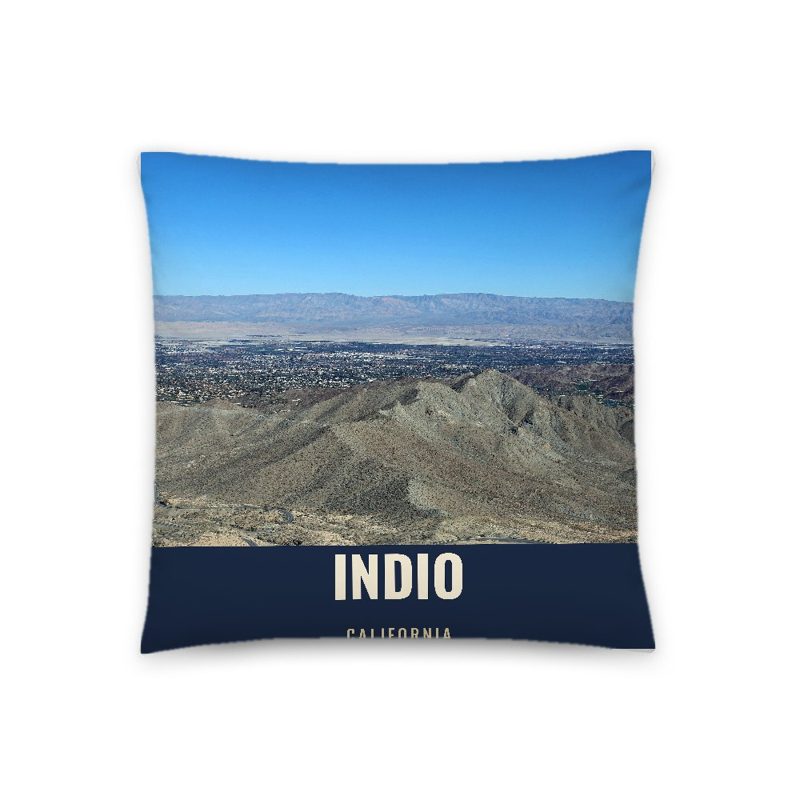
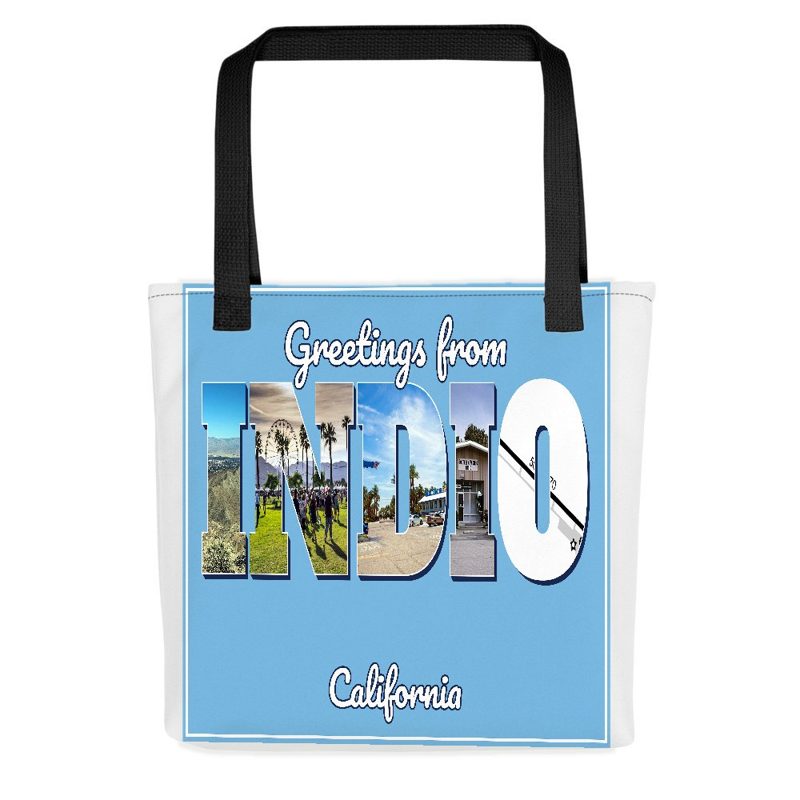
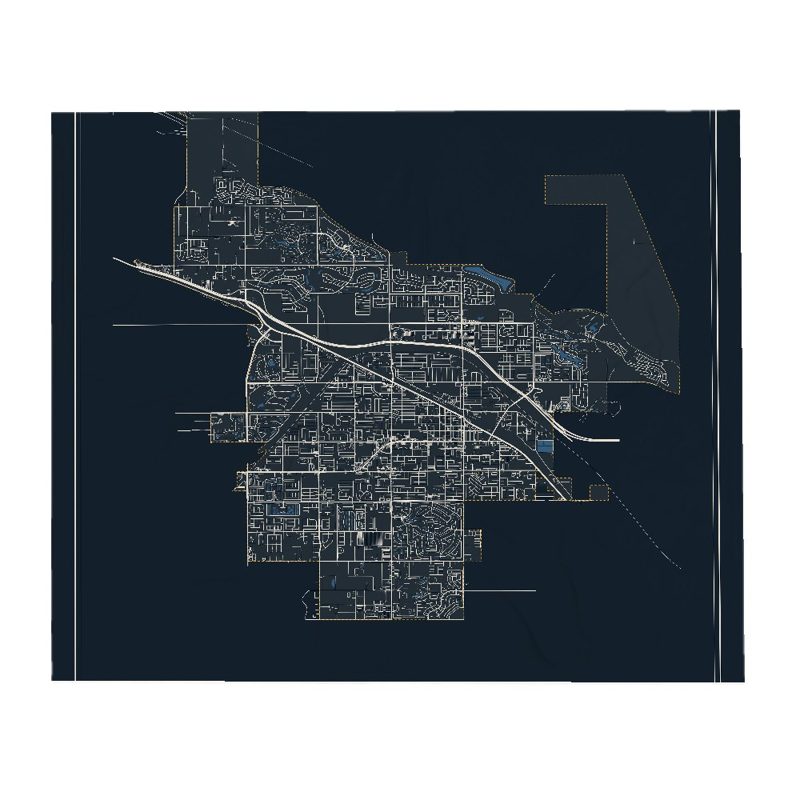
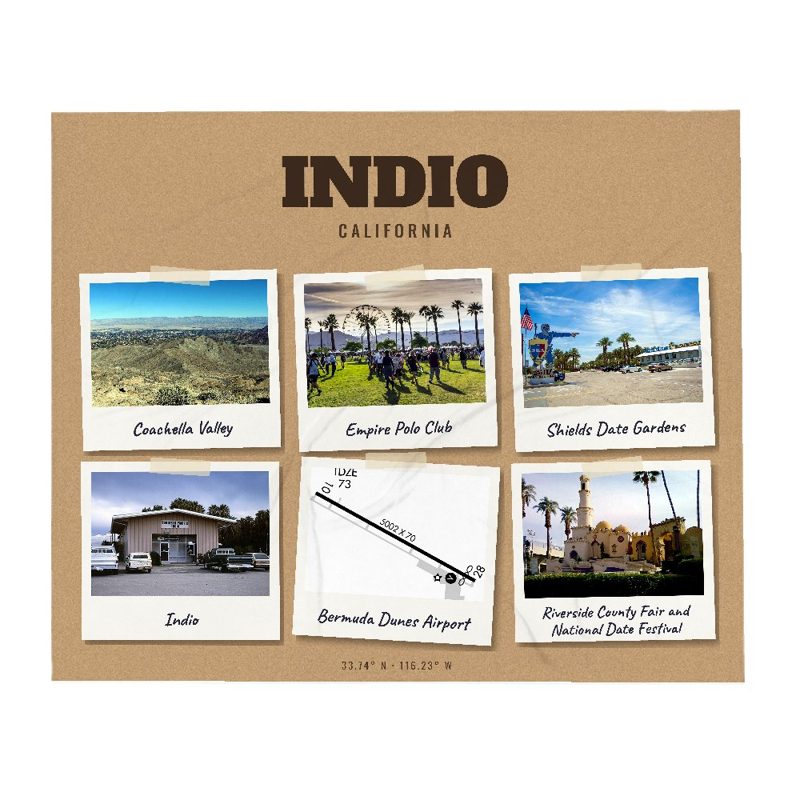
 A view of Indio
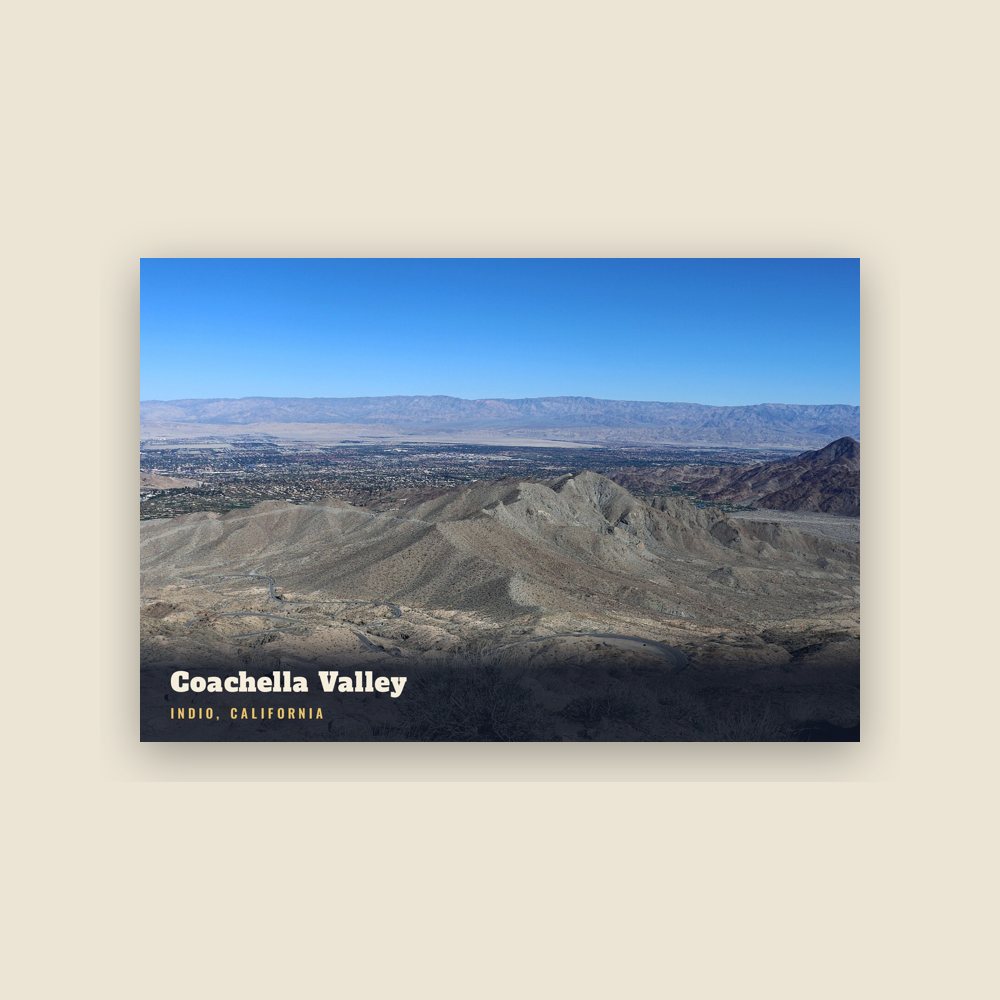
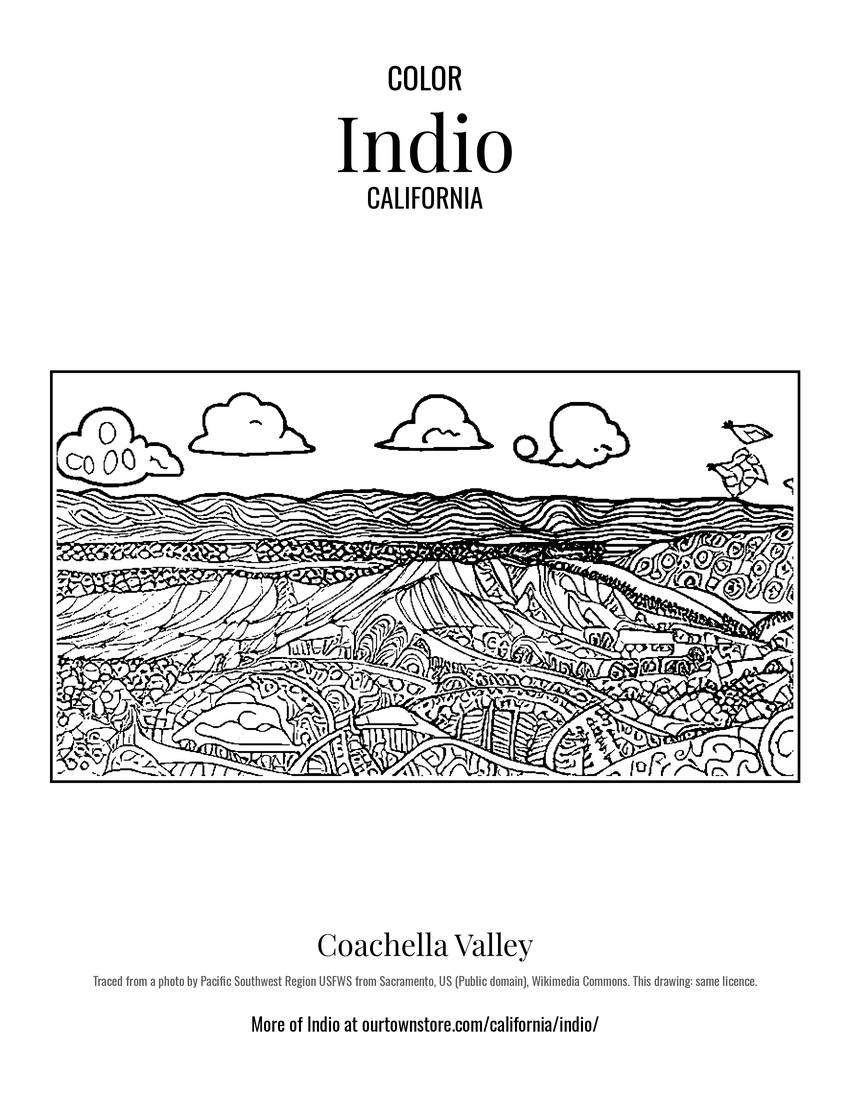 Coachella Valley
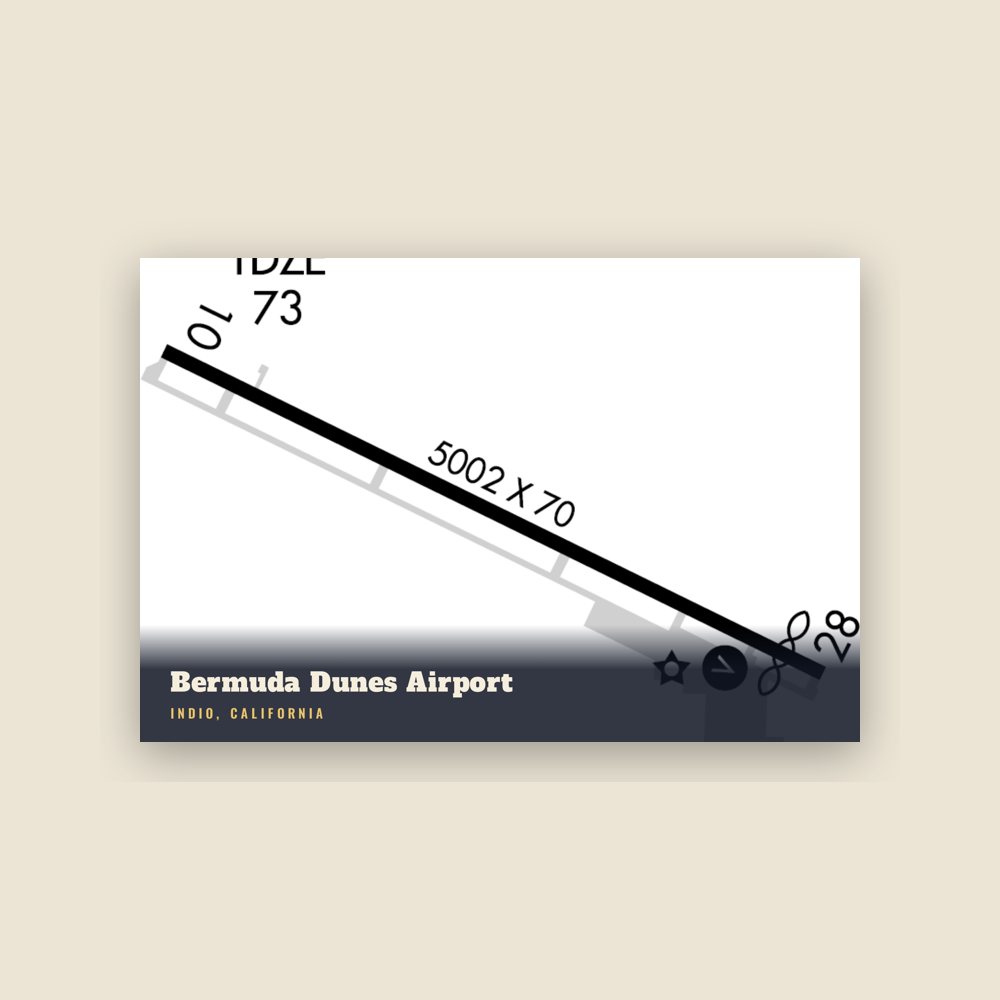
 Bermuda Dunes Airport
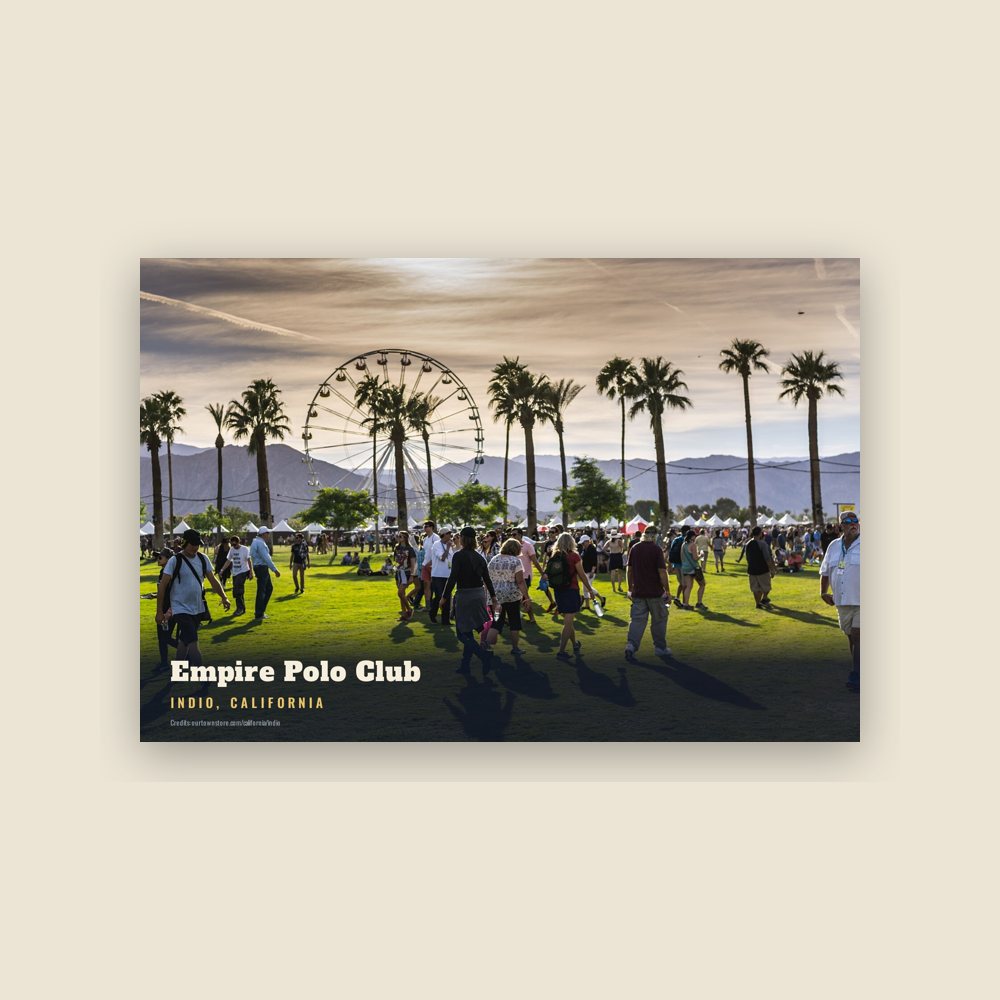
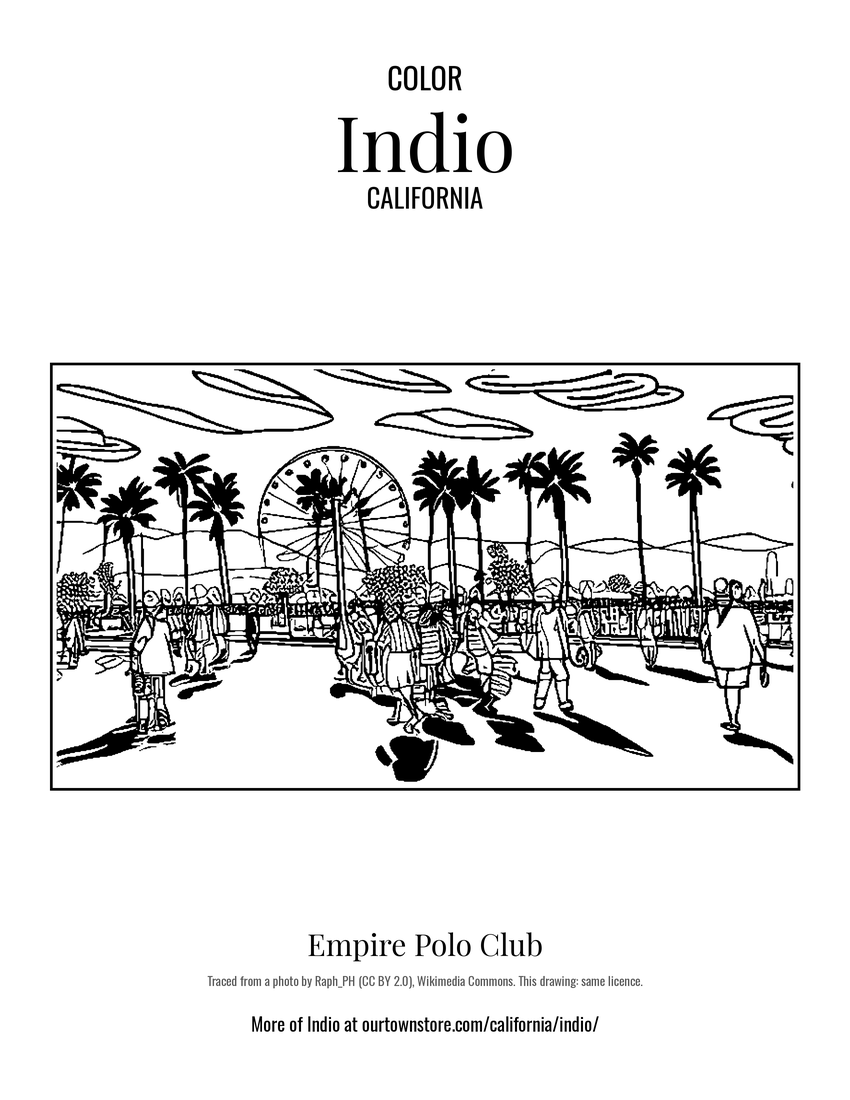 Empire Polo Club