A short history of Desert Hot Springs
The only people residing in areas north of Palm Springs before the 20th century were the Cahuilla Indians in the village of Seven Palms. Although Cahuilla people never settled permanently in today's Desert Hot Springs, they often camped here during winter times due to the warm climate.
According to early homesteader and writer Cabot Yerxa in his newspaper columns published in The Desert Sentinel newspaper, the first homesteader in the area of the city of Desert Hot Springs was Hilda Maude Gray, who staked her claim in 1908.
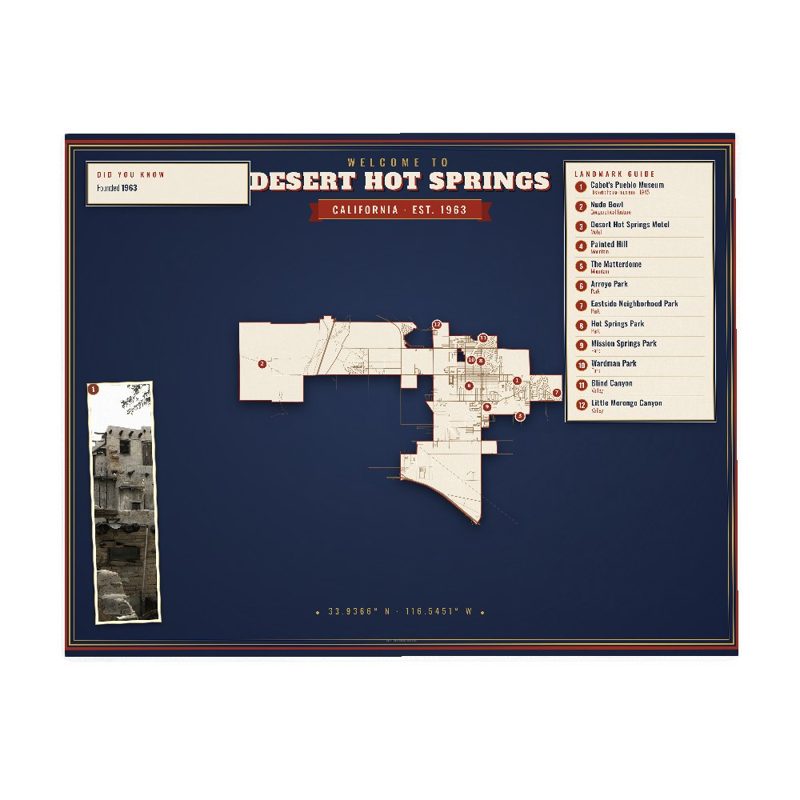
Cabot Yerxa arrived in 1913 and soon discovered the hot water aquifer on Miracle Hill. Due to the Mission Creek Branch of the San Andreas Fault bisecting the area, one side is a cold water aquifer, the other has a hot water aquifer. His large Pueblo Revival Style architecture structure, hand built over 20 years, is now one of the oldest adobe-style buildings in Riverside County and houses Cabot's Pueblo Museum, designated a state historical site after his death in 1965. Cabot's Trading Post & Gallery opened there in February 2008.
The town was founded by L. W. Coffee on July 12, 1941. The original town site was centered at the intersection of Palm Drive and Pierson Boulevard and was only one square mile. Coffee chose the name Desert Hot Springs because of the area's natural hot springs.
Desert Hot Springs became a tourist destination in the 1950s because of its small spa hotels and boutique hotels. The city is popular with "snowbirds." Realtors arrived to speculate, and thousands of lots were laid out over a six-square mile area. Some homes were bought by retirees, and the area was incorporated as a city in 1963, with 1,000 residents.
In 2001 the town filed for a Chapter 9 municipal bankruptcy. The bankruptcy was resolved in 2004 by selling municipal bonds when it faced a legal judgment of almost $6 million.
Desert Hot Springs experienced periods of significant growth in the 1980s and 1990s when most of the vacant lots were filled with new houses and duplex apartments. The city's population doubled in the 1980s and increased by 5,000 in the 2000 census.
Desert Hot Springs was the first city in Southern California to legalize medical marijuana cultivation and has since been overwhelmed by marijuana developers and growers. It was featured in a CNBC special as California's first city to permit the commercial cultivation of marijuana in 2014.
Adapted (trimmed) from the Wikipedia article Desert Hot Springs, California, revision 1378755559 by its contributors, licensed CC BY-SA 4.0.
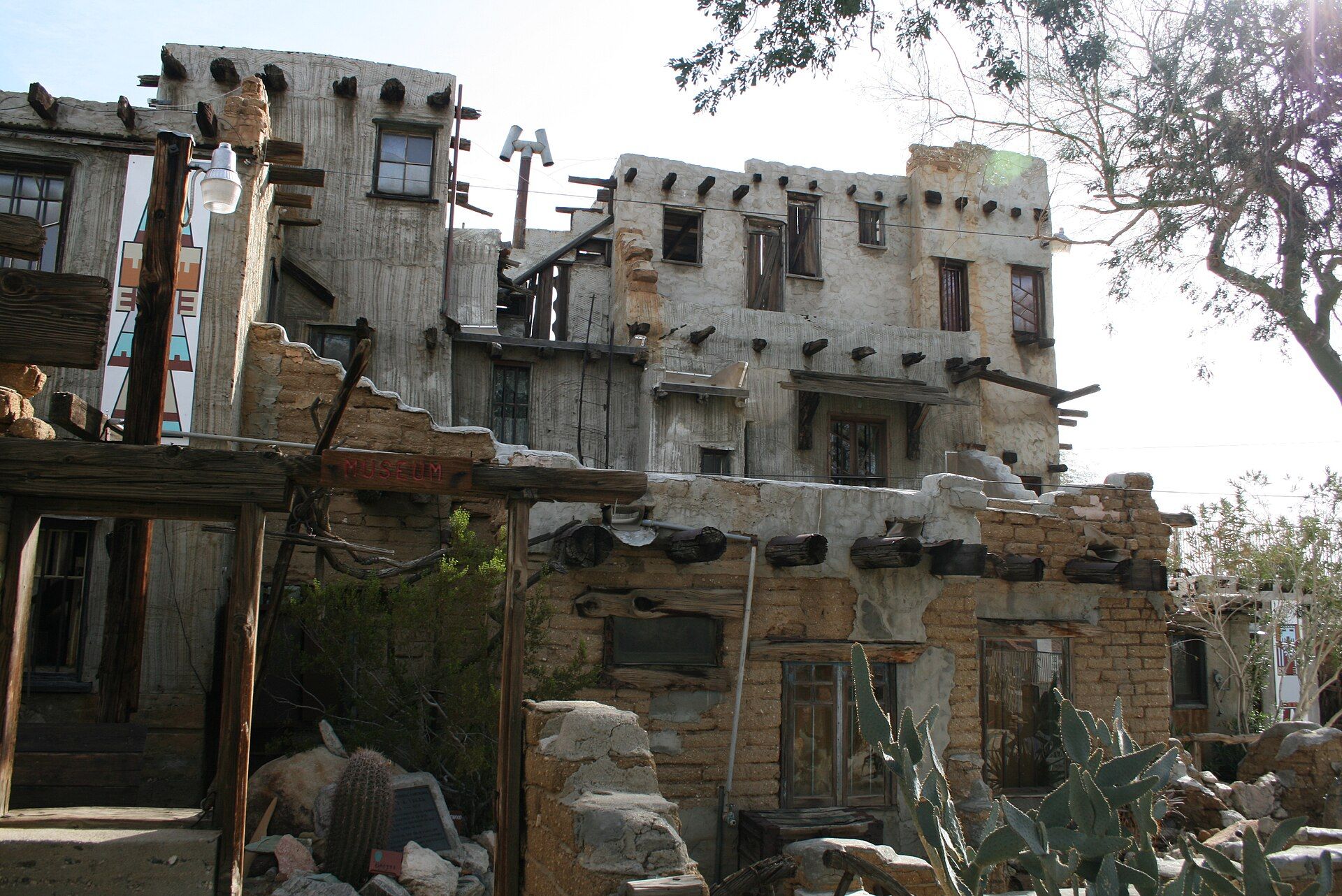
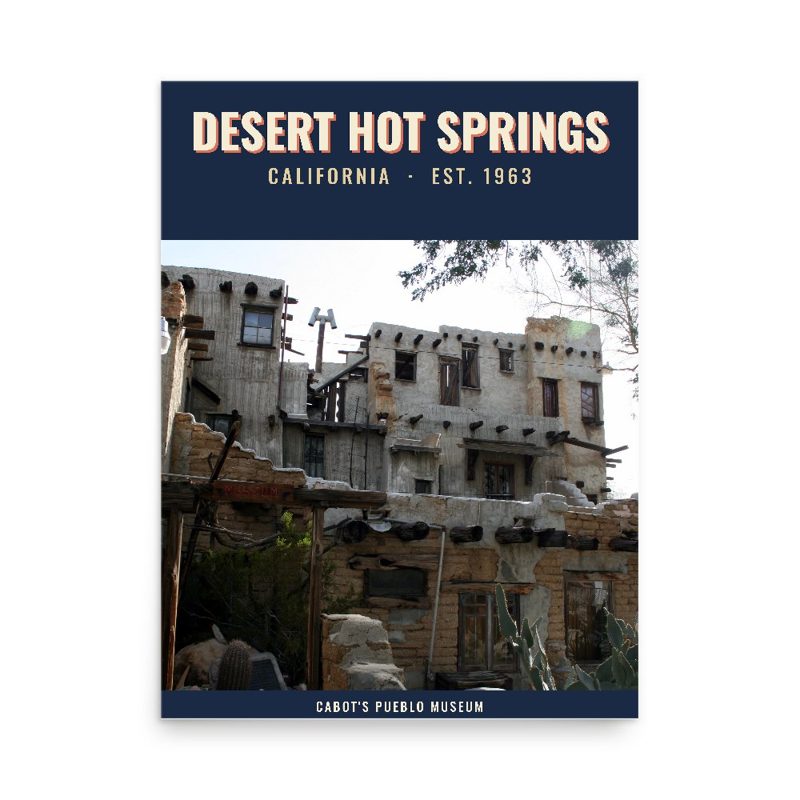
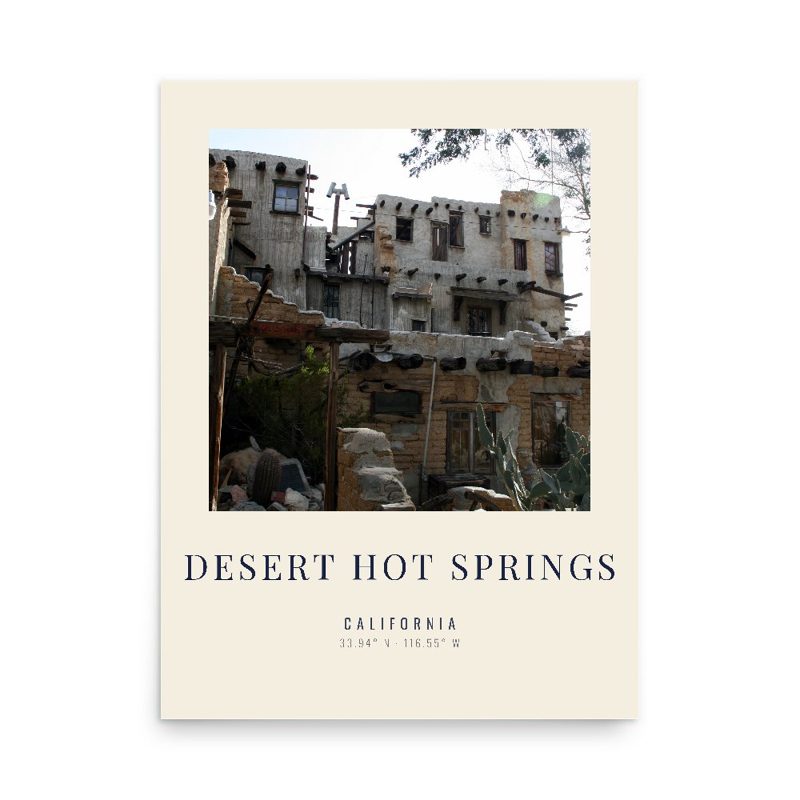
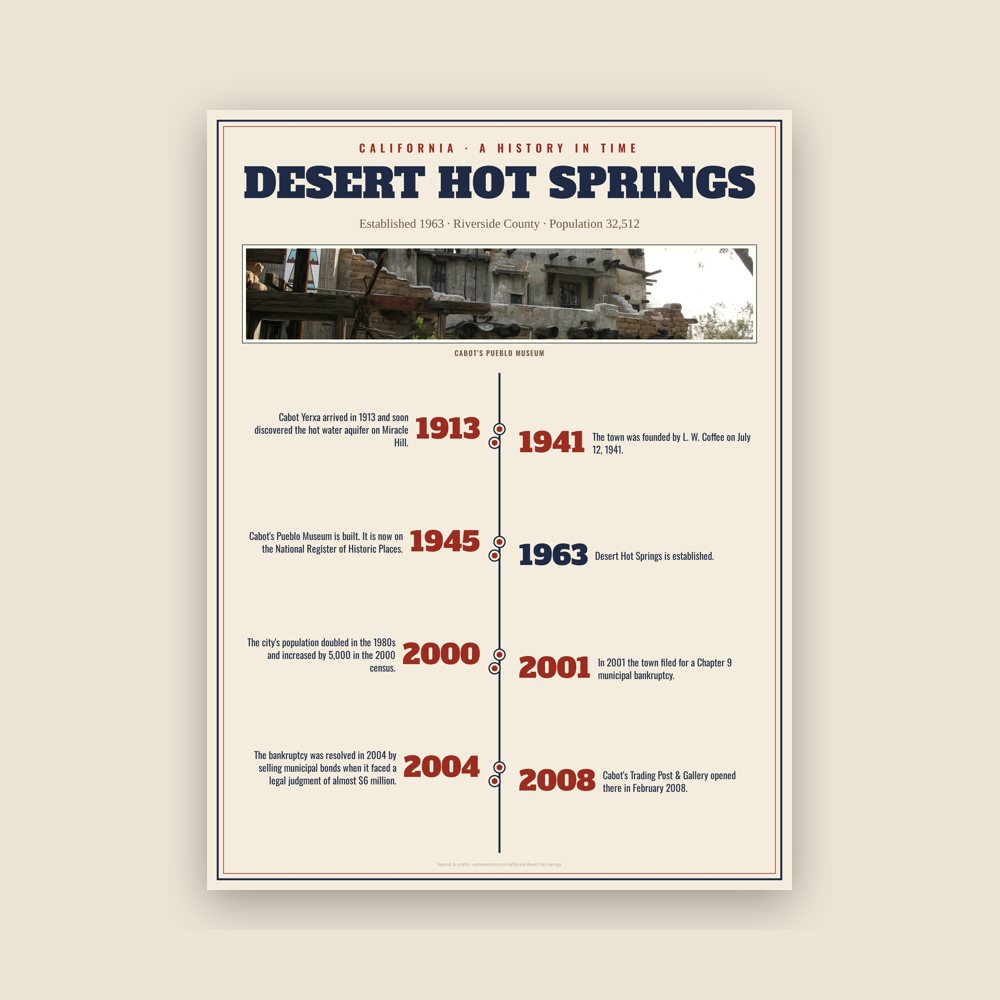






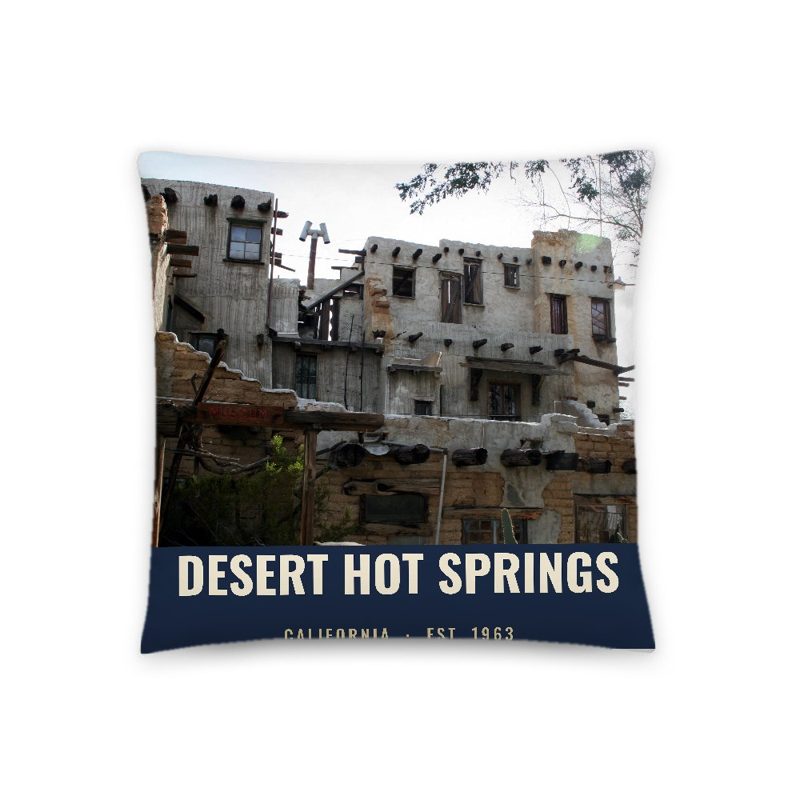
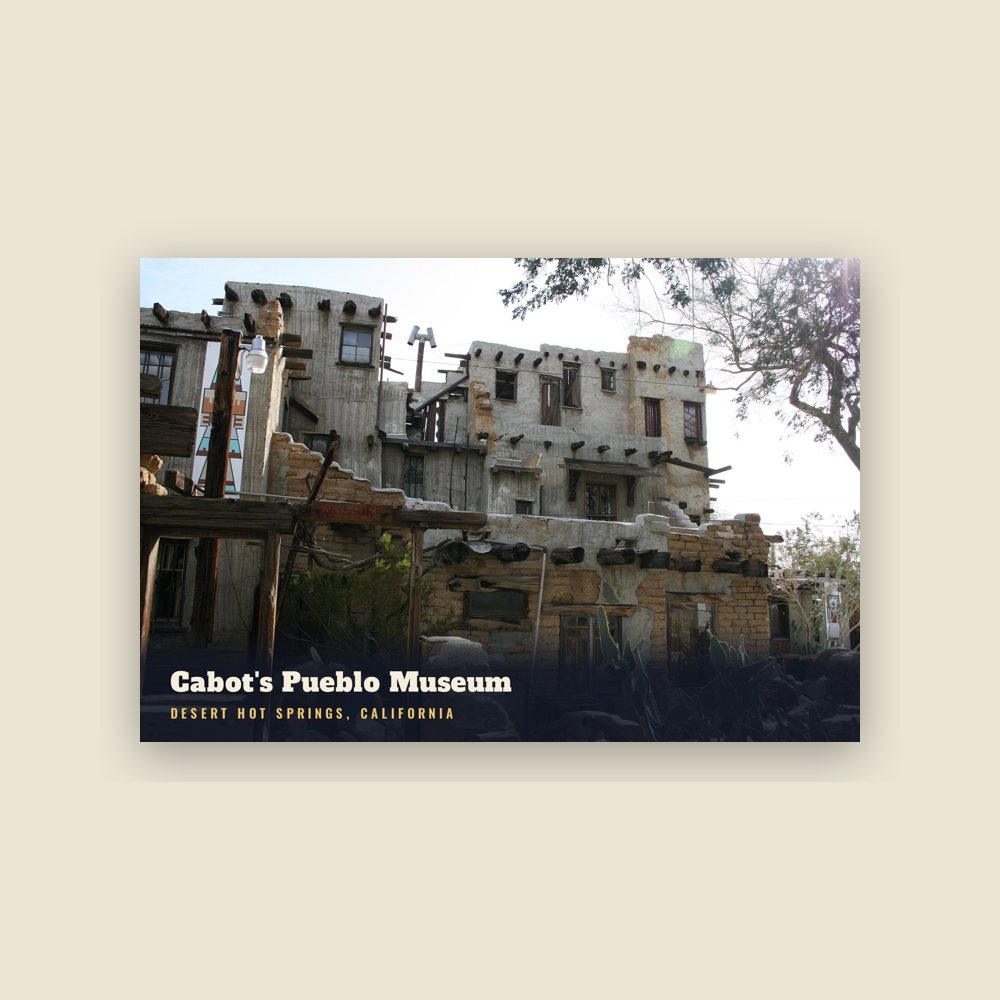
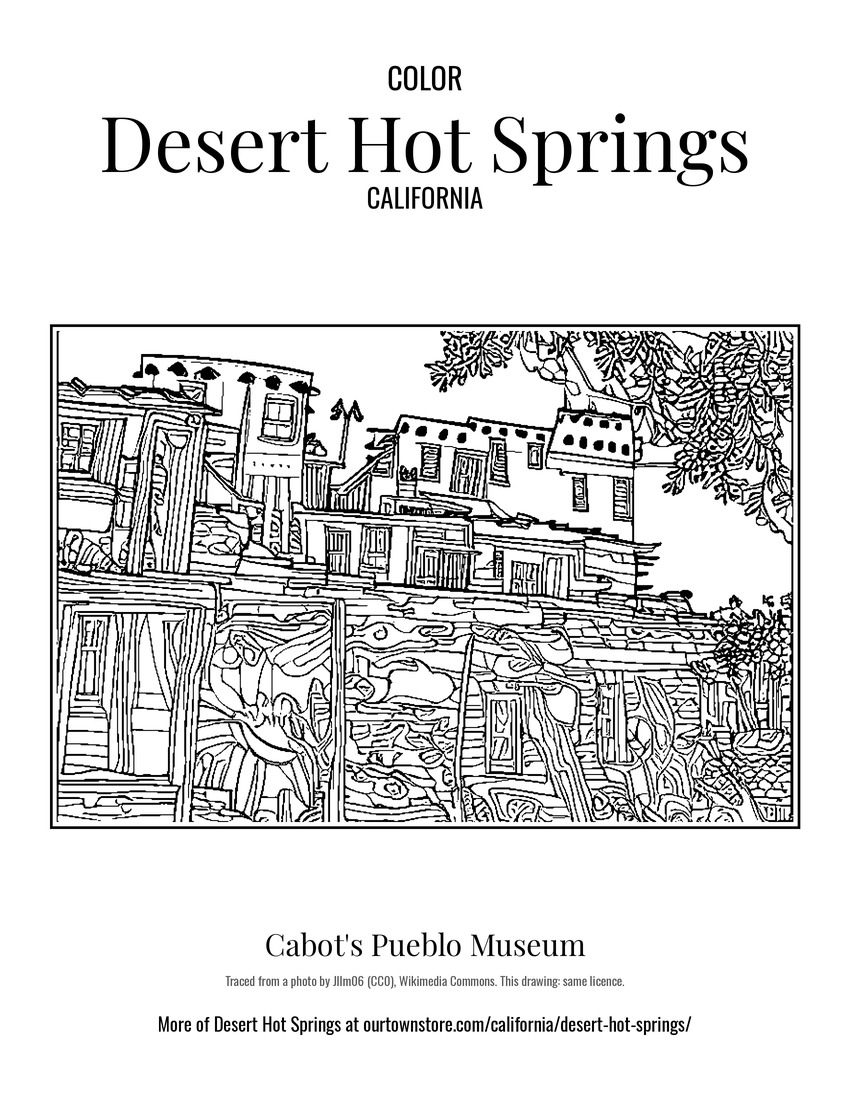 Cabot's Pueblo Museum