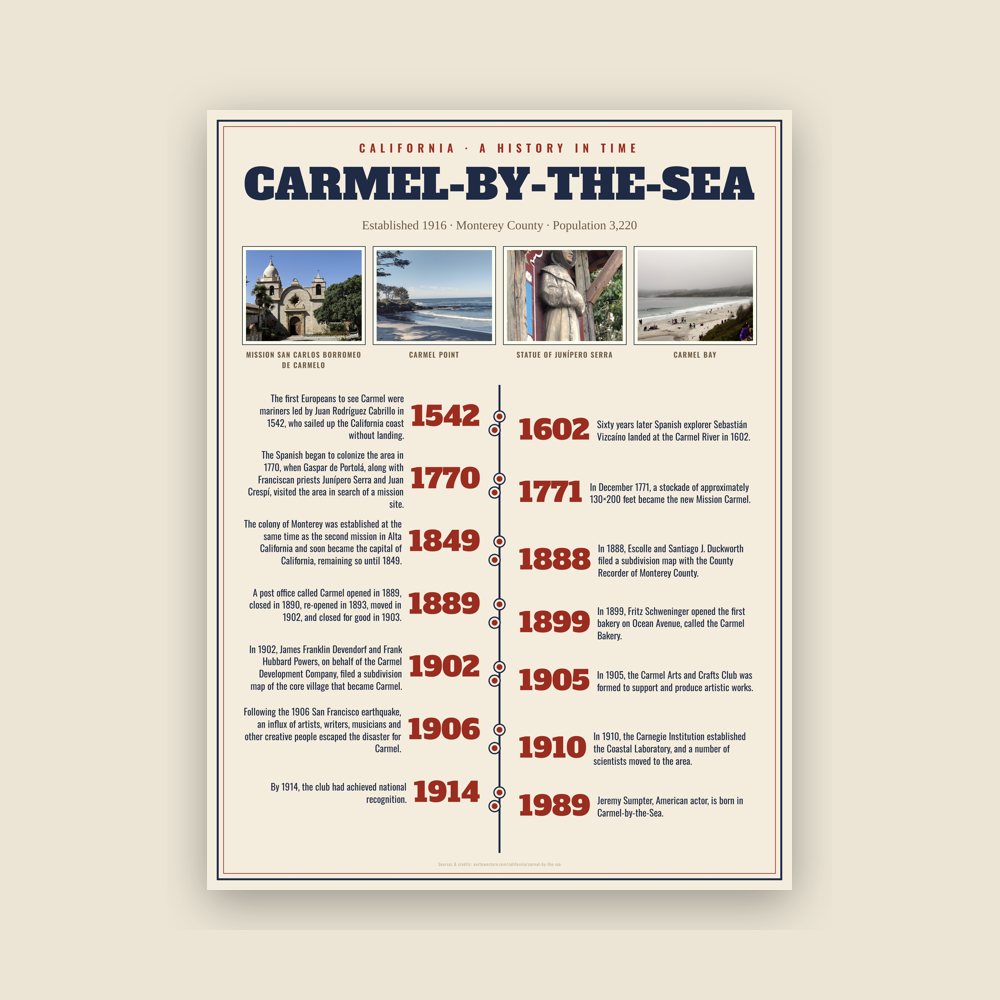
The first Europeans to see Carmel were mariners led by Juan Rodríguez Cabrillo in 1542, who sailed up the California coast without landing. Sixty years later Spanish explorer Sebastián Vizcaíno landed at the Carmel River in 1602. It is thought that he named the river running through the valley Rio Carmelo in honor of the three Carmelite friars serving as chaplains for the voyage.
The Spanish began to colonize the area in 1770, when Gaspar de Portolá, along with Franciscan priests Junípero Serra and Juan Crespí, visited the area in search of a mission site. Portolà and Crespí traveled by land while Serra traveled with supplies aboard ship, arriving eight days later. The colony of Monterey was established at the same time as the second mission in Alta California and soon became the capital of California, remaining so until 1849. From the late 18th through the early 19th century most of the Ohlone population died from European diseases (against which they had no immunity), as well as overwork and malnutrition at the missions where the Spanish forced them to live.
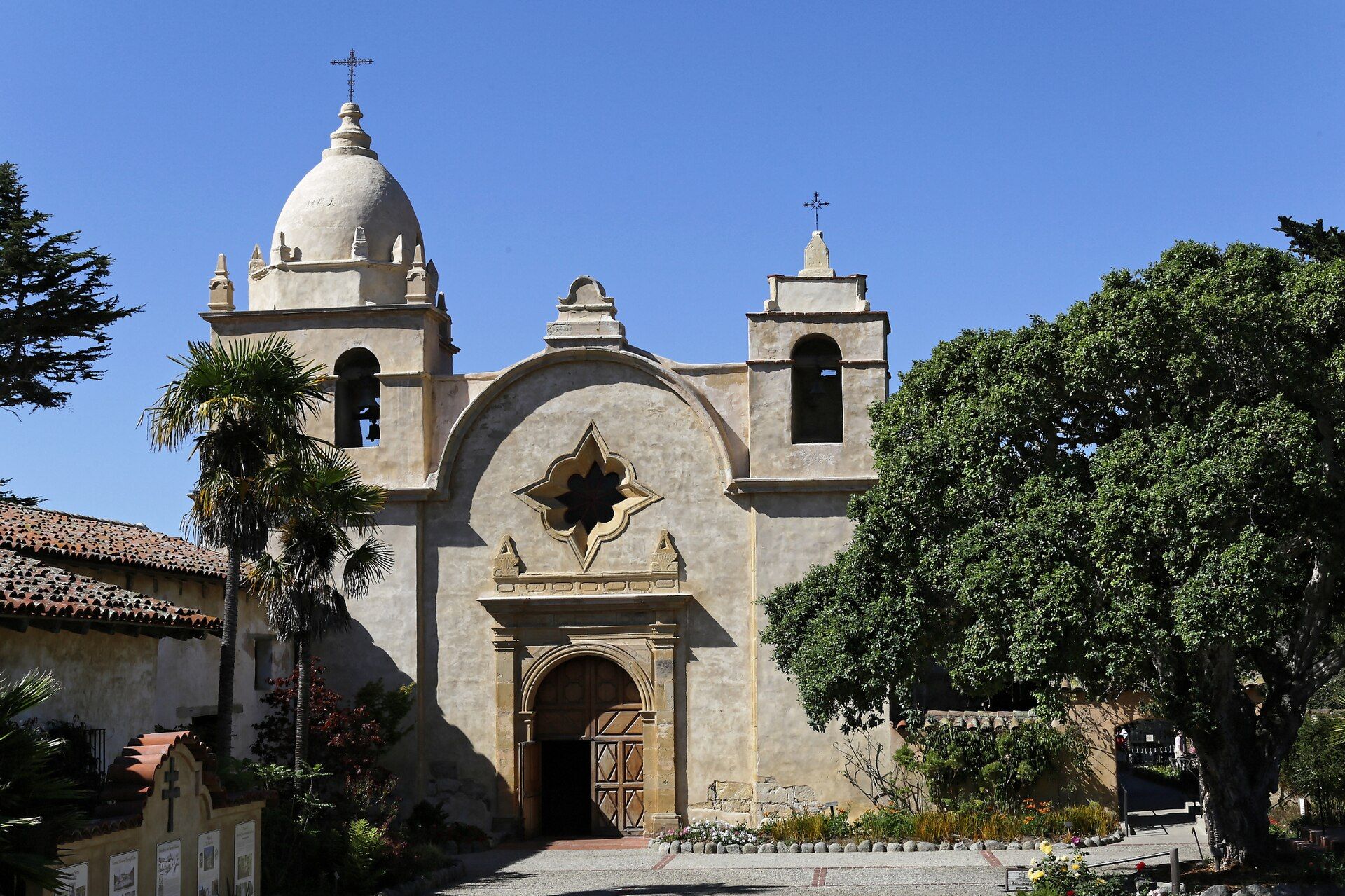
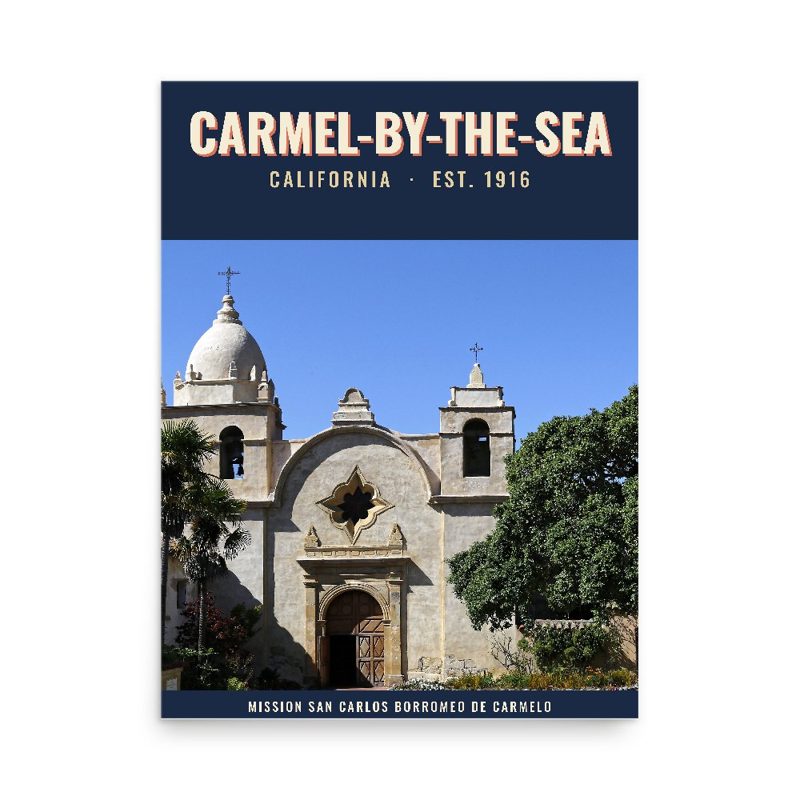
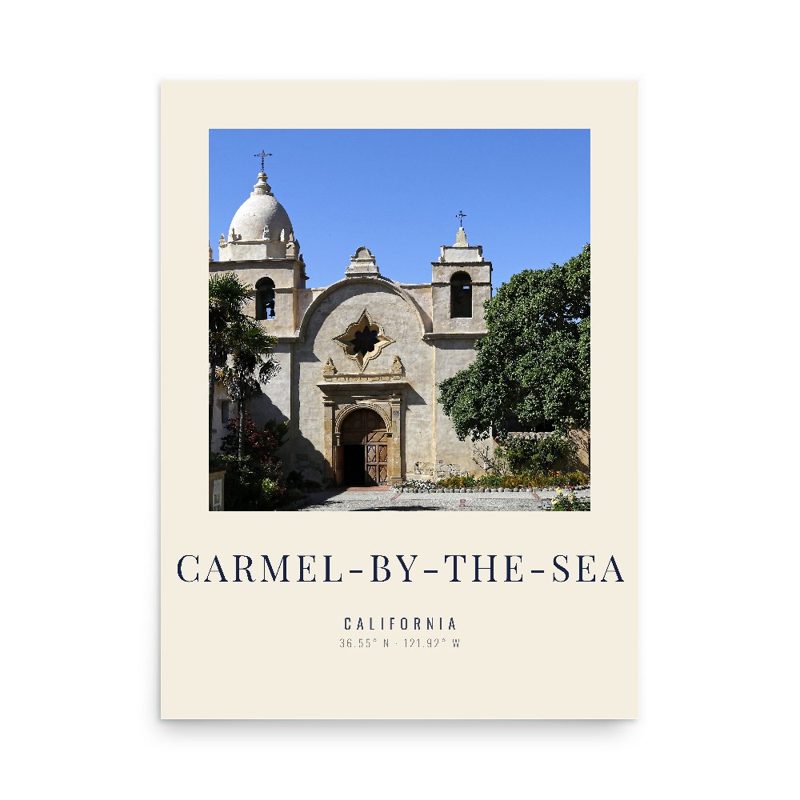
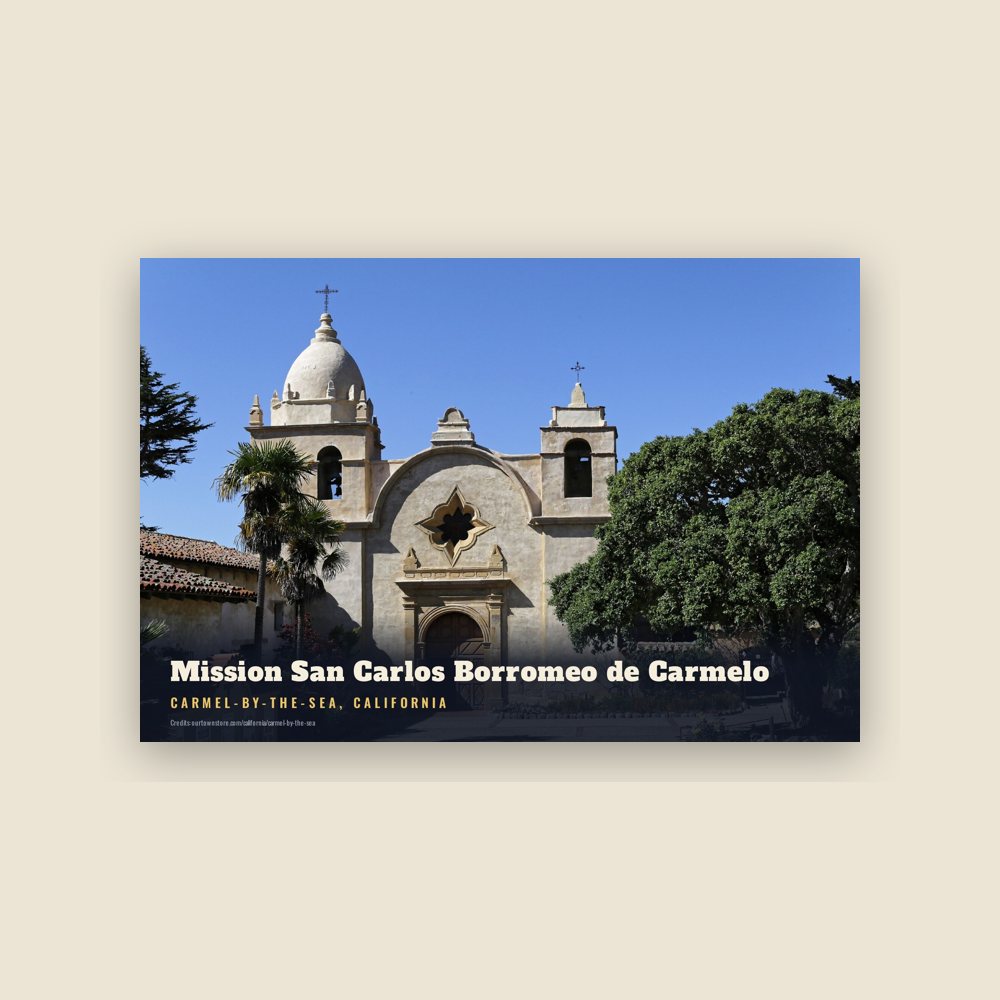
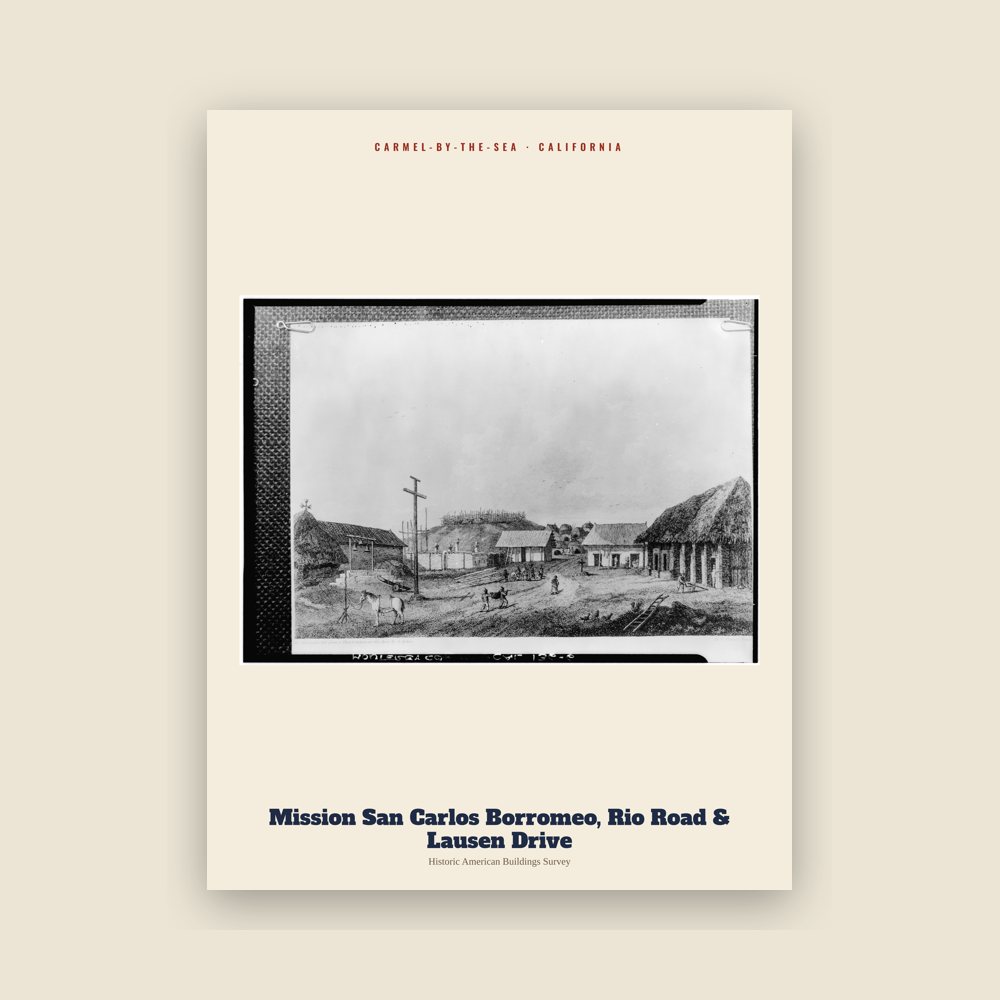
Mission San Carlos Borromeo de Carmelo was founded on June 3, 1770, in the nearby settlement of Monterey, but was relocated to Carmel Valley by Junípero Serra due to interactions between soldiers stationed at the nearby Presidio and the native Indians.
In December 1771, a stockade of approximately 130×200 feet became the new Mission Carmel. Simple buildings made of plastered mud served as the first church and dwellings until a structure was built of wood from nearby pine and cypress trees to withstand the seasonal rains. This was also a temporary church until a permanent stone building was constructed. In 1784, Serra died and was buried, at his request, at the Mission in the Sanctuary of the San Carlos Church, next to Crespí, who had died the previous year. Serra was buried with full military honors. Carmel Mission contains the state's first library.
Read the full history
Early American era
In the 1850s, "Rancho Las Manzanitas", the area that was to become Carmel-by-the-Sea, was purchased by French businessman Honoré Escolle. Escolle, well known and prosperous in the City of Monterey, owned the first commercial bakery, pottery kiln and brickworks in Central California.
William Martin of Scotland arrived in Monterey in 1856 by ship with his family. His son, John Martin (1827–1893), bought land around the Carmel River from Lafayette F. Loveland in 1859. He built the Martin Ranch on 216 acres (87 ha) that went as far as the Carmel River to the homes along Carmel-by-the-Sea. The ranch became known as the Mission Ranch because it was so close to the Carmel Mission. They farmed potatoes and barley and had a milk dairy.
In 1888, Escolle and Santiago J. Duckworth filed a subdivision map with the County Recorder of Monterey County. By 1889, 200 lots had been sold. The name "Carmel" was earlier applied to another place on the north bank of the Carmel River 13 miles (21 km) east-southeast of the present-day Carmel. A post office called Carmel opened in 1889, closed in 1890, re-opened in 1893, moved in 1902, and closed for good in 1903. Abbie Jane Hunter, founder of the San Francisco-based Women's Real Estate Investment Company, first used the name "Carmel-by-the-Sea" on a promotional postcard.
Modern era
In 1902, James Franklin Devendorf and Frank Hubbard Powers, on behalf of the Carmel Development Company, filed a subdivision map of the core village that became Carmel. They asked Michael J. Murphy to help build the houses. From 1902 to 1940, he built nearly 350 buildings in Carmel. The Carmel post office opened the same year. In 1899, Fritz Schweninger opened the first bakery on Ocean Avenue, called the Carmel Bakery. In 1910, the Carnegie Institution established the Coastal Laboratory, and a number of scientists moved to the area.
In 1905, the Carmel Arts and Crafts Club was formed to support and produce artistic works. Following the 1906 San Francisco earthquake, an influx of artists, writers, musicians and other creative people escaped the disaster for Carmel. The new residents were offered home lots with a ten-dollar down payment, little or no interest, and whatever they could afford to pay monthly. In 1906, the San Francisco Call devoted a full page to the "artists, writers and poets at Carmel-by-the-Sea."
The Carmel Arts and Crafts Club held exhibitions, lectures, dances, and produced plays and recitals at numerous locations, including the Pine Inn Hotel, before purchasing a lot on Casanova Street, where they built a clubhouse in 1907. By 1914, the club had achieved national recognition.
In 1911, Carmel began a tradition of presenting plays by Shakespeare with a production of Twelfth Night, directed by Garnet Holme of UC Berkeley and featuring future mayors Perry Newberry and Herbert Heron. Twelfth Night was again presented in 1940 at Heron's inaugural Carmel Shakespeare Festival, and was repeated in 1942 and 1956.
In 1915, during the Panama–Pacific International Exposition in San Francisco, various items showcasing Carmel were featured in the Monterey County exhibit within the California Building. This exhibit included natural and industrial products of this part of the state. As part of Carmel's involvement in the Exposition, the Junipero Serra or The Padres performance from the Forest Theater took place on July 30–31, 1915, within the Court of the Universe. This pageant, written and directed by Perry Newberry, was a tribute to Father Junipero Serra and featured prominent citizens of Carmel in its cast, such as Frederick R. Bechdolt and Grant Wallace. Around twenty-five thousand individuals attended these performances.
Carmel incorporated in 1916. In 1925, Paul Aiken Flanders built the Flanders Mansion and used his home as a model for the Hatton Fields subdivision. The City of Carmel purchased the Flanders Mansion and adjoining 14.9 acres (6.0 ha) in 1972, from the Flanders heirs for US$275,000 (equivalent to $2,116,647 in 2025). It has become part of the Mission Trail Nature Preserve.
In 1932, the city developed the Devendorf Park that occupies the block of Ocean Avenue and Junipero Avenue. The city park is Carmel's central gathering place for outdoor events.
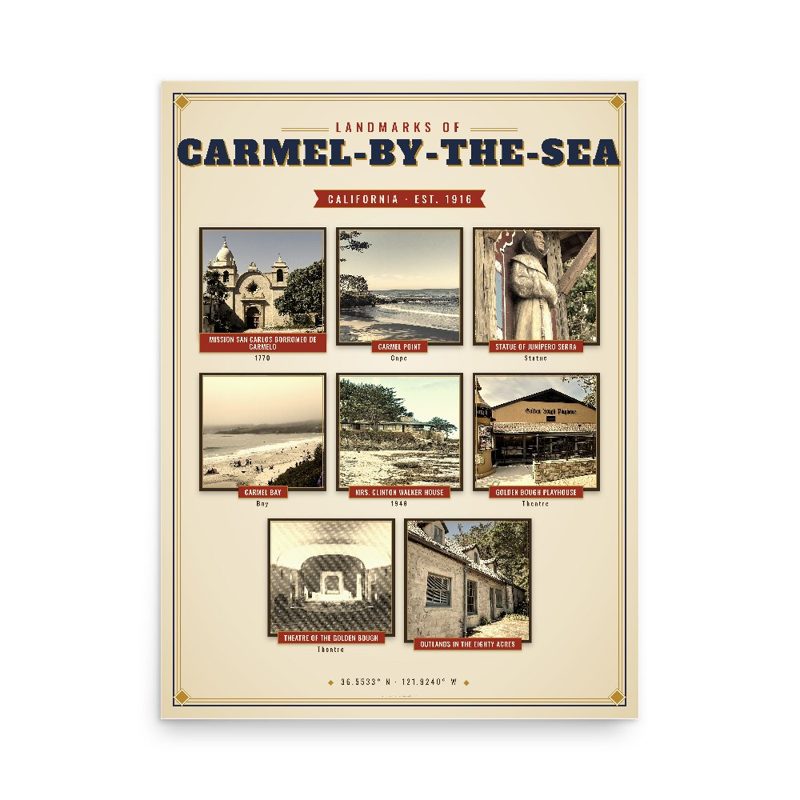
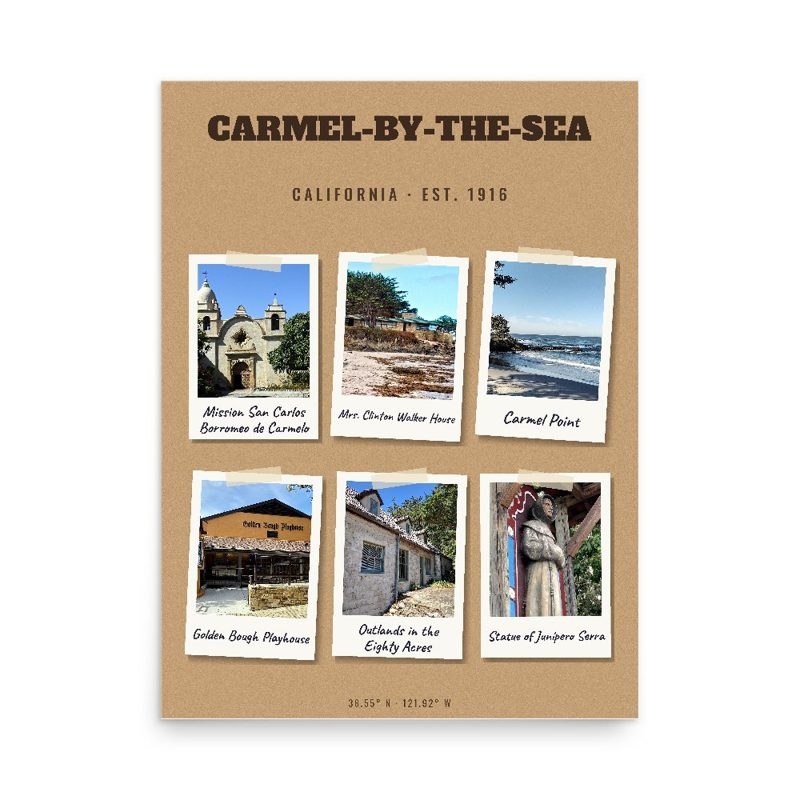
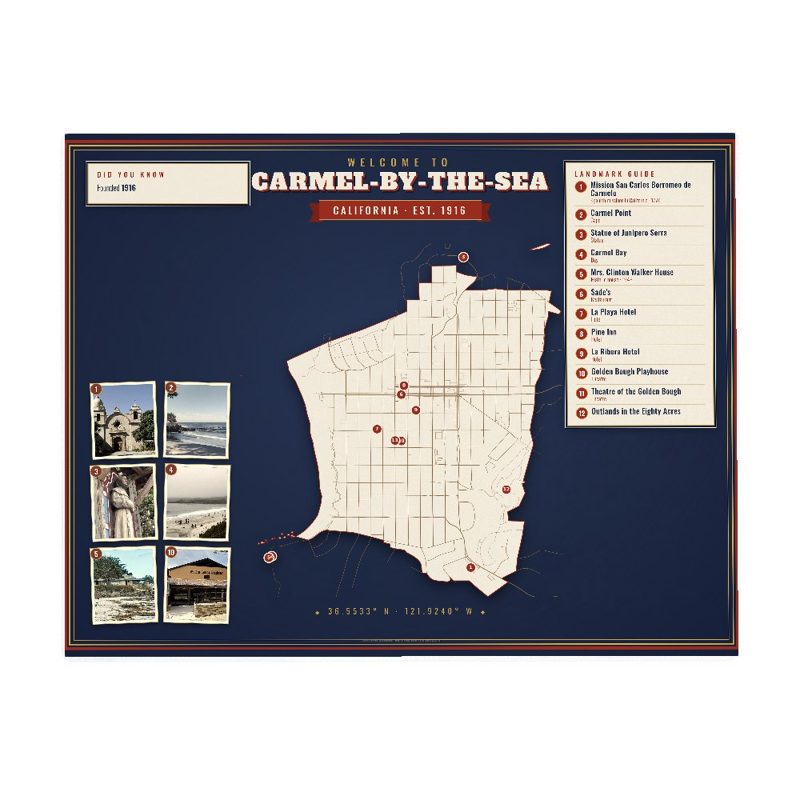










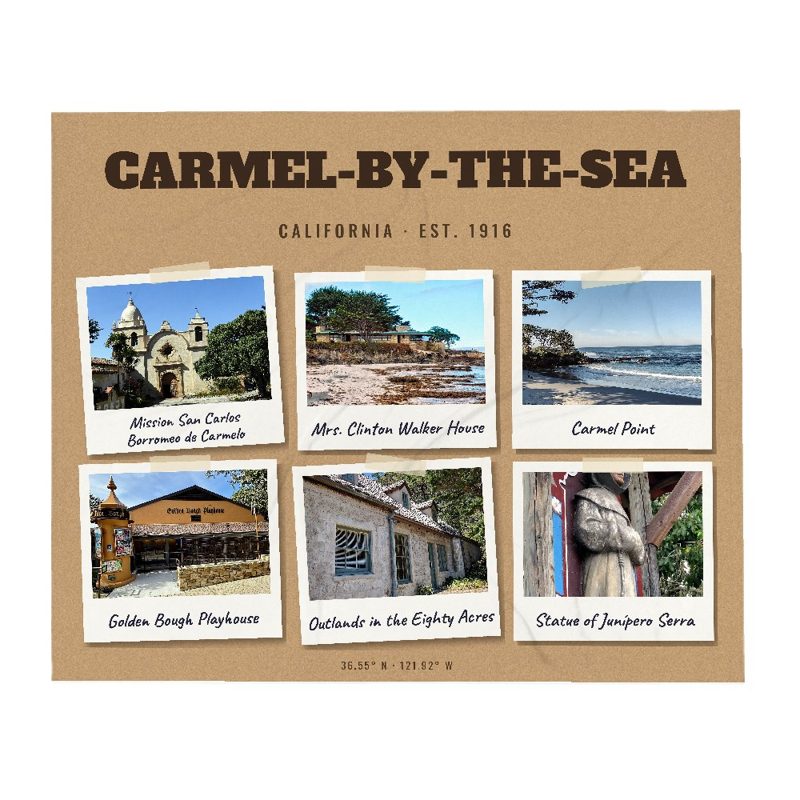
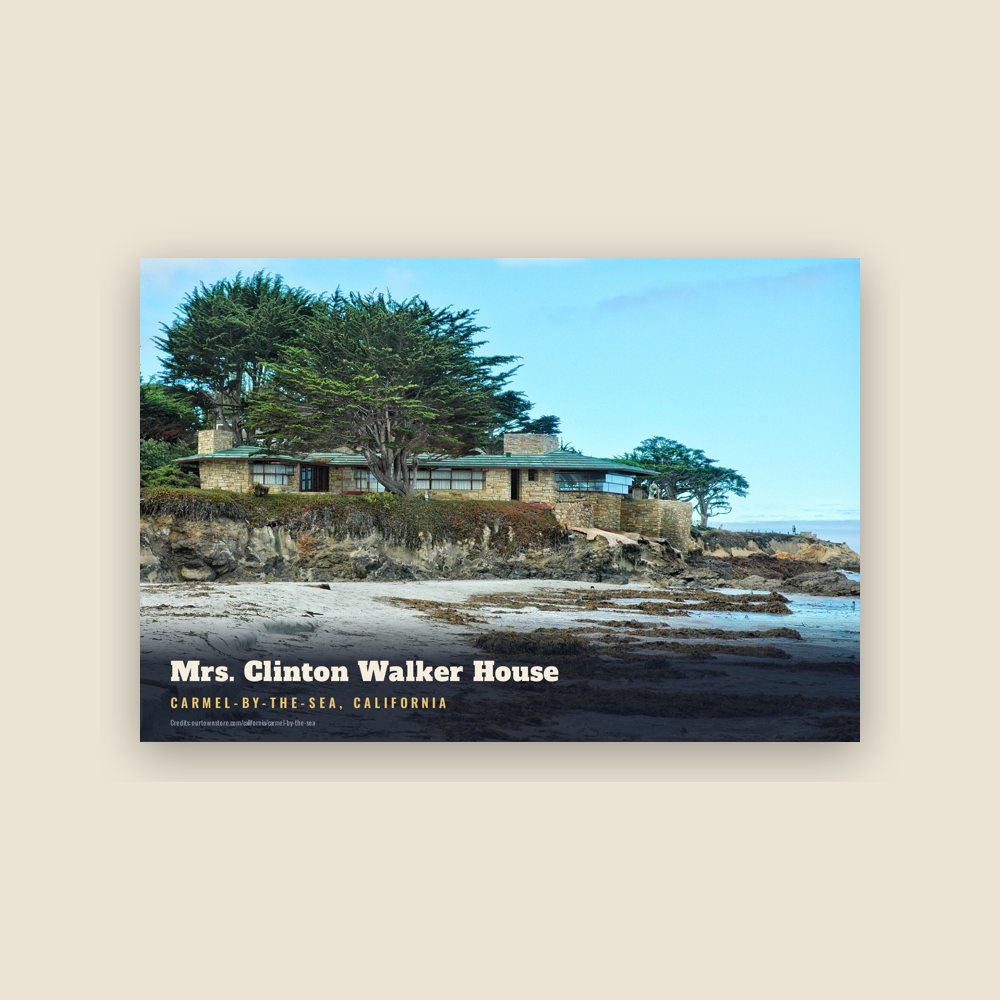
 Mrs. Clinton Walker House
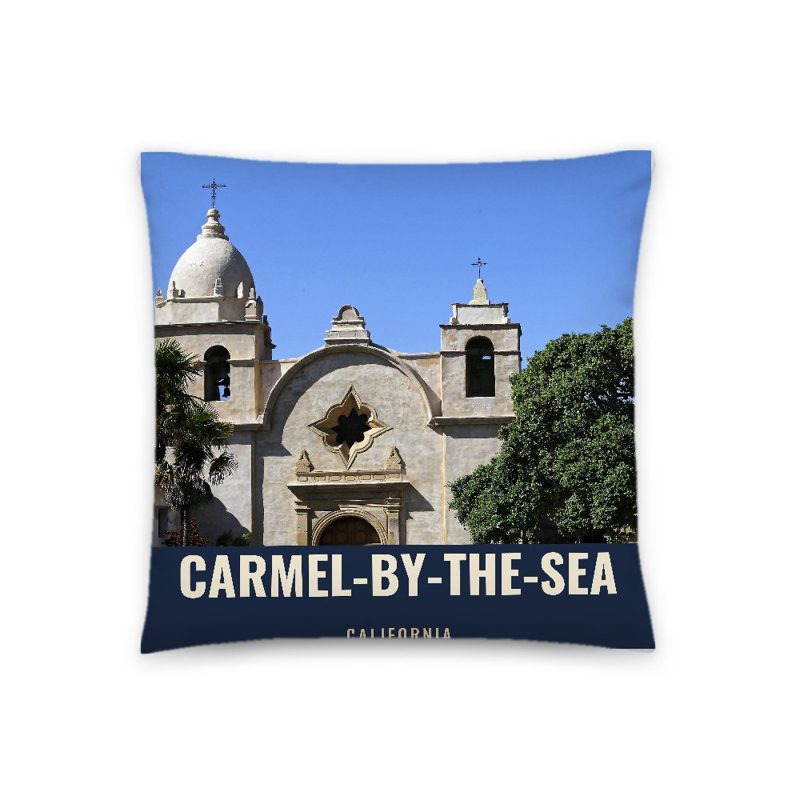
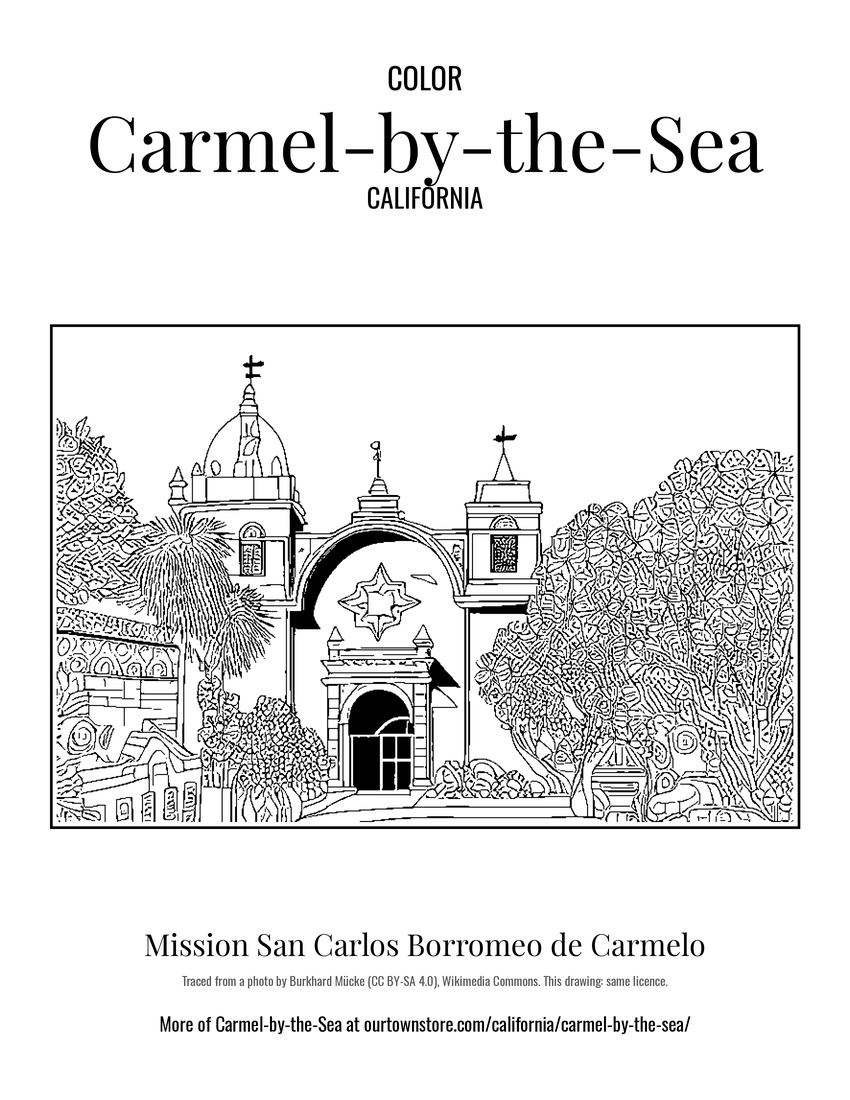 Mission San Carlos Borromeo de Carmelo
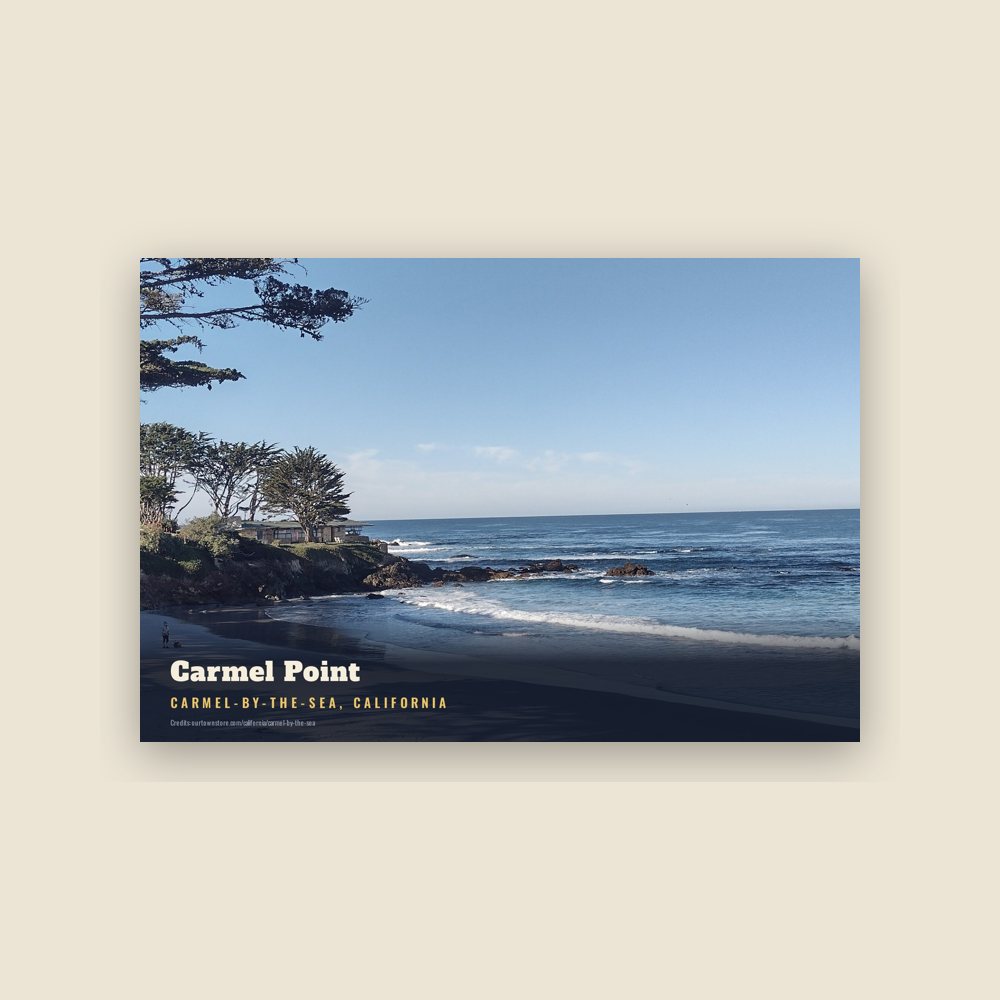
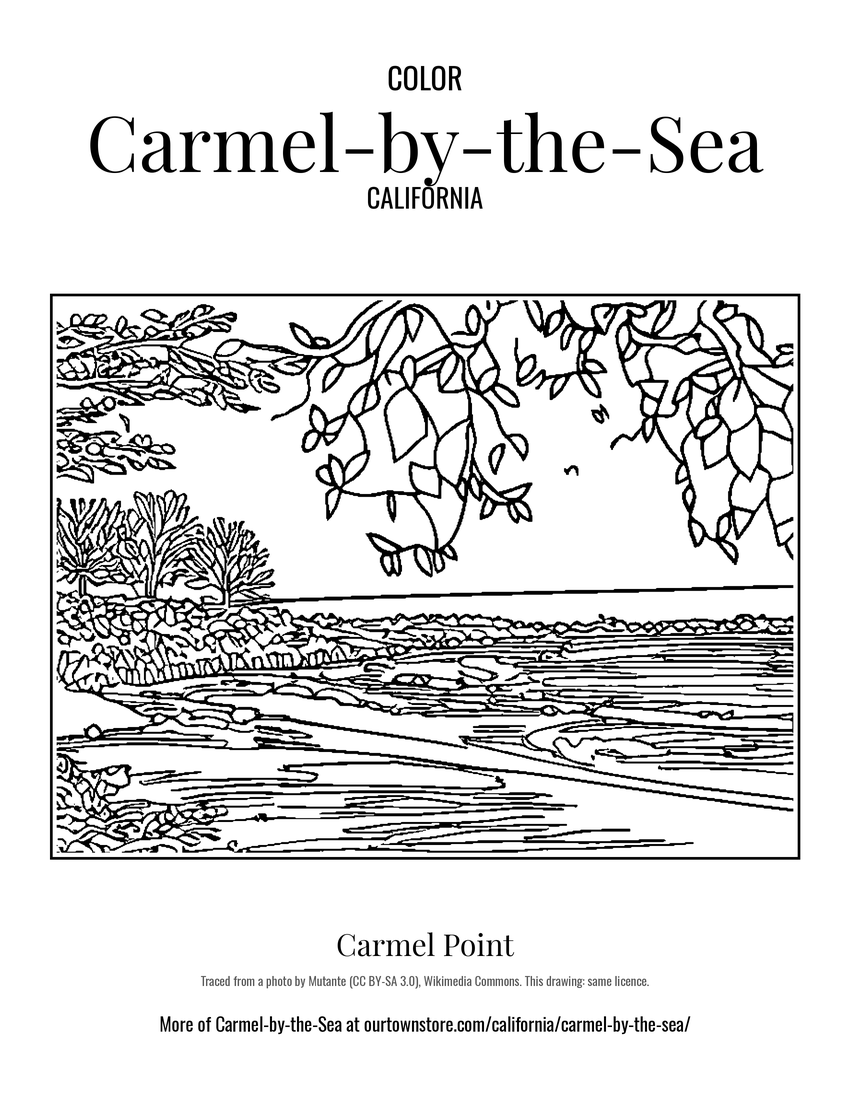 Carmel Point
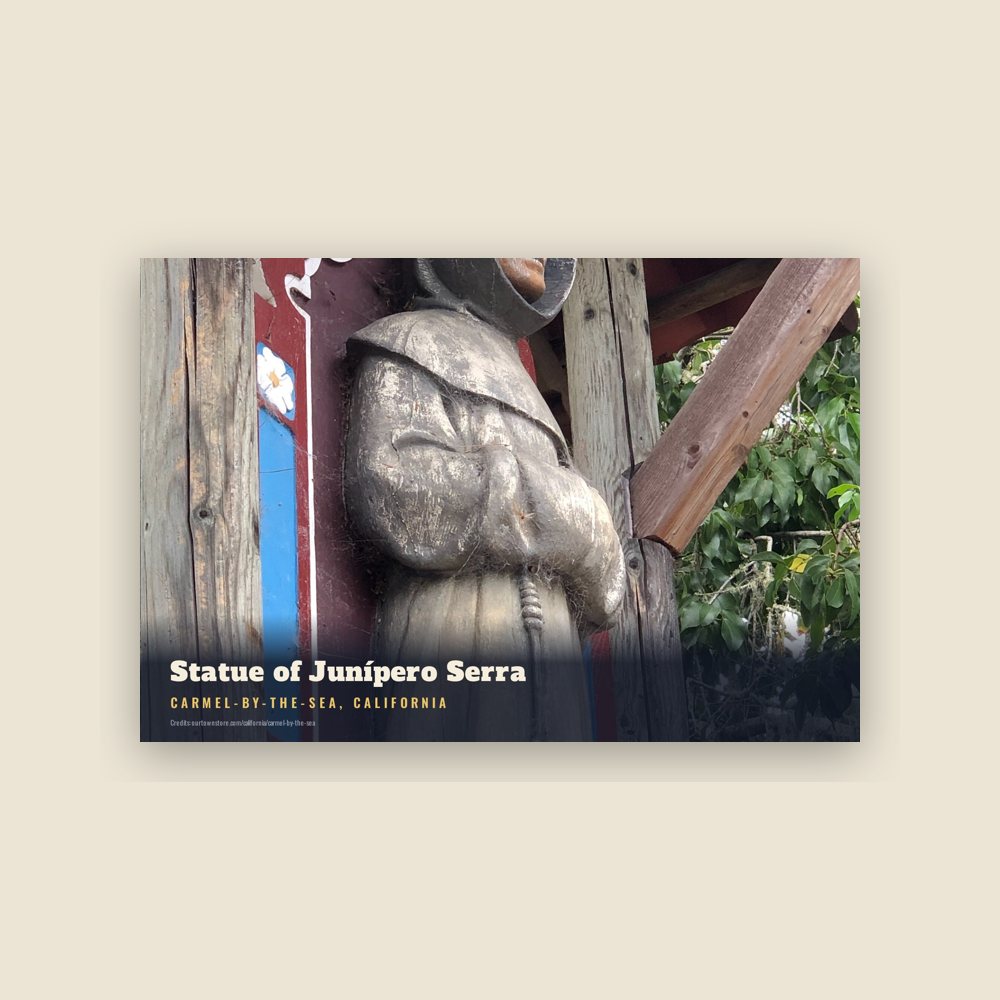
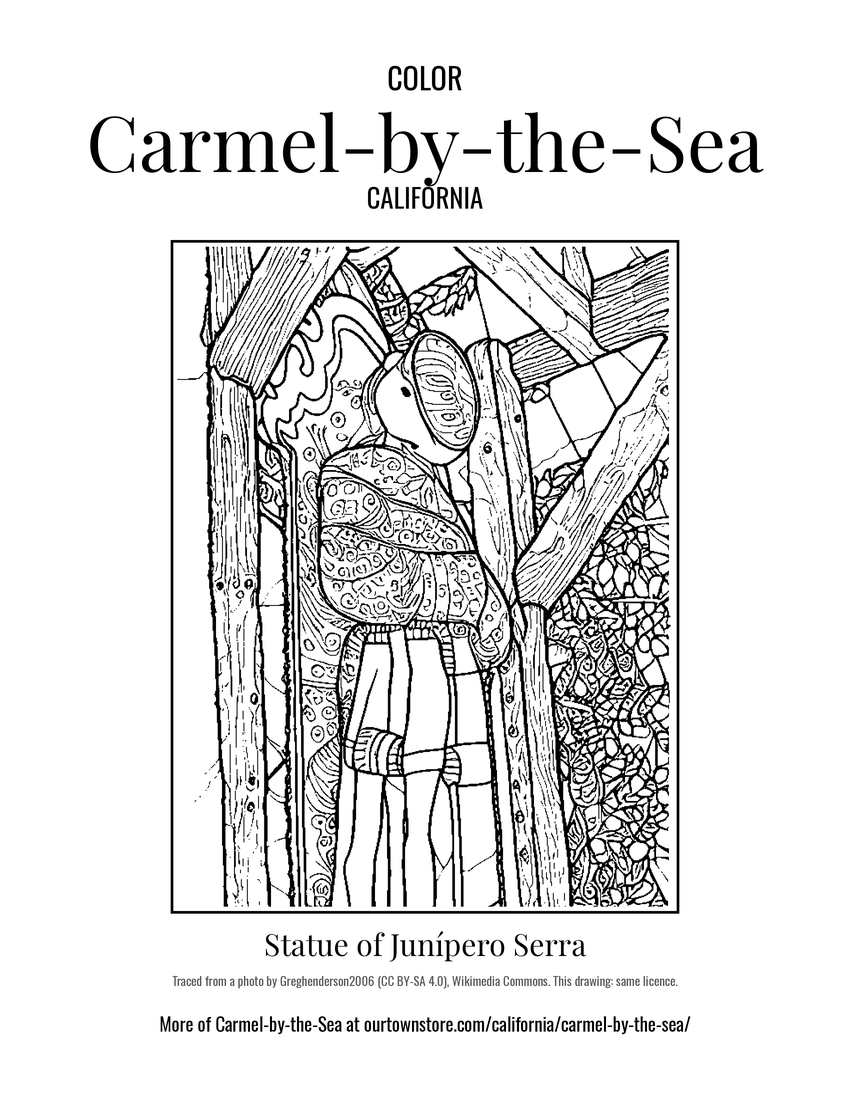 Statue of Junípero Serra