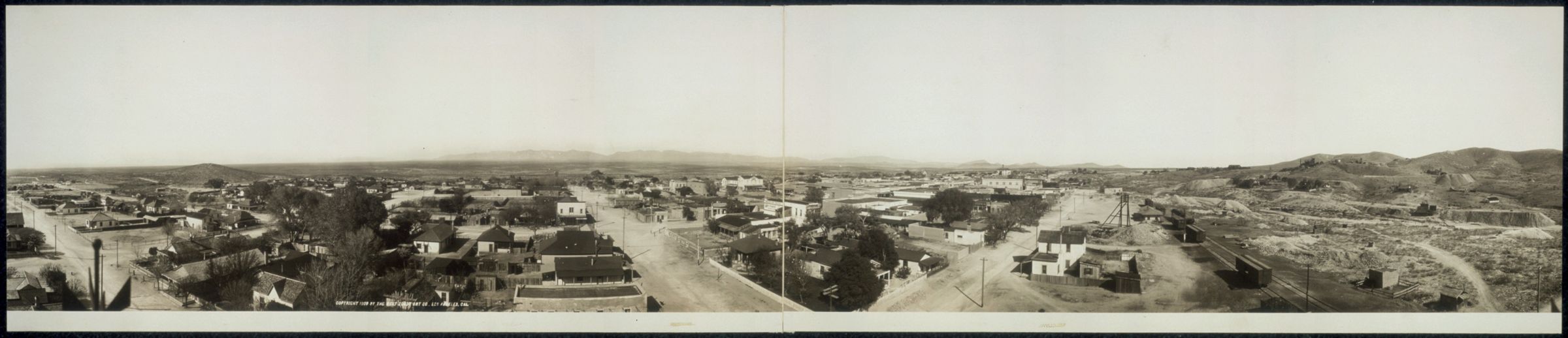
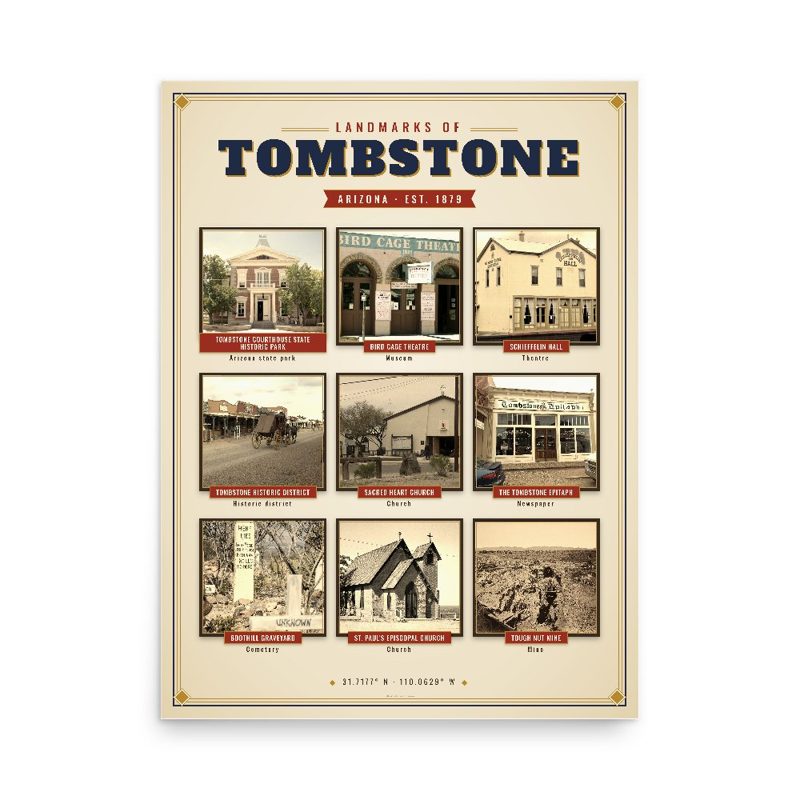
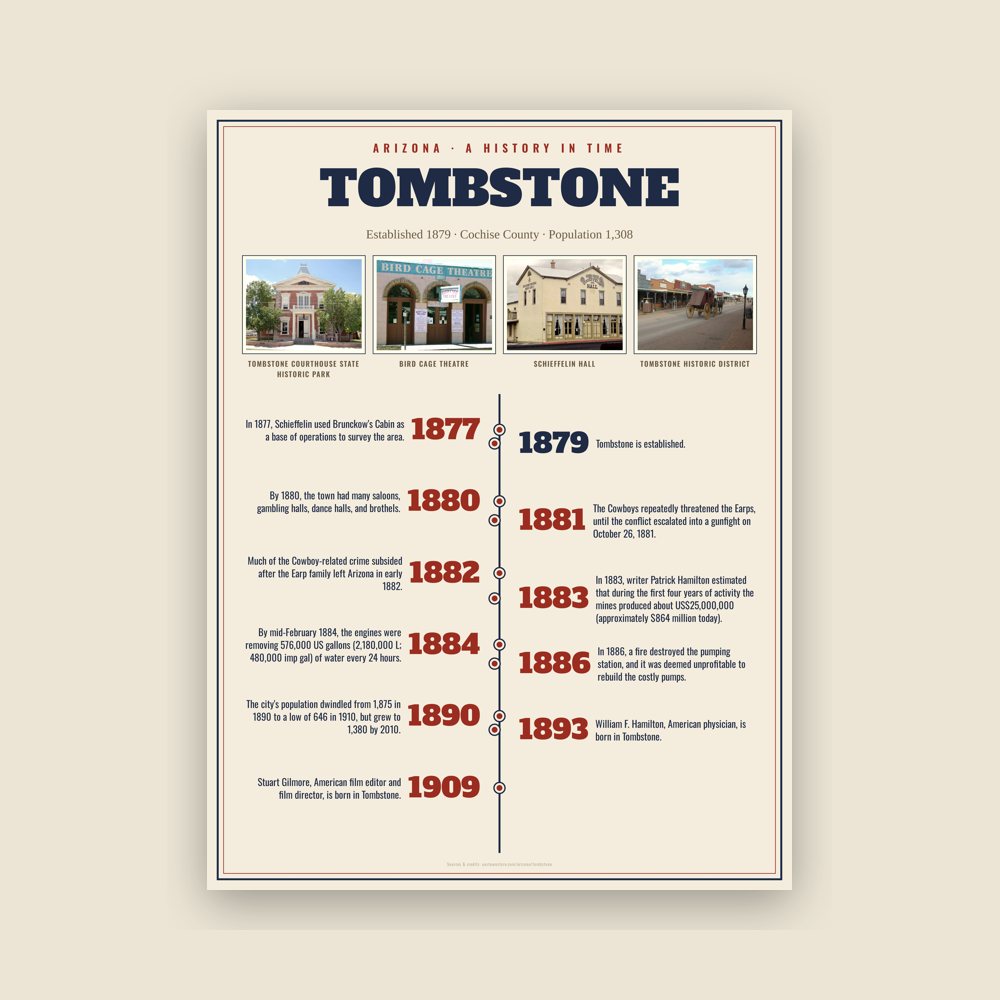
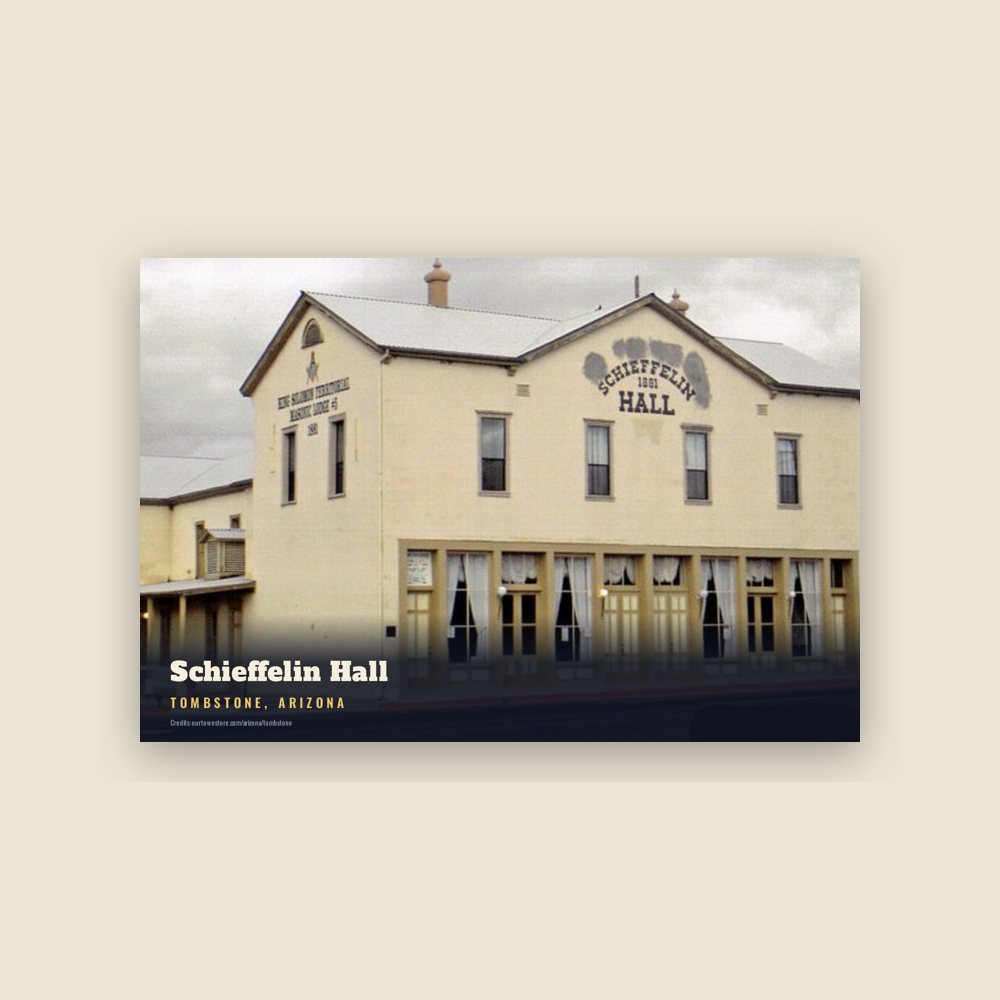
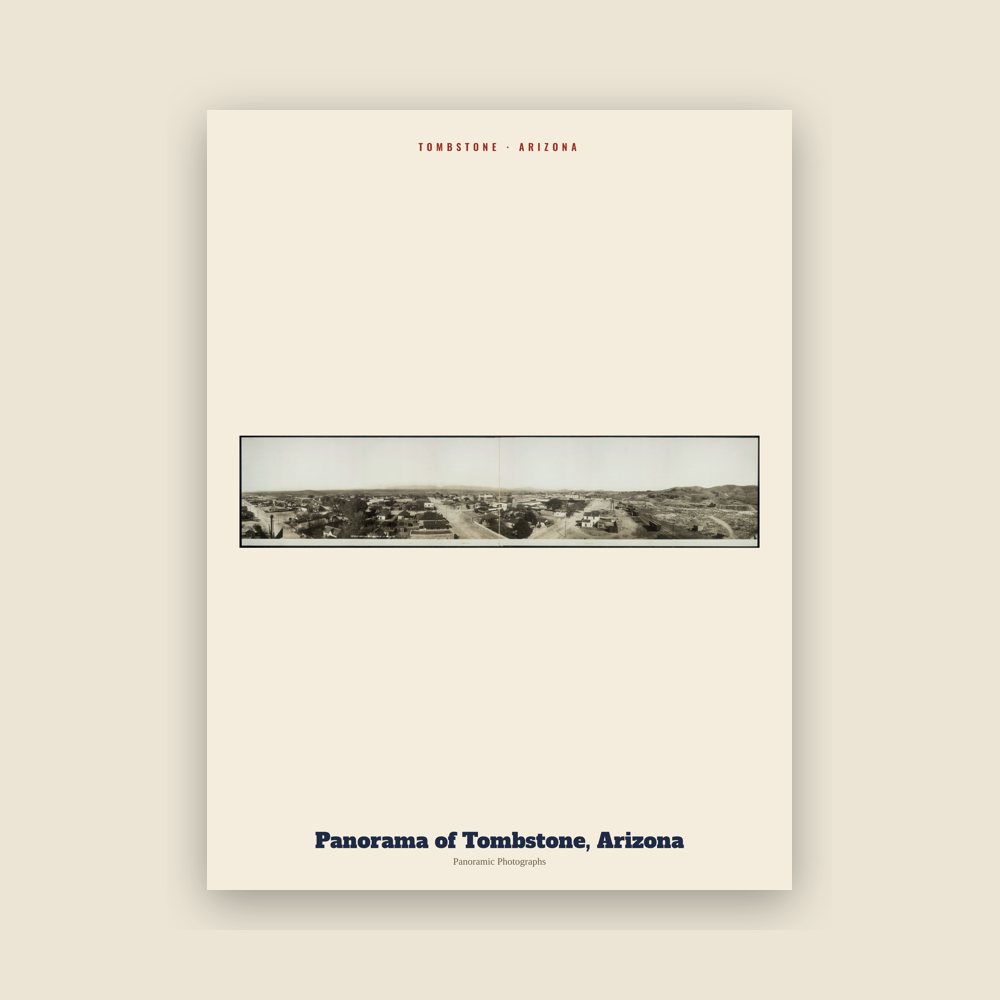
Tombstone was founded on land historically inhabited by the Hohokam people, who lived in southern Arizona for over 2,000 years. The town was established in 1879 on a mesa above the Goodenough Mine. By 1880, the town had many saloons, gambling halls, dance halls, and brothels. It also boasted four churches, three newspapers, two banks, an ice house, and an ice cream parlor. In those days, the more respectable denizens of Tombstone attended theatrical productions presented by visiting troupes at the Schieffelin Hall, while the miners and cowboys preferred shows at the Bird Cage Theatre.
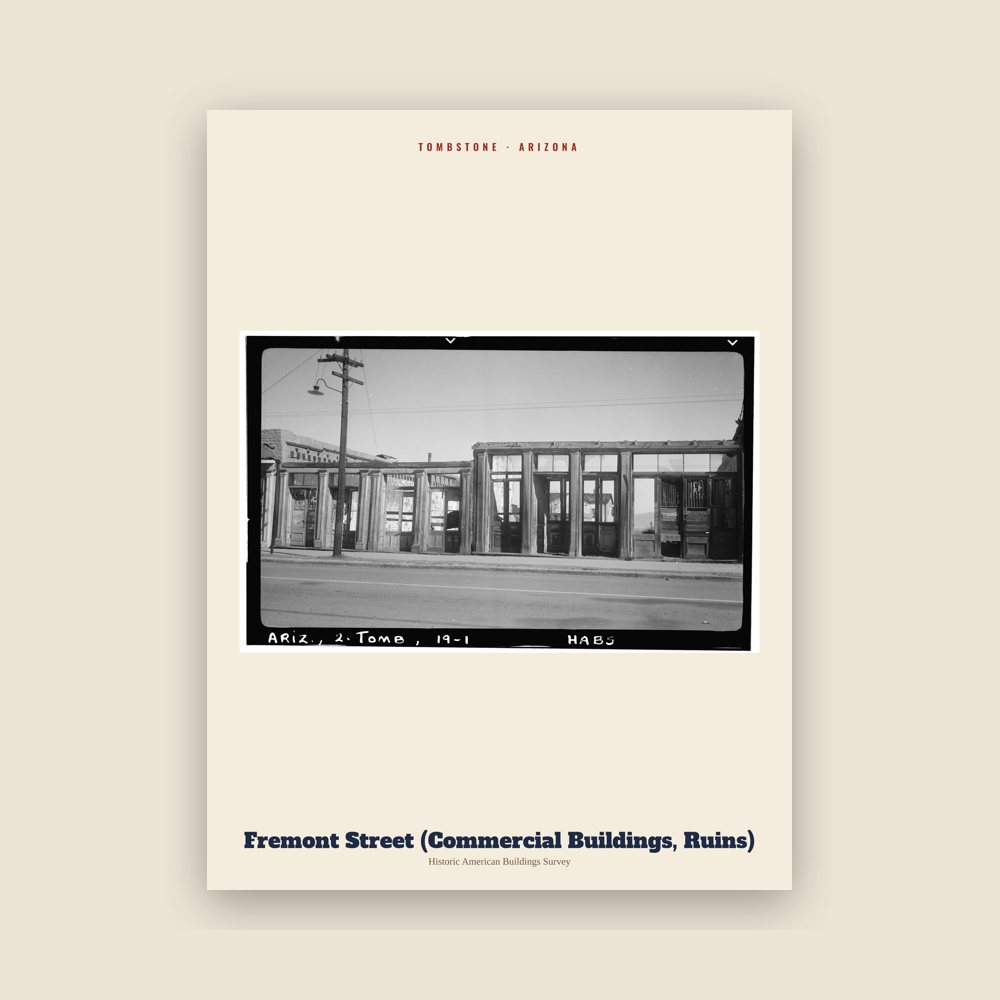
Underlying political tensions rapidly escalated as the population increased. The townspeople and the owners of the mines were largely from the Northern states, while the ranchers were mostly Confederate sympathizers. Only 30 miles (48 km) from the Mexico–United States border, the city was a market for cattle stolen from ranches in Sonora, Mexico, by a loosely organized band of outlaws known as the Cochise County Cowboys. The Earp brothers (Wyatt, Virgil and Morgan) and Doc Holliday had ongoing conflicts with Cowboys Ike and Billy Clanton, Frank and Tom McLaury, and Billy Claiborne. The Cowboys repeatedly threatened the Earps, until the conflict escalated into a gunfight on October 26, 1881. Although the gunfight is often portrayed as occurring at the O.K. Corral, it actually occurred a short distance away, in an empty lot on Fremont Street.
Beginning in 1880, the silver mines penetrated the water table, requiring the installation of pumps to dewater the mines. In 1886, a fire destroyed the pumping station, and it was deemed unprofitable to rebuild the costly pumps. The city nearly became a ghost town, saved only by the fact that it was the seat of Cochise County at that time. The city's population dwindled from 1,875 in 1890 to a low of 646 in 1910, but grew to 1,380 by 2010. Tombstone has frequently been noted on lists of unusual place names.
Read the full history
Founding
Ed Schieffelin was a United States Army Indian Scout during the Apache Wars. While stationed at what would later become Fort Huachuca, he searched the surrounding area, looking for ore. Three people had recently been killed by Apache warriors at the Santa Rita mines in nearby Santa Cruz Valley. When friend and fellow Army Scout Al Sieber learned what Schieffelin was up to, he reportedly told him, "The only rock you will find out there will be your own tombstone", or, according to an earlier version of the story, "Better take your coffin with you; you will find your tombstone there, and nothing else."
In 1877, Schieffelin used Brunckow's Cabin as a base of operations to survey the area. After many months, while working the hills east of the San Pedro River, he found silver ore in a dry wash on a high plateau called Goose Flats. It took him several more months to locate the source. When he located the vein, he estimated it to be fifty feet long and twelve inches wide. Schieffelin took on a partner named William Griffith who financed the filing of the claim in return for a later claim for himself. Griffith filed Schieffelin's first claim, which was named Tombstone, on September 3, 1877. Another account says the first claim was called Graveyard "because it proved worthless and for no other reason."
When the first claims were filed, the initial settlement of tents and wooden shacks was located at Watervale, near the Lucky Cuss mine, with a population of about 100. The Goodenough Mine strike occurred shortly after. Former Territorial Governor Anson P. K. Safford offered financial backing for a share of the mining claims, and Schieffelin, his brother Al, and their partner Richard Gird formed the Tombstone Mining and Milling Company and built a stamp mill near the San Pedro River, about 8 miles (13 km) away. As the mill was being built, US Deputy Mineral Surveyor Solon M. Allis finished surveying the new town's site in March 1879. The tents and shacks near the Lucky Cuss were moved to the new town site on Goose Flats, a mesa above the Goodenough Mine at 4,539 feet (1,383 m) above sea level and large enough to hold a growing town. Lots were immediately sold on Allen Street for $5 each. The town soon had some 40 cabins and about 100 residents. At the town's founding in March 1879, it took its name from Schieffelin's initial mining claim. By late 1879, a few thousand hardy souls were living in a tent camp perched amidst the richest silver strike in the Arizona Territory.
On September 9, 1880, the richly appointed Grand Hotel was opened, adorned with fine oil paintings, thick carpets, toilet stands, elegant chandeliers, silk-covered furniture, walnut furniture, and a kitchen with hot and cold running water. The city was also host to Kelly's Wine House, featuring wine imported from Europe, cigars, a bowling alley, and many other amenities common to large cities.
On February 1, 1881, following an act by the 11th Arizona Territorial Legislature, Cochise County was created from the eastern portion of Pima County, and Tombstone was designated as the county seat. Telegraph service to the town was established that same month. On February 21, 1881, the village of Tombstone was incorporated as "The City of Tombstone, of the Territory of Arizona." In early March 1880, the Schieffelins' Tombstone Mining and Milling Company which owned the original Goodenough Mine and the nearby Tough Nut Mine (among others), was sold to investors from Philadelphia. Two months later, it was reported that the Tough Nut Mine was working a vein of silver ore 90 feet (27 m) across that assayed at $170 per ton, with some ore assaying at $22,000 a ton.
Early conflicts
Under the surface were other tensions aggravating the simmering distrust. Most of the Cowboys were Confederate sympathizers and Democrats from Southern states, especially Texas. The mine and business owners, miners, townspeople and city lawmen including the Earps were largely Republicans from the Northern states. There was also a conflict over resources and land, with the agrarianism of the rural Cowboys contrasted to Northern-style "big-government" development.
At that time, theft of cattle and smuggling of alcohol and tobacco across the Mexico–United States border about 30 miles (48 km) from Tombstone were common. The Mexican government taxed these items heavily and smugglers earned a handsome profit by sneaking these products across the border. The illegal cross-border smuggling contributed to the lawlessness of the region. Many of these crimes were carried out by outlaw elements labeled "Cow-boys", a loosely organized band of friends and acquaintances who teamed up for various crimes and came to each other's aid. The San Francisco Examiner wrote in an editorial, "Cowboys [are] the most reckless class of outlaws in that wild country...infinitely worse than the ordinary robber." At that time in Cochise County, it was an insult to call a legitimate cattleman a "Cowboy". Legitimate cowmen were referred to as cattle herders or ranchers. The Cowboys were nonetheless welcome in town because of their free-spending habits, but shootings were common.
Gunfight at the O.K. Corral
On the evening of March 15, 1881, three Cochise County Cowboys attempted to rob a Kinnear & Company stagecoach carrying $26,000 in silver bullion ($867,414 in 2025), en route from Tombstone to Benson, the nearest railroad freight terminal. They attacked the stagecoach near Drew's Station, just outside Contention City. Eli "Budd" Philpot, a popular and well-known driver, and a passenger named Peter Roerig riding in the rear dickey seat were both shot and killed. Deputy US Marshal Virgil Earp, with his temporary deputies and brothers Wyatt Earp and Morgan Earp, pursued the suspects. That set off a chain of events that culminated, on October 26, 1881, in a gunfight in a vacant lot owned by photographer C. S. Fly near the O.K. Corral, during which the lawmen and Doc Holliday killed Tom McLaury, Frank McLaury, and Billy Clanton.
Two months later, on the evening of December 28, 1881, Virgil Earp was ambushed and seriously wounded on the streets of Tombstone by hidden assailants shooting from the second story of an unfinished building. Although identified, the suspects provided witnesses who supplied alibis, and the men were not prosecuted. On March 18, 1882, while Morgan Earp was playing billiards at 10 p.m. at Campbell & Hatch in Allen Street—in the heart of Tombstone's still-current downtown—he was killed by a shot through a window that struck his spine, as Wyatt looked on. Once again, the assailants were named but escaped arrest due to legal technicalities. Wyatt Earp concluded that official justice was out of reach. Armed with warrants obtained via the U. S. Marshal's Office, he led a posse of US deputy marshals on what became known as the Earp Vendetta Ride, pursuing and killing four of the men they held responsible.
Much of the Cowboy-related crime subsided after the Earp family left Arizona in early 1882. John Horton Slaughter was elected Cochise County Sheriff in 1886 and served two terms. He hired Burt Alvord, who as a 15-year-old boy had witnessed the shootout between the Earps and Cowboys. Alford served very effectively for three years until he began to drink heavily and associate with outlaws, as had Earp-era County Sheriff Johnny Behan, a close friend and constant protector of the law-breaking Clanton family and their friends.
Boothill Graveyard
Of the number of pioneer Boot Hill cemeteries in the Old West, so named because most of those buried in them had "died with their boots on", Boothill in Tombstone is one of the best-known. Tom McLaury, Frank McLaury, and Billy Clanton, killed in the O.K. Corral shootout, are among those buried in the town's Boothill Graveyard.
Silver mining
Tombstone boomed, but founder Ed Schieffelin was more interested in prospecting than owning a mine. Ed was one-third partners with his brother Al Schieffelin and Richard Gird. There were several hundred mining claims near Tombstone, although the most productive were immediately south of town. These included the Goodenough, Toughnut, Contention, Grand Central, Lucky Cuss, Emerald, and Silver Thread. Due to the lack of readily available water near town, mills were built along the San Pedro River about 9 miles (14 km) away, leading to the establishment of several small mill towns, including Charleston, Contention City, and Fairbank.
Schieffelin left Tombstone to find more ore and when he returned four months later, Gird had lined up buyers for their interest in the Contention claim, which they sold for $10,000. It would later yield millions in silver. They sold a half-interest in the Lucky Cuss, and the other half turned into a steady stream of money. Al and Ed Schieffelin later sold their two-thirds interest in the Tough Nut for $1 million, and sometime later Gird sold his one-third interest for the same amount.
There are widely varying estimates of the value of gold and silver mined during the course of Tombstone's history. The Tombstone mines produced 32 million troy ounces (1,000 metric tons) of silver, more than any other mining district in Arizona. In 1883, writer Patrick Hamilton estimated that during the first four years of activity the mines produced about US$25,000,000 (approximately $864 million today). Other estimates include US$40 to US$85 million (about $1.43 billion to $3.05 billion today). Renewed mining is planned for the area.
One of the byproducts of the vast riches being produced, lawsuits became very prevalent. Between 1880 and 1885 the courts were clogged with many cases, often about land claims and properties. As a result, lawyers began to settle in Tombstone and became even wealthier than the miners and those who financed the mining. In addition, because many of the lawsuits required expert analysis of the underground, many geologists and engineers found employment in Tombstone and settled there. In the end, a thorough mapping of the area was completed by experts which resulted in maps documenting Tombstone's mining claims better than any other mining district of the West.
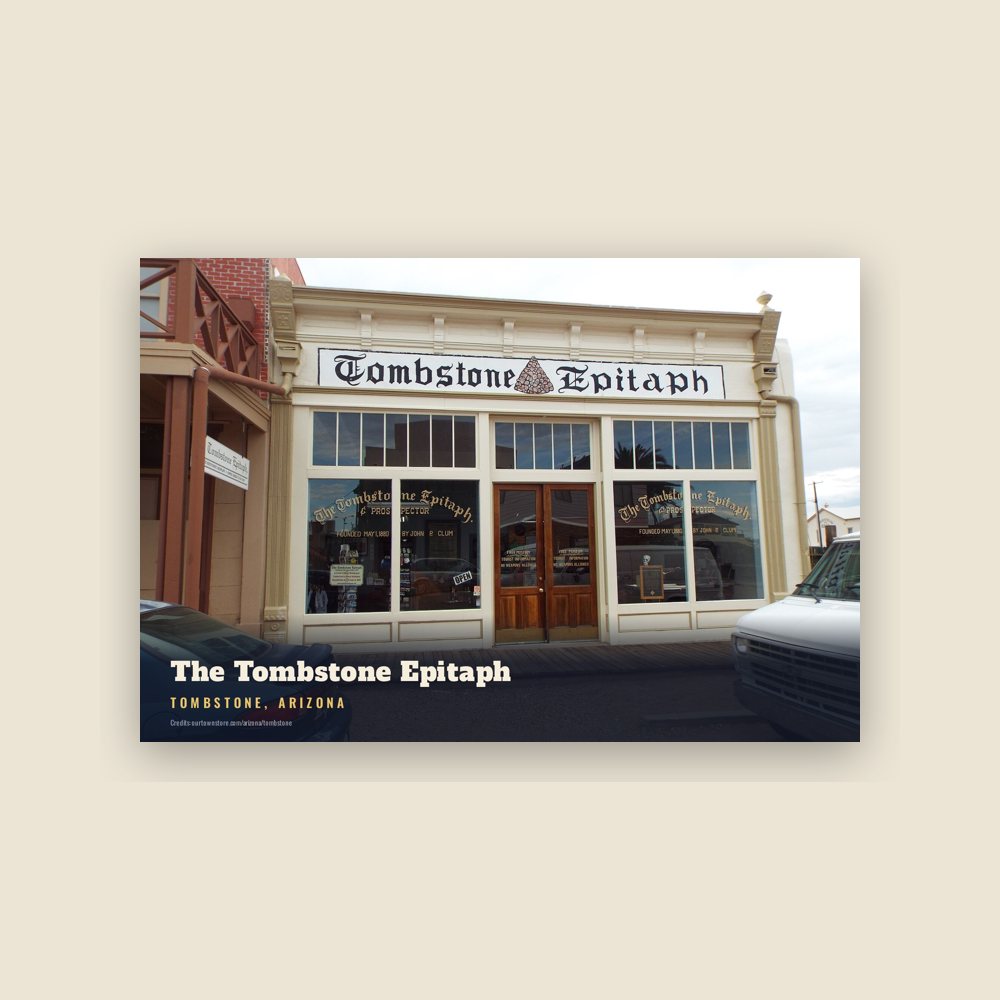
Mining was an easy task at Tombstone in the early days, ore being rich and close to the surface. One man could pull out ore equal to what three men produced elsewhere. Some residents of Tombstone became quite wealthy and spent considerable money during its boom years. Tombstone's first newspaper, the Nugget, was established in the fall of 1879. The Tombstone Epitaph was founded on May 1, 1880. As the fastest growing boomtown in the American Southwest, the silver industry and attendant wealth attracted many professionals and merchants who brought their wives and families. With them came churches and ministers. They brought a Victorian sensibility and became the town's elite. Many citizens of Tombstone dressed well, and up-to-date fashion could be seen in this growing mining town. Visitors expressed their amazement at the quality and diversity of products that were readily available in the area. The men who worked the mines were largely European immigrants. The Chinese did the town's laundry and provided other services. The Cowboys ran the countryside and stole cattle from haciendas across the international border in Sonora, Mexico.
When the railroad was not built into Tombstone as had been planned, the increasingly sophisticated city of Tombstone remained relatively isolated, deep in a Federal territory that was largely an unpopulated desert and wilderness. Tombstone and its surrounding countryside also became known as one of the deadliest regions in the West. Water was hauled in until the Huachuca Water Company, funded in part by investors like Dr. George E. Goodfellow, built a 23-mile-long (37 km) pipeline from the Huachuca Mountains in 1881. No sooner was a pipeline completed than Tombstone's silver mines struck water.
City growth and decline
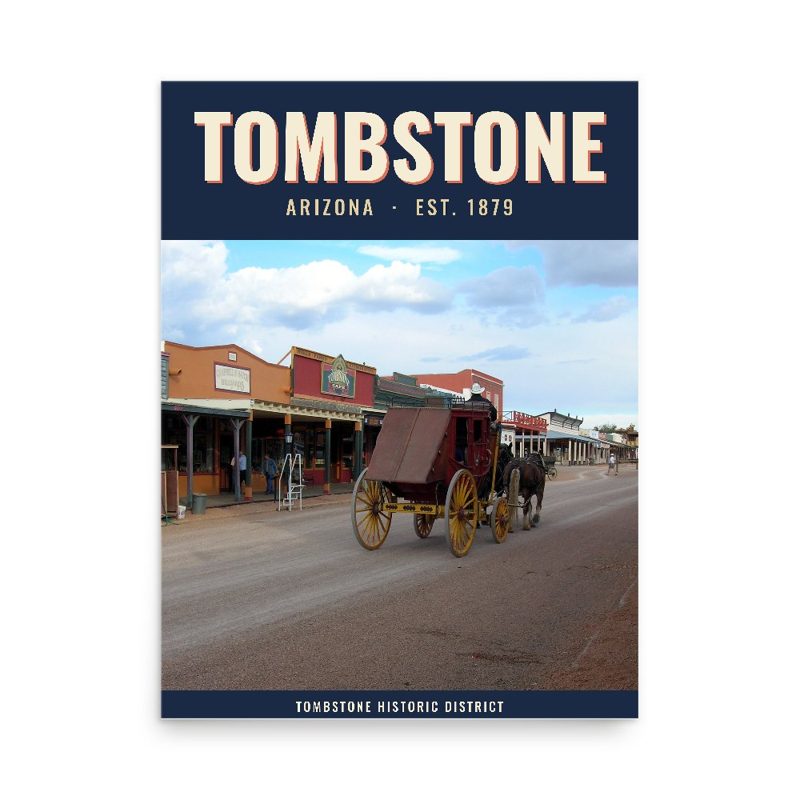
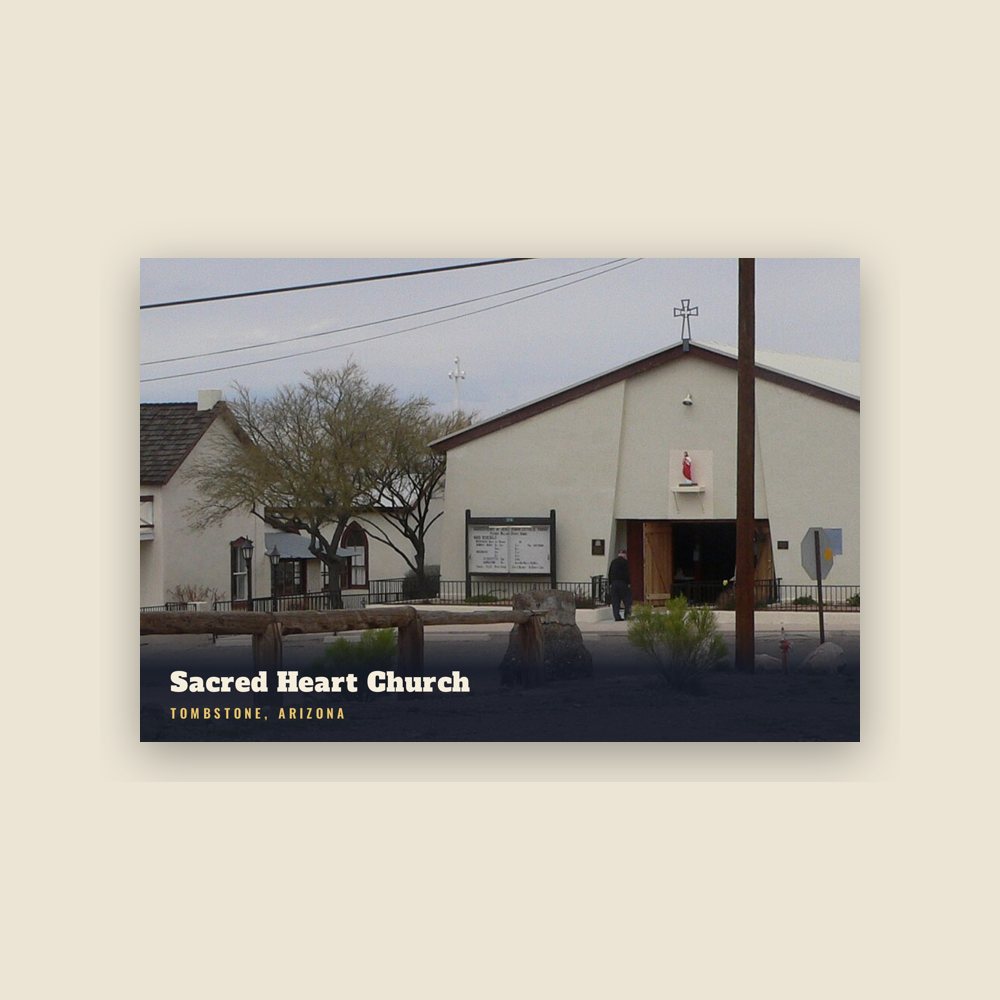
By mid-1881, the town had fancy restaurants, Vogan's Bowling Alley, four churches—Catholic, Episcopal, Presbyterian, and Methodist—an ice house, a school, the Schieffelin Hall opera house, two banks, three newspapers, and an ice cream parlor, alongside 110 saloons, 14 gambling halls, several Chinese restaurants, French, two Italian, numerous Mexican, several upscale "Continental" establishments, and many "home cooking" hot spots including Nellie Cashman's famous Rush House and numerous brothels all situated among and on top of a number of dirty, hardscrabble mines. The Arizona Telephone Company began installing poles and lines for the city's first telephone service on March 15, 1881.
Investors from the northeastern United States bought many of the leading mining operations. The mining itself was carried out by immigrants from Europe, chiefly Cornwall, Ireland, and Germany. Chinese and Mexican labor provided services including laundry, construction, restaurants, and hotels, but immigrant labor provoked backlash; an "Anti-Chinese League" was formed in the 1880s to boycott Chinese businesses and workers.
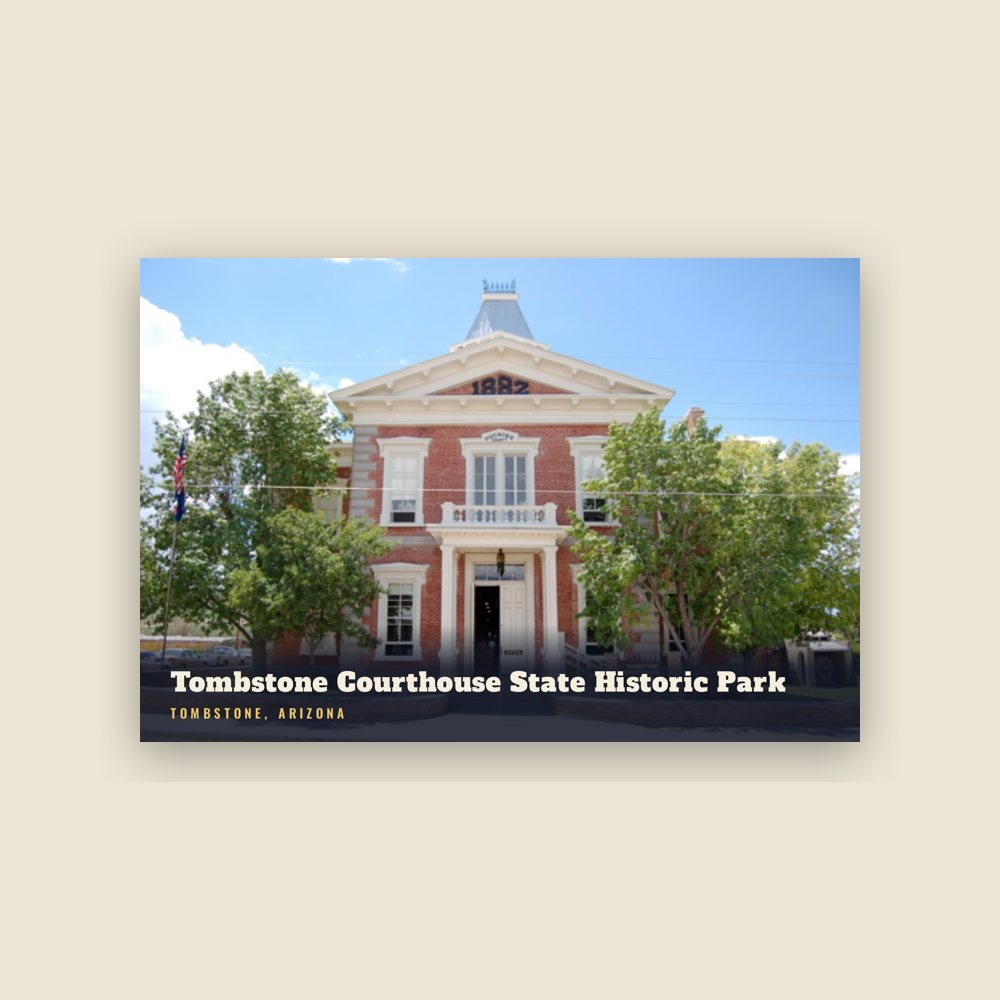
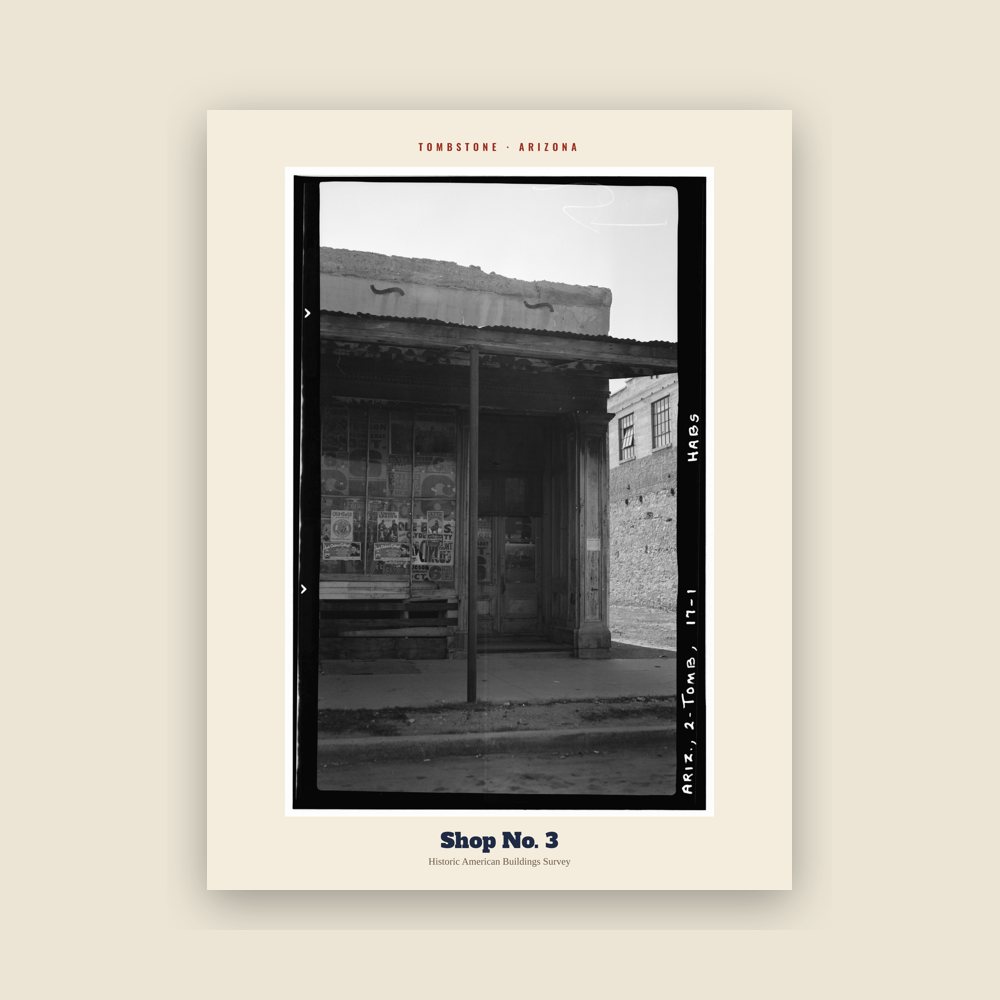
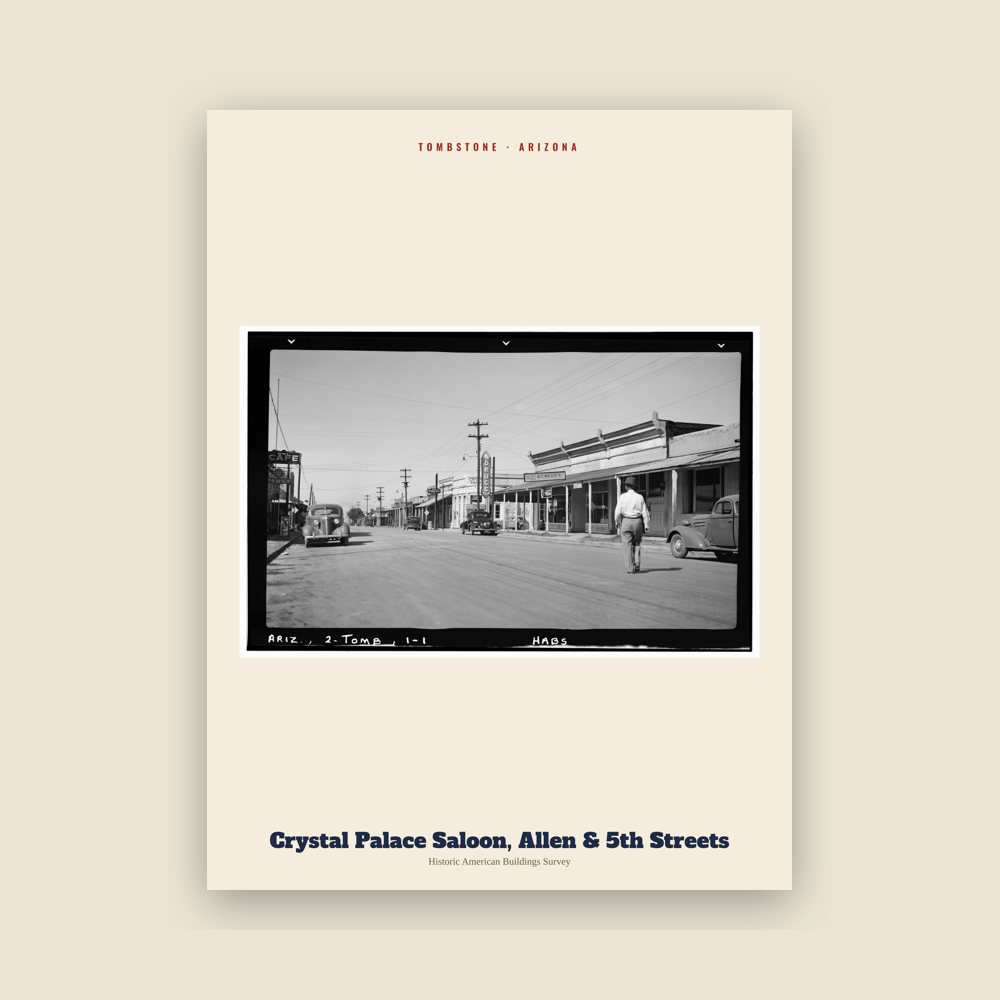
The mines and stamp mills ran three shifts. Miners were paid union wages of $4.00 per day working six 10-hour shifts per week. The roughly 6,000 men working in Tombstone generated more than $168,000 a week (around $5,805,000 today) in income. The mostly young, single, male population spent their hard-earned cash on Allen Street, the major commercial center, open 24 hours a day. In 1882, the Cochise County Courthouse was built at a cost around $45,000.
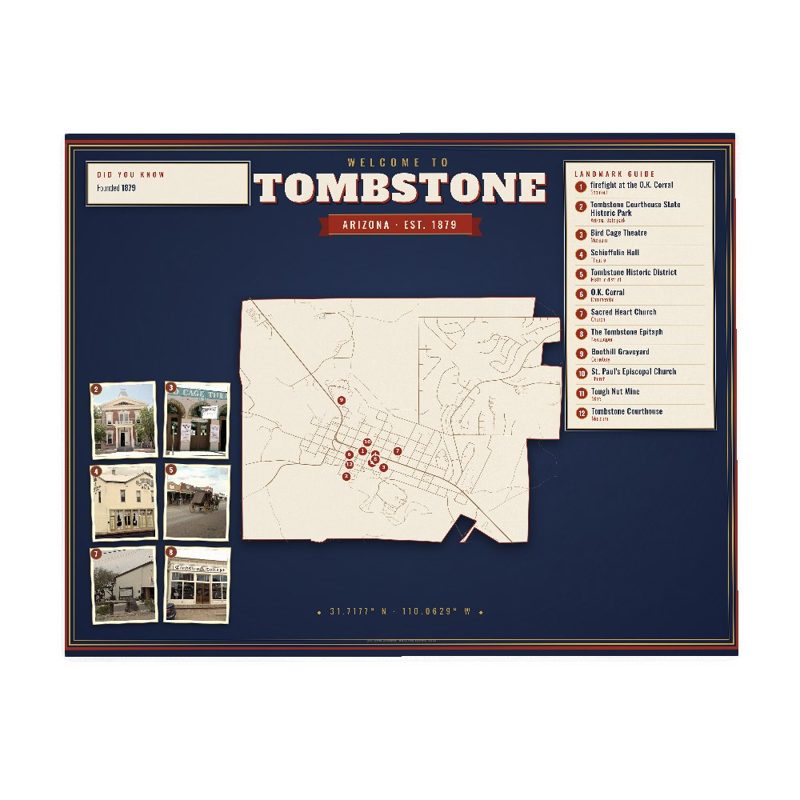
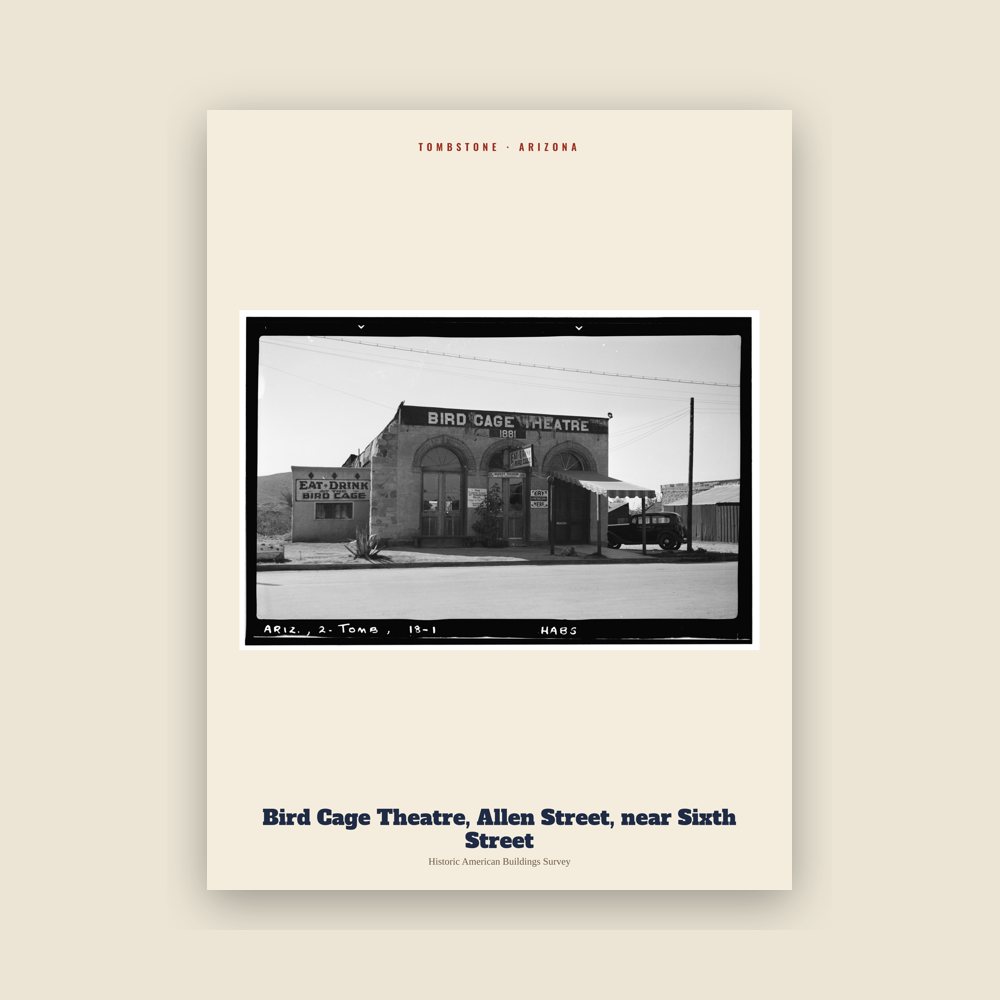
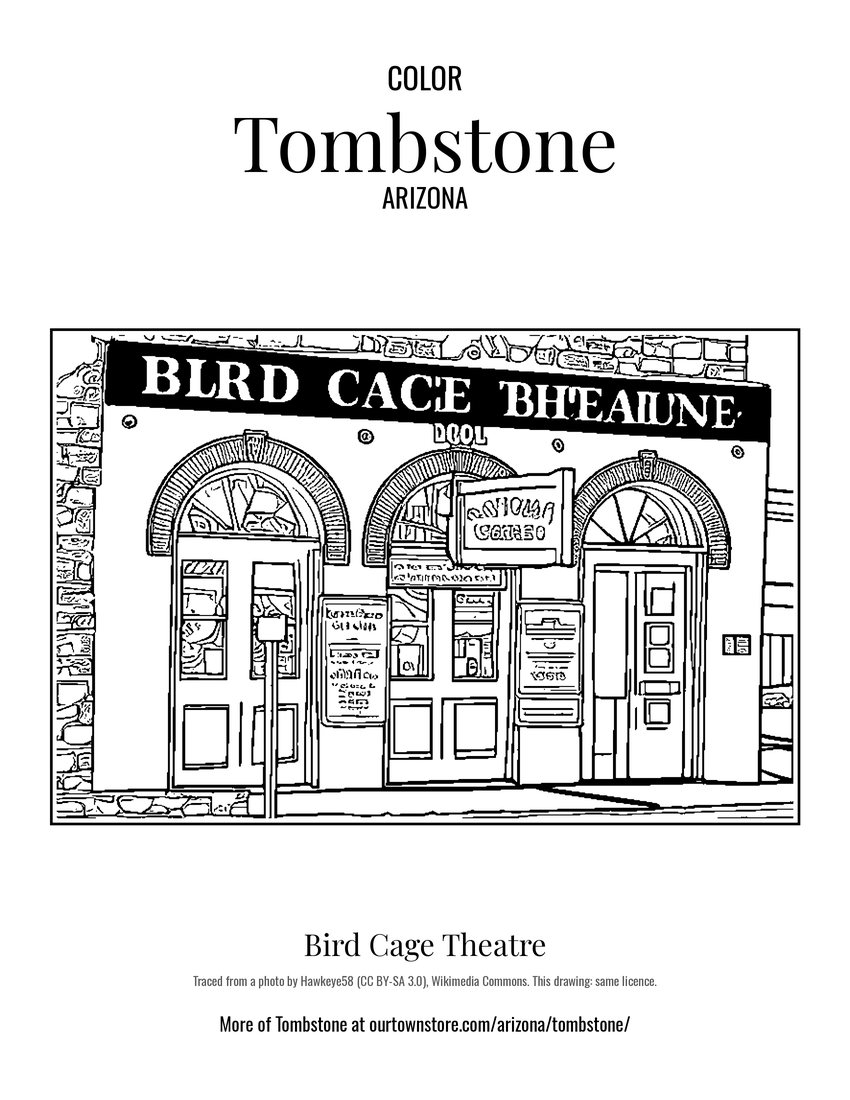
The respectable folks saw traveling theater shows at Schieffelin Hall, opened on June 8, 1881. On December 25, 1881, the Bird Cage Theatre opened on Allen Street, offering the miners and cowboys their kind of bawdy entertainment. One of the prime entertainments at the Bird Cage Theatre was Cornish wrestling competitions, with the results being regularly published in the UK.
In 1882, The New York Times reported that "the Bird Cage Theatre is the wildest, wickedest night spot between Basin Street and the Barbary Coast." The Bird Cage remained open 24 hours a day, 7 days a week, 365 days a year until it closed its doors in 1889. Respectable women stayed on the north side of Allen Street, while prostitutes worked in the saloons on the south side and in the southeast quarter of the town.
While some sources claim the population reached about 10,000 at its peak, official census records of the United States Department of the Interior report the population was 973 in 1880, and 1,875 in 1890.
Fires
Due to poor building practices and poor fire protection common to boomtown construction, Tombstone was hit by two major fires. On June 22, 1881, the first fire destroyed the 66 businesses making up the eastern half of the business district. The fire began when a lit cigar ignited a barrel of whiskey in the Arcade Saloon.
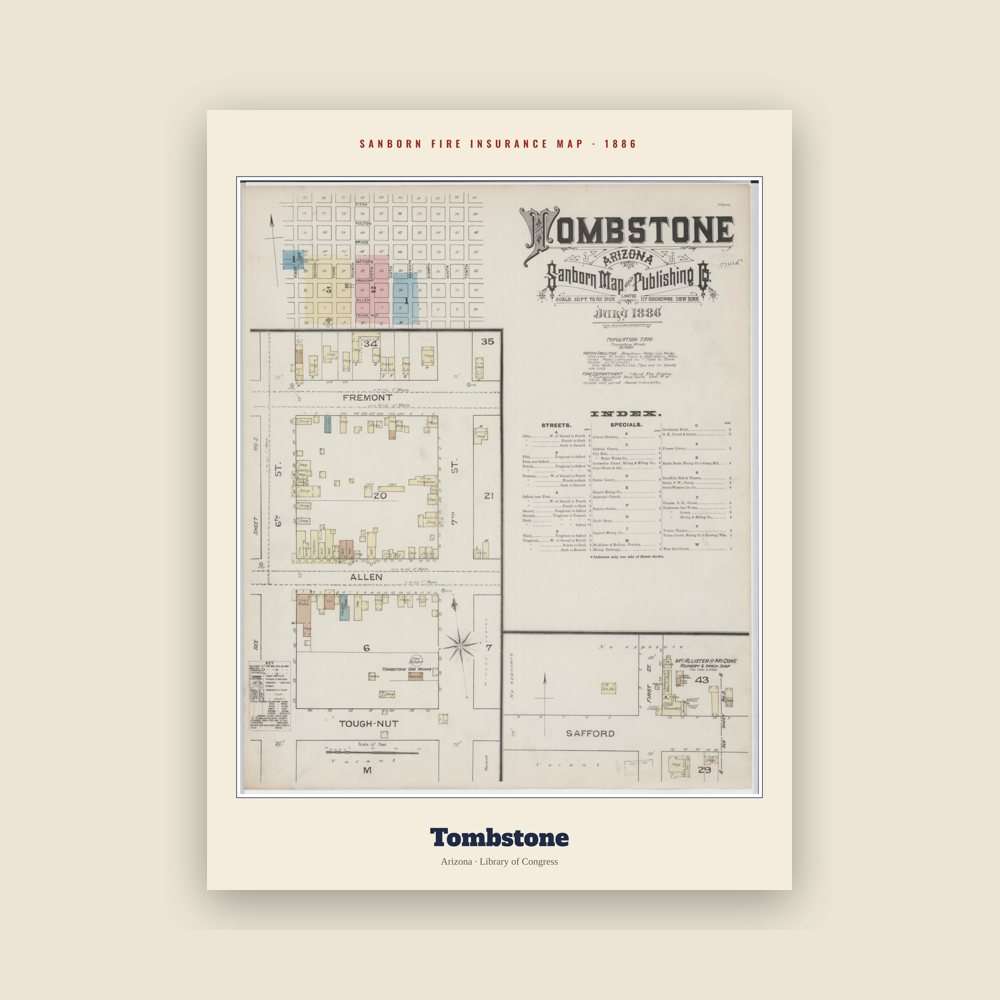
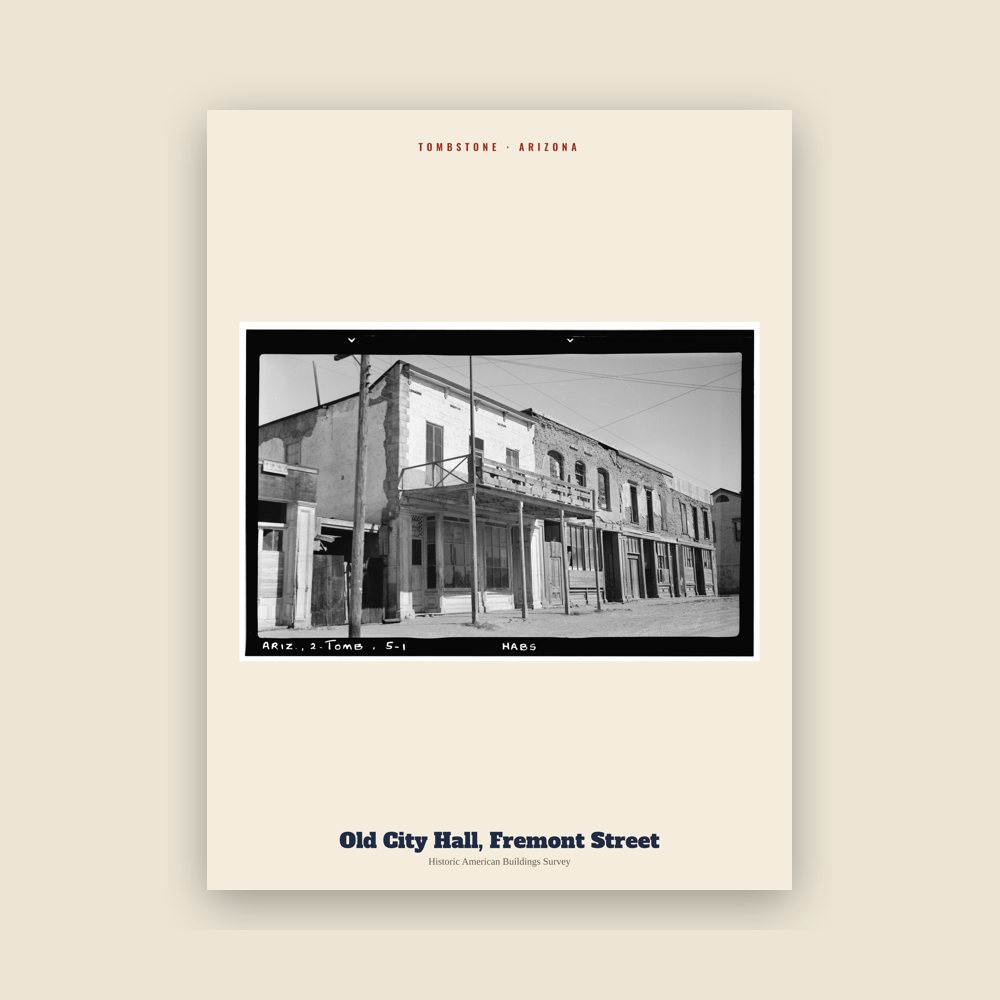
On May 25, 1882, another, more destructive fire started in a Chinese laundry on Fifth Street between Toughnut and Allen Streets. It destroyed the Grand Hotel and the Tivoli Saloon before it jumped Fremont Street, destroying more than 100 businesses and most of the business district. Lacking enough water to put out the flames, buildings in the fire's path were dynamited to deny the fire fuel. Total damages were estimated to be $700,000, far more than the estimated $250,000 insurance coverage, but rebuilding started right away, nonetheless.
In March 1883, along one short stretch of Allen Street, drinking establishments were available in two of the principal hotels, Eagle Brewery, Cancan Chop-House, French Rotisserie, Alhambra, Maison Dore, City of Paris, Brown's Saloon, Fashion Saloon, Miners' Home, Kelly's Wine-House, the Grotto, the Tivoli, and two more unnamed saloons.
Mines strike water
The Tough Nut Mine first experienced seepage in 1880. In March 1881, the Sulphuret Mine struck water at 520 feet (160 m). A year later, in March 1882, miners in a new shaft of the Grand Central Mine hit water at 620 feet (190 m). The flow was not at first large enough to stop work, but experienced miners thought the water flow would increase, and it did. Soon, constant pumping with a 4-inch (100 mm) pump was insufficient. The silver ore deposits they sought were soon under water.
Several mine managers traveled to San Francisco and met with the principal owners of the Contention Mine. They talked about options for draining the mines, and found the only system available for pumping water out of mines below 400 feet (120 m) was the Cornish engine, which had been used at the Comstock Lode in the 1870s. They bought and installed the huge Cornish engines in the Contention and Grand Central mines. By mid-February 1884, the engines were removing 576,000 US gallons (2,180,000 L; 480,000 imp gal) of water every 24 hours. The city merchants celebrated the continued success of mining and the transfer of funds to their businesses. The Contention and the Grand Central found that their pumps were draining the mining district, benefiting other mines as well, but the other companies refused to pay a proportion of the expense.
On May 26, 1886, the Grand Central hoist and pumping plant burned. The fire was so intense that the metal components of the Cornish engine melted and warped. The headworks of the main mine shaft were also destroyed. Shortly afterward, the price of silver slid to 90 cents an ounce. The mines that remained operational laid off workers. Individuals who had thought about leaving Tombstone when the mine flooding started now took action. The price of silver briefly recovered for a while and a few mines began producing again, but never at the level reached in the early 1880s.




 Bird Cage Theatre
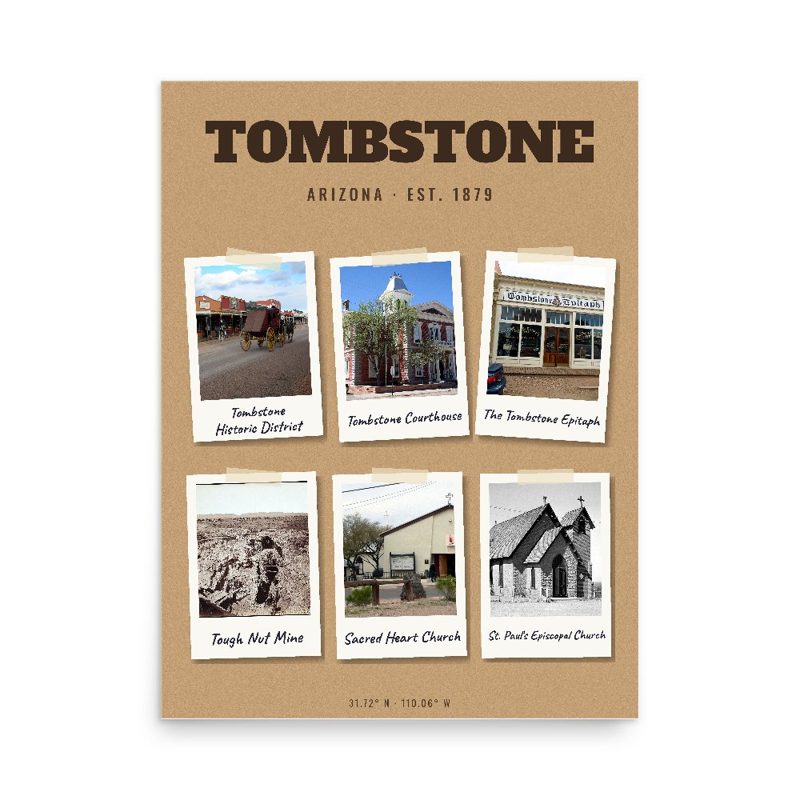
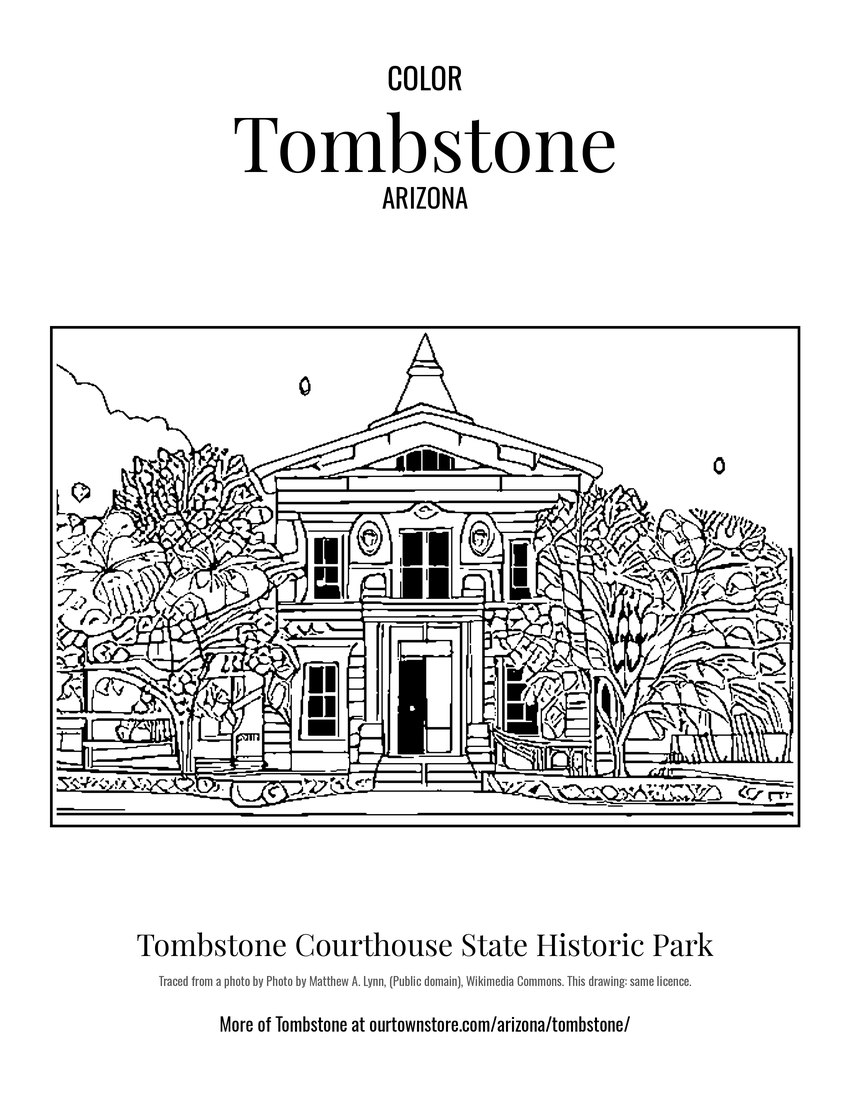 Tombstone Courthouse State Historic Park
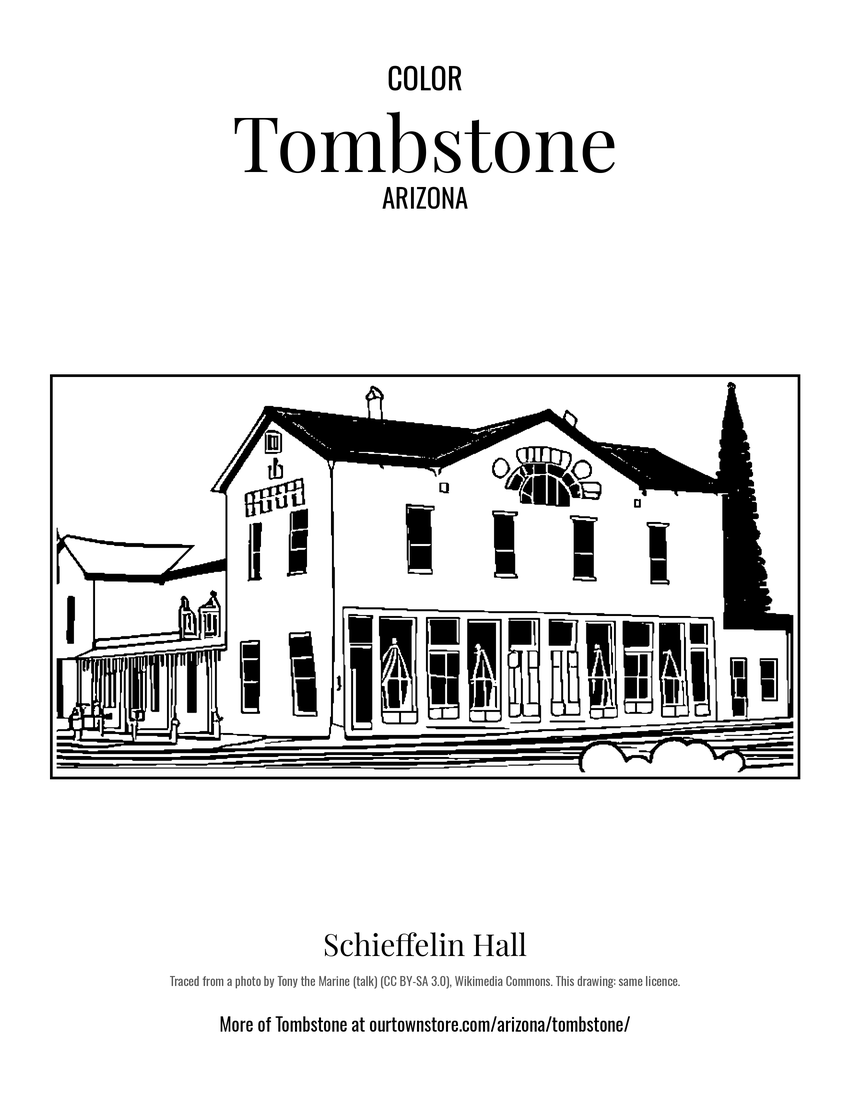 Schieffelin Hall
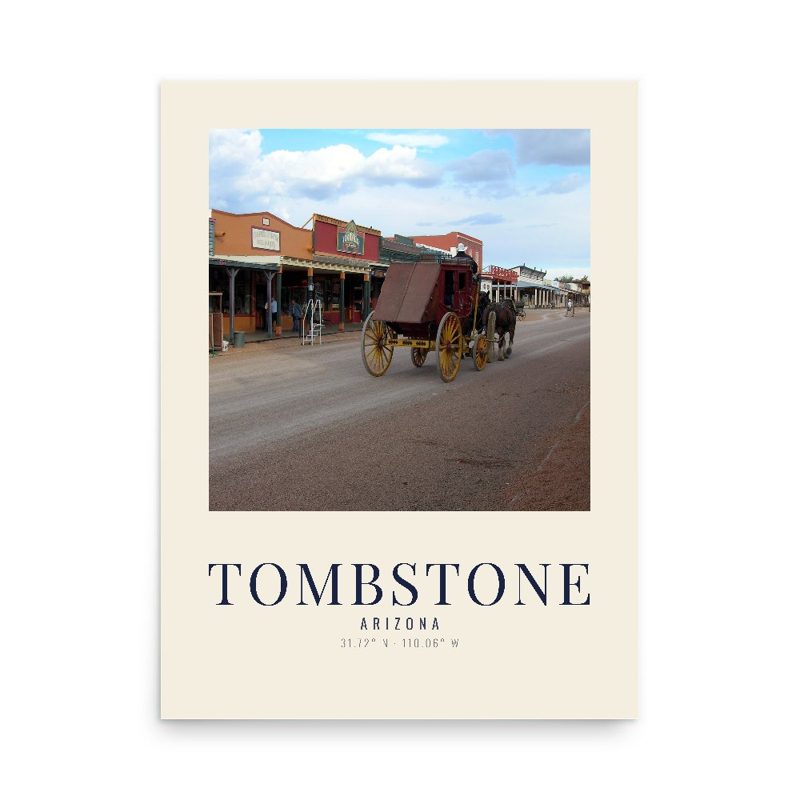
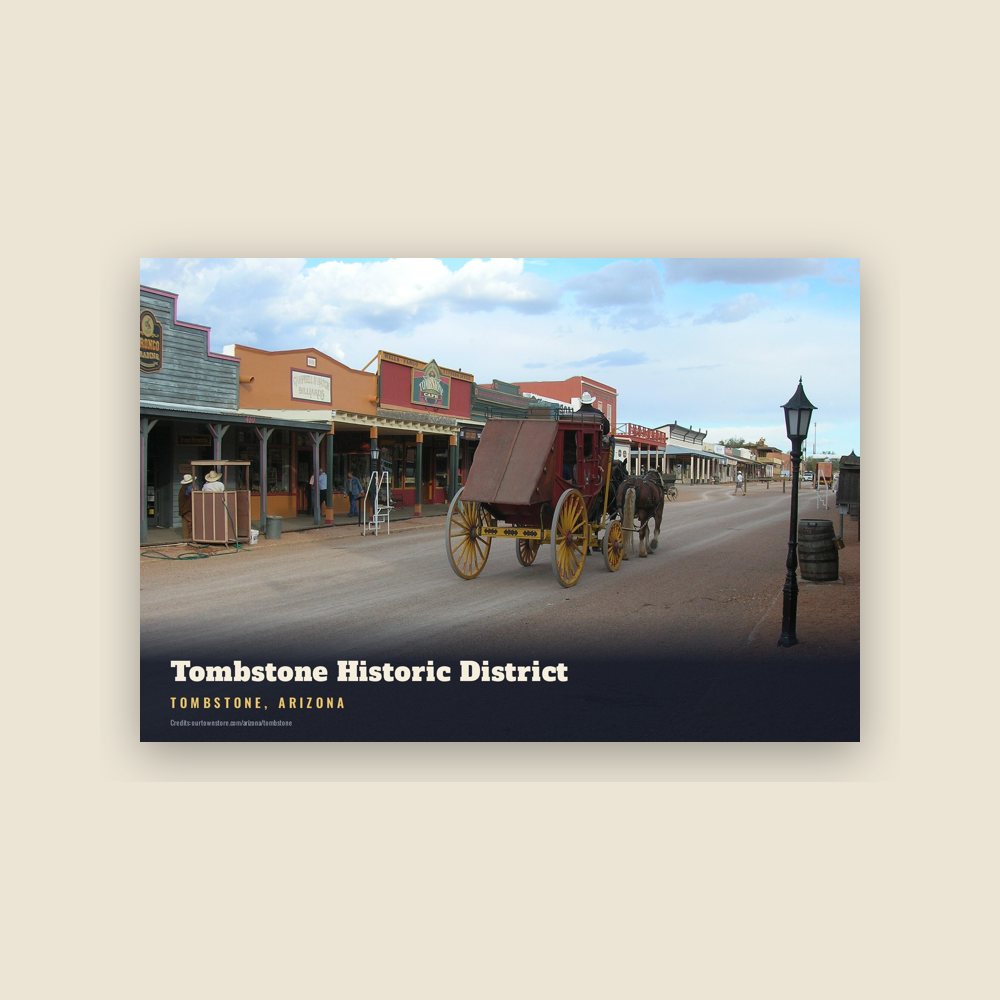
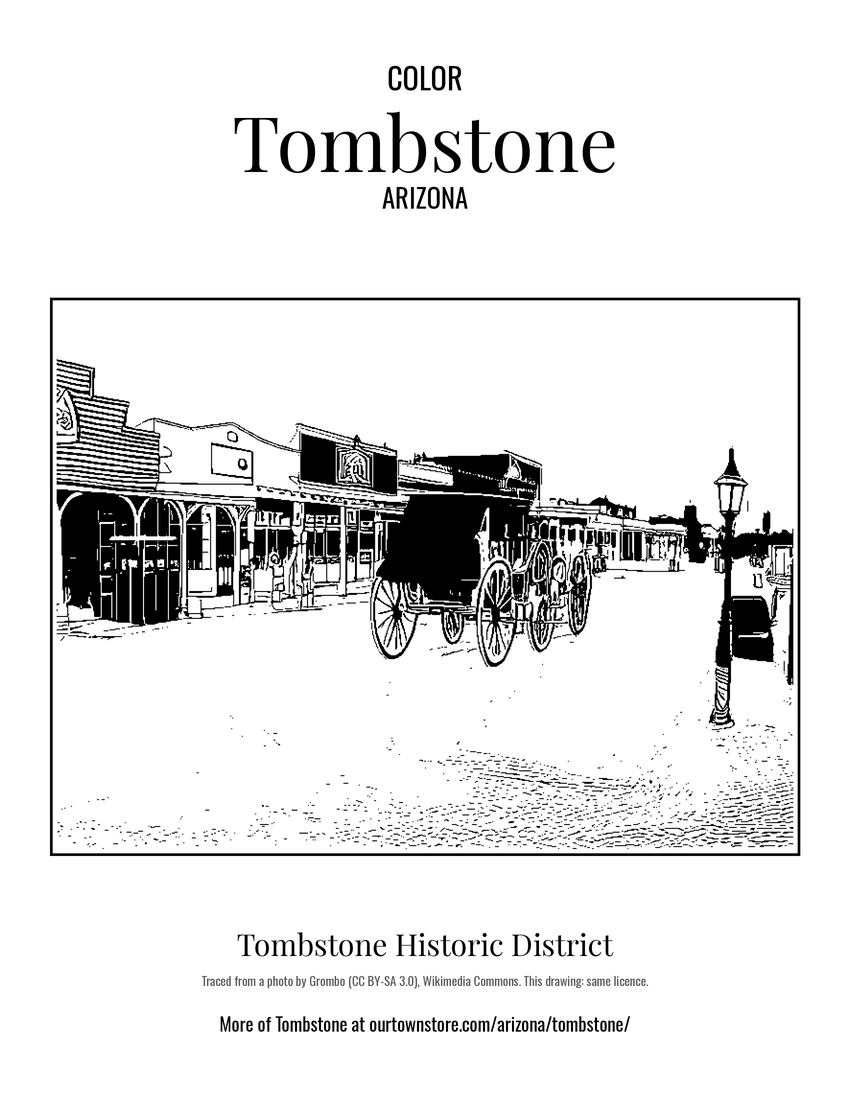 Tombstone Historic District