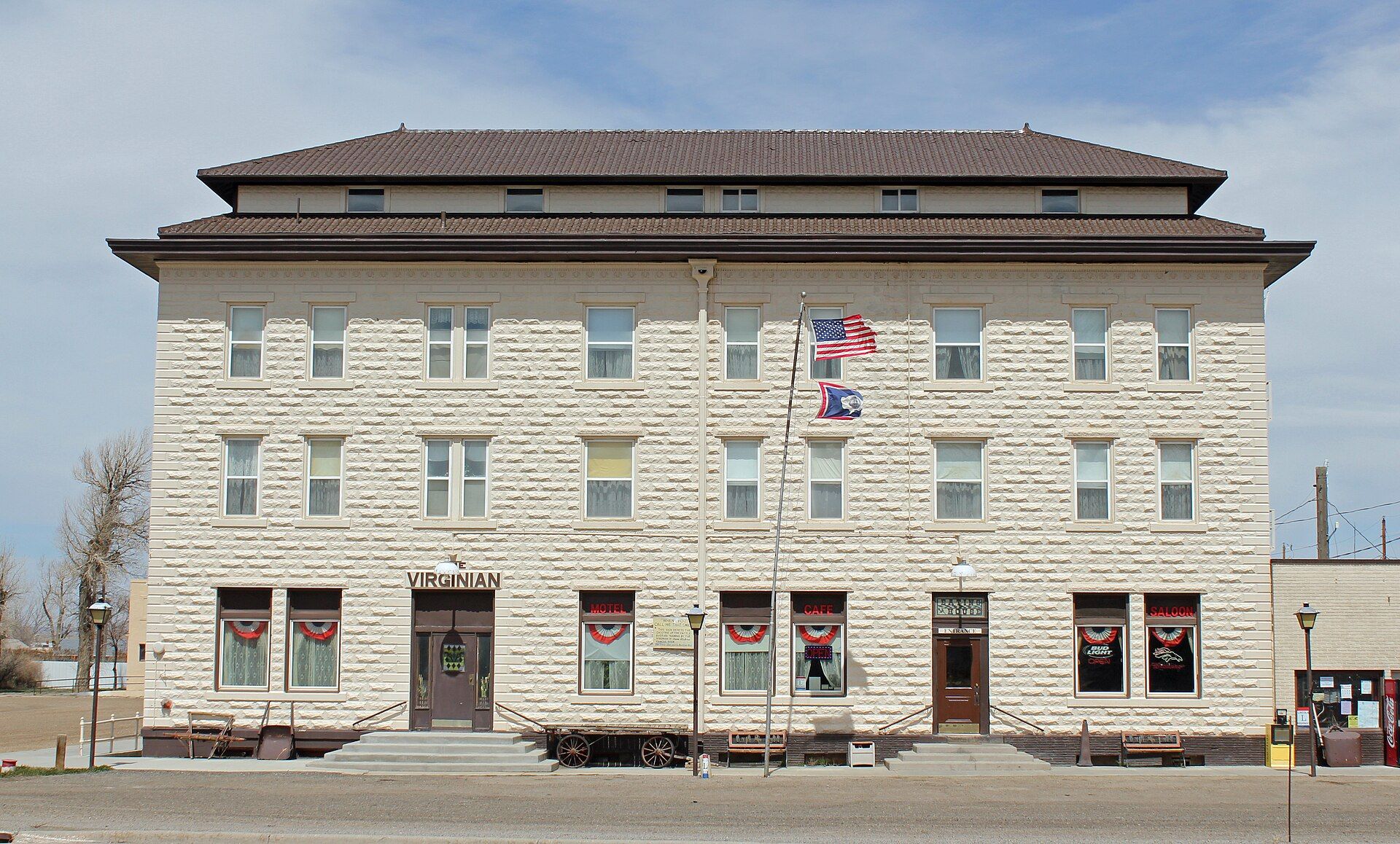
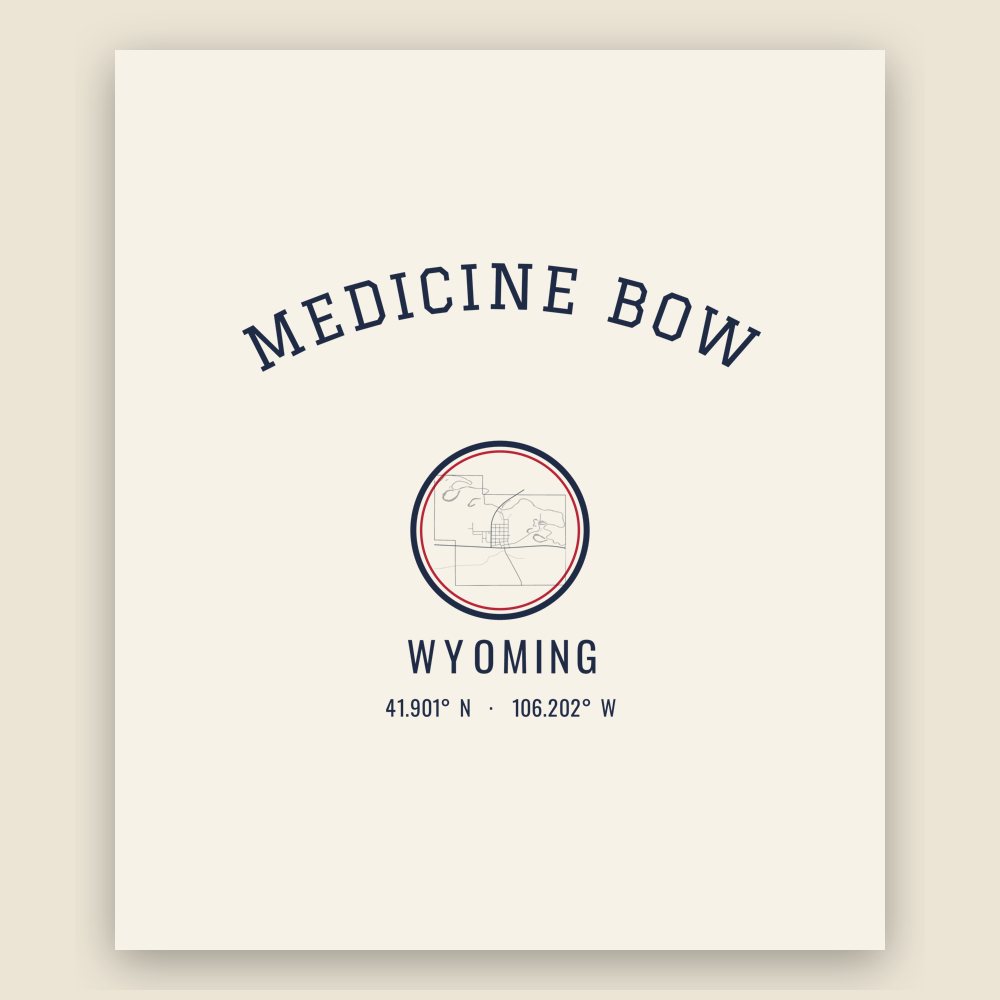
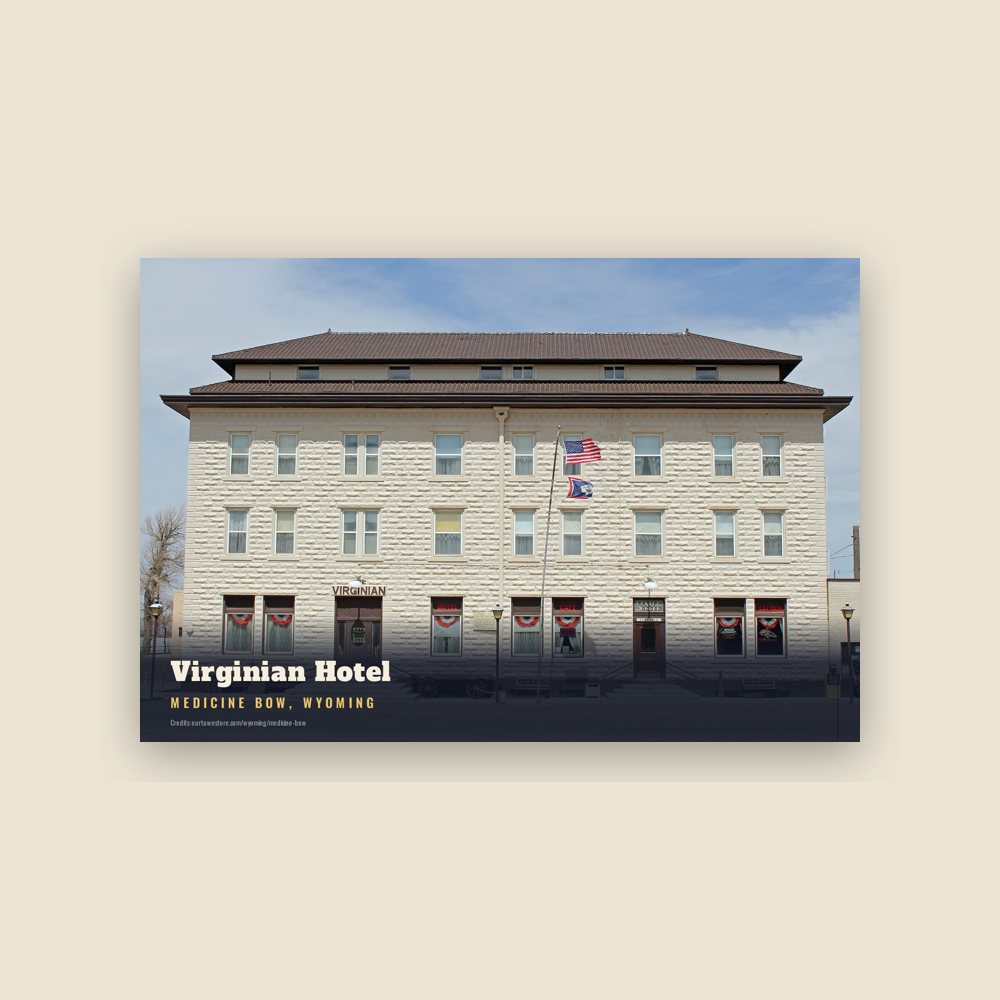
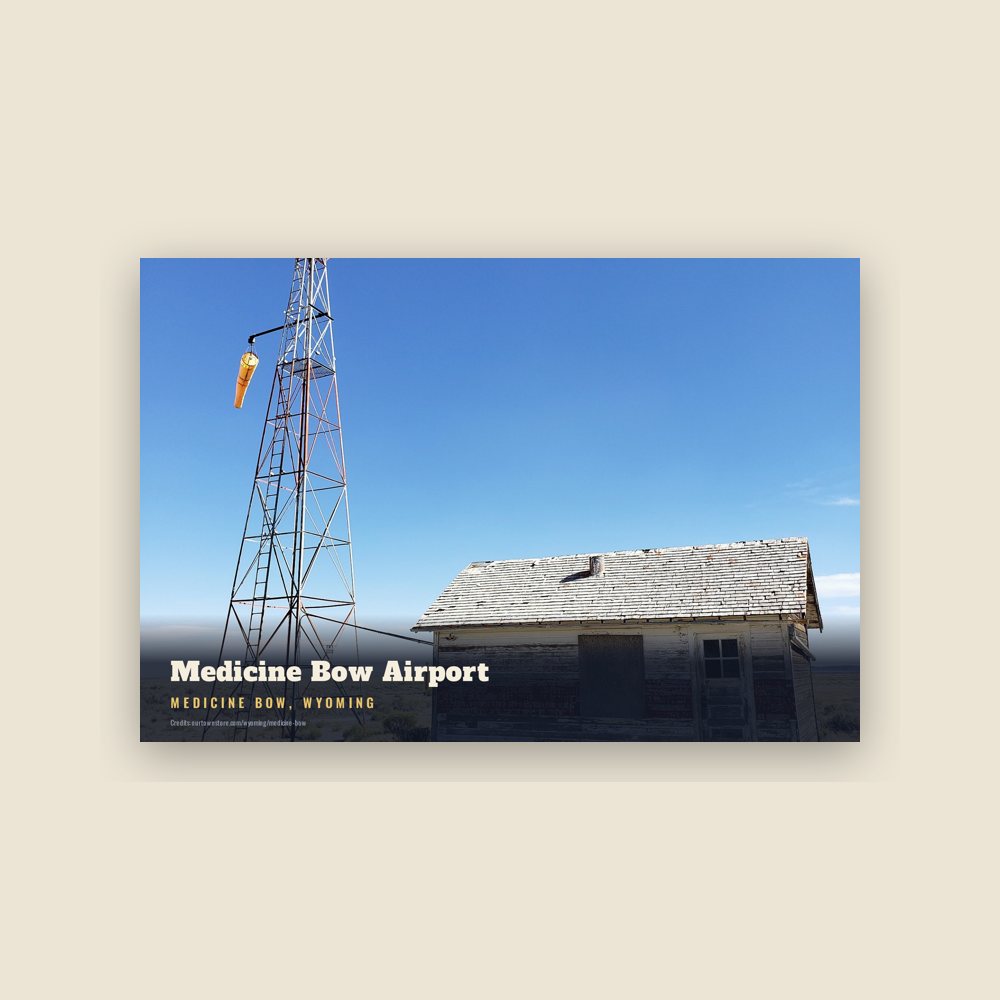
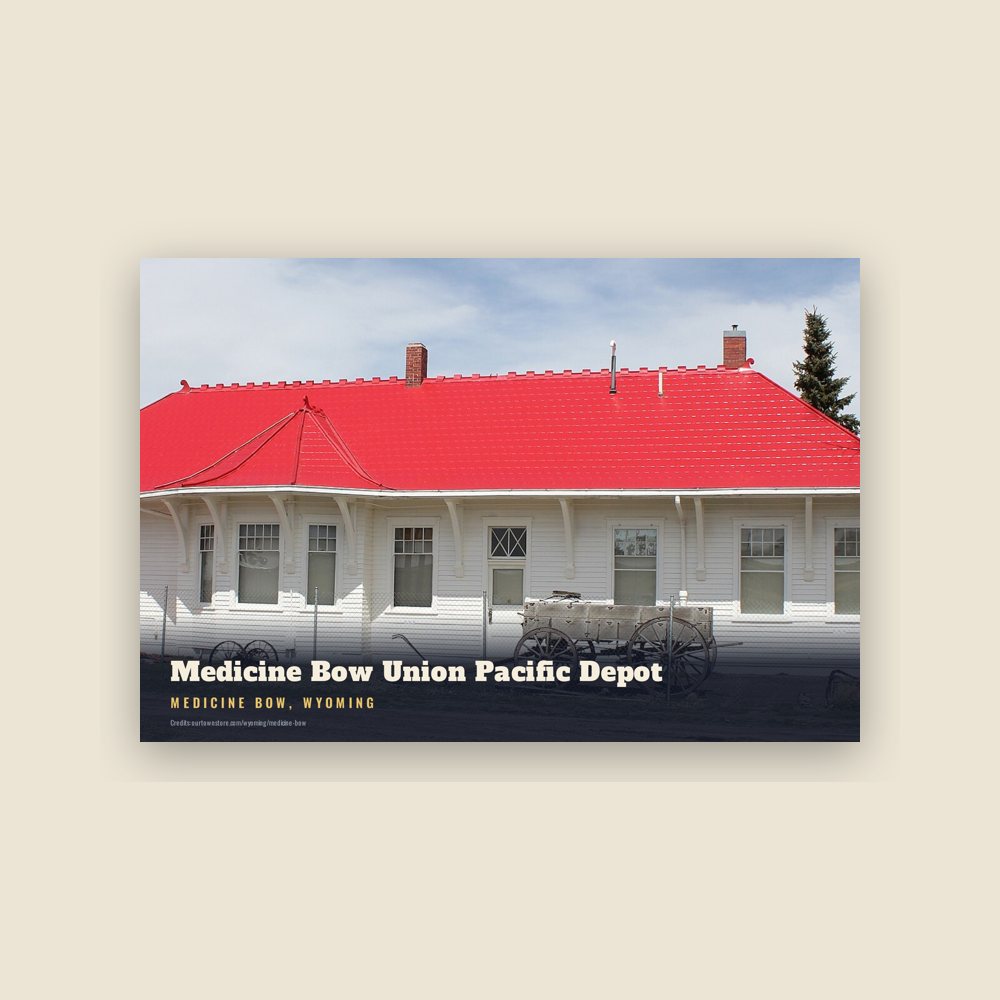
A post office called Medicine Bow has been in operation since 1869. Landmarks include Virginian Hotel, Medicine Bow Airport and Medicine Bow Union Pacific Depot.
Every piece is drawn from Medicine Bow's own map data and historic archives, then printed and shipped from the USA when you order. No two towns look alike.
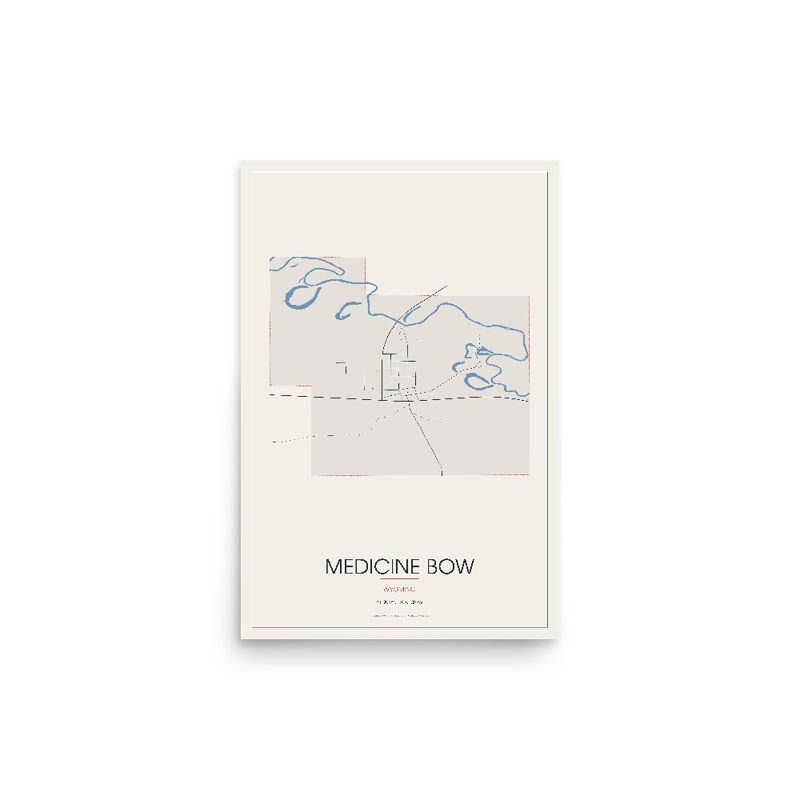
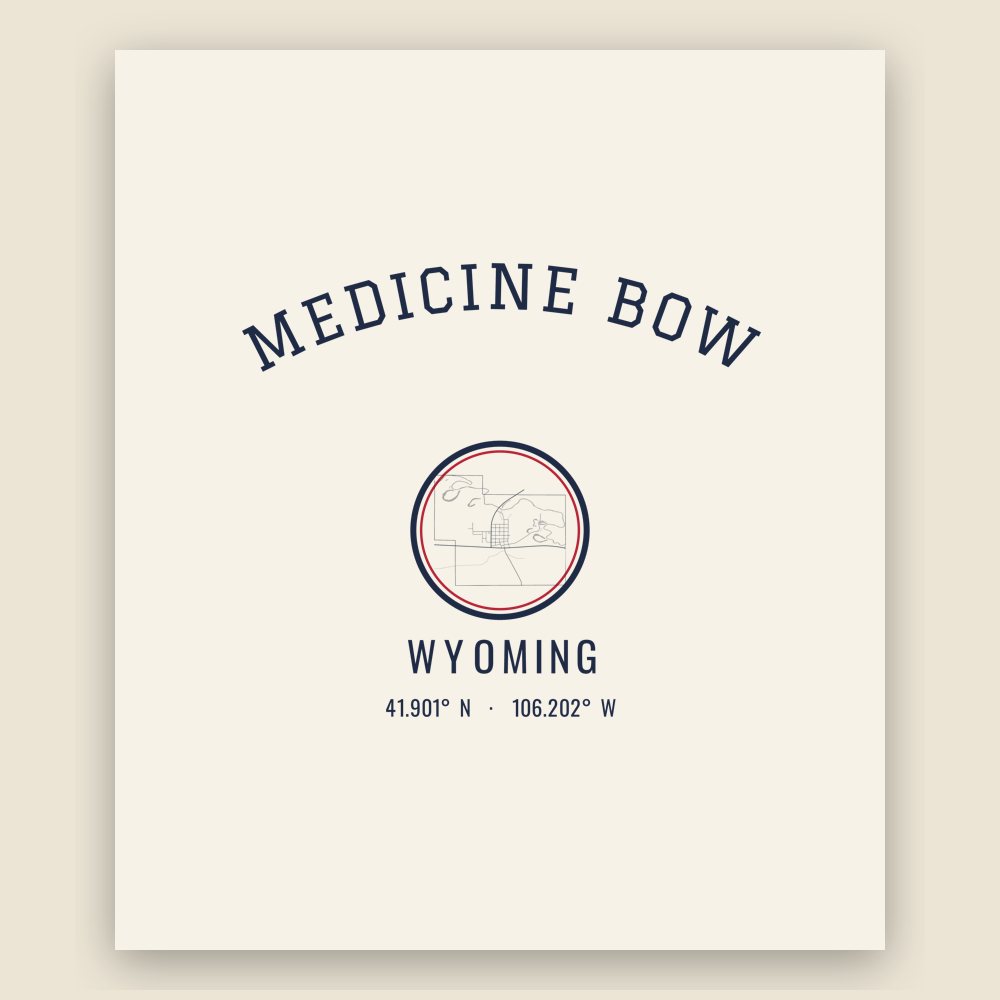
Every road in town, on archival matte paper
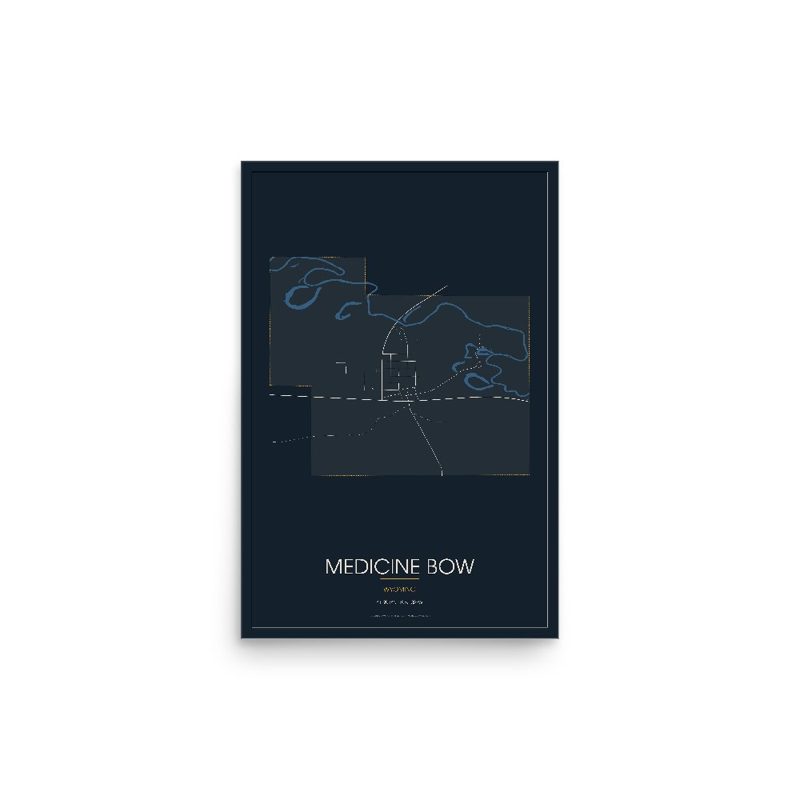
The same map, in navy and silver
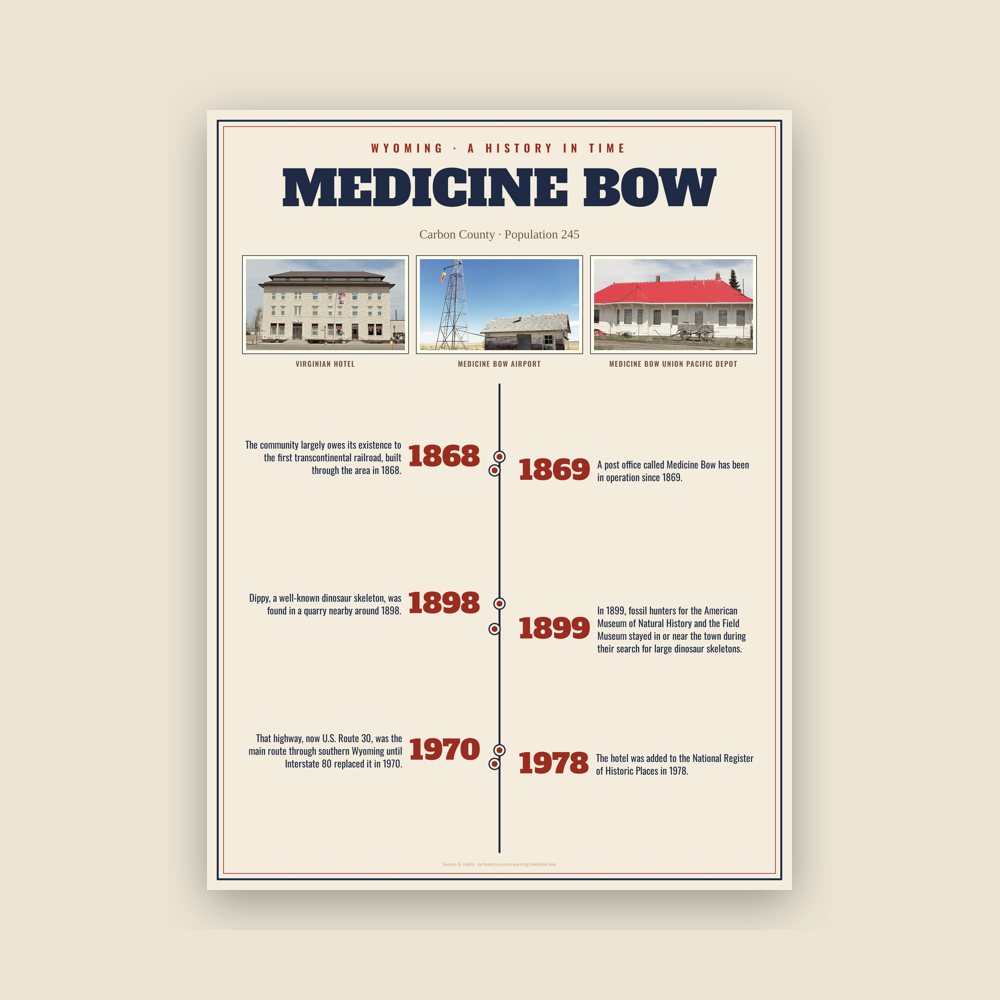
The town's story in dates, from its own records, for home or classroom
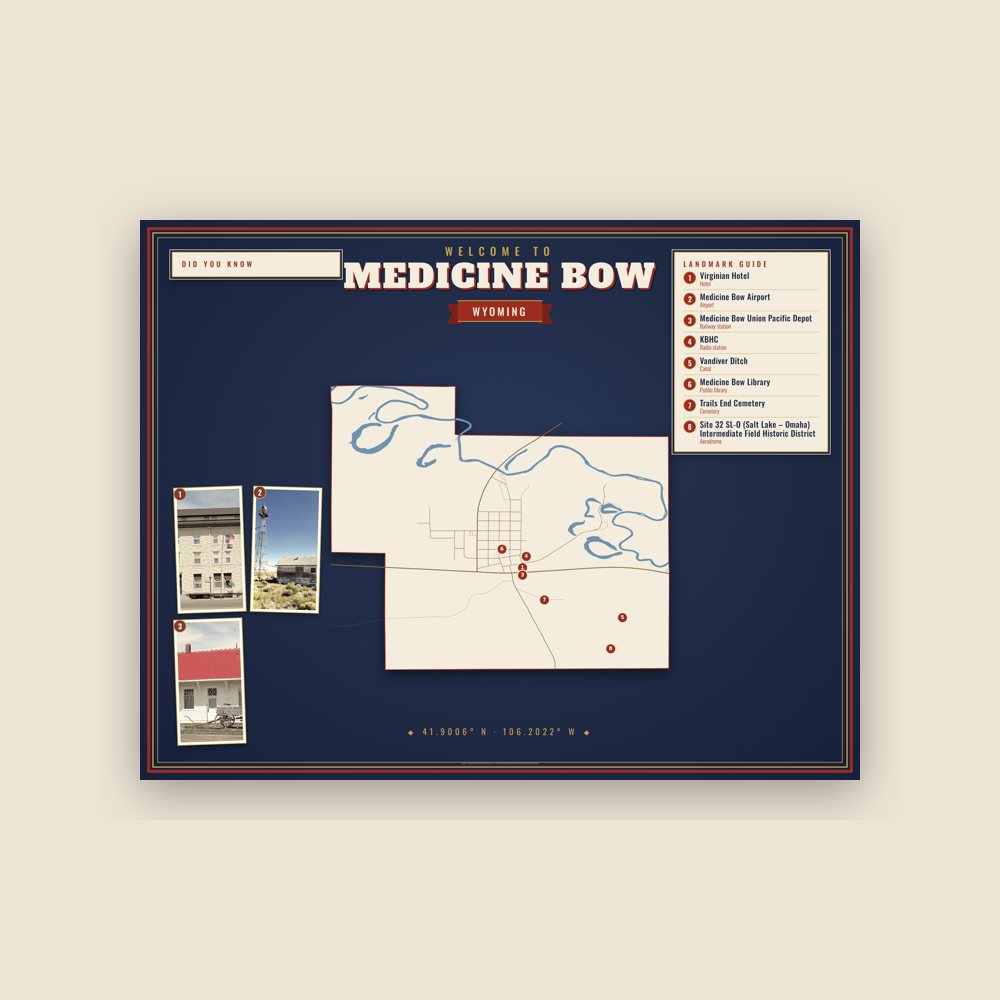
Map of local landmarks, washable fabric
Heavy-blend fleece, street map printed on the back
Soft Bella+Canvas jersey
Glossy ceramic, dishwasher safe
Ceramic keepsake, gold ribbon
Weatherproof, for the front walk
24″×16″, printed coir-look fibers, rubber back
12″×12″ printed wood, ready to hang
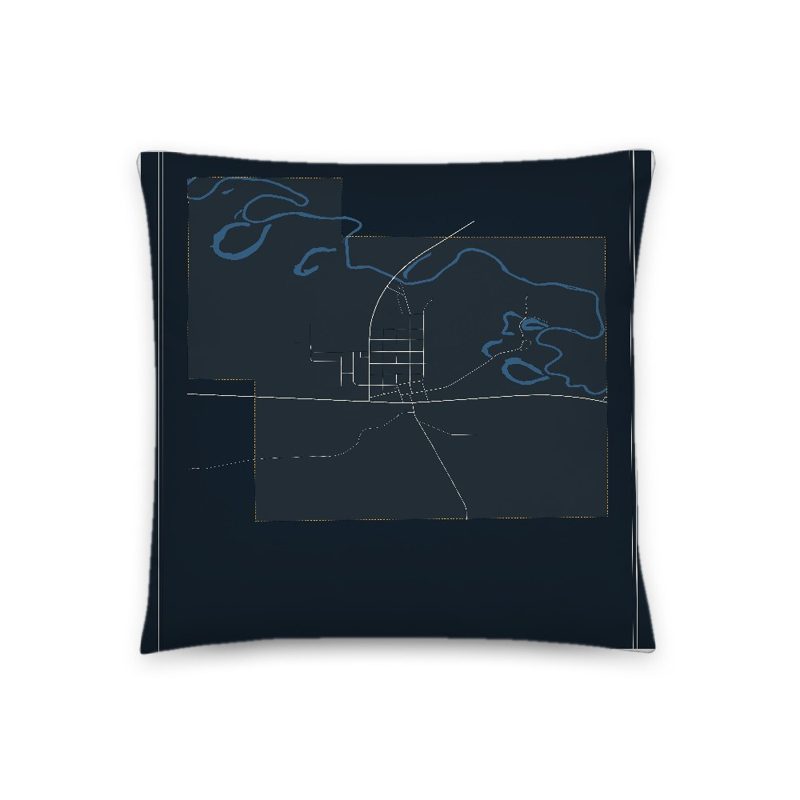
Soft-touch, zip cover
Sturdy all-over-print tote
Glossy top, cork back
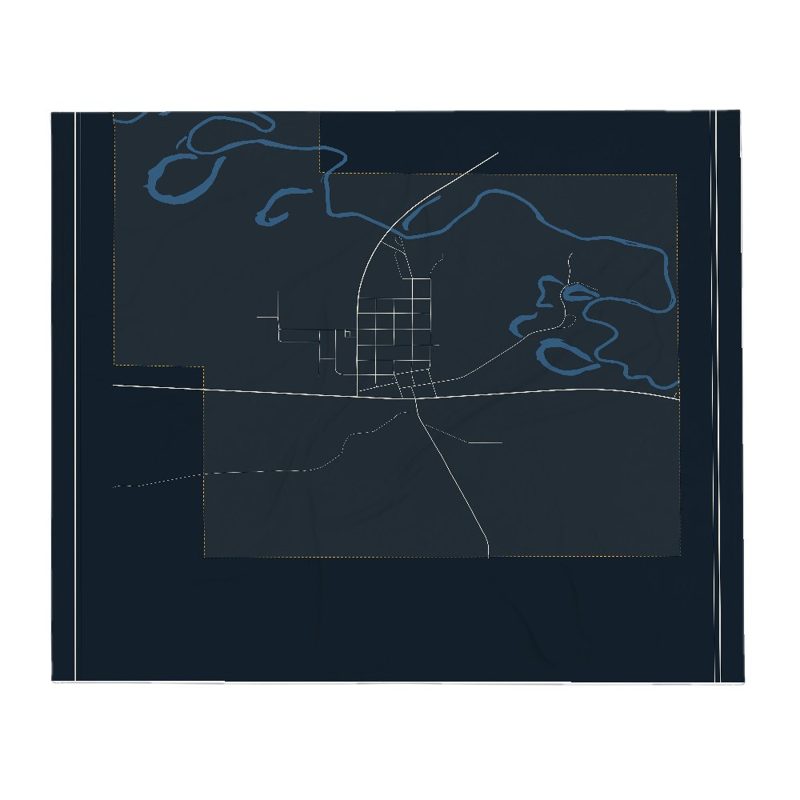
Soft fleece, 50″×60″
20 oz, double-wall stainless
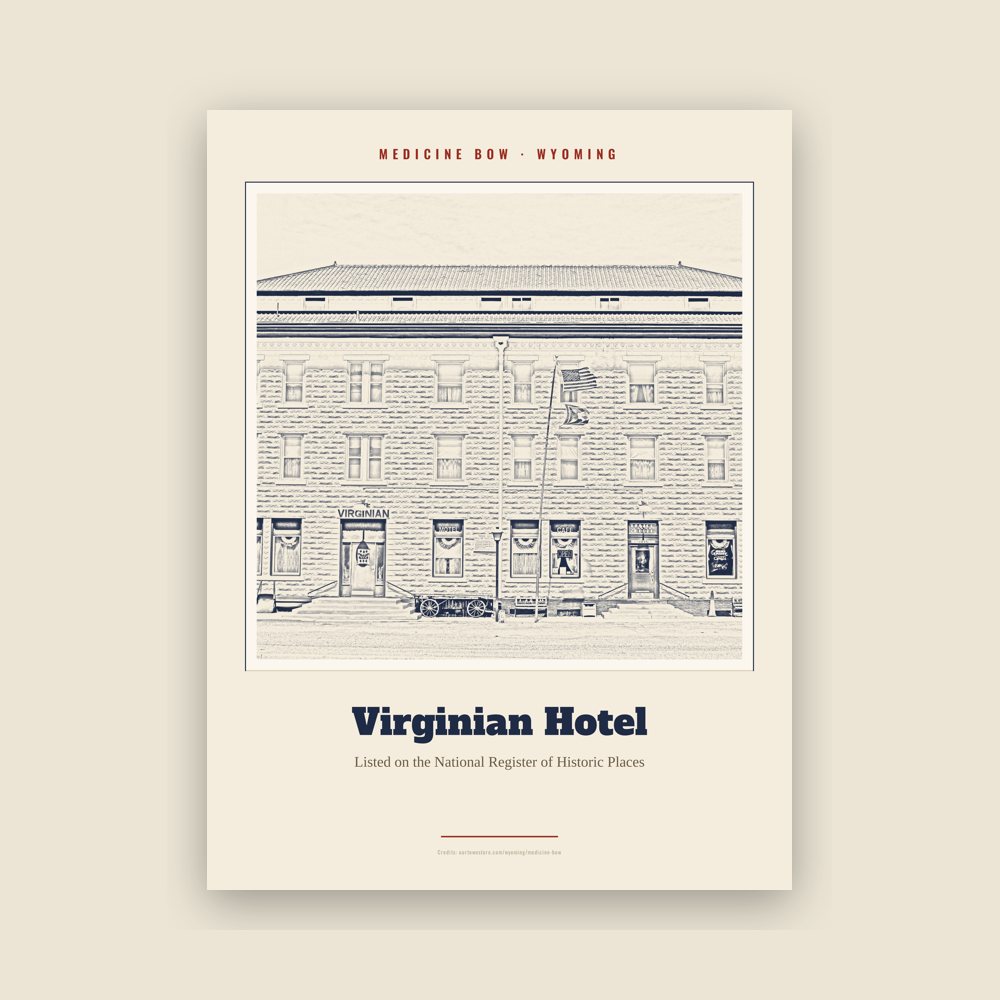
Archival matte print of a local landmark, credited to its photographer
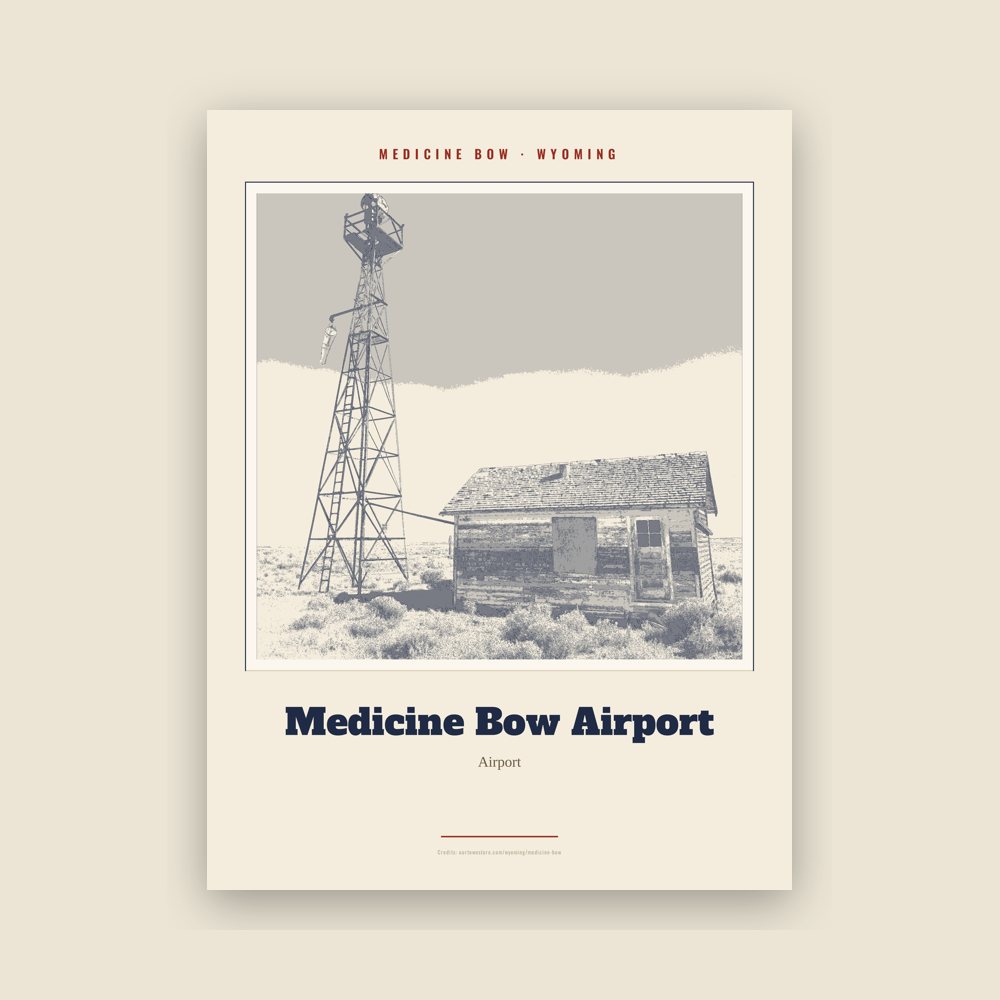
Archival matte print of a local landmark, credited to its photographer
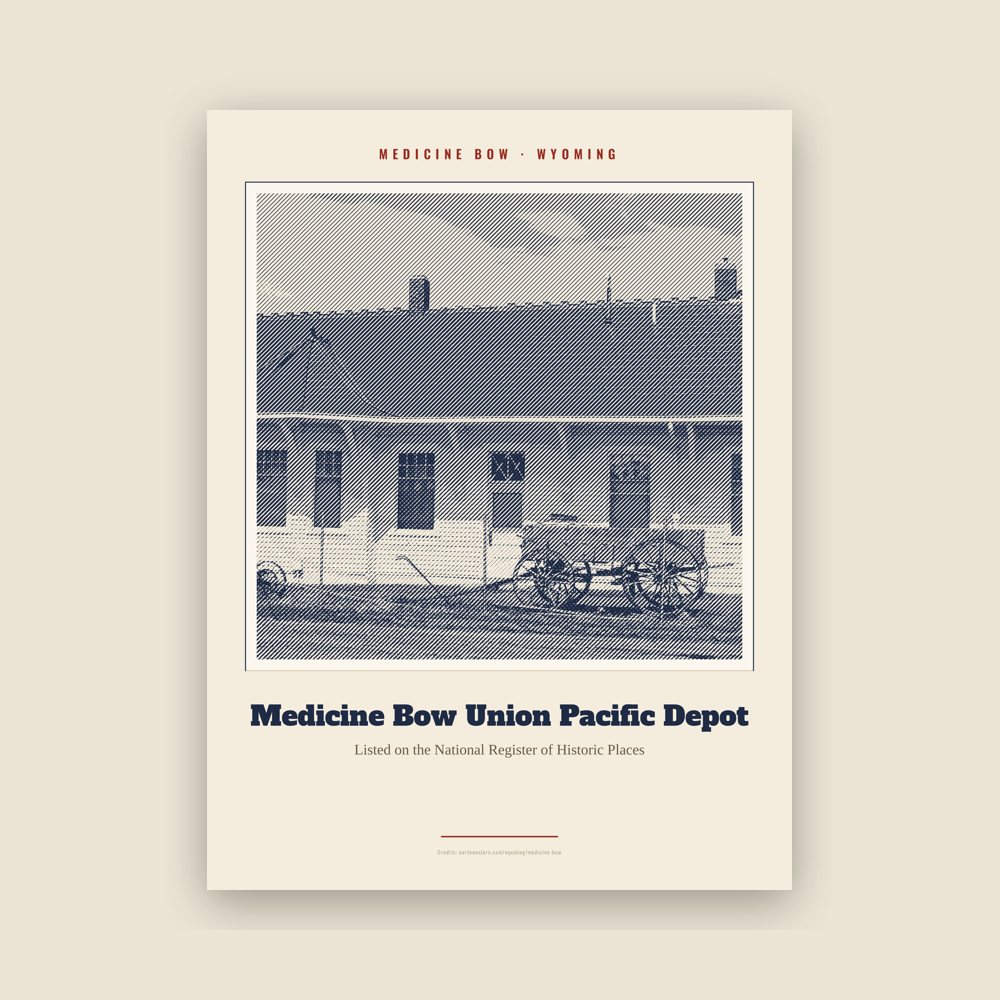
Archival matte print of a local landmark, credited to its photographer
6″×4″ postcard, glossy front
6″×4″ postcard, glossy front
6″×4″ postcard, glossy front
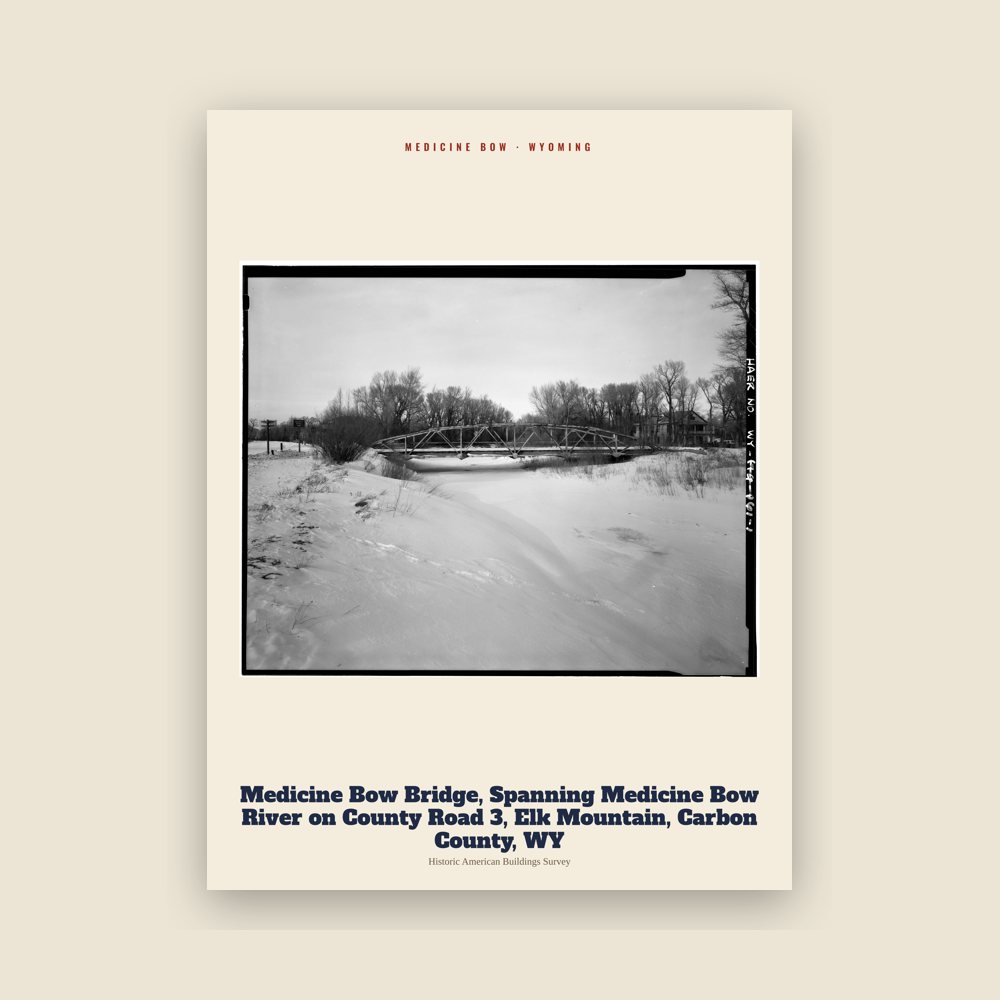
From the Library of Congress collections: a historic survey drawing or photograph of the town
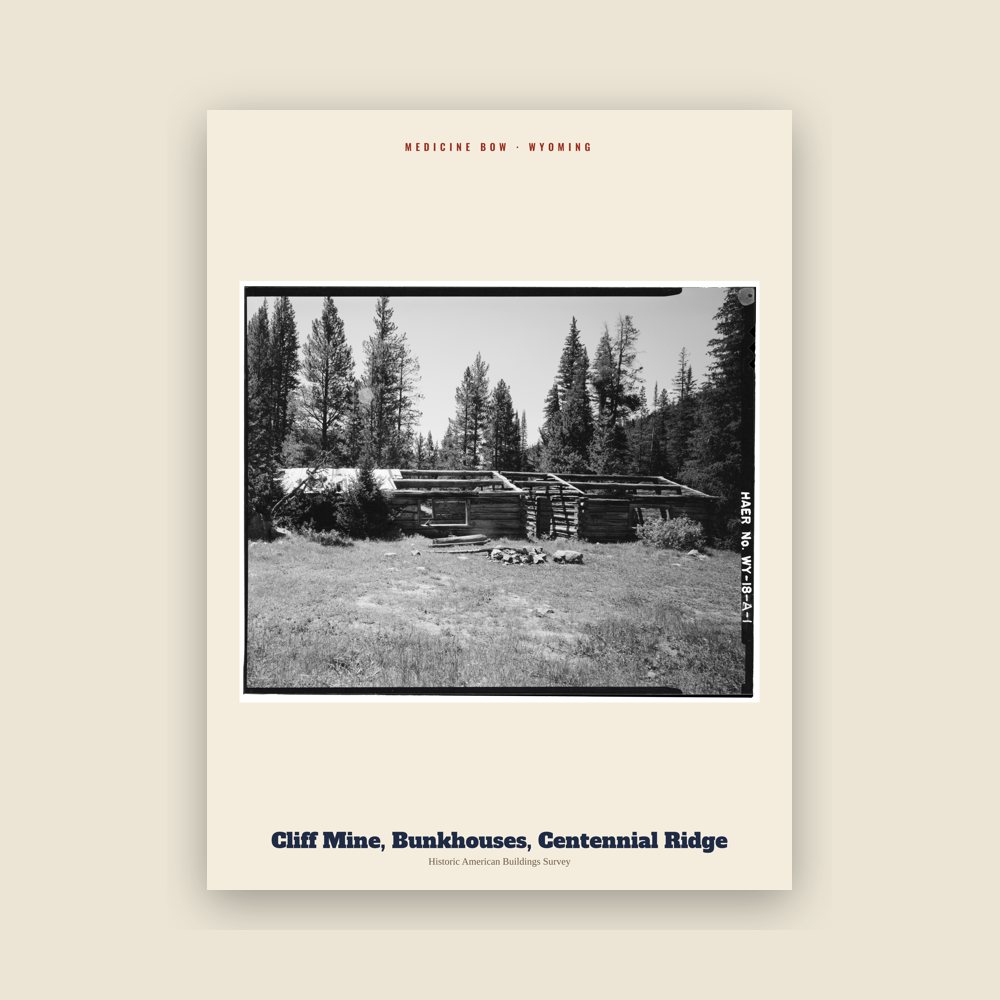
From the Library of Congress collections: a historic survey drawing or photograph of the town
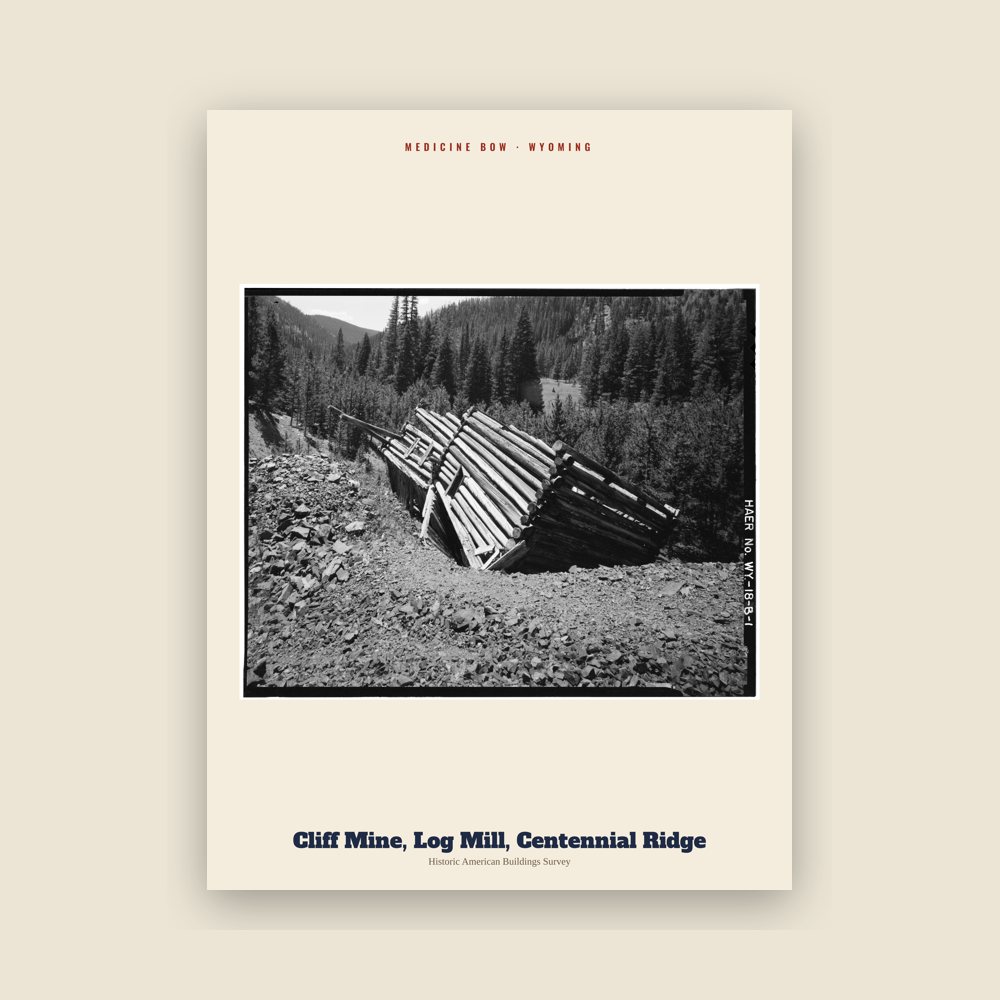
From the Library of Congress collections: a historic survey drawing or photograph of the town
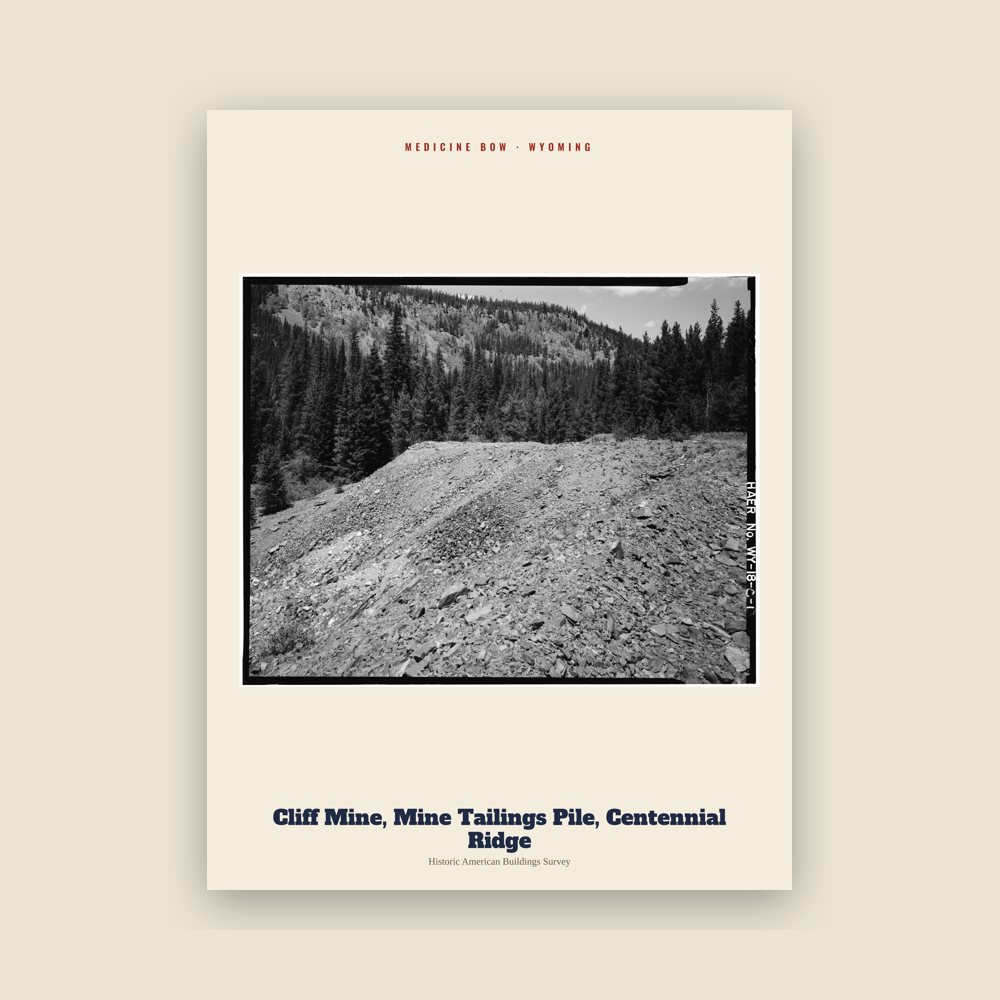
From the Library of Congress collections: a historic survey drawing or photograph of the town
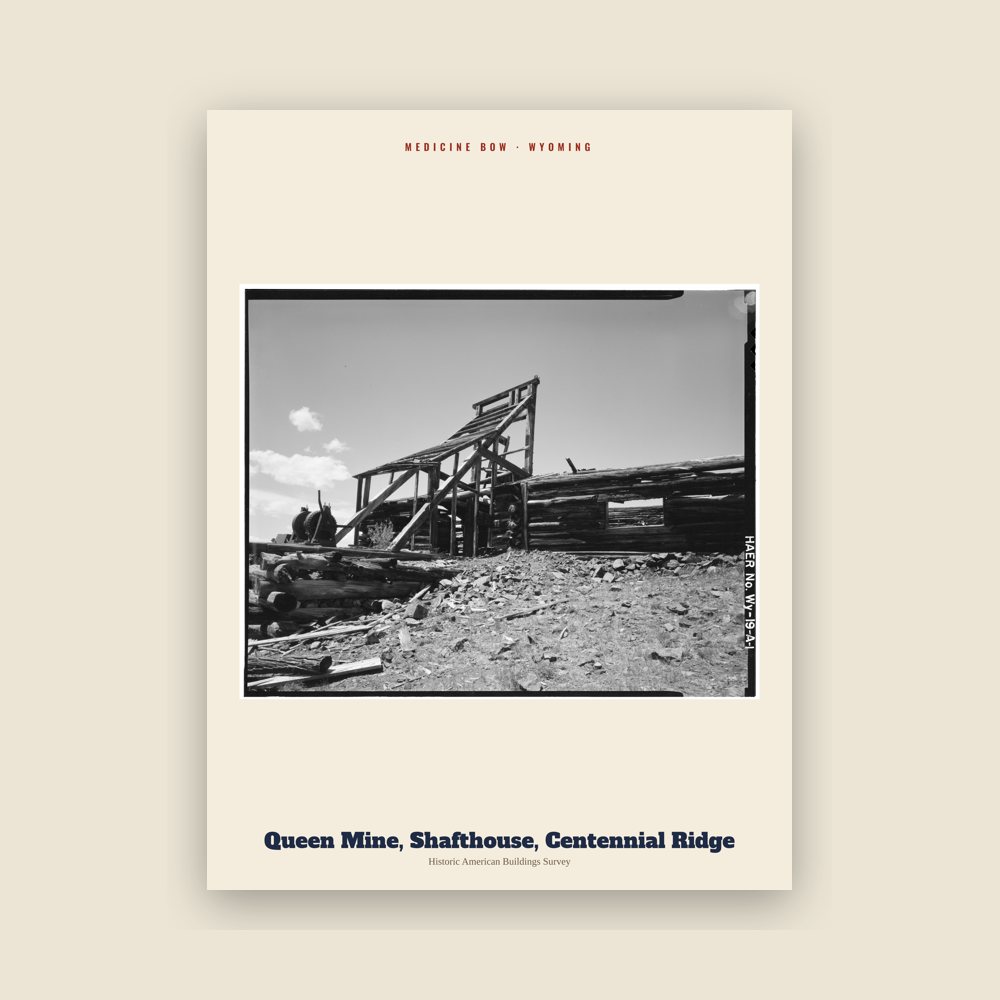
From the Library of Congress collections: a historic survey drawing or photograph of the town
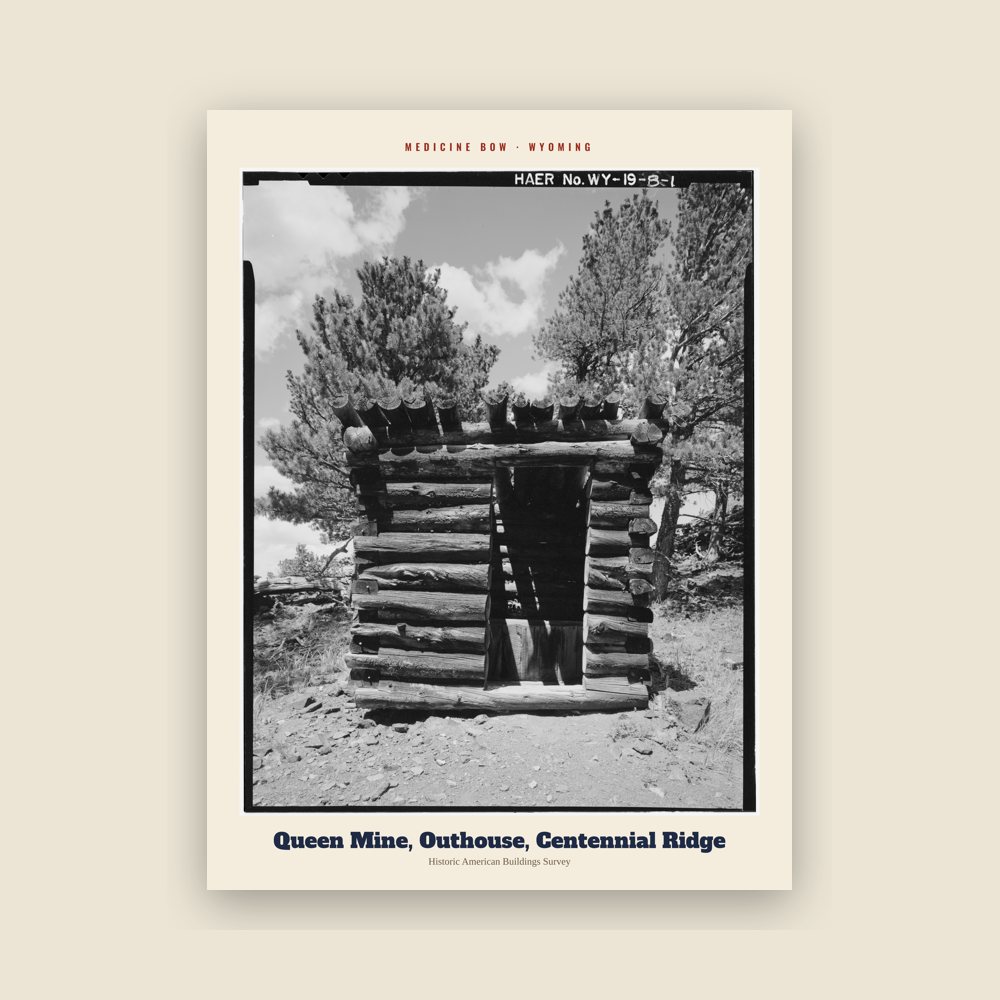
From the Library of Congress collections: a historic survey drawing or photograph of the town
Population 2010: 284 → 2020: 245
From Wikidata (CC0).
The community largely owes its existence to the first transcontinental railroad, built through the area in 1868. A post office called Medicine Bow has been in operation since 1869. The community was named after the Medicine Bow River.
Dippy, a well-known dinosaur skeleton, was found in a quarry nearby around 1898. In 1899, fossil hunters for the American Museum of Natural History and the Field Museum stayed in or near the town during their search for large dinosaur skeletons. The town had a railroad and was near the fossiliferous sedimentary hills from the Jurassic Morrison Formation, making it an important stopping location for paleontologists, with fossils of Diplodocus and Brontosaurus found nearby at Como Bluff by the two institutions during the late 19th and early 20th centuries.
The town was noted to be plagued by crime, with famous bandits such as Butch Cassidy and his Wild Bunch committing the Wilcox Train Robbery only a few miles away from the AMNH's fossil localities and Medicine Bow itself.
The Virginian Hotel is a historic hotel located in Medicine Bow. It was built in 1911 by August Grimm, and is believed to be named for the Owen Wister novel, which is set in and around Medicine Bow. The hotel was added to the National Register of Historic Places in 1978.
In the 1910s, part of the Lincoln Highway was routed through Medicine Bow. That highway, now U.S. Route 30, was the main route through southern Wyoming until Interstate 80 replaced it in 1970.
Adapted (trimmed) from the Wikipedia article Medicine Bow, Wyoming, revision 1378563662 by its contributors, licensed CC BY-SA 4.0.
We share a part of every Medicine Bow sale with local partners, and we'd love to print from your collection. Old photographs, maps and postcards make the best keepsakes.
Partner with us