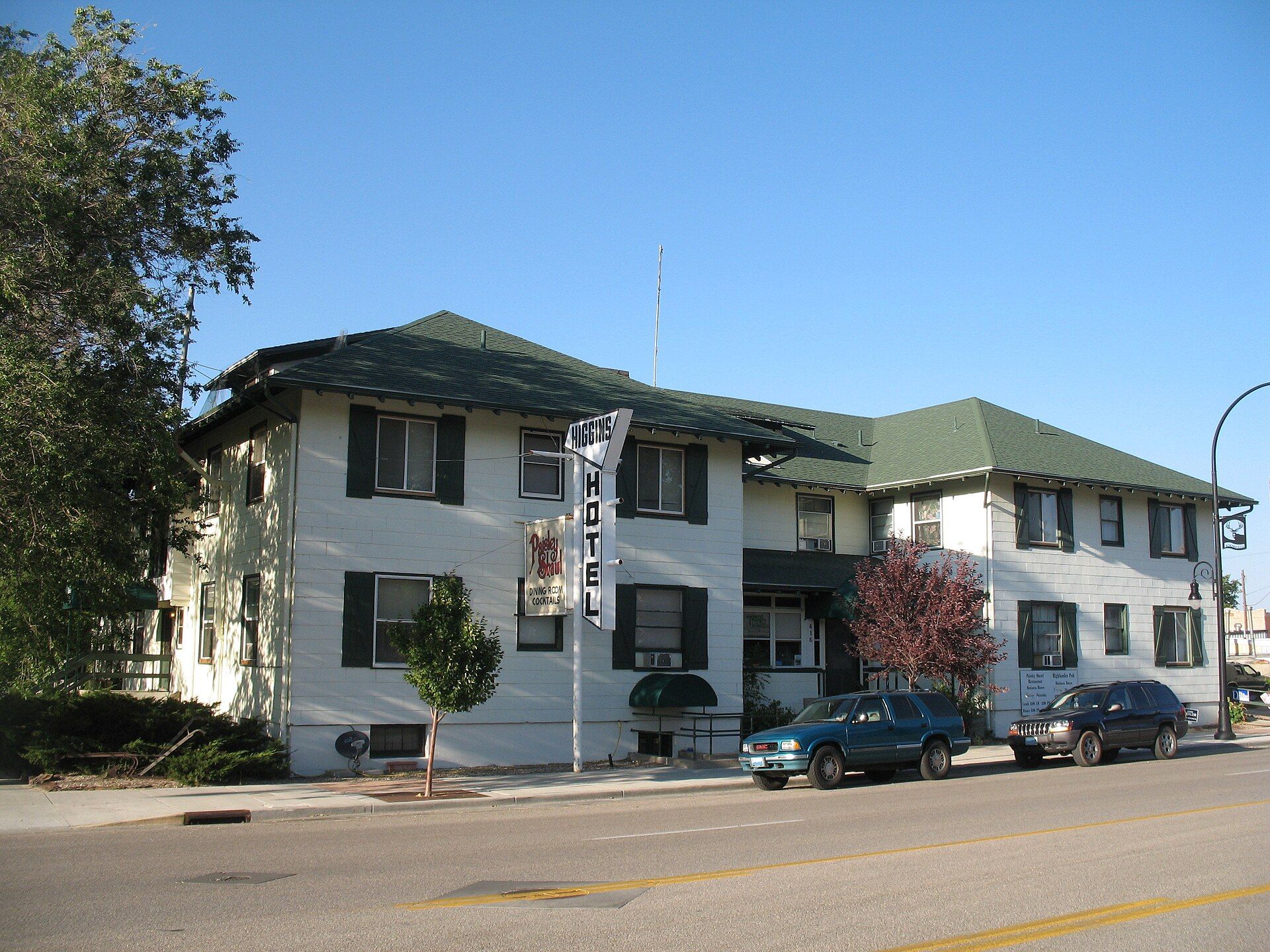
Glenrock, known as Deer Creek Station, had its beginning as a mail and stage station along the Oregon Trail. Landmarks include Hotel Higgins, Commerce Block and KGRK. Glenrock is the birthplace of Kayo Lam, football player.
Every piece is drawn from Glenrock's own map data and historic archives, then printed and shipped from the USA when you order. No two towns look alike.
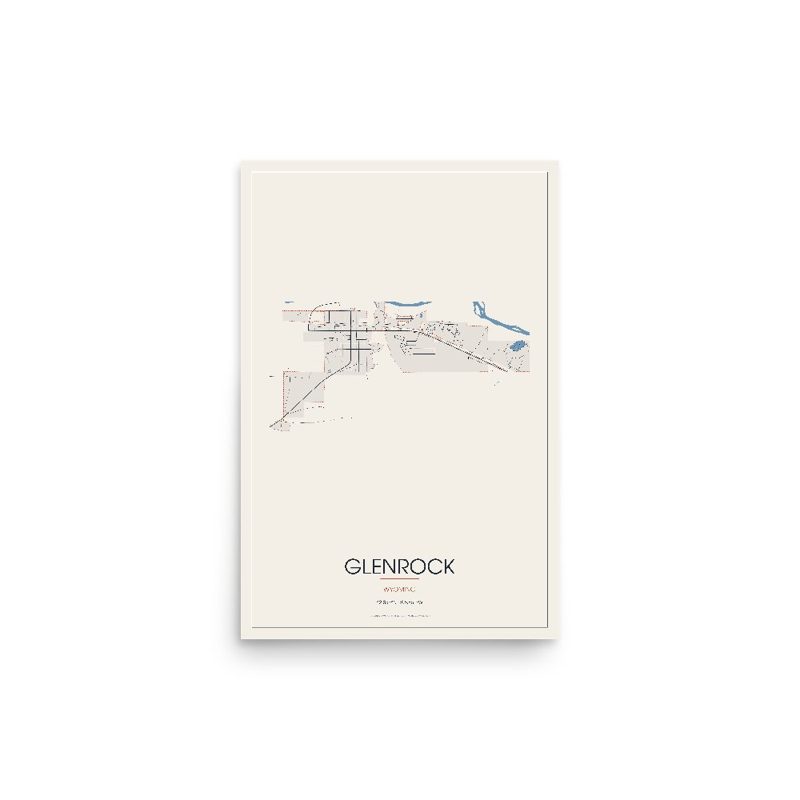
Every road in town, on archival matte paper

The same map, in navy and silver
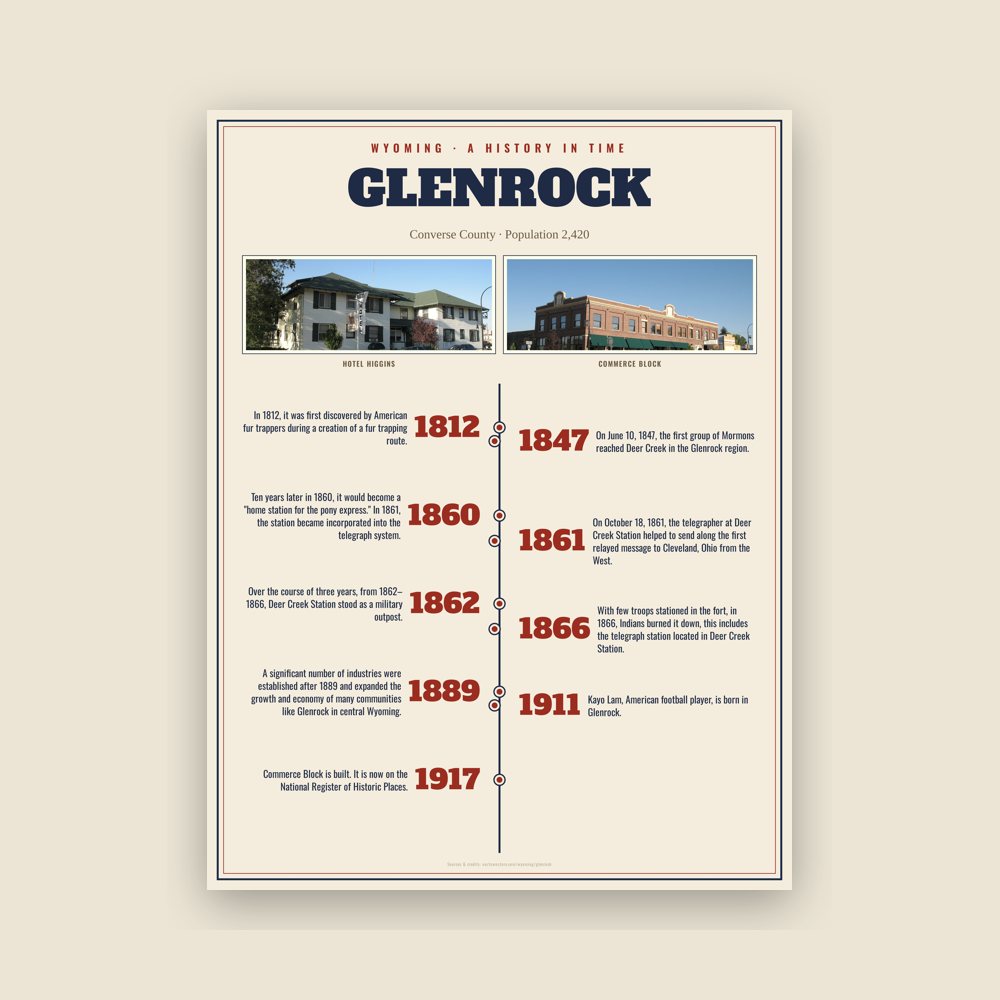
The town's story in dates, from its own records, for home or classroom

Map of local landmarks, washable fabric
Heavy-blend fleece, street map printed on the back
Soft Bella+Canvas jersey

Glossy ceramic, dishwasher safe
Ceramic keepsake, gold ribbon

Weatherproof, for the front walk
24″×16″, printed coir-look fibers, rubber back
12″×12″ printed wood, ready to hang

Soft-touch, zip cover

Sturdy all-over-print tote

Glossy top, cork back

Soft fleece, 50″×60″
20 oz, double-wall stainless

Archival matte print of a local landmark, credited to its photographer

Archival matte print of a local landmark, credited to its photographer
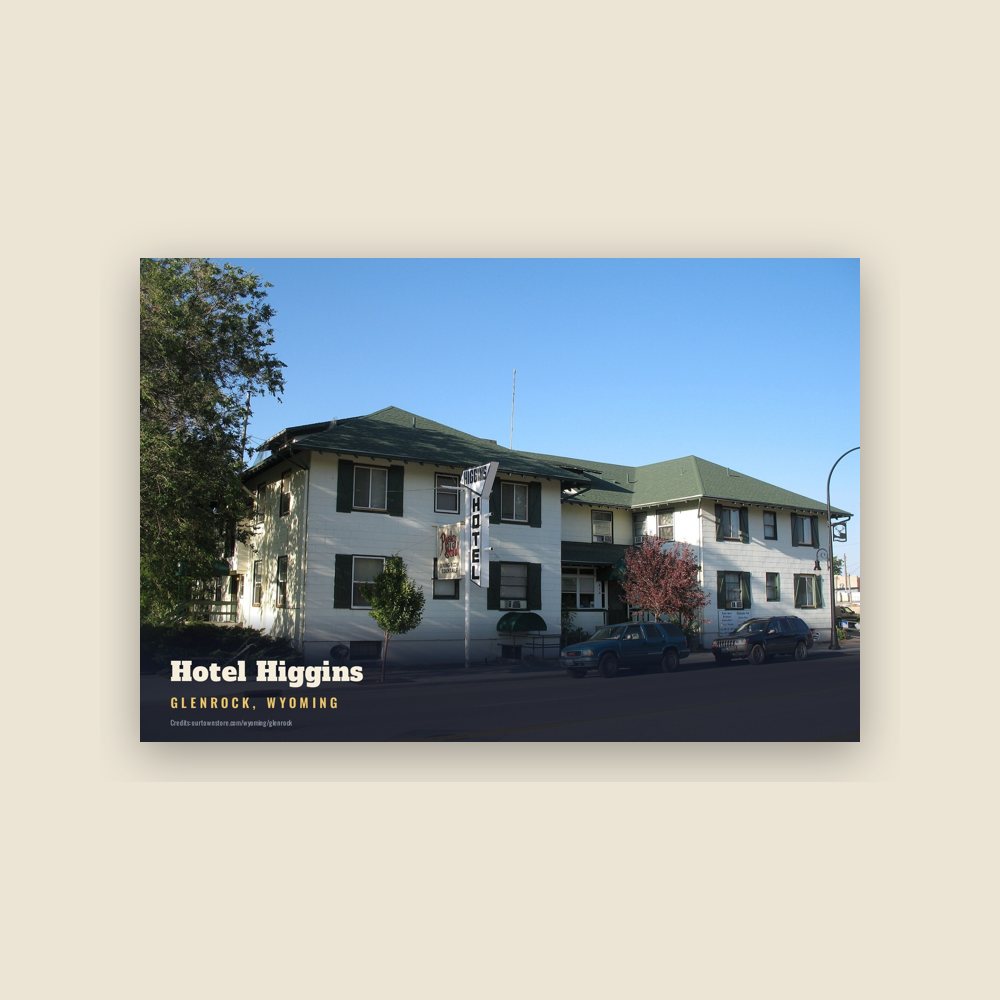
6″×4″ postcard, glossy front

6″×4″ postcard, glossy front
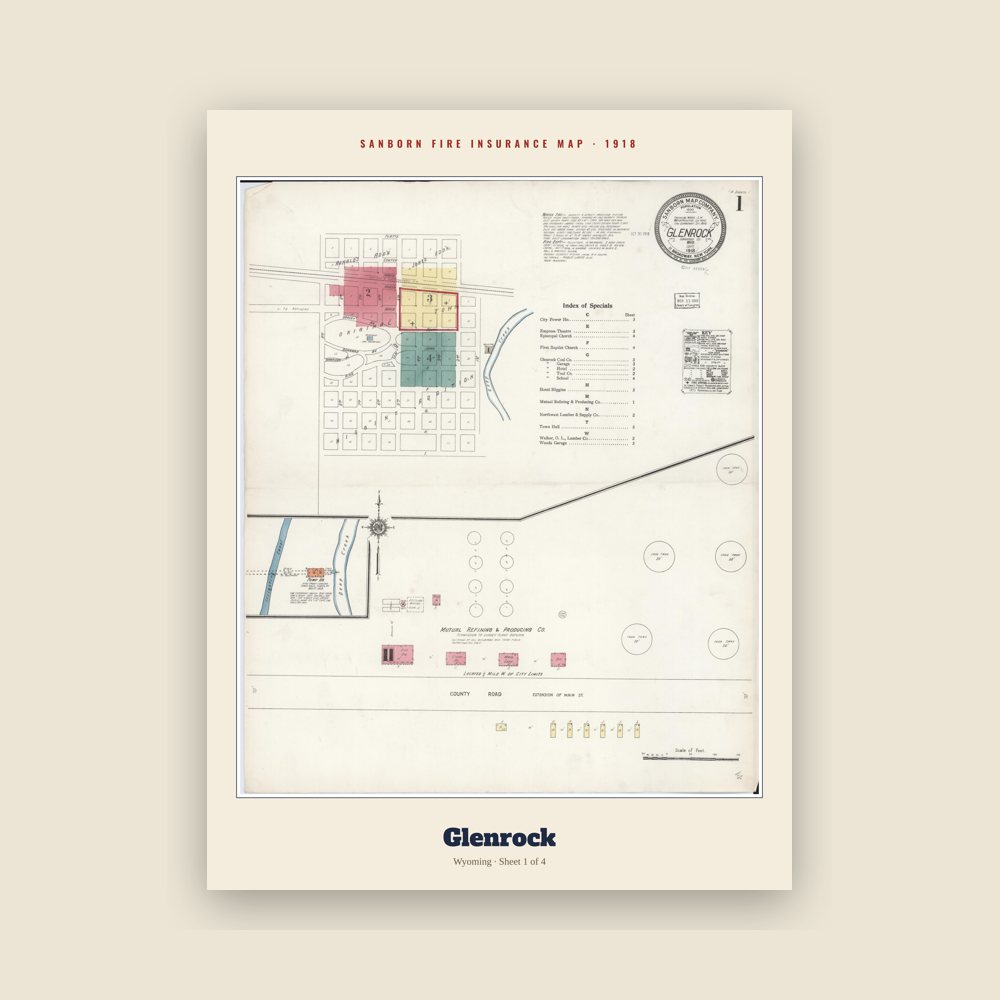
The town's earliest Sanborn fire-insurance map, drawn building by building and hand-coloured, from the Library of Congress
Population 2010: 2,576 → 2020: 2,420
From Wikidata (CC0).
Glenrock, known as Deer Creek Station, had its beginning as a mail and stage station along the Oregon Trail. The station served as a stopping point along the trail and was a vital supply point for thousands of emigrants as they traveled westward. A significant number of industries were established after 1889 and expanded the growth and economy of many communities like Glenrock in central Wyoming.
This landmark has been viewed by an estimated 350,000 immigrants that have migrated westward since the mid-1800s. In 1812, it was first discovered by American fur trappers during a creation of a fur trapping route. This trappers trail has known many names depending upon the group traveling upon it. These names include the Oregon, California, and Mormon trails.
On June 10, 1847, the first group of Mormons reached Deer Creek in the Glenrock region. A mere ten days later, a coal mine produced the first recorded coal mined in the Wyoming territory.
Originally, Deer Creek Station stood as a pioneer and Indian trading post in the 1850s and as a relay terminal for the overland stage line. Ten years later in 1860, it would become a "home station for the pony express." In 1861, the station became incorporated into the telegraph system. On October 18, 1861, the telegrapher at Deer Creek Station helped to send along the first relayed message to Cleveland, Ohio from the West. As the telegraphy began to replace the pony express, the relationship between Indians and the U.S. Government worsened in the Glenrock region. Over the course of three years, from 1862–1866, Deer Creek Station stood as a military outpost. With few troops stationed in the fort, in 1866, Indians burned it down, this includes the telegraph station located in Deer Creek Station. It was never rebuilt as traffic on the old trails dwindled and it became part of the past.
September 27, 1923 – near Glenrock, Wyoming, soon after the washout of Chicago, Burlington and Quincy Railroad's bridge over Cole Creek, a passenger train fell through the washout, killing 30 of the train's 66 passengers. This marked the worst railroad accident in Wyoming's history.
Adapted (trimmed) from the Wikipedia article Glenrock, Wyoming, revision 1379758850 by its contributors, licensed CC BY-SA 4.0.
We share a part of every Glenrock sale with local partners, and we'd love to print from your collection. Old photographs, maps and postcards make the best keepsakes.
Partner with us