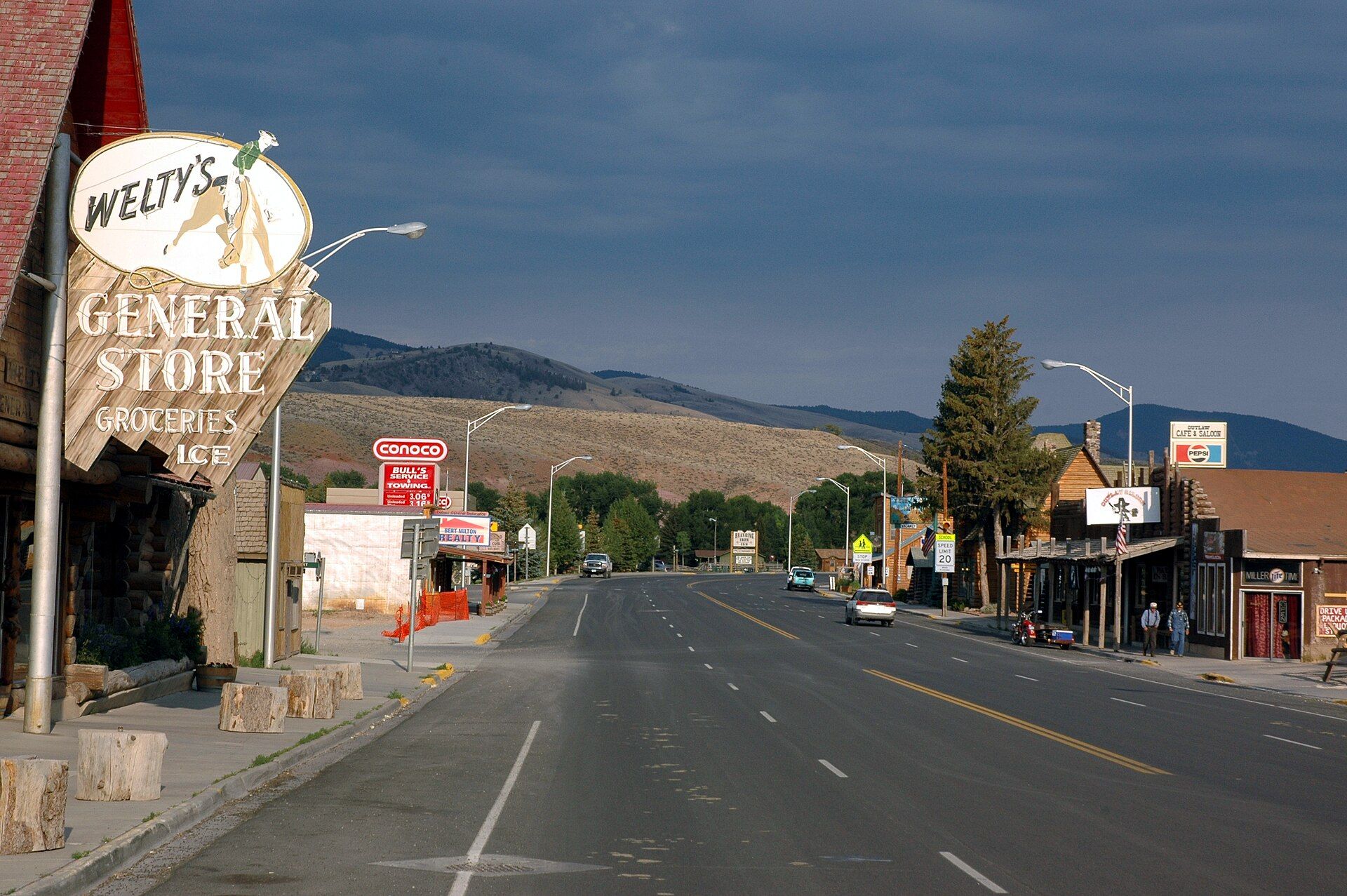
The original residents of Dubois wanted to name the town Tibo, after the Shoshone language word for "stranger" or "white man," which was the Natives' affectionate name for their Episcopal priest, Father John Roberts. Landmarks include Welty's General Store, Twin Pines Lodge and Cabin Camp and Amoretti, Welty, Helmer & Co Bank.
Every piece is drawn from Dubois's own map data and historic archives, then printed and shipped from the USA when you order. No two towns look alike.
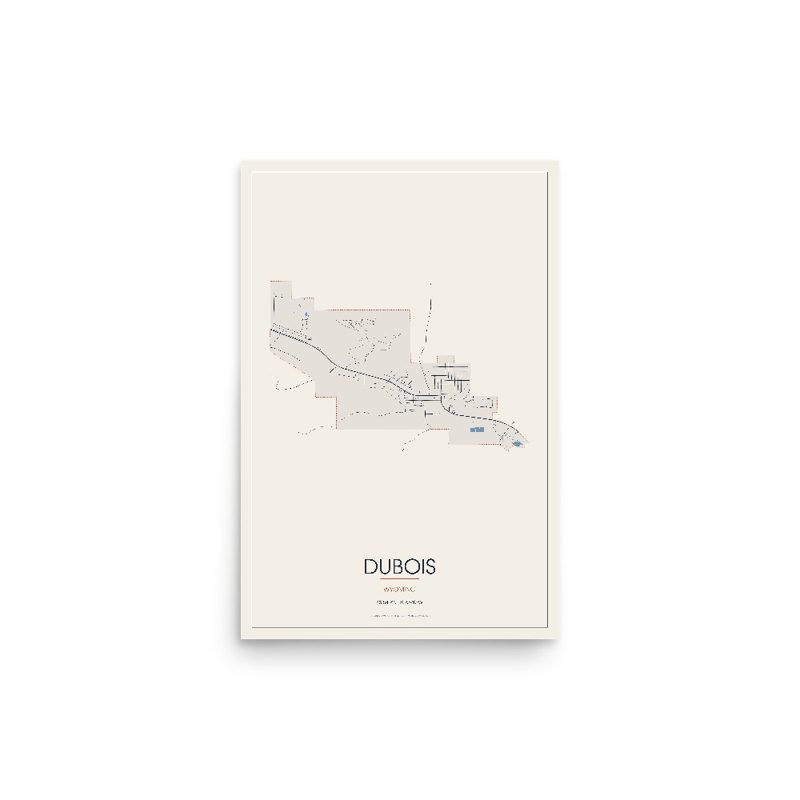
Every road in town, on archival matte paper
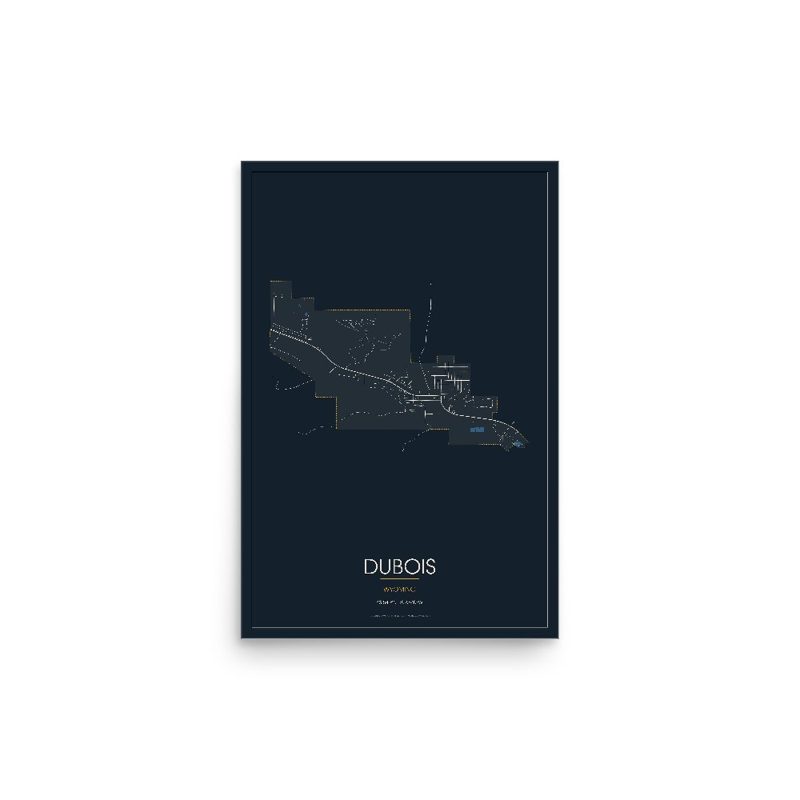
The same map, in navy and silver
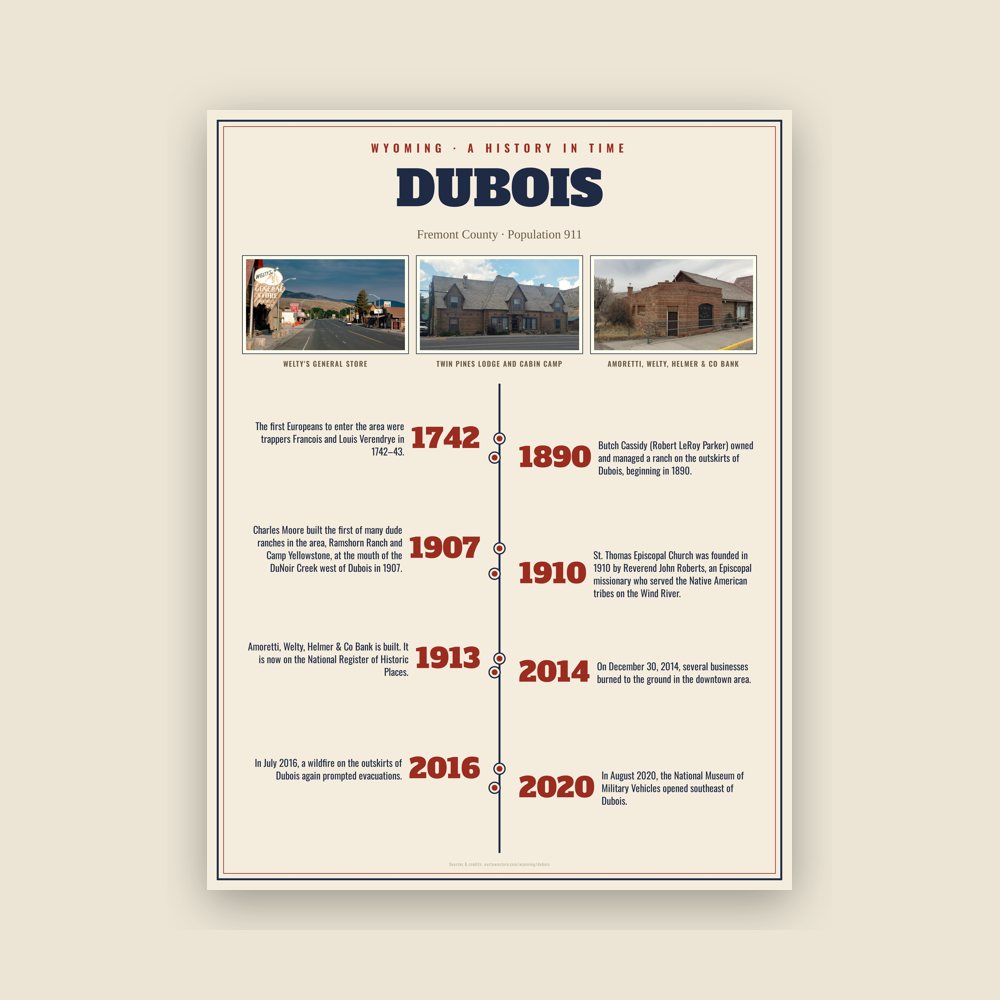
The town's story in dates, from its own records, for home or classroom
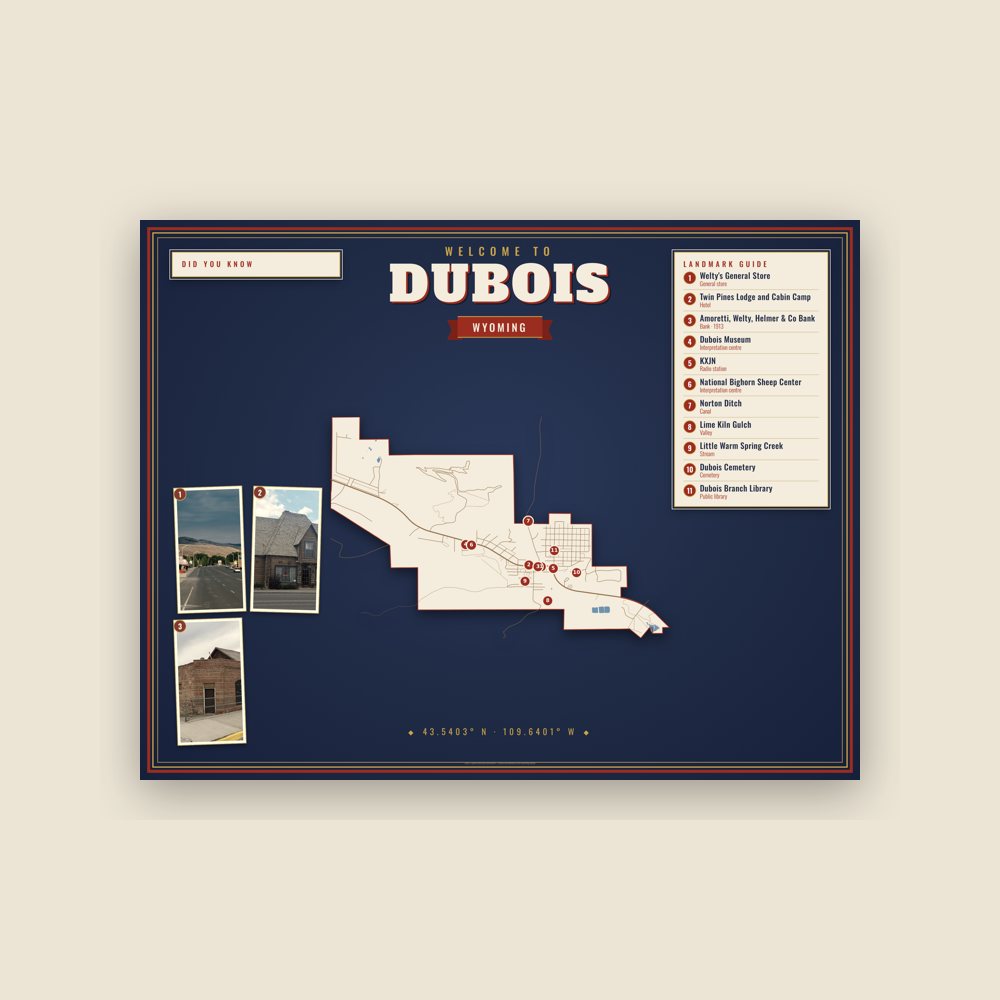
Map of local landmarks, washable fabric
Heavy-blend fleece, street map printed on the back
Soft Bella+Canvas jersey
Glossy ceramic, dishwasher safe
Ceramic keepsake, gold ribbon
Weatherproof, for the front walk
24″×16″, printed coir-look fibers, rubber back
12″×12″ printed wood, ready to hang
Soft-touch, zip cover
Sturdy all-over-print tote
Glossy top, cork back
Soft fleece, 50″×60″
20 oz, double-wall stainless
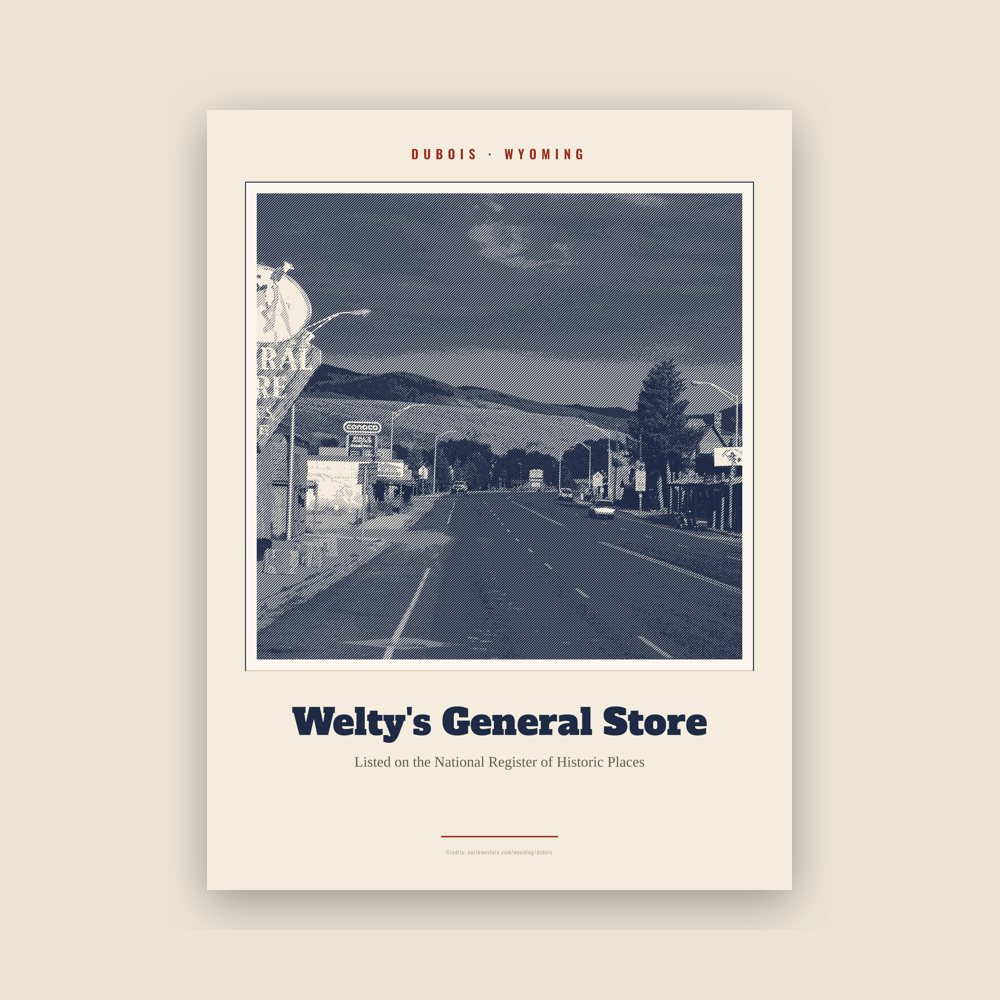
Archival matte print of a local landmark, credited to its photographer
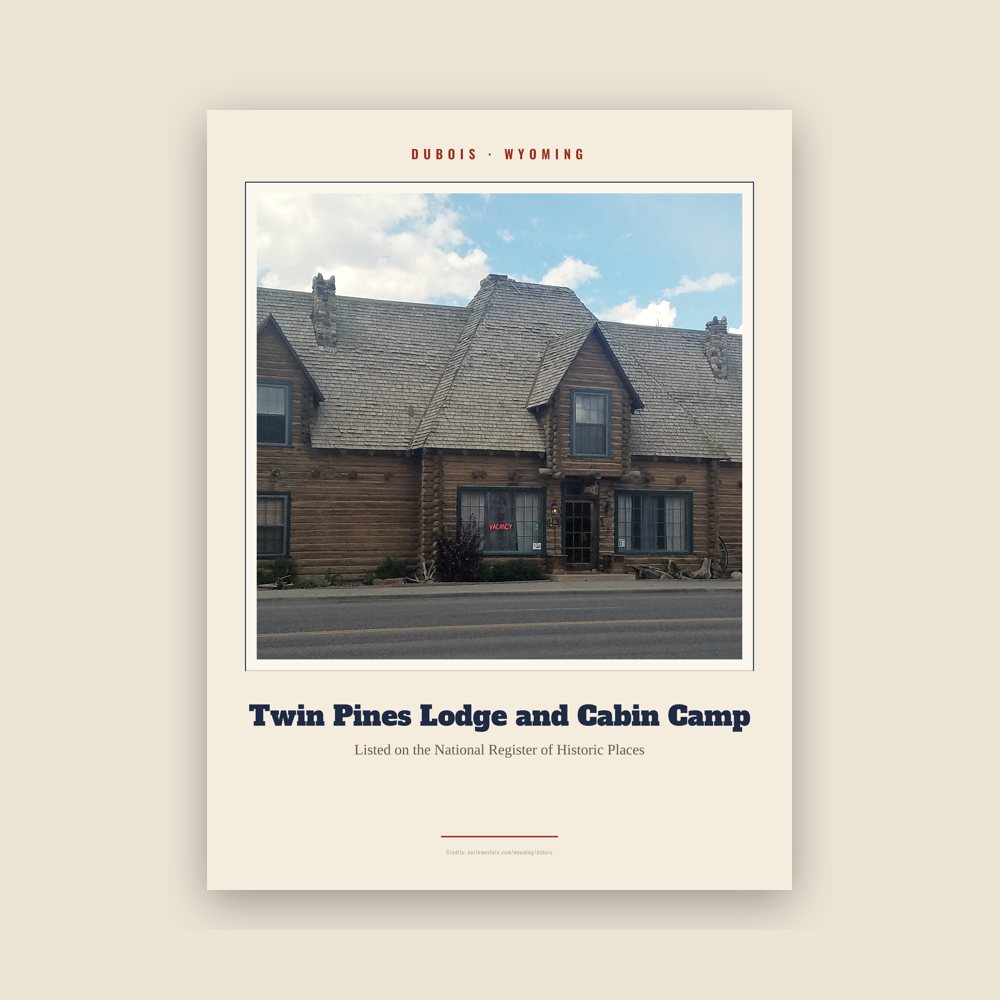
Archival matte print of a local landmark, credited to its photographer
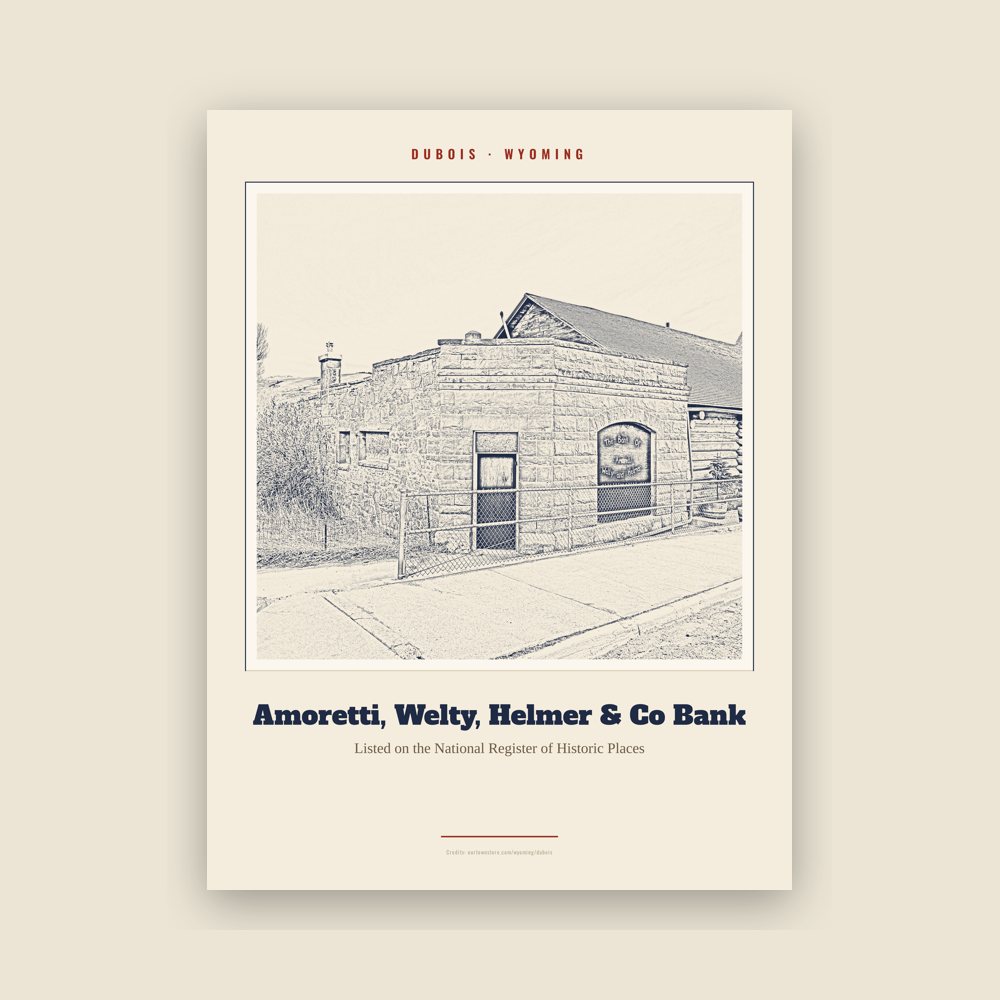
Archival matte print of a local landmark, credited to its photographer
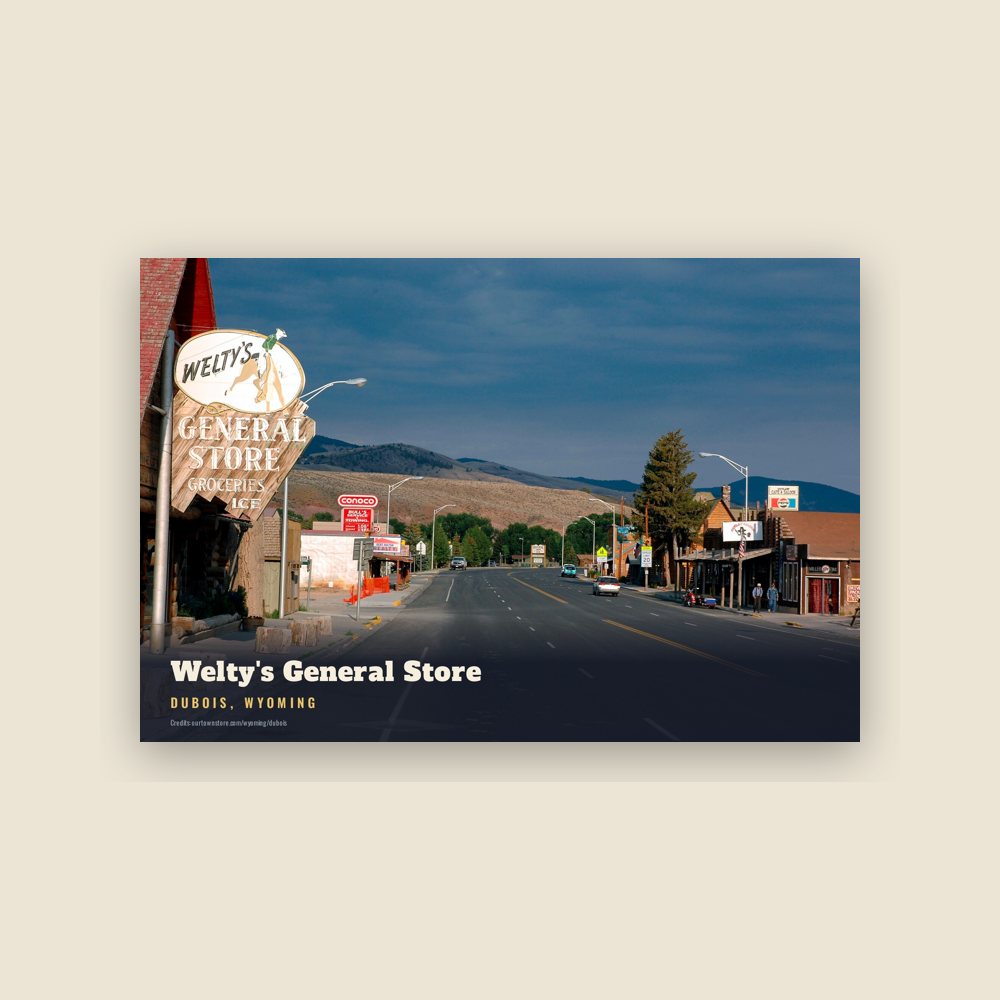
6″×4″ postcard, glossy front
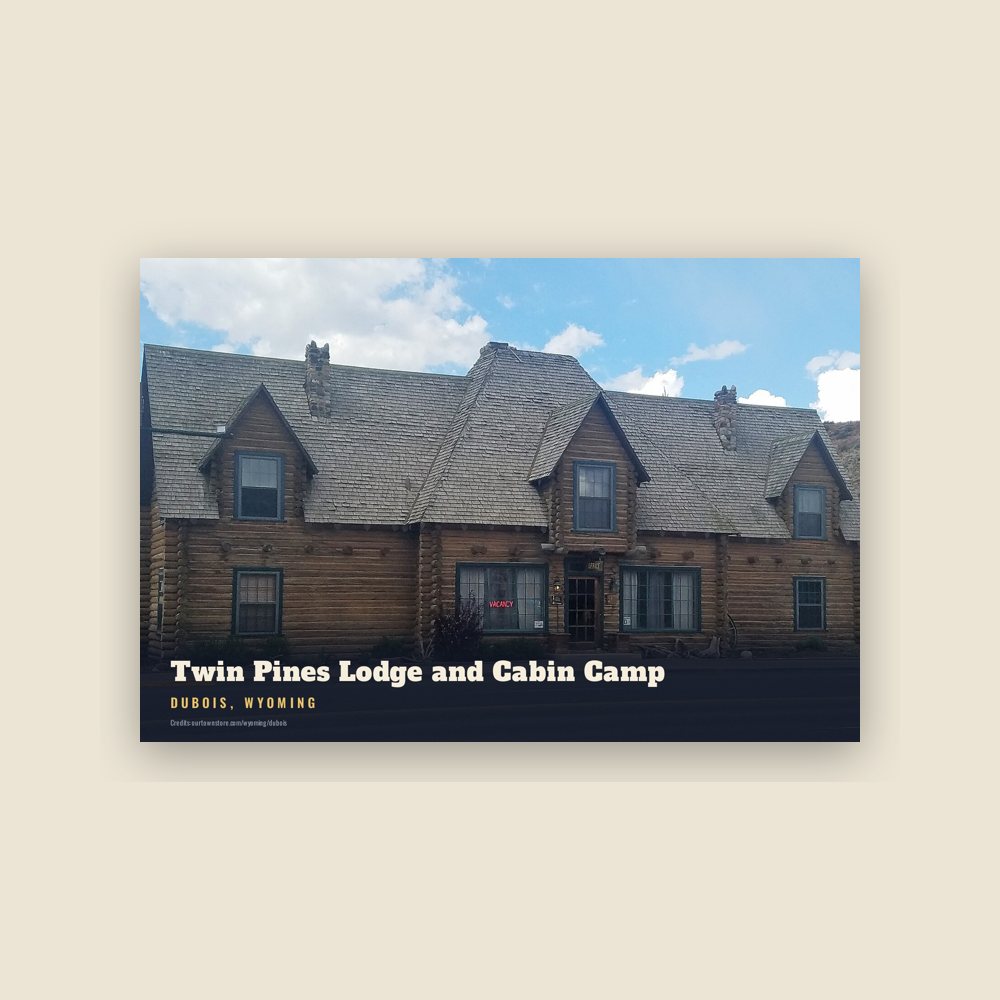
6″×4″ postcard, glossy front
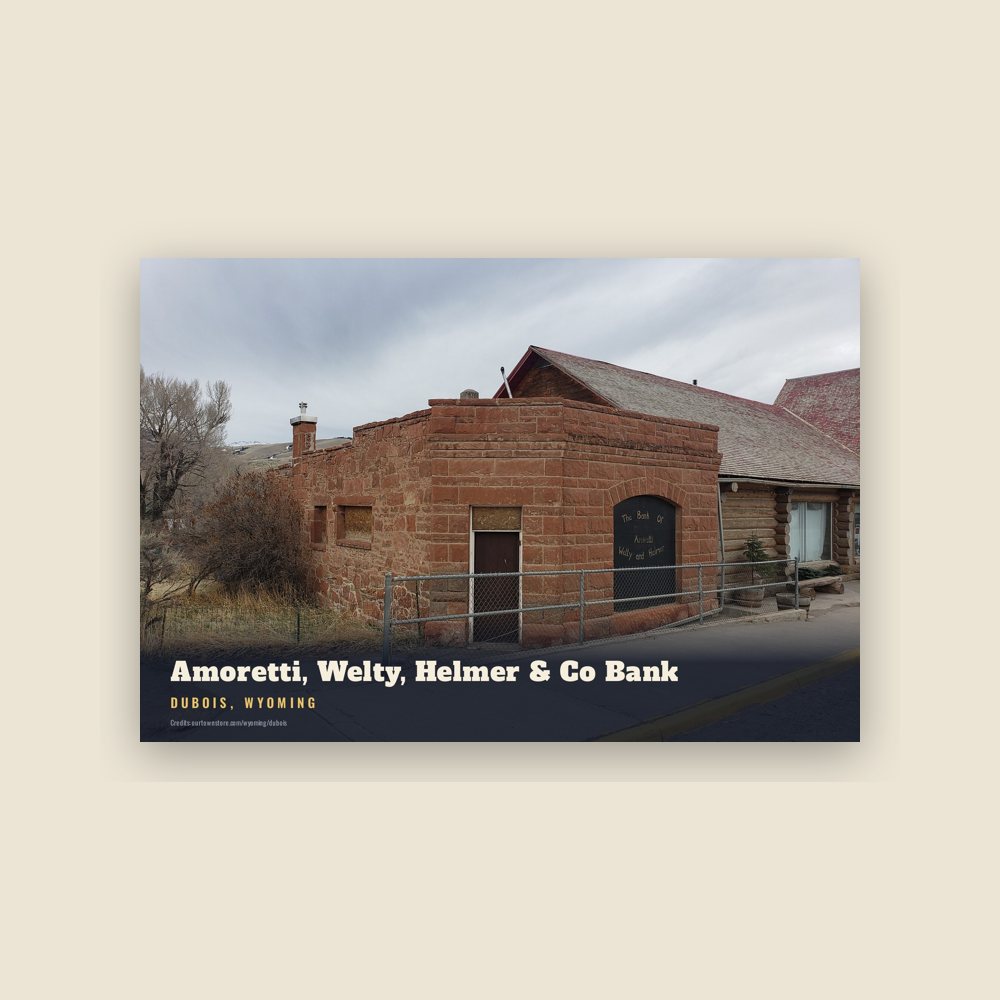
6″×4″ postcard, glossy front
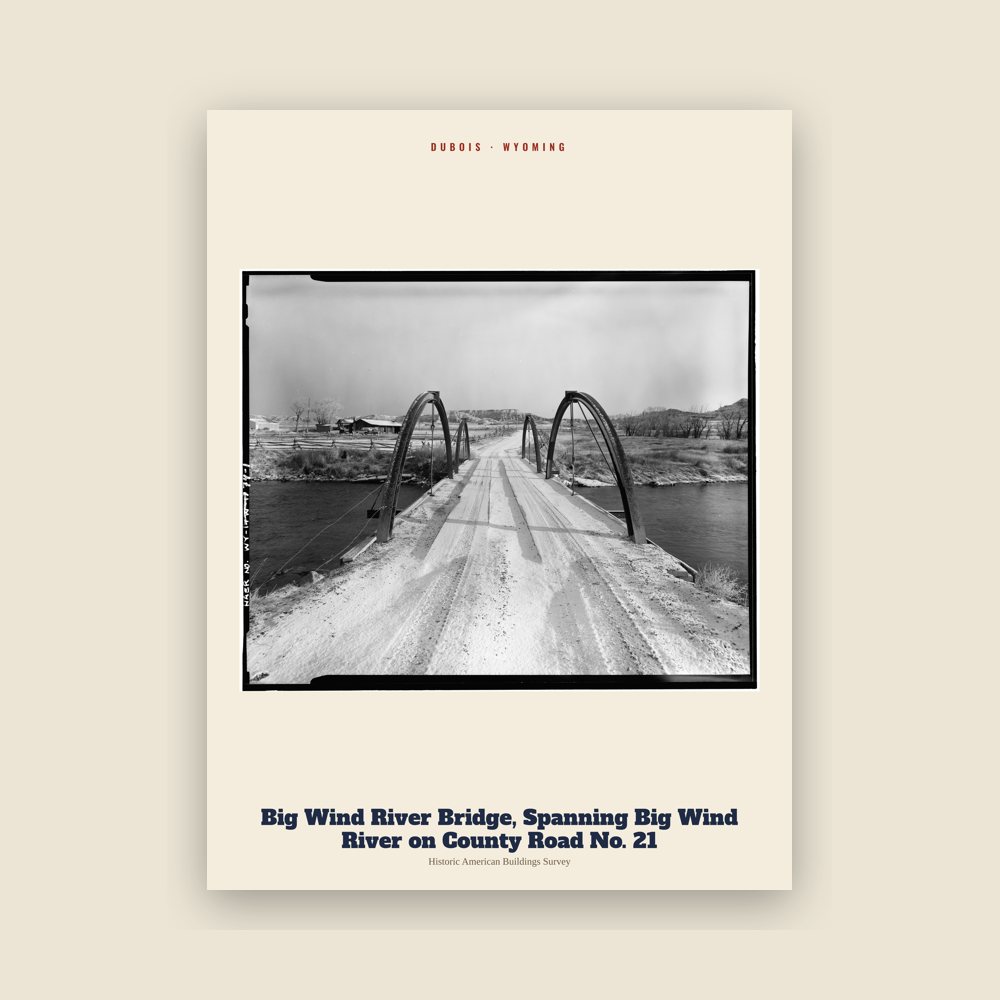
From the Library of Congress collections: a historic survey drawing or photograph of the town
Population 2010: 971 → 2020: 911
From Wikidata (CC0).
The original residents of Dubois wanted to name the town Tibo, after the Shoshone language word for "stranger" or "white man," which was the Natives' affectionate name for their Episcopal priest, Father John Roberts. However, the postal service found this name unacceptable, so Governor Joseph M. Carey chose Dubois after his friend Fred Dubois, an Idaho senator at the time. In protest, the citizens of Dubois rejected the French pronunciation of "deh-bwah", instead opting for Du, with u as in "Sue"; bois, with oi as in "voice". This local legend is most likely not true as the town in Idaho, named after the same Idaho Senator, is pronounced the same way as the town in Wyoming. The accent is on the first syllable.
The first occupants of the mountains and valleys surrounding what is now Dubois were members of the Sheepeaters, a group of Mountain Shoshone. They included the Wind River area in their regular annual migrations from the Great Plains through the mountains of Yellowstone and beyond. The Wind River Valley surrounding Dubois contains numerous remnants of these people who lived in the area for many hundreds of years before they were relocated into a nearby reservation. Relics of their existence in the mountains and valleys around Dubois include numerous prehistoric petroglyphs, hunting traps and blinds, and stone tepee circles.
The first Europeans to enter the area were trappers Francois and Louis Verendrye in 1742–43. In the years to follow, the Wind River valley was visited regularly by the Astorians and other fur trappers and hunters through the early 19th century. The first homesteaders arrived in the late 1870s.
Butch Cassidy (Robert LeRoy Parker) owned and managed a ranch on the outskirts of Dubois, beginning in 1890. It is said that he was a frequent customer at Welty's General Store in Dubois, which is still in operation. A statue erected in the center of Dubois is modeled after Butch Cassidy.
Charles Moore built the first of many dude ranches in the area, Ramshorn Ranch and Camp Yellowstone, at the mouth of the DuNoir Creek west of Dubois in 1907.
St. Thomas Episcopal Church was founded in 1910 by Reverend John Roberts, an Episcopal missionary who served the Native American tribes on the Wind River.
In 1913, the town expanded with the addition of a hotel, a bar, and a general store, anticipating the arrival of Scandinavian lumber workers brought there by the Wyoming Tie and Timber Company the following year. All of these structures are still standing. Dubois was incorporated in 1914.
In the landscape surrounding Dubois are visible the remains of wood flumes constructed by the tie hacks who provided the railroad ties that helped to develop the American West. These Scandinavian immigrants cut logs into ties and sent these via the flumes to the Wind River where they floated to Riverton, about 70 miles east, for processing.
On December 30, 2014, several businesses burned to the ground in the downtown area. The air temperatures at the time of the blaze were hovering near -35 °F with wind chills in the range of 50 below zero (-50 °F). Firefighters battled freezing equipment and gear throughout the night to get the fire under control. The blaze was ruled accidental. The origin of the fire appeared to be inside the rear of the "Main Street Mart" building in the attic above a wood stove. The fire was most likely caused by charring (pyrolysis) that resulted from the chimney coming into contact with building materials. Approximately half a block of Downtown Dubois was destroyed by the fire. In July 2016, a wildfire on the outskirts of Dubois again prompted evacuations.
In August 2020, the National Museum of Military Vehicles opened southeast of Dubois. The privately funded $100M museum was founded by Dan Starks, a former lawyer and CEO of St. Jude Medical. It contains 500 fully restored military vehicles, artillery pieces, naval vessels and aircraft dating from 1897 to the present, depicting the American experience in World War II, the Korean War, and the Vietnam War with a focus on the people who used the equipment as much as on the equipment itself.
Adapted (trimmed) from the Wikipedia article Dubois, Wyoming, revision 1373558869 by its contributors, licensed CC BY-SA 4.0.
We share a part of every Dubois sale with local partners, and we'd love to print from your collection. Old photographs, maps and postcards make the best keepsakes.
Partner with us