A short history of Prairie du Chien
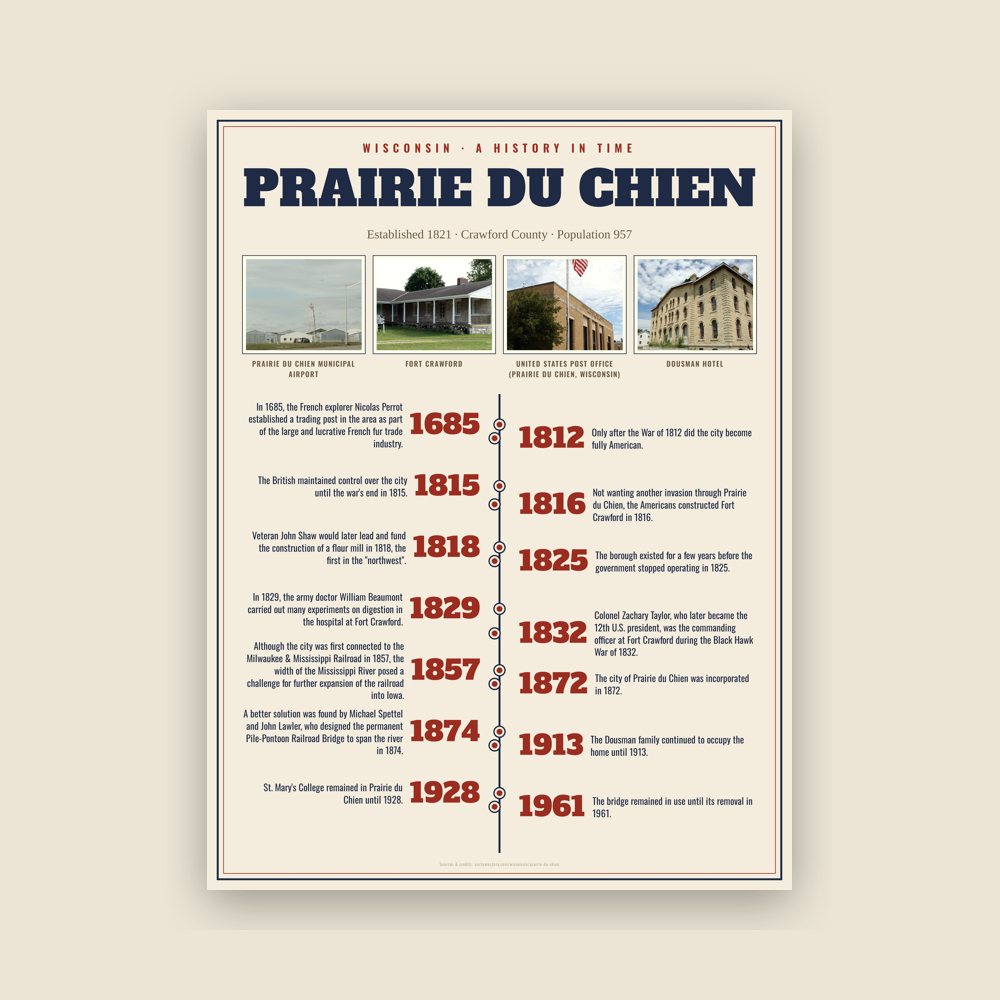
The first known Europeans to reach Prairie du Chien were French explorers Jacques Marquette and Louis Joliet, who arrived by canoe on June 17, 1673, discovering a route to the Mississippi River. Later travel between Canada and the Mississippi River continued to pass through Prairie du Chien, although routes via the Illinois River were also used. In 1685, the French explorer Nicolas Perrot established a trading post in the area as part of the large and lucrative French fur trade industry. After John Jacob Astor's machinations had closed the entire government fur trade factory system and the federal factory established in Prairie du Chien in 1815, the American Fur Company became established in the area and later built the Astor Fur Warehouse, an important building in the regional fur trade, which was centered in Prairie du Chien. Prairie du Chien's significance as a center of the fur trade did not diminish until the mid-19th century, when European demand declined, as did game stock.
In 1763, after Great Britain defeated France in the French and Indian War (part of the Seven Years' War), it took possession of the French territory in North America east of the Mississippi River, including Prairie du Chien. During the American Revolutionary War, the city was used as a meeting point for British troops and their Native American allies. After the American victory, the Treaty of Paris granted the area to the new United States, but the British and their Loyalists were slow to withdraw. Only after the War of 1812 did the city become fully American.
The U.S. was slow to present any authority over Prairie du Chien, but late in the War of 1812, when the government realized the importance of holding the site to prevent British attacks from Canada, it began construction of Fort Shelby in 1814. In July, British soldiers captured the fort during the Siege of Prairie du Chien. The British maintained control over the city until the war's end in 1815. Not wanting another invasion through Prairie du Chien, the Americans constructed Fort Crawford in 1816. Veteran John Shaw would later lead and fund the construction of a flour mill in 1818, the first in the "northwest".
The fort was the site of the negotiations and signing of the Treaties of Prairie du Chien (1825 and 1830), by which the Meskwaki and Sauk ceded much of their land to the U.S. Representing them along with the United Nations of the Ojibwe, Odawa and Potawatomi in the 1829 negotiations was Billy Caldwell, of Scots-Irish and Mohawk descent. He became involved with the Potawatomi after moving as a young man to the U.S. from Canada.
In 1829, the army doctor William Beaumont carried out many experiments on digestion in the hospital at Fort Crawford. Beaumont's discoveries are still the basis of current knowledge of the human digestive process.
Colonel Zachary Taylor, who later became the 12th U.S. president, was the commanding officer at Fort Crawford during the Black Hawk War of 1832. Taylor oversaw the surrender of Black Hawk in Prairie du Chien. Lieutenant Jefferson Davis, who later became president of the Confederate States of America, was stationed at Fort Crawford at the same time. There, Davis met Taylor's daughter, Sarah "Knoxie" Taylor, whom he married in 1835.
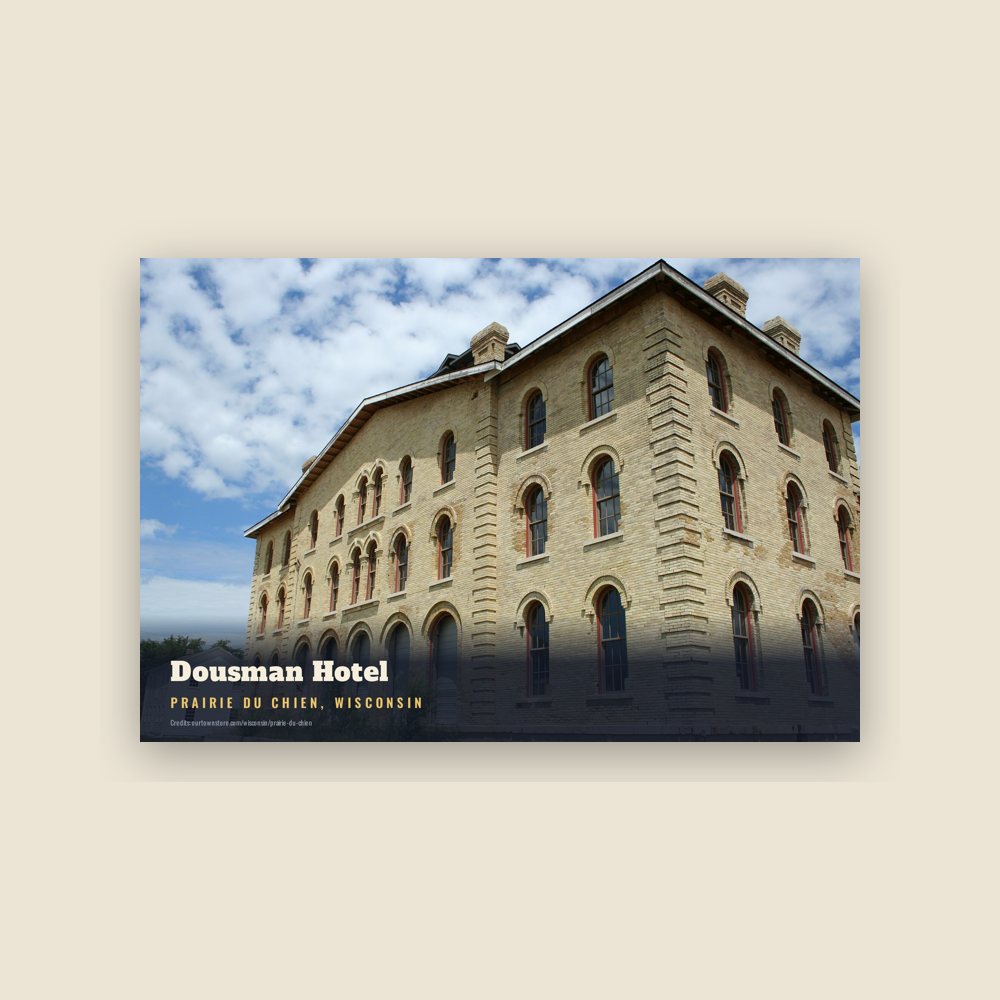
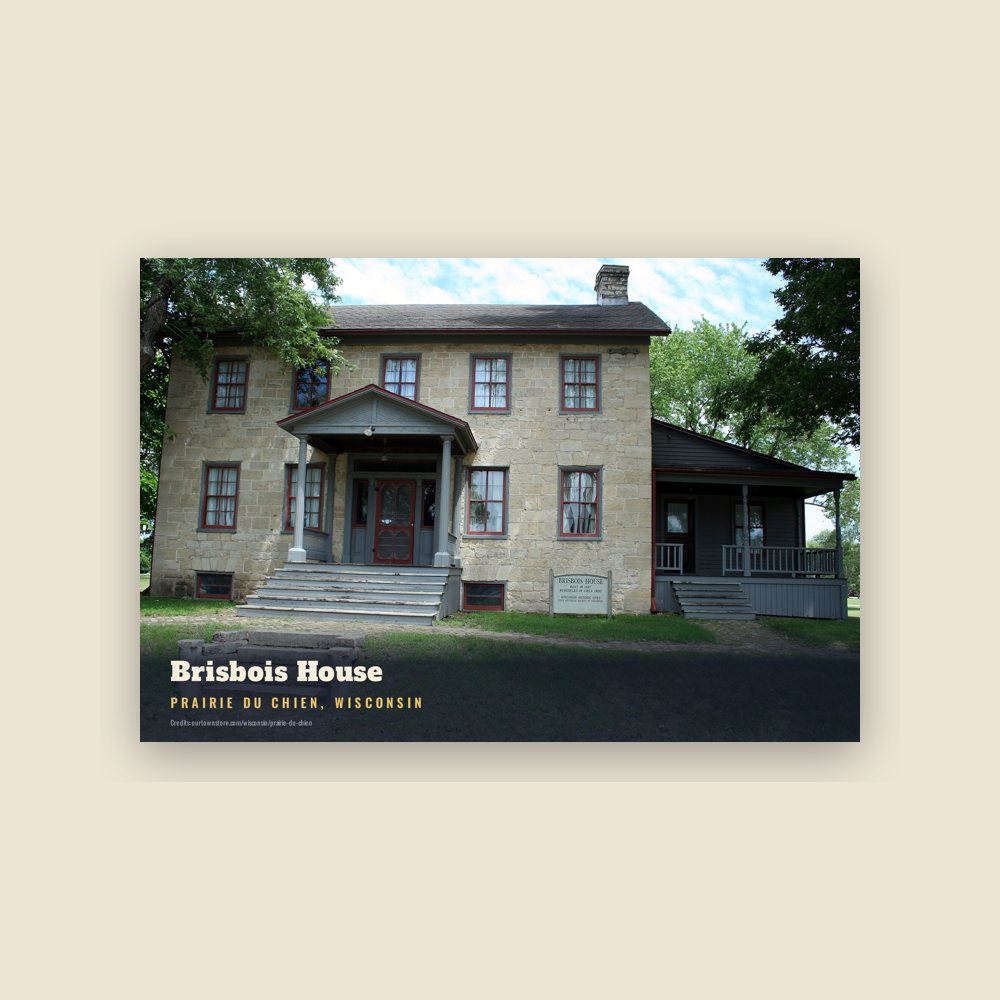
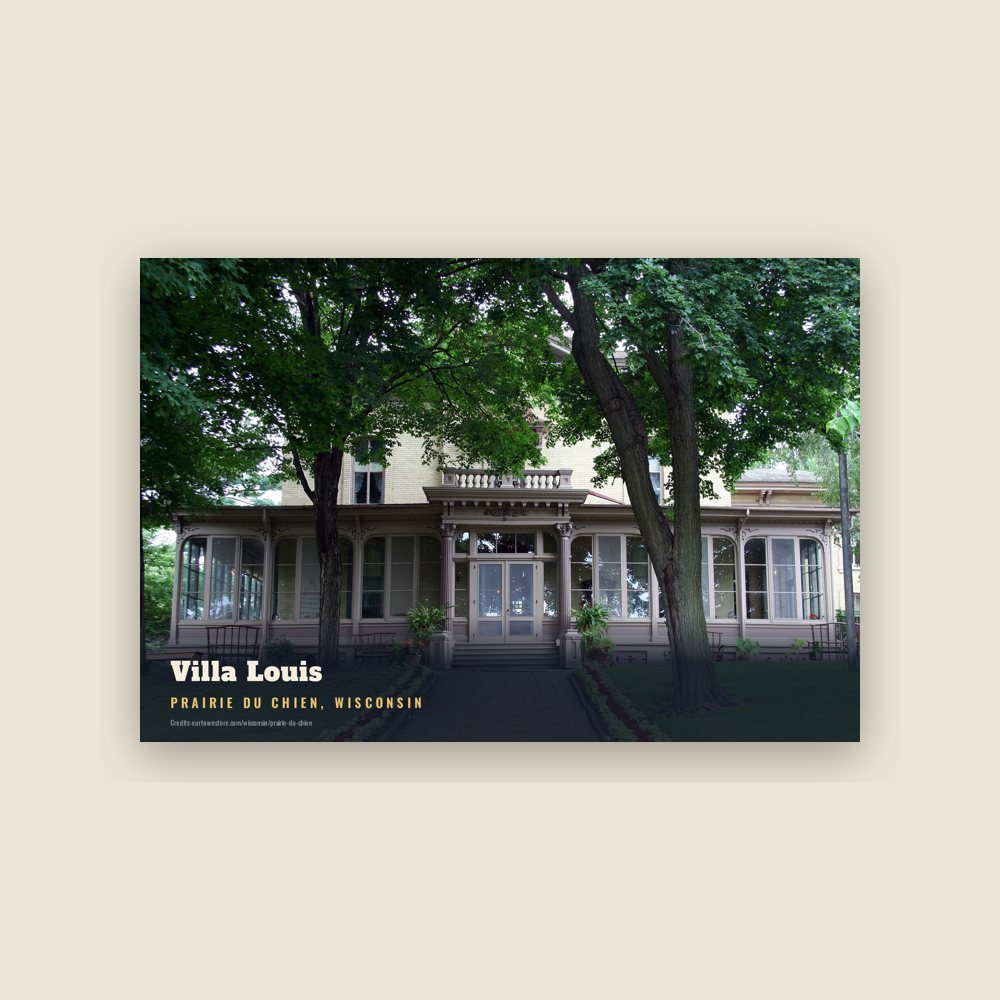
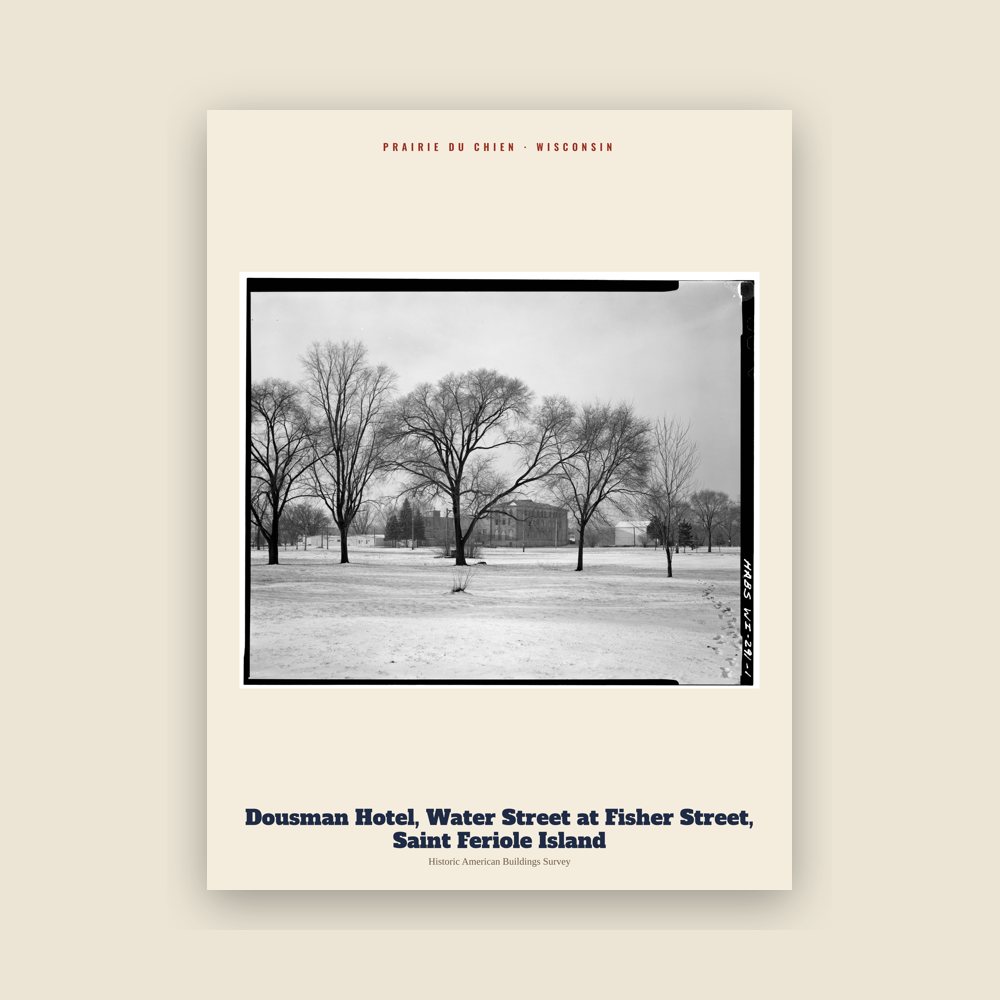
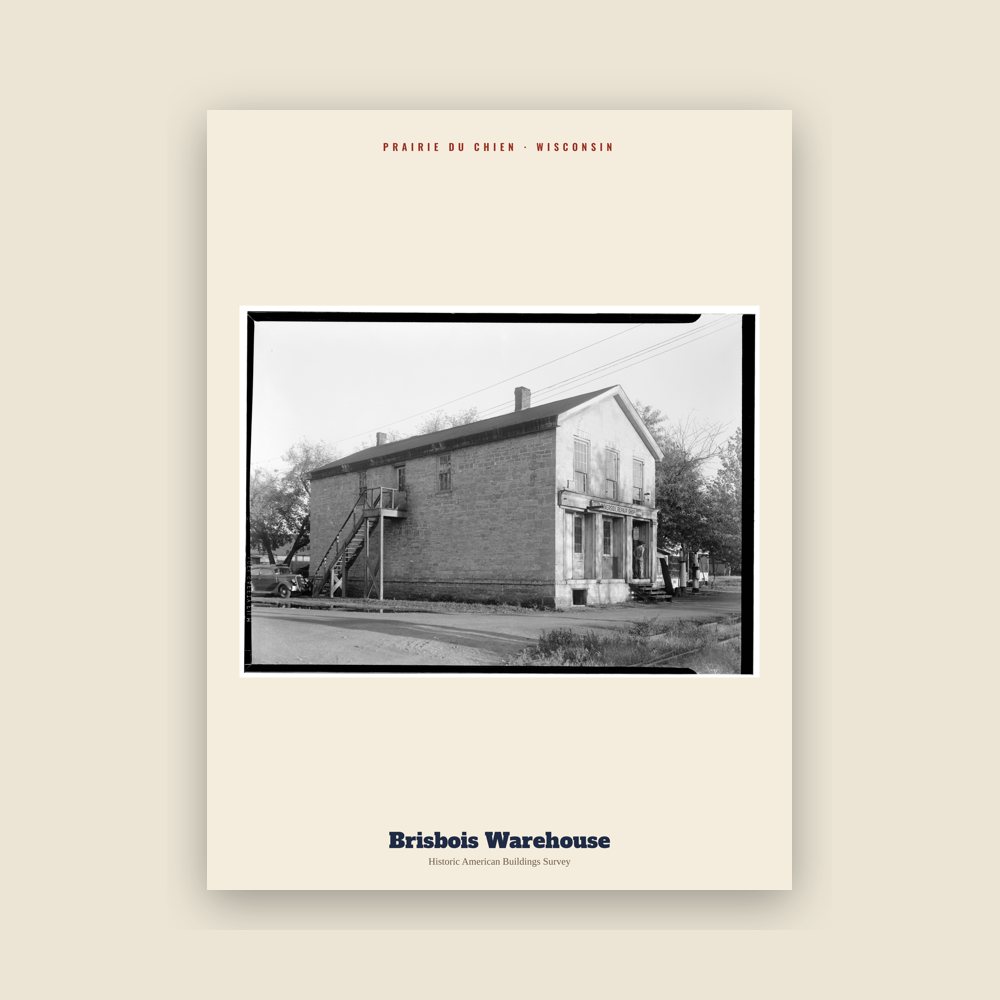
Outside the fort's walls, early-19th-century life in Prairie du Chien was still dominated by the fur trade. Prairie du Chien's best-known traders during this time were Michel Brisbois, Joseph Rolette, Nathan Myrick, and Hercules L. Dousman. Dousman built a fortune in the fur trade, which, combined with income from investments in land, steamboats, and railroads, propelled him to become Wisconsin's first millionaire. He died in 1868, and his son, H. Louis Dousman, inherited much of his fortune. In 1870, Louis Dousman used his inheritance to construct a luxurious Victorian mansion at the site of the former Fort Shelby. When he died unexpectedly in 1886, his family renamed the home "Villa Louis" in his memory. The Dousman family continued to occupy the home until 1913. In 1952, the mansion became Wisconsin's first state-operated historic site.
After the fur trade declined in the mid-19th century, Prairie du Chien's attention shifted to agriculture and the railroad. Although the city was first connected to the Milwaukee & Mississippi Railroad in 1857, the width of the Mississippi River posed a challenge for further expansion of the railroad into Iowa. This problem was temporarily solved by disassembling the trains at Prairie du Chien and ferrying them across the river to be put back on the tracks on the other side. A better solution was found by Michael Spettel and John Lawler, who designed the permanent Pile-Pontoon Railroad Bridge to span the river in 1874. Lawler took most of the credit for this invention, and made a small fortune through its operation. The bridge remained in use until its removal in 1961.
Lawler later donated property to establish two Catholic boarding schools in Prairie du Chien, St. Mary's Institute (now Mount Mary College of Milwaukee) and Campion High School in the later part of the century. St. Mary's College remained in Prairie du Chien until 1928. Campion High School produced several notable alumni, including Vicente Fox, Congressman Leo Ryan, Governor Patrick Lucey, actors David Doyle, George Wendt, and Kevin McCarthy, and writer Garry Wills. It closed in 1975.
Read the full history
History of municipal government
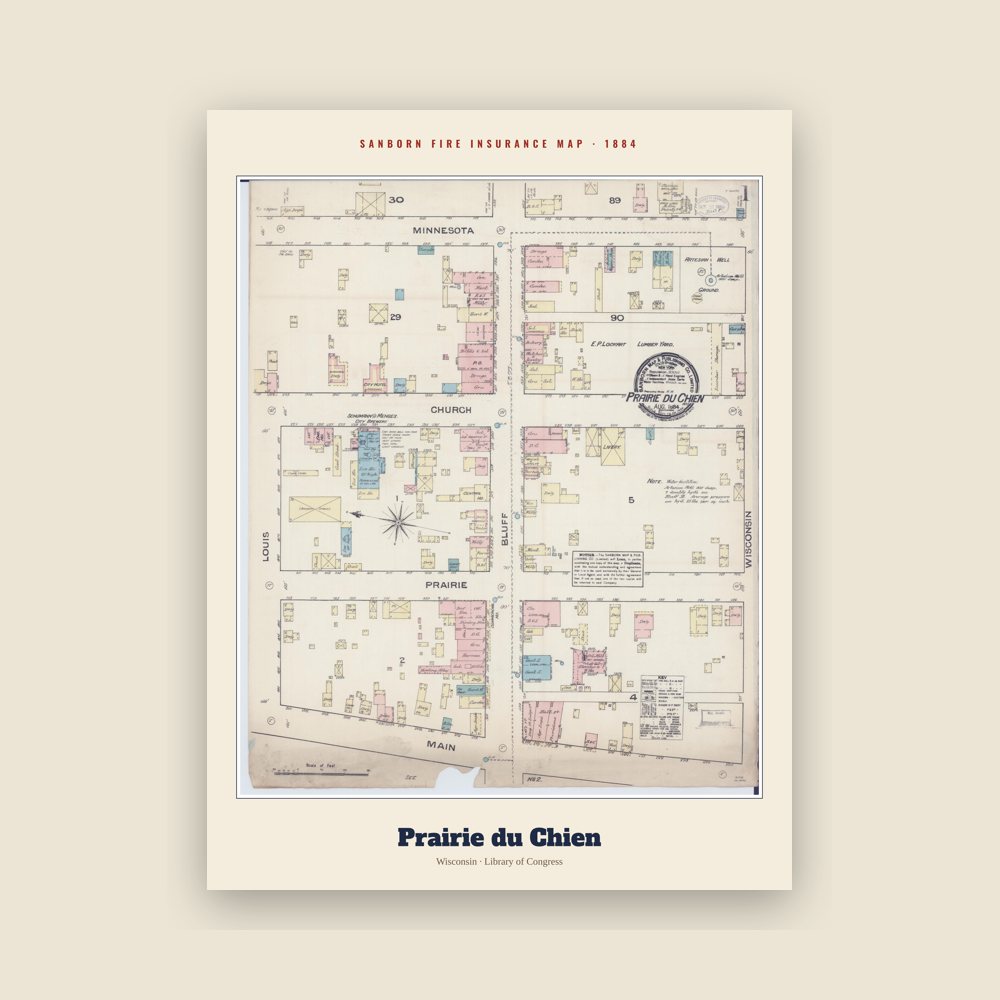
Prairie du Chien was incorporated as the Borough of Prairie des Chiens on September 17, 1821, by the secretary of the Michigan Territory. It is the only municipality in Wisconsin other than Green Bay to have been known as a borough, rather than a city, town, or village. The borough existed for a few years before the government stopped operating in 1825.
In 1828, the Prairie du Chien area became a part of the Town of St. Anthony, which included all of Crawford County. (Crawford County itself included all of the western part of Michigan Territory.) In 1849, the Town of Prairie du Chien was created, consisting of most of present-day Crawford County. The city of Prairie du Chien was incorporated in 1872.
Adapted (trimmed) from the Wikipedia article Prairie du Chien, Wisconsin, revision 1379042444 by its contributors, licensed CC BY-SA 4.0.

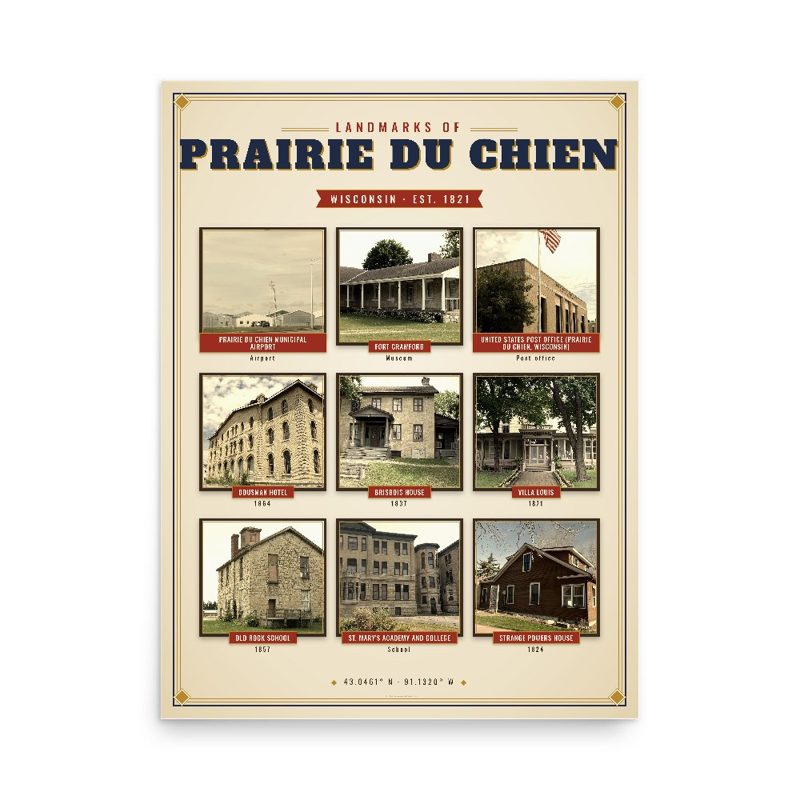

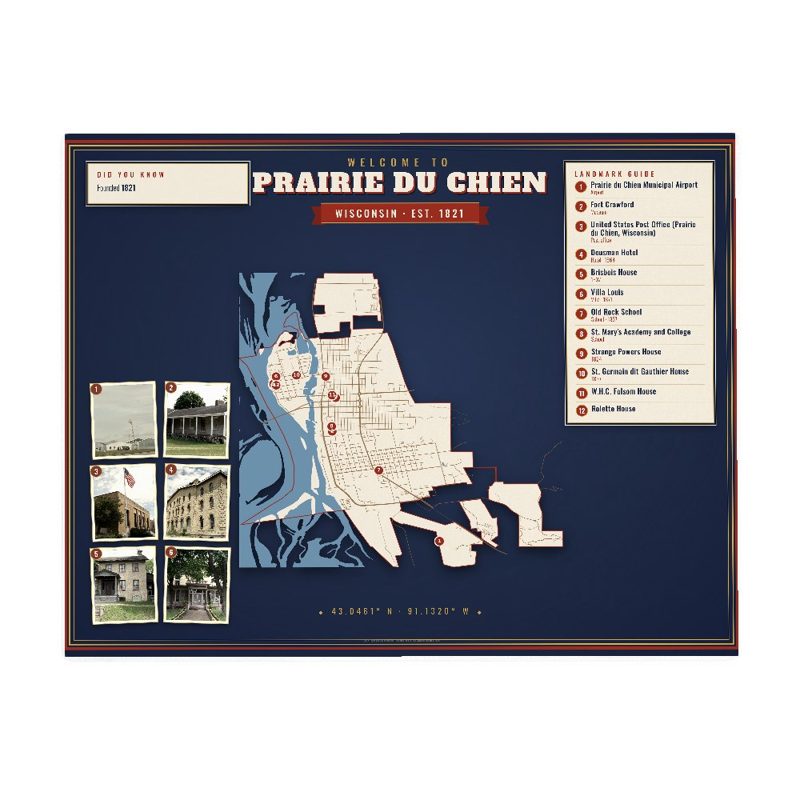







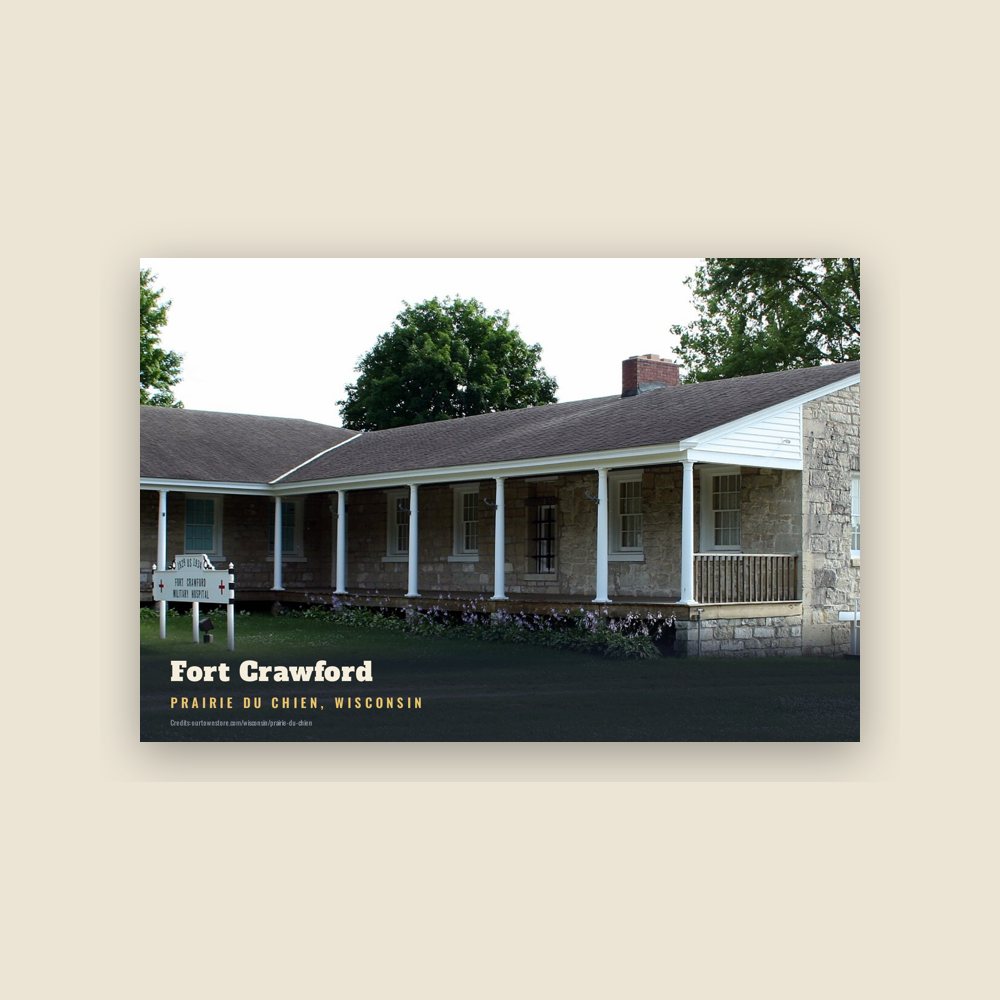
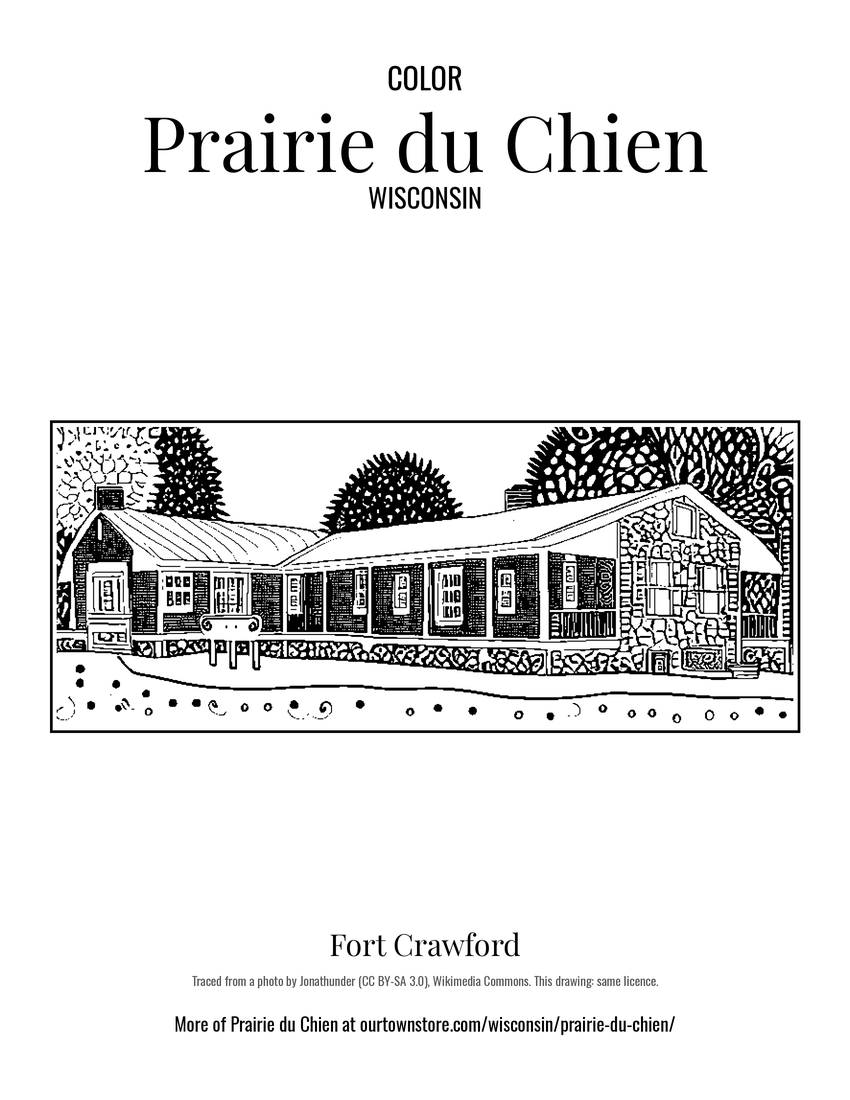 Fort Crawford
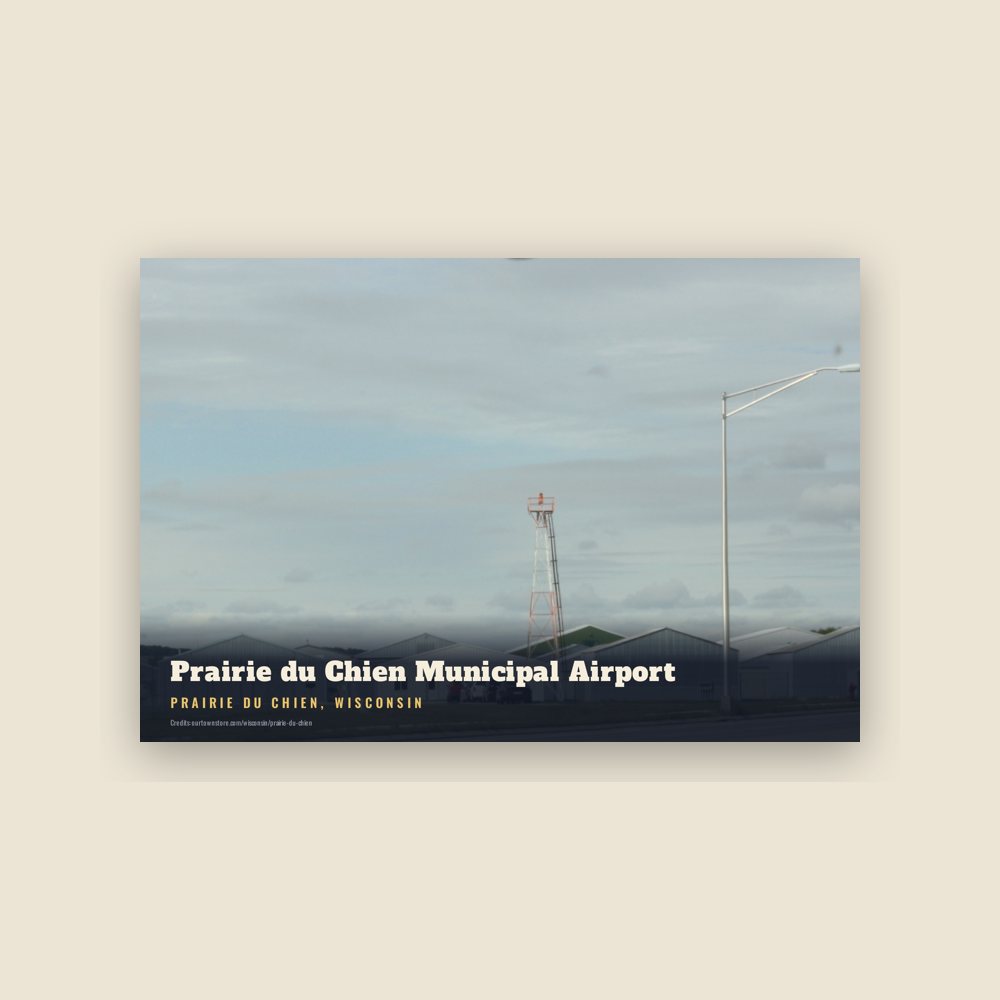
 Prairie du Chien Municipal Airport
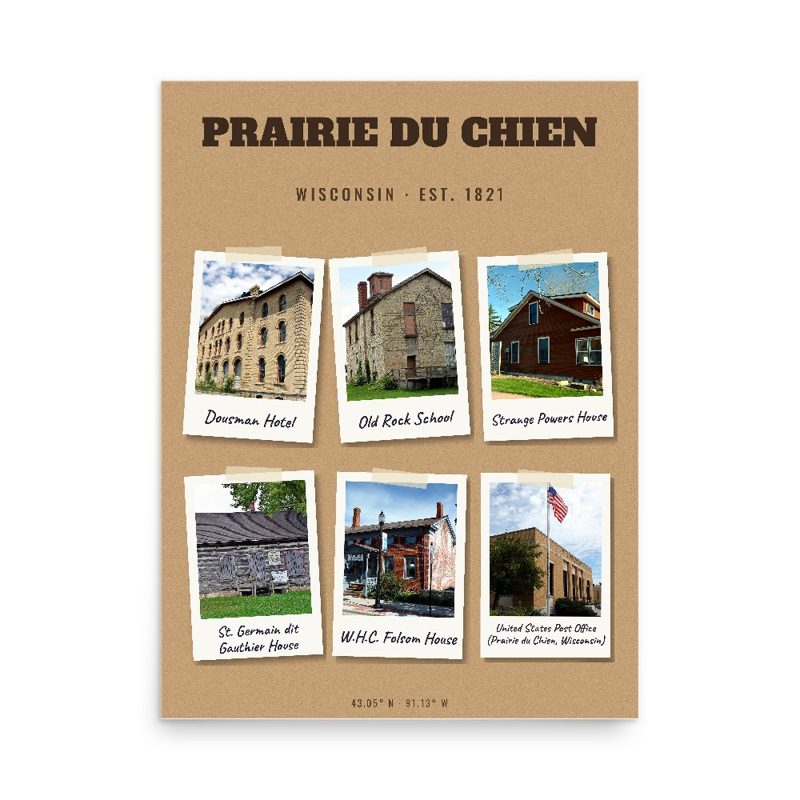
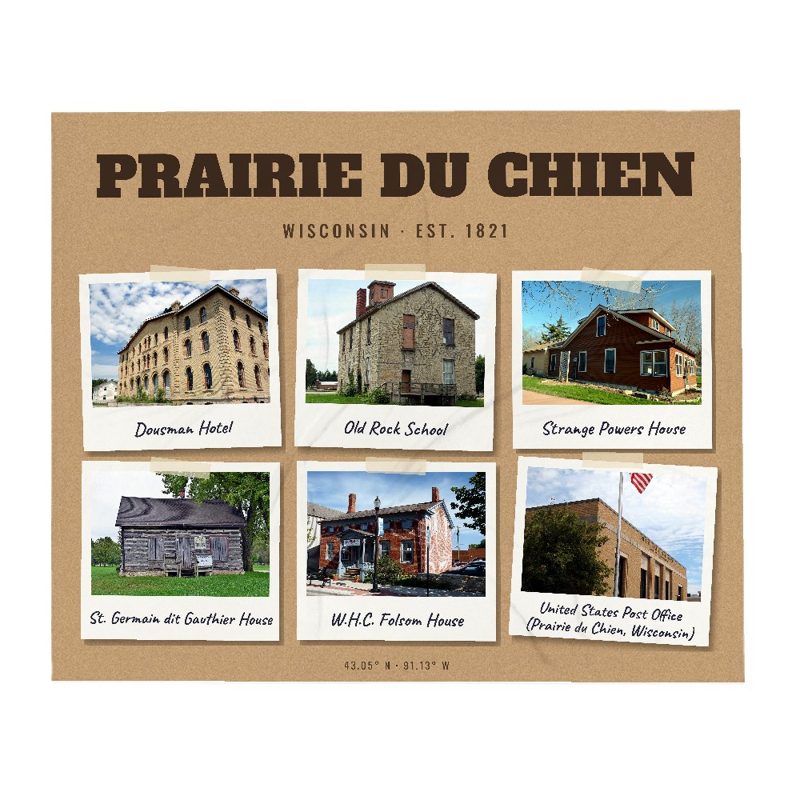
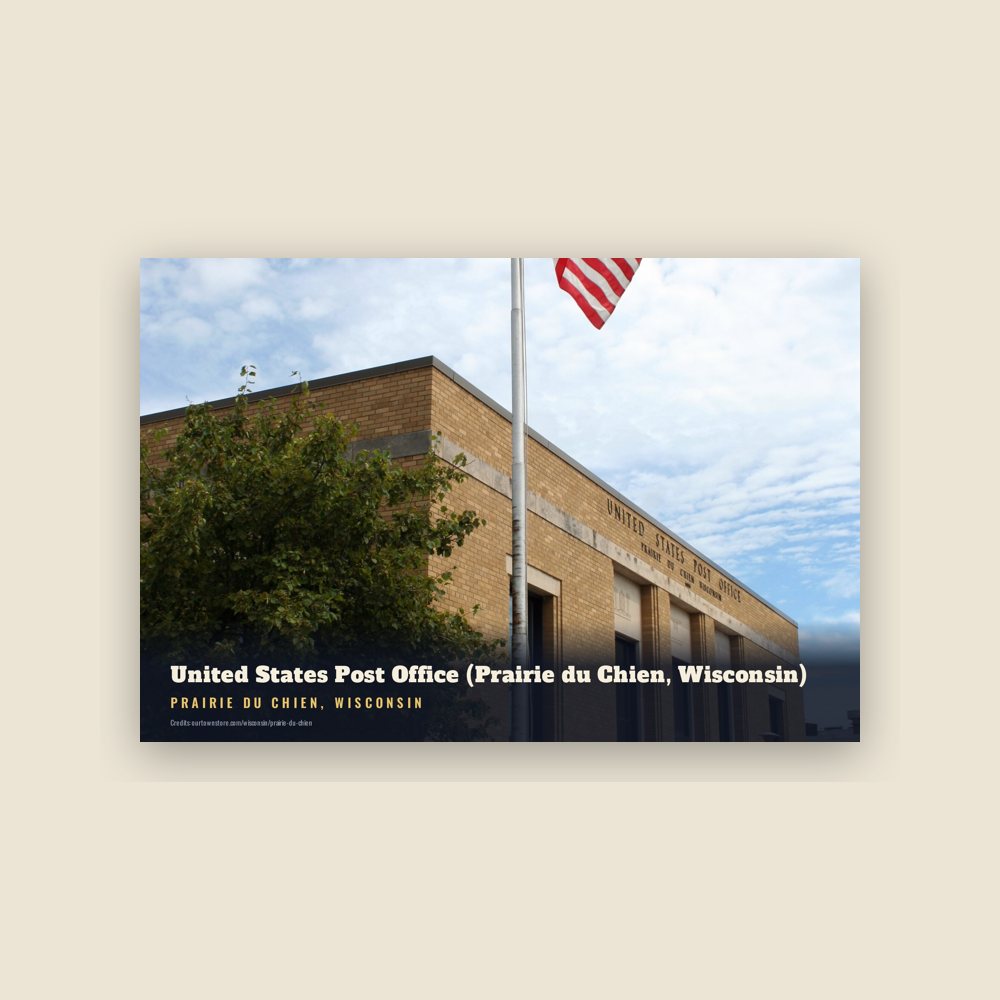
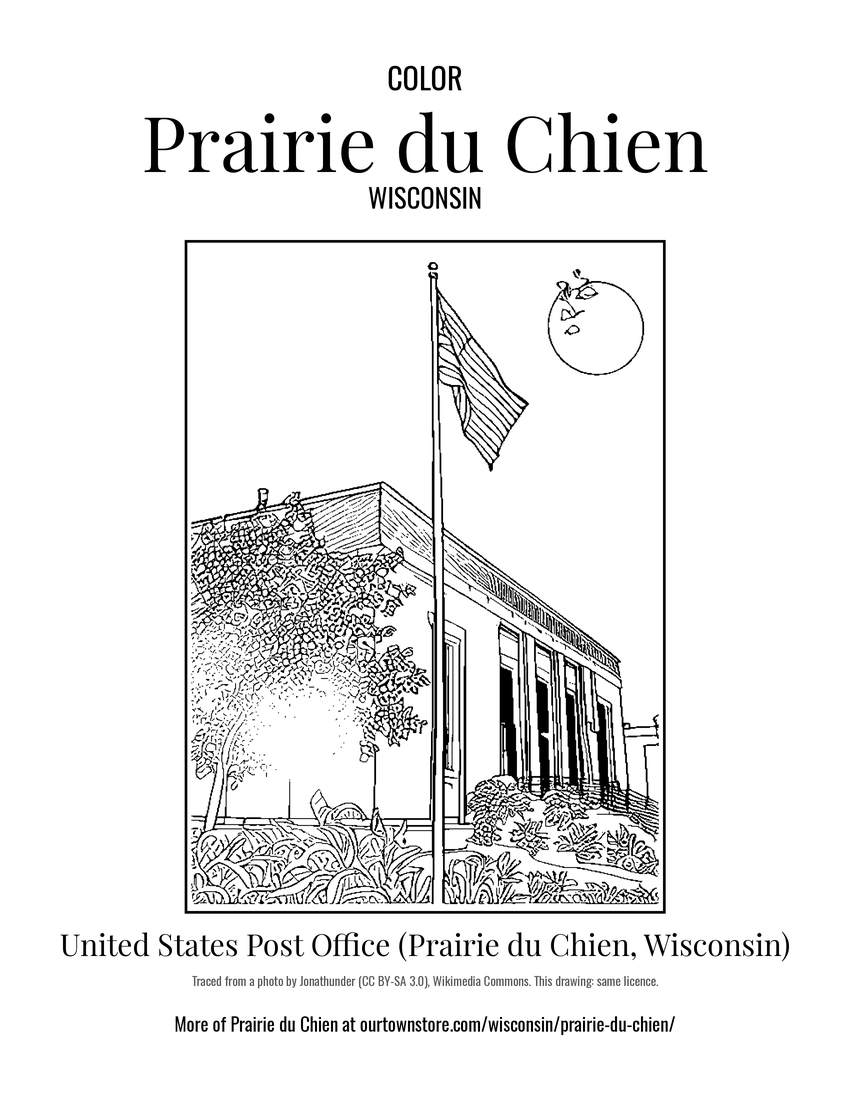 United States Post Office (Prairie du Chien, Wisconsin)
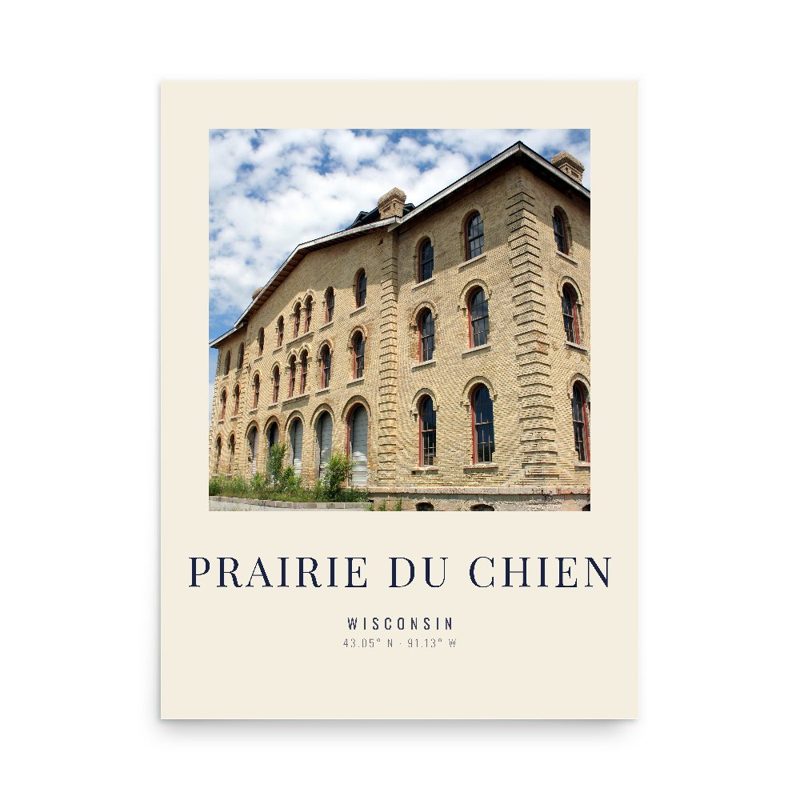
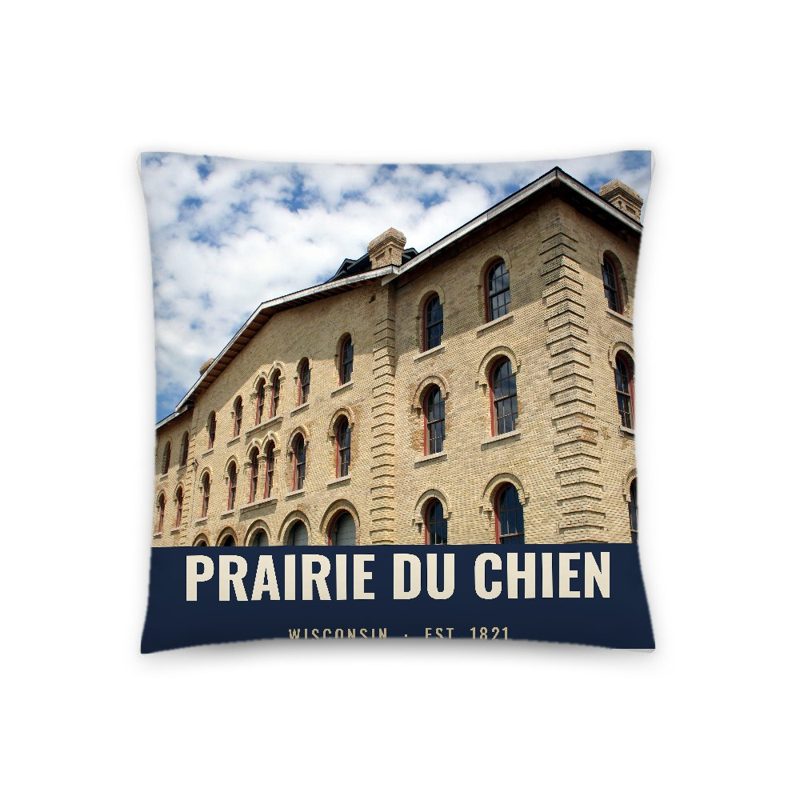
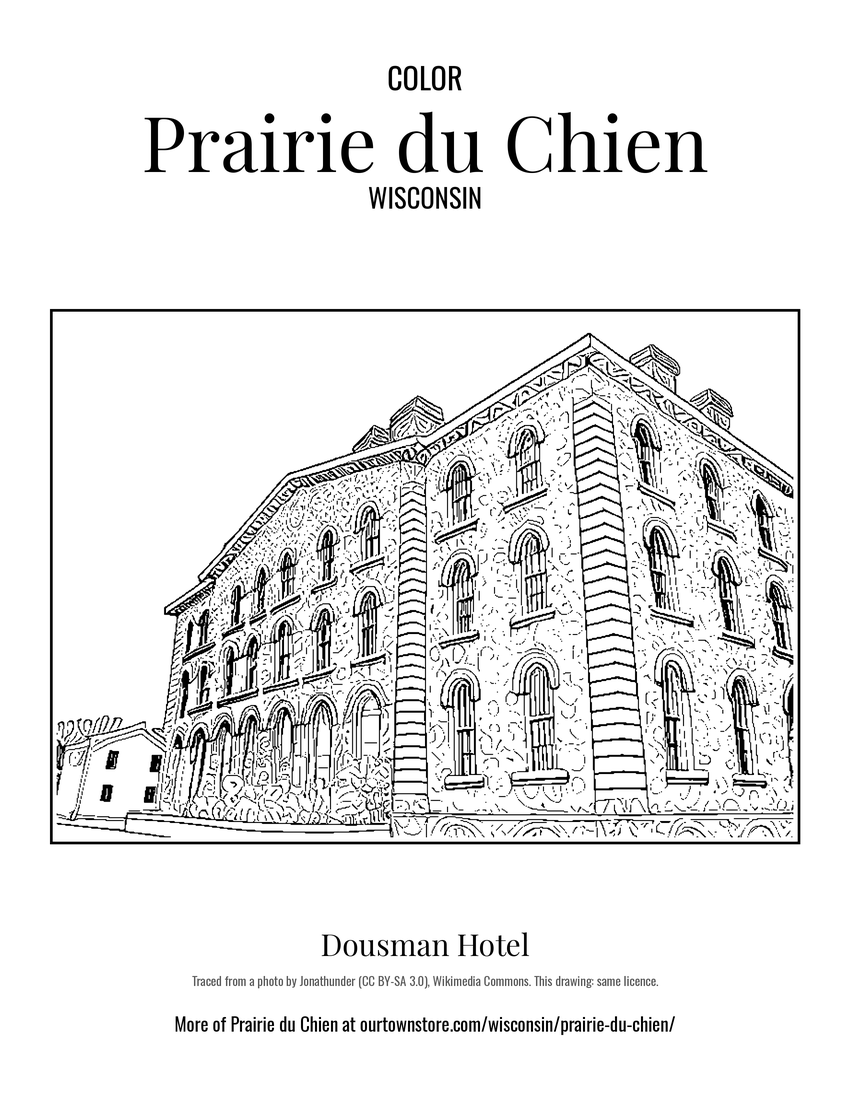 Dousman Hotel