A short history of Paw Paw
The earliest human habitation in the upper Potomac River Valley probably dates from 10,000 BC when humans migrated across the Bering Straits into North America. In the 17th century, Europeans began arriving in increasing numbers. As European settlements gradually spread across western Virginia, the tribes were pushed from their villages and fields, which were then claimed and cultivated by the new settlers.
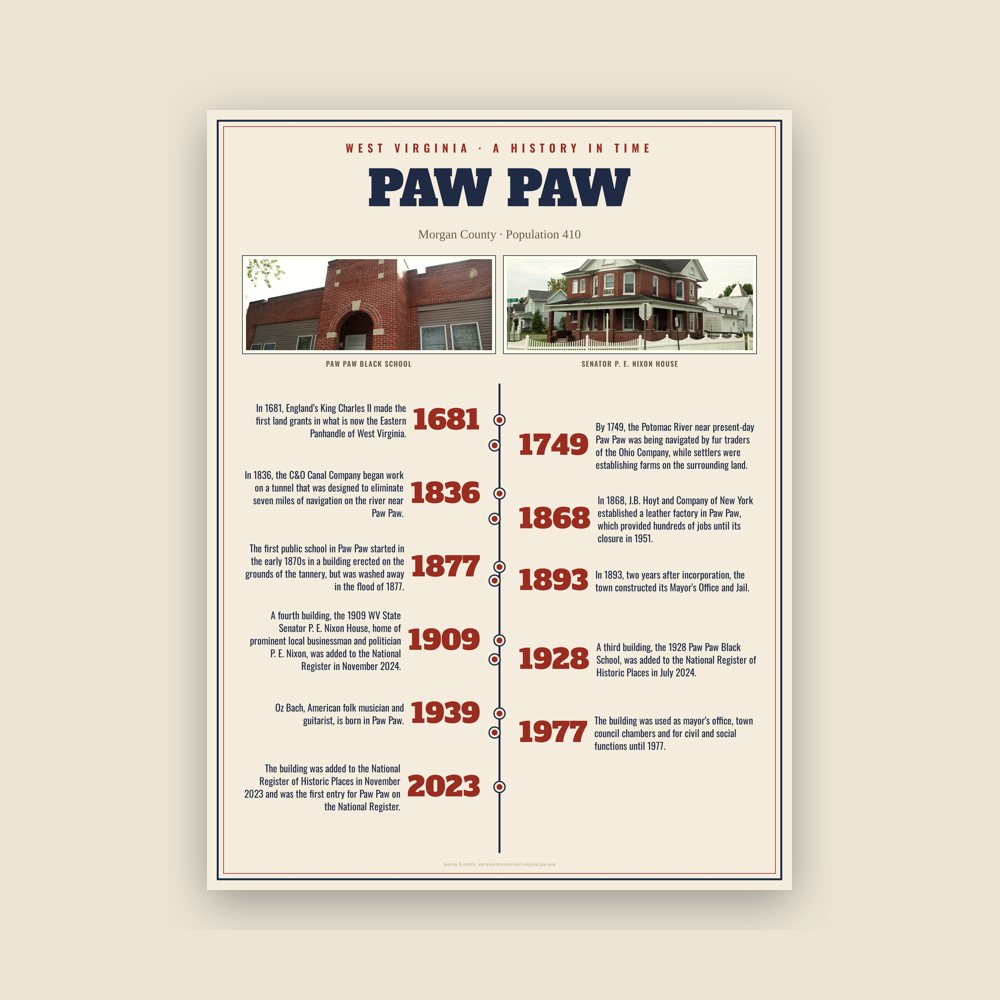
In 1681, England’s King Charles II made the first land grants in what is now the Eastern Panhandle of West Virginia. The territory, which includes Morgan County, was eventually inherited by Thomas, sixth Lord Fairfax and became known as the Fairfax Land Grant. In 1746, Thomas Jefferson’s father Peter was part of the survey party that reached the source of the Potomac River and set down the landmark known as the Fairfax Stone, now part of the Fairfax Stone Historical Monument State Park.
The following year, George Washington surveyed the region and later purchased land on the Paw Paw Bends, so named because of the way the Potomac River twists and turns for 31 miles between the towns of Paw Paw and Little Orleans. Washington described the land as being “In the shape of a horseshoe, the river running almost around it—two hundred acres of rich low grounds with a great abundance of walnut trees.”
By 1749, the Potomac River near present-day Paw Paw was being navigated by fur traders of the Ohio Company, while settlers were establishing farms on the surrounding land.
In 1836, the C&O Canal Company began work on a tunnel that was designed to eliminate seven miles of navigation on the river near Paw Paw. Two years later, construction of the Baltimore and Ohio Railroad began. Because of its proximity to both the railroad and the river, Paw Paw was considered a place of strategic importance during the American Civil War and was occupied by some 16,000 Union troops, most whom were quartered at Camp Chase (now Camp Hill), located east of Paw Paw, under the command of Brigadier General Frederick W. Lander.
In 1868, J.B. Hoyt and Company of New York established a leather factory in Paw Paw, which provided hundreds of jobs until its closure in 1951.
Paw Paw also became well known for its local orchards and fruit packing houses. The Morgan News reported in 1894 "Paw Paw at the present time is more beautiful than in any former time of her history. The streets are superb, plank pavements elegant and her street lights refulgent." The streets were lit by oil lamps until 1926 when the Paw Paw Electric Company was awarded the franchise to bring electricity to the town. The first public school in Paw Paw started in the early 1870s in a building erected on the grounds of the tannery, but was washed away in the flood of 1877.
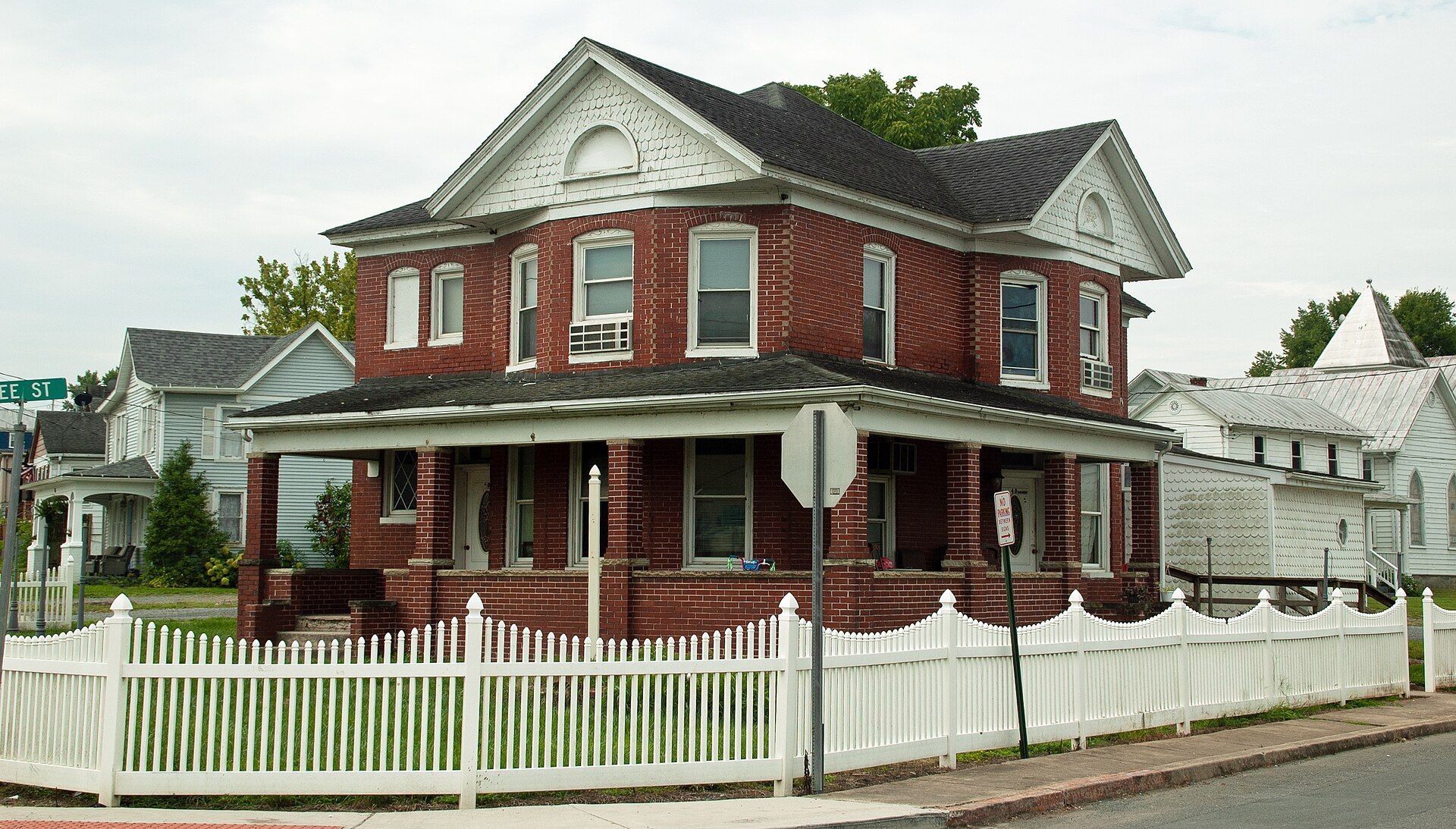
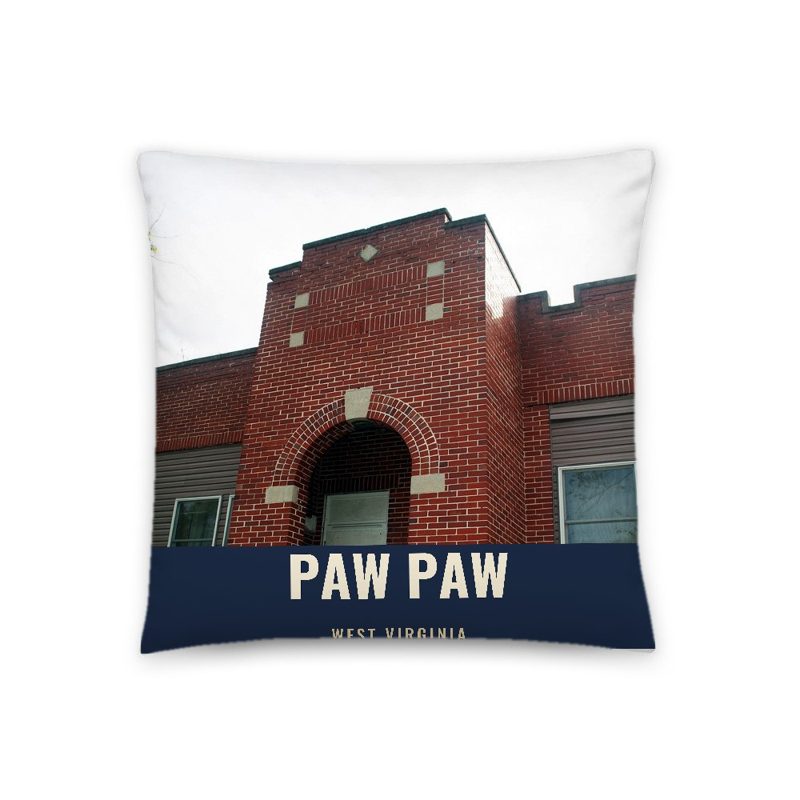
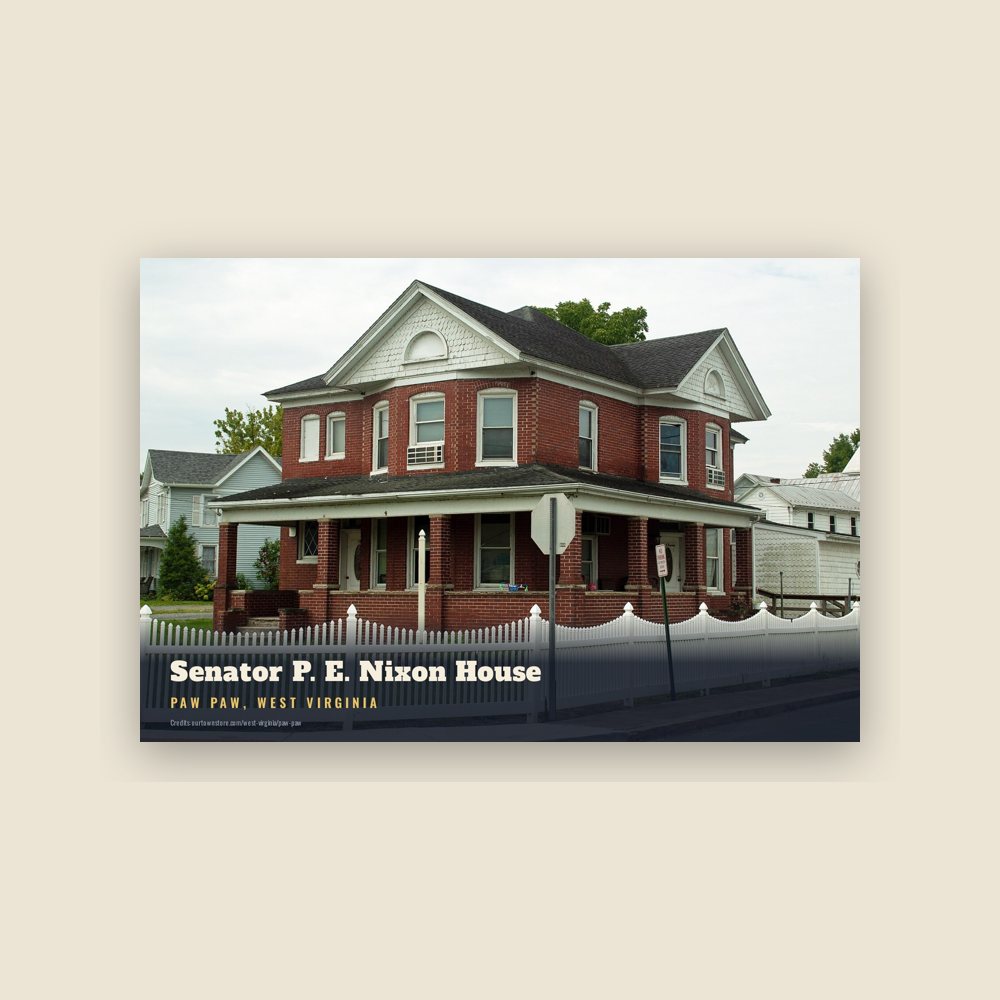
In 1893, two years after incorporation, the town constructed its Mayor's Office and Jail. The building was used as mayor's office, town council chambers and for civil and social functions until 1977. The building was added to the National Register of Historic Places in November 2023 and was the first entry for Paw Paw on the National Register. The former Saint Charles Catholic Mission Church constructed in 1876 and used by a small number of Catholic families until 1994 was added to the National Register of Historic Places in March 2024. A third building, the 1928 Paw Paw Black School, was added to the National Register of Historic Places in July 2024. The school was in use from 1928 until the end of "separate but equal education" in 1954. A fourth building, the 1909 WV State Senator P. E. Nixon House, home of prominent local businessman and politician P. E. Nixon, was added to the National Register in November 2024. In addition to these four buildings the WV State Historic Preservation Office has determined three additional buildings are also currently eligible based on their historic significance these are: the circa 1882 B&O Train Depot; the 1940 Consolidated Orchard Apple Packing Plant; and the 1942 Consolidated Distributors Headquarters - currently the Paw Paw Town Hall.
Adapted (trimmed) from the Wikipedia article Paw Paw, West Virginia, revision 1378786696 by its contributors, licensed CC BY-SA 4.0.
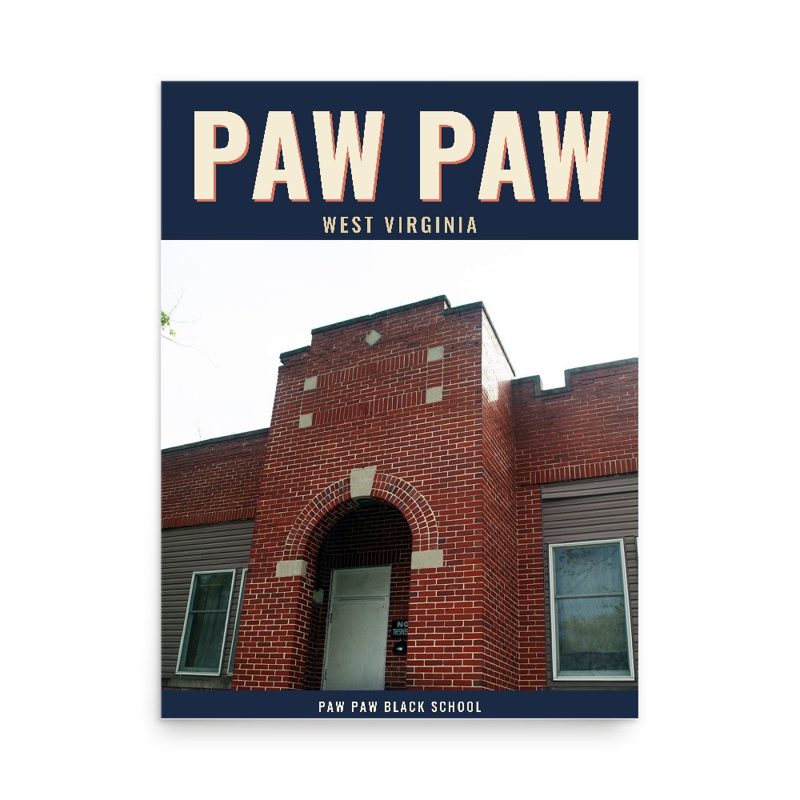
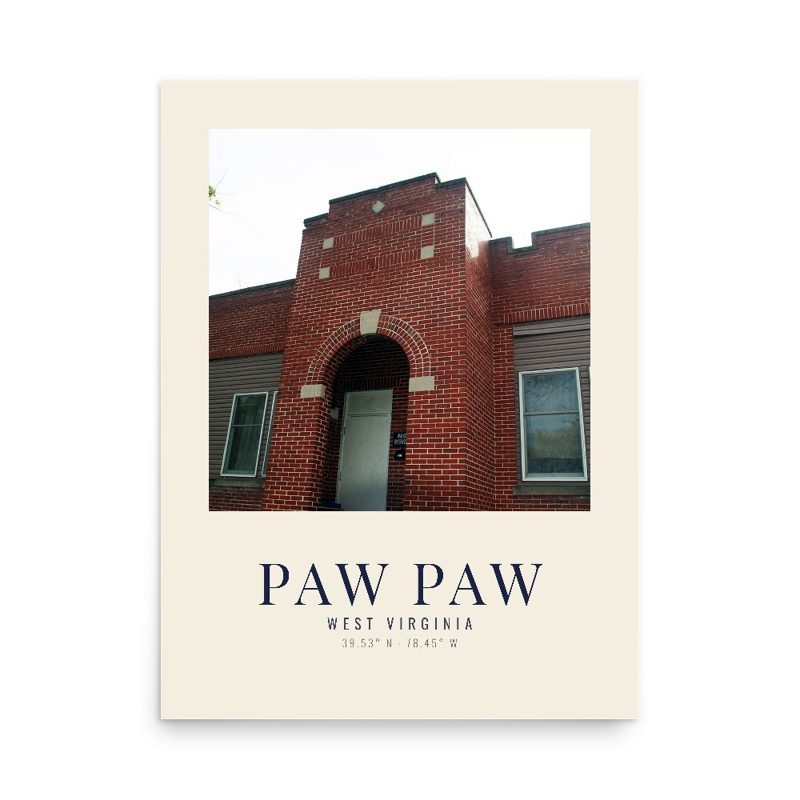
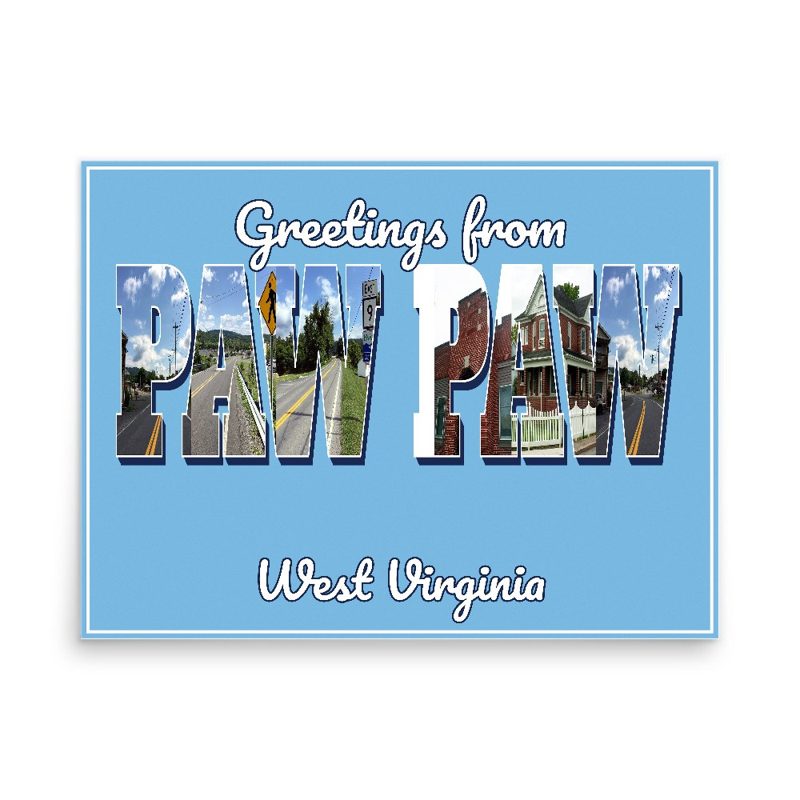
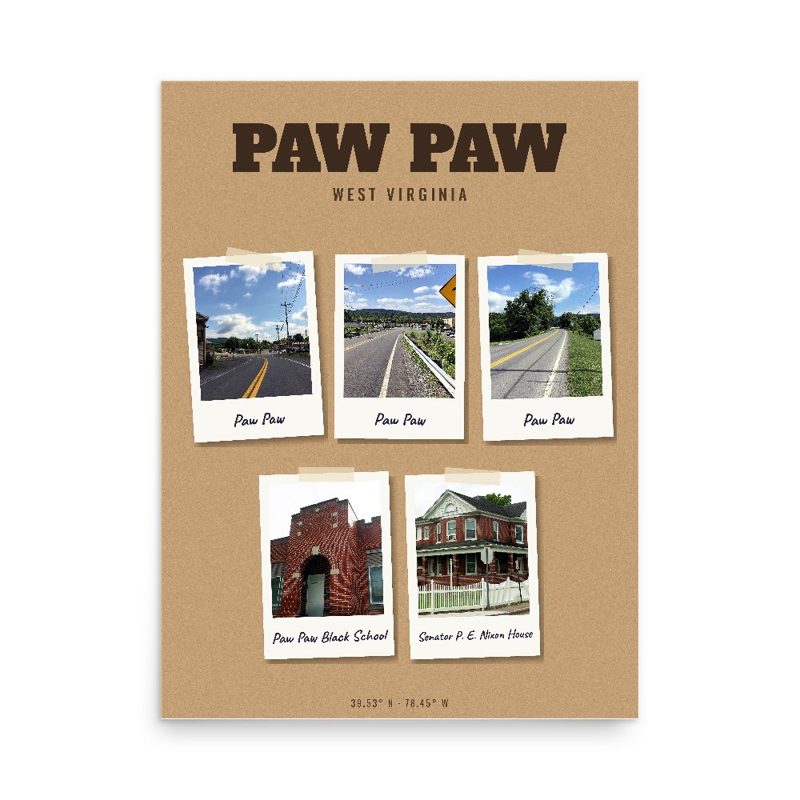
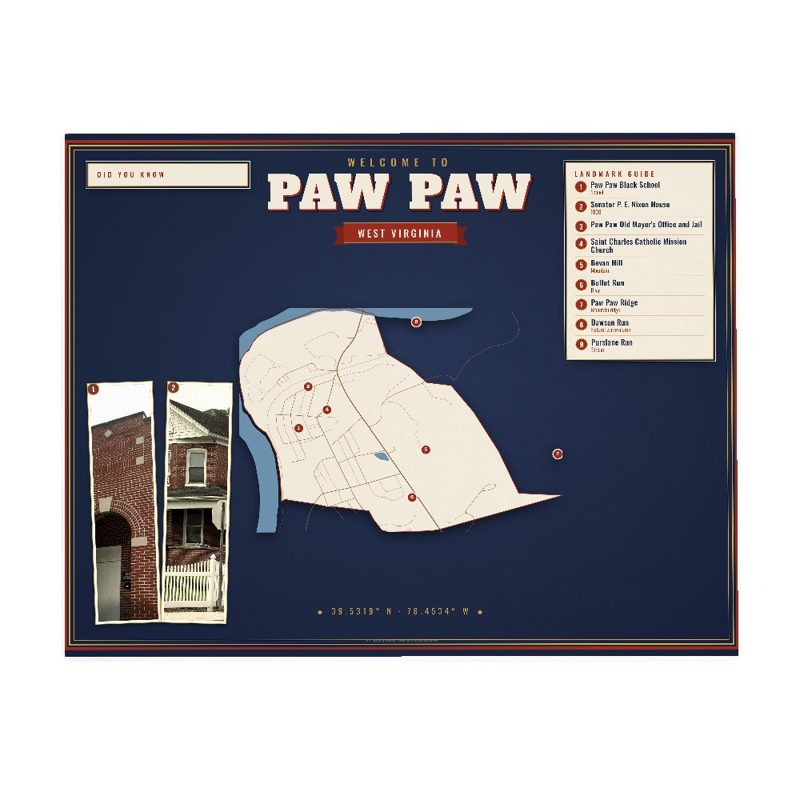



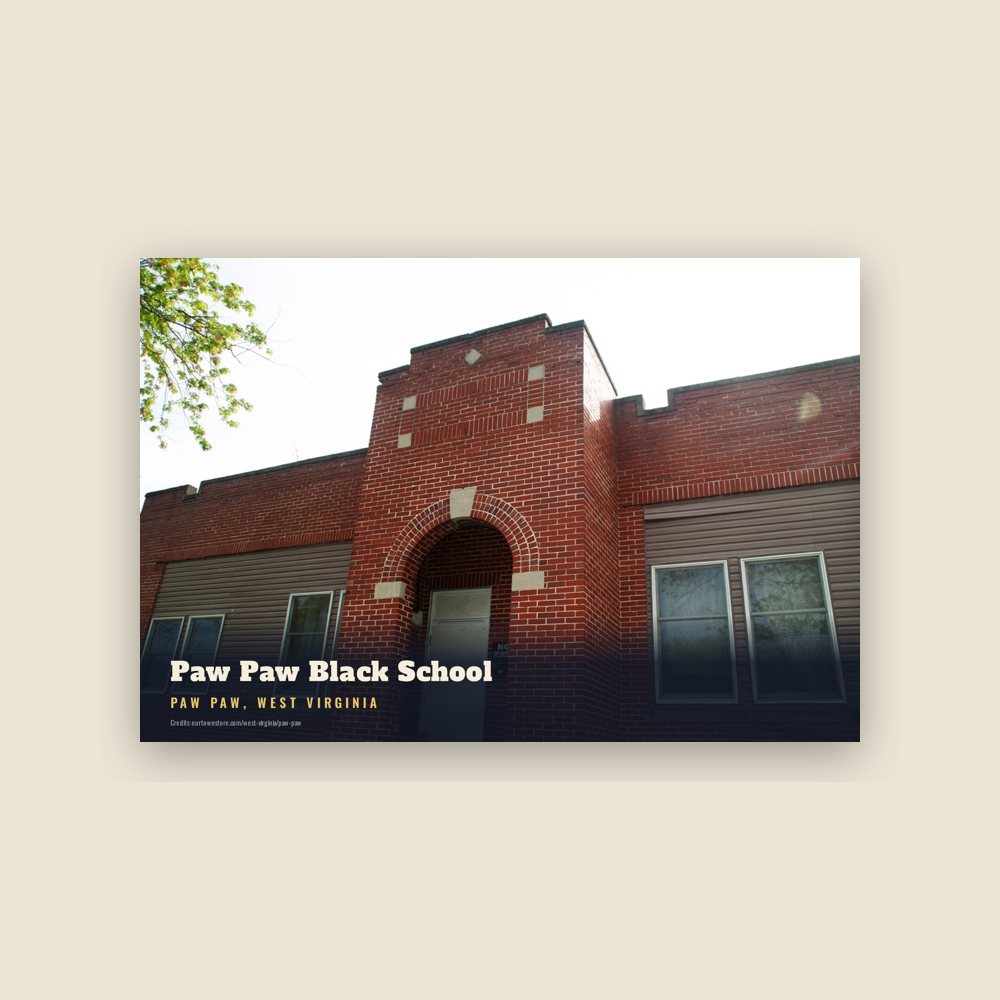
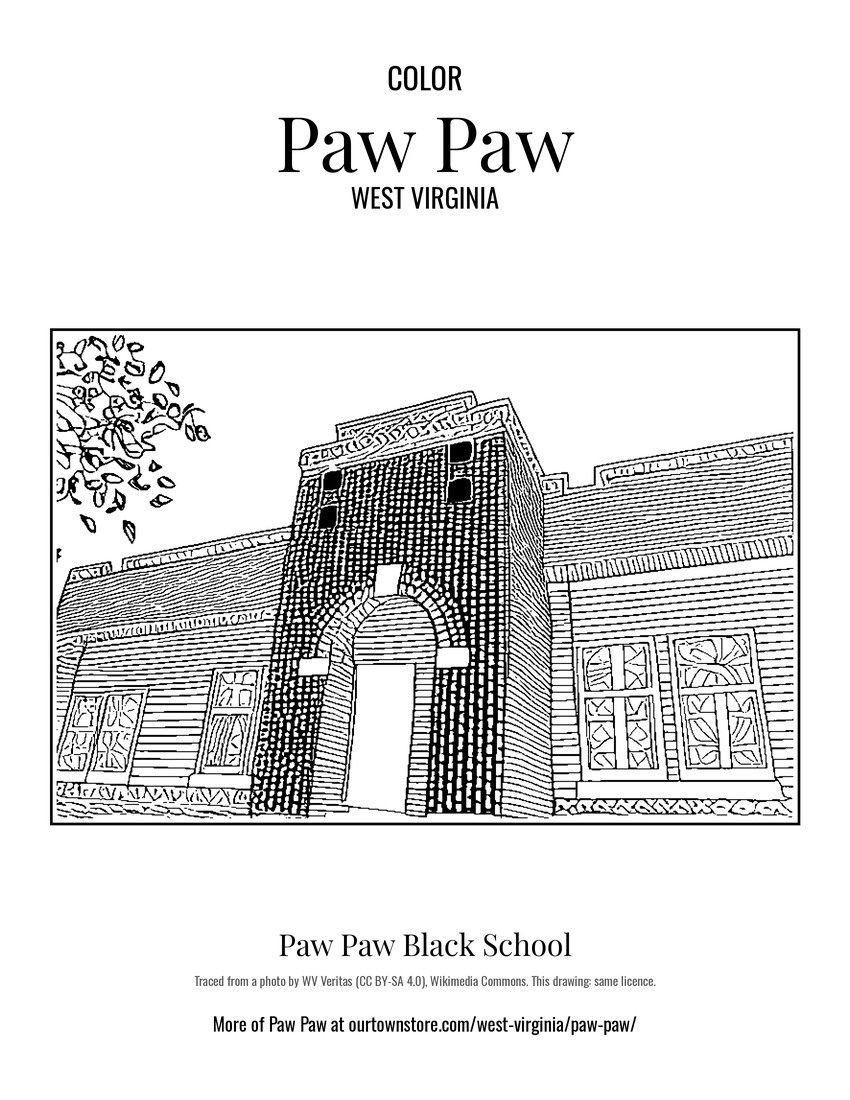 Paw Paw Black School
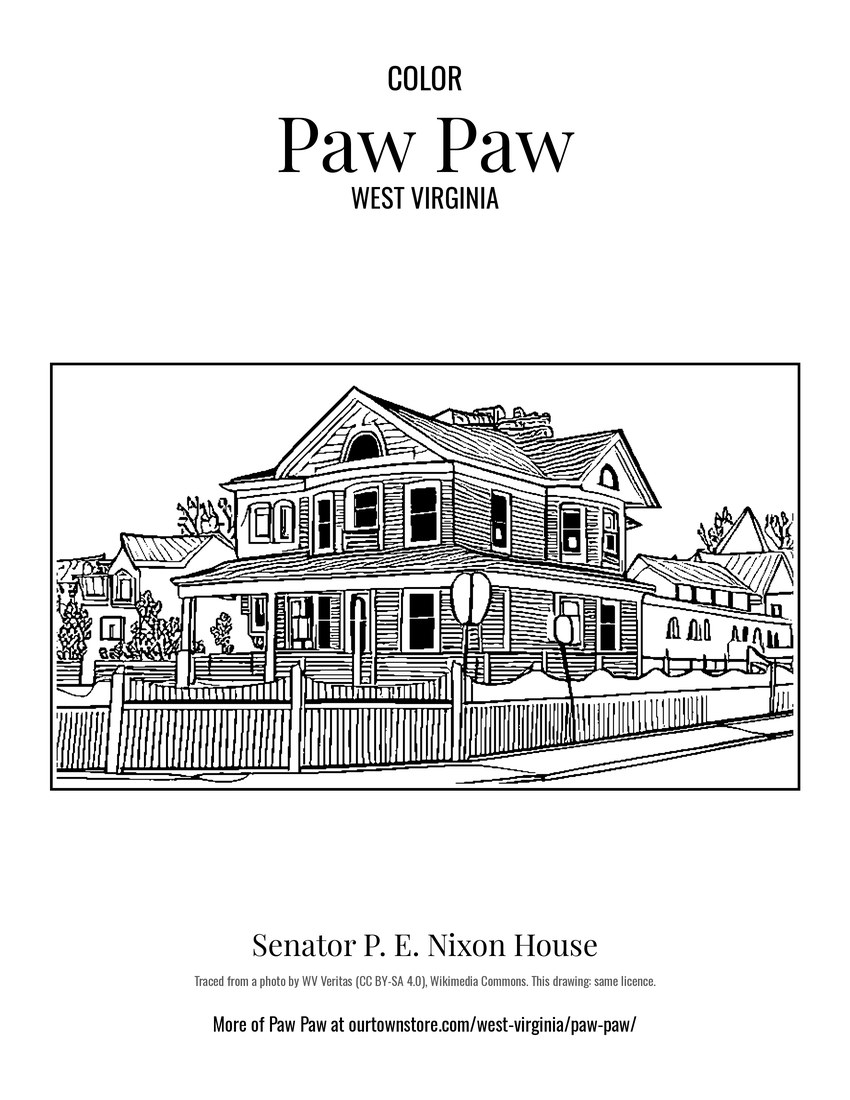 Senator P. E. Nixon House
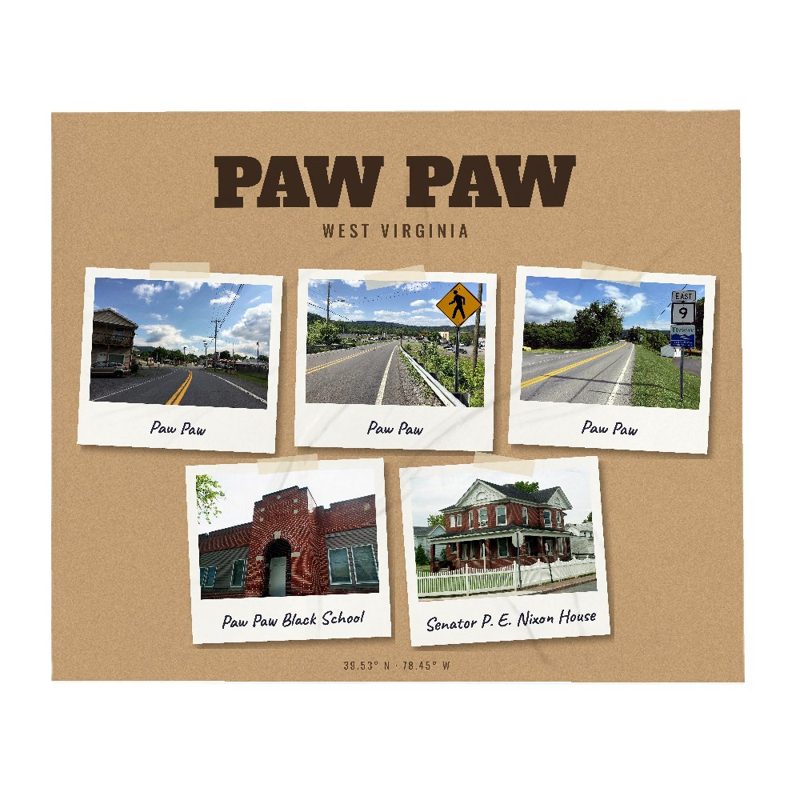
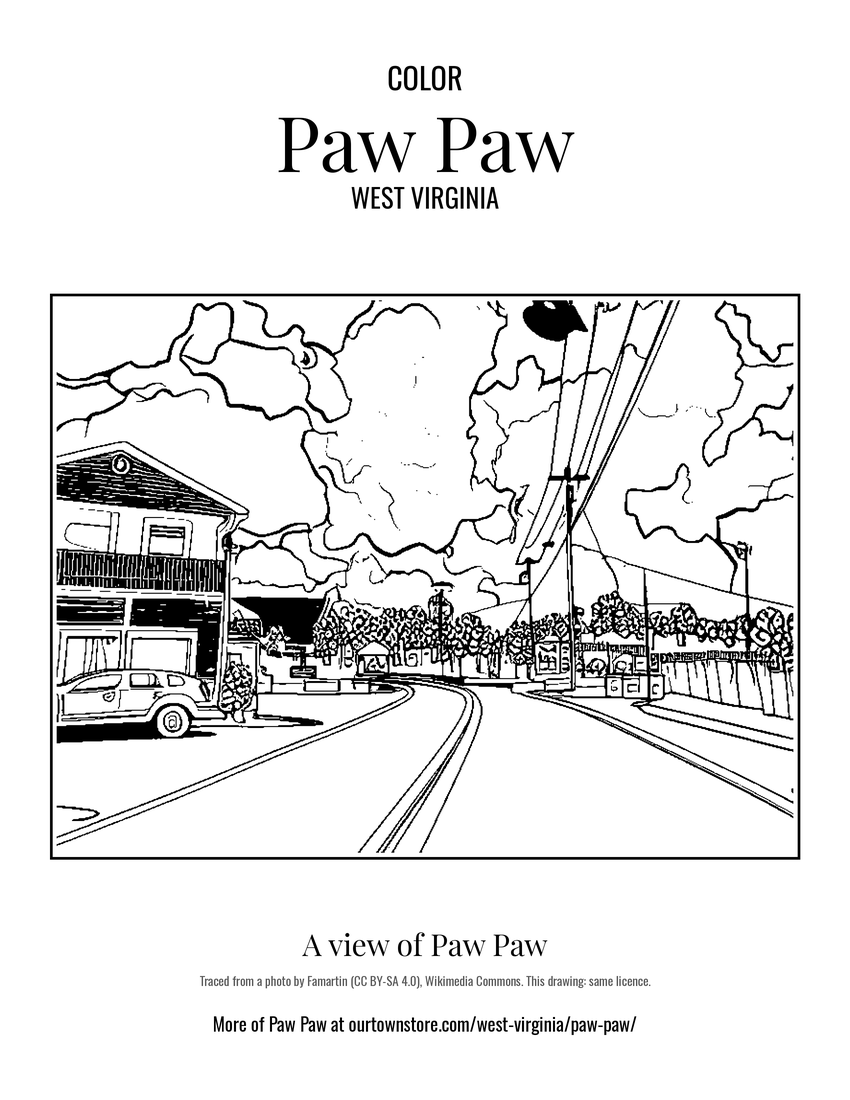 A view of Paw Paw
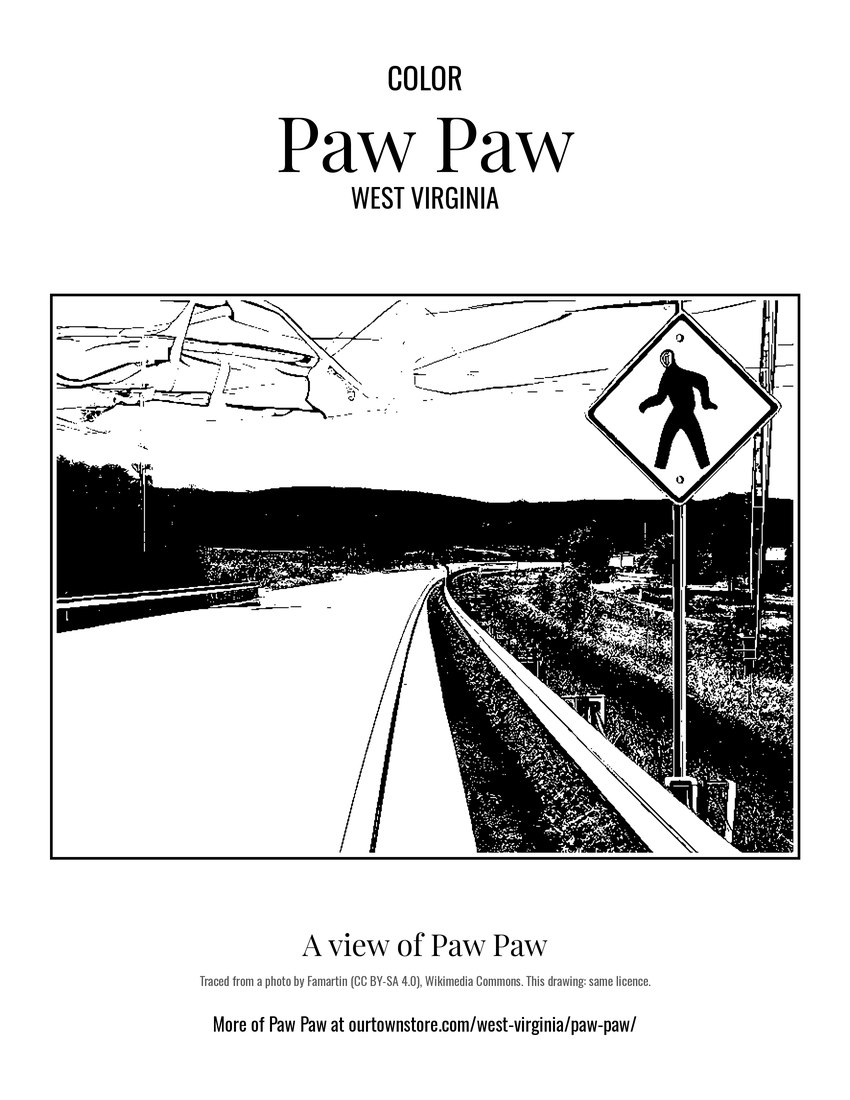 A view of Paw Paw