Since 1868
A short history of Martinsburg
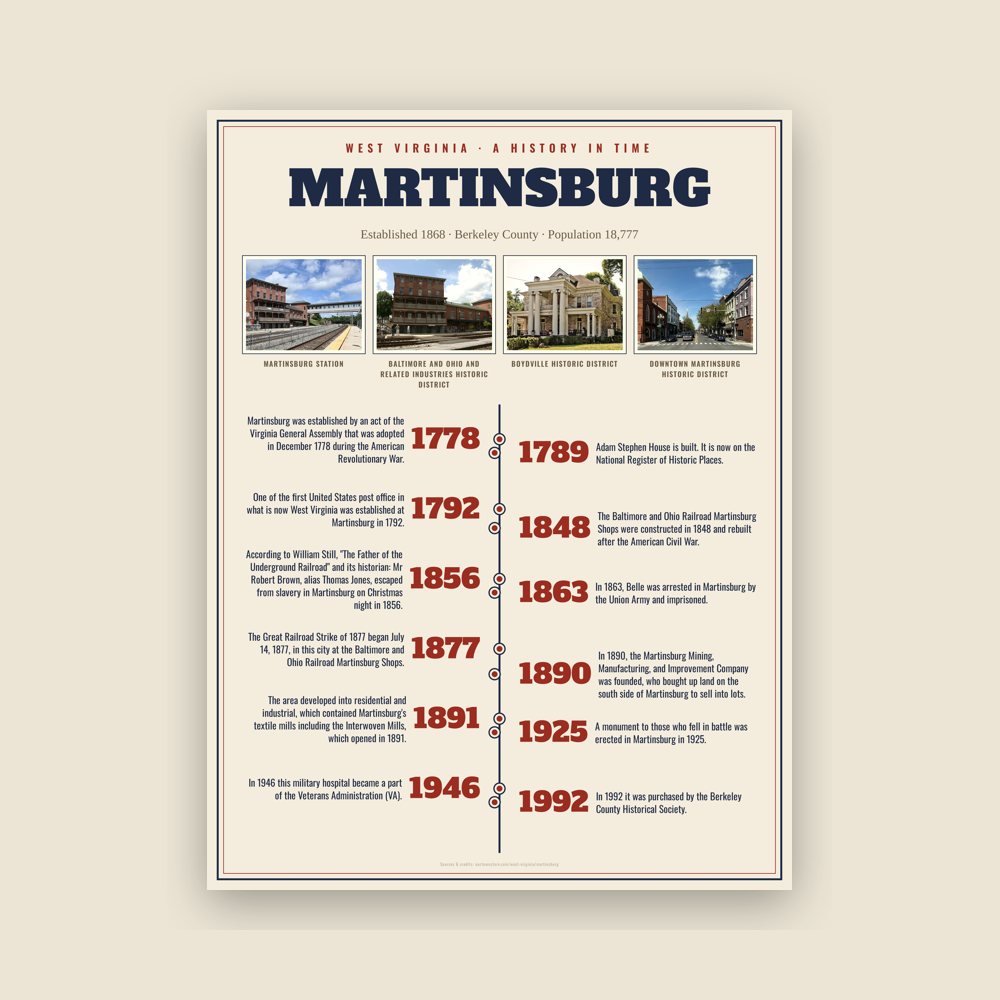
Martinsburg was established by an act of the Virginia General Assembly that was adopted in December 1778 during the American Revolutionary War. Founder Major General Adam Stephen named the gateway town to the Shenandoah Valley along Tuscarora Creek in honor of Colonel Thomas Bryan Martin, a nephew of Thomas Fairfax, 6th Lord Fairfax of Cameron.
Aspen Hall, a Georgian mansion, is one of the oldest houses in the city. It was built in about 1776, by Edward Beeson II. Aspen Hall, and its wealthy residents had key roles in the agricultural, religious, transportation, and political history of the region. Significant events related to the French and Indian War, the Revolution, and the Civil War took place on the property. Three original buildings are still standing, including the rare blockhouse of Mendenhall's Fort.
One of the first United States post office in what is now West Virginia was established at Martinsburg in 1792. At that time, Martinsburg and the larger territory were still part of Virginia.
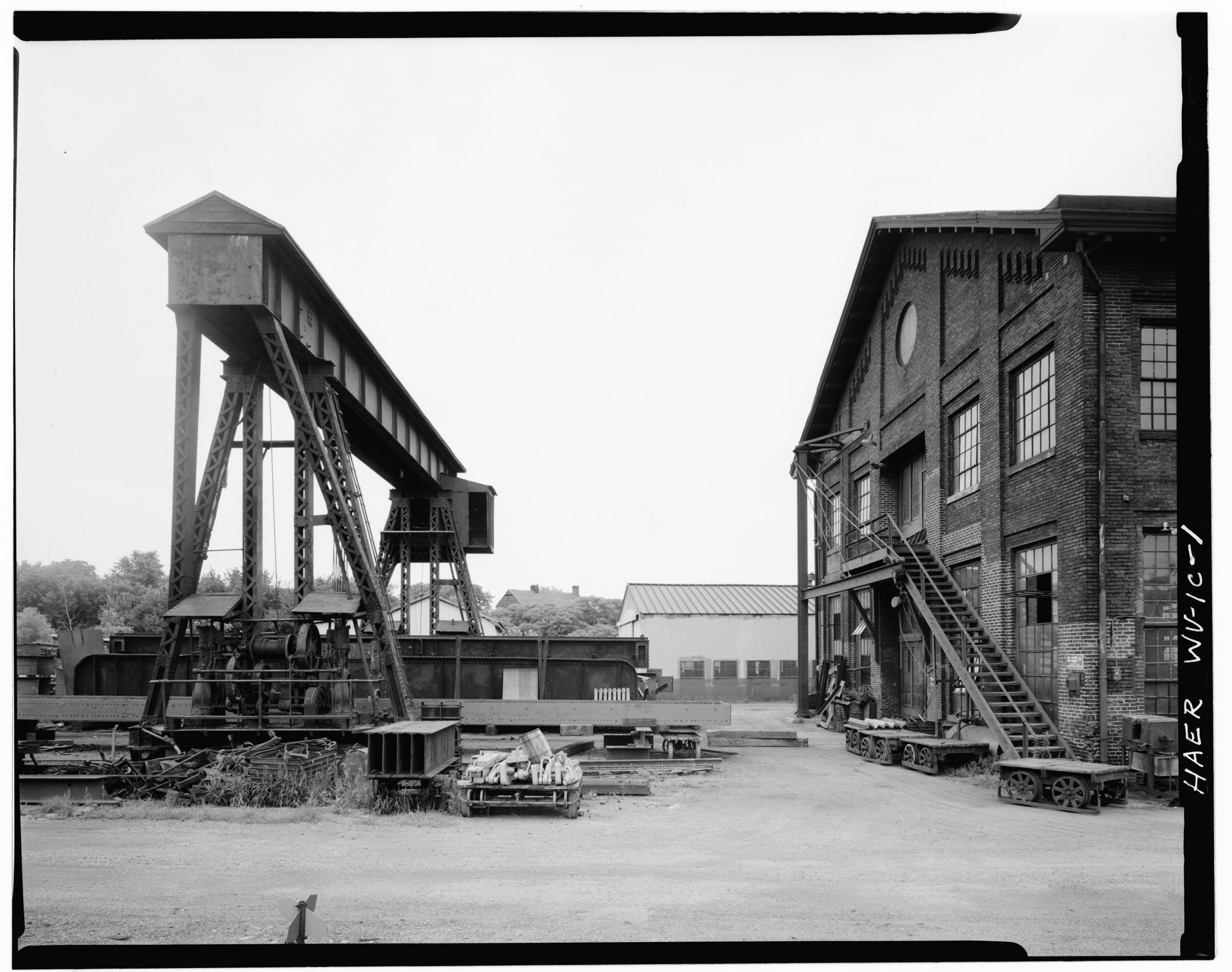
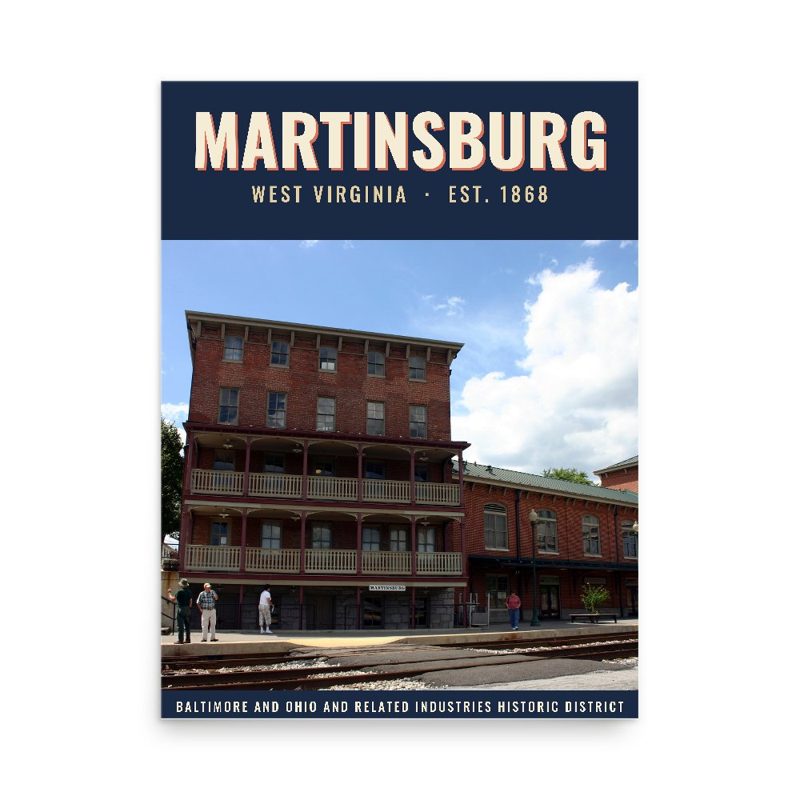
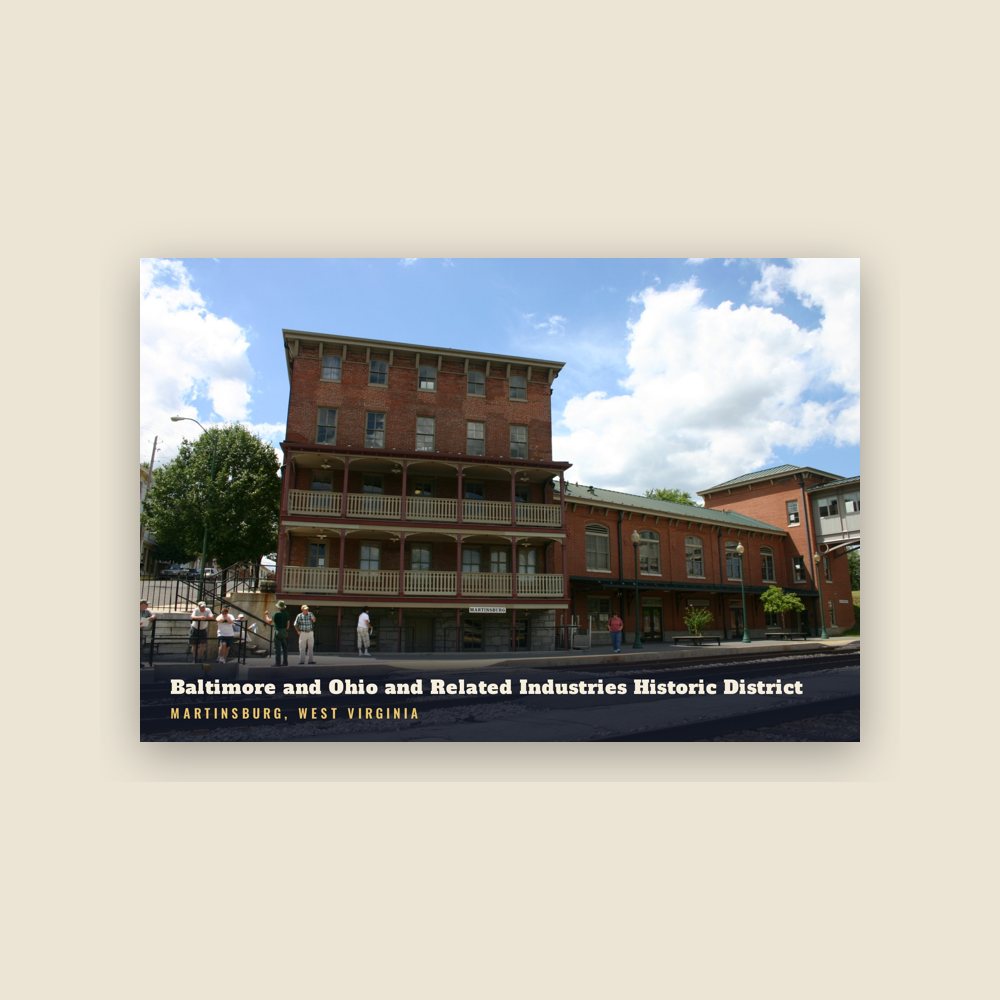
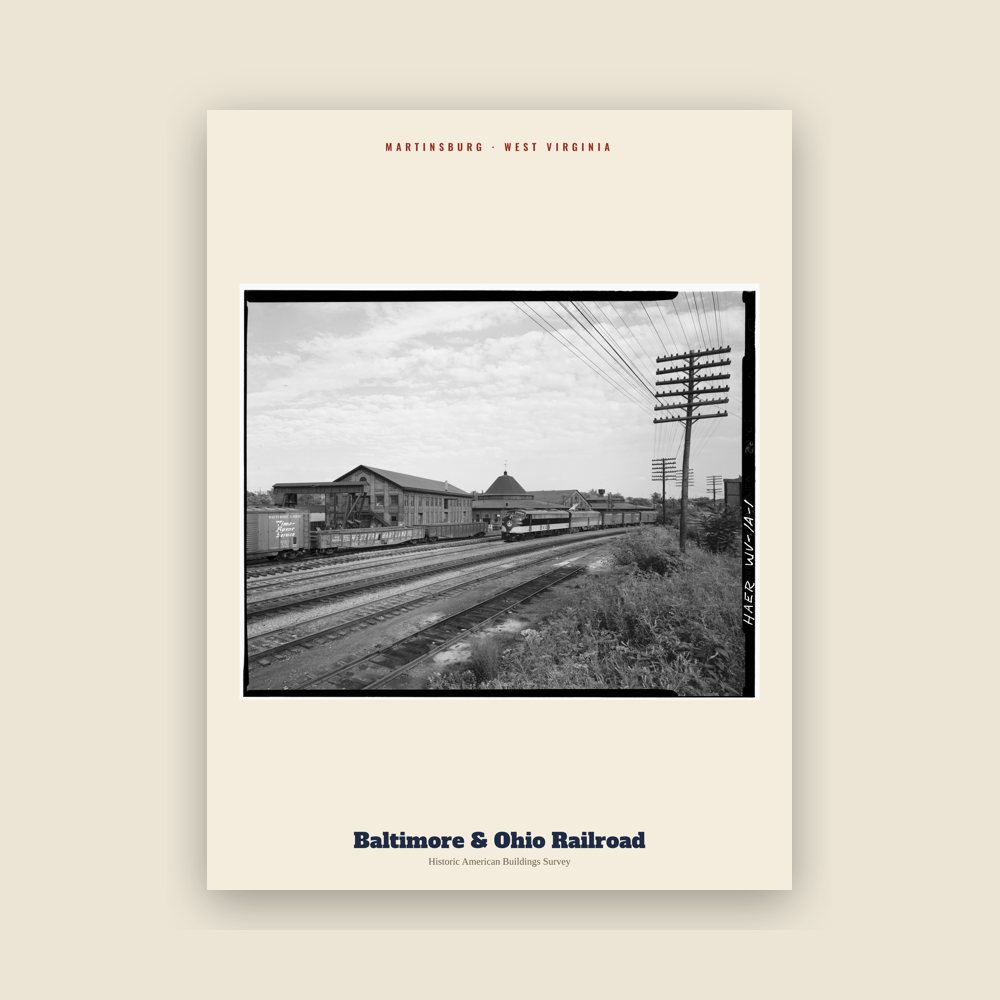
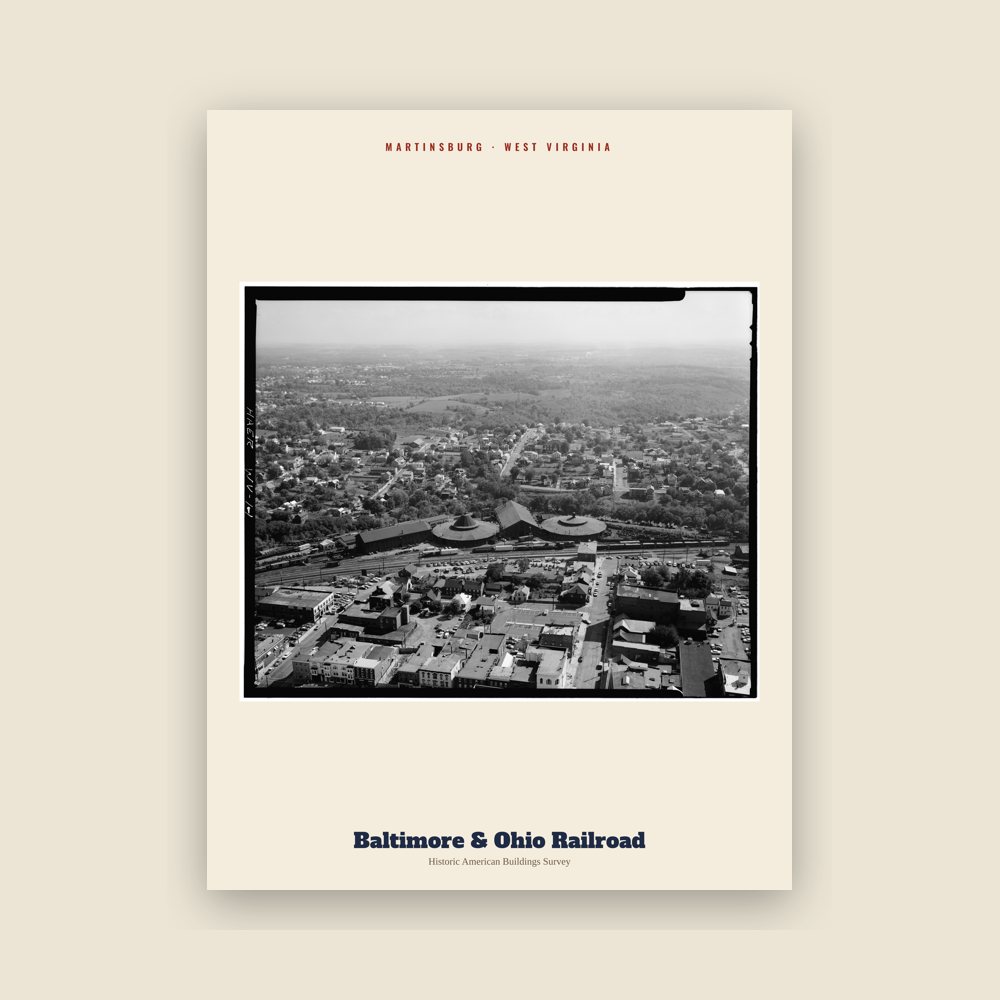
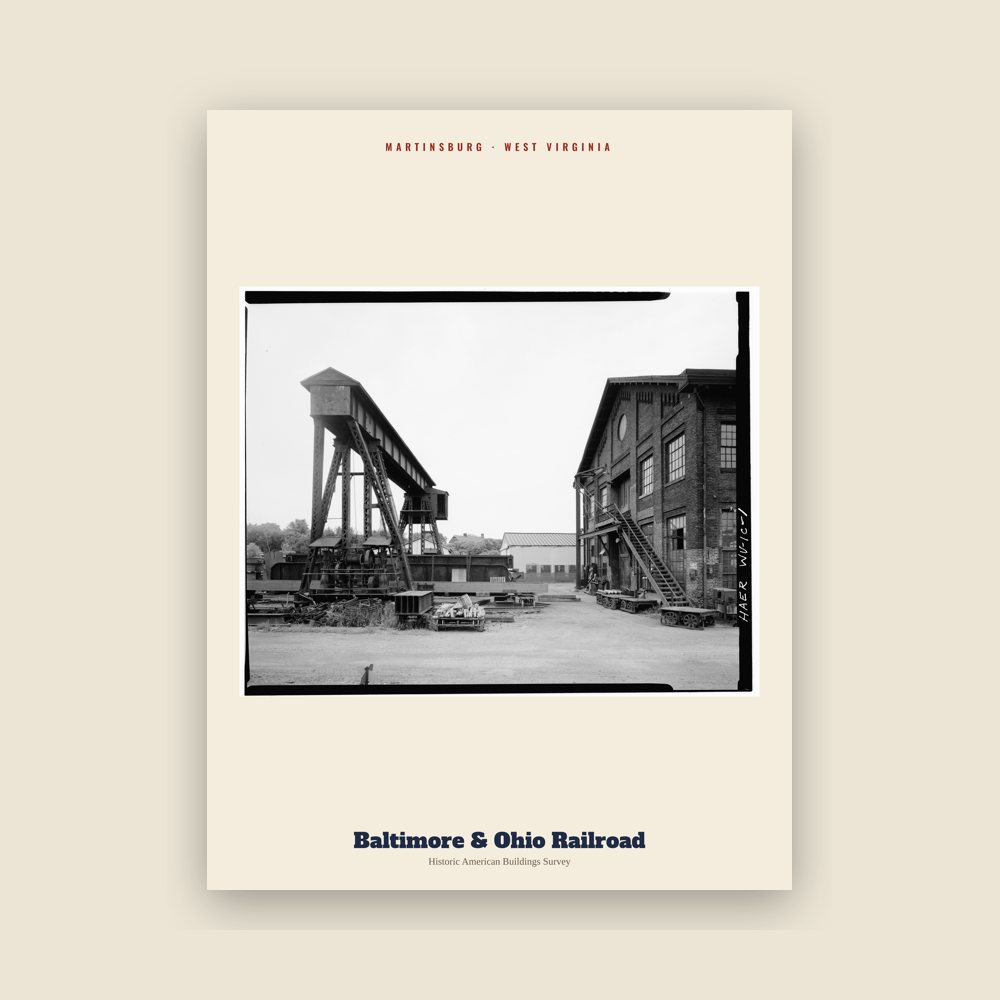
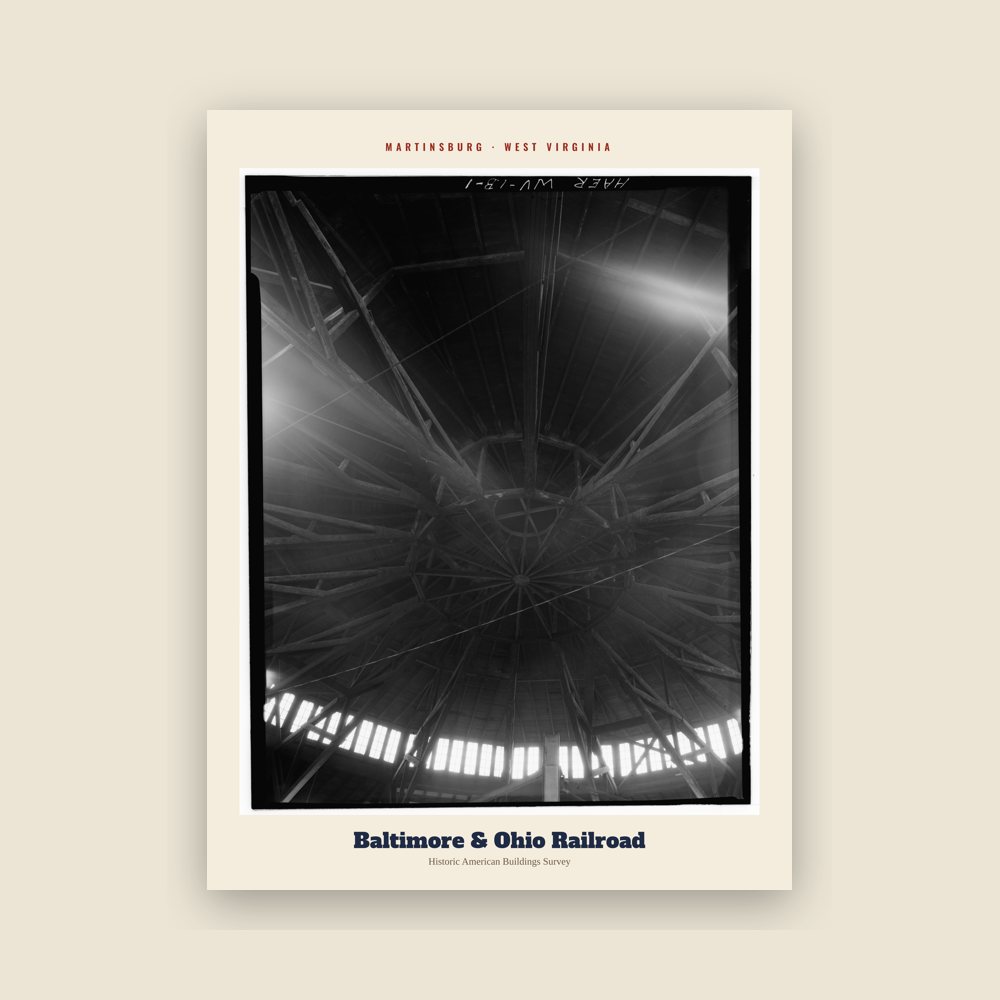
The Baltimore and Ohio Railroad (B&O) reached Martinsburg in 1842. The Baltimore and Ohio Railroad Martinsburg Shops were constructed in 1848 and rebuilt after the American Civil War.
According to William Still, "The Father of the Underground Railroad" and its historian: Mr Robert Brown, alias Thomas Jones, escaped from slavery in Martinsburg on Christmas night in 1856. He rode a horse and had it swim across the freezing Potomac River. After riding forty miles, he walked in cold wet clothes for two days, to Harrisburg, Pennsylvania. He received assistance there from the Underground Railroad and traveled by train to Philadelphia, and the office of William Still with the Pennsylvania Anti-Slavery Society. Brown's wife and four children had been sold; he sought help to find them. He had a likeness of his wife, and locks of hair from each of them.
Read the full history
Civil war
In 1853, Isabelle Boyd, known as "Belle" and later a noted spy for the Confederacy, moved to Martinsburg with her family, where her father Benjamin operated a general merchandise store. After the Civil War began, Benjamin joined the Second Virginia Infantry, which was part of the Stonewall Brigade. His wife Mary was thus in charge of the Boyd home when Union forces under General Robert Patterson took Martinsburg. When a group of Patterson's men tried to raise a Union flag over the Boyd home, Mary refused. One of the soldiers threatened Mary, and Belle shot him. She was acquitted.
She soon became involved in espionage, sending information to Confederate generals Thomas "Stonewall" Jackson and J.E.B. "Jeb" Stuart. Often she was helped by Eliza Corsey, a Boyd family slave whom Belle had taught to read and write. In 1863, Belle was arrested in Martinsburg by the Union Army and imprisoned. Boyd's Greek Revival home, which he had built in 1853 and sold in 1855, had numerous owners over the decades. In 1992 it was purchased by the Berkeley County Historical Society. The historical society renovated the building and now operates it as the Berkeley County Museum. It is also known as the Belle Boyd House.
Reconstruction
Residents of West Virginia were split in their allegiance during the war, with half of its soldiers serving in the Confederate army. The vote to create a new state in western Virginia was very low, but statehood was approved by Congress and President Lincoln, and the new state was admitted to the Union on June 20, 1863.
Martinsburg became a center of the railroad industry and its workers. The Great Railroad Strike of 1877 began July 14, 1877, in this city at the Baltimore and Ohio Railroad Martinsburg Shops. After several unsuccessful attempts to quell the protests, Governor Henry M. Mathews called for federal troops. By the time these troops had restored order, the protest of the rail company had spread across the country.
In 1890, the Martinsburg Mining, Manufacturing, and Improvement Company was founded, who bought up land on the south side of Martinsburg to sell into lots. The area developed into residential and industrial, which contained Martinsburg's textile mills including the Interwoven Mills, which opened in 1891.
In January 1890, electricity began to be furnished in Martinsburg as part of a franchise granted to the United Edison Manufacturing Company of New York.
World War I and beyond
Over one thousand (1,039) men from Berkeley County participated in World War I. Of these, forty-one were killed, and twenty-one were wounded in battle. A monument to those who fell in battle was erected in Martinsburg in 1925.
During World War II, the Newton D. Baker Hospital in Martinsburg treated soldiers wounded in the war. In 1946 this military hospital became a part of the Veterans Administration (VA). The VA Medical Center in Martinsburg still provides care to United States veterans.
Due to restructuring beginning in the late 1940s and continuing through the 1960s, many of the mills and factories operating in Martinsburg shut down and went out of business, dealing a major blow to the local economy. These jobs moved to the Deep South and later offshore. In their place, new businesses moved to Martinsburg during the years after World War II, providing growth to the city.
Adapted (trimmed) from the Wikipedia article Martinsburg, West Virginia, revision 1380283788 by its contributors, licensed CC BY-SA 4.0.
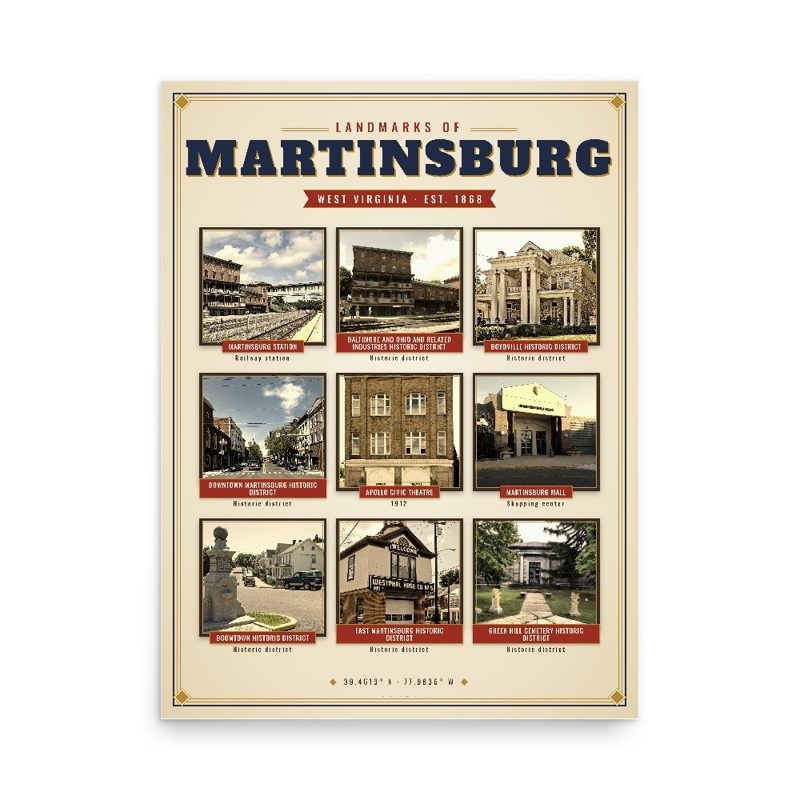
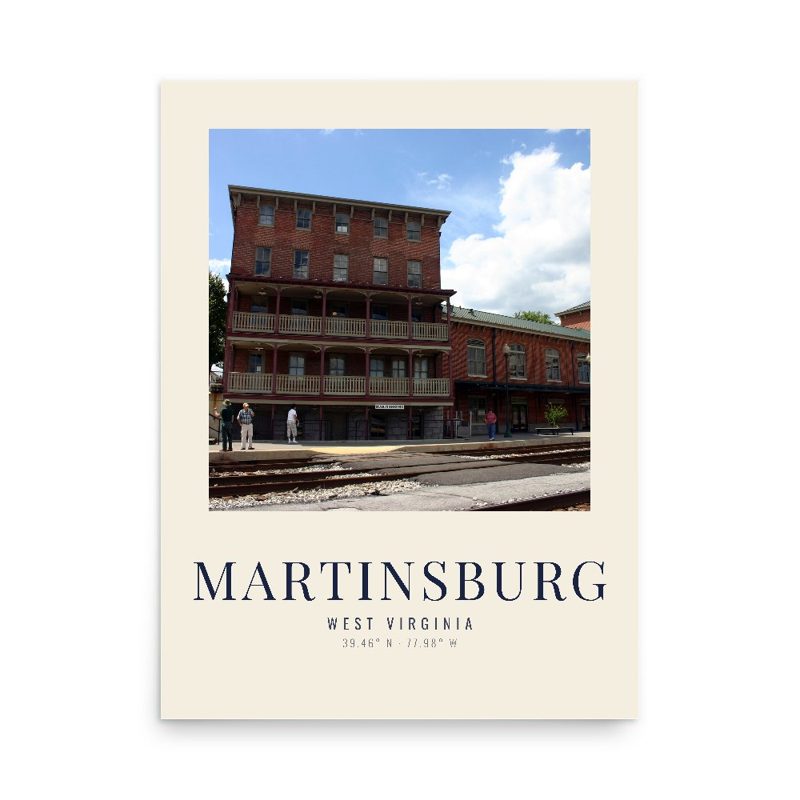
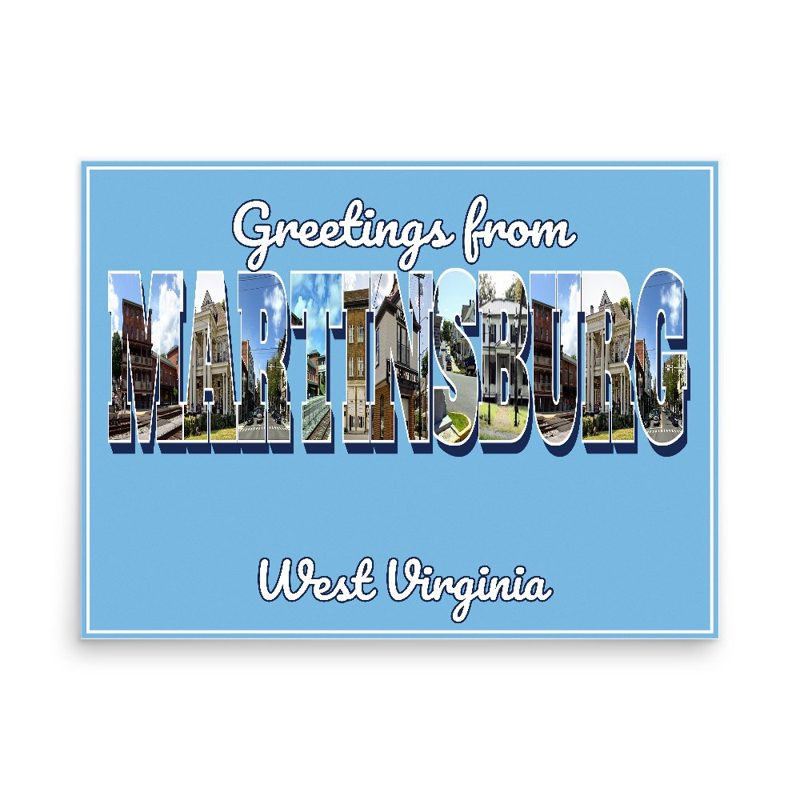
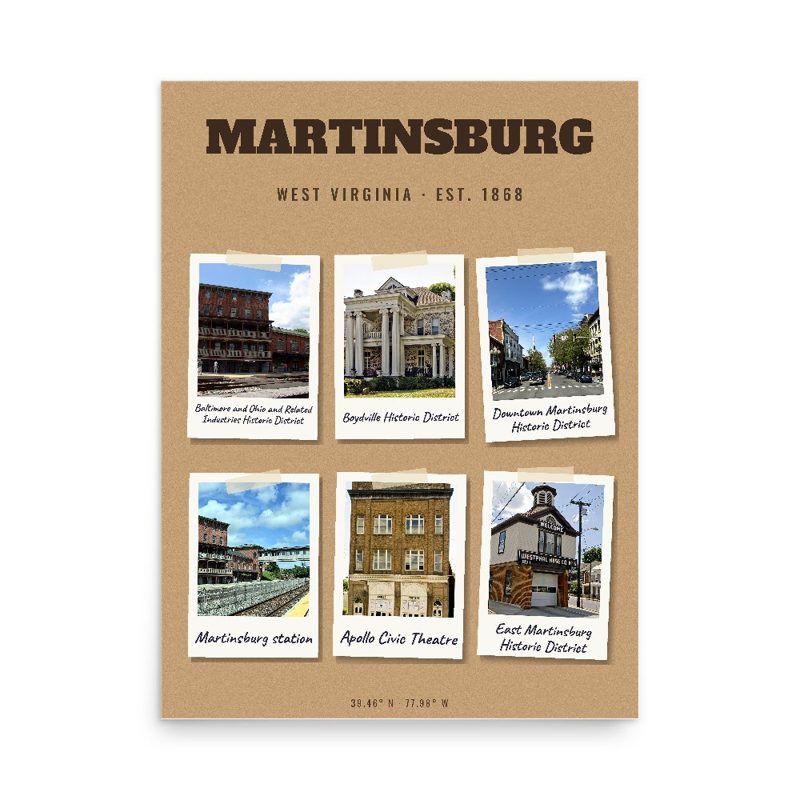
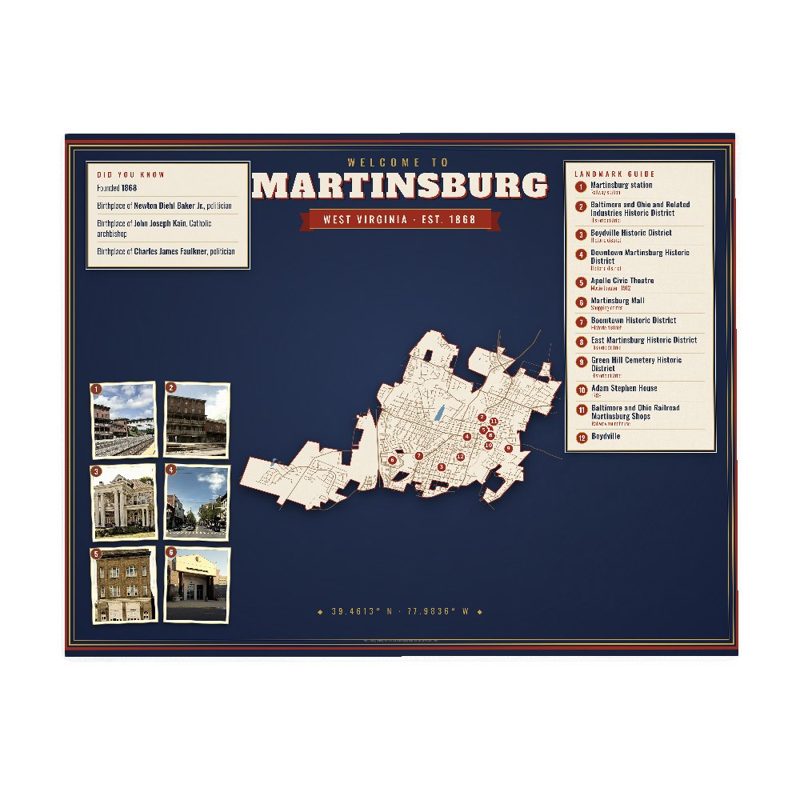

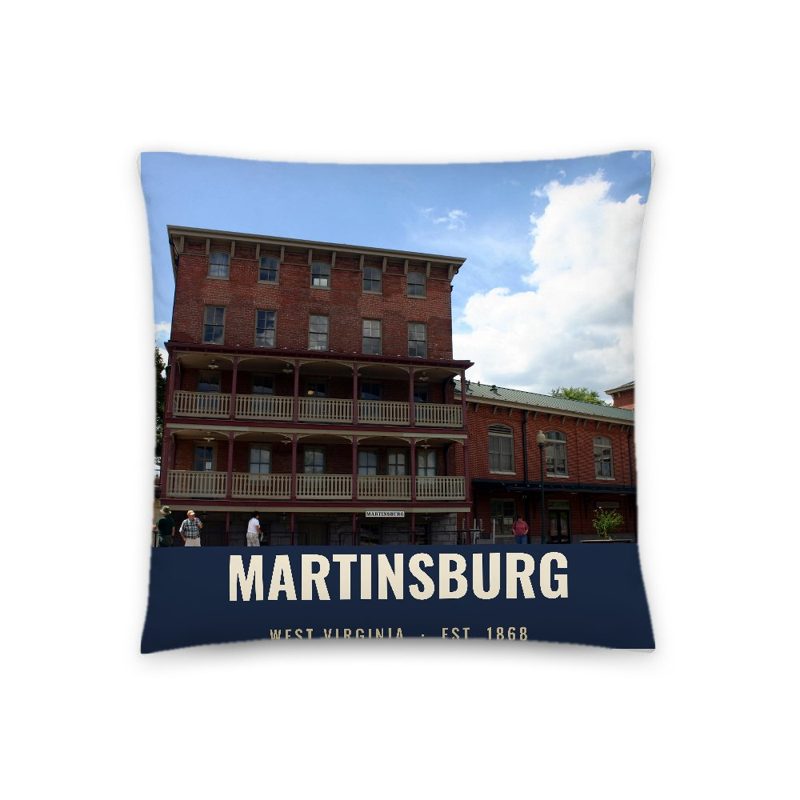


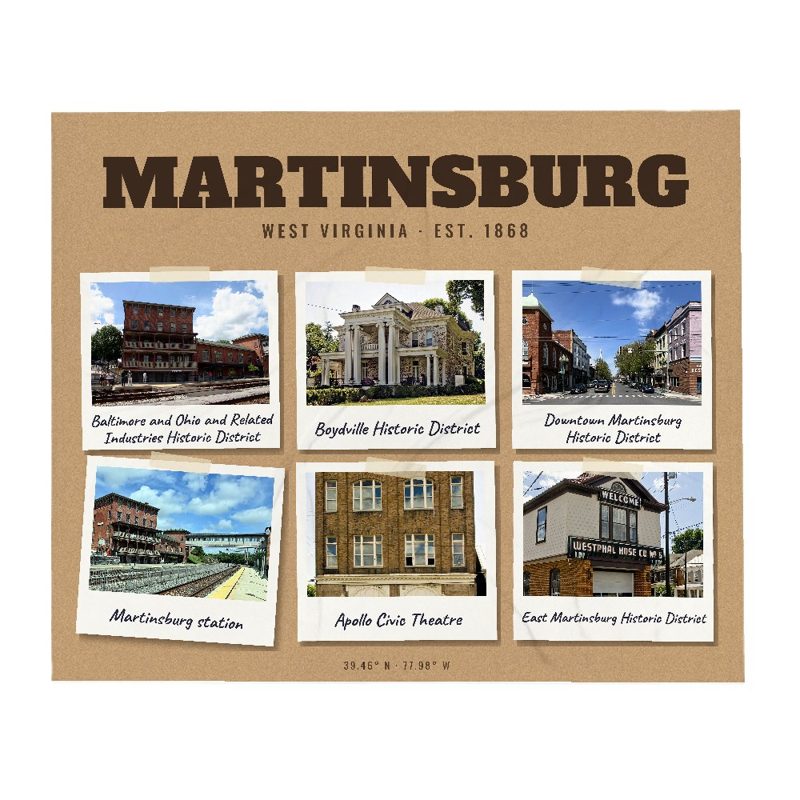
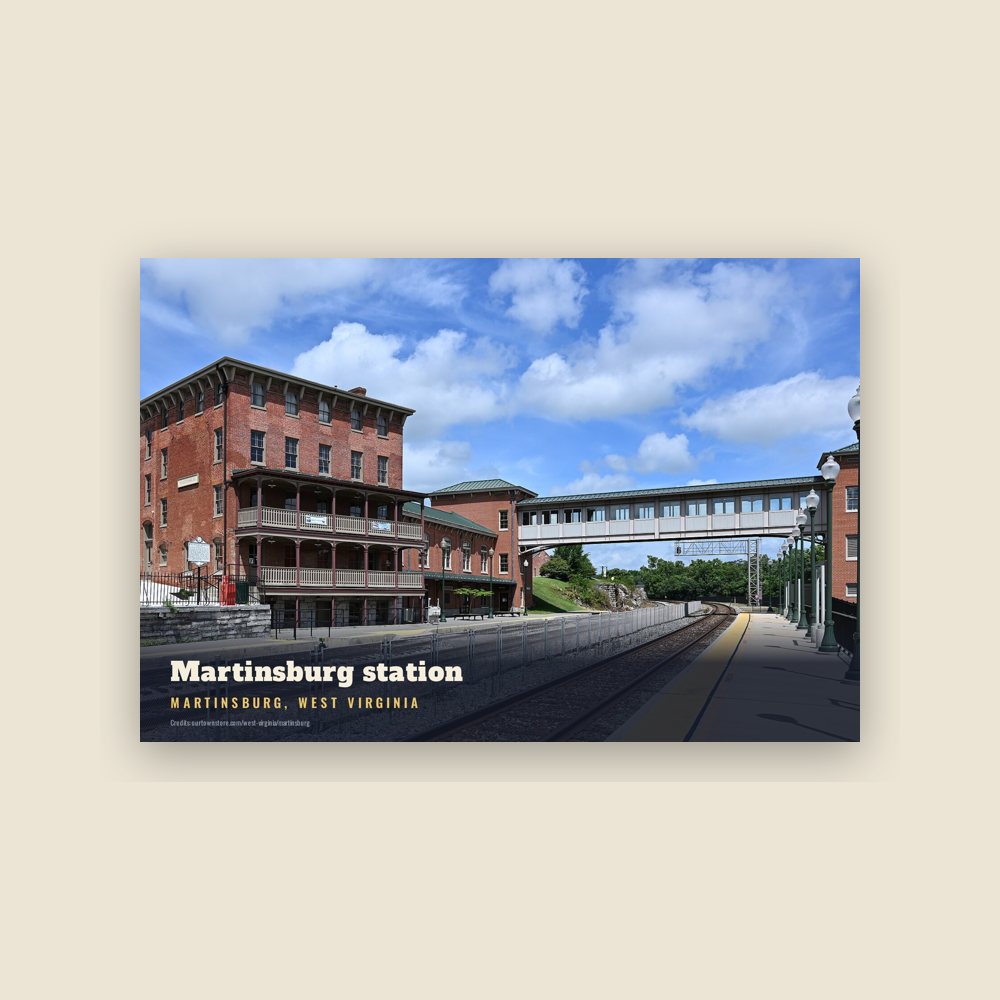
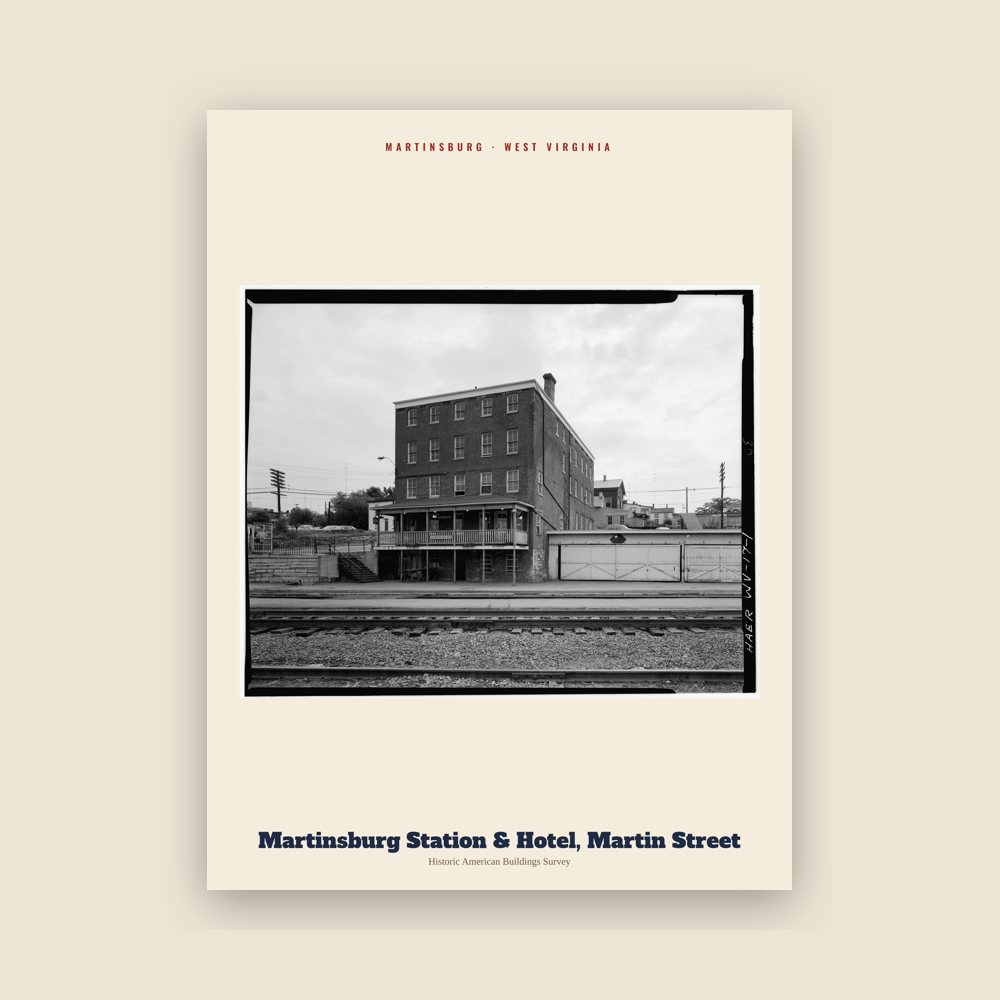
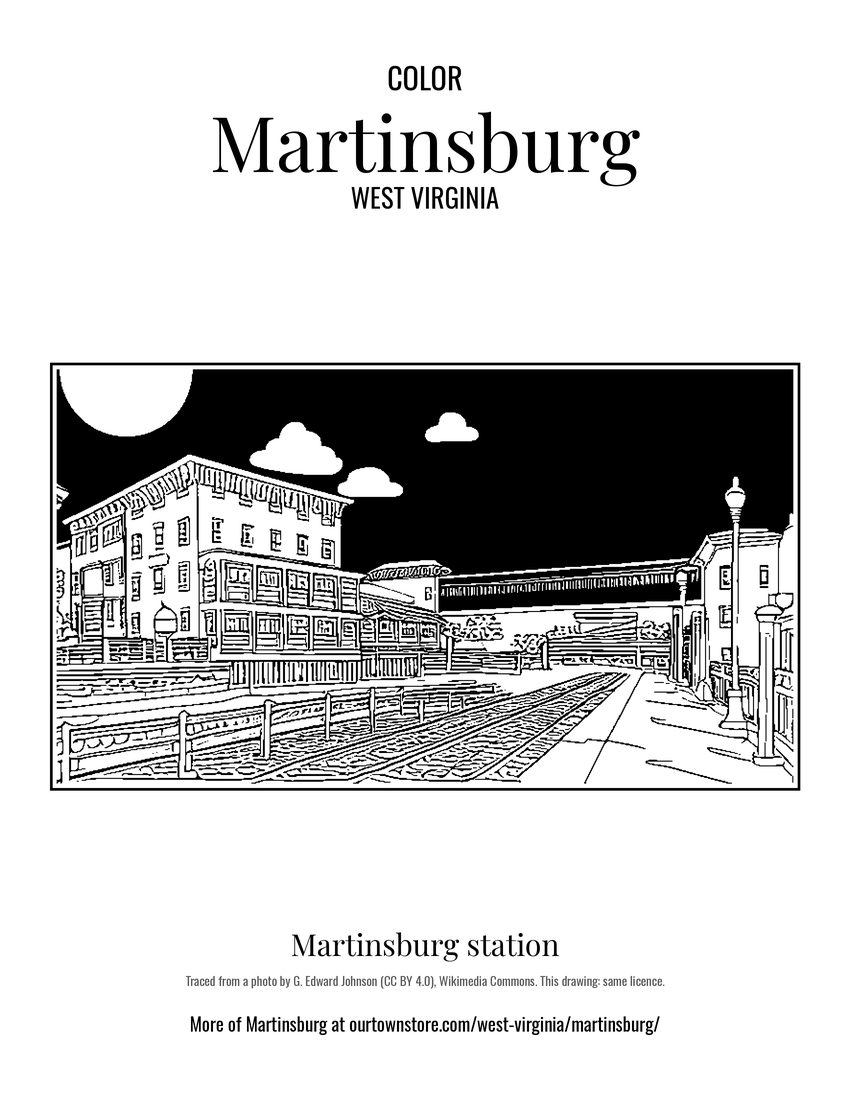 Martinsburg station
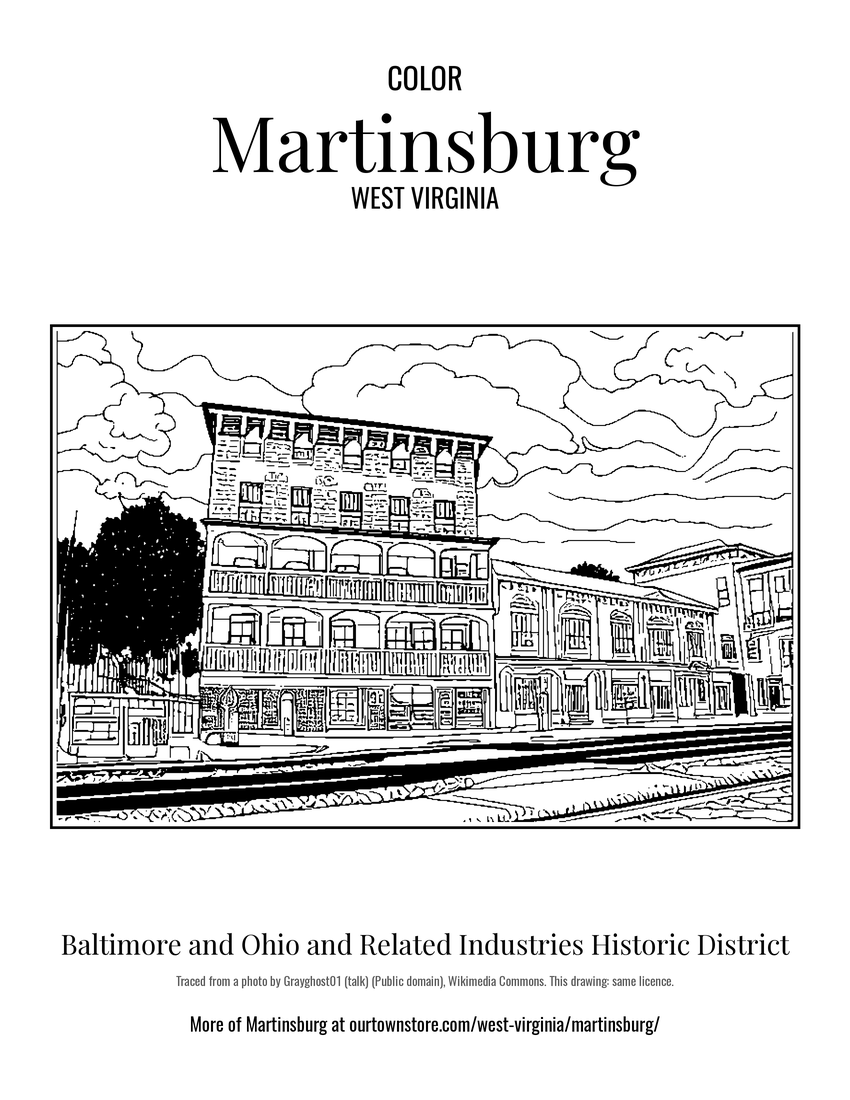 Baltimore and Ohio and Related Industries Historic District
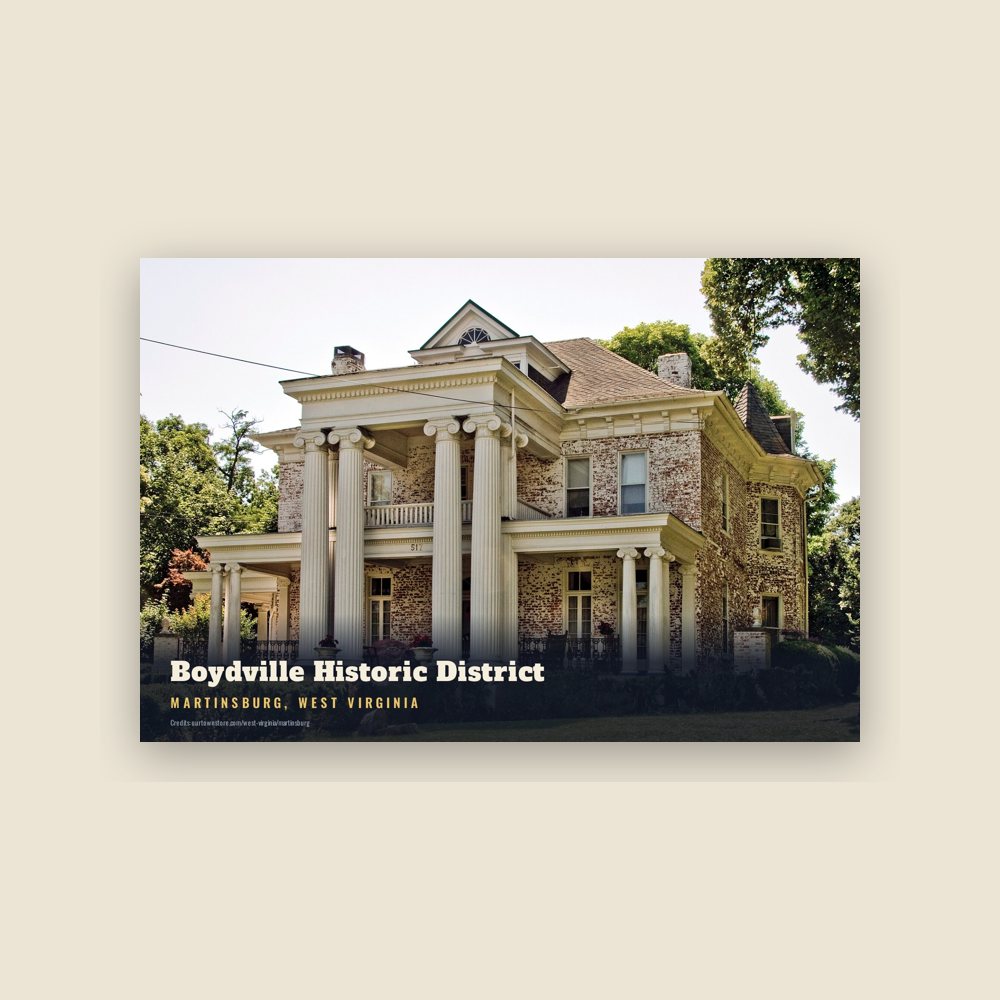
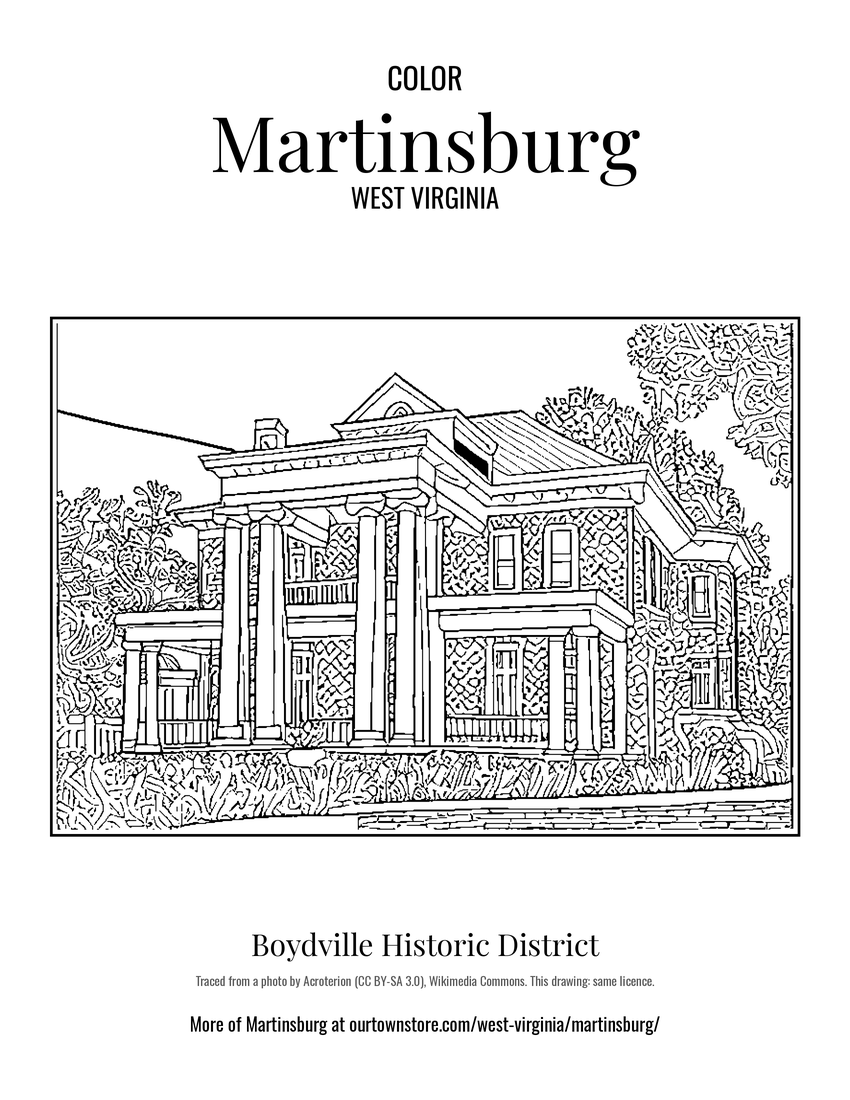 Boydville Historic District
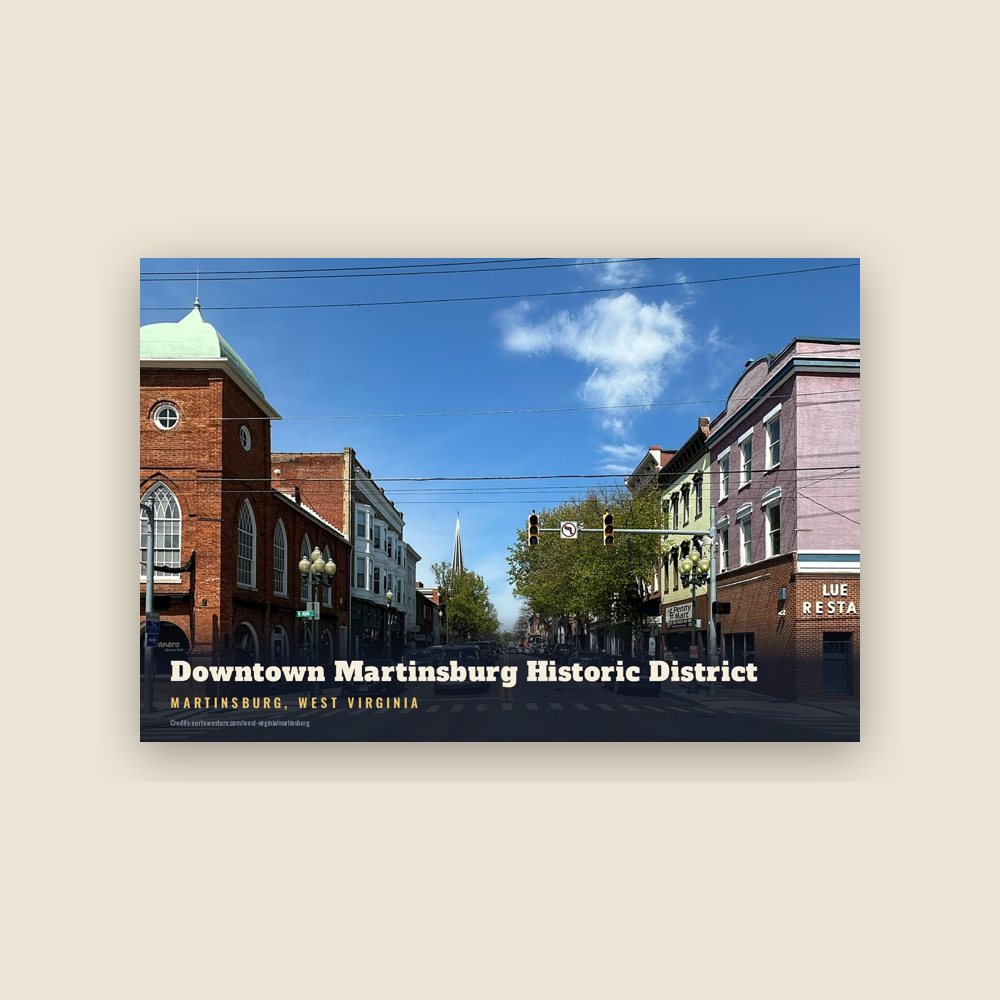
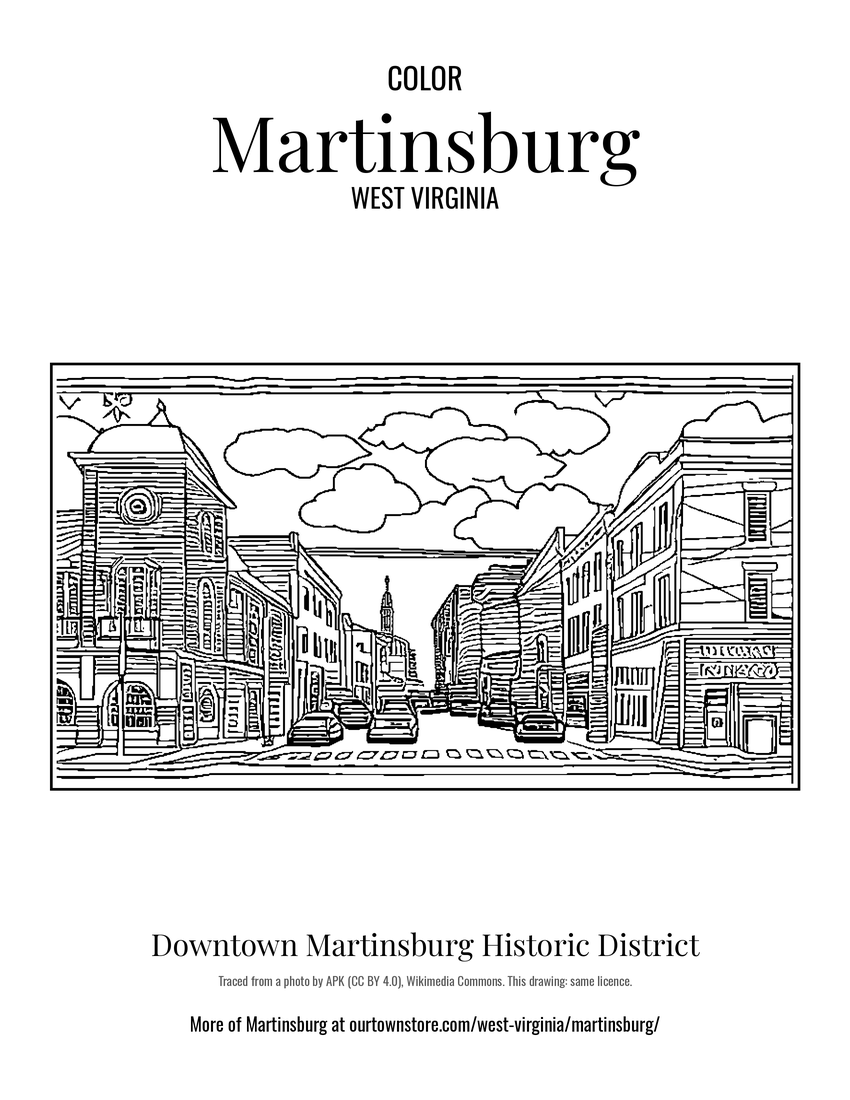 Downtown Martinsburg Historic District