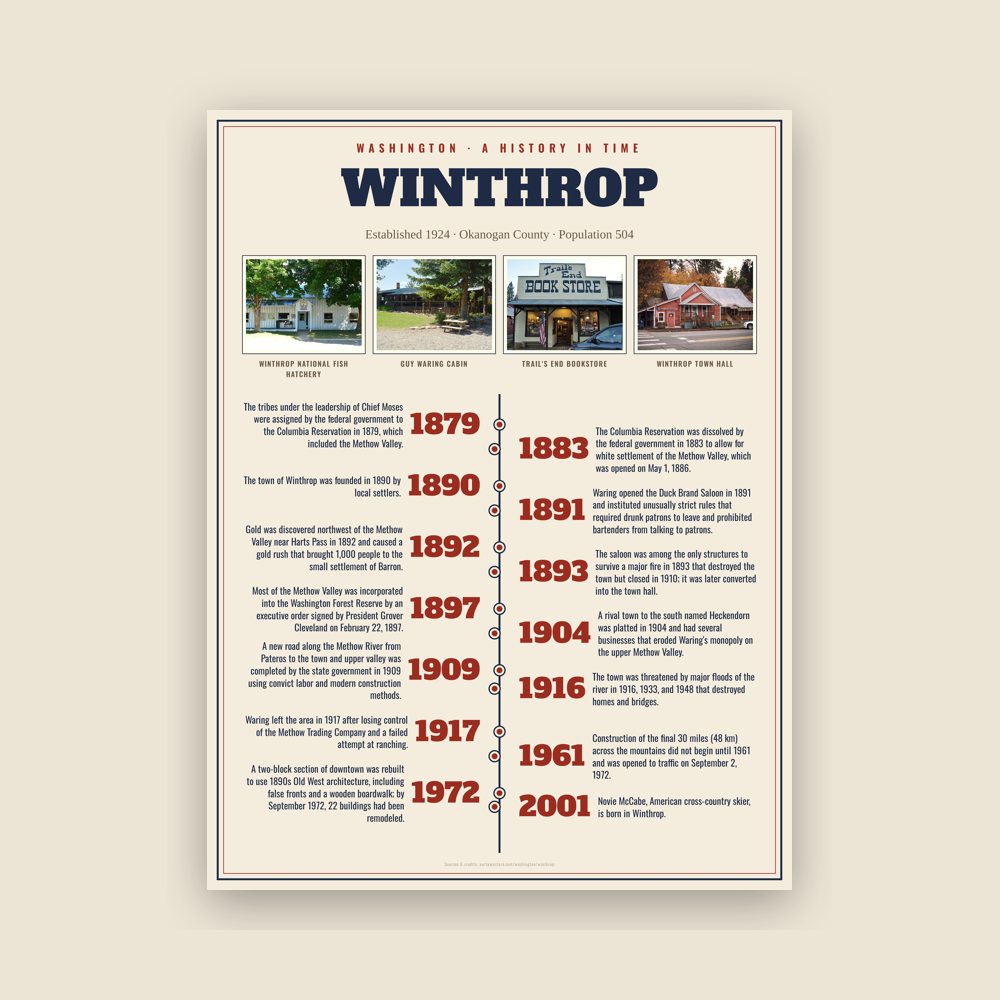
Native Americans, including the Methow people, were the first inhabitants of Winthrop, with evidence of human habitation at least 8,000 to 10,000 years before present. They lived along the banks of the Methow and Chewuch rivers, where they harvested camas root and berries, fished, and hunted. The Methow had seasonal camps and returned annually to the upper valley in the summer once they acquired horses in the 18th century. The Columbia Plateau peoples, including the Methow and Syilx, established routes over Cascade Pass to trade with Coast Salish tribes in modern-day Skagit Valley. The population of the Methow people and other Columbia Plateau tribes were devastated by smallpox epidemics by the 19th century. The tribes under the leadership of Chief Moses were assigned by the federal government to the Columbia Reservation in 1879, which included the Methow Valley.
The Columbia Reservation was dissolved by the federal government in 1883 to allow for white settlement of the Methow Valley, which was opened on May 1, 1886. The Methow people were then moved further east to the Colville Indian Reservation. The first white residents of the valley were brothers Tom and Jim Robinson, who had a hunting camp at the confluence but later left. A homestead near the modern-day town was claimed in 1887 by James Sullivan and Louisa Sullivan, who built the first hotel in the area; they were followed in 1888 by Walter Frisbee, who established a trading post and blacksmith shop. The Chiliwist Trail between the Okanogan and Methow valleys was the main transportation corridor for the area but was unsuited to wagon travel; it was replaced in 1891 by a pair of new roads funded by settlers in the area that allowed for stagecoach service connecting to Brewster on the Columbia River.
Read the full history
Founding and development
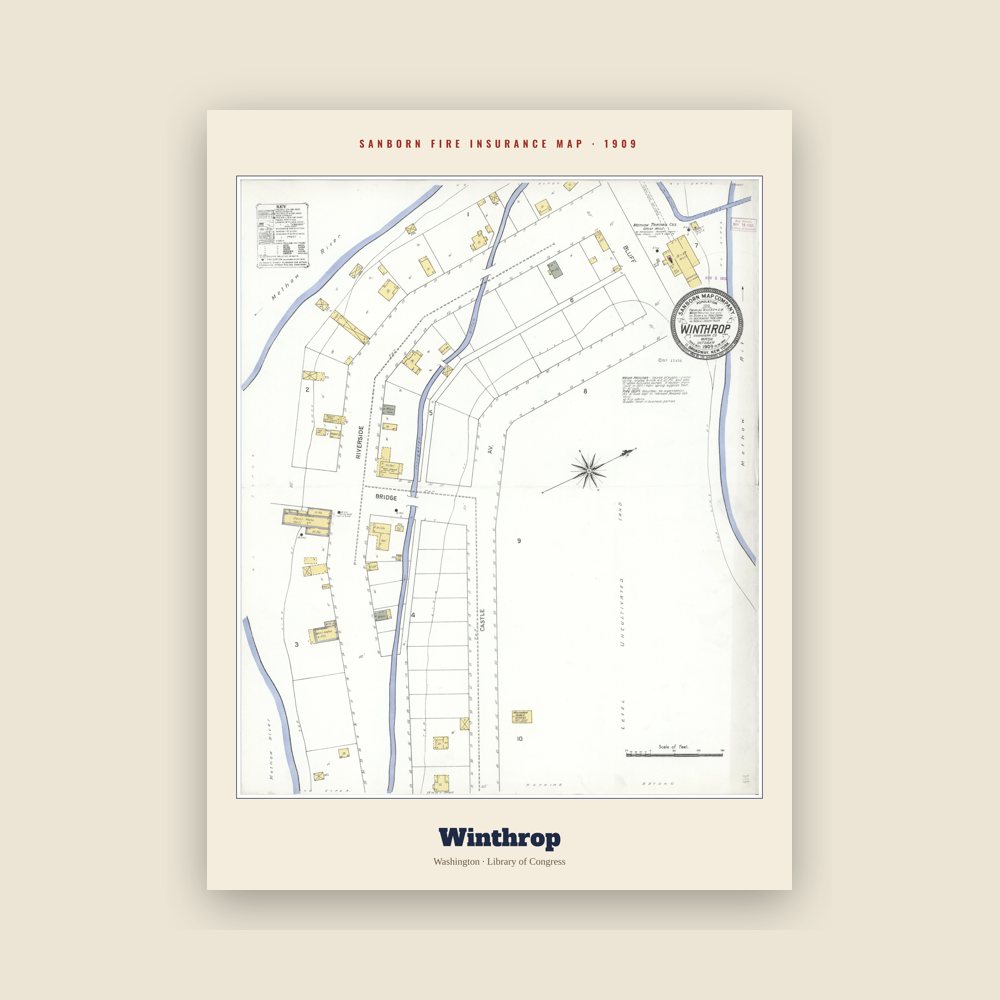
The town of Winthrop was founded in 1890 by local settlers. The namesake, according to U.S. Congressman John L. Wilson, is author and explorer Theodore Winthrop, who had published the memoir The Canoe and the Saddle in 1862 after a visit to Washington Territory. The town's first trading post and general store was opened in January 1892 by Guy Waring of Boston, who moved with his family to the confluence of the Chewuch and Methow rivers a year before. He took over the Winthrop post office, which had been established on June 18, 1891, and unsuccessfully attempted to rename the town "Waring" despite local backlash. Waring left the Methow Valley for several years during the economic depression to raise $15,000 in funds for a new venture, the Methow Trading Company. His company acquired almost all of the buildings in the town and opened various businesses, including a sawmill, gristmill, and a hotel. Waring built a spacious new home, named the "Castle" by local residents, on a hillside overlooking Winthrop; it now serves as the home of the Shafer Museum.
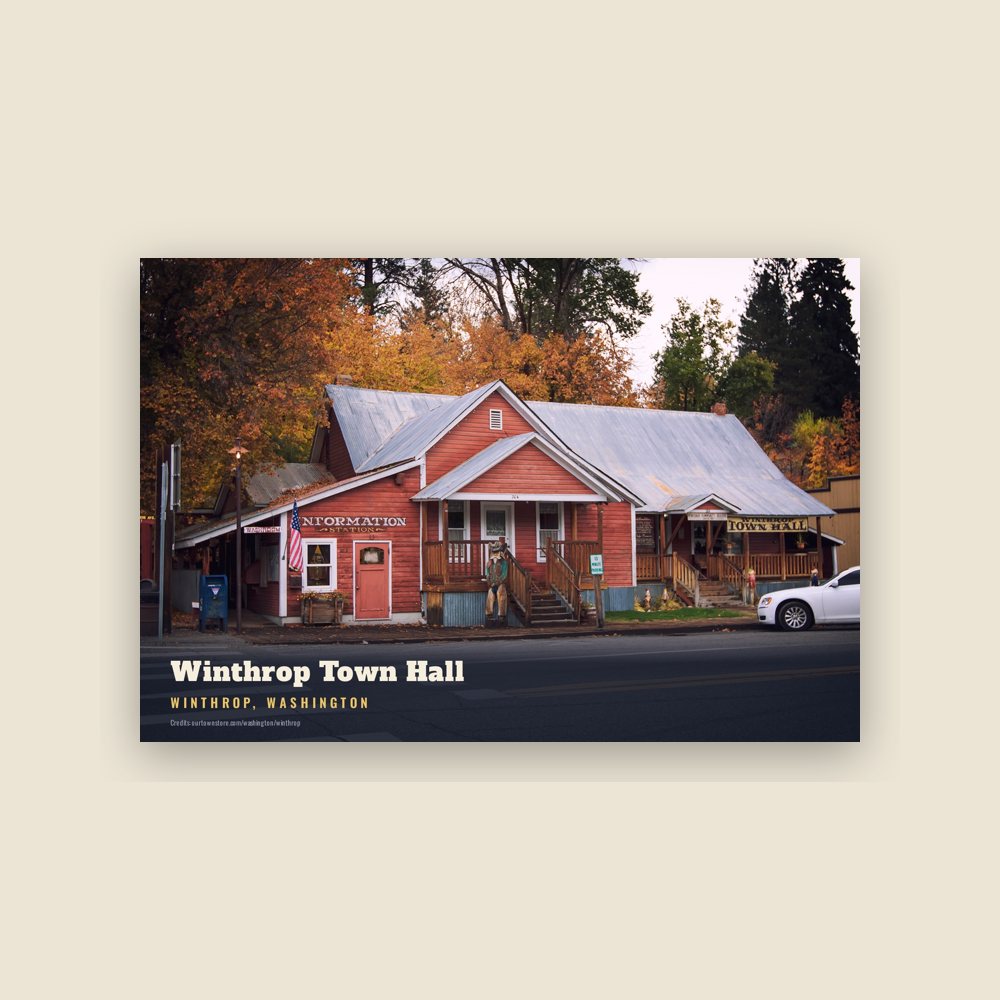
Gold was discovered northwest of the Methow Valley near Harts Pass in 1892 and caused a gold rush that brought 1,000 people to the small settlement of Barron. Winthrop remained the main hub of the upper valley with an industry centered around cattle ranching, logging, and supplying nearby mines. Waring opened the Duck Brand Saloon in 1891 and instituted unusually strict rules that required drunk patrons to leave and prohibited bartenders from talking to patrons. The saloon was among the only structures to survive a major fire in 1893 that destroyed the town but closed in 1910; it was later converted into the town hall. Owen Wister, Waring's former roommate at Harvard University, wrote The Virginian, considered the first American western novel, after honeymooning in Winthrop in 1892 and 1898. Waring continued to expand his business with branch stores in several mining towns as well as Pateros and Twisp.
Most of the Methow Valley was incorporated into the Washington Forest Reserve by an executive order signed by President Grover Cleveland on February 22, 1897. The order prevented further settlement and development of the area around Winthrop, but residents protested due to the area's existing use for agriculture; it was modified in 1901 to remove the valley from the protected area. The townsite of Winthrop was formally platted by the Methow Trading Company in 1897 and approved by the county government in 1901. A rival town to the south named Heckendorn was platted in 1904 and had several businesses that eroded Waring's monopoly on the upper Methow Valley. A new road along the Methow River from Pateros to the town and upper valley was completed by the state government in 1909 using convict labor and modern construction methods. In the 1910s, Winthrop gained telephone service, a newspaper named the Winthrop Eagle, a school, and a bank. Waring left the area in 1917 after losing control of the Methow Trading Company and a failed attempt at ranching. He sold his "Castle", which was used by a local Episcopal Church and later as a private residence. The U.S. Forest Service opened a ranger station in the town that same year.
Incorporation and growth
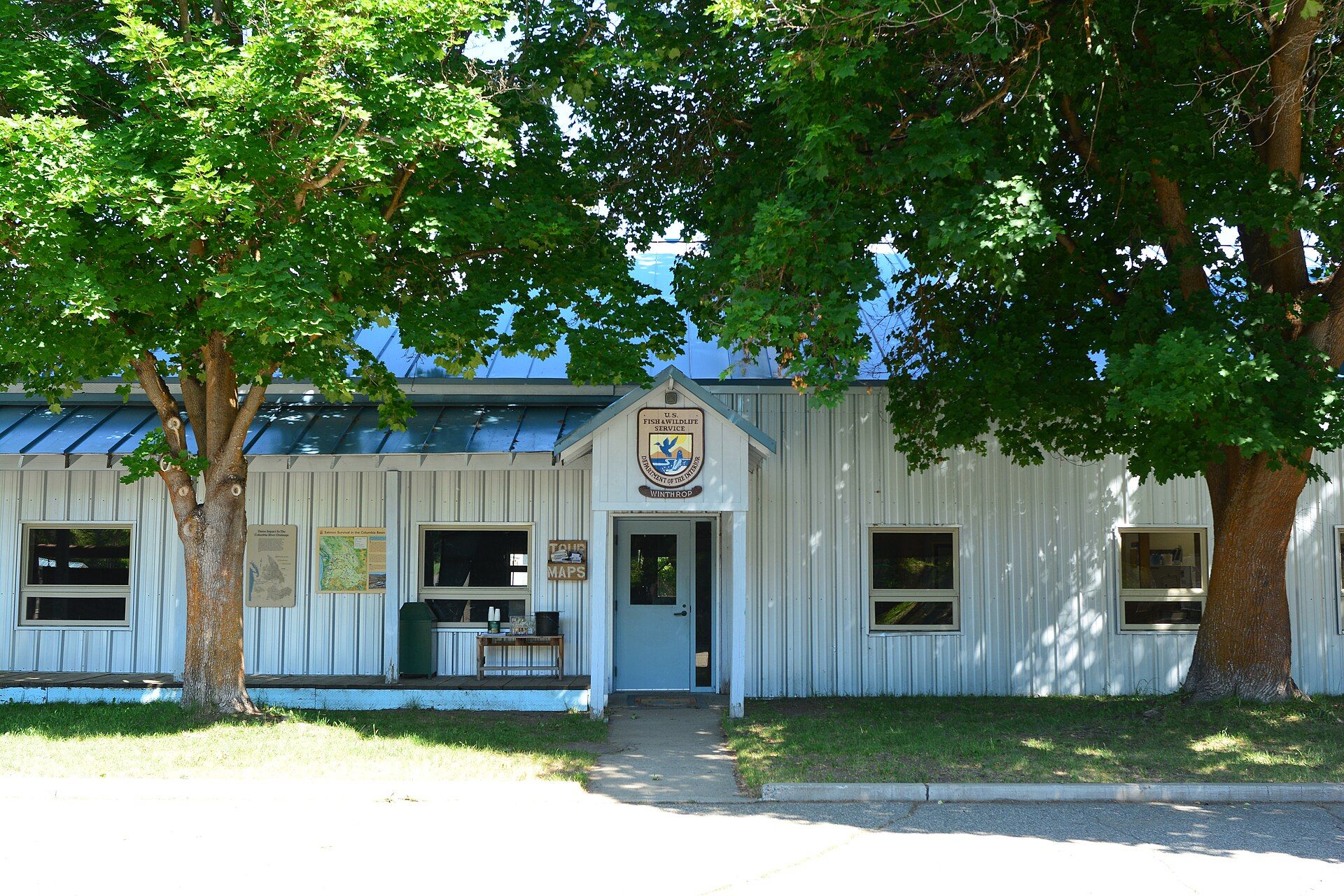
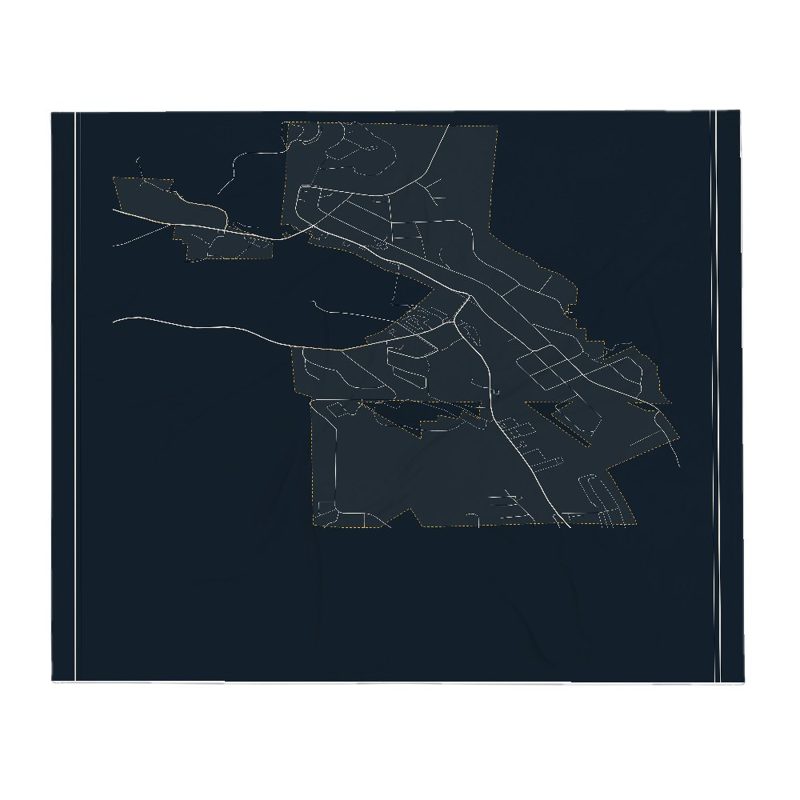
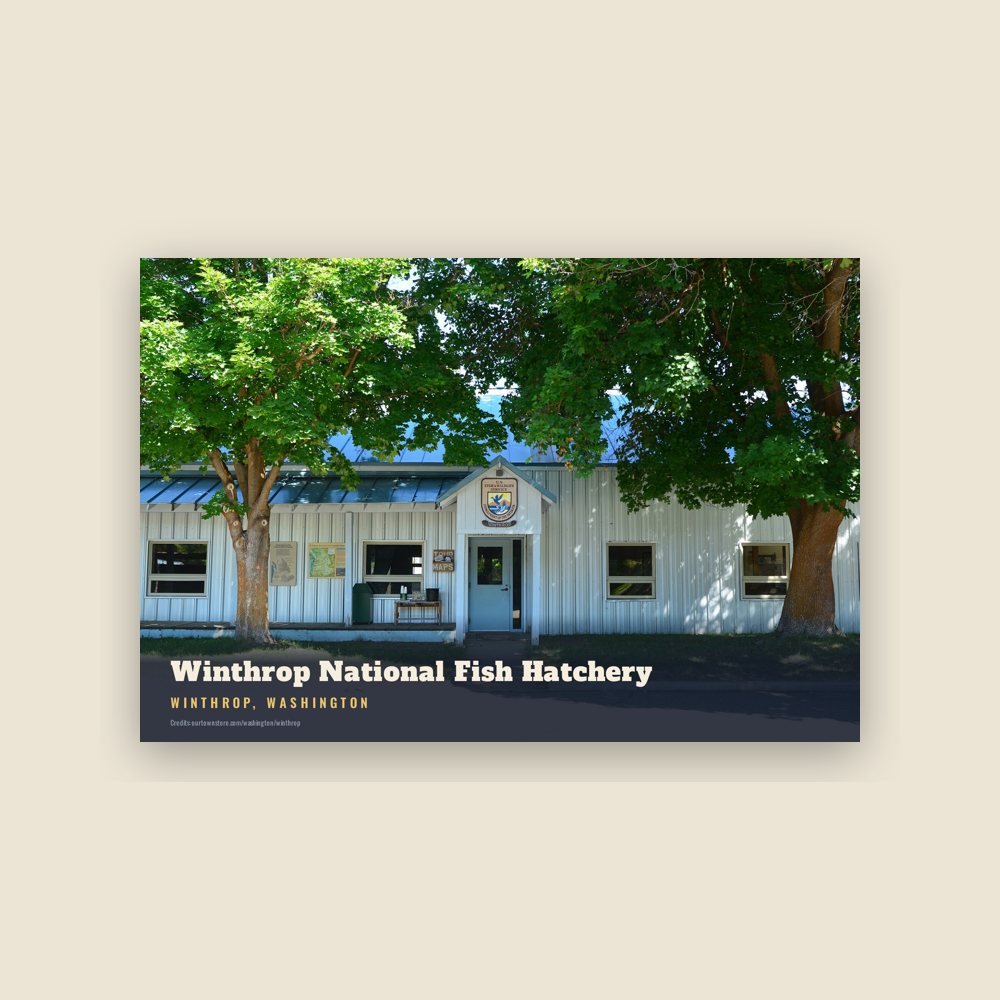
Winthrop was incorporated on March 12, 1924, and included the downriver settlement of Heckendorn and a plot of land across the Methow River. The town was threatened by major floods of the river in 1916, 1933, and 1948 that destroyed homes and bridges. The U.S. Fish & Wildlife Service opened the Winthrop National Fish Hatchery on the Methow River in 1942, which produced salmon and trout to be stocked at local lakes and released into the river. The area around Winthrop developed into a destination for outdoor recreation in the middle of the 20th century with the opening of several dude ranches and resorts. The Sunny M Ranch was established in the 1930s west of the town and expanded under various owners into the Sun Mountain Lodge, which opened in 1968 and encompasses 3,000 acres (1,200 ha) and a luxury hotel.
Plans to build an open pit mine for copper as well as a ski resort, named Early Winters Ski Resort, near Mazama were announced in the 1970s but never realized. The town later annexed 75 acres (30 ha) southwest of the Methow River that would include new residential areas and an industrial zone.
Westernization project
The first plans to build an automobile route across the North Cascades from Bellingham Bay to the Columbia River were approved by the state legislature in 1893. Construction of the final 30 miles (48 km) across the mountains did not begin until 1961 and was opened to traffic on September 2, 1972. In anticipation of the new highway and the projected tourist traffic through the town, a large-scale remodeling project was approved in 1971 with funding from local businesses organized by sawmill operator Otto Wagner and his wife Kathryn. A two-block section of downtown was rebuilt to use 1890s Old West architecture, including false fronts and a wooden boardwalk; by September 1972, 22 buildings had been remodeled. The early design work was contracted to Robert Jorgensen, one of the designers of the Bavarian theme town in Leavenworth, and the project was estimated to cost over $350,000. A design review board was established to maintain the architectural theme, enforced by a "Westernization" ordinance. The wooden façade of the Winthrop Emporium, a major tourist store, was destroyed in a fire in November 1993 and rebuilt the following year. The town's landmark bell was saved from the fire.
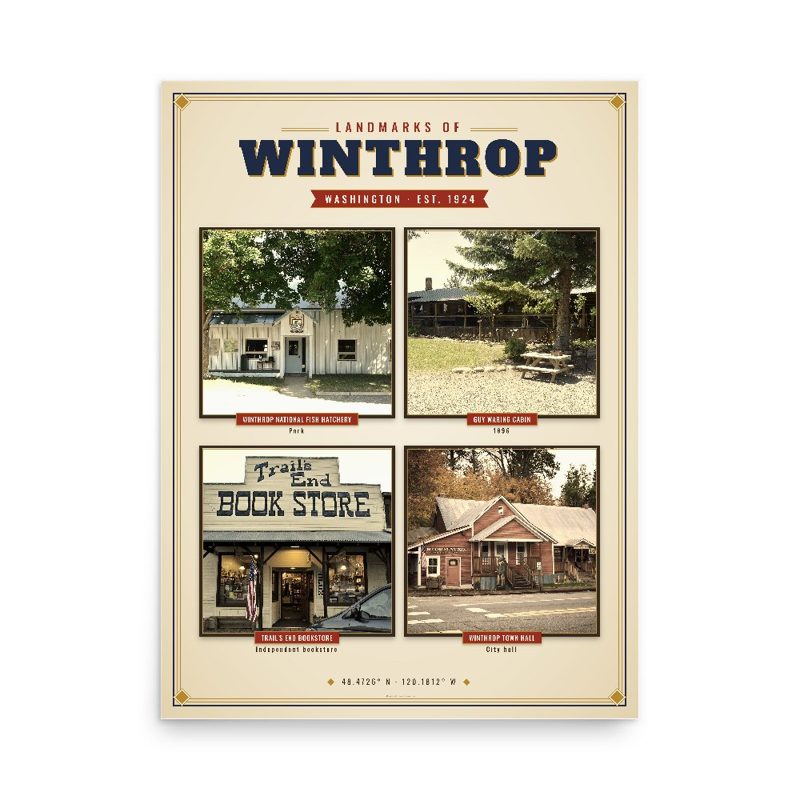
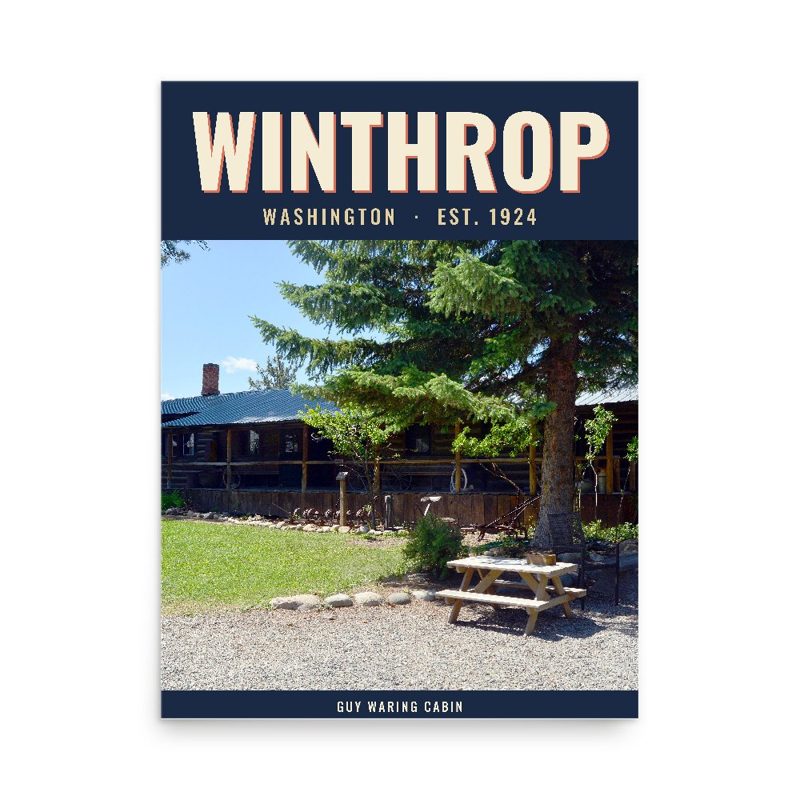
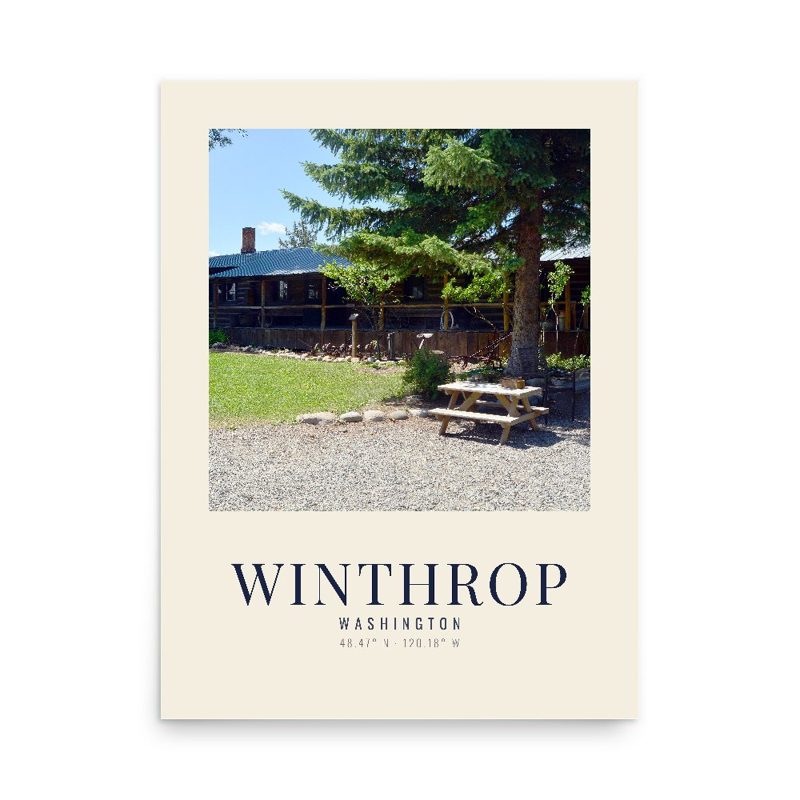
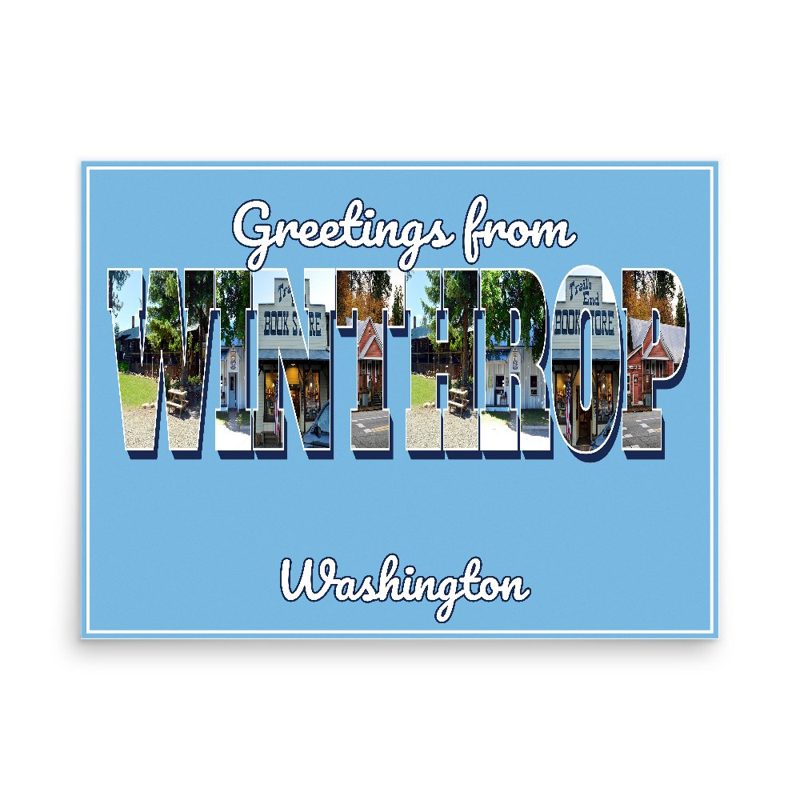
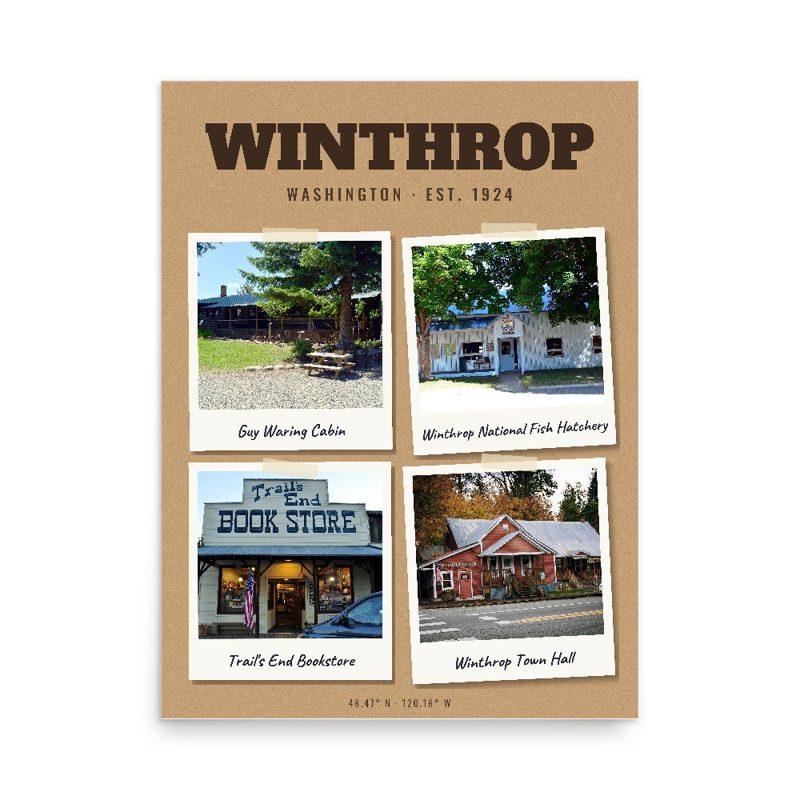
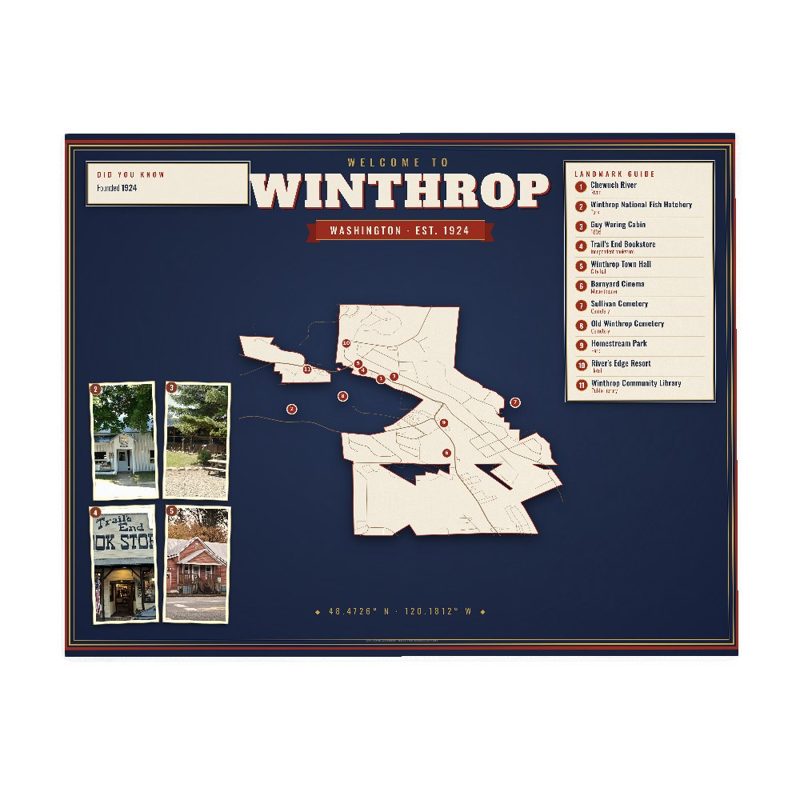
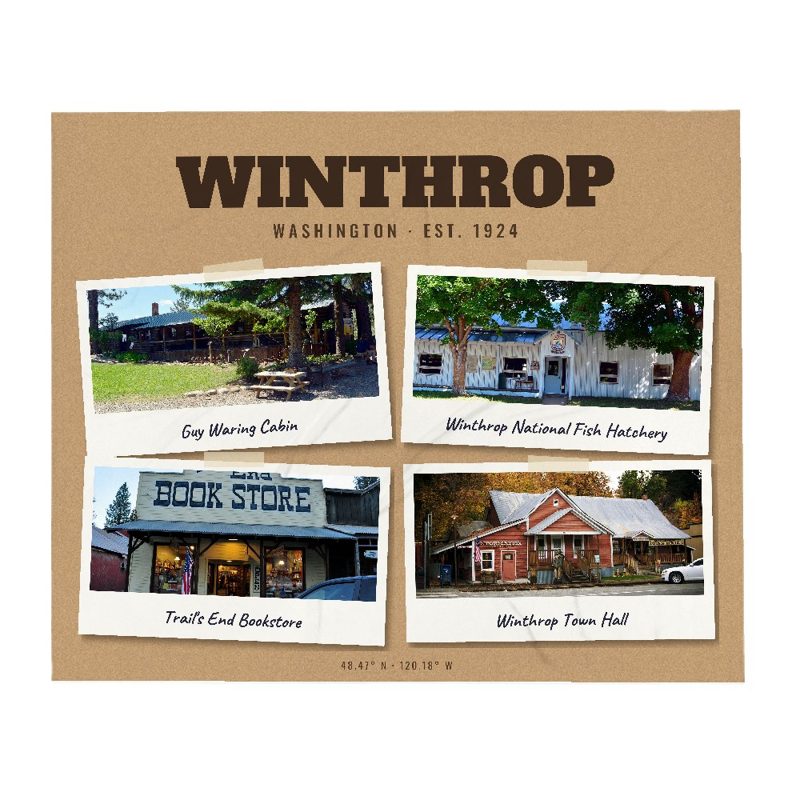
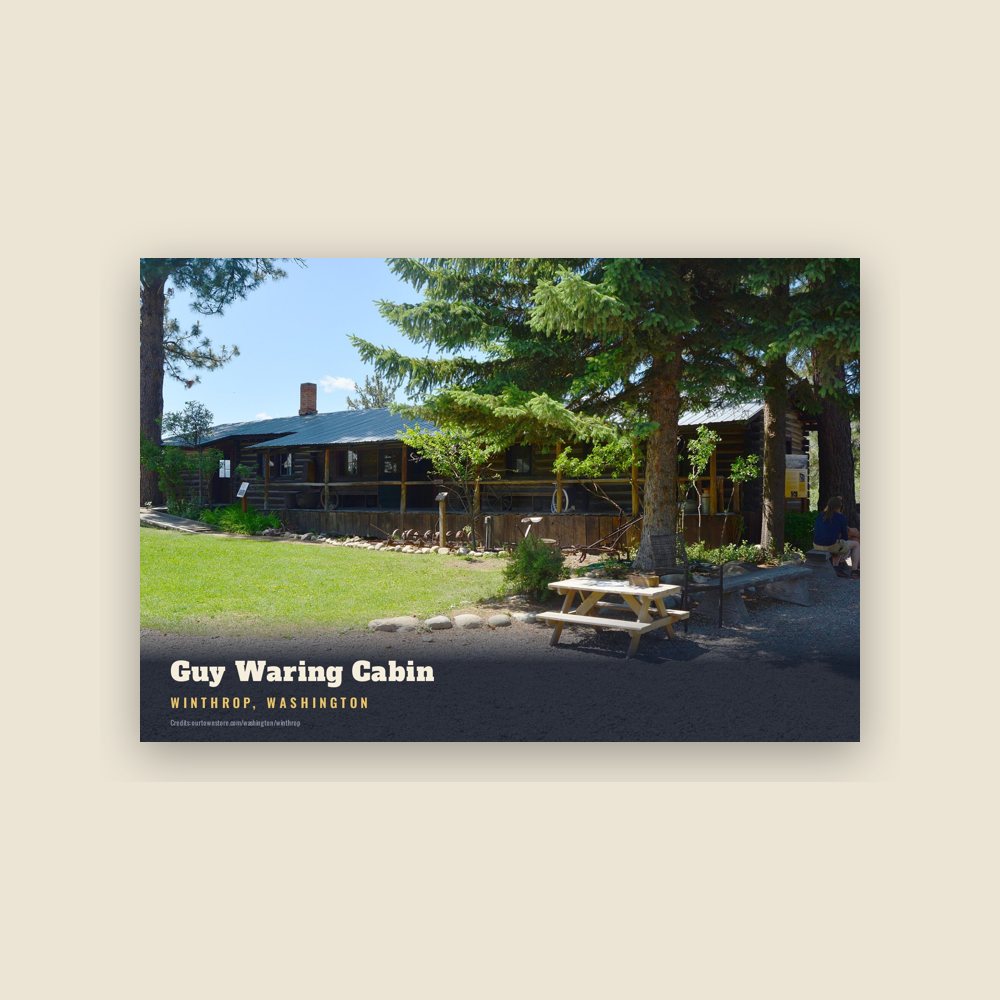
 Guy Waring Cabin
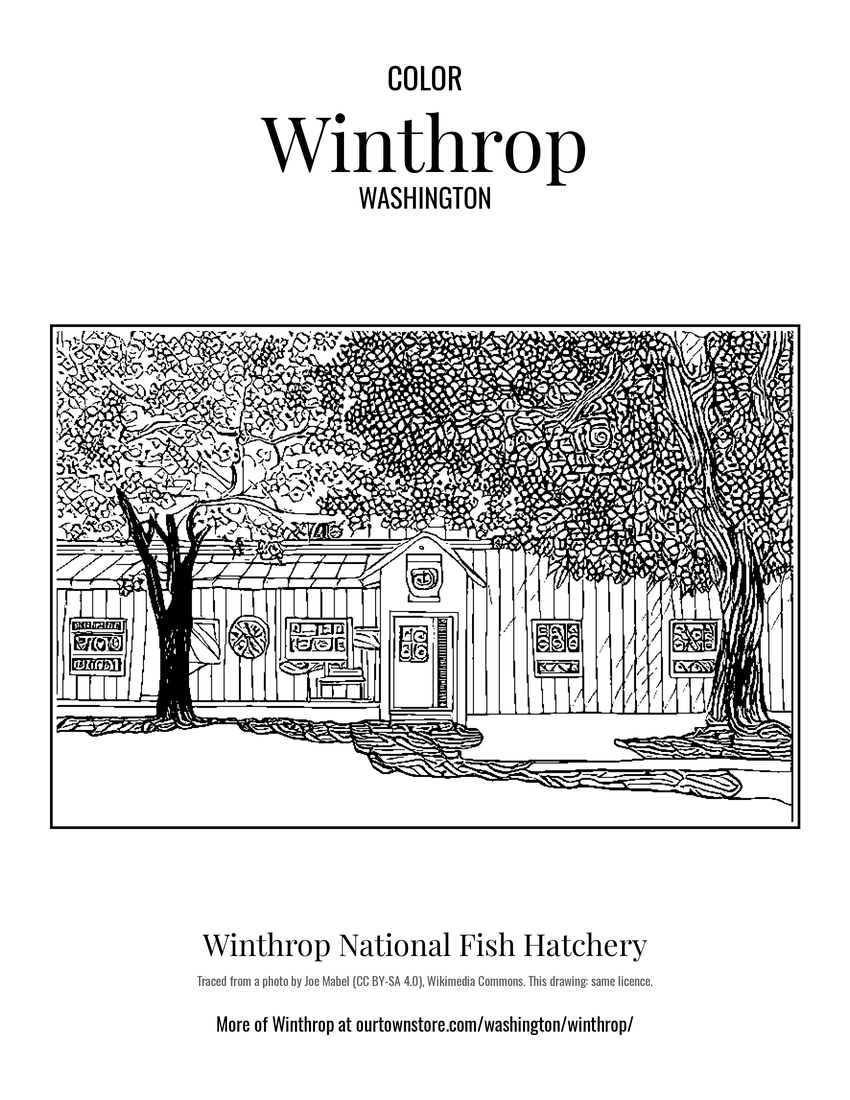 Winthrop National Fish Hatchery
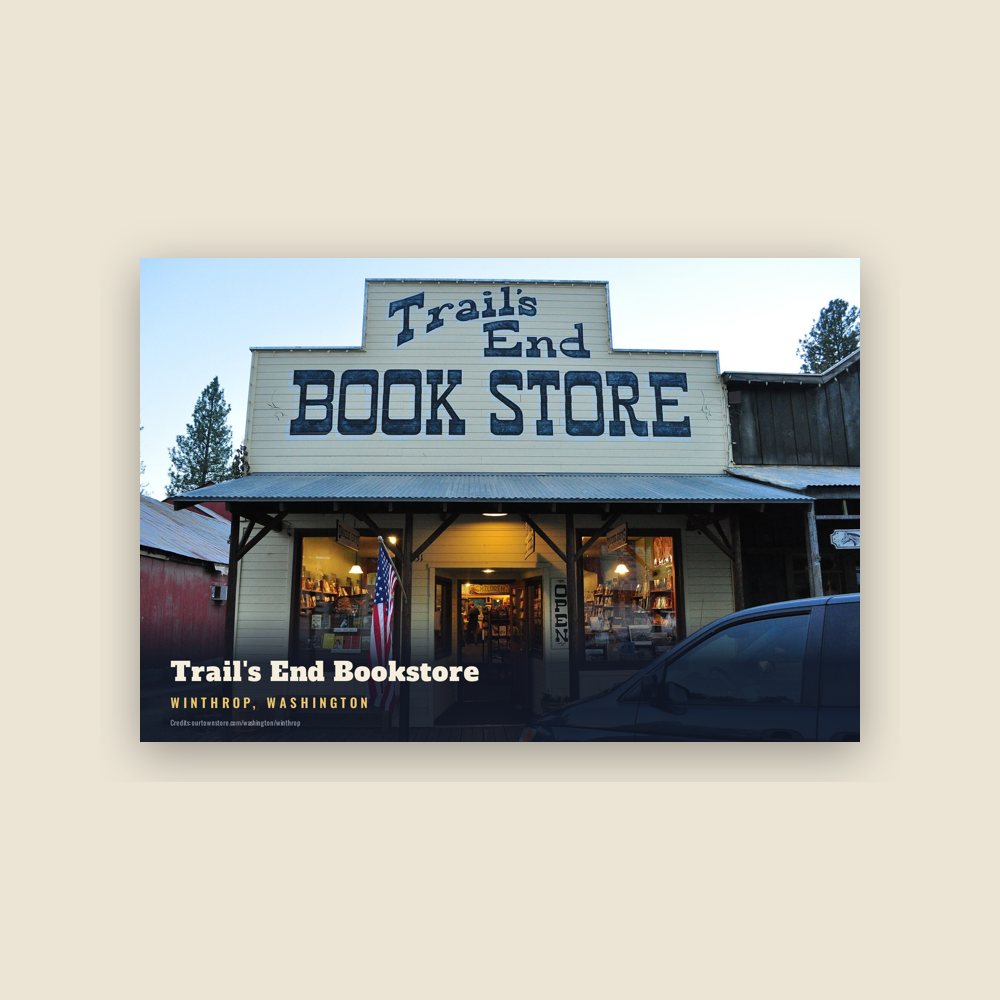
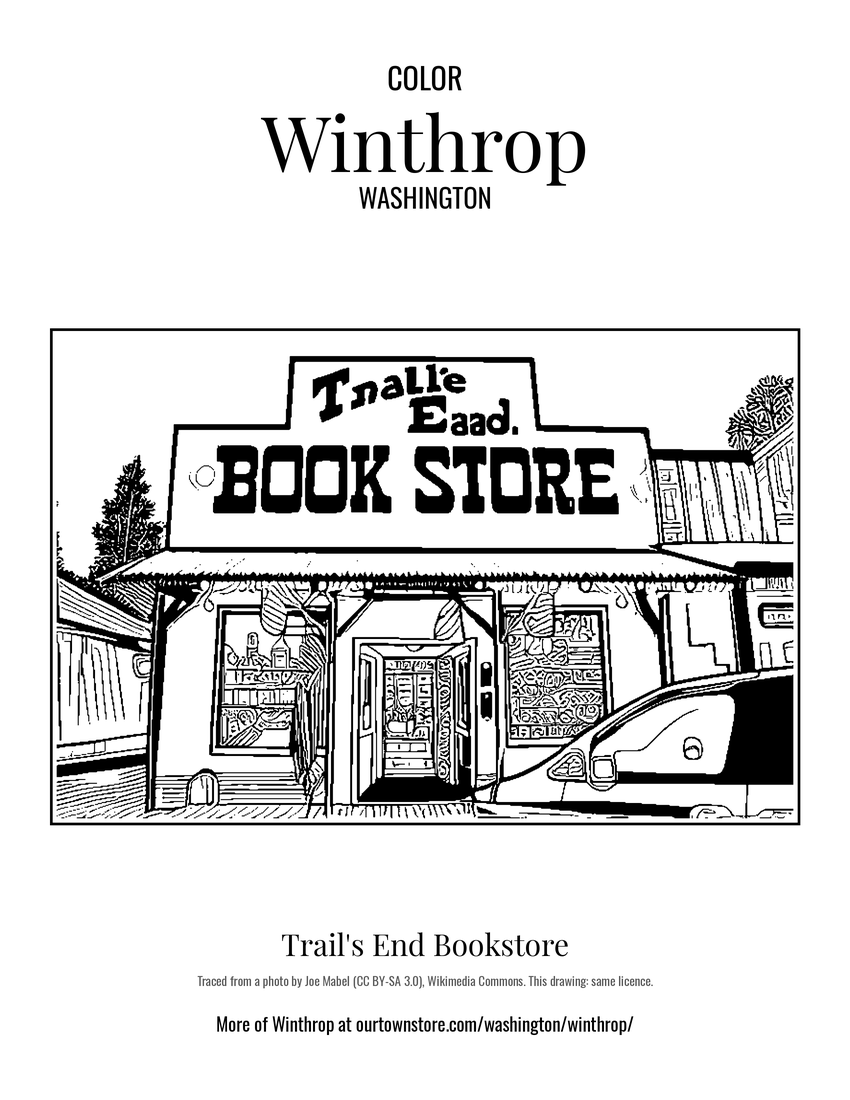 Trail's End Bookstore
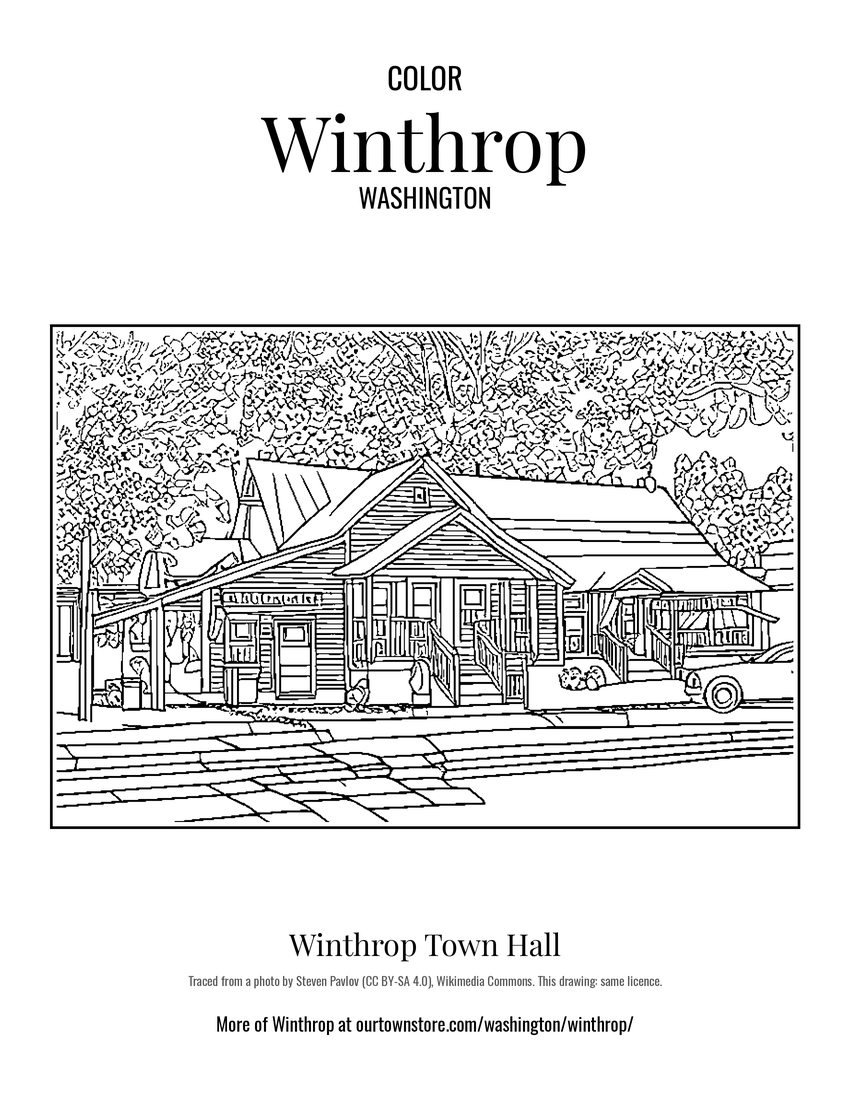 Winthrop Town Hall