A short history of Olympia
For thousands of years, the site of Olympia has been home to the Lushootseed-speaking people known as the Stechass (Lushootseed: st̕əč̓asəbš), who are today part of the Squaxin Island Tribe. Other Native Americans regularly visited the head of Budd Inlet, including the other ancestral tribes of the Squaxin, as well as the Nisqually, Puyallup, Chehalis, Suquamish, and Duwamish. The peninsula on which Olympia was built was named bəsčətxʷəd, meaning 'black bear place,' and a Stechass village was located at the site of Olympia. The modern city of Olympia has come to be called st̕č̓as in the Lushootseed language; originally the name referred to all Budd Inlet.
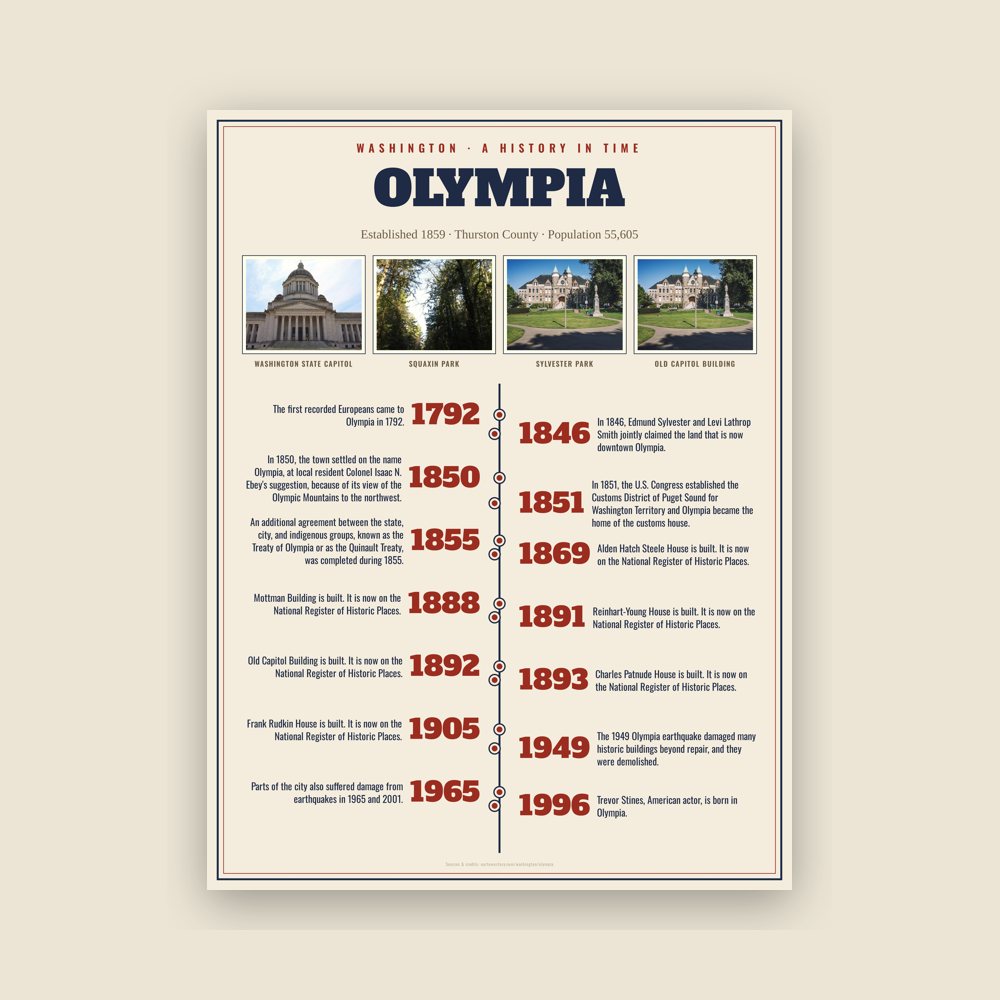
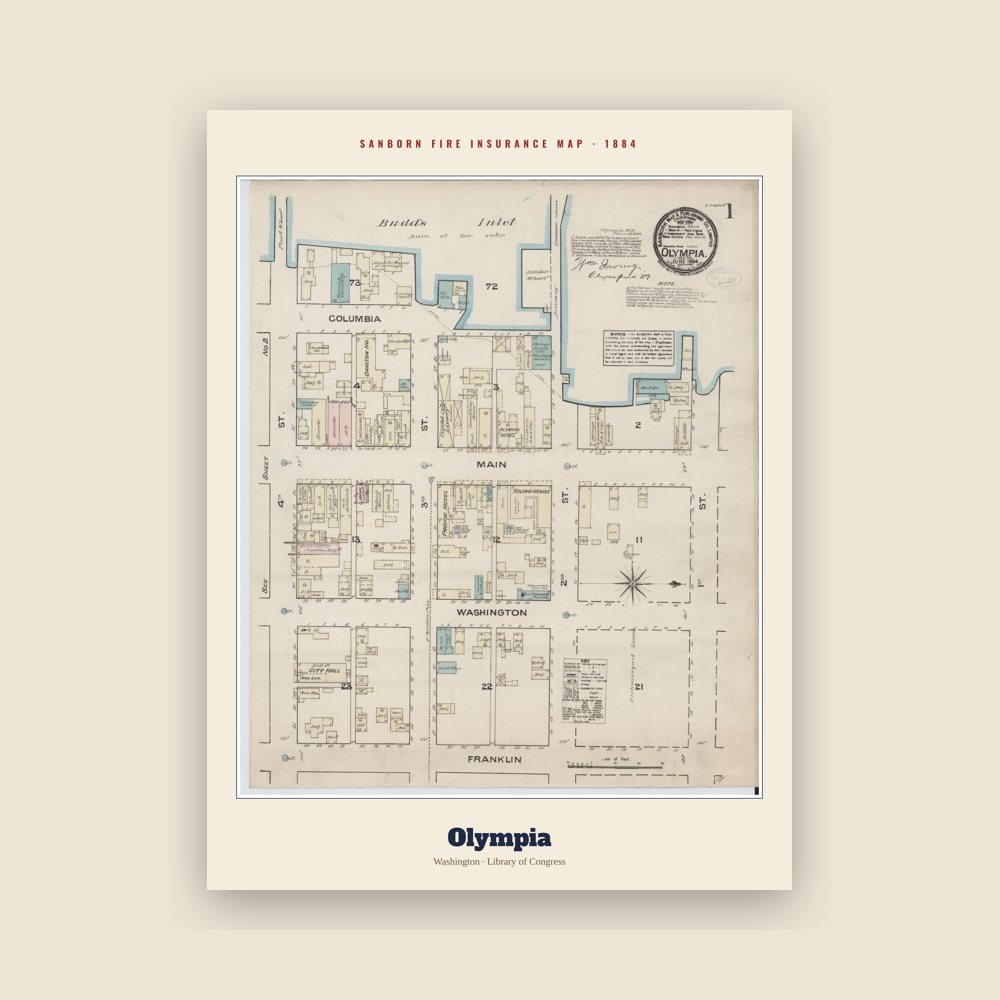
The first recorded Europeans came to Olympia in 1792. Peter Puget and a crew from the British Vancouver Expedition are said to have explored the site, but neither recorded any encounters with the resident Indigenous population. In 1846, Edmund Sylvester and Levi Lathrop Smith jointly claimed the land that is now downtown Olympia. In 1851, the U.S. Congress established the Customs District of Puget Sound for Washington Territory and Olympia became the home of the customs house. Its population steadily expanded from Oregon Trail immigrants. In 1850, the town settled on the name Olympia, at local resident Colonel Isaac N. Ebey's suggestion, because of its view of the Olympic Mountains to the northwest. The area began to be served by a small fleet of steamboats known as the Puget Sound Mosquito Fleet. It was declared the capital of the Washington Territories by Governor Isaac I. Stevens in November 1853. Olympia was the first and only capital of Washington in its history as both a territory and a state.
Over two days, December 24–26, 1854, Governor Stevens negotiated the Treaty of Medicine Creek with the representatives of the Nisqually, Puyallup, Squawksin, Stechass, Noo-Seh-Chatl, Squi-Aitl, T'Peeksin, Sahewamish, and S'Hotl-Ma-Mish tribes. Stevens's treaty included the preservation of Indigenous fishing, hunting, gathering and other rights. It also included a section which, at least as interpreted by United States officials, required the Native American signatories to move to one of three reservations. Doing so would effectively force the Nisqually people to cede their prime farming and living space. An additional agreement between the state, city, and indigenous groups, known as the Treaty of Olympia or as the Quinault Treaty, was completed during 1855. One of the leaders of the Nisqually, Chief Leschi, outraged, refused to give up ownership of this land and instead fought for his people's right to their territory, sparking the beginning of the Puget Sound War. The war ended with Leschi's capture in 1856; he was executed two years later.
Olympia was incorporated as a fourth-class municipality, commonly referred to as a town, on January 28, 1859, and as a charter city on December 1, 1881.
The 1949 Olympia earthquake damaged many historic buildings beyond repair, and they were demolished. Parts of the city also suffered damage from earthquakes in 1965 and 2001.
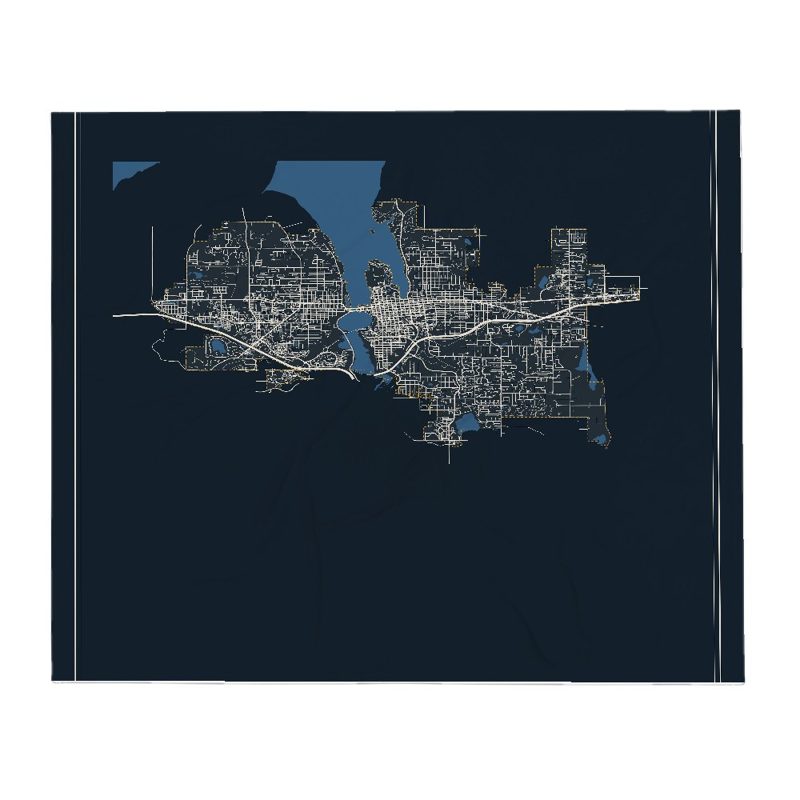
Interstate 5 was built through the south side of the city in the late 1950s as a replacement for earlier highways that traveled through downtown Olympia. The freeway was originally planned to cut through the city, but was moved farther out to save costs. It opened to traffic on December 12, 1958, and was later expanded in 1991.
Adapted (trimmed) from the Wikipedia article Olympia, Washington, revision 1379930758 by its contributors, licensed CC BY-SA 4.0.
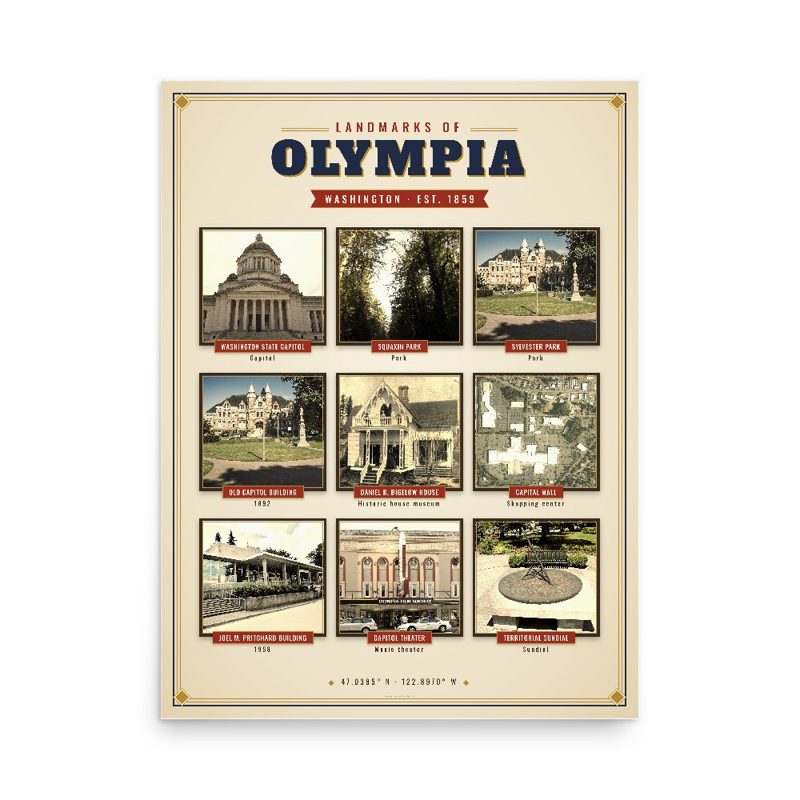
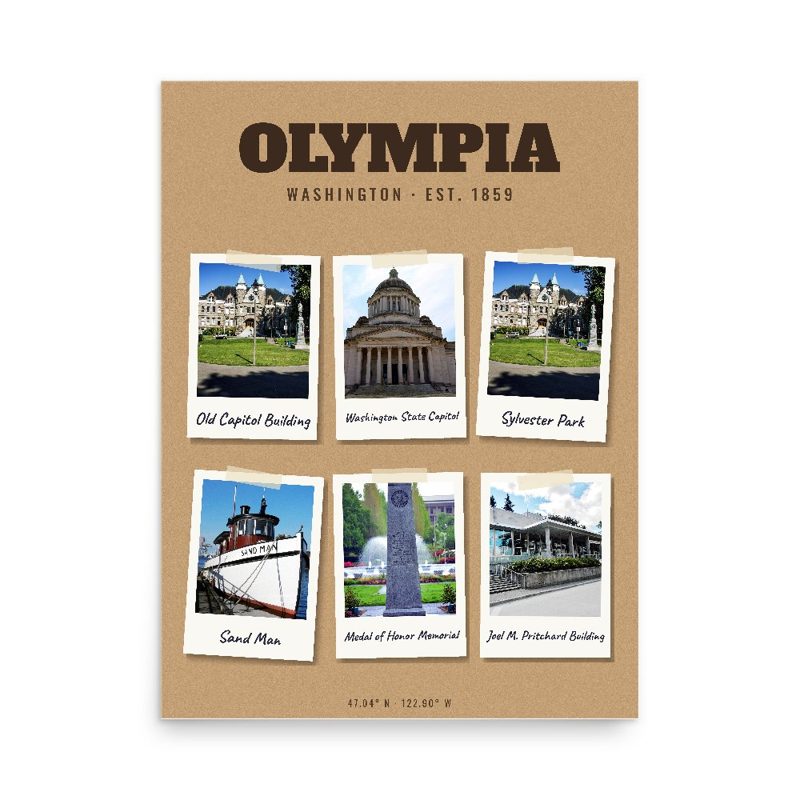
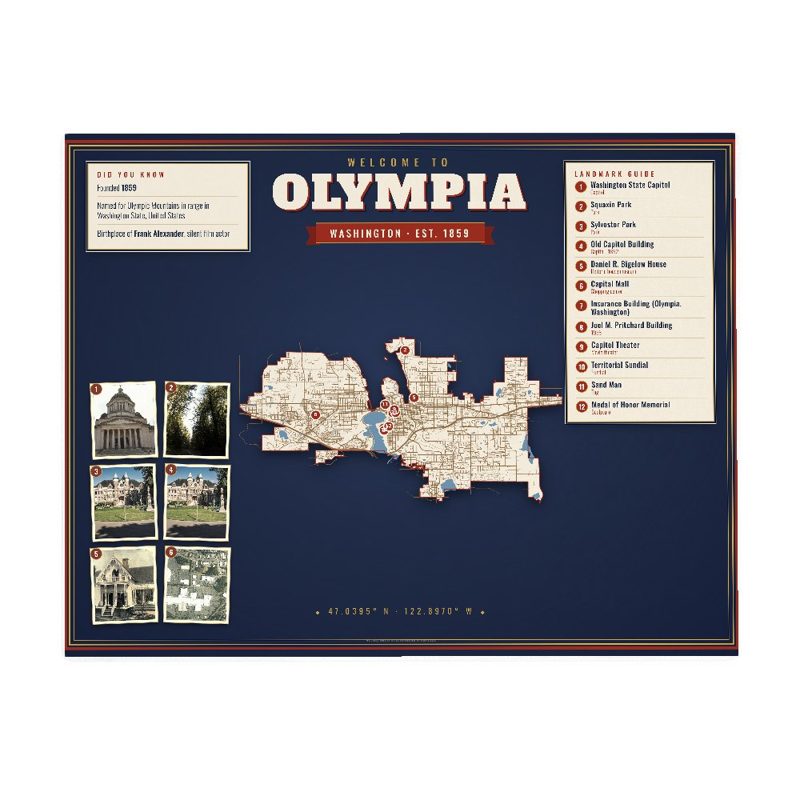







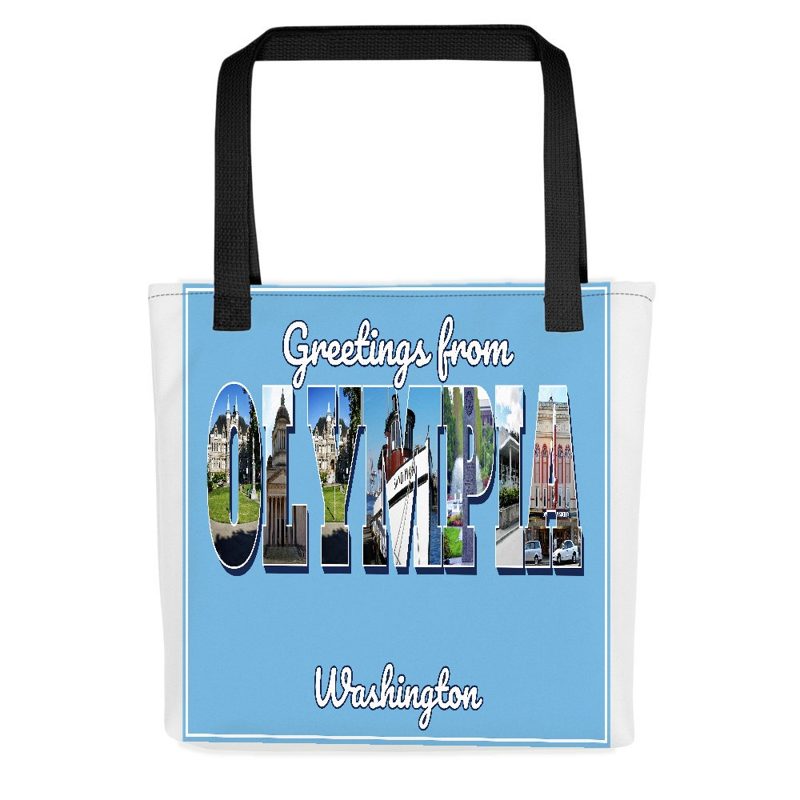

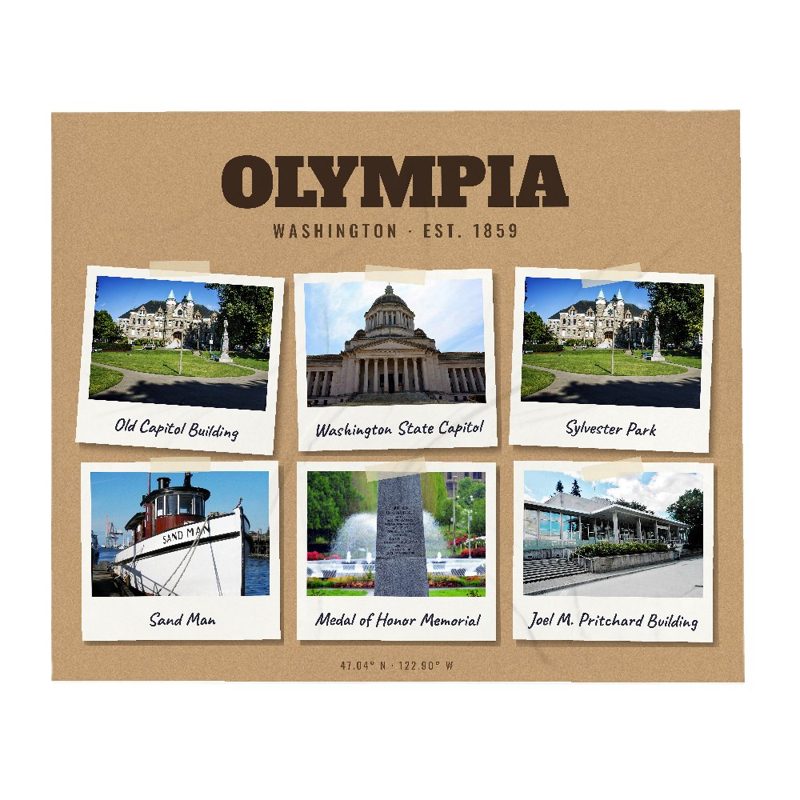

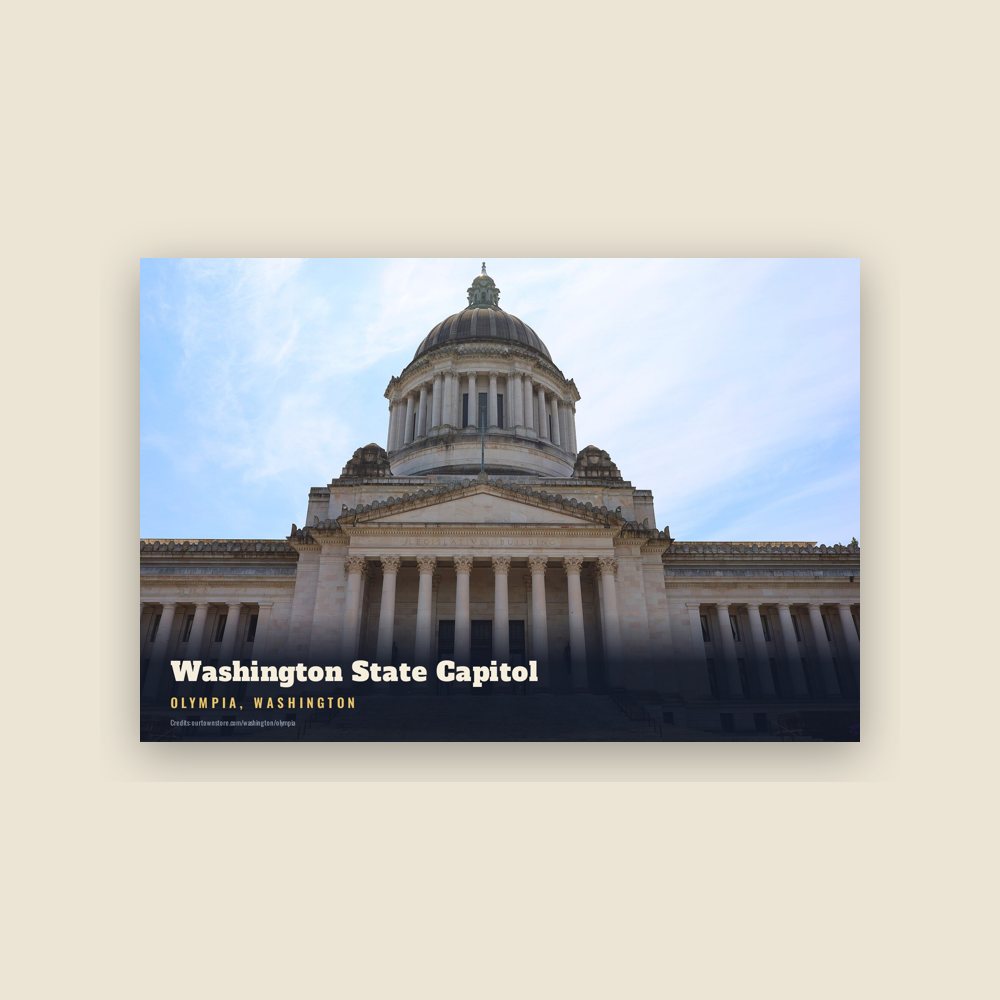
 Washington State Capitol
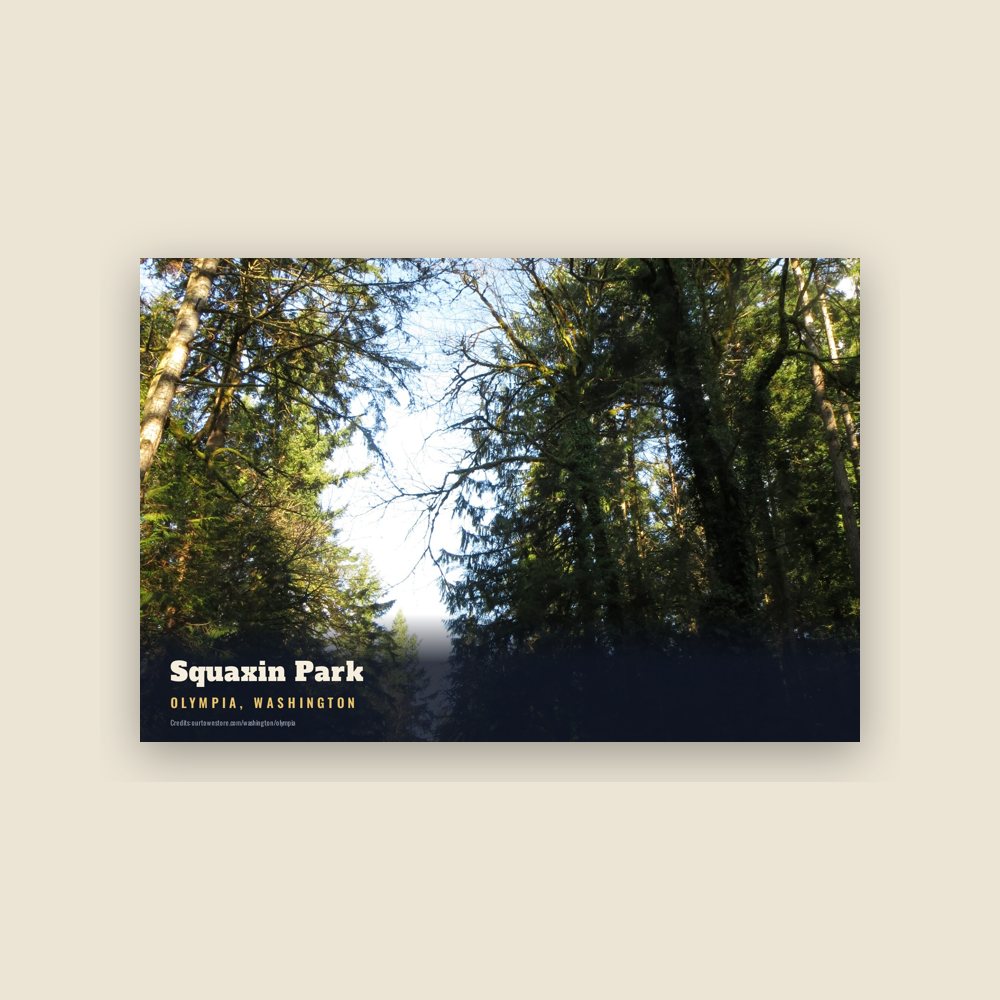
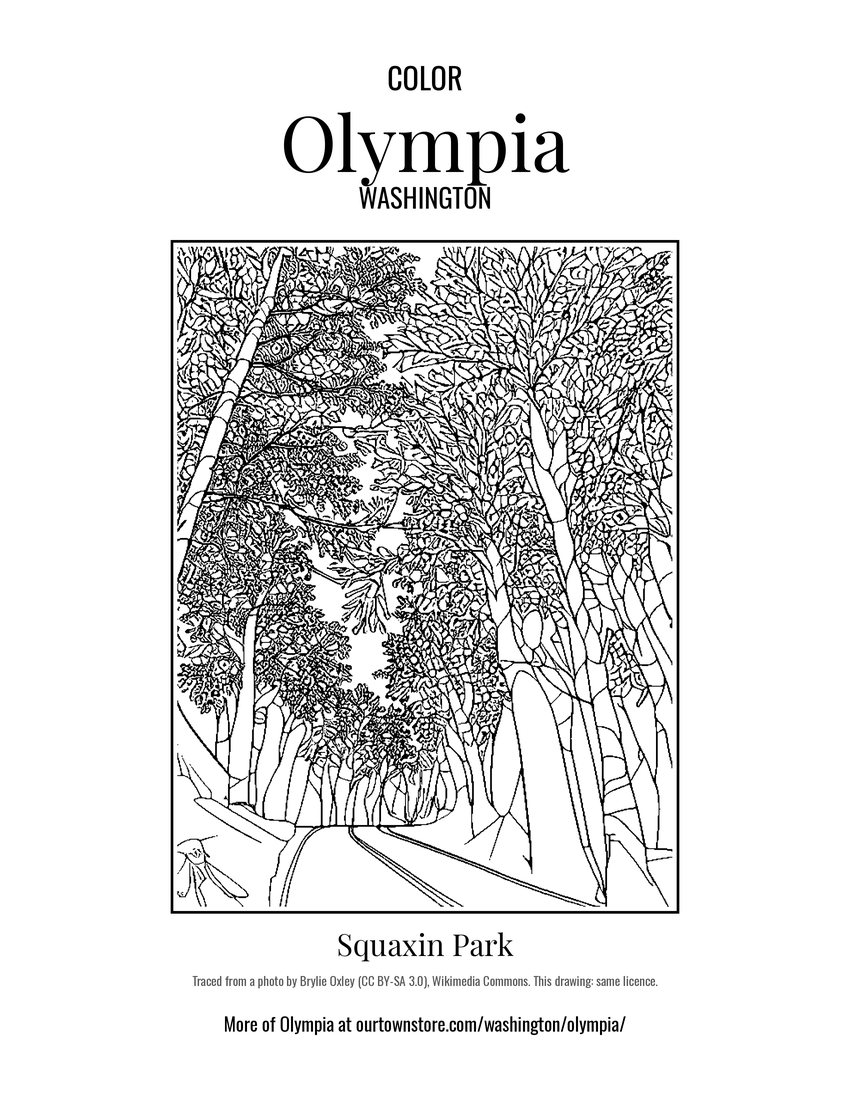 Squaxin Park
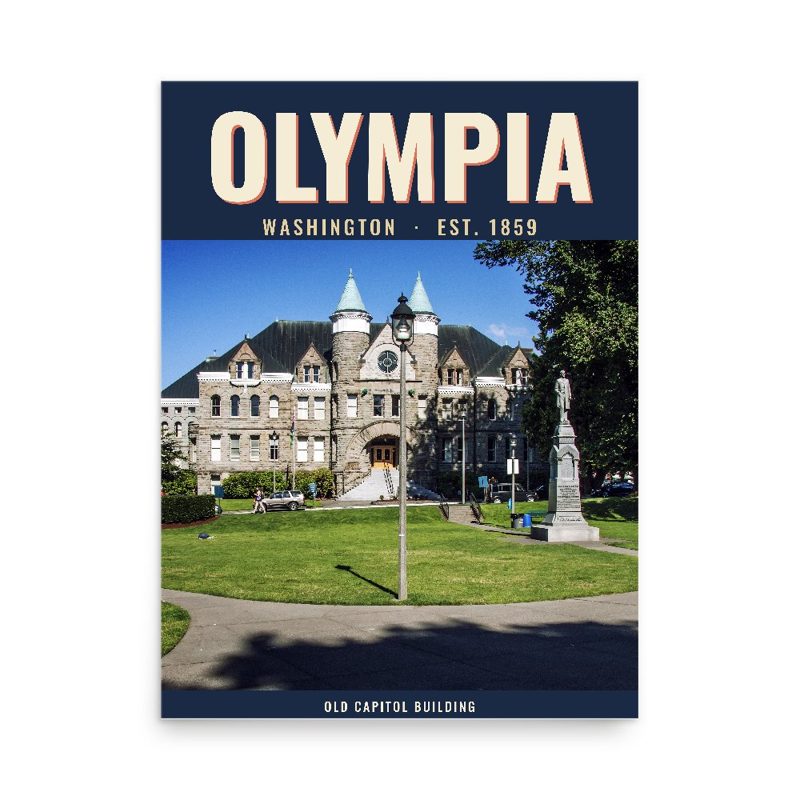
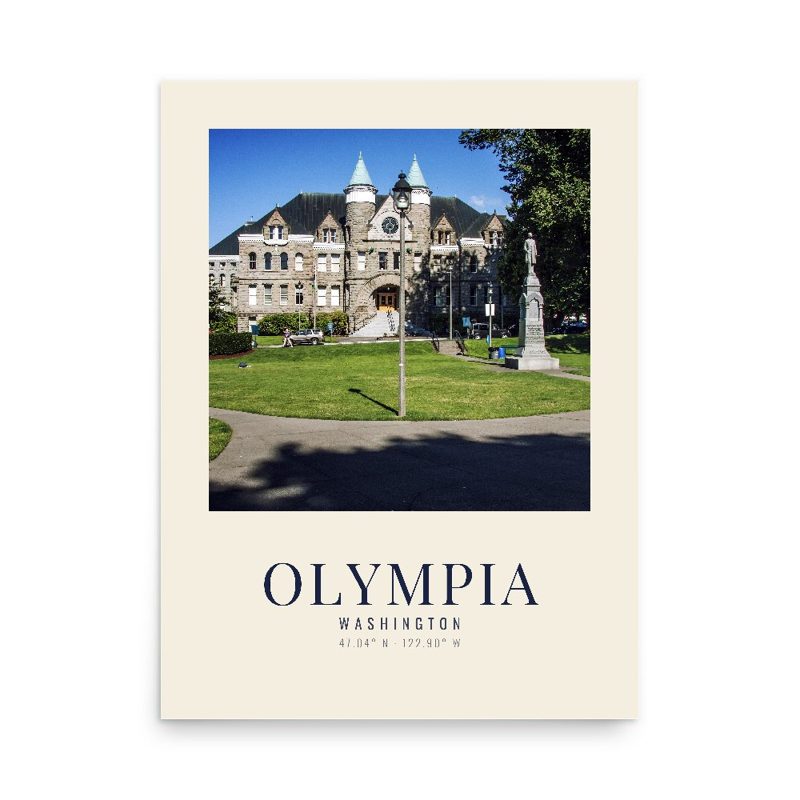
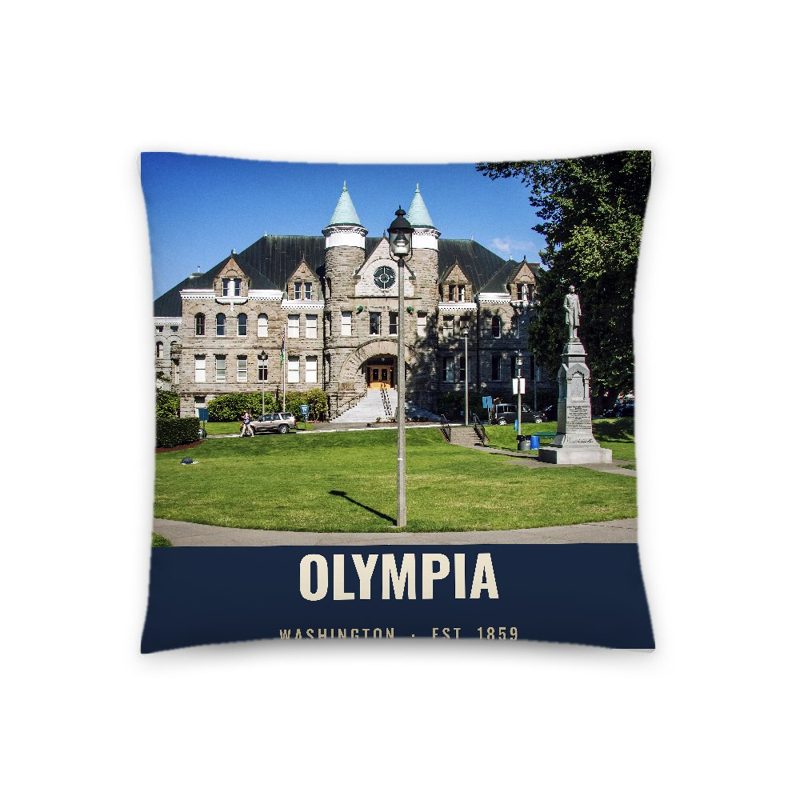
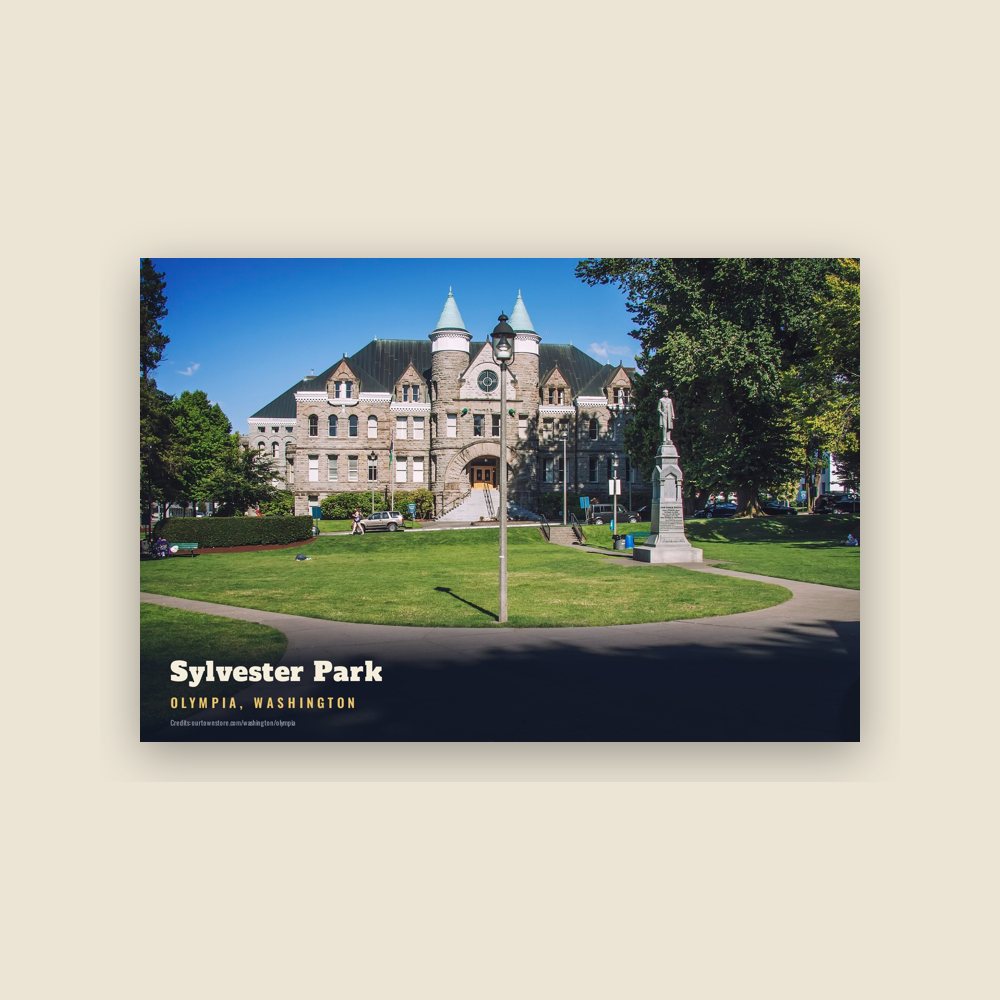
 Sylvester Park
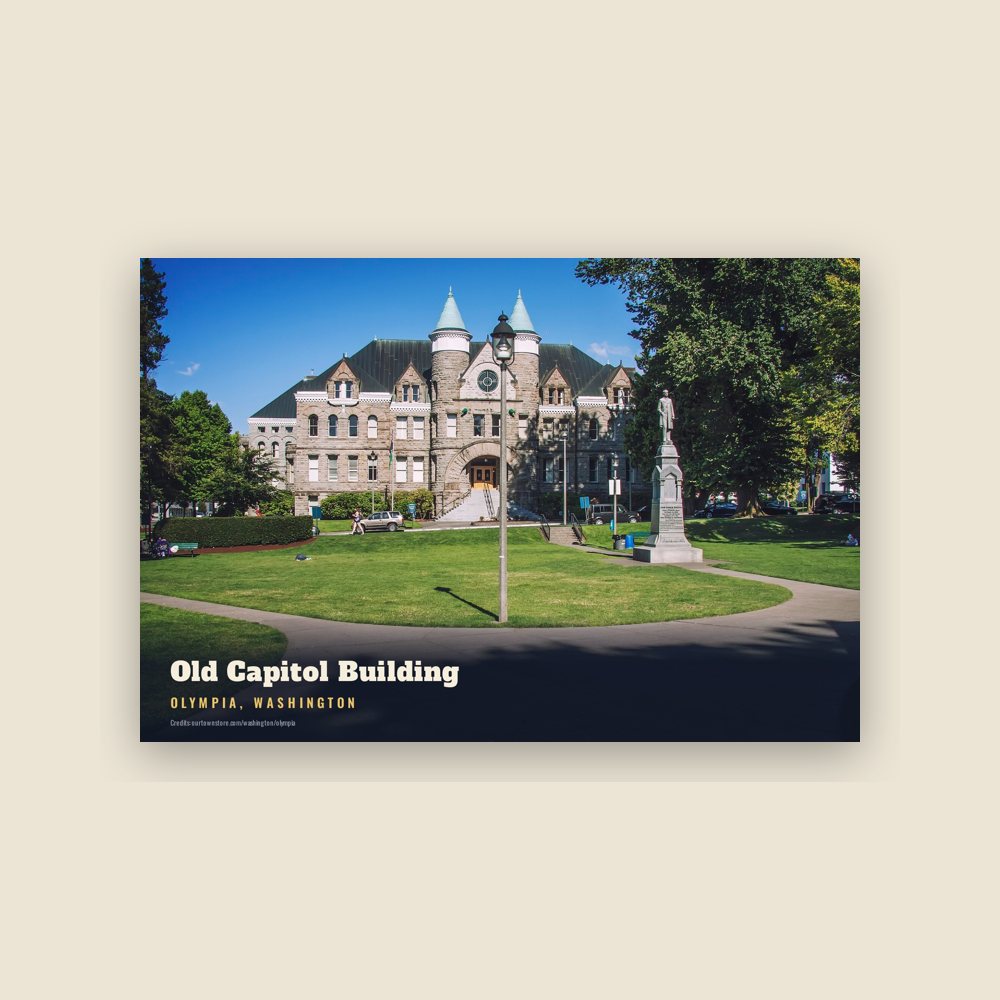
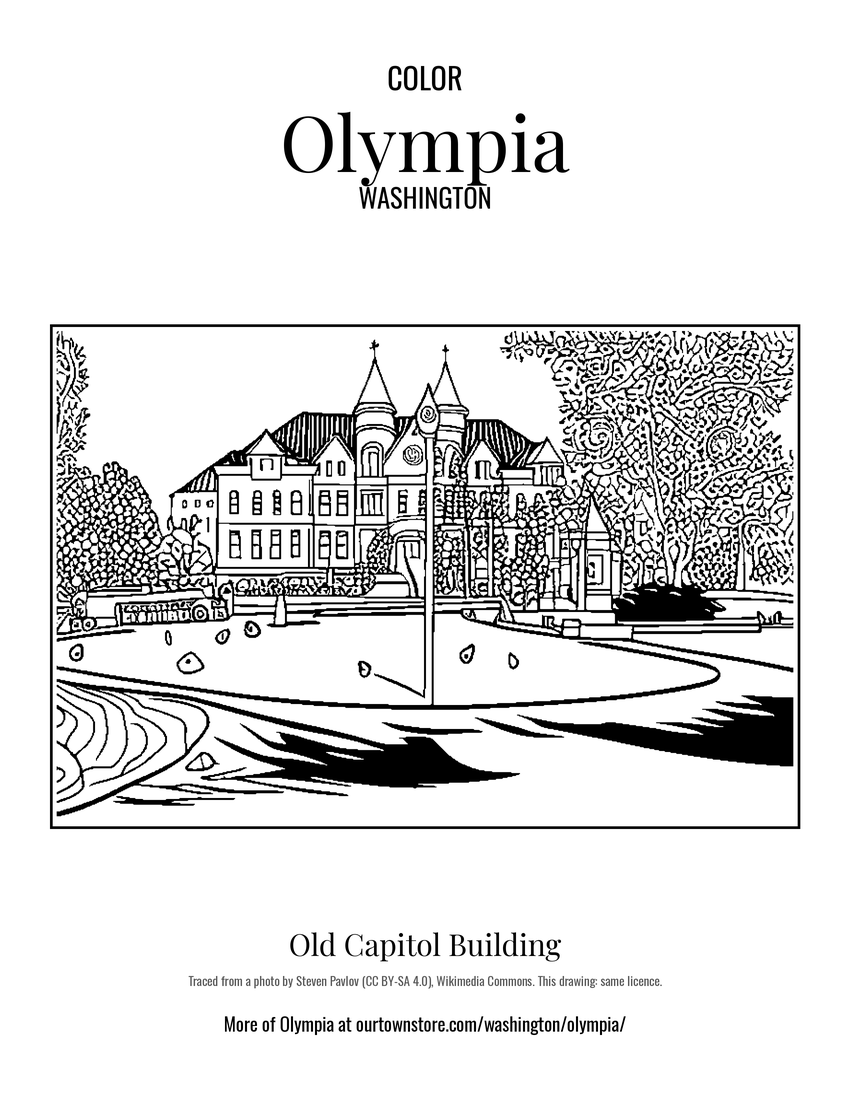 Old Capitol Building