A short history of Cosmopolis
The area around the mouth of the Chehalis River is the ancestral home of indigenous Coast Salish peoples who are today referred to as the Lower Chehalis. The first white settler in the area, James Pilkington, staked a Donation Land Act claim to 155.5 acres (62.9 ha) on the south bank of the river in 1852. The site was later used for unsuccessful negotiations between indigenous representatives and the Washington territorial government for the 1855 Chehalis River Treaty. Pilkington built a cabin on the land, but later sold the property in 1853 to Kentucky-born emigrants David F. Byles and Austin E. Young. Byles and Young proposed a plat for a town named Cosmopolis on the south bank of the Chehalis River. The origin of the name is unclear; one account is that it came from an indigenous chief's name, and another claims that an earlier settler asked for a name that means "city of the whole world".
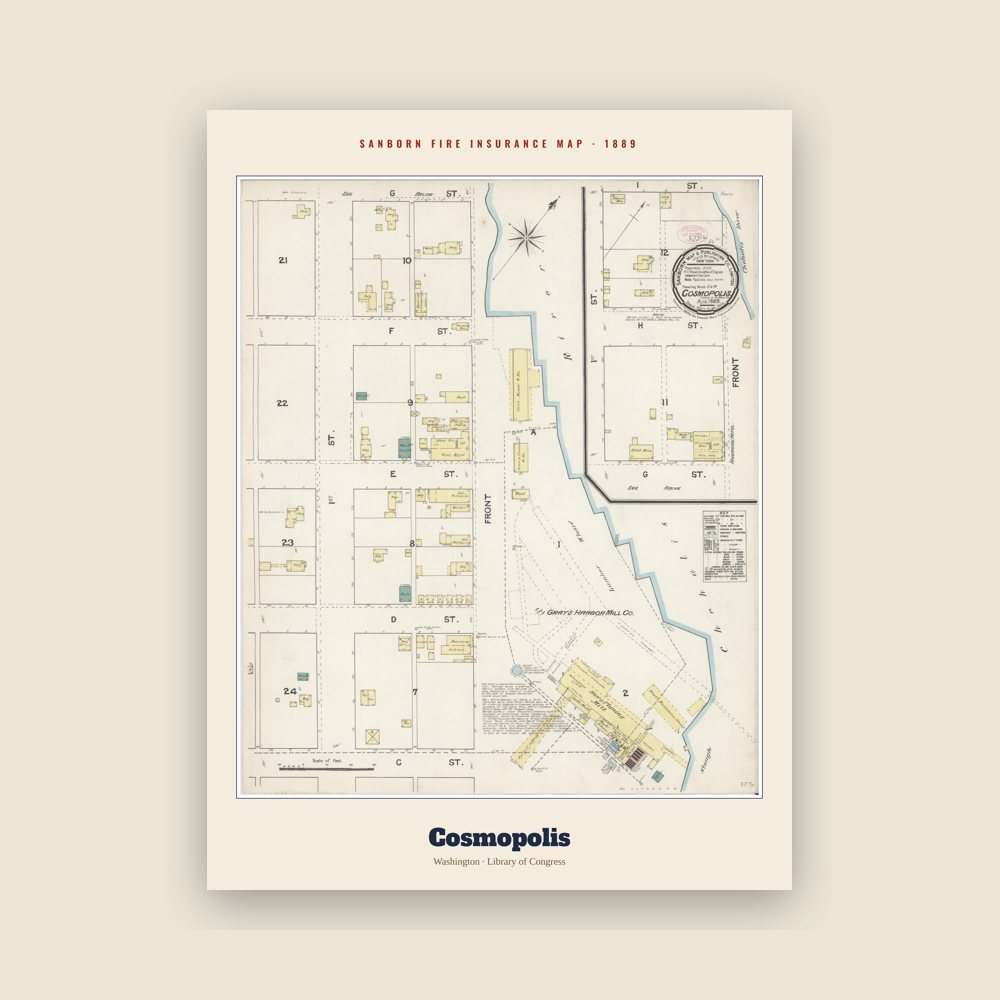
Cosmopolis was platted in 1861 and is considered the oldest modern settlement in Grays Harbor County (then known as Chehalis County). Several settlers had attempted to build the townsite as planned, but failed due to various business issues. A lumber mill opened in 1881 and soon became profitable, bringing other businesses to Cosmopolis, which was incorporated as a town in 1891. The Northern Pacific Railway constructed a spur line through the new town in 1892 that traveled across a bridge to Junction City on the north side of the Chehalis River, with onward connections to Tacoma. The mill grew in the early 20th century under various owners until it was sold to Weyerhaeuser in 1957.
Adapted (trimmed) from the Wikipedia article Cosmopolis, Washington, revision 1379966438 by its contributors, licensed CC BY-SA 4.0.
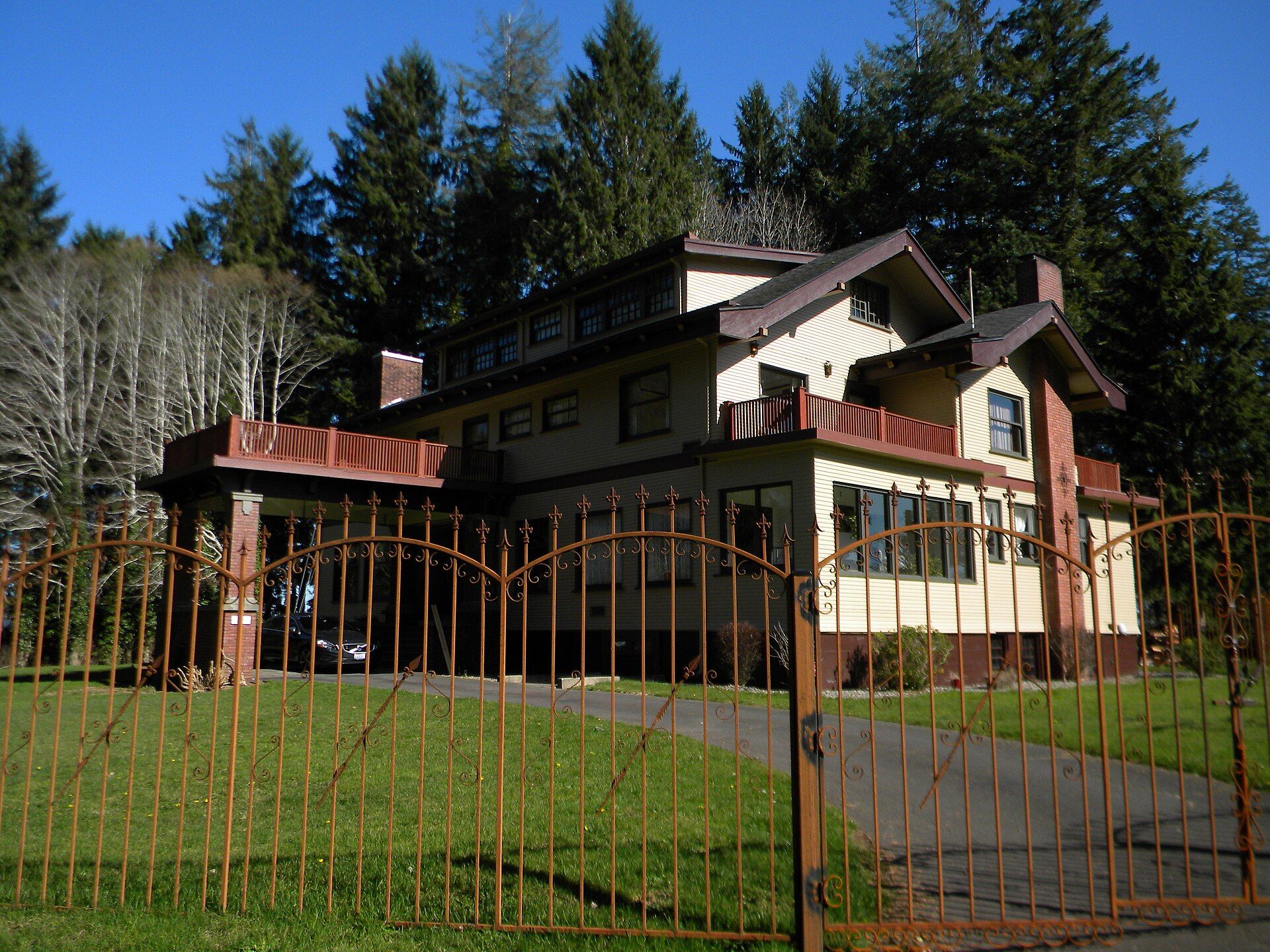
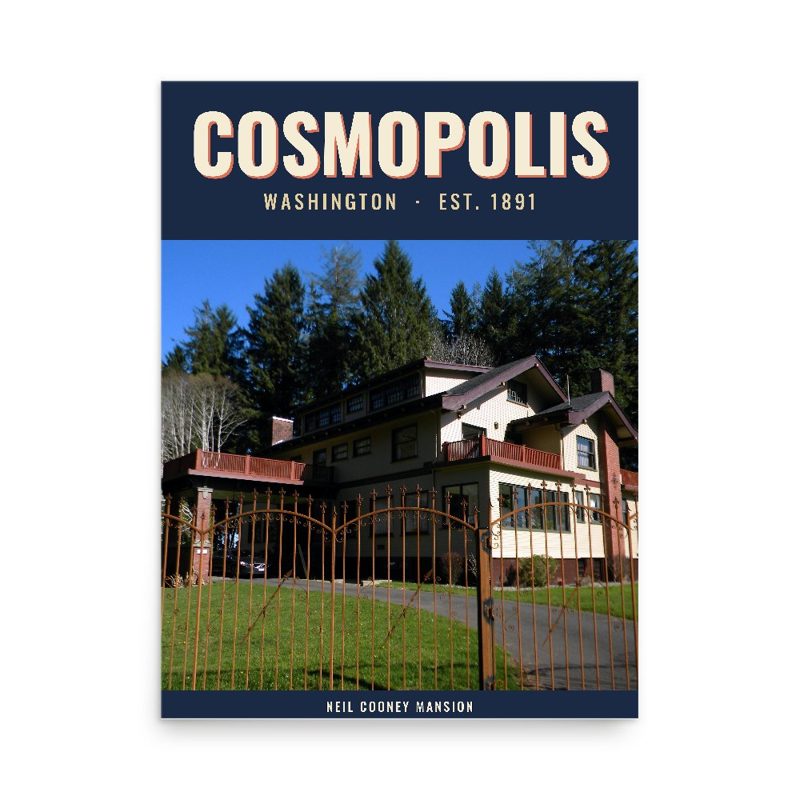
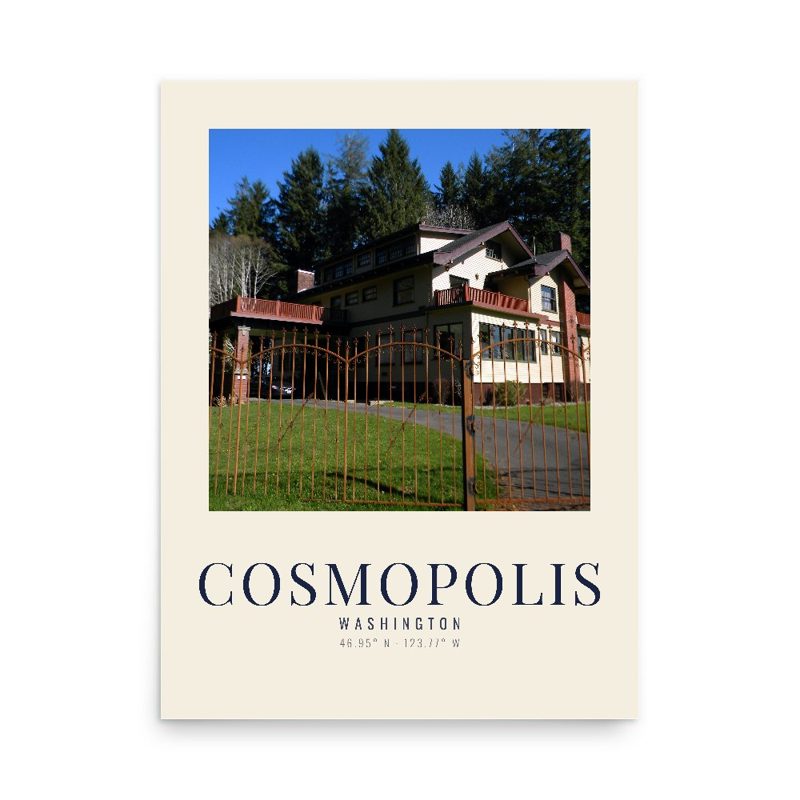
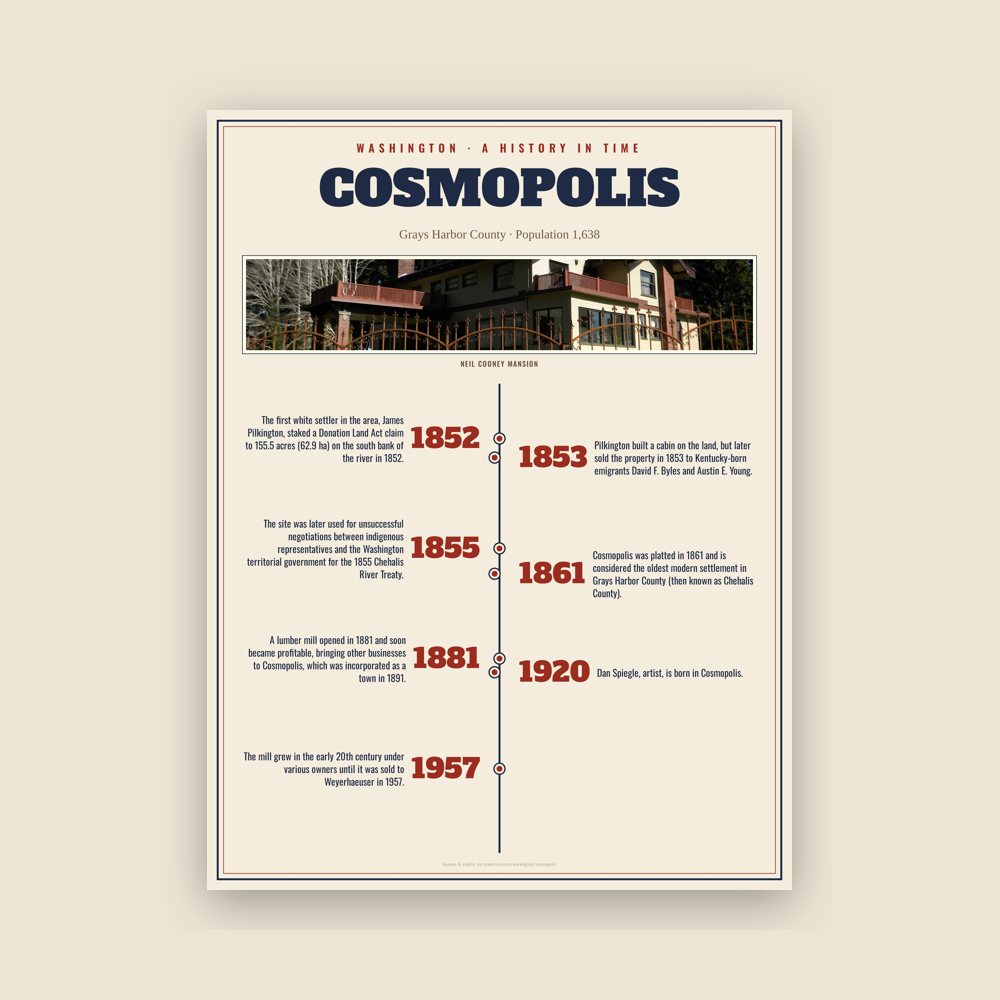
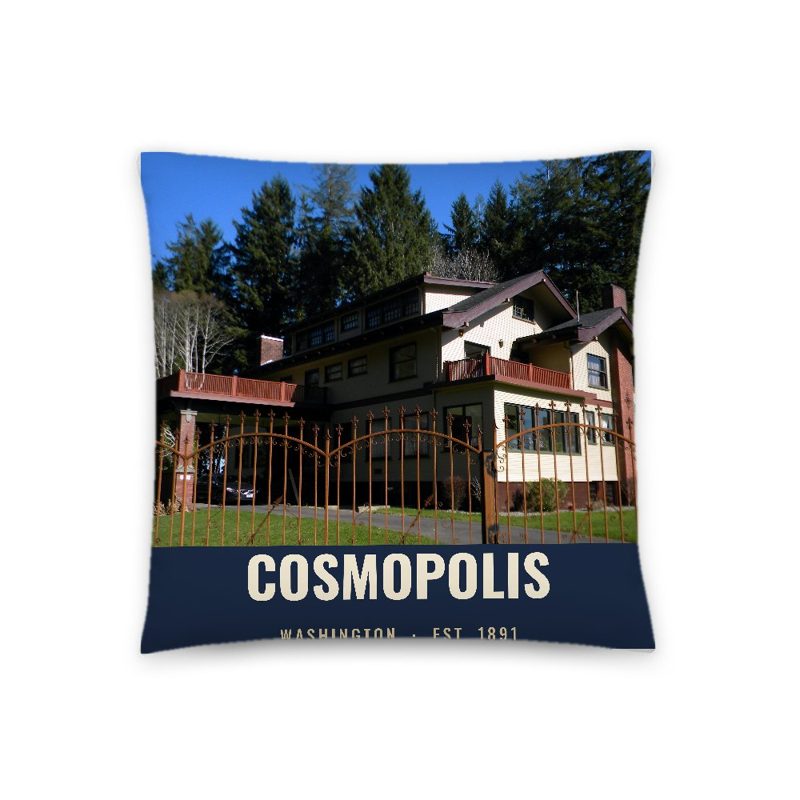
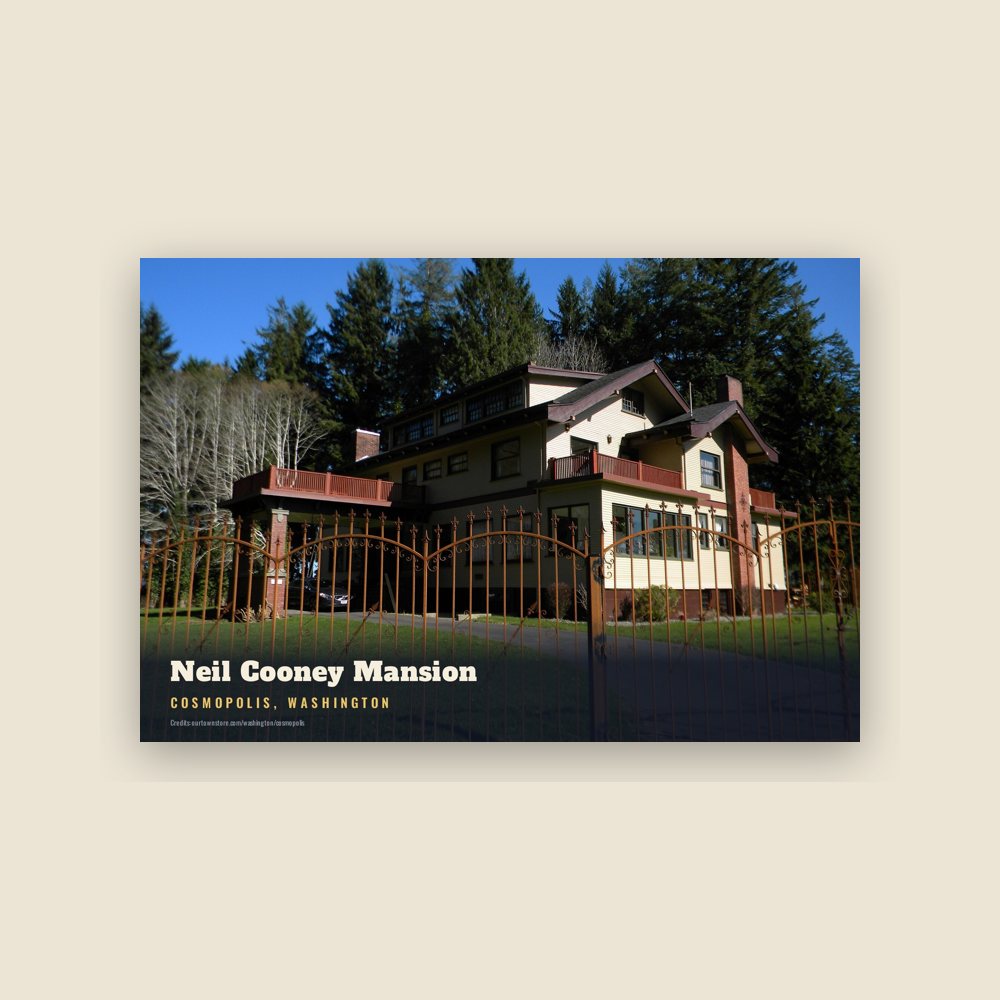
 Neil Cooney Mansion