A short history of Aberdeen
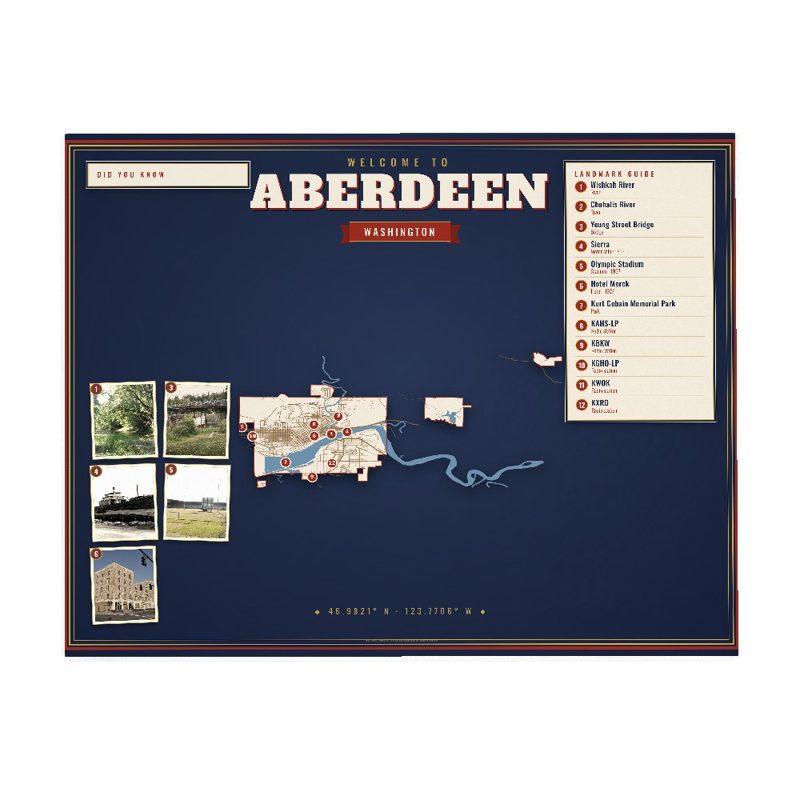
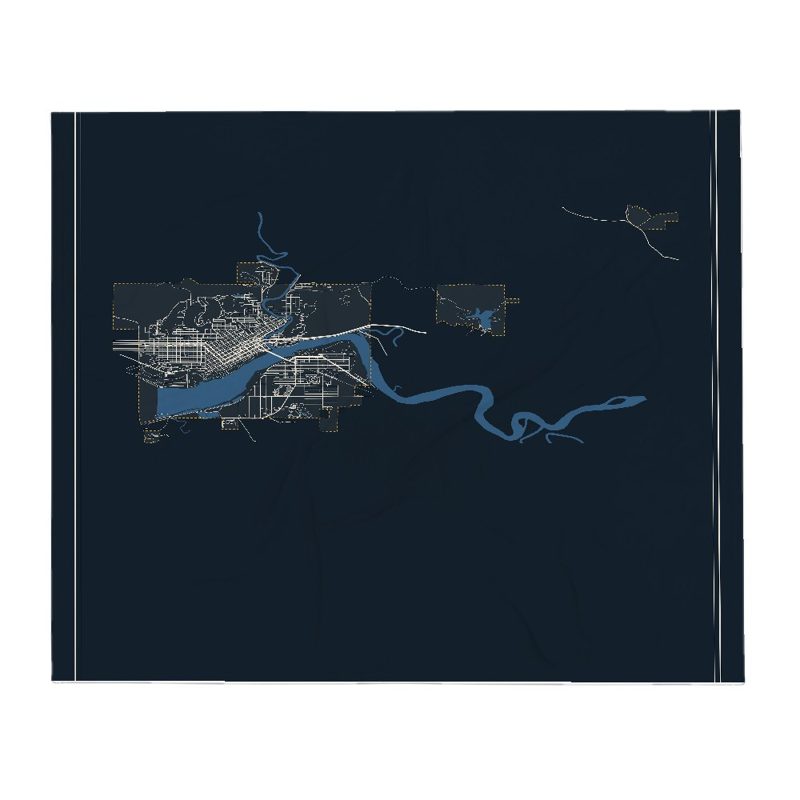
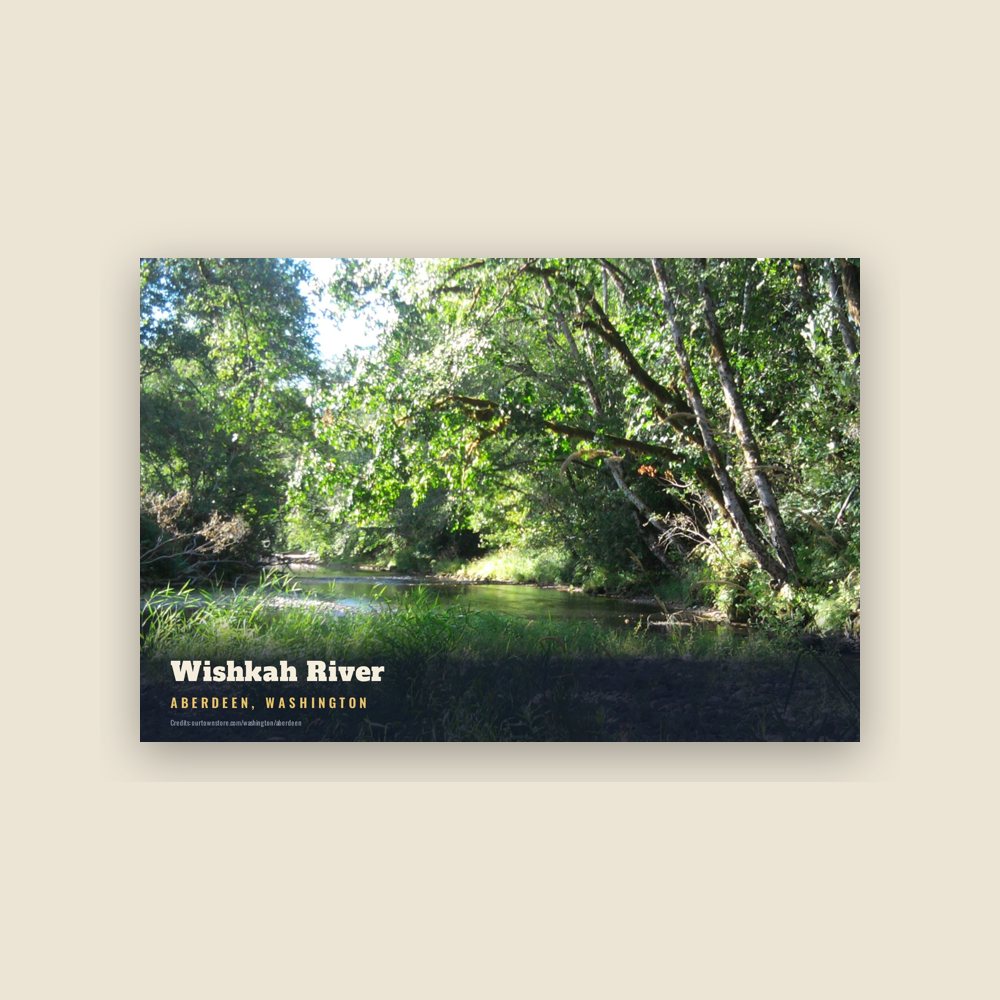
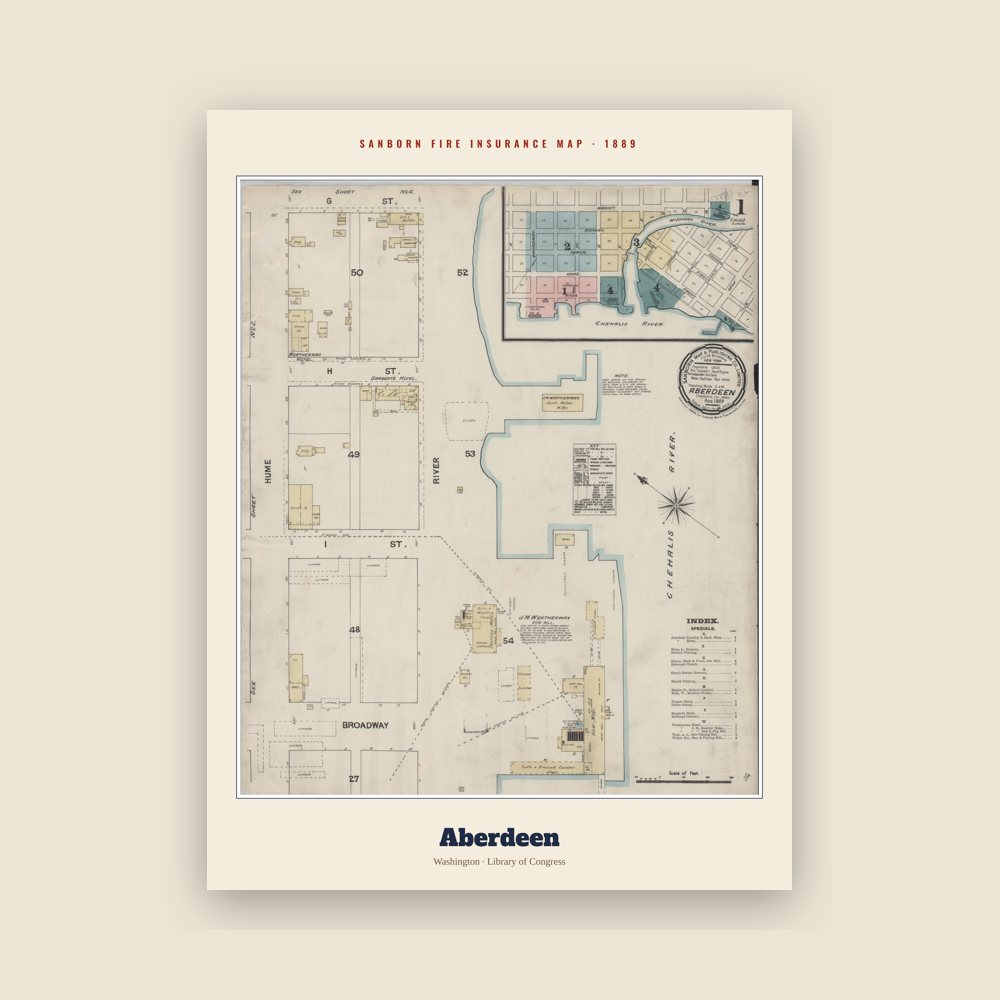
Samuel Benn, a New York City native, established a homestead on the Chehalis River in 1859. He later platted a town at the site named Aberdeen. According to accounts collected by historian Edmond S. Meany, the name has two possible origins: from the Ilwaco-based Aberdeen Packing Company, which opened a cannery on the homestead in 1873; or from the Scottish city of Aberdeen, named by an early settler who had lived in Scotland. Like the Scottish city, Aberdeen is a port settlement situated at the mouth of two rivers—the Chehalis and the Wishkah. An earlier name for the settlement was Heraville, which was recorded by Benn.
The city was founded by Samuel Benn in 1884 and incorporated on May 12, 1890. Although it became the largest and best-known city in Grays Harbor, Aberdeen lagged behind nearby Hoquiam and Cosmopolis in its early years. When A.J. West built the town's first sawmill in 1894, the other two municipalities had been in business for several years. Aberdeen and its neighbors vied to be the terminus for Northern Pacific Railroad, but instead of ending at one of the established mill towns, the railroad skimmed through Cosmopolis and headed west for Ocosta. Hoquiam and Aberdeen citizens together built a spur; in 1895, the line connected Northern Pacific tracks to Aberdeen.
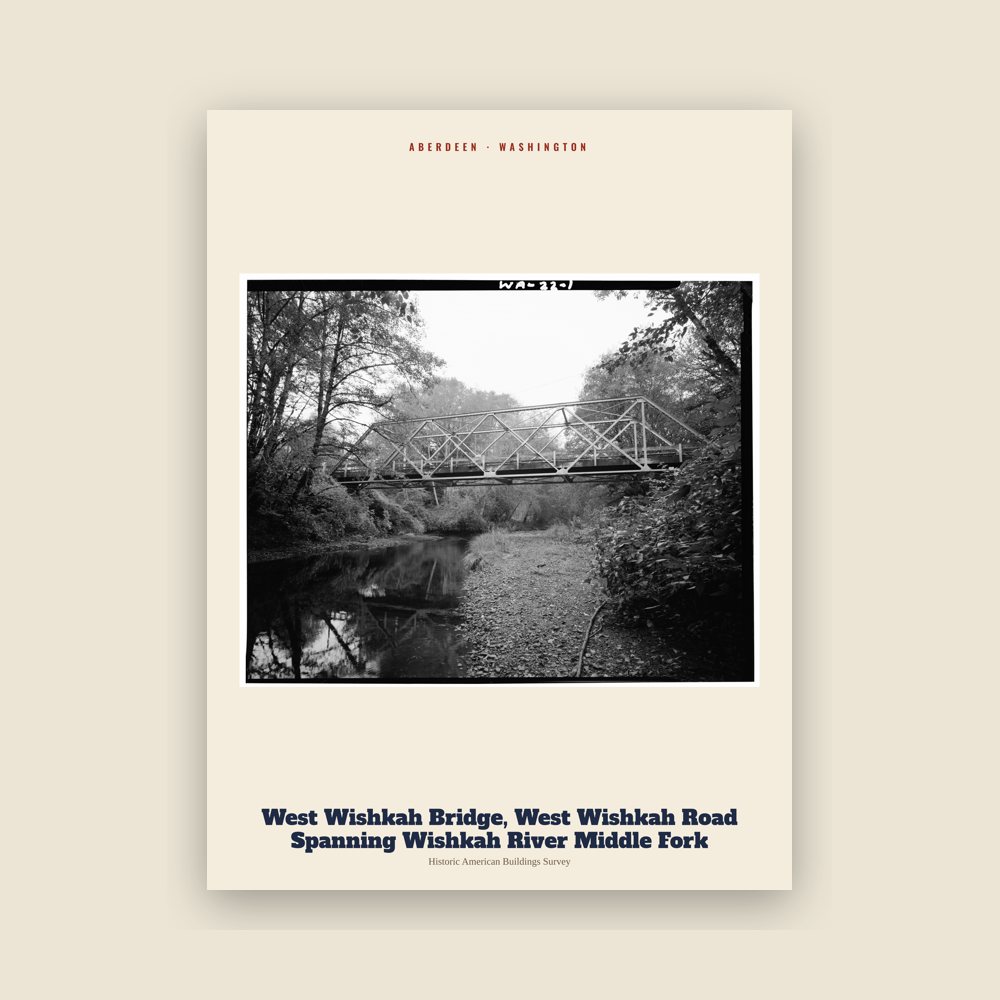
By 1900, Aberdeen had become home to many saloons, brothels, and gambling establishments. It was nicknamed both "The Hellhole of the Pacific" and "The Port of Missing Men" due to its high murder rate. One notable resident was Billy Gohl, known locally as Billy "Ghoul", who was rumored to have killed at least 140 men; he disposed of the bodies in the Wishkah River. Gohl was ultimately convicted of two murders.
Aberdeen was hit hard during the Great Depression, with the number of major local sawmills reduced from 37 to 9. By the late 1970s, most of the area had been logged and the remaining mills closed during the next decade. By the early 1990s, the industry was decimated due to resource reduction. Local political and business leaders ignored this fact and did not pursue economic diversification.
Adapted (trimmed) from the Wikipedia article Aberdeen, Washington, revision 1371823769 by its contributors, licensed CC BY-SA 4.0.
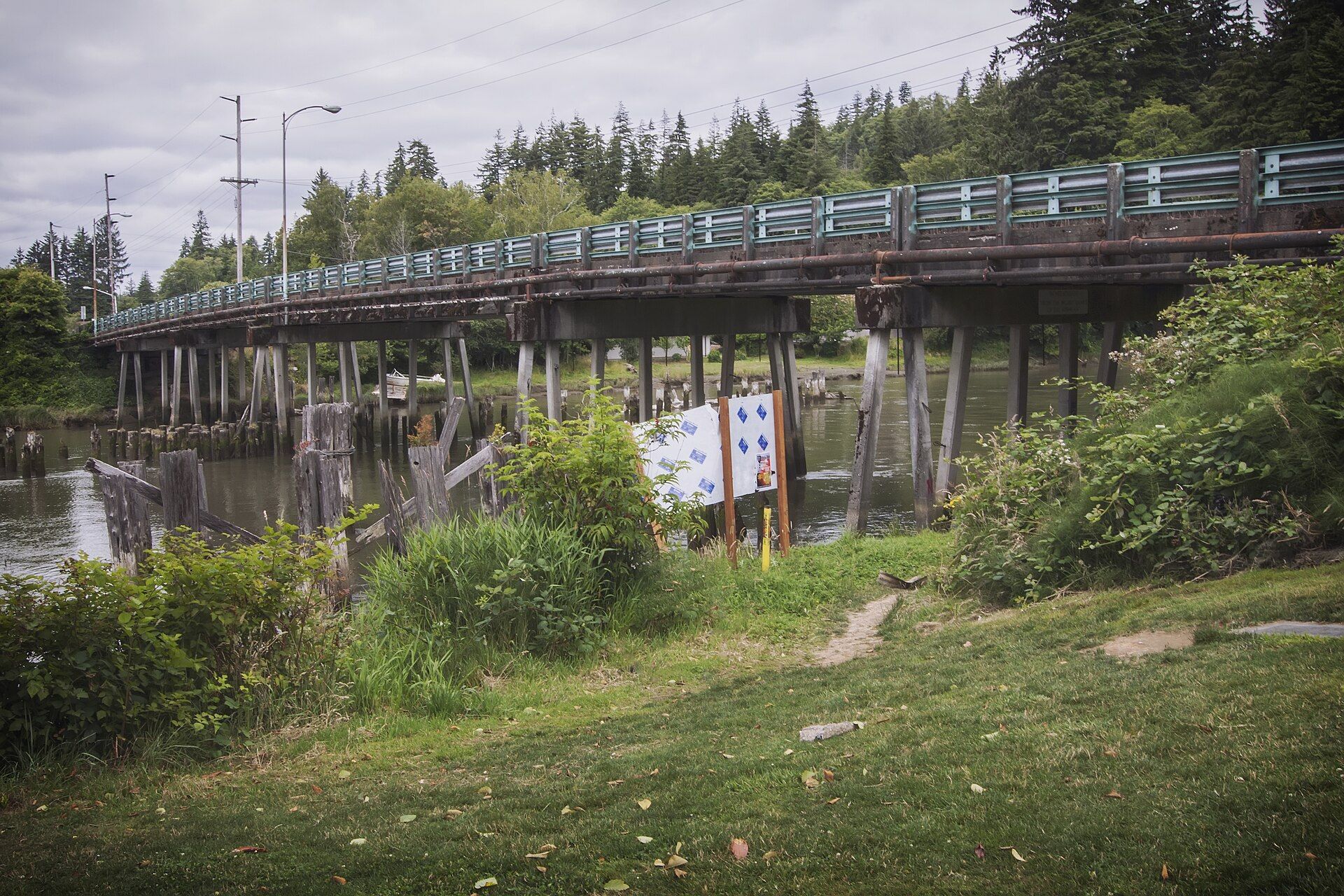
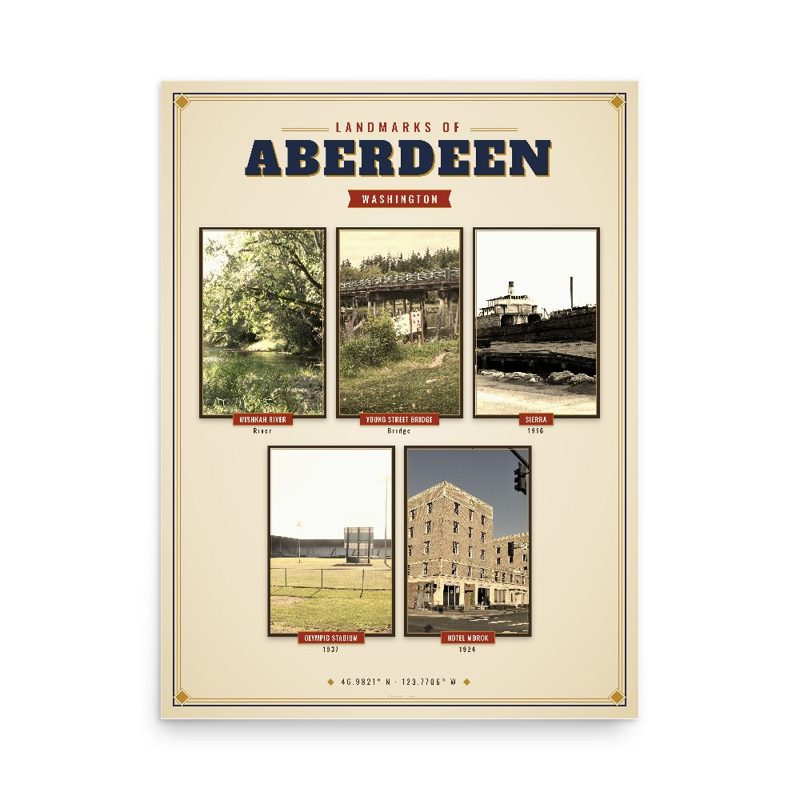
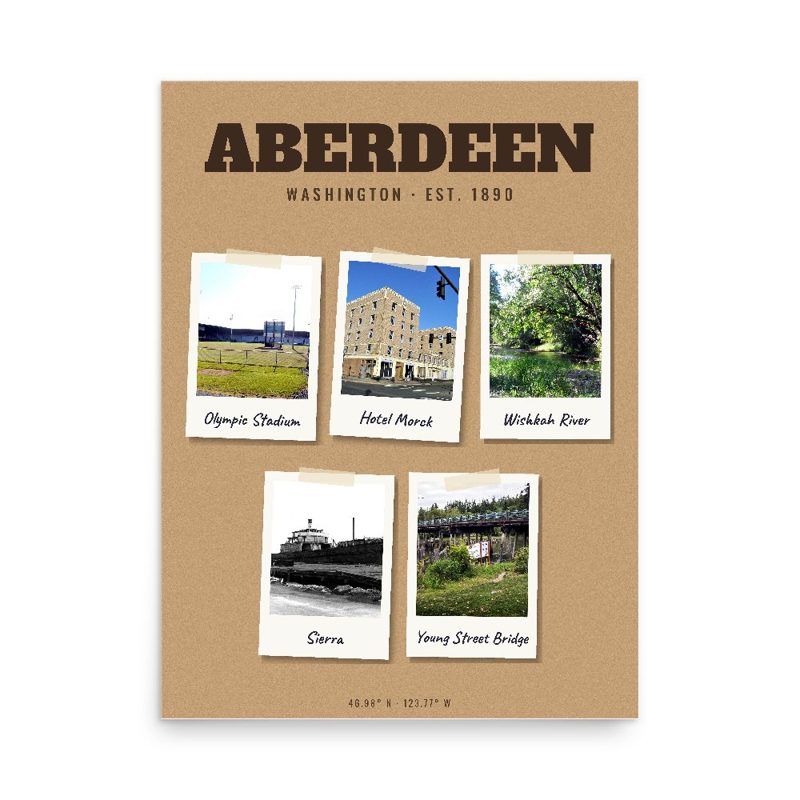
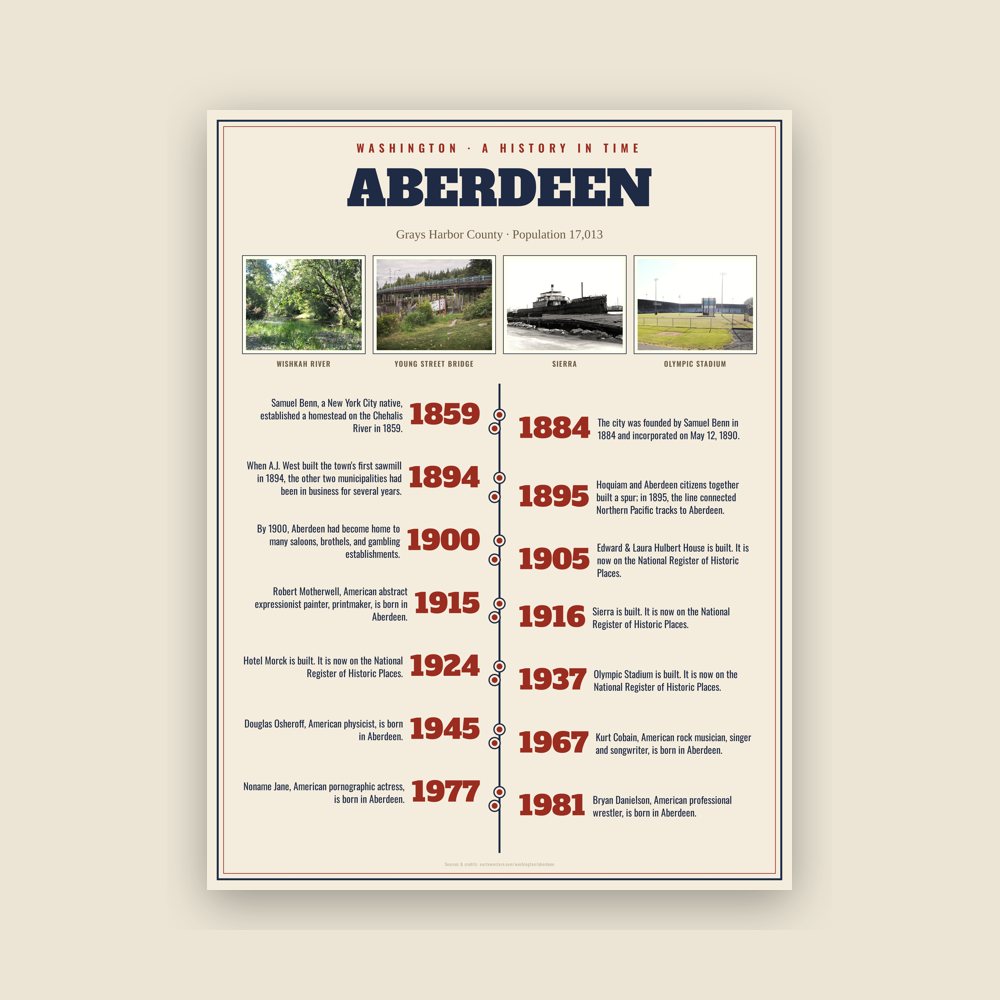
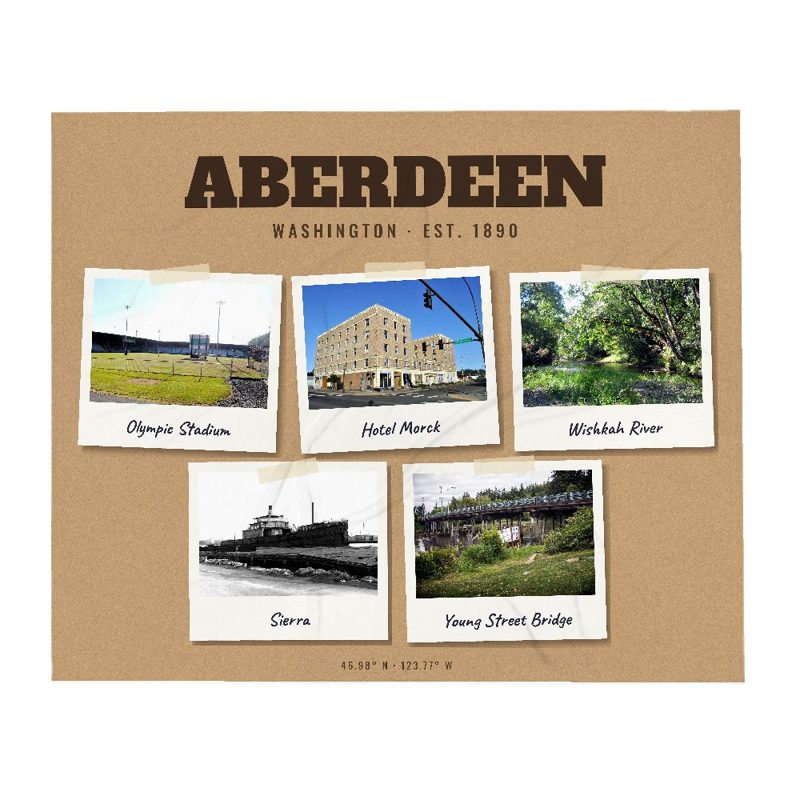
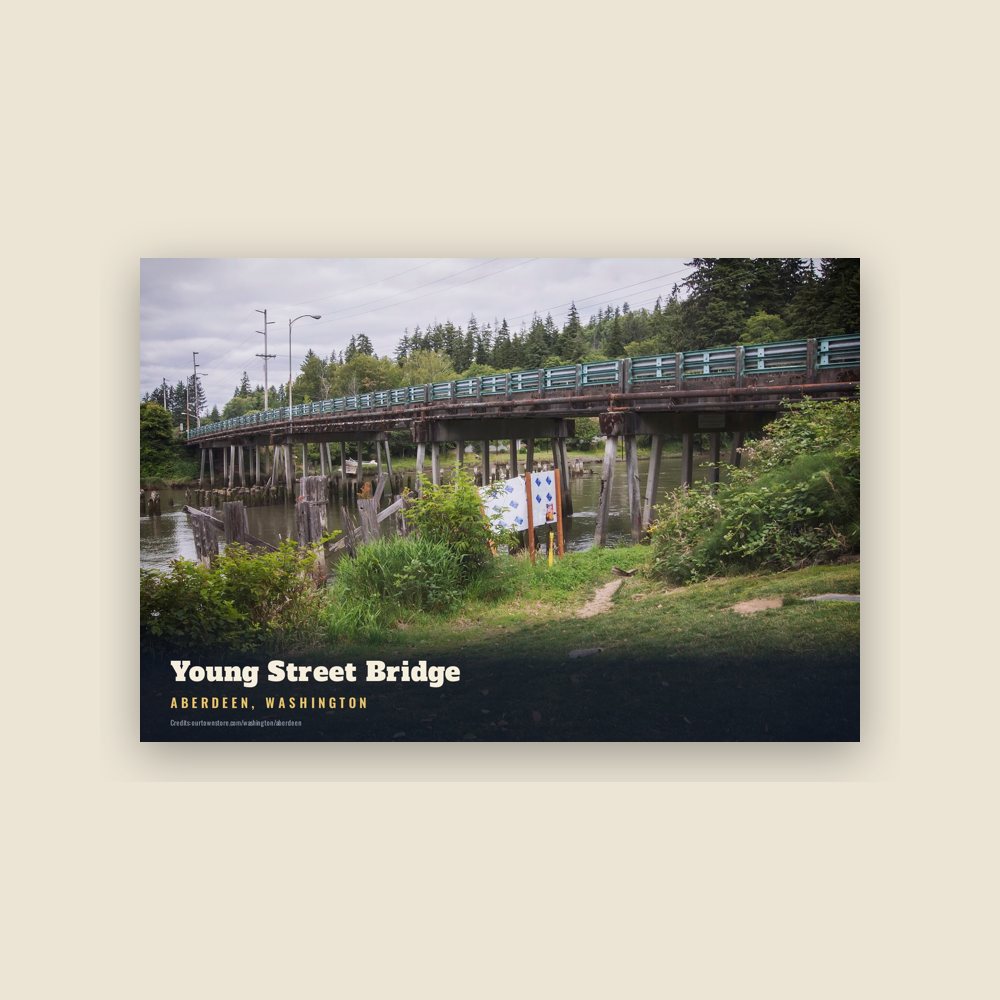
 Young Street Bridge
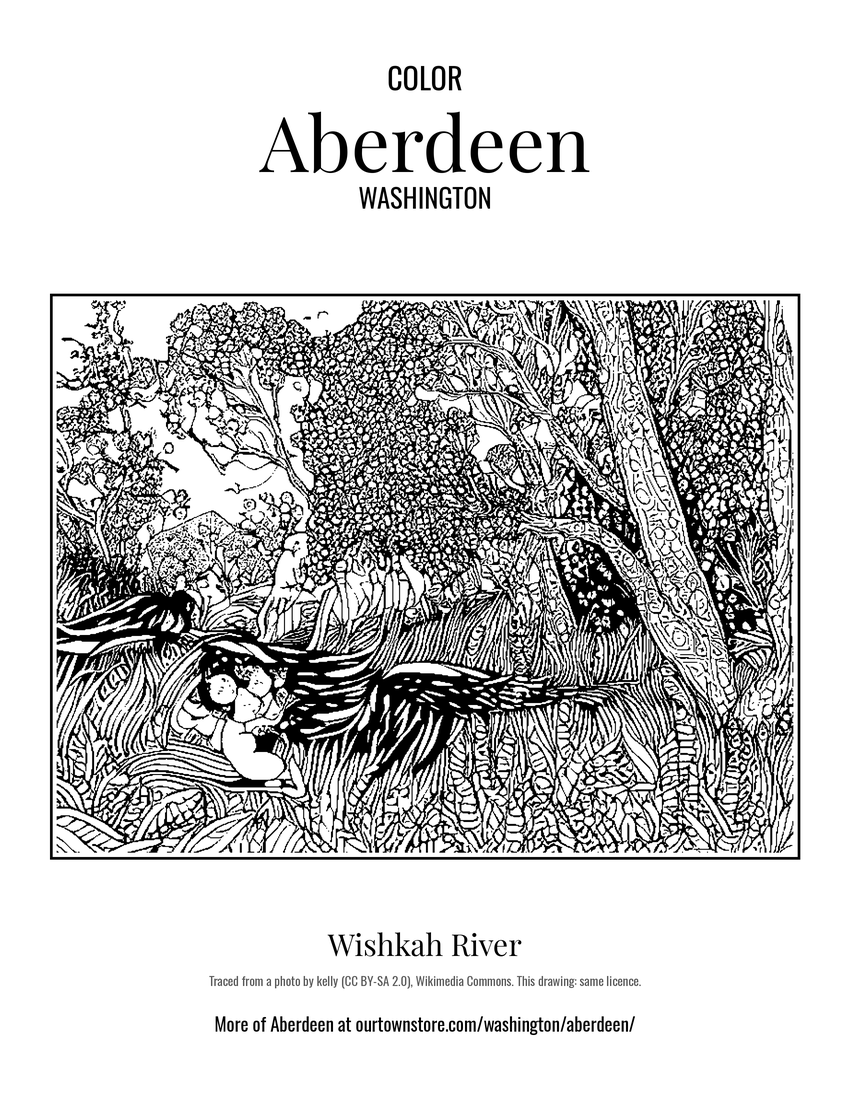 Wishkah River
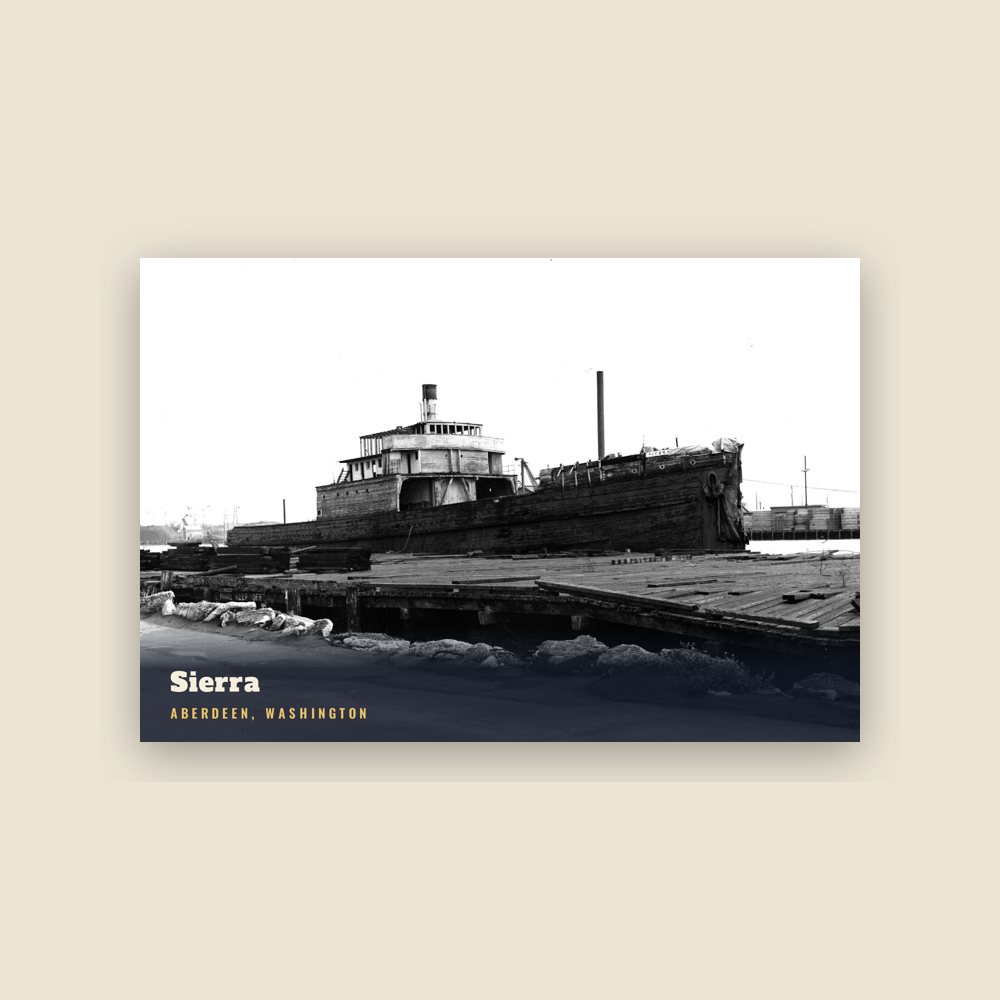
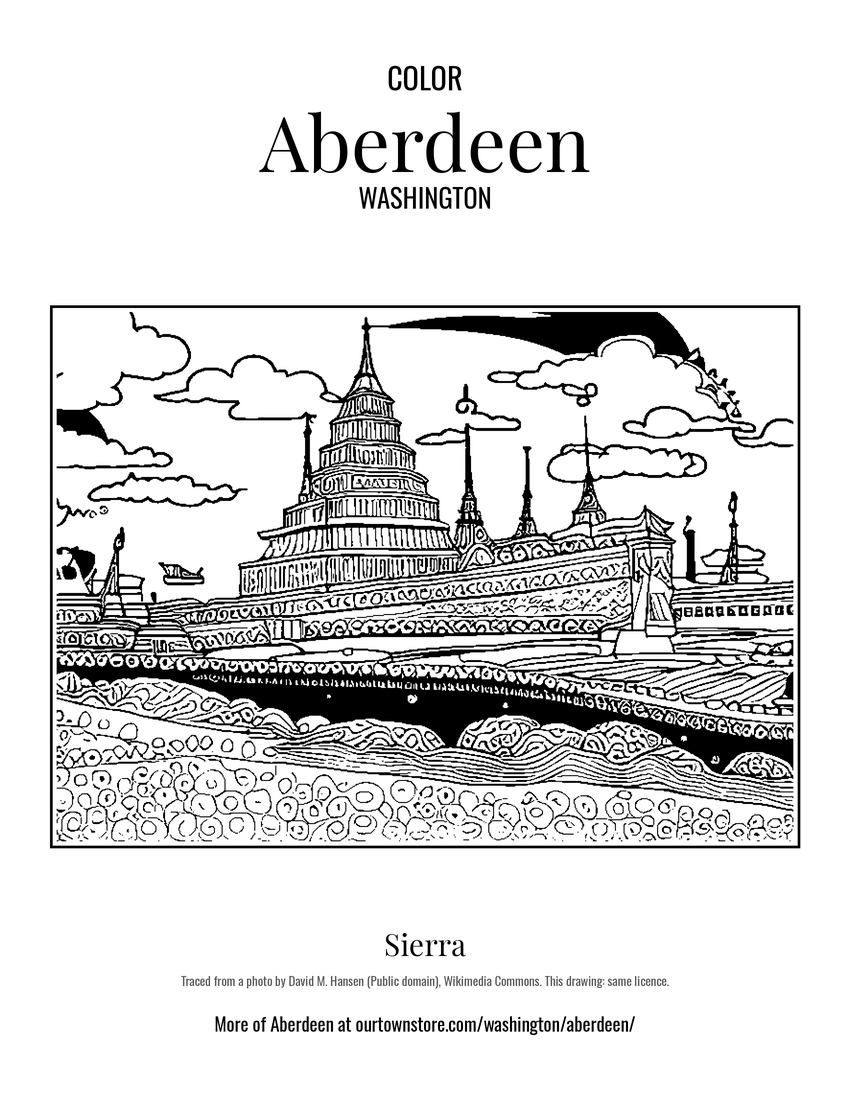 Sierra
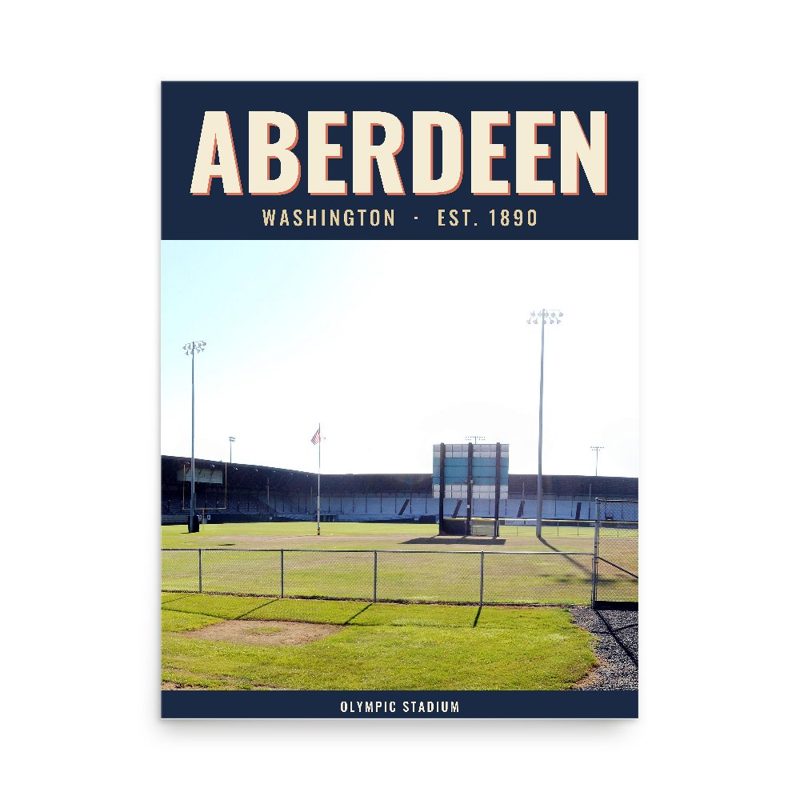
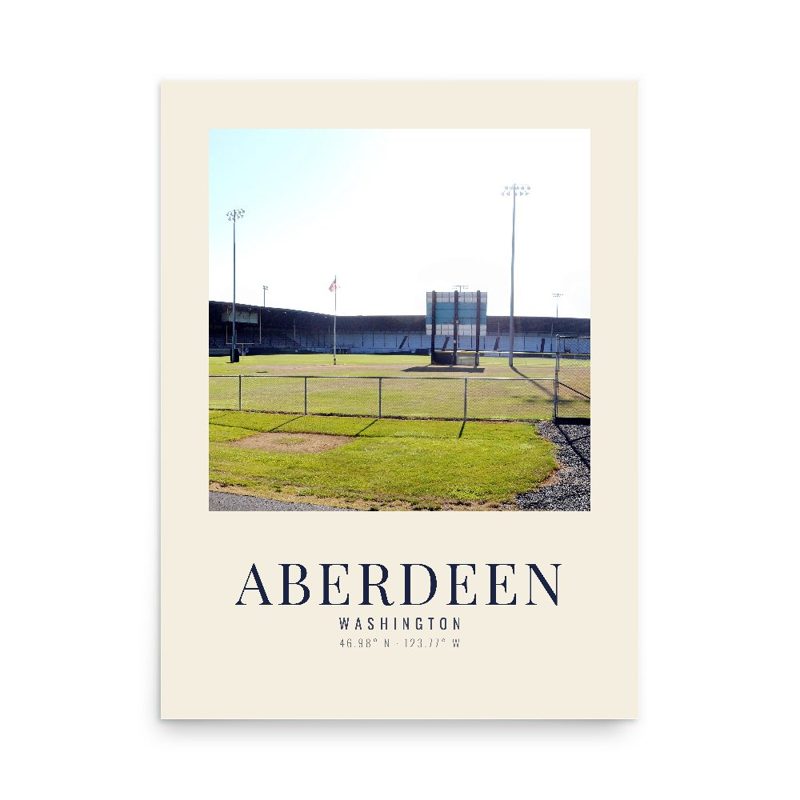
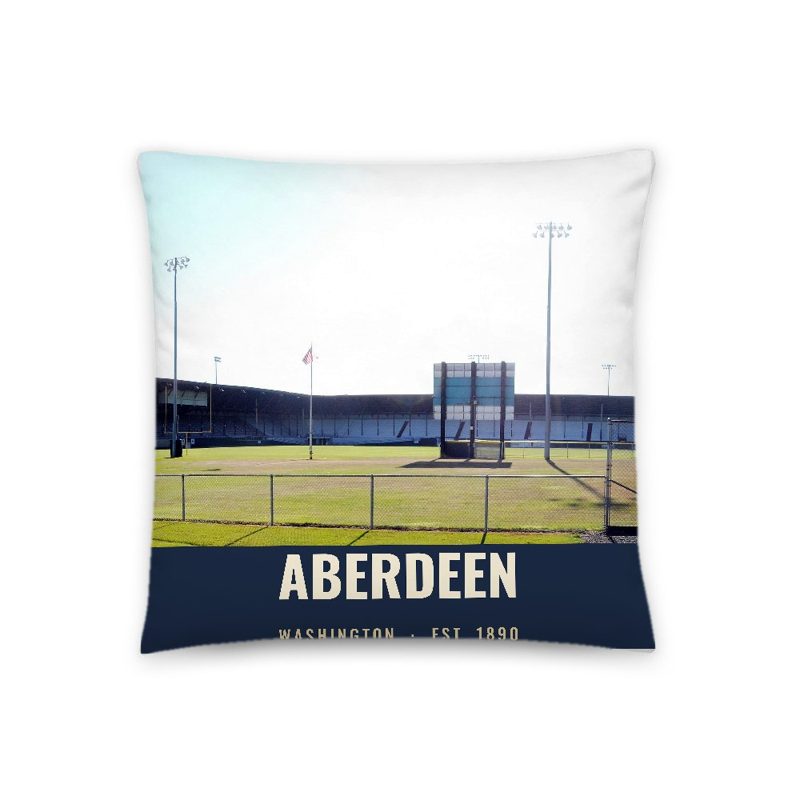
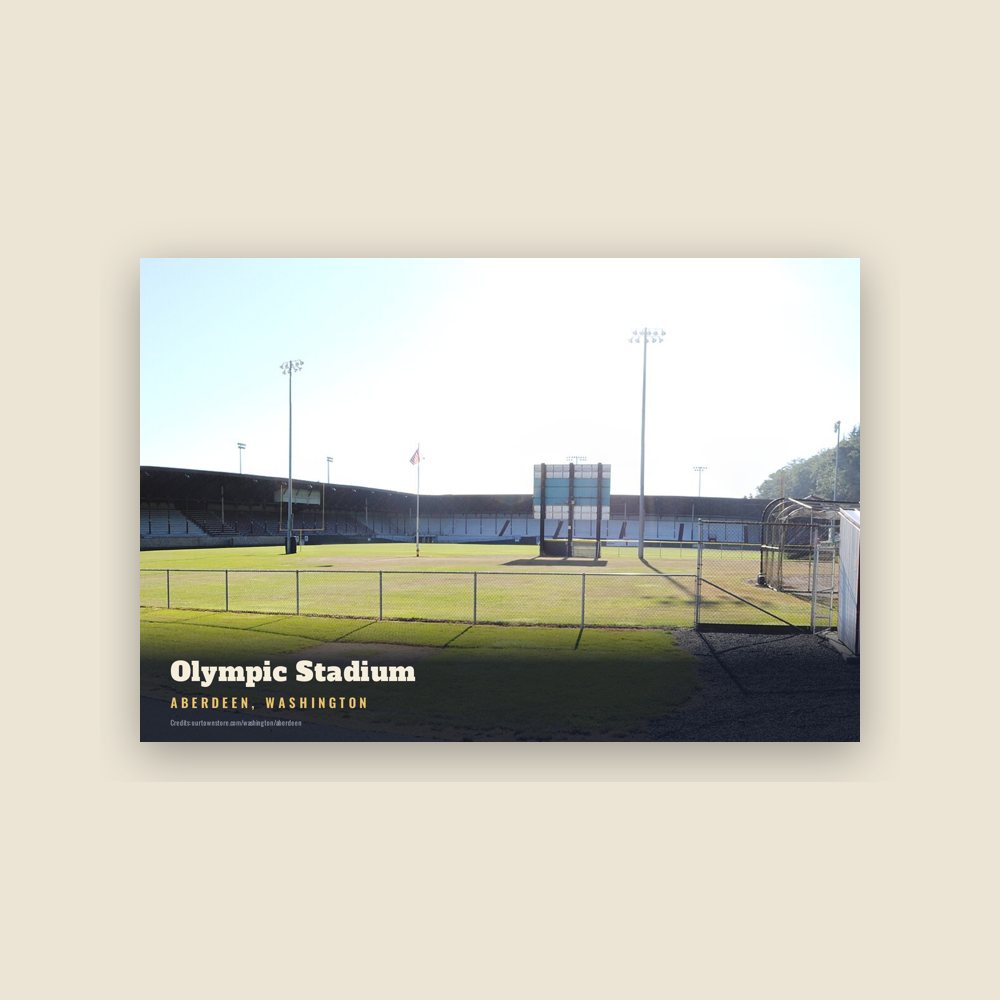
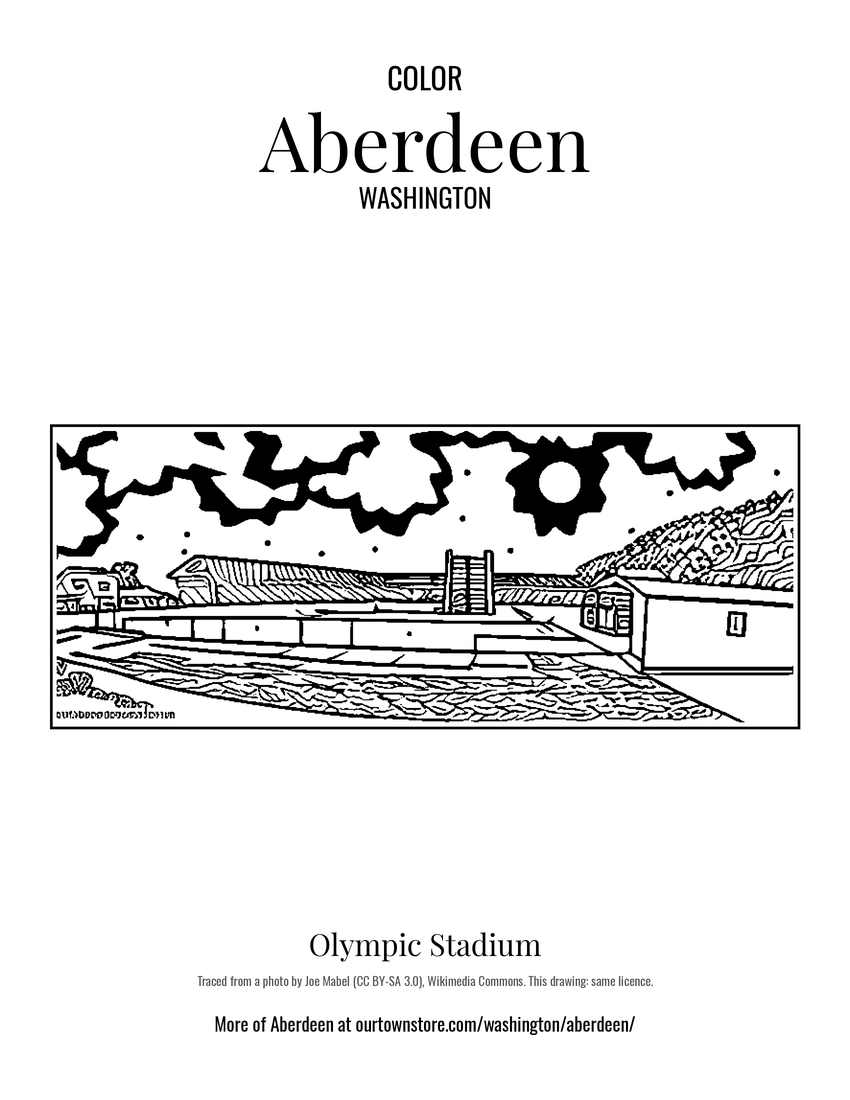 Olympic Stadium