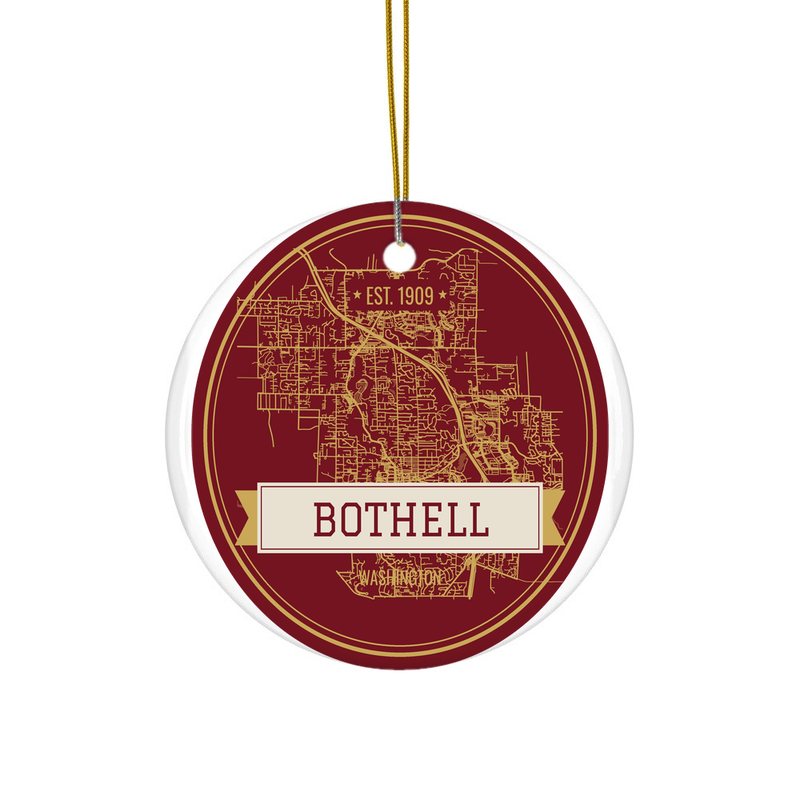
Since 1909
A short history of Bothell
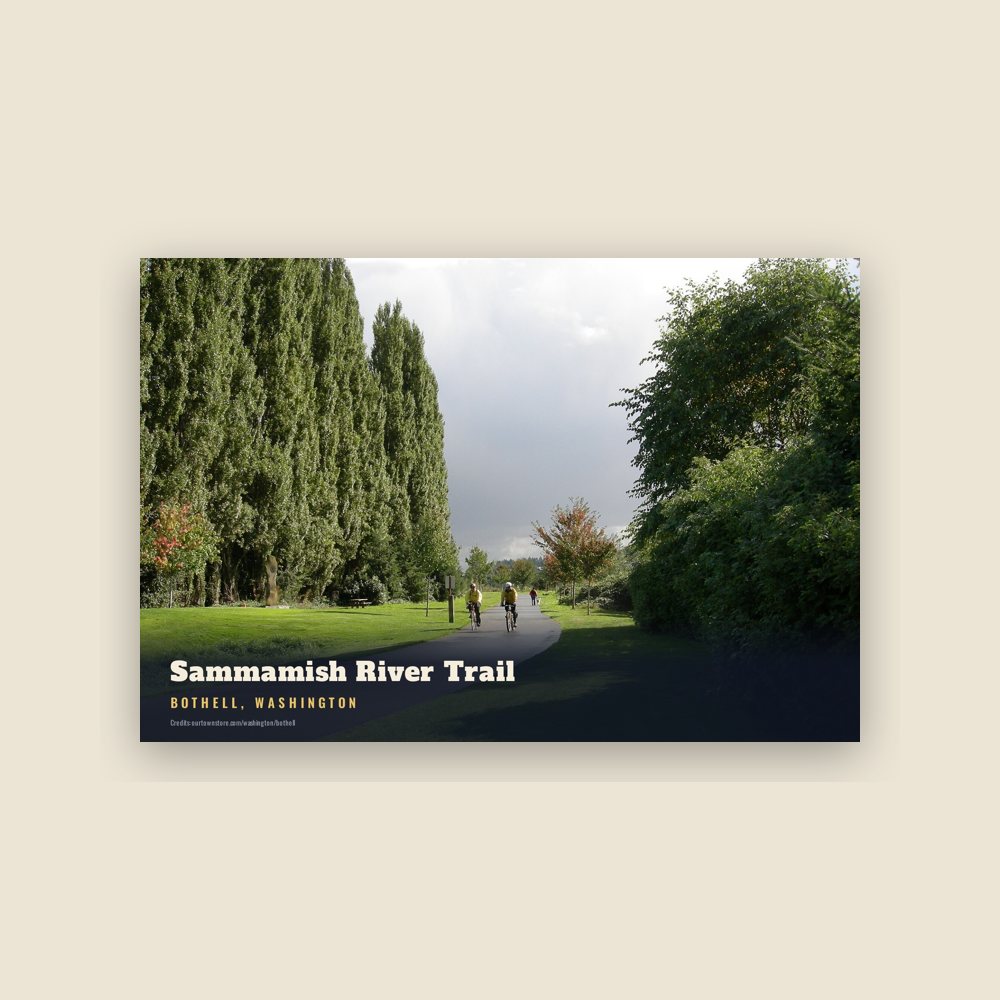
The Sammamish River valley from Lake Washington to Issaquah Creek was first inhabited by the indigenous Sammamish people (Lushootseed: sc̓ababš), a Coast Salish group with an estimated population of 80 to 200 around 1850. The Sammamish had a major winter village, ƛ̕ax̌ʷadis, at the mouth of the Sammamish River, between what is now Bothell and Kenmore. Although the Sammamish resisted removal efforts by settlers, they were eventually removed to Fort Kitsap following the 1855–1856 Puget Sound War. Some Sammamish continued to live in the area and worked as laborers and farmers, but the village of ƛ̕ax̌ʷadis was later destroyed.
The first Homestead Act claims to modern-day Bothell were filed in 1870 by Columbus S. Greenleaf and George R. Wilson, an English immigrant, on adjoining plots of land. The area along the lower Sammamish River, then named Squak Slough, was mostly marshlands and had not been surveyed at the time of Wilson's arrival; Greenleaf filed for his claim in June 1870 on land that Wilson had originally sought. Eight families settled in the area in the next six years and were followed by Canadian businessman George Brackett, who began commercial logging in 1877 on 80 acres (32 ha) on the modern-day site of Wayne Golf Course. Brackett also established Brackett's Landing, which had a sawmill and steamboat dock served by traffic from Seattle and Issaquah.
In 1884, Brackett sold 80 acres (32 ha) of his timberland to David Bothell, a settler and American Civil War veteran from Pennsylvania. Bothell and his two sons built a home and shingle mill on the property the following year and later opened a boarding house with his wife. The boarding house was destroyed by a fire and replaced by the Bothell Hotel at another location, where the townsite was platted on April 25, 1888. The settlement was named for the Bothell family by the first postmaster Gerhard Ericksen, who had bought the boarding house property. At the time, the area had two hotels, several lumber mills, and a school. Bothell originally shared schools with Woodinville until a separate school district was established in 1885; the first classes at Bothell's schoolhouse were held in March 1886. The school district was merged with North Creek in 1897 and ten years later, a dedicated school building was constructed to accommodate the growing student population.
The Seattle, Lake Shore and Eastern Railway was constructed along the Sammamish River to connect Seattle to the transcontinental Northern Pacific Railway as well as coal from mines near Issaquah. The tracks reached Bothell in November 1888 and a boxcar was placed at Brackett's Landing to serve as a temporary station; it was moved east to Bothell in 1890 and later replaced by a depot building. A county road was built between Bothell and neighboring Woodinville to the east. Several logging railroads were also constructed in the Bothell area, stretching as far north as modern-day Canyon Park, to transport logs to local mills; one included a trestle bridge across the Sammamish River. Bothell grew rapidly following the railroad's opening; by the end of the 1880s, it had telegraph service, a general store, a butcher, and a drugstore with a practicing doctor. Many of the new residents were Scandinavian or Eastern European immigrants, along with emigrants from the Midwest. The first churches in the area were established by these immigrants in the mid-1880s. Two of the local mills were destroyed in fires in 1893 and 1894 and were later replaced with a larger facility that produced 80,000 shingles per day.
Read the full history
Early 20th century
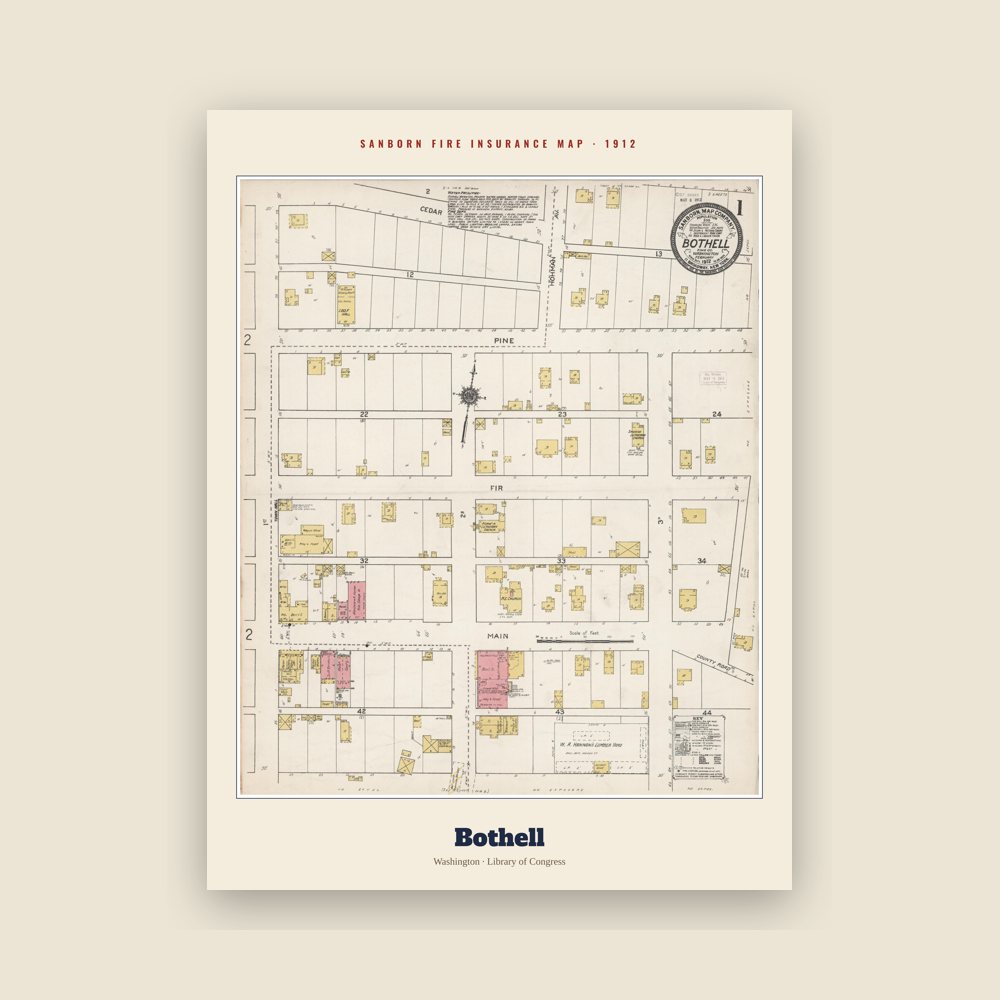
Bothell was incorporated as a fourth-class town on April 14, 1909, eight days after a narrow 79–70 vote in favor. George Bothell, one of the sons of David Bothell and a former state legislator, was elected as the first mayor. At the time, the town had a population of 599 residents, a bank, four general stores, and three saloons. A dozen buildings on Main Street were destroyed or damaged by a fire on April 11, 1911, including the Ericksen general store where the town's records had been kept. A fire department was established in 1913 and new building regulations were enacted by the town government in response to the fire. The Pacific Highway was completed through the town in August 1912, connecting to Everett and Seattle. A 4-mile (6.4 km) section west of Bothell was the first to be paved in brick; it was inaugurated on May 29, 1913, by Washington governor Ernest Lister.
Steamship traffic on the Sammamish River waned after the arrival of the railroad and completion of the Pacific Highway. The river itself was dredged and straightened by the Army Corps of Engineers in 1916. The water level on Lake Washington was lowered by nine feet (2.7 m) by the opening of the Lake Washington Ship Canal in Seattle the following year; the lowering prevented several steamships and other riverboats from traversing the mouth of the Sammamish River. By the end of the decade, Bothell had a water system, telephone service, a library, and several fraternal organizations with chapters or lodges in the area. The logging economy declined during the early 20th century and was replaced by agriculture on the cleared land, including dairy and poultry farms. Passenger traffic on the railroad, now under the management of Northern Pacific, ceased in 1938.
A new high school was opened in 1923 and followed by an adjacent junior high school building in 1931, now known as the Anderson School. Several civic projects were completed during the Great Depression by the Works Progress Administration, including construction of a new town hall that also housed the fire department and library when it opened in 1938. Bothell remained a rural community until the development of suburban housing areas after World War II as the Seattle metropolitan area experienced a major population boom. A new high school opened in 1953 along with five elementary schools by the end of the decade to accommodate a growing number of students. The first major annexations in the town's history were made in 1954; by the end of the decade, the boundaries extended south of the Sammamish River.
Mid-to-late 20th century
Bothell was reclassified as a city in 1960 after its population had surpassed the state's threshold for cityhood—1,500 residents. The city's sewer system was completed that same year and the water system was switched from local wells to the Tolt pipeline, operated by Seattle Public Utilities, in 1963. The sewage system was incorporated into the Municipality of Metropolitan Seattle system in 1967, which bypassed its outflow to Lake Washington but restricted new residential development south of the Sammamish River. Bothell developed further into a bedroom community after the completion of Interstate 405 in 1968, which passes east of downtown and intersects State Route 522. Another routing for the freeway west of the city was also considered before it was rejected, along with a later proposal to route State Route 522 on a freeway around the south side of downtown. By 1970, Bothell had annexed neighborhoods as far east as the outskirts of Woodinville, then seeking annexation or incorporation. The city's mayor–council government was replaced by a council–manager system in 1973 following voter approval of a proposition the year before.
In 1974, plans to build a regional shopping mall were announced on the site of a 142-acre (57 ha) truck farm adjacent to the Interstate 405 and State Route 522 interchange east of downtown Bothell. It was described as similar in size to Southcenter Mall in Tukwila and would include a motel, two movie theaters, and office space. The city government sought the new shopping mall to improve its local tax base and approved a rezoning of the property for commercial use, but the proposal was opposed by local environmental groups due to the potential impact on North Creek, which flows through the site. The environmental groups filed a lawsuit against the city government over the rezoning, which the King County Superior Court found to violate state laws on land use fairness and conflicts of interest within the planning commission. The ruling was upheld by the Washington Supreme Court in 1978 and the property was instead rezoned into an office park under new regulations for the North Creek Valley, which was designated as a special district.
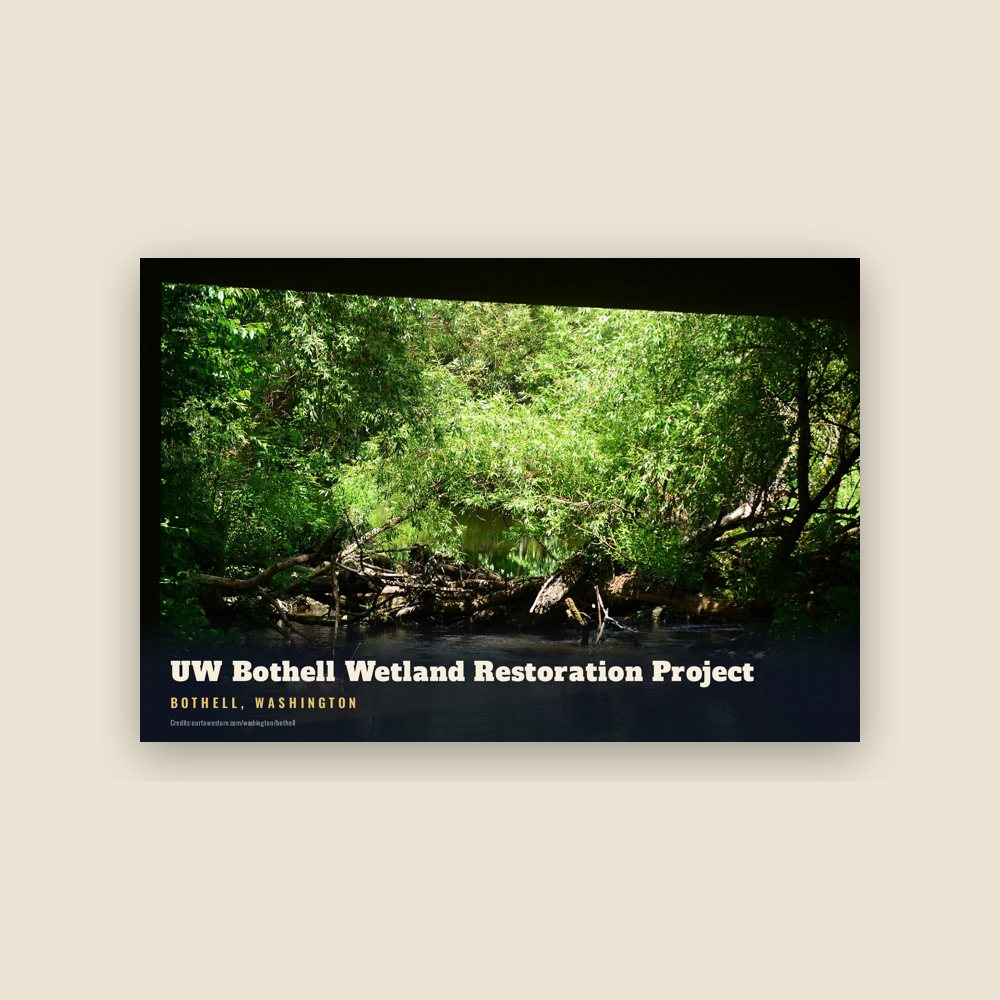
The remaining farmland in the North Creek Valley was developed into facilities for high tech and light industrial companies beginning in the 1980s, encompassing 1.8 million square feet (170,000 m2) of office space. The developments were required by the special district to restore wetlands along North Creek and other waterways as part of environmental mitigation, but the artificial wetlands initially saw limited success in controlling invasive species and regulating soils. Bothell continued to develop into a center of high tech employment alongside Canyon Park, an unincorporated area to the north in Snohomish County, with a combined 4,300 jobs added between 1985 and 1987. Several office parks were also developed in nearby Woodinville, which Bothell unsuccessfully attempted to annex in 1985 for a shopping center; the community later incorporated as a separate city in 1993.
In 1990, the University of Washington opened its northern branch campus in Bothell at an office park building. A permanent campus, shared with Cascadia Community College, opened in September 2000 at a site that was originally proposed for a separate shopping mall east of downtown; the mall had been blocked by the Washington State Department of Ecology due to its effects on wetlands near North Creek. Bothell annexed the Canyon Park area in 1992, becoming a dual-county city and nearly doubling its population by adding 11,400 people. The annexation prevented the competing proposal for a new city, tentatively named North Creek, from claiming the area and its existing industrial parks that employed 20,000 people. The addition of Canyon Park and additional development increased Bothell's population by 144 percent to over 30,000 residents by 2000. The 1990s also saw more technology businesses relocate to Bothell, including biotechnology firms, call centers, and manufacturers of medical equipment and electronics.
21st century
The city government commissioned a plan in 2000 to address worsening traffic congestion throughout Bothell that was blamed, in part, on recent development. The plan would use additional street connections to form a more cohesive grid, but was negatively received by residents who opposed higher traffic volumes. A separate plan to widen portions of State Route 527 (the Bothell–Everett Highway) was completed in 2005 using funding from commercial development along the corridor. In the late 2000s, the city government adopted a downtown plan to revitalize Main Street and add denser housing and mixed-use development in the area. The plan involved the acquisition of various parcels and demolition of 15 buildings to allow for roadwork and the expansion of the Park at Bothell Landing.
Construction of the $150 million downtown redevelopment program began in 2010 with the realignment of State Route 522 at its intersection with the Bothell–Everett Highway, which was completed in 2013. The Bothell–Everett Highway was rebuilt as a wide boulevard in 2017 that includes separate laneways for parking and landscaped dividers. A new city hall opened in October 2015 to consolidate several city departments into one building. The city also annexed 1,005 additional acres (407 ha) of King County in 2014 and added 6,000 residents. The downtown redevelopment yielded 1,300 new apartment units and townhouses by 2020, including middle housing. Between 2010 and 2020, Bothell's population increased by more than 40 percent and the share of minority residents also increased to 33 percent.
A major fire in downtown broke out at the Mercantile Building on July 22, 2016, damaging and closing more than 20 businesses. Among the destroyed buildings was the Bothell Mall, which housed several small businesses. The fire hindered the Main Street portion of the redevelopment program and required $4.7 million in state aid for rebuilding. Main Street was rebuilt as a shared space between vehicles and other modes with curbless sidewalks and parallel parking separated by dining areas and planter boxes. A one-block section was closed to all vehicular traffic in June 2020 during the COVID-19 pandemic to encourage its use as an outdoor gathering space and dining area to revitalize business in downtown. The program was successful and became a permanent fixture during the summer months.
Adapted (trimmed) from the Wikipedia article Bothell, Washington, revision 1378505351 by its contributors, licensed CC BY-SA 4.0.

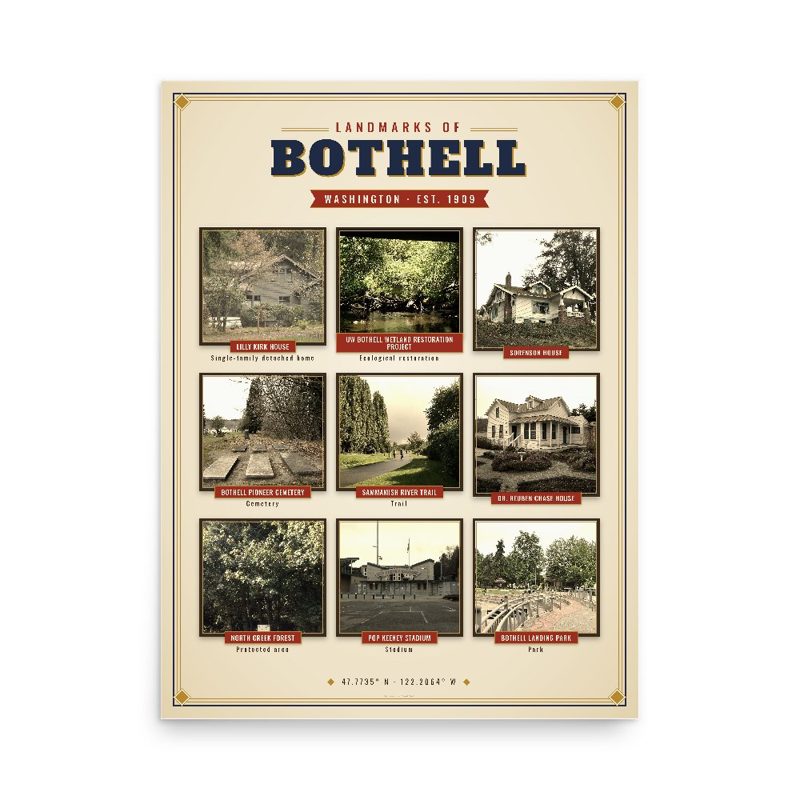

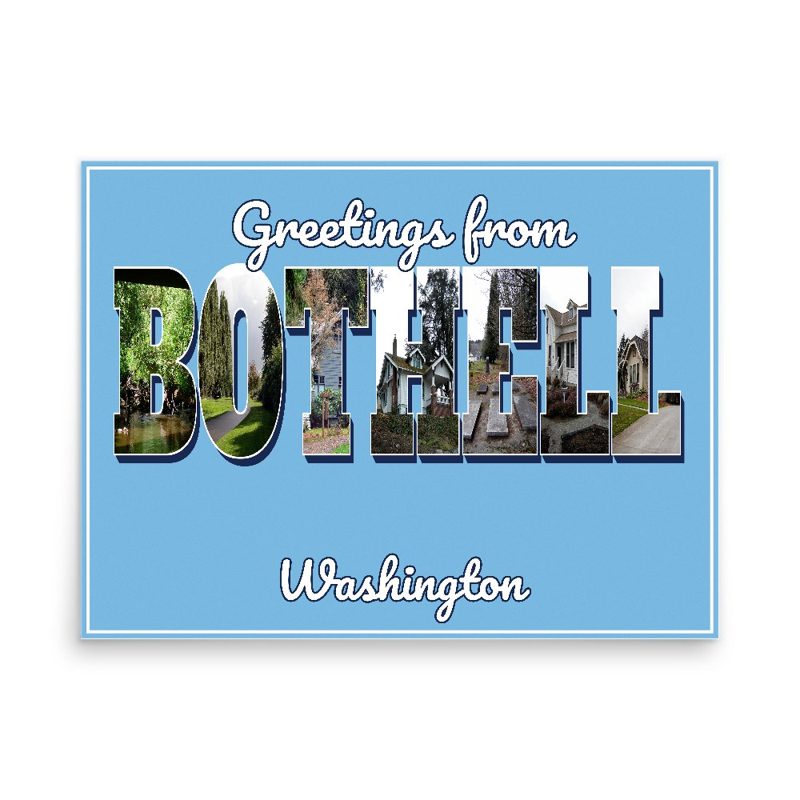
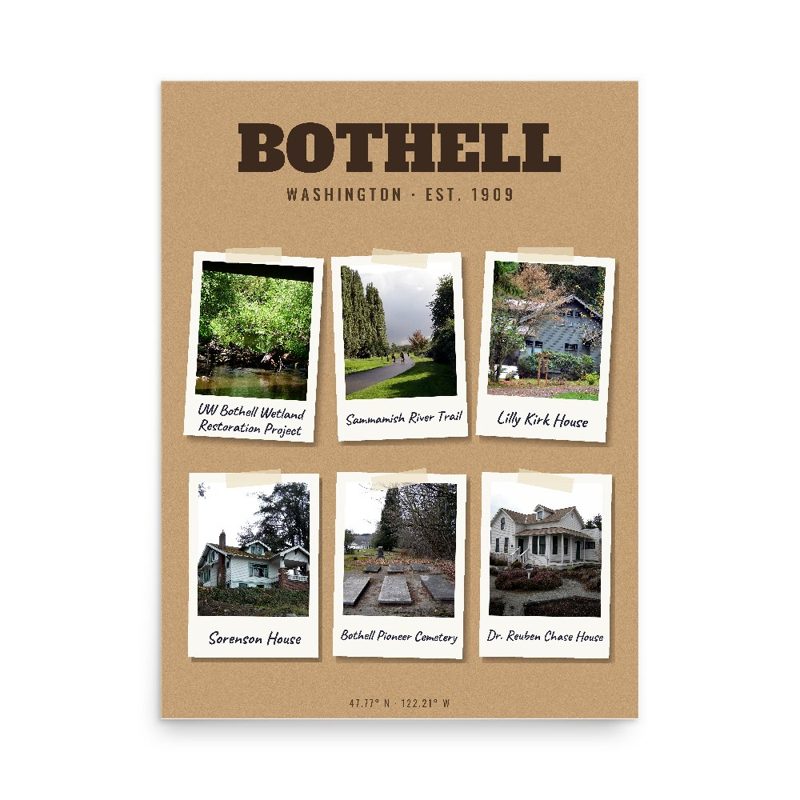
















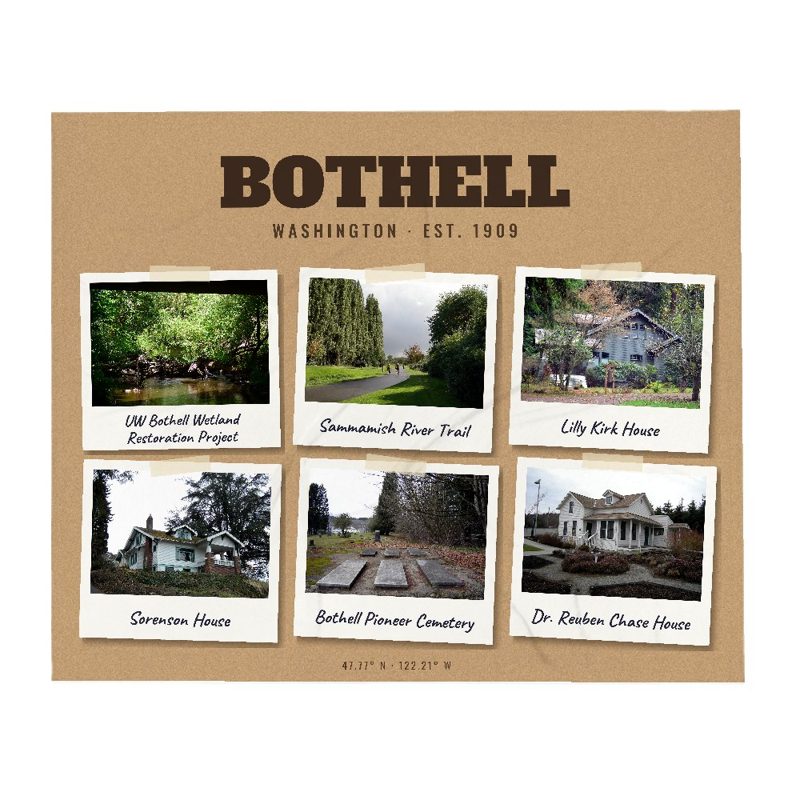
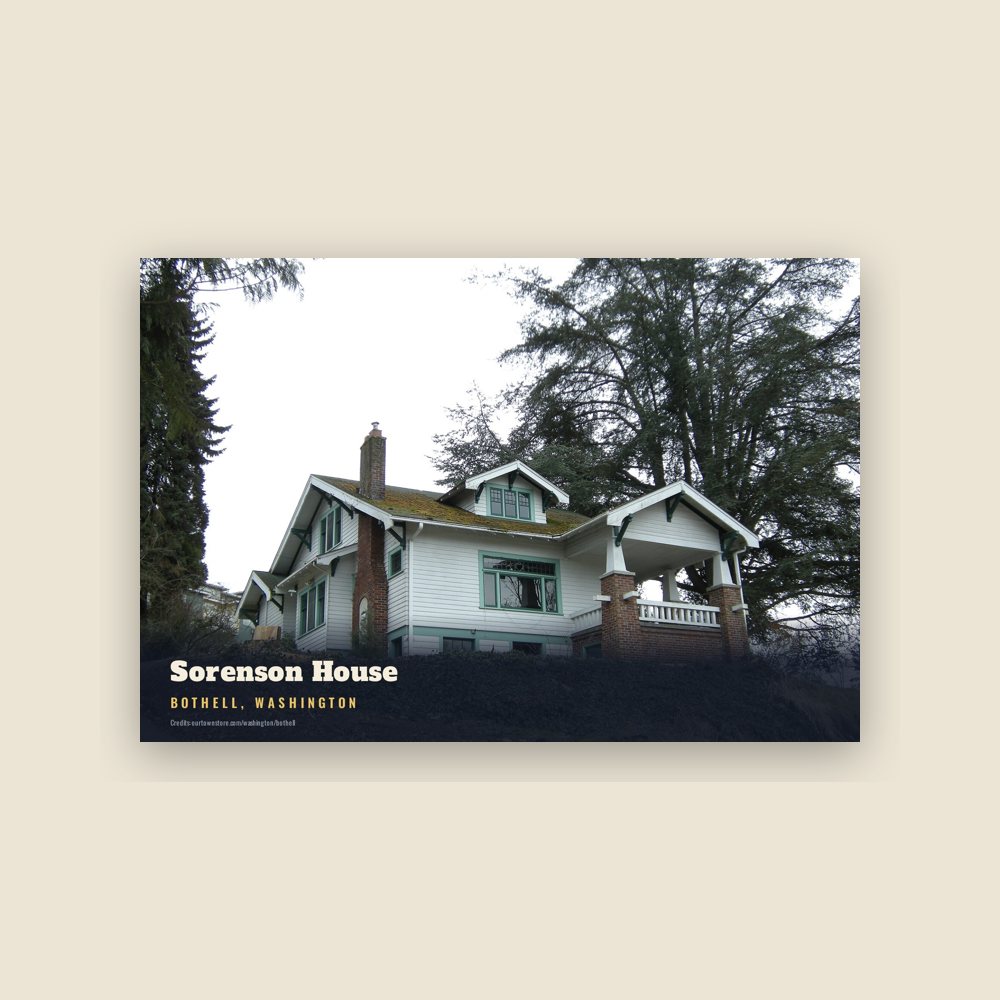



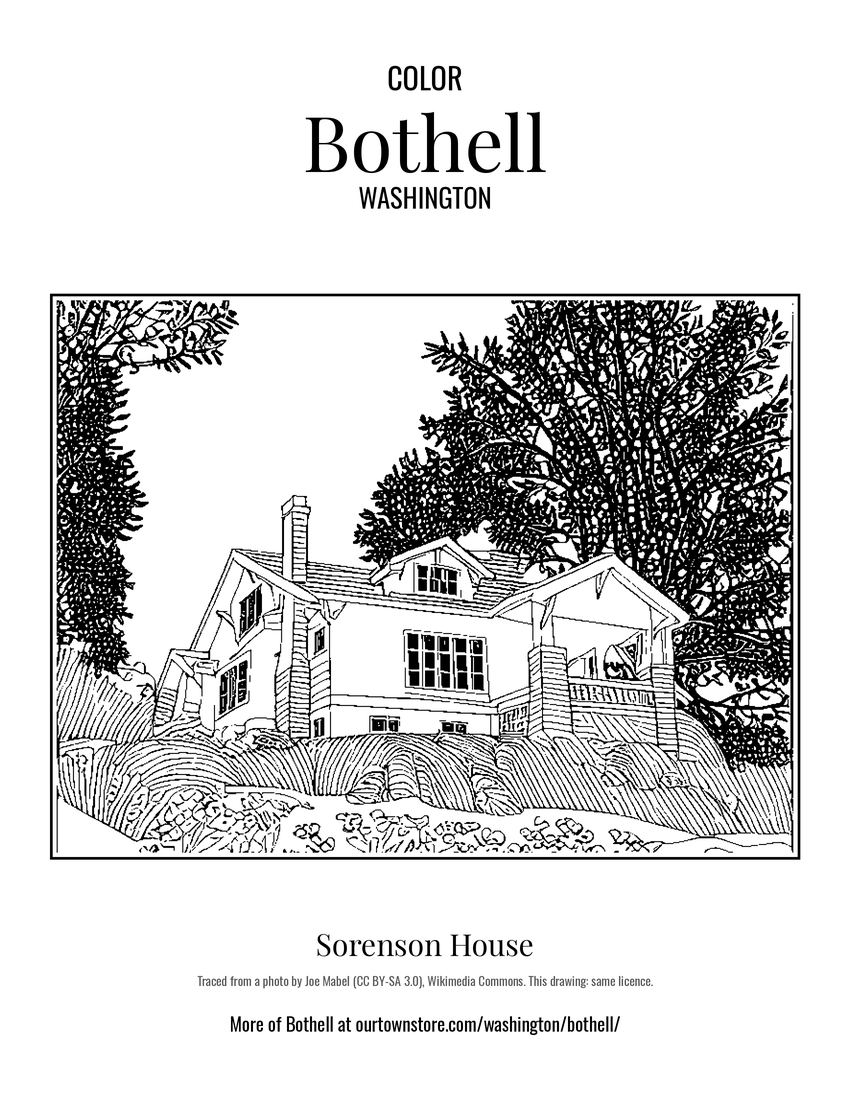 Sorenson House
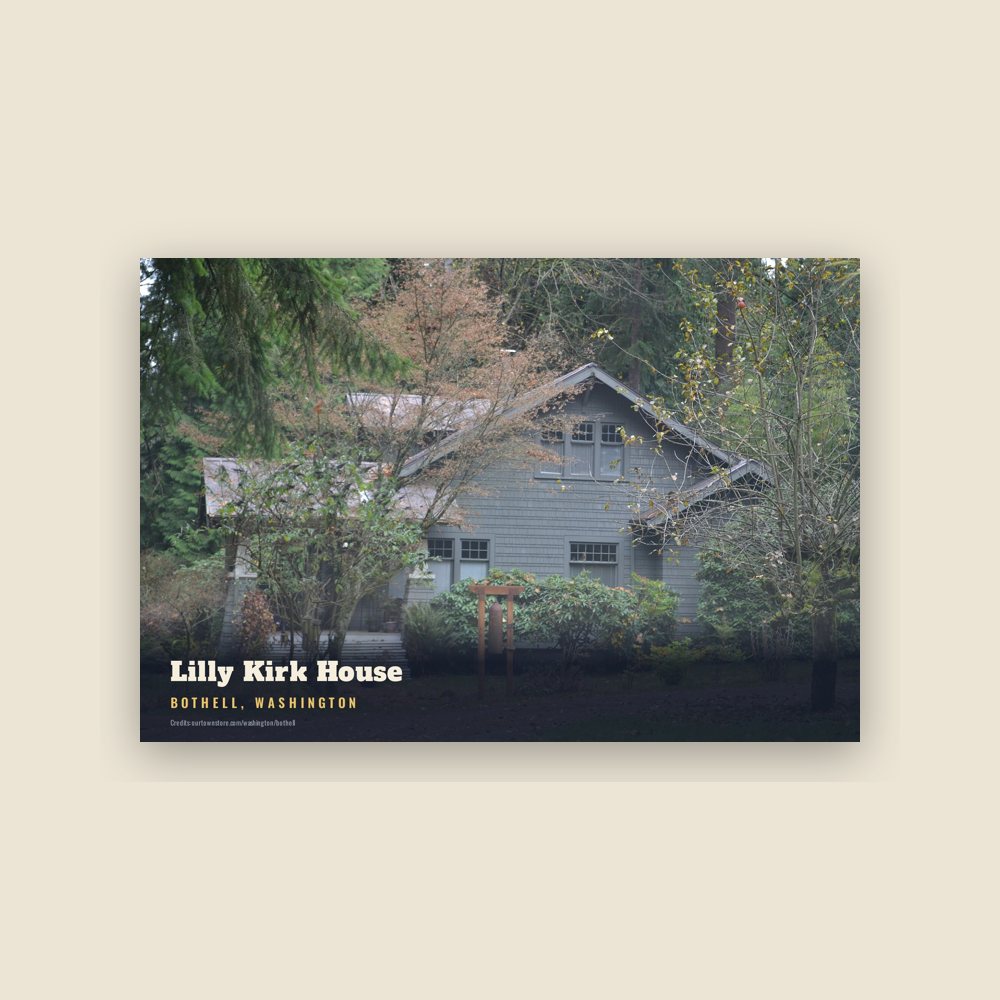
 Lilly Kirk House
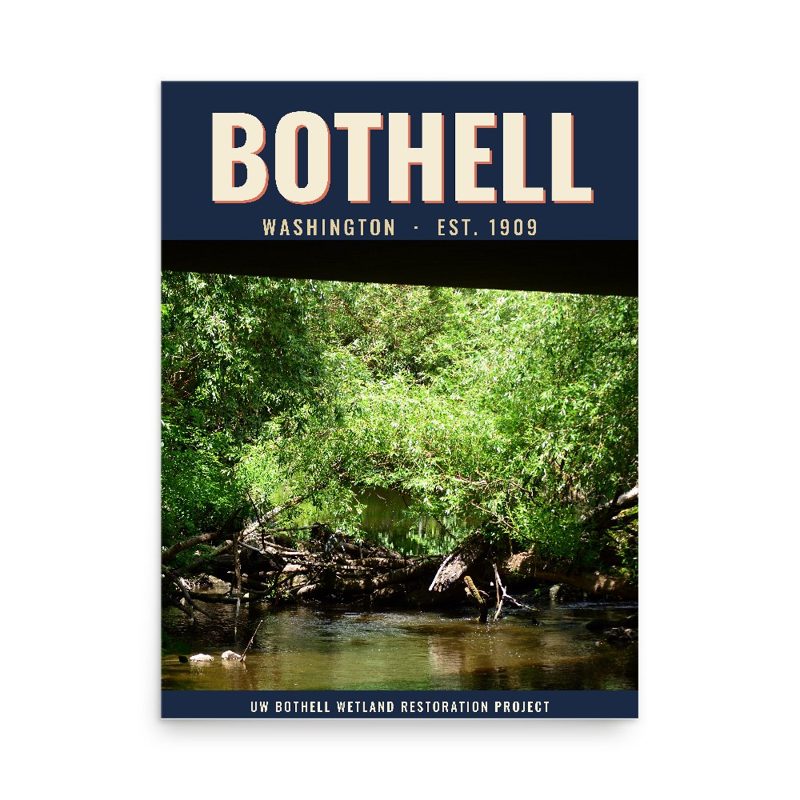
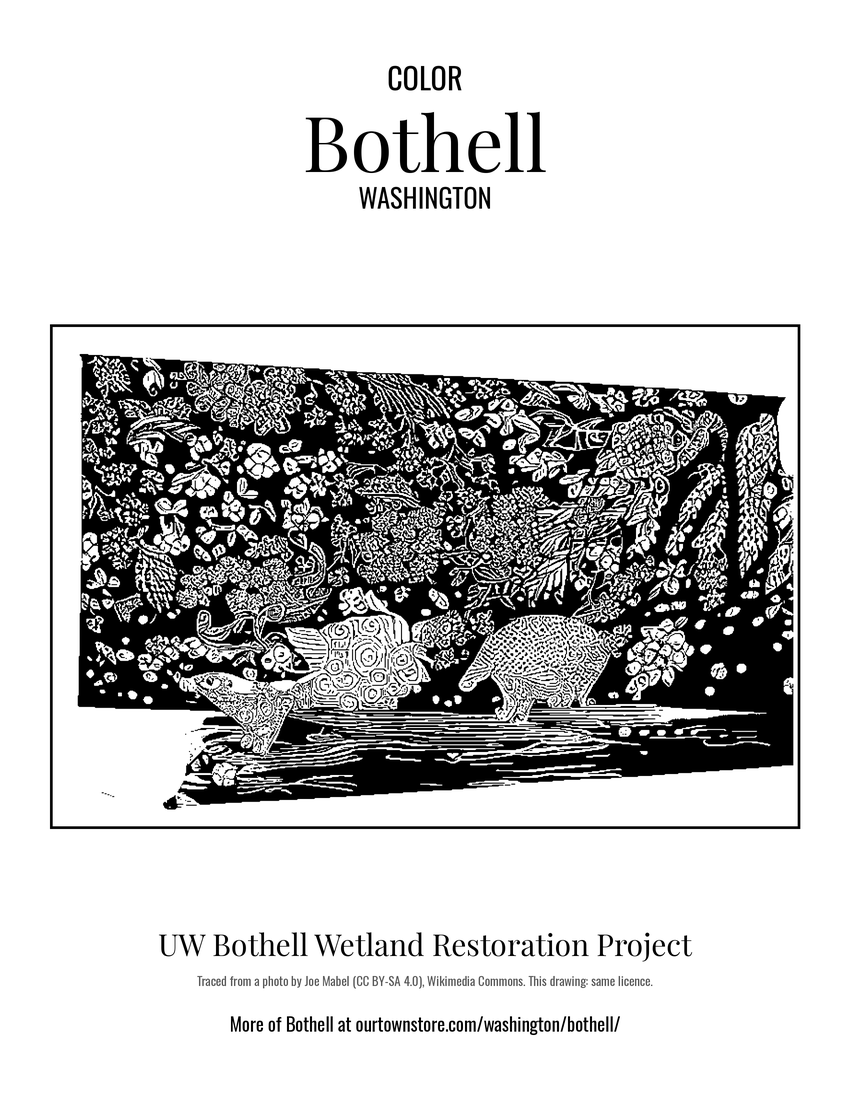 UW Bothell Wetland Restoration Project
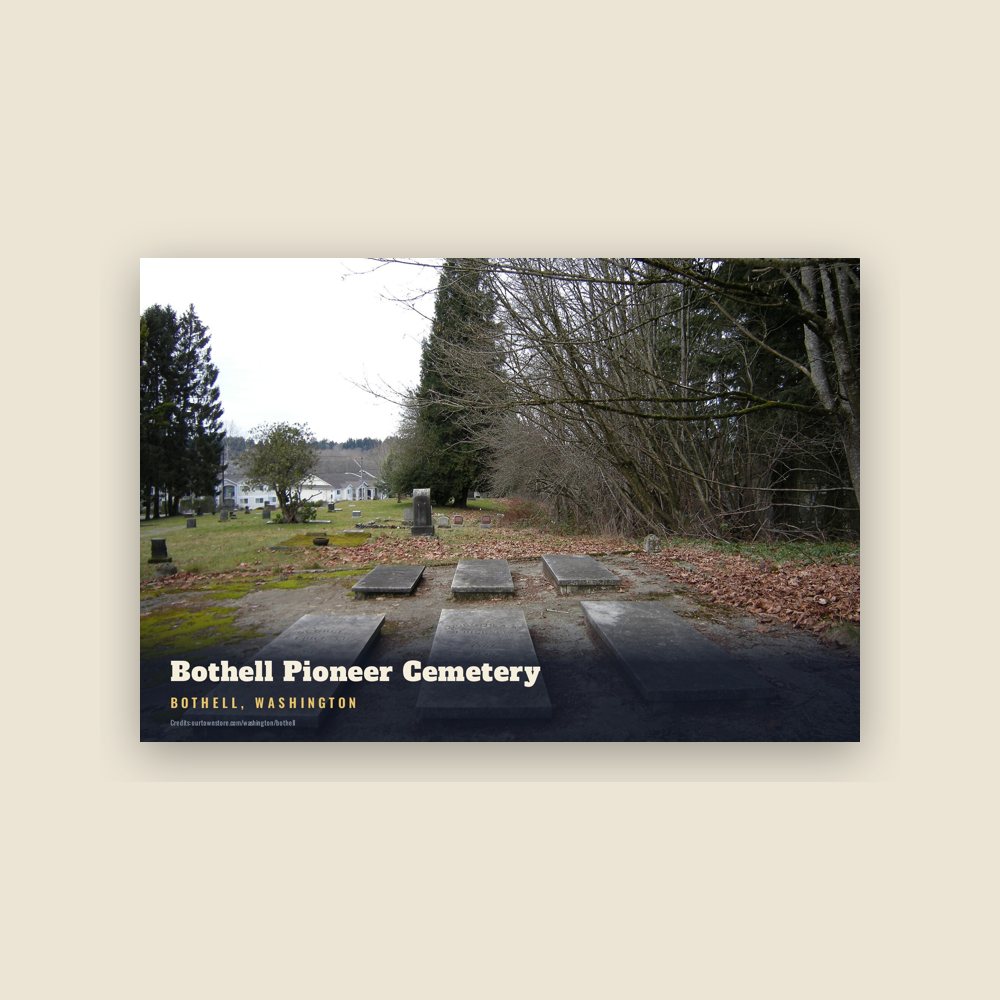
 Bothell Pioneer Cemetery