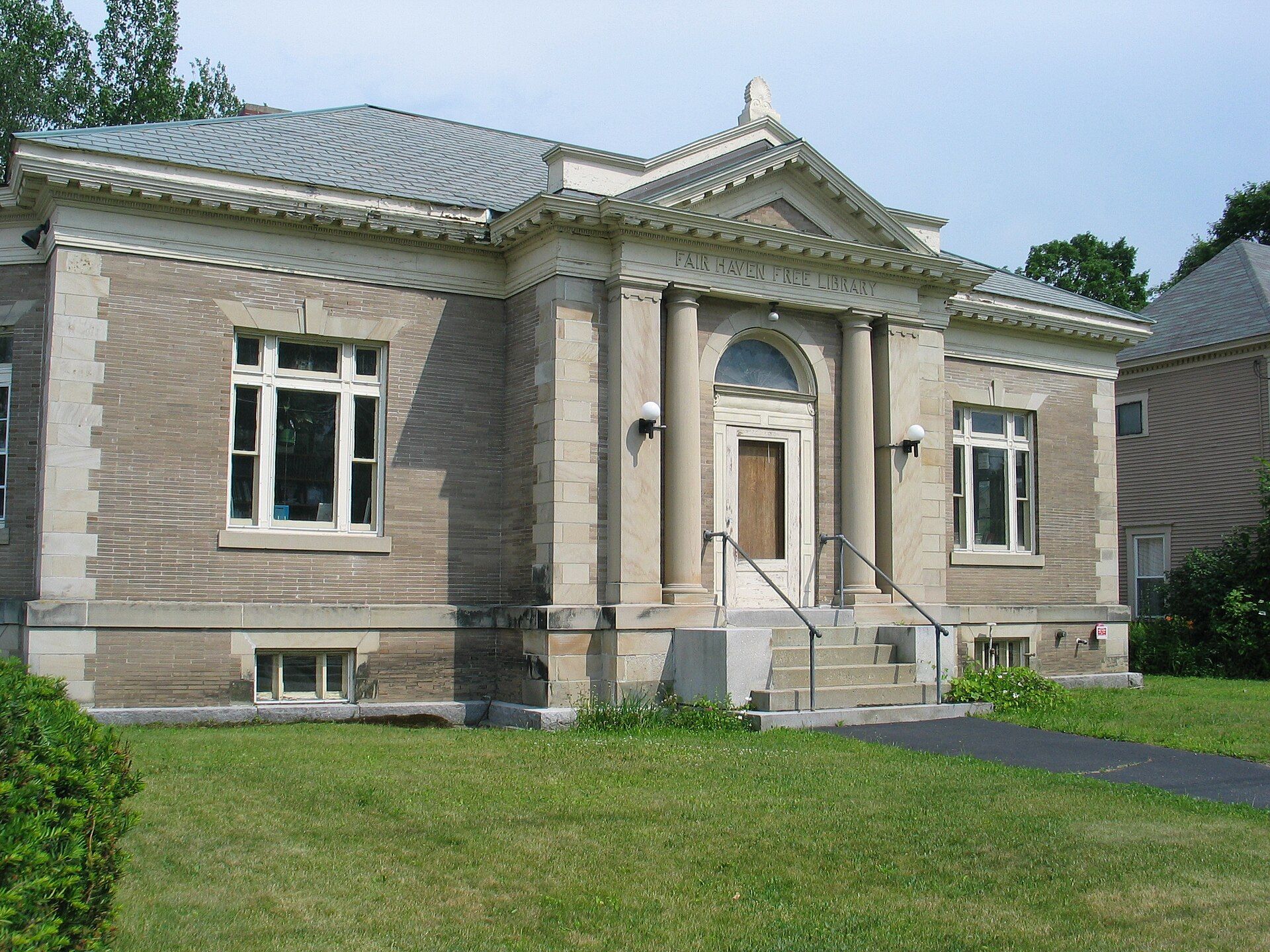
Fair Haven was chartered on October 27, 1779, to Ebenezer Allen and 76 associates, and first settled the same year. Landmarks include Fair Haven, Fair Haven Green Historic District and Asahel Kidder House. Fair Haven is the birthplace of John A. Mead, politician.
Every piece is drawn from Fair Haven's own map data and historic archives, then printed and shipped from the USA when you order. No two towns look alike.
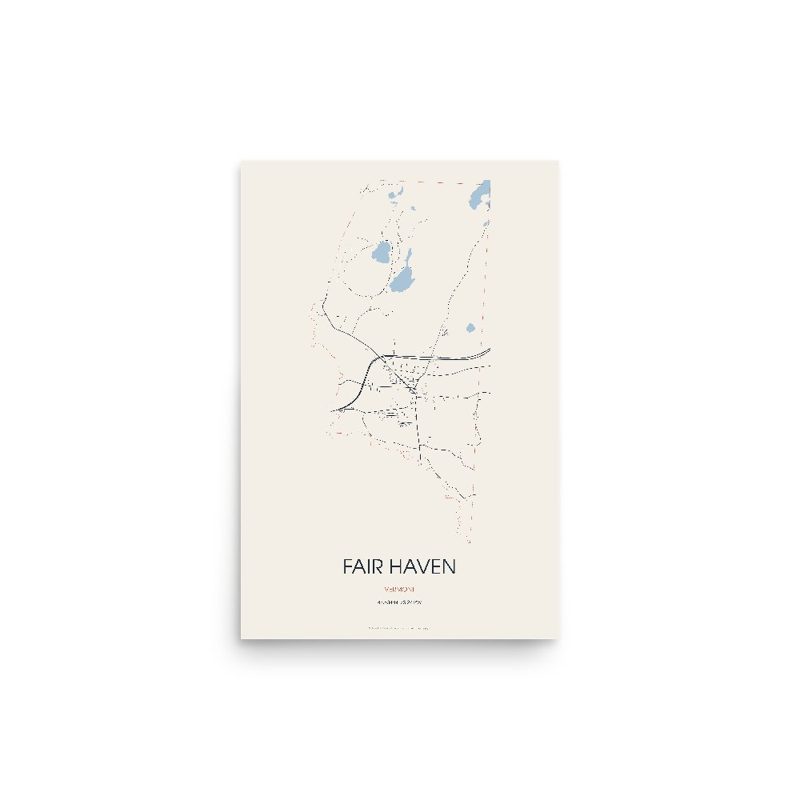
Every road in town, on archival matte paper

The same map, in navy and silver
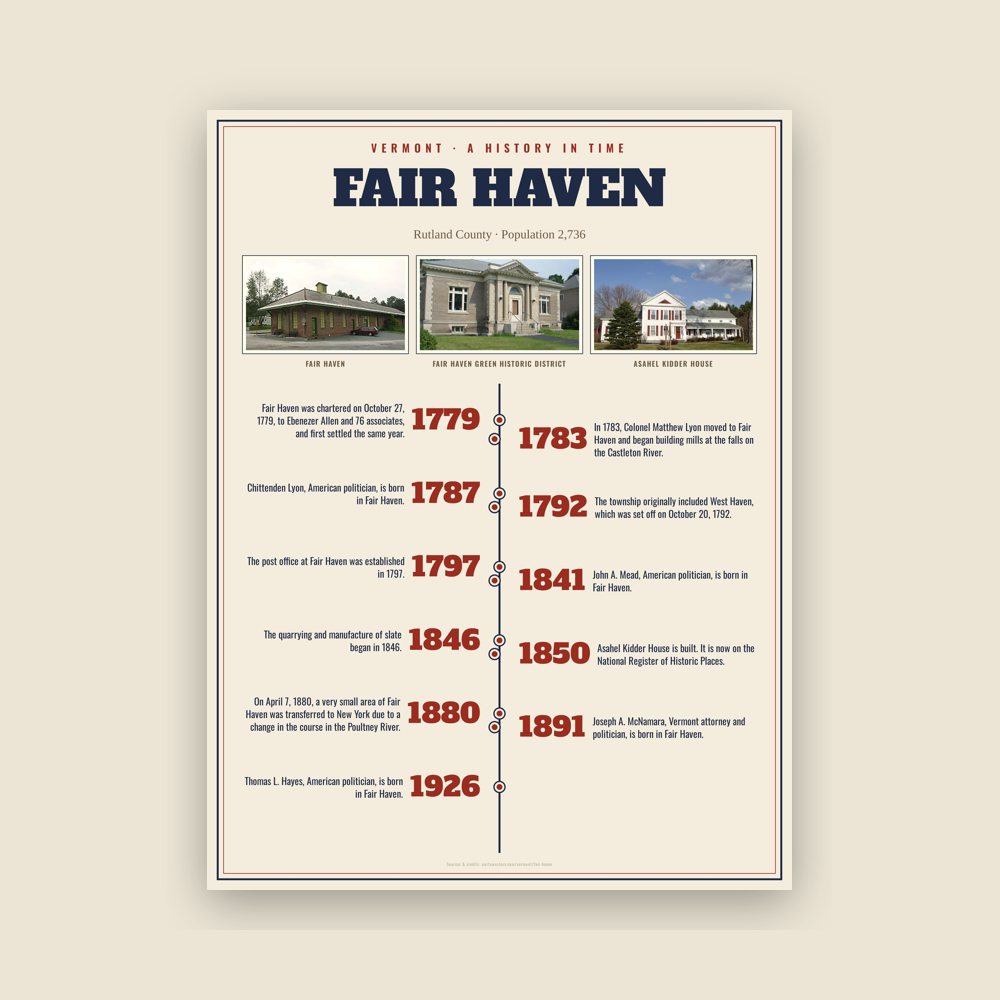
The town's story in dates, from its own records, for home or classroom
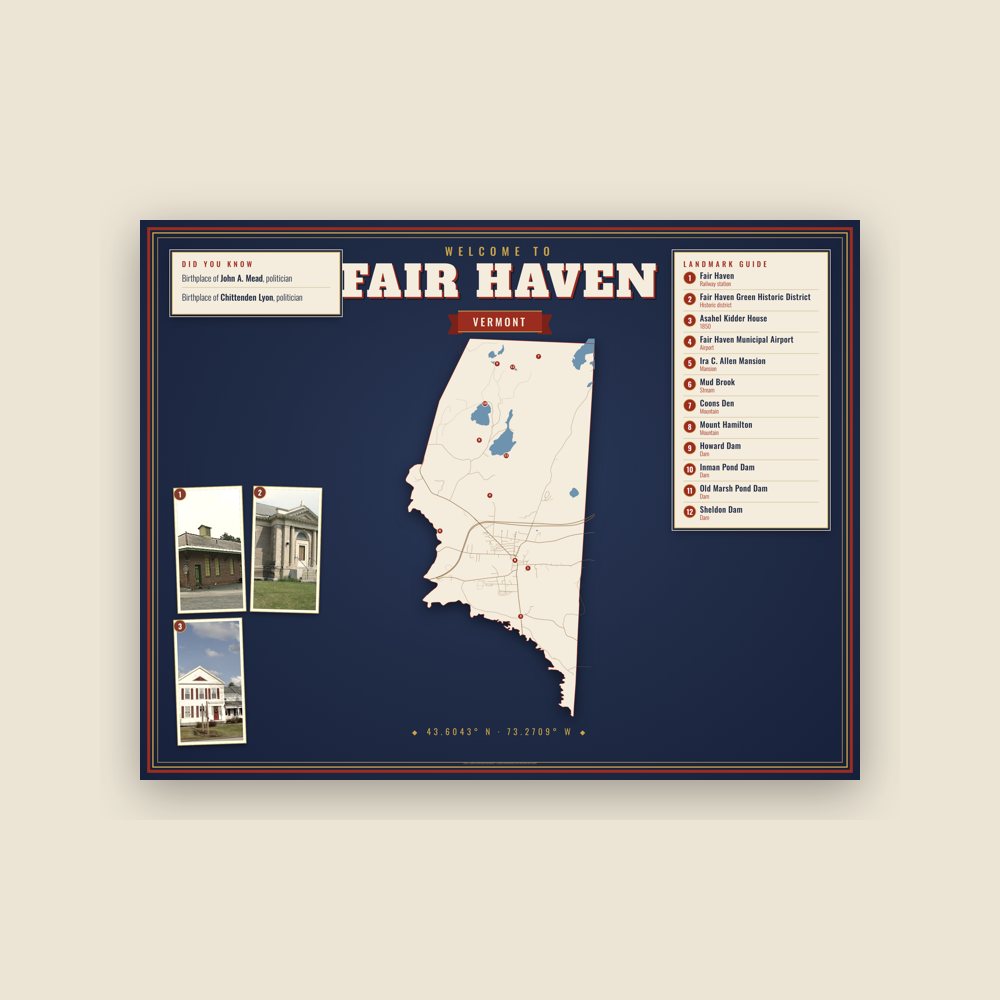
Map of local landmarks, washable fabric
Heavy-blend fleece, street map printed on the back
Soft Bella+Canvas jersey
Glossy ceramic, dishwasher safe
Ceramic keepsake, gold ribbon
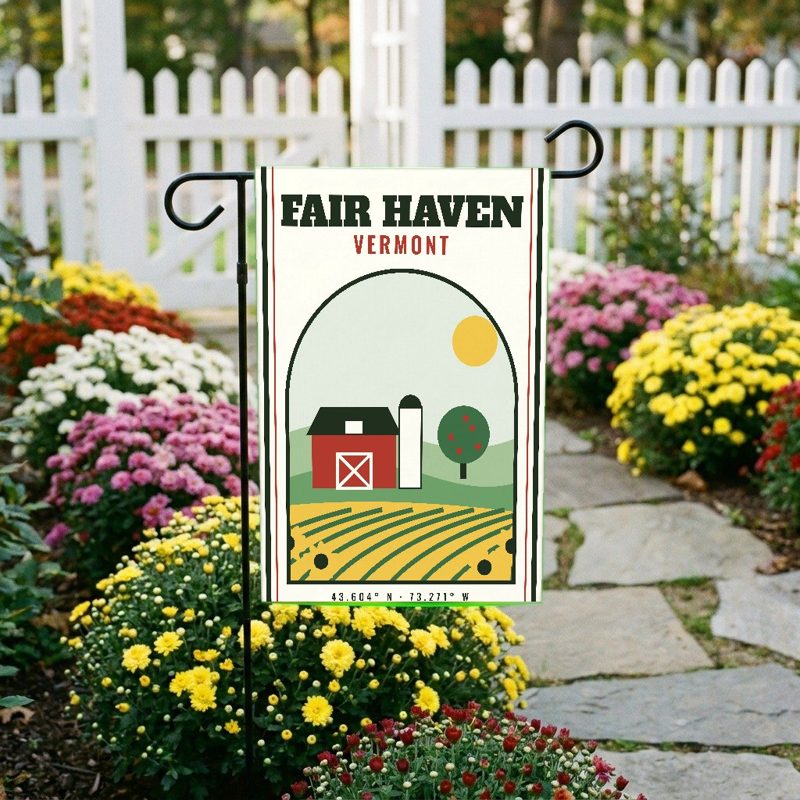
Weatherproof, for the front walk
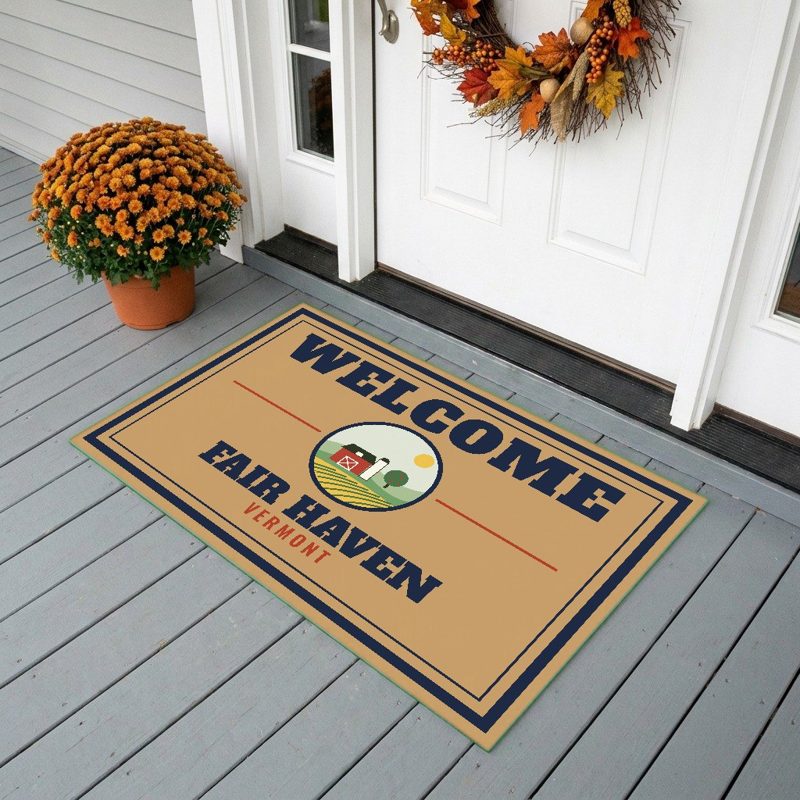
24″×16″, printed coir-look fibers, rubber back
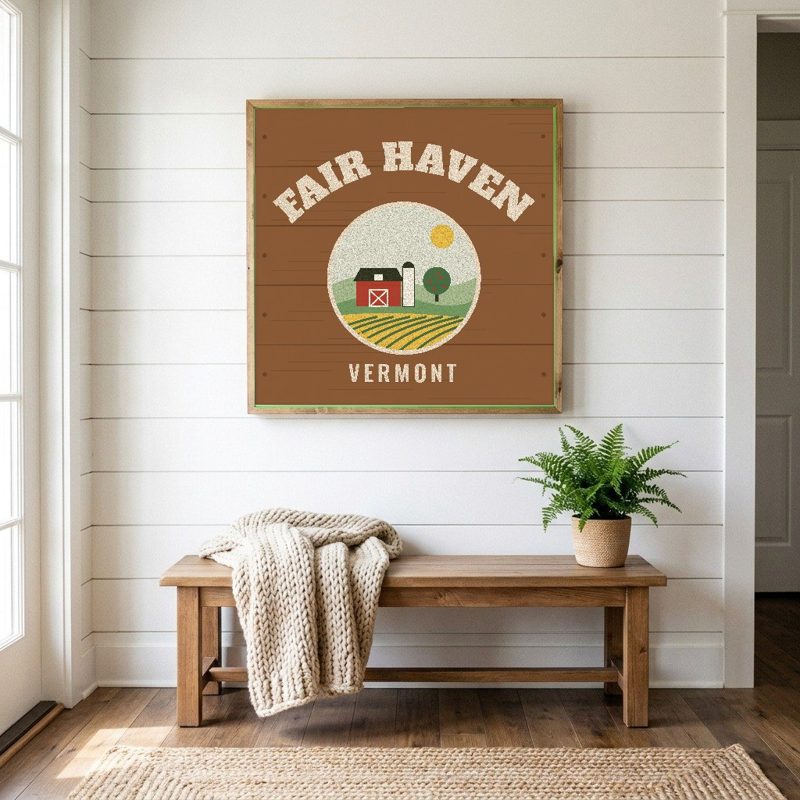
12″×12″ printed wood, ready to hang
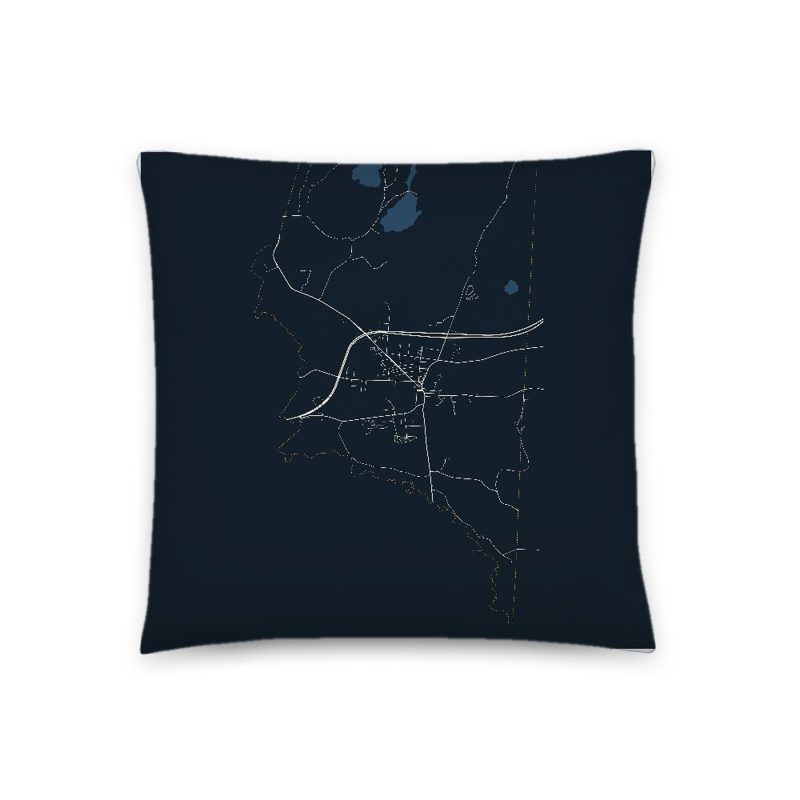
Soft-touch, zip cover
Sturdy all-over-print tote
Glossy top, cork back
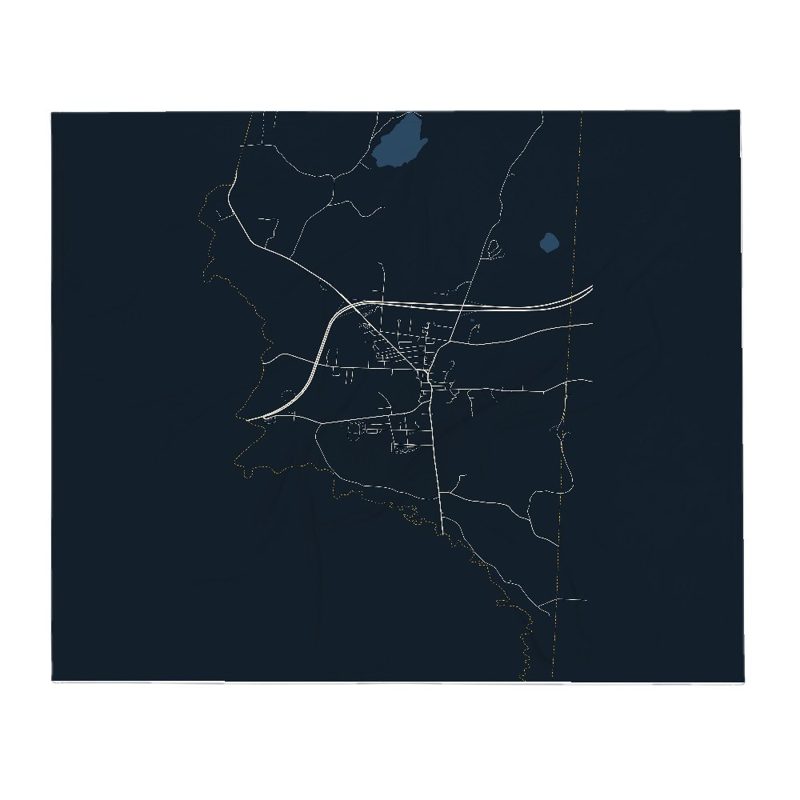
Soft fleece, 50″×60″
20 oz, double-wall stainless
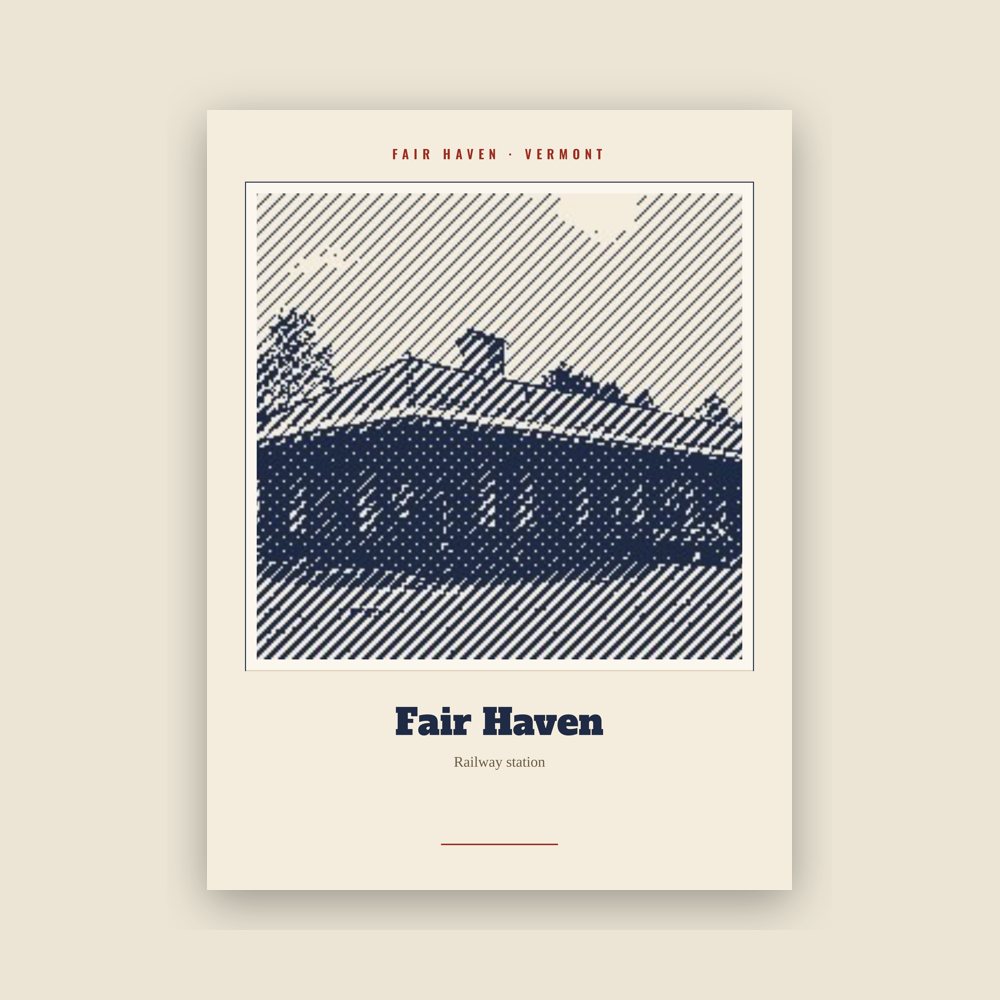
Archival matte print of a local landmark, credited to its photographer
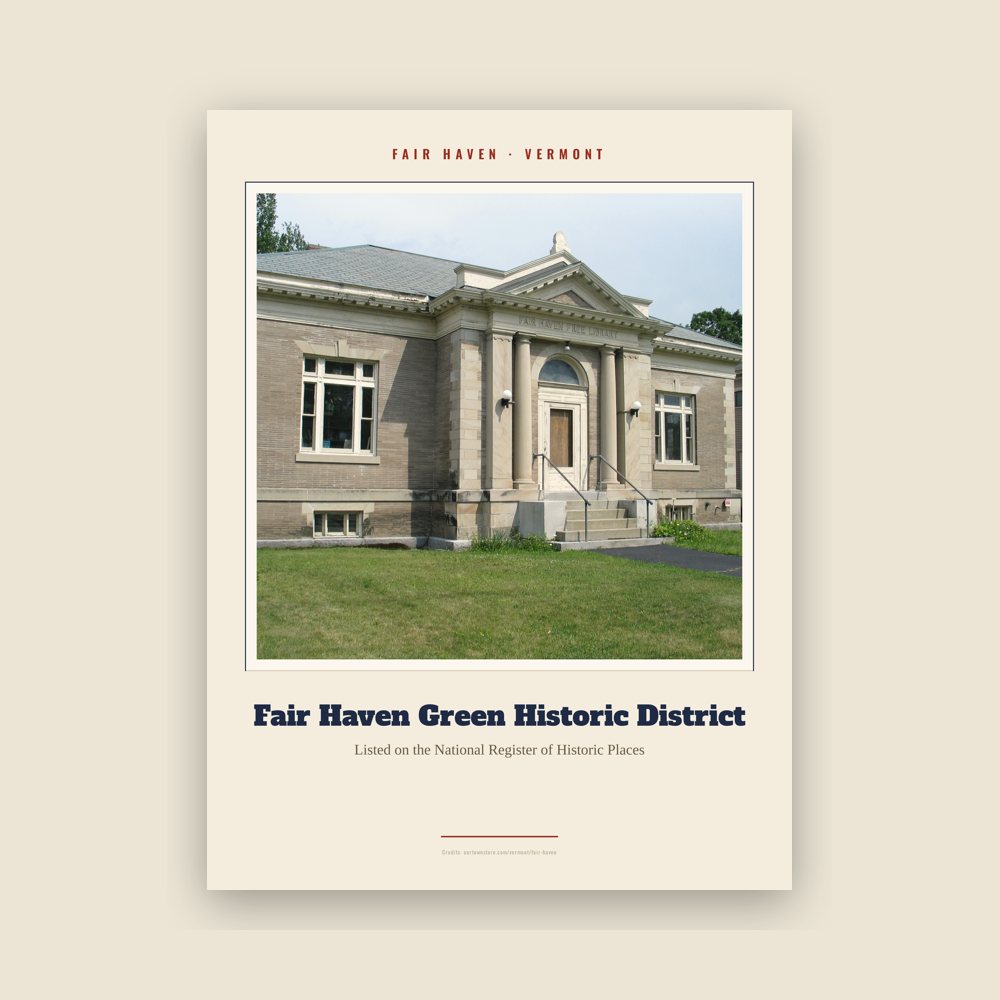
Archival matte print of a local landmark, credited to its photographer

Archival matte print of a local landmark, credited to its photographer
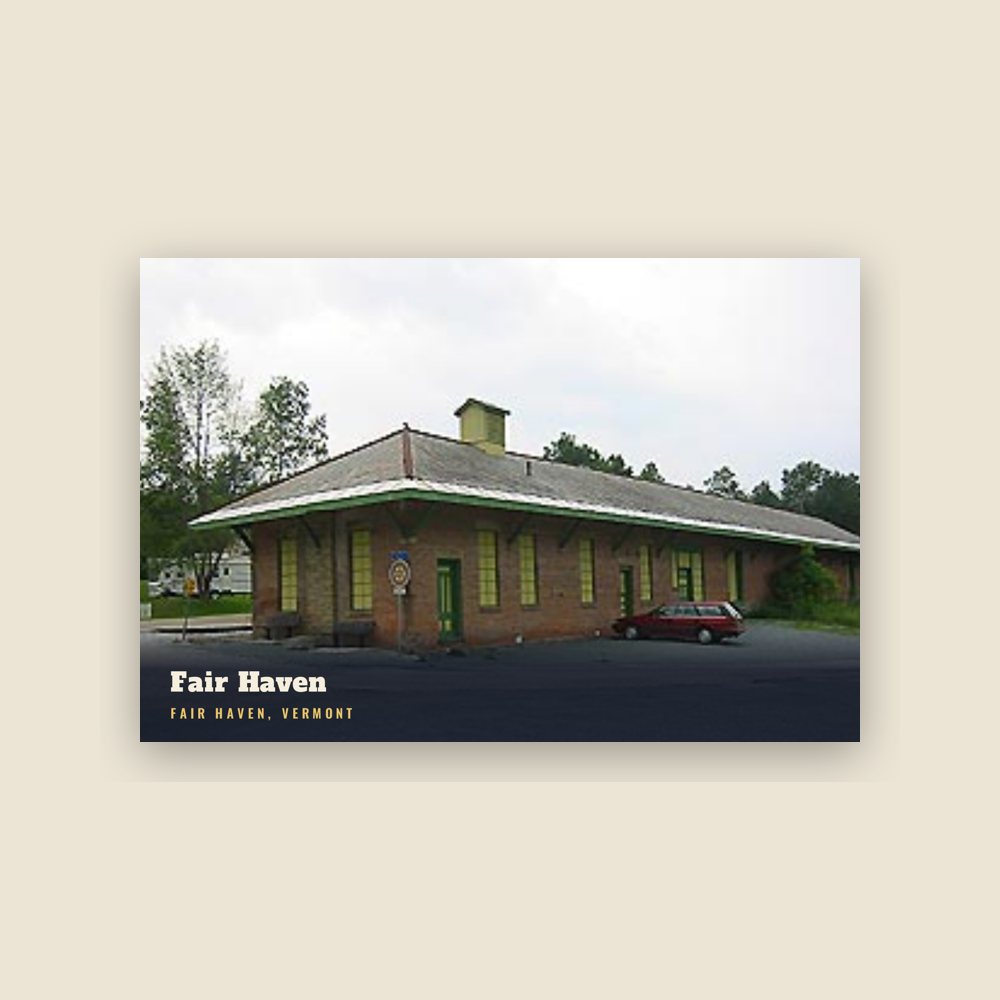
6″×4″ postcard, glossy front
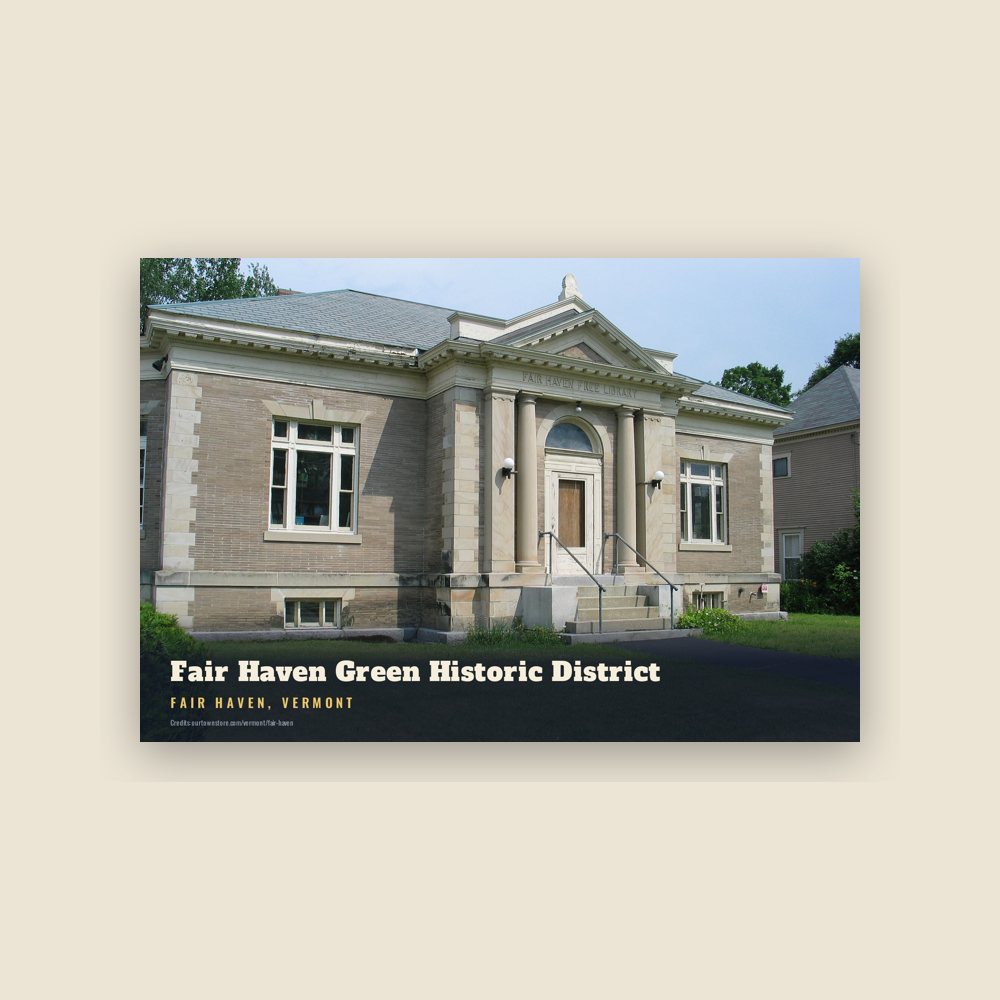
6″×4″ postcard, glossy front
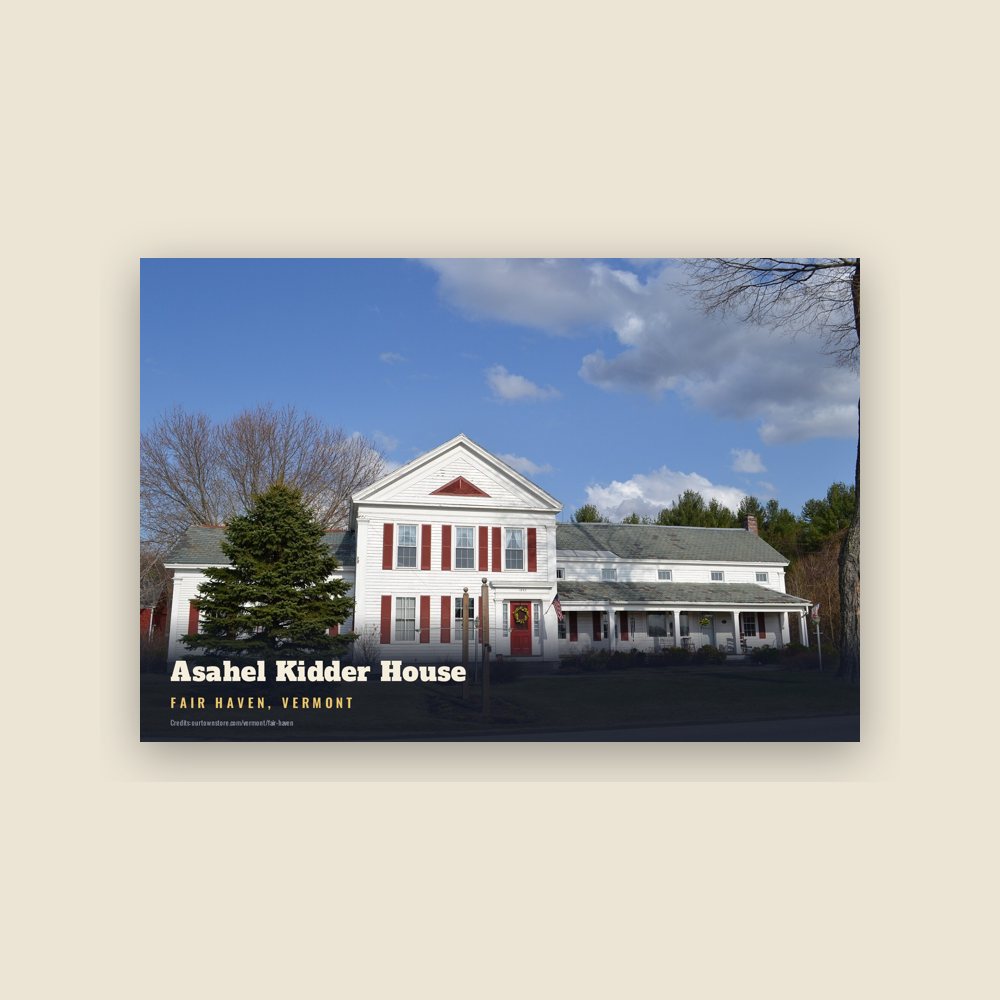
6″×4″ postcard, glossy front
Population 2010: 2,734 → 2020: 2,736
From Wikidata (CC0).
Fair Haven was chartered on October 27, 1779, to Ebenezer Allen and 76 associates, and first settled the same year. The township originally included West Haven, which was set off on October 20, 1792. The post office at Fair Haven was established in 1797. In 1783, Colonel Matthew Lyon moved to Fair Haven and began building mills at the falls on the Castleton River. His enterprises included a gristmill, sawmill and papermill, in addition to a forge, as well as a newspaper, the Fair Haven Gazette. This began Fair Haven's legacy as a small, prosperous mill town, which by 1859 included a marble mill, rolling mill, nail factory, papermill producing wallpaper, three sawmills, a wagon shop, a machine shop, two blacksmith shops, and two shoe shops.
The quarrying and manufacture of slate began in 1846. Fair Haven would develop extensive quarries for the stone, believed at the time to be inexhaustible, which was supplied to cities along the Atlantic coast and in the West. Some of it was made into the framed, book-sized writing slates that students of the time used. On April 7, 1880, a very small area of Fair Haven was transferred to New York due to a change in the course in the Poultney River. The area transferred was west of the "middle of the deepest channel" of the river.
Adapted (trimmed) from the Wikipedia article Fair Haven, Vermont, revision 1377336655 by its contributors, licensed CC BY-SA 4.0.
We share a part of every Fair Haven sale with local partners, and we'd love to print from your collection. Old photographs, maps and postcards make the best keepsakes.
Partner with us