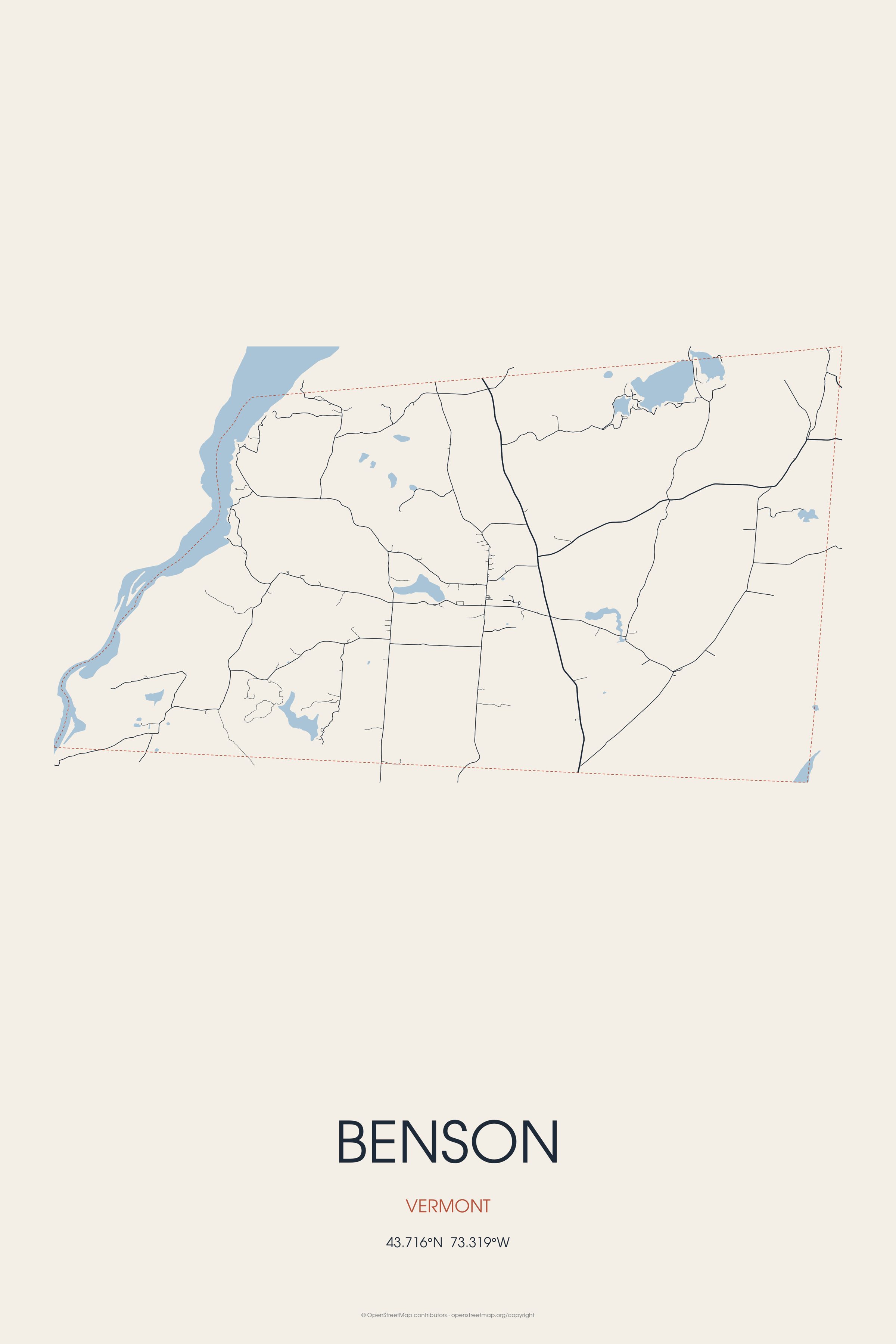
The town is rural, with a concentration of several homes and businesses in Benson village, at the intersection of Stage Road and Lake Road. Landmarks include Devil's Bowl Speedway. Benson is the birthplace of Rufus Wilmot Griswold, editor, literary critic, anthologist, and writer.
Every piece is drawn from Benson's own map data and historic archives, then printed and shipped from the USA when you order. No two towns look alike.
Every road in town, on archival matte paper
The same map, in navy and silver
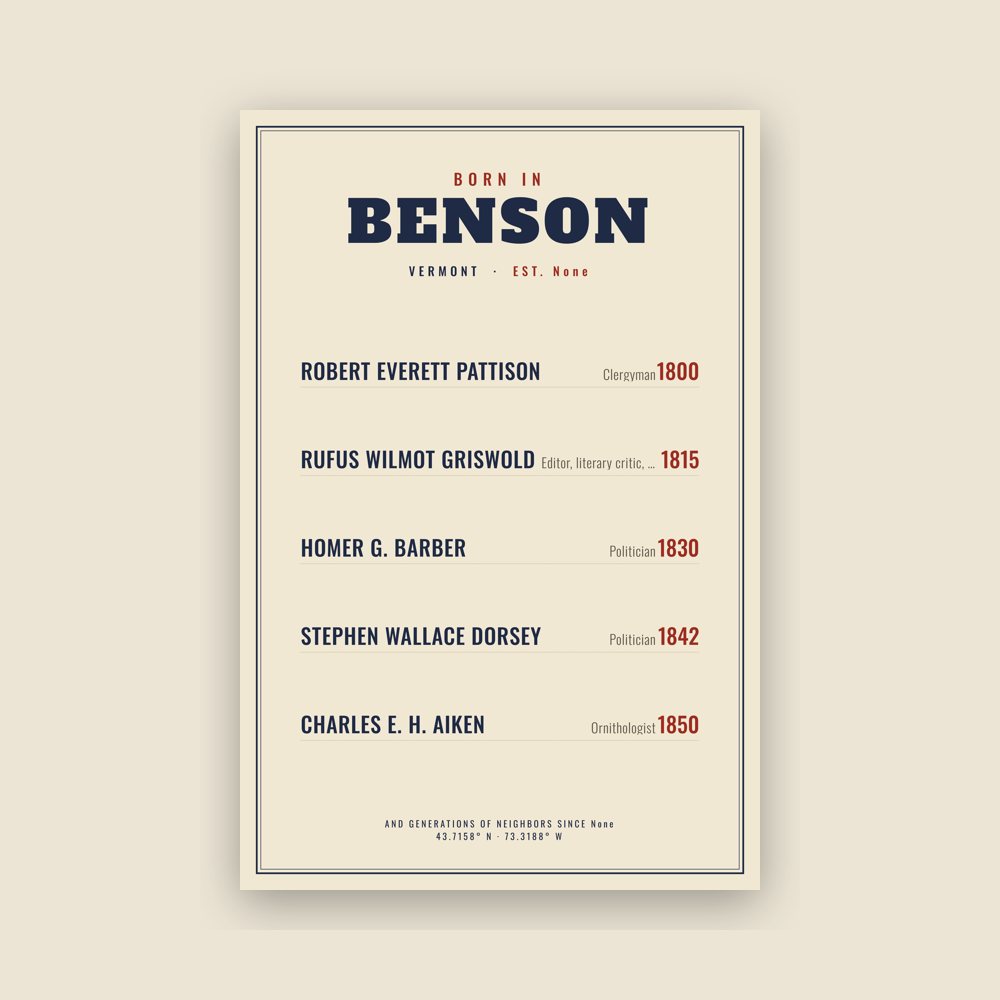
Famous natives, by birth year
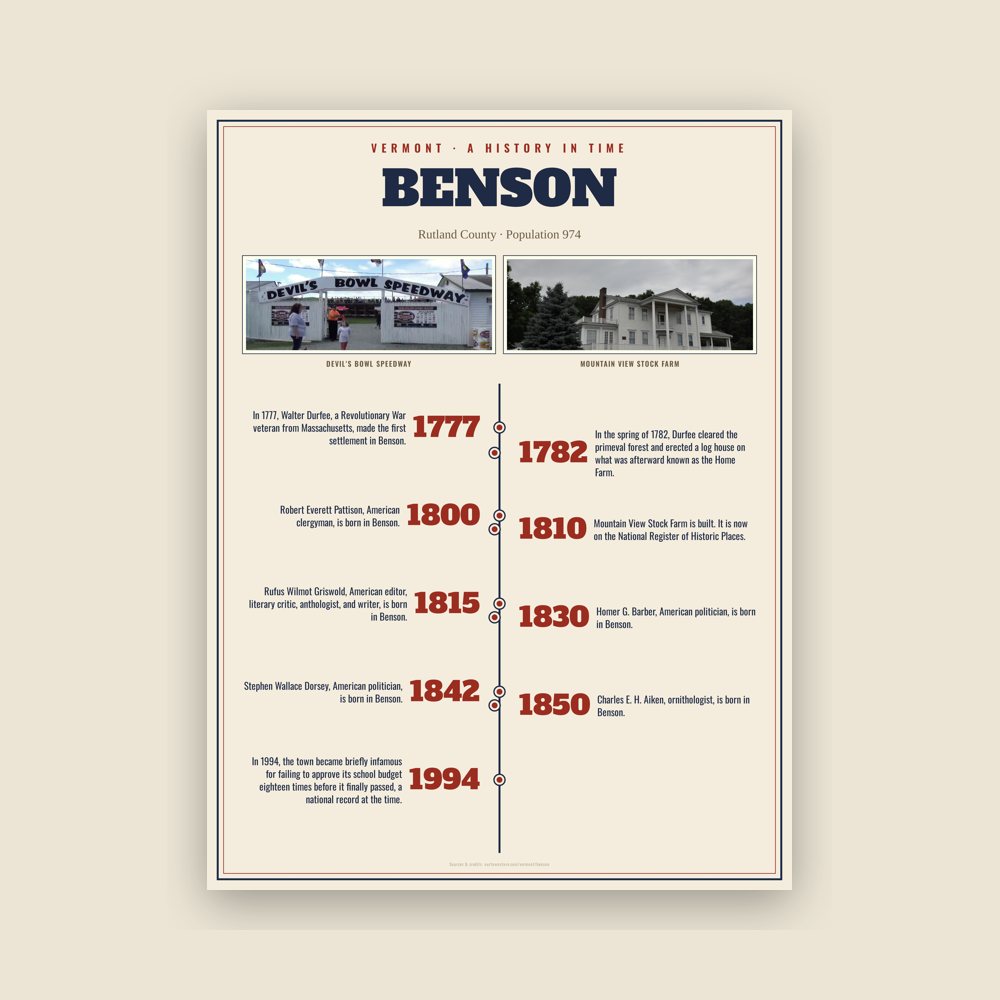
The town's story in dates, from its own records, for home or classroom
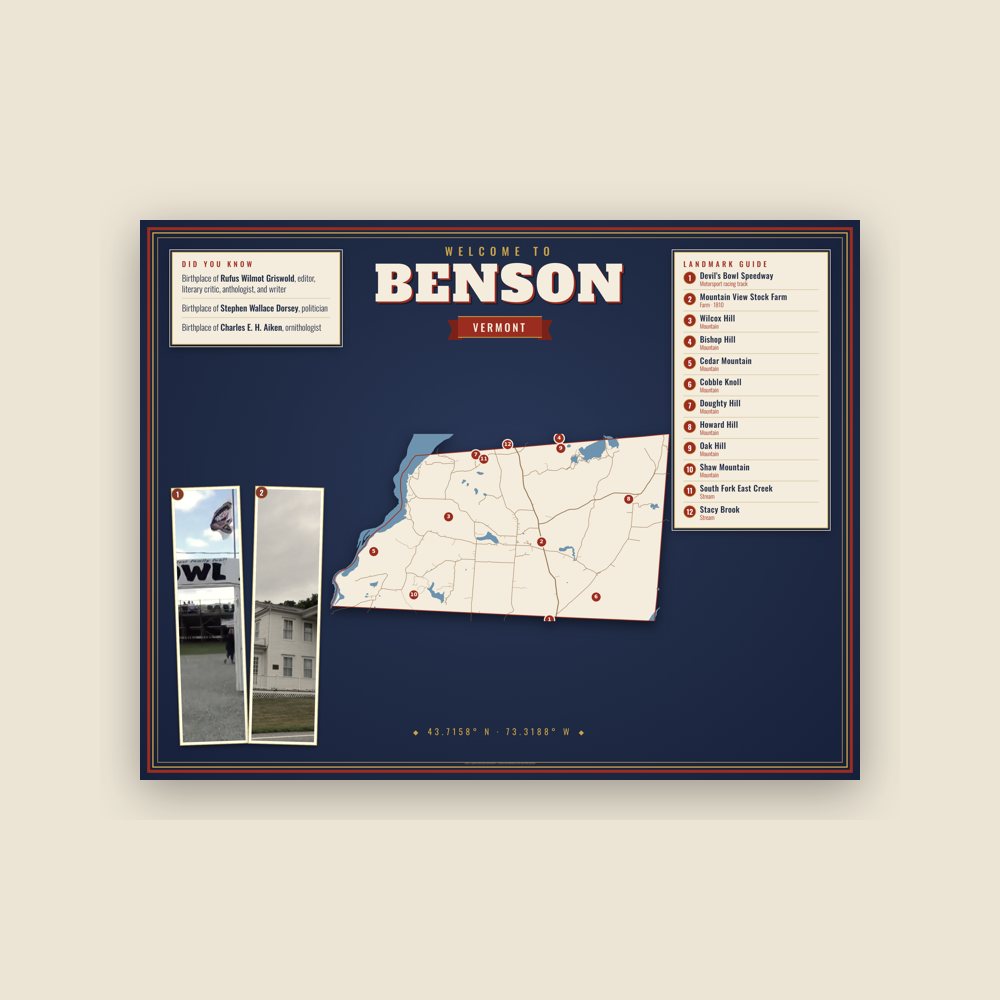
Map of local landmarks, washable fabric

Heavy-blend fleece, street map printed on the back

Soft Bella+Canvas jersey
Glossy ceramic, dishwasher safe
Ceramic keepsake, gold ribbon
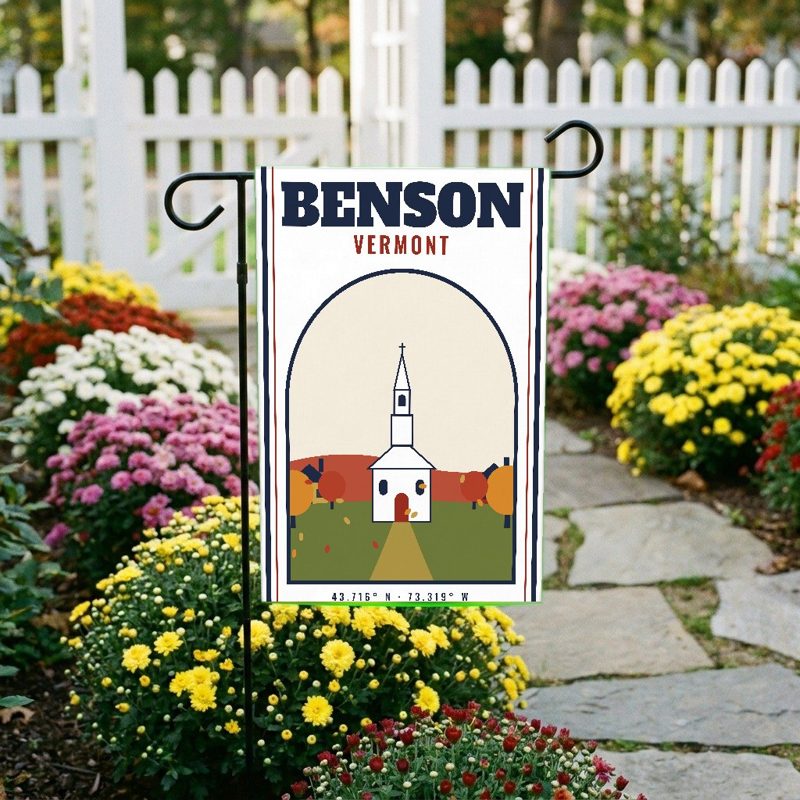
Weatherproof, for the front walk
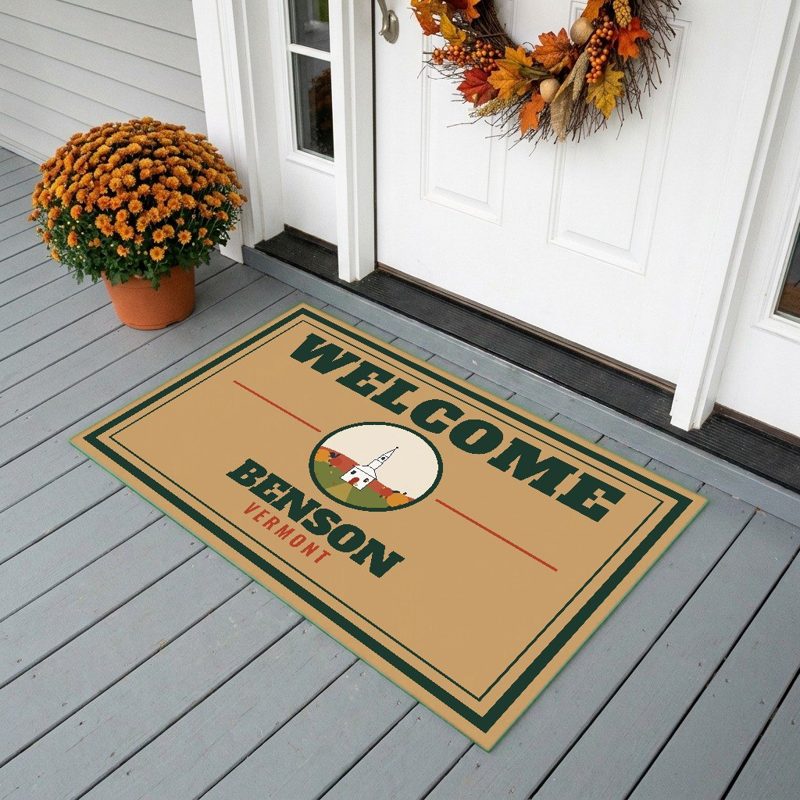
24″×16″, printed coir-look fibers, rubber back
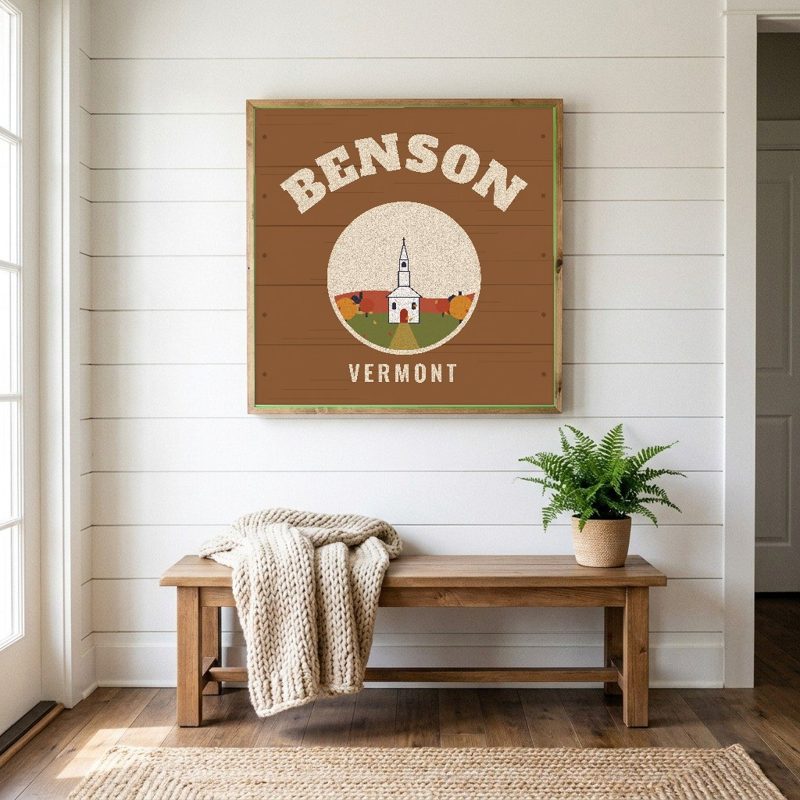
12″×12″ printed wood, ready to hang
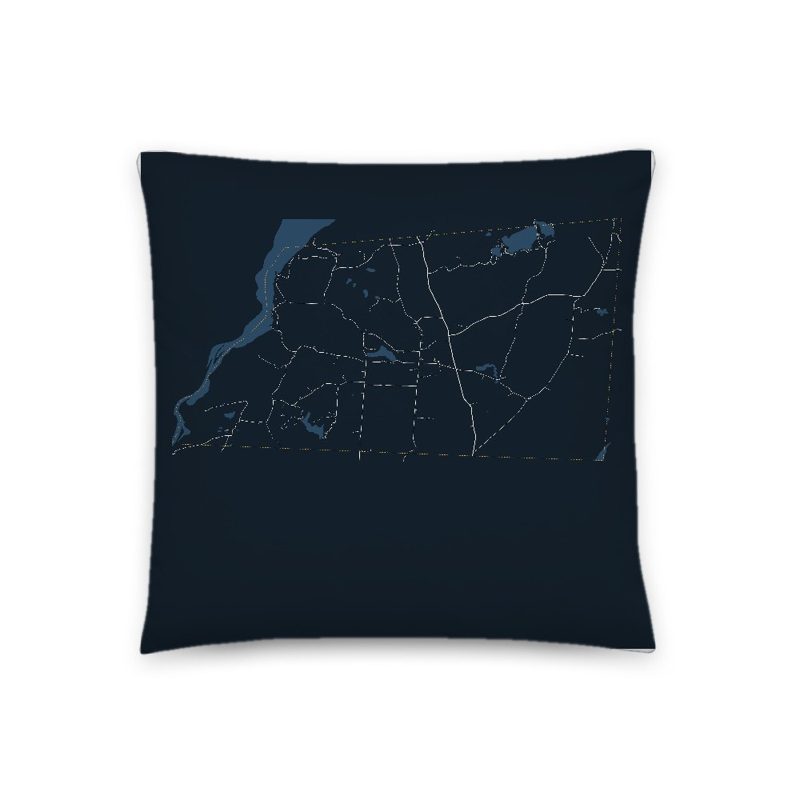
Soft-touch, zip cover

Sturdy all-over-print tote
Glossy top, cork back
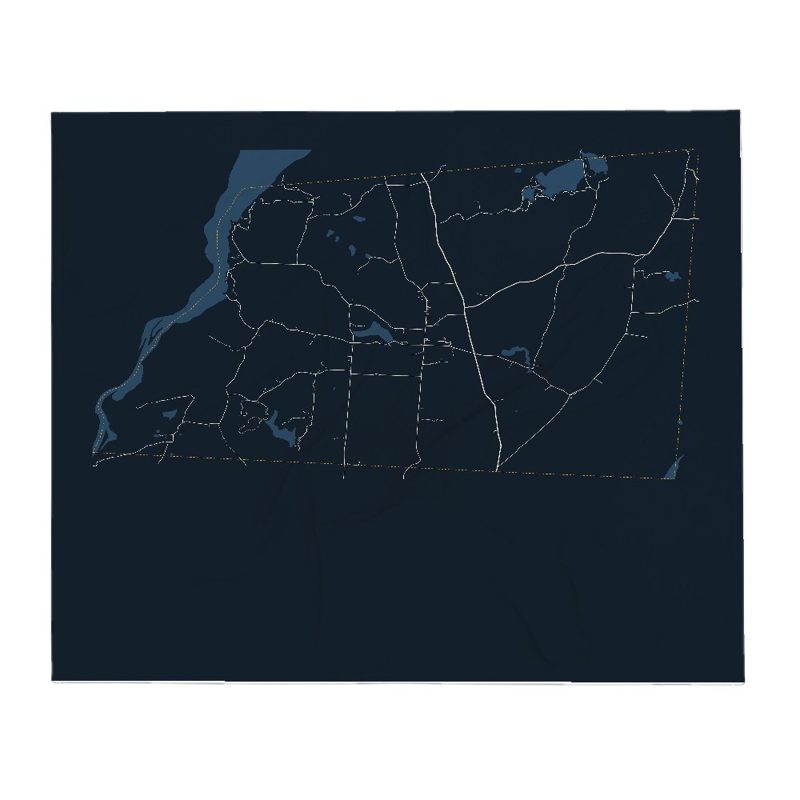
Soft fleece, 50″×60″
20 oz, double-wall stainless
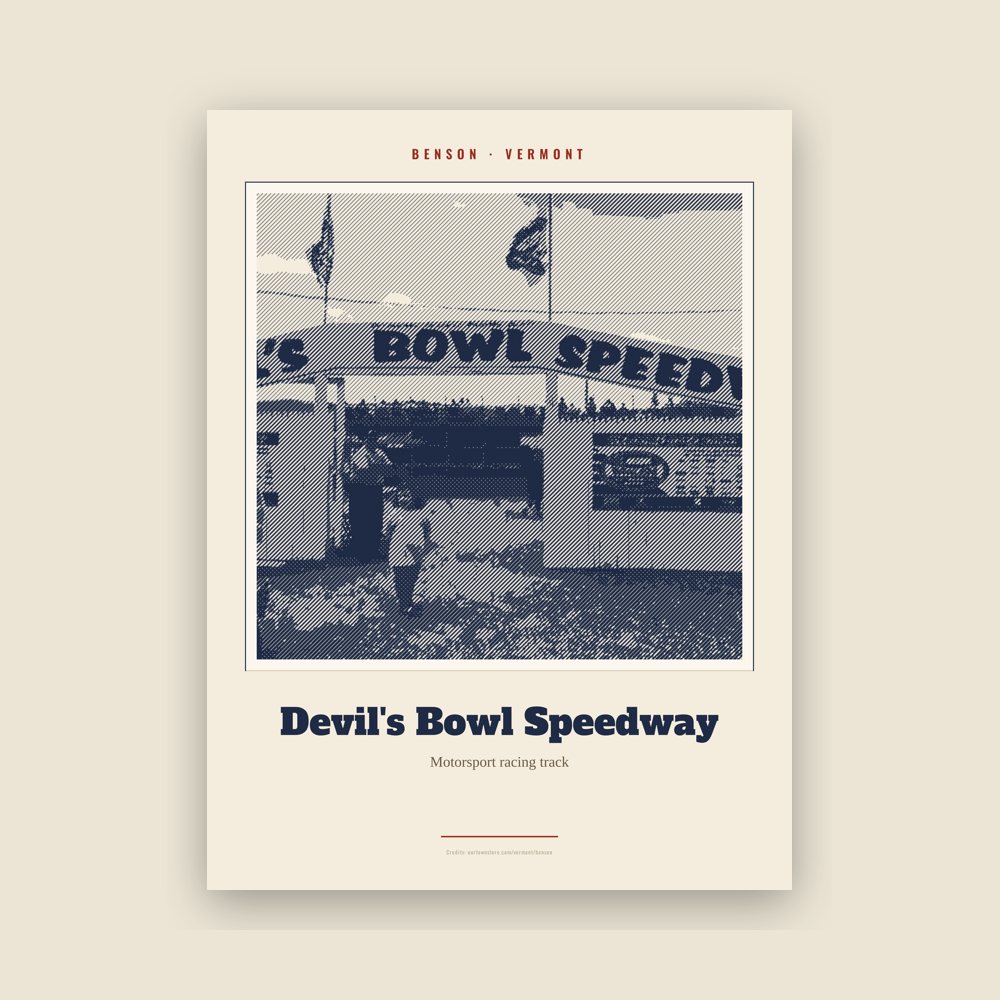
Archival matte print of a local landmark, credited to its photographer
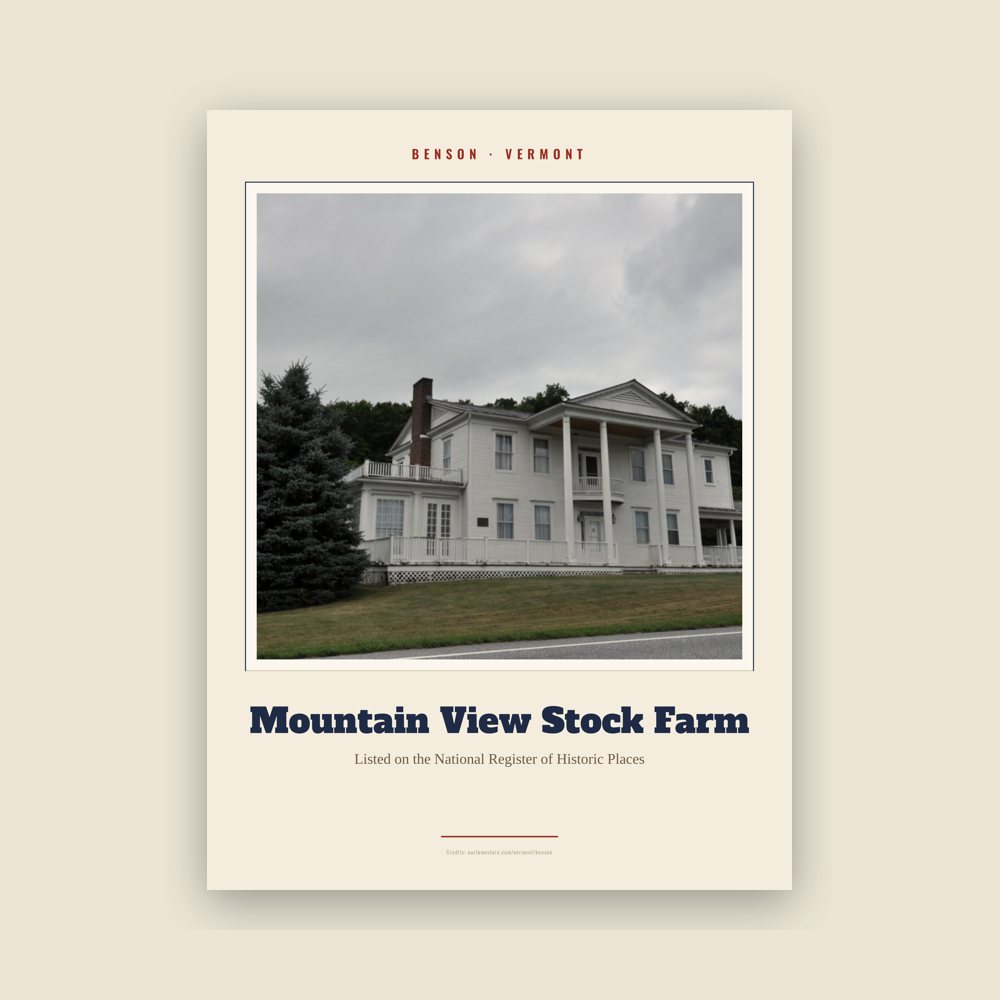
Archival matte print of a local landmark, credited to its photographer
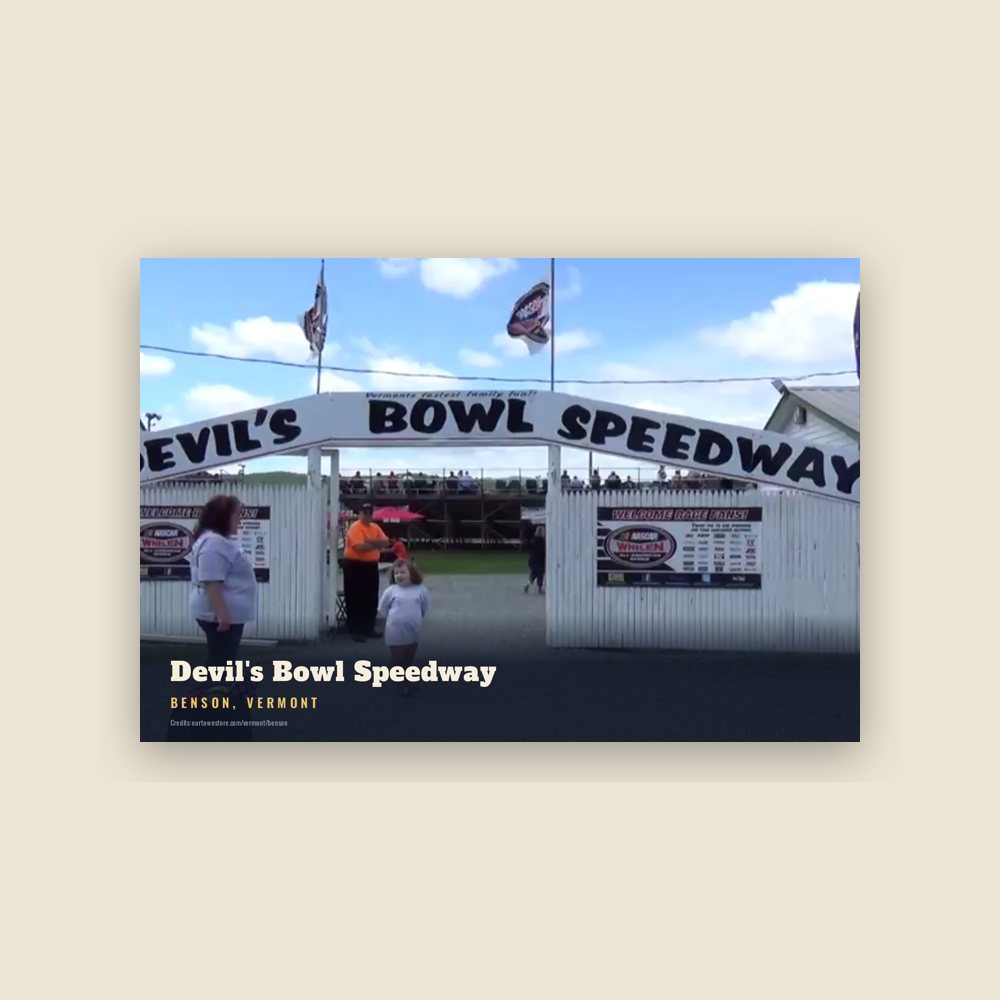
6″×4″ postcard, glossy front
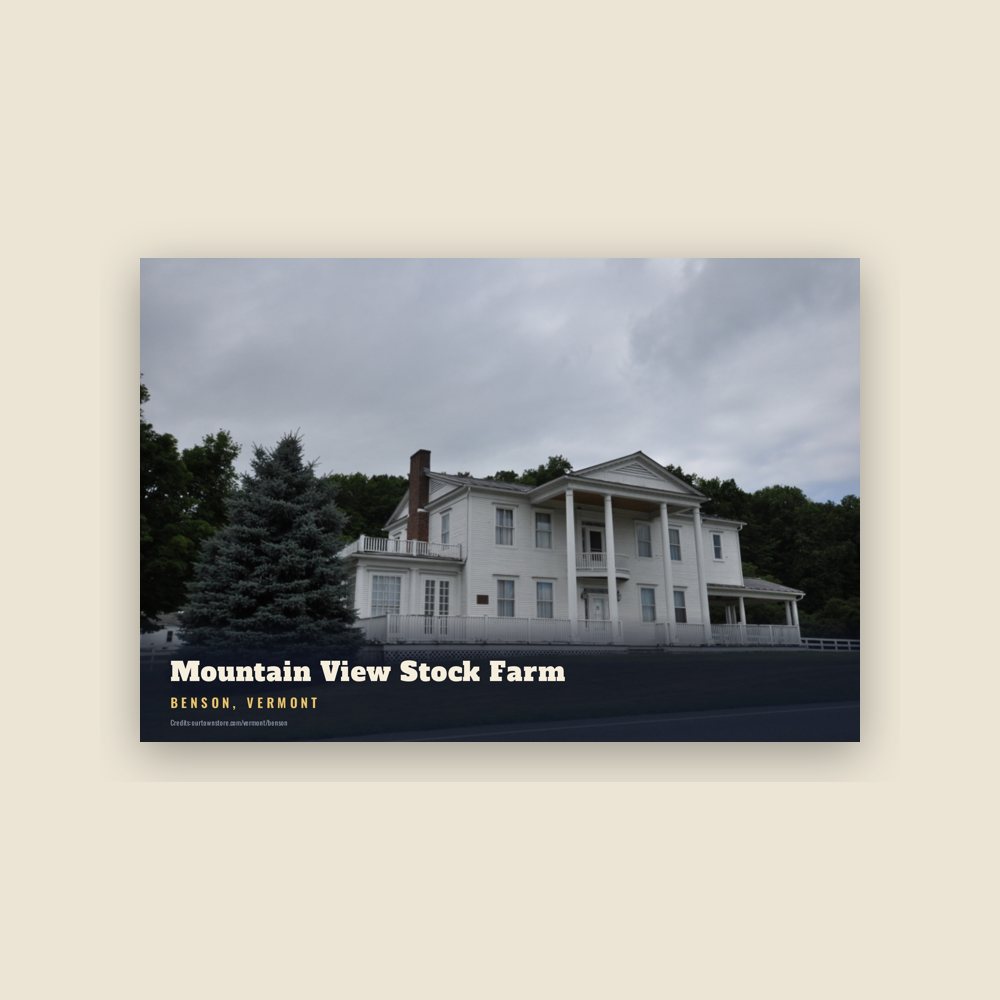
6″×4″ postcard, glossy front
Population 2010: 1,056 → 2020: 974
From Wikidata (CC0).
In 1777, Walter Durfee, a Revolutionary War veteran from Massachusetts, made the first settlement in Benson. At that time the only road in town was the military road from Castleton to Ticonderoga, over which General St. Clair's army passed on its retreat after the evacuation of Ticonderoga, on July 6, 1777. Durfee found his way through the woods by a bridle path made by the surveyors and followed their marks on the trees. During the summer and autumn of 1782, he was the only person who had a settled habitation in the town. He was originally from Freetown, Massachusetts but moved to Benson from Poultney. In 1780 he purchased the entire right of Isaac Clark, one of the original proprietors of Benson; and also the entire right of John G Rover, another original proprietor. In the spring of 1782, Durfee cleared the primeval forest and erected a log house on what was afterward known as the Home Farm. Durfee continued to reside on that farm until the spring of 1835 when he moved to West Chazy, New York, where he died in the summer of 1843, aged over 90 years. In the spring of 1783 Jonathan Meacham and Captain James Noble and his son, James Noble Jr., came to Benson, and made preparations for settlement; and it is believed that they were removed here with their families in the autumn of that year.
While nobody seems to be quite sure as to the precise origin of the town's name, most historians over the years have speculated that it was named for Egbert Benson, a respected lawyer and Revolutionary War officer, who was instrumental in negotiating the land claim which New York had made to Vermont—a congressionally mandated prerequisite for Vermont joining the Union as a state of its own, rather than being divided between New York and New Hampshire. Benson residents have entered into some disputes over the history of the town in the recent publication "Remembering Benson" over the origin of the town's name. Lilian Snyder Philips Smith, who moved to Benson in 1948, claimed that her late husband Percy Phillips' great-great-grandfather Benson Philips was an early selectman responsible for chartering the town's first primary school in 1813. This was contradicted by Leonard Lussier, who questioned Mrs. Snyder Philips Smith's account as "probably malarkey."
Benson's political history has been checkered with Tory, Republican, Progressive, and Know Nothing sentiments. Local Historian Genevieve Trutor expressed surprise at Benson's progressive streak, noting that the brief tenure of 1920s representative Susannah W. Nifong was surprising to locals as well as anyone who might consider the prevalent political conditions at the time. Mrs. Trutor was an active feminist agitator during her own time, arguing for women to be engaged in front-line combat during World War II.
The 1976 United States Bicentennial celebrations became a point of great national and town pride, as the town's rivalry with neighboring Orwell intensified over which town would hold a better celebration. Although there was no formal victor, Benson's parade still maintains an important part in the town's history. Benson's economy fell into a slump that it would not recover from until the late 2000s.
In 1994, the town became briefly infamous for failing to approve its school budget eighteen times before it finally passed, a national record at the time.
Adapted (trimmed) from the Wikipedia article Benson, Vermont, revision 1374138187 by its contributors, licensed CC BY-SA 4.0.
We share a part of every Benson sale with local partners, and we'd love to print from your collection. Old photographs, maps and postcards make the best keepsakes.
Partner with us