Since 1851
A short history of Parowan
Fremont culture and Anasazi people were the first known inhabitants of the area where Parowan now exists. Petroglyphs, pithouses, arrowheads, pottery, and manos dating from A.D. 750 to 1250 found in the area are evidence that it was on a major thoroughfare of early indigenous peoples. At Parowan Gap, a mountain pass 10 miles (16 km) northwest of Parowan, ancient people inscribed petroglyphs on smooth-surfaced boulders that feature snakes, lizards, mouse-men, bear claws, and mountain sheep. Located near the Parowan Gap there are dinosaur tracks. East of the Gap and petroglyphs hikers can discover Hadrosaurs tracks that were originally formed in non-resistant mudstone. The tracks have three toes and can be found on the side of 12800 N. Later, the Old Spanish Trail passed through the area.
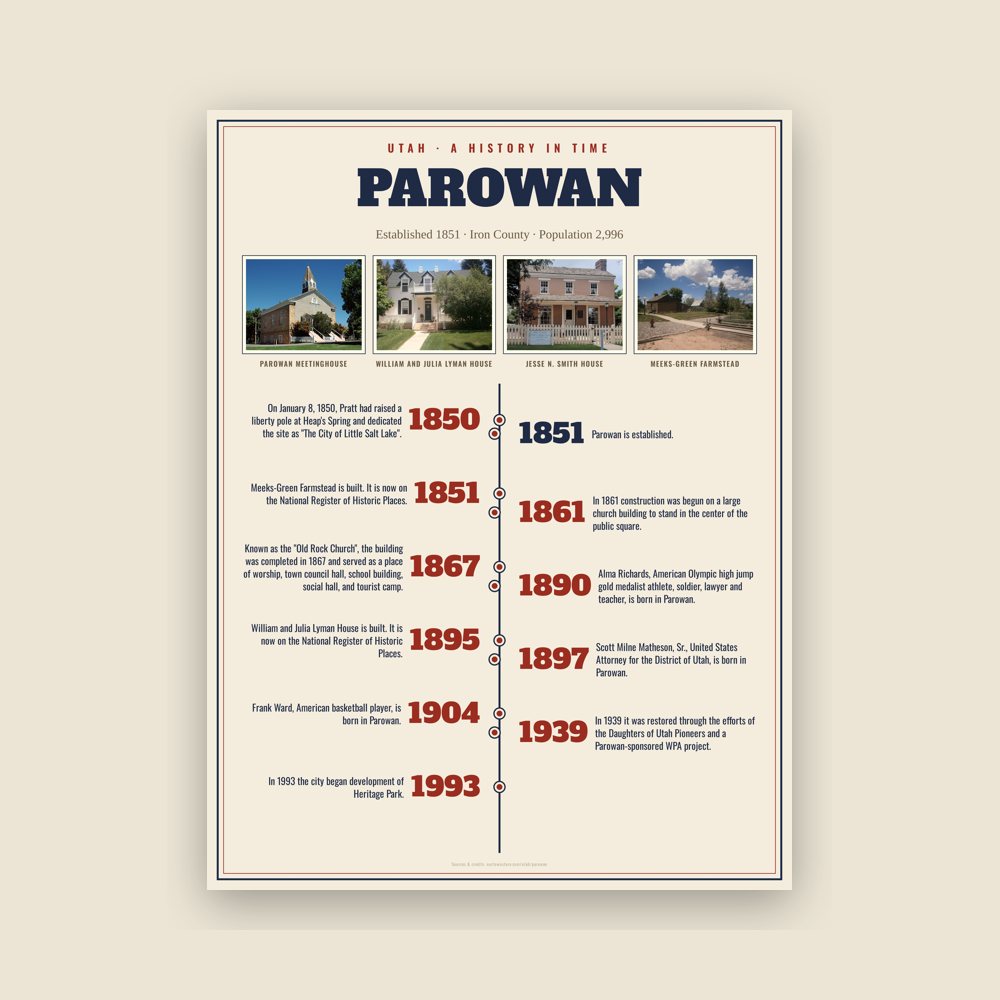
Parowan was founded on January 13, 1851, twelve months after Parley P. Pratt and members of his exploring party discovered the Little Salt Lake Valley and nearby deposits of iron ore in the Iron Mountain District. On January 8, 1850, Pratt had raised a liberty pole at Heap's Spring and dedicated the site as "The City of Little Salt Lake". Based on Pratt's exploration report, Brigham Young called for the establishment of settlements in the area to produce much-needed iron implements for the pioneer state.
Mormon apostle George A. Smith was appointed to head the establishment of this "Iron Mission" in 1850. The first company of 120 men, 31 women, and 18 children braved winter weather traveling south from Provo during December. They sometimes built roads and bridges as they traveled, and they finally reached Center Creek on January 13, 1851. After enduring two bitterly cold nights, they moved across the creek and circled their wagons by Heap's Spring and Pratt's liberty pole, seeking the protection of the hills. Within days, the settlement organization was completed: companies of men were dispatched to build a road up the canyon, a town site was surveyed and laid into lots, and a fort and a log council house were begun. The council house was used as church, schoolhouse, theater, and community recreation center for many years.
In 1861 construction was begun on a large church building to stand in the center of the public square. The pioneers envisioned a building of three stories, built from the abundant yellow sandstone and massive timbers in nearby canyons. Known as the "Old Rock Church", the building was completed in 1867 and served as a place of worship, town council hall, school building, social hall, and tourist camp. In 1939 it was restored through the efforts of the Daughters of Utah Pioneers and a Parowan-sponsored WPA project. It is now a museum of Parowan's early history.
Parowan has been called the "Mother Town of the Southwest" because of the many pioneers who left from there to start other communities in southern Utah, Nevada, Arizona, Colorado, and even Oregon and Wyoming. In its first year, colonists were asked to settle Johnson Fort, now Enoch, where a stockade was built, and were also sent to settle along Coal Creek, site of the settlement to manufacture iron which became Cedar City.
Parowan's first settlers were instructed to plant crops so that following immigrants could open up the coal and iron ore deposits, but local industries were also developed. Self-sufficiency was envisioned, and local industries included a tannery, sawmill, cotton mill, and factories for making saddles and harnesses, furniture and cabinets, shoes, and guns; there also were carpentry and blacksmith shops. In the early 1900s sheep and dairy industries were well established. Local farms were noted for their quality Rambouillet sheep, and the Southern Utah Dairy Company, a cooperative venture begun in 1900, produced dairy products and was known for its "Pardale Cheese".
The first attempts at iron manufacturing were unsuccessful, but mining in the twentieth century brought prosperity to Iron County. When the closure of the mines and the completion of Interstate 15 threatened economic depression in the early 1980s, Parowan citizens developed an economic plan to keep the community viable. Businesses now support Brian Head, a year-round resort 12 miles (19 km) south of town featuring downhill and cross-country skiing in the winter and numerous summer mountain activities.
Significant growth has occurred in the 1990s in Parowan; it has been attributed to affordable utility fees and a positive economic climate. Parowan is the site of the annual Iron County Fair on Labor Day weekend; it also is a host community for the Utah Summer Games and sponsor of the annual "Christmas in the Country" celebration each November.
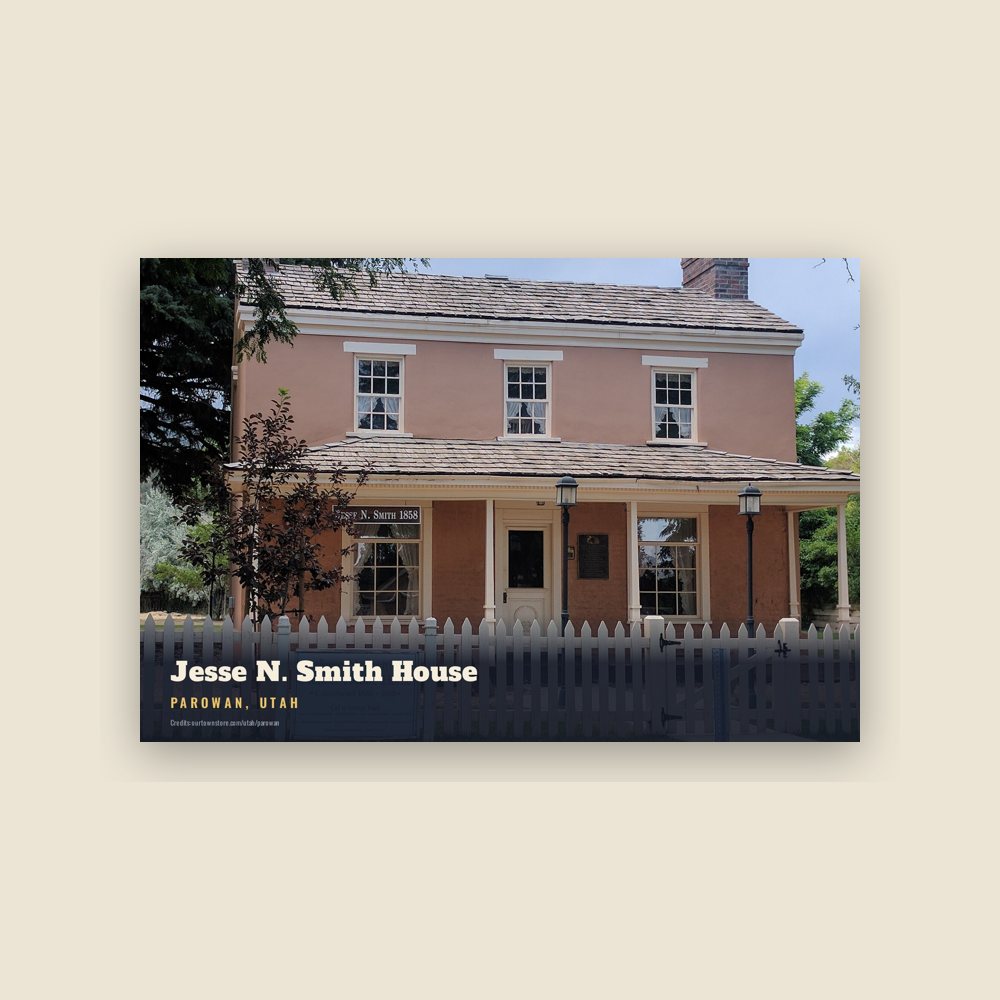
In 1993 the city began development of Heritage Park. This site includes a park, a grotto and pond, and statues commemorating the founders of Parowan. Other local historic sites include the original town square with the Old Rock Church, the War Memorial and Rose Garden, the Third/Fourth Ward LDS chapel built in 1915, and the Jesse N. Smith Home Museum. Parowan City supports the Parowan Community Theatre, which produces theatrical productions throughout the year.
Adapted (trimmed) from the Wikipedia article Parowan, Utah, revision 1378785870 by its contributors, licensed CC BY-SA 4.0.
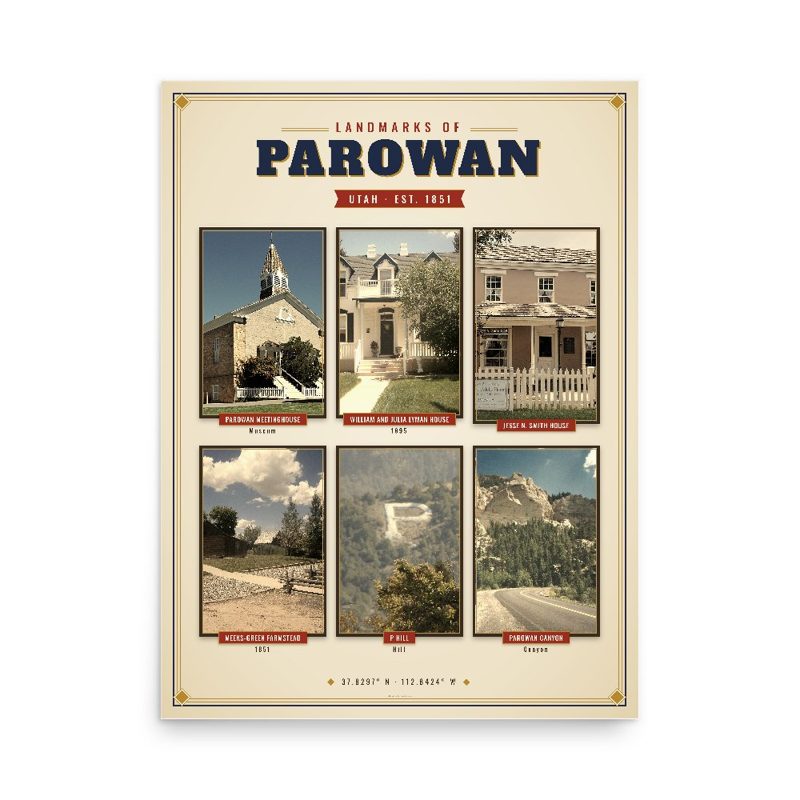
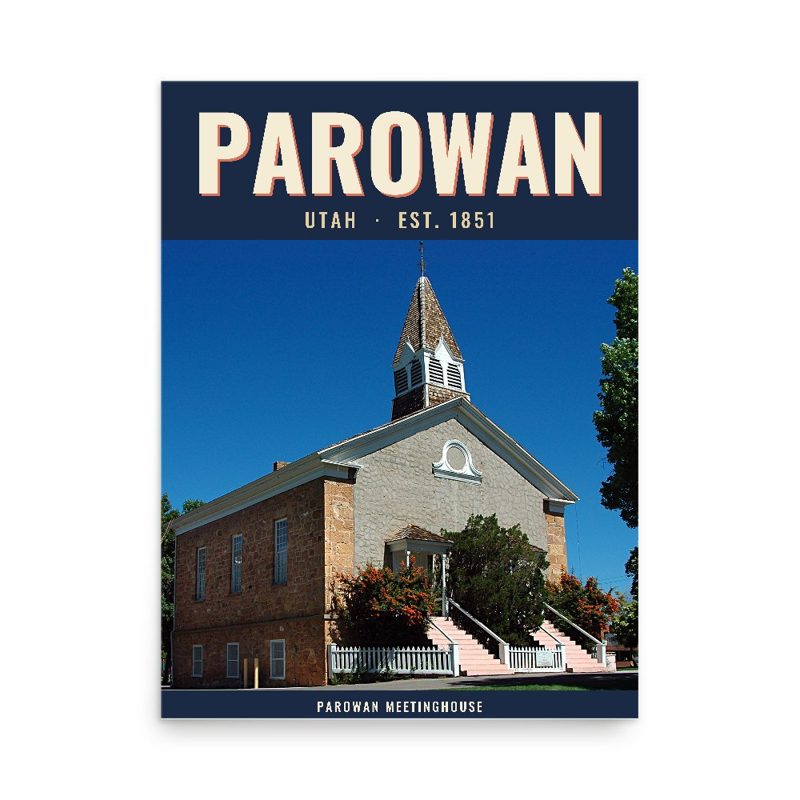
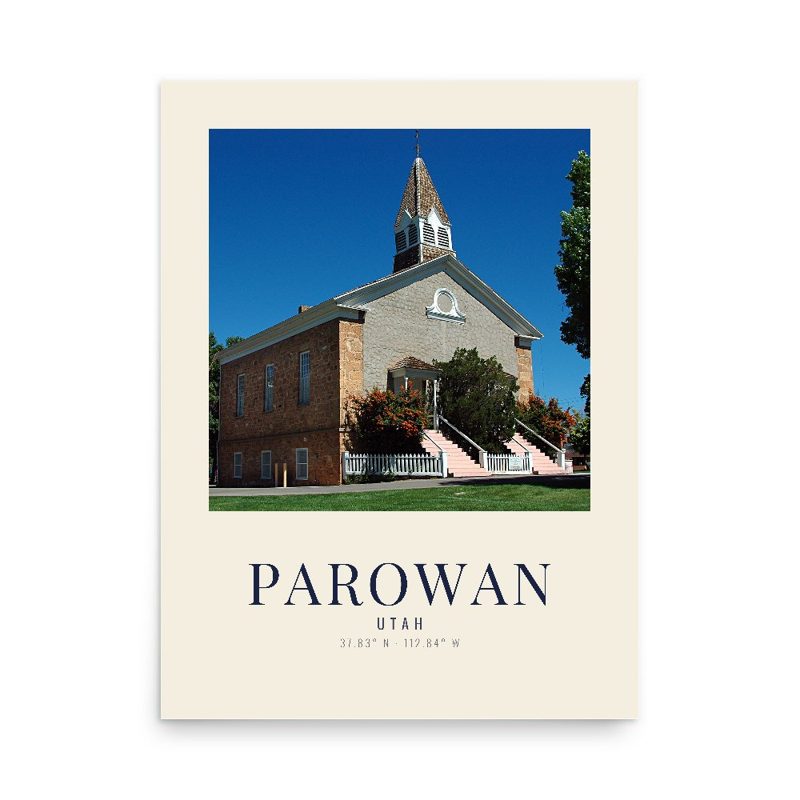
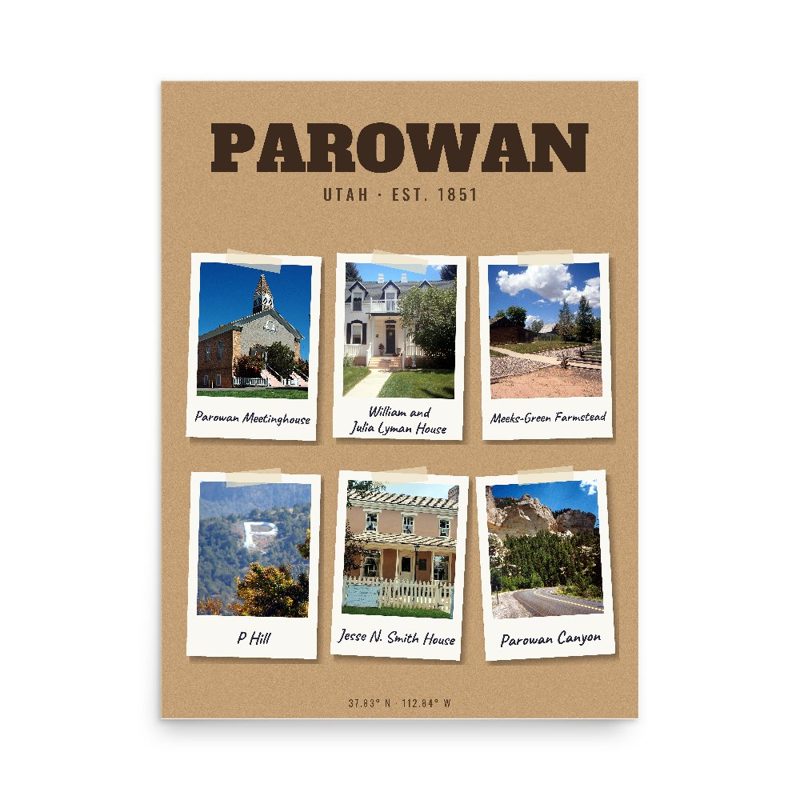
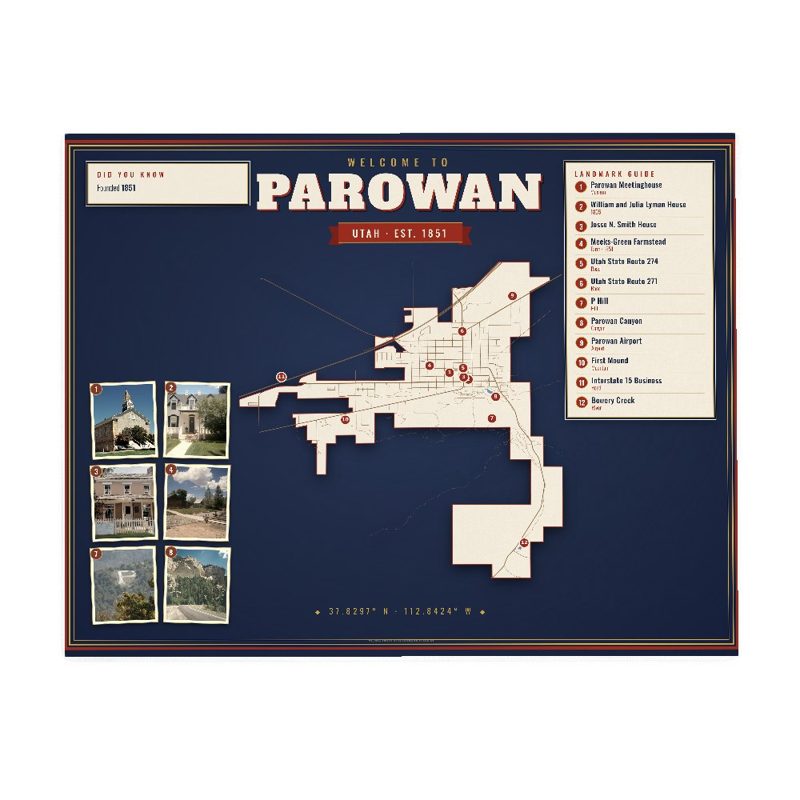



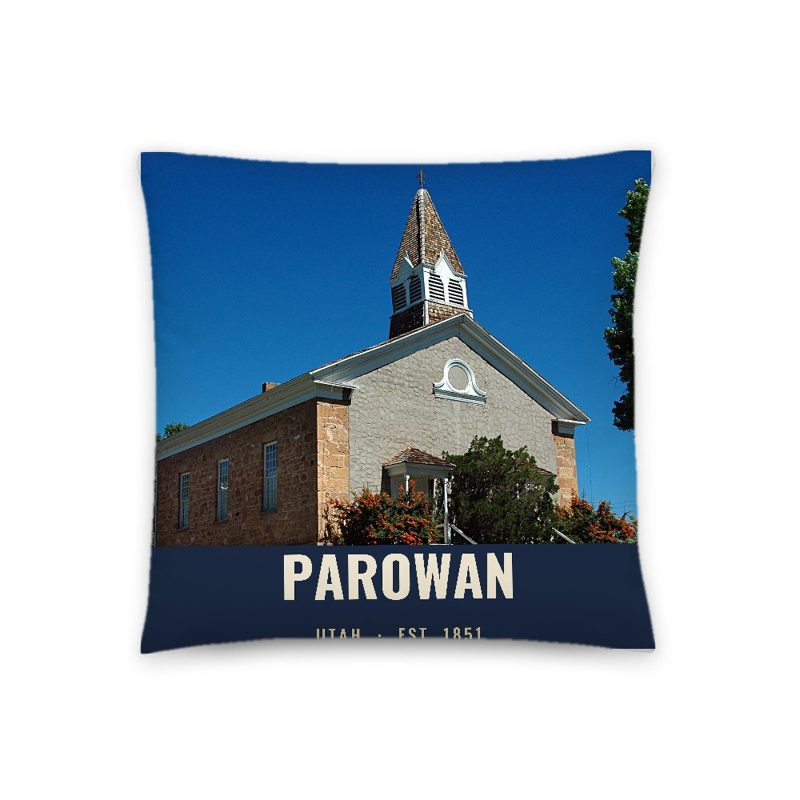


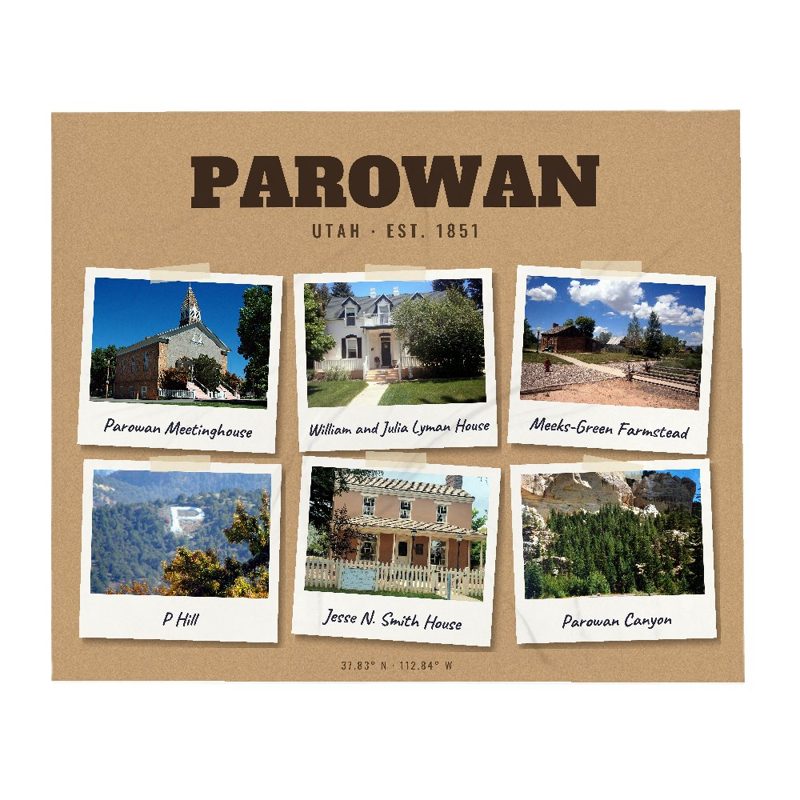
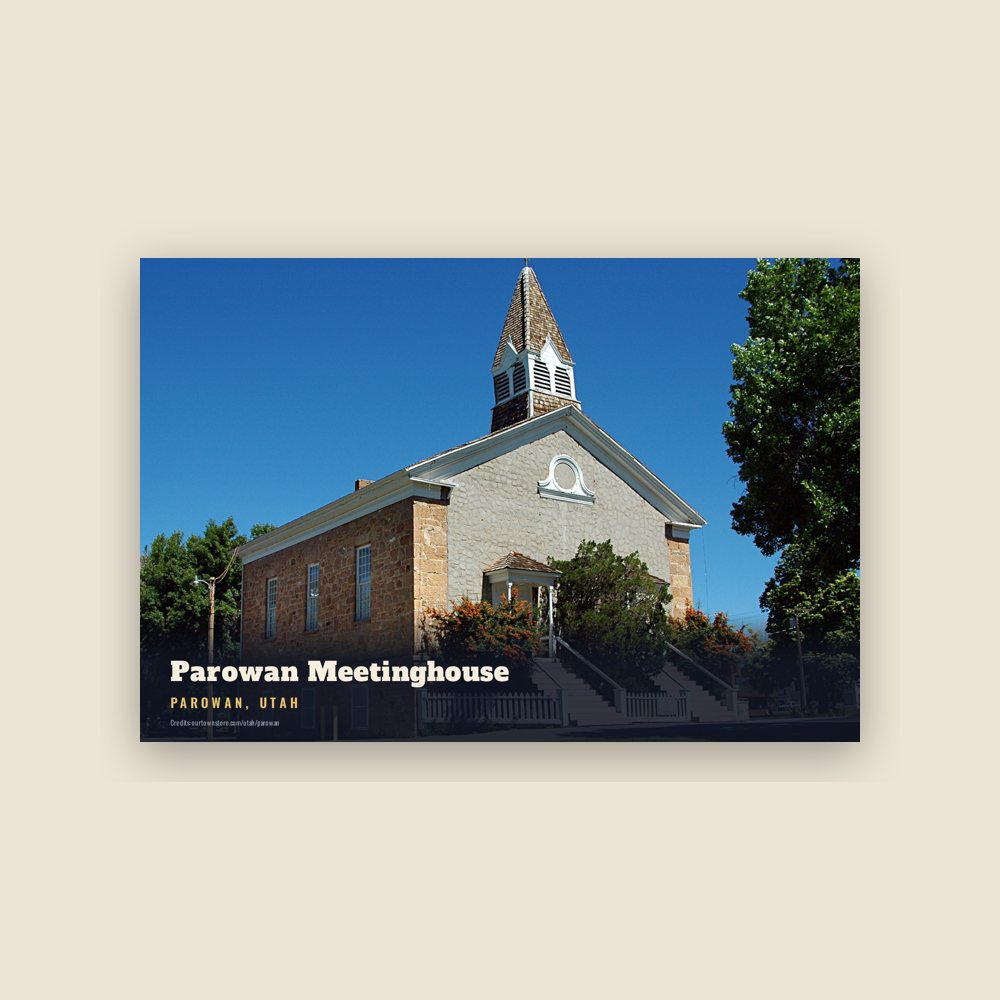
 Parowan Meetinghouse
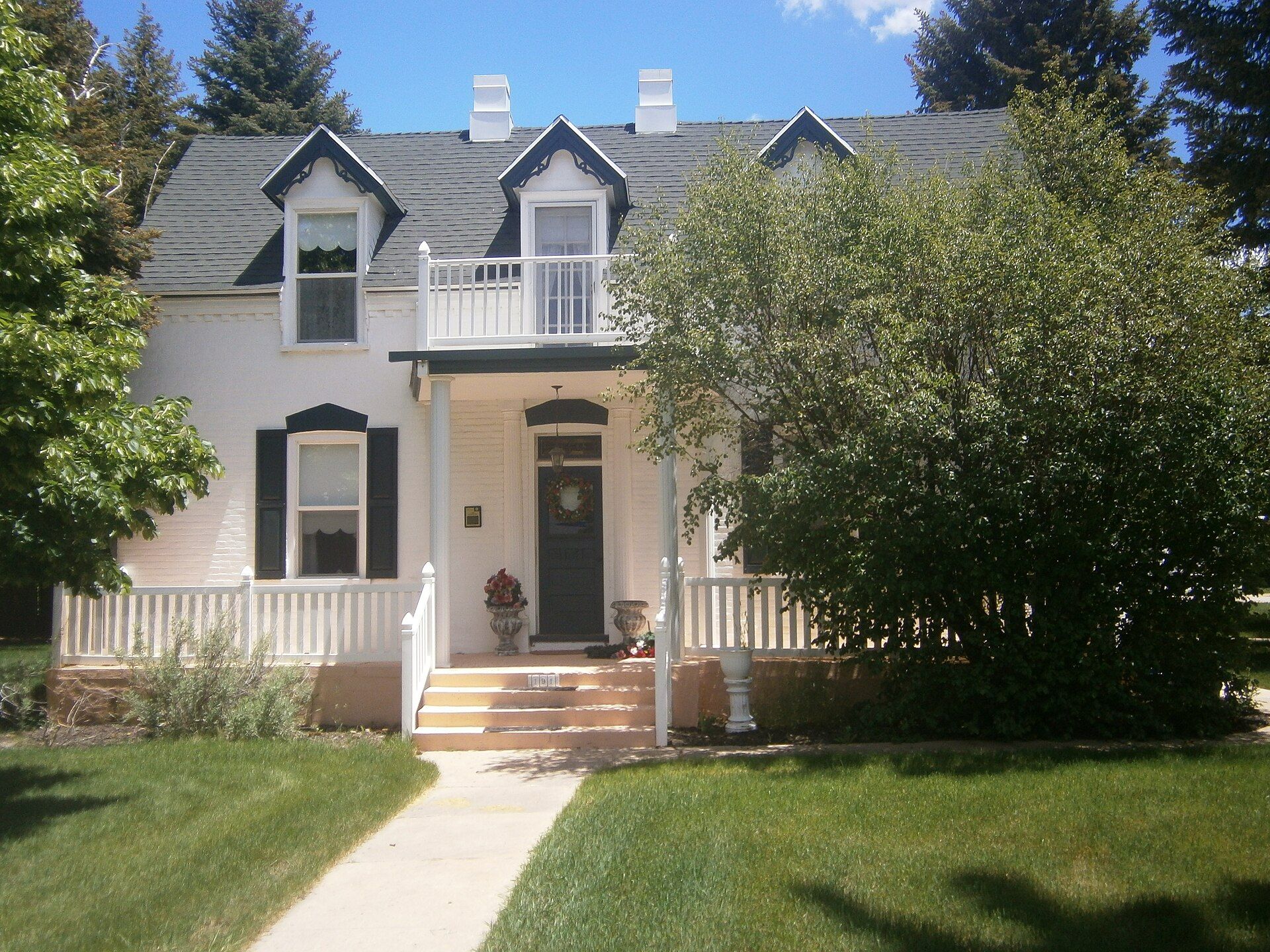
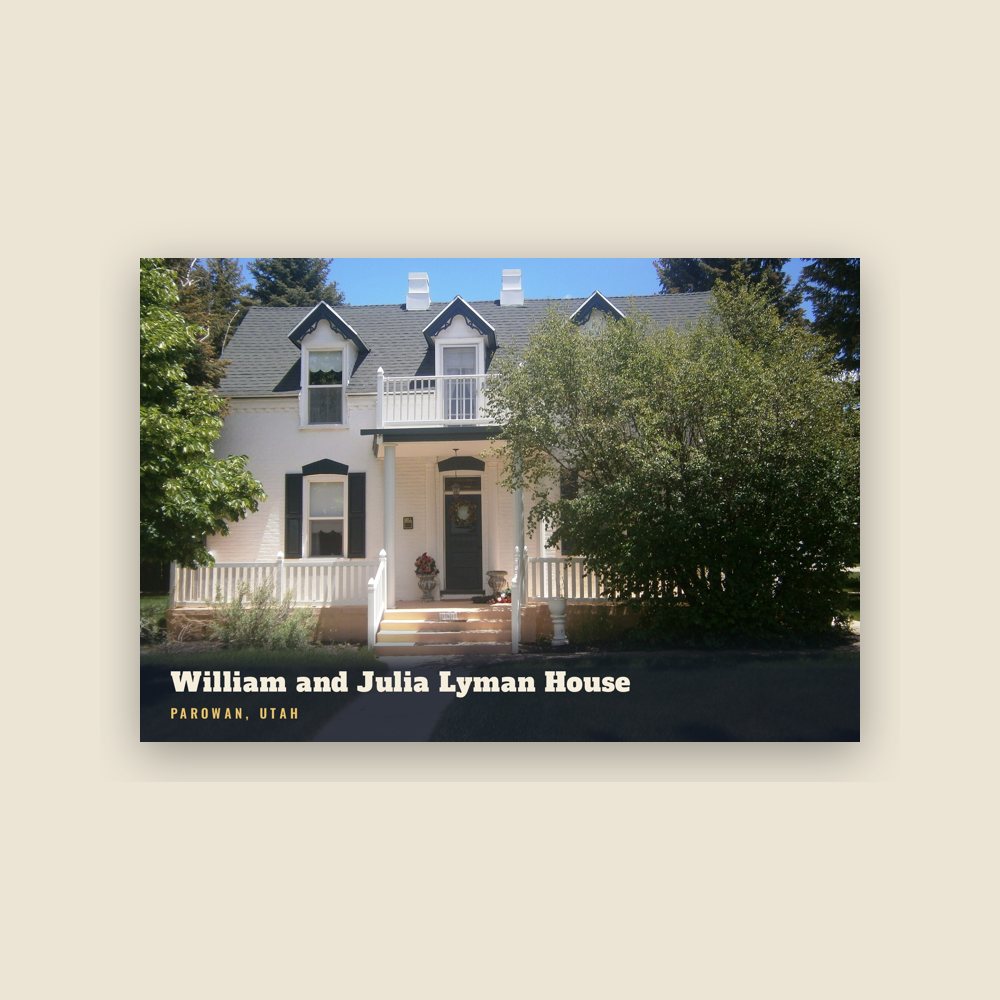
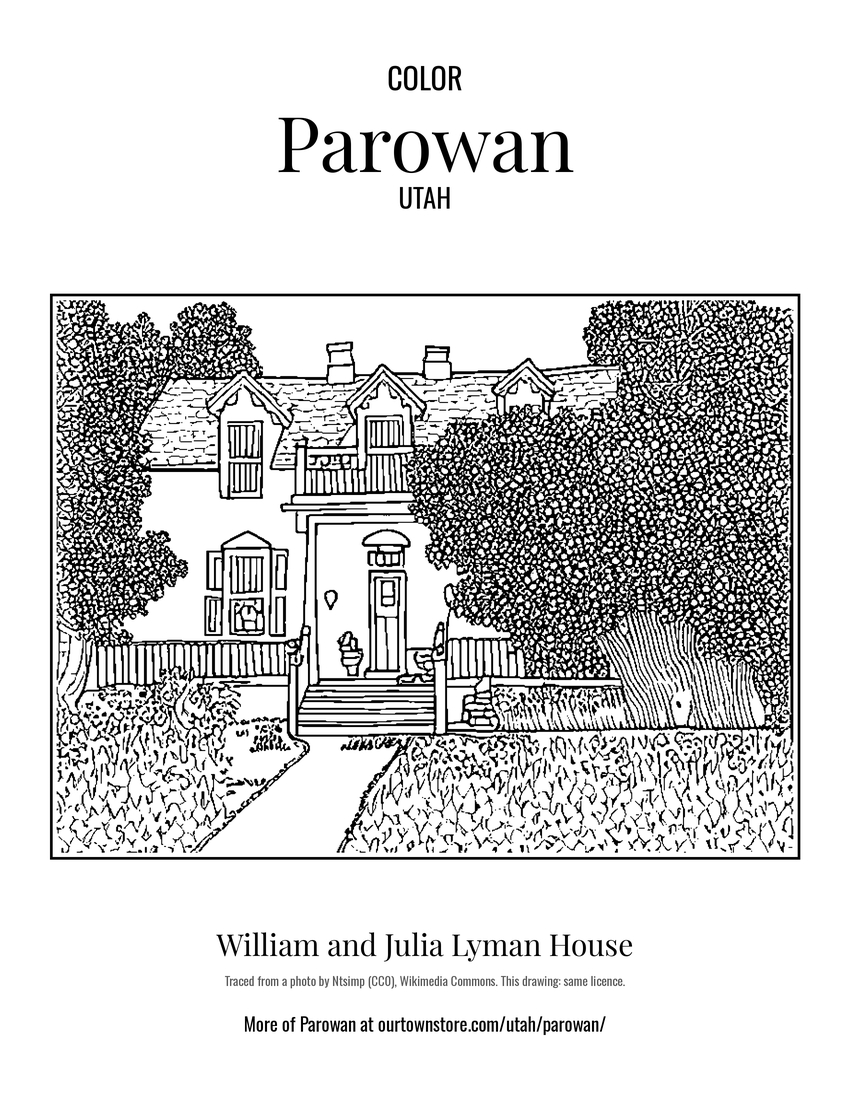 William and Julia Lyman House
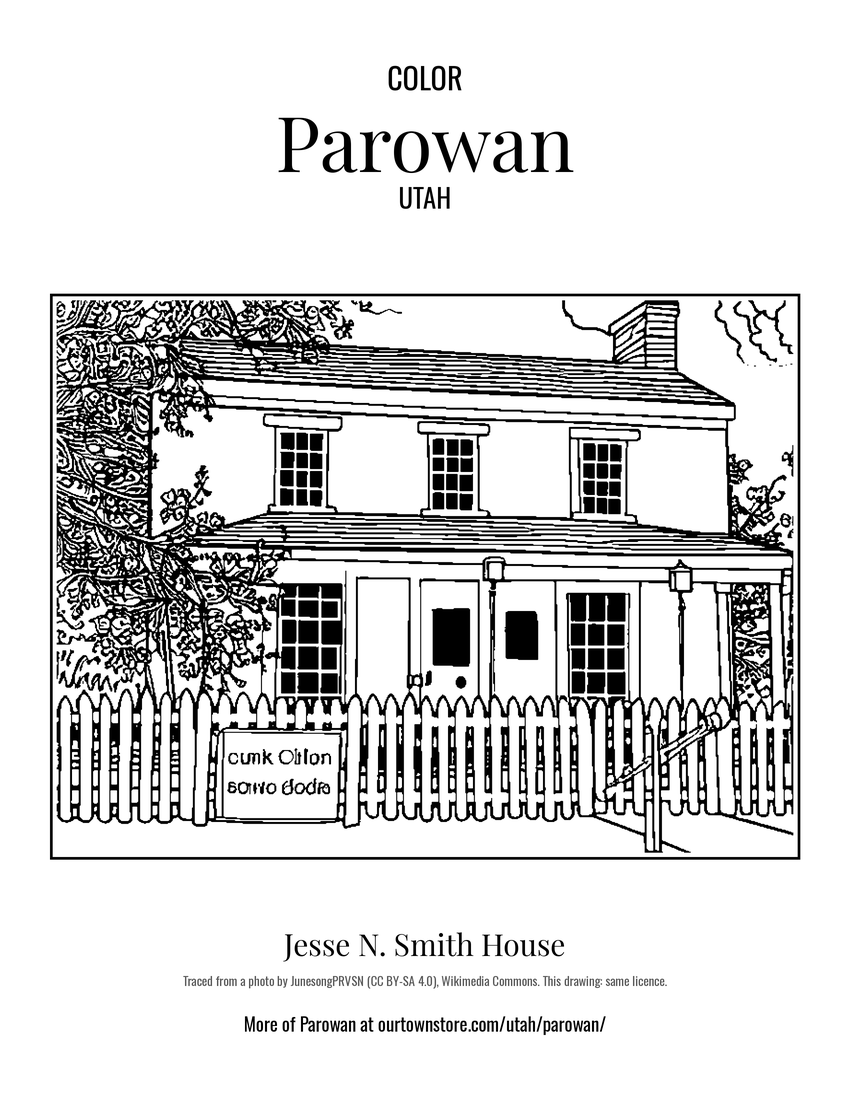 Jesse N. Smith House
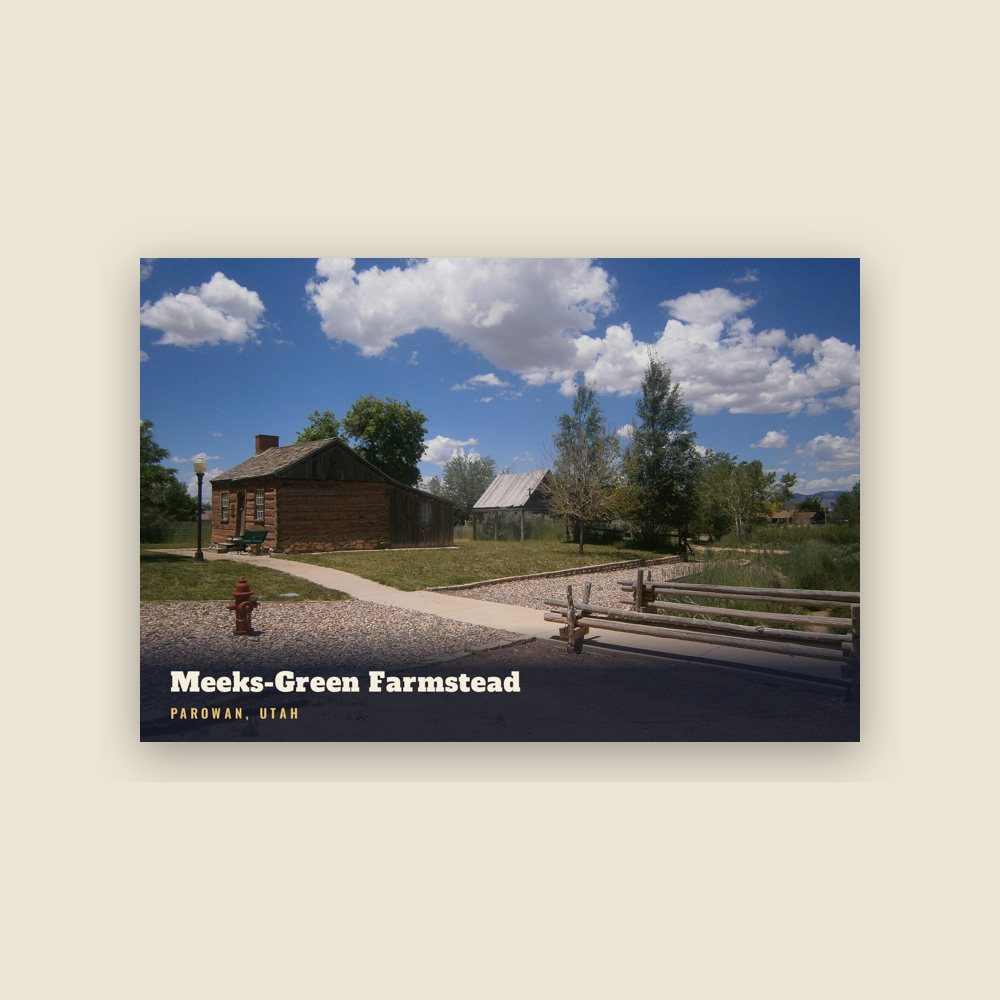
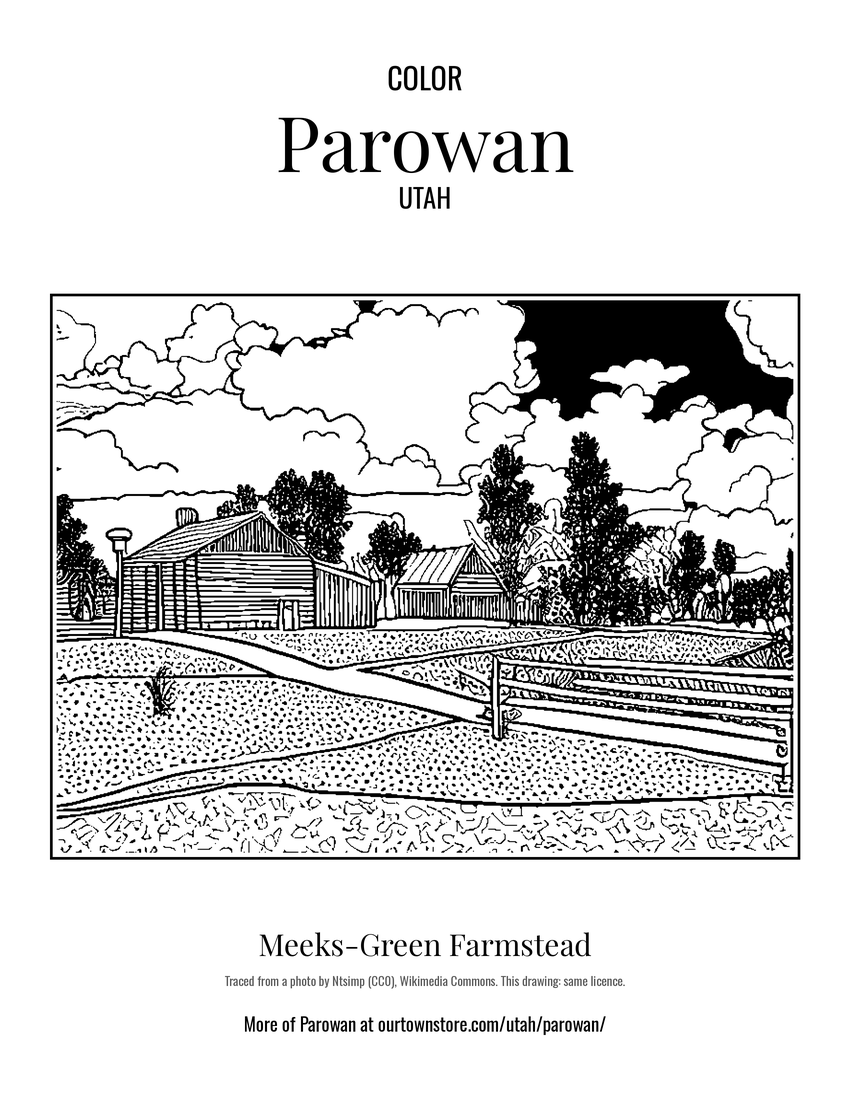 Meeks-Green Farmstead