Since 1933
A short history of Oakley
The valley was inhabited by Ute Indians before the coming of Mormon pioneers. A historical monument erected in 1939 across the street from the current town hall by the Daughters of the Utah Pioneers, honors the habitation of the Utes. "INDIAN TRAIL This valley, settled by Thomas Rhoades in 1858, was a summer paradise for Indians who came to hunt, fish and gather wild fruit and sego bulbs. The Weber River Indian Trail skirted the east foothills to Oakley Canyon, crossed the river at the Old Kamas Ford, 3 1/2 miles east of here, running thence to Henry's Fork, and to Brush Creek, in the eastern Uinta Mountains. This trail was used by Indians, Scouts and Pioneers, and is marked in part by roads today."
A Mormon pioneer, Parley P. Pratt, was sent to this valley from Salt Lake City by Brigham Young in 1850 to check on the possibility of establishing settlements along the Weber River and the nearby Provo River. His report was, ". . . a good valley, abundant grass and plenty of water".
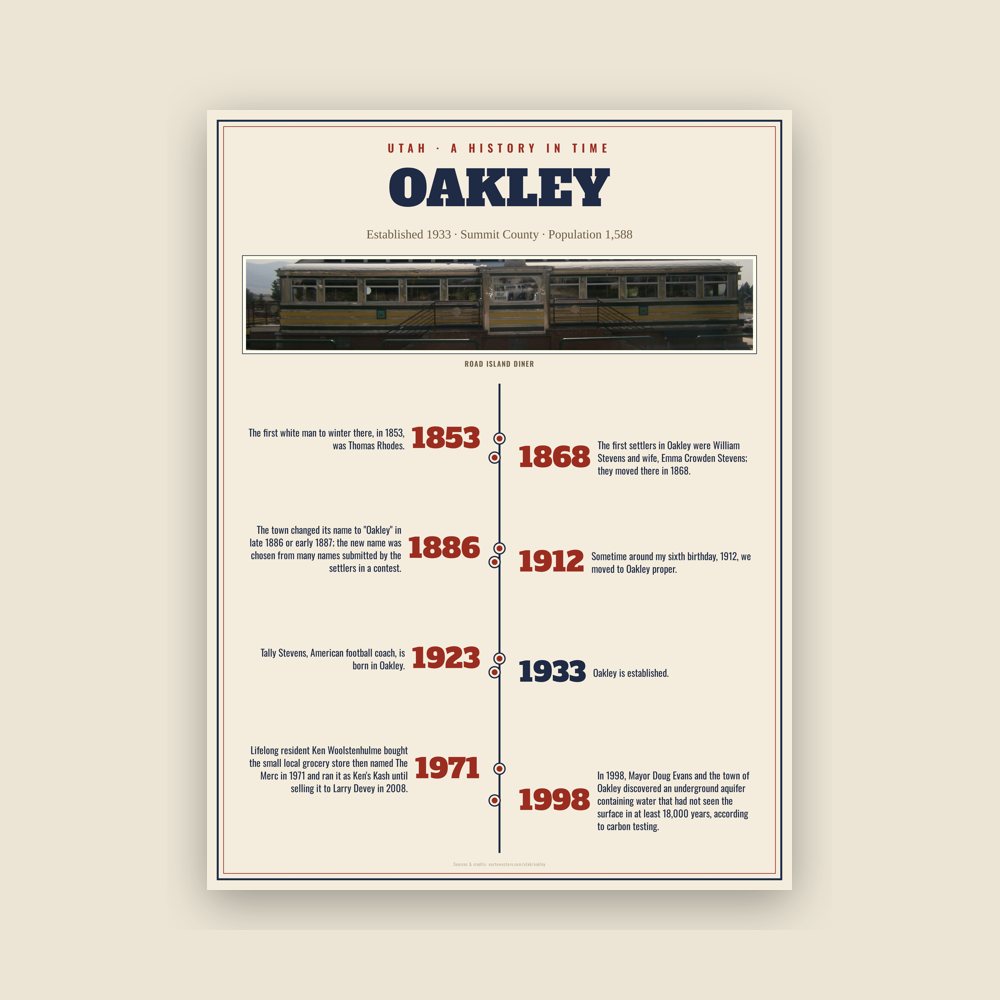
The first white man to winter there, in 1853, was Thomas Rhodes. An explorer, trapper, prospector, part-time farmer, and close friend of Brigham Young, he was occasionally called from his California prospecting by Brigham Young when there was a need for money for the church. Rhodes would disappear for a week or so into the Uinta Mountains and return with a supply of gold.
The first settlers in Oakley were William Stevens and wife, Emma Crowden Stevens; they moved there in 1868. Soon to follow were relatives and friends, among them the Fraziers, Johnsons, Hortins, Richards, Wildes and Gibbons, to name a few; all these names are still prominent in the town.
Oakley's original name was "Oak Creek", derived from the name of a creek that ran just east of the present town site and that was thickly overgrown with oak trees. The town changed its name to "Oakley" in late 1886 or early 1887; the new name was chosen from many names submitted by the settlers in a contest.
Incorporated in 1933 on land originally purchased from the Union Pacific Company by the early settlers in the land sale of the 1880s, Oakley has maintained its small town charm as primarily an agricultural community. At one time, it was a large producer of dairy products. More recently, it has focused on cattle- and horse-feeding, "haying", and still some dairy production. In addition, it is a base for recreational activities, which abound—hiking, fishing, horseback riding, camping, hunting, snowmobiling, and cross-country skiing—all within a very short distance from town.
Sometime around my sixth birthday, 1912, we moved to Oakley proper. Oakley was a very small community of some four or five hundred people. We had a lumber mill, a flour mill, an old-fashioned, all-purpose store grocery store, and a church. Our new home was a log frame house, two stories with a full basement.
The basement was of very little use, as it flooded every spring. This was to serve us but a short time, as my father had already contracted with John Salmon to build us a new eight-room concrete block house. Measured by the standards of that day, it was a rather commodious home-- five rather large rooms downstairs and three upstairs. The three rooms upstairs were framed but never finished while we lived there.
We, like everyone else, had outside plumbing and no running water. We always had a Sears Catalog and Montgomery Wards catalog (in the outhouse), which was a real good idea. We never had any money to buy anything from the catalog. For years, I thought the Sears and Montgomery Wards Catalogs were for that purpose only.
Before I forget, I want to relate an event that took place while we were all living in our first home on Boulder Bench. My mother took us all to find the milk cow.
We were walking along a trail through the trees when suddenly just ahead there stood a grizzly bear, standing on its hind legs and in no friendly mood. You can imagine how my mother felt. I don't believe that any of us kids felt the danger like she did. I recall the incident but not the particulars. My mother, in relating the story, said that she told us not to move or make a sound. I am certain, knowing my mother, that her heart was reaching out to God for help. Soon the grizzly dropped down on all fours, turned and ambled away. There was no further attempt to find the cow that night.
It was not unusual to see bears in the early morning or late evening; in fact, mountain lions, bears, panthers and other wild animals were often to be seen, especially down in the meadows along the river.
My father was a farmer, but he was in demand for timber, road contract work, building irrigation systems, bridges. He was also the bishop of the Oakley Ward while I was growing up, until I was called to go on a mission. His two counselors were Tobias Rasmusen and Levi Person. I wasn’t baptized until I was ten. My father’s first counselor, Brother Rasmusen, baptized me in the Weber River and I was confirmed the next Sunday.
Lifelong resident Ken Woolstenhulme bought the small local grocery store then named The Merc in 1971 and ran it as Ken's Kash until selling it to Larry Devey in 2008. Then and now, the store is a gathering place for locals looking for the last ingredient for dinner. Those who grew up locally remember it fondly as one of the last places to offer penny candy. For a time, the store served as the local post office, but increased demand from summer homes up Weber Canyon led the federal government in 1985 to build the present post-office building across the street from the store.
Ken Woolstenhulme has been involved in all aspects of the town's life, including serving as postmaster, county commissioner, school board member and town mayor at various times in his life.
In 1998, Mayor Doug Evans and the town of Oakley discovered an underground aquifer containing water that had not seen the surface in at least 18,000 years, according to carbon testing. Found nearly 1900 feet below the surface in a layer of Mississippian limestone, the water proved among the purest ever tested, free of tritium and any other contamination from the nuclear age. Requiring little treatment, the water is free of pesticides and herbicides and the town now uses this water from the Humbug Well for its municipal water supply. Local businessmen have also bought the rights to bottle the water and sell it under different labels.
Adapted (trimmed) from the Wikipedia article Oakley, Utah, revision 1374781576 by its contributors, licensed CC BY-SA 4.0.
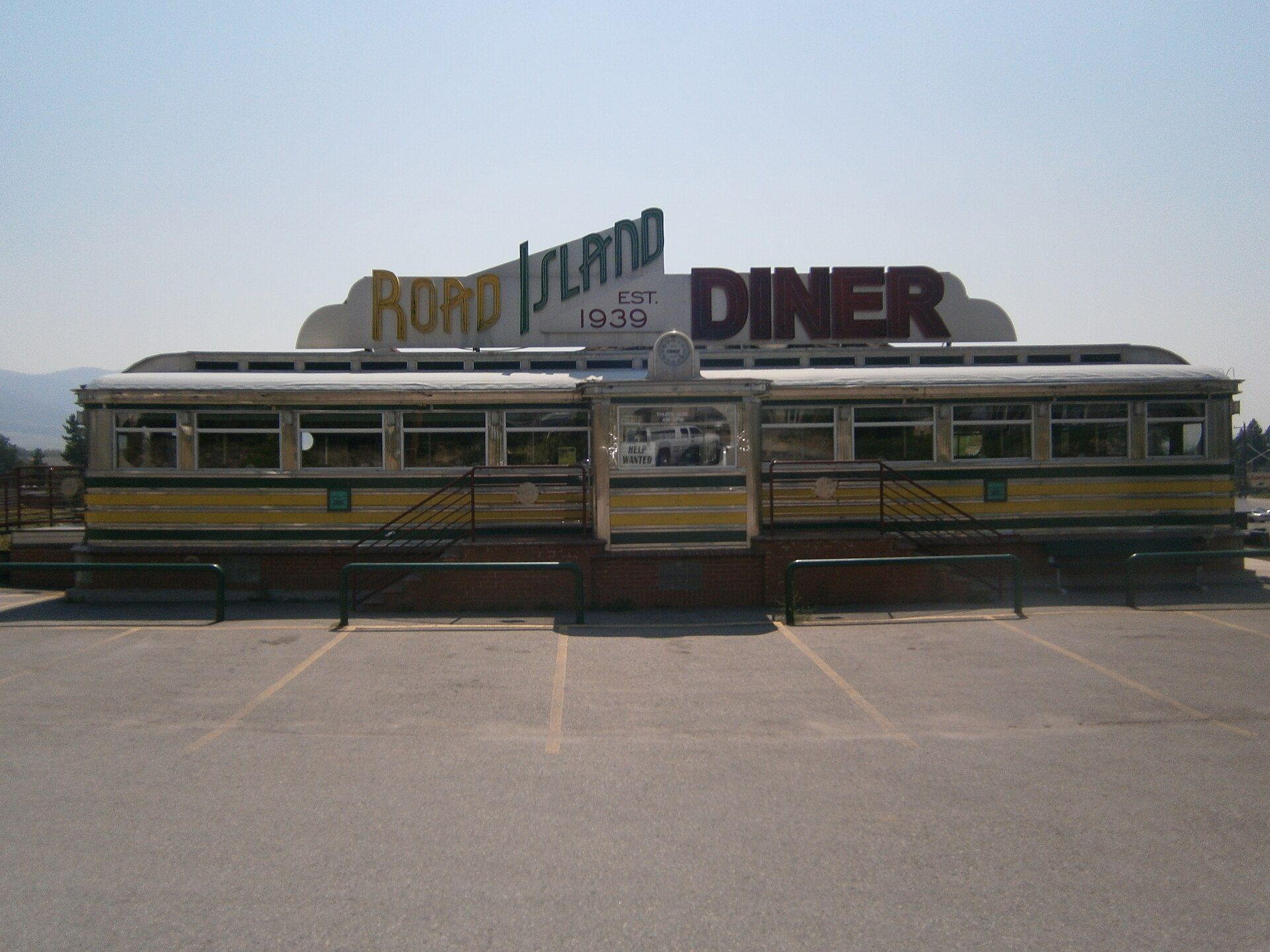
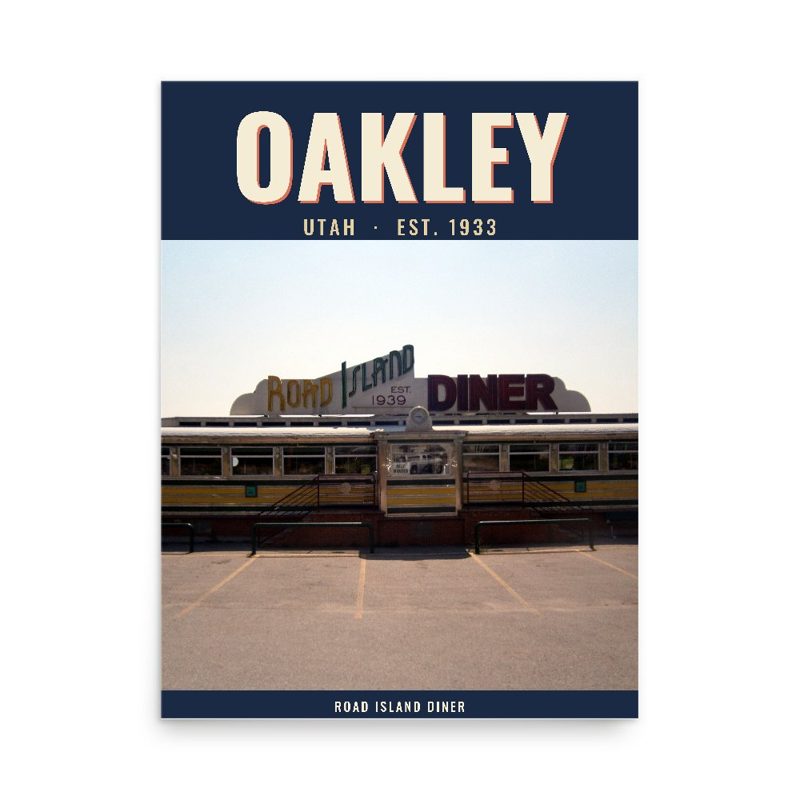
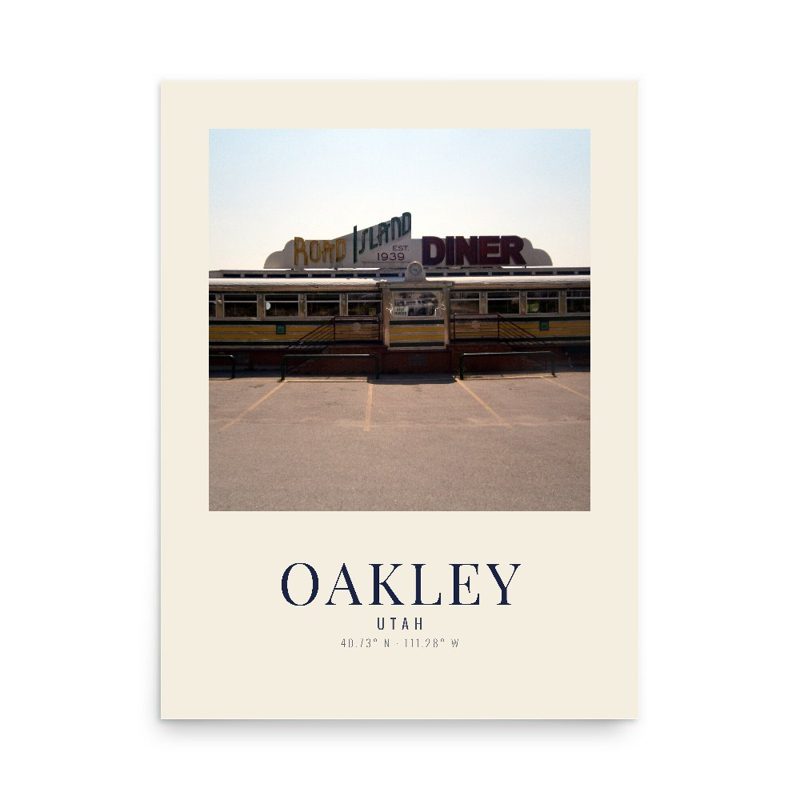
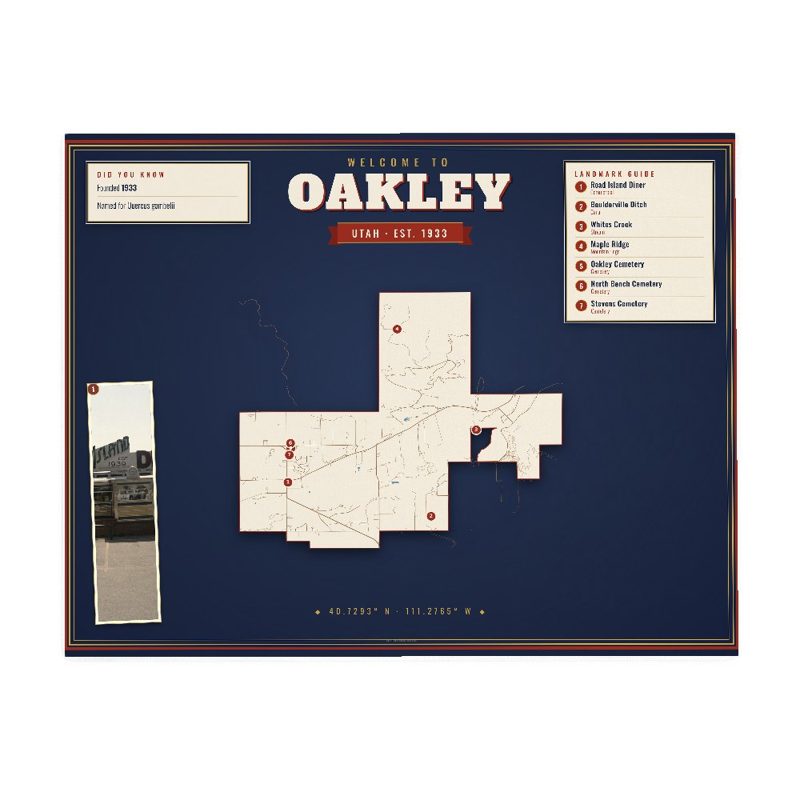
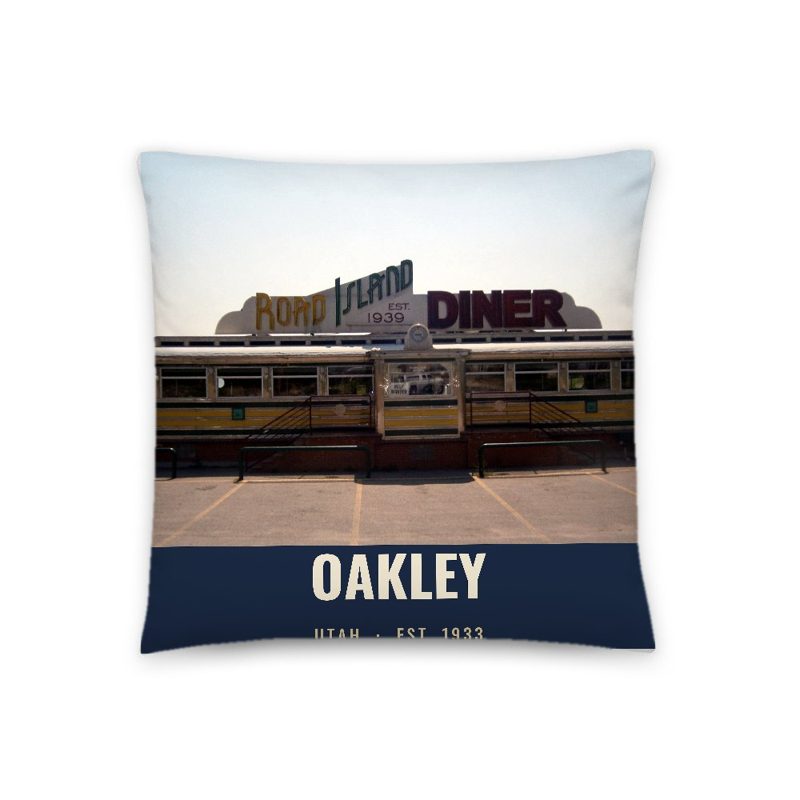

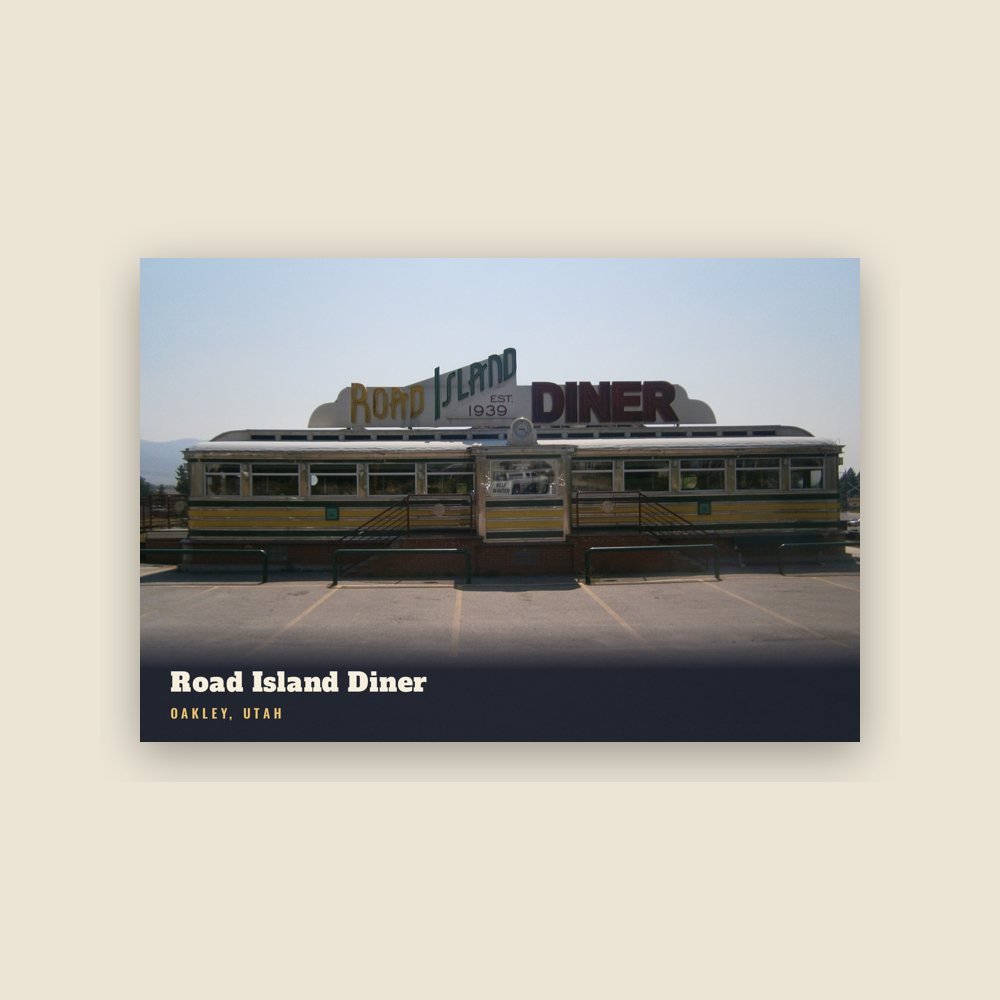
 Road Island Diner
 A view of Oakley
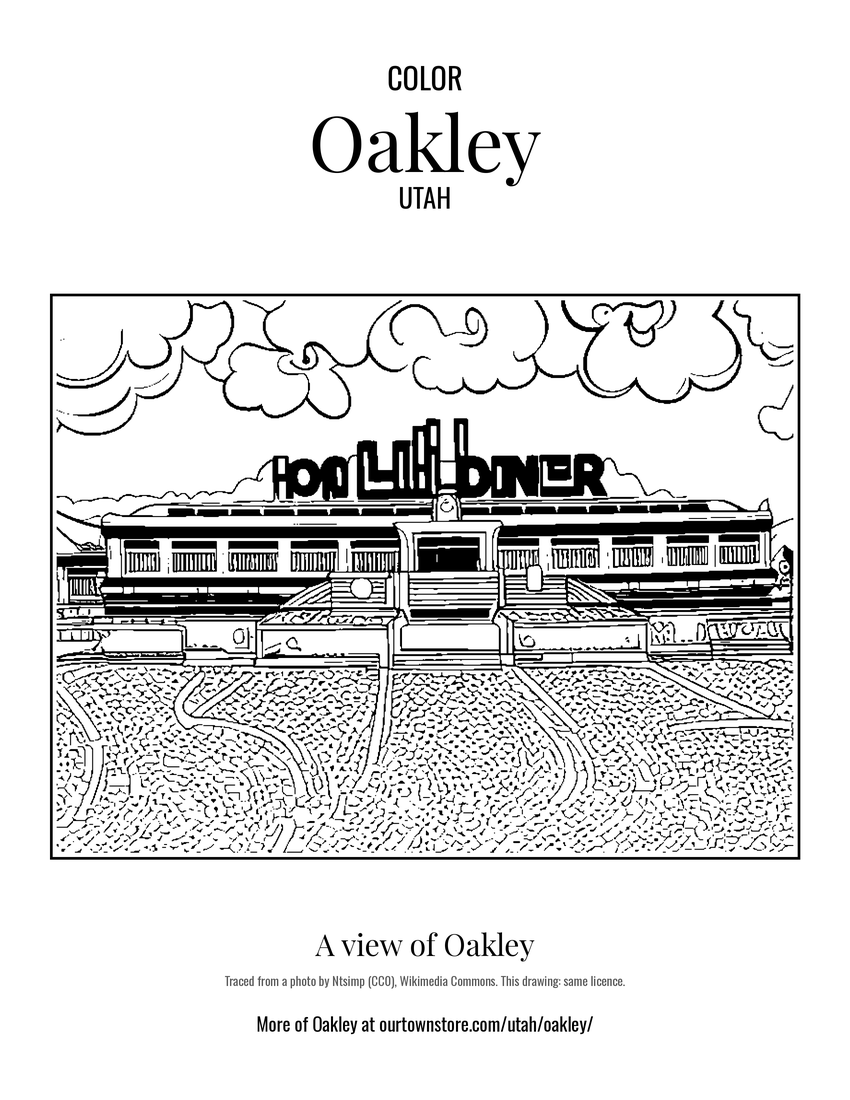 A view of Oakley