A short history of Midway
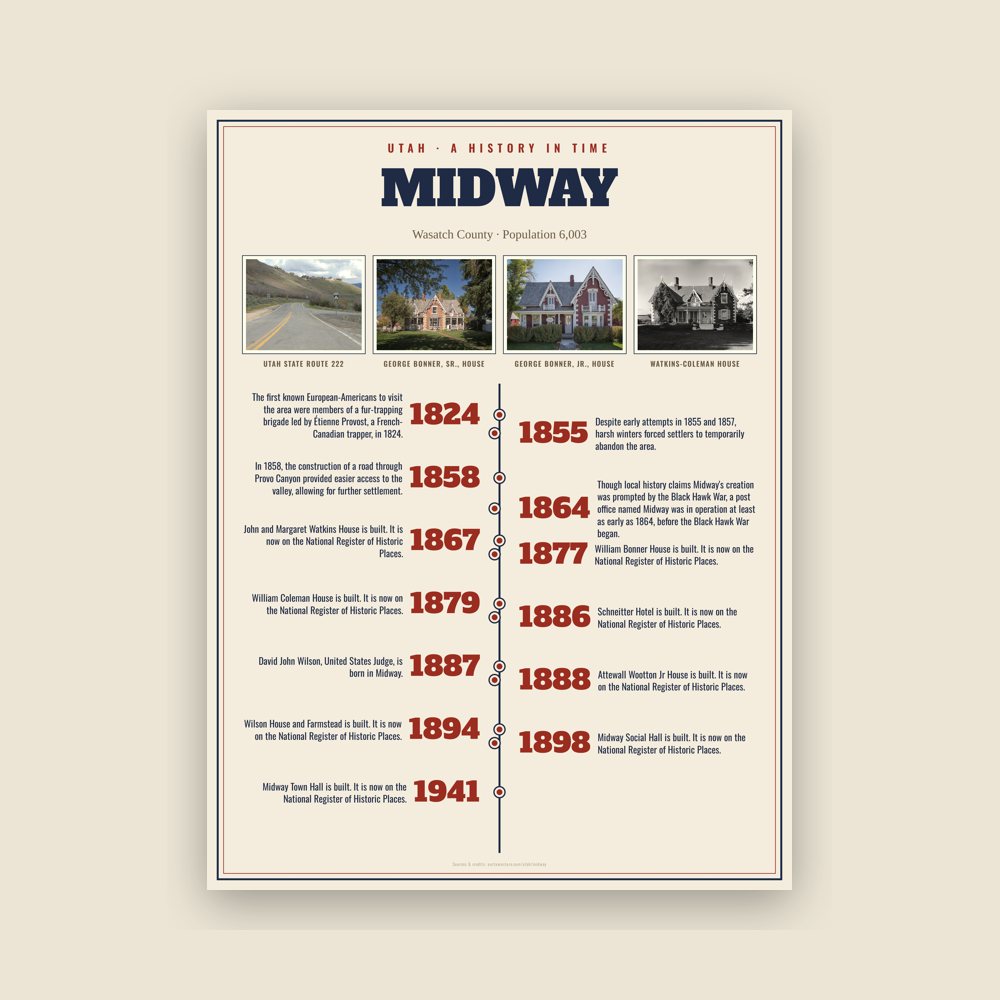
The first known European-Americans to visit the area were members of a fur-trapping brigade led by Étienne Provost, a French-Canadian trapper, in 1824. This expedition explored the region, which was then known as Upper Provo, a name derived from the Provo River that flows through the valley. While these early visitors did not establish permanent settlements, their journey marked the beginning of exploration in the area.
In the mid-1850s, settlers began to push into the Heber Valley, encouraged by reports from loggers in the nearby mountains who noted the fertile land. Settlers of Utah Valley pushed the territorial government to create a road up the Provo Canyon, a proposal favored by territorial governor Brigham Young. In 1858, the construction of a road through Provo Canyon provided easier access to the valley, allowing for further settlement. Despite early attempts in 1855 and 1857, harsh winters forced settlers to temporarily abandon the area. Permanent settlement was only achieved in 1858-59, when settlers established several small communities in the valley, two of which were west of the Provo River. These were known as the "upper settlement" and "lower settlement" on the Snake Creek River. The upper settlement was also called Mound City, named for the nearby limestone formations.
In the 1860s, the upper and lower settlement merged to become Midway, so named because it was the site of Fort Midway, halfway between the two. Though local history claims Midway's creation was prompted by the Black Hawk War, a post office named Midway was in operation at least as early as 1864, before the Black Hawk War began. The site of Fort Midway is now the town square.
Adapted (trimmed) from the Wikipedia article Midway, Utah, revision 1377760860 by its contributors, licensed CC BY-SA 4.0.
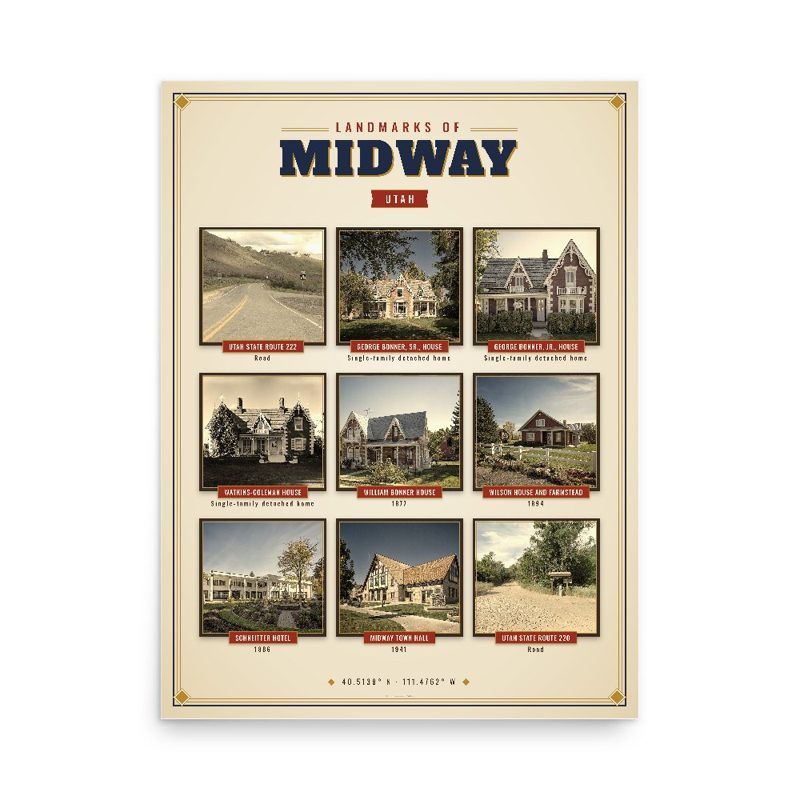
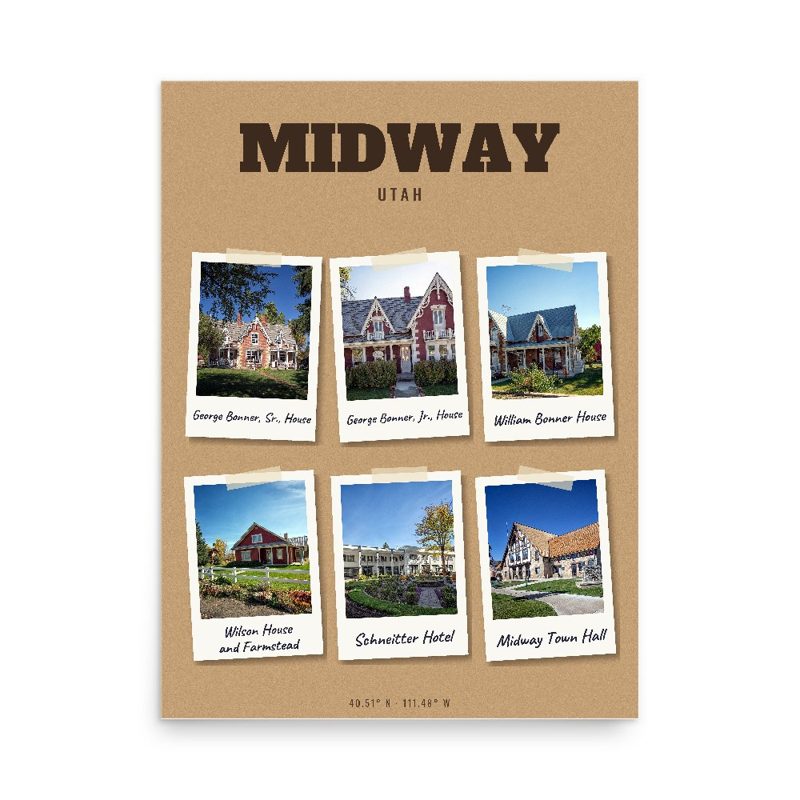
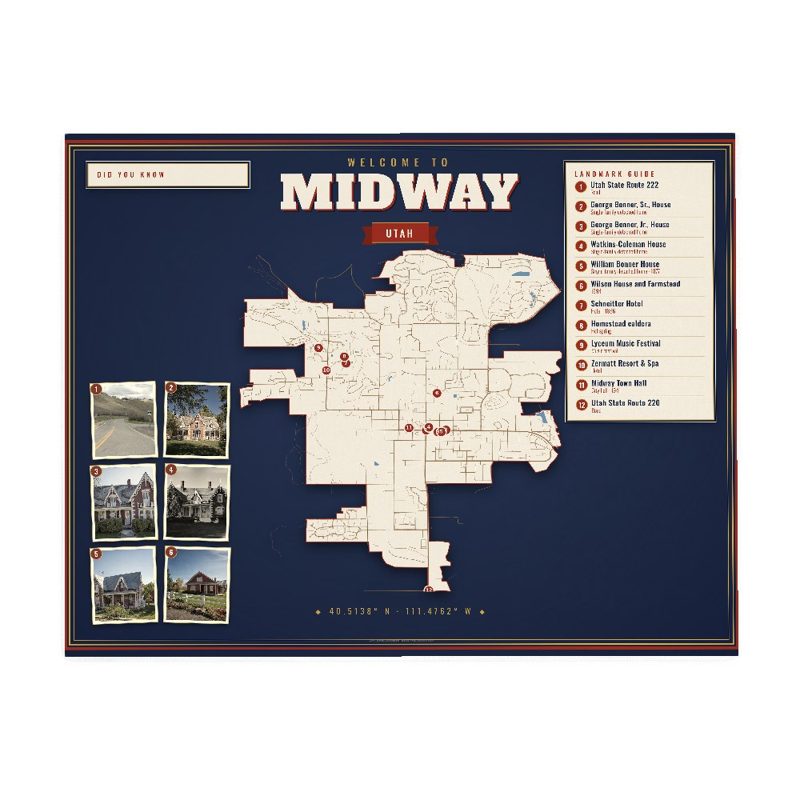
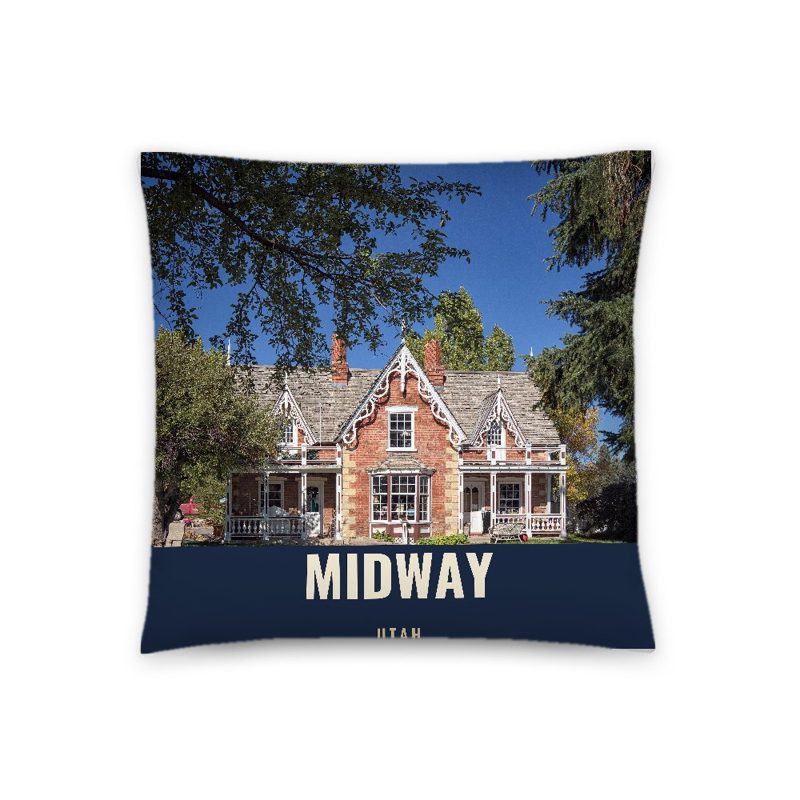
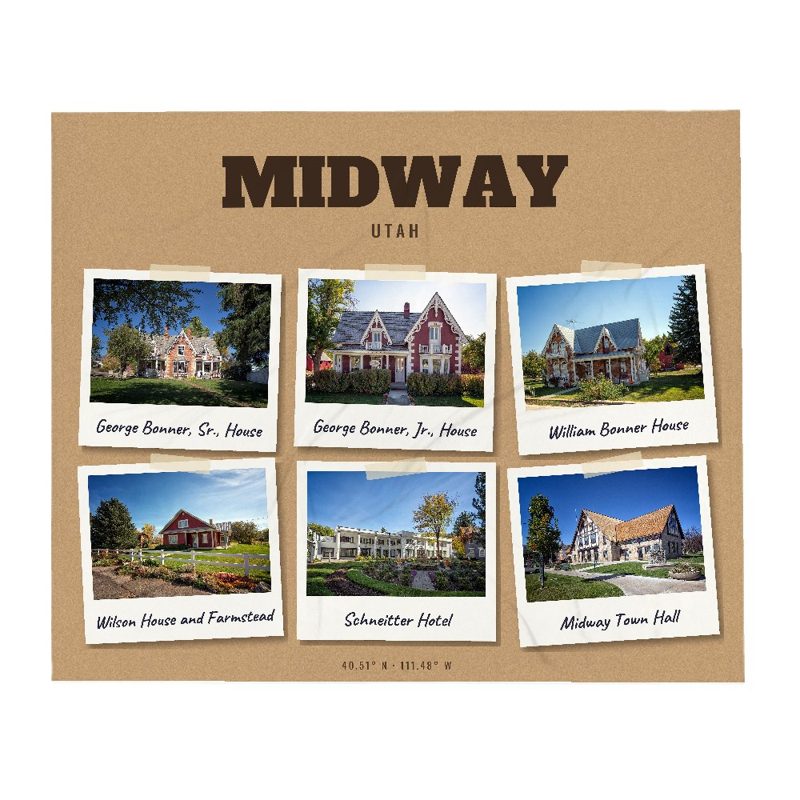
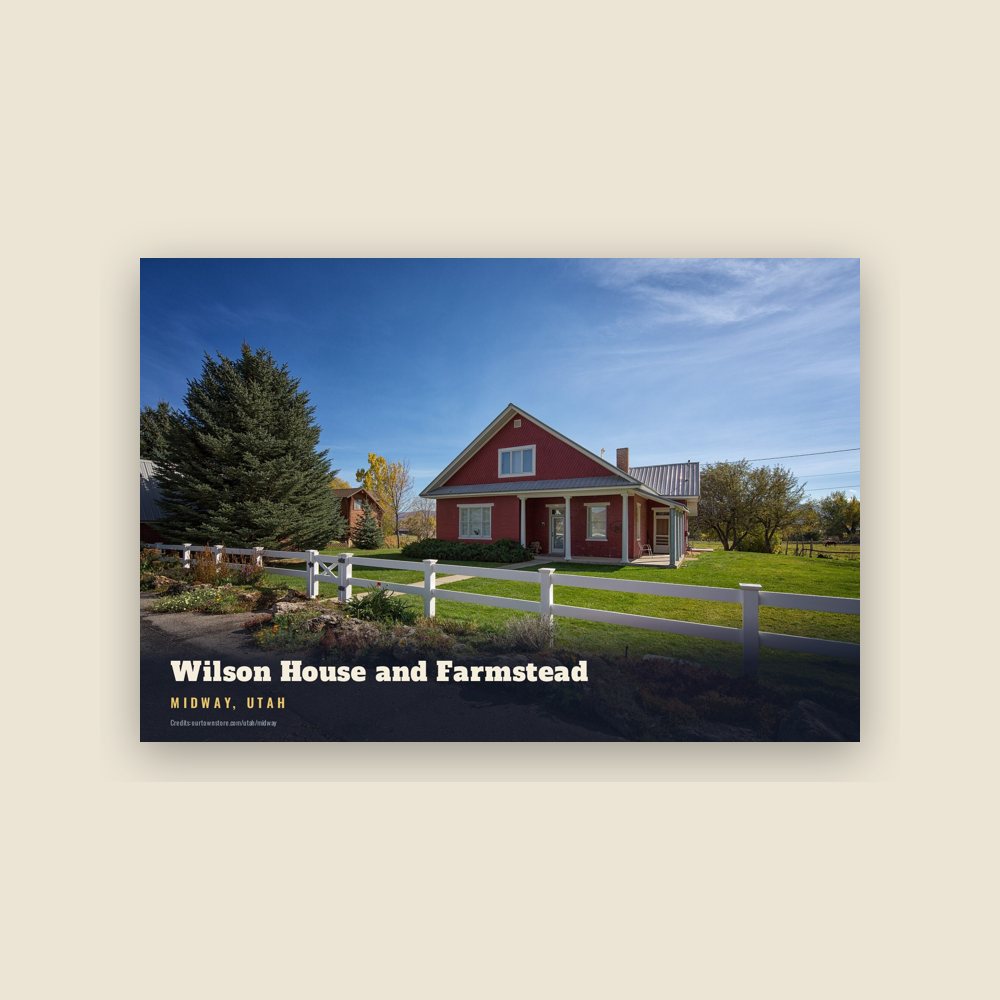
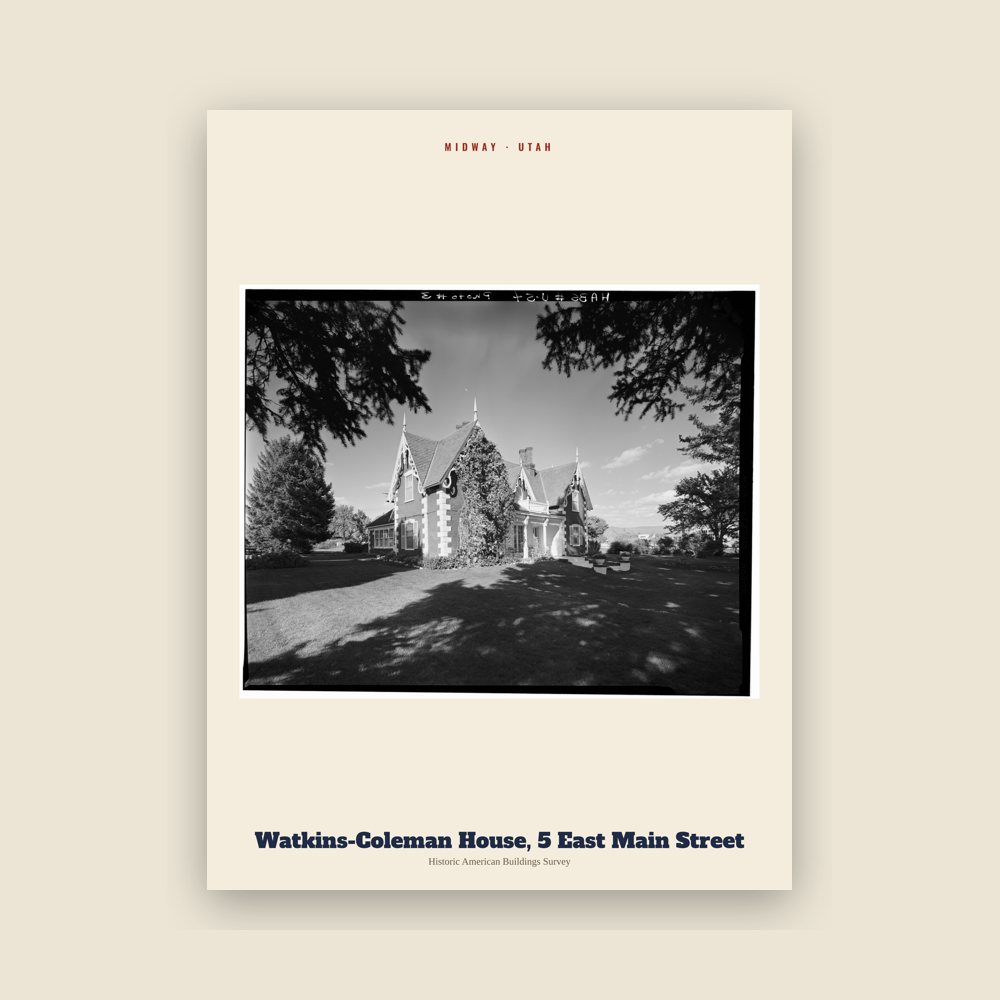
 Wilson House and Farmstead
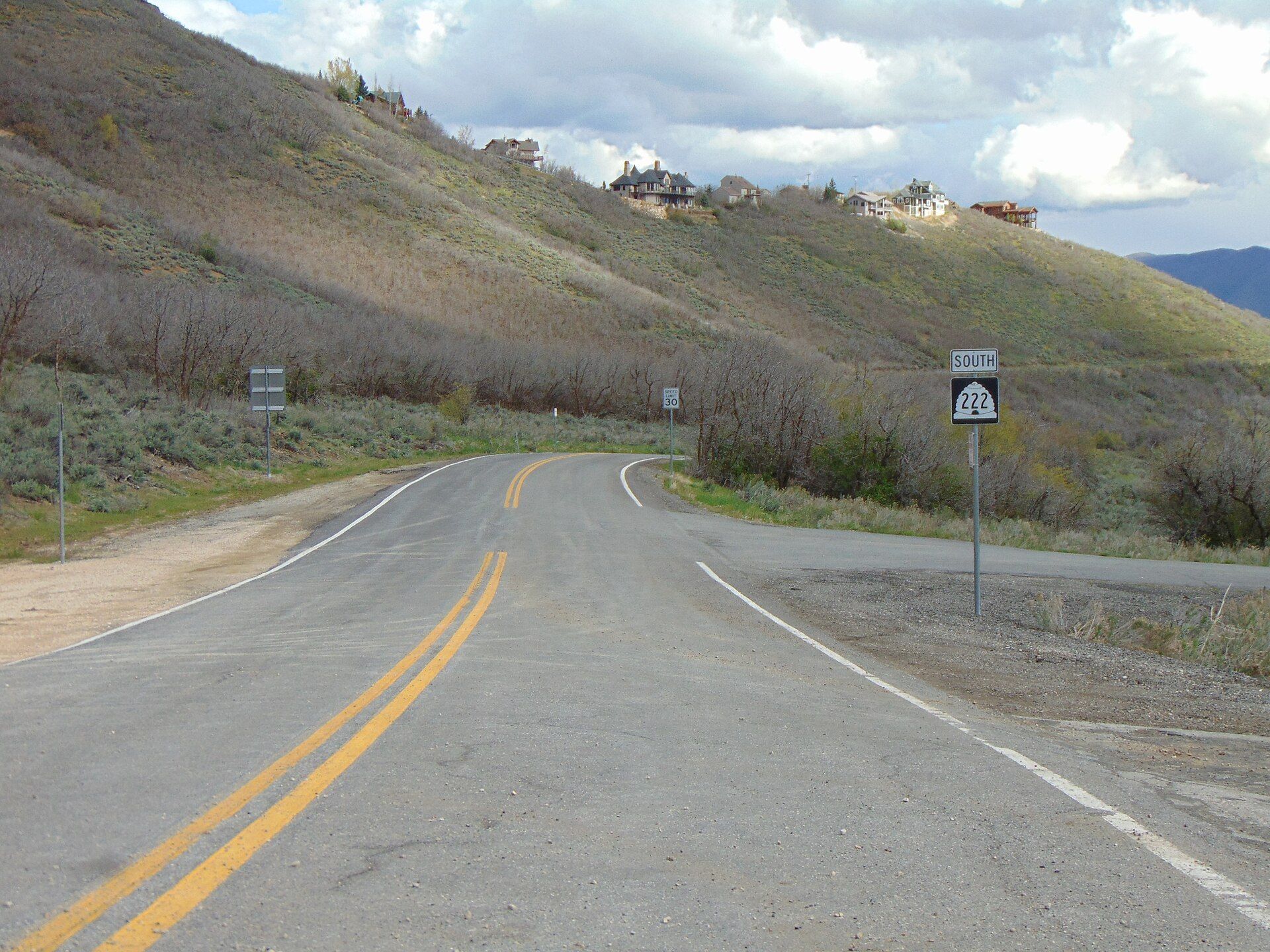
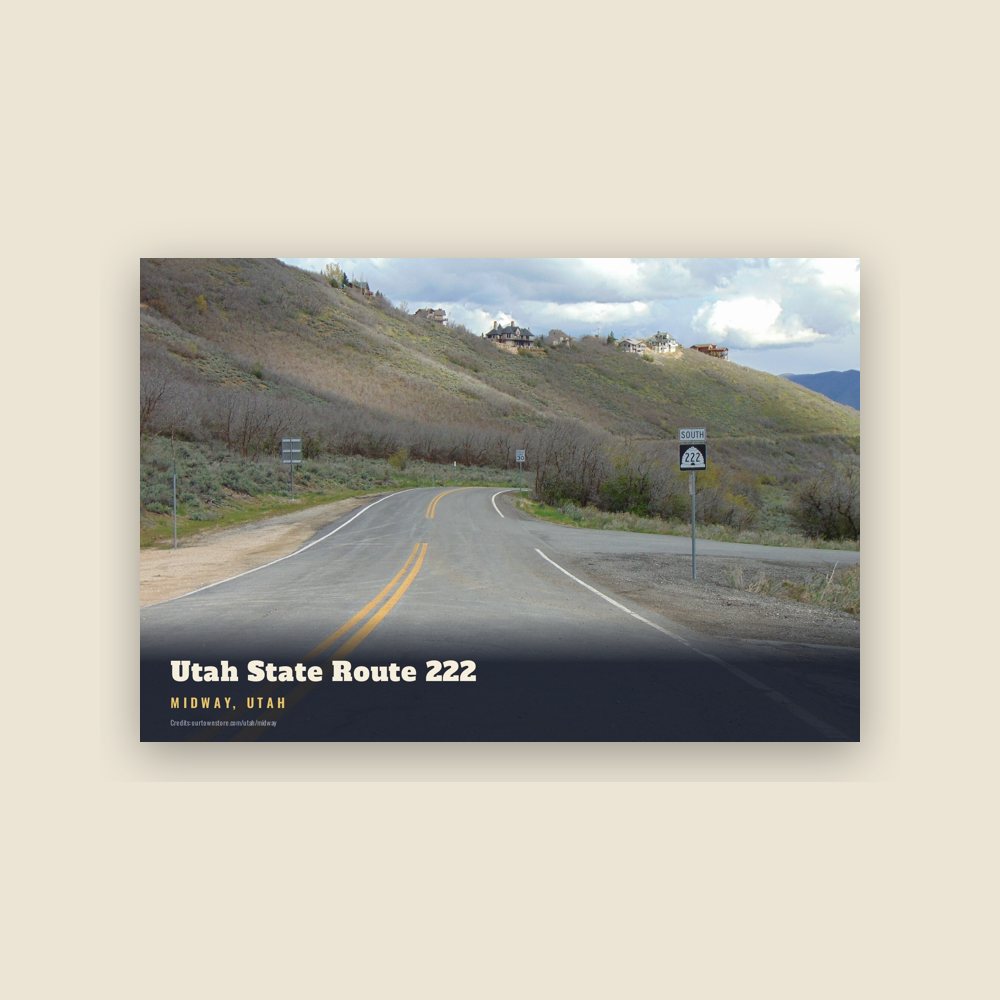
 Utah State Route 222
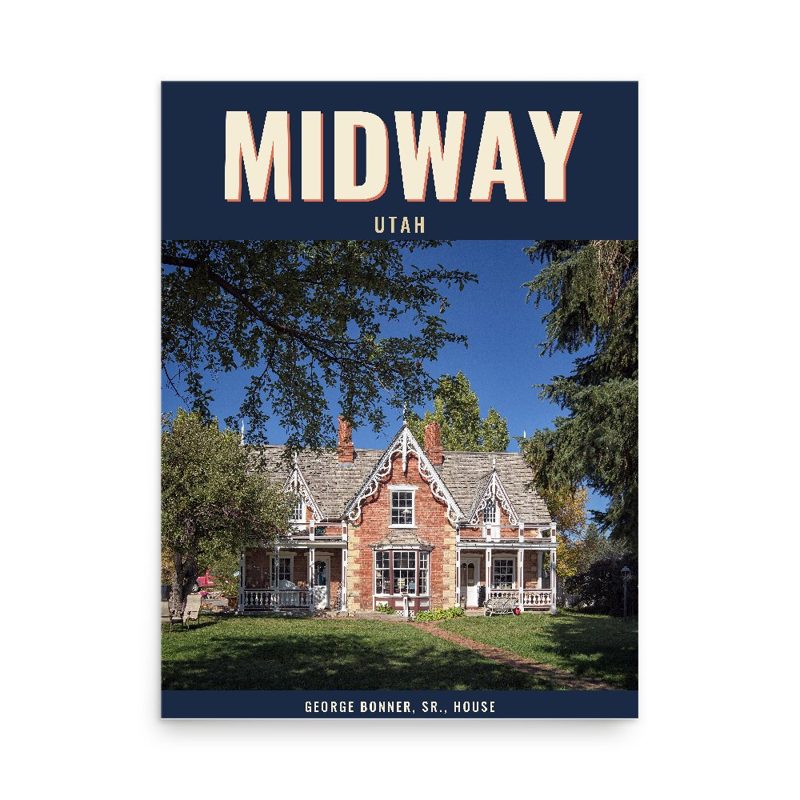
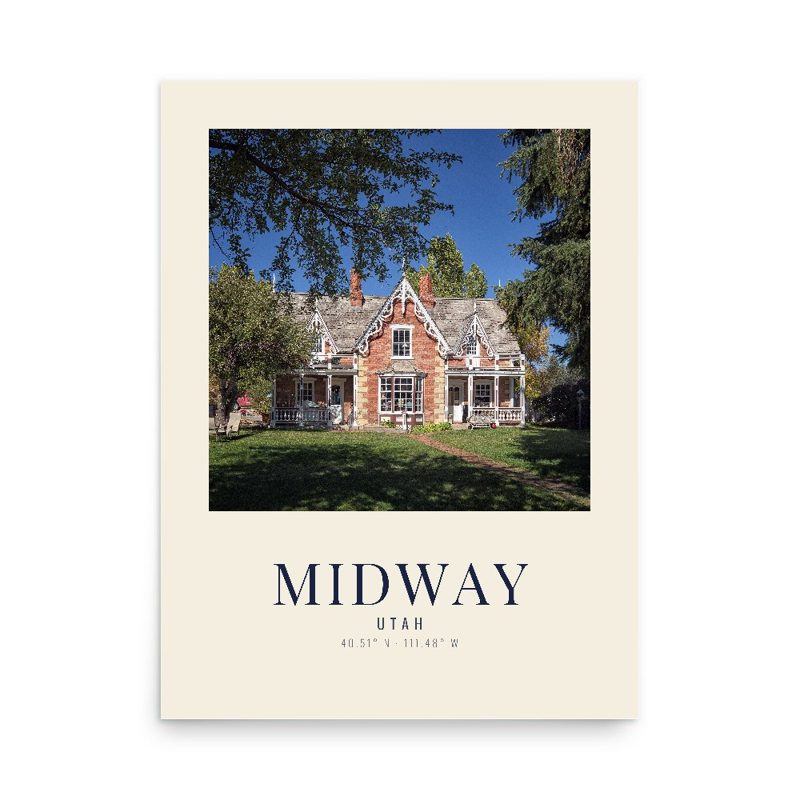
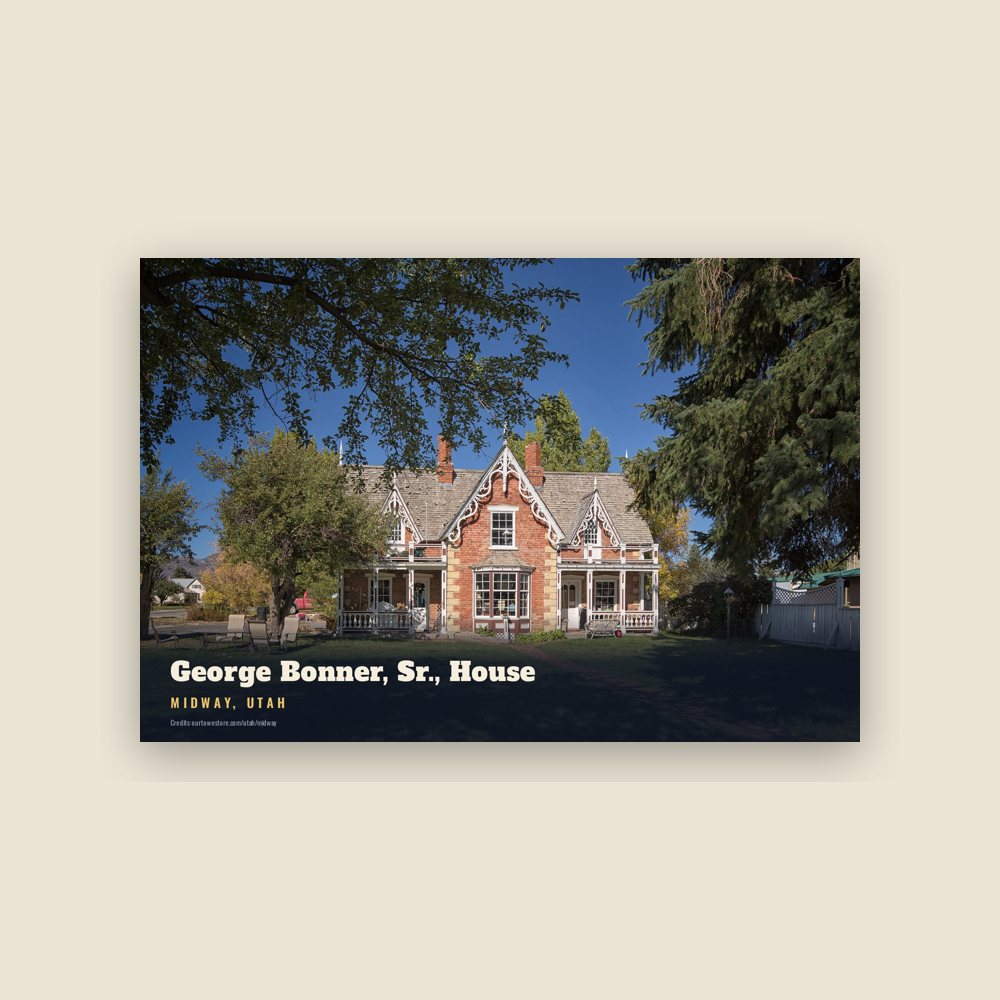
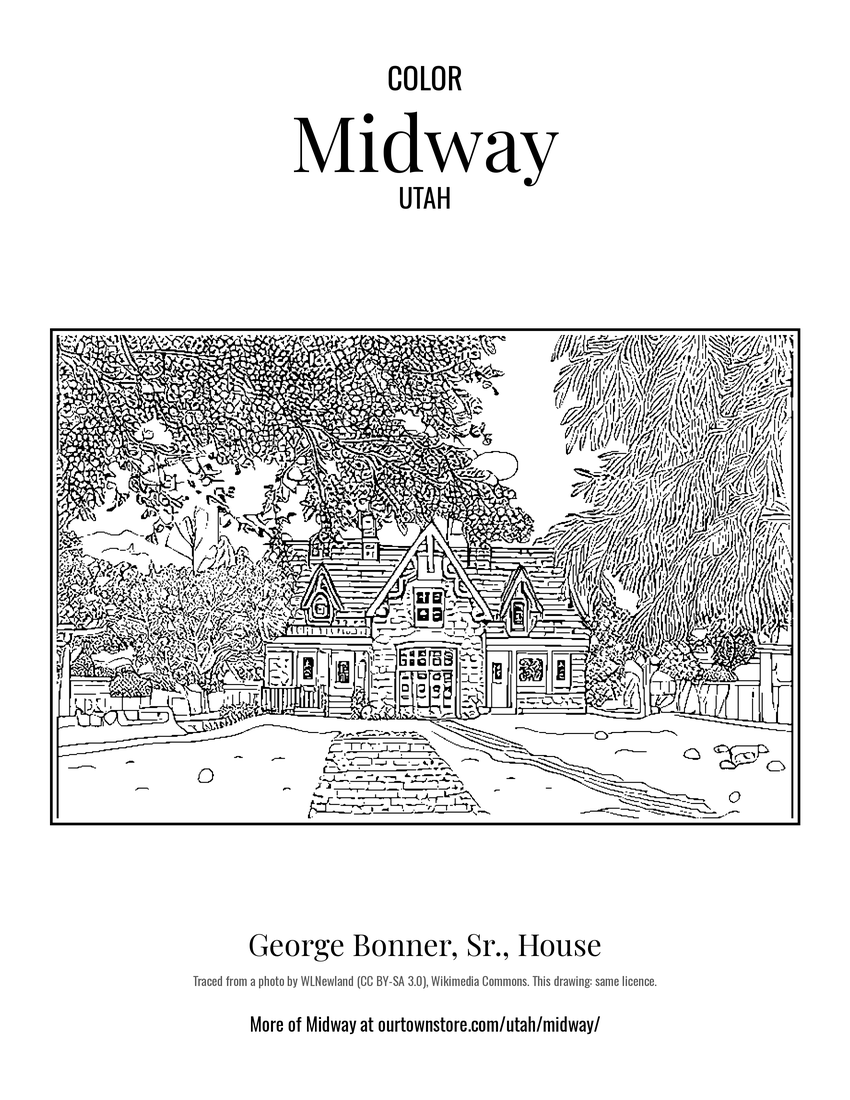 George Bonner, Sr., House
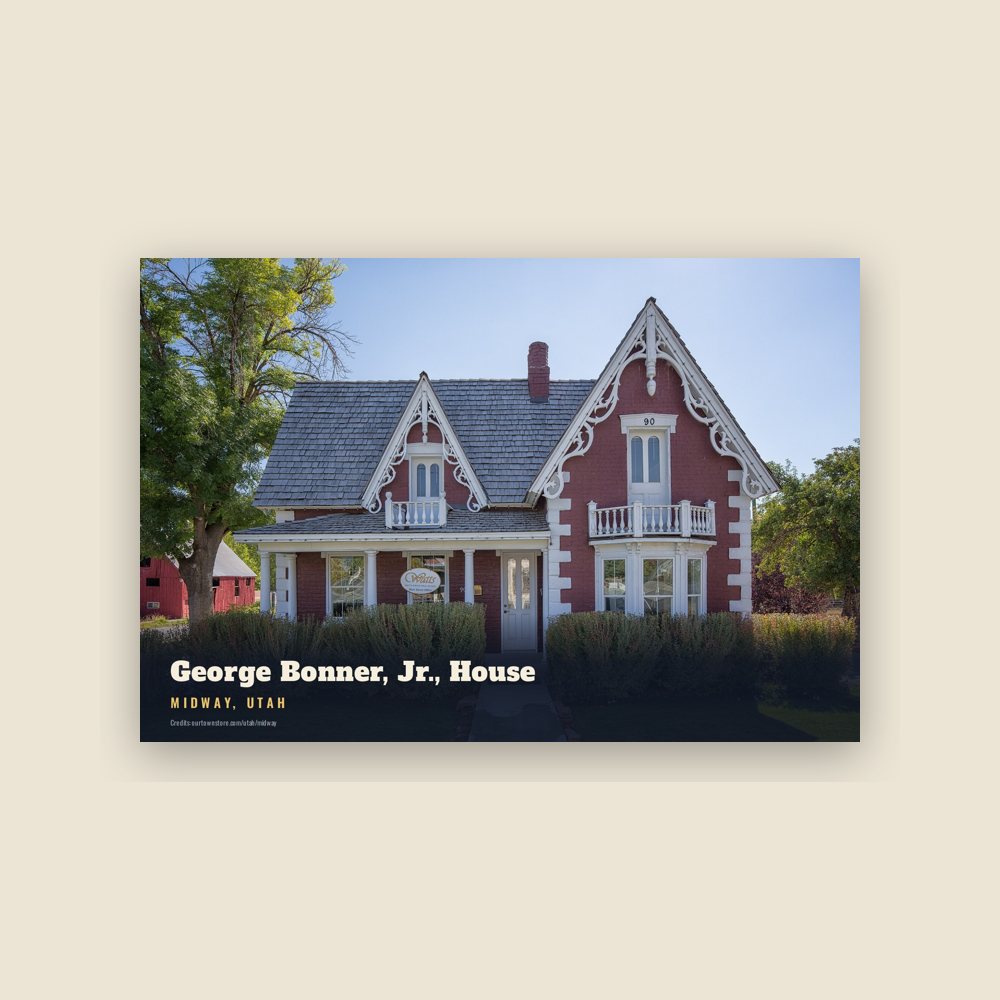
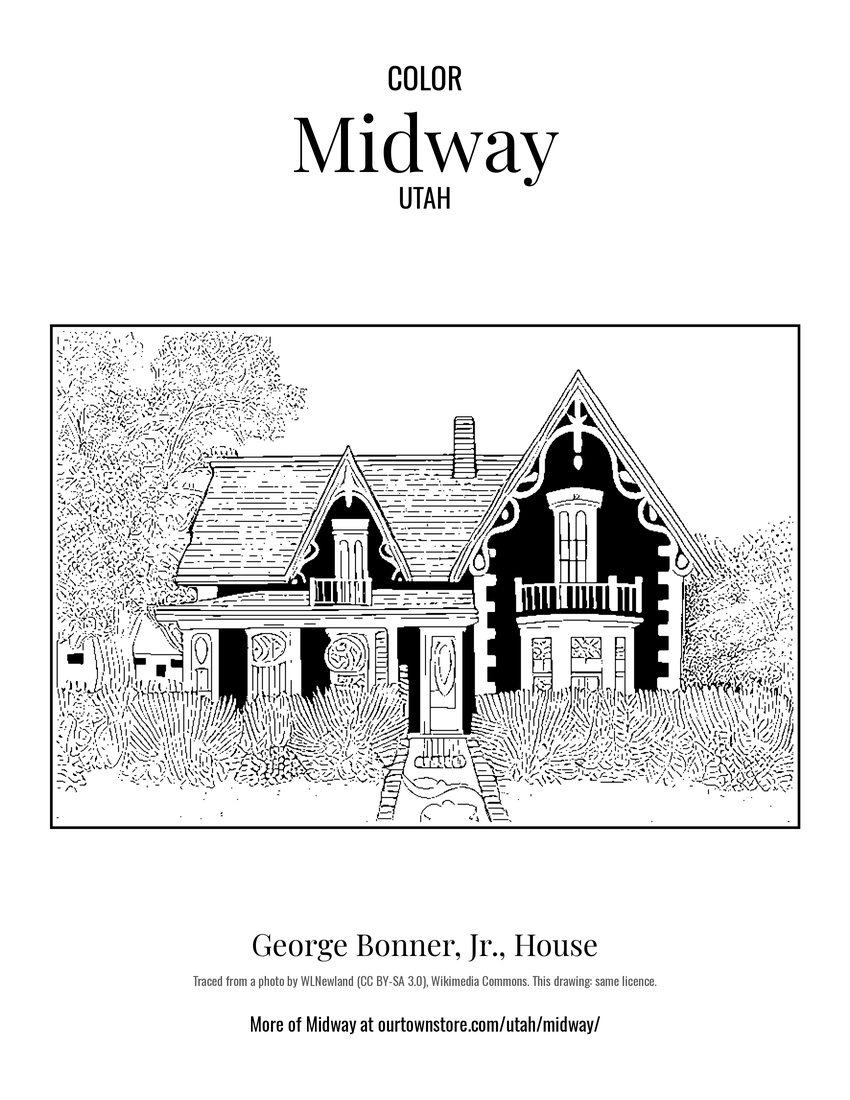 George Bonner, Jr., House