Everman is an incorporated residential community on the southern edge of Fort Worth near Interstate 820 in southeastern Tarrant County. Everman is the birthplace of Steven Wayne Smith, judge.
- CountyTarrant County
- Population6,154 (2020 U.S. Census)
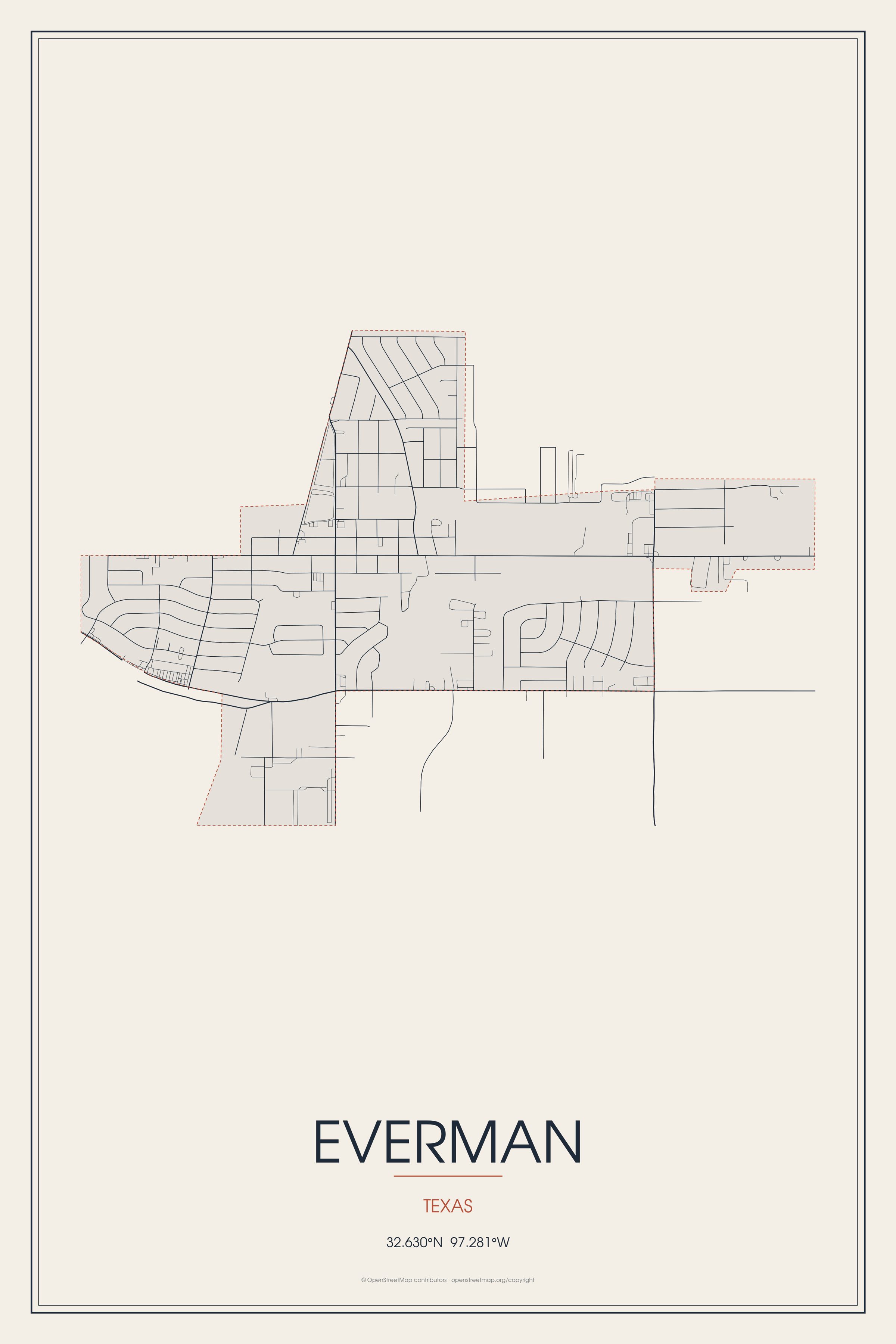
Everman, Texas gifts and souvenirs: 17 designs made from Everman's own map, landmarks and history, from $16 to $95. Printed to order and shipped free in the USA.
| Popular | Price |
|---|---|
| Everman Hometown Ornament | $23 |
| Everman Varsity Crewneck | from $57 |
| Everman Est. Tee | from $33 |
| Everman Town Line Mug | from $26 |
| Everman Market Tote | $37 |
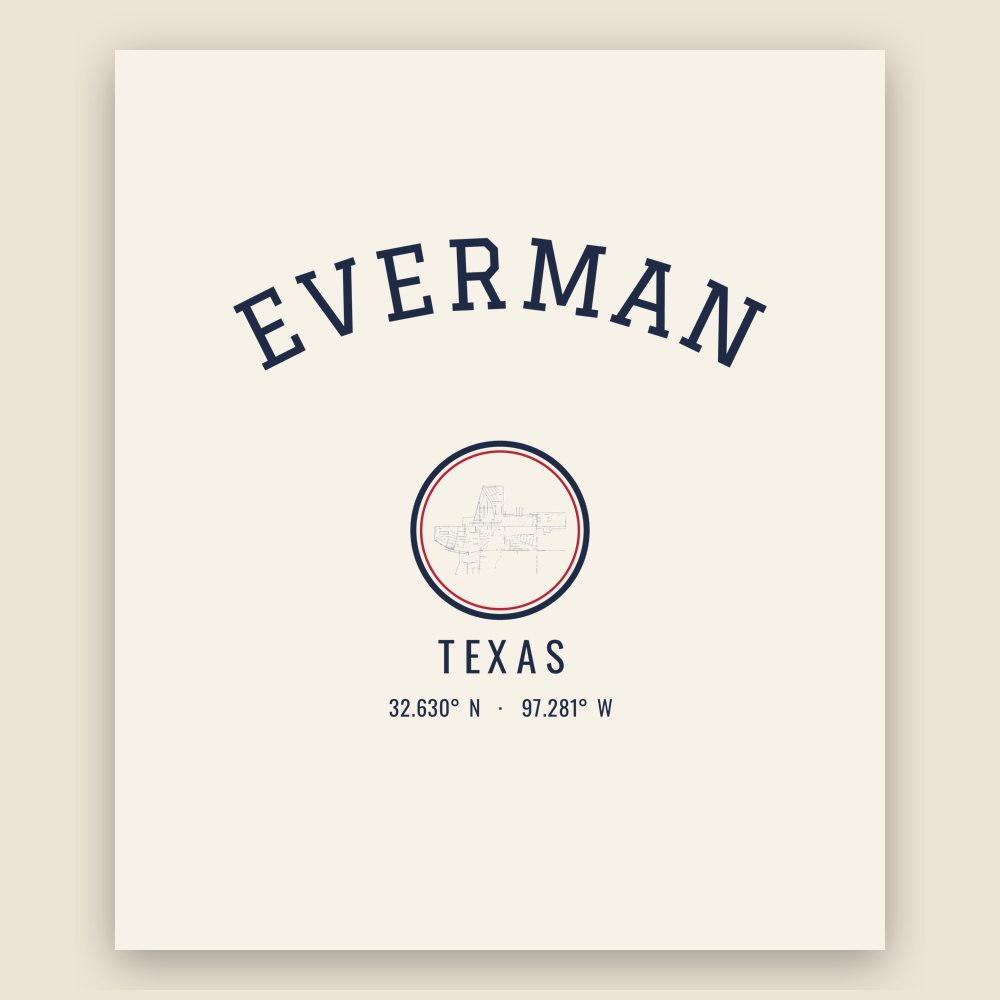
Ceramic keepsake, gold ribbon
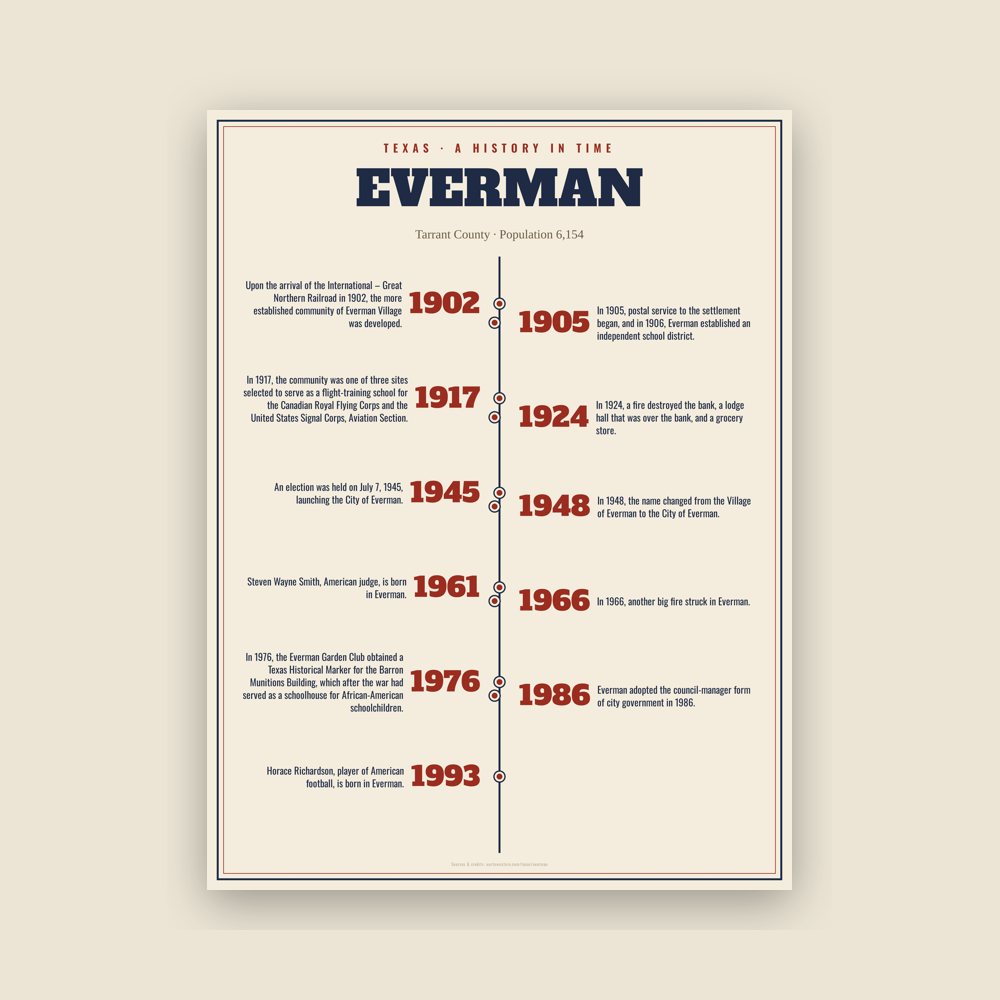
The town's story in dates, from its own records, for home or classroom
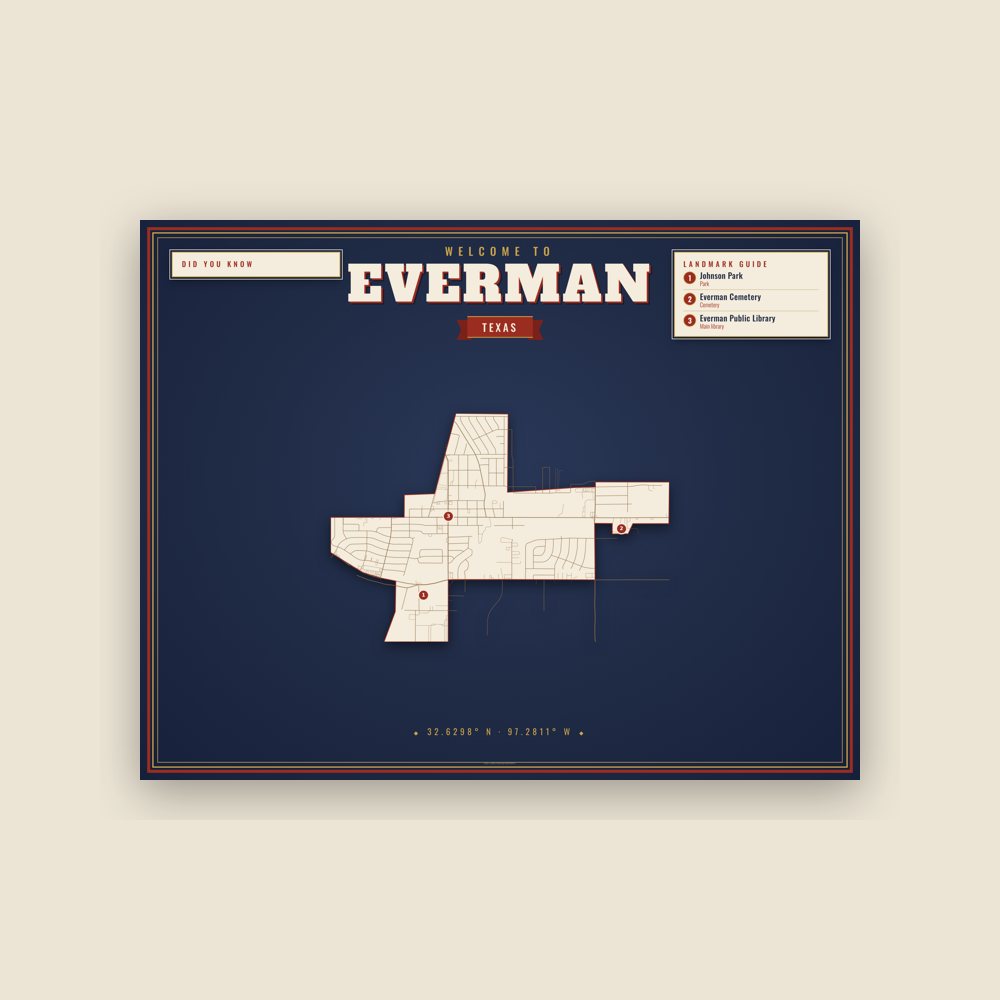
Map of local landmarks, washable fabric
Heavy-blend fleece, street map printed on the back
Soft Bella+Canvas jersey
Kids' Bella+Canvas jersey, youth sizes
Bella+Canvas toddler jersey
Bella+Canvas baby bodysuit
Glossy ceramic, dishwasher safe
Weatherproof, for the front walk
24″×16″, printed coir-look fibers, rubber back
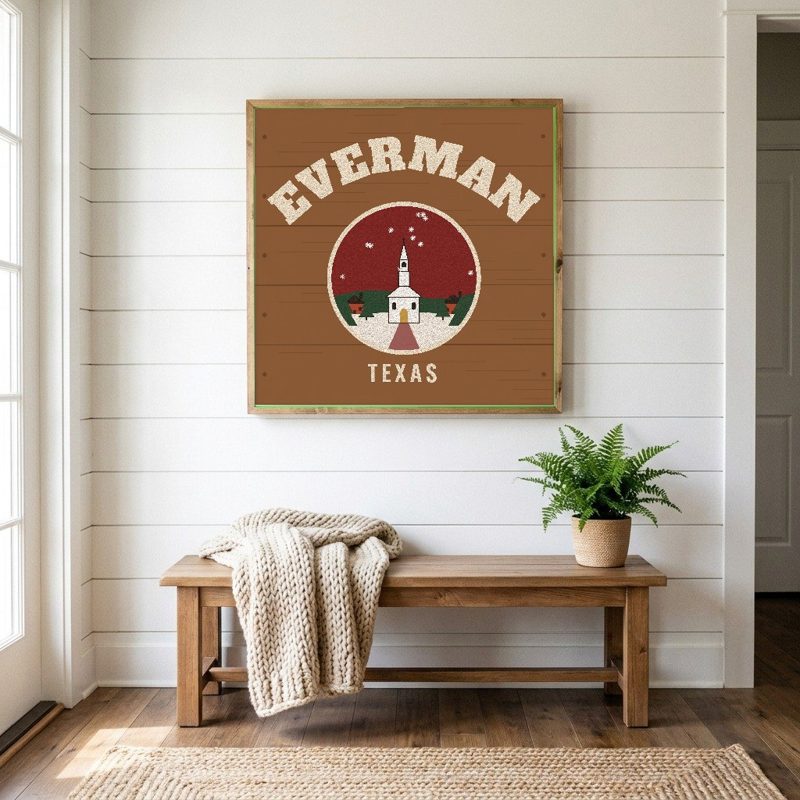
12″×12″ printed wood, ready to hang

Soft-touch, zip cover
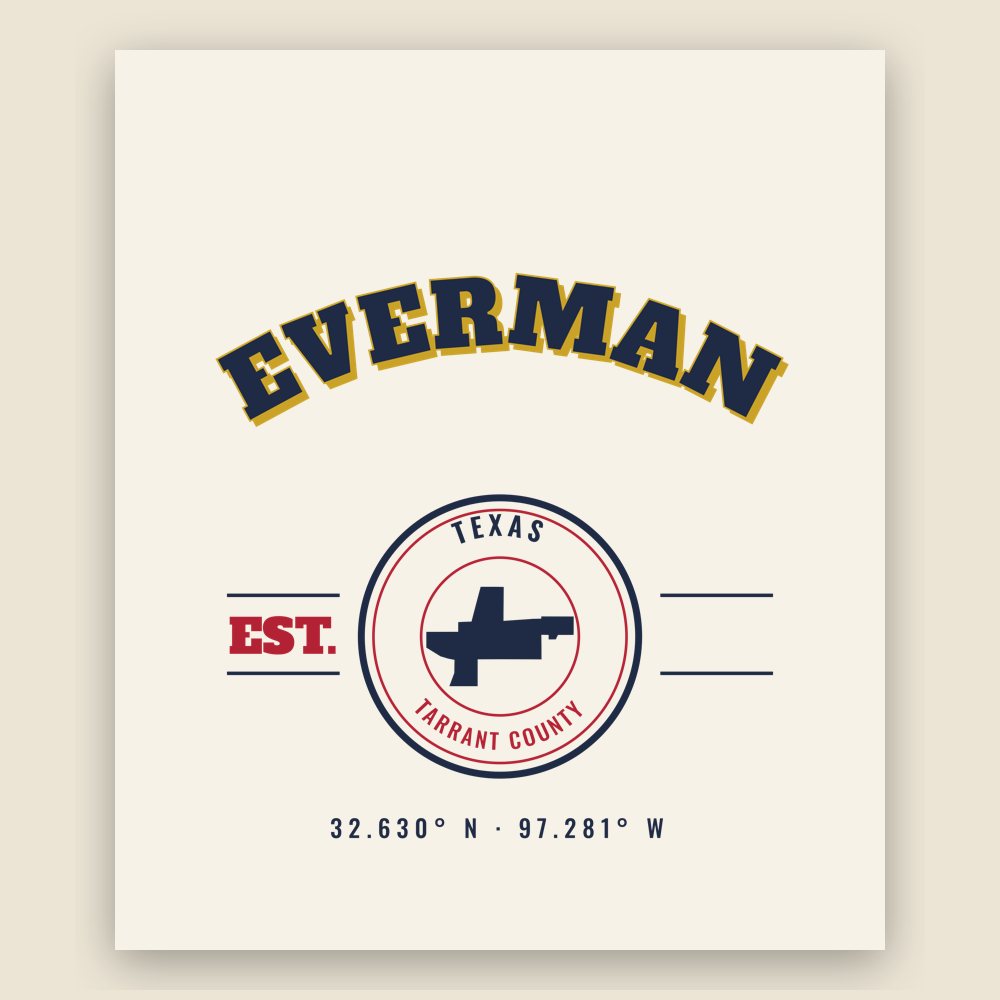
Sturdy all-over-print tote
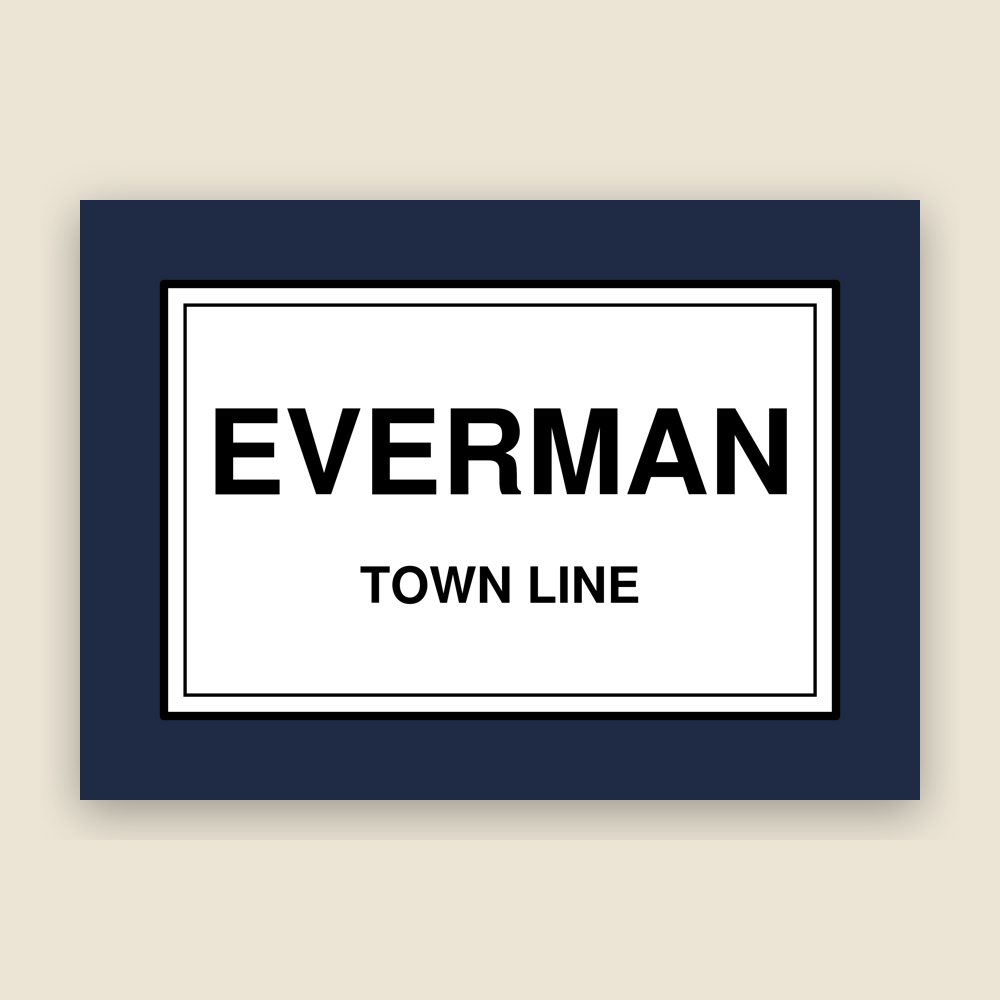
Glossy top, cork back

Soft fleece, 50″×60″
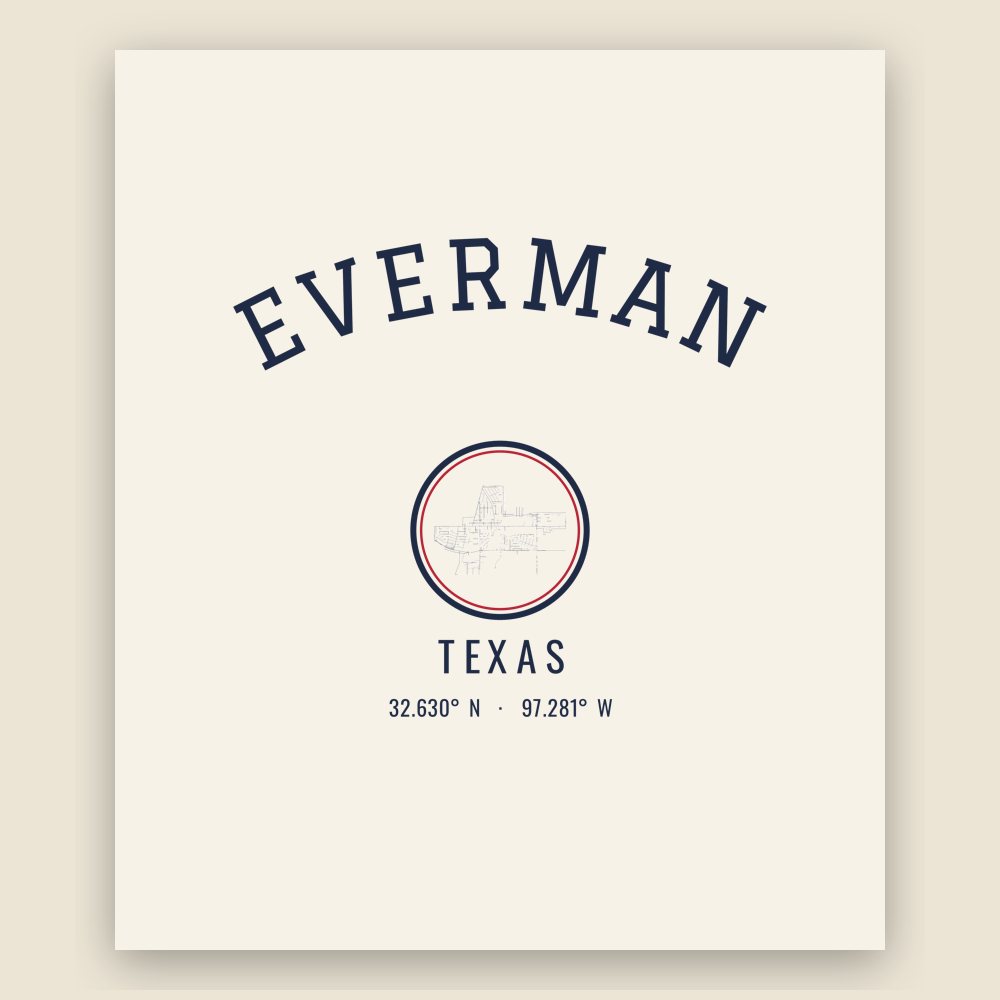
20 oz, double-wall stainless
Everman is an incorporated residential community on the southern edge of Fort Worth near Interstate 820 in southeastern Tarrant County. Everman is the birthplace of Steven Wayne Smith, judge.
Everman is an incorporated residential community on the southern edge of Fort Worth near Interstate 820 in southeastern Tarrant County. Members of the Kiowa, Apache, and Wichita tribes inhabited the area until the arrival of Anglo-Americans in the early to middle 1850s. A hamlet named Oak Grove existed in the area for several years. A small community to the east of present-day Everman was known as Enon. The "Enon" community name had been taken from the Bible. They had a doctor's office, a drug store, and a general store.
Upon the arrival of the International – Great Northern Railroad in 1902, the more established community of Everman Village was developed. The town moved closer to the railway, which was convenient because it gave the citizens transportation and a means to ship freight both to Houston and to Fort Worth, the nearest city. It was much easier and more pleasant to ride the train than to ride a horse, buggy, or wagon. The people named this new community Everman after John Wesley Everman, the man who was the head of the surveying party that platted the town site. A native of Philadelphia, he came to Texas as an engineer for the IGN Railroad and eventually became the general superintendent and assistant general manager for the Texas and Pacific Railway Company. He died in Dallas in 1946 at the age of 85. The names of some of his descendants still appear in the Fort Worth telephone book, though none live in the city of Everman. The original streets were named after the men who were in that survey party: Noble, Trammell, Trice, Parker, and Hansbarger. Enon Street was named after the first settlement. After the railroad was established, the town put up a cotton gin and started a land office business.
In 1905, postal service to the settlement began, and in 1906, Everman established an independent school district. In 1917, the community was one of three sites selected to serve as a flight-training school for the Canadian Royal Flying Corps and the United States Signal Corps, Aviation Section. Barron Field, just outside the city, stimulated the local economy and increased population growth. In 1976, the Everman Garden Club obtained a Texas Historical Marker for the Barron Munitions Building, which after the war had served as a schoolhouse for African-American schoolchildren.
By the mid-1920s Everman had eight businesses and an estimated population of 138. In 1924, a fire destroyed the bank, a lodge hall that was over the bank, and a grocery store.
An election was held on July 7, 1945, launching the City of Everman. On August 25, 1945, a mayor, a marshal, and five aldermen were elected. W. A. Wilson was the first mayor of Everman, and the first marshal was Buster Stephenson. The five aldermen were W. B. Dwiggins, Jack Neill, Clyde Pittman, Howard Easter and J. W. Bishop. Everman was on her way to becoming a city, but water was needed. Bonds were sold to build a public water supply system, and a volunteer fire department was organized. The city's water was first furnished by Claude Vaughan's well.
In 1948, the name changed from the Village of Everman to the City of Everman. In 1966, another big fire struck in Everman. This time, the town lost the post office, a drug store, and a cafe. The businesses rebuilt in another location. After the nearby Dallas/Fort Worth International Airport was constructed, the number of residents in Everman increased to more than 5,000 by the mid-1970s. Everman adopted the council-manager form of city government in 1986.
Adapted (trimmed) from the Wikipedia article Everman, Texas, revision 1378096166 by its contributors, licensed CC BY-SA 4.0.
We share a part of every Everman sale with local partners, and we'd love to print from your collection. Old photographs, maps and postcards make the best keepsakes.
Partner with usA favorite landmark, your street, a school or team, an anniversary gift, a different product. Tell us and we'll get back to you by email.
Everman's population was 6,154 in the 2020 U.S. Census, up from 6,108 in 2010.