A short history of Milford
Settlement and early history
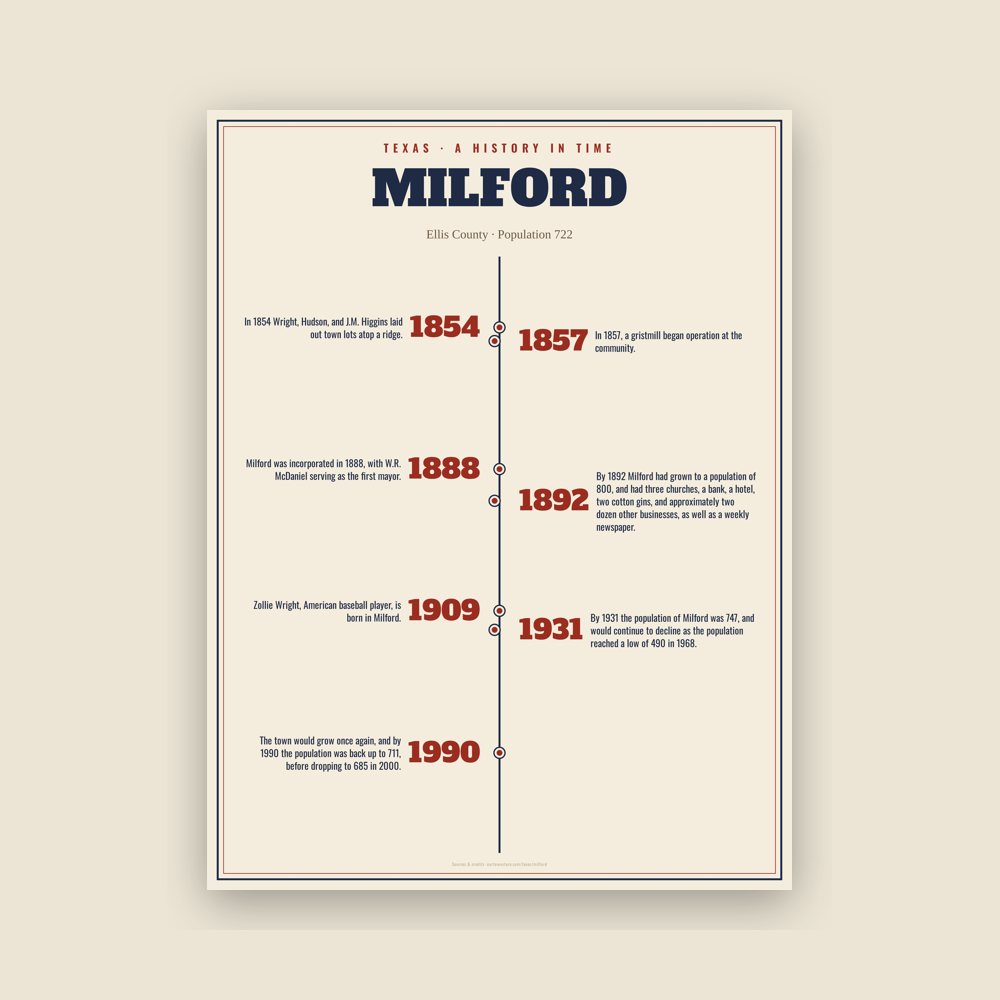
Milford dates back to the 1850s, when several men from Cherokee County came to the Mill Creek valley and bought land at 50 cents an acre from Ellis County landowner Arvin Wright. Milford was named by William R. Hudson after the factory town of Milford, Massachusetts. During 1853 the first house, a combined residence and general store belonging to William R. Hudson, was built, along with a two-story schoolhouse which served as church and community hall until it burned during the Civil War. In 1854 Wright, Hudson, and J.M. Higgins laid out town lots atop a ridge. In 1857, a gristmill began operation at the community. Milford was incorporated in 1888, with W.R. McDaniel serving as the first mayor. In 1890, the tracks of the Dallas and Waco Railway (later acquired by the Missouri–Kansas–Texas Railroad) reached the community, which became an important shipping point for area cotton farmers.
By 1892 Milford had grown to a population of 800, and had three churches, a bank, a hotel, two cotton gins, and approximately two dozen other businesses, as well as a weekly newspaper. There were now two schools in Milford, Mollie Poe's private Lone Star Institute and the community-financed Milford Academy. In 1902 the Presbyterian Synod of Texas accepted the town's offer to open the Texas Presbyterian College for Girls in Milford, and by 1925 the Dallas-Waco electric interurban railway had reached the town. The town continued to flourish, with the population soaring to 1,200 by 1929, but the population saw a slow decline due to the Great Depression, and the Presbyterian college closed due to lagging enrollment. By 1931 the population of Milford was 747, and would continue to decline as the population reached a low of 490 in 1968. The town would grow once again, and by 1990 the population was back up to 711, before dropping to 685 in 2000.
Read the full history
Aftermath
Due to concerns about harmful air quality conditions due to the burning pipeline, and the proximity of the fire to another larger gas line, the entire town of approximately 700 residents was forced to evacuate, including Milford ISD staff and students, to the nearby town of Italy as a 1.5-mile (2.4 km) evacuation zone was established.
While some residents were permitted to return to the town temporarily under police escort, the town remained evacuated through November 16 as the pipeline continued to burn. The fire also caused the postponement of a six-man football playoff game scheduled for November 15 as the players could not retrieve their gear.
Chevron response
The company issued several statements through their website expressing their sincere regret to people impacted by this event which included a toll-free claims hotline which residents affected by the incident could call. The company also provided overnight accommodations at local hotels for residents due to conditions not allowing them to return home.
Adapted (trimmed) from the Wikipedia article Milford, Texas, revision 1378576617 by its contributors, licensed CC BY-SA 4.0.
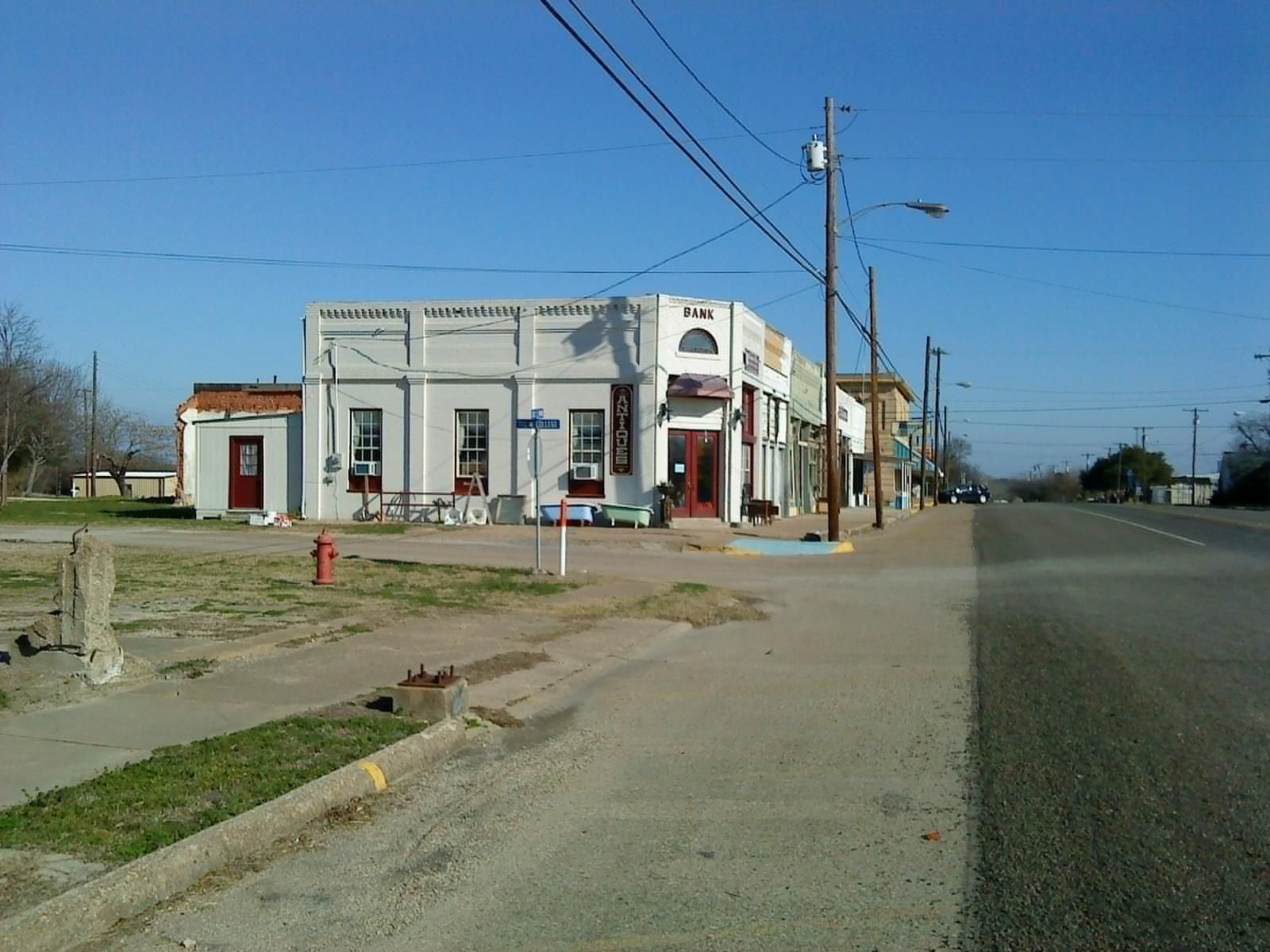

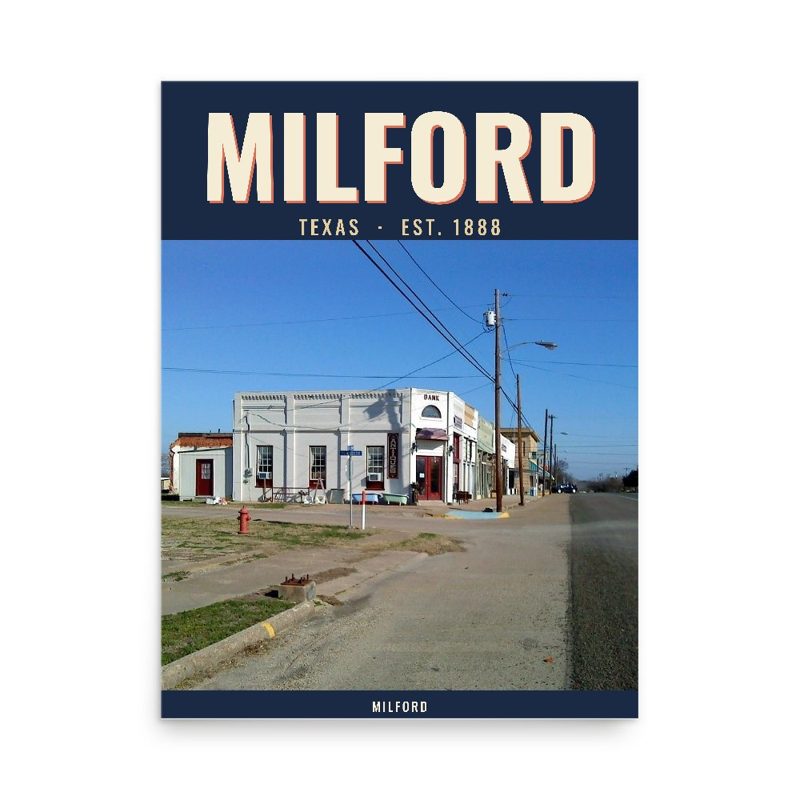
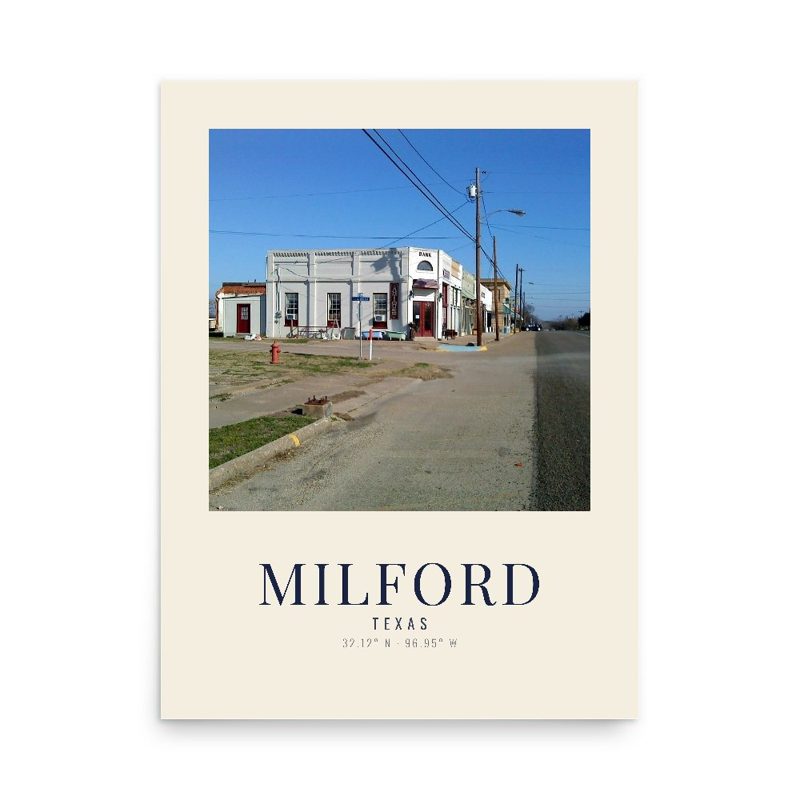
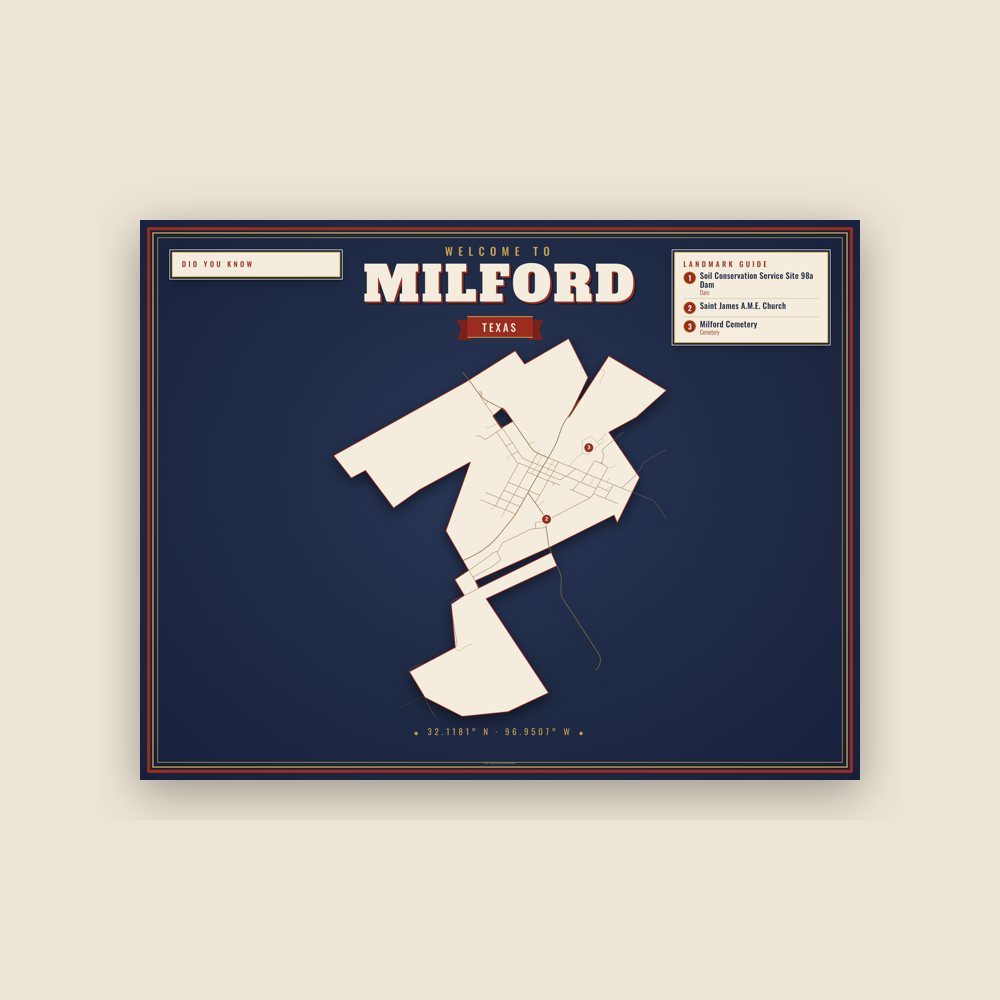










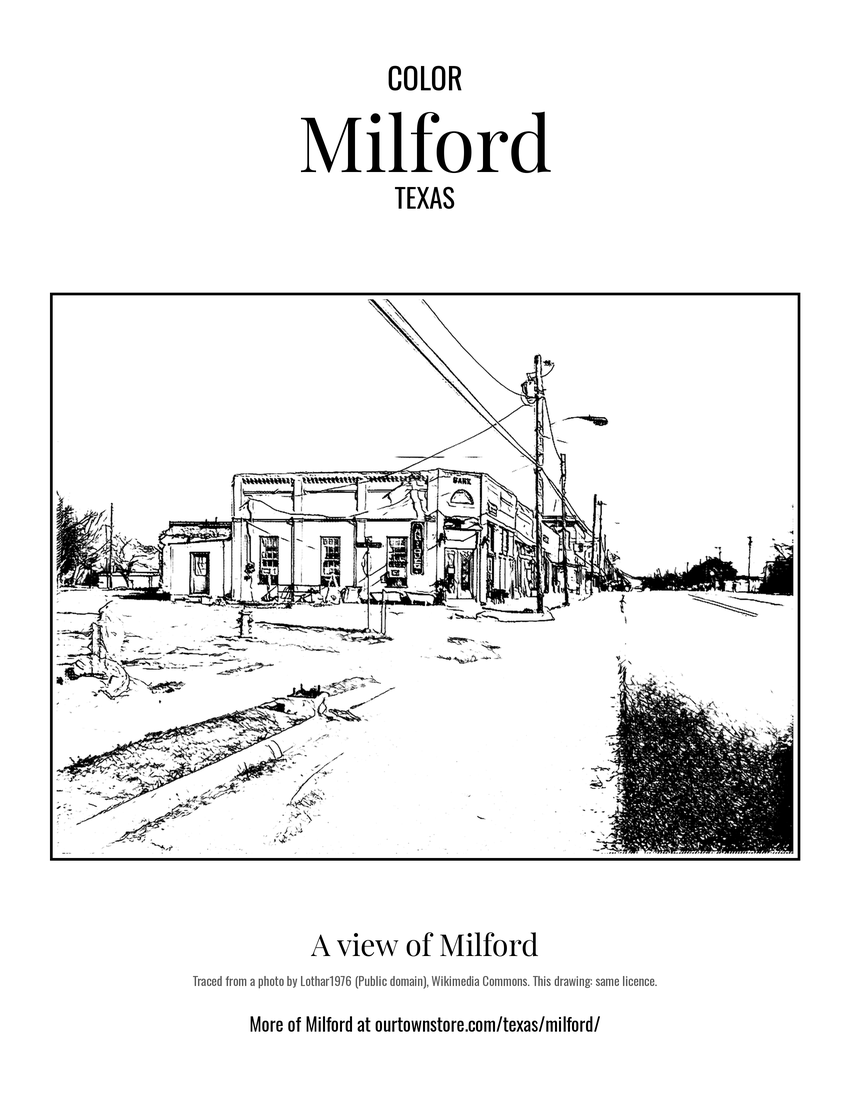 A view of Milford
 A view of Milford