A short history of Cuney
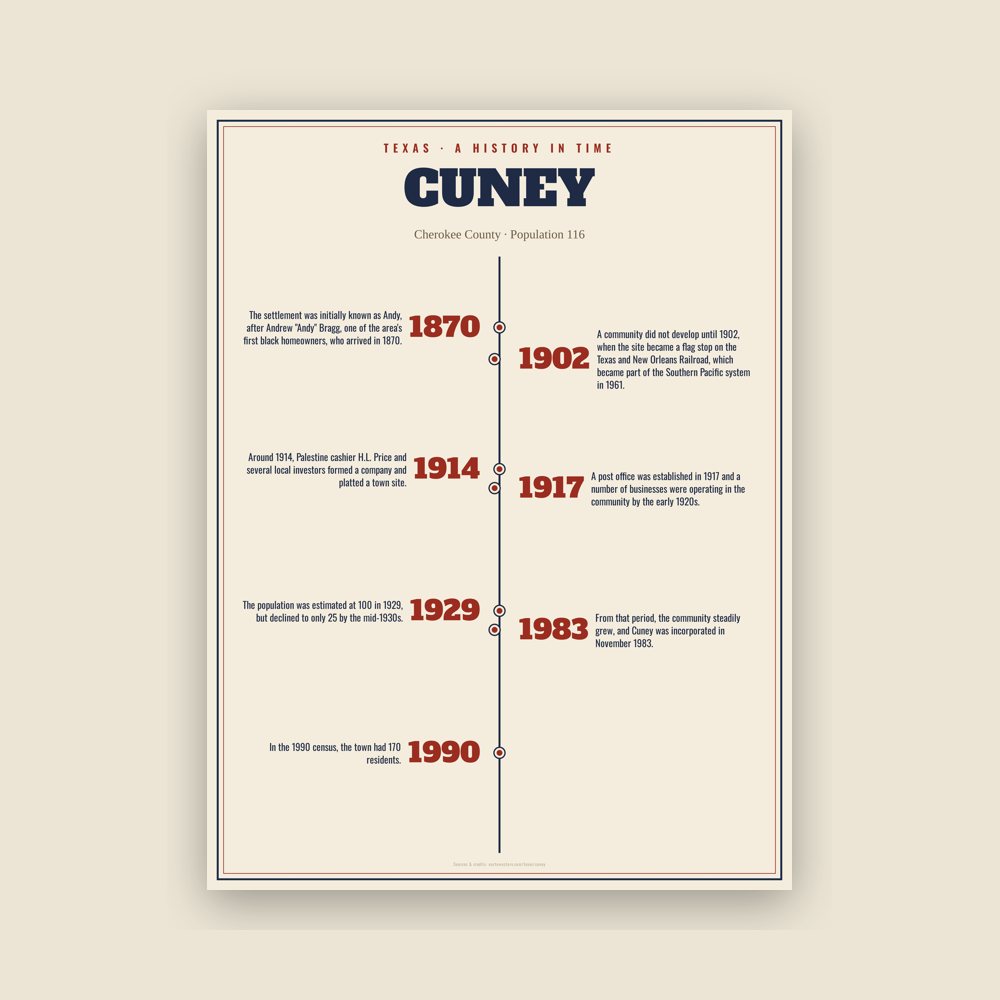
The site was first settled by freed slaves just after the Civil War. The settlement was initially known as Andy, after Andrew "Andy" Bragg, one of the area's first black homeowners, who arrived in 1870. A community did not develop until 1902, when the site became a flag stop on the Texas and New Orleans Railroad, which became part of the Southern Pacific system in 1961.
Around 1914, Palestine cashier H.L. Price and several local investors formed a company and platted a town site. They named the town Cuney, after Price's son, Cuney Price, who in turn had been named for Norris Wright Cuney, a prominent black politician and head of the state's Republican Party. A post office was established in 1917 and a number of businesses were operating in the community by the early 1920s. With the paving of State Highway 40 in 1929, which would eventually become U.S. Highway 175, most of the businesses moved a mile north of the railroad to take advantage of the increased traffic. The population was estimated at 100 in 1929, but declined to only 25 by the mid-1930s.
A number of businesses closed after World War II as agricultural prices decreased and residents moved to other cities with greater employment opportunities. Cuney had a population of 75 in the early 1950s. From that period, the community steadily grew, and Cuney was incorporated in November 1983. In the 1990 census, the town had 170 residents. That number had fallen to 145 by 2000.
Adapted (trimmed) from the Wikipedia article Cuney, Texas, revision 1374300758 by its contributors, licensed CC BY-SA 4.0.
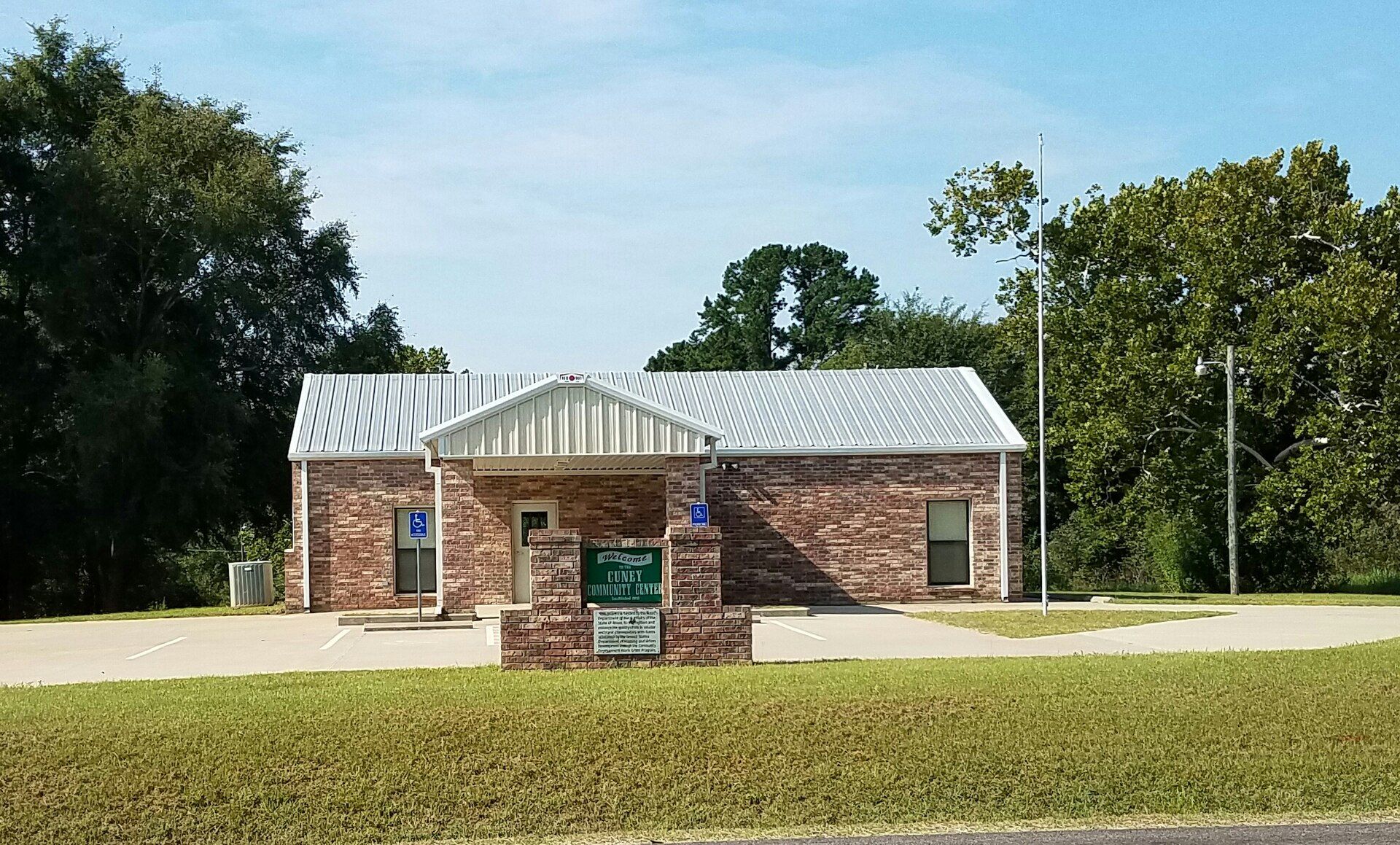













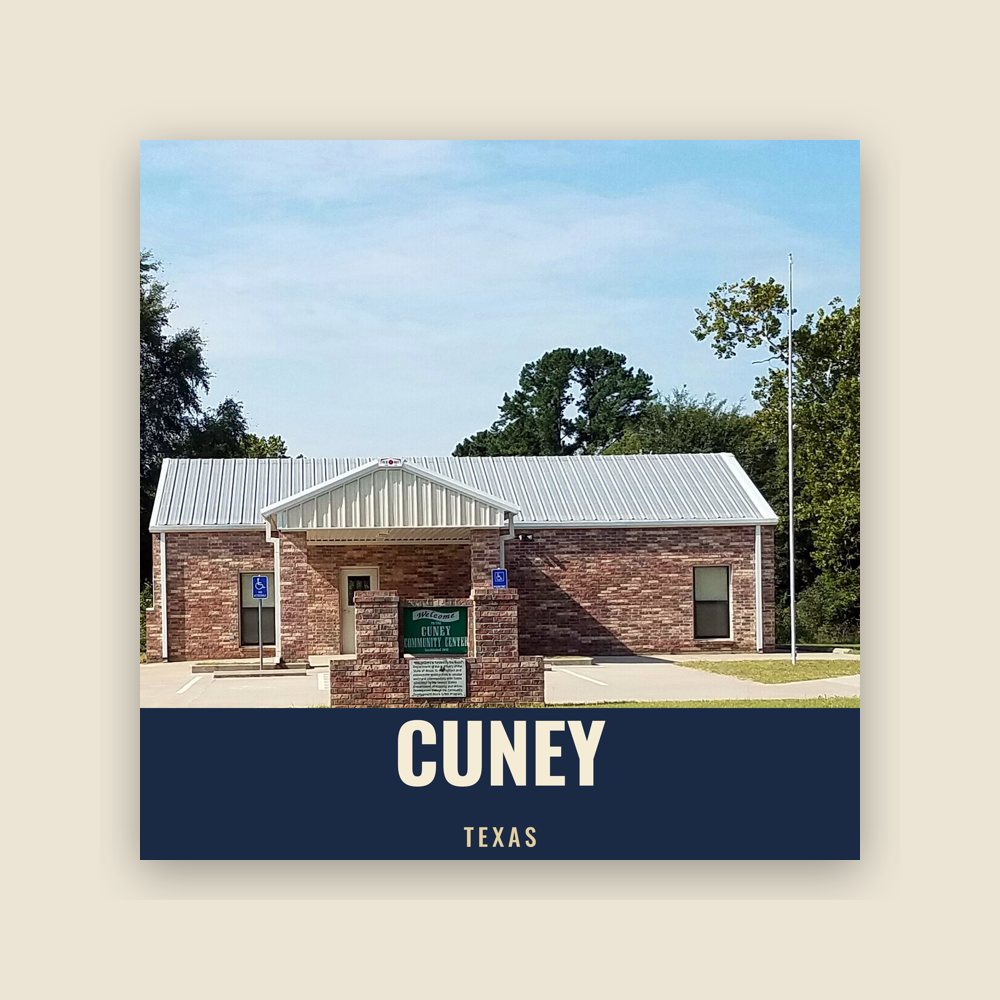




 A view of Cuney