A short history of Henderson
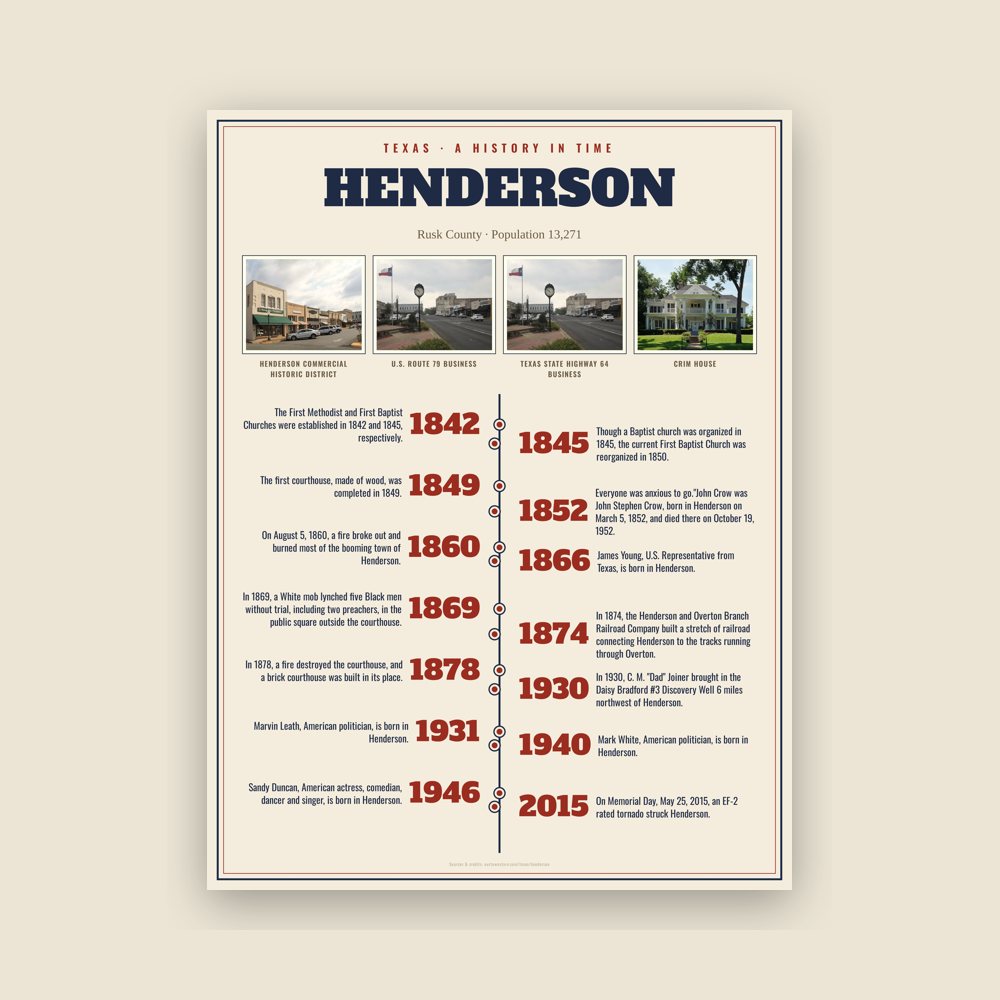
The city of Henderson was established by European Americans before the State of Texas was founded. It was developed on land donated by W.B. Ochiltree and James Smith; it became the county seat of Rusk County when an act of legislature created Rusk County on January 16, 1843. The First Methodist and First Baptist Churches were established in 1842 and 1845, respectively. Though a Baptist church was organized in 1845, the current First Baptist Church was reorganized in 1850. The first courthouse, made of wood, was completed in 1849. After the Civil War, the International and Great Northern Railroad crossed through Rusk County, but bypassed Henderson. In 1869, a White mob lynched five Black men without trial, including two preachers, in the public square outside the courthouse. In 1874, the Henderson and Overton Branch Railroad Company built a stretch of railroad connecting Henderson to the tracks running through Overton. This stretch of railroad was later sold to the Missouri Pacific Railroad (now Union Pacific) and remains in use to this day.
In 1878, a fire destroyed the courthouse, and a brick courthouse was built in its place. This encouraged the construction of several other brick buildings, including the Howard Dickinson House, now a historical site.
In 1930, C. M. "Dad" Joiner brought in the Daisy Bradford #3 Discovery Well 6 miles northwest of Henderson. The discovery of oil in October 1930 created a booming economy in the area, with the population of Henderson increasing from 2,000 to over 10,000 in a few months. The oil fields in and surrounding Henderson, part of the high-producing, five-county East Texas Oil Field, continue to provide a large part of the wealth of the town, county, and region.
During World War II, airmen cadets from the Royal Air Force, flying from their training base at Terrell, Texas, routinely flew to Henderson on training flights. The community served as a stand-in for the British for Dunkirk, France, which is the same distance from London, England, as Henderson is from Terrell.
Read the full history
1860 Henderson fire
On August 5, 1860, a fire broke out and burned most of the booming town of Henderson. Forty-three buildings, including two hotels, were destroyed in the fire, for a loss of $220,000.
I was about eight years old when Henderson burned. I went to town with my father the day after the fire. It burned every house as well as I recollect, except the Flanagan Brick Building. I remember I was barefooted and careful not to burn my feet. My father said at the time they thought a fellow named Green Herndon, a union man, had hired a negro woman to burn Henderson. Herndon was a northerner and was a pronounced opponent of secession. On the negro woman's testimony, a mob gathered, threw a loop around his neck, tied it to a saddle horse, which went around the public square dragging Herndon to death. Then they hung the body to a tree and shot it full of holes ... War was in preparation and people were in fits of anger. When the war broke out, the men got all the files they could find and went to the blacksmith shops and made knives and swords. There was much laughter and I remember they said, "We'll whip those damn Yankees with axes and butcher knives. Everyone was anxious to go."John Crow was John Stephen Crow, born in Henderson on March 5, 1852, and died there on October 19, 1952. He is buried at Maple Grove Cemetery. His father, Moses Melton Crow, was part of a large group of family, friends, and neighbors who left the area of Henry and Clayton Counties, Georgia, and were early settlers in Rusk County. The surnames of these early settlers include Burks, Cates, Crow, Mitchell, and others.
Adapted (trimmed) from the Wikipedia article Henderson, Texas, revision 1374427172 by its contributors, licensed CC BY-SA 4.0.

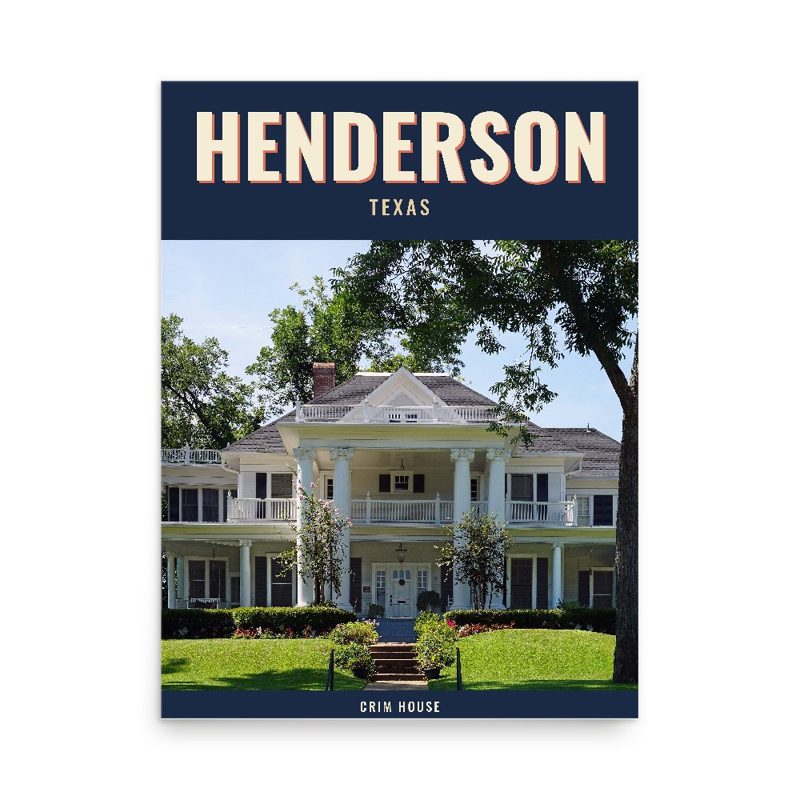

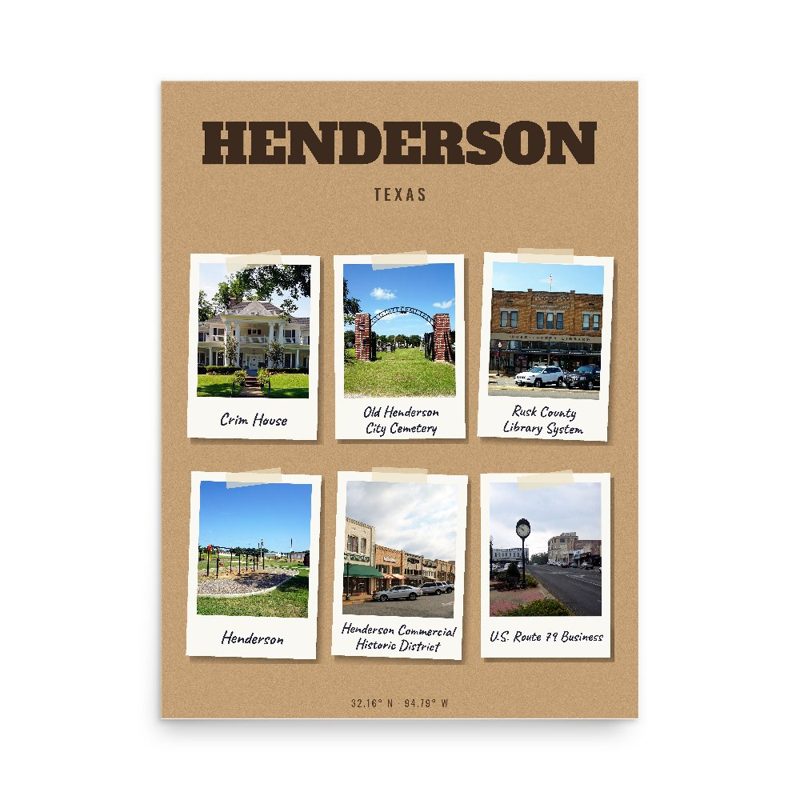
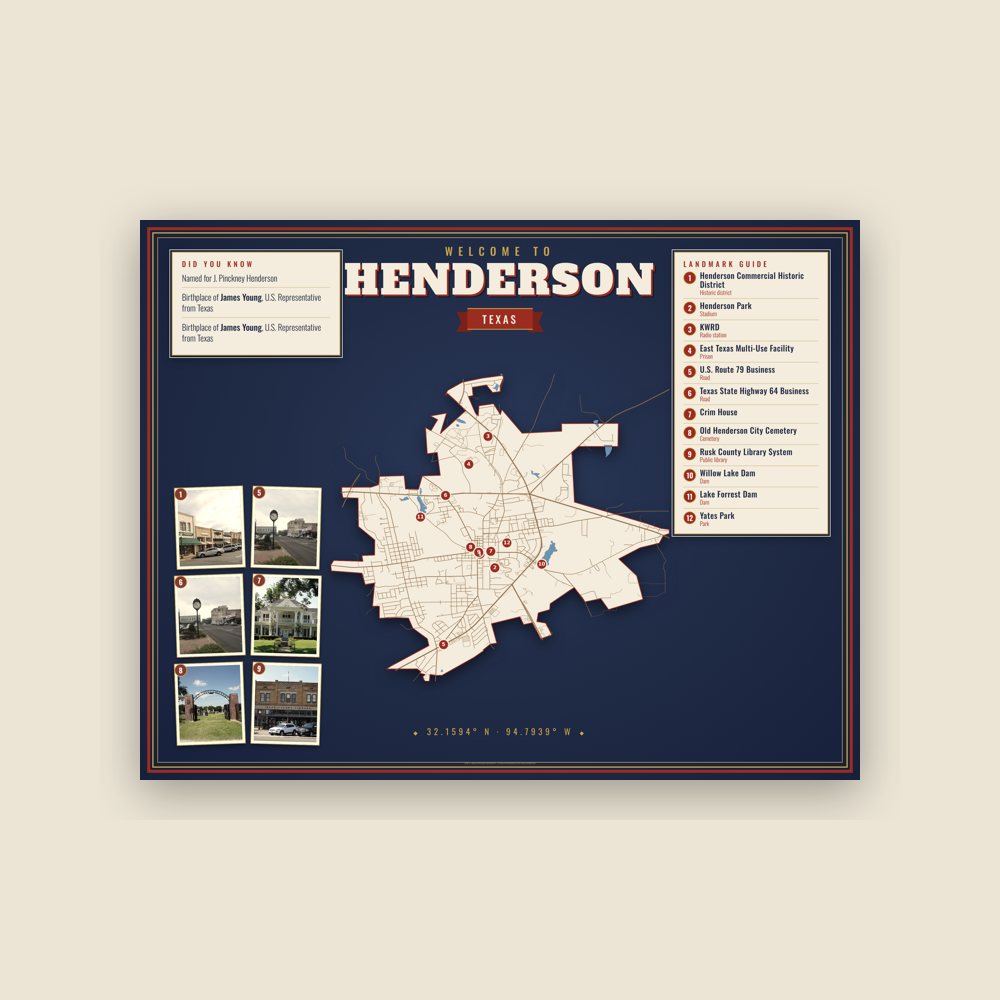













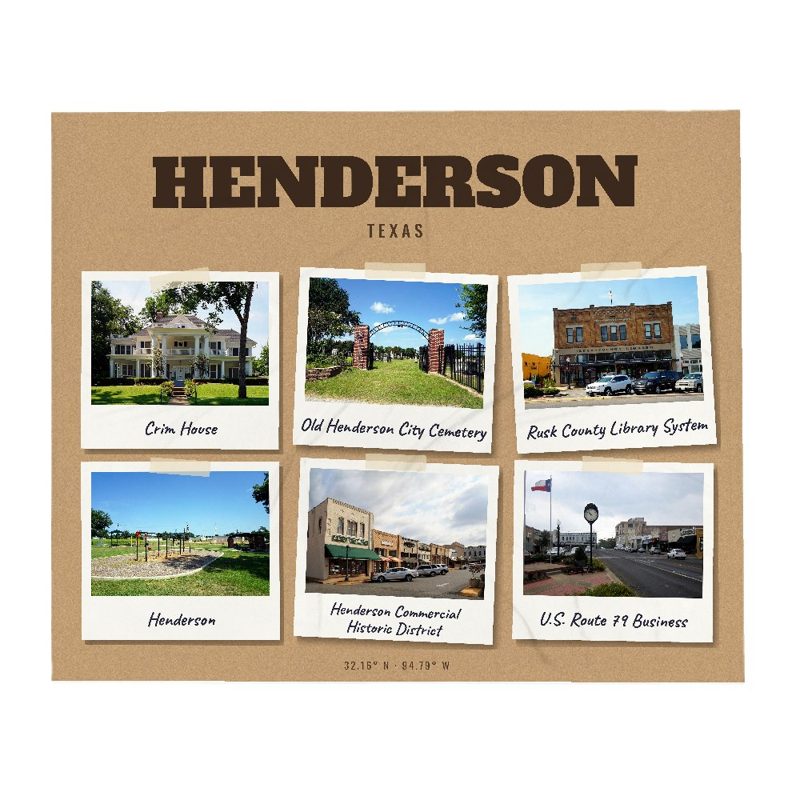

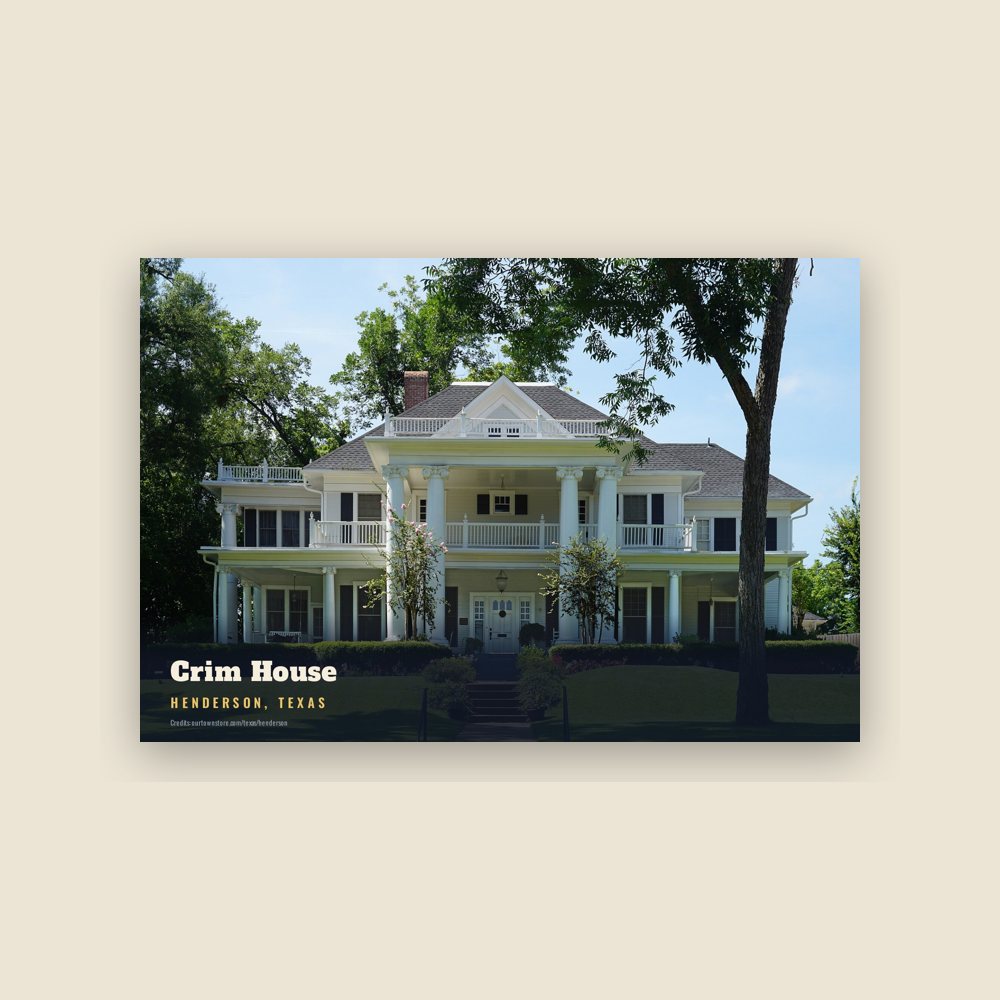
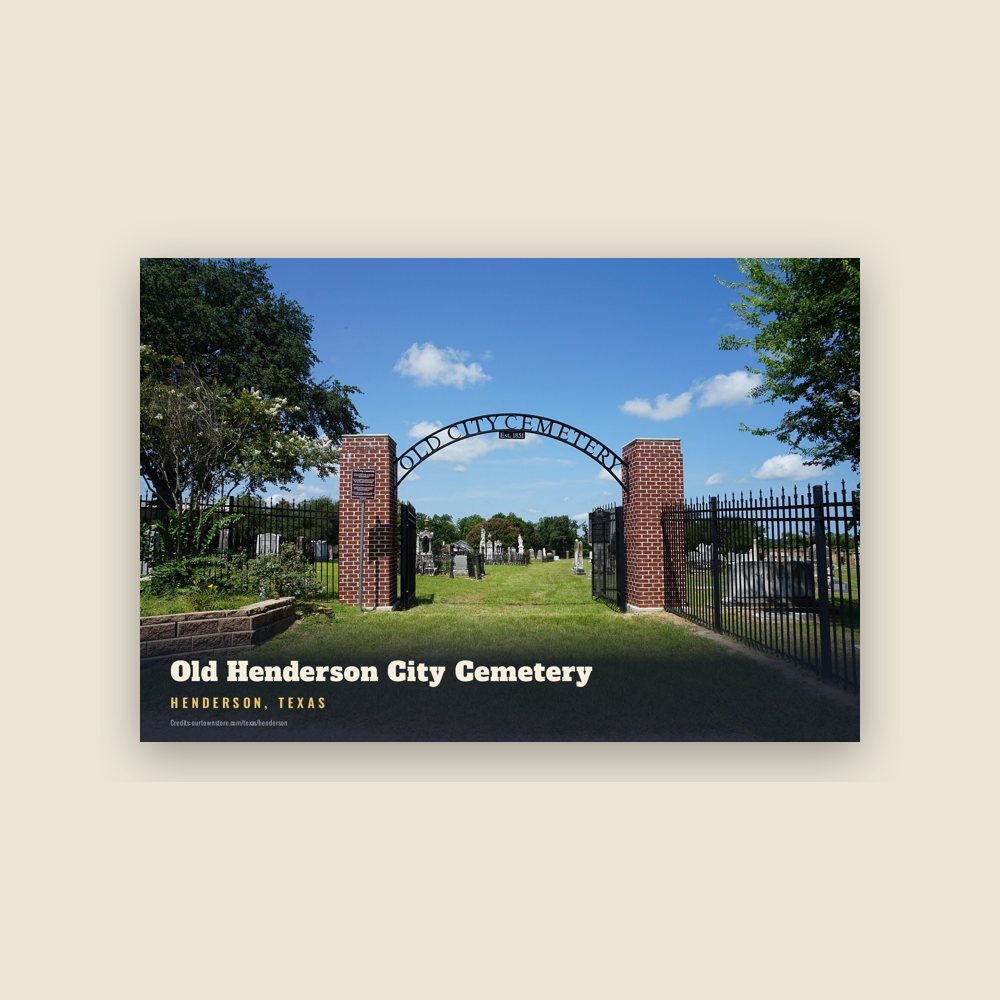
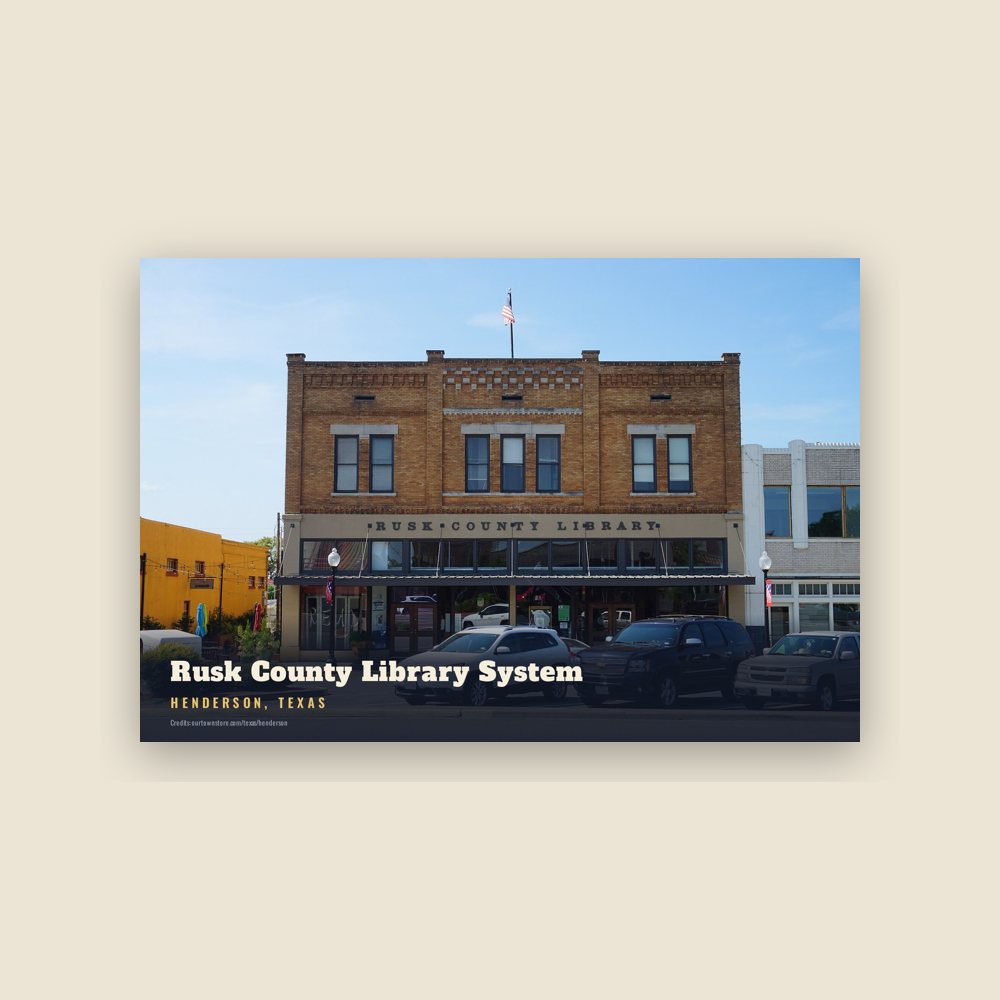
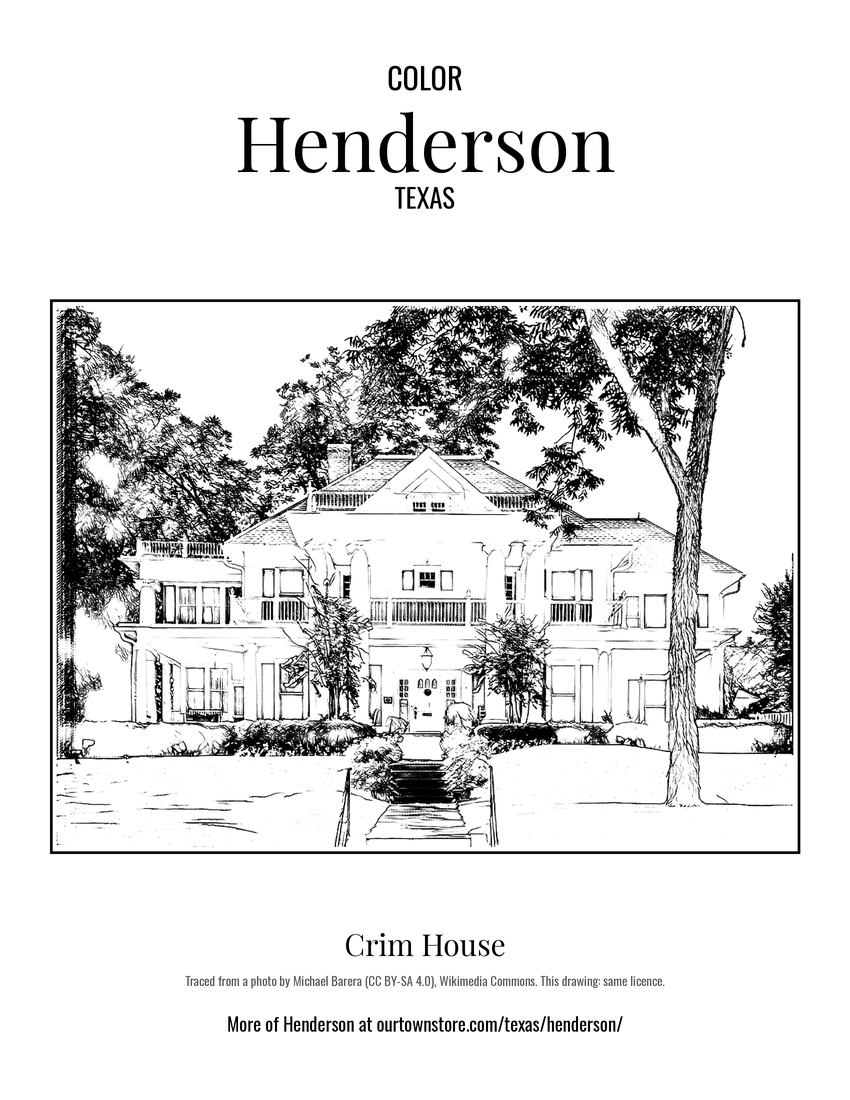 Crim House
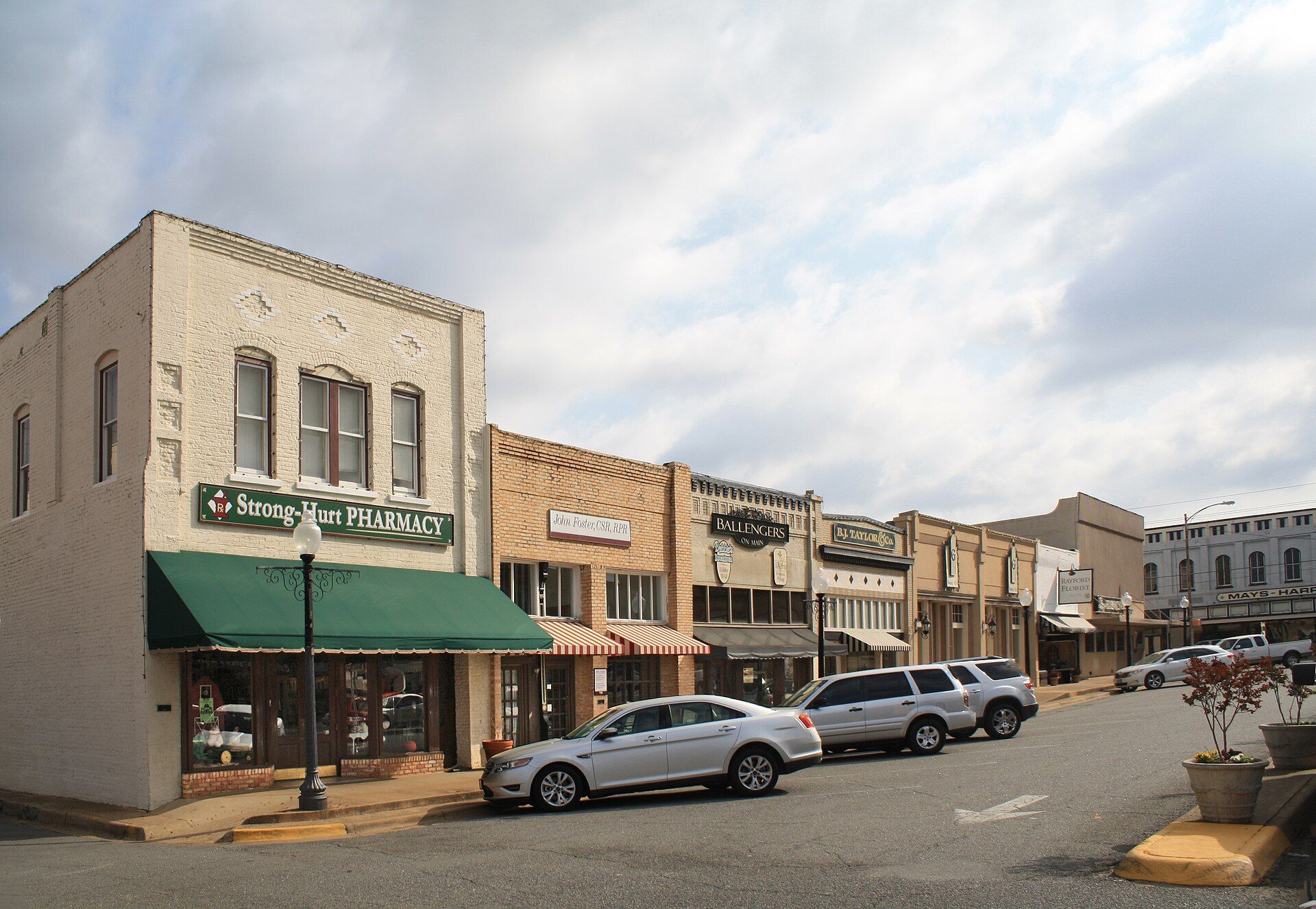
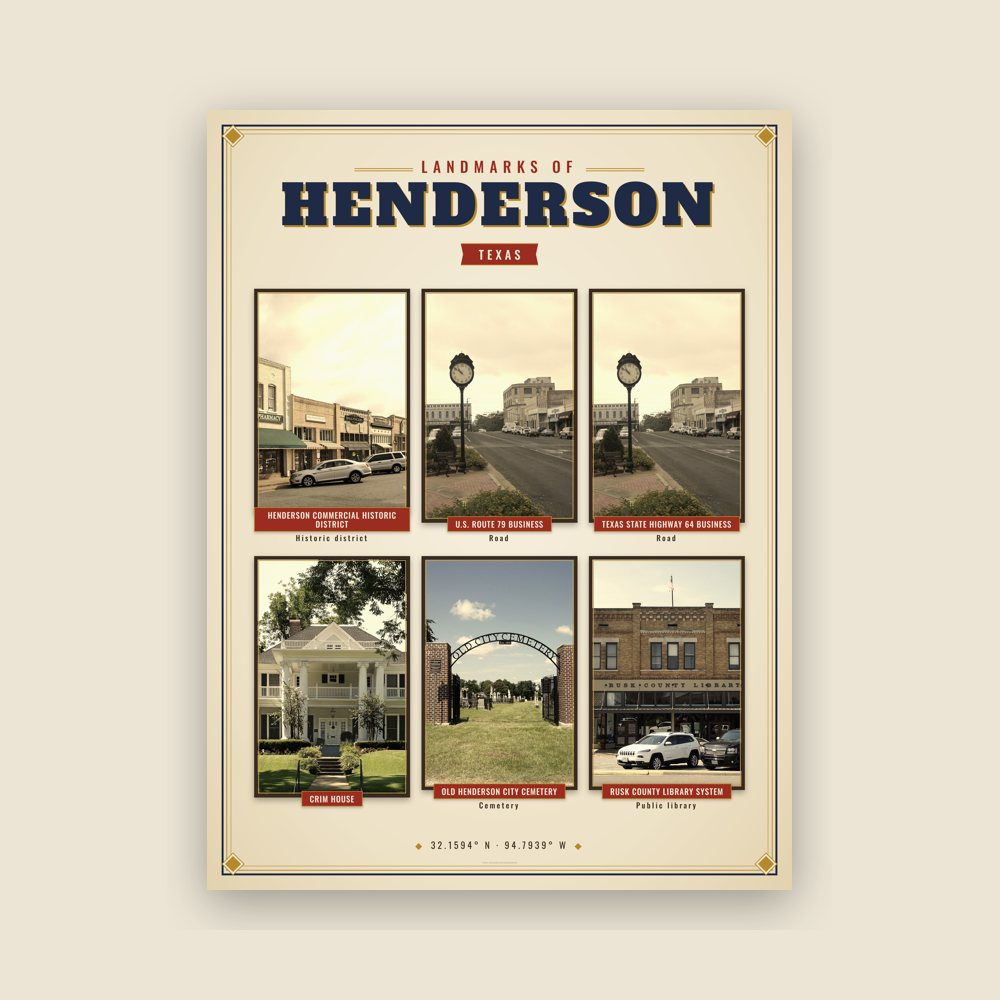
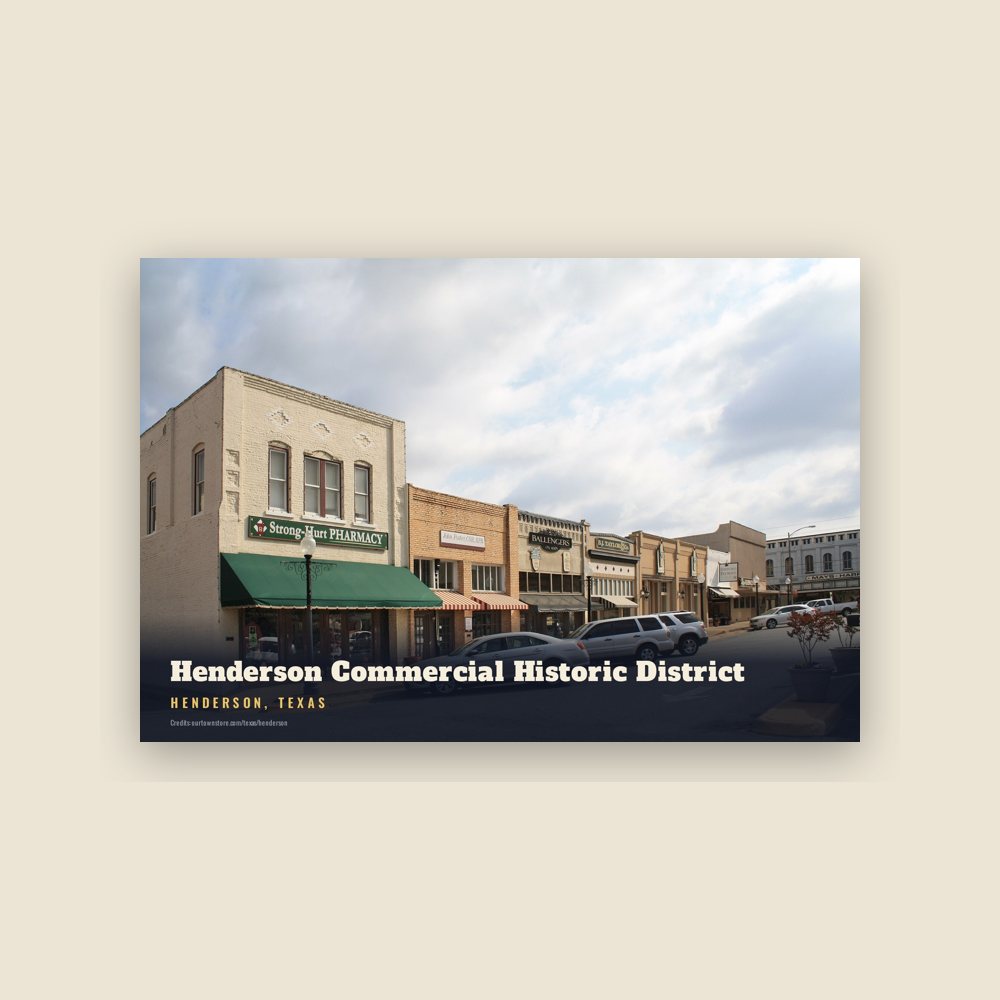
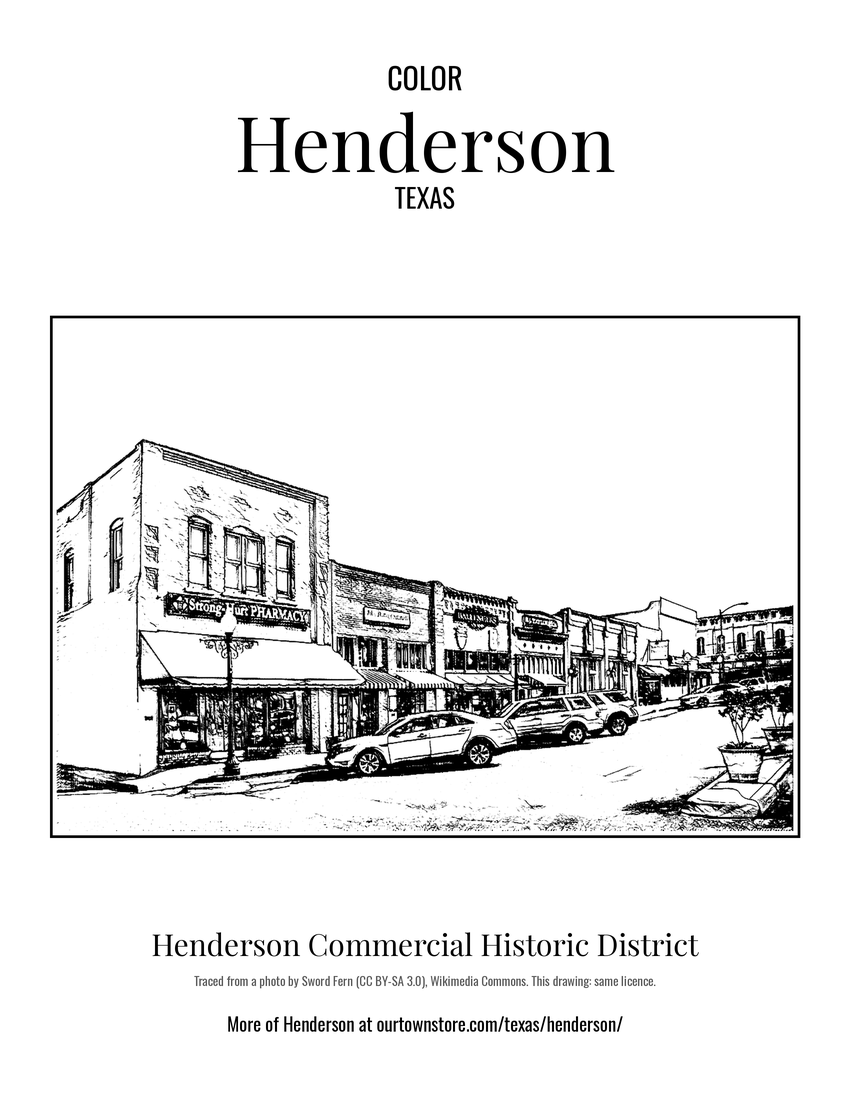 Henderson Commercial Historic District
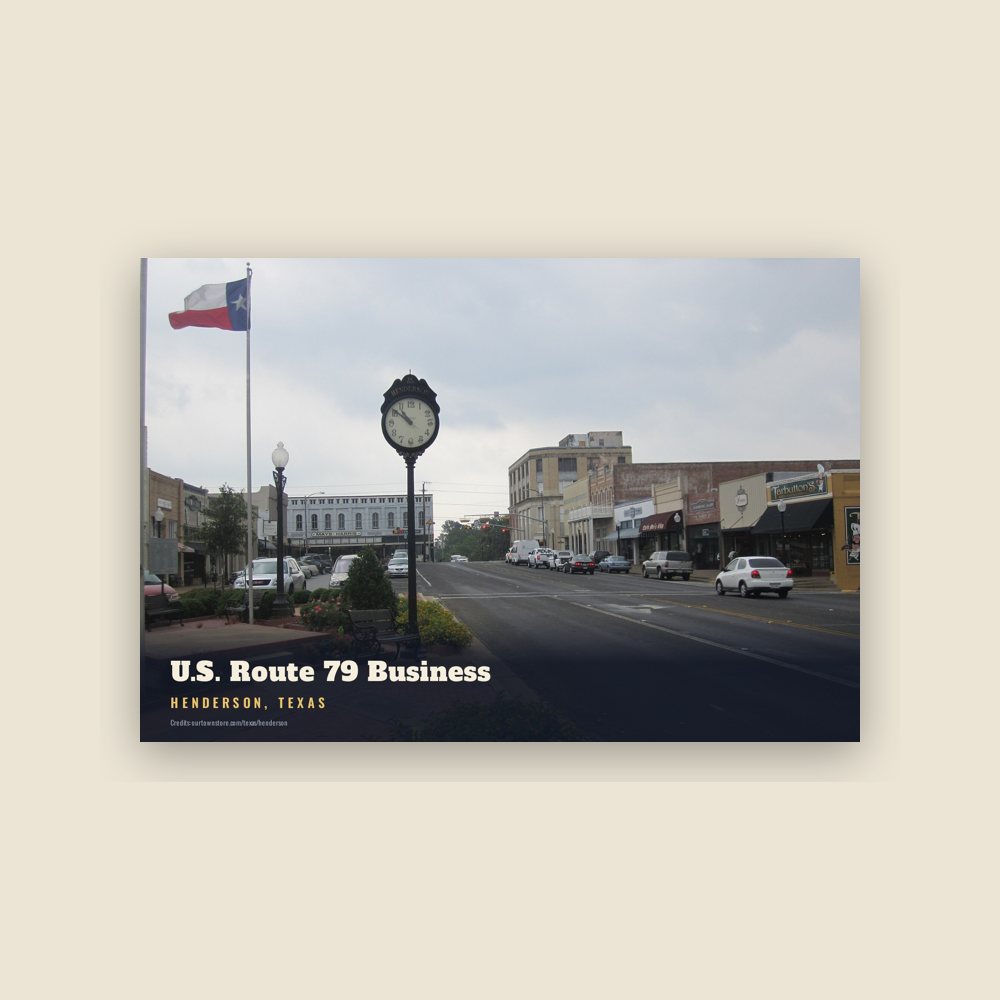
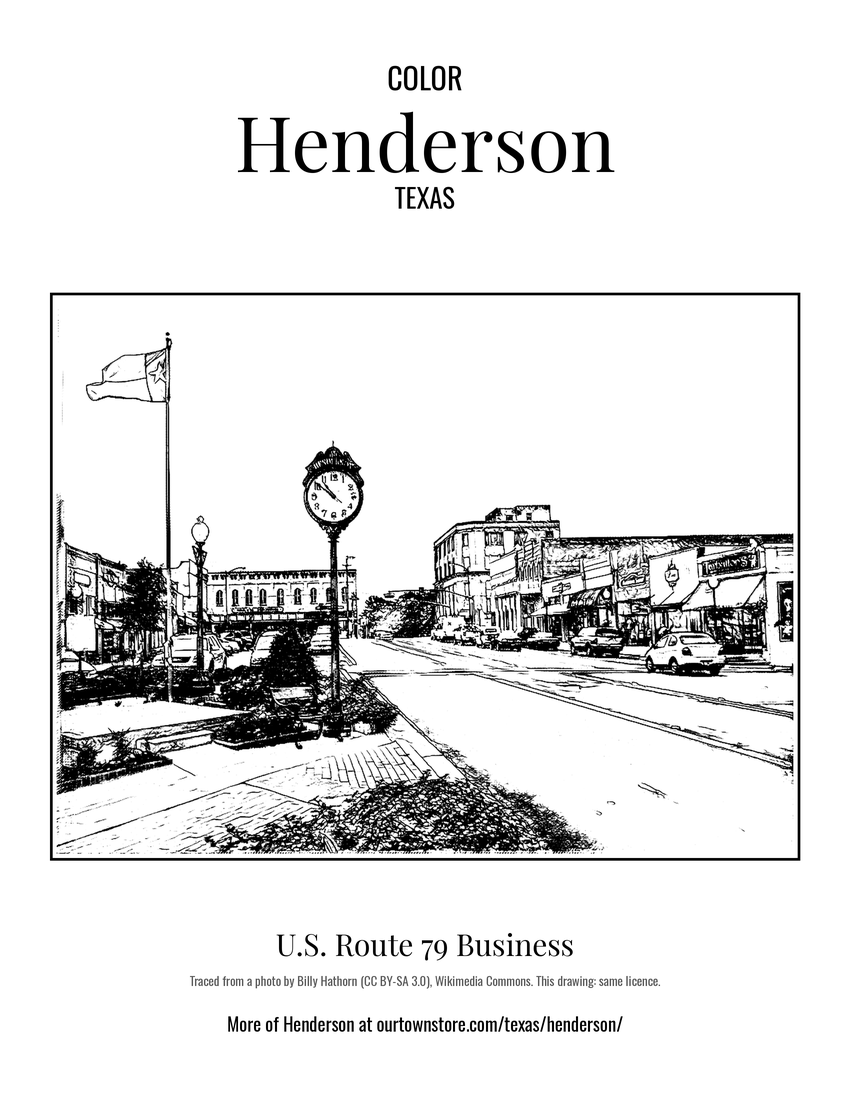 U.S. Route 79 Business
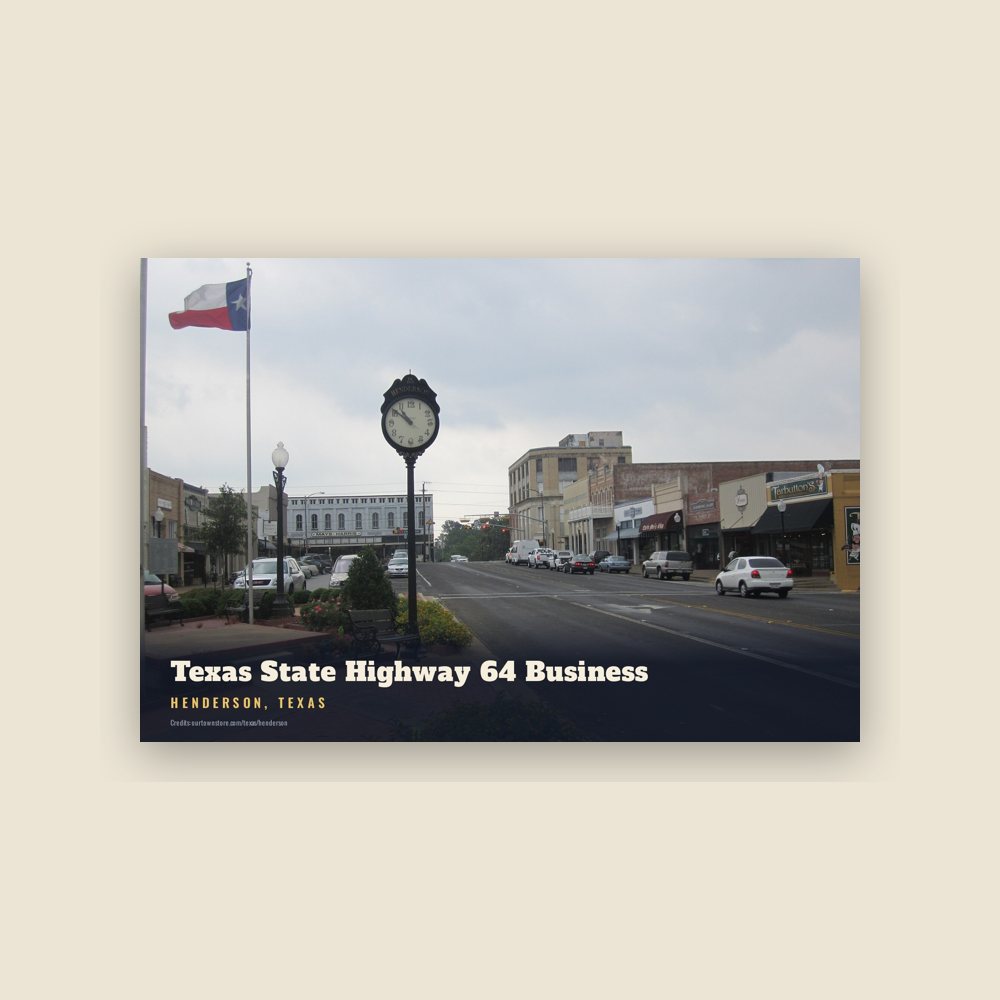
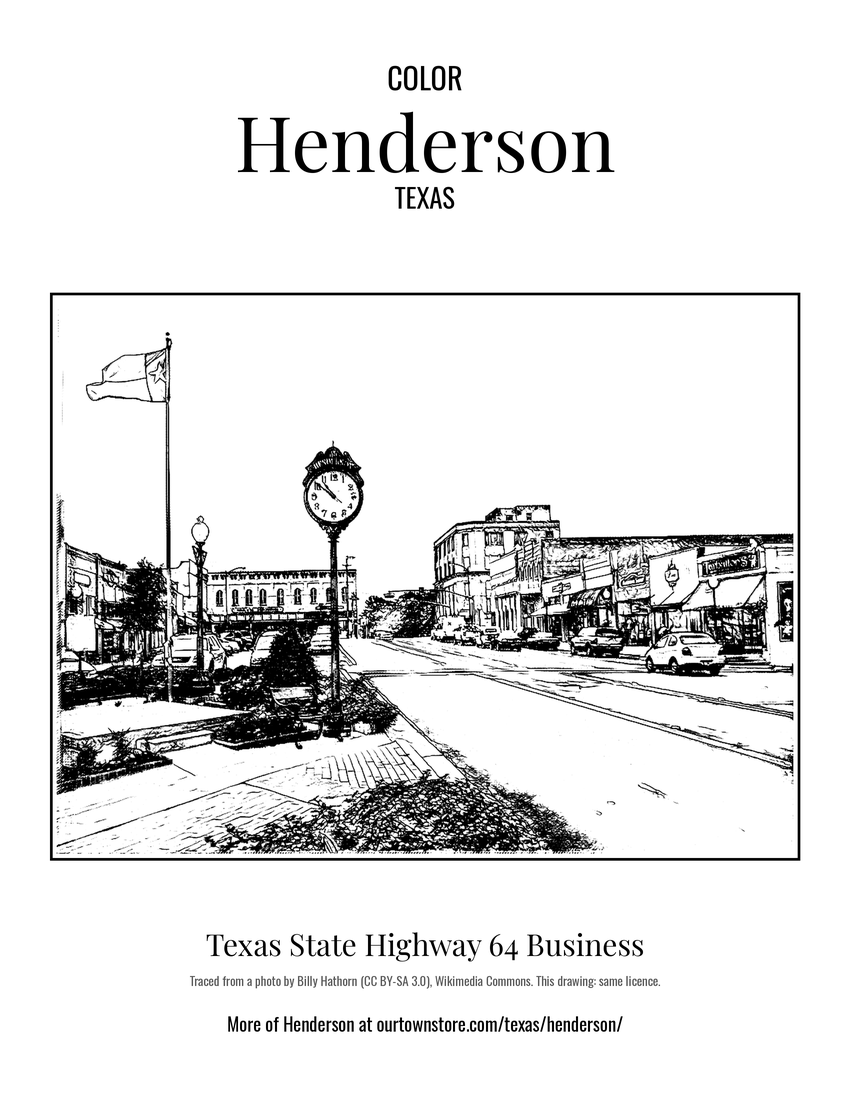 Texas State Highway 64 Business